|
(11) | EP 1 756 057 B1 |

| (12) | EUROPEAN PATENT SPECIFICATION |
|
|
| (54) |
PROCESS FOR THE PREPARATION OF CARVEDILOL VERFAHREN ZUR HERSTELLUNG VON CARVEDILOL PROCESSUS POUR LA PRÉPARATION DE CARVÉDILOL |
|
|
|||||||||||||||||||||||||||||||
| Note: Within nine months from the publication of the mention of the grant of the European patent, any person may give notice to the European Patent Office of opposition to the European patent granted. Notice of opposition shall be filed in a written reasoned statement. It shall not be deemed to have been filed until the opposition fee has been paid. (Art. 99(1) European Patent Convention). |
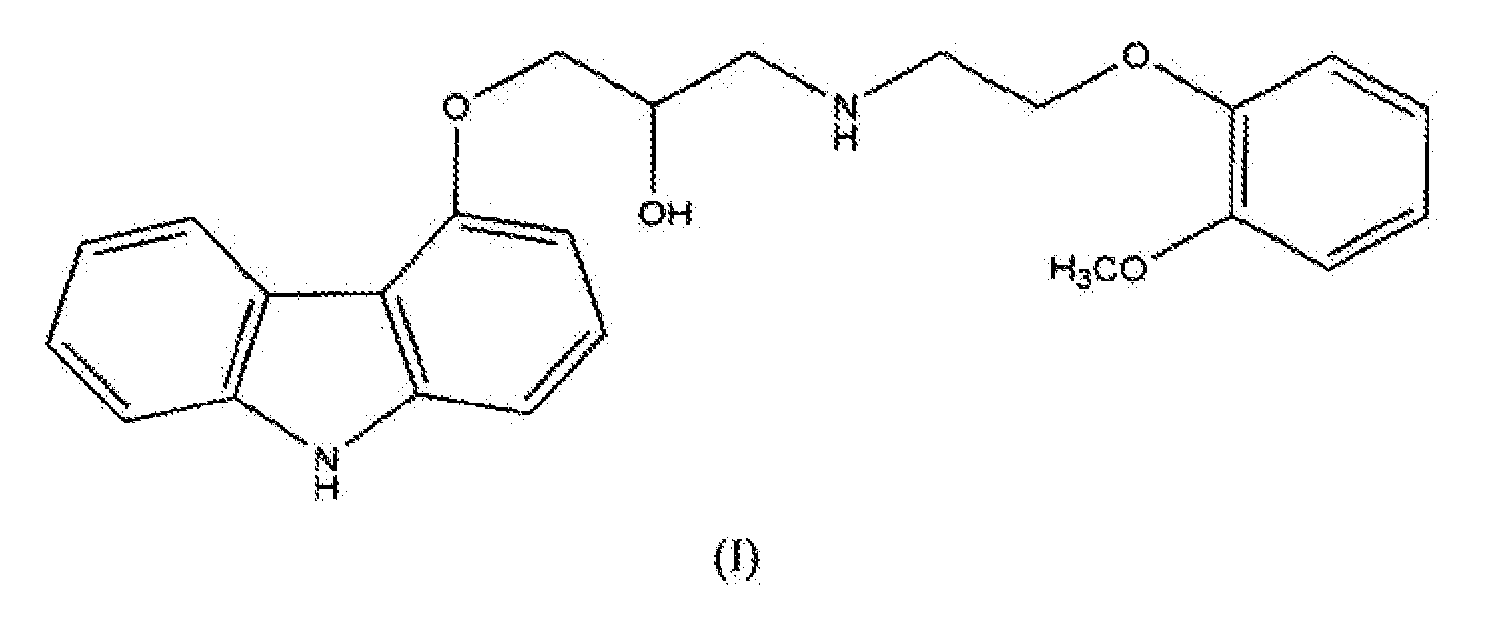
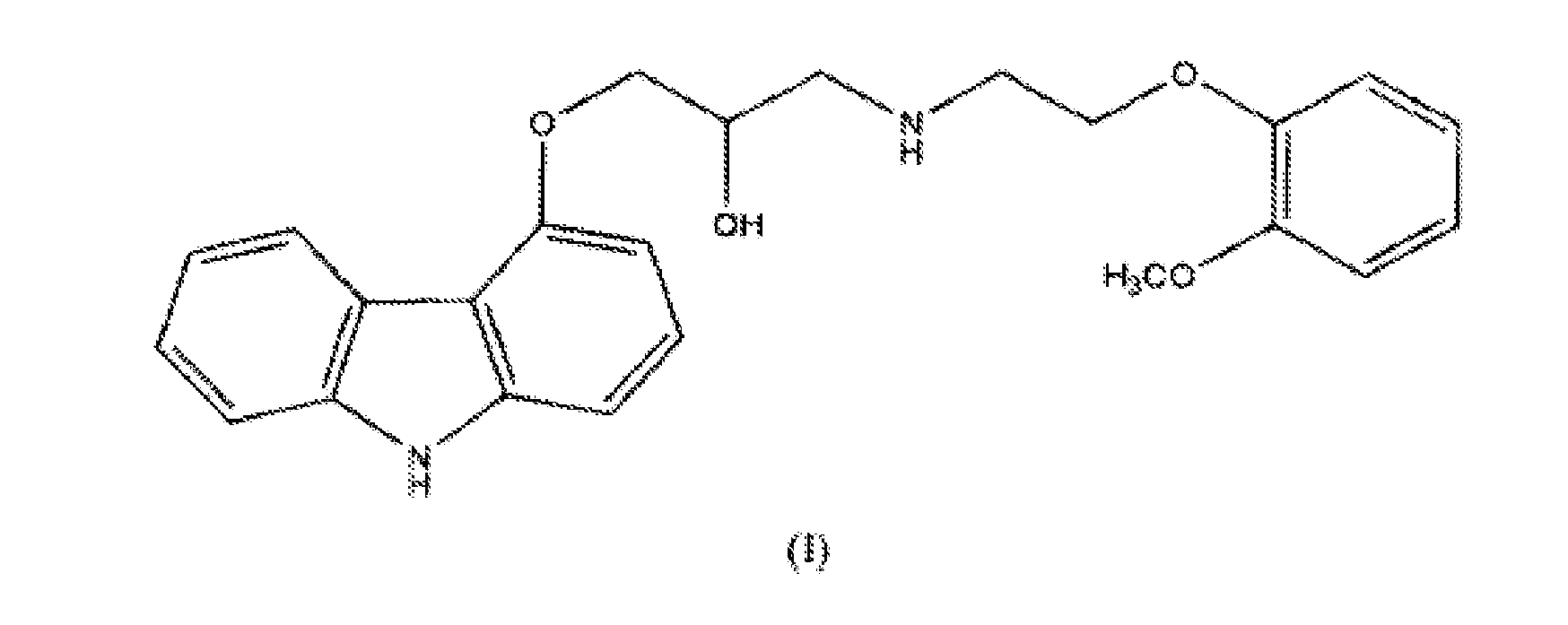
[0001] The present invention is concerned with a new process for preparing 1-(9H-carbazol-4-yloxy)-3-[[2-(2-methoxyphenoxy)ethyl]amino]-2-propanol of formula (I)
[0002] The above compound of formula (I) is known under the INN name of carvedilol and is used as a drug having antihypertensive, beta-adrenergic blocking and vasodilating activity.
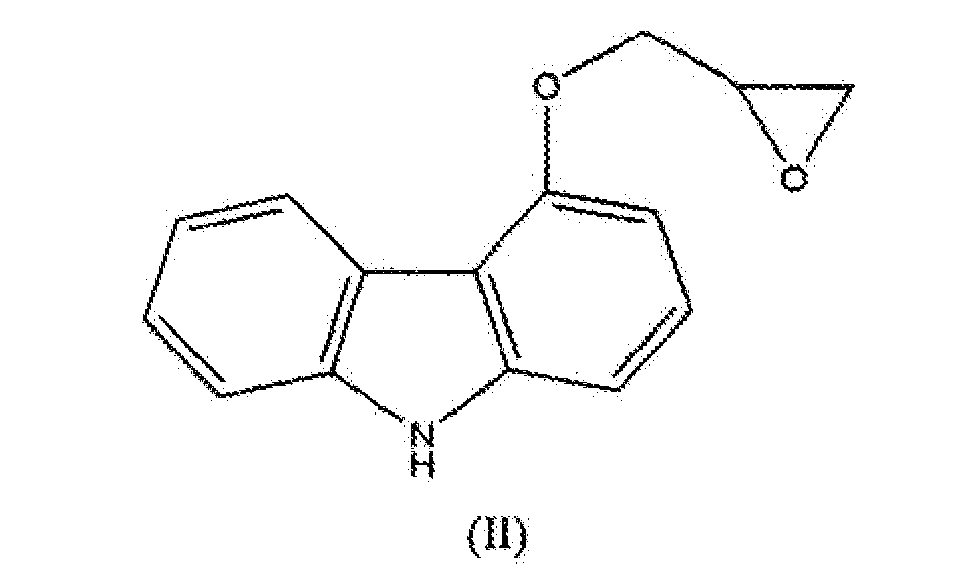
[0003] The preparation of carvedilol has been known from DE 2815926, while the preparation of the R and S enantiomers has been described in DE 3313027. More particularly, 2,3-epoxypropoxy carbazole of formula (II)
or the R or S enantiomer thereof, is reacted with 2-[2'-(methoxy)-phenoxy]-ethylamine of formula (III)
to produce carvedilol in a yield of 39 to 42%. A drawback of this known process is that in addition to the formation of carvedilol, the following bis compound of formula (IV) is also formed
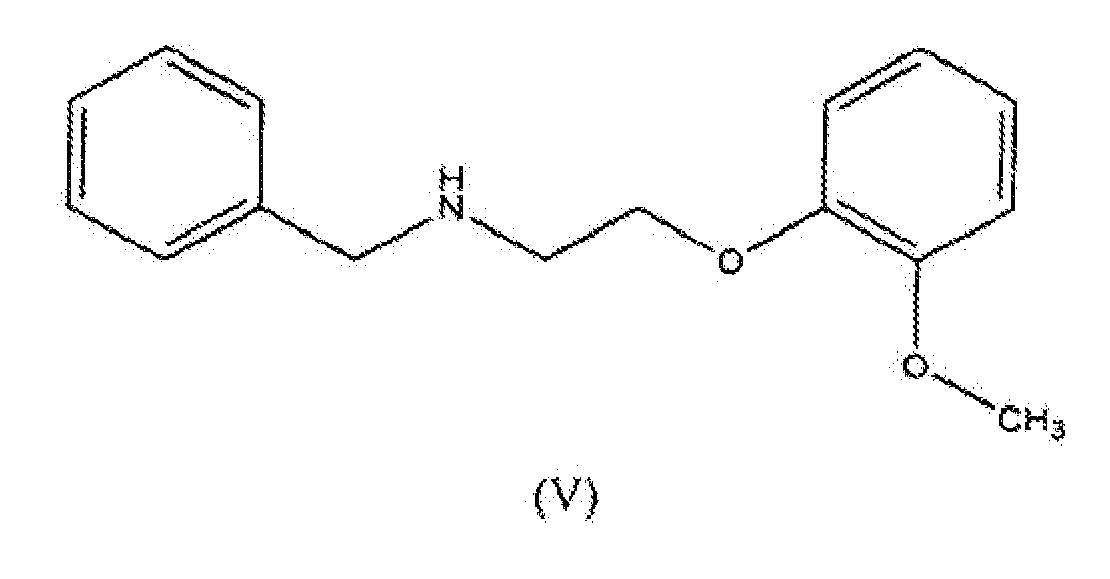
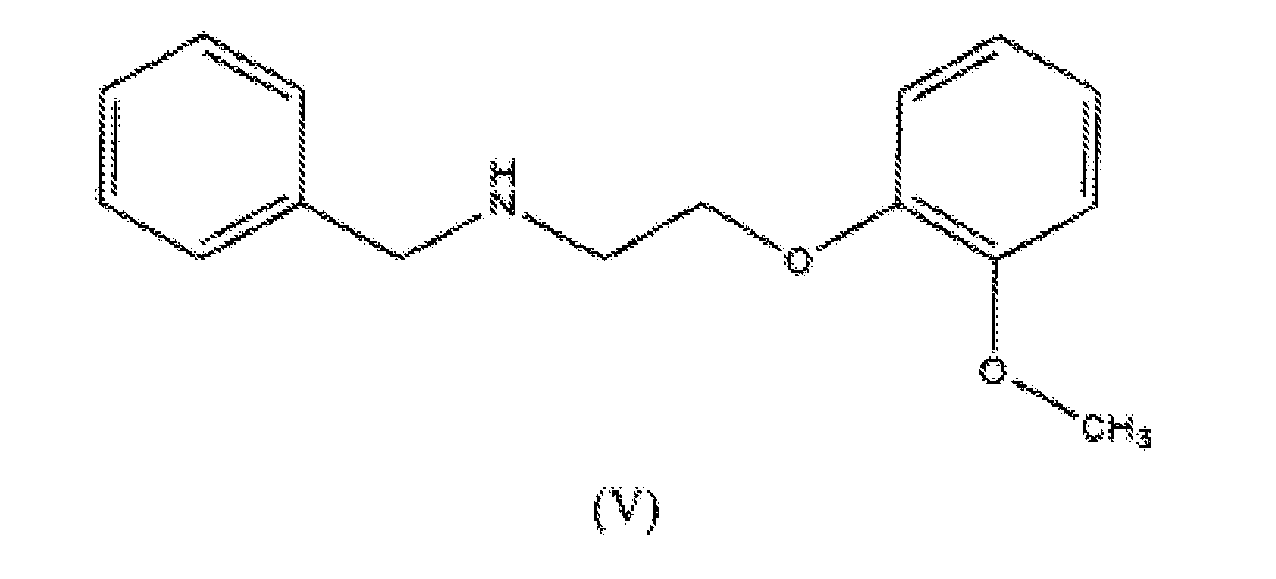
[0004] Further processes for the preparation of carvedilol have also been described in DE 2815926. In Example 5 of DE 2815926, 2,3-epoxypropoxy carbazole of above formula (II) is reacted with the secondary amine N-[2-(2-methoxy-phenoxy)ethyl]-benzylamine of formula (V)
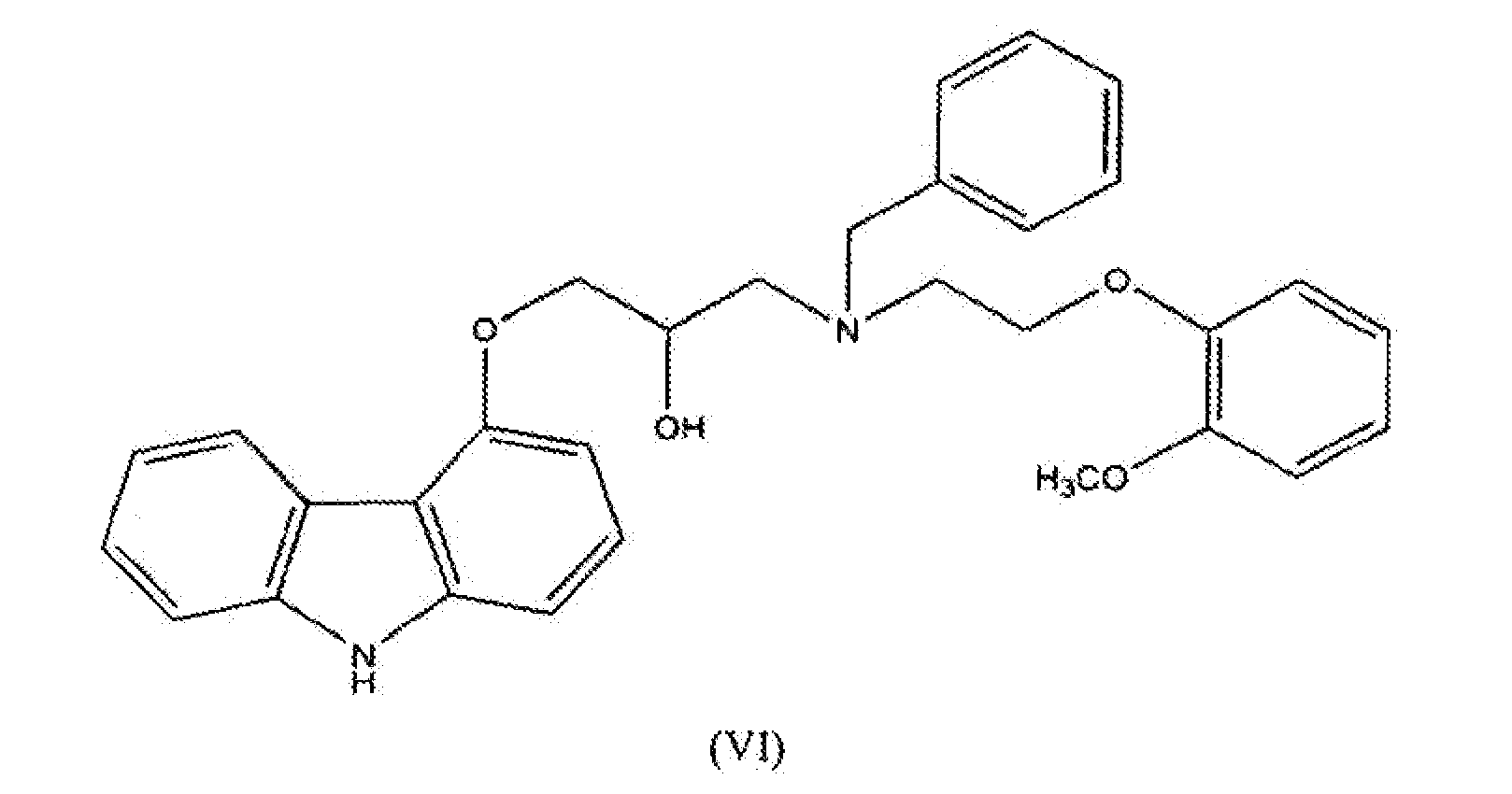
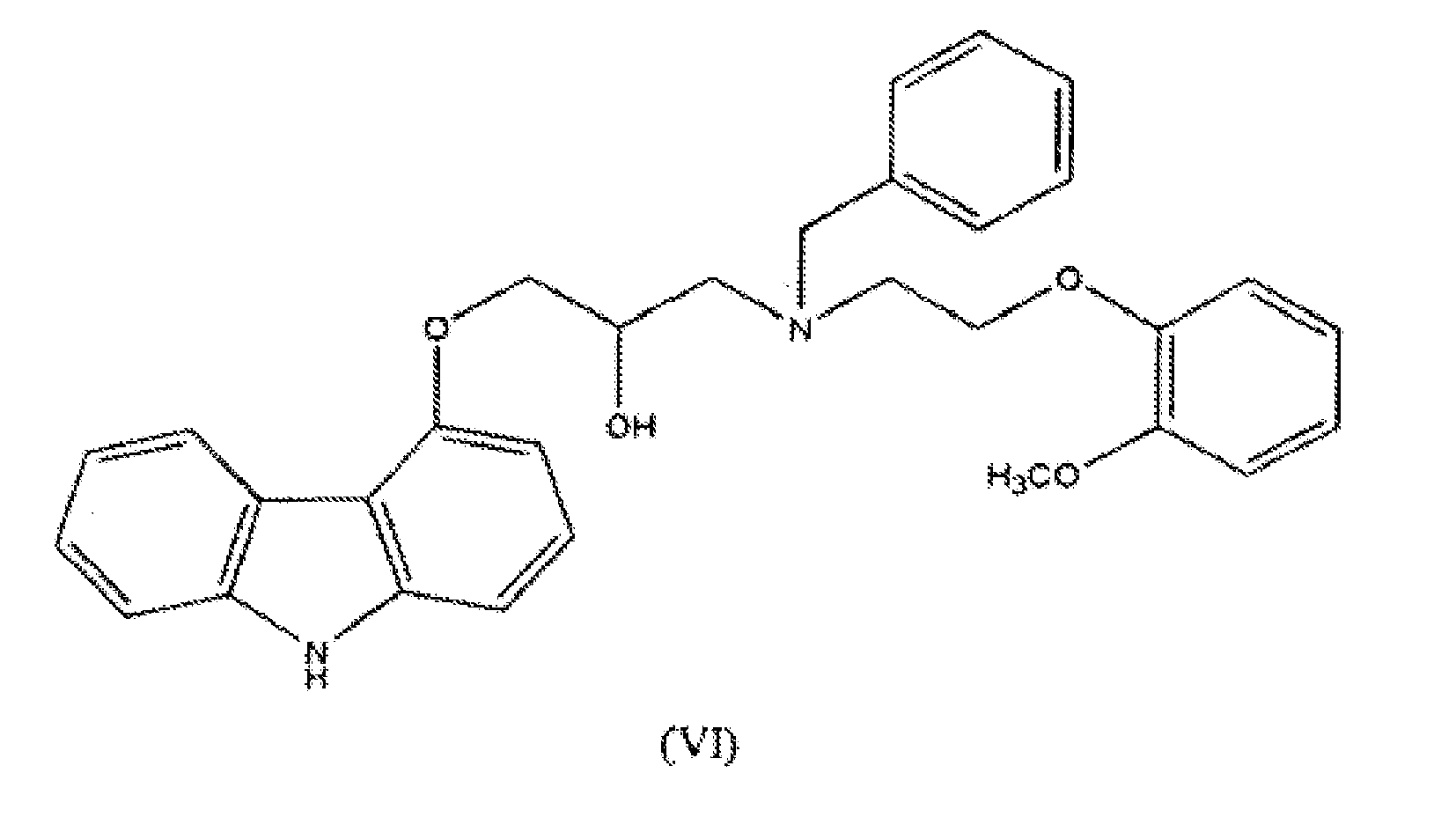
to yield benzyl carvedilol of formula (VI)
[0005] The thus formed benzyl carvedilol of formula (VI) required column chromatography for separation.
[0006] EP 0918055 describes a process for the preparation of carvedilol, which is characterised in that 2,3-epoxypropoxy carbazole of formula (II) is reacted with N-[2-(2-methoxy-phenoxy)ethyl]-benzylamine of formula (V) in the presence of a protic organic solvent and the thus formed benzyl carvedilol of formula (VI) is debenzylated by catalytic hydrogenation.
[0007] The present invention now provides an improved process for the preparation of carvedilol of formula (I)
either in enantiomeric substantially pure form, or as an enantiomeric mixture, optionally as a pharmaceutically acceptable salt thereof,
which process comprises reacting 2,3-epoxypropoxy carbazole of formula (II)
or the R or S enantiomer thereof, with N-[2-(2-methoxy-phenoxy)ethyl]-benzylamine of formula (V)
to yield the benzyl carvedilol of formula (VI)
which is debenzylated by catalytic hydrogenation to yield carvedilol of formula (I), either in enantiomeric substantially pure form, or as an enantiomeric mixture, and if desired reacting the thus formed carvedilol of formula (I) with an inorganic or organic acid to yield a pharmaceutically acceptable salt thereof, and / or, if desired, separating the enantiomers;
which process is characterised in that reaction of said 2,3-epoxypropoxy carbazole of formula (II) with said N-[2-(2-methoxy-phenoxy)ethyl]-benzylamine of formula (V) is carried out in water as the reaction medium.
Preferably in a process according to the present invention 2,3-epoxypropoxy carbazole of formula (II) is prepared from 4-hydroxy carbazole of formula (VII)
which process step can also be characterised as being carried out in water as the reaction medium.
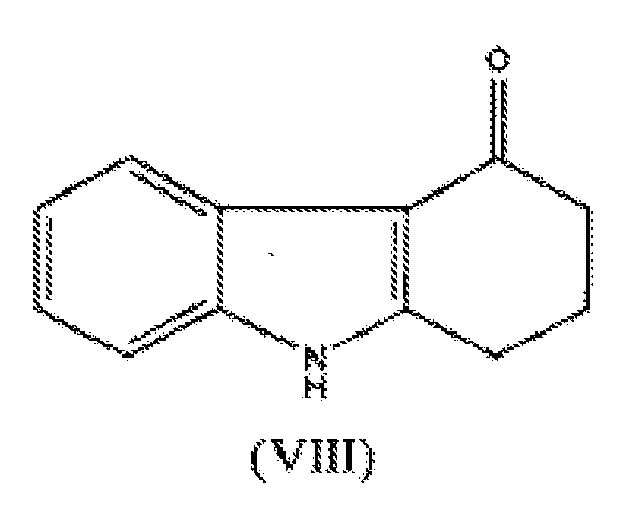
It is further preferred that in a process according to the present invention 4-hydroxy carbazole of formula (VII) is prepared from 1,2,3,9-tetrahydrocarbazole-4-one of formula (VIII)
which process step can also be characterised as being carried out in water as the reaction medium.
A process according to the present invention of preparing carvedilol of formula (I), either in enantiomeric substantially pure form, or as an enantiomeric mixture, optionally as a pharmaceutically acceptable salt thereof, can thus be represented by the following reaction scheme
and if desired reacting the thus formed carvedilol of formula (I) with an inorganic or organic acid to yield a pharmaceutically acceptable salt thereof, and / or, if desired, separating the enantiomers,
characterised in that at least for reaction of compounds of formulae (II) and (V), this process step is carried out in water as the reaction medium. More preferably, for a process as represented by the above reaction scheme each of the illustrated intermediate process steps leading to benzyl carvedilol of formula (VI) is carried out in water as the reaction medium.
[0008] A process according to the present invention is advantageous in that it allows the preparation of carvedilol of formula (I) from 1,2,3,9-tetrahydrocarbazole-4-one of formula (VIII) by intermediate process steps which up to and including the preparation of benzyl carvedilol of formula (VI) can each be carried out in water as the reaction medium. 1,2,3,9-tetrahydrocarbazole-4-one of formula (VIII) is a known compound and can be prepared under aqueous conditions from 1,3-cyclohexanedione and phenyl hydrazine, typically as described in Example 1 of US patent application no. 4273711. Intermediates (VII), (II) and (VI) can be isolated at each intermediate process stage; alternatively a process as represented by the above scheme can be carried out as a one-pot process. A process according to the present invention can thus offer the advantages of being environmentally friendly (with no organic solvent being used for the reaction), can achieve an improved yield compared to prior art processes and is industrially applicable for large scale production.
[0009] There is further provided by the present invention, therefore, a process of preparing carvedilol of formula (I), either in enantiomeric substantially pure form, or as an enantiomeric mixture, optionally as a pharmaceutically acceptable salt thereof, which can be represented by the following reaction scheme
and if desired reacting the thus formed carvedilol of formula (I) with an inorganic or organic acid to yield a pharmaceutically acceptable salt thereof, and / or, if desired, separating the enantiomers,
characterised in that the process steps leading to the preparation of benzyl carvedilol of formula (VI) are carried out as a one-pot process in water as the reaction medium.
[0010] Debenzylation of benzyl carvedilol of formula (VI) by catalytic hydrogenation can be carried out in a manner known per se in connection with the removal of a benzyl group. Preferably as a catalyst palladium on carbon is used. Suitably, hydrogen gas is bubbled through the reaction mixture at room temperature and the temperature is then raised to 45 - 50°C and the bubbling of hydrogen gas is continued for a further 8 hours. Typically, the reaction mass is filtered to remove the catalyst and the filtrate is subsequently concentrated to remove solvent. The resulting contents can then be chilled, filtered and washed to provide carvedilol of formula (I).
[0011] Reaction of compounds of formulae (II) and (V) to yield benzyl carvedilol of formula (VI) is carried out in water as the reaction medium substantially as hereinbefore described and preferably also in the presence of a base, such as an alkali metal carbonate, typically potassium carbonate or the like. The reaction mixture is suitably heated and stirred for several hours and the resulting contents can then be cooled, filtered and washed to provide benzyl carvedilol of formula (VI).
[0012] N-[2-(2-methoxy-phenoxy)ethyl]-benzylamine of formula (V) can be prepared by techniques known in the art, for example as described in J. Med. Chem., 8 [1965], 356 to 367.
[0013] 2,3-Epoxypropoxy carbazole of formula (II) can be prepared from 4-hydroxy carbazole of formula (VII) by reaction of the latter with epichlorohydrin in water as the reaction medium substantially as hereinbefore described and preferably also in the presence of a phase transfer catalyst, such as tetrabutyl ammonium bromide or the like. Suitably a base is present in the reaction mixture, such as an alkali metal hydroxide, typically sodium hydroxide or the like.
[0014] 4-Hydroxy carbazole of formula (VII) is in turn prepared from 1,2,3,9-tetrahydrocarbazole-4-one of formula (VIII) in a process according to the present invention, typically by employing a catalyst known to be suitable for the hydration of double bonds, such as Raney nickel, in water as the reaction medium and again suitably in the presence of a base, such as an alkali metal hydroxide, typically sodium hydroxide or the like.
[0015] In a preferred embodiment, the reaction of compound II with compound V is carried out in the absence of an organic acid.
[0016] In a preferred embodiment, the reaction of compound II with compound V is carried out in the absence of an aprotic solvent.
[0017] In a preferred embodiment, the reaction of compound II with compound V is carried out in the absence of ethers, esters, ketones, amides, nitriles, hydrocarbons, hydrobromides, halogenated hydrocarbons, and aromatic solvents.
[0018] In a preferred embodiment, the reaction of compound II with compound V is carried out in the absence of dioxane, tetrahydrofuran, dimethoxyethane, diisopropylether, methyltertbutylether, ethyl acetate and methylacetate.
[0019] In a preferred embodiment, wherein each of the illustrated intermediate process steps leading to benzyl carvedilol of formula (VI) is carried out in the absence of an organic acid.
[0020] In a preferred embodiment, wherein each of the illustrated intermediate process steps leading to benzyl carvedilol of formula (VI) is carried out in the absence of an aprotic solvent.
[0021] In a preferred embodiment, wherein each of the illustrated intermediate process steps leading to benzyl carvedilol of formula (VI) is carried out in the absence of ethers, esters, ketones, amides, nitriles, hydrocarbons, hydrobromides, halogenated hydrocarbons, and aromatic solvents.
[0022] In a preferred embodiment, wherein each of the illustrated intermediate process steps leading to benzyl carvedilol of formula (VI) is carried out in the absence of dioxane, tetrahydrofuran, dimethoxyethane, diisopropylether, methyltertbutylether, ethyl acetate and methylacetate.
[0023] In a preferred embodiment, the reaction of compound II with compound V is carried out in the presence of water as the reaction medium in an amount such that the molar ratio of compound II to water is I to >= 1.
[0024] In a preferred embodiment, the reaction of compound II with compound V is carried out in the presence of water as the reaction medium in an amount such that the molar ratio of compound II to water is 1 to >= 10.
[0025] In a preferred embodiment, the reaction of compound II with compound V is carried out in the presence of water as the reaction medium in an amount such that the molar ratio of compound II to water is 1 to >= 20.
[0026] In a preferred embodiment, the reaction of compound II with compound V is carried out in the presence of water as the reaction medium in an amount such that the molar ratio of compound II to water is 1 to >= 40.
[0027] typically, the reaction of compound II with compound V is carried out in the presence of water as the reaction medium in an amount such that the molar ratio of compound II to water is 1 to =< 100.
[0028] In a preferred embodiment, the reaction of compound II with compound V is carried out in the presence of water as the reaction medium in an amount such that the weight ratio of compound II to water is 1 to >= 0.5.
[0029] In a preferred embodiment, the reaction of compound II with compound V is carried out in the presence of water as the reaction medium in an amount such that the weight ratio of compound II to water is 1 to >= 1.0.
[0030] In a preferred embodiment, the reaction of compound II with compound V is carried out in the presence of water as the reaction medium in an amount such that the weight ratio of compound II to water is 1 to >= 2.0.
[0031] In a preferred embodiment, the reaction of compound II with compound V is carried out in the presence of water as the reaction medium in an amount such that the weight ratio of compound II to water is I to >= 4.0.
[0032] Typically, the reaction of compound II with compound V is carried out in the presence of water as the reaction medium in an amount such that the molar ratio of compound II to water is 1 to =< 10.
[0033] Carvedilol of formula (I) as prepared by a process according to the present invention, may be used in therapy.
[0034] Carvedilol of formula (I) as prepared by a process according to the present invention is known to have vasodilatory and beta-adrenergic blocking action. Carvedilol of formula (I) as prepared by the present invention is, therefore, suitable for the treatment and prophylaxis of circulatory and cardiac diseases, for example hypertension and angina pectoris.
[0035] The present application further discloses, therefore, a pharmaceutical composition for the treatment and prophylaxis of hypertension and / or angina pectoris, which composition comprises a pharmaceutically acceptable carrier and in a therapeutically effective amount carvedilol of formula (I) as provided by the present invention.
[0036] For the preparation of a pharmaceutical composition described above, carvedilol of formula (I) as prepared by the present invention can be mixed in the usual manner with appropriate pharmaceutical carrier materials, aroma, flavoring and coloring materials as required and, for example, formulated into tablets, or with the addition of appropriate adjuvants, suspended or dissolved in water or in an oil.
[0037] Carvedilol of formula (I) as prepared by the present invention can be administered enterally or parenterally in liquid or solid form. As injection medium, it is preferable to use water which contains the additives usual in the case of injection solutions, such as stabilizing agents, solubilizing agents and / or buffers. Additives of this type include, for example, tartrate and citrate buffers, ethanol, complex-forming agents (such as ethylenediaminetetraacetic acid and the non-toxic salts thereof) and high molecular weight polymers (such as liquid polyethylene oxide) for viscosity regulation. Solid carrier materials are, for example starch, lactose, mannitol, methyl cellulose, talc, highly dispersed silicic acids, high molecular weight fatty acids (such as stearic acid), gelatine, agar-agar, calcium phosphate, magnesium stearate, animal and vegetable fats and solid high molecular weight polymers (such as polyethylene glycols). Compositions suitable for oral administration can, if desired, contain flavoring and / or sweetening materials.
[0038] In actual administration of carvedilol of formula (I) as prepared by the present invention, e.g., in the treatment of hypertension or angina pectoris, the appropriate dosage is of course dependent on the condition of the patient and the specific infirmity to be treated. In general, treatment should begin with small doses (e.g. 100 mg) and be increased gradually depending upon the patient's response. The dosage can be increased at 5 to 7 day intervals until an average daily dosage of 100 to 300 mg is reached. For maintenance, 2 to 4 doses a day are usually required. These dosage levels will generally be appropriate, both for achieving a vasodilating effect, i.e., for reducing blood pressure, and for inhibition of adrenergic beta-receptor activity.
[0039] The present invention will now be further illustrated by the following Example, which does not limit the scope of the invention in anyway.
Example
Step 1: Preparation of 4-hydroxy carbazole
[0040] To a reactor containing water (1L) was added Raney nickel (35g) followed by 1,2,3,9-tetrahydrocarbazole-4-one (50g) and sodium hydroxide (15g). The contents were heated to reflux and maintained for about 20 hours. The catalyst was filtered off and the filtrate was acidified to obtain a solid, which was filtered and dried to obtain the title compound. When necessary, the title compound was further purified by dissolving in 10% sodium hydroxide solution, treating with activated charcoal and precipitation from dilute hydrochloric acid to give off-white to grey crystals of 4-hydroxy carbazole in 50% yield.
Step 2: Preparation of 2,3-Epoxypropoxy carbazole
[0041] 4-Hydroxy carbazole (60g) obtained in step 1 was charged into a reactor containing water (90ml). Epichlorohydrin (64.2g) and tetrabutyl ammonium bromide (6.3g) were then charged into the reactor under stirring. 50% Sodium hydroxide solution (78g) was added slowly in 2 - 3 hours into the reaction mass at about 30°C. After completion of reaction, ethyl acetate (315ml) and potable water (315ml) were charged into the reaction mass. The lower aqueous layer was separated and discarded. The ethyl acetate layer was washed with potable water to obtain neutral pH and dried over anhydrous sodium sulphate. The ethyl acetate is distilled out under vacuum below 55°C to about 100ml. The reaction mass was chilled to 0- 5°C and filtered and dried at 50-60°C to give the title compound (50g) (64%).
Step 3: Preparation of N-Benzyl carvedilol
[0042] Epoxy carbazole (100g) obtained in step 2 was charged to water (500ml) under stirring followed by potassium carbonate (112g) and N-[2-(2-methoxy-phenoxy)ethyl]-benzylamine (140g) at room temperature. The contents were heated to 80 - 90°C and stirred for 3 hours at 85 - 90°C. The reaction mass was cooled to 30 - 35°C and water was decanted. Fresh water (1L) was added and the mass stirred to obtain a solid which was filtered and washed with water to obtain the title compound (205g) (99%).
Step 4: Preparation of Carvedilol
[0043] Benzyl carvedilol (205g) obtained in step 3 was charged to ethyl acetate (2400ml) and water (240ml). The contents were stirred and 10% palladium on carbon (20g) was added at room temperature. Hydrogen gas was bubbled at room temperature. The temperature was raised to 45 - 50°C and bubbling was continued for 8 hours. The reaction mass was filtered to remove the catalyst and the filtrate was concentrated to remove solvent (about 2L). The contents were chilled to 15 - 20°C, filtered and washed with chilled ethyl acetate (50ml) to give carvedilol (140g) (84%).
1. A process for the preparation of carvedilol of formula (I)
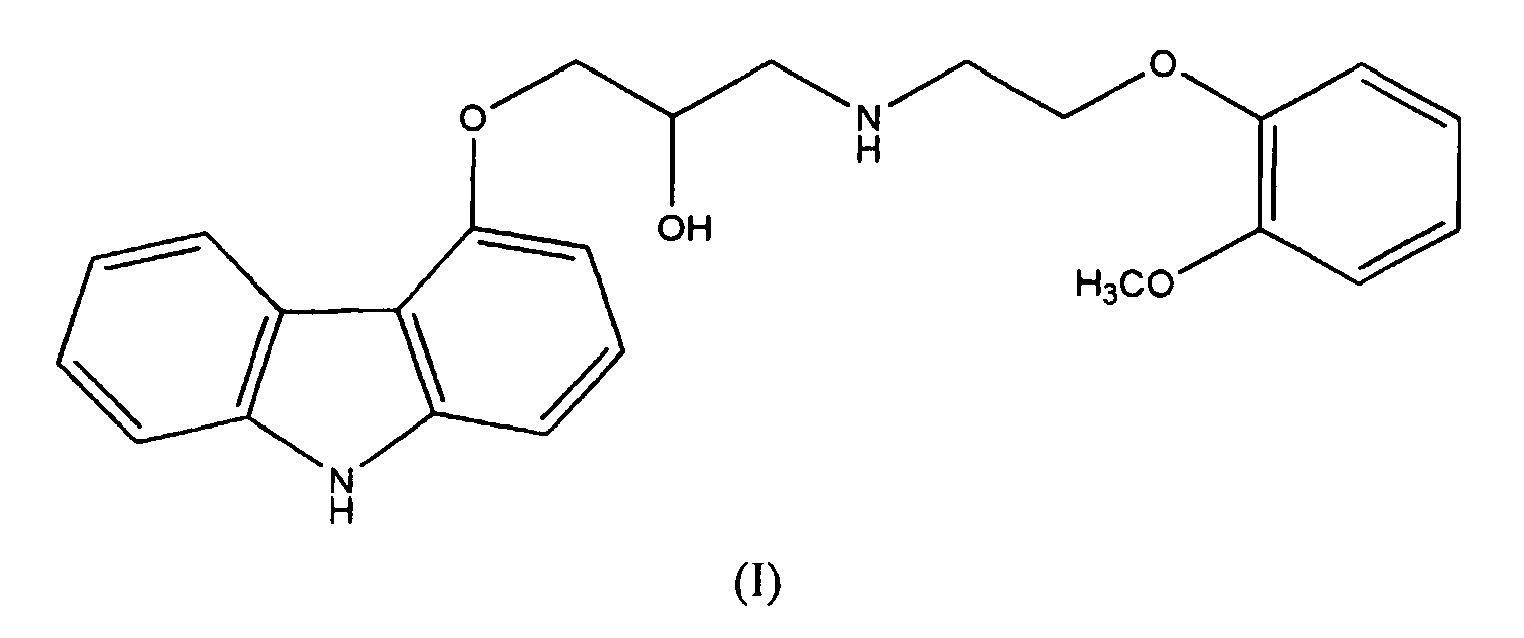
either in enantiomeric substantially pure form, or as an enantiomeric mixture, optionally as a pharmaceutically acceptable salt thereof,
which process comprises reacting 2,3-epoxypropoxy carbazole of formula (II)
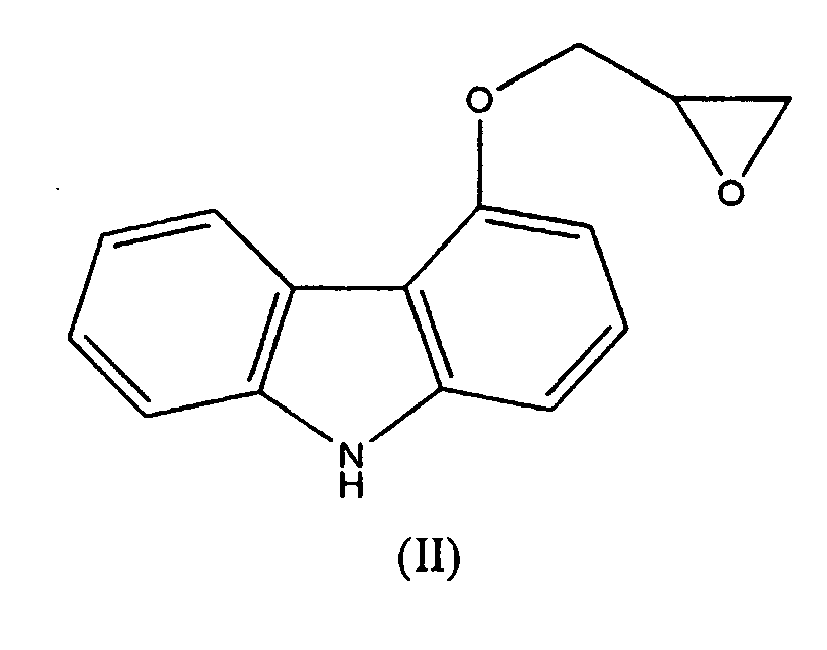
or the R or S enantiomer thereof, with N-[2-(2-methoxy-phenoxy)ethyl]-benzylamine of formula (V)
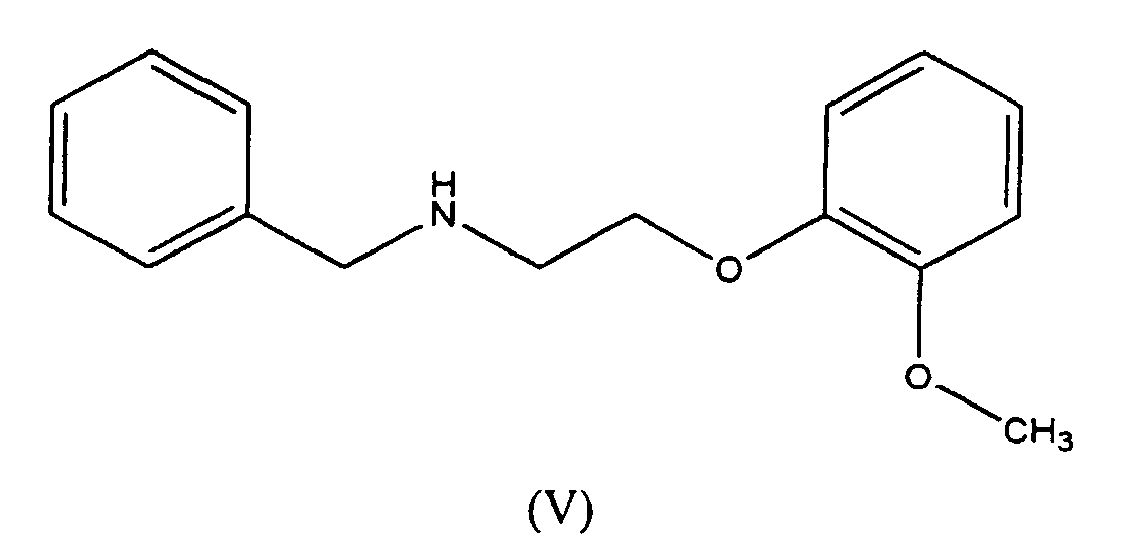
to yield benzyl carvedilol of formula (VI)
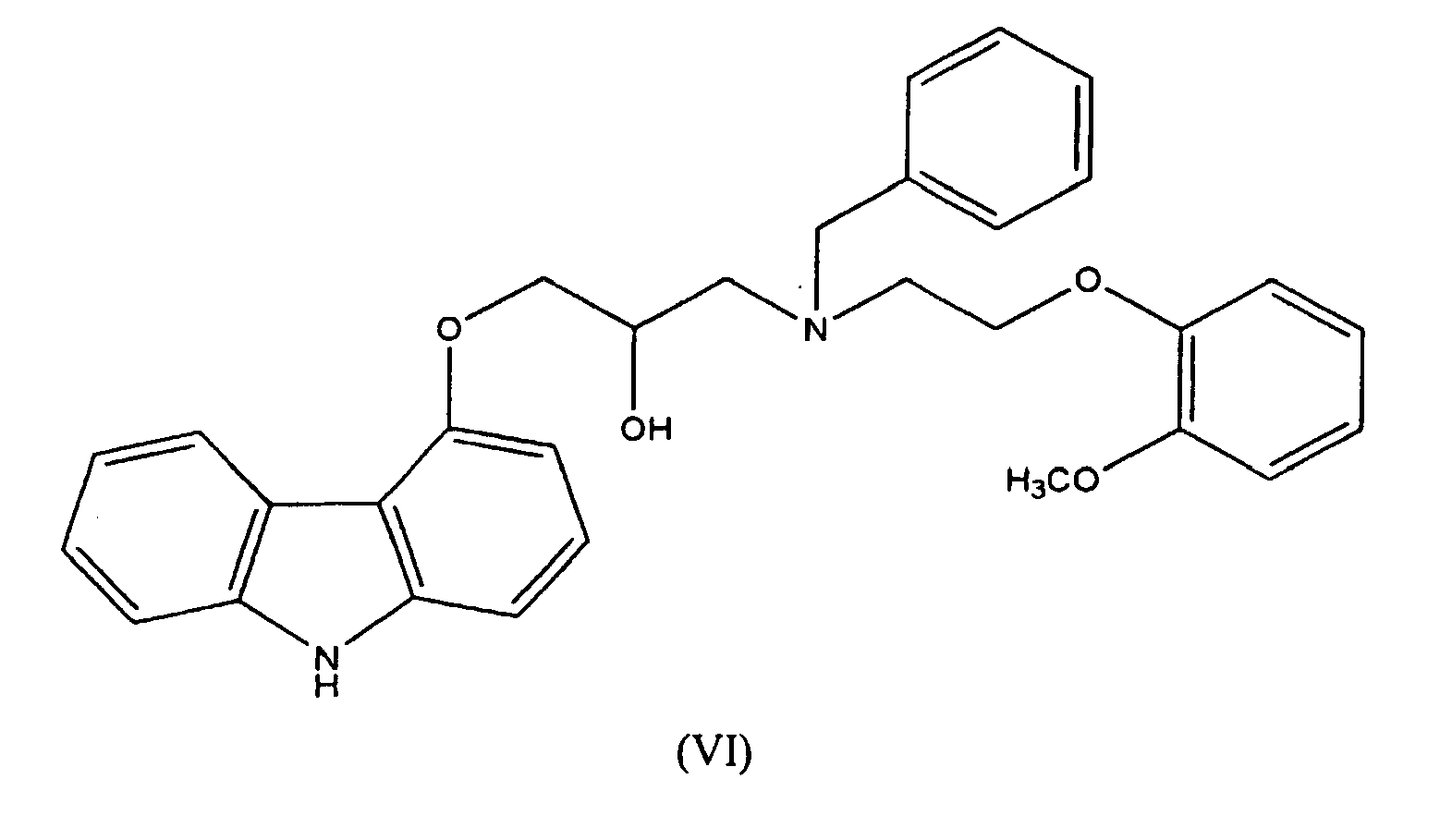
which is debenzylated by catalytic hydrogenation to yield carvedilol of formula (I), either in enantiomeric substantially pure form, or as an enantiomeric mixture, and if desired reacting the thus formed carvedilol of formula (I) with an inorganic or organic acid to yield a pharmaceutically acceptable salt thereof, and / or, if desired, separating the enantiomers;
which process is characterised in that reaction of said 2,3-epoxypropoxy carbazole of formula (II) with said N-[2-(2-methoxy-phenoxy)ethyl]-benzylamine of formula (V) is carried out in water as the reaction medium.
either in enantiomeric substantially pure form, or as an enantiomeric mixture, optionally as a pharmaceutically acceptable salt thereof,
which process comprises reacting 2,3-epoxypropoxy carbazole of formula (II)
or the R or S enantiomer thereof, with N-[2-(2-methoxy-phenoxy)ethyl]-benzylamine of formula (V)
to yield benzyl carvedilol of formula (VI)
which is debenzylated by catalytic hydrogenation to yield carvedilol of formula (I), either in enantiomeric substantially pure form, or as an enantiomeric mixture, and if desired reacting the thus formed carvedilol of formula (I) with an inorganic or organic acid to yield a pharmaceutically acceptable salt thereof, and / or, if desired, separating the enantiomers;
which process is characterised in that reaction of said 2,3-epoxypropoxy carbazole of formula (II) with said N-[2-(2-methoxy-phenoxy)ethyl]-benzylamine of formula (V) is carried out in water as the reaction medium.
2. A process according to claim 1, wherein 2,3-epoxypropoxy carbazole of formula (II)
is prepared from 4-hydroxy carbazole of formula (VII)
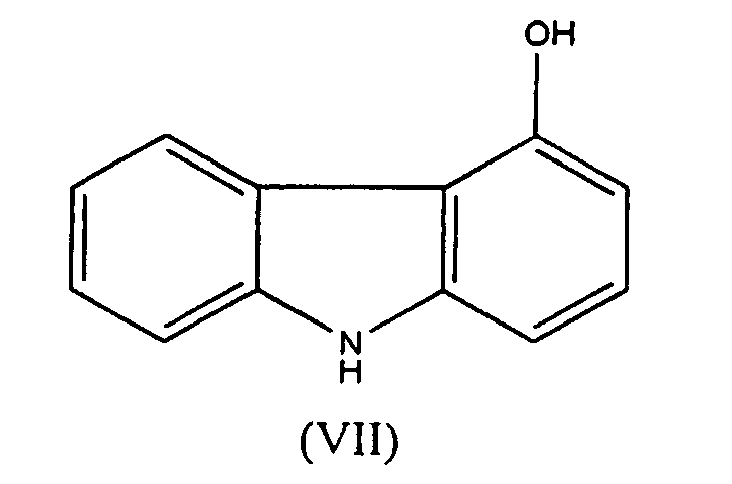
which process step is characterised as being carried out in water as the reaction medium.
which process step is characterised as being carried out in water as the reaction medium.
3. A process according to claim 2, wherein said 4-hydroxy carbazole of formula (VII)
is prepared from 1,2,3,9-tetrahydrocarbazole-4-one of formula (VIII)
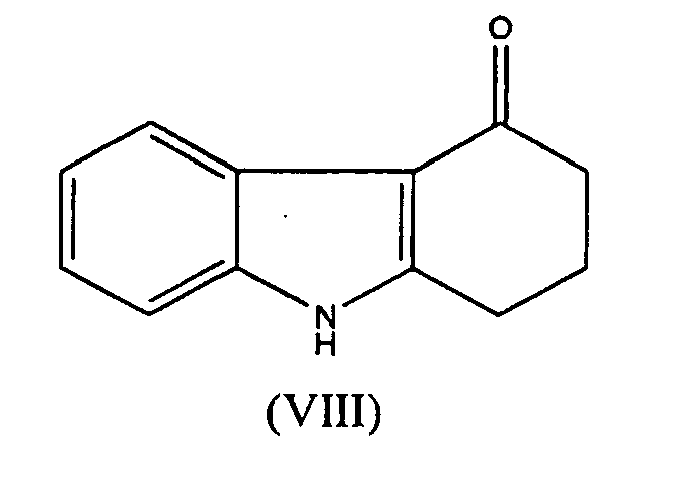
which process step is characterised as being carried out in water as the reaction medium.
which process step is characterised as being carried out in water as the reaction medium.
4. A process of preparing carvedilol of formula (I), either in enantiomeric substantially
pure form, or as an enantiomeric mixture, optionally as a pharmaceutically acceptable
salt thereof, represented by the following reaction scheme
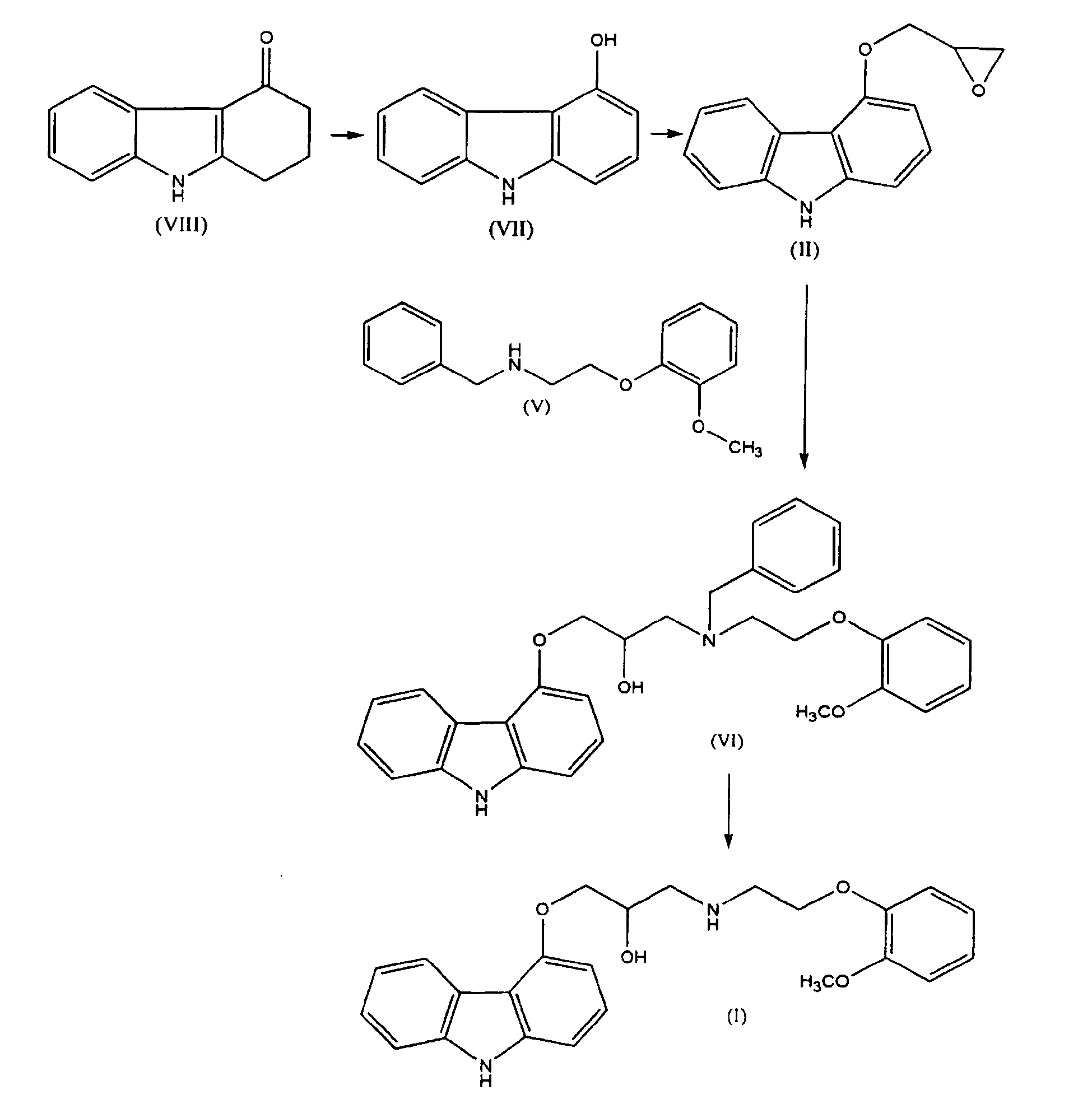
and if desired reacting the thus formed carvedilol of formula (I) with an inorganic or organic acid to yield a pharmaceutically acceptable salt thereof, and / or, if desired, separating the enantiomers,
which process is characterised in that at least for reaction of compounds of formulae (II) and (V), this process step is carried out in water as the reaction medium.
and if desired reacting the thus formed carvedilol of formula (I) with an inorganic or organic acid to yield a pharmaceutically acceptable salt thereof, and / or, if desired, separating the enantiomers,
which process is characterised in that at least for reaction of compounds of formulae (II) and (V), this process step is carried out in water as the reaction medium.
5. A process according to claim 4, wherein each of the illustrated intermediate process
steps leading to benzyl carvedilol of formula (VI) is carried out in water as the
reaction medium.
6. A process of preparing carvedilol of formula (I), either in enantiomeric substantially
pure form, or as an enantiomeric mixture, optionally as a pharmaceutically acceptable
salt thereof, which process is represented by the following reaction scheme
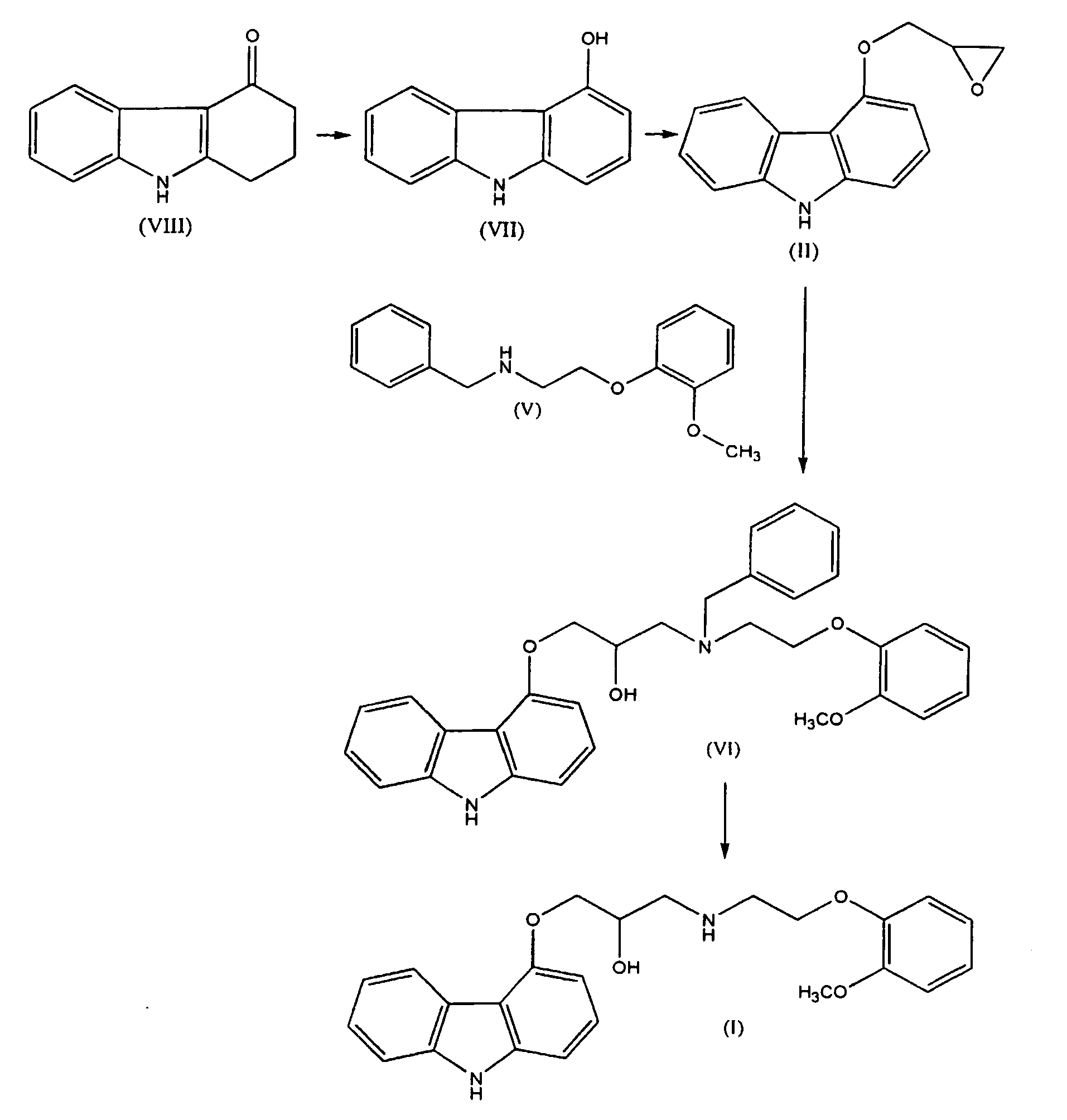
and if desired reacting the thus formed carvedilol of formula (I) with an inorganic or organic acid to yield a pharmaceutically acceptable salt thereof, and / or, if desired, separating the enantiomers,
characterised in that the process steps leading to the preparation of benzyl carvedilol of formula (VI) are carried out as a one-pot process in water as the reaction medium.
and if desired reacting the thus formed carvedilol of formula (I) with an inorganic or organic acid to yield a pharmaceutically acceptable salt thereof, and / or, if desired, separating the enantiomers,
characterised in that the process steps leading to the preparation of benzyl carvedilol of formula (VI) are carried out as a one-pot process in water as the reaction medium.
7. A process according to any of claims 1 to 6, wherein debenzylation of benzyl carvedilol
of formula (VI) is carried out in the presence of palladium on carbon as a catalyst.
8. A process according to any of claims 1 to 7, wherein reaction of compounds of formulae
(II) and (V) to yield benzyl carvedilol of formula (VI) is carried out in the presence
of a base.
9. A process according to claim 8, wherein said base is potassium carbonate.
10. A process according to any of claims 2 to 9, wherein 2,3-epoxypropoxy carbazole of
formula (II) is prepared from 4-hydroxy carbazole of formula (VII) by reaction of
the latter with epichlorohydrin in water as the reaction medium.
11. A process according to claim 10, wherein 4-hydroxy carbazole of formula (VII) is reacted
with epichlorohydrin in the presence of a phase transfer catalyst.
12. A process according to claim 11, wherein said phase transfer catalyst is tetrabutyl
ammonium bromide.
13. A process according to any of claims 10 to 12, which is carried out in the presence
of a base.
14. A process according to claim 13, wherein said base is sodium hydroxide.
15. A process according to any of claims 3 to 14, wherein 4-hydroxy carbazole of formula
(VII) is prepared from 1,2,3,9-tetrahydrocarbazole-4-one of formula (VIII) using Raney
nickel as catalyst.
16. A process according to claim 15, which is carried out in the presence of a base.
17. A process according to claim 16, wherein said base is sodium hydroxide.
18. A process according to any preceding claim, wherein the reaction of compound II with
compound V is carried out in the absence of an organic acid
19. A process according to any one of claims 1 to 17, wherein the reaction of compound
II with compound V is carried out in the absence of an aprotic solvent.
20. A process according to any one of claims 1 to 17, wherein the reaction of compound
II with compound V is carried out in the absence of ethers, esters, ketones, amides,
nitriles, hydrocarbons, hydrobromides, halogenated hydrocarbons, and aromatic solvents.
21. A process according to any one of claims 1 to 17, wherein the reaction of compound
II with compound V is carried out in the absence of dioxane, tetrahydrofuran, dimethoxyethane,
diisopropylether, methyltertbutylether, ethyl acetate and methylacetate.
22. A process according to any one of claims 4 to 6, wherein each of the illustrated intermediate
process steps leading to benzyl carvedilol of formula (VI) is carried out in the absence
of an aprotic solvent.
23. A process according to any preceding claim, wherein the reaction of compound II with
compound V is carried out in the presence of water as the reaction medium in an amount
such that the molar ratio of compound II to water is 1 to >= 1.
24. A process according to any one of claims 1 to 22, wherein the reaction of compound
II with compound V is carried out in the presence of water as the reaction medium
in an amount such that the weight ratio of compound II to water is 1 to >= 1.
1. Verfahren zur Herstellung von Carvedilol der Formel (I)
entweder in im Wesentlichen enantiomerenreiner Form oder als ein Enantiomerengemisch, gegebenenfalls als ein pharmazeutisch verträgliches Salz davon,
wobei das Verfahren das Umsetzen von 2,3-Epoxypropoxycarbazol der Formel (II)
oder des R- oder S-Enantiomers davon, mit N-[2-(2-Methoxy-phenoxy)ethyl]-benzylamin der Formel (V)
zum Erhalten von Benzylcarvedilol der Formel (VI)
welches durch katalytische Hydrierung debenzyliert wird, um Carvedilol der Formel (I) entweder in im Wesentlichen enantiomerenreiner Form oder als ein Enantiomerengemisch zu erhalten, und, falls gewünscht, das Umsetzen des so gebildeten Carvedilols der Formel (I) mit einer anorganischen oder organischen Säure zum Erhalten eines pharmazeutisch verträglichen Salzes davon und/oder, falls gewünscht, das Trennen der Enantiomere umfasst;
wobei das Verfahren dadurch gekennzeichnet ist, dass die Reaktion des 2,3-Epoxypropoxycarbazols der Formel (II) mit dem N-[2-(2-Methoxy-phenoxy)ethyl]-benzylamin der Formel (V) in Wasser als das Reaktionsmedium durchgeführt wird.
entweder in im Wesentlichen enantiomerenreiner Form oder als ein Enantiomerengemisch, gegebenenfalls als ein pharmazeutisch verträgliches Salz davon,
wobei das Verfahren das Umsetzen von 2,3-Epoxypropoxycarbazol der Formel (II)
oder des R- oder S-Enantiomers davon, mit N-[2-(2-Methoxy-phenoxy)ethyl]-benzylamin der Formel (V)
zum Erhalten von Benzylcarvedilol der Formel (VI)
welches durch katalytische Hydrierung debenzyliert wird, um Carvedilol der Formel (I) entweder in im Wesentlichen enantiomerenreiner Form oder als ein Enantiomerengemisch zu erhalten, und, falls gewünscht, das Umsetzen des so gebildeten Carvedilols der Formel (I) mit einer anorganischen oder organischen Säure zum Erhalten eines pharmazeutisch verträglichen Salzes davon und/oder, falls gewünscht, das Trennen der Enantiomere umfasst;
wobei das Verfahren dadurch gekennzeichnet ist, dass die Reaktion des 2,3-Epoxypropoxycarbazols der Formel (II) mit dem N-[2-(2-Methoxy-phenoxy)ethyl]-benzylamin der Formel (V) in Wasser als das Reaktionsmedium durchgeführt wird.
2. Verfahren nach Anspruch 1, worin 2,3-Epoxypropoxycarbazol der Formel (II) aus
4-Hydroxycarbazol der Formel (VII) hergestellt wird
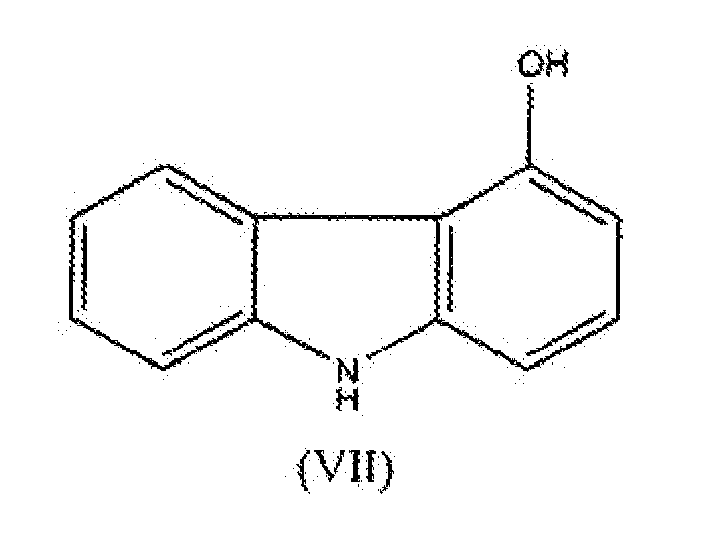
wobei dieser Verfahrensschritt dadurch gekennzeichnet ist, dass er in Wasser als das Reaktionsmedium durchgeführt wird.
4-Hydroxycarbazol der Formel (VII) hergestellt wird
wobei dieser Verfahrensschritt dadurch gekennzeichnet ist, dass er in Wasser als das Reaktionsmedium durchgeführt wird.
3. Verfahren nach Anspruch 2, worin das 4-Hydroxycarbazol der Formel (VII) aus
1,2,3,9-Tetrahydrocarbazol-4-on der Formel (VIII) hergestellt wird
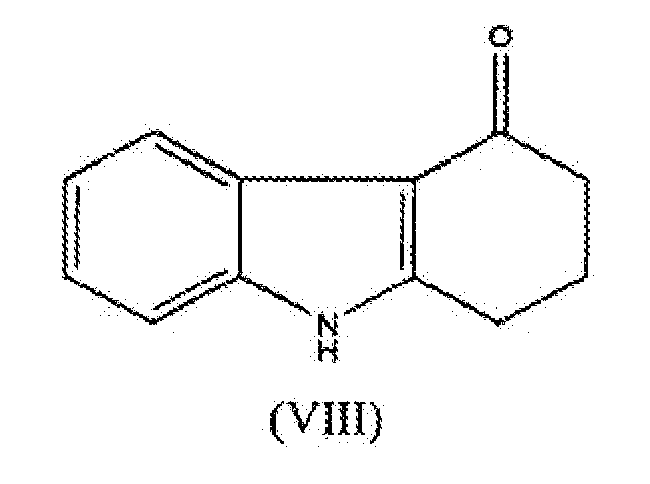
wobei dieser Verfahrensschritt dadurch gekennzeichnet ist, dass er in Wasser als das Reaktionsmedium durchgeführt wird.
1,2,3,9-Tetrahydrocarbazol-4-on der Formel (VIII) hergestellt wird
wobei dieser Verfahrensschritt dadurch gekennzeichnet ist, dass er in Wasser als das Reaktionsmedium durchgeführt wird.
4. Verfahren zum Herstellen von Carvedilol der Formel (I), entweder in im Wesentlichen
enantiomerenreiner Form oder als ein Enantiomerengemisch, gegebenenfalls als ein pharmazeutisch
verträgliches Salz davon, das durch das folgende Reaktionsschema wiedergegeben ist
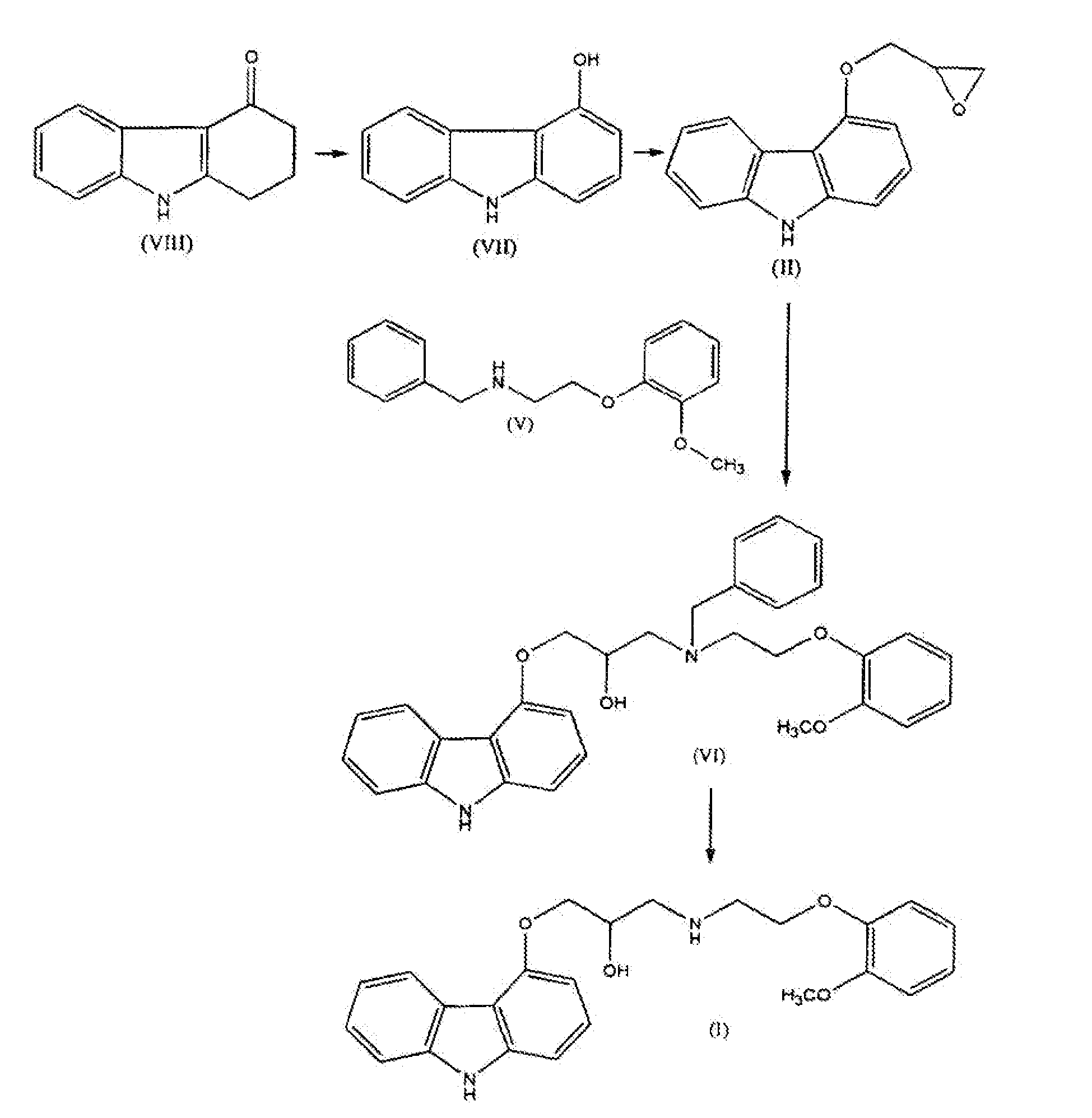
und, falls gewünscht, Umsetzen des so gebildeten Carvedilols der Formel (I) mit einer anorganischen oder organischen Säure, um ein pharmazeutisch verträgliches Salz davon zu erhalten, und/oder, falls gewünscht, Trennen der Enantiomere,
wobei das Verfahren dadurch gekennzeichnet ist, dass wenigstens für die Reaktion der Verbindungen der Formeln (II) und (V) dieser Verfahrensschritt in Wasser als das Reaktionsmedium durchgeführt wird.
und, falls gewünscht, Umsetzen des so gebildeten Carvedilols der Formel (I) mit einer anorganischen oder organischen Säure, um ein pharmazeutisch verträgliches Salz davon zu erhalten, und/oder, falls gewünscht, Trennen der Enantiomere,
wobei das Verfahren dadurch gekennzeichnet ist, dass wenigstens für die Reaktion der Verbindungen der Formeln (II) und (V) dieser Verfahrensschritt in Wasser als das Reaktionsmedium durchgeführt wird.
5. Verfahren nach Anspruch 4, worin jeder der veranschaulichten intermediären Verfahrensschritte,
die zu Benzylcarvedilol der Formel (VI) führen, in Wasser als das Reaktionsmedium
durchgeführt wird.
6. Verfahren zum Herstellen von Carvedilol der Formel (I), entweder in im Wesentlichen
enantiomerenreiner Form oder als ein Enantiomerengemisch, gegebenenfalls als ein pharmazeutisch
verträgliches Salz davon, wobei das Verfahren durch das folgende Reaktionsschema wiedergegeben
ist
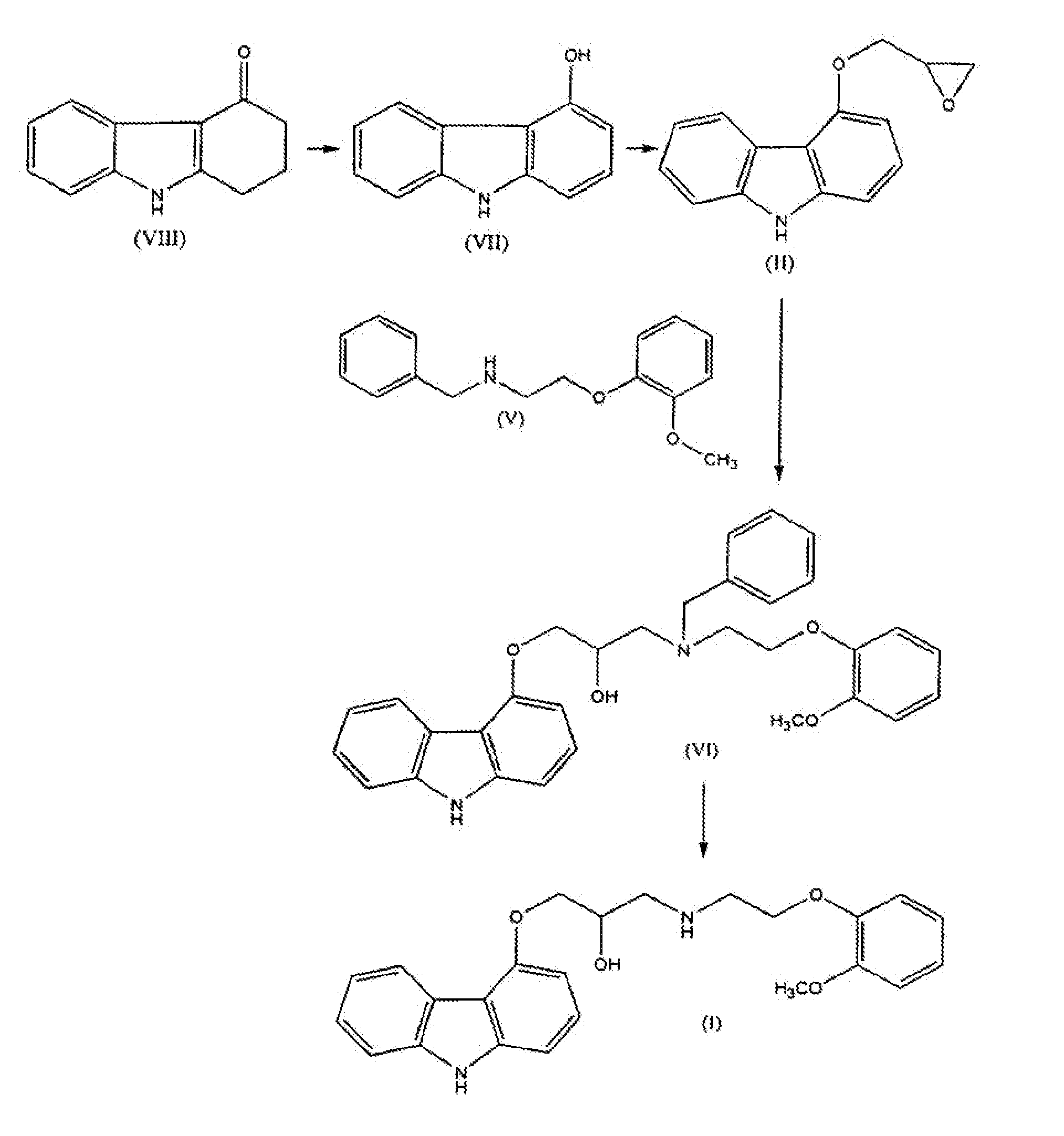
und, falls gewünscht, Umsetzen des so gebildeten Carvedilols der Formel (I) mit einer anorganischen oder organischen Säure, um ein pharmazeutisch verträgliches Salz davon zu erhalten, und/oder, falls gewünscht, Trennen der Enantiomere,
dadurch gekennzeichnet, dass die Verfahrensschritte, die zur Herstellung von Benzylcarvedilol der Formel (VI) führen, als ein Eintopfverfahren in Wasser als das Reaktionsmedium durchgeführt werden.
und, falls gewünscht, Umsetzen des so gebildeten Carvedilols der Formel (I) mit einer anorganischen oder organischen Säure, um ein pharmazeutisch verträgliches Salz davon zu erhalten, und/oder, falls gewünscht, Trennen der Enantiomere,
dadurch gekennzeichnet, dass die Verfahrensschritte, die zur Herstellung von Benzylcarvedilol der Formel (VI) führen, als ein Eintopfverfahren in Wasser als das Reaktionsmedium durchgeführt werden.
7. Verfahren nach einem der Ansprüche 1 bis 6, worin die Debenzylierung von Benzylcarvedilol
der Formel (VI) in Gegenwart von Palladium auf Kohlenstoff als Katalysator durchgeführt
wird.
8. Verfahren nach einem der Ansprüche 1 bis 7, worin die Reaktion der Verbindungen der
Formeln (II) und (V) zum Erhalten von Benzylcarvedilol der Formel (VI) in Gegenwart
einer Base durchgeführt wird.
9. Verfahren nach Anspruch 8, worin die Base Kaliumcarbonat ist.
10. Verfahren nach einem der Ansprüche 2 bis 9, worin 2,3-Epoxypropoxycarbazol der Formel
(II) aus 4-Hydroxycarbazol der Formel (VII) durch Reaktion des letzteren mit Epichlorhydrin
in Wasser als das Reaktionsmedium hergestellt wird.
11. Verfahren nach Anspruch 10, worin 4-Hydroxycarbazol der Formel (VII) mit Epichlorhydrin
in Gegenwart eines Phasentransferkatalysators durchgeführt wird.
12. Verfahren nach Anspruch 11, worin der Phasentransferkatalysator Tetrabutylammoniumbromid
ist.
13. Verfahren nach einem der Ansprüche 10 bis 12, welches in Gegenwart einer Base durchgeführt
wird.
14. Verfahren nach Anspruch 13, worin die Base Natriumhydroxid ist.
15. Verfahren nach einem der Ansprüche 3 bis 14, worin 4-Hydroxycarbazol der Formel (VII)
aus 1,2,3,9-Tetrahydrocarbazol-4-on der Formel (VIII) unter Verwendung von Raney-Nickel
als Katalysator hergestellt wird.
16. Verfahren nach Anspruch 15, welches in Gegenwart einer Base durchgeführt wird.
17. Verfahren nach Anspruch 16, worin die Base Natriumhydroxid ist.
18. Verfahren nach einem der vorangehenden Ansprüche, worin die Reaktion von Verbindung
II mit Verbindung V in Abwesenheit einer organischen Säure durchgeführt wird.
19. Verfahren nach einem der Ansprüche 1 bis 17, worin die Reaktion von Verbindung II
mit Verbindung V in Abwesenheit eines aprotischen Lösungsmittels durchgeführt wird.
20. Verfahren nach einem der Ansprüche 1 bis 17, worin die Reaktion von Verbindung II
mit Verbindung V in Abwesenheit von Ethern, Estern, Ketonen, Amiden, Nitrilen, Kohlenwasserstoffen,
Hydrobromiden, halogenierten Kohlenwasserstoffen und aromatischen Lösungsmitteln durchgeführt
wird.
21. Verfahren nach einem der Ansprüche 1 bis 17, worin die Reaktion von Verbindung II
mit Verbindung V in Abwesenheit von Dioxan, Tetrahydrofuran, Dimethoxyethan, Diisopropylether,
Methyltertbutylether, Ethylacetat und Methylacetat durchgeführt wird.
22. Verfahren nach einem der Ansprüche 4 bis 6, worin jeder der veranschaulichten intermediären
Verfahrensschritte, die zu Benzylcarvedilol der Formel (VI) führen, in Abwesenheit
eines aprotischen Lösungsmittels durchgeführt wird.
23. Verfahren nach einem der vorangehenden Ansprüche, worin die Reaktion von Verbindung
II mit Verbindung V in Gegenwart von Wasser als das Reaktionsmedium in einer solchen
Menge durchgeführt wird, dass das Molverhältnis von Verbindung II zu Wasser 1 zu >=
1 beträgt.
24. Verfahren nach einem der Ansprüche 1 bis 22, worin die Reaktion von Verbindung II
mit Verbindung V in Gegenwart von Wasser als das Reaktionsmedium in einer solchen
Menge durchgeführt wird, dass das Gewichtsverhältnis von Verbindung II zu Wasser 1
zu >= 1 beträgt.
1. Procédé de préparation du carvédilol de formule (I)
soit sous une forme énantiomère pratiquement pure soit sous forme d'un mélange d'énantiomères, éventuellement sous la forme d'un sel pharmaceutiquement acceptable de celui-ci
lequel procédé comprend la réaction du 2,3-époxypropoxy-carbazole de formule (II)

ou de l'énantiomère R ou S de celui-ci, avec de la N-[2-(2-méthoxy-phénoxy)éthyl]-benzylamine de formule (V)
pour produire le benzyl-carvédilol de formule (VI)
qui est débenzylé par hydrogénation catalytique pour produire le carvédilol de formule (I), soit sous une forme énantiomère pratiquement pure soit sous forme d'un mélange d'énantiomères, et si souhaité, la réaction du carvédilol de formule (I) ainsi formé avec un acide inorganique ou organique pour produire un sel pharmaceutiquement acceptable de celui-ci, et/ou, si souhaité, la séparation des énantiomères ;
lequel procédé est caractérisé en ce que la réaction dudit 2,3-époxypropoxy-carbazole de formule (II) avec ladite N-[2-(2-méthoxy-phénoxy)éthyl]-benzylamine de formule (V) est réalisée dans de l'eau en tant que milieu réactionnel.
soit sous une forme énantiomère pratiquement pure soit sous forme d'un mélange d'énantiomères, éventuellement sous la forme d'un sel pharmaceutiquement acceptable de celui-ci
lequel procédé comprend la réaction du 2,3-époxypropoxy-carbazole de formule (II)
ou de l'énantiomère R ou S de celui-ci, avec de la N-[2-(2-méthoxy-phénoxy)éthyl]-benzylamine de formule (V)
pour produire le benzyl-carvédilol de formule (VI)
qui est débenzylé par hydrogénation catalytique pour produire le carvédilol de formule (I), soit sous une forme énantiomère pratiquement pure soit sous forme d'un mélange d'énantiomères, et si souhaité, la réaction du carvédilol de formule (I) ainsi formé avec un acide inorganique ou organique pour produire un sel pharmaceutiquement acceptable de celui-ci, et/ou, si souhaité, la séparation des énantiomères ;
lequel procédé est caractérisé en ce que la réaction dudit 2,3-époxypropoxy-carbazole de formule (II) avec ladite N-[2-(2-méthoxy-phénoxy)éthyl]-benzylamine de formule (V) est réalisée dans de l'eau en tant que milieu réactionnel.
2. Procédé selon la revendication 1, dans lequel le 2,3-époxypropoxy-carbazole de formule
(II) est préparé à partir du 4-hydroxy-carbazole de formule (VII)

laquelle étape du procédé est caractérisée comme étant réalisée dans de l'eau en tant que milieu réactionnel.
laquelle étape du procédé est caractérisée comme étant réalisée dans de l'eau en tant que milieu réactionnel.
3. Procédé selon la revendication 2, dans lequel ledit 4-hydroxy-carbazole de formule
(VII) est préparé à partir de la 1,2,3,9-tétrahydrocarbazol-4-one de formule (VIII)
laquelle étape du procédé est caractérisée comme étant réalisée dans de l'eau en tant que milieu réactionnel.
laquelle étape du procédé est caractérisée comme étant réalisée dans de l'eau en tant que milieu réactionnel.
4. Procédé de préparation du carvédilol de formule (I), soit sous une forme énantiomère
pratiquement pure soit sous forme d'un mélange d'énantiomères, éventuellement sous
la forme d'un sel pharmaceutiquement acceptable de celui-ci, représenté par le schéma
réactionnel suivant
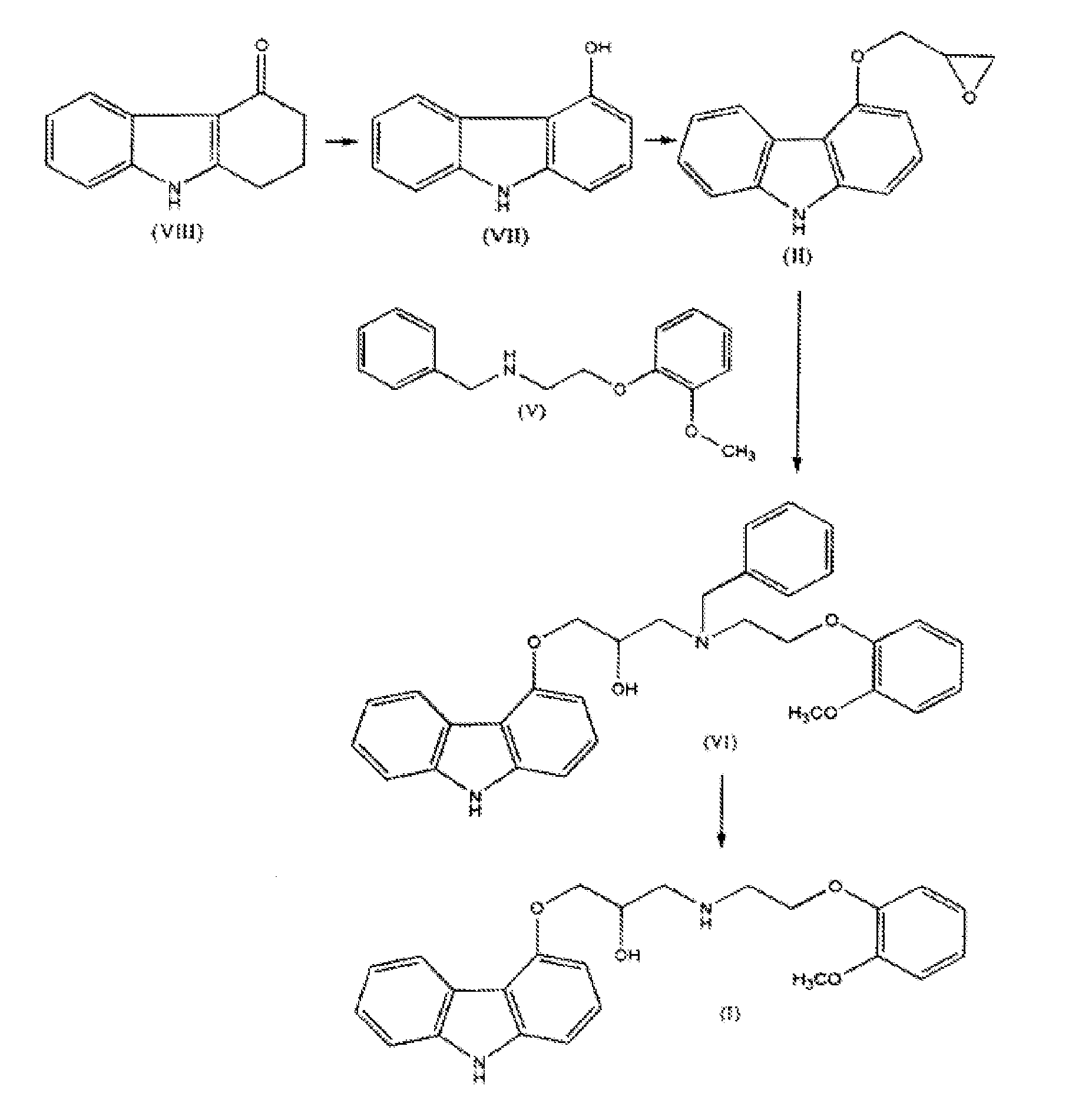
et si souhaité, la réaction du carvédilol de formule (I) ainsi formé avec un acide inorganique ou organique pour produire un sel pharmaceutiquement acceptable de celui-ci, et/ou, si souhaité, la séparation des énantiomères,
lequel procédé est caractérisé en ce qu'au moins pour la réaction des composés des formules (II) et (V), cette étape de procédé est réalisée dans de l'eau en tant que milieu réactionnel.
et si souhaité, la réaction du carvédilol de formule (I) ainsi formé avec un acide inorganique ou organique pour produire un sel pharmaceutiquement acceptable de celui-ci, et/ou, si souhaité, la séparation des énantiomères,
lequel procédé est caractérisé en ce qu'au moins pour la réaction des composés des formules (II) et (V), cette étape de procédé est réalisée dans de l'eau en tant que milieu réactionnel.
5. Procédé selon la revendication 4, dans lequel chacune des étapes intermédiaires illustrées
du procédé menant au benzyl-carvédilol de formule (VI) est réalisée dans de l'eau
en tant que milieu réactionnel.
6. Procédé de préparation du carvédilol de formule (I), soit sous une forme énantiomère
pratiquement pure soit sous forme d'un mélange d'énantiomères, éventuellement sous
la forme d'un sel pharmaceutiquement acceptable de celui-ci, lequel procédé est représenté
par le schéma réactionnel suivant
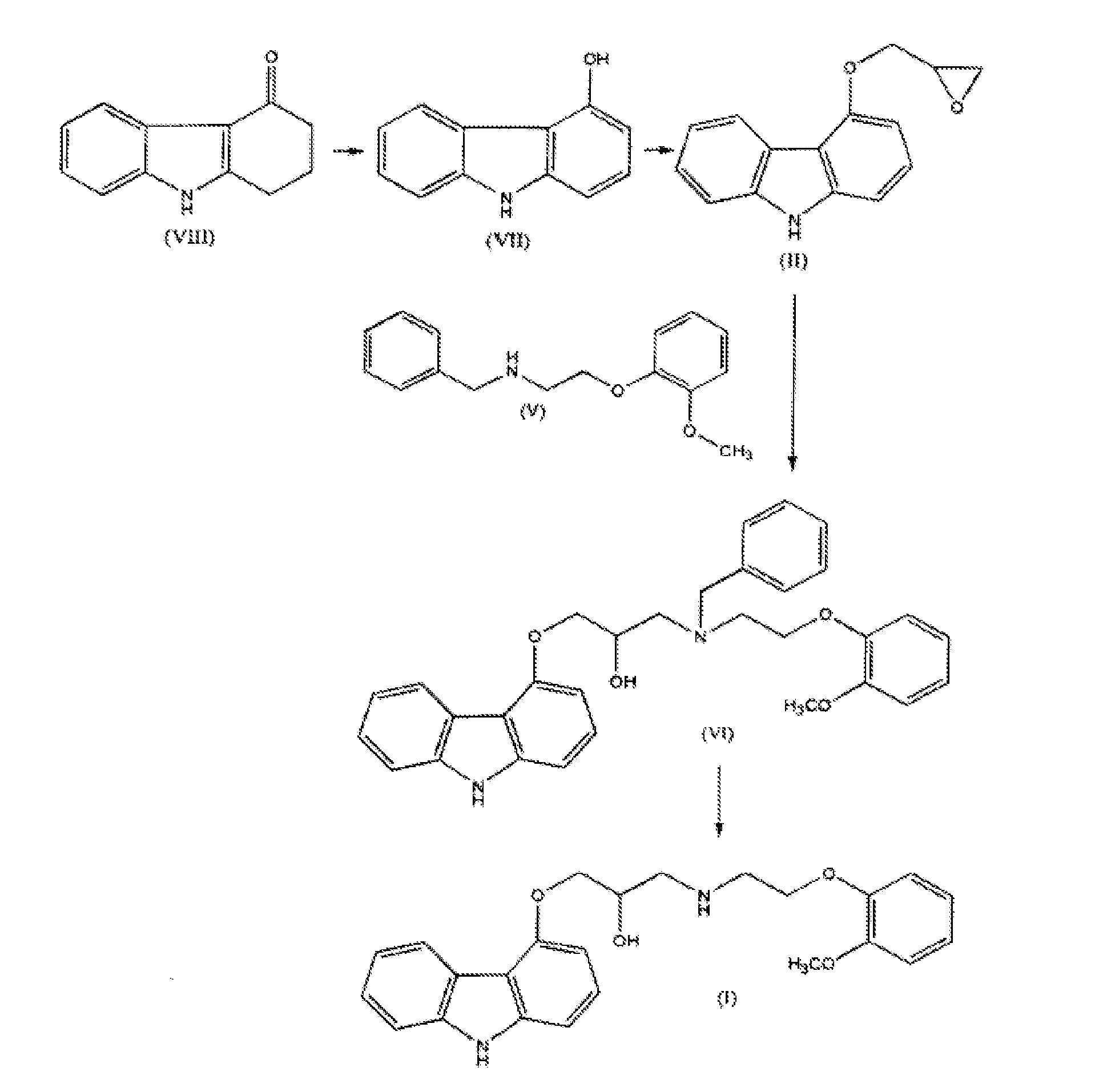
et si souhaité, la réaction du carvédilol de formule (I) ainsi formé avec un acide inorganique ou organique pour produire un sel pharmaceutiquement acceptable de celui-ci, et/ou, si souhaité, la séparation des énantiomères,
caractérisé en ce que les étapes du procédé menant à la préparation du benzyl-carvédilol de formule (VI) sont réalisées sous la forme d'un procédé monotope dans de l'eau en tant que milieu réactionnel.
et si souhaité, la réaction du carvédilol de formule (I) ainsi formé avec un acide inorganique ou organique pour produire un sel pharmaceutiquement acceptable de celui-ci, et/ou, si souhaité, la séparation des énantiomères,
caractérisé en ce que les étapes du procédé menant à la préparation du benzyl-carvédilol de formule (VI) sont réalisées sous la forme d'un procédé monotope dans de l'eau en tant que milieu réactionnel.
7. Procédé selon l'une quelconque des revendications 1 à 6, dans lequel le débenzylation
du benzyl-carvédilol de formule (VI) est réalisée en présence de palladium sur charbon
en tant que catalyseur.
8. Procédé selon l'une quelconque des revendications 1 à 7, dans lequel la réaction des
composés des formules (II) et (V) pour produire le benzyl-carvédilol de formule (VI)
est réalisée en présence d'une base.
9. Procédé selon la revendication 8, dans lequel ladite base est le carbonate de potassium.
10. Procédé selon l'une quelconque des revendications 2 à 9, dans lequel le 2,3-époxypropoxy-carbazole
de formule (II) est préparé à partir du 4-hydroxy-carbazole de formule (VII) par réaction
de ce dernier avec de l'épichlorohydrine dans de l'eau en tant que milieu réactionnel.
11. Procédé selon la revendication 10, dans lequel le 4-hydroxy-carbazole de formule (VII)
est mis à réagir avec de l'épichlorohydrine en présence d'un catalyseur de transfert
de phase.
12. Procédé selon la revendication 11, dans lequel ledit catalyseur de transfert de phase
est le bromure de tétrabutyl-ammonium.
13. Procédé selon l'une quelconque des revendications 10 à 12, qui est réalisé en présence
d'une base.
14. Procédé selon la revendication 13, dans lequel ladite base est l'hydroxyde de sodium.
15. Procédé selon l'une quelconque des revendications 3 à 14, dans lequel le 4-hydroxy-carbazole
de formule (VII) est préparé à partir de 1,2,3,9-tétrahydrocarbazol-4-one de formule
(VIII) en utilisant du nickel de Raney en tant que catalyseur.
16. Procédé selon la revendication 15, qui est réalisé en présence d'une base.
17. Procédé selon la revendication 16, dans lequel ladite base est l'hydroxyde de sodium.
18. Procédé selon l'une quelconque des revendications précédentes, dans lequel la réaction
du composé II avec le composé V est réalisée en l'absence d'un acide organique.
19. Procédé selon l'une quelconque des revendications 1 à 17, dans lequel la réaction
du composé II avec le composé V est réalisée en l'absence d'un solvant aprotique.
20. Procédé selon l'une quelconque des revendications 1 à 17, dans lequel la réaction
du composé II avec le composé V est réalisée en l'absence d'éthers, d'esters, de cétones,
d'amides, de nitriles, d'hydrocarbures, de bromhydrates, d'hydrocarbures halogénés
et de solvants aromatiques.
21. Procédé selon l'une quelconque des revendications 1 à 17, dans lequel la réaction
du composé II avec le composé V est réalisée en l'absence de dioxane, de tétrahydrofurane,
de diméthoxyéthane, d'éther de diisopropyle, d'éther de méthyle et de tert-butyle,
d'acétate d'éthyle et d'acétate de méthyle.
22. Procédé selon l'une quelconque des revendications 4 à 6, dans lequel chacune des étapes
intermédiaires illustrées du procédé menant au benzyl-carvédilol de formule (VI) est
réalisée en l'absence de solvant aprotique.
23. Procédé selon l'une quelconque des revendications précédentes, dans lequel la réaction
du composé II avec le composé V est réalisée en présence d'eau en tant que milieu
réactionnel dans une quantité telle que le rapport molaire du composé II sur l'eau
est de 1 à ≥ 1.
24. Procédé selon l'une quelconque des revendications 1 à 22, dans lequel la réaction
du composé II avec le composé V est réalisée en présence d'eau en tant que milieu
réactionnel dans une quantité telle que le rapport pondéral du composé II sur l'eau
est de 1 à ≥ 1.
REFERENCES CITED IN THE DESCRIPTION
This list of references cited by the applicant is for the reader's convenience only. It does not form part of the European patent document. Even though great care has been taken in compiling the references, errors or omissions cannot be excluded and the EPO disclaims all liability in this regard.
Patent documents cited in the description
Non-patent literature cited in the description
- J. Med. Chem., 1965, vol. 8, 356-367 [0013]