|
(11) | EP 2 688 875 B1 |

| (12) | EUROPEAN PATENT SPECIFICATION |
|
|
| (54) |
PROCESS FOR THE PREPARATION OF S-TRIAZINE COMPOUNDS VERFAHREN ZUR HERSTELLUNG VON S-TRIAZIN-VERBINDUNGEN PROCÉDÉ DE PRÉPARATION DE COMPOSÉS DE S-TRIAZINE |
|
|
|||||||||||||||||||||||||||||||
| Note: Within nine months from the publication of the mention of the grant of the European patent, any person may give notice to the European Patent Office of opposition to the European patent granted. Notice of opposition shall be filed in a written reasoned statement. It shall not be deemed to have been filed until the opposition fee has been paid. (Art. 99(1) European Patent Convention). |
[0001] The present invention relates to a process for the technically simple and economic preparation of s-triazine compounds, which can be used as photoprotective agents.
[0002] DE-A 32 05 398 describes s-triazine derivatives which are substituted by radicals of p-aminobenzoic acid esters, which are extraordinarily good photoprotective agents. According to the preparation examples, the compounds are prepared by reacting cyanuric chloride with a p-aminobenzoic acid ester in relatively large amounts of an aliphatic or aromatic hydrocarbon, in particular benzine or xylene, as solvent. The solvent residues remaining in the end product of ca. 20 to 30% by weight have to be completely removed by careful drying under reduced pressure.
[0003] This drying and the solvent exchange on an industrial scale cost energy and are very time-consuming since if the compounds are dried too rapidly at excessively high temperatures, the pure product that is produced has a lower solubility in the oils usually used in cosmetics.
[0004] Surprisingly, it has now been found that by using significantly reduced amounts of solvents, products of high purity and large yield can be prepared.
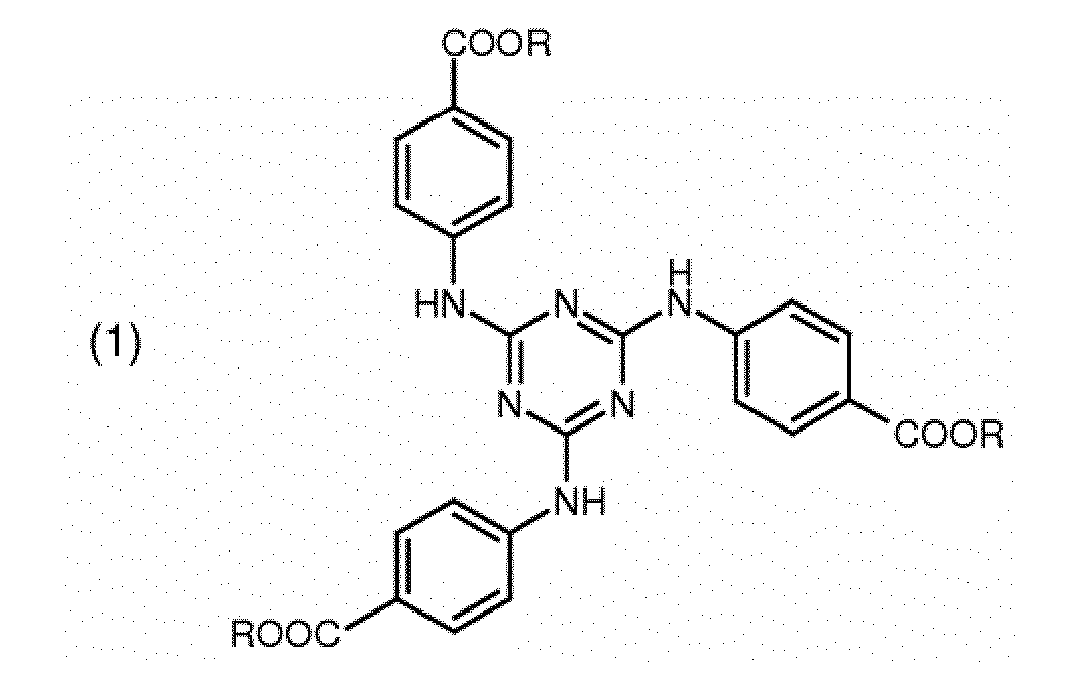
[0005] The present invention therefore relates to a process for the preparation of s-triazine derivatives of the formula
in which
R is a C1-C12-alkyl radical,
by reacting a cyanuric acid halide with a p-aminobenzoic acid ester, which comprises a C6-C12-alkyl radical as radical of the ester alcohol, in a molar ratio of 1:3 to 1:5 in a xylene isomer mixture as solvent, characterized in that the xylene isomer mixture is used in amounts of from 0.6 to 2.1 mol/l related to the cyanuric acid halide.
[0006] Starting compounds for the preparation of the s-triazine derivatives according to the invention are, besides cyanuric chloride or bromide, preferably cyanuric chloride, the C1-C12-n- or isoalkyl esters of p-aminobenzoic acid, preferably the C6-C10-n- or isoalkyl esters and very particularly preferably the 2-ethylhexyl ester (= ethylhexyltriazone).
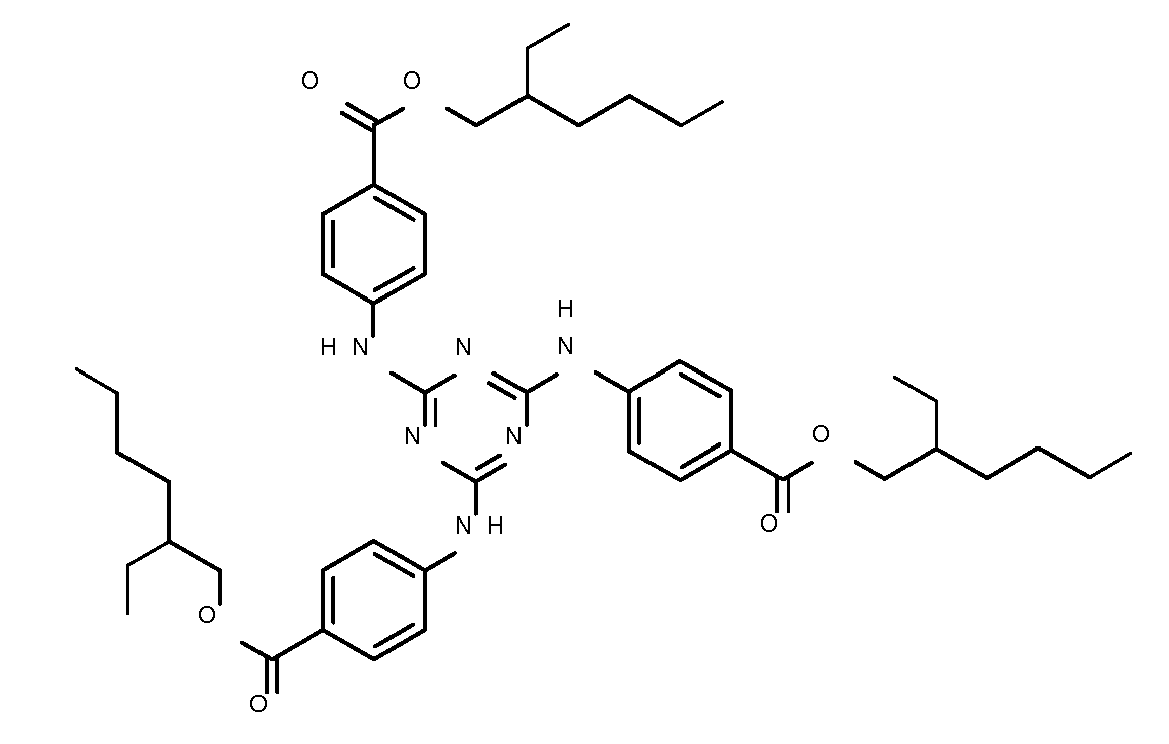
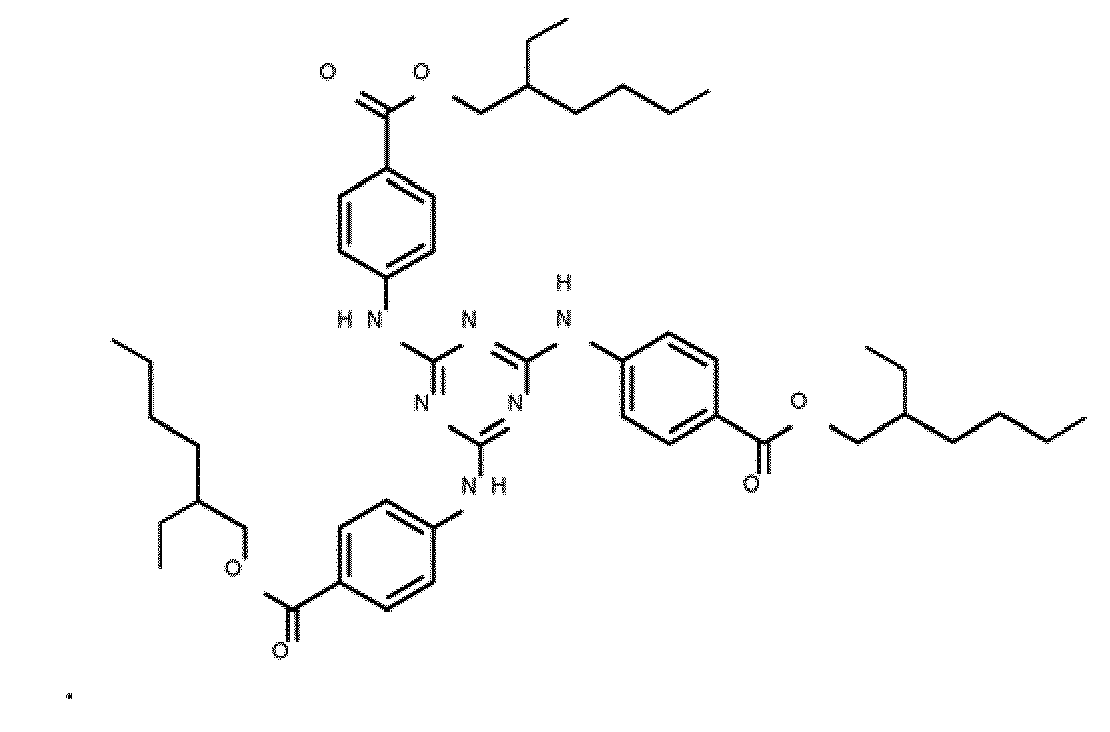
[0007] Preferably, the process according to the invention relates to the preparation of the compound of the formula
(INCI name: Ethylhexyl Triazone).
[0008] The xylene isomer mixture is recycled in the course of the process. By reducing the amount of solvent, less water and fewer other secondary components are therefore entrained. The energy and time requirements decrease; the mixture is altogether more concentrated.
[0009] Preferably, the reaction is carried out at a temperature of 85-140°, preferably 105-125°, particularly preferably 110-120°C. The reaction can be carried out in this temperature range as a quasi one-stage reaction. Surprisingly, it has been found that during a reaction carried out within this temperature range, the formation of monohydroxytriazine, a secondary component, which is extremely troublesome in comparatively small amounts and reduces the yield, decreases significantly.
[0010] Besides the increased number of possibilities for use (the p-aminobenzoic acid ester, in the event of excess, is discharged after the reaction via the bottom during the ethanol recovery), the product quality is positively influenced since secondary components are entrained as a function of concentration and temperature during the crystallization. Additionally, the end temperature of the process of ca. 20-25°C can be fallen below, i.e. it is possible to cool to lower temperatures, which leads to an improved yield.
[0011] Preferably, the p-aminobenzoic acid ester is purified by vacuum distillation prior to dosing.
[0012] The xylene isomer mixture used as reaction solvent is preferably azeotropically dewatered prior to the reaction.
[0013] In a further preferred embodiment, the cyanuric acid halide is introduced as initial charge as suspension with the azeotropically dewatered xylene isomer mixture. For this, the solvent is preferably transferred to the receiver at elevated temperature, in particular at a temperature of from 80 to 90°C, in order to prevent the possible formation of monohydroxytriazine upon adding the cyanuric acid halide for the preparation of the suspension at a temperature of > 60°.
[0014] In the case of the conversion reactions of cyanuric acid halide known hitherto, problems have always arisen with caked cyanuric acid halide on the walls of the reaction vessels. As a result, the feed amounts of cyanuric acid halide fluctuated considerably, and an excess of the p-aminobenzoic acid ester was required to ensure the complete conversion of cyanuric acid halide.
[0015] In order to overcome this disadvantage, in the present process, use is preferably made of rotating cleaning nozzles which are operated with the process solvent under pressure in order to remove any adhesions of cyanuric acid halide present in the receiver container and in the feed tube for solid cyanuric acid halide.
[0016] A particular embodiment of the process according to the invention consists in introducing the p-aminobenzoic acid ester purified by vacuum distillation into the reactor which comprises the dewatered xylene isomer mixture and heating it to ca. 80-110°C, preferably 85-95°C, and then metering in the cyanuric acid halide suspension at a temperature of 110-120°C.
[0017] When the cyanuric acid halide dosing is complete, heating is carried out with a ramp to 105-125°C, preferably 110-120°C. The post-reaction is carried out at a temperature of 105-125°C, preferably 115-120°C from a receiver for 1-5 h, preferably 1.5-2.5 h.
[0018] The reaction mixture is then cooled, and neutralized with a base, for example NH3, alkali metal hydroxide, carbonate or bicarbonate. The process solvent is distilled off, replaced by another solvent, for example an alcohol, and filtered. The mixture is then precipitated by chilled crystallization, and filtered and the product is washed and dried.
[0019] The sliding ring liquid used in the dryer is preferably 3% strength hydrogen peroxide solution. This can avoid problems with germs. Small amounts of the sliding ring liquid can find their way into the product; however, this has proven unproblematical since the hydrogen peroxide decomposes to harmless components which are removed during drying.
[0020] According to the invention, palatinol (phthalic acid ester) and/or 2-ethylhexylhexanol can perform this function.
[0021] The compounds of the formula (1) prepared by the process according to the invention are suitable as photoprotective agents in cosmetic preparations. Examples of the compositions of such cosmetic preparations as photoprotective emulsions, oil-in-water photoprotective creams, water-in-oil photoprotective creams or photoprotective foams can be found in EP 0 087 098.
[0022] Customary cosmetic oils serving as solvents for compounds of the formula (1) in cosmetic preparations are, besides the parent C6-C10-alkanoic acid C10-C20-alkyl esters such as cetylstearyl 2-ethylhexanoate, described in DE 35 18 670, for example peanut oil, olive oil, isopropyl stearate, isopropyl myristate, coconut fatty acid triglycerides, caprylic/capric triglyceride, triethyl citrate, polyethylene glycol glyceryl cocoate, diisopropyl adipate, propoxylated myristyl alcohol or mixtures thereof. The solubility of the compound of the formula (1) in the specified cosmetic oils is sufficiently high.
Examples
Example 1: Preparation of ethylhexyltriazones
Structural formula:
[0025] 500 kg of cyanuric chloride are suspended with stirring in a receiver in 1000 l of xylene at elevated temperature (> 60°C). Towards the end of the reaction, ca. 50 l of xylene are metered into the receiver via a rinsing nozzle in order to rinse any adhering cyanuric chloride from the wall etc. into the suspension.
[0026] In the reactor, 2000 l of xylene are introduced as initial charge beforehand and dewatered by azeotropic distillation (desired value: < 250 ppm, determined by Karl-Fischer titration). After checking the water content, 1000 l of the xylene are transferred to the receiver and used for the suspension of the xylene. The transfer preferably takes place at temperatures of 60-80°C.
[0027] Then, ca. 2020 kg of 2-ethylhexyl p-aminobenzoate, which has been purified beforehand by distillation, are pumped into the xylene in the reactor and heated to ca. 90°C. Over the course of 3 h, the contents are then metered into the receiver in a temperature-controlled manner (evolution of HCl), during which the temperature is kept at 105-120°C. By introducing N2, HCl is stripped out of the reaction mixture as far as possible.
Example 2 (laboratory example)
[0029] In a 750 ml flask, 147 g of ethylhexyl p-aminobenzoate are introduced as initial charge with 75 ml of xylene and heated to 120°C. Over the course of one hour, 37.5 g of cyanuric chloride are metered in with stirring at 115°-125°C and subsequently rinsed with 37 ml of xylene. At ca. 120°C, the post-reaction takes place over the course of 1 h. After cooling to ca. 90°C, the mixture is neutralized with sodium chloride solution and subsequently stirred for 30 minutes.
1. Process for the preparation of s-triazine derivatives of the formula
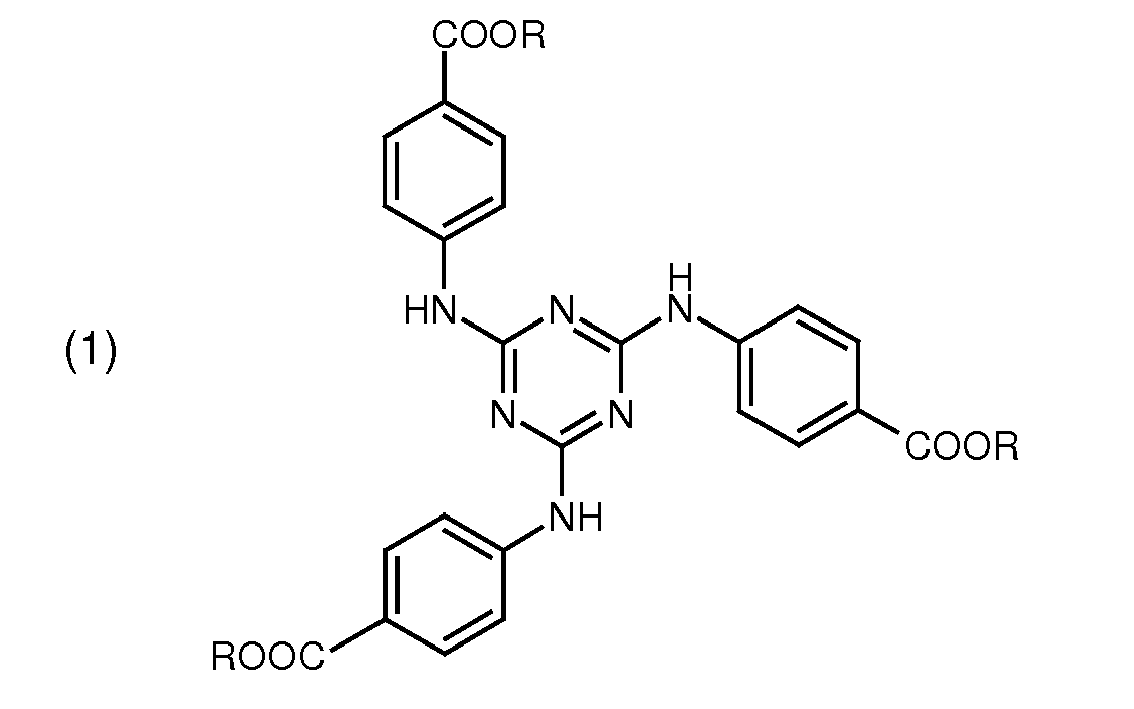
in which
R is a C1-C12-alkyl radical,
by reacting a cyanuric acid halide with a p-aminobenzoic acid ester, which comprises a C1-C12-alkyl radical as radical of the ester alcohol, in a molar ratio of 1:3 to 1:5 in a xylene isomer mixture as solvent, characterized in that the xylene isomer mixture is used in amounts of from 0.6 to 2.1 mol/l related to the cyanuric acid halide.
in which
R is a C1-C12-alkyl radical,
by reacting a cyanuric acid halide with a p-aminobenzoic acid ester, which comprises a C1-C12-alkyl radical as radical of the ester alcohol, in a molar ratio of 1:3 to 1:5 in a xylene isomer mixture as solvent, characterized in that the xylene isomer mixture is used in amounts of from 0.6 to 2.1 mol/l related to the cyanuric acid halide.
2. Process according to Claim 1, characterized in that it relates to the preparation of the compound of the formula (2)
3. Process according to Claim 1 or 2, characterized in that the xylene isomer mixture is azeotropically dewatered prior to the start of the reaction.
4. Process according to Claim 1, characterized in that the reaction is carried out at a temperature of 85-140°C.
5. Process according to Claim 1, characterized in that the cyanuric acid halide is used as suspension with the azeotropically dewatered
xylene isomer mixture.
6. Process according to Claim 5, characterized in that cyanuric acid halide adhering to the reaction vessel is removed using rotating cleaning
nozzles which are operated with the solvent under pressure.
7. Process according to Claim 1, characterized in that the p-aminobenzoic acid ester purified by vacuum distillation is introduced into
the reactor which comprises the dewatered xylene isomer mixture and heated to 80-110°C,
and then the cyanuric acid halide suspension is metered in at a temperature of 110-120°C.
1. Verfahren zur Herstellung von s-Triazinderivaten der Formel
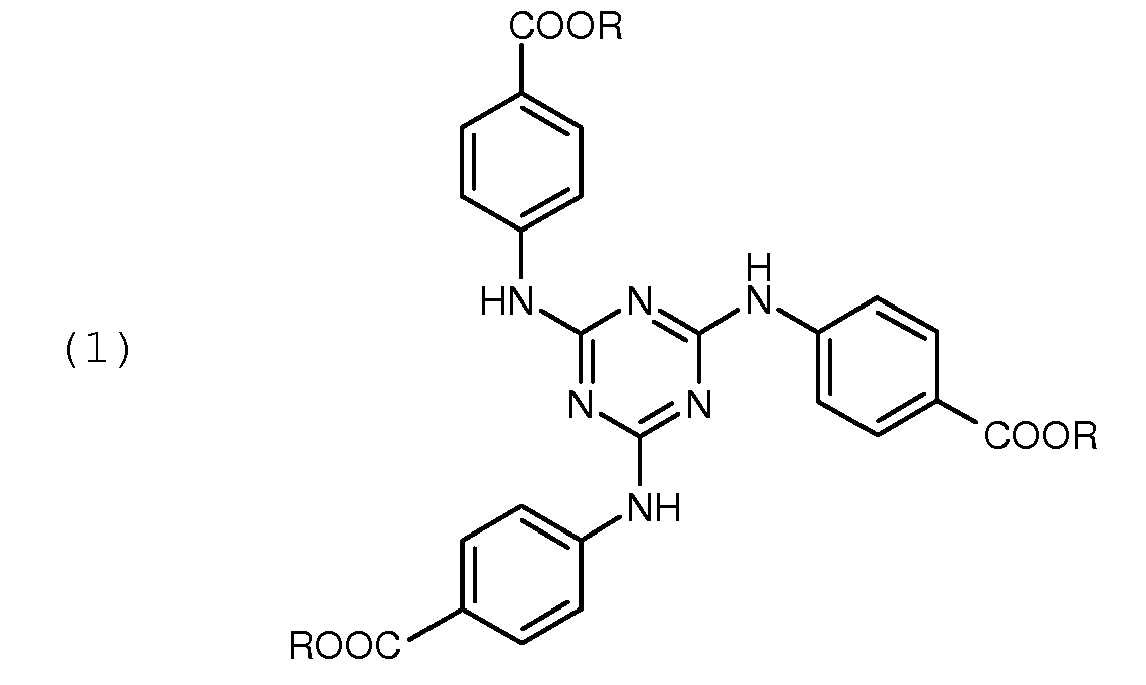
worin
R einen C1-C12-Alkylrest bedeutet,
durch Umsetzung eines Cyanursäurehalogenids mit einem p-Aminobenzoesäureester, der als Rest des Esteralkohols einen C1-C12-Alkylrest enthält, in einem Molverhältnis 1:3 bis 1:5 in einem Xylol-Isomerengemisch als Lösungsmittel, dadurch gekennzeichnet, dass das Lösungsmittel in Mengen von 0,6 bis 2,1 Mol/l, bezogen auf das Cyanursäurehalogenid, eingesetzt wird.
worin
R einen C1-C12-Alkylrest bedeutet,
durch Umsetzung eines Cyanursäurehalogenids mit einem p-Aminobenzoesäureester, der als Rest des Esteralkohols einen C1-C12-Alkylrest enthält, in einem Molverhältnis 1:3 bis 1:5 in einem Xylol-Isomerengemisch als Lösungsmittel, dadurch gekennzeichnet, dass das Lösungsmittel in Mengen von 0,6 bis 2,1 Mol/l, bezogen auf das Cyanursäurehalogenid, eingesetzt wird.
2. Verfahren nach Anspruch 1, dadurch gekennzeichnet, dass es die Herstellung der Verbindung der Formel
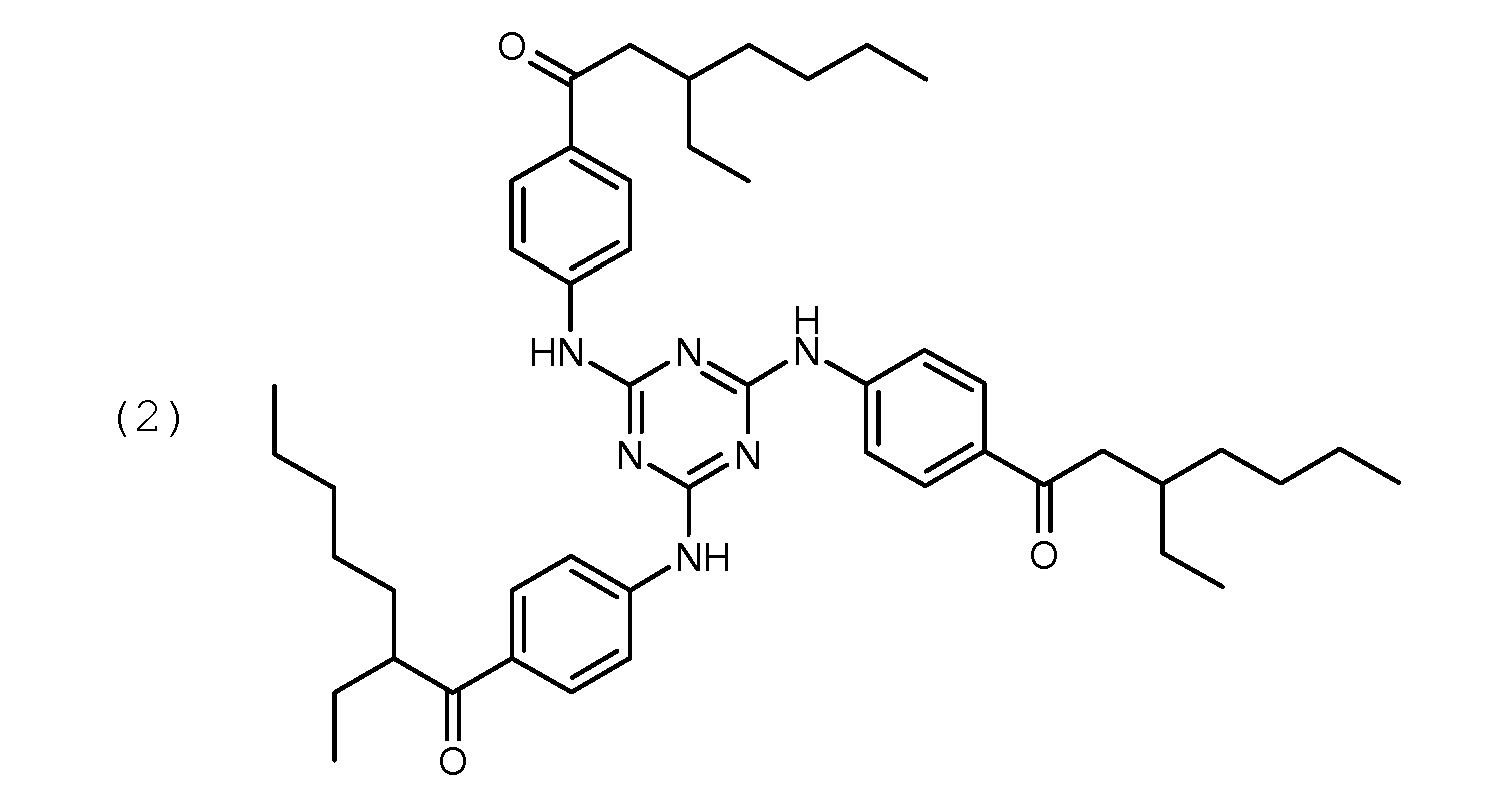
betrifft.
betrifft.
3. Verfahren nach Anspruch 1 oder 2, dadurch gekennzeichnet, dass das Xylol-Isomerengemisch vor Reaktionsbeginn azeotrop entwässert wird.
4. Verfahren nach Anspruch 1, dadurch gekennzeichnet, dass die Reaktion bei einer Temperatur von 85-140°C durchgeführt wird.
5. Verfahren nach Anspruch 1, dadurch gekennzeichnet, dass das Cyanursäurehalogenid als Suspension mit dem azeotrop entwässertem Xylol-Isomerengemisch
eingesetzt wird.
6. Verfahren nach Anspruch 5, dadurch gekennzeichnet, dass an den Reaktionsgefäßen anhaftendes Cyanursäurehalogenid mit rotierenden Reinigungsdüsen,
welche mit dem Lösungsmittel unter Druck betrieben werden, entfernt wird.
7. Verfahren nach Anspruch 1, dadurch gekennzeichnet, dass der durch Vakuumdestillation aufgereinigte p-Aminobenzoesäureester in den Reaktor,
der das entwässerte Xylol-Isomerengemisch enthält, gegeben und auf 80-110°C erhitzt
und anschließend die Cyanursäurehalogenid-Suspension bei einer Temperatur von 110-120°C
zudosiert wird.
1. Procédé de préparation de dérivés de s-triazine de formule
dans laquelle
R est un radical C1-C12-alkyle,
par la réaction d'un halogénure d'acide cyanurique avec un ester d'acide p-aminobenzoïque, comprenant un radical C1-C12-alkyle comme radical de l'alcool d'ester, selon un rapport molaire allant de 1:3 à 1:5 dans un mélange d'isomères de xylène comme solvant, caractérisé en ce que le mélange d'isomères de xylène est utilisé selon des quantités allant de 0,6 à 2,1 mol/l par rapport à l'halogénure d'acide cyanurique.
dans laquelle
R est un radical C1-C12-alkyle,
par la réaction d'un halogénure d'acide cyanurique avec un ester d'acide p-aminobenzoïque, comprenant un radical C1-C12-alkyle comme radical de l'alcool d'ester, selon un rapport molaire allant de 1:3 à 1:5 dans un mélange d'isomères de xylène comme solvant, caractérisé en ce que le mélange d'isomères de xylène est utilisé selon des quantités allant de 0,6 à 2,1 mol/l par rapport à l'halogénure d'acide cyanurique.
2. Procédé selon la revendication 1, caractérisé en ce qu'il concerne la préparation du composé de formule (2)
3. Procédé selon la revendication 1 ou 2, caractérisé en ce que le mélange d'isomères de xylène est déshydraté de manière azéotropique avant le début
de la réaction.
4. Procédé selon la revendication 1, caractérisé en ce que la réaction est effectuée à une température de 85-140°C.
5. Procédé selon la revendication 1, caractérisé en ce que l'halogénure d'acide cyanurique est utilisé comme suspension avec le mélange d'isomères
de xylène déshydraté de manière azéotropique.
6. Procédé selon la revendication 5, caractérisé en ce que l'halogénure d'acide cyanurique adhérant au réacteur est éliminé à l'aide de buses
rotatives de nettoyage qui sont actionnées avec le solvant sous pression.
7. Procédé selon la revendication 1, caractérisé en ce que l'ester d'acide p-aminobenzoïque purifié par distillation sous vide est introduit
dans le réacteur qui comprend le mélange d'isomères de xylène déshydraté et chauffé
jusqu'à 80-110°C, puis la suspension d'halogénure d'acide cyanurique y est dosée à
une température de 110-120°C.
REFERENCES CITED IN THE DESCRIPTION
This list of references cited by the applicant is for the reader's convenience only. It does not form part of the European patent document. Even though great care has been taken in compiling the references, errors or omissions cannot be excluded and the EPO disclaims all liability in this regard.
Patent documents cited in the description