| (19) |
 |
|
(11) |
EP 2 115 418 B1 |
| (12) |
EUROPEAN PATENT SPECIFICATION |
| (45) |
Mention of the grant of the patent: |
|
16.08.2017 Bulletin 2017/33 |
| (22) |
Date of filing: 14.02.2008 |
|
| (51) |
International Patent Classification (IPC):
|
| (86) |
International application number: |
|
PCT/GR2008/000010 |
| (87) |
International publication number: |
|
WO 2008/099224 (21.08.2008 Gazette 2008/34) |
|
| (54) |
DILUTER FOR EXHAUST GAS SAMPLING AND METHOD THEREFOR
VERDÜNNER FÜR ABGASPROBENAHME UND VERFAHREN DAFÜR
RÉGULATEUR DE DILUTION POUR L'ÉCHANTILLONNAGE DE GAZ D'ÉCHAPPEMENT, ET PROCÉDÉ POUR
SON UTILISATION
|
| (84) |
Designated Contracting States: |
|
AT BE BG CH CY CZ DE DK EE ES FI FR GB GR HR HU IE IS IT LI LT LU LV MC MT NL NO PL
PT RO SE SI SK TR |
| (30) |
Priority: |
14.02.2007 GR 20070100103
|
| (43) |
Date of publication of application: |
|
11.11.2009 Bulletin 2009/46 |
| (73) |
Proprietors: |
|
- Aristotle University of Thessaloniki
54636 Thessaloniki (GR)
- Samaras, Zissis
55236 Thessaloniki (GR)
- Ntziachristos, Leonidas
54351 Thessaloniki (GR)
|
|
| (72) |
Inventors: |
|
- SAMARAS, Zissis
GR-552 36 Thessaloniki (GR)
- NTZIACHRISTOS, Leonidas
GR-543 51 Thessaloniki (GR)
|
| (74) |
Representative: Petsis, Christos |
|
4-6, Kyparissias
542 49 Thessaloniki
542 49 Thessaloniki (GR) |
| (56) |
References cited: :
EP-B- 0 532 216
US-A- 4 586 367
US-A- 5 456 124
|
US-A- 3 817 100
US-A- 5 184 501
|
|
| |
|
|
|
|
| |
|
| Note: Within nine months from the publication of the mention of the grant of the European
patent, any person may give notice to the European Patent Office of opposition to
the European patent
granted. Notice of opposition shall be filed in a written reasoned statement. It shall
not be deemed to
have been filed until the opposition fee has been paid. (Art. 99(1) European Patent
Convention).
|
[0001] The present invention relates to a device used for the dilution of exhaust gas as
a so-called diluter, and in particular for engines. More particularly, the invention
relates to a device and a method which is able to maintain a constant dilution ratio
regardless of the exhaust gas backpressure in the exhaust line.
Prior art
[0002] Diluters are necessary in the process of exhaust sampling, before the exhaust is
led to instrumentation for analysis. In particular, diluters reduce the temperature
and the humidity of the exhaust gas which, otherwise, might not be tolerated by the
analytical instrumentation. In addition they reduce the concentration of pollutants
and equilibrate the sample before analysis.
[0003] Exhaust gas dilution may be achieved with the use of full flow diluters, wherein
all of the exhaust gas is led to a dilution tunnel where it mixes with ambient filtered
air before analysis. Such dilution systems include the constant volume sampling technique,
as described in legislation 91/441/EEC of the European Commission (
Official Journal L 242 , 30/08/1991 p. 0001-0106) and in patents
US3817100 and
US5184501. Constant volume, full flow diluters lead to variable dilution ratios over transient
tests, as the mixing proportions of exhaust gas and dilution air change, depending
on the momentary flowrate of exhaust gas. The variable dilution ratio is a significant
shortcoming when it comes to the accurate characterization of emissions, in particular
of particulate matter emissions, because it introduces variable degrees of particle
nucleation and condensation, depending on the saturation ratio of volatile and semi-volatile
species following dilution.
[0004] To overcome the issue of variable dilution ratio, partial flow sampling systems have
become widespread, where only a portion of the exhaust gas is sampled, measured and
conditioned with a measured quantity of dilution air, to provide a fixed dilution
ratio. The dilution ratios typically achieved by such systems range from 10:1 to 1000:1.
This wide range is required to reduce particle levels from different sources, such
as conventional diesel engines, diesel with particle filters within the measuring
range of the available instrumentation. Such partial flow systems are described for
example in patents
USA4586367 and
JP2004205253. These devices mainly target at sampling exhaust downstream of aftertreatment devices
because the dilution ratio provided is very sensitive to the exhaust gas pressure
variation. Upstream of aftertreatment devices and, in particular, of diesel particle
filters, the exhaust backpressure may vary between a few millibars to several hundreds
of millibars above ambient, resulting in significant variation of the dilution ratio.
[0005] The device presented in patent
CH693491 addresses the issue of providing a constant dilution ratio with small sensitivity
to upstream exhaust gas conditions but introduces a number of moving parts, which
are not desirable for the dilution of the hot, humid and particle laden exhaust gas.
Patent
EP0532216A1 presents a system for gaseous pollutants sampling on which the dilution ratio can
be adjusted by means of a pressure regulator, however this is possible only for steady
state tests used in the past and not for transient tests which are required today.
Description of current invention
[0006] The purpose of the present invention is to dilute the exhaust gas, providing a constant
dilution ratio, regardless of the upstream exhaust gas pressure, even during transient
conditions, without using any moving parts. The proposed diluter utilizes a very small
fraction of the exhaust gas (of the order of 0,5 lpm), which is sampled through a
capillary duct. Due to the very low exhaust quantity, no tight fixation between the
diluter and the exhaust line is required but the capillary may be only immersed to
the exhaust flow, which is otherwise freely exhausting to the atmosphere. In this
respect, the capillary inlet is always exposed to an almost ambient pressure, regardless
of the pressure of the exhaust gas, which leads to a constant dilution ratio. The
sample flowrate through the capillary is achieved by maintaining a regulated underpressure
at the capillary outlet. The diluted exhaust is then collected in a stabilization
chamber, where temperature, humidity and residence time may be adjusted to condition
the collected aerosol at will. A different dilution ratio setting may be achieved
by appropriately adjusting the underpressure in the stabilization chamber. Multiple
capillaries and stabilization chambers may be cascaded to increase the dilution ratios.
After the final dilution stage, particle samples may be collected on a filter for
gravimetric determination or analyzed by number counters, surface monitors or any
other technique utilized for the physical or chemical characterization of particles.
[0007] In a preferred embodiment the capillary duct is realized with a hypodermic needle
and two cascaded hypodermic needles/stabilization chambers are combined to provide
the desired dilution ratio. The diluter location is fixed relative to the vehicle/engine
exhaust line and the needle is inserted in the exhaust line. This embodiment may be
used to dilute aerosol from any engine or vehicle configuration, such as compression-ignition
engines, spark-ignition engines, and complete vehicle exhaust lines.
[0008] In another embodiment, exhaust gas may be led to the diluter's capillary duct by
means of two probes, located respectively upstream and downstream of any aftertreatment
device, which needs to be characterized. The probes are of appropriate diameter to
provide a total exhaust gas flowrate marginally higher than the flowrate in the first
hypodermic needle. The excess flowrate is exhausted to the atmosphere under constant
pressure. By means of shut-off valves, exhaust gas may be fed to the diluter's capillary
by either the upstream or the downstream probe, thus providing an estimate of the
filtration efficiency of the device.
Brief description of the drawings
[0009]
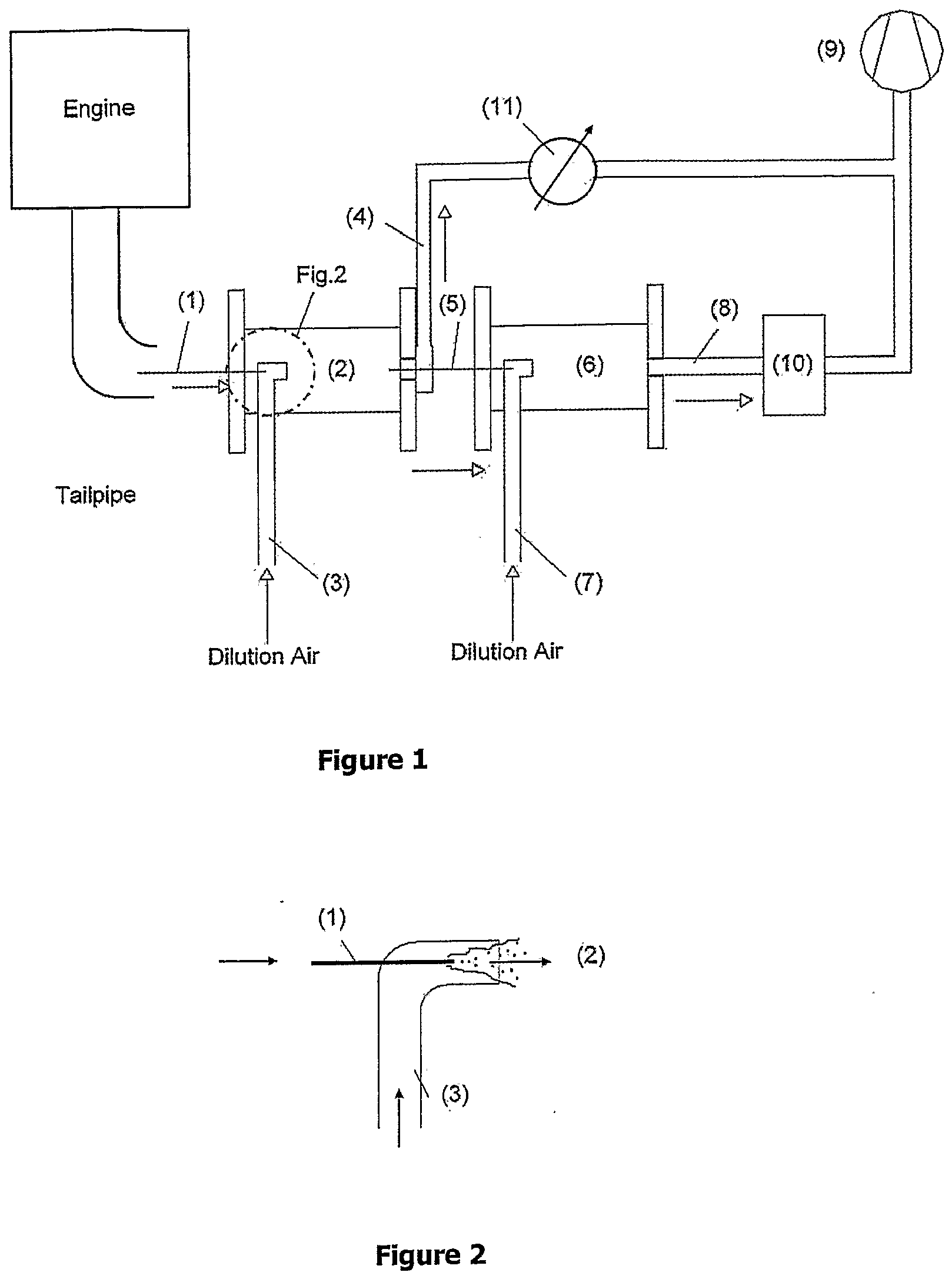
Figure 1 illustrates a first embodiment of the invention. It shows the primary (1) and the
secondary capillary (5) and the primary (2) and the secondary (6) stabilization chamber.
The exhaust is drawn by means of the pump (9) from the tailpipe to the measurement
instrumentation after conditioning in the stabilization chambers (2), (6).
Figure 2 shows a detail of the primary mixing tip formed by the primary capillary (1) exhausting
the sample in the primary dilution air duct (3), upstream of the duct's outlet tip.
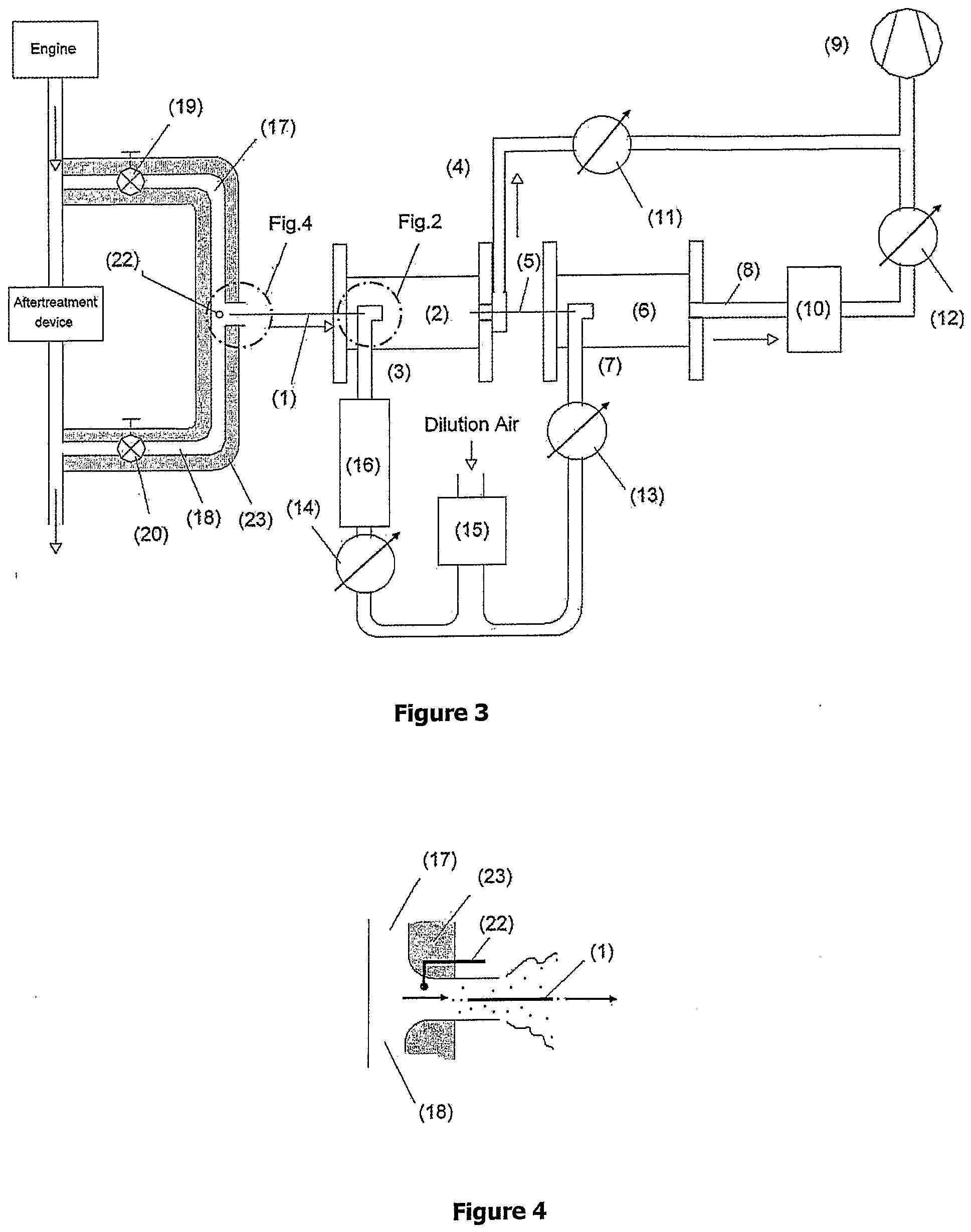
Figure 3 illustrates a second embodiment of the invention. In this embodiment, the flow resistance
of the primary (3) and secondary (7) dilution air ducts, as well as the sample outlet
(8) are independently adjusted by means of the throttling mechanisms (14), (13) and
(12). An excess flowrate arrangement, detailed in Figure 4, is also used to consecutively
sample exhaust upstream and downstream of an aftertreatment device.
Figure 4 shows the excess flow arrangement with the primary capillary (1) inlet tip immersed
and surrounded by the exhaust flowrate, while the exhaust flowrate freely exhausts
to the atmosphere.
Description
[0010] With reference to Figure 1, number (1) designates the primary capillary, which draws
the undiluted exhaust in the primary stabilization chamber (2). The dilution in the
primary stabilization chamber is conducted by introducing dilution air through the
primary dilution air duct (3). The sample through the primary capillary (1) and the
dilution air through the primary dilution air duct (3) are introduced in the primary
stabilization chamber (2) due to the underpressure in the chamber. The underpressure
in the primary stabilization chamber (2) is produced by the pump (9) drawing air through
the primary outlet duct (4). The dilution ratio (typically in the order of 20:1) and
the residence time (typically in the order of 0,5-1,0 s) of the sample in the primary
stabilization chamber (2) may be adjusted by means of the throttling mechanism (11),
which may be any appropriate regulation valve or mass flow controller. The stabilization
of the sample in the primary stabilization chamber is necessary to allow for homogenous
mixing of the exhaust components with the dilution air and for temperature equilibration.
[0011] Since the primary capillary (1) tip is at ambient pressure, the flowrate through
the primary capillary (typically in the order of 0,5 lpm) depends only on the pressure
in the primary stabilization chamber (2), the dilution air flowrate through the primary
dilution air duct (3), typically in the order of 10 lpm, and, to a lower degree, the
temperature of the exhaust gas in the tailpipe. The underpressure and the primary
dilution air flowrate are implicitly associated by the characteristic curve of the
pump (9) and throttling mechanism (11) utilized. Therefore, at steady-state engine
operation with constant exhaust gas temperature, the dilution ratio in the primary
stabilization chamber (2) only depends on the setting of the throttle mechanism (11).
[0012] In order to further increase the dilution ratio, if so desired for high particle
concentrations in the tailpipe, a secondary capillary (5) is firmly connected to the
primary stabilization chamber (2), leading the primary diluted sample to a secondary
stabilization chamber (6). The flowrate from the primary (2) to the secondary stabilization
chamber (6) is achieved by developing a higher underpressure in the secondary stabilization
chamber (6), compared to the primary stabilization chamber (2). This may be achieved
by connecting the pump (9) to the secondary stabilization chamber (6) through the
sample duct (8), without any intervening resistance, but using only the instrument/technique
employed for particle characterization (10). The total dilution ratio in this configuration
depends, in addition to the variables mentioned in the previous paragraph, on the
pressure difference between the secondary (6) and the primary (2) stabilization chambers
and the total flowrate required by the particle measurement unit (10), through the
sample duct (8). This first embodiment may be applied when the variation of exhaust
pressure and temperature in the tailpipe is limited and when the dilution ratio needs
not be precisely regulated.
[0013] In order to minimize particle losses, to stabilize the flowrate in the capillary
and to improve the mixing of the sample with the dilution air, a mixing tip is formed
upstream of the stabilization chamber. This is shown in some detail in Figure 2. In
the mixing tip, the sample flowrate from the primary capillary (1) is first exposed
to the flowrate of the dilution air that flows in the primary dilution air duct (3).
The primary dilution air duct (3) forms a 90° bend before the dilution air expands
in the stabilization chamber. The capillary outlet tip is located along the axis of
the primary dilution air duct (3), downstream of the bend and upstream of the primary
dilution air duct tip. A similar mixing tip is also formed downstream of the secondary
capillary (5).
[0014] Figure 3 demonstrates a second embodiment which is preferred in measurements where,
for example, a larger variation of the exhaust gas pressure and temperature is expected
and where a higher precision is required for the dilution ratio adjustment. In this
embodiment, the primary capillary (1) is exposed to a small exhaust gas flowrate drawn
from the exhaust line via the transfer lines (17) or (18). The primary capillary is
not fixed to the exhaust pipe, which is allowed to freely exhaust in the atmosphere
under ambient pressure.
[0015] Figure 4 shows a detail of excess flow arrangement where the primary capillary (1)
samples from the outlet of the transfer lines (17) and (18). The primary capillary
(1) is fully immersed and surrounded by the exhaust gas flow just before (e.g. 10
mm) this is expanded in the atmosphere. The sample flowrate in the transfer line outlet
is in excess of the sample flowrate in the primary capillary (1) and its pressure
at the sampling level is quasi ambient. The temperature of the exhaust gas at the
sampling tip can be adjusted by means of the heating element (23) and is measured
by the temperature sensing element (22). Samples may be drawn from different locations
along the exhaust line, e.g. downstream and upstream of an aftertreatment device via
activation of the shut-off valves (19) and (20).
[0016] Dilution in the primary (2) and secondary (6) stabilization chambers takes place
as described in the first embodiment. In order to achieve a more precise regulation
of the dilution ratio, the dilution air flowrate through the primary (3) and secondary
(7) dilution air ducts is regulated by means of the throttling mechanisms (14) and
(13) respectively. In addition, the flowrate pumped out of the system is regulated
by means of the throttle vanes (11) and (12). The dilution ratio calculation in this
case has to take into account the setting of these valves as well. In comparison to
previous art, this embodiment has the advantage of being able, without any moving
parts, to maintain a constant dilution ratio which depends on the setting of the throttle
valves (11), (12), (13), (14) and the pump (9) only and is independent of the temperature
and the pressure of the exhaust gas in the tailpipe.
[0017] Furthermore, if additional conditioning of the sample is required, a temperature
adjusting element (16) may intervene in the primary dilution air duct (3) downstream
of the throttling mechanism (14), to regulate the temperature of the primary dilution
air. Also, a dilution air purifying unit (15) may be used to control the impurities
and the humidity of the dilution air.
1. A diluter for sampling of exhaust gas of engines, comprising a primary capillary (1)
connected to a primary stabilization chamber (2), which said primary stabilization
chamber is kept at a pressure below ambient by means of a vacuum pump (9) connected
to said primary stabilization chamber by means of a primary outlet duct (4) and where
dilution air in said primary stabilization chamber is introduced by means of a primary
dilution air duct (3) through a primary mixing tip,
characterized in that there is provided an excess flowrate arrangement for providing an exhaust gas flowrate
in excess of the sample flowrate in said capillary (1), which exhaust gas flowrate
totally surrounds said capillary inlet tip, wherein said primary capillary (1) is
immersed in the exhaust gas flowrate with said flowrate arrangement, so that the exhaust
flowrate in excess of the sample flowrate is allowed to freely exhaust to the atmosphere
and the capillary inlet is always exposed to quasi ambient pressure, and wherein said
diluter receives the exhaust gas via said primary capillary (1).
2. The diluter according to Claim 1, characterized in that there is provided a throttling mechanism (11) by means whereof a dilution ratio and
the residence time of the sample of the primary stabilization chamber (2) is adjusted.
3. The diluter according to Claim 1 or 2, characterized in that there is provided a secondary stabilization chamber (6) and a secondary capillary
(5) which is immersed in the primary stabilization chamber (2) for leading the sample
from said stabilization chamber (2) to said secondary stabilization chamber (6) which
is kept at a pressure below the pressure of the primary stabilization chamber (2)
and wherein there is provided a sample duct (8) for achieving this low pressure by
drawing the sample from said sample duct (8) using the said pump (9) or a different
vacuum pump and wherein there is provided a secondary dilution air duct (7) and a
secondary mixing tip for introducing dilution air in said secondary stabilization
chamber (6) through said secondary mixing tip.
4. The diluter according to one of the Claims 1 to 3, characterized in that each said mixing tip is formed by an alignment of an axis of the corresponding capillary
(5) with the axis of the corresponding dilution air duct (7) respectively, wherein
the sample flow carried by the said capillary is exposed to the dilution air flow
upstream of the outlet tip of the said dilution air duct.
5. The diluter according to Claims 3 or 4, characterized in that there are provided throttling mechanisms (14, 13), which enable an adjustment of
the resistance to flow of the primary dilution air duct (3) and the secondary dilution
air duct (7) respectively to be independent, and/or throttling mechanisms (11, 12)
enabling an adjustment of the resistance to flow of the primary outlet duct (4) and
the sample outlet duct (8) respectively to be independent.
6. The diluter according to one of the preceding Claims, characterized in that there is provided a heating element (23) and a temperature sensing element (22),
so as to enable the temperature of the exhaust gas at the sampling tip to be adjusted
by means of the heating element (23) and to be measured by the temperature sensing
element (22).
7. The diluter according to one of the preceding Claims, characterized in that multiple capillaries and stabilization chambers are arranged in cascade to increase
the dilution ratios.
8. The diluter according to one of the preceding Claims, characterized in that the capillary duct is a hypodermic needle, wherein at least two cascaded hypodermic
needles and two stabilization chambers are combined to provide the desired dilution
ratio.
9. The diluter according to the preceding Claim, characterized in that the diluter location is fixed relative to the engine exhaust line and the needle
is inserted in the exhaust line.
10. Method for sampling of exhaust gas using a diluter-as defined in one of the preceding
claims, wherein said stabilization chamber is kept at a pressure below ambient by
means of a vacuum pump (9), and where dilution air in the said stabilization chamber
is introduced by means of said primary dilution air duct (3) through a primary mixing
tip, wherein said diluter receives the exhaust gas via the primary capillary (1) which
is immersed in the exhaust gas flowrate with said excess flowrate arrangement, which
provides an exhaust gas flowrate in excess of the sample flowrate in the said capillary,
which exhaust gas flowrate totally surrounds the said capillary inlet tip.
11. Method according to Claim 10, using a diluter as defined in claim 3, characterized in that said secondary capillary (5) is immersed in the primary stabilization chamber (2)
and leads the sample from said stabilization chamber (2) to a secondary stabilization
chamber (6) which is kept at a pressure below the pressure of the primary stabilization
chamber (2) and where this low pressure is achieved by drawing the sample from a sample
duct (8) using the said pump (9) and where dilution air is introduced in said secondary
stabilization chamber (6) by means of a secondary dilution air duct (7) through a
secondary mixing tip.
12. Method according to Claim 11, characterized in that a finite residence time required for mixing and temperature equilibration is generated
by the primary (3) and secondary (6) stabilization chambers.
13. Method according to one of the preceding Claims 10 to 12, characterized in that the temperature of the dilution air in the primary dilution air duct (7) is adjusted
independently, selectively, from the temperature of the dilution air in the secondary
dilution air duct (7).
14. Method according to one of the Claims 10 to 13, characterized in that a substantially constant dilution ratio is generated, regardless of the upstream
exhaust gas pressure, without using any moving parts.
15. Method according to one of the Claims 10 to 14, characterized in that a very small fraction of the exhaust gas, in particular of the order of 0,5 lpm,
is utilized by said diluter, which is sampled through said capillary duct.
16. Method according to one of the Claims 10 to 15, characterized in that a regulated underpressure is maintained at the capillary outlet (7) and in that the diluted exhaust is then collected in said stabilization chamber,
17. Method according to one of the Claims 10 to 16, characterized in that after the final dilution stage, particle samples are collected on a filter for gravimetric
determination or analyzed by number counters, surface monitors or the like.
18. Method according to one of the preceding Claims 10 to 17, characterized in that exhaust gas is led to the diluter's capillary duct by means of two probes, located
respectively upstream and downstream of an aftertreatment device to be characterized,
wherein said probes are of appropriate diameter to provide a total exhaust gas flowrate
marginally higher than the flowrate in the first hypodermic needle, the excess flowrate
is exhausted to the atmosphere under constant pressure, and exhaust gas is fed to
the diluter's capillary by either the upstream or the downstream probe by means of
shut-off valves, so as to provide an estimate of the filtration efficiency of the
device.
19. Use of the device according to one of the claims 1 to 9, to dilute aerosol from any
engine or vehicle configuration, such as compression-ignition engines, spark-ignition
engines, and complete vehicle exhaust lines.
1. Verdünner zum Entnehmen von Proben von Abgas von Motoren, welcher eine primäre Kapillare
(1) umfasst, welche mit einer primären Stabilisationskammer (2) verbunden ist, wobei
die primäre Stabilisationskammer mittels einer Vakuumpumpe (9), welche mittels eines
primären Auslasskanals (4) mit der primären Stabilisationskammer verbunden ist, auf
einem Druck unterhalb des Umgebungsdrucks gehalten wird, und wobei Verdünnungsluft
in die primäre Stabilisationskammer mittels eines primären Verdünnungsluftkanals (3)
durch eine primäre Mischspitze gelangt,
dadurch gekennzeichnet dass eine Überschussdurchflussmengenanordnung zum Bereitstellen einer Abgasdurchflussmenge,
welche über der Probendurchflussmenge liegt, in der Kapillare (1) bereitgestellt wird,
wobei die Abgasdurchflussmenge die Einlassspitze vollständig umgibt, wobei die primäre
Kapillare (1) mit der Durchflussmengenanordnung in die Abgasdurchflussmenge eingetaucht
ist, so dass die Abgasdurchflussmenge, welche über der Probendurchflussmenge liegt,
frei an die Atmosphäre abgegeben werden kann und der Kapillareinlass ständig Quasi-Umbgebungsdruck
ausgesetzt ist, und wobei der Verdünner das Abgas über die primäre Kapillare (1) erhält.
2. Verdünner nach Anspruch 1, dadurch gekennzeichnet dass ein Drosselmechanismus (11) bereitgestellt ist, mit dessen Hilfe ein Verdünnungsverhältnis
und eine Verweilzeit der Probe in der primären Stabilisationskammer (2) eingestellt
wirden.
3. Verdünner nach Anspruch 1 oder 2, dadurch gekennzeichnet dass eine sekundäre Stabilisationskammer (6) und eine zweite Kapillare (5), welche in
die primäre Stabilisationskammer (2) eingetaucht ist, bereitgestellt werden, um die
Probe von der Stabilisationskammer (2) zu der sekundären Stabilisationskammer (6)
zu leiten, welche auf einem Druck unter dem Druck der primären Stabilisationskammer
(2) gehalten wird, und wobei ein Probenkanal (8) bereitgestellt ist, um diesen niedrigen
Druck durch Ansaugen der Probe aus dem Probenkanal (8) unter Verwendung der Pumpe
(9) oder einer anderen Vakuumpumpe zu erhalten und wobei ein sekundärer Verdünnungsluftkanal
(7) und eine sekundäre Mischspitze zum Einführen der Verdünnungsluft in die sekundäre
Stabilisationskammer (6) durch die sekundäre Mischspitze bereitgestellt wird.
4. Verdünner nach einem der Ansprüche 1 bis 3, dadurch gekennzeichnet dass jede Mischspitze jeweils durch ein Ausrichten einer Achse der entsprechenden Kapillare
(5) mit der Achse des entsprechenden Verdünnungsluftkanals (7) gebildet wird, wobei
die Probendurchflussmenge, die von der Kapillare befördert wird, der Verdünnungsluftdurchflussmenge
stromaufwärts der Auslassspitze des Verdünnungsluftkanals ausgesetzt ist.
5. Verdünner nach Anspruch 3 oder 4, dadurch gekennzeichnet dass Drosselungsmechanismen (14, 13) bereitgestellt werden, welche erlauben, dass ein
Einstellen des Strömungswiderstandes des primären Verdünnungsluftkanals (3) beziehungsweise
des sekundären Verdünnungsluftkanals (7) unabhängig ist, und/oder Drosselmechanismen
(11, 12) bereitgestellt werden, welche erlauben, dass ein Einstellen des Strömungswiderstandes
des primären Auslasskanals (4) beziehungsweise des Probenauslasskanals (8) unabhängig
ist.
6. Verdünner nach einem der vorherigen Ansprüche, dadurch gekennzeichnet dass ein Heizelement (23) und ein Temperaturerfassungselement (22) bereitgestellt werden,
um zu ermöglichen, dass die Temperatur des Abgases an der Probenspitze mittels des
Heizelementes (23) eingestellt und durch das Temperaturerfassungselement (22) gemessen
wird.
7. Verdünner nach einem der vorherigen Ansprüche, dadurch gekennzeichnet dass eine Vielzahl von Kapillaren und Stabilisationskammern in einer Kaskade angeordnet
sind, um die Verdünnungsverhältnisse zu erhöhen.
8. Verdünner nach einem der vorherigen Ansprüche, dadurch gekennzeichnet dass der Kapillarkanal eine Injektionsnadel ist, wobei mindestens zwei kaskadierte Injektionsnadeln
und zwei Stabilisationskammern kombiniert sind, um das gewünschte Verdünnungsverhältnis
bereitzustellen.
9. Verdünner nach einem der vorherigen Ansprüche, dadurch gekennzeichnet dass der Verdünnerstandort in Bezug auf die Motorabgasleitung fix ist und die Nadel in
die Abgasleitung eingeführt ist.
10. Verfahren zum Entnehmen von Proben von Abgas unter Verwendung eines Verdünners nach
einem der vorhergehenden Ansprüche, wobei die Stabilisationskammer mittels einer Vakuumpumpe
(9) auf einem Druck unterhalb des Umgebungsdruckes gehalten wird und wobei Verdünnungsluft
in die Stabilisationskammer mittels des primären Vedünnungsluftkanals (3) durch eine
primäre Mischspitze eingeführt wird, wobei der Verdünner das Abgas über die primäre
Kapillare (1) erhält, welche in die Abgasdurchflussmenge mit der Überschussdurchflussmengenanordnung
eingetaucht ist, welche eine Abgasdurchflussmenge bereitstellt, welche die Probendurchflussmenge
in der Kapillare übersteigt, wobei die Abgasdurchflussmenge die Kapillareinlassspitze
vollständig umgibt.
11. Verfahren nach Anspruch 10, welches einen Verdünner nach Anspruch 3 verwendet, dadurch gekennzeichnet dass die sekundäre Kapillare (5) in die primäre Stabilisationskammer (2) eingetaucht ist
und die Probe von der Stabilisationskammer (2) an eine sekundäre Stabilisationskammer
(6) leitet, welche auf einem Druck unter dem Druck der primären Stabilisationskammer
(2) gehalten wird, und wobei dieser Niederdruck durch Ansaugen der Probe von einem
Probenkanal (8) unter Verwendung der Pumpe (9) erreicht wird und wobei Verdünnungsluft
in die sekundäre Stabilisationskammer (6) mittels eines sekundären Verdünnungsluftkanals
(7) durch eine sekundäre Mischspitze eingeführt wird.
12. Verfahren nach Anspruch 11, dadurch gekennzeichnet dass eine endliche Verweildauer zum Mischen und zum Kalibrieren der Temperatur durch die
primäre (3) und sekundäre (6) Stabilisationskammer erzeugt wird.
13. Verfahren nach einem der vorhergehenden Ansprüche 10 bis 12, dadurch gekennzeichnet dass die Temperatur der Verdünnungsluft im primären Verdünnungsluftkanal (7) unabhängig
von der Temperatur der Verdünnungsluft im sekundären Verdünnungsluftkanal (7) selektiv
eingestellt wird.
14. Verfahren nach einem der Ansprüche 10 bis 13, dadurch gekennzeichnet dass ein im Wesentlichen konstantes Verdünnungsverhältnis unabhängig vom Abgasdruck stromaufwärts,
ohne Verwenden von beweglichen Teilen, erzeugt wird.
15. Verfahren nach einem der Ansprüche 10 bis 14, dadurch gekennzeichnet dass ein sehr kleiner Teil des Abgases, insbesondere in der Größenordnung von 0,5 l/min,
durch den Verdünner genutzt wird, welcher durch den Kapillarkanal abgetastet wird.
16. Verfahren nach einem der Ansprüche 10 bis 15, dadurch gekennzeichnet dass ein geregelter Unterdruck am Kapillarauslass (7) gehalten wird und dass das verdünnte
Abgas dann in der Stabilisationskammer gesammelt wird.
17. Verfahren nach einem der Ansprüche 10 bis 16, dadurch gekennzeichnet dass nach der finalen Verdünnungsstufe Partikelproben auf einem Filter zur gravimetrischen
Bestimmung gesammelt oder durch Nummernzähler, Oberflächenüberwacher oder ähnliches
analysiert werden.
18. Verfahren nach einem der vorhergehenden Ansprüche 10 bis 17, dadurch gekennzeichnet dass Abgas zum Kapillarkanal des Verdünners mittels zwei Sonden geleitet wird, welche
jeweils stromaufwärts und stromabwärts einer zu kennzeichnenden Nachbehandlungsvorrichtung
angeordnet sind, wobei die Sonden von angemessenem Durchmesser sind, um eine Gesamtabgasdurchflussmenge
bereitzustellen, welche geringfügig größer ist, als die Durchflussmenge in der ersten
Injektionsnadel, wobei die überschüssige Durchflussmenge unter konstantem Druck an
die Atmosphäre abgeführt wird und Abgas der Kapillare des Verdünners durch entweder
die stromaufwärtige oder die stromabwärtige Sonde mittels Absperrventilen zugeführt
wird, um eine Schätzung der Filtereffizienz der Vorrichtung bereitzustellen.
19. Verwendung der Vorrichtung nach einem der Ansprüche 1 bis 9, um Aerosol aus einer
Motor- oder Fahrzeugkonfiguration, wie zum Beispiel selbstzündende Motoren, fremdgezündete
Motoren, und aus vollständigen Fahrzeugabgasleitungen zu verdünnen.
1. Régulateur de dilution pour l'échantillonnage de gaz d'échappement de moteurs, comprenant
un capillaire primaire (1) relié à une chambre de stabilisation primaire (2), dans
lequel ladite chambre de stabilisation primaire étant maintenue à une pression inférieure
à la pression ambiante au moyen d'une pompe à vide (9) connectée à ladite chambre
de stabilisation primaire au moyen d'un conduit de sortie primaire (4) et dans lequel
l'air de dilution est introduit dans ladite chambre de stabilisation primaire au moyen
d'un conduit d'air de dilution primaire (3) à travers une pointe de mélange primaire,
caractérisé en ce qu'il est prévu un agencement de débit excédentaire pour fournir un débit de gaz d'échappement
supérieur au débit d'échantillonnage dans ledit capillaire (1), lequel débit de gaz
d'échappement entoure totalement ladite pointe d'entrée capillaire, dans lequel ledit
capillaire primaire (1) est immergé dans le débit de gaz d'échappement avec ledit
agencement de débit, de façon que le débit d'échappement étant en excès du débit d'échantillonnage
puisse s'échapper librement vers l'atmosphère et que l'entrée capillaire soit toujours
exposée à une pression quasi-ambiante, et dans lequel ledit régulateur de dilution
reçoit le gaz d'échappement par l'intermédiaire dudit capillaire primaire (1).
2. Régulateur de dilution selon la revendication 1, caractérisé en ce qu'il est prévu un mécanisme d'étranglement (11) au moyen duquel un rapport de dilution
et le temps de séjour de l'échantillon de la chambre de stabilisation primaire (2)
sont réalisés.
3. Régulateur de dilution selon la revendication 1 ou 2, caractérisé en ce qu'il est prévu une chambre de stabilisation secondaire (6) et un capillaire secondaire
(5) immergé dans la chambre de stabilisation primaire (2) pour conduire l'échantillon
depuis ladite chambre de stabilisation primaire (2) à ladite chambre de stabilisation
secondaire (6), qui est maintenue à une pression inférieure à la pression de la chambre
de stabilisation primaire (2), dans lequel il est prévu un conduit d'échantillon (8)
pour obtenir cette faible pression en aspirant l'échantillon dudit conduit d'échantillon
(8) avec mise en oeuvre de ladite pompe (9) ou d'une pompe à vide différente et dans
lequel il est prévu un conduit d'air de dilution secondaire (7) et une pointe de mélange
secondaire pour introduire de l'air de dilution dans ladite chambre de stabilisation
secondaire (6) par ladite pointe de mélange secondaire.
4. Régulateur de dilution selon l'une des revendications 1 à 3, caractérisé en ce que chaque dite pointe de mélange est formée par un alignement d'un axe du capillaire
correspondant (5) avec l'axe du conduit d'air de dilution correspondant (7) respectivement,
dans lequel le débit de prélèvement porté par ledit capillaire est exposé au débit
de l'air de dilution en amont de l'extrémité de sortie dudit conduit d'air de dilution.
5. Régulateur de dilution selon la revendication 3 ou 4, caractérisé en ce qu'il est prévu des mécanismes d'étranglement (14,13) permettant un réglage de la résistance
à l'écoulement du conduit d'air de dilution primaire (3) et du conduit d'air de dilution
secondaire (7) pour être chacun indépendants, et/ou des mécanismes d'étranglement
(11, 12) permettant un réglage de la résistance à l'écoulement du conduit de sortie
primaire (4) et du conduit de sortie d'échantillon (8) pour être respectivement indépendants.
6. Régulateur de dilution selon l'une des revendications précédentes, caractérisé en ce qu'il est prévu un élément chauffant (23) et un élément de détection de température (22),
afin de permettre le réglage de la température du gaz d'échappement au niveau de la
pointe d'échantillonnage au moyen de l'élément chauffant (23) et la mesure de celle-ci
par l'élément de détection de température (22).
7. Régulateur de dilution selon l'une des revendications précédentes, caractérisé en ce que des capillaires multiples et des chambres de stabilisation sont disposés en cascade
pour augmenter les rapports de dilution.
8. Régulateur de dilution selon l'une des revendications précédentes, caractérisé en ce que le conduit capillaire est une aiguille hypodermique, dans lequel au moins deux aiguilles
hypodermiques en cascade et deux chambres de stabilisation sont combinées pour fournir
le rapport de dilution désiré.
9. Régulateur de dilution selon la revendication précédente, caractérisé en ce que l'emplacement du régulateur de dilution est fixé par rapport à la ligne d'échappement
du moteur et l'aiguille est insérée dans la ligne d'échappement.
10. Procédé d'échantillonnage de gaz d'échappement avec mise en oeuvre d'un régulateur
de dilution tel que défini selon l'une des revendications précédentes, dans lequel
ladite chambre de stabilisation est maintenue à une pression inférieure à l'atmosphère
au moyen d'une pompe à vide (9) et dans lequel l'air de dilution est introduit dans
ladite chambre de stabilisation au moyen dudit conduit d'air de dilution primaire
(3) par un ajutage de mélange primaire, dans lequel ledit régulateur de dilution reçoit
le gaz d'échappement par l'intermédiaire du capillaire primaire (1) qui est plongé
dans le débit de gaz d'échappement avec ledit agencement de débit en excès, ce qui
fournit un débit de gaz d'échappement dépassant le débit d'échantillonnage dans ledit
capillaire, lequel débit de gaz d'échappement entoure totalement ladite extrémité
pointe d'entrée capillaire.
11. Procédé selon la revendication 10, avec mise en oeuvre d'un diluant tel que défini
selon la revendication 3, caractérisé en ce que ledit capillaire secondaire (5) est plongé dans la chambre de stabilisation primaire
(2) et conduit l'échantillon depuis ladite chambre de stabilisation primaire (2) vers
une chambre de stabilisation secondaire (6), qui est maintenue à une pression inférieure
à la pression de la chambre de stabilisation primaire (2), dans lequel cette faible
pression est obtenue en aspirant l'échantillon d'un conduit d'échantillon (8) avec
mise en oeuvre de ladite pompe (9) et dans lequel de l'air de dilution est introduit
dans ladite chambre de stabilisation secondaire (6) au moyen d'un conduit d'air de
dilution secondaire (7) par une pointe de mélange secondaire.
12. Procédé selon la revendication 11, caractérisé en ce qu'un temps de séjour fini nécessaire au mélange et à l'équilibrage de la température
est généré par les chambres de stabilisation primaire (3) et secondaire (6).
13. Procédé selon l'une des revendications précédentes 10 à 12, caractérisé en ce que la température de l'air de dilution dans le conduit d'air de dilution primaire (7)
est réglée indépendamment, et sélectivement, de la température de l'air de dilution
dans le conduit d'air de dilution secondaire (7).
14. Procédé selon l'une des revendications 10 à 13, caractérisé en ce qu'un rapport de dilution sensiblement constant est produit, indépendamment de la pression
des gaz d'échappement en amont, sans utiliser de pièces mobiles.
15. Procédé selon l'une des revendications 10 à 14, caractérisé en ce qu'une fraction très faible des gaz d'échappement, en particulier de l'ordre de 0,5 lpm,
est utilisée par ledit régulateur de dilution, qui est échantillonné par ledit conduit
capillaire.
16. Procédé selon l'une des revendications 10 à 15, caractérisé en ce qu'une dépression régulée est maintenue à la sortie du capillaire (7) et en ce que l'échappement dilué est ensuite recueilli dans ladite chambre de stabilisation.
17. Procédé selon l'une des revendications 10 à 16, caractérisé en ce que, après l'étape de dilution finale, des échantillons de particules sont collectés
sur un filtre pour la détermination gravimétrique ou analysés par des compteurs numériques,
des moniteurs de surface ou analogues.
18. Procédé selon l'une des revendications précédentes 10 à 17, caractérisé en ce que du gaz d'échappement est dirigé vers le conduit capillaire du régulateur de dilution
au moyen de deux sondes, situées respectivement en amont et en aval d'un dispositif
de post-traitement à caractériser, dans lequel lesdites sondes ont un diamètre approprié
pour fournir un débit total de gaz d'échappement légèrement supérieur au débit dans
la première aiguille hypodermique, le débit en excès est évacué dans l'atmosphère
sous une pression constante, et le gaz d'échappement est alimenté au capillaire du
régulateur de dilution soit par la sonde d'amont, soit par la sonde d'aval au moyen
de vannes d'arrêt, afin de fournir une estimation de l'efficacité de filtrage du dispositif.
19. Utilisation du dispositif selon l'une des revendications 1 à 9, pour diluer de l'aérosol
de toute configuration de moteur ou de véhicule, tel que les moteurs à allumage par
compression, les moteurs à allumage par étincelles et les lignes d'échappement complètes
de véhicule.
REFERENCES CITED IN THE DESCRIPTION
This list of references cited by the applicant is for the reader's convenience only.
It does not form part of the European patent document. Even though great care has
been taken in compiling the references, errors or omissions cannot be excluded and
the EPO disclaims all liability in this regard.
Patent documents cited in the description
Non-patent literature cited in the description
- Official Journal L, 1991, vol. 242, 0001-0106 [0003]