|
(11) | EP 0 000 641 B1 |

| (12) | EUROPEAN PATENT SPECIFICATION |
|
|
| (54) |
Electrographic dielectric resin-coated conductive paper and a solution adapted to deposit such a coating Mit einer dielektrischen Harzschicht überzogenes leitfähiges elektrographisches Papier, und Lösung zum Auftragen einer solchen Harzschicht Papier électrographique conducteur enduit d'une couche de résine diélectrique, et solution pour le dépôt d'une telle couche |
|
|
|||||||||||||||||||||||
| Note: Within nine months from the publication of the mention of the grant of the European patent, any person may give notice to the European Patent Office of opposition to the European patent granted. Notice of opposition shall be filed in a written reasoned statement. It shall not be deemed to have been filed until the opposition fee has been paid. (Art. 99(1) European Patent Convention). |
[0001] The present invention relates to improving the charge acceptance of electrographic dielectric resins for coating conductive paper.
[0002] Electrographic dielectric resins are useful for coatings on conductive paper, which may for example be used in electrographic copying processes where they accept and hold an electrostatic charge image which is deposited upon them in any desired fashion. The greater the charge, the larger the amount of toner particles which are attracted and held, and the greater the print density which is obtained.
[0003] It is known to add a variety of pigments to electrostatic recording materials (cf FR 2251039 page 4 lines 30-38 and US 3944705 Col 4 lines 48-68). It is suggested in DE 2454047 that the addition of calcium carbonate does not reduce the charge acceptance of the recording material as other pigments do (cf page 9 and Table 2 on page 14). In Chemical Abstracts Vol 80, No. 126813 it is stated that the addition of a mixture of calcium oxide and silica to an organic solution of an insulating resin improves the moisture resistance, and thus charge acceptance, of the electrostatic recording material produced from the solution when coated on a conductive support.
[0004] The present invention enables the charge accepting capacity of insulating carboxyl-functional resins, especially but not exclusively acrylic acid copolymers, to be increased.
[0005] According to one aspect of the invention conductive paper coated with an electrographic dielectric coating having improved charge accepting capacity comprises a coating of organic solvent-soluble thermoplastic insulating resin having carboxyl functionality providing an acid value of from 5 to 100, and is characterised by calcium oxide or calcium hydroxide being dispersed in the coating in an amount of from 0.05% to 3% of the weight of the resin.
[0006] According to another aspect of the invention there is provided an organic solvent solution for depositing such a dielectric coating in which the resin is dissolved in the organic solvent and characterised in that the calcium oxide or calcium hydroxide is dispersed in the resin solution in an amount of from 0.05% to 3% of the weight of the resin.
[0007] Monovalent hydroxides, such as sodium or lithium hydroxides, tend to make the resin coatings more conductive, and thus lower the charge acceptance of the unmodified coating. Polyvalent hydroxides and oxides other than calcium tend to cause the carboxyl-functional resin to precipitate from solution which is undesirable, and the increase in charge acceptance is only moderate. Calcium oxide and calcium hydroxide, on the other hand, provide a large increase in charge acceptance, and undesirable precipitation is minimized. This minimal precipitation is observable as an opalescence in the solution, and this opalescence is minimized when an alcohol is present to improve the clarity of the calcium-containing resin solution.
[0008] The calcium oxide or hydroxide is preferably used in an amount of from 0.1% to 2% of the carboxyl-functional resin.
[0009] The carboxyl-functional resin may be constituted by any organic solvent-soluble thermoplastic resin which contains the carboxyl functionality which is needed. In addition, to carboxyl functionality, the resin may optionally contain hydroxyl functionality as the only other functionality. The carboxyl functionality is preferably in the acid value range from 10 to 80, most preferably from 20 to 50. Hydroxyl functional monomers which may be present are illustrated by hydroxy ethyl methacrylate.
[0010] While polyester resins are useful such as a polyester formed by the esterification of 55 mol percent of phthalic anhydride with 45 mol percent of 1,4-butane diol, the preferred resins are copolymers of mono-ethylenically unsaturated monomers containing at least 85% of monomers in which the
group is the sole reactive group, preferably at least 90%. These are illustrated by C,-Ca alkyl esters of acrylic or methacrylic acid; such as methyl methacrylate or ethyl acrylate, styrene, vinyl toluene, vinyl acetate, vinyl chloride and acrylonitrile. The nitrile group in acrylonitrile does not react under normal conditions of polymerisation and baking. The monomers preferably contain only carbon, hydrogen and oxygen.
[0011] The copolymers preferably additionally include from 0.5% to 10%, more preferably from 1.0% to 8%, of monoethylenic carboxylic acid, illustrated by acrylic acid, methacrylic acid, crotonic acid, maleic acid and itaconic acid having carboxyl functionality providing an acid value of from 20-50. An alcohol, and particularly a monohydric alcohol or an ether alcohol, containing up to 6 carbon atoms, is desirably additionally present in the solvent solution in an amount of from 5% to 100% of the weight of the copolymer, to minimise the opalescence introduced by the calcium oxide or hydroxide.
[0012] The resins are used in organic solvent solution which may be modified to include mineral fillers (pigments) such as clay or lithopone (barium sulphate-zinc sulphide commercial mixture). Calcium carbonate, aluminium silicate, titanium dioxide and the like are also useful mineral fillers. The mineral filler provides the desired aesthetic appearance and a rough surface, and is normally used in a filler to binder ratio of from 1:1 to 4:1. Ethyl alcohol, propyl alcohol, butyl alcohol and 2-ethoxy ethanol will illustrate the useful alcohols which may be present in the solvent solution. Ethyl alcohol is preferred. Alcohol in amounts of at least 3% of the weight of the resin provide the desired clarity. Larger amounts of alcohol up to 100% of the weight of the resin may be used, preferably from 5% to 30%.
[0013] The calcium oxide or hydroxide is used as a finely divided powder, preferably 128 meshes per cm (325 mesh) or finer, and it is dispersed uniformly in the resin solution using simple mixing, or high speed mixing where desired. Calcium hydroxide is preferred.
[0014] The calcium oxide or hydroxide containing resin solution is itself an article of commerce, and it is usually mixed with the mineral fillers prior to use. As will be appreciated, the coatings are normally deposited upon a conductive paper and dried, preferably with a coating weight between 2.3 and 3.2 kilograms of dried coating per ream (306.6 m2 of paper).
[0015] Other resins in an amount up to 50% of the weight of the carboxyl functional resin may be used for special purposes. Thus, a low molecular weight homopolymer of alpha-methyl styrene provides curl resistance to the final coated paper.
Copolymer Preparation
[0017] A three-litre flask, equipped with an agitator, a condenser, a heating mantle, a nitrogen blanket, a thermometer and a dropping funnel was charged with 330 grams of xylene and xylene was heated to 125°C.
[0018] Then a mixture of 495 grams of styrene, 485 grams of ethyl acrylate, 20 grams of acrylic acid, 4.0 grams of benzoyl peroxide and 8.0 grams of tertiary butyl perbenzoate was gradually added over a 2.5 hour period to the flask. This reaction mixture was held for an additional 4 hours at the temperature of 125°C, and then the product was diluted with toluene to 60% nonvolatile solids, cooled and packaged.
Copolymer Solution
[0019] Place 3000 grams of the above copolymer preparation as 50.0% solids (diluted with toluene) in a container and add:
150.0 grams of a homopolymer of alpha-methyl styrene of low molecular weight. The product 276-V-2 of Dow Chemical Co., U.S.A., may be used.
150.0 grams of ethyl alcohol
376.7 grams of toluene
[0020] 4.5 grams of calcium hydroxide, fine powder, technical grade sold by Sargent Welch, U.S.A., as catalog item number S.C. 11222 (100% passes through a 128 meshes per cm (325 mesh) screen).
[0021] Stir the mixture at a sufficient speed and time for an even distribution. Simple mixing is sufficient, but a high speed mixer can be used.
Pigmentation and Application
[0022] The calcium hydroxide containing copolymer solution is pigmented to a pigment to binder ratio of 2.5:1 using an 11:4 weight ratio mixture of lithopone and treated clay (Translink 37 - Freeport Kaolin Company, New York, N.Y., U.S.A.). The clay can be omitted or untreated clay can be used in its place. This pigmented solution is applied to conductive paper using a No. 12 wire wound rod to deposit between 2.3 and 3.2 kg dry coating weight per ream of paper and the coating is dried. The presence of the calcium hydroxide increased the voltage which can be retained on the coated paper.
1. Conductive paper coated with an electrographic dielectric coating having improved
charge accepting capacity comprising a coating of organic solvent-soluble thermoplastic
insulating resin having carboxyl functionality providing an acid value of from 5 to
100, characterised by calcium oxide or calcium hydroxide dispersed in the coating
in an amount of from 0.05% to 3% of the weight of the resin.
2. Conductive paper as claimed in Claim 1, characterised in that the coating contains
mineral filler in a filler to binder ratio of from 1:1 to4:1.
3. Conductive paper as claimed in Claim 1 or Claim 2, characterised in that the calcium
oxide or calcium hydroxide is present in an amount of from 0.1% to 2% of the weight
of the resin.
4. An organic solvent solution for depositing the dielectric coating set forth in
any of Claims 1 to 3, wherein the resin is dissolved in the organic solvent and characterised
in that the calcium oxide or calcium hydroxide is dispersed in the resin solution
in an amount of from 0.05% to 3% of the weight of the resin.
5. An organic solvent solution as claimed in Claim 4, characterised in that clay or
lithopone is present as a mineral filler in the resin solution in a filler to binder
ratio of from 1:1 to 4:1.
6. An organic solvent solution as claimed in Claim 4 or Claim 5, characterised in
that the organic solvent component of the solution includes at least 3% of the weight
of the resin of an alcohol to improve the clarity of the solution.
7. An organic solvent solution as claimed in Claim 6, characterised in that the alcohol
contains up to 6 carbon atoms and is used in an amount up to 100% of the weight of
the resin.
8. An organic solvent solution as claimed in Claim 6 or Claim 7, characterised in
that the alcohol is ethyl alcohol, propyl alcohol, butyl alcohol or 2-ethoxy ethanol,
and is used in an amount of from 5% to 30% of the weight of the resin.
9. An organic solvent solution as claimed in any of Claims 4 to 8, characterised in
that the thermoplastic resin is a copolymer of mono- ethylenically unsaturated monomers
containing at least 85% of monomers in which the
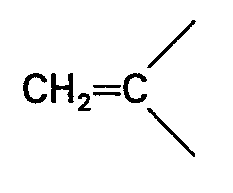
group is the sole reactive group, and from 0.5% to 10% of monoethylenic carboxylic acid.
group is the sole reactive group, and from 0.5% to 10% of monoethylenic carboxylic acid.
10. An organic solvent solution as claimed in Claim 9, characterised in that the monoethylenic
carboxylic acid is acrylic acid, methacrylic acid, crotonic acid, maleic acid or itaconic
acid and provides an acid value of from 20 to 50, and a monohydric alcohol or ether
alcohol containing up to 6 carbon atoms is present in the solvent solution in an amount
of from 5% to 100% of the weight of the copolymer.
11. An organic solvent solution as claimed in any of Claims 4 to 10, characterised
in that the resin is a copolymer of monoethylenically unsaturated monomers containing
only carbon, hydrogen and oxygen, at least 90% of the monomers have the
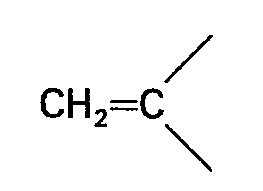
group as the sole reactive group, and from 1.0% to 8% of monomers being monoethylenic carboxylic acid.
group as the sole reactive group, and from 1.0% to 8% of monomers being monoethylenic carboxylic acid.
1. Papier conducteur recouvert d'un revêtement diélectrique électrographique ayant
une capacité d'acceptation de charge améliorée qui comprend un revêtement d'une résine
thermoplastique isolante soluble en solvant organique ayant une fonctionnalité carboxylique
lui conférant un indice d'acide de 5 à 100, caractérisé en ce que de l'oxyde de calcium
ou de l'hydroxyde de calcium est dispersé dans le revêtement en quantité de 0,05 à
3% du poids de la résine.
2. Papier conducteur suivant la revendication 1, caractérisé en ce que le revêtement
contient une charge minérale dans un rapport de la charge au liant de 1:1 à 4:1.
3. Papier conducteur suivant la revendication 1 ou 2, caractérisé en ce que l'oxyde
de calcium ou l'hydroxyde de calcium est présent en quantité de 0,1 à 2% du poids
de la résine.
4. Solution en solvant organique pour déposer le revêtement diélectrique indiqué dans
l'une quelconque des revendications 1 à 3 et dont la résine est dissoute dans le solvant
organique, caractérisée en ce que l'oxyde de calcium ou l'hydroxyde de calcium est
dispersé dans la solution de résine en quantité de 0,05 à 3% du poids de la résine.
5. Solution en solvant organique suivant la revendication 4, caractérisée en ce que
de l'argile ou du lithopone est présent comme charge minérale dans la solution de
résine dans un rapport de la charge au liant de 1:1 à 4:1.
6. Solution en solvant organique suivant la revendication 4 ou 5, caractérisée en
ce que le solvant organique constitutif de la solution comprend, à raison d'au moins
3% du poids de la résine, un alcool pour améliorer la limpidité de la solution.
7. Solution en solvant organique suivant la revendication 6, caractérisée en ce que
l'alcool compte jusqu'à 6 atomes de carbone et est utilisé en quantité s'élevant jusqu'à
100% du poids de la résine.
8. Solution en solvant organique suivant la revendication 6 ou 7, caractérisée en
ce que l'alcool est l'alcool éthylique, l'alcool propylique, l'alcool butylique ou
le 2-éthoxyéthanol, et est utilisé en quantité de 5 à 30% du poids de la résine.
9. Solution en solvant organique suivant l'une quelconque des revendications 4 à 8,
caractérisée en ce que la résine thermoplastique est un copolymère de monomères à
non saturation monoéthylénique contenant au moins 85% de monomères dont le radical
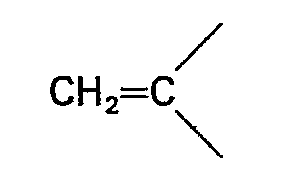
est l'unique radical réactif, et 0,5 à 10% d'acide carboxylique monoéthylénique.
est l'unique radical réactif, et 0,5 à 10% d'acide carboxylique monoéthylénique.
10. Solution en solvant organique suivant la revendication 9, caractérisée en ce que
l'acide carboxylique monoéthylénique est l'acide acrylique, l'acide méthacrylique,
l'acide crotonique, l'acide maléique ou l'acide itaconique et confère un indice d'acide
de 20 à 50, et un alcool mono- hydroxylé ou un étheralcool comptant jusqu'à 6 atomes
de carbone est présent dans la solution en solvant en quantité de 5 à 100% du poids
du copolymère.
11. Solution en solvant organique suivant l'une quelconque des revendications 4 à
10, caractérisée en ce que la résine est un copolymère de monomères à non-saturation
monoéthylénique contenant uniquement du carbone, de l'hydrogène et de l'oxygène, au
moins 90% des monomères comprenant le radical
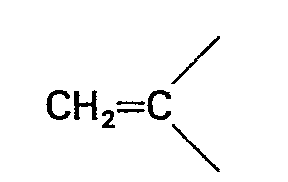
comme unique radical réactif et 1,0 à 8% des monomères étant de l'acide carboxylique monoéthylénique.
comme unique radical réactif et 1,0 à 8% des monomères étant de l'acide carboxylique monoéthylénique.
1. Elektrisch leitendes Papier überzogen mit einer elektrographisch dielektrischen
Schicht verbesserter Ladungsaufnahmefähigkeit in Form einer Beschichtung aus einem
in einem organischen Lösungsmittel löslichen thermoplastischen isolierenden Harz mit
einer Carboxyl-Funktionalität für eine Säurezahl von 5 bis 100, dadurch gekennzeichnet,
daß in der Schicht feindispers verteilt 0,05 bis 3 Gew.-% - bezogen auf das Harz -
Calciumoxid oder Calciumhydroxid sind.
2. Leitendes Papier nach Anspruch 1, dadurch gekennzeichnet, daß die Schicht einen
mineralischen Füllstoff enthält, wobei das Verhältnis Füllstoff zu Bindemittel (Harz)
1:1 bis 4:1 beträgt.
3. Leitendes Papier nach Anspruch 1- oder 2, dadurch gekennzeichnet, daß in der Schicht
0,1 bis 2 Gew.-% - bezogen auf das Harz - Calciumoxid oder Calciumhydroxid feindispers
verteilt sind.
4. Beschichtungslösung für den dielektrischen Überzug nach Anspruch 1 bis 3 in Form
einer organischen Lösung des Harzes, dadurch gekennzeichnet, daß in der Harzlösung
0,05 bis 3 Gew.-% - bezogen auf Harz - Calciumoxid oder Calciumhydroxid dispergiert
sind.
5. Beschichtungslösung nach Anspruch 4, dadurch gekennzeichnet, daß die organische
Lösung als Füllstoff Ton oder Lithopone enthält und das Verhältnis Füllstoff zu Binder
(Harz) 1:1 bis 4:1 beträgt.
6. Beschichtungslösung nach Anspruch 4 oder 5, dadurch gekennzeichnet, daß das Lösungsmittel
zumindest 3 Gew.-% - bezogen auf Harz - eines Alkohols zur Verbesserung der Klarheit
der Lösung enthält.
7. Beschichtungslösung nach Anspruch 6, dadurch gekennzeichnet, daß der Alkohol bis
zu 6 C-Atome enthält und in einer Menge bis zu 100 Gew.-% - bezogen auf das Harz -
vorliegt.
8. Beschichtungslösung nach Anspruch 6 oder 7, dadurch gekennzeichnet, daß der Alkohol
Äthanol, Propanol, Butanol oder 2-Äthoxy- äthanol ist und in einer Menge von 5 bis
30 Gew.-% - bezogen auf Harz - vorliegt.
9. Beschichtungslösung nach Anspruch 4 bis 8, dadurch gekennzeichnet, daß das thermoplastische
Harz ein Copolymer von monoäthylenisch ungesättigten Monomeren enthaltend zumindest
85% Monomere, in denen die
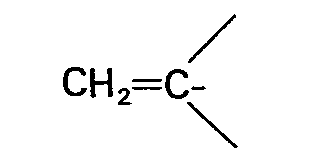
Gruppe die einzige reaktive Gruppe ist, und 0,5 bis 10% monoäthylenische Carbonsäure.
Gruppe die einzige reaktive Gruppe ist, und 0,5 bis 10% monoäthylenische Carbonsäure.
10. Beschichtungslösung nach Anspruch 9, dadurch gekennzeichnet, daß die monoäthylenische
Carbonsäure Acrylsäure, Methacrylsäure, Crotonsäure, Maleinsäure oder Itaconsäure
ist und eine Säurezahl von 20 bis 50 ergibt und ein einwertiger Alkohol oder Ätheralkohol
mit bis zu 6 C-Atomen in der Lösung in einer Menge von 5 bis 100 Gew.-% bezogen auf
Copolymer enthalten ist.
11. Beschichtungslösung nach Anspruch 4 bis 10, dadurch gekennzeichnet, daß das Harz
ein Copolymer von monoäthylenisch ungesättigten Monomeren enthaltend nur Kohlenstoff-,
Wasserstoff- und Sauerstoffatome ist, von denen zumindest 90% die
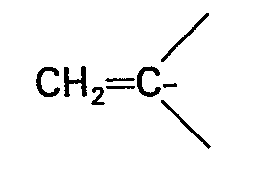
Gruppe als einzige reaktive Gruppe enthalten und 1 bis 8% Monomere in Form der Monoäthylen-carbonsäure vorliegen.
Gruppe als einzige reaktive Gruppe enthalten und 1 bis 8% Monomere in Form der Monoäthylen-carbonsäure vorliegen.