|
(11) | EP 0 005 001 A1 |

| (12) | EUROPEAN PATENT APPLICATION |
|
|
|
|
|||||||||||||||||||||||||||||||
| (54) | Polymerisation of 2-pyrrolidone with alkali metal pyrrolidonates and quaternary ammonium salts, and polymerisation products thus obtained |
| (57) Quarternary ammonium salts are used as adjuncts to the primary catalyst of an alkali
metal pyrrolidonate in the polymerization of 2-pyrrolidone using SO2, CO2 or MoO3 as initiator. The catalysts may be recovered and recycled by washing the resultant polymer with a solvent. The structural formula for the quarternary ammonium salt is wherein R,, R2, R3 and R4 are alkyl, aralkyl, or aryl radicals, n is 1 or 2 depending on the valence of X, and X is a sulfate, hydrogen sulfate or halide. Such quaternary ammonium salts reduce conversion time for polymerization and also act as color suppressors when sulfur dioxide is used as an activator at higher temperatures. Also disclosed is the use of a cesium or rubidium pyrrolidonate as a color suppressor in the SO2 activated 2-pyrrolidone polymerization. |
[0001] This invention relates to the polymerization of 2-pyrrolidone and more particularly to a practical method of decreasing the time required for the formation of the polymer while still preserving the high molecular weight and white color of the product.
[0002] The formation of polymers of 2-pyrrolidone involving the use of alkaline catalysts via an anionic mechanism is disclosed in U.S. Patent 2,638,463. Subsequent patents, for example U.S. 2,809,958, further disclose the need for an activator or co-catalyst to increase the yield of polymer formed.
[0003] Suitable alkaline catalysts are the oxides, hydroxides, alcoholates, hydrides, amides, etc. of the alkali metals, as well as the alkali metals themselves, which form the alkali metal salt of 2-pyrrolidone'.
which is the actual catalyst. As used herein "alkali metal" means all the alkali metals except lithium. The simplest, and most free from side reactions, are the alkali metal hydroxides.
[0004] The polymer formed is believed to be a linear polyamide which has been called polypyrrolidone or nylon-4, having the structure:
[0005] The value of n, or in other words the molecular weight of the polymer, has been found to be dependent on the type of activator employed. The vast majority of activators or co-catalysts which have been disclosed in the prior art (for example those disclosed in U.S. Patents Nos. 2,809,958; 3,060, 153 and 3,069,392 result in a polymer of medium molecular weight having insufficient thermal stability to withstand the high temperatures required for melt extrusion processes, for example in the formation of textile fibers by melt spinning. It has been found that in order to be satisfactory for this purpose the polymer should have a narrow molecular weight distribution and in inherent viscosity of at least 3.0 when measured as a 0.5% solution in hexafluoroisopropanol at 25°C.
[0006] Of the numberous activators which have been disclosed for activating the polymerization of 2-pyrrolidone, two especially result in markedly higher molecular weights and thermal stabilities. One of these is carbon dioxide, disclosed in U.S. Patent 3,271,652 and the other is sulfur dioxide, disclosed in U.S. Patent 3,174,951. Polymers formed by using both C02 and S02 activators have been successfully melt spun into fibers (Gunter Schirawski, Die Makromolekulare Chemie, 161 (1972) page 67), but when S02 has been used as the activator the polymers formed usually have a yellow color which greatly limits their usefulness.
[0007] Typically, the polymerization of 2-pyrrolidone to form a product of sufficiently high molecular weight to be useful in melt extrusion processes requires long polymerization times. For exanple, U.S. Patent No. 3,721,652 recites a polymerization time of 5 days at 50°C to give a conversion of 55% (Example 6) and Gunter Schirawski (Die MakromolekulareChemie 161 page 64 Table 6) reports a conversion of 52.2% at 50°C in 3 days when using an optimum C02 concentration. By optimizing all of the variables it is possible to shorten the polymerization time even further, but at least about 30 hours is required in order to obtain conversion of 50-55% when using either C02 or SO2 as the activator and either sodium or potassium pyrrolidonate as the primary catalyst.
[0008] It is well known that by using a quaternary ammonium hydroxide instead of an alkali metal hydroxide, the time required for substantial yields of polymer can be greatly reduced. The first disclosure of the use of quaternary ammonium hydroxides as primary catalysts was by Ney in U.S. Patent No. 2,973,343. Shorter polymerization times were reported together with an increase in molecular weight, even when using N-acetyl pyrrolidone as the activator. In Example 9 of U.S. Patent No. 3,721,652, the use of a quaternary ammonium hydroxide catalyst together with C02 is disclosed. Polymerization times as low as 5 hours for a conversion of 50% were reported together with higher molecular weights.
[0009] There is, however, a serious problem in the use of quaternary ammonium hydroxides as catalysts. They are very unstable when heated, especially under the reduced pressure which must be used to prepare the pyrrolidone salt, breaking down into tertiary amine and alcohol or olefin. Because of this it is difficult to prepare even modest size batches for polymerization. Note that in the aforementioned Example 9 of U.S. Patent 3,721,652 only 25 ml of monomer was employed whereas in Example 4 of the same patent, 800 cc of monomer was used.
[0010] Sekiguichi et al, as diclosed in U.S. Patent No. 3, 835,100, attempted to get around this problem by preparing the pure, anhydrous quaternary ammonium salts of 2-pyrrolidone. Since these compounds are in fact the actual primary catalysts they may be added to the pyrrolidone without heating and no loss by decomposition will occur.
[0011] The difficulty with this solution to the problem is that these quaternary ammonium salts of pyrrolidone are very expensive to prepare and they must be kept "in dry state, under vacuum, and in the cold" (column 2, line 44 of U.S. Patent 3,835,100) since they are very hygroscopic and unstable to heat.
[0012] We have found that the problem of stability which is encountered when using the quaternary ammonium hydroxides may be avoided by utilizing instead the more stable and much lower cost quaternary ammonium salts in conjunction with the alkali metal pyrrolidonate.
[0013] In its broadest aspect the present invention provides a method of polymerizing 2-pyrrolidone comprising the steps of mixing the 2-pyrrolidone monomer under substantially anhydrous conditions with an alkali metal salt of 2-pyrrolidone, the alkali metal being selected from sodium, potassium, rubidium and cesium, adding a quaternary ammonium salt and then contacting the mixture with a polymerization activator. Thus the anhydrous quaternary ammonium salt (eg. tetramethyl ammonium chloride) is typically added to an anhydrous solution of potassium pyrrolidonate previously prepared and polymerization initiated by adding either C02 or S02.
[0014] The quaternary ammonium salts may easily be made anhydrous by dissolving them in 2-pyrrolidone and distilling over 10-20% under reduced pressure in the sa:ae manner as the anhydrous sodium or potassium pyrrolidone salt is formed. Since the quaternary ammonium salts are much more stable than the hydroxides, no decomposition occurs.
[0015] The quaternary ammonium cation may consist of four alkyl, aralkyl or aryl groups and they may be either all alike or mixed. Lower alkyl radicals with 6 or less carbon atoms are preferred since quaternaries with longer chain alkyls, being detergents, foam excessively during the washing of the polymer but they are still operative. Of the lower alkyl radicals, butyl is the most preferred. The anion may be a sulfate, hydrogen sulfate or halide.
[0016] The addition of the quaternary ammonium salt has a marked accelerating effect on the polymerization but this is apparently not due to the formation of a quaternary ammonium salt of 2-pyrrolidone in situ . Evidence for this is the fact that potassium chloride (which has very low solubility in 2-pyrrolidone) is not precipitated when tetramethyl ammonium chloride is added to the anhydrous solution of potassium pyrrolidonate in 2-pyrrolidone. In like manner potassium sulfate is not precipitated when the quaternary ammonium sulfate is employed.
[0017] Furthermore, it is not necessary to add the stoichiometric equivalent of the quaternary ammonium salt, lesser amounts are as effective or more effective in many cases.
[0018] We have further found that certain quaternary ammonium sulfates are more active than other quaternary ammonium salts such as the chlorides. It has been found that tetrabutyl ammonium hydrogen sulfate and tetrabutyl ammonium sulfate are especially effective in reducing the time to reach 50% conversion compared to the time required when using tetramethyl ammonium chloride.
[0019] When using SO as the activator, we have found an additional unexpected and surprising effect. The quaternary ammonium compounds act as color suppressors and because of this it is possible to carry out the polymerization at 50°C without danger of color formation. For example, when using an S02 concentration of, say, 0.005 mols per mol of monomer the polymer formed at 50 C.would be distinctly yellow if no quaternary ammonium compound were present, but when it is present the polymer formed at this temperature is pure white. This color inhibition occurs with all quaternary ammonium compounds including the quaternary ammonium salt of 2-pyrrolidone made via tetramethyl ammonium hydroxide.
[0020] It is not clear to us whether the marked color suppressing action is due to the presence of the quaternary ammonium ion directly or to an increase in basicity. Evidence that it may be due to increased basicity was found by substituting cesium hydroxide for the potassium hydroxide in forming the alkali metal salt of 2-pyrrolidone. Cesium hydroxide is a stronger base than potassium hydroxide. Surprisingly, although only a slight increase in the polymerization rate occured when using cesium pyrrolidonate as the primary catalyst, the color of the polymer formed at 50°C with S02 as the activator was pure white. It is to be noted that although cesium hydroxide is expensive, it may be readily recovered and recycled.
[0021] Typically, the invention is practiced by adding the quaternary ammonium salt to monomeric 2-pyrrolidone and distilling over, under vacuum, 10 to 20% of the monomer in the same manner as in the preparation of the anhydrous potassium pyrrolidonate from KOH. The anhydrous solution (or in some instances suspension) thus formed of the quaternary ammonium salt is then added to the anhydrous solution of potassium pyrrolidonate in monomer before the activator is added. The activator used is preferably either SO2, C02 or.in some cases MoO3, since these form polymers having high molecular weight and a narrow molecular weight distribution although other activators may be used.
[0022] Polymers made in this manner using either SO2 or C02 as the activator have been found to be especially well adapted for use in melt extrusion processes as, for example, in the melt spinning of fibers. High molecular weight coupled with a narrow molecular weight distribution (low polydispersity) are esential characteristics for this application.
[0023] By means of Gel Permeation Chromotography (GPC) the average weight molecular size (Aw) of a sample of polymer prepared by the addition of anhydrous tetramethyl ammonium chloride to the anhydrous potassium pyrrolidonate solution followed by the addition of SO2 as the activator was found to be 32,500 Angstroms. The average number molecular size (An) was found to be 14,200 Angstroms, giving a polydispersity (Aw/An) of 2.28. A similar polymer prepared by using tetrabutyl ammonium hydrogen sulfate was found by GPC to have an Aw of 29,000 and an An of 13,800, thus giving a polydispersity (Aw/An) cf 2.11.
[0024] By way of comparison, the average weight molecular size of a sample of C02 initiated polymer employing potassium pyrrolidate as the primary catalyst is reported in U.S. Patent No. 3,721,652 (Example 3) to be 17,802 Angstroms and the average number molecular size to be 7017 Angstroms thus giving a polydispersity (dispersity ratio) of 2.50. It may thus be seen that polymers of 2-pyrrolidone prepared in accordance with this invention are at least equal if not superior to those formed by C02 initiation using only potassium pyrrolidonate as the primary catalyst. The polymerization times for the two methods are quite different however, being in the order of about 3 hours for 50% conversion when using tetrabutyl ammonium hydrogen sulfate mixed with potassium pyrrolidonate followed by SO2 or C02 addition, compared to about 1 or 2 days for the CO2 polymer prepared in accordance with the method set forth in U.S. Patent 3,721,652 and taken to the same conversion.
[0025] In addition to the fast polymerization rate resulting fran the use of quaternary ammonium salts in the manner described there is the additional surprising discovery that, when using SO2 as the activator, there is no problem with the formation of color in the resulting polymer, even at the customary polymerization temperature of 50°C. By thus being able to carry out the polymerization at optimum temperatures and SO2 concentrations without danger of color formation, the advantage of the increased rate under these conditions is achieved.
[0026] The amount of alkali metal hydroxide used may vary from about 0.01 to 0.15 mols per mol of 2-pyrrolidone, more preferably from about 0.01 to 0.1 mols and most preferably from about 0.03 to 0.06 mols in order to obtain optimum polymerization rates coupled with high molecular weight polymers.
[0027] The amount of quaternary ammonium salt added may range from as little as 0.01 mol per mol of alkali metal pyrrolidonate or less for purposes of preventing color formation when using SO2 as the activator, to 1 mol per mol of alkali metal pyrrolidonate or more. For purposes of increasing the rate of polymerization we prefer to use about 0.15 to about 1.0 mol per mol of alkali metal pyrrolidonate, more preferably about 0.2 to 0.6. The exact amount depends upon the particular quaternary ammonium salt and also on the amount of alkali metal hydroxide added.
[0028] In the following examples the viscosity measurements were made using a 5.0% solution of the polymer in 85% formic acid. When the polymer had completely dissolved, the solution was poured into an empty Gardner Bubble Viscometer tube for comparison at 250C. with the bubble flow of Gardner No. VG-7375 standard bubble tubes. Some of the higher viscosities required the use of the Gardner VG-7380 series of tubes. These tubes are calibrated in Stokes and the viscosity values are reported in Stokes but for purposes of comparison with other reported viscosities they are also converted to the corresponding value for inherent viscosity when measured as a 0.5 gram per deciliter (g/dl) solution in hexafluoroisopropanol (HFIP) at 25°C.
EXAMPLE 1
[0029] 100 grams of purified 2-pyrrolidone was added to a 250 ml 3-necked flask equipped with a gas inlet tube, a thermometer for measuring pot temperature and a distillation head also having a thermometer for measuring the temperature of the vapor. The distillation head was connected to a condenser and a receiver having a vacuum connection. Water at about 30-350C was circulated through the condenser for cooling.
[0030] 3.3 grams (0.05 mol) of potassium hydroxide pellets of 85% assay was added and the system evacuated to a pressure of 10 mm of mercury. About 15 grams of pyrrolidone was distilled over to remove the water formed by the reaction of the potassium hydroxide with the pyrrolidone.
[0031] The mixture was then cooled to room temperature and 0.005 mol S02 as added as a 25% mixture in dry nitrogen. Nitrogen gas was then admitted to bring the contents to atmospheric pressure and the mixture was poured into a polyethylene polymerization bottle and tightly capped. The bottle was placed in a polymerization oven maintained at 50 C. After a period of 12 hours the bottle was squeezed and the contents found to be quite soft so it was allowed to remain in the oven for a total period of 30 hours. At the end of this time the cake, now hard, was removed and ground in a Wiley mill. After washing and drying the conversion was found to be 60% but the product was distinctly yellow in color.
EXAMPLE 2
[0032] The procedure of Example 1 was followed except that after the dry potassium salt solution was prepared, nitrogen gas was admitted to bring the contents of the flask to atmospheric pressure after which the flask was opened and 6.5 grams of tetramethyl ammonium chloride (0.059 mol) was added.
[0033] The flask was again evacuated and the contents heated to a pot temperature of 1300C resulting in incipient distillation to remove water but no pyrrolidone was distilled over. After cooling to room temperature 0.005 mol of S02 as a 25% mixture in nitrogen was introduced with stirring. After admitting nitrogen gas to bring the pressure to atmospheric, the liquid was then poured into a polyethylene polymerization bottle, tightly capped, and placed in the polymerization oven maintained at 50°C.
[0034] After 12 hours the bottle was removed and the white polymer cake was ground in a Wiley mill. The conversion was 55% and the color of the ground and washed polymer was snow white. The viscosity was 63 Stokes when measured as a 5% solution in 85% formic acid using Gardner standard bubble tubes at room temperature as a reference, equivalent to an inherent viscosity of 6.4 dl/g when measured as a 0.5% solution in hexafluoroisopropanol (HFIP).
EXAMPLE 3
[0035] 6.0 grams (0.055 mol) of tetramethyl ammonium chloride was added to 70 grams of pyrrolidone in the reaction flask equipped as described in Example 1. 20 grams of pyrrolidone was distilled over at 10 mm pressure to insure that the solution of the quaternary ammonium salt was anhydrous. After cooling to room temperature this solution was poured into a polyethylene bottle and tightly capped.
[0036] 4.0 grams (0.06 mol) of potassium hydroxide pellets (85% assay) was added to 70 grams of purified monomer in the reaction flask and 20 grams of the monomer distilled over under vacuum to form an anhydrous solution of potassium pyrrolidonate. After cooling to room temperature, nitrogen gas was admitted to bring the contents to atmospheric pressure and then the contents of the polyethylene bottle previously prepared was added to the solution of potassium pyrrolidonate in the reaction flask thus giving 100 grams of monomer containing 0.055 mol of anhydrous tetramethyl ammonium chloride and 0.06 mol of potassium pyrrolidonate (or about 1 mol per mol of the potassium salt).
[0037] The mixture was stirred with a magnetic stirrer and a dry gas mixture containing 25% S02 in nitrogen was bubbled in over a period of about 5 minutes at room temperature until the equivalent of 0.005 mol of S02 per mol of monomer (ie 0.0059 mols per 100 g.) had been added. The mixture was then poured into a polyethylene polymerization bottle which was tightly capped and placed in an oven maintained at 50 C. At the end of 8 hours the polymer cake was removed and ground in a Wiley mill to small particle size.
[0038] The white polymer was washed five times with water and dried in an oven at about 70°C. The conversion was 56% and the viscosity was 27 Stokes, corresponding to an inherent viscosity of 5.6 dl/g in HFIP.
EXAMPLE 4
[0039] The procedure of Example 3 was followed except that 0.4 gram (0.0037 mol) of tetramethyl ammonium chloride was used. A conversion of 55% was attained after a polymerization time of 30 hours at 50°C. The polymer formed was pure white in color even though the polymerization temperature was 50 C.
EXAMPLE 5
[0040] The procedure was Example 3 was followed except that 4 grams (0.012 mol) of tetrabutyl ammonium hydrogen sulfate was used in place of the tetramethyl ammonium chloride while keeping the K-salt concentration at 0.06 mols or about 0.2 mol of the quaternary ammonium salt to 1 mol of the K-salt. After 3 1/4 hours at 50°C a white polymer was found in 54% yield. The viscosity was found to be 11.8 Stokes, corresponding to an inherent viscosity of 4.9 dl/g in HFIP. The sample was analyzed by Differential Thermal Analysis (DTA) and found to have a peak melting endotherm at 272°C and a peak decomposition endotherm at 325°C when using a heating rate of 10°C per minute. Thus in spite of the short polymerization time this sample is as thermally stable as samples made via S02 or CO2 activation using only potassium pyrrolidonate as the primary catalyst and hence requiring very much longer polymerization times.
EXAMPLE 6
[0041] Example 5 was duplicated except that 6 grams (0.018 mol) of tetrabutyl ammonium hydrogen sulfate was used instead of 4 grams. The conversion was 55% in 3 1/4 hours and the viscosity was 7.1 Stokes, equivalent to an inherent viscosity of 4.4. in HFIP. The polymer was pure white.
EXAMPLE 7
[0042] Example 6 was repeated except that 8 grams (0.12 mol) of potassium hydroxide and 0.008 mol of SO2 was added. A white polymer was obtained in a conversion of 41% after 2 1/2 hours at 50°C. The viscosity was 1.65 Stokes corresponding to an inherent viscosity of 3.1 in HFIP.
EXAMPLE 8
[0043] The method of Example 7 was followed except that 0.03 mol of C02 was added in place of the S02. After 2 1/2 hours at 50°C a conversion of 46% was obtained. The viscosity was 15 Stokes corresponding to an inherent viscosity of 5.1 HFIP.
EXAMPLE 9
[0044] Example 8 was repeated except that 12 g of tetrabutyl ammonium hydrogen sulfate was used. At the end of 60 minutes the conversion was 60.5% and the viscosity was 0.85 Stokes or an IV of 2.5 HFIP.
[0045] By comparing Examples 5,6,7 and 9, it may be seen that the molecular weight (viscosity) of the polymer formed may be controlled by varying the concetrations of the quaternary ammonium compound, the potassium pyrrolidonate and the activator.
EXAMPLE 10
[0046] 16 grams (0.048) mole of tetrabutyl ammonium hydrogen sulfate was added to 65 ml of 2-pyrrolidone and about 3 ml was distilled over under vacuum to dry the quaternary ammonium salt. After cooling to room temperature this solution was placed in a polyethylene bottle and tightly capped.
[0047] A potassium pyrrolidonate solution was prepared by adding 4.0 grams of potassium hydroxide (85% assay) to 65 grams of pyrrolidone and distilling over 25 grams under vacuum and cooled to room temperature.
[0048] The two solutions were mixed and 0.004 mols of SO2 was added (as a 25% mixture with nitrogen). The mixture was then poured into a polyethylene polymerization bottle and placed in the polymerization oven at 50°C. After 5 hours the bottle was removed and the white polymer cake ground in a Wiley mill. After washing 5 times with water and drying, the conversion was found to be 50%. The viscosity was 148 Stokes or about 7 IV in HFIP.
[0049] DTA showed a melting endortherm peak at 270°C and a decomposition endotherm peak at 317°C at a programmed temperature rise of 10°C per minute. By Gel Permeation Chromatography (GPC) the average weight molecular size (Aw) was found to be 29,000 Angstroms and the average number molecular size (An) was found to be 13,800. The polydispersity value, Aw/An, is 2.11.
EXAMPLE 11
[0050] Tetramethyl ammonium sulfate was prepared from tetramethyl ammonium bromide plus silver sulfate and obtained as a white crystalline solid. 12 grams (0.05 mol) of this was added to 50 grams of pyrrolidone and about 20% of the monomer distilled over to remove the water. This solution was added to an equal volume of an ahydrous solution containing 10 mol% of potassium pyrrolidonate in pyrrolidone thus forming a solution containing approximately 0.05 mol of quaternary ammonium salt and 0.05 mol of potassium pyrrolidonate. To this 0.004 mols of S02 (diluted with N2) per mol of monomer was added and the mixture then poured into a polymerization bottle and capped. After 4 hours at 50°C. the conversion was found to be 41%. By GPC the weight average molecular size (Aw) was found to be 24,500 Angstroms and the number average (An) 10,200 Angstroms. Aw/ An = 2.41 indicating a narrow molecular weight distribution.
[0052] Tetrabutyl ammonium sulfate was prepared from tetrabutyl ammonium bromide and silver sulfate. It was obtained as a pale yellow oil which was not crystallized. 17.4 grams of the oil was added to 80 g pyrrolidone and 32 grams of the pyrrolidone was distilled off under vacuum to insure dryness. This solution was added to an equal volume of an anhydrous potassium pyrrolidonate solution prepared by adding 4.0 g (0.06 mol) of KOH to 70 g of pyrrolidone and distilling over 20 grams. This resulted in a mixture containing about 0.03 mols of the quaternary ammonium salt to about 0.06 mols of the K-salt. To this 0.005 mols of SO2 (mixed with nitrogen) per mol of monomer was added and the mixture polymerized for 3-1/4 hours at 50°C. A conversion of 49% was obtained and the viscosity of the polymer was very high, estimated to be about 148 Stokes or an inherent viscos-ity of about 7 (HFIP). A DTA measurement showed the peak melting endotherm at 2720C and the peak decomposition endotherm at 321°C at a heating rate of 10°C per minute.
EXAMPLE 13
[0053] The procedure of Example 1 was followed except that rubidium hydroxide was substituted for the potassium hydroxide in an equimolar amount. 0.008 mols of SO was used instead of 0.005 in order to exaggerate any color problem.
[0054] After 21 hours at 500C a pure white polymer was obtained with 63% conversion. The viscosity was 27 Stokes corresponding to an IV of 5.6 (HFIP).
EXAMPLE 14
[0055] The procedure of Example 13 was followed but using cesium hydroxide in place of the rubidium hydroxide. In removing the water formed by distillation it was noted that the cesium salt of pyrrolidone precipitated when hot but redissolved on cooling. The same effect was noted with the rubidium salt in Example 14 but to a lesser extent.
[0056] At the end of 20 hours at 50°C a white cake was formed which after grinding and washing gave a pure white polymer with 60% conversion. The viscosity was 60 Stokes which corresponds to an IV of 6.3 (HFIP).
[0057] With this amount of S02 at 50°C polymerization temperature the polymer formed when KOH is used as the alkali is quite yellow in color.
EXAMPLE 15
[0058] 20 grams of dry benzyl tributyl ammonium chloride was dissolved in 65 grams of 2-pyrrolidone. To this solution was added an ahydrous solution of potassium pyrrolidonate prepared in the usual way from 4.0 grams of 85% assay potassium hydroxide and 65 grams of 2-pyrrolidone less about 10 grams which was distilled over under vacuum in the drying process.
[0060] After 8 hours at 50°C a pure white polymer was obtained in a conversion of 47%. The viscosity was about 148 Stokes or about IV 7.0 in HFIP.
EXAHPLE 16
[0061] 20 grams of myristyl trimethyl ammonium bromide was added to 85 grams of 2-pyrrolidone and about 10 ml of the 2-pyrrolidone was distilled over under vacuum to dry the quaternary ammonium compound. The resulting solution was mixed with an equal volume of 10 mol% anhydrous potassium pyrrolidonate solution in pyrrolidone and the equivalent of 0.007 mol of S02 per mol of monomer was added.
[0062] After 24 hours at 50°C a pure white polymer cake was formed. This was ground in a Wiley mill and washed with water. Considerable foaming occurred during the washing step because of the detergent properties of the quaternary ammonium salt used.
EXAMPLE 17
[0064] 3.9 grams of 85% assay potassium hydroxide was added to 50 grams of 2-pyrrolidone and 18 grams of the pyrrolidone was distilled over under vaccum to remove the water formed. To this solution there was added a dry solution of tetrabutyl ammonium hydrogen sulfate prepared by dissolving 6 grams of the quaternary ammonium salt in 65 grams of 2-pyrrolidone and distilling over 23.5 grams under vacuum.
[0065] Then there was added a mixture of 1.5 grams of molybdenum trioxide suspended in 35 grams of 2-pyrrolidone from which 9.0 grams of the pyrrolidone had been distilled over to insure dryness. The total weight of 2-pyrrolidone in the mixture was thus 99.5 grams. It was poured into a polyethylene polymerization bottle and placed in an oven maintained at 50°C.
[0066] After 7 hours a white polymer was obtained in 45% conversion. The viscosity was 15.5 Stokes, equivalent to IV 5.1 HFIP.
EXAMPLE 18
[0067] 10.0 grams (0.03 mol) of tetrabutyl ammonium bisulfate was added to 80.0 grams of purified 2-pyrrolidone and 20 grams was distilled over under vacuum to insure dryness of the quaternary ammonium salt. The dried solution was placed in a bottle and tightly capped.
[0068] 5.9 grams (0.09 mol) of potassium hydroxide of 80% assay was added to 85 grams of purified 2-pyrrolidone and 20 grams of this was distilled over under vacuum to remove water formed by the reaction. The remaining clear, colorless, anhydrous solution of potassium pyrrolidonate in 2-pyrrolidone was cooled to room temperature (about 250C) and then mixed with the solution of the tetrabutyl ammonium bisulfate and stirred vigorously under vacuum with a small amount of dry nitrogen gas bubbling through. S02 gas distilled with nitrogen was then admitted until a total amount equal to 0.005 mol of S02 per mol of 2-pyrrolidone had been added. Dry nitrogen gas was admitted to bring the pressure up to atmospheric and then the mixture was poured into a polyethylene polymerization bottle and tightly capped.
[0069] After 60 minutes at 50°C the polymer cake was removed, ground, washed several times with water and dried. The conversion was 59.6% and the viscosity was 5.5 Stokes, equivalent to an inherent viscosity of 4.23 in HFIP.
EXAMPLE 19
[0070] The procedure of Example 6 was followed except that the polymerization was carried out at 30°C. for 3-1/4 hours. The viscosity of the polymer was 7.2 Stokes with a conversion of about 50% and the polymer was pure white.
EXAMPLE 20
[0071] 13.7 grams (0.024 mols) of tetrabutyl ammonium sulfate was added to 70 grams of 2-pyrrolidone and 28.5 grams of the monomer was distilled over under reduced pressure to insure dryness of the hygroscopic quaternary ammonium salt. 0.006 mols of S02 diluted with nitrogen was added to this mixture.
[0072] 3.2 grams of 85% KOH (0.048 mols of 100% KOH) was added to 30 grams of pyrrolidone and 8.8 grams distilled over under vacuum to form the anhydrous solution of potassium pyrrolidonate.
[0073] The two solutions were mixed and placed in an oven at 38°C. for 3-1/2 hours. At the end of this time the polymer cake was ground and washed five times with water. After drying the conversion was 60.2% and the viscosity was greater than 63 Stokes (IV of 6.4 HFIP).
EXAMPLE 21
[0074] The procedure of Example 20 was followed except that the polymer cake was washed five times with methanol after grinding. The combined washings (500ml) contained unchanged pyrrolidone, potassium pyrrolidonate and the tetrabutyl ammonium sulfate. The methanol was removed by heating at 55°C. under a pressure of 50mm.
[0075] The syrup remaining was then dried by passing it through a wiped-film evaporator at a pressure of 10 mm and a jacket temperature of 90°C with a flow of dry nitrogen gas passing through to aid in the removal of water. To the dried syrup collected, 60 grams of make-up dry pyrrolidone was added and 0.005 mol of SO2 per mol of monomer was added as a 25% mixture with nitrogen.
[0076] The resulting solution was immediately poured into a pdymerization bottle and placed in an oven at 38 C for 3 hours. The conversion at the end of this time was 59.4% and the viscosity of the polymer was 60 Stokes equivalent to an HFIP inherent viscosity of 6.3.
[0077] The process was repeated several times thus establishing the fact that both the potassium pyrrolidonate and the tetrabutyl ammonium sulfate may be recycled without loss in activity.
EXAMPLE 22
[0078] The method of Example 21 was followed except that the polymer was washed with water in the usual way except that the washing was continued only to the point where the filtrate was no longer alkaline to litmus paper.
[0079] The water was removed by evaporation and after adding make-up 2-pyrrolidone to the concentrate the mixture was dried in a wiped-film evaporator. It was polymerized in the same manner using S02 as the activator.
EXAMPLE 23
[0080] The method of Example 21 was followed except that instead of washing the polymer with methanol, 2-pyrrolidone was used. The washings were continued until neutral to moist litmus paper. To the combined washings make-up potassium hydroxide and tetrabutyl ammonium sulfate was added and the mixture passed through a wiped-film evaporator operating at 10 mm presure and a wall temperature of 900C to remove water.
[0081] The equivalent of 0.005 mol of S02 per mol of 2-pyrrolidone was then added as a 25% mixture with dry nitrogen. At the end of 7 hours in an oven maintained at 38oC. a white polymer was obtained in 58% yield. The viscosity was 27 Stokes corresponding to an IV of 5.6 (HFIP).
[0082] From the foregoing it will thus be seen that the quaternary ammonium salts of the invention for catalyzing the polymerization of 2-pyrrolidone can be represented by the structural formula
wherein R1, R2, R3 and R4 are alkyl, aralkyl or aryl radicals, n is 1 or 2 depending on the valence of X, and X is a sulfate bisulfate (i.e. hydrogen sulfate) or halide.
[0083] Some quaternary ammonium salts of the invention are more stable than others, e.g. the sulfates are more stable than the bisulfates. Some of these quaternary compounds are more effective in speeding up the polymerization than others. It has been found that those containing butyl groups are. more effective than those with shorter or longer chain alkyl groups, and the bisulfates and sulfates are more effective than the chlorides.
[0084] All of them accelerate the polymerization to some degree, however, whether SO2 or C02 is used as the activator and all of them are effective in suppressing the yellow color which tends to form when SO2 is used in higher concentrations and/or at higher polymerization temperatures.
[0085] The polymerization temperature may range from 20°C to 65°C with a range of from 30°C to 50°C being preferred. At temperatures about 50°C the polymerization rate decreases. At temperatures below 30°C the polymerization rate also decreases.
[0086] We have also found that the concentration of the primary catalysts (ie. the alkali metal pyrrolidonate) is important and should be between 4 and 5.5 mol per cent, preferably from about 4.6 to about 5.2 mol per cent. Substantial variation from this range reduces the rate of polymerization markedly. The concentration of the quaternary ammonium salt is also critical. For the preferred tetrabutyl ammonium bisulfate or sulfate it should be about 2 mol per cent.
[0087] The capability of certain quaternary ammonium salts to be recycled without loss due to decomposition is important to the economics of commercial production. The primary catalyst, whether sodium, potassium or cesium hydroxide may also be readily recycled, hence the initial cost of these substances is a less important.factor.
1. A method of polymerizing 2-pyrrolidone comprising the steps of mixing the 2-pyrrolidone
monomer under substantially anhydrous conditions with an alkali metal salt of 2-pyrrolidone,
the alkali metal being selected from sodium, potassium, rubidium and cesium, adding
a quaternary ammonium salt and then contacting the mixture with a polymerization activator.
2. A method of polymerizing 2-pyrrolidone according to claim 1 wherein the quaternary
ammonium salt has a cation composed of radicals selected from lower alkyl and aralkyl
and an anion selected from sulfate, hydrogen sulfate and halide.
3. A method of polymerizing 2-pyrrolidone according to claim 1 in which the quaternary
ammonium salt has the formula
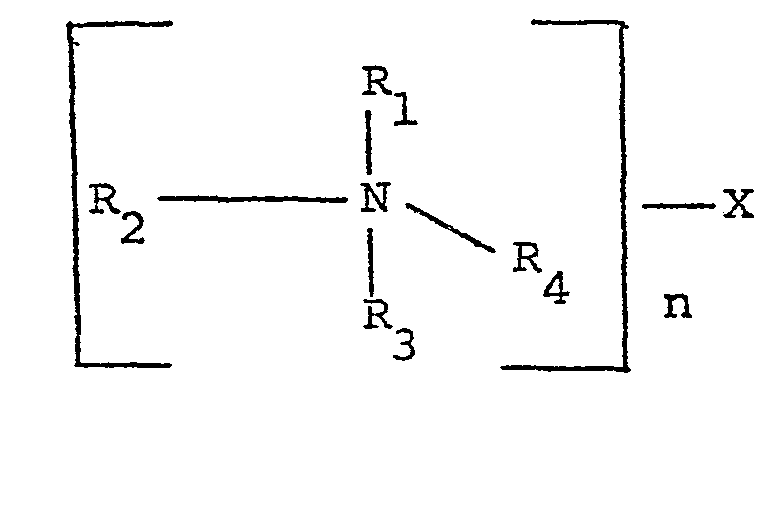
wherein R1, R2' R3 and R4 are alkyl, aryl or aralkyl radicals, n is 1 or 2 depending on the valence of X, and X is an anion selected from sulfate, hydrogen sulfate and halide.
wherein R1, R2' R3 and R4 are alkyl, aryl or aralkyl radicals, n is 1 or 2 depending on the valence of X, and X is an anion selected from sulfate, hydrogen sulfate and halide.
4. A method according to any one of claims 1 to 3 wherein the cation of the quaternary
ammonium salt is composed of radicals selected from tetramethyl, tetraethyl, tetrapropyl,
tetrabutyl, benzyl trimethyl, benzyl triethyl, benzyl tripropyl and benzyl tributyl.
5. A method according to any one of claims 1 to 4 wherein the quaternary ammonium
salt is tetramethyl ammpmium chloride, tetrabutyl ammonium hydrogen sulfate, or tetrabutyl
ammonium sulfate.
6. A method according to any one of claims 1 to 5 wherein the activator is carbon
dioxide, sulfur dioxide or molybdenum trioxide.
7. A method according to any one of claims 1 to 6 wherein the temperature of polymerization
is from 20°C to 65°C.
8. A method according to any one of claims 1 to 7 wherein the concentration of alkali
metal pyrrolidonate is from about 4 to about 5.5 mol per cent.
9. A method of polymerizing 2-pyrrolidone according to any one of claims 1 to 7 in
which the concentration of the alkali metal salt of 2-pyrrolidone is from about 0.01
to about 0.15 mols per mol of pyrrolidone and the concentration cfquaternary ammonium
salt is from about 0.01 to about 1.0 mol per mol of said alkali metal salt.
10. A method of polymerizing 2-pyrrolidone according to any one of claims 1 to 9 further
comprising the steps of washing the polymer with a solvent for unchanged monomer and/or
the alkali metal pyrrolidonate and the quaternary ammonium salt, removing the solvent,
drying the remaining mixture and adding more substantially anhydrous 2-pyrrolidone
thereto and then contacting the resulting mixture with an activator to again polymerize
the 2-pyrrolidone.
11. A method according to claim 10 in which the polymer is washed with a solvent selected
from water and lower alcohol to recover unchanged monomer and the catalysts.
12. A method according to claim 10 in which the polymer is washed with 2-pyrrolidone
to recover the catalysts.
13. Polymerized 2-pyrrolidone characterized by being substantially white in color
and having a polydispersity value of not more than 5 and an inherent viscosity of
at least 3.0 when measured as a 0.5 gram per deciliter solution in hexafluoroisopropanol at 250C, and having been catalyzed under substantially anhydrous conditions with an alkali
metal salt of 2-pyrrolidone and a quaternary ammonium salt having the formula
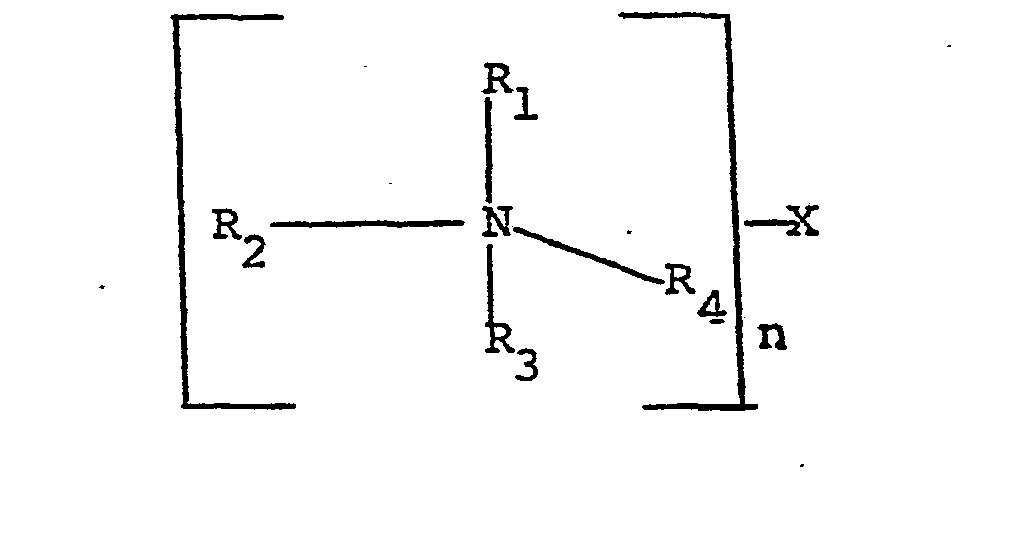
wherein Rl, R2, R3 and R4 are alkyl, aryl.or aralkyl radicals, n is 1 or 2 depending on the valence of X, and X is an anion selected from sulfate, hydrogen sulfate and halide, the 2-pyrrolidone being polymerized in the presence of sulfur dioxide as the activator, the concentration of sulfur dioxide and the temperature of polymerization being such that without said quaternary ammonium salt the resulting polymer would be substantially yellow in color.
wherein Rl, R2, R3 and R4 are alkyl, aryl.or aralkyl radicals, n is 1 or 2 depending on the valence of X, and X is an anion selected from sulfate, hydrogen sulfate and halide, the 2-pyrrolidone being polymerized in the presence of sulfur dioxide as the activator, the concentration of sulfur dioxide and the temperature of polymerization being such that without said quaternary ammonium salt the resulting polymer would be substantially yellow in color.
14. Polymerized 2-pyrrolidone characterized by being substantially white in color
and having a polydispersity value of not more than 5 and an inherent viscosity of
at least 3.0 when measured as a 0.5 gram per deciliter solution in hexafluoroisopropanol
at 250C. and having been catalyzed under substantially anhydrous conditions with an alkali
metal salt of 2-pyrrolidone the alkali metal being selected from rubidium and cesium,
the 2-pyrrolidone being polymerized in the presence of sulfur dioxide as an activator,
the concentration of sulfur dioxide and the temperature of polymerization being such
that without said alkali metal salt the resulting polymer would be substantially yellow
in color.