|
(11) | EP 0 008 229 B1 |

| (12) | EUROPEAN PATENT SPECIFICATION |
|
|
| (54) |
Spiro-furanohydantoin derivatives, process for their preparation and pharmaceutical compositions containing them Spiro-furanohydantoinderivate, Verfahren zu ihrer Herstellung und sie enthaltende pharmazeutische Zusammensetzungen Dérivés de la spiro-furanohydantoine, procédé pour leur préparation et compositions pharmaceutiques les contenant |
|
|
|||||||||||||||||||||||
|
||||||||||||||||||||||||
| Note: Within nine months from the publication of the mention of the grant of the European patent, any person may give notice to the European Patent Office of opposition to the European patent granted. Notice of opposition shall be filed in a written reasoned statement. It shall not be deemed to have been filed until the opposition fee has been paid. (Art. 99(1) European Patent Convention). |
[0001] This invention relates to novel spiro-furanohydantoin derivatives useful in the treatment of certain chronic complications arising from diabetes mellitus, such as diabetic cataracts and neuropathy, to pharmaceutical compositions containing such compounds and to a method of using these compounds. Although many oral antidiabetic agents, such as the sulfonyl ureas, effectively lower blood sugar levels, the prevention or alleviation of the chronic complications of diabetes, such as diabetic cataracts, neuropathy, retinopathy and nephropathy has proved harder to achieve. According to United States Patent No. 3,821,383, aldose reductase inhibitors such as 1,3-dioxo-1 H-benz[d,e]-isoquinoline-2(3H)-acetic acid and its derivatives are useful in this regard. Spiro-thienohydantoin derivatives are also aldose reductase inhibitors according to U.S. Patent No. 4127665. French patent application no. 2367754 discloses further spiro-hydantoin derivatives, including certain indane, tetrahydronaphthalene, chroman and thiochroman derivatives as aldose reductase inhibitors. Such compounds inhibit the enzymatic reduction of aldoses, such as glucose and galactose, to the corresponding polyols, such as sorbitol and galactitol, thus preventing or reducing the harmful and unwanted accumulations of polyols in the lens and retina of the diabetically cataractous eye, the diabetically neuropathic peripheral nerve and the diabetically nephropathic kidney.
[0002] The present invention provides a further series of novel aldose reductase inhibitors which are also useful as therapeutic agents for preventing or alleviating chronic diabetic complications. Specifically, the compounds of the present invention are novel spiro-furanohydantoin derivatives of the formula
and the metal salts thereof with pharmaceutically acceptable cations, wherein R is hydrogen, methyl, fluoro, chloro or bromo.
[0003] The present invention also provides a pharmaceutical composition comprising a pharmaceutical acceptable carrier and a compound of formula (I) in an amount effective to prevent or alleviate diabetes-associated complications, such as cataracts, neuropathy, nephropathy or retinopathy.
[0004] The novel compounds of the present invention are readily prepared from an appropriate ketone of the formula
wherein R is as previously defined. A ketone of formula II is condensed with an alkali metal cyanide, such as sodium cyanide or potassium cyanide, and ammonium carbonate to form the desired spiro-furanohydantoin of formula I. The reaction is normally conducted in the presence of a reaction-inert polar organic solvent in which both the reactants and reagents are mutually miscible. Preferred organic solvents include, but are not limited to, cyclic ethers such as dioxane and tetrahydrofuran, lower alkylene glycols such as ethylene glycol and trimethylene glycol, water-miscible lower alkanols such as methanol, ethanol and isopropanol, and N,N-di(lower alkyl)lower alkanoamides such as N,N-dimethyl formamide, N,N-diethyl formamide and N,N-dimethyl acetamide. In general, the reaction is conducted at a temperature between about 50°C and about 150°C, preferably about 90°C to 130°C, for a period of about 2 hours to about 4 days, depending on the temperature employed. Although the amount of reactants and reagents employed in the reaction can vary to some extent, it is preferable to employ at least a slight molar excess of the alkali metal cyanide reagent with respect to the ketone starting material in order to achieve maximum yield. Upon completion of the reaction, the desired product is readily isolated in a conventional manner, for example by first diluting the reaction mixture with water and then cooling the resultant aqueous solution to room temperature, followed by acidification to afford the desired spiro-furanohydantoin compound in the form of a readily-recoverable precipitate.
[0005] The starting materials of formula II are readily prepared from the appropriate precursors according to the procedures described in Bull. Soc. Chim. Fr., 1967, 2796.
[0006] Pharmaceutically acceptable metal salts can be readily prepared from compounds of formula I by conventional methods. Thus, these salts may be prepared by treating the spiro-furanohydantoins with an aqueous solution of the desired pharmaceutically acceptable metallic hydroxide or other metallic base and evaporating the resulting solution to dryness, preferably under reduced pressure. Alternatively, a lower alkanoic solution of the spiro-furanohydantoin may be mixed with an alkoxide of the desired metal and subsequently evaporating the solution to dryness. The pharmaceutically acceptable metallic hydroxides, bases and alkoxides include those with cations that form metal salts with the acidic compounds of formula I and that are non-toxic at the dosages administered to a subject in need of treatment. Suitable cations for this purpose include, but are not limited to, potassium, sodium, ammonium, calcium and magnesium.
[0007] The novel spiro-furanohydantoins of this invention are useful as aldose reductase inhibitors, and as such are of therapeutic value in the treatment of chronic complications of diabetes, such as cataracts, retinopathy, nephropathy and neuropathy. As used in this specification, the term treatment is meant to include both prevention or alleviation of such conditions. The compounds may be administered to a subject in need of treatment by a variety of conventional routes of administration, including orally and parenterally. In general, these compounds will be administered at dosages between 1 and 250 mg per kg body weight of the subject to be treated per day. However, some variation in dosage will necessarily occur depending on the condition of the subject being treated and the physician will, in any event, determine the appropriate dose for the individual subject.
[0008] The compounds may be administered alone or in combination with pharmaceutically acceptable carriers, in either single or multiple doses. Suitable pharmaceutical carriers include inert solid diluents or fillers, sterile aqueous solutions and various non-toxic organic solvents. The pharmaceutical compositions formed by combining the spiro-furanohydantoin and the pharmaceutically acceptable carrier are then readily administered in a variety of dosage forms such as tablets, powders, lozenges, syrups, injectable solutions and the like. These pharmaceutical compositions can, if desired, contain additional ingredients such as flavorings, binders, excipients and the like. Thus, for purpose of oral administration, tablets containing various excipients such as sodium citrate, calcium carbonate and calcium phosphate may be employed along with various disintegrants such as starch and preferably potato or tapioca starch, alginic acid and certain complex silicates, together with binding agents such as polyvinylpyrrolidone, sucrose, gelatin and acacia. Additionally, lubricating agents such as magnesium stearate, sodium lauryl sulfate and talc are often useful for tabletting purposes. Solid compositions of a similar type may also be employed as fillers in soft and hard-filled gelatin capsules; preferred materials for this include lactose or milk sugar and high molecular weight polyethylene glycols. When aqueous suspensions or elixirs are desired for oral administration, the essential active ingredient therein may be controlled with various sweetening or flavoring agents, coloring matter or dyes, and if desired emulsifying or suspending agents, together with diluents such as water, ethanol, propylene glycol, glycerin and combinations thereof.
[0009] For parenteral administration, solutions of the spiro-furanohydantoins in sesame or peanut oil or in aqueous propylene glycol may be employed, as well as sterile aqueous solutions of the corresponding water-soluble pharmaceutically acceptable metal salts previously described. Such aqueous solutions should be suitably buffered if necessary and the liquid diluent first rendered isotonic with sufficient saline or glucose. These particular aqueous solutions are especially suitable for intravenous, intramuscular, subcutaneous and intraperitoneal injection purposes. In this connection, the sterile aqueous media employed are all readily obtainable by standard techniques well known to those skilled in the art. Additionally, it is also possible to administer the spiro-furanohydantoin compounds topically, by use of an appropriate opthalmic solution, which may then be administered dropwise to the eye.
[0010] The activity of the compounds of the present invention as agents for the control of chronic diabetic complications may be determined by a number of standard biological or pharmacological tests. Suitable tests include (1) measuring their ability to inhibit the enzyme activity of isolated aldose reductase and (2) measuring their ability to reduce or inhibit sorbitol accumulation in the sciatic nerve of acutely streptozotocinized (i.e., diabetic) rats.
[0011] The present invention is illustrated by the following examples. It will be understood, however, that the invention is not limited to the specific details of these examples.
Example 1
Spiro[cyclohexa(b)furan-4,4'-imidazolidine]-2',5'-dione
[0012] A mixture of 2.7 g of cyclohexa(b)furan-4-one (Bull. Soc. Chim. Fr., 1967, 2796), 1.95 of potassium cyanide and 9.6 g of powdered ammonium carbonate were heated with 40 ml of 95% aqueous ethanol at 110-1200C in a steel bomb for 16 hours. The reaction mixture was cooled, diluted with 200 ml of water, and acidified with 12 N hydrochloric acid. The precipitated -product was isolated by filtration and recrystallized from ethanol to give 1.73 g of spiro[cyclohexa(b)furan-4,4'-imidazolidine]-2',5'-dione, mp 245-248°C.
Example 2
2-methyl-spiro[cyclohexa(b)furan-4,4'-imidazolidine]-2',5'-dione
[0013] The procedure described in Example 1 was repeated using 2-methyl-cyclohexa(b)furan-4-one (Bull. Soc. Chim. Fr., 1967, 2796) as starting material. 2-methyl-spiro[cyclohexa(b)furan-4,4'-imidazolidine]-2',5'-dione was obtained in 40% yield, mp 234-236°.
Example 3
[0014] The spiro-furanohydantoins of Examples 1 and 2 were tested for their ability to reduce or inhibit aldose reductase enzyme activity, following the procedure described in United States Patent No. 3,821,383 and based on the procedure of Hayman et. al., Journal of Biological Chemistry, 240, 877 (1965). The substrate employed was partially purified aldose reductase enzyme obtained from calf lens. The results obtained are expressed as the compound concentration that gives 50 percent inhibition of enzyme activity.
Example 4
[0015] The compounds of Examples 1 and 2 were tested for their ability to reduce or inhibit sorbitol accumulation in the sciatic nerve of streptozotocinized (i.e., diabetic) rats by the procedure essentially described in United States Patent No. 3,821,383. In the present study, the amount of sorbitol accumulation in the sciatic nerves was measured 27 hours after induction of diabetes. The compounds were administered orally at the dose levels indicated at 4, 8 and 24 hours following the administration of streptozotocin. The results obtained in this manner are presented as the percent inhibition (%) obtained at a 25 mg/kg dose compared to the untreated animal standard (i.e., the untreated animal were sorbitol levels normally rise from approximately 50-100 mM/g. tissue to as high as 400 mM/g. tissue in the 27-hour test period):
1. A spiro-furanohydantoin compound of the formula
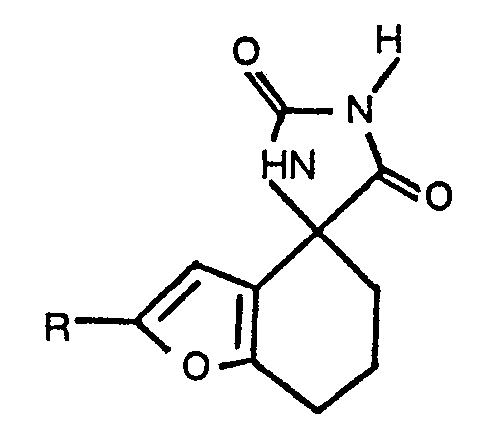
or its pharmaceutically acceptable metal salt, wherein R is hydrogen, methyl, fluoro, chloro or bromo.
or its pharmaceutically acceptable metal salt, wherein R is hydrogen, methyl, fluoro, chloro or bromo.
2. A pharmaceutical composition of a compound of claim 1 which comprises a pharmaceutical
formulation of a pharmaceutically-acceptable carrier and a compound of claim 1 in
an amount effective to prevent or alleviate diabetes-associated complications.
3. A process for preparing a spiro-furanohydantoin compound of formula I
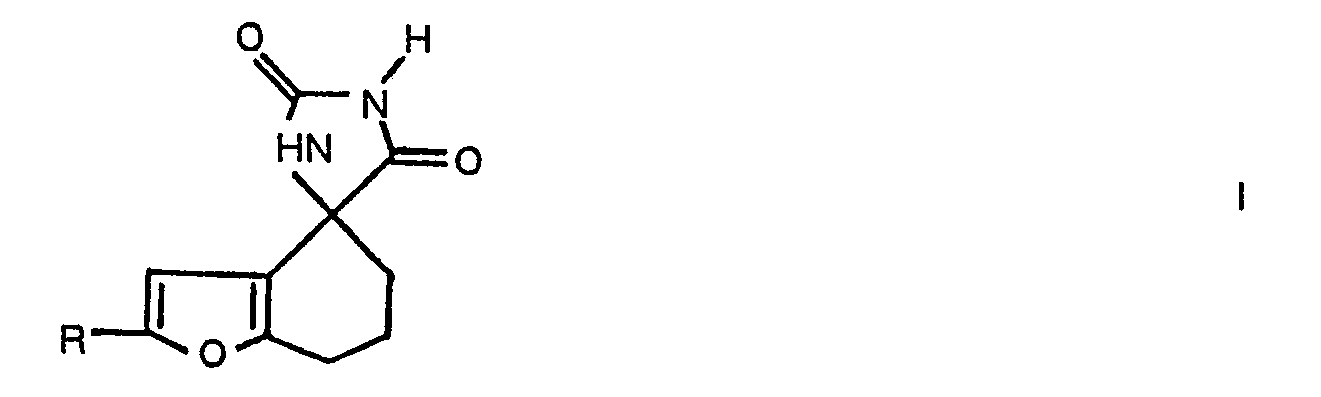
or the pharmaceutically acceptable metal salt thereof, wherein R is H, CH3, F, Cl, Br, which comprises: reacting a ketone of formula II
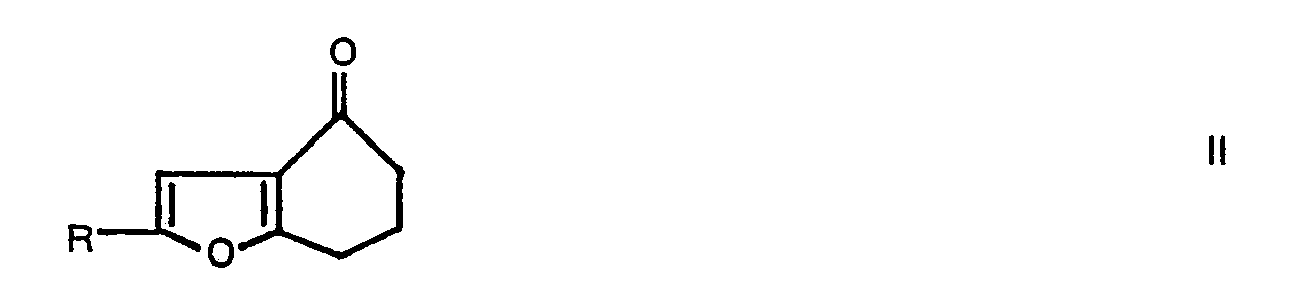
with at least a molar equivalent of an alkali metal cyanide and ammonium carbonate in an inert, polar organic solvent at about 50°C to 150°C for about 2 to 96 hours.
or the pharmaceutically acceptable metal salt thereof, wherein R is H, CH3, F, Cl, Br, which comprises: reacting a ketone of formula II
with at least a molar equivalent of an alkali metal cyanide and ammonium carbonate in an inert, polar organic solvent at about 50°C to 150°C for about 2 to 96 hours.
4. A process of claim 3 wherein the compound prepared is that of formula I wherein
R is H.
5. A process of claim 3 wherein the compound prepared is that of formula I wherein
R is CH3.
1. Spiro-Furanohydantoin-Verbindung der Formel
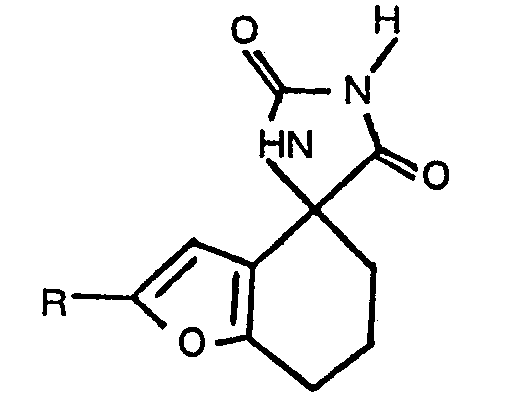
oder ein pharmazeutisch annehmbares Metallsalz davon, wobei R Wasserstoff, Methyl, Fluor, Chlor oder Brom bedeutet. -
oder ein pharmazeutisch annehmbares Metallsalz davon, wobei R Wasserstoff, Methyl, Fluor, Chlor oder Brom bedeutet. -
2. Pharmazeutische Zusammensetzung einer Verbindung gemäß Anspruch 1 enthaltend eine
pharmazeutische Formulierung eines pharmazeutisch annehmbaren Trägers und einer Verbindung
gemäß Anspruch 1 in einer wirksamen Menge zur Verhinderung oder Linderung von mit
Diabetes zusammenhängenden Komplikationen.
3. Verfahren zur Herstellung einer Spiro-Furanohydantoin-Verbindung gemäß Formel I
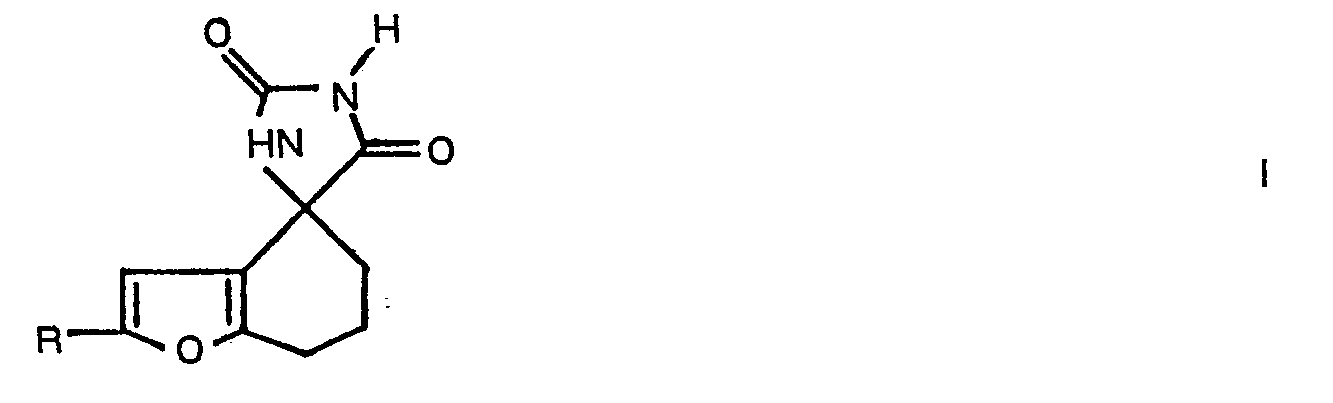
oder eines pharmazeutisch annehmbaren Metallsalzes davon, worin R Wasserstoff, Methyl, Fluor, Chlor oder Brom bedeutet, wobei ein Keton der Formel II
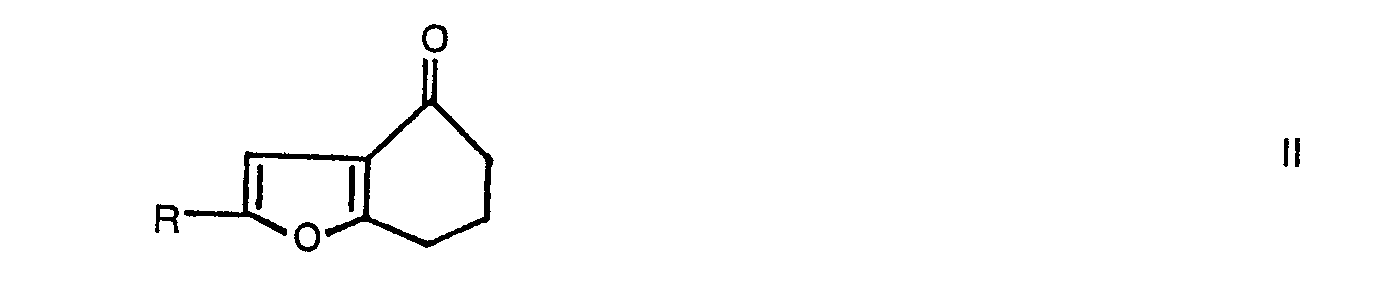
mit mindestens einem molaren Äquivalent eines Alkalimetallzyanides und Ammoniumcarbonat in einem inerten, polaren organischen Lösungsmittel bei etwa 50°C bis 150°C während etwa 2 bis 96 Stunden umgesetzt wird.
oder eines pharmazeutisch annehmbaren Metallsalzes davon, worin R Wasserstoff, Methyl, Fluor, Chlor oder Brom bedeutet, wobei ein Keton der Formel II
mit mindestens einem molaren Äquivalent eines Alkalimetallzyanides und Ammoniumcarbonat in einem inerten, polaren organischen Lösungsmittel bei etwa 50°C bis 150°C während etwa 2 bis 96 Stunden umgesetzt wird.
4. Verfahren gemäß Anspruch 3 wobei die hergestellte Verbindung eine solche der Formel
I in welcher R Wasserstoff bedeutet, ist.
5. Verfahren gemäß Anspruch 3 wobei die hergestellte Verbindung eine solche der Formel
I in welcher R Methyl bedeutet, ist.
1. Composé de spiro-furanohydantoïne de formule:
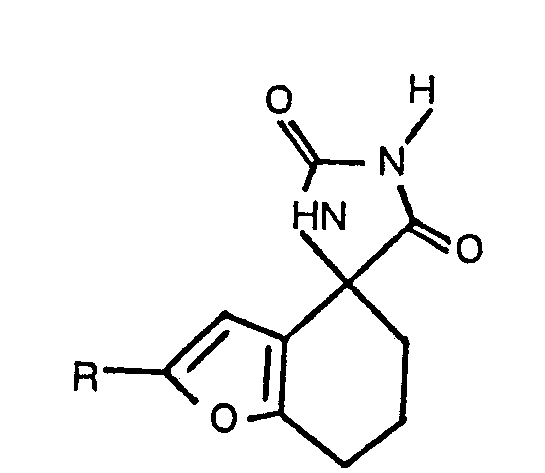
ou son sel de métal pharmaceutiquement acceptable, R désignant l'hydrogène ou un radical méthyle, fluoro, chloro ou bromo.
ou son sel de métal pharmaceutiquement acceptable, R désignant l'hydrogène ou un radical méthyle, fluoro, chloro ou bromo.
2. Composition pharmaceutique d'un composé suivant la revendication 1, qui comprend
une formulation pharmaceutique d'un excipient pharmaceutiquement acceptable et d'un
composé suivant la revendication 1 en une quantité efficace pour prévenir ou atténuer
les complications associées au diabète.
3. Procédé de préparation d'un composé de spiro-furanohydantoïne de formule I:
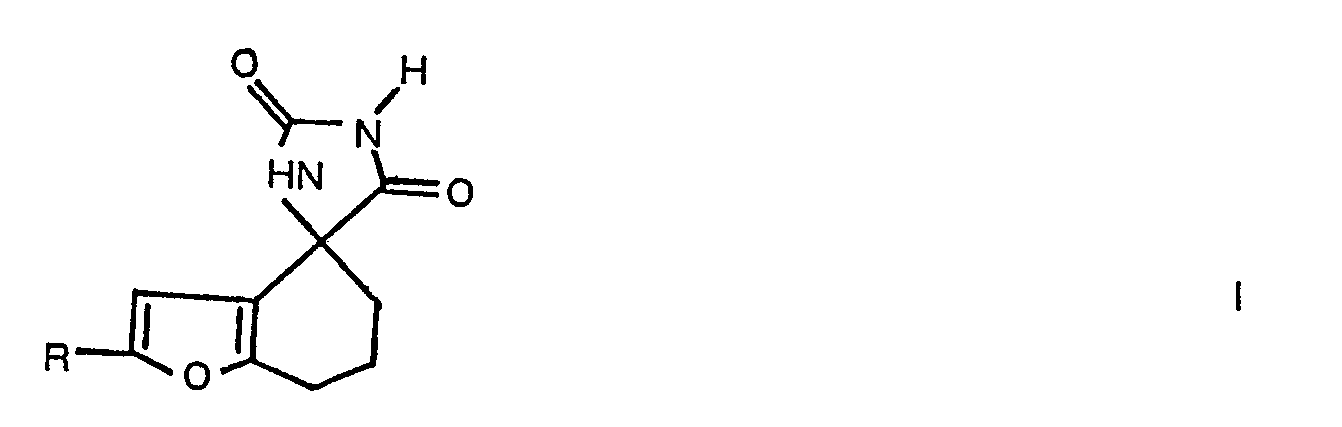
ou de son sel de métal pharmaceutiquement acceptable, dans laquelle R représente H, CH3, F, CI, Br, qui consiste:
ou de son sel de métal pharmaceutiquement acceptable, dans laquelle R représente H, CH3, F, CI, Br, qui consiste:
à faire réagir une cétone de formule Il
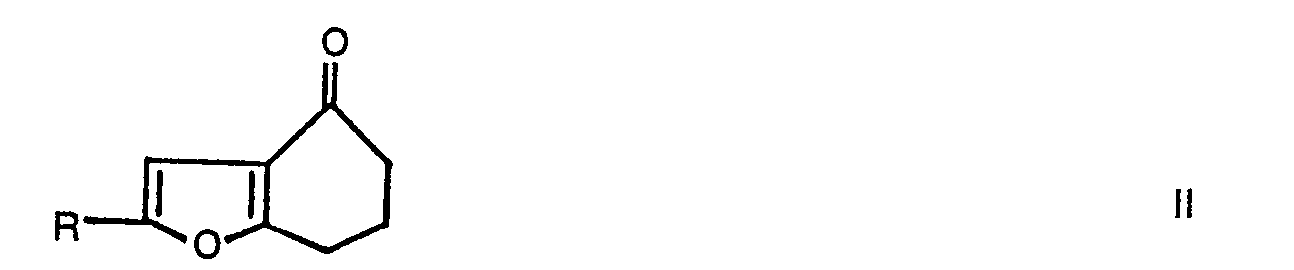
avec au moins un équivalent molaire d'un cyanure de métal alcalin et de carbonate d'ammonium dans un solvant organique polaire inerte à environ 50-150°C pendant environ 2-96 heures.
avec au moins un équivalent molaire d'un cyanure de métal alcalin et de carbonate d'ammonium dans un solvant organique polaire inerte à environ 50-150°C pendant environ 2-96 heures.
4. Procédé suivant la revendication 3, dans lequel le composé préparé répond à la
formule I dans laquelle R représente H.
5. Procédé suivant la revendication 3, dans lequel le composé préparé répond à la
formule I dans laquelle R représente CH3.