|
(11) | EP 0 012 201 B2 |

| (12) | NEW EUROPEAN PATENT SPECIFICATION |
|
|
| (54) |
Coupling of aryl and heteroaryl monochlorides Kupplung von Aryl- und Heteroarylmonochlorverbindungen Couplage des monochlorides de composés aryliques et hétéroaryliques |
|
|
|||||||||||||||||||||||||||||||||||
|
||||||||||||||||||||||||||||||||||||
[0001] This invention pertains to a method of coupling aryl and heteroaryl mono chlorides and more particularly to the use of a catalyst mixture of an anhydrous nickel compound and a ligand in the presence of a reducing metal in a dipolar aprotic solvent.
[0002] Reactions which form carbon-carbon bonds are few although they are extremely useful in organic synthesis. In the formation of these bonds involving aryl groups, coupling is usually accomplished through the use of a metal. The use of copper in the Ullman reaction is described in Chem. Rev. 38,139 (1946); 64, 613 (1964). The use of nickel complexes was described by M. F. Semmelhack, et al in J. Am. Chem. Soc., 93, 5908 (1971). The use of palladium complexes was described by F. R. S. Clark, et al, J. Chem. Soc. Perkin I, 121 (1975). The latter reactions with nickel or palladium complexes have the advantage of proceeding at moderate temperatures but are disadvantageous in that aryl chlorides were either completely unreactive or gave very poor yields.
[0003] In Tetrahedron Letters No. 47, pages 4089 to 4092 (1977) the homo coupling of aryl and alkenyl halides is described. Actually, the examples deal only with the homo coupling of bromides and nothing is said about the possibility for coupling corresponding chlorides.
[0004] In J. Am. Chem. Soc. 1971, pages 5908 to 5910 it is described that only bromo or iodo compounds give satisfying yields when coupled in the presence of O-valent nickel compounds. By this reference, a prejudice was created to use chloro compounds in case O-valent nickel is used as catalyst in corresponding reactions. It was therefore unobvious that by carrying out corresponding coupling reactions in the presence of catalytically active compositions prepared in situ, a new process is provided which yields the final products in very high yields, sometimes in quantitative yields. These yields are higher than those described in the above mentioned publications.
[0005] The process of the present invention for coupling aryl and heteroaryl mono halides having 4 to 30 carbons by which said mono halides are contacted in an aprotic solvent, with a catalytically active composition which is prepared from an anhydrous nickel compound and at least one ligand selected from a triaryl phoisphine having 6 to 14 carbons in each aryl moiety and an aromatic bidentate compound containing at least one ring nitrogen atom and 5 to 30 carbon atoms and mixtures thereof and a reducing metal selected from zinc, magnesium and manganese, at a temperature of 0 to 250°C, optionally in the presence of at least 0.1 moles per gram atom of nickel of an inorganic salt as a promotor, the catalytically active composition being formed in situ, the ratio of gram atoms of nickel to moles of aryl or heteroaryl mono halide being in the range of 0.0001 to 0.5, the amount of ligand being 0.1 to 100 moles per gram atom of nickel and the amount of reducing metal being at least 1 gram atom per mole of reacted aryl or heteroaryl mono halide, is characterized in that aryl and heteroaryl mono chlorides are used as starting halides.
[0006] The coupled products of this invention can be used as heat transfer media, liquid crystal intermediates, fluorescent brighteners, or polymer additives.
[0007] The coupling reaction most preferably takes place at temperatures form 40 to 80°C. Pressure is not critical and so superatmospheric or subatmospheric pressures can be used as well as atmospheric pressure. Reaction is carried out in an inert atmosphere.
[0008] Reaction time is not critical since quantitative yields are often obtained in less than 2 hours. When inorganic salt promotors are used, reaction times of only a few minutes are required to achieve high yields of coupled aryl compounds. These are no maximum times since the reaction is essentially irreversible.
[0009] Preferred promotors include alkali, alkaline earth, zinc, magnesium, manganese and aluminium halides, sulfates or phosphates or mixtures thereof. Iodides are particularly preferred. The amount of promotor, when used, can range from 0.1 to 1000 moles per gram atom of nickel with 1 to 100 moles of promotor being preferred.
[0010] Suitable nickel compounds are those reducible by organometallic and metal reducing agents. These compounds include nickel halides, that is, the chlorides, bromides and iodides, nickel sulfates, nickel phosphates, nickel carbonates, nickel salts of organic acids having 1 to 18 carbons, such as, nickel formate, nickel acetate, and nickel organic complexes such as nickel acetylacetone, dichloro-bis(triphenylphosphine) nickel (II); and nickel (O) compounds such as bis(1,5-cyclooctadiene) nickel and tetrakis(triphenylphosphine) nickel. The anion of the nickel compounds is unimportant and serves merely to provide nickel ion to the catalyst mixture, but it must not interfere with the reaction of the nickel compound with the ligand. The preferred anions are the halides, especially nickel chloride.
[0011] Suitable triaryl phosphines include triphenylphosphine, triphenylphosphines containing alkyl oralkoxy substituents having up to 8 carbon atoms, and unsubstituted or alkyl- and alkoxy-substituted trinaphthylphos- phines. Suitable bidentate compounds include 2,2'-bipyridyl, 1,10-phenanthroline, 1,8-naphthyridine or 2-methylaminopyridine. Also a mixture of triphenylphosphine and 2,2'-bipyridine may be used.
[0012] Preferred aprotic solvents include dipolar solvents, such as dimethylacetamide, dimethylformamide, dimethylsulfoxide or sulfolane. If desired these aprotic solvents can be mixed with lower polarity inert solvents, such as saturated aliphatic hydrocarbons, including pentanes, hexanes ordodecanes; aromatic hydrocarbons, such as, benzene, toluene, xylenes; and saturated aliphatic and cycloaliphatic ethers, such as, diethyl ether, diglyme or tetrahydrofuran.
[0014] Although magnesium and manganese metals can be used, zinc metal is the preferred metal in the process for coupling aryl mono chlorides. It is also preferred that the metal be in finely divided form with an average size of 0.833 mm or finer when measures on the U.S. sieve scale (mesh size 20 or less).
[0015] Preparation of the catalyst composition is carried out conveniently by mixing the aforementioned nickel compound, ligand(s), promotor, magnesium and/or manganese metals in the aprotic solvent under an inert atmosphere and heating from 25 to 60.C.
[0016] While not wishing to be bound by any scientific theory or explanation of the mechanism of the coupling reaction of this invention, it is believed that the combination of nickel compound, ligand and reducing metal provides nickel in a zero valent state, a form which in an anhydrous aprotic medium enables the coupling of aryl mono chlorides to take place in excellent yields.
[0017] The nickel (O) ligand complex believed to be the active catalyst can be formed in situ in the presence of an aryl chloride, or the catalyst can be performed in situ prior to the addition of the aryl chloride. A method for the determination of zero valent nickel is described by C. A. Tolman, J. Am. Chem. Soc. 92, 2956 (1970). The preferred ratio of gram atoms of nickel to moles of aryl chloride is 0.001 to 0.1. The preferred ratio of ligand to nickel is 1 to 30 moles per gram atom of nickel.
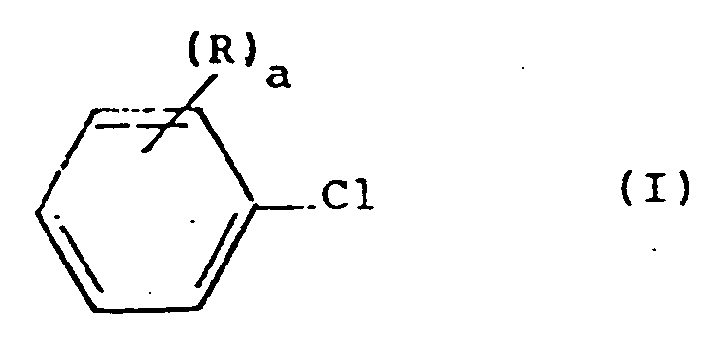
[0018] The preferred aryl mono chlorides used in this invention have the formula (I):
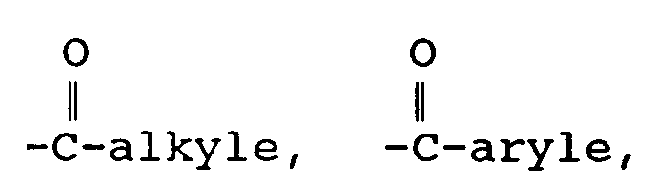
wherein R is independently selected from a monovalent inert radical such as alkyl, aryl, F, unsubstituted or substituted amino, -CN, -CHO, -Oaryl, -Oalkyl, -OCOaryl, -OCOalkyl, -COOalkyl, -COOaryl,
―SO2―aryl or―SO2―alkyl, ―SO3―alkyl and ―SO3aryl wherein the aryl contains 4 to 30 carbon atoms, the alkyl contains 1 to 8 carbon atoms and a is an integer having values of 0 to 4, with the proviso that no more than one R is in a position ortho to the CI-Linked ring carbon atom. By inert radicals is meant radicals which do not interfere with the coupling reaction.
[0019] Another preferred mono chloride compound is a heteroaryl mono chloride wherein one or more of the carbon atoms of the benzene ring in formula (I) is replaced by a hetero atom such as N or P. Preferred aryl mono- chlorides are 2-chloropyridine and compounds of formula (I) in which R=CH3COO- or CH:r- and a is 1.
[0020] The invention is further described in the examples which follow. All parts and percentages are by weight unless otherwise specified.
Example 1
[0021] In a 50 ml flask were placed 0.13 g of anhydrous nickel chloride, 2.0 g triphenylphosphine, and 2.0 g of zinc dust, which had been treated by washing with warm acetic acid then ether and dried on a vacuum line. The flask was sealed with a serum cap and purged with nitrogen for 30 minutes. Ten mls of dry DMAC (dimethylacetamide) was added and the flask was placed in an oil bath at 80°C. The solution was stirred by a magnetic bar and once the red-brown nickel (0) complex had formed, 2 ml of dry chlorobenzene were added. After 90 minutes the chlorobenzene had been converted quantitatively to biphenyl as determined by gas chromatography using toluene as an internal standard.
Examples 2-8
[0022] The following experiments were carried out according to Example 1, but 0.01 moles of the various promotor salts listed in Table 1 were also included.
[0023] Compared to Example 1 it is seen in Example 2-8 that addition of the promotor salts reduces the reaction time by as much as a factor of 20 while maintaining essentially quantitative yields.
Examples 9-10
[0024] The following examples were carried out in accordance with Example 1 except that zinc was replaced by the metal listed in Table 2.
Examples 11-17
[0025] The following examples were carried out in accordance with Example 1 except that the substituted chlorobenzenes listed in Tabvle 3 were used in place of chlorobenzene. Any additives not found in Example 1 are also included in table 3.
[0026] It should be noted that in Examples 11-13 multiple products were obtained. These are listed in Table 4.
Examples 18-21
[0027] The following experiments were performed in accordance with Example 1 except that nickel chloride was replaced by the nickel salts listed in Table 5 and 0.01 moles of Nal were included.
Example 22
[0028] Example 1 was repeated with the exception that the triphenylphosphine was replaced by an equivalent amount of tris(p-methoxyphenyl) phosphine. A 89% yield of biphenyl was obtained in 2 hours.
Examples 23-27
[0029] The following examples illustrate the use of an aromatic bidentate nitrogen compound in the coupling reaction.
Example 23
[0030] 0.13 g NiCl2, 2.0 g zinc, 2.0 g triphenylphosphine, 1.0 g sodium iodide, and 0.2 g 2,2'-bipyridine were added to in a 50 ml flask. The flask was evacuated and filled with nitrogen and then 10 ml of dry DMAC and 2 ml p-chloroanisole were added. The reaction mixture was then stirred and reacted at 80°C. After 75 min. the reaction was over as determined by disappearance of p-chloroanisole, and a 80% yield of 4,4'-dimethoxybiphenyl was obtained. In contrast to example number 13, a higher yield of coupled product was obtained and there were no other biphenyls produced. The addition of bipyridine appears to suppress the side reaction leading to these other poroducts. The only other significant product produced was anisole.
Example 24
[0031] 0.13 g NiCl2, 2.0 g Zn, 1.0 g triphenylphosphine, and 0.16 g 2,2'-bipyridine were placed in a 50 ml flask. The flask was evacuated and filled with nitrogen and then 15 ml of dry DMAC and 2 ml of p-chloroanisole were added. The mixture was stirred and reacted at 70°C for 45 minutes. Gas chromatographic analysis of the mixture revealed 3.4% anisole, 96.4% dimethoxybiphenyl, and a trace (0.2%) of p-chloroanisole. In contrast to Example 13, a higher yield of coupled product was obtained and there were no other biphenyls produced. The reaction was also faster (45 vs. 90 minutes).
Example 25
[0032] This example illustrates the use of 2-methylaminopyridine to suppress formation of the monosubstituted product. To a mixture of 0.13 g nickel chloride, 0.8 g triphenylphosphine, 2.0 g zinc dust, and 1.0 g sodium bromide in a 50 ml flask, 10 ml DMF (dimethylformamide) and 0.2 ml 2-methylaminopyridine were added under a nitrogen atmosphere. This mixture was reacted for several minutes at 70°C and then 2 ml p-chloroanisole were added. After 5 hours at 70°C gas chromatographic analysis of the reaction mixture revealed: anisole (34.5%), p-chloroanisole (1.4%) and 4,4'-di-methoxybiphenyl (62.9%). There was also a trace of other biphenyls.
Example 26
[0033] This Example illustrates that bipyridine can be generated in situ and is as effective at suppressing the mono-substituted product as adding bipyridine to the initial catalyst mixture. To a 50 ml flask were added 0.13 g nickel chloride, 1.0 g triphenylphosphine, 1.0 g sodium bromide and 2.5 g zinc dust. The flask was sealed, evacuated, and then filled with nitrogen. Fifteen ml of dry DMAC were added through a serum cap and the solution was stirred at 70°C for several minutes. Two-tenths ml of 2-chloropyridine was added (through the serum cap) and reacted for 45 mins. Two mls of p-chloroanisole were then added and reacted for 2 hours. Gas chromatographic analysis after this period revealed: anisole (7.4%), 4-methoxybiphenyl (0.3%) and 4,4'-dimethoxybiphenyl (92.3%).
Example 27
[0034] This Example illustrates that a triaryl phosphine need not be present for the coupling reaction to occur, and that bipyridine can be used in its place.
[0035] In a 50 ml flask were placed 0.13 g NiCl2. 2.0 Zn, 1.0 g Nal, and 0.62 g bipyridine. After evacuation and filling with nitrogen, 10 ml dry DMAC were added along with 2 ml chlorobenzene. The mixture was stirred and reacted at 80°C. After 48 hours there was 78 percent conversion of chlorobenzene to biphenyl.
1. A method for coupling aryl and heteroaryl mono halides having 4 to 30 carbons by
which said mono halides are contacted in an aprotic solvent, with a catalytically
active composition which is prepared from an anhydrous nickel compound and at least
one ligand selected from a triaryl phosphine having 6 to 14 carbons in each aryl moiety
and an aromatic bidentate compound containing at least one ring nitrogen atom and
5 to 30 carbon atoms and mixtures thereof and a reducing metal selected from zinc,
magnesium and manganese, at a temperature of 0 to 250°C, preferably 25 to 125°C, optionally
in the presence of at least 0.1 moles per gram atom of nickel of an inorganic salt
as a promotor, the catalytically active composition being formed in situ, the ratio
of gram atoms of nickel to moles of aryl or heteroaryl mono halide being in the range
of 0.00001 to 0.5, the amount of ligand being 0.1 to 100 moles per gram atom of nickel
and the amount of reducing metal being at least 1 gram atom per mole of reacted aryl
or heteroaryl mono halide, characterized in that aryl and heteroaryl mono chlorides
are used as starting halides.
2. A method as claimed in claim 1 wherein the reducing metal is a finely divided powder
having a particle size of 0.833 mm or finer.
3. A method as claimed in claim 1 or 2 wherein the nickel compound is nickel chloride.
4. A method as claimed in any of claims 1 to 3 wherein the ligand is triphenylphosphine,
2,2'-bipyridine or a mixture of both.
5. A method as claimed in any one of claims 1 to 4 wherein the promotor is an alkali
metal iodide, bromide or chloride.
6. A method as claimed in any one of claims 1 to 5 wherein the aprotic solvent is
dimethylacetamide or dimethylformamide.
7. A method as claimed in any one of claims 1 to 6 wherein the aryl mono chloride
has the formula (I):
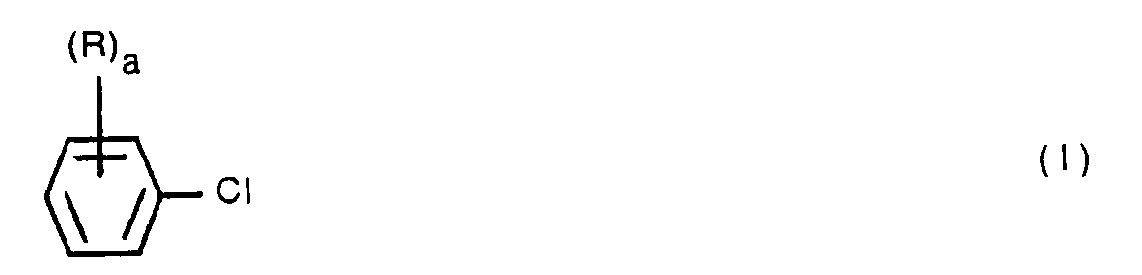
wherein R is a monovalent inert radical selected from alkyl, aryl, F, unsubstituted or substituted amino, -CN, -CHO, -Oaryl, -Oalkyl, -OCO-alkyl, -OCOaryl, -COOalkyl, -COOaryl,
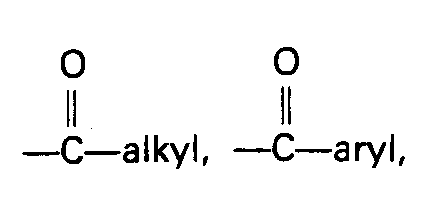
―SO2―alkyl, -S02aryl, -S03alkyl and -S03aryl wherein the aryl contains 4 to 30 carbons, the alkyl contains 1 to 8 carbons and a is an integer having values of 0 to 4 with the proviso that no more than one R is in a position ortho to the Cl linked ring carbon atom.
wherein R is a monovalent inert radical selected from alkyl, aryl, F, unsubstituted or substituted amino, -CN, -CHO, -Oaryl, -Oalkyl, -OCO-alkyl, -OCOaryl, -COOalkyl, -COOaryl,
―SO2―alkyl, -S02aryl, -S03alkyl and -S03aryl wherein the aryl contains 4 to 30 carbons, the alkyl contains 1 to 8 carbons and a is an integer having values of 0 to 4 with the proviso that no more than one R is in a position ortho to the Cl linked ring carbon atom.
8. A method as defined in claim 7 wherein one or more of the carbon atoms of the benzene
ring in formula (I) is replaced by N or P.
9. A method as claimed in claim 8 wherein the aryl chloride is 2-chloropyridine.
10. A method as claimed in claims 7 or 8 wherein R is methyl or CH3CO2― and a is 1.
1. Verfahren zum Kuppeln von Aryl- und Heteroarylmonohalogeniden mit 4 bis 30 Kohlenstoffatomen,
bei welchem die Monohalogenide in einem aprotischen Lösungsmittel mit einer katalytisch
aktiven Zusammensetzung, hergestellt aus einer wasserfreien Nickelverbindung und mindestens
einem Liganden, ausgewählt aus einem Triarylphoshphin mit 6 bis 14 Kohlenstoffatomen
in jedem Arylteil und einer aromatischen zweizähnigen Verbindung, die mindestens ein
Ringstickstoffatom und 5 bis 30 Kohlenstoffatome enthält, und Mischungen derselben
und einem reduzierten Metall, ausgewählt aus Zink, Magnesium und Mangan, bei einer
Temperatur von 0 bis 250°C, vorzugsweise 25 bis 125°C, wahlweise in Anwesenheit von
mindestens 0,1 Mol pro Grammatom Nickel eines anorganischen Salzes als Beschleuniger
in Berührung gebracht werden, wobei die katalytisch aktive Zusammensetzung in situ
gebildet wird, das Verhältnis der Grammatome Nickel zu der Molanzahl des Aryl- oder
Heteroarylmonohalogenids im Bereich von 0,0001 bis 0,5 liegt, die Menge des Liganden
0,1 bis 100 Mol pro Grammatom Nickel beträgt und die Menge des reduzierten Metalls
mindestens 1 Grammatom pro Mol des umgesetzten Aryl- oder Heteroarylmonohalogenids
beträgt, dadurch gekennzeichnet, daß als Ausgangshalogenide Aryl- und Heteroarylmonochloride
verwendet werden.
2. Verfahren nach Anspruch 1, in welchem das reduzierte Metall ein fein zerteiltes
Pulver mit einer Teilchengröße von 0,833 mm oder feiner ist.
3. Verfahren nach Anspruch 1 oder 2, in welchem die Nickelverbindung Nickelchlorid
ist.
4. Verfahren nach einem der Ansprüche 1 bis 3, in welchem der Ligand Triphenylphosphin,
2,2'-Bipyridin oder eine Mischung der beiden ist.
5. Verfahren nach einem der Ansprüche 1 bis 4, in welchem der Beschleuniger ein Alkalimetalliodid,
-bromid oder -chlorid ist.
6. Verfahren nach einem der Ansprüche 1 bis 5, in welchem das aprotische Lösungsmittel
Dimethylacetamid oder Dimethylformamide ist.
7. Verfahren nach einem der Ansprüche 1 bis 6, in welchem das Arylmonochlorid die
Formel (I) hat:
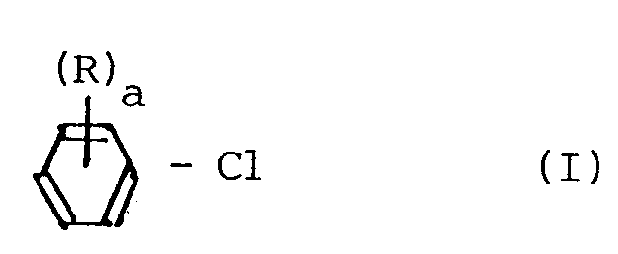
worin R ein einwertiger inerter Rest ist, ausgewählt aus Alkyl, Aryl, F, unsubstituiertem oder substituiertem amino, -CN, -CHO, -Oryl, -Oalkyl, ―OCOalkyl, ―OCOaryl, ―COOalkyl, ―COOaryl,
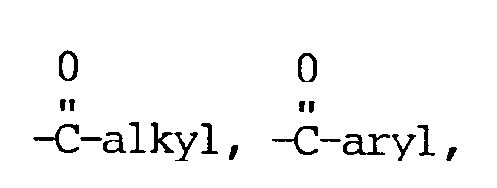
―SO2―alkyl, ―SO2aryl―SO3alkyl, und ―SO3aryl, worin das Aryl 4 bis 30 Kohlenstoffatome enthält, das Alkyl 1 bis 8 Kohlenstoffatome enhält und a eine ganze Zahl mit Werten von 0 bis 4 ist, ist der Bedingung, daß nicht mehr als ein R in o-Stellung zum CI-gebundenen Ringkohlenstoffatom stehen kann.
worin R ein einwertiger inerter Rest ist, ausgewählt aus Alkyl, Aryl, F, unsubstituiertem oder substituiertem amino, -CN, -CHO, -Oryl, -Oalkyl, ―OCOalkyl, ―OCOaryl, ―COOalkyl, ―COOaryl,
―SO2―alkyl, ―SO2aryl―SO3alkyl, und ―SO3aryl, worin das Aryl 4 bis 30 Kohlenstoffatome enthält, das Alkyl 1 bis 8 Kohlenstoffatome enhält und a eine ganze Zahl mit Werten von 0 bis 4 ist, ist der Bedingung, daß nicht mehr als ein R in o-Stellung zum CI-gebundenen Ringkohlenstoffatom stehen kann.
8. Verfahren nach Anspruch 7, in welchem ein oder mehrere der Kohlenstoffatome des
Benzolrings der Fomel (I) durch N oder P ersetzt ist bzw. sind.
9. Verfahren nach Anspruch 8, in welchem das Arylchlorid 2-Chlorpyridin ist.
10. Verfahren nach Anspruch 7 oder 8, in welchem R Methyl oder CH3CO2― ist und a 1 ist.
1. Procédé de couplage de monohalogénures aryliques et hétéroaryliques ayant 4 à 30
atomes de carbone, par lequel lesdits monohalogénures sont mis en contact dans un
solvant aprotique avec une composition douée d'activité catalytique qui est préparée
à partir d'un composé anhydre de nickel et d'au moins un ligand choisi entre une triarylphosphine
ayant 6 à 14 atomes de carbone dans chaque groupement aryle et un composé aromatique
bidenté contenant au moins un atome d'azote dans le noyau et 5 à 30 atomes de carbone,
et des mélanges de tels composés, et un métal réducteur choisi entre le zinc, le magnésium
et le manganèse, à une température de 0 à 250°C, de préférence de 25 à 125°C, éventuellement
en présence d'au moins 0,1 mole par atome-gramme de nickel d'un sel inorganique comme
promoteur, la composition douée d'activité catalytique étant formée in situ, le rapport
du nombre d'atomes-grammes de nickel au nombre de moles de monohalogénure d'aryle
ou d'hétéroaryle étant compris dans l'intervalle de 0,0001 à 0,5, la quantité de ligand
étant de 0,1 à 100 moles par atome-gramme de nickel et la quantité de métal réducteur
étant au moins égale à 1 atome-gramme par mole de monohalogénure d'aryle ou d'hétéroaryle
ayant réagi, caractérisé en ce qu'on utilise des monochlorures aryliques et hétéroaryliques
comme halogénures de départ.
2. Procédé suivant la revendication 1, dans lequel le métal réducteur est sous la
forme d'une poudre finement divisée en particules de 0,833 mm de diamètre ou plus
fines.
3. Procédé suivant la revendication 1 ou 2, dans lequel le composé de nickel est le
chlorure de nickel.
4. Procédé suivant l'une quelconque des revendications 1 à 3, dans lequel le ligand
est la triphénylphos- phine, la 2,2'-bipyridine ou un mélange des deux.
5. Procédé suivant l'une quelconque des revendications 1 à 4, dans lequel le promoteur
est un iodure, bromure ou chlorure de métal alcalin.
6. Procédé suivant l'une quelconque des revendications 1 à 5, dans lequel le solvant
aprotique est le dimé- thylacétamide ou le diméthylformamide.
7. Procédé suivant l'une quelconque des revendications 1 à 6, dans lequel le monochlorure
d'aryle répond à la formule (I) :
dans laquelle R est un radical inerte monovalent choisi entre des radicaux alkyle, aryle, F, amino non substitué ou substitué, ―CN, ―CHO, ―Oaryle, ―Oalkyle, ―OCOalkyle, ―OCOaryle, ―COOalkyle, ―COOaryle,
―SO2―alkyle, SO2―aryle, ―SO3―alkyle et ―SO3―aryle dont la portion aryle contient 4 à 30 atomes de carbone, la portion alkyle contient 1 à 8 atomes de carbone et a est un nombre entier ayant des valeurs de 0 à 4, sous réserve que pas plus d'un groupe R soit en position ortho par rapport à l'atome de carbone du noyau lié à CI.
dans laquelle R est un radical inerte monovalent choisi entre des radicaux alkyle, aryle, F, amino non substitué ou substitué, ―CN, ―CHO, ―Oaryle, ―Oalkyle, ―OCOalkyle, ―OCOaryle, ―COOalkyle, ―COOaryle,
―SO2―alkyle, SO2―aryle, ―SO3―alkyle et ―SO3―aryle dont la portion aryle contient 4 à 30 atomes de carbone, la portion alkyle contient 1 à 8 atomes de carbone et a est un nombre entier ayant des valeurs de 0 à 4, sous réserve que pas plus d'un groupe R soit en position ortho par rapport à l'atome de carbone du noyau lié à CI.
8. Procédé suivant la revendication 7, dans lequel un ou plusieurs des atomes de carbone
du noyau benzénique dans la formule (I) sont remplacés par N ou P.
9. Procédé suivant la revendication 8, dans lequel le chlorure d'aryle est la 2-chloropyridine.
10. Procédé suivant la revendication 7 ou 8, dans lequel R est un groupe méthyle ou
CH3CO2― et a est égal à 1.