|
(11) | EP 0 017 513 B2 |

| (12) | NEW EUROPEAN PATENT SPECIFICATION |
|
|
| (54) |
Electrophotographic member and process for forming a latent image Elektrophotographisches Material und Verfahren zum Formen eines latenten Bildes Matériau électrophotographique et procédé pour la formation d'une image latente |
|
|
|||||||||||||||||||||||||||||||
[0001] This invention relates to an electrophotographic member as claimed in claim 1 in which a photoconductive layer and a protective layer are superposed in order on a conductive support, and to a process as claimed in claim 7 for forming a latent image.
[0002] A number of photosensitive members have been practically applied in electrophotographic systems including processes comprising charging, exposing and developing procedures (see, for example, US Patent 2 297 691). For example, known photosensitive members include those which include a layer of organic photoconductive material directly formed on a conductive substrate by coating or vacuum deposition or those in which the organic photoconductive material is combined with an organic polymeric binder, those using inorganic photoconductive materials such as ZnO, CdS, Ti02 and the like dispersed in a binder, those using vacuum-evaporated amorphous selenium and its alloys, and those wherein different types of photoconductive layers are superposed on one another (see, for example, Japanese Patent Publication Nos 5394/70, 3005/71 and 14271/74). In order to ensure certain levels of both electrical and optical properties and mechanical properties or to improve and stabilize these properties, or in some cases to improve the characteristics required in a developing process, it has often been proposed to provide a protective layer on the photosensitive member surface.
[0003] Electrophotographic members having a surface layer on a photoconductive layer have been known in the art. One type of such surface layers is an electrically insulating surface layer composed of a highly electrically insulating material (e. g., see US Patent 3 438 706 and US Patent 3 457 070). This is advantageous in that the thickness of the electrically insulating surface layer can be thickened and in that materials having high mechanical strength can be used. However, in order to repeatedly use an electrophotographic member with this type of surface layer, a specific latent image-forming process is required, such as : (A) first charging ; second charging with an opposite polarity to that of the first charging ; and imagewise exposure ; or (B) first charging ; second charging with opposite polarity and simultaneous imagewise exposure ; and entire exposure, is required. Furthermore, the use of such a surface layer requires two or more charging steps per one copying step, which results in complicating the apparatus, unstable properties, and high production costs.
[0004] Another electrophotographic member, disclosed in DE-A-2452664, has a photoconductive layer protected by a 0.1-20 IJ.m thick resin layer containing an organic aluminium compound.
[0005] DE-C-2 651 535 discloses an electrophotographic member comprising a support of electroconductive material carrying a layer of photoconductive material and a superposed protective layer comprising a binder having a = C = 0 bond, and at least one electron acceptor (Lewis acid) dispersed in it.
[0006] DE-A-2 452 622 discloses a like electrophotographic material having its surface protected by a binder containing up to 30 percent by weight of a substance (e. g. ferrocene, phthalic acid) imparting a certain volume resistivity.
[0007] Another type of such surface layers is a protective layer composed of a relatively low electrically insulating material, i. e., a material having a low electric resistance. (See Joseph, U.S. Patent 3 434 832 and Polastri, U.S. Patent 4006 020). In most cases, however, the use of such a protective layer causes a high residual potential, and a great increase of cycle time is required. These electric variations result in scumming and do not result in a clear reproduction image.
[0008] In order to avoid such problems, an additive has been incorporated in the protective layer or a single protective layer of a specific type has been used. However, most of these techniques have involved problems such as a loss of transparency which is essential to a protective layer, a loss of image sharpness under high humidity conditions or fogging in the background under low humidity conditions, a reduction in charging property of a photoconductive layer, and a cyclic build-up of residual potential, and can thus not be put into practice. This is because these methods have been directed merely to lowering the electric resistance of the protective layer or to improving its humidity dependence. In order to stabilize and ensure the charging property of the entire photoconductive layer over a long period of time under all practical conditions, various characteristics such as transport, injection and residence of the electric charges occurring on the surface of a protective layer and at the interface between the photoconductive layer and the protective layer must be collectively controlled. It is difficult to find a material which can improve these characteristics while controlling the electrical conductivity of the protective layer and which exhibits stable characteristics with variations in humidity and temperature. There has never been known a material, which when contained in a binder resin can satisfy the above-mentioned characteristics, and provide the mechnical strength necessary to meet the requirements of an ordinary protective layer.
[0009] An electrophotographic member according to the present invention comprises a protective layer which contains at least one metallocene (i. e., a biscyclopentadienyl complex salt), which has the general formula (1) :
(See formula page 3)
wherein M represents a metal atom and is, for example, selected from Fe, Ni, Co, V, Cr and Ti ; or a compound having at least one metallocene nucleus in its molecular structure, such as have the formula (II) :
wherein M has the same meaning as defined above. Thus, the metallocene or compound may be, e. g., an unsubstituted (I), or a substituted or polymeric (II) compound. Hereafter, these compounds are collectively referred to as metallocene compounds. That is, the inclusion of these compounds in the protective layer can eliminate a large dark decay of discharge potential frequently experienced in known members and can simultaneously suppress the residual potential after exposure to a sufficiently low level, making it possible to eliminate the cyclic buildup of residual potential. When the metallocene compounds used in the present invention are contained in the protective layer, their electrical conductivity is not changed by the charging or imagewise exposure steps, and they retain a substantially uniform latent image potential during repeated copying steps.
[0010] An electrophotographic member having a protective layer according to the present invention does not require a specific latent image-forming process as is required by some of the previously described prior art techniques, and is advantageous in that a latent image can be formed merely by uniform charging and imagewise exposure.
[0011] The protective layer also exhibits stable characteristics even though the ambient temperature and humidity vary. In addition, the present invention has a number of additional advantages.
[0012] For example, while the thickness of a known protective layer is at most 5 wm, the protective layer according to the invention can be made several times as thick. A conventional protective layer should have a relatively small thickness of about 0.1 to 5 IJ.m so as not to interfere with obtaining satisfactory electrical characteristics. Accordingly, the layer wears upon repeated use and its characteristics vary to a significant extent.
[0013] In the practice of the invention, the protective layer can be formed in a thickness as great as 15 µm or 20 µm (although see DE-A-2 452 664), which up to now would not be considered possible from the viewpoint of imparting reasonable electrical characteristics, by incorporating the foregoing compounds or adjusting the concentration of the compound. Inspite of such great thickness, a latent image can be formed by only uniformly charging an electrophotographic member of the present invention and imagewise exposure (i. e., the socalled Carlson process) without the use of any specific latent image-forming process such as first charging, second charging in the opposite polarity and imagewise exposure, or first charging, simultaneous imagewise exposure and second charging, and uniform exposure. As a matter of course, the protective layer according to the present invention can be made as thin as desired.
[0014] The metallocenes and compounds having at least one metallocene nucleus in the molecular structure thereof contained in the protective layer of the invention include, for example, ferrocene, nickelocene, titanocene, vinylferrocene and their oligomers or polymers, diferrocenylphosphine, 1,1'- ferrocene-bis-(diphenylphosphine), acetylferrocene, dibenzferrocene, dimethylaminoethyl ferrocene, methylaminoethyl ferrocene, methylaminomethyl ferrocene, ferrocenylacetonitrile, ferrocenylcarbonal, ferrocene sulfonic acid, diferrocenylethane, diferrocenylmethane, phenylferrocene, phenyl cyclopentafer- rocene, benzoyfferrocene, acetylferrocene, and the like. Among these metallocene compounds, ferrocene, nickelocene and titanocene are preferred, with ferrocene being particularly preferred, due to good stability thereof. These may be used alone or in combinations of two or more. These compounds are generally used in the protective layer in an amount of about 0.01 to 70 wt.%, and preferably about 1 to 50 wt.%, based on the weight of the protective layer.
[0015] The protective layer further comprises an electron acceptor, i. e., a compound exhibiting high electron affinity. The electron acceptor is added in an amount of from about 0.001 mol to 2 mols per mol of the metallocene compound. Incorporation of an electron acceptor is known, for example, being described in GB-A-1 337 227. The essential functions of the electron acceptor are that : (i) it activates the ferrocene compound, i. e., increases a cation radical density ; (ii) the acceptor per se can become a carrier ; and (iii) the acceptor can improve the mobility of electrons. Suitable electron acceptors include, for example, anhydrides such as those of phthalic acid and tetrachlorophthalic acid, s-tricyanobenzene, picryl chloride, 2,4-dinitrochlorobenzene, 2,4-dinitrobromobenzene, 4-nitrobiphenyl, 4,4-dinitrobiphenyl, 2,4,6-trinitroanisole, trichlorotrinitrobenzene, trinitro-o-toluene, 4,6-dichloro-1,3-dinitrobenzene, p-dinitrobenzene, chloranyl, bromanyl, tetracyanoethylene, hexacyanobutadiene, tetracyanioquinodimethane, benzoquinone and their halogen- or cyano-substituted compounds, aromatic or heterocyclic compounds substituted with a nitro group (-NO2), a sulfo (-S03-) group, a carboxyl group (-COOH), a cyano group (-CN) and the like, monomers or polymers of 2,4,7-trinitro-9-fluorenone, 2,4,5,7-tetranitrof- luoreneone, trinitroanthracene, dinitroacridine, tetracyanopyrene, and dinitroanthraquinone. Examples of aromatic or heterocyclic compounds which can be used in the present invention are dicyanodich- lorobenzoquinone, tetracyanobenzene, sulfonic acid, cyano-naphthalene, benzoic acid, nitronaphthalic anhydride, and so forth. The heterocyclic compounds may include 5- to 7-membered ring compounds. Suitable examples of hetero atoms are N, S and O.
[0016] In order to add these compounds, together with the metallocene compounds, to the protective layer, the compounds may be added to a binder solution simultaneously or separately, or in some cases the compounds, which have been previously mixed uniformly, may be added to a binder solution. The application to the photoconductive layer is similar to fabricating other electrophotographic members of the invention described hereinbefore.
[0017] The thickness of the protective layer ranges from about 0.5 to 50 µm and is chosen within such range depending on the use of the electrophotographic member or the mechanical strength required for the protective layer.
[0018] The binder resins used in the protective layer of the electrophotographic member according to the invention may be any of the resins having a
bond. Desirable characteristics of the binder for the protective layer include : film-forming ability, mechanical. strength, moisture resistance, corona resistance, good cleaning properties, chemical resistance, and good adhesiveness.
[0019] For example, mention can be made of polyurethane resins, polycarbonate resins, polyester resins, acrylic resins, polyvinyl acetate resins, cellulose ester resins, nitrocellylose resins, alkyd resins and the like.
[0020] Additives may be added to improve the adhesiveness or smoothness of the film. For example, silane coupling agents and adhesive polyester resins (e. g., Myiar* 49000) can also be used as additives to improve the adhesiveness and silicon block copolymers, fatty acids (e. g., stearic acid) and metal salts of fatty acids (e. g., zinc stearate) can be used as additives to improve the smoothness of the film. Polyurethane resins, polycarbonate resins and polyester resins are particularly preferred ; it is believed that these binder resins form a charge transfer complex with ferrocene, thereby conferring the desired electrical characteristics.
[0021] If necessary, a thin intermediate layer can be provided below the protective layer to improve the electrical characteristics. The intermediate layer may be composed of an inorganic material such as Si02, Se, S, As203, or an organic compound such as polyester resins, epoxy resins, polyamide resins, polyurethane resins, nitrocellulose, vinylidene chloride resins, silicone resins, fluorine resins. When the organic compound is used as the intermediate layer, both the electrical characteristics and the adhesion between the protective layer and the photoconductive layer are improved.
[0022] With respect to the thickness of the intermediate layer, it is sufficient that it transmits exposure light to the photoconductive layer. A suitable thickness of the intermediate layer which can be used varies with the type of material used, but ranges from about 5 nm to 10 µm, preferably 10 nm to 1 IJ.m.
[0023] In constructing an electrophotographic member according to the invention, a conductive substrate is first provided on which a photoconductive layer has been formed in the usual manner.
[0024] Examples of inorganic crystalline photoconductors useful in the present invention are cadmium sulfide, cadmium sulfoselenide, cadmium selenide, zinc sulfide, zinc oxide, and mixtures thereof. Examples of inorganic photoconductive glasses are amorphous selenium, and selenium alloys such as selenium-tellurium, and selenium-arsenic. Selenium may also be used in its hexagonal crystalline form, commonly referred to as trigonal selenium. Examples of organic photoconductors useful in the present invention are phthalocyanine pigments such as the X-form of metal free phthalocyanine described in Byrne, et al, U.S. Patent 3 357 989, and metal phthalocyanine pigments, such as copper phthalocyanine. Other typical organic photoconductors include photoinjecting pigments such as benzimidazole pigments, perylene pigments, quinacridone pigments, indigoid pigments, and polynuclear quinones.
[0025] A coating of a metallocene and an electron acceptor dissolved in a binder resin solution at a suitable concentration is uniformly applied on the photoconductive layer using any of the widely-employed techniques, such as spray coating, dip coating or coating using an applicator, after which the layer is dried.
[0026] Examples of solvents suitable for preparing the protective layer coating composition include dichloromethane, trichloromethane, tetrachloromethane, methyl ethyl ketone, isobutyl acetate, ethylbenzene, cyclohexanone, diacetone alcohol, diethylene glycol diethyl ether, dimethylformamide, dimethyl sulfoxide, « Amsco" Mineral Spirits 66/3, « Exxon Aromatic Solvent 150, « Exxon Aromatic Solvent 100, and so forth.
[0027] The thus fabricated electrophotographic member adequately satisfies all the characteristic requirements discussed hereinbefore.
Example 1 (comparative example)
[0029] Amorphous selenium was vacuum deposited on an aluminum substrate in a thickness of 60 µm in a conventional manner to give a photoconductive layer. On the layer the ferrocene-organic binder-resin solutions of the following formulation Nos 1 to 3 were applied by an automatic applicator in a thickness of 15 µm to provide Electrophotographic Members Nos 1 to 3, respectively.
Solution No 1
Solution No 2
Solution No 3
[0033] -The resulting electrophotographic members having the protective layers obtained from Solutions Nos 1 to 3 were tested in an ordinarily employed electric characteristic measuring apparatus for electrophotography to determine their characteristics. As shown in Table 1, the dark discharge potential (DDP) was large and the residual potential (RP) was small, these potentials being very low in humidity dependence. Further, as indicated in Table 2, no accumulation of electrical charges was observed with regard to the dark discharge potential and residual potential, showing a very good repetitive characteristic.
Example 2 (comparative example)
[0034] On an aluminum substrate was vacuum deposited amorphous selenium in a thickness of 0.5 µm, on which was applied a solution of 1 part by weight of polyvinylcarbazole in 10 parts by weight of tetrahydrofuran in a thickness of 20 µm using an applicator.
[0035] There were provided solutions containing metallocenes Nos 4 to 6 as indicated in Table 3 in an amount of 10 % by weight of polycarbonate resin (Panlite) and Example 1 was repeated to form protective layers for Electrophotographic Members 4 to 6, respectively. The electrical characteristics of these members were measured similarly to Example 1, with good results shown in Table 3.
Example 3
[0036] Example 1 was repeated using resin Solutions Nos 7 to 9 incorporated with the electron accepting materials indicated below, thereby forming protecting layers for Electrophotographic Members 7 to 9.
Solution No 7
Solution No 8
Solution No 9
[0040] Upon comparing the electrical characteristics of the electrophotographic members according to the invention, using the protective layers obtained from Solutions Nos 7 to 9, with those of the electrophotographic members using the protective layers from Solutions Nos 1 to 3, it was revealed that the electrical characteristics were superior compared with those using no electron-accepting materials.
(See Table 4 page 7)
1. An electrophotographic member including an electrophotoconductive support carrying
a layer of photoconductive material and a superposed layer of protective material,
wherein the protective material comprises a binder resin having a
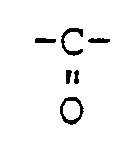
bond, and at least one electron acceptor dispersed in the resin, characterised in that the protective material further comprises at least one metallocene or a compound having at least one metallocene nucleus in its molecular structure, and in that the protective material has a thickness of from 0.5 to 50 µm.
bond, and at least one electron acceptor dispersed in the resin, characterised in that the protective material further comprises at least one metallocene or a compound having at least one metallocene nucleus in its molecular structure, and in that the protective material has a thickness of from 0.5 to 50 µm.
2. A member as claimed in claim 1, wherein the metallocene or compound having at least
one metallocene nucleus in its molecular structure is present in an amount from 0.01
to 70 wt.%, based on the weight of the protective layer.
3. A member as claimed in claim 1 or 2, wherein the said metallocene is a metallocene
of Fe, Ni, Co, V, Cr or Ti, or the said compound includes Fe, Ni, Co, V, Cr or Ti
in the metallocene nucleus.
4. A member as claimed in any preceding claim, wherein the electron acceptor is present
in an amount of from 0.001 to 2 mols per mol of metallocene or the compound having
at least one metallocene nucleus in its molecular structure.
5. A member as claimed in claim 4, wherein the electron acceptor is phthalic acid
anhydride ; tetrachlorophthalic acid anhydride ; s-tricyano-benzene ; picryl chloride
; 2,4-dinitrochlorobenzene ; 2,4-dinitrobromobenzene ; 4-nitrobiphenyl ; 4,4-dinitrobiphenyl
; 2,4,6-trinitroanisole ; trichlorotrinitrobenzene ; trinitro-o-toluene ; 4,6-dichioro-1,3-dinitrobenzene;
p-dinitrobenzene ; chloranyl ; bromanyl ; tetracyanoethylene ; hexacyanobutadiene
; tetracyanoquinodimenthane ; benzoquinone and halo- or cyano-derivatives thereof
; aromatic or heterocyclic compounds substituted with a nitro group, a sulfo group,
a carboxyl group or a cyano group ; and monomers or polymers of 2,4,7-trinitro-9-fluorenone,
2,4,5,7-tetranitrofluorenone, trinitro-anthracene, dinitroacridine, tetracyanopyrene
or dinitroanthraquinone.
6. A member as claimed in any preceding claim, wherein the binder resin is polyurethane
resin, polycarbonate resin, polyester resin, acrylic resin, polyvinyl acetate resin,
cellulose ester resin, nitrocellulose resin or alkyd resin.
7. A process for forming an electrostatic latent image of data-bearing indicia, including
the steps of uniformly charging an electrophotographic member as claimed in any preceding
claim, and selectively discharging it by the controlled application of light of its
surface.
1. Elektrophotographisches Material mit einem elektrophotoleitfähigen Träger, der
eine Schicht aus einem photoleitfähigen Material und eine darüber angeordnete Schicht
aus einem Schutzmaterial trägt, wobei das Schutzmaterial ein Bindemittelharz mit einer
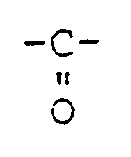
Bindung und mindestens einen in dem Harz dispergierten Elektronenakzeptor umfaßt, dadurch gekennzeichnet, daß das Schutzmaterial weiterhin mindestens ein Metallocen oder eine Verbindung mit mindestens einem Metallocenkern in seiner Molekülstruktur umfaßt und daß das Schutzmaterial eine Dicke von 0,5 bis 50 IJ.m besitzt.
Bindung und mindestens einen in dem Harz dispergierten Elektronenakzeptor umfaßt, dadurch gekennzeichnet, daß das Schutzmaterial weiterhin mindestens ein Metallocen oder eine Verbindung mit mindestens einem Metallocenkern in seiner Molekülstruktur umfaßt und daß das Schutzmaterial eine Dicke von 0,5 bis 50 IJ.m besitzt.
2. Material nach Anspruch 1, dadurch gekennzeichnet, daß das Metallocen oder die Verbindung
mit mindestens einem Metallocenkern in seiner Molekülstruktur in einer Menge von 0,01
bis 70Gew.-%, bezogen auf das Gewicht der Schutzschicht, vorliegt.
3. Material nach Anspruch 1 oder 2, dadurch gekennzeichnet, daß das Metallocen ein
Metallocen von Fe, Ni, Co, V, Cr oder Ti ist oder daß die Verbindung Fe, Ni, Co, V,
Cr oder Ti im Metallocenkern beinhaltet.
4. Material nach mindestens einem der vorangehenden Ansprüche, dadurch gekennzeichnet,
daß der Elektronenakzeptor in einer Menge von 0,001 bis 2 Mol pro Mol des Metallocens
oder der Verbindung mit mindestens einem Metallocenkern in seiner Molekülstruktur
vorliegt.
5. Material nach Anspruch 4, dadurch gekennzeichnet, daß der Elektronenakzeptor gewählt
wird aus der Gruppe, bestehend aus Phthalsäureanhydrid, Tetrachlorphthalsäureanhydrid,
s-Tricyanobenzol, Pikrylchlorid, 2,4-Dinitrochlorbenzol, 2,4-Dinitrobrombenzol, 4-Nitrobiphenyl,
4,4-Dinitrobiphenyl, 2,4,6-Trinitroanisol, Trichlortrinitrobenzol, Trinitro-o-toluol,
4,6-Dichlor-1,3-dinitrobenzol, p-Dinitrobenzol, Cloranyl, Bromanyl, Tetracyanoäthylen,
Hexacyanobutadien, Tetracyanochinodimethan, Benzochinon und Halogen- oder Cyano-Derivate
hiervon, aromatische oder heterocyclische Verbindungen, substituiert mit einer Nitrogruppe,
einer Sulfogruppe, einer Carboxylgruppe oder einer Cyanogruppe und Monomere oder Polymere
von 2,4,7-Trinitro-9-fluorenon, 2,4,5,7-Tetranitrofluorenon, Trinitroanthracen, Dinitroacridin,
Tetracyanopyren und Dinitroanthrachinon.
6. Material nach mindestens einem der vorangehenden Ansprüche, dadurch gekennzeichnet,
daß das Bindemittelharz ein Polyurethan-, Polycarbonat-, Polyester-, Acryl-, Polyvinylacetat-,
Zelluloseester-, Nitrozellulose- oder Alkydharz ist.
7. Verfahren zur Herstellung eines elektrostatischen latenten Bildes aus datentragenden
Anzeigen, umfassend die Stufen des einheitlichen Ladens eines elektrophotographischen
Materials gemäß mindestens eiunem der vorangehenden Ansprüche und dessen selektiven
Entladens durch das kontrollierte Aufbringen von Licht auf dessen Oberfläche.
1. Elément électrophotographique comprenant un support électrophotoconducteur portant
une couche de matériau photoconducteur et une couche superposée de matériau de protection,
dans lequel le matériau de protection comprend une résine de liaison ayant une liaison
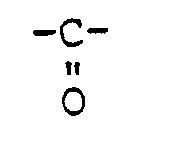
et au moins un accepteur d'électrons dispersé dans la résine, caractérisé en ce que le matériau de protection comprend en outre au-moins un métallocène ou un composé ayant au moins un noyau de métallocène dans sa structure moléculaire, et en ce que le matériau de protection a une épaisseur comprise entre 0,5 et 50 ¡.Lm.
et au moins un accepteur d'électrons dispersé dans la résine, caractérisé en ce que le matériau de protection comprend en outre au-moins un métallocène ou un composé ayant au moins un noyau de métallocène dans sa structure moléculaire, et en ce que le matériau de protection a une épaisseur comprise entre 0,5 et 50 ¡.Lm.
2. Elément selon la revendication 1, dans lequel le métallocène ou le composé ayant
au moins un noyau de métallocène dans sa structure moléculaire est présent suivant
une quantité comprise entre 0,01 et 70 % en poids, sur la base du poids de la couche
protectrice.
3. Elément selon la revendication 1 ou la revendication 2, dans lequel le métallocène
est un métallocène de Fe, Ni, Co, V, Cr ou Ti, ou le composé comprend Fe, Ni, Co,
V, Cr ou Ti dans le noyau de métallocène.
4. Elément selon l'une quelconque des revendications précédentes, dans lequel l'accepteur
d'électrons est présent suivant une quantité comprise entre 0,001 et 2 moles par mole
de métallocène ou du composé ayant au moins un noyau de métallocène dans sa structure
moléculaire.
5. Elément selon la revendication 4, dans lequel l'accepteur d'électrons est choisi
dans le groupe constitué de : anhydride d'acide phtalique, anhydride d'acide tétrachlorophtalique,
s-tricyanobenzène, chlorure de picryle, 2,4-dinitrochlorobenzène, 2,4-dinitrobromobenzène,
4-nitrobiphényle, 4,4-dinitrobi- phényle, 2,4,6-trinitroanisole, trichlorotrinitrobenzène,
trinitro-o-toluène, 4,6-dichloro-1,3-dinitrobenzène, p-dinitrobenzène, chloranyle,
bromanyle, tétracyanoéthylène, hexacyanobutadiène, tétracyanoqui- nodiméthane, benzoquinone
et leurs dérivés halo ou cyano, des composés aromatiques ou hétérocycliques substitués
par un groupe nitro, un groupe sulfo, un groupe carboxyle, ou un groupe cyano, et
des monomères ou polymères de 2,4,7-trinitro-9-fluorénone, 2,4,5,7-tétranitrofluorénone,
trinitroanthracène, dinitroacridine, tétracyanopyrène ou dinitroanthraquinone.
6. Elément selon l'une quelconque des revendications précédentes, dans lequel la résine
de liaison est une résine de polyuréthane, une résine de polycarbonate, une résine
de polyester, une résine acrylique, une résine d'acétate de polyvinyle, une résine
d'ester de cellulose, une résine de nitrocellulose ou une résine alkyde.
7. Procédé de formation d'une image latente électrostatique de signes portant des
données, comprenant les étapes consistant à charger uniformément un élément électrophotographique
tel que revendiqué dans l'une quelconque des revendications précédentes, et à le décharger
sélectivement par l'application contrôlée de lumière à sa surface.