Background of the Invention
[0001] Flotation processes have been used for some time in the coal industry to recover
coal fines from previously discarded aqueous streams generated by processing raw coal.
Generally, the flotation feed consists of fine coal and clay which results from prior
coarse separation steps such as baths, jigs, dewatering screens, sieve bends and cyclones.
The feed is normally 28 x 0 mesh and contains 4 to 12 percent solids.
[0002] The flotation circuit consists of four to eight cells in a single bank with the number
of banks proportional to the total tonnage to be processed. The concentrate produced
in the flotation cells goes to a vacuum filter where it is concentrated to approximately
75 to 80 percent solids. The tailings from the flotation process are discharged to
a waste pond or a refuse vacuum filter. During the flotation process, the very fine
clay that is in the circuit often becomes entrapped in and/or adsorbed on the coal
being floated and increases the amount of ash in the final product.
[0003] Accordingly, it is an object of this invention to improve the operation of the coal
flotation circuit by improving the overall yield of coal.
[0004] It is another object of this invention to improve the operation of the coal flotation
circuit by improving the overall yield of coal.
[0005] It is another object of this invention to improve the operation of the coal flotation
circuit by decreasing the ash content of the coal.
[0006] These and other objects of this invention are accomplished by the addition of the
partially hydrolyzed polyacrylamides to coal flotation circuits.
Detailed Description of the Invention
[0007] The polymer may be added to the feed to the flotation circuit or to the individual
cells by conventional feeding means and it is believed that it functions by flocculating
the fine coal fraction. The polymer may be used in dosages of between 0.025 and 1
pound per ton, preferably at least 0.05 pounds per ton, based on the weight of the
dry flotation feed.
[0008] Suitable polymers which may be used in accordance with the teachings of this invention
are water soluble, partially hydrolyzed polyacrylamides having a degree of hydrolysis
of from 1 percent to 50 percent and a molecular weight of at least 50,000, and preferably
at least 1,000,000.
[0009] The following examples will illustrate this invention.
Example 1
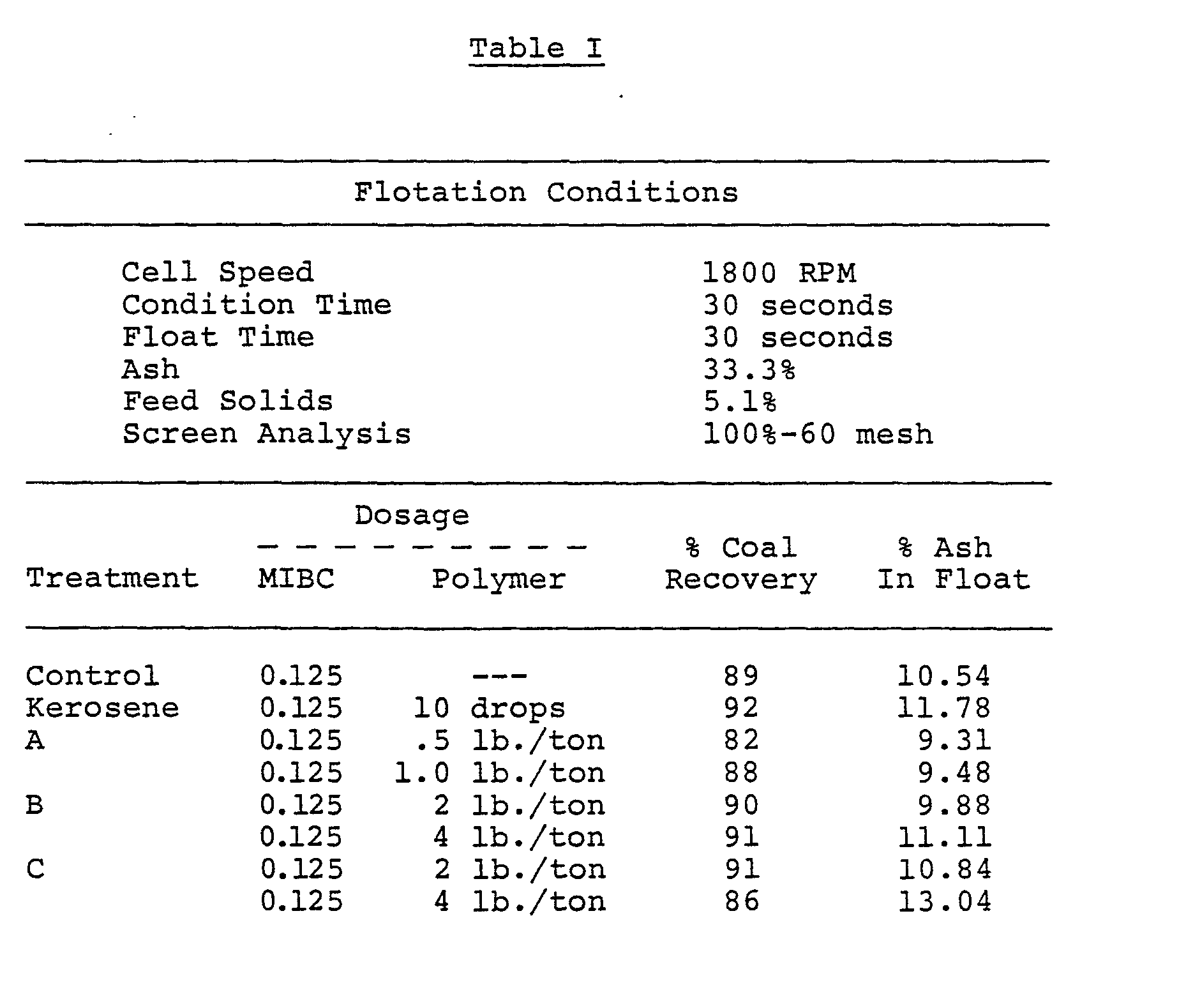
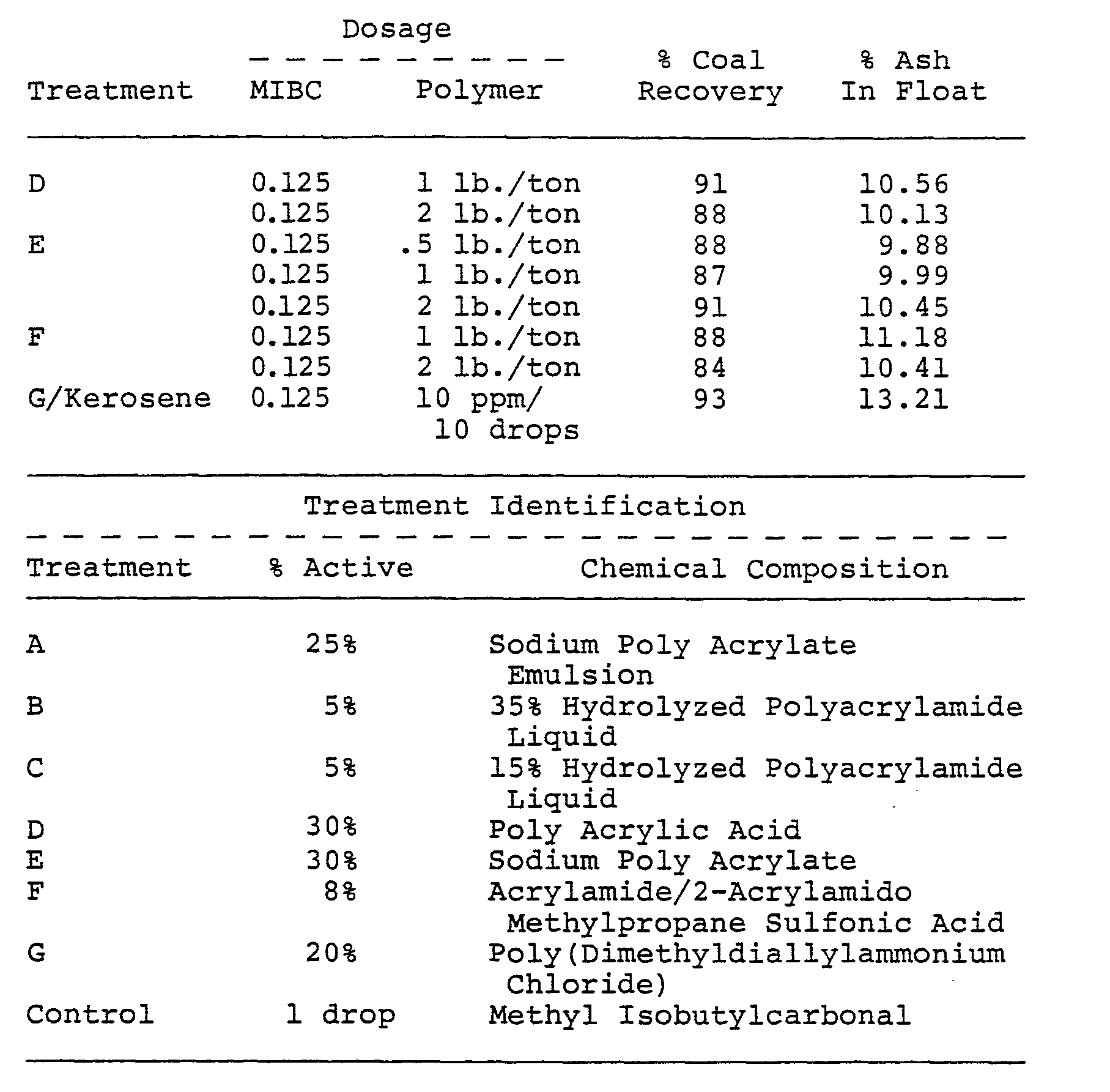
[0010] A series of flotation tests were conducted. The objectives of the tests were to reduce
the ash in the clean coal, increase the percent recovery of the coal and reduce the
amount of fuel oil being used in the flotation circuit. The results of these tests
are set forth in Table I.
Example 2
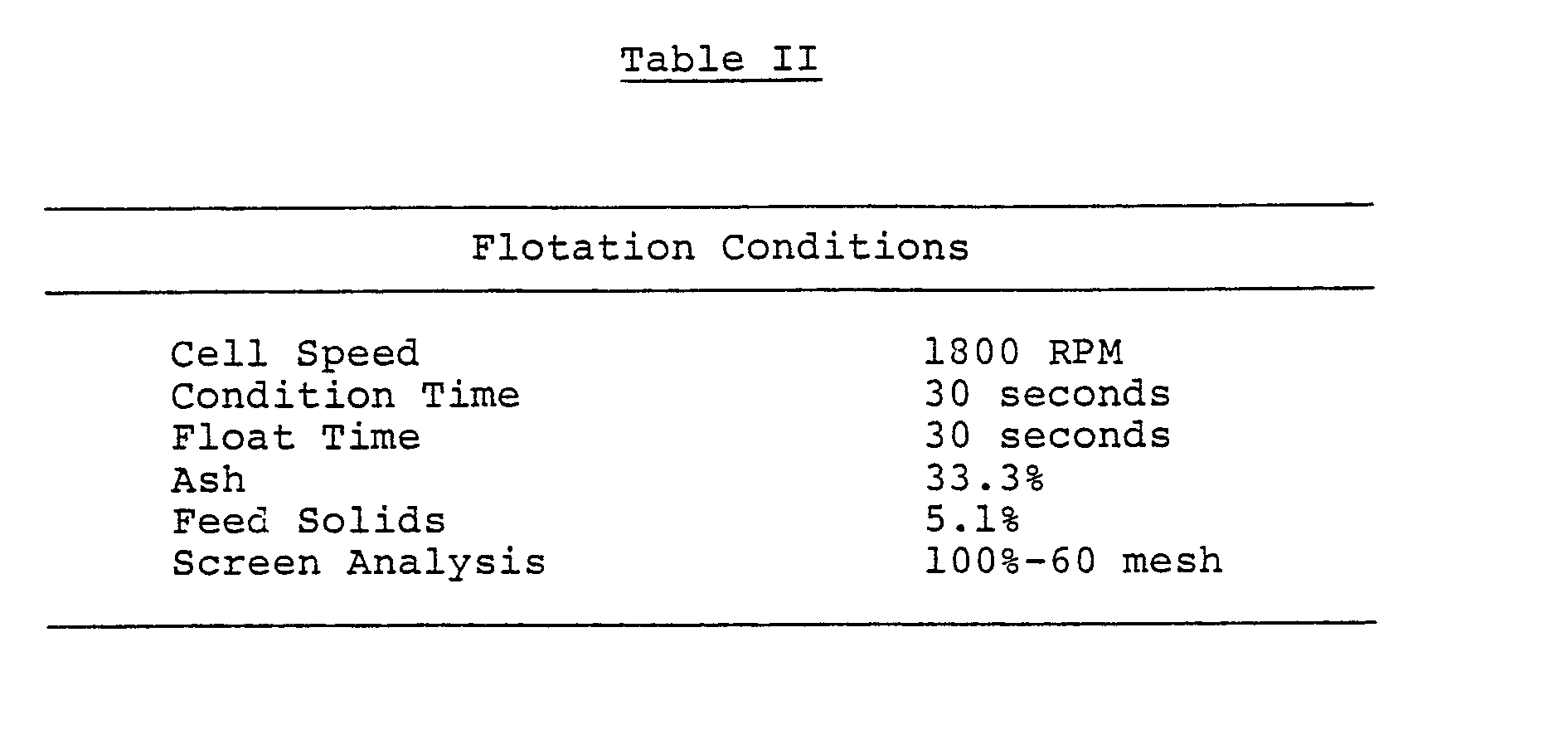
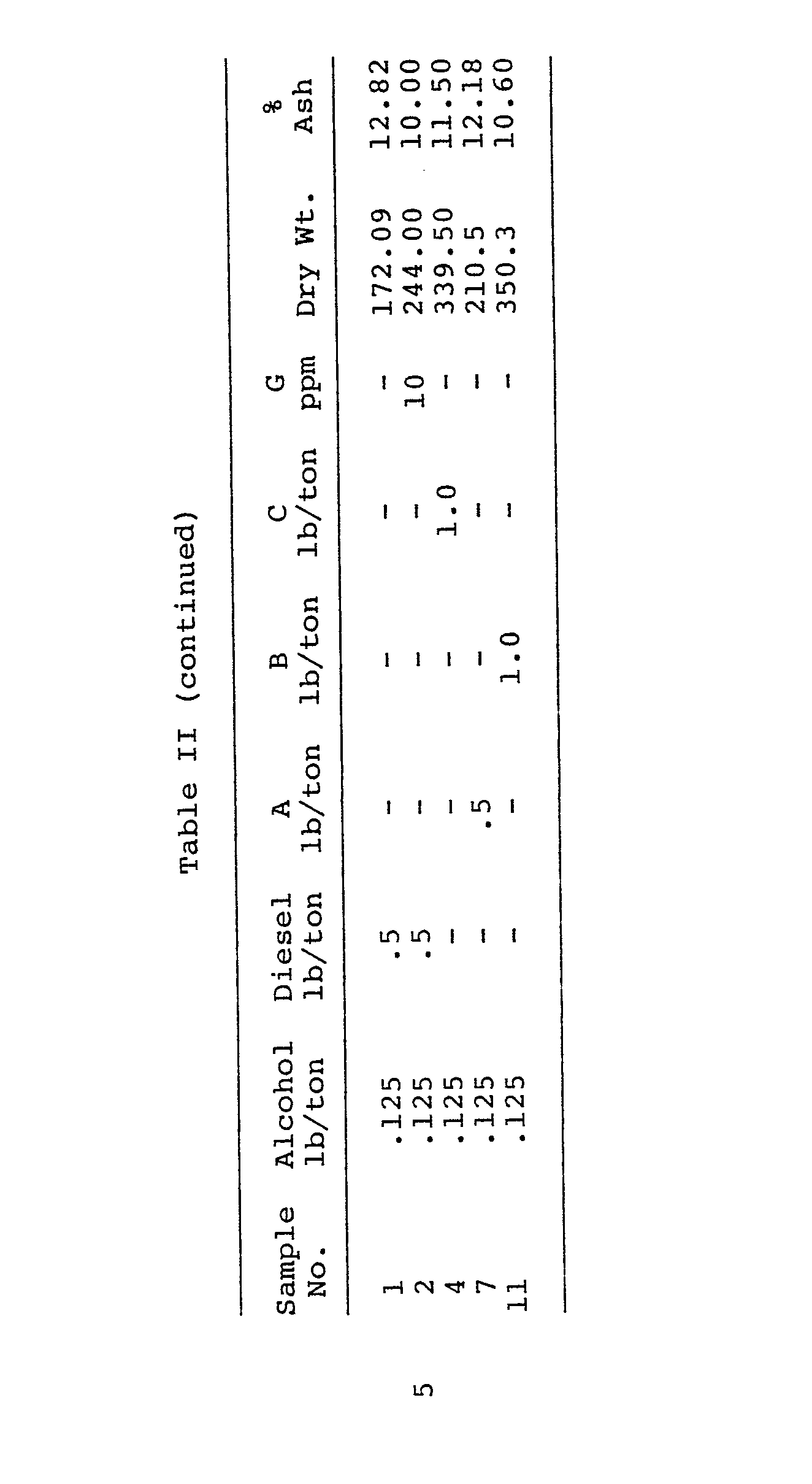
[0011] A similar series of flotation tests were conducted and the results of these tests
are set forth in Table II.
1. A process for improving the recovery of clean coal from flotation circuits which
comprises adding an effective amount of a water soluble, partially hydrolyzed polyacrylamide
to the coal being processed to decrease the amount of the clay being floated and removed
from the cells with the fine coal.
