|
(11) | EP 0 021 562 B1 |

| (12) | EUROPEAN PATENT SPECIFICATION |
|
|
| (54) |
Method of detecting an electrical short Verfahren zur Feststellung von Kurzschlüssen Méthode pour détecter la présence de courts-circuits |
|
|
|||||||||||||||||||||||||||||||
| Note: Within nine months from the publication of the mention of the grant of the European patent, any person may give notice to the European Patent Office of opposition to the European patent granted. Notice of opposition shall be filed in a written reasoned statement. It shall not be deemed to have been filed until the opposition fee has been paid. (Art. 99(1) European Patent Convention). |
[0001] The present invention relates to methods of detecting electrical shorts in electrical and electronic circuit boards, back-planes, cables and similar systems, being more particularly directed to the significant reduction in number of testing connections to electrical nodes required to find the fault.
[0002] In present-day technology for the manufacturing of electrical or electronic circuits, the difficulty of producing such circuits without faults is mounting as the circuits are radically miniaturized and sub-miniaturized, and the complexity and multifunctions of the components thereof are strikingly increased. Manufacturers must test such circuit assemblies not only to ensure that components have been placed in the circuit properly and have not been damaged in assembly, but also to determine that the circuit as a whole functions properly. The art has struggled over the years to provide more efficient and higher speed testing for such circuits. The object of such testing, should a fault be discovered, is to pinpoint the location of the fault so that the newly-manufactured circuit can be quickly repaired and made functional. Sophisticated computer-aided techniques for the purpose have been developed such as the CAPS system of GenRad, Inc., the assignee of the present application, as described, for example, in "Automatic Fault Location Using On-Line Simulation", Rene, Haas, Lutz, Henckels and David Schneider, Technical Paper Presented at the Institute of Electrical and Electronics Engineers International Convention and Exposition "Intercon 74", March 26-29, 1974. Another technique for improving the test and diagnosis process involves manual probing and is described in "The Smart Probe-A New Diagnostic Tool", Test Systems Division Application Note 1, General Radio Co. (now GenRad, Inc.) August, 1975.
[0003] A prevalent type of fault in today's technology is the unwanted short between two nodes of a circuit. Such shorts can be detected and located with much simpler techniques than the sophisticated methods mentioned above. Such sophisticated testing is, of course, obscured and slowed by the presence of shorts between nodes. Testing efficiency can be improved, therefore, if such shorts can be detected and removed before the sophisticated testing process is begun.
[0004] Testing for shorts is needed also in the manufacture of other electrical devices such as cables, backplanes, bare circuit boards, etc., and other types of apparatus, as well.
[0005] Underlying the present invention is the discovery of a novel binary screening and binary searching philosophy or technique that has enabled vast reductions in number of required tests and time for short identification. It is in order, however, before further describing the prior art and contrasting the same from the invention, to provide definitions of terms as used herein. Referring to the application of the invention to the electrical field, the generic term "node", as used herein, is intended to define an isolated electrical conductor or connection point. The word "short" connotes the (generally unwanted) presence of a short-circuit or, more generically, of an electrical resistance between two nodes of less than some preselected value. A "short detector" is apparatus having at least two connection leads which, when connected respectively to two nodes or groups of nodes, can detect the presence of a short between those nodes or groups of nodes.
[0006] In the prior art of shorts testing, various straight-forward techniques have been employed. The most thorough of these is to test each node pair separately. The first node is tested against the second, then the third, etc., and then the second node is tested against the third, then the fourth, etc., until finally the (N-1 )th node is tested against the Nth. This requires
or 1/2(NZ-N) shorts tests. Because this number is of the order of magnitude of N2, this method might be called the "N-Squared Test". When the number of nodes is large, this requires a very large number of shorts tests.
[0007] A modification of the above is the "Terminating N-Squared Test" which is identical to the "N-Squared Test" except that if a 'connection is found, further tests with the present first node of the pair are not executed. The connection to the first node is, rather, moved to the next; and testing continues.
[0008] For example, if node 4 is found to be shorted to node 5, further testing with node 4 is discontinued and testing continues with node 5. If node 4 is shorted to some other higher- numbered node, say 7, node 5 will be, also. It is impossible to determine whether 4 is shorted to 5 and also to 7, or whether 4 is shorted to 7 which is shorted to 5, etc. When, and only when, shorts are present, this technique requires fewer tests than the N-Square Test, and again shorted nodal pairs or groups are completely identified.
[0009] In further searching for methods of reducing the number of tests required for testing assemblies with large numbers of nodes, some manufacturers have used what might be called the "Linear Test". In this. technique, each node is tested individually against all others collectively. For N nodes, N tests are required. When shorted nodes are found, it is not determined to which other nodes they are shorted. This reduced amount of information is acceptable, in some cases, in return for the greatly reduced number of shorts tests required.
[0010] Yet another prior art testing method in this field is to be found in DE-B-1,947,569, in which a method for automatically testing a cable is disclosed composed of a plurality of insulated conductors. To perform the method a conductor of the assembly of conductors is tested consecutively against the others which are connected in parallel with respect to one another and which have not yet been tested. Once a fault has been detected, the individually chosen conductor is tested against each individual conductor of the remaining conductors in the assembly.
[0011] An object of the present invention, however, is to provide a new and vastly improved process or method of short detection that enables testing for and identification of all node pairs which are shorted, and does so with a significantly smaller number of tests than is required by any of the above-described previously known methods.
[0012] As such, the invention is particularly useful for testing any multiplicity of electrical nodes, such as multi-conductor cables, backplanes, printed circuit boards before component parts are assembled thereto.
[0013] A further object of the invention, moreover, is to provide such a novel method that is also adapted for highly efficient shorts testing in the presence of components connected to the nodes of an assembled electronic circuit which, by shunting in combination, may give the false appearance of shorts when many pairs are being connected together and tested at the same time.
[0014] Other and further objects will be explained hereinafter are more particularly delineated in the appended claims.
[0015] The objectives of the invention are achieved by testing in two steps; a first step which might be called a binary screening, consisting of 1092N tests (where N is the number of nodes) to detect the presence of shorts, and a second step which is a binardy searching consisting of no more than 4 (log,N-1) tests per shorted pair to identify the shorted node pairs.
[0016] Because shorts between some node pairs will be detected in more than one of the screening tests, the method underlying the invention provides for, when a shorted node pair is identified, excluding one of those nodes from further screening or searching tests, thereby preventing redundant searching for the same node pair.
[0017] Using this method for eliminating redundant searching, full identification of shorted node pairs is accomplished with
tests, where N is the number of nodes and M is the number of shorts found. As noted above, the prior art N-square search requires
tests. When the number of nodes is large, indeed, the difference in the number of tests required by these processes is most remarkable.
[0018] According to one aspect of the invention there is provided a method of detecting electrical shorts between pairs of nodes in an assembly of nodes of a system under test comprising connecting one lead (A) of a pair of leads in a short detector, to preselected ones of the assembly of N nodes and the other lead (B) of the said pair concurrently in a preselected manner to the remaining nodes of the sequence of tests to determine a short between respective node pairs in the assembly across the leads (A, B) characterised in that the tests are performed by binary screening the assembly for the existence of shorts between the nodes in a succession of n screening tests where n is that integer when
by dividing the N nodes successively into 2P groups, where p is an integer varied from 1 to n to correspond to the test number, and switchably connecting the first lead (A) to the resultant groups in turn such that in each successive screening test the first lead (A) is connected to the resultant groups of nodes in an odd sequence of groups, and the second lead (B) to those other nodes of the resultant groups in an even sequence, and binary searching, in the event that a short is detected in any one screening test, amongst the nodes connected to one lead (A) in that test to determine the existence of one or more shorted nodes, and subsequently connecting a thusly discovered shorted node or nodes one at a time to the one lead (A) and performing a binary search therewith of the nodes connected to the other lead (B) in that screening test thereby to identify the shorted node pairs in the assembly.
[0019] According to another aspect of the invention there is provided a method of detecting electrical shorts between pairs of nodes in an assembly of nodes of a system under test comprising connecting one lead (A) of a pair of leads in a short detector to preselected ones of the assembly of N nodes and the other lead (B) of the said pair concurrently in a preselected manner to the remaining nodes in a sequence of tests to determine a short between respective node pairs in the assembly across the leads (A, B) characterised in that the tests are performed by binary screening the assembly for the existence of shorts between the nodes in a succession of screening tests where n is that integer when
by dividing the N nodes successively into 2P groups where p is an integer varied from 1. to n to correspond with the test number and switchably connecting the first lead (A) to the resultant groups such that in each successive screening test the first lead (A) is connected to the resultant groups of nodes in an odd sequence of groups, and the second lead (B) to those other nodes of the resultant groups in an even sequence, and binary searching, in the event that a short is detected in any one respective sequential screening test, amongst the nodes connected to one lead (A) in that test to determine the existence of one or more shorted nodes, subsequently connecting a thusly discovered shorted noe or nodes one at a time to the one lead (A) and performing a binary search therewith of the nodes connected to the other lead (B) in that screening test thereby to identify the shorted node pairs in the assembly, and following a said screening test in which a short is found and said binary searching wherein a shorted node pair is determined, one node of said shorted node pair is eliminated from further testing.
[0020] According to a still further aspect of the invention there is provided a method of detecting electrical shorts between pairs of nodes in an assembly of nodes of a system under test comprising connecting one lead (A) of a pair of leads in a short detector, to preselected ones of the assembly of N nodes and the other lead (B) of the said pair concurrently in a preselected manner to the remaining nodes of the sequence of tests to determine a short between respective node pairs in the assembly across the leads (A, B) characterised in that the tests are performed by binary screening the assembly for the existence of shorts between the nodes in a succession of n screening tests where n is that integer when
by dividing the N nodes successively into 2P groups, where p is an integer varied from 1 to n to correspond with the test number and switchably connecting the first lead (A) to the resultant groups in turn such that in each successive screening test the first lead (A) is connected to the resultant groups of nodes in an odd sequence of groups, and the second lead (B) to those other nodes of the resultant groups in an even sequence, alternating binary searching of those nodes connected to one lead (A) with the binary searching of those nodes connected to one lead (A) with the binary searching of those nodes connected to the other lead (B) in a respective sequential screening test thereby to identify the shorted node pairs in that screening test, and eliminating one node of said identified shorted node pair from further testing.
[0021] The following chart compares the number of tests required by the prior art N-squared test, and the strikingly reduced number required by the process of this invention, for various values of N and M:
[0022] The real power of the method of this invention may be seen in the case where no shorts are present. 1024 nodes can be proved to have no shorted node pairs in only 10 tests.
[0023] As before stated, in an assembled electronic circuit, the combined shunting effect of the components may, during the screening tests, falsely give the appearance of the presence of a short. In accordance with the present invention, the binary searching as rapidly as possible reduces the number of nodes being tested simultaneously, thereby removing the appearance of a short, so that the binary searching can in such case be discontinued. The number of tests in this case will be somewhat larger than given by the above formula and shown in the above table. When a short is discovered, however, the final test is made from one node to one other node, only, giving the best possible resolution of the question whether a short is a true short or not.
[0024] The invention will now be described with reference to the accompanying drawings. Because this invention makes use of binary techniques it will be described in terms of testing N=2" nodes, where N is an integer. For ease and clarity of explanation, the 2" nodes will be numbered from 0 to 2"-1.
Fig. 1 is a schematic block and circuit diagram of apparatus adapted to be operated in accordance with the invention;
Figs. 2, 3 and 4 are circuit diagrams of suitable short detectors for the apparatus of Fig. 1;
Fig. 5 is a circuit diagram illustrating a preferred pattern or best mode of screening tests in accordance with the method or process underlying the invention; and
Figs. 6, 7 and 8 are flow diagrams of preferred short-detecting screening and searching and determining sequences.
[0025] Referring to Fig. 1, the invention is illustrated as practiced with the aid of any suitable short detector 1 capable of distinguishing between the presence and absence of shorts, (ohmeter, for example), having two leads, labelled A and B. The leads A and B are respectively connected to connection switches A' and B' for connecting lead A to at least half of the nodes of the circuit (so-labelled) at one time, and for also connecting lead B to at least half of the nodes of the circuit at one time, as more fully described in connection with Fig. 5. It should be noted that in this method, such apparatus, in minimum form, can have one node not accessed by one such switch connection means, such as switch B' not having a switch to connect with the Oth node; and a different node, shown as the (2n-l)th node, not accessed by the other connection switch means A'. This distinction will later be explained.
[0026] In an automated version of this type of system, control means is provided so that the switch connection means may be commanded by a sequencer or by a digital computer, to perform in accordance with the technique herein described. While the invention is not limited to the actual described mode of operation of the short detector, the following examples illustrate how the short detector 1 can be constructed and operated in accordance with the invention.
[0027] Two basic types of short detector 1 are shown in Figs. 2 and 3. In Fig. 2, a voltage source V is connected in series with a current- measuring device I and, via leads A and B, with the pair of nodes or sets or groups of nodes being tested. The measured resistance is equal to the voltage divided by the measured current. Alternatively, as shown in Fig. 3, a current source I' may be connected in parallel with a voltage-measuring device V' and in parallel with the pair of nodes or sets or groups of nodes being tested. The resistance is the measured voltage divided by the current. In either of the systems of Figs. 2 and 3, the presence or absence of a short is determined by selecting some appropriate value of resistance as a criterion; and a measured value less than the selected value is considered a short, and a measured value higher than the same, is not.
[0028] Apparatus of the general form of Fig. 2 is preferred for the testing of circuits containing semiconductor components for example because a voltage value can be selected which is so low (say 1/10 volt) that semiconductor components cannot be inadvertently damaged. In an automated system for shorts testing, moreover, the calculation of the value of resistance and the comparison of that value against a preselected value may, of course, also be carried out by a digital computer.
[0029] A simpler version of a short detector 1 can be constructed, however, which does not require a measurement of current or voltage, calculation of resistance, and comparison against a preselected value. Such a simple short detector 1 is shown in Fig. 4. It consists of a dc source Vdc, a resistance bridge BR and a voltage discriminator VD. Three arms of the bridge are the resistors, R1' Rz and R3, each made of value corresponding to the preselected short value. The node pair or groups or sets of nodes being tested is or are connected by leads A and B as the fourth arm of the bridge. The output of the voltage discriminator VD will be, for example, a logic signal "high", if the resistance between those nodes or groups of nodes is higher than the preselected value, and a logic signal "low" if that resistance is lower than the preselected value. In an automated system, that single signal could be returned to a sequencer or digital computer, schematically illustrated by the label "TO OUTPUT CONTROL", controlling the testing by well-known technique. That one bit of information is, moreover, the only result of each test needed by the process of the invention herein described.
[0030] The preferred method of using the above-described apparatus for the detection and identification of shorted nodes consists of two parts. The first part is a number of screening tests which determine whether any shorts exist, without identifying the specific node pairs which are shorted; and the second part is a number of searching tests for finding nodes which are shorted. If no shorts are found in the first part of the test, the second part need not be carried out. The method is therefore particularly efficient for the case of good circuits containing no shorts.
[0031] A successive switch connection diagram for this process is shown in Fig. 5 for a predetermined pattern of four screening tests. While N=16 nodes are therein illustrated (0 to 15), more generally N nodes may be involved, being numbered from 0 to 2"-1 (N=2"), where n is the number of screening tests. In Fig. 5, n=4. For the first screening test numbered "1" in Fig. 5, the half of the nodes having lower numbers (0-7) is shown connected by switches A' to short detector lead A; and the half of the nodes having the higher numbers (8-15) is connected via switches B' to short detector lead B. For the second screening test "2", the nodes are divided into fourths, and the first and third or odd fourths (0-3 and 8-11) are switched to short detector lead A, and the second and fourth or even fourths (4-7 and 12-15) are connected to short detector lead B. Further screening tests are carried on by continuing in this manner by dividing the nodes into eighths (test "3"), sixteenths (test "4"), etc. For the last screening test of the pattern, all even-numbered nodes (starting with number 0) will be connected to lead A, and all odd-numbered nodes will be connected to lead B. For 2" nodes, there will have been n such screening tests, also indicated in the upper part of the flow diagram of Fig. 6.
[0032] For testing a device having less than 2" nodes, but more than 2(n-1) nodes, the testing is carried out as though there were 2" nodes. Obviously, no shorts will be discerned involving non-connected, non-existent nodes.
[0033] If the N nodes are thought of as being numbered from 0 to (2° 1) by binary numbers, it can be seen that in the first test, the nodes whose binary numbers have the most significant bit equal to 0, are connected to the first lead; and those having that bit equal to 1 are connected to the second lead. In the second test, those nodes whose binary numbers have the next most significant bit equal to 0 are connected to the first lead, and those nodes whose binary numbers have that bit set to 1 are connected to the second lead. Continuing for successive screening tests in this way, it will be seen in the last test, those nodes whose binary numbers have the least significant bit equal to 0 are connected to the first lead, and those nodes whose binary numbers have that bit equal to 1 are connected to the second lead. For a board with 2" nodes, there will thus have been n such screening tests. It is apparent, furthermore, that such screening tests will detect a short between any node pair because the numbers of those nodes must differ in at least one bit, and therefore that node pair will be tested in at least one of the screening tests.
[0034] From the.;e considerations, it can also be seen that node number 2"-1 is never connected to the first lead of the short detector 1, and difference node number 0 is never connected to the second lead. This explains the previous comment in connection with Fig. 1, that one node need not be accessible to one lead of the short detector and that one other node need not be accessible to the other lead.
[0035] Turning now, to the second part of the process and Fig. 6, a series of searching tests is conducted if any of the screening tests indicated the presence of a short. This is done by returning to the nodal connections for a screening test which did indicate the presence of a short (such as "Return To First Test Set-Up" in Fig. 6). In order to identify the nodes of a shorted node pair, a binary search of the nodes connected to short detector lead A is conducted to find one or more shorted nodes. Such shorted nodes are then connected one at a time to short detector lead A to do a binary search of all nodes connected to short detector lead B ("Search Node" blocks in Fig. 6). By this process, all shorted node pairs detected by this screening test are found. A maximum of only 4 (log,N-1) tests need be made to find one such shorted node pair after it has been detected by one of said screening tests.
[0036] It will be observed that, because more than one shorted node pair may be detected by one such screening test, one must be prepared to follow more than one binary search in this search procedure.
[0037] As before described, a further feature of the invention resides in the use of the same apparatus to prevent multiple redundant searches for a shorted node pair. As described above, shorted pairs of nodes whose binary numbers differ in more than one bit position will be detected in more than one screening test. To prevent redundant searches, the searching test is carried out completely after a short is detected in one of the screening tests as shown in the flow diagram of Fig. 7. Following the first screening tests, for example, in Fig. 7, the search for any detected shorts is shown conducted. Then, one node of each shorted pair found is disconnected during all further screening tests and subsequent searching tests, to eliminate searching redundantly for node pairs already found. (e.g. "Drop One Node Of Each Pair...", Fig. 7).
[0038] As before mentioned, a further feature of this invention resides in its adaptability for testing for shorts in an assembled electronic circuit, as well. The screening tests are carried out by testing the resistance from half the nodes to the other half. Because of the shunting effects of the possibly large number of resistive components which may be connected in the circuit, the screening tests may give the appearance of the presence of shorts when true shorts do not exist. The number of tests required in such cases is greater than given by the above formula and shown in the accompanying table. As the searching tests proceed, the number of nodes included in each test is steadily reduced. Such shunting effects will thereby be steadily reduced and the apparent short will disappear. Therefore one must be prepared to abandon a search trail, in addition to following multiple trails as above described.
[0039] A further feature of this invention provides an improvement in dealing with such apparent shorts in assembled electronic circuits. By alternating the steps in the binary searching of those nodes connected to short detector lead A with the steps in the binary searching of those nodes connected to short detector lead B, Fig. 8, ("Alternate Searching Nodes..."), the total number of nodes involved in each successive test may be reduced at the greatest possible rate. At each step, half the remaining pairs connected to one lead or the other are disconnected. The absence of a true short is found out in this way with the least number of steps.
1. A method of detecting electrical shorts between pairs of nodes in an assembly of
nodes of a system under test comprising connecting one lead (A) of a pair of leads
in a short detector, to preselected ones of the assembly of N nodes and the other
lead (B) of the said pair concurrently in a preselected manner to the remaining nodes
of the sequence of tests to determine a short between respective node pairs in the
assembly across the leads (A, B) characterised in that the tests are performed by
binary screening the assembly for the existence of shorts between the nodes in a succession
of n screening tests where n is that integer when 2n-,<N,<2n by dividing the N nodes
successively into 2P groups, where p is an integer varied from 1 to n to correspond with the test number,
and switchably connecting the first lead (A) to the resultant groups in turn such
that in each successive screening test the first lead (A) is connected to the resultant
groups of nodes in an odd sequence of groups, and the second lead (B) to those other
nodes of the resultant groups in an even sequence, and binary searching, in the event
that a short is detected in any one screening test, amongst the nodes connected to
one lead (A) in that test to determine the existence of one or more shorted nodes,
and subsequently connecting a thusly discovered shorted node or nodes one at a time
to the one lead (A) and performing a binary search therewith of the nodes connected
to the other lead (B) in that screening test thereby to identify the shorted node
pairs in the assembly.
2. A method as claimed in claim 1 wherein when N=2" said one lead (A) is connected
to all but one of said nodes (N) of a device being tested, and the other lead (B)
is connected to all but the other of said nodes (N).
3. A method of detecting electrical shorts between pairs of nodes in an assembly of
nodes of a system under test comprising connecting one lead (A) of a pair of leads
in a short detector to preselected ones of the assembly of N nodes and the other lead
(B) of the said pair concurrently in a preselected manner to the remaining nodes in
a sequence of tests to determine a short between respective node pairs in the assembly
across the leads (A, B) characterised in that the tests are performed by binary screening
the assembly for the existence of shorts between the nodes in a succession of screening
tests where n is that integer when
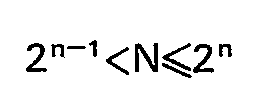
by dividing the N nodes successively into 2P groups where p is an integer varied from 1 to n to correspond with the test number and switchably connecting the first lead (A) to the resultant groups such that in each successive screening test the first lead (A) is connected to the resultant groups of nodes in an odd sequence of groups, and the second lead (B) to those other nodes of the resultant groups in an even sequence, and binary searching, in the event that a short is detected in any one respective sequential screening test, amongst the nodes connected to one lead (A) in that test to determine the existence of one or more shorted nodes, subsequently connecting a thusly discovered shorted node or nodes one at a time to the one lead (A) and performing a binary search therewith of the nodes connected to the other lead (B) in that screening test thereby to identify the shorted node pairs in the assembly, and following a said screening test in which a short is found and said binary searching wherein a shorted node pair is determined, one node of said shorted node pair is eliminated from further testing.
by dividing the N nodes successively into 2P groups where p is an integer varied from 1 to n to correspond with the test number and switchably connecting the first lead (A) to the resultant groups such that in each successive screening test the first lead (A) is connected to the resultant groups of nodes in an odd sequence of groups, and the second lead (B) to those other nodes of the resultant groups in an even sequence, and binary searching, in the event that a short is detected in any one respective sequential screening test, amongst the nodes connected to one lead (A) in that test to determine the existence of one or more shorted nodes, subsequently connecting a thusly discovered shorted node or nodes one at a time to the one lead (A) and performing a binary search therewith of the nodes connected to the other lead (B) in that screening test thereby to identify the shorted node pairs in the assembly, and following a said screening test in which a short is found and said binary searching wherein a shorted node pair is determined, one node of said shorted node pair is eliminated from further testing.
4. A method of detecting electrical shorts between pairs of nodes in an assembly of
nodes of a system under test comprising connecting one lead (A) of a pair of leads
in a short detector, to preselected ones of the assembly of N nodes and the other
lead (B) of the said pair concurrently in a preselected manner to the remaining nodes
of the sequence of tests to determine a short between respective node pairs in the
assembly across the leads (A, B) characterised in that the tests are performed by
binary screening the assembly for the existance of shorts between the nodes in a succession
of n screening tests where n is that integer when
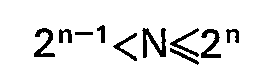
by dividing the N nodes successively into 2P groups, where p is an integer varied from 1 to n to correspond with the test number and switchably connecting the first lead (A) to the resultant groups in turn such that in each successive screening test the first lead (A) is connected to the resultant groups of nodes in an odd sequence of groups, and the second lead (B) to those other nodes of the resultant groups in an even sequence, alternating binary searching of those nodes connected to one lead (A) with the binary searching of those nodes connected to the other lead (B) in a respective sequential screening test thereby to identify the shorted node pairs in that screening test, and eliminating one node of said identified shorted node pair from further testing.
by dividing the N nodes successively into 2P groups, where p is an integer varied from 1 to n to correspond with the test number and switchably connecting the first lead (A) to the resultant groups in turn such that in each successive screening test the first lead (A) is connected to the resultant groups of nodes in an odd sequence of groups, and the second lead (B) to those other nodes of the resultant groups in an even sequence, alternating binary searching of those nodes connected to one lead (A) with the binary searching of those nodes connected to the other lead (B) in a respective sequential screening test thereby to identify the shorted node pairs in that screening test, and eliminating one node of said identified shorted node pair from further testing.
1. Verfahren zum Auffinden elektrischer Kurzschlüsse zwischen Paaren von Knoten in
einer Knotenanordnung eines getesteten Systems, bei welchem ein Leiter (A) eines Leiterpaares
in einem Kurzschlußdetektor mit ausgewählten Knoten der Anordnung von N Knoten und
der andere Leiter (B) des erwähnten Paares gleichzeitig in vorgewählter Weise mit
den verbleibenden Knoten der Testfolge verbunden werden, um einen Kurzschluß zwischen
Knotenpaaren in der Anordnung an den Leitern (A, B) festzustellen, dadurch gekennzeichnet,
daß die Tests durchgeführt werden durch binäres Sieben (Vorprüfung) der Anordnung
nach dem Vorhandensein von Kurzschlüssen zwischen Knoten in einer Aufeinanderfolge
von n Siebtests, wobei n eine ganze Zahl ist, wenn
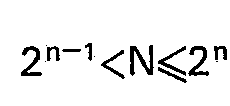
ist, und zwar durch Aufteilen der N Knoten nacheinander in 2P Gruppen, wobei p eine ganze Zahl ist, die zwischen 1 und n variiert, um der Testnummer zu entsprechen, und durch anschließendes schaltermäßiges Verbinden des ersten Leiters (A) mit den resultierenden Gruppen in der Weise, daß in jedem aufeinanderfolgenden Siebtest der erste Leiter (A) mit den resultierenden Gruppen von Knoten der ungeraden Gruppenfolge und der zweite Leiter (B) mit den Knoten der geraden Gruppenfolge verbunde sind, und daß dann, wenn ein Kurzschluß in irgendeinem der Siebtests festgestellt wird, eine binäre Prüfung unter denjenigen Knoten durchgeführt wird, die während des betreffenden Testes mit dem einen Leiter (A) verbunden waren, um das Vorhandensein eines oder mehrerer kurzgeschlossener Knoten festzustellen, und daß anschließend ein derart festgestellter kurzgeschlossener Knoten oder aber mehrere kurzgeschlossene Knoten jeweils einzeln mit dem einen Leiter (A) verbunden werden und hiermit eine binäre Prüfung derjenigen Knoten durchgeführt wird, die in dem entsprechenden Siebtest mit dem anderen Leiter (B) verbunden waren, um so die kurzgeschlossenen Knotenpaare in der Anordnung zu bestimmen.
ist, und zwar durch Aufteilen der N Knoten nacheinander in 2P Gruppen, wobei p eine ganze Zahl ist, die zwischen 1 und n variiert, um der Testnummer zu entsprechen, und durch anschließendes schaltermäßiges Verbinden des ersten Leiters (A) mit den resultierenden Gruppen in der Weise, daß in jedem aufeinanderfolgenden Siebtest der erste Leiter (A) mit den resultierenden Gruppen von Knoten der ungeraden Gruppenfolge und der zweite Leiter (B) mit den Knoten der geraden Gruppenfolge verbunde sind, und daß dann, wenn ein Kurzschluß in irgendeinem der Siebtests festgestellt wird, eine binäre Prüfung unter denjenigen Knoten durchgeführt wird, die während des betreffenden Testes mit dem einen Leiter (A) verbunden waren, um das Vorhandensein eines oder mehrerer kurzgeschlossener Knoten festzustellen, und daß anschließend ein derart festgestellter kurzgeschlossener Knoten oder aber mehrere kurzgeschlossene Knoten jeweils einzeln mit dem einen Leiter (A) verbunden werden und hiermit eine binäre Prüfung derjenigen Knoten durchgeführt wird, die in dem entsprechenden Siebtest mit dem anderen Leiter (B) verbunden waren, um so die kurzgeschlossenen Knotenpaare in der Anordnung zu bestimmen.
2. Verfahren nach Anspruch 1, dadurch gekennzeichnet, daß dann, wenn N=2" ist, der
erwähnte eine Leiter (A) mit allen außer einem der Knoten (N) der getesteten Anordnung
verbunden wird, und daß der andere Leiter (B) bis auf einen anderen Knoten mit allen
der erwähnten Knoten (N) verbunden ist.
3. Verfahren zum Auffinden von elektrischen Kurzschlüssen zwischen Paaren von Knoten
in einer Anordnung von Knoten eines getesteten Systems, bei welchem ein Leiter (A)
eines Leiterpaares in einem Kurzschlußdetecktor mit vorgewählten Knoten der Anordnung
von N Knoten und der andere Leiter (B) des erwähnten Paares gleichzeitig in vorgewählter
Weise mit den übrigen Knoten in einer Reihe von Tests verbunden werden, um einen Kurzschluß
zwischen Knotenpaaren in der Anordnung an den Leitern (A, B) zu bestimmen, dadurch
gekennzeichnet, daß die Tests durchgeführt werden durch binäres Sieben (Vorprüfen)
der Anordnung nach dem Vorhandensein von Kurzschlüssen zwischen Knoten in einer Aufeinanderfolge
von Siebtests, wobei n eine gerade Zahl ist, wenn
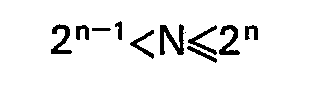
ist, und zwar durch Aufteilen der N Knoten nacheinander in 2P Gruppen, wobei p eine ganze Zahl ist, die zwischen 1 und n variiert, um der Testnummer zu entsprechen, und durch schaltermäßiges Verbinden des ersten Leiters (A) mit den resultierenden Gruppen in der Weise, daß in jedem aufeinanderfolgenden Siebtest der erste Leiter (A) mit den resultierenden Gruppen von Knoten der ungeraden Gruppenfolge und der zweite Leiter (B) mit den Knoten der geraden Gruppenfolge verbunden sind, und daß dann, wenn ein Kurzschluß in einem sequentiellen Siebtest festgestellt wird, eine binäre Prüfung unter den Knoten erfolgt, die bei dem Test mit dem einen Leiter (A) verbunden sind, um das Vorhandensein eines oder mehrerer kurzgeschlossener Knoten festzustellen, daß anschließend ein so festgestellter kurzgeschlossener Knoten oder mehrere kurzgeschlossene Knoten jeweils einzeln mit dem einen Leiter (A) verbunden werden und damit eine binäre Prüfung der Knoten, die in dem Siebtest mit dem anderen Leiter (B) verbunden sind, durchgeführt wird, um die kurzgeschlossenen Knotenpaare in der Anordnung zu bestimmen, und daß nach dem Siebtest, in welchem ein Kurzschluß aufgefunden wurde, und nach der binären Prüfung, in der ein kurzgeschlossenes Knotenpaar bestimmt wurde, ein Knoten dieses kurzgeschlossenen Knotenpaares von dem weiteren Test ausgeschlossen wird.
ist, und zwar durch Aufteilen der N Knoten nacheinander in 2P Gruppen, wobei p eine ganze Zahl ist, die zwischen 1 und n variiert, um der Testnummer zu entsprechen, und durch schaltermäßiges Verbinden des ersten Leiters (A) mit den resultierenden Gruppen in der Weise, daß in jedem aufeinanderfolgenden Siebtest der erste Leiter (A) mit den resultierenden Gruppen von Knoten der ungeraden Gruppenfolge und der zweite Leiter (B) mit den Knoten der geraden Gruppenfolge verbunden sind, und daß dann, wenn ein Kurzschluß in einem sequentiellen Siebtest festgestellt wird, eine binäre Prüfung unter den Knoten erfolgt, die bei dem Test mit dem einen Leiter (A) verbunden sind, um das Vorhandensein eines oder mehrerer kurzgeschlossener Knoten festzustellen, daß anschließend ein so festgestellter kurzgeschlossener Knoten oder mehrere kurzgeschlossene Knoten jeweils einzeln mit dem einen Leiter (A) verbunden werden und damit eine binäre Prüfung der Knoten, die in dem Siebtest mit dem anderen Leiter (B) verbunden sind, durchgeführt wird, um die kurzgeschlossenen Knotenpaare in der Anordnung zu bestimmen, und daß nach dem Siebtest, in welchem ein Kurzschluß aufgefunden wurde, und nach der binären Prüfung, in der ein kurzgeschlossenes Knotenpaar bestimmt wurde, ein Knoten dieses kurzgeschlossenen Knotenpaares von dem weiteren Test ausgeschlossen wird.
4. Verfahren zum Auffinden von elektrischen Kurzschlüssen zwischen Paaren von Knoten
in einer Anordnung von Knoten eines getesteten Systems, bei dem ein Leiter (A) eines
Leiterpaares in einem Kurzschlußdetektor mit vorgewählten Knoten der Anordnung von
N Knoten und der andere Leiter (B) des erwähnten Paares gleichzeitig in vorgewählter
Weise mit den übrigen Knoten in einer Reihe von Tests verbunden werden, um einen Kurzschluß
zwischen Knotenpaaren in der Anordnung an den Leitern (A, B) festzustellen, dadurch
gekennzeichnet, daß die Tests durchgeführt werden durch binäres Sieben (Vorprüfung)
der Anordnung nach dem Vorhandensein von Kurzschlüssen zwischen den Knoten in einer
Aufeinanderfolge von n Siebtests, wobei n eine ganze Zahl ist, wenn
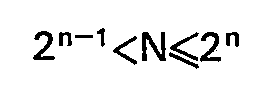
ist, und zwar durch Aufteilen der N Knoten nacheinander in 2P Gruppen, wobei p eine ganze Zahl ist, die zwischen 1 und n variiert wird, um der Testnummer zu entsprechen, und durch anschließendes Verbinden des ersten Leiters (A) mit den entsprechenden Gruppen in der Weise, daß in jedem folgenden Siebtest der erste Leiter (A) mit den resultierenden Gruppen von Knoten der ungeraden Knotenfolge und der zweite Leiter (B) mit den Knoten der geraden Gruppenfolge verbunden sind, und daß in einem sequentiellen Siebtest abwechselnd eine binäre Prüfung solcher Knoten, die mit dem einen Leiter (A) verbunden sind, und eine binäre Prüfung solcher Knoten erfolgt, die mit dem anderen Leiter (B) verbunden sind, um dabei kurzgeschlossene Paare von Knoten in dem Siebtest zu bestimmen, und daß ein Knoten des festgestellten kurzgeschlossenen Knotenpaares von dem weiteren Test ausgeschlossen wird.
ist, und zwar durch Aufteilen der N Knoten nacheinander in 2P Gruppen, wobei p eine ganze Zahl ist, die zwischen 1 und n variiert wird, um der Testnummer zu entsprechen, und durch anschließendes Verbinden des ersten Leiters (A) mit den entsprechenden Gruppen in der Weise, daß in jedem folgenden Siebtest der erste Leiter (A) mit den resultierenden Gruppen von Knoten der ungeraden Knotenfolge und der zweite Leiter (B) mit den Knoten der geraden Gruppenfolge verbunden sind, und daß in einem sequentiellen Siebtest abwechselnd eine binäre Prüfung solcher Knoten, die mit dem einen Leiter (A) verbunden sind, und eine binäre Prüfung solcher Knoten erfolgt, die mit dem anderen Leiter (B) verbunden sind, um dabei kurzgeschlossene Paare von Knoten in dem Siebtest zu bestimmen, und daß ein Knoten des festgestellten kurzgeschlossenen Knotenpaares von dem weiteren Test ausgeschlossen wird.
1. Procédé de détection des courts-circuits électriques entre deux noeuds d'un ensemble
de noeuds d'un système sous test selon lequel on connecte un conducteur (A) d'une
paire de conducteurs d'un détecteur de court-circuit à certains noeuds prédéterminés
de l'ensemble comportant N noeuds et simultanément l'autre conducteur (B) de la dite
paire de manière prédéterminée aux autres noeuds de la séquence de tests de façon
à détecter un court-circuit entre certaines paires de noeuds de l'ensemble à travers
les conducteurs (A, B), caractérisé en ce que lest tests sont réalisés en faisant
une sélection binaire de l'ensemble pour détecter l'existence de courts-circuits entre
les noeuds en une succession de n tests de sélection, n étant un entier tel que

en divisant les N noeuds successivement 2P groupes, p étant un entier variant de 1 à n pour correspondre avec le nombre de tests, et en assurant la connexion commutable du premier conducteur (A) aux gruppes résultants tour à tour de telle manière que, au cours de chaque test de sélection successif le premier conducteur (A) est connecté aux groupes résultants de noeuds en une séquence impaire de groupes, et le second conducteur (B) aux autres noeuds des groupes résultants dans une séquence paire, et en faisant une recherche binaire, dans le cas où un court-circuit est détecté lors de n'importe quel test de sélection, parmi les noeuds connectés au premier conducteur (A) au cours du test pour déterminer l'existence d'un ou de plusieurs noeuds en court-circuit, puis en connectant le ou les noeud(s) en court-circuit ainsi détecté(s), un à la fois, au premier conducteur (A) et en faisant une recherche binaire parmi les noeuds connectés à l'autre conducteur (B) pendant le test de sélection de manière à identifier ainsi les paires de noeuds en court-circuit.
en divisant les N noeuds successivement 2P groupes, p étant un entier variant de 1 à n pour correspondre avec le nombre de tests, et en assurant la connexion commutable du premier conducteur (A) aux gruppes résultants tour à tour de telle manière que, au cours de chaque test de sélection successif le premier conducteur (A) est connecté aux groupes résultants de noeuds en une séquence impaire de groupes, et le second conducteur (B) aux autres noeuds des groupes résultants dans une séquence paire, et en faisant une recherche binaire, dans le cas où un court-circuit est détecté lors de n'importe quel test de sélection, parmi les noeuds connectés au premier conducteur (A) au cours du test pour déterminer l'existence d'un ou de plusieurs noeuds en court-circuit, puis en connectant le ou les noeud(s) en court-circuit ainsi détecté(s), un à la fois, au premier conducteur (A) et en faisant une recherche binaire parmi les noeuds connectés à l'autre conducteur (B) pendant le test de sélection de manière à identifier ainsi les paires de noeuds en court-circuit.
2. Procédé selon la revendication 1, caractérisé en ce que lorsque N=2", le dit premier
conducteur (A) est relié à tous les dits noeuds (N) sauf un du dispositif sous test,
l'autre conducteur (B) étant connecté à tous les noeuds (N) sauf un autre.
3. Procédé de détection des courts-circuits électriques entre deux noeuds d'un ensemble
de noeuds d'un système sous test selon lequel on connecte un conducteur (A) d'une
paire de conducteurs d'un détecteur de court-circuit à certains noeuds prédéterminés
de l'ensemble de N noeuds et simultanément l'autre conducteur (B) de la dite paire
de manière prédéterminée aux autres noeuds au cours d'une séquence de tests permettant
de détecter un court-circuit entre deux noeuds dans l'ensemble à travers les conducteurs
(A, B), caractérisé en ce que les tests sont réalisés en faisant une sélection binaire
de l'ensemble pour détecter l'existence de courts-circuits entre les noeuds en une
succession de n tests de sélection, n étant un entier, avec
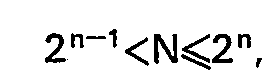
en divisant les N noeuds successifs en 2P groupes, p étant un entier compris entre 1 et n de manière à correspondre avec le nombre de tests, et par connexion commutable du premier conducteur (A) aux autres groupes résultants de telle manière que lors de chaque test de sélection successif, le premier conducteur (A) soit connecté aux groupes résultants de noeuds dans une séquence impaire de noeuds et le second conducteur (B) aux autres noeuds de groupes résultants dans une séquence paire, puis par recherche binaire, dans le cas où un court-circuit a été détecté au cours de n'importe quel test de sélection séquentiel, parmi les noeuds connectés à un conducteur (A) au cours du test permettant de déterminer l'existence d'un ou de plusieurs noeuds en court-circuit, puis par connexion d'un ou des noeuds en court-circuit ainsi déterminés, un à la fois, au premier conducteur (A) et par une recherche binaire des noeuds connectés à l'autre conducteur (B) dans ce test de sélection, de manière à identifier les paires de noeuds en court-circuit de l'ensemble et, à la suite d'un dit test de sélection au cours duquel un court-circuit a été détecté et une recherche binaire effectuée pour déterminer la paire de noeuds en court-circuit, un noeud de la dite paire de noeud en court-circuit est éliminé pour les tests suivants.
en divisant les N noeuds successifs en 2P groupes, p étant un entier compris entre 1 et n de manière à correspondre avec le nombre de tests, et par connexion commutable du premier conducteur (A) aux autres groupes résultants de telle manière que lors de chaque test de sélection successif, le premier conducteur (A) soit connecté aux groupes résultants de noeuds dans une séquence impaire de noeuds et le second conducteur (B) aux autres noeuds de groupes résultants dans une séquence paire, puis par recherche binaire, dans le cas où un court-circuit a été détecté au cours de n'importe quel test de sélection séquentiel, parmi les noeuds connectés à un conducteur (A) au cours du test permettant de déterminer l'existence d'un ou de plusieurs noeuds en court-circuit, puis par connexion d'un ou des noeuds en court-circuit ainsi déterminés, un à la fois, au premier conducteur (A) et par une recherche binaire des noeuds connectés à l'autre conducteur (B) dans ce test de sélection, de manière à identifier les paires de noeuds en court-circuit de l'ensemble et, à la suite d'un dit test de sélection au cours duquel un court-circuit a été détecté et une recherche binaire effectuée pour déterminer la paire de noeuds en court-circuit, un noeud de la dite paire de noeud en court-circuit est éliminé pour les tests suivants.
4. Procédé pour détecter des courts-circuits électriques entre deux noeuds d'un ensemble
de noeuds d'un système sous test selon lequel on connecte un conducteur (A) d'une
paire de conducteurs d'un détecteur de court-circuit à certains noeuds prédéterminés
de l'ensemble de N noeuds et simultanément l'autre conducteur (B) de la dite pair
de manière prédéterminée aux autres noeuds au cours d'une séquence de tests permettant
de détecter un court-circuit entre deux noeuds dans l'ensemble à travers les conducteurs
(A, B), caractérisé en ce que lest tests sont réalisés en faisant une sélection binaire
de l'ensemble pour détecter l'existence de courts-circuits entre les noeuds en une
succession de n tests de sélection, n étant un entier, avec
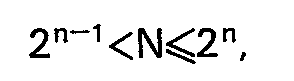
en divisant les N noeuds successifs en 2P groupes, p étant un entier compris entre 1 et n de manière à correspondre avec le nombre de tests, et par connexion commutable du premier conducteur (A) aux autres groupes résultants de telle manière que lors de chaque test de sélection successif, le premier conducteur (A) soit connecté aux groupes résultants de noeuds dans une séquence impaire de noeuds et le second conducteur (B) aux autres noeuds de groupes résultants dans une séquence paire, puis par recherche alternative des noeuds connectés au premier conducteur (A) avec la recherche binaire de ces noeuds connectés au second conducteur (B) dans un test de sélection séquentiel, de manière à identifier les paires de noeuds dans ce test de sélection, et éliminer un noeud de la dite paire de noeuds identifié en court-circuit des tests ultérieurs.
en divisant les N noeuds successifs en 2P groupes, p étant un entier compris entre 1 et n de manière à correspondre avec le nombre de tests, et par connexion commutable du premier conducteur (A) aux autres groupes résultants de telle manière que lors de chaque test de sélection successif, le premier conducteur (A) soit connecté aux groupes résultants de noeuds dans une séquence impaire de noeuds et le second conducteur (B) aux autres noeuds de groupes résultants dans une séquence paire, puis par recherche alternative des noeuds connectés au premier conducteur (A) avec la recherche binaire de ces noeuds connectés au second conducteur (B) dans un test de sélection séquentiel, de manière à identifier les paires de noeuds dans ce test de sélection, et éliminer un noeud de la dite paire de noeuds identifié en court-circuit des tests ultérieurs.