| (19) |
 |
|
(11) |
EP 0 024 774 A1 |
| (12) |
EUROPEAN PATENT APPLICATION |
| (43) |
Date of publication: |
|
11.03.1981 Bulletin 1981/10 |
| (22) |
Date of filing: 28.08.1980 |
|
| (51) |
International Patent Classification (IPC)3: E01B 9/30 |
|
| (84) |
Designated Contracting States: |
|
AT BE CH DE FR GB IT LI LU NL SE |
| (30) |
Priority: |
28.08.1979 NL 7906455
|
| (71) |
Applicant: Everts & van der Weyden
Exploitatiemaatschappij Ewem B.V. |
|
NL-2585 EC The Haque (NL) |
|
| (72) |
Inventor: |
|
- Lubbers, Marius Hendrik
Wassenaar (NL)
|
| (74) |
Representative: Hoijtink, Reinoud et al |
|
Arnold & Siedsma,
Advocaten en Octrooigemachtigden,
Sweelinckplein 1
2517 GK Den Haag
2517 GK Den Haag (NL) |
|
| |
|
(57) Arailclampintheformoftwopartscurvedintheshapeof a C (1,2) and interconnected by a
tie loop (3) whereby the end portions of said C's exhibit fingers (4,5,6,7) and the
tie loop (3) has a lock-like part (8) for receiving at least one of said fingers.
|
|
[0001] The invention relates to a rail clamp in the form of two parts curved in the form
of a C and interconnected by a tie loop. Such rail clamps are used for exerting a
vertically downward effort on a rail bar. Under certain conditions it may occur that
the rail is exposed to a verticall upward force, for example, during repairs of the
ballast bed. In this case the resilient force of the clamp may be exceeded. In order
to avoid breakdown of the lamp under such conditions a recess may be provided in the
housing accomodating the clamp for blocking the parts of the C-shaped clamp.
[0002] The invention has for its object to provide a cheaper solution.
[0003] According to the invention this is achieved in that the end portions of said C's
are provided with fingers and the tie loop has a lock-like portion for receiving at
least one of said fingers. The two other fingers block the clamp in a horizontal direction
against the housing.
[0004] The cross-section of the lock-like portion substantially corresponds to two of said
fingers. The lock-like portion is located substantially in the centre of the tie loop
portion.
[0005] The invention will be explained with reference to the drawings.
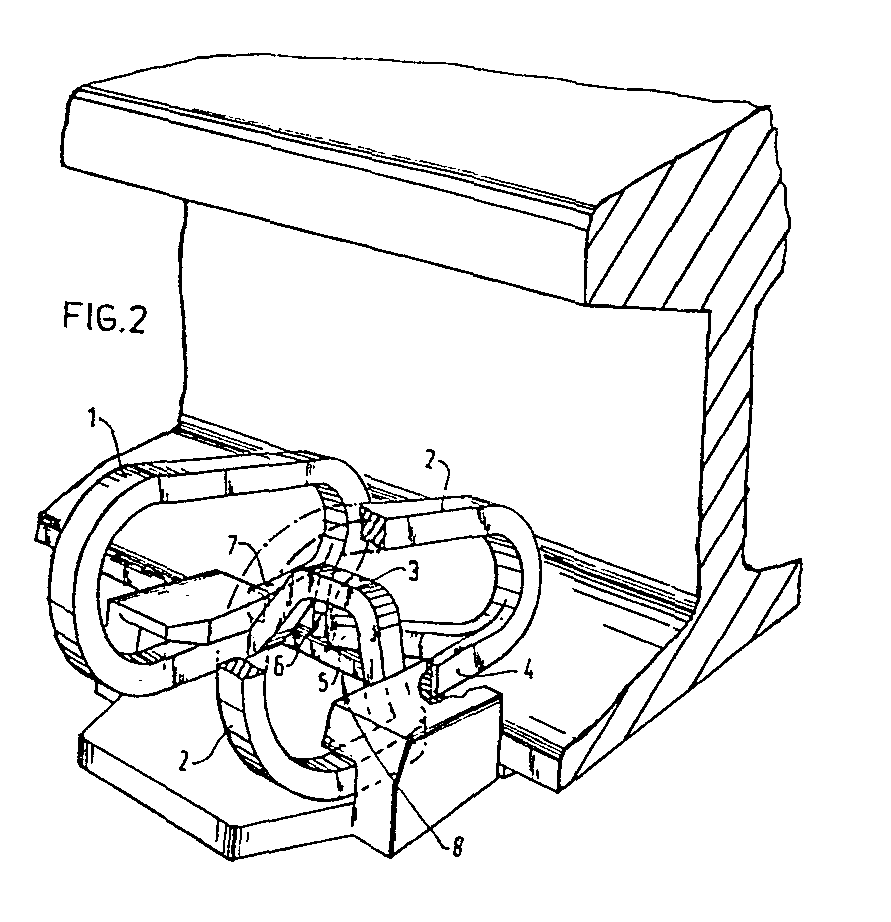
Figure 1 is a perspective view of a rail clamp in accordance with the invention and
Figure 2 is a perspective view of a rail clamp in accordance with the invention in
the mounted state.
[0006] The rail clamp according to the invention comprises two C-shaped parts 1 and 2 interconnected
by a tie loop 3. The end portions of the C's are each split up into fingers 4,5, and
6,7. The tie loop 3 comprises a lock-like portion 8, into which fingers 5 and 6 of
the C's can be inserted. Thus the end portions concerned are blocked in the event
of upwardly directed displacements which might give rise to transgression of the resilience.
[0007] The fingers 5 and 6 are slightly longer than the fingers 4 and 7.
1. A rail clamp in the form of two parts curved in the shape of a C and interconnected
by a tie loop characterized in that the end portions of said C's exhibit fingers and
the tie loop has a lock-like part for receiving at least one of said fingers.
2. A rail clamp according to claim 1 characterized in that the cross-section of the
lock-like part substantially corresponds to two of said fingers.
3. A rail clamp as claimed in claims 1 and 2 characterized in that the lock-like part
is located substantially in the centre of the loop-shaped part.
4. A rail clamp as claimed in claims 1 to 3 characterized in that the inner finger
of each end portion has a greater length than the outer finger.