|
(11) | EP 0 039 626 B2 |

| (12) | NEW EUROPEAN PATENT SPECIFICATION |
|
|
| (54) |
Plastic bottles and process for preparation thereof Kunststoffflasche und Verfahren zu ihrer Herstellung Bouteille en matière plastique et procédé pour sa fabrication |
|
|
|||||||||||||||||||||||||||||||
[0001] The present invention relates to a plastic container, such as a bottle, which may be wide or narrow- necked, and a process for the preparation thereof. More particularly, the present invention relates to a plastic bottle excellent in the barrier property to gases such as nitrogen, carbon dioxide gas, oxygen and steam, especially in the combination of the oxygen barrier property and moisture resistance, in which the humidity dependency of the oxygen barrier property is prominently reduced, and a process for the preparation of such plastic bottles.
Description of the prior art
[0002] Plastic bottles prepared by melt-extruding and hollow-molding (blow-molding) thermoplastic plastics such as polyolefins are used in various fields instead of glass bottles because the plastic bottles have a lighter weight and a better shock resistance than the glass bottles.
[0003] General-purpose plastics such as polyolefins are excellent in the moisture resistance and sanitary characteristics, but the oxygen permeability constant is relatively high and in bottles of these plastics, permeation of oxygen through bottle walls is not negligible. Accordingly, bottles of general-purpose plastics are not suitable as vessels for preserving foods for a long time or as vessels for cosmetics and the like where a high flavor-retaining property is required.
[0004] As bottles in which this defect is overcome, there have been developed and proposed plastic bottles having a wall structure excellent in the oxygen barrier property. Among melt-extrudable thermoplastic resins which are now available, a saponified ethylene/vinyl acetate copolymer (ethylene/vinyl alcohol copolymer) is most excellent in the oxygen barrier property. However, this saponified copolymer is inferior in the moisture resistance, that is, the steam barrier property, and in this saponified copolymer, the oxygen permeability constant tends to increase as increase of the humidity. Accordingly, when this saponified copolymer is actually used for formation of plastic bottles, it is necessary to adopt a troublesome molding method in which this saponified copolymer is sandwiched by moisture-resistance resins such as polyolefins and the resulting laminate is fed to the molding step.
[0005] U.S. Patent No. 4041235 describes the production of a copolymer comprising vinylidene chloride, glycidyl methacrylate, and vinyl chloride useful for the preparation of packaging film and mentions that the copolymer can be melted directly to form a bottle or cap. This U.S. Patent does not however disclose the use of such a copolymer as a coating on a plastic bottle formed from a melt-moldable thermoplastic resin. Furthermore, there is no disclosure of the preparation of such a coating by application to a plastic bottle in the form of an an aqueous latex.
[0006] U.S. Patent No. 3,746,196 is concerned with the problem of producing a steam-sterilizing plastics bottle which will not contaminate the contents and has good storage properties. The solution proposed in this patent is to coat one surface of the bottle with a polyvinylidene resin and the other surface with a silicone resin. There is no disclosure of the oxygen and water vapor permeability constants of the coated bottles. This U.S. patent also fails to disclose an ageing step to enhance the barrier properties of the coatings.
[0007] U.S. Patent No. 4,127,633 relates to the formation of biaxially oriented containers of polyethylene terephthalate (PET) coated with copolymers of vinylidene chloride. The bottles are manufactured by a process in which a preform of PET in the amorphous state is stretched axially and radially in a blow-molding process to form a container. The preform is heated to a temperature of 40 to 80°C and then dipped into an aqueous dispersion of the vinylidene chloride copolymer. After drying, the coated preform is subjected to blow molding. There is no disclosure of the oxygen or water-vapor permeability constants of the coated containers nor any reference to a heat-ageing step in this U.S. patent.
[0008] On the contrary, the U.S. patent stresses the importance of minimising the exposure of the coated preform to heat and warns of the consequential danger of crystallisation of the bulk PET which would give rise to distortion of the container.
[0009] DE-A-1142514 is concerned with the problem of reducing the permeability of polyolefin containers towards organic fluids, particularly hydrocarbon solvents and oils. With this objective in mind, the prior German specification describes coating polyolefin bottles with an organic solvent solution of a vinylidene chloride copolymer, followed by drying. There is no mention of the oxygen and water vapor permeability constants of the coated bottles nor any disclosure of the enhancement of such properties by a heat-ageing step.
[0010] According to the present invention there is provided a plastic bottle comprising a plastic bottle substrate formed of a melt-moldable thermoplastic resin and a coating layer formed on at least one surface of said substrate, said coating layer having a thickness of from 1 to 30 µm and consisting essentially of a heat-treated (aged) copolymer consisting of 99 to 70% by weight of vinylidene chloride and 1 to 30% by weight of at least one acrylic or mathacrylic monomer and optionally further including up to 100 parts by weight of at least one other ethylenically unsaturatd monomer per 100 parts by weight of the total weight of the vinylidene chloride and acrylic or methacrylic monomer, said percentages being based on the sum of the weight of vinylidene chloride and acrylic and methacrylic monomer, said copolymer coating layer having an oxygen permeability constant of less than or equal to 6.1 x 10⁻¹⁴ ml.cm/cm2.sec.cmHg as measured at a temperature of 20°C and a relative humidity of 100% and a water vapor permeability constant of less than or equal to 2.3 x 10⁻³ g·cm/m2·day as determined according to the method of ASTM E96-66.
[0011] The testing procedure decribed in ASTM E96-66 corresponds to the testing procedure specified in JIS Z-0208.
[0012] The invention includes a process for the preparation of coated plastic bottles which comprises coating at least one surface of a plastic bottle, formed by melt-molding of a thermoplastic resin, with an aqueous latex of a vinylidene chloride copolymer, said copolymer consisting of from 99 to 70% by weight of vinylidene chloride and 1 to 30% by weight of at least one acrylic or methacrylic monomer, and optionally further including up to 100 parts by weight of at least one other ethylenically unsaturated monomer per 100 parts by weight of the total weight of the vinylidene chloride and acrylic or methacrylic monomer, and said latex having a solids content of from 20 to 65%, drying the coating to form a layer from 1 to 30 pm thick and then subjecting the layer to heat treatment (ageing) at a temperature from 30 to 120°C for a period offrom 7 days to 30 seconds to reduce the permeability of the layer, whereby the heat-aged layer has an oxygen permeability constant of less than or equal to 6.1 x 10⁻¹⁴ ml·cm/cm2·sec·cmHg as measured at a temperafure of 20°C and a relative humidity of 100% and a water vapor permeability constant of less than or equal to 2.3 x 10⁻³ g·cm/cm2·day as determined according to the method of ASTM E96―66.
[0013] The invention further includes a process for the preparation of coated plastic bottles, which comprises coating at least one surface of a plastic bottle-forming parison, preform or sheet formed of a thermoplastic resin by melt-molding, with an aqueous latex consisting essentially of a vinylidene chloride copolymer having the constitution defined above, and a solids content of from 20 to 65%, drying the coated parison, preform or sheet to form a coating layer, subjecting the so-formed coated structure to biaxially drawing, blow-molding or deep-forming so as to form a coated bottle whose thermoplastic resin substrate is monoaxially or biaxially oriented, depending on the molding method and then increasing the oxygen barrier and water vapor barrier properties of the coating layer by subjecting the bottle to heat-treatment (ageing) at a temperature from 30 to 120°C for a period of from 7 days to 30 seconds, whereby the heat-aged layer has the oxygen and water vapor permeability constants set forth above.
[0014] As a consequence of the present invention it is possible to provide a plastic bottle in which the constant-preserving property is guaranteed with a wall thickness smaller than in conventional plastics, whereby the bottle weight is decreased, the amount of the resin used for one bottle is reduced and the heat conductivity is improved and a process for the preparation of such plastic bottles.
[0015] Fig. 1 is a sectional side view illustrating a part of a coated plastic bottle according to the present invention.
Detailed description of the preferred embodiments
[0016] The polymer that is used as the wall-forming component in the present invention comprises as indispensable components 99 to 70% by weight, preferably 96 to 75% by weight, of vinylidene chloride and 1 to 30% by weight, preferably 4 to 25% by weight, of at least one acrylic or methacrylic monomer, and as an optional component, other ethylenically unsaturated monomer in an amount of up to 100 parts by weight, preferably 50 parts by weight, per 100 parts by weight of the total amount of said two indispensable monomers.
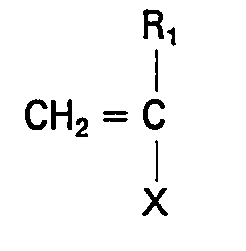
[0017] Acrylic acid, methylacrylic acid or derivatives thereof may be used as the acrylic or methacrylic monomer in the present invention. As preferred monomers, there can be mentioned monomers represented by the following formula:
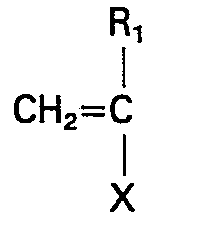
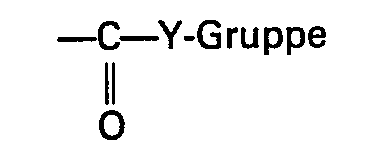
wherein R1 stands for a hydrogen atom, a halogen atom or a methyl group, and X stands for a nitrile group (-C=N) or a group
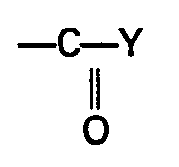
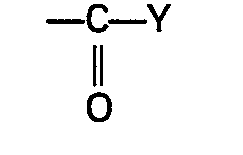
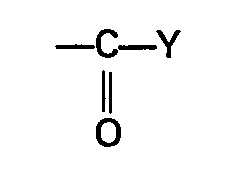
in which Y stands for an amino group, a hydroxyl group, alkyloxy group, a cycloalkyloxy group, an aminoalkyloxy group, a hydroxyalkyloxy group, an alkoxyalkyloxy group, a haloalkyloxy group, a glycidyl group, an aryloxy group or an aralkyloxy group.
[0018] More specifically, there can be mentioned acrylic acid, acrylonitrile, acrylamide, methyl acrylate, ethyl acrylate, methyl a-chloroacrylate, propyl acrylate, butyl acrylate, hexyl acrylate, octyl acrylate, cyclohexyl acrylate, glycidyl acrylate, 2-hydroxyethyl acrylate, acrylic monoglyceride, phenyl acrylate, methacrylic acid, methacrylonitrile, methacrylamide, methyl methacrylate, amyl methacrylate, glycidyl methacrylate, methacrylic monoglyceride, 2-hydroxypropyl methacrylate, β-methoxyethyl methacrylate, β-aminoethyl methacrylate and y-N-N-diethylaminopropyl methacrylate.
[0019] These acrylic and methacrylic monomers may be used singly or in the form of a mixture of two or more of them. As the acrylic or methacrylic monomer that is especially suitable for attaining the objects of the present invention, there can be mentioned (i) a nitrile monomer such as acrylonitrile, methacrylonitrile or a-chloroacrylonitrile, (ii) an ester monomer such as methyl acrylate, ethyl acrylate, methyl methacrylate, 2-hydroxyethyl methacrylate, glycidyl acrylate, glycidyl methacrylate, acrylic monoglyceride, methacrylic monoglyceride, methoxyethyl acrylate or methoxyethylmethyl methacrylate, and (iii) a mixture of the monomers (i) and (ii).
[0020] As the ethylenically unsaturated monomer other than vinylidene chloride and the acrylic or methacrylic monomer, there can be mentioned, for example, vinyl aromatic monomers such as styrene and vinyl toluene, vinyl esters such as vinyl acetate and vinyl propionate, diolefins such as butadiene and isoprene, and methylvinyl ether, glycidylallyl ether, vinyl chloride, trichloroethylene, tetrachloroethylene, vinyl fluoride, difluoroethylene, trifluoroethylene, tetrafluoroethylene, maleic anhydride, fumaric acid, vinyl succinimide and vinyl pyrrolidone. These monomers may be used singly in the form of two or more of them.
[0021] Preferred copolymers are described below though copolymers that can be used in the present invention are not limited to those exemplified below.
[0022] Vinylidene/acrylonitrile copolymer, vinylidene/acrylonitrile/methacrylonitrile copolymer, vinylidene chloride/methacrylonitrile copolymer, vinylidene chloride/acrylonitrile/glycidyl acrylate copolymer, vinylidene chloride/acrylonitrile/glycidyl methacrylate copolymer, vinylidene chloride/acrylonitrile/acrylic monoglyceride copolymer, vinylidene chloride/ethyl acrylate/glycidyl acrylate copolymer, vinylidene chloride/methyl methacrylate/styrene copolymer, vinylidene chloride/acrylonitrile/styrene copolymer, vinylidene chloride/acrylonitrile/trichloroethylene copolymer, vinylidene chloride/acrylonitrile/vinyl chloride copolymer, vinylidene chloride/acrylonitrile/methacrylic monoglyceride/trichloroethylene copolymer, and vinylidene chloride/methoxyethyl acrylate/methyl acrylate/trichloroethylene copolymer.
[0023] Among these copolymers, vinylidene chloride/alkoxyalkyl acrylate or methacrylate/alkyl acrylate or methacrylate/trichloroethylene copolymers are especially preferred for attaining the objects of the present invention.
[0024] From the viewpoint of the oxygen barrier property, it is important that the copolymer that is used in the present invention should comprise at least 70% by weight of vinylidene chloride units. In order to effect molding of a plastic bottle or coating of a bottle substrate, it is important that the copolymer should comprise at least 1% by weight of the acrylic or methacrylic mononer. In order to further improve the moldability of the copolymer to a plastic bottle, the copolymer that is used in the present invention may comprise up to 100 parts by weight of other ethylenically unsaturated monomer per 100 parts by weight of the total weight of vinylidene chloride and the acrylic or methacrylic monomer.
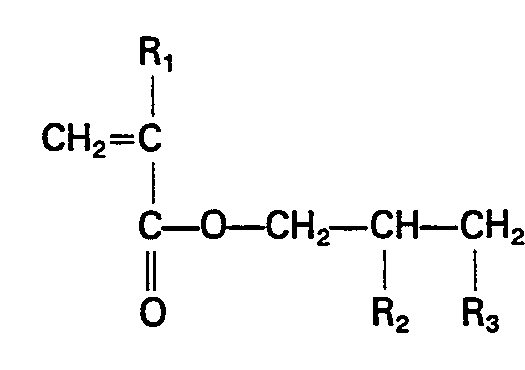
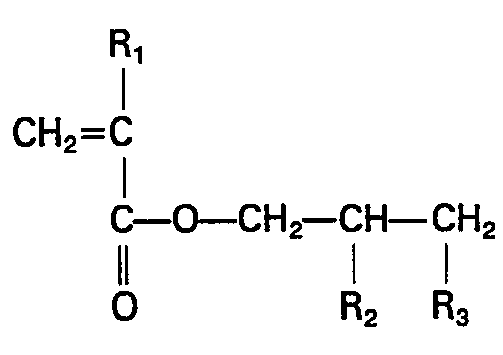
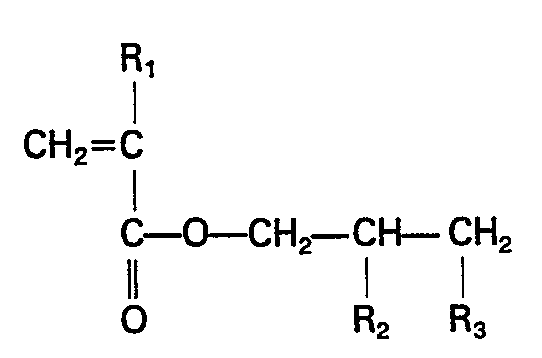
[0025] In order to improve the adhesion of the copolymer to various plastic bottle substrates, it is preferred that a monomer represented by the following formula:
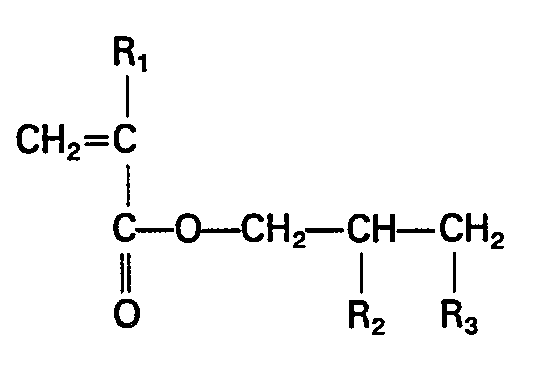
wherein R1 is as defined above and R2 and R3 each stand for a hydroxyl group and these two hydroxyl groups may be dehydrated to form an oxirane ring, be used in an amount of 0.5 to 15% by weight based on the total weight of monomers.
[0026] The copolymer that is used in the present invention can easily be prepared by emulsifying or suspending the constituent monomers in an aqueous medium by an emulsifier or dispersant and carrying out emulsion polymerization or suspension polymerization in the presence of a radical initiator. As the radical initiator, there may be used known peroxides, azo compounds or redox catalysts.
[0027] The molecular weight of the copolymer that is used in the present invention is not particularly critical, so far as it has a film-forming molecular weight. The copolymer that is used in the present invention is ordinarily difficult to mold by heating and melting, and therefore, the copolymer of the present invention is molded into a bottle or used for coating a plastic bottle substrate in the form of an aqueous emulsion or latex according to methods described hereinafter.
[0028] The copolymer that is used in the present invention is prominently excellent in the combination of the oxygen barrier property and the moisture resistance, and is characterized in that the humidity dependency of the oxygen barrier property is very low. More specifically, the copolymer has an oxygen permeability constant of less than or equal to 6.1 x 10⁻¹⁴ ml.cm/cm2 . s - cmHg as measured at a temperature of 20°C and a relative humidity of 100% and a water vapor permeability constant of less than or equal to 2.3 x 10⁻³ g.cm/m2.day as determined according to the method of ASTM E96―66 (corresponding to the testing procedure specified in JIS Z-0208).
[0029] The oxygen permeability constants and water vapor permeability constants of resins customarily used for molding of bottles and the copolymers that are used in the present invention are showin in Table 1.
[0030] Incidentally, each of the numerical values in column "Plastics" in Table 1 shows the composition (copolymerization ratio) of the monomers.
[0031] From the data shown in Table 1, it will readily be understood that if the above-mentioned copolymer is used for coating of a plastic bottle according to the present invention, the combination of the oxygen barrier property and water vapor barrier property can be improved prominently over this combination in any of the conventional plastic bottles. Moreover, from the data shown in Table 1, it will readily be understood that in the copolymer that is used in the present invention, the oxygen permeability constant at a relative humidity of 100% is not substantially different from the oxygen permeability constant at a relative humidity of 0%, that is, the humidity dependency of the oxygen permeability constant is substantially zero. It is quite a surprising fact.
[0032] Moreover, the carbon dioxide gas barrier property of this copolymer is prominently excellent, and a bottle molded from this copolymer or coated with this copolymer can effectively be used as a carbonated drink vessel.
[0033] In the plastic bottle of the present invention, the layer structure is not particularly critical, so far as the above-mentioned vinylidene chloride/acrylic or mathacrylic monomer copolymer is present in the form of a layer continuous in the plane direction of the bottle. For example, the plastic bottle may comprise a single layer of the above-mentioned vinylidene chloride/acrylic or methacrylic monomer copolymer or the plastic bottle may have a composite layer or laminate structure including a layer of this copolymer and a layer of a bottle-forming material such as other plastics, paper, metal, glass, rubber, ceramics, non-woven fabric or wood. In the latter case, the copolymer layer may be present as the inner surface layer and/or the outer surface layer of the bottle. Furthermore, the copolymer may be present in the form of an intermediate layer.
[0034] As pointed out hereinbefore the copolymer that is used in the present invention is excellent in the combination of the oxygen barrier property and the water vapor barrier property and the humidity dependency of the oxygen barrier property is extremely low. Accordingly, when this copolymer is used, a plastic bottle having a very thin wall can be obtained. Ordinarily, if the wall-forming component is present in the form of a layer having a thickness of 1 to 500 pm, especially 2 to 100 pm, within the range where a good form-retaining property is guaranteed, a sufficient content-preserving property is obtained.
[0035] The plastic bottle of the present invention is prepared by casting an aqueous latex of the vinylidene chloride/acrylic or methacrylic monomer copolymer in a bottle mold, partially drying the bottle-shaped latex so that the form-retaining property is attained, taking out the partially dried copolymer from the mold and subjecting the copolymer to the main drying to integrally mold the copolymer into a bottle.
[0036] An aqueous latex of the copolymer having a solid concentration of 20 to 65% (by weight) and a viscosity of 3 to 400 mPa·s is preferably used in the present invention.
[0037] In molding of a plastic bottle or coating of a plastic bottle substrate according the the present invention, known additives may be incorporated into the copolymer latex. For example, in order to reinforce the plastic bottle, there may be incorporated a fibrous reinforcer such as glass fiber, aromatic polyamide fiber, carbon fiber, pulp or cotton linter, a powdery reinforcer such as carbon black or white carbon of a flaky reinforcer such as glass flake of aluminum flake in an amount of 2 to 150% by weight based on the copolymer. Furthermore, in order to obtain a bulking effect, heavy of soft calcium carbonate, gypsum, clay, magnesium sulfate, alumina powder, silica powder or magnesium carbonate may be incorporated in an amount of 5 to 150% by weight based on the copolymer.
[0038] Furthermore, one or more of other additives such as plasticizers, thermal stabilizers, antioxidants, ultraviolet absorbents, thickening agents, viscosity depressants, crosslinking agents, blocking preventing agents, lubricants, levelling agents and colorants may be added to the copolymer latex according to known recipes.
[0039] One embodiment of the process for producing plastic bottles according to the present invention will now be described with reference to the accompanying drawings.
[0041] Referring to Fig. 1 illustrating a coated plastic bottle of the present invention, a bottle 11 comprises a circumferential wall 12 having a circular or oval section, a mouth portion 13 contiguous integrally to the upper end of the circumferential wall 12 and a bottom 14 contiguous to the lower end of the circumferential wall 12. All the wall of the bottle comprises a plastic bottle substrate 15 formed from a melt-moldable thermoplastic resin by blow molding, injection molding or biaxially drawing blow molding and a coating layer 16 of a vinylidene chloride/acrylic or mathacrylic monomer copolymer formed on the surface of the bottle substrate. This coating layer 16 may be formed on both the surfaces of the bottle substrate 15 as shown in Fig. 1 or only on the inner surface or outer surface of the bottle substrate 15.
[0042] Optional plastic bottles formed from a melt-moldable thermoplastic resin by injection molding, blow molding, biaxially drawing blow molding or draw forming can be used as the plastic bottle substrate in the present invention. As the resin that is preferably used for formation of a bottle substrate, there can be mentioned, for example, low density polyethylene, medium density polyethylene, high density polyethylene, polypropylene, olefin type copolymers such as ethylene/propylene copolymers, ethylene/ butene copolymers, ionomers, ethylene/vinyl acetate copolymers and ethylene/vinyl alcohol copolymers, polyesters such as polyethylene terephthalate, polybutylene terephthalate and polyethylene terephthalate/ isophthalate, polyamides such as nylon 6, nylon 6,6 and nylon 6,10, polystyrene, styrene type copolymers such as styrene/butadiene block copolymers, styrene/acrylonitrile copolymers, styrene/butadiene/ acrylonitrile copolymers (ABS resins), polyvinyl chloride, vinyl chloride type copolymers such as vinyl chloride/vinyl acetate copolymers, polymethyl methacrylate and acrylic copolymers such as methyl methacrylate/ethyl acrylate copolymers, and polycarbonate. These thermoplastic resins may be used singly or in the form of a blend of two or more of them. The plastic bottle substrate may have a single layer structure or a multi-layer laminate structure formed, for example, by simultaneous melt extrusion.
[0043] Of course, at least one additive selected from pigments, antioxidants, antistatic agents, ultraviolet absorbents and lubricants may be added in a total additive amount of 0.001 to 5.0 parts by weight per 100 parts by weight of the resin according to need. Furthermore, in order to reinforce this plastic bottle substrate, one or more of a fibrous reinforcer such as glass fiber, aromatic polyamide fiber, carbon fiber, pulp or cotton linter, a powdery reinforcer such as carbon black or white carbon and a flaky reinforcer such as glass flake or aluminum flake may be added in a total amount of 2 to 150 parts by weight per 100 parts by weight of the thermoplastic resin. Moreover, in order to obtain a bulk effect, one or more of heavy or soft calcium carbonate, mica, talc, kaoline, gypsum, clay, barium sulfate, alumina powder, silica powder and magnesium carbonate may be added in a total amount of 5 to 150 parts by weight per 100 parts by weight of the thermoplastic resin according to a known recipe.
[0044] One of the prominent advantages of the present invention is that even if an olefin type resin which is relatively cheap and excellent in the processability but is poor in the gas barrier property is used, a bottle excellent in the gas barrier property can be obtained.
[0045] A bottle substrate used in the present invention can easily be obtained according to a blow molding method in which at least one member selected from the above-mentioned thermoplastic resins is melt- extruded in the form of a parison, supporting the extruded parison in a split mold and blowing a fluid into the parison. In order to obtain a bottle having improved shock resistance and transparency, there may be adopted a method in which a parison or preformed product is prepared by melt extrusion or injection molding, the parison or preformed product is mechanically drawn in the axial direction at a temperature lower than the melting point of the resin and simultaneously drawing the parison or preformed product in the circumferential direction by blowing a fluid into the parison or preformed product to obtain a biaxially oriented plastic bottle. The former blow molding method is effective for molding of polyethylene or polypropylene, and the latter biaxially drawing blow molding method is advantageously applied to molding of polyethylene terephthalate or polypropylene. Still further, a deeply-drawn wide-mouthed bottle formed by subjecting a preformed sheet or film or air-pressure forming or plug assist forming can advantageously be used in the present invention.
[0046] The thickness of the plastic bottle substrate can be changed in a broad range of from a relatively small thickness for a so-called squeeze vessel to a relatively large thickness for a rigid vessel. The base amount, that is, the weight per unit inner volume, is appropriately chosen from the range of 0.001 to 5 g/ml according to the intended use of the product bottle.
[0047] The coated plastic bottle of the present invention is formed by coating at least one surface of the so- prepared plastic bottle substrate with an aqueous latex of the above-mentioned copolymer and drying the so formed coating.
[0048] Coating of the plastic bottle substrate with the above-mentioned copolymer latex may be accomplished by adopting at least one of known coating methods such as dip coating, spray coating, brush coating, roller coating, electrostatic coating, centrifugal coating, cast coating and electrophoresis coating methods. The coating operation may be conducted only once or a multiple stage coating method may be adopted. If desired, the plastic bottle substrate may be subjected to a wetting property-improving preliminary treatment such as pretreatment with an anchoring agent, a corona discharge treatment, a surface active agent coating treatment or a chemical etching treatment. Furthermore, in order to impart an electric conductivity, the plastic bottle substrate may be subjected to a conducting treatment.
[0049] In the present invention, it is preferred that a coating layer of the above-mentioned copolymer be formed on both the surfaces of the plastic bottle substrate. However, in order to shut gases contained in air, the coating layer may be formed on the outer surface alone, and in order to prevent escape of a gas or perfume from the content of the bottle, the coating layer may be formed on the inner surface alone.
[0050] The conditions adopted for drying the coated copolymer layer are changed according to the thickness of the coating layer, but ordinarily, a sufficient drying effect can be attained when drying is carried out at a temperature of 40°C to 150°C for about 2 seconds to about 60 minutes.
[0051] The effect of shutting a gas or perfume can be attained sufficiently by the above-mentioned drying operation alone, but the effect is further enhanced by an ageing treatment (heat treatment) is carried out at a temperature of 30° to 120°C for 30 seconds to 7 days after the drying operation.
[0052] As pointed out hereinbefore, the copolymer that is used in the present invention is excellent in the combination of the oxygen barrier property and water vapor barrier property and the humidity dependency of the oxygen barrier property is very low. Accordingly, when the copolymer is formed on the plastic bottle substrate in the form of a very thin layer, excellent barrier properties to various gases can be obtained. More specifically, satisfactory results can ordinarily be obtained if the copolymer is formed in a layer having a thickness of 1 to 30 pm.
[0053] According to another embodiment of the process for the preparation of plastic bottles of the present invention, a parison, preformed product or sheet of a thermoplastic resin to be formed into a plastic bottle substrate is coated with a latex of the above-mentioned copolymer and then dried to form a coating layer and the coated structure is subjected to drawing blow molding or deep draw forming to obtain a coated plastic bottle. The resulting coated bottle is then subjected to heat-treatment (ageing) as described above. By this plastic processing, monoaxial or biaxial molecular orientation is given to the plastic bottle substrate and the rigidity, shock resistance and transparency are improved. The coating of the above-mentioned copolymer used in the present invention can resist such processing and is advantageous in that the adhesion to the substrate is not lost by such processing.
[0054] By virtue of these advantages, the plastic bottle of the present invention is very valuable as a lightweight bottle for preserving liquid foods, seasonings, drinks, medicines, cosmetics and agricultural chemicals.
[0055] The present invention will now be described in detail with reference to the following Examples that by no means limit the scope of the present invention.
[0056] The oxygen permeability and water vapor permeability of bottles and the oxygen permeability constant P02 and water vapor permeability constant PH20 of vinylidene chloride type resins were determined according to the following methods.
(1) Oxygen permeation rate Q02 at 20°C and 0% RH:
[0057] A barrel wall or bottom portion of a bottle to be measured was cut into a predetermined size and an obtained sheet-like sample was used for the measurement. A gas permeation tester manufactured by Toyo Tester Kogyo K.K. was used for the measurement. The sample was fixed between two chambers of this tester, and suction was effected in one chamber so that the pressure was reduced below 10-2 mmHg (1.333 Pa) (low pressure side) while in the other chamber (high pressure side), the atmosphere was replaced by dehumidified oxygen gas so that the oxygen gas pressure was one atmosphere (1.013×10⁵ Pa). The change of the pressure increase with the lapse time was read on a recorder and the oxygen gas permeation rate Q02 was determined from the read values.
[0058] The measurement was carried out at 20°C and the moisture was removed from the high pressure side chamber so that the relative humidity was 0%.
(2) Oxygen permeation rate Q02 at 20°C and 100% RH:
[0059] A barrel wall or bottom portion of a bottle to be measured was cut into a sheet-like sample and the measurement was carried out by using an oxygen gas permeation tester (Mocon OX-Tran 100 manufactured by Modern Control Co.). More specifically, the oxygen gas permeation rate Q02 was measured at 20°C while maintaining a saturated water vapor pressure (100% RH) in either the oxygen chamber or the nitrogen chamber.
(3) Water vapor permeation rate QH20:
[0060] The water vapor permeation rate QH20 was measured according to the method of JIS Z-0208 (corresponding to the testing procedure of ASTM E96―66) (at a temperature of 40°C and a relative humidity of 0 and 90%). A barrel wall or bottom portion of a bottle to be measured was cut into a sheet-like sample having a predetermined size and this sample was used for the measurement.
(4) Oxygen gas permeability constant P02 and water vapor permeability constant PH20 polyvinylidene choride resins in case of coated plastic bottles:
[0061] The values 002 and QH2O determined on coated plastic bottles according to the above-mentioned methods (1) and (3) are those of composite systems comprising a polyvinylidene chloride type resin coating and a plastic bottle substrate. The oxygen gas permeability constants P02 and water vapor permeability constants PH20 of the polyvinylidene chloride type resins at respective temperatures and relative humidities were calculated from the above values according to the following formulae:
and
wherein h stands for the thickness (µm) of the coating of the polyvinylidene chloride resin, QO2 stands for the oxygen permeation rate (ml/m2·day·101 325 Pa) of the composite system, (QO2)B stands for the oxygen permeation rate (ml/m·day·101 325 Pa) of the bottle substrate, QH20 stands for the water vapor permeation rate (g/m2.day) of the composite system and (QH2)B stands for the water vapor permeation rate (g/m2·day) of the bottle substrate.
Example 1
[0062] The inner and outer surfaces of a polyvinyl chloride cylindrical bottle having an inner volume of 1000 ml, a weight of 27 g and an average thickness of 0.35 mm were coated with a latex of a polyvinylidene chloride type resin comprising 70% by weight of vinylidene chloride, 10% by weight of methyl acrylate and 20% by weight of glycidyl methacrylate (dispersion medium=water, emulsifier=sodium lignosulfonate, solid concentration=61 %w) according to the dip coating method. The coated bottle was dried in an air-circulated oven at 55°C for 60 minutes. The average thickness of the polyvinylidene chloride type resin coatings formed on the inner and outer surfaces of the polyvinyl chloride bottle was 25 pm. This bottle is designated as bottle CFn.
[0063] The bottle CFn was subjected to ageing (heat treatment) in a thermostat tank maintained at 48°C for 24 hours. This bottle is designated as bottle CFa.
[0064] The P02 and PH20 values of the so-obtained bottle CFa and the uncoated polyvinyl chloride bottle (designated as bottle PVC) and the CFn bottle as comparative bottles, were determined according to the methods described hereinbefore.
Example 2
[0066] The outer surface of a cylindrical polycarbonate bottle having an inner volume of 400 ml, a weight of 12 g and an average thickness of 0.30 mm was coated with an anchoring agent (EI-220/EL-200-AD) supplied by Toyo Morton Co.) according to the dip coating method. Then, the bottle was dried at 70°C for 15 minutes and spray-coated with a latex of a polyvinylidene type resin comprising 96% by weight of vinylidene chloride, 2% by weight of methyl acrylate and 2% by weight of glycidyl methacrylate (dispersion medium=water, emulsifier=rosin soap, solid concentration=37%w). The coated bottle was dried at 80°C for 2 minutes in an air-circulated oven. The average thickness of the polyvinylidene chloride resin coating formed on the outer surface of the polycarbonate bottle was 1.7 pm. This so-obtained bottle is designated as bottle CGn. The bottle CGn was subjected to ageing (heat treatment) in a thermostat tank maintained at 48°C for 24 hours. The bottle is designated as bottle CGa.
[0067] The P02 and PH20 values of the so-obtained bottle CGa and the uncoated polycarbonate bottle (designated as bottle PC) and the CGn bottle as comparative samples, were determined according to the methods described hereinbefore.
Example 3
[0069] The outer surface of a cylindrical polymethyl methacrylate bottle having an inner volume of 200 ml, a weight of 18 g and an average thickness of 0.55 mm was brush-coated with a latex of a polyvinylidene chloride type resin comprising 86% by weight of vinylidene chloride, 5% by weight of acrylonitrile, 3% by weight of methyl acrylate and 6% by weight of glycidyl methacrylate (dispersion medium=water, emulsifier=Poval@, solid concentration=51 %w). The coated bottle was dried at 90°C for 1 minute in an air-circulated oven. The average thickness of the polyvinylidene chloride resin coating formed on the polymethyl methacrylate bottle was 15 pm. The resulting bottle was subjected to ageing (heat treatment). in a thermostat tank maintained at 61°C for 6 hours. The obtained bottle is designated as bottle CHa.
[0070] The P02 and PH20 values of the so-obtained bottle CHa and the uncoated polymethyl methacrylate bottle as a comparative bottle (designated as bottle PMMA) were determined according to the methods described hereinbefore.
Example 4
[0072] The inner and outer surfaces of a cylindrical acrylonitrile/styrene/butadiene copolymer bottle having an inner volume of 200 ml, a weight of 12 g and an average thickness of 0.50 mm were coated with a latex of a polyvinylidene chloride type resin comprising 80% by weight of vinylidene chloride, 10% by weight of methyl acrylate and 10% by weight of acrylic monoglyceride and including 50 parts by weight of vinyl chloride per 100 parts by weight of the foregoing monomers (dispersion medium=water, emulsifier=gelatin, solid concentration=30%w) according to the dip coating method. The coated bottle was dried at 40°C for 60 minutes in an air-circulated oven. The average thickness of the polyvinylidene chloride type resin coatings formed on the inner and outer surfaces of the acrylonitrile/styrene/butadiene copolymer bottle was 2.8 pm. The obtained bottle was subjected to ageing (heat treatment) in a thermostat tank maintained at 30°C for 7 days. The obtained bottle is designated as bottle CJa.
[0073] The P02 and PH20 values of the so-obtained bottle CJa and the uncoated acrylonitrile/styrene/ butadiene copolymer bottle (designated as bottle ABS) as a comparative bottle were determined according to the methods described hereinbefore.
Example 5
[0075] The outer surface of a cylindrical atactic polystyrene bottle having an inner volume of 200 ml, a weight of 23 g and an average thickness of 0.85 mm were coated with an anchoring agent (EL-220/EL-200-AD supplied by Toyo Morton K.K.) according to the spray-coating method and the bottle was dried at 80°C for 10 minutes. The bottle was then coated with a latex of polyvinylidene chloride type resin comprising 75% by weight of vinylidene chloride, 20% by weight of methoxyethyl acrylate and 5% by weight of acrylic acid (dispersion medium=water, emulsifier=Poval@, solid concentration=50%w) according to the combination of the spray-coating method and brush-coating method. The coated bottle was dried 110°C for 30 seconds in an air-circulated oven. The average thickness of the polyvinylidene chloride type resin coating formed on the outer surface of the atactic polystyrene bottle was 15 pm. This bottle is designated as bottle CLn. The bottle CLn was subjected to ageing (heat treatment) in a thermostat tank maintained at 60°C for 24 hours. The so-obtained bottle is designated as bottle CLa.
[0076] The P02 and PH20 values of the so-obtained bottle CLa and the uncoated atactic polystyrene bottle (designated as bottle PS) and the CLn bottle as comparative bottles, were determined according to the methods described hereinbefore.
Example 6
[0078] The inner surface of a biaxially drawn polyethylene terephthalate cylindrical bottle having an inner volume of 1000 ml, a weight of 45 g and an average thickness 0.54 mm was coated with a latex of a polyvinylidene chloride type resin comprising 83% by weight of vinylidene chloride, 14% by weight of methoxyethylmethyl methacrylate and 3% by weight of methacrylic acid and including 40 parts by weight of trichloroethylene per 100 parts by weight of the foregoing monomers (dispersion medium=water, emulsifier=Poval@, solid concentration=47%w) according to the dip coating method. The coated bottle was then dried at 70°C for 10 minutes in an air-circulated oven. The average thickness of the polyvinylidene chloride type resin coating formed on the inner surface of the biaxially drawn polyethylene terephthalate bottle was 10 pm. The so-obtained bottle is designated as bottle CNn. The CNn bottle was subjected to aging in a thermostat tank maintained at 48°C for 48 hours. The obtained bottle is designated as bottle CNa.
[0079] The P02 and PH20 values of the so-obtained bottle CNa and the uncoated, biaxially drawn polyethylene terephthalate bottle (designated as bottle 10PET) and the CNn bottle as comparative bottles were determined according to the methods described hereinbefore.
[0081] The carbon dioxide gas permeation constant (PC02 of the polyvinylidene chloride type resin was determined with respect to each of the bottles CNa and the comparative bottles CNn and 10PET by using a gas permeation tester manufactured by Toyo Tester Kogyo K.K. according to the method described hereinbefore. The measurement was carried out at a temperature of 27°C and a relative humidity of 0 or 91%.
[0083] Five of the bottles CNn and CNa were filled each with 900 ml of city service water and the mouth portions were capped. The capped bottles were subjected to the falling test by causing the bottles to fall down from a height of 2 m on a concrete floor. The test was repeated 10 times at maximum.
[0084] In none of the tested bottles, cracking or peeling of the polyvinylidene chloride type resin coating from the bottle substrate (10PET) was observed.
Example 7
[0085] The inner surface of an amorphous polyethylene terephthalate preform (bottomed parison) having an outer surface area of 130 cm2, a weight of 62.5 g and an average thickness of 3.60 mm was coated with the polyvinylidene chloride type resin latex described in Example 14 according to the dip coating method so that the amount of the coating was 0.22 g as solids. Then, the coated preform was heated at 100°C for 20 seconds and biaxially drawn and blow-molded by using a known biaxially drawing blow molding machine to obtain a biaxially drawn polyethylene terephthalate bottle having an inner volume of 2000 ml and an average total thickness of about 0.50 mm, which has the inner surface coated with the polyvinylidene chloride type resin (the averge coating thickness was 1.4 pm). The so-obtained bottle is designated as CPn. The bottle CPn was subjected to ageing (heat treatment) in a thermostat tank maintained at 48°C for 48 hours. The so obtained bottle is designated as bottle CPa.
[0086] The P02 and PH20 values of the so-obtained bottle CPa and the uncoated, biaxially drawn polyethylene terephthalate bottle (designated as bottle 20PET) and the CPn bottle as comparative bottles, were determined according to the methods described hereinbefore.
[0088] The carbon dioxide gas permeation constants (PC02) of the polyvinylidene chloride type resin coating of the bottle CPa and the comparative bottles 20PET and CPn were determined by using a permeation tester manufactured by Toyo Tester Kogyo K.K. according to the method described hereinbefore at a temperature of 27°C and a relative humidity of 0 or 91 %.
[0090] Ten of these bottles CPn and CPa were filled each with 1950 ml of city service water and the mouth portions were capped. The capped bottles were allowed to stand still for 48 hours in an atomsphere maintained at 5°C, the bottle was subjected to the repeated falling test by causing the bottles to fall down from a height of 1.8 m on a concrete floor 5 times at maximum.
[0091] In none of the tested bottles, cracking or peeling of the polyvinylidene chloride type resin coating from the bottle substrate (20PET) was observed.
Example 8
[0092] The outer surface of an amorphous polyethylene terephthalate preform (bottomed parison) having an outer surface area of 130 cm2, a weight of 62.5 g and an average thickness of 3.60 mm was coated with the polyvinylidene chloride type resin latex described in Example 14 according to the dip coating method so that the amount of the coating was 0.96 g as solid. The coated preform was heated at 70°C for 5 minutes in an air-circulated oven. The preform was heated at 100°C for 20 seconds and biaxially drawn and blow-molded by using a known biaxially drawing blow molding machine to obtain a biaxially drawn polyethylene terephthalate bottle having an inner volume of 2000 ml and an average total thickness of about 0.50 mm, which had the outer surface coated with the polyvinylidene chloride type resin (the averge coating thickness of the coating was 6.1 pm). The so-obtained bottle is designated as CRn. The bottle CRn was subjected to ageing (heat treatment) in a thermostat tank maintained at 48°C for 48 hours. The obtained bottle is designated as bottle CRa.
[0093] The P02 and PH20 values of the so-obtained bottles CRa and CRn (comparative) were determinedl according to the methods descrbed hereinbefore.
[0095] The carbon dioxide gas permeation constants (PC02) of the polyvinylidene chloride type resin coatings of the bottles CRn and CRa were determined according to the method described hereinbefore.
Example 9
[0097] An angular, wide-mouthed bottle having a length of 9.7 cm, a width of 9.7 cm, a height of 3.2 cm and an average thickness of 0.47 mm was molded from an isotactic polypropylene sheet having a width of 30 cm and a thickness of 0.8 mm at a temperature of 148°C according to the plug-assist air-pressure forming method.
[0098] The inner surface of the wide-mouthed bottle was coated with the anchoring agent described in Example 8 and the bottle was heat-treated at 100°C for 30 seconds. Then, the bottle was coated with the polyvinylidene chloride resin type latex described in Example 6 according to the dip coating method and dried in an air-circulated oven maintained at 140°C for 30 seconds. The average thickness of the polyvinylidene chloride type resin coating layer formed on the inner surface of the isotactic polypropylene bottle was 10 pm. The so-obtained wide-mouthed bottle is designated as CYn. The bottle CYn was subjected to ageing (heat treatment) in a thermostat tank maintained at 48°C for 24 hours. The so-obtained wide-mouthed bottle is designated as CYa.
[0099] Discs were cut out from the bottom portions of the so-obtained wide-mouthed bottle CYa and the uncoated polypropylene wide-mouthed bottle (designated as PP-WA) and CYn as comparative bottles to obtain measurement samples. The P02 and PH20 values of these samples were determined according to the methods described hereinbefore.
[0100] The obtained results are shown in Table 5. From the results shown in Table 5, it will readily be understood that the oxygen permeation resistance and water permeation resistance of the coated bottle of the present invention can highly be improved by virtue of the barrier effect of the polyvinylidene chloride type resin, and that the barrier property of the vinylidene chloride type resin is further enhanced by the heat treatment.
Example 10
[0101] The polyvinylidene chloride type resin latex described in Example 6 was brush-coated 4 times on one surface of a polyethylene terephthalate sheet having a width of 30 cm and a thickness of 1.5 mm, and the coated sheet was dried at 70°C for 20 minutes in an air-circulated oven. The average thickness of the polyvinylidene chloride type resin coating was 28 pm.
[0102] The coated sheet was subjected to plug-assist air-pressure forming at 107°C so that the coated surface was located on the inner side, to obtain a wide-mouthed cylindrical bottle (the inner surface was coated with the polyvinylidene chloride type resin) having a diameter of 8.5 cm, a height of 10 cm and a total thickness of 0.42 mm (the thickness of the polyvinylidene chloride type resin coating was 8.0 pm). The so-obtained bottle is designated as bottle CZn. The bottle CZn was subjected to ageing (heat treatment) in a thermostat tank maintained at 40°C for 5 days. The so-obtained wide-mouthed bottle is designated as bottle CZa.
[0103] Discs were cut out from the bottom portions of the so-obtained wide-mouthed bottle CZa and the uncoated polyethylene terephthalate wide-mouthed bottle (designated as PET-WN) and CZn wide mouth bottles as comparative bottles to obtain measurement samples. The P02 and PH20 values of these samples were determined according to the methods described hereinbefore.
[0104] The obtained results are shown in Table 5. Tendencies similar to those observed in Example 17 are seen from Table 5.
Example 11
[0105] A cylindrical wide-mouthed bottle of a double-layer structure having a diameter (inner diameter) of 7.0 cm and a height of 10 cm was prepared by using an apparatus disclosed in Japanese Patent Application Laid-Open Specification No. 24110/81 according to a method disclosed in said Japanese Patent Publication. The outer layer of this wide-mouthed bottle was formed of a mixture comprising 100 parts by weight of isotactic polypropylene having a melt index of 6.5 g/10 min (ASTM D-1238) and 80 parts by weight of calcium carbonate, and the inner layer of the bottle was formed of a mixture comprising 100 parts by weight of high density polyethylene having a melt index of 0.5 g/10 min (ASTM D-1238) and 40 parts by weight of natural phologopite having a specific surface area of about 400 M2/g. The thickness of the outer layer was 0.4 mm and the thickness of the inner layer was 0.4 mm.
[0106] The outer surface of the so-obtained wide-mouthed bottle was coated with the polyvinylidene chloride type resin latex described in Example 6 according to the dip coating method, and the coated bottle was dried in an air-circulated oven maintained at 100°C for 2 minutes. The average thickness of the polyvinylidene chloride type coating layer formed on the outer surface of the outer layer (the isotactic polypropylene mixture layer) of the above-mentioned two-layer structure was 24 pm. The so-obtained wide-mouthed bottle is designated as bottle CQYn. The bottle CQYn was subjected to ageing (heat treatment) in a thermostat tank maintained at 60°C for 24 hours. The so-obtained wide-mouthed bottle is designated as bottle CQYa.
[0107] Discs were cut out from the bottom portions of the so-obtained wide-mouthed bottle CQYa and the uncoated double-layer wide-mouthed bottle (designated as QY-TM) and the CQYn wide-mouth bottle as comparative bottles to obtain measurement samples. The P02 and PH20 values of these samples were determined according to the methods described hereinbefore.
[0108] The obtained results are shown in Table 6. Tendencies similar to those observed in Example 17 are seen from Table 6.
[0109] In the preparation of coated bottles by application of copolymer latex, it is preferred to employ a latex having a solids content of 20 to 65% and a viscosity of 3 to 500 mPa.s.
1. A plastic bottle comprising a plastic bottle substrate formed of a melt-moldable
thermoplastic resin and a coating layer formed on at least one surface of said substrate,
said coating layer having a thickness of from 1 to 30 pm and consisting essentially
of a heat-treated (aged) copolymer consisting of 99 to 70% by weight of vinylidene
chloride and 1 to 30% by weight of at least one acrylic or methacrylic monomer and
optionally further including up to 100 parts by weight of at least one other ethylenically
unsaturated monomer per 100 parts by weight of the total weight of the vinylidene
chloride and acrylic or methacrylic monomer, said percentages being based on the sum
of the weight of vinylidene chloride and acrylic or methacrylic monomer, said copolymer
coating layer having an oxygen permeability constant of less than or equal to 6.1
x 10-14 ml·cm/cm2·sec·cmHg as measured at a temperature of 20°C and a relative humidity of 100% and
a water vapor permeability constant of less than or equal to 2.3 x 10⁻³ g·cm/m2·day as determined according to the method of ASTM E96-66.
2. A bottle according to claim 1 wherein said copolymer is formed from 96 to 75% by
weight of vinylidene chloride and 4 to 25% by weight of at least one acrylic or methacrylic
monomer and, optionally, further including up to 50 parts by weight of at least one
other ethylenically unsaturated monomer per 100 parts by weight of the total amount
of said first-mentioned monomers.
3. A bottle according to any one of the preceding claims wherein said acrylic or methacrylic
mononer is a monomer represented by the following formula:
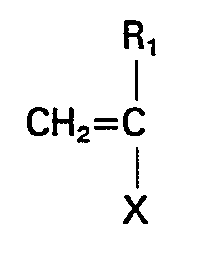
wherein R1 stands for a hydrogen atom, a halogen atom or a methyl group, and X stands for a nitrile group (-C=N) or a group
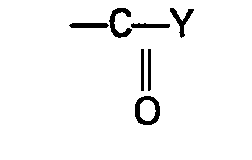
in which Y stands for an amino group, a hydroxyl group, alkyloxy group, a cycloalkyloxy group, an aminoalkyloxy group, a hydroxyalkyloxy group, an alkoxyalkyloxy group, a haloalkyloxy group, a glycidyl group, an aryloxy group or an aralkyloxy group.
wherein R1 stands for a hydrogen atom, a halogen atom or a methyl group, and X stands for a nitrile group (-C=N) or a group
in which Y stands for an amino group, a hydroxyl group, alkyloxy group, a cycloalkyloxy group, an aminoalkyloxy group, a hydroxyalkyloxy group, an alkoxyalkyloxy group, a haloalkyloxy group, a glycidyl group, an aryloxy group or an aralkyloxy group.
4. A bottle according to any one of the preceding claims, wherein said copolymer further
includes a monomer represented by the following formula:
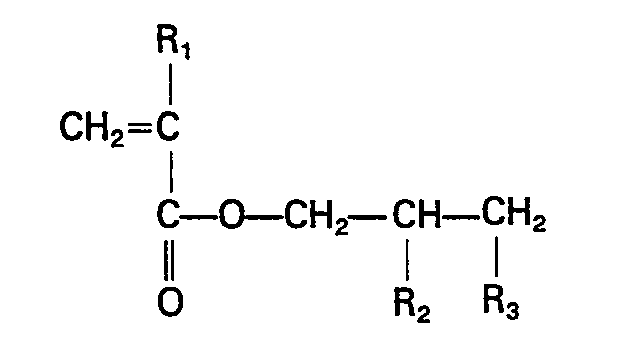
wherein R1 stands for a hydrogen atom, a halogen atom or a methyl group and R2 and R3 each stand for a hydroxyl group and these two hydroxyl groups may be dehydrated to form an oxirane ring, in an amount of from 0.5 to 15% by weight based on the total weight of monomers.
wherein R1 stands for a hydrogen atom, a halogen atom or a methyl group and R2 and R3 each stand for a hydroxyl group and these two hydroxyl groups may be dehydrated to form an oxirane ring, in an amount of from 0.5 to 15% by weight based on the total weight of monomers.
5. A bottle according to any one of the preceding claims wherein said copolymer is
a vinylidene chloride/alkoxyalkyl acrylate or methacrylate/alkyl acrylate or methacrylate/trichloroethylene
copolymer.
6. A plastic bottle according to any one of the preceding claims wherein the plastic
bottle substrate has a multi-layer structure.
7. A process for the preparation of coated plastic bottles which comprises coating
at least one surface of a plastic bottle, formed by melt-molding of a thermoplastic
resin, with an aqueous latex of a vinylidene chloride copolymer, said copolymer consisting
of from 99 to 70% by weight of vinylidene chloride and 1 to 30% by weight of at least
one acrylic or methacrylic monomer, and optionally further including up to 100 parts
by weight of at least one other ethylenically unsaturated monomer per 100 parts by
weight of the total weight of the vinylidene chloride and acrylic or methacrylic monomer,
and said latex having a solids content of from 20 to 65%, drying the coating to form
a layer from 1 to 30 µm thick and then subjecting the layer to heat treatment (ageing)
at a temperature from 30 to 120°C for a period of from 7 days to 30 seconds to reduce
the permeability of the layer, whereby the heat-aged layer has an oxygen permeability
constant of less than or equal to 6.1x10⁻¹⁴ ml·cm/cm2·seo·cmHG as measured at a temperature of 20°C and a relative humidity of 100% and
a water vapor permeability constant of less than or equal to 2.3x 10⁻³ g·cm/m2·day as determined according to the method of ASTM E96―66.
8. A process for the preparation of coated plastic bottles, which comprises coating
at least one surface of a plastic bottle-forming parison, preform or sheet formed
of a thermoplastic resin by melt-molding, with an aqueous latex consisting essentially
of a vinylidene chloride copolymer having the constitution defined in claim 7, and
a solids content of from 20 to 65%, drying the coated parison, preform or sheet to
form a coating layer, subjecting the so-formed coated structure to biaxially drawing,
blow-molding or deep-forming so as to form a coated bottle whose thermoplastic resin
substrate is monoaxially or biaxially oriented, depending on the molding method, and
then increasing the oxygen barrier and water vapor barrier properties of the coating
layer by subjecting the bottle to heat-treatment (ageing) at a temperature from 30
to 120°C for a period of from 7 days to 30 seconds, whereby the heat-aged layer has
an oxygen and water vapor permeability constants set forth in claim 7.
9. A process according to claim 7 or claim 8, wherein said copolymer is formed from
96 to 75% by weight of vinylidene chloride and 4 to 25% by weight of at least one
acrylic or methacrylic monomer and, optionally, further including up to 50 parts by
weight of at least one other ethylenically unsaturated monomer per 100 parts by weight
of the total amount of said first-mentioned monomers.
10. A process according to any one of claims 7 to 9, wherein said acrylic or methacrylic
monomer is a monomer represented by the following formula:
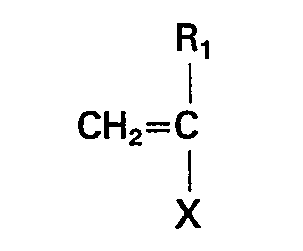
wherein R1 stands for hydrogen atom, a halogen atom or a methyl group, and X stands for a nitrile group (-C=N) or a group
in which Y stands for an amino group, a hydroxyl group, alkyloxy group, a cycloalkyloxy group, an aminoalkyloxy group, a hydroxyalkyloxy group, an alkoxyalkyloxy group, a haloalkyloxy group, a glycidyl group, an aryloxy group or an aralkyloxy group.
wherein R1 stands for hydrogen atom, a halogen atom or a methyl group, and X stands for a nitrile group (-C=N) or a group
in which Y stands for an amino group, a hydroxyl group, alkyloxy group, a cycloalkyloxy group, an aminoalkyloxy group, a hydroxyalkyloxy group, an alkoxyalkyloxy group, a haloalkyloxy group, a glycidyl group, an aryloxy group or an aralkyloxy group.
11. A process according to any one of claims 7 to 10, wherein said copolymer further
includes a monomer represented by the following formula:
wherein R1 stands for a hydrogen atom, a halogen atom or a methyl group and R2 and R3 each stand for a hydroxyl group and these two hydroxyl groups may be dehydrated to form an oxirane ring, in an amount of from 0.5 to 15% by weight based on the total weight of monomers.
wherein R1 stands for a hydrogen atom, a halogen atom or a methyl group and R2 and R3 each stand for a hydroxyl group and these two hydroxyl groups may be dehydrated to form an oxirane ring, in an amount of from 0.5 to 15% by weight based on the total weight of monomers.
12. A process according to any one of claims 7 to 11 wherein said copolymer is a vinylidene
chloride/ alkoxyalkyl acrylate or methacrylate/alkyl acrylate or methacrylate/trichloroethylene
copolymer.
1. Kunstoffflasche aus einem Grundkörper aus durch Schmelzen verformbarem thermoplastischen
Kunstharz mit einer Beschichtung auf zumindest einer Oberfläche des Grundkörpers,
wobei die Überzugsschicht eine Dicke von 1 bis 30 pm aufweist und im wesentlichen
besteht aus einem wärmebehandelten (getemperten) Copolymeren aus 99 bis 70 Gew.-%
Vinylidenchlorid und 1 bis 30 Gew.- % zumindest eines weiteren ethylenungesättigten
Monomeren auf 100 Gew.-Teile des Gesamtgewichts an Vinylidenchlorid und Acrylsäure-
bzw. Methacrylsäuremonomeren, wobei diese Prozentanteile berechnet sind aus der Summe
des Gewichts von Vinylidenchlorid und Acryl- bzw. Methacrylmonomeren und wobei die
Beschichtung mit Copolymerem eine Sauerstoffpermeabilitätskonstante von 6.1x10⁻¹⁴ ml.cm/ cm2.sec.cm Hg aufweist, die bestimmt wird bei einer Temperatur von 20°C und einer relativen
Feuchtigkeit von 100%, sowie eine Wasserdampfdurchlässigkeitskonstante 2.3x10⁻³ g.cm/m2.Tag, bestimmt nach ASTM E96―66.
2. Flasche nach Anspruch 1, wobei das Copolymere aus 96 bis 75 Gew.-% Vinylidenchlorid
und 4 bis 25 Gew.-% mindestens eines Acrylsäure- oder Methacrylsäuremonomeren und
gegebenenfalls zusätzlich bis zu 50 Gewichtsteilen mindestens eines weiteren ethylenungesättigten
Monomeren auf 100 Gew.-Teile der Gesamtmenge der erstgenannten Monomeren gebildet
ist.
3. Flasche nach einem der vorhergehenden Ansprüche, wobei das Acrylsäure- bzw. Methacrylsäuremonomere
die folgende Formel hat
worin R2 ein Wasserstoffatom, ein Halogenatom oder eine Methylgruppe darstellt und X eine Nitrilgruppe (-C=N) oder eine Gruppe
darstellt, worin Y eine Amino-, Hydroxyl-, Alkyloxy-, Cycloalkyloxy-, Aminoalkyloxy-, Hydroxyalkyloxy-, Alkoxyalkyloxy-, Haloalkyloxy-, Glycidyl, Aryloxy-, oder Aralkyloxygruppe bedeutet.
worin R2 ein Wasserstoffatom, ein Halogenatom oder eine Methylgruppe darstellt und X eine Nitrilgruppe (-C=N) oder eine Gruppe
darstellt, worin Y eine Amino-, Hydroxyl-, Alkyloxy-, Cycloalkyloxy-, Aminoalkyloxy-, Hydroxyalkyloxy-, Alkoxyalkyloxy-, Haloalkyloxy-, Glycidyl, Aryloxy-, oder Aralkyloxygruppe bedeutet.
4. Flasche nach einem der vorhergehenden Ansprüche, wobei das Copolymere ausserdem
ein Monomeres der folgenden Formel
umfasst, worin R1 ein Wasserstoffatom, ein Halogenatom oder eine Methylgruppe darstellt und R2 und R3 jeweils eine Hydroxylgruppe bedeuten, une diese beiden Hydroxylgruppen unter Bildung eines Oxiranrings dehydriert sein können, wobei das Monomere in einer Menge von 0.5 bis 15 Gew.-% der Gesamtmenge an Monomeren enthalten ist.
umfasst, worin R1 ein Wasserstoffatom, ein Halogenatom oder eine Methylgruppe darstellt und R2 und R3 jeweils eine Hydroxylgruppe bedeuten, une diese beiden Hydroxylgruppen unter Bildung eines Oxiranrings dehydriert sein können, wobei das Monomere in einer Menge von 0.5 bis 15 Gew.-% der Gesamtmenge an Monomeren enthalten ist.
5. Flasche nach einem der vorhergehenden Ansprüche, wobei das Copolymere ein Vinylidenchlorid/
Alkoxyalkylacrylat- oder ein Methylacrylate/alkylacrylate-, oder in Trichlorethylencopolymeres
ist.
6. Flasche nach einem der vorhergehenden Ansprüche, dadurch gekennzeichnet, dass die
als Substrat dienende Kunststoffflasche eine Mehrschichtenstruktur aufweist.
7. Verfahren zur Herstellung beschichteter Kunststoffflaschen durch Reschichten zumindest
einer Oberfläche einer Kunststoffflasche, die durch Schmelzverfornung eines thermoplastischen
Kunstharzes hergestellt ist, mit einem wässrigen Latex eines Vinylidenchlorid-Copolymeren,
wobei dieses Copolymere aus 99 bis 70 Gew.-% Vinylidenchlorid und 1 bis 30 Gew.-%
zumindest eines Acryl- oder Methacrylmonomeren sowie gegebenenfalls bis zu 100 Gew.-Teilen
zumindest eines weiteren ethylenisch ungesättigten Monomeren bis auf 100 Gew.-Teile
des Gesamtgewichts von Vinylidenchlorid und Acrylsäure- bzw. Methacrylsäuremonomeren
enthält, wobei der Latex einen Feststoffgehalt von 20 bis 65% aufweist, Trocknen des
Überzugs zur Bildung einer Schicht von 1 bis 30 pm Dicke und Hitzebehandeln (Tempern)
des Überzugs bei einer Gemperatur von 30 bis 100°C während einer Zeit von 7 Tragen
bis 30 Sekunden, um die Durchlässigkeit der Schicht zu vermindern, wodurch die getemperte
Schicht eine Sauerstoffpermeabilitätskonstante von s; 6.1x10-' ml.cm/cm2.sec.cm Hg - bestimmt bei einer Temperatur von 20°C und einer relativen Feuchtigkeit
von 100% - sowie eine Wasserdampfdurchlässigkeitskonstante ≤ 2.3x10⁻³ g.xm/m2.Tag, bestimmt nach ASTM E-96-66 aufweist.
8. Verfahren zur Herstellung beschichteter Konststuffflaschen durch Beschichten zumindest
einer Oberfläche eines Kunststoffflaschen formenden Külbels, einer Vorferm oder einer
Folie aus thermoplastischem Kunstharz, welche durch Schmelzverformung gebildet wurden,
mie einem wässrigen Latex bestehend im wesentlichen aus einem Vinylidenchlorid-Copolymeren
der in Anspruch 7 angegebenen Zusammensetzung mie einem Feststoffgehalt von 20 bis
65%, Trocknen des bzw. der beschichteten Külbels, Vorform oder Folie, Behandeln des
erhaltenen beschichteten Gebildes durch biaxiales Recken, Blasverformen oder Tiefziehen
zur Ausbildung einer beschichteten Flasche, deren thermoplastischer Harzgrundkörper
je nach der Verformungsmethode monoaxial oder biaxial orientiert ist, und danach Verstärken
der Sauerstoff und Wasserdampf zurückhaltenden Eigenschaften der aufgebrachten Beschichtung
durch Hitzebehandlung (Tempern) der Flasche bei einer Temperatur von 30 bis 120°C
und einer Behandlungsdauer von 7 Tagen bis 30 Sekunden, wodurch der getemperte Überzug
die in Anspruch 7 angegebenen Sauerstoff- und Wasserdampfdurchlässigkeitswerte erlangt.
9. Verfahren nach Anspruch 7 oder 8, dadurch gekennzeichnet, dass das Coplymere aus
96 bis 75 Gew.-% Vinylidenchlorid und 4 bis 25 Gew.-% zumindest eines Acryl- oder
Methacrylmonomeren und gegebenenfalls zusätzlich bis au 50 Gew.-Teile an zumindest
einem weiteren ethylenungesättigten Monomeren auf 100 Gew.-Teile der erstgenannten
Monomeren enthält.
10. Verfahren nach einem der Ansprüche 7 bis 9, dadurch gekennzeichnet, dass Acryl-
oder MethacrylMonomere ein Monomeres der Formel
ist, worin R1 Wasserstoff, ein Halogen oder eine Methylgruppe darstellt und X eine Nitrilgruppe (-C=N) oder eine
bedeutet, in der Y eine Amino-, Hydroxyl-, Alkyloxy-, Cycloalkyloxy-, Aminoalkyloxy-, Hydroxyalkyloxy-, Alkoxyalkyloxy-, Haloalkyloxy-, Cyclicyl, Aryloxy- oder Aralkyloxygruppe darstellt.
ist, worin R1 Wasserstoff, ein Halogen oder eine Methylgruppe darstellt und X eine Nitrilgruppe (-C=N) oder eine
bedeutet, in der Y eine Amino-, Hydroxyl-, Alkyloxy-, Cycloalkyloxy-, Aminoalkyloxy-, Hydroxyalkyloxy-, Alkoxyalkyloxy-, Haloalkyloxy-, Cyclicyl, Aryloxy- oder Aralkyloxygruppe darstellt.
11. Verfahren nach einem der Ansprüche 7 bis 10, in welchem das Copolymmere ausserdem
ein Monomeres der folgenden Formel umfasst:
worin R1 ein Wasserstoffatom, ein Halogenatom oder eine Methylgruppe bedeutet und R2 und Ra jeweils eine Hydroxylgruppe darstellen, wobei diese beiden Hydroxylgruppen zur Bilding eines Oxiranrings dehydriert sein können, in einer Menge von 0.5 bis 15 Gew.-% vom Gesamtgewicht an Monomerem.
worin R1 ein Wasserstoffatom, ein Halogenatom oder eine Methylgruppe bedeutet und R2 und Ra jeweils eine Hydroxylgruppe darstellen, wobei diese beiden Hydroxylgruppen zur Bilding eines Oxiranrings dehydriert sein können, in einer Menge von 0.5 bis 15 Gew.-% vom Gesamtgewicht an Monomerem.
12. Verfahren nach einem der Ansprüche 7 bis 11, dadurch gekennzeichnet, dass das
Copolymere ein Vinylidenchlorid/Alkoxyalkylacrylat-, oder ein Methyacrylate/Alkylacrylat-,
oder ein Methacrylate/ trichlorethylencopolymeres ist.
1. Bouteille en matière plastique comprenant un substrat de bouteille en matière plastique
constitué d'une résine thermoplastique moulable au fondu et d'une couche de revêtement
formée sur au moins une surface dudit substrat, ladite couche de revêtement ayant
une épaisseur de 1 à 30 um et étant constituée essentiellement d'un copolymère traité
(vieilli) thermiquement composé de 99 à 70% en poids de chlorure de vinylidène et
1 à 30% en poids d'au moins un monomère acrylique ou méthacrylique et comprenant de
plus, facultativement, jusqu'à 100 parties en poids d'au moins un autre monomère éthyléniquement
insaturé pour 100 parties en poids du poids total du chlorure de vinylidène et du
monomère acrylique ou méthacrylique, lesdits pourcentages étant basés sur la somme
du poids du chlorure de vinylidène et du monomère acrylique ou méthacrylique, ladite
couche de revêtement en copolymère ayant une constante de perméabilité à l'oxygène
inférieure ou égale à 6,1 x 10-'4 ml.cm/cm2.s.cm de Hg, telle que mesurée à une température de 20°C et une humidité relative
de 100%, et une constante de perméabilité à la vapeur d'eau inférieure ou égale à
2,3x10⁻³ g.cm/m2.jour telle que déterminée selon la méthode de la norme ASTM E96―66.
2. Bouteille selon la revendication 1, dans laquelle ledit copolymère est composé
de 96 à 75% en poids de chlorure de vinylidène et 4 à 25% en poids d'au moins un monomère
acrylique ou méthacrylique et comprend de plus, facultativement, jusqu'a 50 parties
en poids d'au moins un autre monomère éthyléniquement insaturé pour 100 parties en
poids de la quantité totale desdits monomères mentionnés en premier lieu.
3. Bouteille selon l'une quelconque des revendications précédentes, dans laquelle
ledit monomère acrylique ou méthacrylique est un monomère repésenté par la formule
suivante:
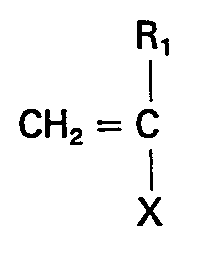
dans laquelle R1 représente un atome d'hydrogène, un atome d'halogène ou un groupe méthyle, et X représente un groupe nitrile (-C=N) ou un groupe
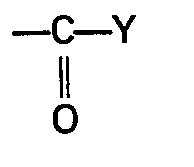
où Y représente un groupe amino, un groupe hydroxyle, un groupe alkyloxy un groupe cycloalkyloxy, une groupe aminoalkyloxy, un groupe hydroxyalkyloxy, un groupe alcoxyalkyloxy, un groupe halogénalkyloxy, un groupe glycidyle, un groupe aryloxy ou un groupe aralkyloxy.
dans laquelle R1 représente un atome d'hydrogène, un atome d'halogène ou un groupe méthyle, et X représente un groupe nitrile (-C=N) ou un groupe
où Y représente un groupe amino, un groupe hydroxyle, un groupe alkyloxy un groupe cycloalkyloxy, une groupe aminoalkyloxy, un groupe hydroxyalkyloxy, un groupe alcoxyalkyloxy, un groupe halogénalkyloxy, un groupe glycidyle, un groupe aryloxy ou un groupe aralkyloxy.
4. Bouteille selon l'une quelconque des revendications précédentes, dans laquelle
ledit copolymère comprend de plus un monomère représenté par la formule suivante:
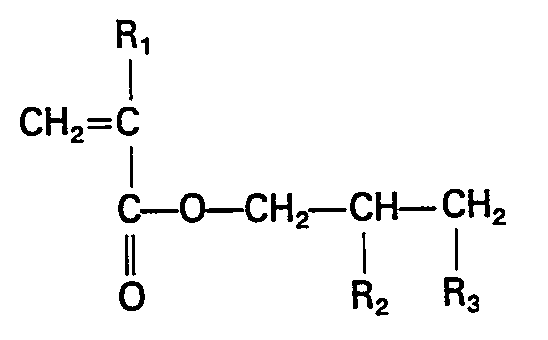
dans laquelle R1 représente un atome d'hydrogène, un atome d'halogène ou un groupe méthyle et R2 et R3 représentent chacun un groupe hydroxyle et ces deux groupes hydroxyle peuvent être déshydratés pour former un cycle d'oxiranne, en une quantité de 0,5 à 15% en poids par rapport au poids total des monomères.
dans laquelle R1 représente un atome d'hydrogène, un atome d'halogène ou un groupe méthyle et R2 et R3 représentent chacun un groupe hydroxyle et ces deux groupes hydroxyle peuvent être déshydratés pour former un cycle d'oxiranne, en une quantité de 0,5 à 15% en poids par rapport au poids total des monomères.
5. Bouteille selon l'une quelconque des revendications précédentes, dans laquelle
ledit copolymère est un copolymère chlorure de vinylidène/acrylate ou méthacrylate
d'alcoxyalkyle/acrylate ou méthacrylate d'al kyle/trich loréthylène.
6. Bouteille en matière plastique selon l'une quelconque des revendications précédentes,
dans laquelle le substrat de bouteille en matière plastique possède une structure
multicouche.
7. Procédé de fabrication de bouteilles en matière plastique revêtues, qui consiste
à enduire au moins une surface d'une bouteille en matière plastique, formée par moulage
au fondu d'une résine thermoplastique, avec un latex aqueux d'un copolymère de chlorure
de vinylidène, ledit copolymère étant composé de 99 à 70% en poids de chlorure de
vinylidène et 1 à 30% en poids d'au moins un monomère acrylique ou méthacrylique,
et comprenant de plus, facultativement, jusqu'à 100 parties en poids d'au moins un
autre monomère éthyléniquement insaturé pour 100 parties en poids du poids total du
chlorure de vinylidène et du monomère acrylique ou méthacrylique, et ledit latex ayant
une teneur en matière sèche de 20 à 65%, à sécher l'enduit pour former une couche
de 1 à 30 pm d'épaisseur, puis à soumettre la couche à un traitement (vieillissement)
thermique à une température de 30 à 120°C pendant une période de 7 jours à 30 secondes
pour réduire la perméabilité de la couche, en sorte que la couche vieillie thermiquement
ait une constante de perméabilitié à l'oxygène inférieure ou égale à 6,1 x 10⁻¹¹ ml.cm/cm2.s.cm de Hg telle que mesurée à une température de 20°C et une humidité relative de
100%, et une constante de perméabilité à la vapeur d'eau inférieure ou égale à 2,3x10⁻³ g.cm.m2.jour, telle que déterminée selon la méthode de la norme ASTM E896-66.
8. Procédé de fabrication de bouteilles en matière plastique revêtues, qui consiste
à enduire au moins une surface d'une paraison, préforme ou feuille pour formage de
bouteille en matière plastique, formée par moulage au fondu d'une résine thermoplastique,
avec un latex aqueux consistant essentiellement en un coplymère de chlorure de vinylidène
ayant la constitution définie dans la revendication 7, et ayant une teneur en matière
sèche de 20 à 65%, à sécher la paraison, préforme ou feuille enduite pour former une
couche de revêtement, à soumettre la structure revêtue ainsi formée à un étirage biaxial,
un moulage par soufflage ou un emboutissage profond de manière à former une bouteille
revêtue dont le substrat de résine thermoplastique est orienté monoaxialement ou biaxialement,
selon la technique de moulage, puis à accroître les propriétes de barrière à l'oxygène
et de barrière à la vapeur d'eau de la couche de revêtement en soumettant la bouteille
à un traitement (vieillissement) thermique à une température de 30 à 120°C pendant
une période de 7 jours à 30 secondes, en sorte que la couche vieillie thermiquement
ait les constantes de perméabilité à l'oxygène et à la vapeur d'eau énoncées dans
la revendication 7.
9. Procédé selon la revendication 7 ou la revendication 8, dans lequel ledit copolymère
est composé de 96 à 75% en poids de chlorure de vinylidène et 4 à 25% en poids d'au
moins un monomère acrylique ou méthacrylique et comprend de plus, facultativement,
jusqu'à 50 parties en poids d'au moins un autre monomère éthyléniquement insaturé
pour 100 parties en poids de la quantité totale desdits monomères mentionnés en premier
lieu.
10. Procédé selon l'une quelconque des revendications 7 à 9, dans lequel ledit monomère
acrylique ou méthacrylique est un monomère représenté par la formule suivante:
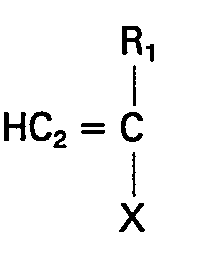
dans laquelle R, représente un atome d'hydrogène, un atome d'halogène ou un groupe méthyle, et X représente un groupe nitrile (-C=N) ou un groupe
où Y représente un groupe amino, un groupe hydroxyle, un groupe alkyloxy un groupe cycloalkyloxy, une groupe aminoalkyloxy, un groupe hydroxyalkyloxy, un groupe alcoxyalkyloxy, un groupe halogénalkyloxy, un groupe glycidyle, un groupe aryloxy ou un groupe aralkyloxy.
dans laquelle R, représente un atome d'hydrogène, un atome d'halogène ou un groupe méthyle, et X représente un groupe nitrile (-C=N) ou un groupe
où Y représente un groupe amino, un groupe hydroxyle, un groupe alkyloxy un groupe cycloalkyloxy, une groupe aminoalkyloxy, un groupe hydroxyalkyloxy, un groupe alcoxyalkyloxy, un groupe halogénalkyloxy, un groupe glycidyle, un groupe aryloxy ou un groupe aralkyloxy.
11. Procède selon l'une quelconque des revendications 7 à 10, dans lequel copolymère
comprend de plus un monomère représenté par la formule suivante:
dans laquelle R, représente un atome d'hydrogène, un atome d'halogène ou un groupe méthyle et R2 et R3 représentent chacun un groupe hydroxyle et ces deux groupes hydroxyle peuvent être déshydratés pour former un cycle d'oxiranne, en une quantité de 0,5 à 15% en poids par rapport au poids total des monomères.
dans laquelle R, représente un atome d'hydrogène, un atome d'halogène ou un groupe méthyle et R2 et R3 représentent chacun un groupe hydroxyle et ces deux groupes hydroxyle peuvent être déshydratés pour former un cycle d'oxiranne, en une quantité de 0,5 à 15% en poids par rapport au poids total des monomères.
12. Procédé selon l'une quelconque des revendications 7 à 11, dans lequel ledit copolymère
est un copolymère chlorure de vinylidène/acrylate ou méthacrylate d'alcoxyalkyle/acrylate
ou méthacrylate d'alkyle/trichloréthylène.