| (19) |
 |
|
(11) |
EP 0 039 965 B1 |
| (12) |
EUROPEAN PATENT SPECIFICATION |
| (45) |
Mention of the grant of the patent: |
|
14.03.1984 Bulletin 1984/11 |
| (22) |
Date of filing: 16.04.1981 |
|
|
| (54) |
Gas flow arrangement
Vorrichtung zum Beeinflussen eines Gasstromes
Dispositif pour influencer un courant de gaz
|
| (84) |
Designated Contracting States: |
|
AT BE DE FR GB IT LU SE |
| (30) |
Priority: |
08.05.1980 NL 8002639
|
| (43) |
Date of publication of application: |
|
18.11.1981 Bulletin 1981/46 |
| (71) |
Applicant: HOOGOVENS GROEP B.V. |
|
NL-1970 CA IJmuiden (NL) |
|
| (72) |
Inventors: |
|
- Ouwerkerk, Johannes H.W.
Driehuis (NL)
- Kramer, Albert
Enkhuizen (NL)
- Mooij, Johannes W.
IJmuiden (NL)
|
| (74) |
Representative: van Buytene, Arie Jacobus et al |
|
p/a Hoogovens Groep B.V.
P.O.Box 10.000
1970 CA IJmuiden
1970 CA IJmuiden (NL) |
|
| |
|
| Note: Within nine months from the publication of the mention of the grant of the European
patent, any person may give notice to the European Patent Office of opposition to
the European patent
granted. Notice of opposition shall be filed in a written reasoned statement. It shall
not be deemed to
have been filed until the opposition fee has been paid. (Art. 99(1) European Patent
Convention).
|
[0001] The present invention relates to a gas flow arrangement in which gas flowing axially
along a cylindrical pipe is directed into a flow chamber in which the gas flow is
generally at right angles to the flow in the pipe, the arrangement comprising distributing
and guide means for ensuring uniform gas flow in said chamber.
[0002] US-A-3831350 discloses such a gas flow arrangement to be used with an electrostatic
precipitator or an evaporative cooler, but provided with a so-called diffusor of relatively
complex construction.
[0003] Other uses of such a flow equalizing construction may be in the flow of gas to a
burner chamber or to a filter housing, where it is desirable to have a rising flow
of gas which is uniformly distributed over a horizontal section.
[0004] The object of the present invention is to provide a gas flow arrangement of this
kind which is effective and yet is simple and compact.
[0005] According to the invention the gas flow arrangement is characterized in that, in
order to achieve a highly uniform flow at a given cross sectional area transverse
to the flow in said flow chamber, the pipe extends through a front side of the chamber
and across said chamber, is closed at or near the rear side of the chamber by an end
wall and has at least two axially spaced apertures regularly distributed along the
length of the pipe in said chamber and opening into said flow chamber in the direction
of the gas flow in said chamber, each of said apertures having four edges located
in radial and axial planes through the pipe, and there being, in the pipe between
each axially adjacent pair of qaid apertures, a flow constricting partition wall having
through it a circular aperture concentric with the pipe axis. With the arrangement
of the invention it seems possible to achieve a uniformly distributed flow of gas
over a particular cross sectional area. The invention is applicable to constructions
in which the supply pipe and the flow chamber are in any orientation, though it is
principally described herein relation to the case where the pipe is horizontal and
flow in the chamber is vertically upwards.
[0006] GB-A-1197025 describes a pipe system for gas with a number of outlet apertures of
equal shape and dimensions at a number of different positions along the length of
a round horizontal pipe, with supply pipes to various separate burners being connected
to these apertures. Local constrictions are made in the horizontal pipe after each
of these apertures with the exception of the last aperture, and these constrictions
have a gradually decreasing area of passage in the direction of flow. However, the
distances between the consecutive constrictions are of greater length than the spacing
between the individual outlet apertures. Furthermore, this known arrangement is concerned
solely with a uniform distribution of the gas via the separate delivery lines, and
not with a uniform flow in one chamber as may be achieved in the present invention.
[0007] Other features of the invention as claimed in the claims with their advantages will
now be discussed with reference to the accompanying drawings in which two practical
embodiments of the arrangement have been shown.
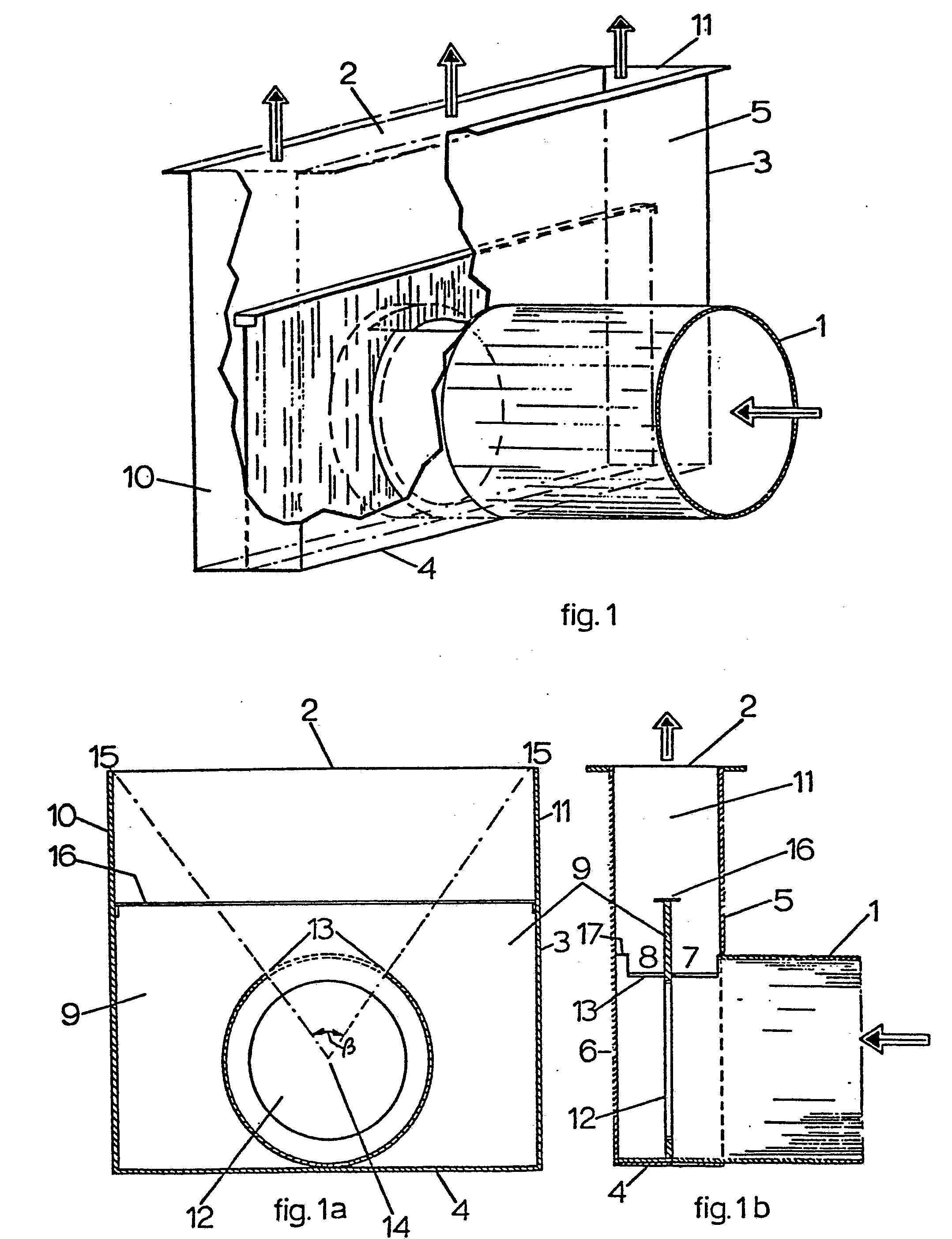
Figure 1 is a perspective partly cut away view of an embodiment of the present invention,
designed to be fitted to a burner chamber located above it,
Figures 1 a and 1 b are respectively two vertical cross sectional views of the arrangement
of Figure 1,
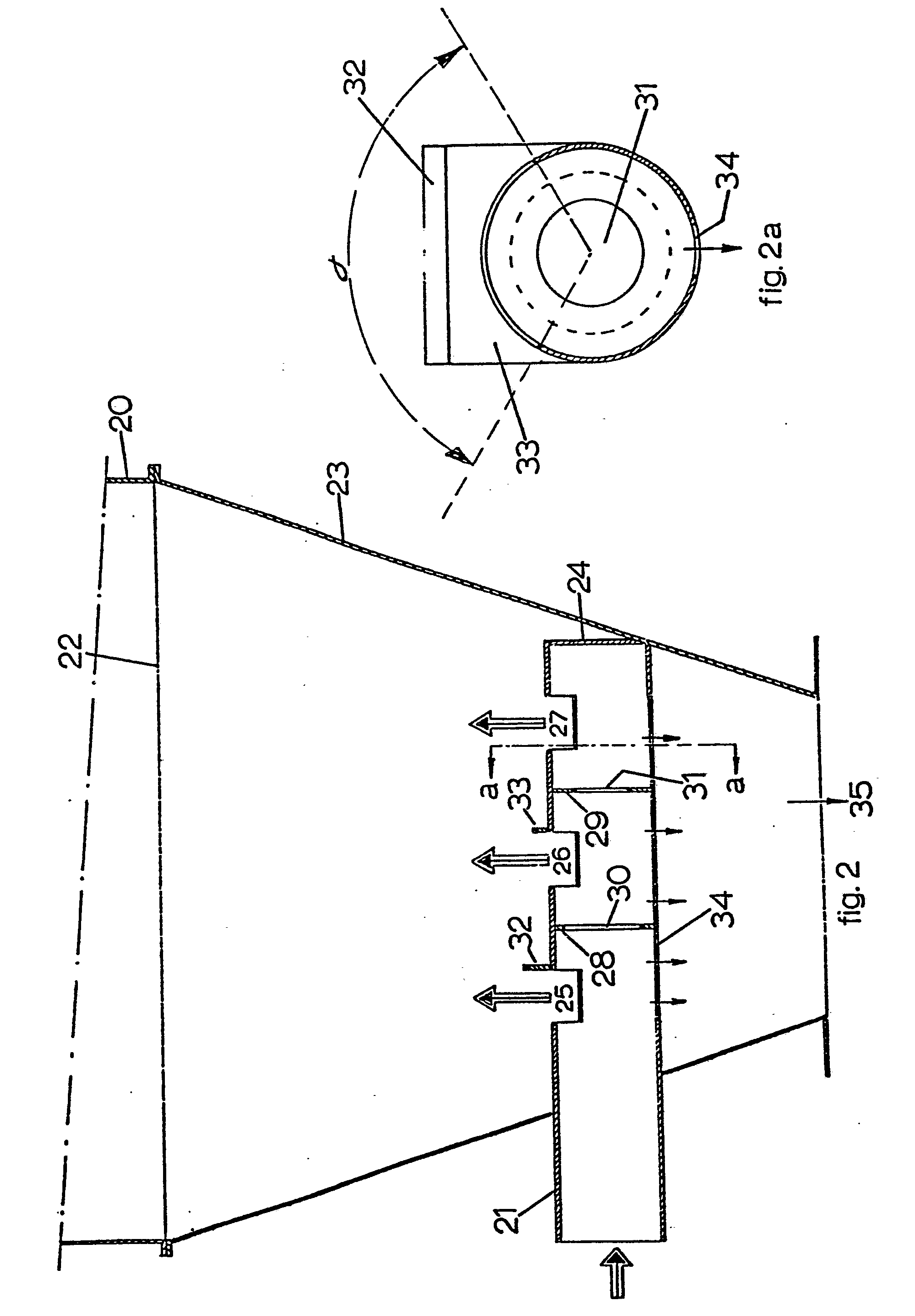
Figure 2 is a cross sectional view of a second embodiment of the present invention
designed to be used beneath a filter housing, and
Figure 2a is a sectional detail on the line a-a of Figure 2, drawn on a slightly larger
scale.
[0008] Figures 1, 1 a and 1 b show a cylindrical horizontal supply pipe 1 for an inflammable
gas, the flow of which is deflected at the connection illustrated so that at the horizontal
plane 2 (described further below), there is a uniformly distributed flow of gas rising
and entering a burner chamber (not shown) to be fitted on top of the structure shown.
The structure comprises a flow chamber formed by a casing 3 which is rectangular and
is open at the top at the level of the plane 2. The pipe 1 enters the casing 3 at
the centre line of the front wall 5 of the casing 3 close to the base 4 of the casing
3, and is closed by the rear wall 6 opposite. In Figure 1- in order to give a clearer
view of the inside of the casing-part of the front wall 5 and one side wall 10 has
been cut away.
[0009] Inside the casing 3, the pipe 1 has two transverse rectangular apertures 7, 8 in
its top side, close to the end wall 6. By rectangular apertures, we mean apertures
having four edges, two of which are parallel and lie in radial planes and the other
two of which are parallel and lie in axial planes. Between these apertures 7, 8 is
a vertical partition 9 of rectangular shape extending between the two narrow side
walls 10, 11 1 of the casing 3. Inside the pipe 1 this partition 9 forms a flow constricting
wall and in this wall is a circular aperture 12 concentric with the wall of the pipe,
the cross sectional area of this aperture being in this case about half of the cross
sectional area of the pipe.
[0010] The circumferential edges 13 of the rectangular apertures 7 and 8 lie in the wall
of the pipe (i.e. the edges in radial planes) are positioned so that they lie approximately
in planes connecting the axis 14 of the pipe 1 and the edges 15 where the cross sectional
plane 2 meets the narrow side walls 10 and 11. The angle between these lines is represented
by [3.
[0011] The vertical partition 9 divides the inside of the casing 3 into parts of equal size.
The top edge of the partition 9 is preferably provided with a horizontally projecting
strip 16. The widths of the apertures 7 and 8 do not have to be precisely equal; in
general, the aperture 8 which is closest to the closed end of the pipe (or rear wall
6) is preferably slightly narrower. The most suitable width of the narrow strip 17
between this aperture 8 and the end wall 6 can be determined empirically.
[0012] With this arrangement an upward flow distributed evenly over the whole area of the
chamber 3 at the plane 2 appears to be achieved in a simple manner, with the height
of the structure being particularly small, as is demonstrated by the following example
of relative dimensions:-
internal diameter of pipe=D
diameter of aperture 12=1/2Vr2- .D
dimensions of outlet surface 2: 2Dx 1/2 D
height of partition 9=1.2 D
angle β=60°
height of casing 3 (between surface 2 and base 4)=1/2 D+D\/3
[0013] Another application of the invention is to gas filters. With an existing filter housing,
the arrangement of the present invention has to be adapted to the existing structure.
A casing in the form of an inverted truncated pyramid is connected at its open top
side to the filter housing, and acts as a dust collector cone. In existing bag filters,
for example, the filter bags which are generally most upstream of the gas flow, are
exposed to extreme loads as a result of the powerful upward flow of dust-saturated
gas and consequently have a shorter service life than the other bags. Repeated shut-downs
of the filter to replace or repair damaged bags is a costly affair. To ensure more
even wear on the filter bags it is important to equalise the flow of dust-saturated
gas so that the filter can be kept in operation longer.
[0014] Figure 2 illustrates this application of the invention and shows part of a filter
housing 20, in which, for example, filter bags (not illustrated) are suspended. In
these filter bags, gas saturated with dust, particularly air, which is delivered at
a speed of about 15 m/s through a cylindrical horizontal pipe 21, is filtered. In
order to achieve a uniform distribution of gas at the level of the rectangular plane
22, the arrangement of the present invention is installed at the connection of the
pipe 21 to the dust collector funnel 23 (which as stated above is in the form of an
inverted truncated pyramid) beneath the filter housing.
[0015] The end 24 of the pipe 21 is closed and there are three transverse rectangular (as
defined above) apertures 25, 26, 27 in the top of the pipe, distributed over the length
of the pipe in the funnel 23.
[0016] The circumferential edges of the rectangular apertures 25, 26, 27 can be seen in
Figure 2a. They subtend an angle y at the pipe axis. This angle y is larger than the
angle β in Figure 1 a because of the sloping walls of the dust collector funnel 23.
In practice y is between 100 and 120°.
[0017] Partitions 28, 29 are fitted in the pipe between each adjacent pair of these apertures
and each partition is provided with a concentric circular aperture 30, 31. The diameter
of aperture 30 is approximately

, where D is the internal diameter of the pipe, and the diameter of aperture 31 is
roughly
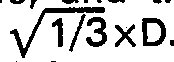
.
[0018] Vertical partitions 32, 33 each of the same width as the pipe 21, are fitted to the
pipe at the rear edge of the two foremost apertures 25 and 26, the first partition
32 being higher than second partition 33, as shown in Figure 2a.
[0019] In order to remove dust deposited in the pipe 21, an axially extending slit shaped
opening 34 is made in the underside of the pipe. Dust collected by the filter bags
is removed from the funnel 23 at 35 in a known manner which need not be further described
here.
1. Gas flow arrangement in which gas flowing axially along a cylindrical pipe (1,
21) is directed into a flow chamber (3, 23) in which the gas flow is generally at
right angles to the flow of the pipe (1, 21), the arrangement comprising distributing
and guide means for ensuring uniform gas flow in said chamber, characterized in that,
in order to achieve a highly uniform flow at a given cross sectional area (2, 22)
transverse to the flow in said flow chamber (3, 23), the pipe extends through a front
side. (5) of the chamber and across said chamber (3, 23), is closed at or near the
rear side of the chamber by an end wall (6, 24) and has at least two axially spaced
apertures (7, 8, 25-27) regularly distributed along the length of the pipe (1, 21)
in said chamber and opening into said flow chamber in the direction of the gas flow
in said chamber, each of said apertures having four edges located in radial and axial
planes through the pipe, and there being, in the pipe (1, 21) between each axially
adjacent pair of said apertures, a flow constructing partition wall (9, 28, 29) having
through it a circular aperture (12, 30, 31) concentric with the pipe axis.
2. An arrangement according to claim 1 wherein said flow chamber (3) has rectangular
top (2), base (4) and sides (5, 6, 10, 11) and is open at its top (2) into a burner
chamber, said cylindrical pipe (1) extending horizontally and passing into said chamber
at the centre line of said front side (5) at or close to said base (4), there being
two of said apertures (7, 8) in the pipe and each of said apertures (7, 8) having
a pair of opposed edges (13) which are respectively located substantially at two planes
respectively connecting the pipe axis (14) with opposite edges (15) of said open top
(2) of the chamber.
3. Arrangement according io claim 2 wherein the flow-constricting partition wall (9)
extends into the chamber (3) outside the pipe (1) and has a horizontal top edge which
carries a horizontally projecting strip (16).
4. Arrangement according to claim 2 or claim 3 wherein a short pipe wall portion (17)
extends between the pipe end wall-(6) and the adjacent aperture (8).
5. Arrangement according to claim 1 wherein said flow chamber (23) has an inverted
truncated pyramid shape and has an open top (22) leading into a filter housing (20)
the cylindrical pipe (21) extending horizontally and passing at the centre line of
a side wall of said chamber through said side wall into said chamber (23), there being
three of said apertures (25, 26, 27) and two of said flow constricting partition walls
(28, 29) respectively between adjacent pairs (25, 26; 26, 27) of the apertures.
6. Arrangement according to claim 5 wherein at the rear edge (seen in the axial direction
of flow along the pipe) of each of the first two apertures (25, 26) (counted in said
axial direction of flow), there is provided an upstanding wall (32, 33) outside the
pipe, the width of the upstanding walls (32, 22) being equal to the pipe diameter
and the first bf said upstanding walls (32) being taller than the second of said upstanding
walls (33).
7. Arrangement according to claim 5 or claim 6 wherein, with said chamber (23), the
pipe (21) has an axially extending slit-shaped aperture (34) in its underside.
1. Agencement d'écoulement gazeux, dans lequel le gaz s'écoulant axialement dans une
conduite cylindrique (1, 21) est dirigé dans une chambre d'écoulement (3, 23) dans
laquelle l'écoulement du gaz est d'une façon générale perpendiculaire à l'écoulement
dans la conduite (1, 21), l'agencement comprenant des moyens de distribution et de
guidage pour assurer l'écoulement uniforme du gaz dans ladite chambre, caractérisé
en ce que, pour réaliser un écoulement très uniforme sur une surface de section transversale
(2, 22) dirigée transversalement à l'écoulement dans ladite chambre d'écoulement (3,
23) la conduite traverse une paroi avant (5) de la chambre (3, 23) et passe à travers
ladite chambre, est fermée sur le côté arrière de la chambre ou à proximité de celui-ci
par une paroi terminale (6, 24) et comporte au moins seux ouvertures axialement espacées
(7, 8; 25-27) régulièe- ment réparties suivant la longueur de la conduite (1, 21)
dans ladite chambre et s'ouvrant dans la chambre d'écoulement dans le sens du courant
gazeux dans ladite chambre, chacune desdites ouvertures ayant quatre bords situés
dans des plans radiaux et axiaux à travers la conduits, et on prévoit dans la conduite
(1, 21) entre chaque paire desdites ouvertures axialement adjacentes, une cloison
(9, 28, 29) d'étranglement d'écoulement percée d'une ouverture circulaire (12, 30,
31) concentrique à l'axe de la conduite.
2. Agencement selon la revendication 1, dans lequel ladite chambre d'écoulement (3)
présente un sommet rectangulaire (2), une base (4) et des parois (5, 6, 10, 11) et
débouche à son sommet (2) dans une chambre de brûleur, ladite conduite cylindrique
(1) s'étendant horizontalement et pénétrant dans ladite chambre à l'endroit de la
ligne centrale de ladite paroi avant (5) à l'endroit ou à proximité de la base 4,
deux desdites ouvertures (7, 8) étant prévues dans la conduite et chacune desdites
ouver- dites ouvertures (7, 8) comportant deux bords opposés (13) qui sont disposés
respectivement sensiblement à l'endroit de deux plans reliant l'axe (14) de la conduite
aux bords opposés (15) dudit sommet ouvert (2) de la chambre.
3. Agencement selon la revendication 2, dans lequel la cloison (9) d'étranglement
d'écoulement s'étend jusque dans la chambre (3) à l'exterieur de la conduite (1) et
comporte un bord supérieur horizontal portant une bande (16) faisant saillie horizontalement.
4. Agencement selon la revendication 2 ou 3, dans lequel une portion courte (17) de
la paroi de la conduite s'étend entre la paroi terminale (6) de la conduite et l'ouverture
adjacente (8).
5. Agencement selon la revendication 1, dans lequel ladite chambre d'écoulement (23)
a la forme d'un tronc de pyramide inversé et comporte un sommet ouvert (22) débouchant
dans une enveloppe de filtre (20), la conduite cylindrique (21) s'étendant horizontalement
et traversant à l'endroit de la ligne centrale d'une paroi latérale de ladite chambre
ladite paroi latérale pour déboucher dans ladite chambre (23), trois desdites ouvertures
(25, 26, 27) étant prévues et deux desdites cloisons d'étranglement d'écoulement (28,
29) étant prévues respectivement entre les paires adjacentes (25, 26; 26, 27) des
ouvertures.
6. Agencement selon la revendication 5, dans lequel sur le bord arrière (vu dans le
sens axial d'écoulement le long de la conduite) de chacune des deux premières ouvertures
(25, 26) (comptées dans ladite direction axiale d'écoulement), on prévoit une paroi
verticale (32, 33) à l'extérieur de la conduite, la largeur des parois verticales
(32, 33) étant égale au diamètre de la conduite et la première desdites parois verticales
(32) étant plus haute que la seconde desdites parois verticales (33).
7. Agencement selon la revendication 5 ou 6, dans lequel dans ladite chambre (23),
la conduite (21) comporte une ouverture axiale en forme de fente (34) dans sa surface
de dessous.
1. Vorrichtung zum Beeinflussen eines Gasstromes, in welcher in axialer Richtung durch
ein zylindrisches Rohr (1, 21) strömendes Gas in eine Strömungskammer (3, 23) geleitet
wird, in der der Gasstrom in rechten Winkeln zu dem Strom in dem Rohr (1, 21) verläuft,
wobei die Vorrichtung eine Verteil- und Führungseinrichtung zur Gewährleistung eines
geleichmäßigen Gasstromes in der genannten Kammer aufweist, dadurch gekennzeichnet,
daß zur Erzielung eines höchst gleichmäßigen Stromes bei einer gegebenen zu dem Strom
im Rohr transversalen Querschnittsfläche (2, 22) sich das Rohr durch eine Vorderseite
(5) der Kammer und durch die Kammer (3, 23) erstreckt, an oder nahe der Rückseite
der Kammer durch eine Stirnwand (6, 24) abgeschlossen ist und mindestens zwei axial
beabstandete Öffnungen (7, 8, 25 bis 27) aufweist, die gleichmäßig entlang der Länge
des Rohres (1, 21) in der Kammer verteilt sind und in die Strömungskammer in Richtung
des Gasstromes in der Kammer münden, wobei jede der Öffnungen vier in radialen und
axialen Ebenen durch das Rohr liegende Ränder besitzt und in dem Rohr (1, 21) zwischen
jedem axial benachbarten Paar von Öffnungen eine stromeinengende Trennwand (9, 28,
29) miteiner sie durchsetzenden kreisförmigen und mit der Rohrachse konzentrischen
Öffnung (12, 30, 31) vorgesehen ist.
2. Vorrichtung nach Anspruch 1, bei der die Strömungskammer (3) ein rechteckiges oberes
Ende (2), einen rechteckigen Boden (4) und rechteckige Seiten (5, 6, 10, 11) besitzt
und an ihrem oberen Ende (2) in eine Brennerkammer mündet, wobei das zylindrische
Rohr (1) horizontal verläuft und in die Kammer an der Mittellinie der Vorderseite
(5) am oder nahe dem Boden (4) eintritt und wobei in dem Rohr zwei genannte Öffnungen
(7, 8) vorgesehen sind, von denen jede ein Paar einander gegenüberliegender Ränder
(13) besitzt, die im wesentlichen in zwei die Rohrachse (14) mit einander gegenüberliegenden
Rändern (15) des oberen Endes (2) der Kammer verbindenden Ebenen liegen.
3. Vorrichtung nach Anspruch 2, bei der die stromeinengende Trennwand (9) sich außerhalb
des Rohres (1) in die Kammer (3) hineinerstreckt und einen horizontalen oberen Rand
besitzt, der eine horizontal vorspringende Leiste (16) trägt.
4. Vorrichtung nach Anspruch 2 oder 3, bei der sich zwischen der Rohrstirnwand (6)
und der benachbarten Öffnung (8) ein kurzer Rohrwandabschnitt (17) erstreckt.
5. Vorrichtung nach Anspruch 1, bei der die Strömungskammer (23) die Form eines umgekehrten
Pyramidenstumpfes und ein offens oberes Ende (22) besitzt, das in ein Filtergehäuse
(20) führt, das zylindrische Rohr (21) horizontal verläuft und sich an der Mittelline
einer Seitenwand der Kammer (23) in letztere erstreckt, und drei genannte Öffnungen
(25, 26, 27) un zwei stromeinschnürende Trennwände (28, 29) zwischen benachbarten
Paaren (25, 26; 26, 27) der Öffnungen vorgesehen sind.
6. Vorrichtung nach Anspruch 5, bei der an dem hinteren Rand (gesehen in Axialrichtung
des Stromes durch das Rohr) jede der ersten beiden Öffnungen (25, 26) (gezählt in
der genannten Axialrichtung des Stromes) außerhalb des Rohres eine Wand (32, 33) vorgesehen
ist, wobei die Breite der aufrechten Wände (32, 33) gleich dem Rohrdurchmesser ist
und die erste (32) der aufrechten Wände höher ist als die zweite (33) der aufrechten
Wände.
7. Vorrichtung nach Anspruch 5 oder 6, bei der das Rohr (21) innerhalb der Kammer
(23) in seiner Unterseite eine sich axial erstreckende schlitzförmige Öffnung (34)
besitzt.