|
(11) | EP 0 046 610 B1 |

| (12) | EUROPEAN PATENT SPECIFICATION |
|
|
| (54) |
Television camera tube Fernsehkameraröhre Tube de caméra de télévision |
|
|
|||||||||||||||||||||||||||||||
| Note: Within nine months from the publication of the mention of the grant of the European patent, any person may give notice to the European Patent Office of opposition to the European patent granted. Notice of opposition shall be filed in a written reasoned statement. It shall not be deemed to have been filed until the opposition fee has been paid. (Art. 99(1) European Patent Convention). |
[0001] The invention relates to a television camera tube comprising in an evacuated envelope an electron gun to generate an electron beam which during operation of the tube is focused to form a spot on a photosensitive target, on which target a potential distribution is formed by projecting an optical image on it, which target, by scanning with an electron beam, provides signals corresponding to the said optical image, which scanning takes place in a line deflection direction and a frame deflection direction.
[0002] The photosensitive target usually consists of a photoconductive layer which is provided on a signal plate. The said potential distribution, sometimes termed potential image, is formed because the photoconductive layer may be considered to be composed of a large number of picture elements. Each picture element in turn may be considered as capacitors which are connected in parallel to a current source the current strength of which is substantially proportional to the light intensity on the picture element. Hence the charge on each capacitor decreases linearly with time at constant light intensity. As a result of the scanning, the electron beam passes over each element periodically and again charges the capacitor, which means that the voltage across each picture element is periodically brought at the potential of the cathode. The quantity of charge which is necessary periodically to charge one capacitor is proportional to the light intensity on the relevant picture element. The associated charge current flows via the signal resistance to the signal plate which all picture elements have in common. As a result of this a voltage variation arises across the signal resistor which as a function of time represents the light intensity of the optical image as a function of the place. A television camera tube of the described operation is termed a vidicon. A television camera tube of the kind mentioned in the opening paragraph is known from the publication "Een experimentele kleine kleuren- televisiecamera" (an experimental small colour television camera) in Philips Technisch Tijdschrift, Volume 29, 1968, no 11.
[0003] In television camera tubes on the vidicon type the current density distribution in the electron beam is rotationally symmetrical at least up to a certain distance from the axis of the tube. The spot of the electron beam on the target may be considered as an electron-optical display of the smallest cross-section of the beam from the electron gun, which cross-section may also be called cross-over, or which cross-section is determined by a small circular bore sometimes termed diaphragm. The display of this smallest beam cross-section is produced by rotationally symmetrical electrostatic and/or magnetic fields so that the current density distribution in the spot on the target is also rotationally symmetrical. A disadvantage of this rotationally symmetrical distribution in the spot is that upon scanning an optical image having a periodic pattern the modulation depth depends considerably on the orientation of the said pattern relative to the line and frame deflection directions. The modulation depth is a measure of the resolving power of the television camera tube and is defined as the relative value of the difference between the largest and the smallest value of the amplitude of the signal current upon scanning a given test pattern. Said test pattern generally consists of vertical (perpendicularly to the line deflection direction) light bands separated by equally wide dark bands. In some parts of the target the width of the band is such that approximately 20 pairs of light and dark bands could fill a complete picture height. In television technology this is termed 40 "lines". In the remaining parts of the display screen this number is 200 pairs (that is 400 "lines"). The system of bands is scanned in the line deflection direction. This provides a signal current having the shape of an alternating current with respective fundamental frequencies of 0.5 and 5 MHz. These values apply to a system of 625 lines and a frame period of 1/25 second. For systems having a smaller of a larger number of lines and/or different frame periods, corresponding test patterns are possible. The modulation depth is the value expressed in per cent of the ratio of the amplitude of the 5 MHz signal and the 0.5 MHz signal. This measuring method is described in detail in the publication "Het plumbicon, een nieuwe televisie-opneembuis" (The plumbicon, a new television camera tube), Philips Technisch Tijdschrift, Volume 25, 1963, no. 9). Upon rotation of such a test pattern with unvaried width of the bands relative to the deflection directions, the modulation depth as a function of the angle α proves to have an asymmetrical variation, a being the angle between the direction of the bands of the test pattern and the frame deflection direction, in which a rotation of the test pattern to the right viewed from the camera tube will be considered as positive and a rotation to the left will be considered as negative. It is also assumed that the scanning takes place from the left to the right and from the top to the bottom of the frame. With negative angles a a rather strong decrease of the depth of modulation occurs relative to the usual position of the test pattern (α=µ°), while with positive angles a the modulation depth initially still increases and decreases again slowly only at large values of α. It will be obvious that this non-symmetrical strong dependence of the modulation depth on the orientation of the test pattern is not desired.
[0004] It is therefore an object of the invention to provide a television camera tube in which the modulation depth is larger and in addition less dependent and substantially symmetrically dependent on the orientation of the test pattern.
[0005] According to the invention a television camera tube of the kind mentioned in the opening paragraph is characterized in that the spot has an elongate shape of which
where k is the ratio between the lengths of the long and short axes of the spot and the long axis of the spot divides the acute angle between the line deflection direction and the frame deflection direction in such manner that
where f5 is the angle between the long axis and the frame deflection direction.
[0006] It has been established that by making the current density distribution in the electron beam not rotationally symmetrical so that an elongate spot is formed the long axis of which is approximately 1.4xto 2xas long as the short axis and the long axis of which makes an angle P with the frame deflection direction, a substantially symmetrical variation of the modulation depth as a function of the angle a can be obtained without loss of definition in a vertical direction. The maximum value then lies at approximately α=µ° with a comparatively small decline of the modulation depth values for both positive and negative values of α. The optimum orientation of the long axis of the spot is slightly dependent on the current density distribution within the spot and lies in the range
The ratio of the long and short axes of the spot preferably lies in the range
The spot may be rectangular in shape and have rounded corners. The axes of the rectangle are then determined by the length and width of the rectangle. For a spot which is substantially elliptical in shape the long and the short axes are formed by the long and short axes of the ellipse.
[0007] Means to produce the non-rotationally symmetrically current density distribution in a spot are known per se. When rotationally symmetrical fields are used for the electron optical display, for example, an elliptical or rectangular diaphragm may be used in the television camera tube. It is also possible to obtain the elongate spot by means of a quadrupole lens in the electron optical system. In the case of magnetic focusing, in choosing the orientation of the diaphragm there should of course be taken into account the picture rotation caused by the magnetic field. Another possibility is a display system having different values of magnification in two mutually perpendicular directions, for example, while using quadrupole fields.
[0008] The invention will now be described in greater detail, by way of example, with reference to the accompanying drawings, in which:
Figure 1 is a diagrammatic longitudinal sectional view of a television camera tube according to the invention,
Figure 2 serves to explain the concept of modulation depth (MD), and
Figures 3 to 6 illustrate the invention with reference to the variation of the modulation depth as a function of a for a number of values of β and k.
[0009] The camera tube shown in Figure 1 is of the "plumbicon" type. It comprises a glass envelope 1 having on one side a window 2 on which the photosensitive target 3 is provided on the inside. Said target comprises a photoconductive layer and a transparent conductive signal plate between the photosensitive layer and the said target. The photosensitive layer consists mainly of specially activated lead monoxide and the signal plate consists of conductive tin oxide. The connection pins 4 of the tube are present on the other side of the glass envelope 1. Centered along an axis 5 the camera tube comprises an electron gun 6 and a collector 7. The tube comprises in addition a gauze-like electrode 8 in order to produce a perpendicular landing of the electron beam on the target 3. The deflection coils 9 serve to deflect the electron beam generated by the electron gun 6 in two mutually perpendicular directions and to cause it to scan a frame on the target 3. The focusing coil 10 focuses the electron beam on the target 3. The electron gun 6 comprises a cathode 11 having an emissive surface 12 and an anode 13. The connection of the said components and their connections to the connection pins 4 are not shown in the Figure to avoid complexity of the drawing. The anode 13 comprises such a small aperture 14 that it also forms a diaphragm. The aperture 14 is elliptical, in shape and is placed at such an angle that the long axis of the elongate spot on the target 3 makes the angle f5 with the scanning direction.
[0010] The concept of modulation depth (MD) will now be described in greater detail with reference to Figure 2. Of the test pattern 20 shown in the top of Figure 2 a record is made by means of the tube, the modulation depth of which is to be measured. This pattern comprises vertical light bands 21 separated by equally wide dark bands 22. In some parts of the screen the width of the bands 20 is such that approximately 20 pairs of light and dark bands could fill a complete picture height-in television technology this is termed 40 "lines"-in the other parts this number is 200 pairs corresponding to 400 "lines". When the spot passes through the corresponding charge image in the direction of broken line 23, the signal current has the shape as shown at the bottom of Figure 2. At the area of the wide bands 21 and 22 a signal current having a fundamental frequency of 0.5 MHz is generated. At the area of narrower bands 24 and 25 a signal current having a fundamental frequency of 5 MHz is generated. These values apply to a system of 625 lines and a frame period of 1/25 second. At the area of the wide dark bands 22 the signal current corresponds substantially to the dark current but at the area of the narrow bands the signal current is stronger. In the wide light bands the signal current is as strong as if the target were illuminated uniformly, but in the narrow bands the signal current is weaker. The difference in the signal current values is for light and dark in the narrow bands is termed a and that in the wide bands is termed b. As a measure of the resolving power the value expressed in per cent of the ratio a/b is used, the so-called modulation depth. Upon rotation of such a test pattern with unvaried width of the bands relative to the direction of deflection, the modulation depth proves to have an asymmetrical variation as a function of the angle of rotation. a is the angle between the direction of the band of the rotated test pattern and a line perpendicular to the line deflection direction. A rotation of the test pattern to the right viewed from the camera tube provides a positive α and rotation to the left provides a negative a.
[0011] Figure 3 shows the modulation depth as a function of the angle a both for a rotationally symmetrical spot and for an elliptical spot. For the elliptical spot this is done for a number of values of β and k. Curve A gives an example of the variation of the modulation depth as a function of a for a rotationally symmetrical spot. The modulation depth in this case is 74% for α=0°. For positive and negative a the variation is strongly non-symmetrical. Such a sensitivity of direction of the camera tube is not desired. Curve B gives a variation of the modulation depth as a function of a for an elliptical spot having k=1.56 and /3=30°. The modulation depth is 86% for a=0 and is substantially symmetrical for positive and negative α.
[0012] Curve C shows the variation of the modulation depth as a function of α for the same spot but now with β=―60°. This direction falling outside the scope of the invention gives a modulation depth of approximately 44% at α=0 and a very strong non-symmetrical variation for positive and negative α.
[0013] Figure 4 shows the variation of the modulation depth as a function of α for two elliptical spots. Curve D relates to β=45° and k=1.44, and whereas curve E relates to β=10° and k=2.0. Consideration of the curves D, E and B (Figure 3) teaches that
a) an angle β at which the modulation depth has a symmetrical variation decreases with increasing k.
b) the difference between the largest and the smallest value of the modulation depth (MD) becomes larger with increasing k.
[0014] Figure 5 shows the variation of the modulation depth as a function of a for a spot with k=1.21 for three values of β(0°, 30° and 60°). The desired effect, a substantially symmetrical variation, is not reached with this value of k. The angle β proves to be hardly of any influence. The modulation depth as a function of a varies substantially as with a rotationally symmetrical spot. The desired effect starts occurring at k>1.4 (see, for example, Figure 4, curve D).
[0015] Figure 6 shows the variation of the modulation depth as a function of α for a spot with k=2.24 and for three values of β(0°, 30° and 60°). The variation of the modulation depth is still reasonably symmetrical only somewhere between β=0° and β=30° at this value of k. So the spot is then nearly perpendicular to the line scanning direction. With such a long spot the vertical resolving power (in the frame deflection direction) is adversely influenced in that case.
1. A television camera tube comprising in an evacuated envelope (1) an electron gun
(6) to generate an electron beam which during operation of the tube is focused to
form a spot on a photosensitive target (3), on which target a potential distribution
is formed by projecting an optical image on it, which target, by scanning with an
electron beam, provides signals corresponding to the said optical image, which scanning
takes place in a line deflection direction and in a frame deflection direction, characterized
in that the spot has an elongate shape of which
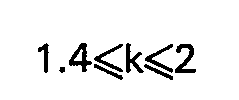
wherein k is the ratio between the lengths of the long and short axes of the spot and the long axis of the spot divides the acute angle between the line deflection direction and the frame deflection direction in such manner that
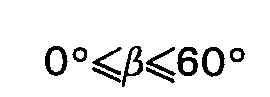
wherein β is the angle between the long axis and the frame deflection direction.
wherein k is the ratio between the lengths of the long and short axes of the spot and the long axis of the spot divides the acute angle between the line deflection direction and the frame deflection direction in such manner that
wherein β is the angle between the long axis and the frame deflection direction.
1. Tube de caméra de télévision comportant une enveloppe vidée d'air (1), dans lequel
est disposé un canon électronique (6) servant à engendrer un faisceau d'électrons
qui est focalisé de façon à fermer un spot sur une cible photosensible (3) lors du
fonctionnement du tube, cible sur laquelle se forme une répartition de potentiel par
projection d'une image optique, cible qui fournit des signaux par balayage avec un
faisceau d'électrons en concordance avec ladite image optique, ce balayage s'effectuant
dans une direction de déviation de ligne et une direction de déviation de trame, caractérisé
en ce que le spot présente une forme allongée
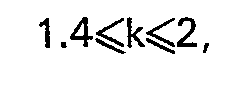
expression dans laquelle k est le rapport entre les longueurs du grand axe et du petit axe du spot et en ce que le grand axe du spot divise l'angle aïgu entre la ligne de déviation de ligne et la ligne de déviation de trame de façon que
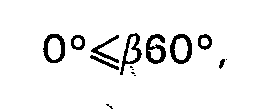
ß étant l'angle compris entre le grand axe et la direction de déviation de trame.
expression dans laquelle k est le rapport entre les longueurs du grand axe et du petit axe du spot et en ce que le grand axe du spot divise l'angle aïgu entre la ligne de déviation de ligne et la ligne de déviation de trame de façon que
ß étant l'angle compris entre le grand axe et la direction de déviation de trame.
Fernsehkameraröhre mit einem Elektronenstrahlerzeuger (6) in einem evakuierten Kolben
(1) zum Erzeugen eines Elektronenstrahls, der im Betrieb der Röhre zur Bildung eines
Aufprallflecks auf einer fotoempfindlichen Auftreffplatte (3) fokussiert ist, bei
der auf der Auftreffplatte durch die Projektion eines optischen Bilds eine Potentialverteilung
erzeugt wird, und die Auftreffplatte durch Abtastung mit einem Elektrononstrahl Signale
entsprechend dem projizierten optischen Bild erzeugt, wobei die Abtastung in einer
Horizontalablenkrichtung und in einer Vertikalablenkrichtung erfolgt, dadurch gekennzeichnet,
dass der Aufprallfleck eine längliche Form hat und
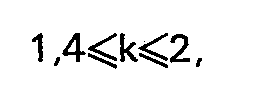
ist, wobei k das Verhältnis zwischen den Längen der langen und der kurzen Achse des Aufprallflecks ist und die lange Achse des Aufprallflecks den spitzen Winkel zwischen der Horizontalablenkrichtung und der Vertikalablenkrichtung derart teilt, dass
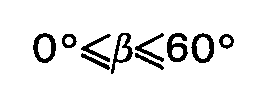
ist, wobei β der Winkel zwischen der langen Achse und der Vertikalablenkrichtung ist.
ist, wobei k das Verhältnis zwischen den Längen der langen und der kurzen Achse des Aufprallflecks ist und die lange Achse des Aufprallflecks den spitzen Winkel zwischen der Horizontalablenkrichtung und der Vertikalablenkrichtung derart teilt, dass
ist, wobei β der Winkel zwischen der langen Achse und der Vertikalablenkrichtung ist.