|
(11) | EP 0 054 390 A1 |

| (12) | EUROPEAN PATENT APPLICATION |
|
|
|
|
|||||||||||||||||||||||||||
| (54) | Dehalogenation of steroids |
| (57) A process for 9α-dehaiogenation of 9a-bromo- or 9a-chloro-11β-hydroxy steroids, without
eliminating the 11β-hydroxyl group, uses the reagents chromous chloride and/or chromous
sulfate, and thioglycolic acid. |
[0001] This invention relates to a process for the dehalogenation, and specifically the dechlorination or debromination, of steroids.
[0002] A large number of commercially valuable pharmacologically active steroids have 11β-hydroxy-Δ4-3-keto or 11β-hydroxy-Δ1,4-3-keto functionality. These steroids include hydrocortisone, 11β-hydroxyprogesterone, prednisolone, 6a-methylprednisolone and 16-methylprednisolone, and analogues thereof. In the process of introducing the 11β-hydroxyl group, a 9a-halo (chlorine or bromine) atom is also sometimes introduced. It is therefore often desirable to use a process which dehalogenates a 9a-chloro or 9α-bromo-11β-hydroxy steroid to the corresponding 11β-hydroxy steroid. Many known processes produce too much of the 9(11)-unsaturated compound as a by-product, to be of value; see J. Am. Chem. Soc. 79, 1130 (1957) which discusses the problems of trying to debrominate a 9a-bromo-lls-hydroxy steroid to form the corresponding lls-hydroxy steroid. Using chromous chloride and zinc in acetic acid, pure 9(11)-dehydro compound was obtained in about 80% yield.
[0003] A process capable of being developed commercially is disclosed in U.S. Patent Specification No. 3,480,622. This process involves reacting a 9a-bromo-lls-hydroxy steroid with a salt of a polyvalent metal, in which the metal is capable of being oxidised to a higher valence state in the presence of a substance capable of providing hydrogen free radicals. Reducing agents disclosed include ferrous, titanous, thallous, stannous and chromous salts. The preferred chromous salts are the chromous salts of an organic carboxylic acid, preferably a Cl-6 alkanoic acid such as acetic, propionic or butyric acid. Chromous acetate is "especially suitable."
[0004] In U.S. Patent Specification No. 3,480,622, the substances disclosed as being capable of providing hydrogen radicals include H3PO2, hydrides such as tri- arylsilanes and triaryltin hydrides, 1,4-dihydroaromatic compounds such as 1,4-dihydrobenzene and 1-benzyl-1,4-dihydronicotinamide, related dienes such as cyclopentadiene and, in particular, thiols. The thiols are alleged to increase greatly the yield of the desired dehalogenated product. The thiols may be aliphatic, araliphatic or aromatic and can carry any substituents such as hydroxy, ether, thioether, keto, carboxyl and esterified carboxyl groups. Unsubstituted hydrocarbon groups are preferred,including lower alkyl groups and unsubstituted aryl groups such as phenyl. A mechanistic explanation for the process is given in Tetrahedron Letters 43, 3151 (1964), and a more detailed account is found in J. Am. Chem. Soc. 88, 3016 (1966).
[0005] According to the present invention, a process for the preparation of an 11β-hydroxy steroid comprises reacting a 9a-bromo- or 9α-chloro-11β-hydroxy steroid with chromous sulfate or chromous chloride or a mixture thereof, and HS-CH2-COOH.
[0006] One example of the invention is the conversion shown in Chart A, and is a process for the preparation . of an 11β-hydroxy pregnane (II), which comprises reacting a 9α-halo-11β-hydroxy pregnane (I) with chromous chloride or chromous sulfate, or a mixture thereof, and HS-CH2-COOH.
[0007] A second example of the invention is the conversion shown in Chart B, and is a process for.the preparation of an 11β-hydroxy androstane (IV), which comprises reacting a 9α-halo-11β-hydroxy androstane (III) with chromous chloride or chromous sulfate, or a mixture thereof, and HS-CH2-COOH.
[0008] A third example of the invention is the conversion shown in Chart C, and is a process for the preparation of an llp,17a-dihydroxyprogesterone (VI), which comprises reacting a 9α-halo-11β,17a-dihydroxyprogesterone (V) with chromous chloride or chromous sulfate, or a mixture thereof, and HS-CH2-COOH.
[0009] A fourth example of the invention is the conversion shown in Chart D, and is a process for the preparation of an 11β-hydroxyprogesterone (VIII), which comprises reacting a 9α-halo-11β-hydroxyprogesterone (VII) with chromous chloride or chromous sulfate, or a mixture thereof, and HS-CH2-COOH.
[0010] It has been discovered that chromous chloride, chromous sulfate, and mixtures thereof, can be preferable reducing agents. Chromous chloride and chromous sulfate have the advantage of ease of preparation, storage and handling. These reagents can be prepared in higher yield than chromous acetate. A slight excess of chromous sulfate over theory brings about rapid (5 to 15 minutes) and complete reduction of 9α-bromo-11β-hydroxysteroids when used with the co-reductant thioglycolic acid.
[0011] It has been discovered that thioglycolic acid can increase yield over that which is expected; its use can make the work-up procedure simple. With respect to known thiols, the use of thioglycolic acid can permit (1) a more versatile choice of reactant medium, (2) faster reaction, (3) greater ease of product isolation and (4) higher yields of 11β-hydroxy steroid product (II or IV).
[0012] Virtually all 9a-chloro- or 9a-bromo-lls-hydroxy steroids can be used in the present process. The preferred 9a-halo-lls-hydroxy starting materials (I, III, V, or VII) are well known or can be readily prepared by well known means, from known starting materials. It is preferred that the starting material is a bromo-steroid.
[0014] The reaction temperature is not critical. From -50 to 100°C is suitable, 20-50°C being preferred.
[0015] Upon completion of the reaction as monitored by TLC, the reaction mixture is diluted with a volume of water greater than the total volume of the reaction mixture, preferably 2-10 times the reaction mixture volume. After addition of the water, the reaction mixture is stirred and then filtered. The filter cake is washed and then processed in an appropriate manner, depending on the next chemical reaction it will undergo. The filtrate can be extracted with an organic solvent to obtain additional product.
DEFINITIONS
[0016] The definitions and explanations below are for the terms as used throughout pthe specification and claims.
[0026] R16 is a hydrogen atom or α or β-methyl or a-hydroxyl group, when R16 is crhydroxyl and when R 17 is a hydrogen atom, R 16 and R17 can be a 16,17-acetonide.
[0027] R17 is a hydrogen atom or a group of the formula -COR17A where R17A is alkyl of 1 thru 4 carbon atoms or phenyl, when R17 is a hydrogen atom and when R16 is a-hydroxyl, R16 and R17 can be a 16,17-acetonide.
[0028] R21 is a hydrogen atom or a group of the formula -COR21A where R21A is alkyl of 1 thru 4 carbon atoms or phenyl.
[0029] ~ indicates the attached group can be in either the a or β configuration. is a single or double bond.
EXAMPLES
[0030] Without further elaboration, it is believed that one skilled in the art can, using the preceding description, practice the present invention to -its fullest extent. The following preferred specific embodiments are, therefore, to be construed as merely illustrative, and not limiting of the preceding disclosure in any way whatsoever.
Example 1 Hydrocortisone acetate (II)
[0031] A mixture of 9α-bromohydrocortisone acetate (1, 6.90 g) and thioglycolic acid (5.5 ml) in DMF (31 ml) is warmed to 45° with stirring under nitrogen. Over a period of about 5 minutes, a chromous sulfate solution (1.4 M, 13 ml) is added. The resulting mixture is stirred for 10 minutes and then cooled in an ice-water bath. The mixture is diluted with water (200 ml) and stirred at 5° for 30 minutes. The mixture is then filtered and the filter cake washed several times with water. The product is air dried to give the title compound, one spot by TLC, (5.15 g 89.2% chemical yield), which is identical with an authentic sample. An additional 3% of the title compound is obtained by liquid-liquid extraction of the filtrate.
Example 2 6α-Fluoro-11 β,16 a,17 α,21-tetrahydroxypregn-4-ene-3,20-dione-16,17-acetonide 21-acetate (II)
[0032] 9 α-Bromo-6 α-fluoro-11 β,16 α,17 α,21-tetrahydroxypregn-4-ene-3,20-dione-16,17-acetonide 21-acetate (I, 10.8 g) and thioglycolic acid (8.06 ml) are dissolved in DMSO (200 ml) and the mixture under nitrogen is cooled to 15°. Chromous sulfate (0.91 N aqueous solution, 21 ml) is added over a 36-minute period at 15-16° followed by the addition of water (700 ml, pre-cooled to 1°) over a 2-minute period. The mixture is stirred for 10 minutes and the slurry is then filtered. The solids are washed with water to give the title compound.
Example 3 Prednisolone (II)
[0033] Following the general procedure of Example 1 and making noncritical variations but starting with either 9α-chloro or 9o-bromo- prednisolone (I), the title compound is obtained.
Example 4 6α-Methylprednisolone (II)
[0034] Following the general procedure of Example 1 and making noncritical variations but starting with either 9α-chloro or 9a-bromo-6α-methylprednisolone (I), the title compound is obtained.
Example 5 11β-Hydroxyandrost-4-ene-3,17-dione (IV)
[0035] A solution of 9α-bromo-11β-hydroxyandrost-4-ene-3,17-dione (III, 3.00 g) thioglycolic acid (3.0 ml) in DMF (17 ml) is stirred under nitrogen in a 45-50° water bath. A chromous sulfate solution (1.4 M, 7.0 ml) is added dropwise over about 5 minutes. The mixture is allowed to cool, and the resulting slurry is diluted by slow addition of water (50 ml). The mixture is cooled to about 5°"and filtered. The filter cake is washed with water and air dried to give the title compound (2.03 g, 85.3% chemical yield) which is identical with an authentic sample. The filtrate is extracted to give additional material (0.34 g, 14.3%).
Example 6 11β-Hydroxyandrost-4-ene-3,17-dione (IV)
[0036] A solution of 9 α-bromo-11 B-hydroxyandrost-4-ene-3,17-dione (III, 2.00 g), thioglycolic acid (2.0 ml) in THF (20 ml) and water (5 ml) is stirred under nitrogen at 20-25°. A chromous sulfate solution (1.4 M, 5.5 ml) is added and the two-phase system is stirred. After four hours, another 4.5 ml of chromous sulfate solution is added and the mixture stirred overnight. The mixture is diluted with water and extracted with ethyl acetate. The ethyl acetate extracts are washed with water, a diluted sodium hydroxide solution, water and saline. The organic phase is dried over sodium sulfate and concentratd to a solid. The solid is crystallized from benzene-hexane to give a first crop of crystals of the title compound (1.38 g, 83.5% chemical yield) which are measured to be 99% pure as measured by GLC and is identical to an authentic sample.
Example 7 11β-Hydroxyandrost-4-ene-3,17-dione (IV)
[0037] A mixture of 9 α-bromo-11β-hydroxyandrost-4-ene-3,17-dione (III, 0.25 g), zinc dust (0.15 g), chromic sulfate hydrate (0.05 g), thioglycolic acid (1 ml) and DMF (20 ml) are stirred under nitrogen at 20-25° for 20 hours. The crude product is isolated as in Example 3 and is shown by GLC to be the title compound in 83% chemical yield. Example 8 6α-Fluoro-16 α-methylpregna-1,4-diene-3,20-dione (VIII)
1. A process for the preparation of an 11β-hydroxy steroid which comprises reacting
a 9α-bromo-11β-hydroxy or a 9α-chloro-11β-hydroxy steroid with chromous sulfate or
chromous chloride or mixtures thereof and HS-CH2-COOH.
2. A process for the preparation of an 11β-hydroxy pregnane of the formula
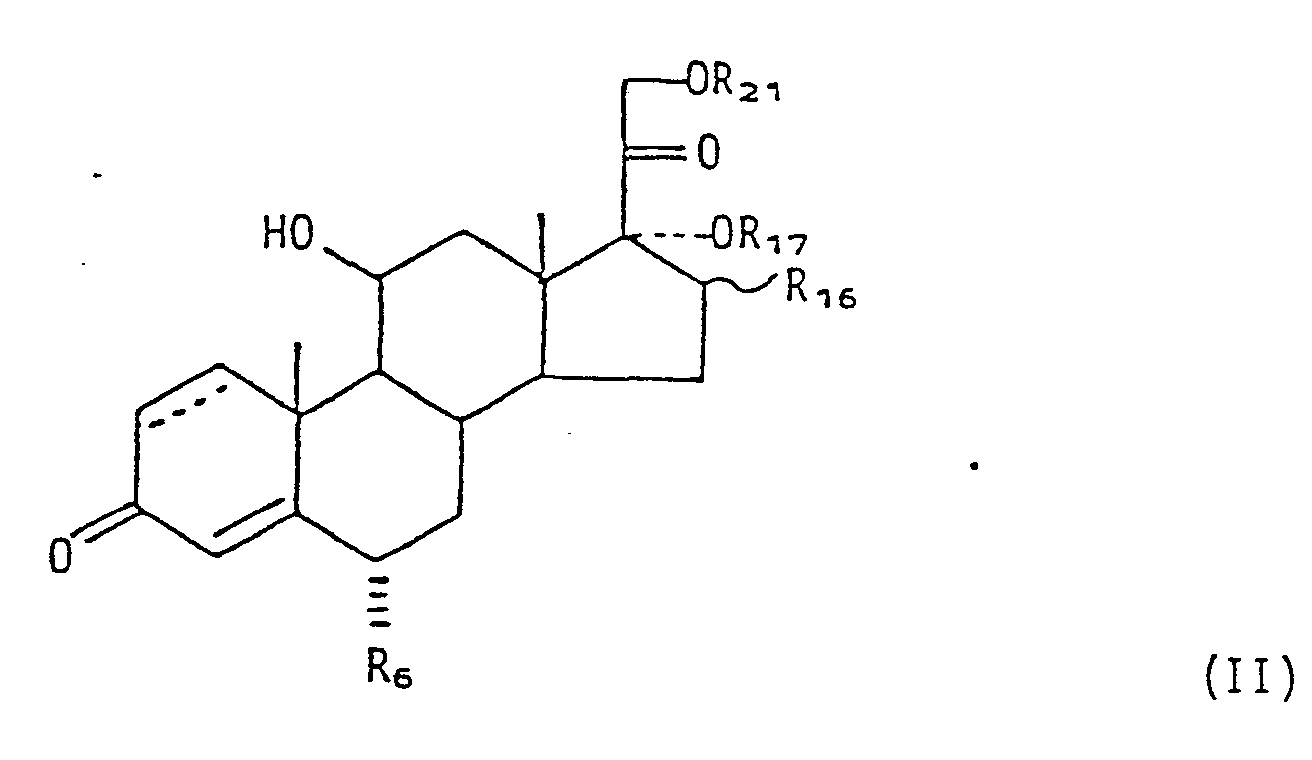
which comprises reacting a 9α-halo-11β-hydroxy pregnane of the formula
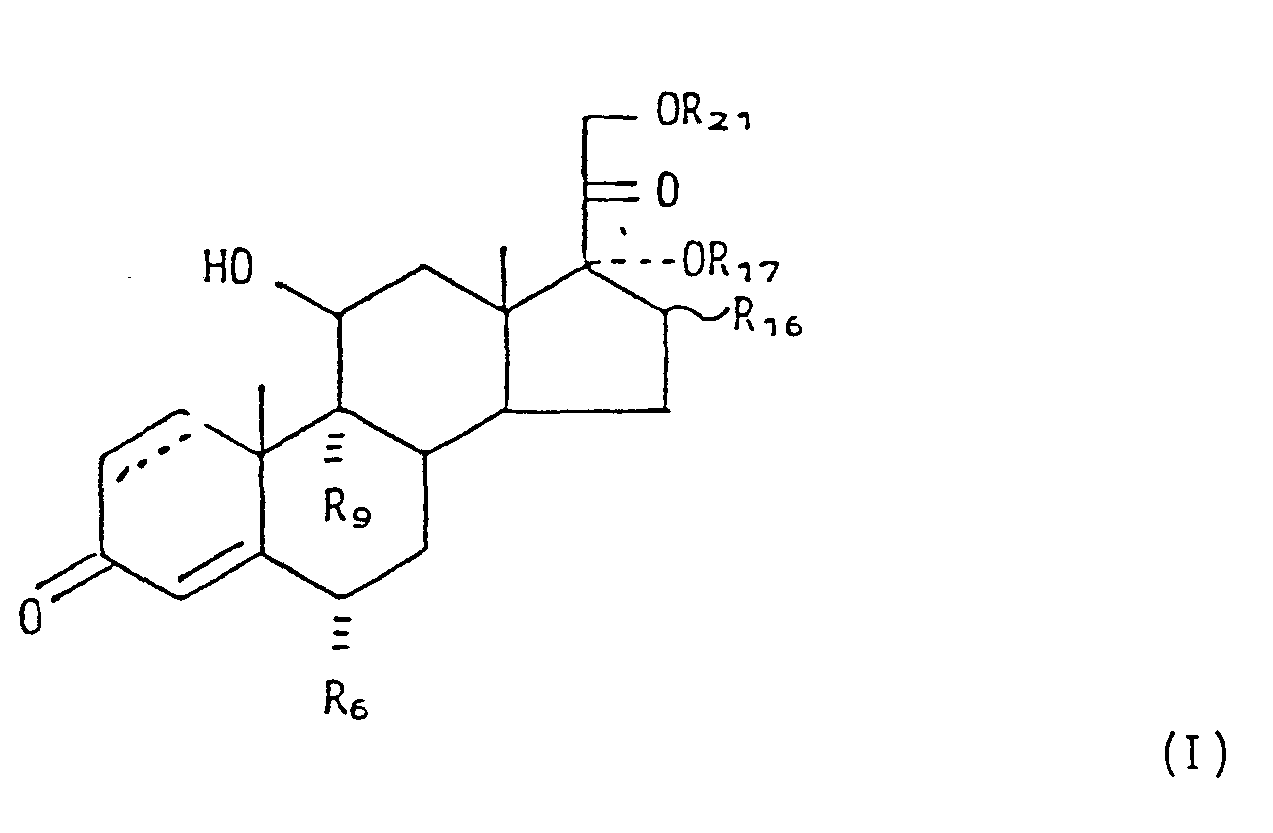
with chromous sulfate or chromous chloride or mixtures thereof and HS-CH2-COOH, where R6 is a fluorine atom or methyl group; R9 is a chlorine or bromine atom; R16 is a hydrogen atom or a- or s-methyl or a-hydroxyl group, when R16 is a-hydroxyl and when R17 is a hydrogen atom, R16 and R17 can be a 16,17-acetonide; R17 is a hydrogen atom or a group of the formula -COR17A where R17A is alkyl of 1 thru 4 carbon atoms or phenyl, when R17 is a hydrogen atom and when R16 is a-hydroxyl, R16 and R17 can be a 16,17-acetonide; R21 is a hydrogen atom or a group of the formula -COR21A where R21A is alkyl of 1 thru 4 carbon atoms or phenyl; is a single or double bond; and - indicates the attached group can be in either the a or β configuration.
which comprises reacting a 9α-halo-11β-hydroxy pregnane of the formula
with chromous sulfate or chromous chloride or mixtures thereof and HS-CH2-COOH, where R6 is a fluorine atom or methyl group; R9 is a chlorine or bromine atom; R16 is a hydrogen atom or a- or s-methyl or a-hydroxyl group, when R16 is a-hydroxyl and when R17 is a hydrogen atom, R16 and R17 can be a 16,17-acetonide; R17 is a hydrogen atom or a group of the formula -COR17A where R17A is alkyl of 1 thru 4 carbon atoms or phenyl, when R17 is a hydrogen atom and when R16 is a-hydroxyl, R16 and R17 can be a 16,17-acetonide; R21 is a hydrogen atom or a group of the formula -COR21A where R21A is alkyl of 1 thru 4 carbon atoms or phenyl; is a single or double bond; and - indicates the attached group can be in either the a or β configuration.
3. A process for the preparation of an 11β-hydroxy androstane of the formula
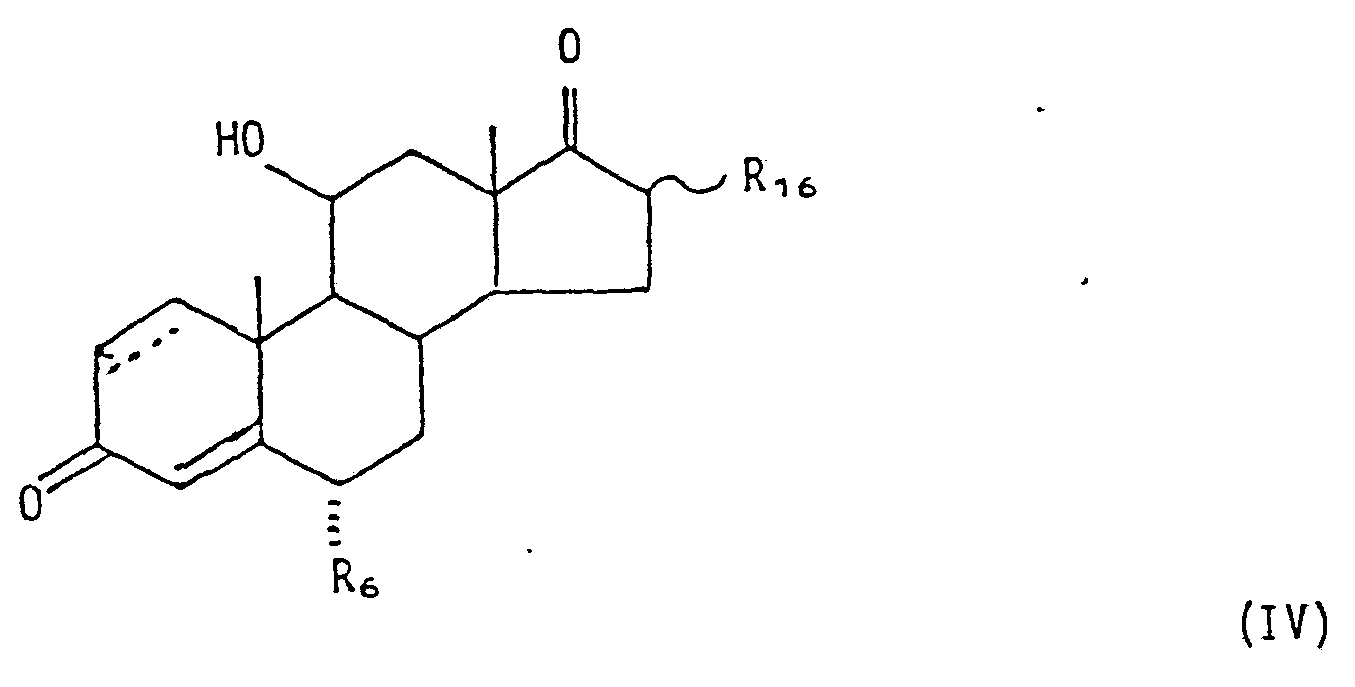
which comprises reacting a 9α-halo-11β-hydroxy androstane of the formula
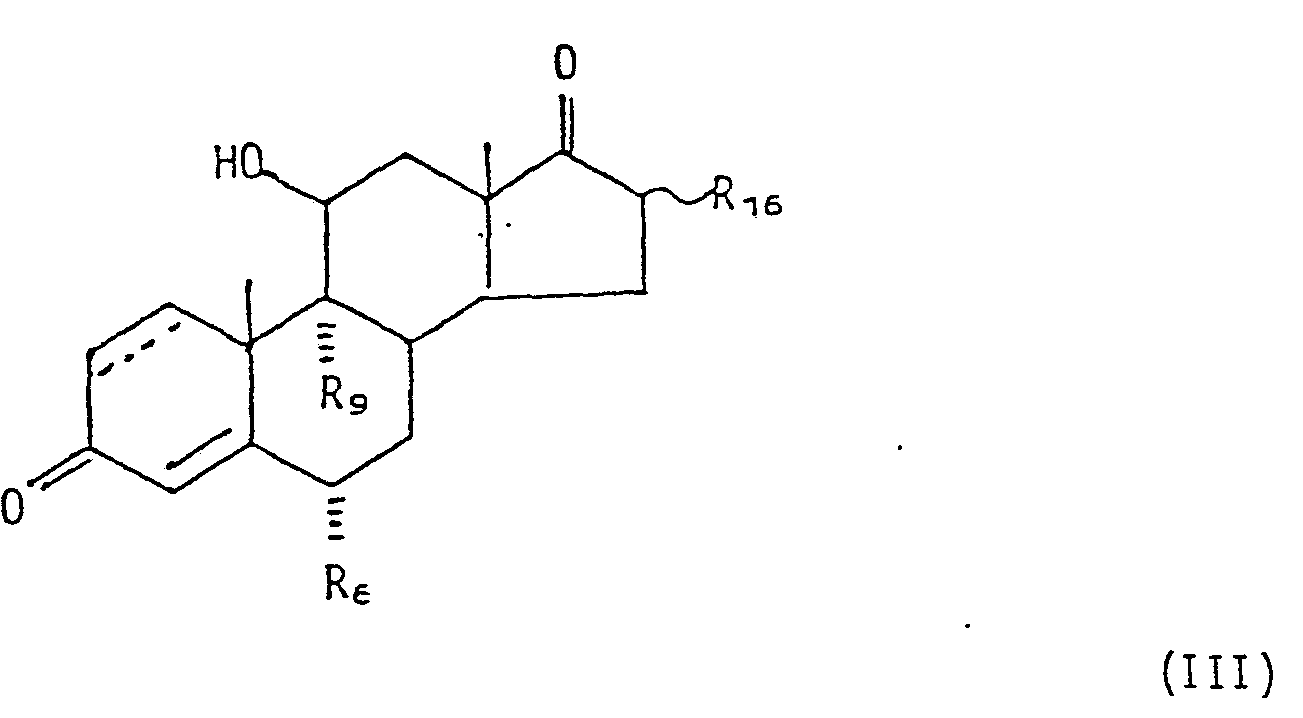
with chromous sulfate or chromous chloride or mixtures thereof and HS-CH2-COOH, where R6, R9, R16, ---- and - are defined in claim 2.
which comprises reacting a 9α-halo-11β-hydroxy androstane of the formula
with chromous sulfate or chromous chloride or mixtures thereof and HS-CH2-COOH, where R6, R9, R16, ---- and - are defined in claim 2.
4. A process for the preparation of an 11β,17α-dihydroxypro- gesterone of the formula
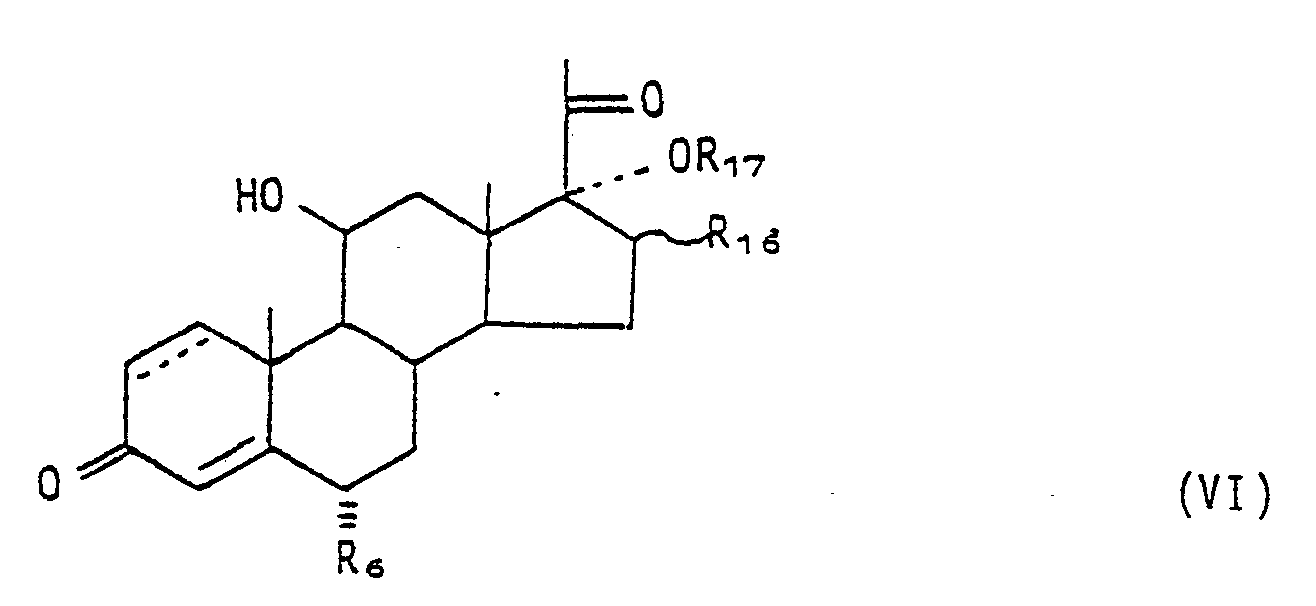
which comprises reacting a 9a-halo-lls,17a-dihydroxyprogesterone of the formula
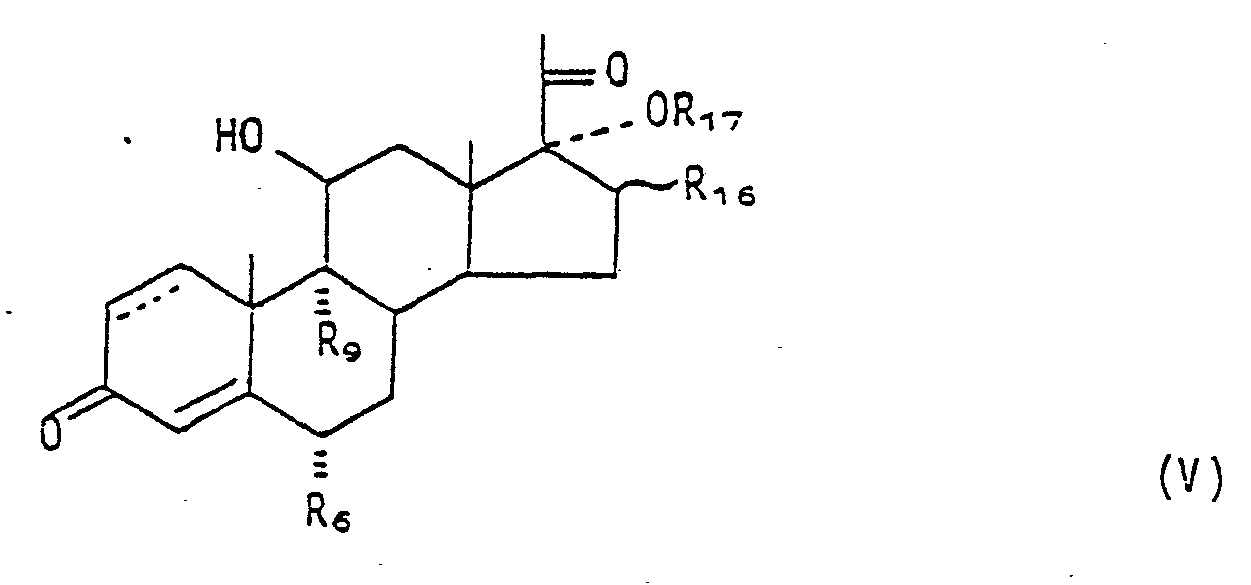
with chromous sulfate or chromous chloride or mixtures thereof and HS-CH2-COOH, where R6, R9, R16, R17, .... and - are defined in claim 2.
which comprises reacting a 9a-halo-lls,17a-dihydroxyprogesterone of the formula
with chromous sulfate or chromous chloride or mixtures thereof and HS-CH2-COOH, where R6, R9, R16, R17, .... and - are defined in claim 2.
5. A process for preparing an 11β-hydroxyprogesterone of the formula
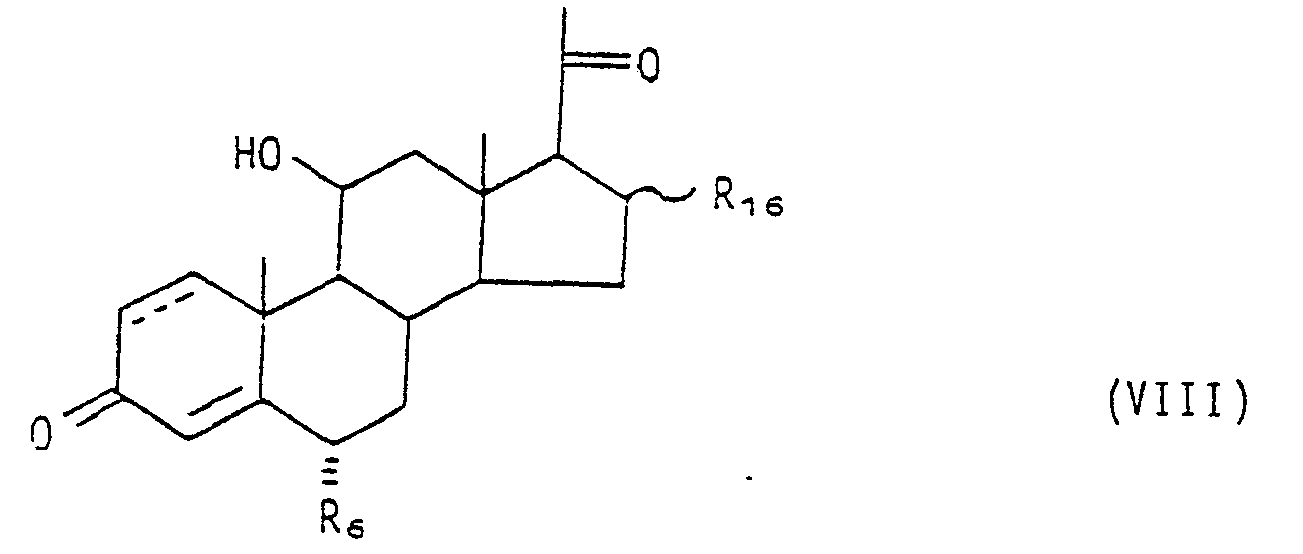
which comprises reacting a 9α-halo-11β-hydroxyprogesterone of the formula
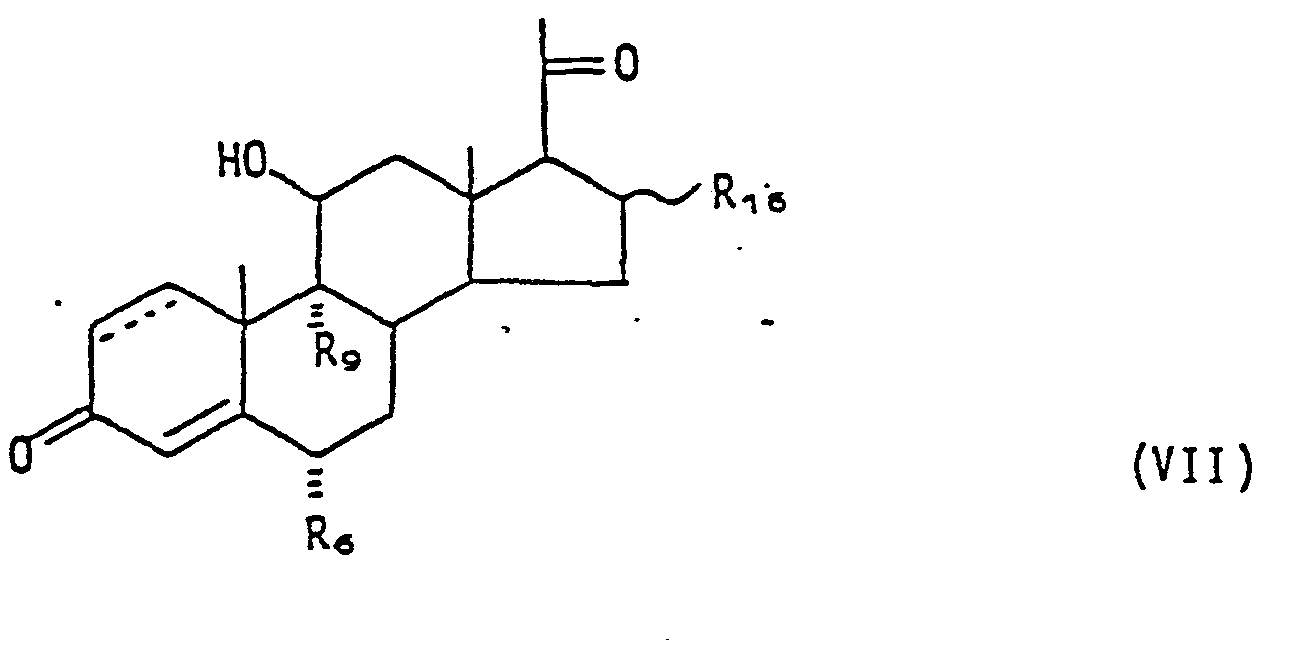
wherein R6, R9, R16, R17, .... and ~ are defined in claim 2, with chromous sulfate or chromous chloride, or a mixture thereof, and HS-CH2-COOH.
which comprises reacting a 9α-halo-11β-hydroxyprogesterone of the formula
wherein R6, R9, R16, R17, .... and ~ are defined in claim 2, with chromous sulfate or chromous chloride, or a mixture thereof, and HS-CH2-COOH.
6. A process according to claim 2, wherein the steroid (II) is hydrocortisone acetate,
prednisolone or 6a-methylprednisolone.
7. A process according to claim 3, wherein the androstane (IV) is lls-hydroxyandrost-4-ene-3,17-dione.
8. A process according to claim 5, wherein the 11β-hydroxyprogesterone (VIII) is 6a-fluoro-16a-methyl-
pregna-2,4-diene-3,20-dione.
9. A process according to any preceding claim, wherein the starting material is a
9α-bromo-11β-hydroxy steroid.