| (19) |
 |
|
(11) |
EP 0 062 938 B1 |
| (12) |
EUROPEAN PATENT SPECIFICATION |
| (45) |
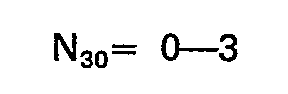
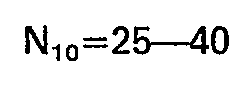
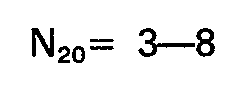
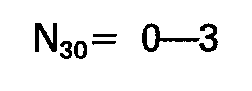
Mention of the grant of the patent: |
|
28.08.1985 Bulletin 1985/35 |
| (22) |
Date of filing: 22.03.1982 |
|
| (51) |
International Patent Classification (IPC)4: A23C 15/16
// C11B7/00 |
|
| (54) |
Low-calorie spread based on a low-melting butterfat fraction
Brotaufstrich mit geringem Kaloriengehalt auf Basis einer Butterfettfraktion mit niedrigem
Schmelzpunkt
Produit à étaler à faible teneur en calories à base d'une fraction de graisse de beurre
à bas point de fusion
|
| (84) |
Designated Contracting States: |
|
AT BE CH DE FR GB IT LI NL SE |
| (30) |
Priority: |
02.04.1981 NL 8101638
|
| (43) |
Date of publication of application: |
|
20.10.1982 Bulletin 1982/42 |
| (71) |
Applicants: |
|
- UNILEVER N.V.
3013 AL Rotterdam (NL)
BE CH DE FR IT LI NL SE AT
- UNILEVER PLC
London EC4P 4BQ (GB)
GB
|
|
| (72) |
Inventors: |
|
- Verhagen, Laurentius Adrianus Maria
NL-3137 BM Vlaardingen (NL)
- Warnaar, Leendert Gerardus
NL-3131 HN Vlaardingen (NL)
|
| (74) |
Representative: Léon, Alain Elie, Dr. et al |
|
RD-ODF
Unilever Research Laboratory,
Olivier van Noortlaan 120
3130 AT Vlaardingen
3130 AT Vlaardingen (NL) |
|
| |
|
| Note: Within nine months from the publication of the mention of the grant of the European
patent, any person may give notice to the European Patent Office of opposition to
the European patent
granted. Notice of opposition shall be filed in a written reasoned statement. It shall
not be deemed to
have been filed until the opposition fee has been paid. (Art. 99(1) European Patent
Convention).
|
[0001] The invention relates to a water-in-oil emulsion based on a low-melting butterfat
fraction, as well as to a process for preparing this product. More specifically the
invention relates to a low calorie spread based on butterfat which has an improved
spreadability at 10°C as compared with low calorie butter.
[0002] A low calorie spread is understood to be a water-in-oil emulsion having a water content
exceeding the customary water content of butter or classical margarines. The water
content of the product according to the invention therefore is higher than 20% and
preferably ranges from 40 to 70%, based on the total composition.
[0003] A low calorie butter is usually understood to be a product which has been prepared
starting from non-fractionated butter, or butter of which the water content has been
increased to 35-70%. Such a product, which has been described in GB 1 525 315, is
unsufficiently spreadable and tends towards water exudation, manifesting itself in
the form of water droplets on the surface. Besides, spreading of the product on bread
results in the formation of a grainy structure, which gives an unpleasant experience
to the consumer.
[0004] According to Example 3 of GB 1 525 315 already discussed above, such a low calorie
product is prepared starting from a mixture of 30% of a butterfat fraction, obtained
by means of a fractionation at 15°C-of which no further details are given-and 70%
of non-fractionated butter oil, or starting from mixtures of a vegetable oil and a
non-fractionated butter oil. However, the prescription of Example 3 is difficult to
reproduce, on the one side because any indication fails as to whether the butterfat
fraction was obtained by means of wet fractionation (in the presence of a solvent)
or by dry fraction (in the absence of a solvent) and on the other side because there
is no indication as to whether the low-melting olein fraction or the high-melting
stearin fraction has been incorporated in the product.
[0005] Even if one assumes that the butter fraction (olein) used in Example 3 of the aforementioned
patent is a fraction obtained by dry-fractionation of butterfat at 15°C, such a fraction
would differ from the olein fraction used in the products according to the invention
in that the levels of fat solids at 10°C and 20°C are lower than those claimed in
the present invention. These differences are reflected in the triglyceride compositions
of said fractions. Moreover, the 70/30- mixture of non-fractionated butterfat and
butter olein contains higher melting triglycerides stemming from the non-fractionated
butterfat.
[0006] GB 1 525 315 does not give any clue for using as the fatty phase of spreads a pure
olein as defined in the main claim of the present application rather than mixtures
of non-fractionated fat and olein, a liquid, vegetable oil or a non-fractionated butter
oil as such, respectively, as illustrated in its Examples.
[0007] At present there is a need for a product having a better spreadability than low calorie
butter and a good stability on storage and comprising an aqueous phase substantially
consisting of butter- fat components.
[0008] According to the present invention a process was found which results in a product
that fulfils the above-mentioned requirements and comprises the following steps:
(1) fractionating a butterfat, in which a high-melting stearin fraction and a low-melting
olein fraction are obtained the latter fraction having the following solids content,
measured as N-values by using the NMR method as described in Journal of American Oil
Chemists' Society, 51 (1974), 316 by Van Putte et al: N,0=25-40; NZO=3-8; N30=0-3;
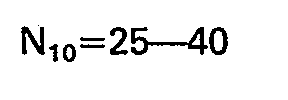
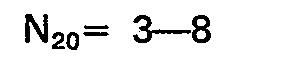
(2) preparing an aqueous phase having a pH of 4.0-7.0;
(3) cooling and working an emulsion containing the aqueous phase and the low-melting
olein fraction referred to, under conditions leading to a product that has the required
texture and plasticity.
[0009] The butterfat is prepared in a manner known per se, for example starting from a concentrated
or non-concentrated cream which is converted into butter, followed by separation of
the butter serum, or by direct centrifugation of cream.
[0010] The fractionation of butterfat can be effected either in the presence of a solvent
such as for example acetone or hexane, or according to the so-called Lanza method
in the presence of a surface-avtive substance or in the presence of a solvent.
[0011] The fractionation is preferably conducted in the absence of organic solvents, since
the use of solvents causes part of the flavour components to be lost during dissolving
of the fat and the subsequent removal of the solvent. In a preferred embodiment of
the invention the butterfat is first liquefied by warming it up to a temperature exceeding
its melting point. Warming up is preferably done to a temperature not exceeding about
45°C. Ideally the butterfat is brought to a temperature between 35° and 40°C. Cooling
of the fat is effected according to a predetermined program, for example by lowering
the temperature at a rate of 1-5°C per minute, preferably to a temperature between
23° and 28°C, ideally 25°C. In this step the low-melting olein, from which the fatty
phase of the emulsion is prepared, is separated from the stearin fraction.
[0012] It was found that the hardness of the ultimate product, expressed in C-values and
measured at 20°C according to the method of Haighton et al as described in J.A.O.C.S.
36 (1959), p. 345, should preferably have a minimum value of 80 g/cm
2 m, whereas the maximum hardness, measured at 10°C, should preferably be lower than
1300 and at 5°C preferably 1800 gfCM2.
[0013] The aqueous phase may contain salts, such as for example sodium chloride and NaHP0
4, an acid such as for example butyric acid or citric acid, an emulsifier, thickeners
and gelling agents, such as hydrocolloids, agar agar, carboxymethylcellulose, guar
gum, carraghenate, locust bean gum, etc. Preferably, there is incorporated in the
aqueous phase from 1 to 10%, based on the final product, of protein, preferably a
milk protein, such as sodium caseinate, and ideally a mixture of milk protein and
sodium caseinate.
[0014] The aqueous phase is subsequently emulsified in a fatty phase which substantially
consists of the olein as defined above and, (optionally, a small amount of other butterfat
components) in addition to the usual emulsifiers such as mono-and diglycerides, lecithins
etc., in which a pre-emulsion is prepared which is finally subjected to cooling and
working. It is also possible however to feed the aqueous phase and the fatty phase
separately to an apparatus in which it is cooled and worked, under conditions leading
to a product having the desired plasticity.
[0015] The invention will now be further illustrated by the following Examples.
Example I
(A)-Preparation of butterfat
[0016] Butterfat is prepared by centrifugation of cream with a fat content of 38%, followed
by separation of the butter-fat.
(B)-Preparation of butter olein
(C)-Preparation of the fatty phase
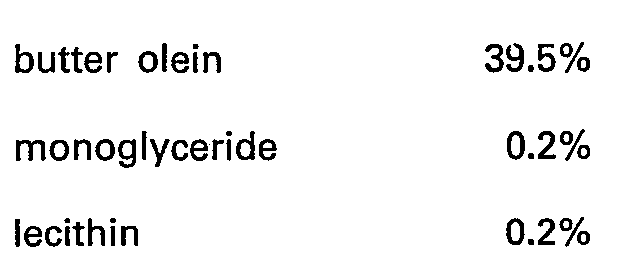
[0018] A fatty phase was prepared having the following composition:
(D)-Preparation of the aqueous phase
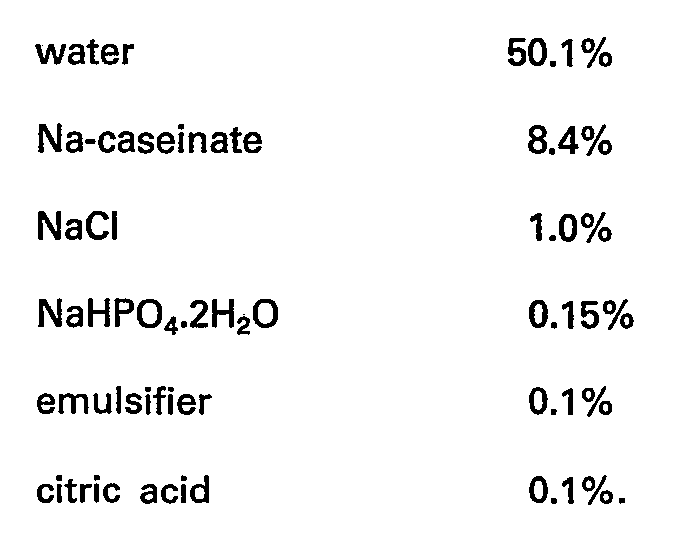
[0019] An aqueous phase was prepared having the following composition:
Comparative example
[0022] The spreadability of this product and its stability were evaluated to be inferior
to those of the product according to Example I.
Claims for the following Contracting State(s) : s: BE CH DE FR GB IT LI NL SE
1. Low calorie water-in-oil emulsion based on butterfat, comprising:
(i) a fatty phase constituting from 30 to 80 percent of the total composition and
consisting of a butter olein having the following solid fat content:
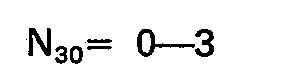
(ii) an aqueous phase having a pH of 4.0-7.0 and constituting from 20 to 70 percent
of the total composition.
2. Low calorie emulsion according to claim 1, in which the butter olein is the low-melting
fraction obtained by fractionation of butterfat in the absence of a solvent at a temperature
between 20° and 30°C.
3. Low calorie emulsion according to claim 2, in which the butter olein is the low-melting
fraction obtained by fractionation of butterfat in the absence of a solvent at a temperature
between 23° and 28°C.
4. Low calorie emulsion according to claim 1, in which the aqueous phase constitutes
from 40 to 70 percent of the total composition.
5. Low calorie emulsion according to claim 1, in which the aqueous phase contains
from 1 to 10 percent by weight of protein, based on the total composition.
6. Low calorie emulsion according to claim 5, in which the protein consists of a mixture
of sodium caseinate and wheyprotein.
7. Low calorie emulsion according to claim 1, in which the aqueous phase contains
a thickener or gelling agent.
8. Low calorie emulsion according to claim 1 having a hardness of at least 80 g/cm2 at 20°C, of at most 1300 g/cm2 at 10°C and of at most 1800 g/cm2 at 5°C.
9. Process for preparing a low calorie emulsion, characterized in that an emulsion
according to claims 1-8 is produced by emulsifying the aqueous phase in the fatty
phase and this emulsion is subsequently cooled and worked eventually under conditions
leading to a product having a hardness of at least 80 g/cm2 at 20°C, of at most 1300 g/cm2 at 10°C and of at most 1800 g/cm2 at 5°C.
10. Process according to claim 9, characterized in that either the aqueous phase and
the fatty phase are separately fed to an apparatus, after which the emulsion formed
therefrom is cooled and worked, or a pre-emulsion is prepared from said phases, which
is further cooled and worked.
11. Process according to claim 9, characterized in that cooling and working are carried
out in a Votator apparatus.
12. Process according to claim 9, characterized in that the butter olein is prepared
by first melting butterfat at a temperature not exceeding 45°C and subsequently cooling
and fractionating the fat in the absence of a solvent at a temperature between 20°
and 30°C, by which the low-melting olein is separated.
13. Process according to claim 12, characterized in that the fractionation is carried
at a temperature between 23° and 28°C.
14. Process according to claim 12, characterized in that the molten butterfat is gradually
cooled according to a predetermined program in which the temperature is reduced by
1° to 5°C per minute.
Claims for the following Contracting State(s) : AT
1. A process for producing a low-calorie water-in-oil emulsion based on butterfat
comprising:
(i) melting butterfat and fractionating it to obtain a low-melting butter olein having
the following solid fat content:
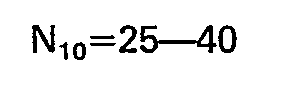
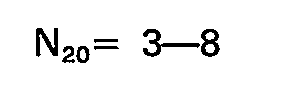
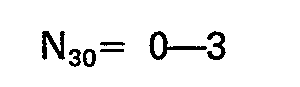
and a high melting stearin which is separated;
(ii) emulsifying said olein with an aqueous phase having a pH of 4.0-7.0 and constituting
from 20 to 70% of the total composition;
(iii) cooling and working the emulsion thus obtained to obtain a spread with an appropriate
texture and plasticity.
2. A process according to claim 1, in which the fractionation is carried out in the
absence of a solvent at a temperature between 20 and 30°C.
3. A process according to claim 2, in which the fractionation is carried out at a
temperature ranging from 23 to 28°C.
4. A process according to claim 1, in which the butter olein is prepared by first
melting butterfat at a temperature not exceeding 45°C and subsequently cooling and
fractionating the fat in the absence of a solvent at a temperature between 20° and
30°C, by which the low-melting olein is separated.
5. A process according to claim 1, in which the molten butterfat is gradually cooled
according to a predetermined program in which the temperature is reduced by 1° to
5°C per minute.
6. A process according to claim 1, in which either the aqueous phase and the fatty
phase are separately fed to an apparatus, after which the emulsion formed therefrom
is cooled and worked, or a pre-emulsion is prepared from said phases, which is further
cooled and worked.
7. A process according to claim 1, in which cooling and working are carried out in
a Votator apparatus.
8. A process according to claim 7, in which the emulsion is cooled and worked under
conditions leading to a product having a hardness of at least 80 g/cm2 at 20°C, of at most 1300 g/cm2 at 10°C, and of at most 1800 g/cm2 at 5°C.
9. A process according to claim 1, in which the aqueous phase constitutes from 40
to 70 percent of the total composition.
10. A process according to claim 1, in which the aqueous phase contains from 1 to
10 percent by weight of protein, based on the total composition.
11. A process according to claim 10, in which the protein consists of a mixture of
sodium caseinate and whey-protein.
12. A process according to claim 1, in which the aqueous phase contains a thickener
or gelling agent.
Patentansprüche für folgende(n) Vertragsstaat(en) : BE CH DE FR GB IT LI LU NL SE
1. Wasser-in-Öl-Emulsion mit niedrigem Kaloriengehalt auf Basis eines Butterfettes,
dadurch gekennzeichnet, daß sie
(i) eine Fettphase, die 30 bis 80 % der Gesamtzusammensetzung ausmacht und aus einem
Butterolein mit dem folgenden Fettfeststoffgehalt besteht:
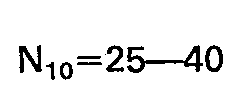
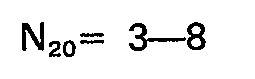
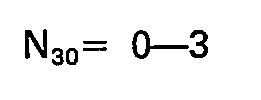
und
(ii) ein wäßrige Phase mit einem pH-Wert von 4,0 bis 7,0, die 20 bis 70 % der Gesamtzusammensetzung
ausmacht, enthält.
2. Emulsion mit niedrigem Kaloriengehalt nach Anspruch 1, dadurch gekennzeichnet,
daß das Butterolein eine niedrigschmelzende Fraktion ist, die durch Fraktionierung
von Butterfett in Abwesenheit eines Lösungsmittels bei einer Temperatur zwischen 20
und 30°C erhalten wurde.
3. Emulsion mit niedrigem Kaloriengehalt nach Anspruch 2, dadurch gekennzeichnet,
daß das Butterolein die niedrigschmelzende Fraktion ist, die durch Fraktionierung
von Butterfett in Abwesenheit eines Lösungsmittels bei einer Temperatur zwischen 23
und 28°C erhalten wurde.
4. Emulsion mit niedrigem Kaloriengehalt nach Anspruch 1, dadurch gekennzeichnet,
daß die wäßrige Phase 40 bis 70 % der Gesamtzusammensetzung ausmacht.
5. Emulsion mit niedrigem Kaloriengehalt nach Anspruch 1, dadurch gekennzeichnet,
daß die wäßrige Phase 1 bis 10 Gew.% eines Proteins, bezogen auf die Gesamtzusammensetzung,
enthält.
6. Emulsion mit niedrigem Kaloriengehalt nach Anspruch 5, dadurch gekennzeichnet,
daß das Protein aus einer Mischung von Natriumkaseinat und Molkeprotein besteht.
7. Emulsion mit niedrigem Kaloriengehalt nach Anspruch 1, dadurch gekennzeichnet,
daß die wäßrige Phase ein Verdickungsmittel oder Geliermittel enthält.
8. Emulsion mit niedrigem Kaloriengehalt nach Anspruch 1, dadurch gekennzeichnet,
daß sie eine Härte von wenigstens 80 g/cm2 bei 20°C und von höchstens 1300 g/cm2 bei 10°C und von höchstens 1800 g/cm2 bei 5°C aufweist.
9. Verfahren zur Herstellung einer Emulsion mit niedrigem Kaloriengehalt, dadurch
gekennzeichnet, daß man eine Emulsion gemäß den Ansprüchen 1 bis 8 herstellt, indem
man die wäßrige Phase in der Fettphase emulgiert und diese Emulsion anschließend kühlt
und schließlich unter Bedingungen bearbeitet, die zu einem Produkt mit einer Härte
von wenigstens 80 g/cm2 bei 20°C, von höchstens 1300 g/cm2 bei 10°C und von höchstens 1800 g/cm2 bei 5°C führen.
10. Verfahren nach Anspruch 9, dadurch gekennzeichnet, daß entweder die wäßrige Phase
und die Fettphase getrennt einer Vorrichtung zugeführt werden, worauf die hieraus
gebildete Emulsion gekühlt und bearbeitet wird, oder eine Voremulsion aus den genannten
Phasen hergestellt wird, die weiter gekühlt und bearbeitet wird.
11. Verfahren nach Anspruch 9, dadurch gekennzeichnet, daß das Kühlen und Bearbeiten
in einer Votator-Vorrichtung ausgeführt werden.
12. Verfahren nach Anspruch 9, dadurch gekennzeichnet, daß das Butterolein hergestellt
wird, indem zuerst Butterfett bei einer Temperatur-von nicht oberhalb 45°C geschmolzen
und anschließend gekühlt und das Fett in Abwesenheit eines Lösungsmittels bei einer
Temperatur zwischen 20 und 30°C fraktioniert wird, wobei das niedrig-schmelzende Olein
abgetrennt wird.
13. Verfahren nach Anspruch 12, dadurch gekennzeichnet, daß die Fraktionierung bei
einer Temperatur zwischen 23 und 28°C ausgeführt wird.
14. Verfahren nach Anspruch 12, dadurch gekennzeichnet, daß das geschmolzene Butterfett
allmählich gemäß einem vorbestimmten Program, bei welchem die Temperatur um 1 bis
5°C je min gesenkt wird, gekühlt wird.
Patentansprüche für folgende(n) Vertragsstaat(en) : AT
1. Verfahren zur Herstellung einer Wasser-in-ÖI-Emulsion mit niedrigem Kaloriengehalt
auf Basis eines Butterfettes, dadurch gekennzeichnet, daß man
(i) Butterfett schmilzt und fraktioniert, um ein niedrigschmelzendes Butterolein mit
dem folgenden Fettfeststoffgehalt
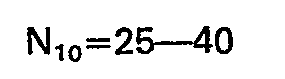
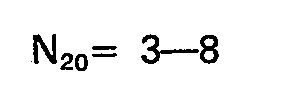
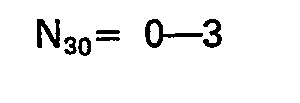
und ein hoch-schmelzendes Stearin, das abgetrennt wird, zu erhalten; und
(ii) das genannte Olein mit einer wäßrigen Phase mit einem pH-Wert von 4,0 bis 7,0,
die 20 bis 70 % der Gesamtzusammensetzung ausmacht, emulgiert; und
(iii) die so erhaltene Emulsion kühlt und bearbeitet, um eine Aufstrichmasse mit einer
geeigneten Textur und Plastizität zu erhalten.
2. Verfahren nach Anspruch 1, dadurch gekennzeichnet, daß man die Fraktionierung in
Abwesenheit eines Lösungsmittels bei einer Temperatur zwischen 20 und 30°C ausführt.
3. Verfahren nach Anspruch 2, dadurch gekennzeichnet, daß man die Fraktionierung bei
einer Temperatur im Bereich von 23 bis 28°C ausführt.
4. Verfahren nach Anspruch 1, dadurch gekennzeichnet, daß man das Butterolein herstellt,
indem man zuerst Butterfett bei einer Temperatur von nicht oberhalb 45°C schmilzt
und anschließend kühlt und das Fett in Abwesenheit eines Lösungsmittels bei einer
Temperatur zwischen 20 und 30°C fraktioniert, wobei das niedrig- schmelzende Olein
abgetrennt wird.
5. Verfahren nach Anspruch 1, dadurch gekennzeichnet, daß man das geschmolzene Butterfett
allmählich gemäß einem vorbestimmten Programm abkühlt, wobei die Temperatur um 1 bis
5°C je min gesenkt wird.
6. Verfahren nach Anspruch 1, dadurch gekennzeichnet, daß man entweder die wäßrige
Phase und die Fettphase getrennt einer Apparatur zuführt, worauf die gebildete Emulsion
gekühlt und bearbeitet wird, oder ein Voremulsion aus den genannten Phasen herstellt,
die weitergekühlt und bearbeitet wird.
7. Verfahren nach Anspruch 1, dadurch gekennzeichnet, daß man das Kühlen und Bearbeiten
in einer Votator-Vorrichtung ausführt.
8. Verfahren nach Anspruch 7, dadurch gekennzeichnet, daß man die Emulsion unter Bedingungen
kühlt und bearbeitet, die zu einem Produckt mit einer Härte von wenigstens 80 g/cm2 bei 20°C, höchstens 1300 g/cm2 bei 10°C und höchstens 1800 g/cm2 bei 5°C führen.
9. Verfahren nach Anspruch 1, dadurch gekennzeichnet, daß die wäßrige Phase 40 bis
70% der Gesamtzusammensetzung ausmacht.
10. Verfahren nach Anspruch 1, dadurch gekennzeichnet, daß die wäßrige Phase 1 bis
10 Gew.% Protein, bezogen auf die Gesamtzusammensetzung, enthält.
11. Verfahren nach Anspruch 10, dadurch gekennzeichnet, daß das Protein aus einer
Mischung von Natriumkaseinat und Molkeprotein besteht.
12. Verfahren nach Anspruch 1, dadurch gekennzeichnet, daß die wäßrige Phase ein Verdickungsmittel
oder Geliermittel enthält.
Revendications pour l'(les) Etat(s) contractant(s) suivant(s) : BE CH DE FR GB IT
LI LU NL SE
1. Emulsion eau-dans-huile pauvre en calories à base de graisse de beurre, comprenant:
(i) une phase grasse constituant 30 à 80 % de la composition totale et consistant
en une oléfine de beurre ayant la teneur suivant en matières grasses solides:
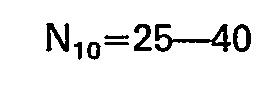
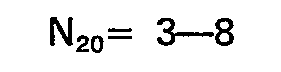
(ii) un phase aqueuse ayant un pH de 4,0 à 7,0 et constituant de 20 à 70 % de la composition
totale.
2. Emulsion pauvre en calories selon la revendication 1, dans laquelle l'oléine de
beurre est la fraction à bas point de fusion obtenue par fractionnement de la base
de beurre en l'absence d'un solvant à une température entre 20 et 30°C.
3. Emulsion pauvre en calories selon la revendication 2, dans laquelle l'oléine de
beurre est la fraction à bas point de fusion obtenue par fractionnement d'une graisse
de beurre en l'absence d'un solvant à une température entre 23 et 28°C.
4. Emulsion pauvre en calories selon la revendication 1, dans laquelle la phase aqueuse
constitue 40 à 70% de la composition totale.
5. Emulsion pauvre en calories selon la revendication 1, dans laquelle la phase aqueuse
contient 1 à 10 % en poids de protéine par rapport à la composition totale.
6. Emulsion pauvre en calories selon la revendication 5, dans laquelle la protéine
est un mélange de caséinate de sodium et de protéine de petit lait.
7. Emulsion pauvre en calories selon la revendication 1, dans laquelle la phase aqueuse
contient un agent d'épaississement ou un agent de gélification.
8. Emulsion pauvre en calories selon la revendication 1, ayant une dureté d'au moins
80 g/cm2 à 20°C, ne dépassant pas 1300 g/cm2 à 10°C et ne dépassant pas 1800 g/cm2 à 5°C.
9. Procédé de préparation d'une émulsion pauvre en calories, caractérisé en ce qu'on
prépare une émulsion selon les revendications 1 à 8 en émulsionnant la phase aqueuse
dans la phase grasse et, ultérieurement, on refroidit et on travaille cette émulsion
dans des conditions donnant un produit d'une dureté d'au moins 80 g/cm2 à 20°C, ne dépassant pas 1300 g/cm2 à 10°C et ne dépassant pas 1800 g/cm2 à 5°C.
10. Procédé selon la revendication 9, caractérisé en ce que, ou bien la phase aqueuse
et la phase grasse sont admises séparément dans un appareil, après quoi on refroidit
et on travaille l'émulsion formée dans celui-ci, ou bien on prépare une pré-émulsion
à partir desdites phases, qu'on refroidit et qu'on travaille ensuite.
11. Procédé selon la revendication 9, caractérisé en ce qu'on effectue le refroidissement
et le travail dans un appareil Votator.
12. Procédé selon la revendication 9, caractérisé en ce que pour préparer l'oléine
de beurre, on fait d'abord fondre la graisse de beurre à une température ne dépassant
pas 45°C et ensuite on refroidit et on fractionne la graisse en l'absence d'un solvant
à une température de 20 à 30°C, de sorte que l'oléine de bas point de fusion se sépare.
13. Procédé selon la revendication 12, caractérisé en ce qu'on effectue le fractionnement
à une température de 23 à 28°C.
14. Procédé selon la revendication 12, caractérisé en ce qu'on refroidit progressivement
la graisse de beurre fondue selon un programme prédéterminé dans lequel on réduit
la température de 1 à 5°C par minute.
Revendications pour l'(les) Etat(s) contractant(s) suivant(s) : AT
1. Procédé de production d'une émulsion eau-dans-huile pauvre en calories à base de
graisse de beurre, consistant:
(i) à faire fondre la graisse de beurre et à la fractionner pour obtenir une oléine
de beurre à bas point de fusion ayant la teneur suivante en matières grasses solides:
et un stéarine à point de fusion élevé qui est séparée;
(ii) à émulsionner ladite oléine avec une phase aqueuse ayant un pH de 4,0 à 7,0 et
constituant de 20 % à 70 % de la composition totale;
(iii) à refroidir et à travailler l'émulsion ainsi obtenue pour obtenir un produit
à étaler ayant une texture et une plasticité appropriées.
2. Procédé selon la revendication 1, dans lequel on effectue le fractionnement en
l'absence d'un solvant à une température de 20 à 30°C.
3. Procédé selon la revendication 2, dans lequel on effectue le fractionnement à une
température de 23 à 28°C.
4. Procédé selon la revendication 1, dans lequel pour préparer le beurre d'oléine,
on fait d'abord fondre la graisse de beurre à une température ne dépassant pas 45°C
et ensuite on refroidit et on fractionne la graisse en l'absence d'un solvant à une
température de 20 à 30°C, de sorte que l'oléine à bas point de fusion est séparée.
5. Procédé selon la revendication 1, dans lequel on refroidit progressivement la graisse
de beurre fondue selon un programme prédéterminé dans lequel on réduit la température
de 1 à 5°C par minute.
6. Procédé selon la revendication 1, dans lequel soit la phase aqueuse et la phase
grasse sont introduites séparément dans un appareil, après quoi l'émulsion formée
est refroidie et travaillée, soit on prépare une pré-émulsion à partir desdites phases,
qu'on refroidit et travaille encore.
7. Procédé selon la revendication 1, dans lequel on effectue le refroidissement et
le travail dans un appareil Votator.
8. Procédé selon la revendication 7, dans lequel on refroidit et on travaille l'émulsion
dans des conditions donnant un produit d'une dureté d'au moins 80 g/cm2 à 20°C et au plus de 1300 g/cm2 à 10°C et au plus de 1800 g/cm2 à 5°C.
9. Procédé selon la revendication 1, dans lequel la phase aqueuse constitue 40 à 70
% de la composition totale.
10. Procédé selon la revendication 1, dans lequel la phase aqueuse contient de 1 à
10 % en poids de protéine par rapport à la composition totale.
11. Procédé selon la revendication 10, dans lequel la protéine est un mélange de caséinate
de sodium et de protéine de petit lait.
12. Procédé selon la revendication 1, dans lequel la phase aqueuse contient un agent
d'épaississement ou un agent de gélification.