| (19) |
 |
|
(11) |
EP 0 063 570 B1 |
| (12) |
EUROPEAN PATENT SPECIFICATION |
| (45) |
Mention of the grant of the patent: |
|
10.09.1986 Bulletin 1986/37 |
| (22) |
Date of filing: 02.10.1981 |
|
| (51) |
International Patent Classification (IPC)4: B25B 27/18 |
| (86) |
International application number: |
|
PCT/AU8100/142 |
| (87) |
International publication number: |
|
WO 8201/150 (15.04.1982 Gazette 1982/10) |
|
| (54) |
TORQUE TRANSMITTING DEVICE
TORSIONSÜBERTRAGUNGSVORRICHTUNG
DISPOSITIF DE TRANSMISSION DE COUPLE
|
| (84) |
Designated Contracting States: |
|
FR |
| (30) |
Priority: |
06.10.1980 AU 5886/80
03.11.1980 AU 6333/80
|
| (43) |
Date of publication of application: |
|
03.11.1982 Bulletin 1982/44 |
| (71) |
Applicant: WHEELER, Daryl |
|
Ardross, W.A. 6153 (AU) |
|
| (72) |
Inventor: |
|
- WHEELER, Daryl
Ardross, W.A. 6153 (AU)
|
| (74) |
Representative: Jones, William |
|
Willow Lane House
Willow Lane
Norwich NR2 1EU
Norwich NR2 1EU (GB) |
|
| |
|
| Note: Within nine months from the publication of the mention of the grant of the European
patent, any person may give notice to the European Patent Office of opposition to
the European patent
granted. Notice of opposition shall be filed in a written reasoned statement. It shall
not be deemed to
have been filed until the opposition fee has been paid. (Art. 99(1) European Patent
Convention).
|
[0001] The present invention relates to a torque transmitting device.
[0002] The torque transmitting device of the present invention is particularly adapted to
be impulse driven into an internal bore in a workpiece.
[0003] In accordance with the invention there is provided a torque transmittng device comprising
a shaft (14) having a longitudinal axis and a first end and a second end, and being
intended to be inserted first-end-foremost into a bore in a workpiece, in which device
the shaft is formed with at least one groove extending longitudinally of the shaft,
a workpiece engaging jaw is slidably mounted in the or each such groove, and means
is provided for retaining the or each jaw in its respective groove, characterised
in that the or each groove (16) is of progressively increasing depth towards the said
first end of the shaft, and in that the or each groove (16) is tilted so that end
faces of the or each jaw (19) do not in use extend along radii of the shaft (14).
[0004] Torque transmitting devices are known from Canadian Patent No 1 070 991 in the name
of Dorosh and also from United States Patent No 1 366 647 in the name Gooding.
[0005] These however suffer from certain disadvantages. Canadian Patent No 1 070 991 discloses
a torque transmitting device which is provided with slots but these are so cut into
the shaft that they are deepest near the centre of the shaft. Thus the device is weakest
near the centre and the shaft can only transmit a relatively small amount of torque.
The present invention overcomes this disadvantage by reversing the direction of slope
of the grooves.
[0006] The device of the present invention can be impulse driven into a workpiece while
the device of Canadian Patent No 1 070 991 relies on a screw thread, the cutting of
which reduces still further the amount of torque which can be transmitted.
[0007] Furthermore, use of the device of Canadian Patent No 1 070 991 is likely to cause
expansion of the workpiece. The device of the present invention overcomes this difficulty.
[0008] Torque transmitting devices according to US Patent No 1 366 647 require relative
wide blades which receive no trailing edge support from the body. The wider the blade,
the more material must be removed from the shaft, which is thereby weakened allowing
lower transmission of torque.
[0009] The structure of the device according to US Patent No 1 366 647 requires a twisting
motion of the body to force out the blades. It would not be applicable to use an impulse
driver with such a device.
Brief Description of the Drawings
[0010] The present invention will now be described, by way of example, with reference to
the accompanying drawings, in which:-
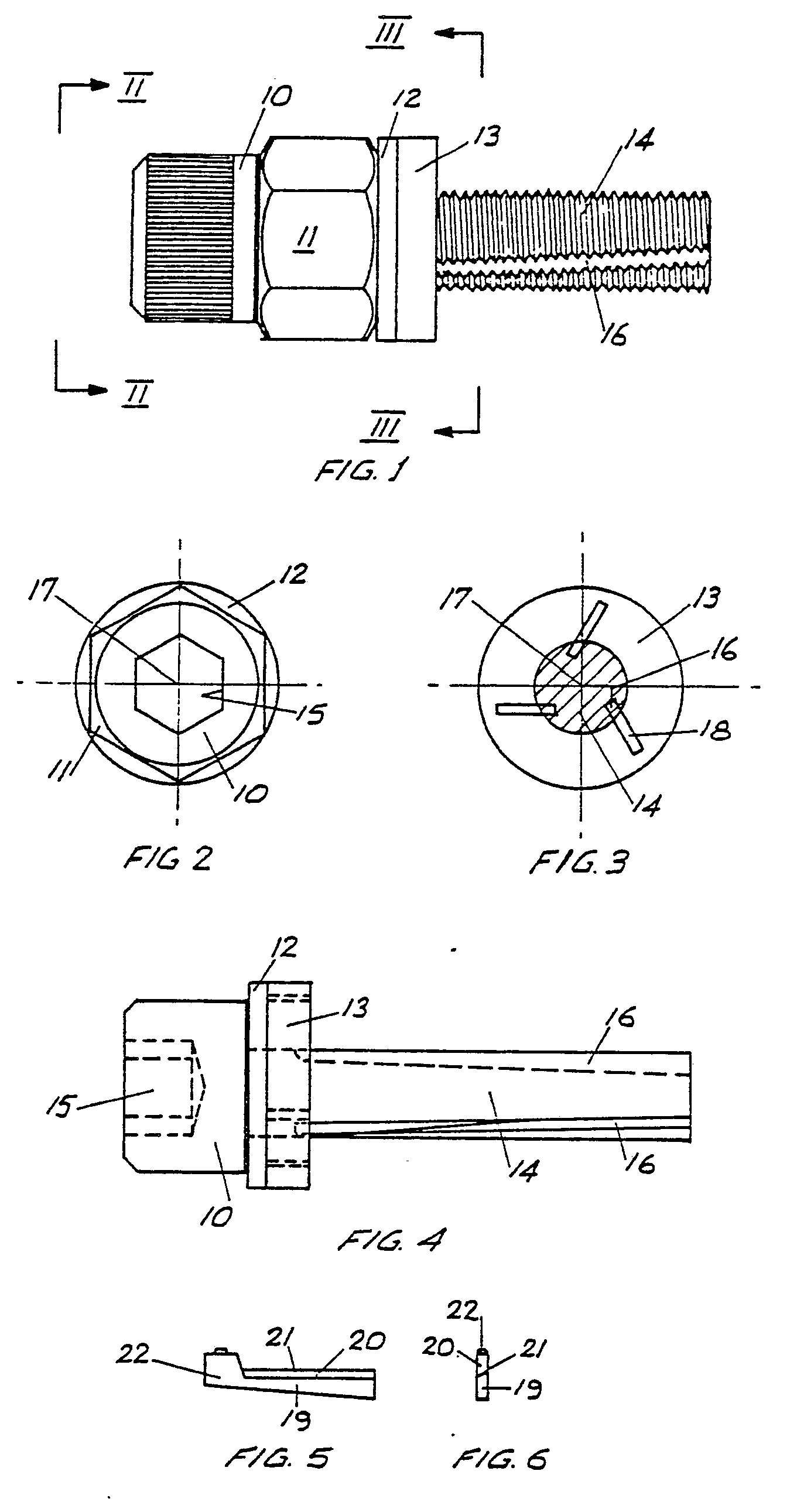
FIGURE 1 is a side elevation of a torque transmitting device of the present invention;
FIGURE 2 is an end elevation of the device of Figure 1 along the line II-II of Figure
1;
FIGURE 3 is a sectional view of the device of Figure 1 along the line III-III of Figure
1;
FIGURE 4 is a side elevation of a torque transmitting device similar to that shown
in Figure 1 with certain internal features indicated in phantom;
FIGURE 5 is a side elevation of a workpiece engaging jaw for use with the devices
of Figures 1 to 4; and
FIGURE 6 is an end elevation of the workpiece engaging jaw of Figure 5.
Description of the Invention
[0011] Figures 1 to 3 and Figure 4 show respectively two different embodiments of the present
invention as will be described hereinafter. For convenience like reference numerals
will be used to denote like parts in the two embodiments.
[0012] In Figures 1 to 3, there is shown a torque transmitting device adapted to be impulse
driven into an internal bore in a workpiece. The workpiece can take many forms. For
example, it may be a tube in threaded engagement with a matching component, a threaded
shaft, a stud, or a sheared bolt having no external means of torque connection and
having a hole therein to receive the device of the present invention.
[0013] The device of Figures 1 to 3 comprises a head 10, a hexagonal nut 11, a metal washer
12 and a slotted annular collar 13.
[0014] The head 10 is integrally formed with an externally threaded shaft 14. Further, the
head 10 contains a hexagonal recess 15 arranged to receive an Allen key. The nut 11
is threadedly mounted on the shaft 14 and is located adjacent the head 10. The washer
12 is located between the nut 11 and the annular collar 13. The washer 12 and annular
collar 13 are not threadedly engaged on the shaft 14 but are mounted thereabout in
a snug fitting relationship.
[0015] The shaft 14 contains three longitudinally extending grooves 16. Each groove 16 extends
from the end of the shaft 14 remote from the head 10 to a point spaced from but adjacent
to the head 10.
[0016] As can best be seen in Figure 3 each groove 16 is tilted so as to be non-aligned
with longitudinal axis 13 of the shaft 14. Each groove 16 is tilted towards the direction
of rotation of the shaft 14 upon removal of a workpiece.
[0017] The tilting means that jaws 19 which will be described hereinafter, take compression
force rather than shear force thus reducing the possibility of shear and facilitating
the use of thinner jaws 19. Preferably, the grooves 16 are tilted at an angle in the
range from 4 to 40°; more preferably from 4 to 25°, with respect to a diametrical
line extending from the centre of the outer end of a groove through the axis of the
shaft 14.
[0018] Further, each groove 16 slopes downwardly into the shaft 14 away from the annular
collar 13. This can best be seen in Figure 4 where the slope of the corresponding
groove 16 of that embodiment of the present invention is clearly shown in phantom.
Preferably, the inclined plane of the slope of the groove 16 is inclined at an angle
in the range from 1.5 to 18°; more preferably from 1.5 to 8°, with respect to the
outer surface of the shaft 14.
[0019] Still further, each groove 16 does not extend parallel to the axis of the shaft 14
but is angled across the face of the shaft 14. Each groove 16 is angled across the
face of the shaft 14 so as to tend, as it moves away from the annular member 13, towards
the direction of rotation on removal of a workpiece. Thus, the shaft 14 shown in Figure
1 is arranged to be removed in an anti-clockwise direction looking from the head 10.
For clockwise removal, the grooves 16 would be angled across the face of the shaft
14 in the opposite direction. By angling the grooves 16 across the face of the shaft
14, applied torque tends to cause the shaft 14 to spiral down jaws 19 as described
hereinafter so expanding them. Preferably, the grooves 16 are angled across the face
of the shaft 14 at an angle in the range from 1 to 18° to the axis of the shaft. However,
whilst it is preferred for the grooves 16 to be straight cut for ease of manufacture,
for angles above 10° it may be necessary for the grooves 16 to have a helical profile
tending towards the direction of rotation when removing - a workpiece. Most preferably,
the grooves 16 are angled at an angle in the range from 1 to 6° across the face of
the shaft 14. It should be emphasised that the grooves 16 can be straight or helical
right through the range of preferred angles mentioned above.
[0020] As can be seen in Figure 3, the annular collar 13 comprises three slots 18 aligned
with the grooves 16 of the shaft 14. The slots 18 are arranged to receive the radially
outwardly extending projections of jaws 19. This enables the jaws 19 to be retained
in place on the shaft 14 when in storage. Further, the slots 18 extend right through
the annular collar 13 so that, in use, the jaws 19 may be in abutting relation with
the washer 12.
[0021] Each groove 16 is arranged to contain a jaw 19 as shown in Figures 5 and 6. Each
jaw 19 comprises an elongated workpiece engaging blade 20 which has a quadrilateral
shape in cross section. Further, the upper face (as shown in Figures 5 and 6) of each
blade 20 is angled to provide a cutting edge 21 for engaging a workpiece. Each cutting
edge 21 is arranged to be the leading edge of the upper face of its blade 20 upon
rotation to withdraw a workpiece. Further, each jaw 19 comprises a radially outwardly
extending projection 22.
[0022] In use, the jaws 19 are moved down the shaft 14 to an extent sufficient for them
to enter a concentric internal bore in a workpiece. The shaft 14 is then inserted
into the bore until the radially outwardly extending projections 22 of the jaws 19
engage the entrance to the bore. Then the shaft 14 is impulse driven into the bore.
This causes the jaws 19 to move rearwardly up the shaft 14 and, because of the slope
of the grooves 16, the jaws 19 simultaneously expand outwardly into engagement with
the sides of the bore.
[0023] The angling of the grooves 16 causes the shaft 14, when torque is applied to it,
to be driven down and around causing proportional expansion of the blades 20 with
relation to applied torque. The use of impulse drive has the advantage that higher
forces can be applied for short periods of time. Also, impulse drives are typically
arranged to apply a small amount of twist on each impulse which drives the shaft 14
down and around as described above so ensuring good engagement with the interior of
the bore.
[0024] Further, as the jaws 19 are tilted in the grooves 16, the blades 20 tend to draw
the workpiece in so assisting in release of the workpiece. Still further, the jaws
19 are so shaped that the upper surfaces (as seen in the drawings) of the blades 20
move parallel to the shaft 14 and the bore when the jaws 19 move rearwardly.
[0025] When the blades 20 are in engagement with the side of the bore the workpiece can
then be removed by turning the head 10 so as to move the shaft 14 in the clockwise
direction as seen in Figure 3. This causes the cutting edges 21 of the blades 20 to
bite into the workpiece since the cutting edges of the blades 20 are foremost in the
turning action. The grooves 16 are tilted as described above and so the turning force
tends to act into the body of the shaft 14 and not at right angles to it. This reduces
the possibility of the blades 20 being sheared in use.
[0026] Further, when initially removing the shaft 14, the blades 20 can cut in and tend
to become loose. The angling of the grooves 16 across the surface of the shaft 14
has a spiral effect and causes the shaft 14 to move inwardly of the bore to take up
any such slack.
[0027] The nut 11 is not essential and as shown in Figure 4 can be omitted altogether. However,
it can be moved along the shaft 14 away from the head 10 to limit the amount of possible
expansion of the jaws 19. Also, after use, it can be removed down the shaft 14 to
push the jaws 19 away from the head 10 to release the jaws 19 from the removed workpiece.
[0028] The shaft 14 in the embodiment of Figures 1 to 3 need only be threaded in the region
of the nut 11. The shaft 14 shown in Figure 1 is threaded along its entire length
but this is for convenience of manufacture only. The shaft 14 shown in Figure 4 is
not threaded at all.
1. A torque transmitting device comprising a shaft (14) having a longitudinal axis
and a first end and a second end, and being intended to be inserted first-end-foremost
into a bore in a workpiece, in which device the shaft (14) is formed with at least
one groove (16) extending longitudinally of the shaft, a workpiece engaging jaw (19)
is slidably mounted in the or each such groove, and means (13) is provided for retaining
the or each jaw in its respective groove, characterised in that the or each groove
(16) is of progressively increasing depth towards the said first end of the shaft
and in that the or each groove (16) is tilted so that end faces of the or each jaw
(19) do not in use extend along radii of the shaft (14).
2. A torque transmitting device according to claim 1, characterised in that it comprises
a head (10) at the second end of the shaft, which head (10) is arranged to be engaged
by a tool for rotating the device to remove a workpiece.
3. A torque transmitting device according to claim 1 or 2, characterised in that the
means for retaining the or each jaw (19) in its respective groove (16) is an annular
collar (13) mounted about the shaft (14) in snug fitting relation.
4. A torque transmitting device according to claim 3, characterised in that the or
each jaw (19) comprises a radially outwardly extending portion (22) which portion
is arranged to be engaged in corresponding slots in the annular collar (13).
5. A torque transmitting device according to any one of the preceding claims, characterised
in that the or each jaw (19) comprises a cutting blade (20) provided with a cutting
edge (21) which leads upon rotation of the shaft (14) to remove a workpiece.
6. A torque transmitting device according to any one of the preceding claims, characterised
in that it comprises at least three of the grooves (16) disposed equi-angularly about
the shaft (14).
7. A torque transmitting device according to any one of the preceding claims, characterised
in that the or each groove (16) is tilted at an angle in the range from 4° to 40°.
8. A torque transmitting device according to claim 7, characterised in that the or
each groove (16) is tilted at an angle in the range from 4° to 25°.
9. A torque transmitting device according to any one of the preceding claims, characterised
in that the or each groove (16) slopes into the shaft (14) at an angle in the range
from 1.5° to 18°.
10. A torque transmitting device according to claim 9, characterised in that the or
each groove (16) slopes into the shaft (14) at an angle in the range from 1.5° to
8°.
11. A torque transmitting device according to any one of the preceding claims, characterised
in that the or each groove (16) is not aligned parallel to the longitudinal axis of
the shaft (14) but is angled across the face of the shaft (14) so as to tend, towards
the first end of the shaft, towards the direction of rotation of the shaft (14) upon
removal of a workpiece.
12. A torque transmitting device according to claim 11, characterised in that the
or each groove (16) is angled across the face of the shaft (14) at an angle in the
range from 1° to 18°.
13. A torque transmitting device according to claim 12, characterised in that the
or each groove (16) is angled across the face of the shaft (14) at an angle in the
range from 1° to 10°.
14. A torque transmitting device according to claim 13, characterised in that the
or each groove (16) is angled across the face of the shaft (14) at an angle in the
range from 1° to 6°.
1. Drehmomentenübertragungsvorrichtung mit einem Schaft (14), der eine Mittellinie
sowie ein erstes und ein zweites Ende hat und die dazu bestimmt ist, zuerst und vorderst
in eine Bohrung eines Werkstücks eingesetzt zu werden, wobei der Schaft (14) mit mindestens
einer Nut (16) versehen ist, die sich in Längsrichtung des Schafts erstreckt, während
eine werkstückerfassende Klaue (19) in die oder jede Nut verschiebbar eingesetzt ist,
und wobei ein Mittel (13) vorgesehen ist, um die oder jede Klaue in ihrer zugehörigen
Nut zu halten, dadurch gekennzeichnet, daß die oder jede Nut (16) in Richtung auf
das erste Ende des Schafts eine zunehmende Tiefe hat und daß die oder jede Nut (16)
derart geneigt ist, daß die Endflächen der oder jeder Klaue (19) sich im Betrieb nicht
entlang von Radien der Welle (14) erstrecken.
2. Drehmomentenübertragungsvorrichtung nach Anspruch 1, dadurch gekennzeichnet, daß
sie ein Kopfstück (10) am zweiten Ende des Schafts aufweist, das so angeordnet ist,
daß es von einem Werkzeug erfaßt wird, um die Vorrichtung zum Abziehen eines Werkstückes
zu drehen.
3. Drehmomentenübertragungsvorrichtung nach Anspruch 1 oder 2, dadurch gekennzeichnet,
daß das Mittel zum Halten der oder jeder Klaue (19) in ihrer zugehörigen Nut (16)
einen ringförmigen Kragen (13) aufweist, der den Schaft (14) satt umgibt.
4. Drehmomentenübertragungsvorrichtung nach Anspruch 3, dadurch gekennzeichnet, daß
die oder jede Klaue (19) einen sich radial nach außen erstreckenden Abschnitt (22)
aufweist, der so angeordnet ist, daß er von entsprechenden Schlitzen im ringförmigen
Kragen (13) erfaßt wird.
5. Drehmomentenübertragungsvorrichtung nach einem der vorhergehenden Ansprüche, dadurch
gekennzeichnet, daß die oder jede Klaue (19) einen Schneidstahl (20) mit einer Schneidkante
(21) aufweist, die bei einer Drehung des Schafts (14) vorläuft, um ein Werkstück abzuziehen.
6. Drehmomentenübertragungsvorrichtung nach einem der vorhergehenden Ansprüche, dadurch
gekennzeichnet, daß mindestens drei Nuten (16) in gleichem Winkelabstand um den Schaft
(14) verteilt sind.
7. Drehmomentenübertragungsvorrichtung nach einem der vorhergehenden Ansprüche, dadurch
gekennzeichnet, daß die oder jede Nut (16) unter einem Winkel im Bereich von 4° bis
40° geneigt ist.
8. Drehmomentenübertragungsvorrichtung nach Anspruch 7, dadurch gekennzeichnet, daß
die oder jede Nut (16) unter einem Winkel im Bereich von 4° vis 25° geneigt ist.
9. Drehmomentenübertragungsvorrichtung nach einem der vorhergehenden Ansprüche, dadurch
gekennzeichnet, daß die oder jede Nut (16) unter einem Winkel im Bereich von 1,5°
bis 18° in die Welle (14) übergeht.
10. Drehmomentenübertragungsvorrichtung nach Anspruch 9, dadurch gekennzeichnet, daß
die oder jede Nut (16) unter einem Winkel im Bereich von 1,5° bis 8° in die Welle
(14) übergeht.
11. Drehmomentenübertragungsvorrichtung nach einem der vorhergehenden Ansprüche, dadurch
gekennzeichnet, daß die oder jede Nut (16) nicht parallel zur Mittellinie des Schafts
(14) ausgerichtet ist, sondern quer über die Außenseite der Welle (14) verläuft, um
bei Entfernen eines Werkstücks in Richtung auf das erste Ende der Welle in Richtung
auf die Drehung der Welle (14) zu streben.
12. Drehmomentenübertragungsvorrichtung nach Anspruch 11, dadurch gekennzeichnet,
daß die oder jede Nut (14) über die Außenseite des Schafts (14) unter einem Winkel
im Bereich von 1° bis 18° geneigt verläuft.
13. Drehmomentenübertragungsvorrichtung nach Anspruch 12, dadurch gekennzeichnet,
daß die oder jede Nut (16) über die Außenfläche des Schafts (14) unter einem Winkel
im Bereich von 1° bis 10° geneigt verläuft.
14. Drehmomentenübertragungsvorrichtung nach Anspruch 13, dadurch gekennzeichnet,
daß die oder jede Nut (16) über die Außenfläche des Schafts (14) unter einem Winkel
im Bereich von 1° bis 6° geneigt verläuft.
1. Dispositif de transmission de couple comprenant un arbre (14) comportant un axe
longitudinal, une première extrémité et une seconde extrémité, et devant être inséré,
la première extrémité en avant, dans un alésage d'une pièce à usiner, dispositif dans
lequel l'arbre (14) comporte au moins une rainure (16) dirigée dans la direction longitudinale
de l'arbre, une mâchoire (19) recevant la pièce à usiner est montée de façon à pouvoir
coulisser dans ladite rainure ou chacune de ces rainures, et un moyen (13) est prévu
pour maintenir la ou chaque mâchoire dans sa rainure respective, caractérisé en ce
que la ou chaque rainure (16) a une profondeur progressivement croissante en direction
de ladite première extrémité de l'arbre, et en ce que la ou chaque rainure (16) est
inclinée de façon que les faces terminales de la ou de chaque mâchoire (19) ne s'étendent
pas, en cours d'utilisation, suivant des rayons de l'arbre (14).
2. Dispositif selon la revendication 1, caractérisé en ce qu'il comprend une tête
(10) à la seconde extrémité de l'arbre, ladite tête (10) étant disposée de façon à
recevoir un outil pour faire tourner le dispositif de façon à retirer une pièce à
usiner.
3. Dispositif selon la revendication 1 ou 2, caractérisé en ce que le moyen pour maintenir
la ou chaque mâchoire (19) dans sa rainure (16) respective est une collerette annulaire
(13) montée autour de l'arbre (14) avec ajustage serré.
4. Dispositif selon la revendication 3, caractérisé en ce que la ou chaque mâchoire
(19) comprend une section (22) dirigée radialement vers l'extérieur, agencée de façon
à être reçue dans des fentes correspondantes ménagées dans la collerette annulaire
(13).
5. Dispositif selon l'une quelconque des revendications précédentes, caractérisé en
ce que la ou chaque mâchoire (19) comprend une lame tranchante (20) comportant une
arête tranchante (21) qui est en tête lors de la rotation de l'arbre (14), pour retirer
une pièce à usiner.
6. Dispositif selon l'une quelconque des revendications précédentes, caractérisé en
ce qu'il comprend au moins trois rainures (16) disposées à intervalles angulaires
égaux autour de l'arbre (14).
7. Dispositif selon l'une quelconque des revendications précédentes, caractérisé en
ce que la ou chaque rainure (16) est inclinée d'un angle compris entre 4° et 40°.
8. Dispositif selon la revendication 7, caractérisé en ce que la ou chaque rainure
(16) est inclinée d'un angle compris entre 4° et 25°.
9. Dispositif selon l'une quelconque des revendications précédentes, caractérisé en
ce que la ou chaque rainure (16) présente une pente descendante vers l'intérieur de
l'arbre (14) suivant un angle compris entre 1,5° et 18°.
10. Dispositif selon la revendication 9, caractérisé en ce que la ou chaque rainure
(16) présente une pente descendante vers l'intérieur de l'arbre (14) suivant un angle
compris entre 1,5° et 8°.
11. Dispositif selon l'une quelconque des revendications précédentes, caractérisé
en ce que la ou chaque rainure (16) n'est pas alignée parallèlement à l'axe longitudinal
de l'arbre (14), mais fait un angle à travers la face de l'arbe (14) de façon à tendre,
vers la première extrémité de l'arbre, vers la direction de rotation de l'arbre (14),
lors du retrait d'une pièce à usiner.
12. Dispositif selon la revendication 11, caractérisé en ce que la ou chaque rainure
(16) fait, à travers la face de l'arbre (14), un angle compris entre 1° et 18°.
13. Dispositif selon la revendication 12, caractérisé en ce que la ou chaque rainure
(16) fait, à travers la face de l'arbre (14), un angle compris entre 1° et 10°.
14. Dispositif selon la revendication 13, caractérisé en ce que la ou chaque rainure
(16) fait, à travers la face de l'arbre (14), un angle compris entre 1° et 6°.