|
(11) | EP 0 069 765 B1 |

| (12) | EUROPEAN PATENT SPECIFICATION |
|
|
| (54) |
INTERNALLY COATED REACTION VESSEL FOR USE IN OLEFINIC POLYMERIZATION INNENBESCHICHTETER REAKTIONSKESSEL ZUR VERWENDUNG BEI OLEFINISCHER POLYMERISATION RECIPIENT DE REACTION A REVETEMENT INTERIEUR UTILISE POUR LA POLYMERISATION DES OLEFINES |
|
|
|||||||||||||||||||||||||||||||
| Note: Within nine months from the publication of the mention of the grant of the European patent, any person may give notice to the European Patent Office of opposition to the European patent granted. Notice of opposition shall be filed in a written reasoned statement. It shall not be deemed to have been filed until the opposition fee has been paid. (Art. 99(1) European Patent Convention). |
Background of the Invention
[0001] In the commercial production of polymers and copolymers of vinyl and vinylidene halides, when polymerized alone or with other vinylidene monomers having a terminal CH2=C< group, or with polymerizable polyolefinic monomers, the buildup of polymer on the internal surfaces of the reactor is not only troublesome but costly. For example, when polymerizing vinyl chloride, and other comonomers when used, the same are maintained in the form of discrete droplets in an aqueous suspension by the use of suspending agents and agitation. When the reaction is complete, the resultant polymer, or PVC, is washed and dried. However, these suspension systems are often not as stable as they should be and during the polymerization reaction, vinyl chloride polymer builds up on the interior surfaces of the reactor, including the surfaces of the baffles and agitator. Obviously, this polymer buildup must be removed since it results in further formation of polymer buildup which in turn results in a crust that adversely affects heat transfer and contaminates the polymer being produced. While various methods have heretofore been proposed to reduce the amount and nature of polymer buildup on polymerization reactor surfaces, such as solvent cleaning, various hydraulic and mechanical reactor cleaners, and the like, none has proved to be the ultimate in polymer buildup removal. That is to say, these various methods and apparatus have done an acceptable job but there is still room for improvement in this area, particularly from an economic point of view.
[0002] Various methods have been proposed to prevent, or substantially eliminate, the formation of the polymer buildup in the first instance. For example, it has been proposed to coat the internal surfaces of the reactor with various polymer buildup resistant coating materials. For example, U.S. Pat. No's. 4,024,330 and 4,024,301, various polyaromatic amines are shown as useful for coating reactors to substantially eliminate buildup. Alkali soluble dyes have been shown to be useful for this purpose in U.S. Pat. No. 4,068,059. Further in U.S. Pat. No. 4,080,173 there is shown and described the use of selfcondensed polyhydric phenols and polyhydric naphthols as useful coating materials to prevent polymer buildup. While all these coating materials give good to excellent results, the search continues for new and improved polymer buildup resistant materials with which to coat reactors for the purpose of preventing or eliminating polymer buildup on the inner surfaces thereof.
[0003] Further, a recently published Japanese patent application discloses an interesting coating for polymerization reactors. This is Japanese Pat. Application No. 127682/78, filed October 17, 1978 in the. name of Kanegafuchi Chem. K. K. and published April 21,1980 under Laid-open Gazette No. 55-054317. In this case the reactor is coated with the reaction product of pyrogallol or hydroxyhydroquinone alone, or other phenolic compounds containing either or both of them, with aromatic aldehydes. The reaction products are the acidic form and are dissolved in an organic solvent, such as methanol, and applied to the reactor surfaces and then dried. This is an expensive and cumbersome procedure, especially in large reactors. Drying is difficult and the solvent must be recovered, for economic reasons. It would be much more desirable to use an aqueous solution of such reaction products which did not have to be dried.
Summary of the Invention
[0004] It has been found that dihydric phenols and aliphatic aldehydes can be reacted together to form oligomers the salts of which are soluble in water. The aqueous salt solutions are applied to the inner surfaces of a reactor forming an irreversible adsorptive coating on the surfaces which does not have to be dried and further, said coating can be rinsed with water, if so desired. The presence of said coating on the internal surfaces of the reactor substantially eliminates polymer buildup on said surfaces.
Detailed Description
[0005] In accordance with the present invention, a film or coating of a coating material, or oligomer, made by the reaction of a dihydric phenol and an aliphatic aldehyde, including formaldehyde, is applied to the inner surfaces of a polymerization reactor or vessel in the form of the salt of the oligomer by merely contacting said surfaces with an aqueous alkaline solution of said coating material. All exposed surfaces in the interior of the reactor, such as the baffles, agitator or mixing mechanism, etc., and the condenser, when one is employed, are likewise coated in the same manner. After the coating solution has been applied to the inner surfaces of the reactor, the polymerization medium can be introduced into the reactor immediately and the reaction started without the necesssity of drying said surfaces beforehand. The elimination of the drying is most important in the present invention. However, although optional, it is preferred, when after the application of the coating to the inner surfaces, that the surfaces are rinsed with water, such as by spraying, and the like, thereby, surprisingly, leaving on said surfaces a tightly adhering coating or film of the coating material which is not affected by the polymerization medium, even though said medium is vigorously agitated during the polymerization reaction.
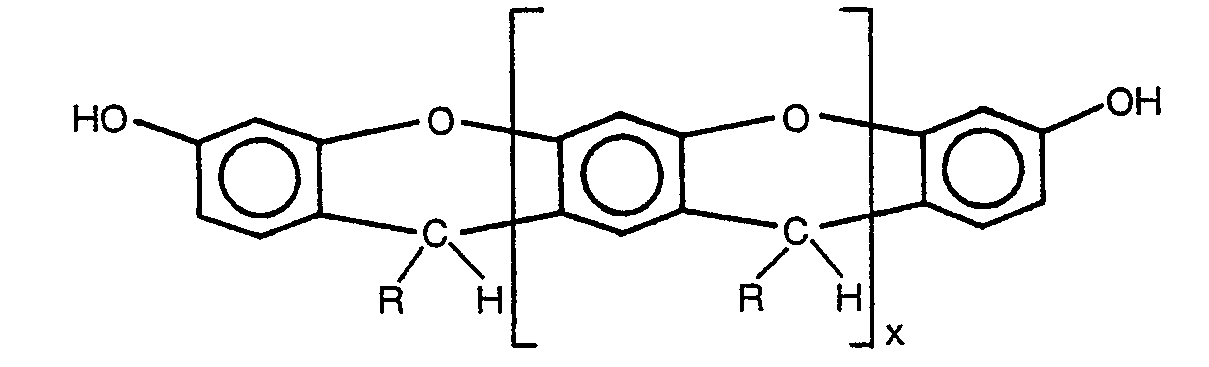
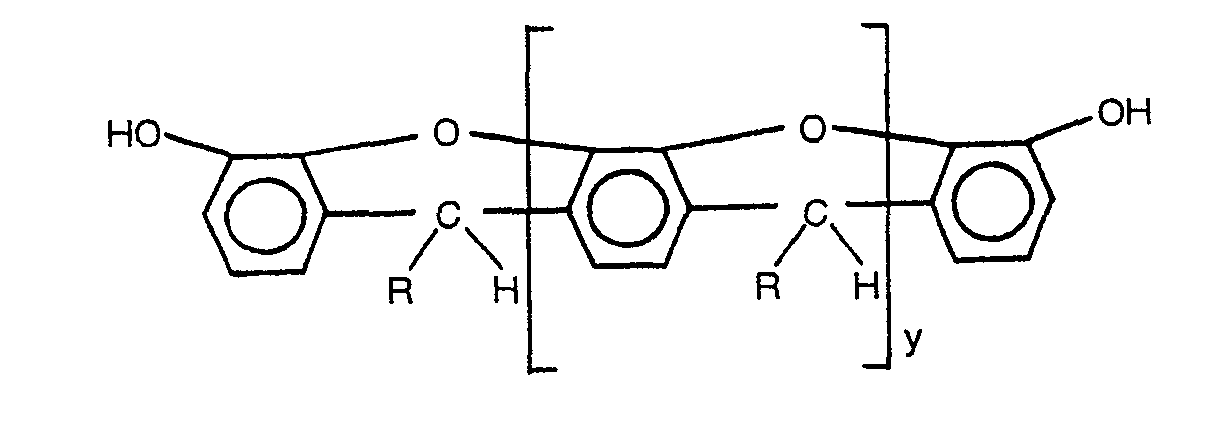
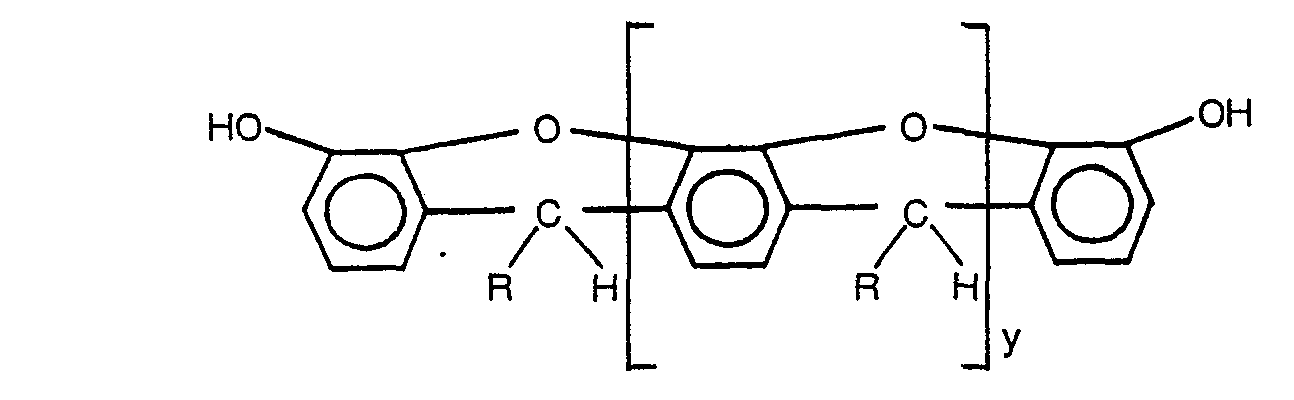
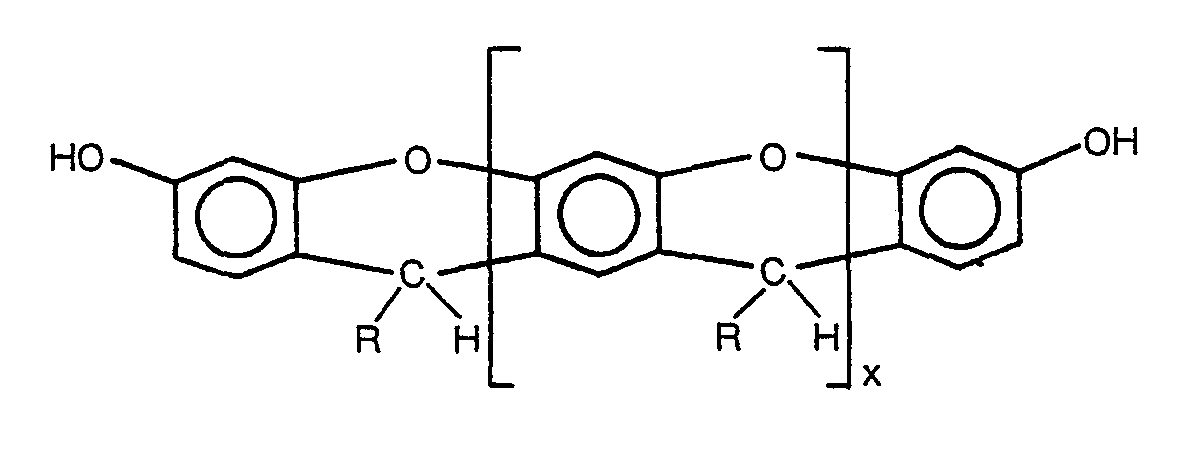
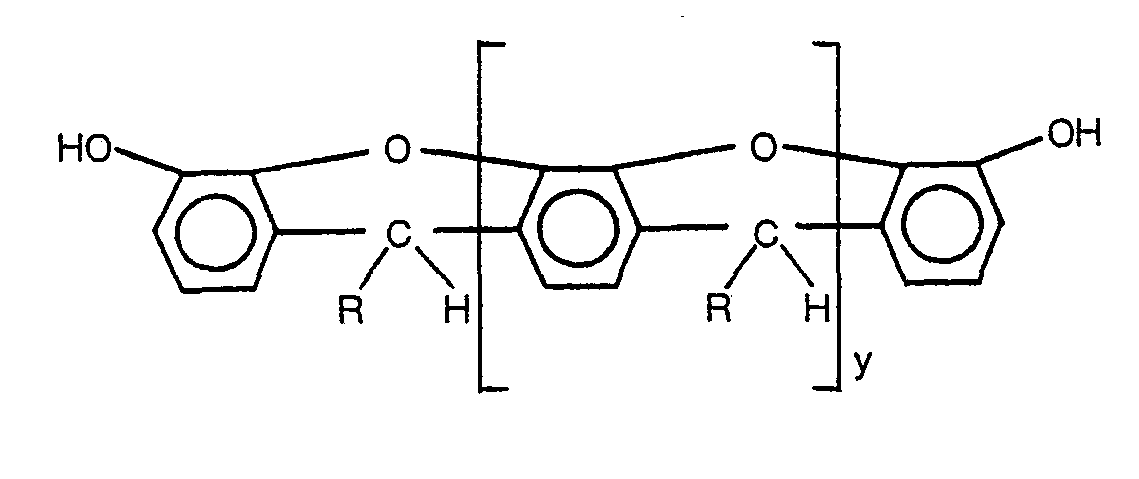
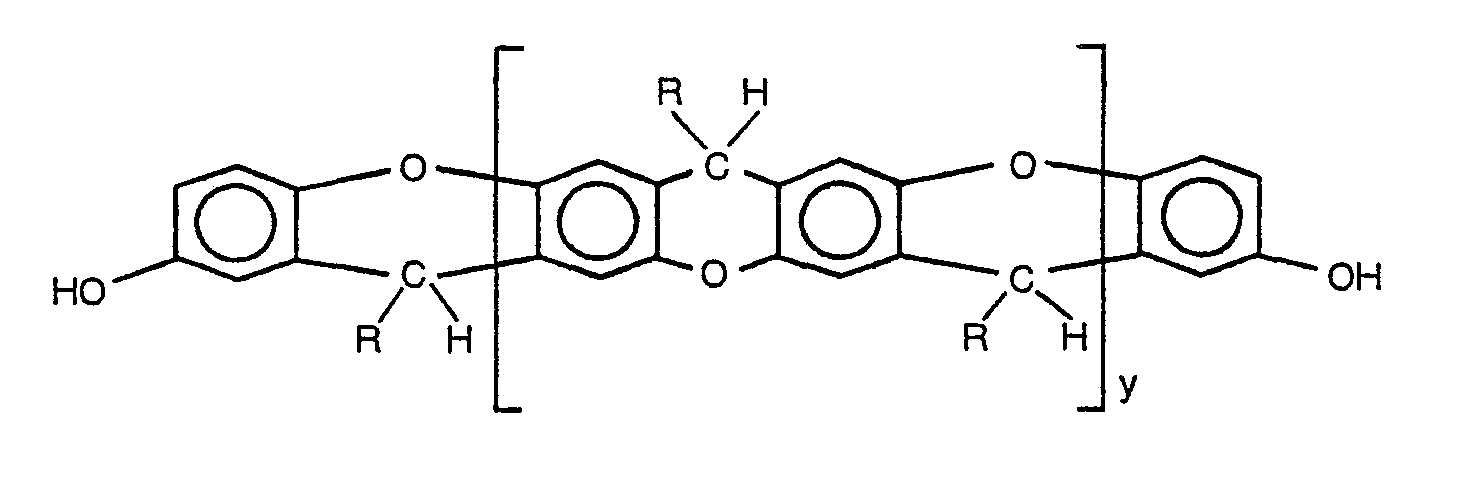
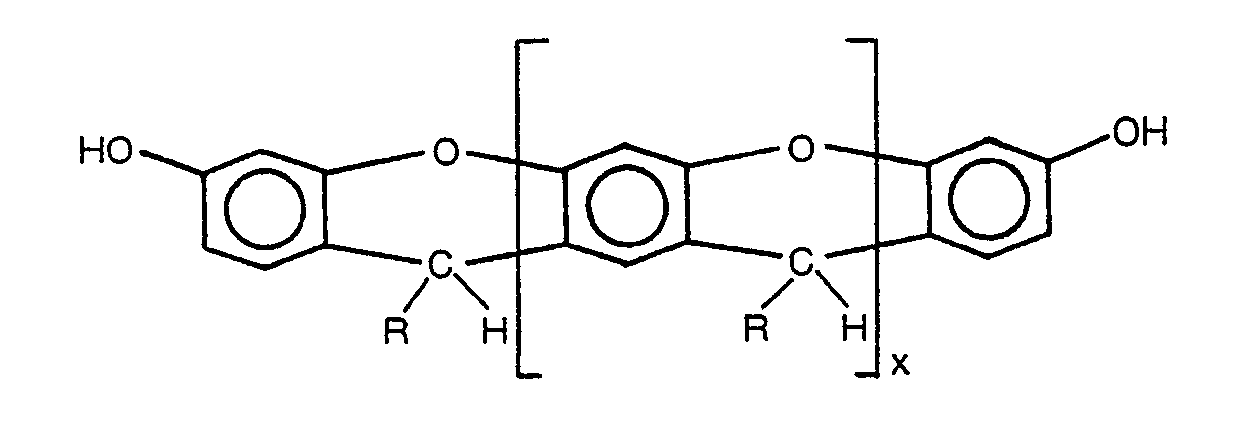
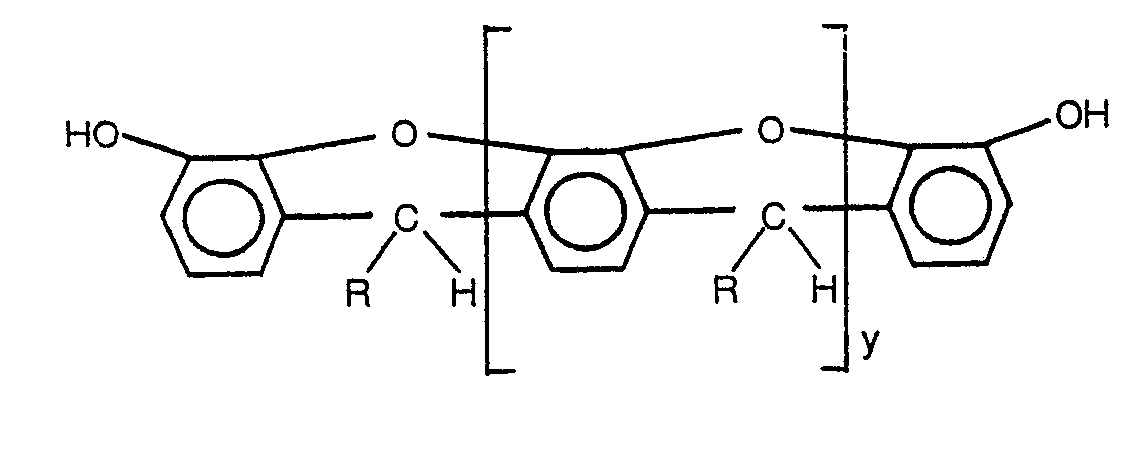
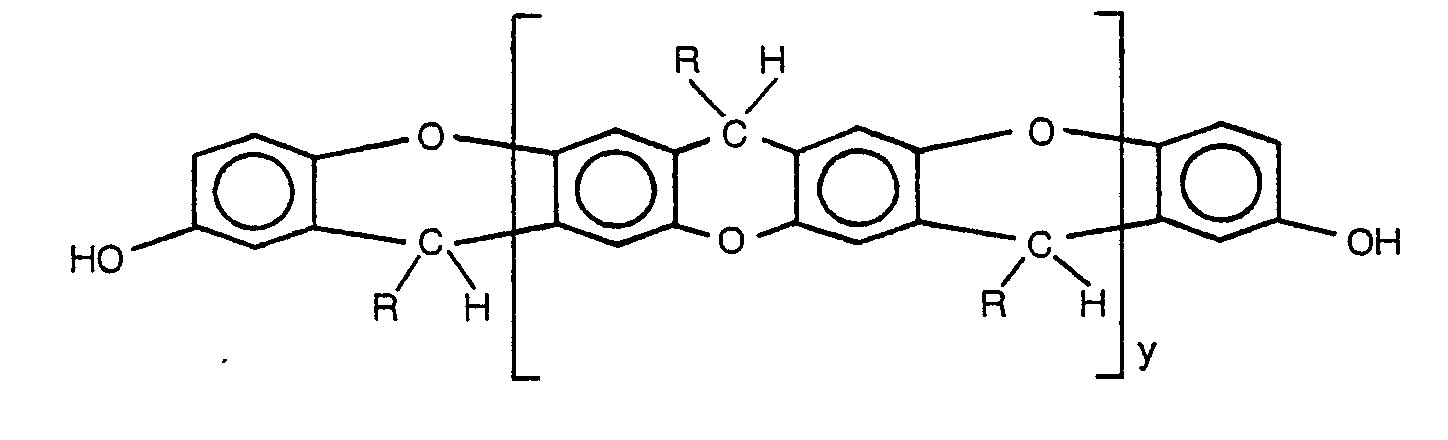
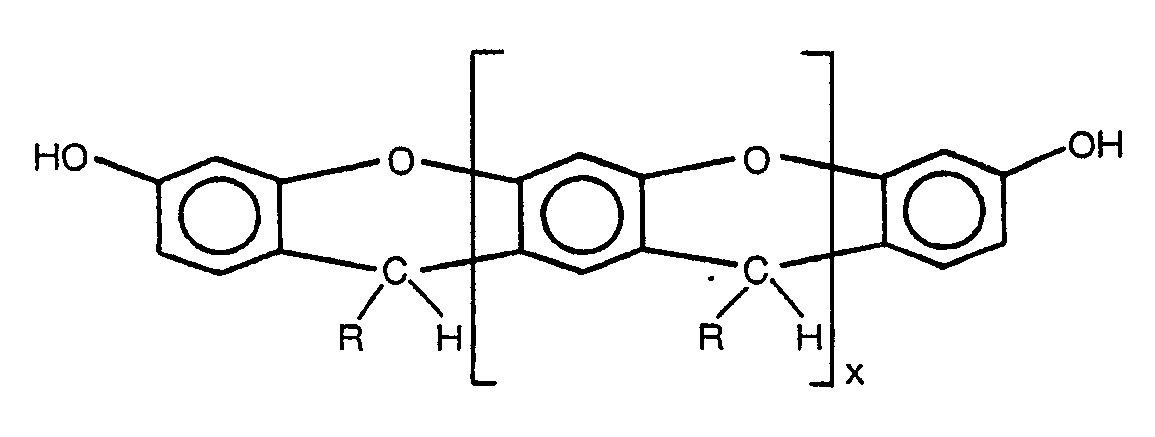
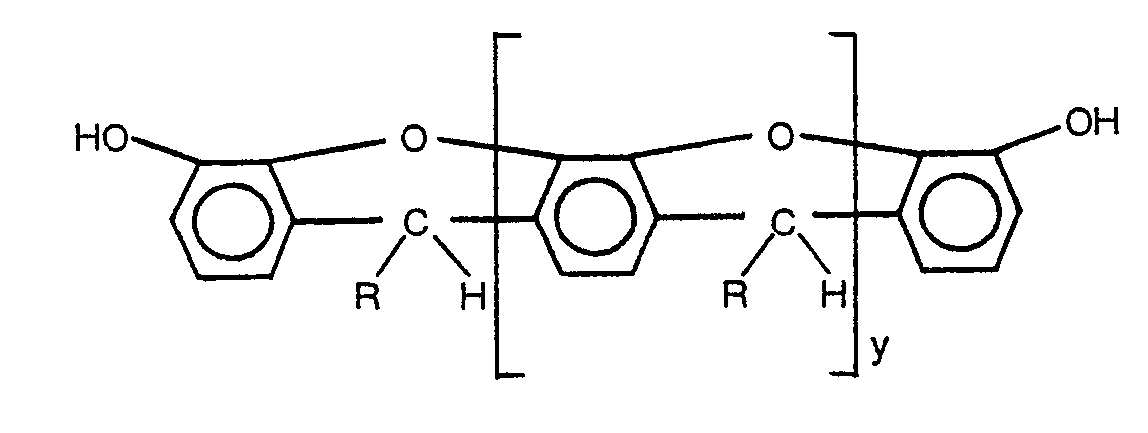
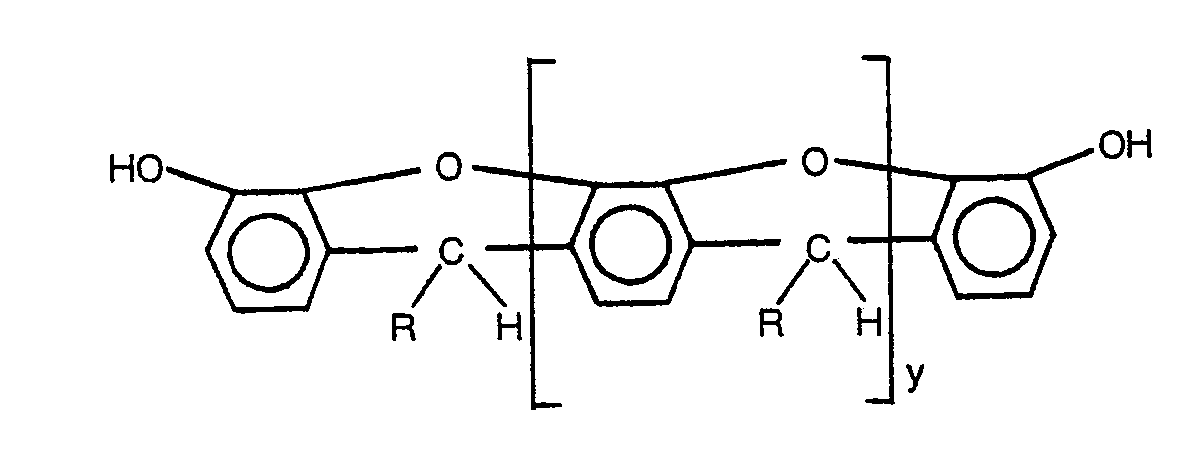
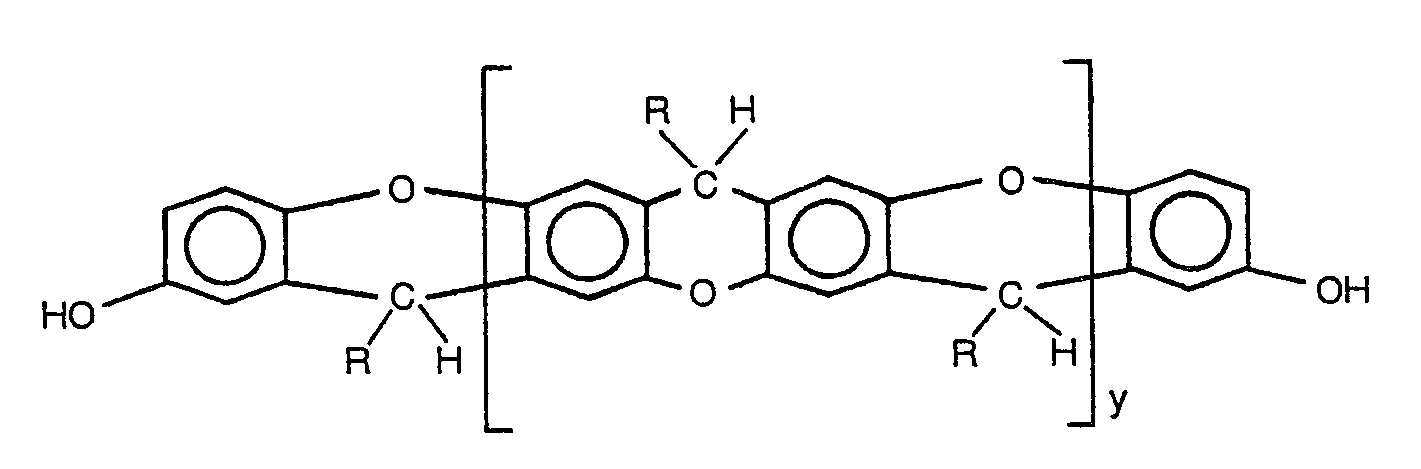
[0006] The reaction between the dihydric phenol and aliphatic aldehyde to form an oligomer, or mixture of oligomers of varying molecular weight, is a condensation reaction using a dehydration catalyst. If a mere bulk reaction between the dihydric phenol and aliphatic aldehyde is employed, the resulting products do not contain the desired structures useful as coating materials in the present invention. It is necessary to not only adjust the number of moles of each reactant carefully, but also to control mixing thereof and the reaction conditions to obtain the desired oligomers. The oligomers that are useful as coating materials, when the salt form thereof is employed, are those having the following general formulae:
and/or
and/or
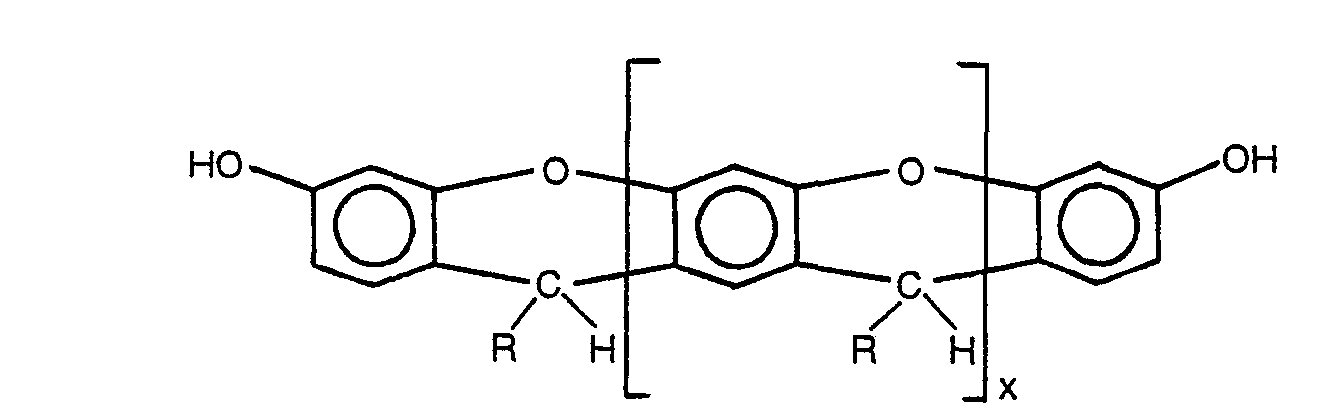
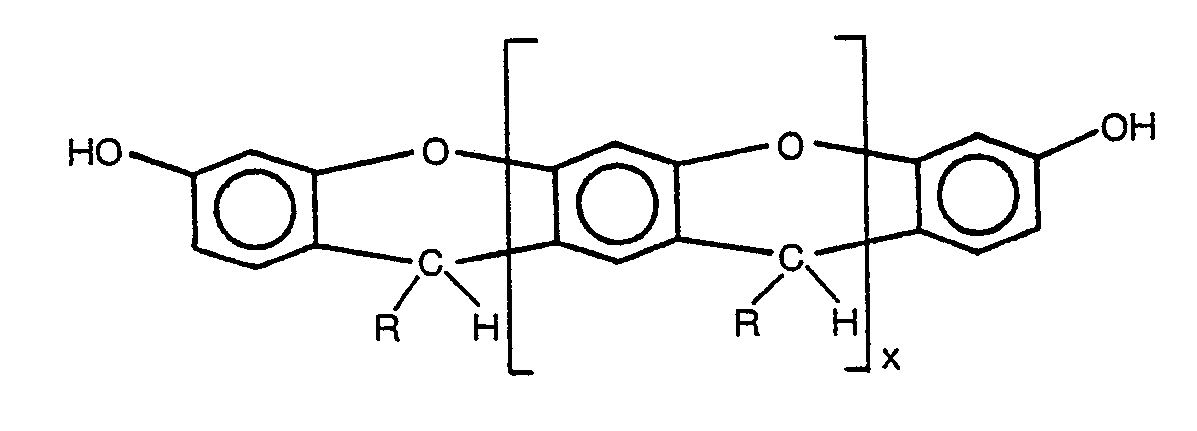
wherein R is H or an alkyl group, straight chained or branched, containing from 1 to 10 carbon atoms, X is an integer from 0 to 10 and Y is an integer from 1 to 10. Among the materials that may be employed in making the reaction products, or oligomers, suitable as coating materials in the present invention are the dihydric phenols, such as resorcinol, hydroquinone, catechol, and the aliphatic aldehydes, such as formaldehyde, acetaldehyde, propionaldehyde, n-butyl aldehyde, isobutyl aldehyde, n-valeroaldehyde, n-caproaldehyde, n-octyl aldehyde, n-decyl aldehyde, and the like. A good example of a coating material having the above general structure is that formed by the reaction of resorcinol and acetaldehyde. This material, or reaction product, is obtained in accordance with the following reaction:
A water solution of resorcinol and the NaOH catalyst is prepared at 60°C. in a reaction vessel. A water solution of acetaldehyde is prepared and placed in an add funnel. The acetaldehyde solution is then added dropwise to the resorcinol/catalyst solution with good agitation. In order to obtain the desired oligomers it is necessary to maintain a high mole ratio of resorcinol (and oligomers) to acetaldehyde throughout the early stages of the reaction. Then the temperature is raised steadily (up to 180°C.) to distill off both the initial water used as solvent and the water from the condensation reactions. Evidence that the desired reaction is taking place is provided by a deep red color in the solution and the absence of precipitates. Evidence that the desired xanthene, dixanthene, etc. compounds are present in the product is provided by an intense green fluorescence (UV to visible) from the material in dilute methanol solution.
[0007] A number of compounds can be used to catalyze formation of the desired oligomers from polyhydric phenols and aliphatic aldehydes. As examples of such compounds, there may be named sodium hydroxide, zinc chloride, sulfuric acid, and the like. Other dehydrating agents can be employed as catalysts for the reaction.
[0008] Looking at the broad picture of preventing polymer buildup in a polymerization reactor, it is essential that the inner surfaces thereof are water wettable. An ordinary solid surface, such as stainless steel, is not water-wettable due to the normal contamination of said surfaces with organic materials through contact with the atmosphere. The surfaces can be cleaned, such as with chromic acid or an abrasive cleanser, for example, and it will become water-wettable. However, such cleaning alone does not solve the problem since the surfaces will not remain clean for a sufficient length of time, that is for more than the duration of a single polymerization cycle. This necessitates recleaning the surfaces after each polymerization cycle. Therefore, applying a coating to the surfaces which will be water-wettable and resist polymer buildup thereon and remain on said surfaces throughout multiple reaction cycles is most desirable.
[0009] When a metal or solid surface is non-wettable, a liquid thereon, such as water, will form droplets and not flow out into a smooth film. The angle formed between the tangent of the side of the droplet and the metal or glass surface is called the "contact angle" and is referred to as "theta" (8). A further measurement of the wettability of a solid surface is the critical surface tension for wetting a solid surface and is expressed as "yc". The Yc is measured in Newton per meter (dynes per centimeter). Using water as the standard, in order for a solid surface to be wettable, 8 must equal zero or be very close to it, and Yc must be 72 . 10-3N . m-1 (72 dynes/cm) or greater.
[0010] More importantly, the material being applied to the surface should not only form a wettable surface, but also form a layer or film thereon which is not readily removable. This film adheres to the solid or metal surface by adsorption and in many cases, the film is a mono-layer of the coating material applied which is of the order of a molecule in thickness. These films, or coatings, of such thickness are invisible to the naked eye thus eliminating any color problem, such as is the problem with many coatings heretofore used for the same purpose. Of course, films of greater thickness can result when using higher solids content coating solutions, in accordance with the present invention, which films or coatings are visible to the naked eye. The film or layer formed by the coating solution is not removable by washing with water. That is to say, the coating or film is resistant to removal from the surfaces when a turbulent aqueous reaction medium is in contact therewith, caused by the agitation of the polymerization mixture in the reactor.
[0011] When reacting the polyhydric phenols and aliphatic aldehydes, a concentrate of the resulting oligomers is formed which in turn is used to make the coating solution of the salts thereof. The coating solutions are made in a conventional manner, using heat and/or agitation where necessary. In making said solutions, usually a temperature in the range of 20°C. to 50°C. is satisfactory. Agitation during dissolution is desirable. As previously pointed out, the coating material is dissolved in an aqueous alkaline solution, preferably an aqueous sodium hydroxide solution. However, other aqueous alkaline solutions may be employed, such as, for example, potassium hydroxide, lithium hydroxide, ammonium hydroxide, and the like. It has been found that a concentration of coating material in the range of 0.1% to 5.0% by weight is satisfactory in accomplishing the objectives of the present invention. To insure against undesirable color, and for economic reasons, it is preferred to employ a concentration of coating material in said solutions in the range of 0.5% to 2.0% by weight. It is to be understood that since the molecular weight of the coating material affects the total solids content in the coating solution, the concentration of said material therein could, in certain instances, be greater than 5.0% or less than 0.1 % by weight.
[0012] The coating solutions of the instant invention having a pH in the range of 9 to 14 are satisfactory to accomplish the objectives thereof. It is preferred, however, to operate at a pH in the range of 11 to 13. The pH is affected by the kind of cation used to form the salt, such as Na, K, Li, NH4, and the like.
[0013] The coating solution is usually applied to the inner reactor surfaces by spraying it on. However, it is also possible to apply the coating solution by flooding the reactor and then draining, or painting, or brushing on, but spraying is the most practical and economical method of application. After spraying the coating solution on the inner surfaces and draining the reactor, the polymerization reaction can be started immediately without further treatment of said surfaces. However, it has been found that excellent results are obtained when, after applying the coating solution to the inner surfaces of the reactor, the coated surfaces are sprayed with water and the reactor drained prior to charging the polymerization reactor with the polymerization mixture or recipe. It should also be pointed out that the coatings defined herein work equally well on glass or metal surfaces, such as stainless steel, and the like.
[0014] One important aspect of the present invention is that multiple polymerizations may be run without opening the reactor between charges since, with the spray nozzle or nozzles mounted at strategic points on the reactor, it is possible to reach all inner surfaces thereof while the reactor is closed. Although multiple charges may be run in a coated reactor without recoating the surfaces, it has been found to be expeditious to recoat the interior surfaces of the reactor periodically after several charges have been run therein, or after each charge, to insure uniform and efficient production. When it is decided to recoat the reactor, the reactor is drained and the inner surfaces of the reactor are flushed with water. The coating solution is applied to the surface, preferably by spraying, and the reactor is drained of the excess coating solution in such a way that the same can be sent to a recovery system, if desired. Then, optionally, the surfaces having the coating thereon are sprayed with water and the effluent is discarded, or recovered if desired. Thereafter, the reactor is charged with the polymerization medium and ingredients in the usual manner and the reaction commenced immediately with no particular modification of processing techniques being necessary due to the prsence of the coating. It is understood, of course, that one can recoat the reactor as often as desired without opening the same, even after every charge is polymerized. Further, utilization of the internally coated reaction vessel of the present invention does not adversely affect the heat stability or other physical and chemical properties of the polymers produced therein.
[0015] While the present invention is specifically illustrated with regard to the suspension polymerization of vinyl chloride, it is to be understood that the process and apparatus may likewise to applied in the emulsion, or suspension polymerization of any polymerizable ethylenically unsaturated monomer or monomers where undesirable polymer buildup occurs. Examples of such monomers are other vinyl halides and vinylidene halides, such as vinyl bromide, vinylidene chloride, etc.; vinylidene monomers having at least one terminal CH2=C< grouping, such as esters of acrylic acid, for example methyl acrylate, ethyl acrylate, butyl acrylate, octyl acrylate, cyaonethyl acrylate, and the like; vinyl acetate; acrylonitrile; esters of methacrylic acid, such as methyl methacrylate, butyl methacrylate, and the like; styrene and styrene derivatives including a-methyl styrene, vinyl toluene, chlorostyrene, etc.; vinyl naphthalene; diolefins, including butadiene, isoprene, chloroprene, and the like; and mixtures of any of these types of monomers and other vinylidene monomers copolymerizable therewith; and other vinylidene monomers of the type known to those skilled in the art.
[0016] The present invention, however, is particularly applicable to the suspension polymerization of vinyl chloride, either alone or in a mixture with one or more other vinylidene monomers having at least one terminal CH2=C< grouping copolymerizable therewith in amounts as great as 80% or more, by weight, based on the weight of the monomer mixture, since polymer buildup in the reaction vessel is a particularly bad problem here.
[0017] The polymerization process is usually conducted at a temperature in the range of 0°C. to 100°C. depending upon the particular monomer or monomers being polymerized. However, it is preferred to employ temperatures in the range of 40°C. to 70°C, since, at these temperatures, polymers having the most beneficial properties are produced. The time of the polymerization reaction will vary from 2 to 15 hours.
[0018] The polymerization process may be carried out at autogenous pressures although superatmospheric pressure of up to 9.8 bar (10 atmospheres) or more may be employed with some advantage with the more volatile monomers. Superatmospheric pressures may also be employed with those monomers having the requisite volatilities at reaction temperatures permitting reflux cooling of the reaction mixture.
[0019] Further, the polymerization process may be carried out utilizing a full reactor technique. That is, the reaction vessel is completely filled with the polymerization medium and kept that way throughout the reaction by constant addition thereto of water or additional makeup liquid containing the monomer or monomers in the same proportions as at start-up. Upon the addition of a certain predetermined amount of liquid, the polymerization reaction is terminated, usually by the addition thereto of a shortstopping agent. The necessity for the addition of liquid is due to the shrinkage in volume of the reaction medium produced by the conversion of the monomer or monomers to the polymeric state.
[0020] In order to rate the various coatings, there has been devised a rating scale with respect to "paper" and "sandy" buildup. An incoated reactor, where normal amounts of both types of buildup occur, is given a rating of 1.5 to 2.0. Any rating below 1.0 is good, or a definite improvement. In other words, 0.0 rating is perfect, and so on.
[0021] To further illustrate the present invention, the following specific examples are given. It is to be understood, however, that this is merely intended in an illustrative and not limitative sense. In the examples, all parts and percents are by weight unless otherwise indicated.
Example I
[0022] In this example, the coating material employed was the sodium salt of the reaction product of resorcinol and acetaldehyde. 50 g. (0.454 mole) of resorcinol was added to a 250 ml. round bottom flask and 1 milliliter (ml.) of a 50% aqueous NaOH solution was added thereto. The mixture was heated and just enough water was added to form a liquid at 60°C. 13 ml. (0.225 mole) of acetaldehyde and 45 ml. of water were mixed in an add funnel which was connected to the reaction flask. The acetaldehyde solution was added dropwise (1 drop every 2-4 seconds) to the reaction mixture with vigorous stirring and maintaining the temperature at 60°C. After the reactants were mixed, the stirring was maintained at 60°C. for one hour. The add funnel was then removed and replaced with a stillhead and condenser. The temperature was increased steadily and the water distilled off. The distillation was terminated when crystals of unreacted resorcinol appeared in the stillhead. This occurred when the oil bath temperature was 180°C. and the stillhead vapor temperature was 110°C. The finished reaction mixture was a dark red liquid. The mixture was cooled to 100°C. and then poured into 1000 ml of 5% aqueous NaOH.
[0023] The aqueous base solution of the oligomeric coating material was diluted to give a 1% by weight solution of the coating material in 1% by weight of NaOH. After cleaning the internal surfaces of a 3 liter stainless steel reactor with an abrasive cleaner, the surfaces were sprayed with the coating solution and then rinsed with water. Thereafter, the following polymerization recipe was charged to the reactor:
The contents of the reactor were heated to 57°C. and the temperature maintained there throughout the reaction cycle. Water was continuously added to the reactor in order to maintain the volume, due to shrinkage by reason of formation of polymer. When 33.45 parts of water had been added, the reaction was stopped by cooling the mixture rapidly. The reactor was emptied and the polymer recovered by filtration and drying. The interior surfaces were then rated for any buildup and then rinsed with water. Without recoating the internal surfaces of the reactor, the same procedure was followed in two additional runs or polymerization cycles. The surfaces were evaluated after each run. Also, a control run was made using the same recipe but in an uncoated reactor. The buildup ratings are set out in the following table:
[0024] The above results clearly show the vastly improved results obtainable with the present invention.
[0025] Coating of the internal surfaces of the polymerization reactor, in accordance with the present invention, substantially reduces, and in many cases, practically eliminates polymer buildup on said surfaces during the polymerization reaction and thus results in increased production over a unit period of time. More importantly, the present invention enables one to operate a closed polymerization system, which, in the case of vinyl chloride polymerization, has the advantage of drastically reducing the parts per million of vinyl chloride in the atmosphere of the plant. Such reduction of vinyl chloride in the atmosphere meets U.S. Government requirements.
1. A process for substantially eliminating the buildup of polymers on the internal
surfaces of a polymerization reaction vessel which comprises applying to said surfaces
an aqueous coating solution of an alkali metal or ammonium salt of an oligomer(s)
having the general structures
and/or
and/or
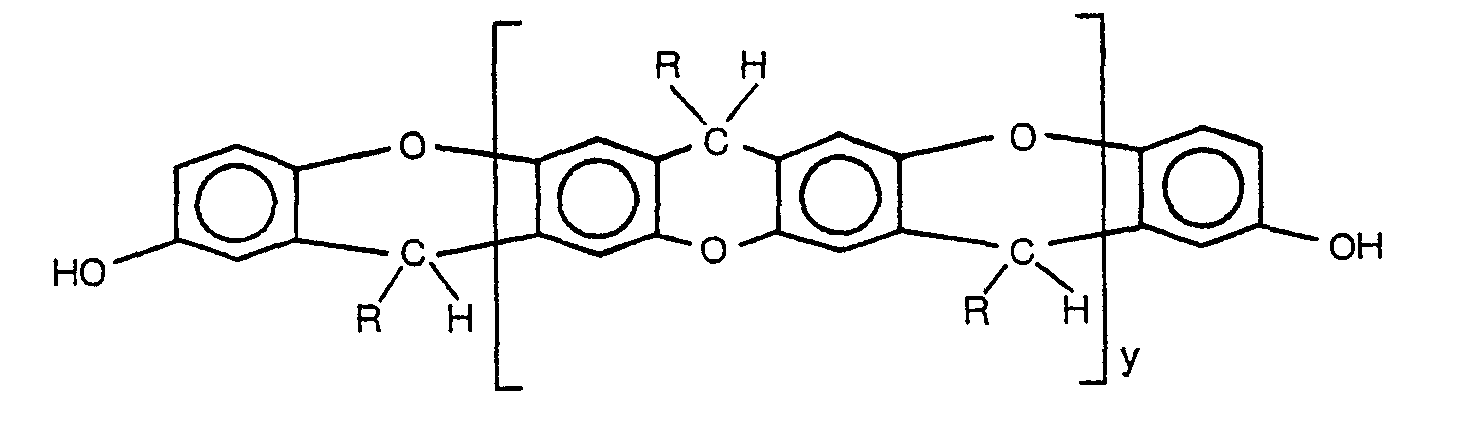
wherein R is H or an alkyl group, straight chained or branched, containing from 1 to 10 carbon atoms, X is an integer from 0 to 10 and Y is an integer from 1 to 10, and conducting the polymerization of monomer(s) while in contact with the coated internal surfaces of said vessel.
and/or
and/or
wherein R is H or an alkyl group, straight chained or branched, containing from 1 to 10 carbon atoms, X is an integer from 0 to 10 and Y is an integer from 1 to 10, and conducting the polymerization of monomer(s) while in contact with the coated internal surfaces of said vessel.
2. A process as defined in claim 1 wherein the monomer is vinyl chloride.
3. A process as defined in claim 1 wherein the oligomer(s) is formed by the reaction
of an aliphatic aldehyde and a dihydric phenol.
4. A process as defined in claim 1 wherein the coating solution contains from 0.1
% to 5.0% by weight of the salt of the oligomer(s).
5. A process as defined in claim 1 wherein the coated internal surfaces are rinsed
with water prior to conducting the polymerization of monomer(s).
6. A process as defined in claim 1 wherein the coating solution has a pH in the range
of 9 to 14.
7. A process as defined in claim 3 wherein the aliphatic aldehyde is acetaldehyde.
8. A process as defined in claim 3 wherein the dihydric phenol is resorcinol.
9. A process as defined in claim 8 wherein the aliphatic aldehyde is acetaldehyde.
10. A polymerization reaction vessel having on all the internal surfaces thereof a
coating comprised of an alkali metal or ammonium salt of an oligomer(s) having the
general structures
and/or
and/or
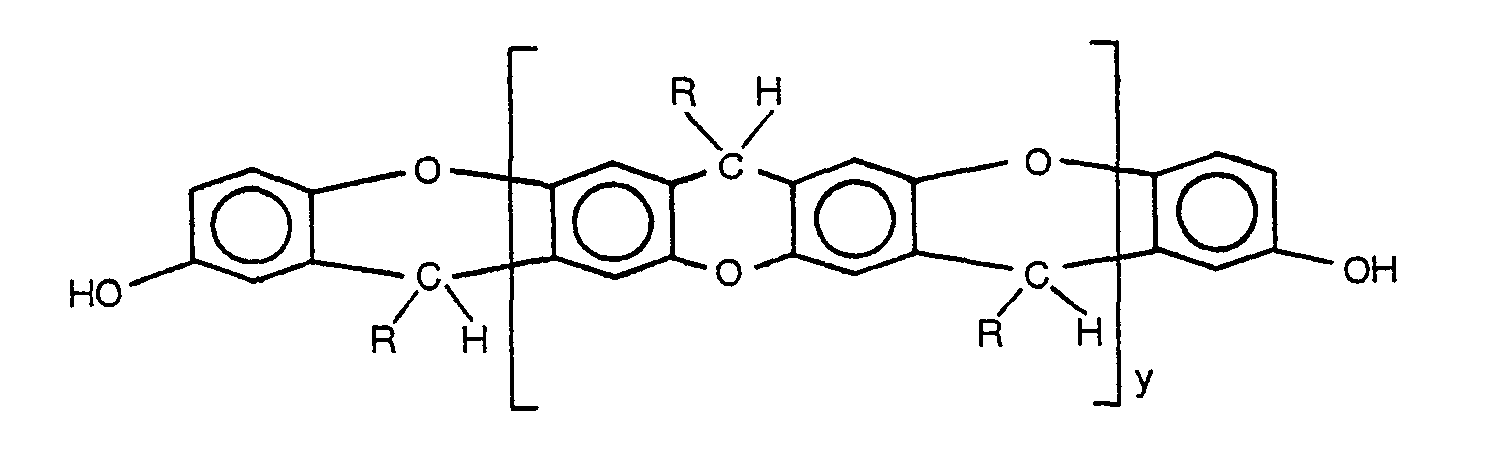
wherein R is H or an alkyl group, straight chained or branched, containing from 1 to 10 carbon atoms, X is an integer from 0 to 10, and Y is an integer from 1 to 10.
and/or
and/or
wherein R is H or an alkyl group, straight chained or branched, containing from 1 to 10 carbon atoms, X is an integer from 0 to 10, and Y is an integer from 1 to 10.
1. Verfahren zur weitgehenden Ausschaltung von Ablagerungen von Polymeren an den inneren
Oberflächen eines Polymerisations-Reaktionsgefäßes durch Aufbringen einer wäßrigen
Beschichtungslösung eines Alkalimetall- oder Ammonium-Salzes eines (mehrerer) Oligomers
(Oligomerer) der allgemeinen Strukturen
und/oder
und/oder
auf diese Oberflächen, wobei in den Strukturformeln
und Durchführen der Polymerisation des Monomers (der Monomeren), während dieses (diese) sich im Kontakt mit den beschichteten inneren Oberflächen des Gefäßes befindet (befinden).
und/oder
und/oder
auf diese Oberflächen, wobei in den Strukturformeln
R H oder eine geradkettige oder verzweigte Alkyl-Gruppe mit 1 bis 10 Kohlenstoff-Atomen ist,
X eine ganze Zahl von 0 bis 10 ist und
Y eine ganze Zahl von 1 bis 10 ist,
und Durchführen der Polymerisation des Monomers (der Monomeren), während dieses (diese) sich im Kontakt mit den beschichteten inneren Oberflächen des Gefäßes befindet (befinden).
2. Verfahren nach Anspruch 1, dadurch gekennzeichnet, daß das Monomer Vinylchlorid
ist.
3. Verfahren nach Anspruch 1, dadurch gekennzeichnet, daß das Oligomer (die Oligomeren)
durch Reaktion eines aliphatischen Aldehyds und eines zweiwertigen Phenols gebildet
werden.
4. Verfahren nach Anspruch 1, dadurch gekennzeichnet, daß die Beschichtungslösung
0,1 bis 5,0 Gew.- % des Salzes des Oligomers (der Oligomeren) enthält.
5. Verfahren nach Anspruch 1, dadurch gekennzeichnet, daß die beschichteten inneren
Oberflächen vor der Durchführung der Polymerisation des Monomers (der Monomeren) mit
Wasser gespült werden.
6. Verfahren nach Anspruch 1, dadurch gekennzeichnet, daß die Beschichtungslösung
einen pH im Bereich von 9 bis 14 hat.
7. Verfahren nach Anspruch 3, dadurch gekennzeichnet, daß der aliphatische Aldehyd
Acetaldehyd ist.
8. Verfahren nach Anspruch 3, dadurch gekennzeichnet, daß das zweiwertige Phenol Resorcin
ist.
9. Verfahren nach Anspruch 8, dadurch gekennzeichnet, daß der aliphatische Aldehyd
Acetaldehyd ist.
10. Polymerisations-Reaktionsgefäß mit einer Beschichtung, die ein Alkalimetall- oder
AmmoniumSalz eines (mehrerer) Oligomers (Oligomerer) der allgemeinen Strukturen
und/oder
und/oder
in denen
auf seinen sämtlichen inneren Oberflächen.
und/oder
und/oder
in denen
R H oder eine geradkettige oder verzweigte Alkyl-Gruppe mit 1 bis 10 Kohlenstoff-Atomen ist,
X eine ganze Zahl von 0 bis 10 ist und
Y eine ganze Zahl von 1 bis 10 ist,
auf seinen sämtlichen inneren Oberflächen.
1. Procédé pour éliminer essentiellement l'accumulation de polymères sur les surfaces
internes d'un réacteur de polymérisation qui comprend l'application auxdites surfaces
d'une solution de revêtement aqueuse d'un sel de métal alcalin ou d'ammonium d'un
ou de plusieurs oligomères ayant les structures générales
et/ou
et/ou
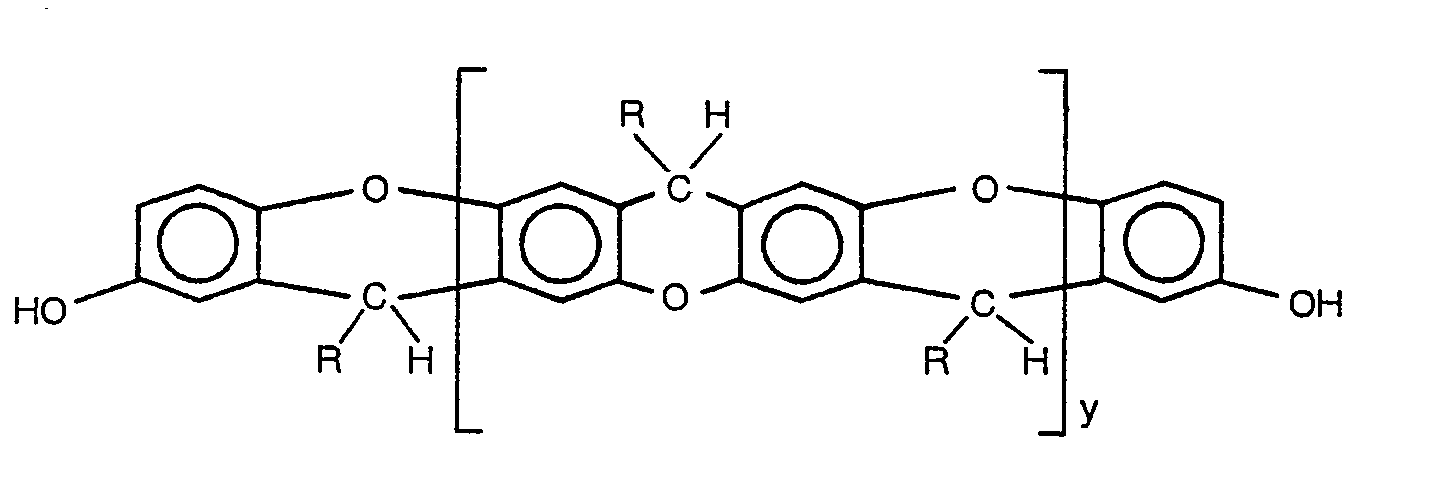
dans lesquelles R est H ou un groupe alkyle, à chaîne droite ou ramifiée, contenant de 1 à 10 atomes de carbone, X est un entier de 0 à 10 et Y est un entier de 1 à 10, et la conduite de la polymérisation du ou des monomères au contact des surfaces internes revêtues dudit réacteur.
et/ou
et/ou
dans lesquelles R est H ou un groupe alkyle, à chaîne droite ou ramifiée, contenant de 1 à 10 atomes de carbone, X est un entier de 0 à 10 et Y est un entier de 1 à 10, et la conduite de la polymérisation du ou des monomères au contact des surfaces internes revêtues dudit réacteur.
2. Procédé selon la revendication 1, dans lequel le monomère est le chlorure de vinyle.
3. Procédé selon la revendication 1, dans lequel le ou les oligomères sont formés
par la réaction d'un aldéhyde aliphatique et d'un diphénol.
4. Procédé selon la revendication 1, dans lequel la solution de revêtement contient
de 0,1% à 5,0% en poids du sel du ou des oligomères.
5. Procédé selon la revendication 1, dans lequel les surfaces internes revêtues sont
rincées à l'eau avant la conduite de la polymérisation du ou des monomères.
6. Procédé selon la revendication 1, dans lequel la solution de revêtement a un pH
dans la gamme de 9 à 14.
7. Procédé selon la revendication 3, dans lequel l'aldéhyde aliphatique est l'acétaldéhyde.
8. Procédé selon la revendication 3, dans lequel le diphénol est le résorcinol.
9. Procédé selon la revendication 8, dans lequel l'aldéhyde aliphatique est l'acétaldéhyde.
10. Réacteur de polymérisation dont toutes les surfaces internes sont recouvertes
d'un revêtement constitué d'un sel de métal alcalin ou d'ammonium d'un ou de plusieurs
oligomères ayant les structures générales.
et/ou
et/ou
dans lesquelles R est H ou un groupe alkyle. à chaîne droite ou ramifiée, contenant de 1 à 10 atomes de carbone, X est un entier de 0 à 10 et Y est un entier de 1 à 10.
et/ou
et/ou
dans lesquelles R est H ou un groupe alkyle. à chaîne droite ou ramifiée, contenant de 1 à 10 atomes de carbone, X est un entier de 0 à 10 et Y est un entier de 1 à 10.