| (19) |
 |
|
(11) |
EP 0 076 095 B1 |
| (12) |
EUROPEAN PATENT SPECIFICATION |
| (45) |
Mention of the grant of the patent: |
|
30.07.1986 Bulletin 1986/31 |
| (22) |
Date of filing: 23.09.1982 |
|
|
| (54) |
Direct conversion radio receiver for F.M. signals
Direkt umwandelnder Radioempfänger für FM-Signale
Récepteur de radio à transformation directe pour signaux à modulation de fréquence
|
| (84) |
Designated Contracting States: |
|
DE NL SE |
| (30) |
Priority: |
24.09.1981 GB 8128956
|
| (43) |
Date of publication of application: |
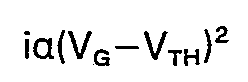
|
06.04.1983 Bulletin 1983/14 |
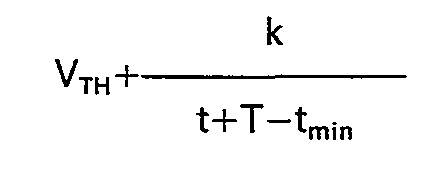
| (71) |
Applicant: International Standard Electric
Corporation |
|
New York
New York 10022 (US) |
|
| (72) |
Inventors: |
|
- Vance, Ian Alistair Ward
Newport
Essex (GB)
- Goatcher, John Kenneth
Harlow
Essex (GB)
|
| (74) |
Representative: Dennis, Mark Charles et al |
|
Nortel Patents,
London Road
Harlow,
Essex CM17 9NA
Harlow,
Essex CM17 9NA (GB) |
|
| |
|
| Note: Within nine months from the publication of the mention of the grant of the European
patent, any person may give notice to the European Patent Office of opposition to
the European patent
granted. Notice of opposition shall be filed in a written reasoned statement. It shall
not be deemed to
have been filed until the opposition fee has been paid. (Art. 99(1) European Patent
Convention).
|
[0001] This invention relates to a direct conversion radio receiver for frequency modulated
signals, particularly but not exclusively for frequency shift keyed signals on an
R.F. (radio frequency) carrier.
[0002] British Patent Specification GB-A-1517121 describes such a radio receiver, in particular
the demodulation circuit, in which the signal processing is performed at a low frequency
and therefore instead of adopting a superheterodyal principle, a direct conversion
principle is used. Patent Specifications GB-A-2 032 737 and 2 057 820 describe modifications
of this arrangement.
[0003] In these previous circuits the output of the demodulator is a digital waveform and
for some applications an analogue signal is necessary.
[0004] German Patent Specification DE-B-2529784 shows counting and changing frequency and
obtaining a quasi-analogue output from such a change of frequency. However, it does
not relate to zero-I.F. (intermediate frequency) receivers and if the circuit disclosed
in this patent specification were supplied with the signal from the radio receiver
of British Patent 1517121 no useful output would be produced.
[0005] The article Frequenz, Volume 32, No. 8 describes a circuit in Fig. 1 a on page 228
which has a single input and which measures a difference of frequency. It operates
in a manner similar to 2529784. Once again if the input of this circuit were supplied
with a single frequency signal no information will appear at the other end of the
circuit.
[0006] It is an object of the present invention to provide an analogue output signal from
a circuit of the kind described in British Patent Specification 1517121.
[0007] According to one aspect of the present invention there is provided a demodulator
circuit for a radio receiver for receiving a frequency modulated signal, in which
mixing with a local oscillator is used to produce quadrature baseband channels, the
circuit comprising a first channel in which the difference frequency between the local
oscillator frequency and the signal frequency will appear, and a second channel in
which the difference frequency will appear in quadrature with respect to the first
channel and lagging or leading in dependence upon the signal frequency being above
or below the local oscillator frequency, respectively; which is characterised in that
means are provided for measuring the time intervals between each successive zero crossing
in the difference frequency, in that means are provided for generating an output signal
representative of the reciprocal of the time interval, and means are provided for
decoding the phase between the channels, whereby to simulate an analogue output representative
of the information modulated on the R.F. signal.
[0008] According to another aspect there is provided a demodulator circuit for a radio receiver
for receiving a frequency modulated signal, in which mixing with a local oscillator
is used to produce quadrature baseband channels, the circuit comprising a first channel
in which the difference frequency between the local oscillator frequency and the signal
frequency will appear, and a second channel in which the difference frequency will
appear in quadrature with respect to the first channel and lagging or leading in dependence
upon the signal frequency being above or below the local oscillator frequency, respectively;
which is characterised in that means are provided for filtering pulses produced at
intermediate frequency zero crossings and means are provided for decoding the phase
between the channels, whereby to simulate an analogue output representative of the
information modulated on the R.F. signal.
[0009] In order that the invention can be clearly understood reference will now be made
to the accompanying drawings, in which:-
. Fig. 1 is a block schematic diagram of an FSK receiver according to a general embodiment
of the invention;
Fig. 2A shows waveforms applicable to the demodulator of Fig. 1 according to one embodiment
in which pulses are produced from each I.F. zero crossing and filtered;
Fig. 2B shows waveforms applicable to an alternative embodiment for the demodulator
of Fig. 1 in which the time intervals between successive zero crossings are measured;
Fig. 3 is a block circuit diagram of the demodulator 9 according to the embodiment;
Fig. 4 shows waveforms relating to Fig. 3;
Figs. 5a, 5b, 5c are simple circuits for the network N, to N4 in Fig. 3;
Fig. 6A is a circuit diagram of a more complex embodiment of the network N, to N4 for Fig. 3;
Fig. 6B shows waveforms relevant to the circuit of Fig. 6A;
Fig. 7 is a block diagram of another demodulator 9 incorporating the network N of
Fig. 6A;
Fig. 8 shows the selector logic function of Fig. 7;
Fig. 9 shows a block diagram of an all digital embodiment for the demodulator 9 of
Fig. 1 with reference to Fig. 2B;
Fig. 10 shows a block diagram of an alternative digital embodiment for the demodulator
9 of Fig. 1 with reference to Fig. 2B;
Fig. 11a shows an alternative form of demodulator 9;
Fig. 11 b shows the waveforms applicable to the circuit of Fig. 11a;
Fig. 12 is a block circuit diagram of a modification to the embodiment of Fig. 1 in
which two further channels are synthesised; and
Fig. 13 shows an input channel combining network combining the channel input to the
demodulator of Fig. 1.
[0010] The demodulation systems to be described below produce an approximation to an analogue
output by either measuring time intervals between successive zero crossings in the
I.F. or by filtering pulses produced at each I.F. zero crossing. This produces an
output waveform which for many purposes is adequate, and which gives more information
than the purely digital circuits.
[0011] In the receiver of Fig. 1 the received radio signals f
c±δ, where f
e is a carrier wave frequency and 5 is the FSK modulation deviation, are fed to two
high gain mixer circuits 1 and 2. A local oscillator 3 running at the frequency f
o is fed directly to mixer circuit 1 and via a phase shift network 4, which introduces
a 90° phase shift, to mixer 2. The outputs of mixer circuits 1 and 2 are fed in respective
channels A and B to low pass filters 5 and 6, respectively, which remove unwanted
interference e.g. from adjacent channels, and pass the difference frequency between
the signal and f.. The outputs of the low-pass filters are amplified in high gain
limiting amplifiers 7 and 8 so as to give two fully limited waveforms, which are in
quadrature. The quadrature phase shift (4) may also be placed in the incoming signal
path rather than in the local oscillator resulting in the same outputs from 7 and
8.
[0012] The frequency of the square waves is equal to the difference in frequency between
the incoming R.F. signal and the local oscillator.
[0013] The difference outputs of the mixer circuits are respectively +6 and +5 (phase angle―π/2)
when the input is f
c+δ, and -5 and -5 (phase angle―π/ 2) when the input is f
c-δ. The effect of the low pass filters is to extract the difference frequency δ. The
low-pass filter bandwidth is equal to the sideband width of the r.f. signal. The difference
or baseband signals which are then amplified in stages 7 and 8 provide fully symmetrically
limited outputs at logic level. So, if the deviation is 5 kHz then the baseband signal
will be 5 kHz.
[0014] Thus when the input signal is offset from its nominal frequency by +5 kHz there will
be delivered from the limiters two square waves in quadrature, as shown in the waveform
diagram, Fig. 2. When the frequency shifts to the other side of the local oscillator
(-5 kHz) then due to the phase inversion this implies in the mixer, the quadrature
phase shift is reversed.
[0015] Referring to Fig. 2A, waveform (a) represents the original modulation which is depicted
first as f
c+δ and then changes to f
c-δ. As a result, in channel A the square wave output from the limiter 7, represented
by waveform (b) lags the square wave output in channel B from limiter 8, represented
by waveform (c), by 90°: when the modulation changes to f
c-δ then channel A leads channel B by 90°. This phase relationship indicates whether
the modulation is above or below the local oscillator frequency.
[0016] Referring back to Fig. 1, the function of the demodulation circuit 9 is to measure
the frequency of this fully limited signal and to determine the relative lead/lag
condition of the quadrature signals in the two channels. As the signal is fully limited
an estimate of the instantaneous frequency can be made only on the occurrence of an
edge in either channel. The bandband demodulation is made to work in one of two basic
methods (1) or (2).
(1) For each edge in both channels A and B the demodulator outputs a pulse of fixed
length and amplitude (waveforming Fig. 11 B). The polarity of each pulse is determined
by whether channel A lags or leads channel B (the polarity of this convention is immaterial);
the rate of these pulses being equal to four times the frequency difference between
the receiver local oscillator and the received R.F. signal. These pulses are then
filtered to produce an output equal to this frequency difference.
(2) The demodulator measures the time t between each edge in either channel (n.b.
edges occur alternately in either channel) and outputs a voltage V, given by V=k1/t
where k is a constant. Furthermore, the time t may have a positive or negative significance
depending whether channel A lags or leads channel B (again the polarity of the convention
is immaterial). Hence the output V may be of either polarity.
[0017] Fig. 2B shows where the time t is derived from the same condition as shown in Fig.
2A.
[0018] The actual measurement of time ±t and the generation of the output ±V (or an adequate
approximation of this) can take many forms. These are described later.
[0019] Referring now to Fig. 3 there is shown one embodiment of a demodulator suitable for
use as the demodulator 9 shown in Fig. 1.
[0020] In Fig. 3 the output of channels A and B are fed to inverters 41 and 42 used to give
four phases of the input signal. Each of these is applied to a monostable M1 to M4
which is edge triggered, for example on positive going edges. The monostables M1 to
M4 produce a short output pulse following the appropriate trigger edge which is used
to momentarily close switches S
1 to S
4. Each input signal and its inverse is also passed through a network N
1 to N
4 which generates a voltage proportional to t
-1. The switches S
1 to S
4 then sample this voltage after the time t and the sample appears at the output. A
capacitor C
1 is connected to the output so as to hold the analogue value between samples.
[0021] Fig. 4 shows the waveforms occurring in the circuit of Fig. 3 for the case of a fixed
deviation frequency, and for that same deviation frequency occurring on the other
side of the local oscillator. It is clearly not physically possible to make the networks
N
1 to N
2 exactly produce a voltage proportional to t
-1 since this implies infinite output as t tends to zero. However, fixing an upper limit
of V for some minimum value of t only implies that the demodulator output will limit
at a particular peak deviation. This characteristic, i.e.


is an adequate approximation and may indeed be desirable to limit the operational
noise bandwidth of the demodulator.
[0022] Fig. 5 shows some networks N for N, to N
4 of Fig. 3,
[0023] Fig. 5(a) shows a network Na which gives a linear decay of V,
[0024] Fig. 5(b) shows a simple approximation Nb using a CR network which gives an exponential
decay of V,
[0025] Fig. 5(c) shows another network Nc in which the output is a combination of a linear
decay and an exponential decay.
[0026] Each of these networks approximates the ideal output to some extent and the choice
can be made on grounds of linearity required versus complexity.
[0027] In the circuit of Fig. 3 the monostables can be replaced by any other circuit causing
a short output pulse for an appropriate input edge, e.g. a differentiator or a clocked
digital network.
[0028] Another form (not shown) of the networks N, to N
4 is possible where a non-linear transfer characteristic is obtained as a piece-wise
linear approximation to the reciprocal law. A voltage dependent element such as a
diode is used in conjunction with a resistive network to define changes in slope of
an output voltage. The digital equivalent of this is also possible.
[0029] It is possible to devise more complex circuits for networks N which give more exactly
an output voltage proportional to t
-1.
[0030] Fig. 6A shows a possible circuit, Fig. 6B showing the input and output signals of
Fig. 6A. As noted above the approximation of holding the output voltage constant for
some time t
min such that a starting point of the true reciprocal curve is reached, is used. The
input pulse from channel A or B to an analogue switch G, places a voltage V. on capacitor
C
2. This voltage on the gate of a field-effect transistor (FET) TR5 causes a current
i to flow between source and drain. The gate voltage and drain current are then related:-
where:
VG=Gate voltage
VTH=Threshold voltage of the FET.
[0031] The voltage on the capacitor C
2 is held constant until the end of the input pulse. Thereafter current mirrors TR1,
TR2 and TR3, TR4 allow a current i to be drawn from the capacitor C
2.
[0032] The voltage on the capacitor C
2 is then
where:
k=constant
T=a constant set by the gain of TR5, C, and Vo.
[0033] If T is arranged to be =t
min, then an output voltage is obtained that is proportional to t
-1 for t>t
min. As the circuit is unipolar in operation but a bipolar output is required depending
on the relative phase of the two channels in the receiver, means are included to give
an inverted output. This comprises the form of a balanced amplifier, BA, as shown
in Figure 6A, making both polarities of output available.
[0034] Fig. 7 shows a complete demodulator using the analogue circuit AU1, AU2, of Fig.
6. From each channel A and B the pulse t
min is derived as defined in relation to Fig. 3 and also a short pulse
T, by use of positive-and-negative-edge triggered monostables M
A, M
B and M
a, M
b, respectively. The analogue unit AU1, AU2 is as described in Fig. 6 and the correct
polarity of the output waveform is selected by the logic selectors (as defined in
Fig. 8) and the analogue switches. In more detail the selectors SL, and SL
2 use the changes of polarity of the inputs A and B respectively to invert the polarity
of the pulse
T produced by M
a and M
b. This pulse is then applied to SL
3 and SL
4 which invert the pulse again according to the polarity of the original inputs A and
B. These means result in one of switches SW1, SW2, SW3 or SW4 being enabled for each
edge occurring in either channel, at the correct time to sample the voltage from the
blocks AU1 or AU2 as appropriate.
[0035] Fig. 9 shows an alternative demodulator using an all-digital configuration. A counter
CO is arranged to be edge triggered on alternate edges of channels A and B and to
count periods of a fast clock from a clock input C1 during each interval thus providing
a digital output signal as a measure of t. This digital signal is inverted in an arithmetic
unit ARU and converted to an analogue output with a digital to analogue converter
D/A.
[0036] Fig. 10 shows another embodiment of the demodulator 9 of Fig. 1, with reference to
Fig. 2B. Trigger pulses are generated from each channel A and B by edge triggered
monostable circuits M
1, M
2, and for each opposite phase of channels A and B by edge triggered monostables M
3 and M
4 via inverters I
1 and 1
2. The trigger pulses each initiate a linear ramp function in respective ramp generators
such as RG,. This ramp is used to sweep a voltage controlled oscillator VCO, each
cycle of which is counted on a digital counter DC1. The count is stopped and latched
to the output gate O/P, by the trigger pulse from the opposite channel. This is done
for each phase of the inputs resulting in four samples per cycle of the input frequency,
as in the previous embodiments described.
[0037] Fig. 11 shows a further alternative embodiment of the demodulator 9 of Fig. 1.
[0038] Referring now to Figs. 11a and 11b the outputs of channels A and B, as depicted by
waveforms (a) and (b) respectively of Fig. 11a, are applied to points a and b. An
exclusive OR gate 16 receives the channel waveforms and provides a square wave output
at twice the deviation frequency (waveform (c) in Fig. 11b b at point c in Fig. 11a).
Blocks 11 and 14 will, in response to every edge in channel A or B respectively, produce
a short pulse which sets or resets a flip-flop 12. A longer pulse (of the length required
for output) is produced by block 13 which closes an analogue switch 18 for the duration
of the pulse. Blocks 11, 13, 14 could be realised by an exclusive OR and a resistor
and a capacitor, for example, but the man skilled in the art will realise alternative
arrangements depending on the application. In general terms blocks 11, 13, 14 can
be described as monostables triggerable by either positive or negative-going pulses.
The output of block 13 at f is represented by waveform f in Fig. 11b. The polarity
of the pulse is determined by the exclusive OR 16 and exclusive OR 15 through flip-flop
12. This output pulse is applied to junction g between two resistors of equal value
R, and R
2 so that the polarity of the pulse at g (g in Fig. 11 a) is either 0 Volts when signal
e is zero and the switch 18 is closed or V
ee when signal e is a "1" and the switch 18 is closed (waveforms c and d in antiphase).
Thus waveform e shows whether the incoming R.F. signal is above or below the local
oscillator frequency, and this is multiplied by the series of pulses of waveform c
since waveform c it will be noted changes its polarity at each edge (both positive
and negative) of the deviation frequency. When the analogue gate 18 is open, point
g is at 2 v
cc.
[0039] Low-pass or band-pass filter 17 produces an approximation of an analogue output (h).
The previous embodiments described have a limit on the speed with which data or analogue
signals can be demodulated, that is to say the number of pulses obtainable at the
output per bit of input information, is limited. As the bit becomes smaller and smaller,
or the analogue frequency higher, eventually one will achieve one or less than one
pulse per bit, or per half cycle.
[0040] In terms of a modulation index for a two channel system this limit would be about
unity, i.e. the deviation would need to be at least 0.5 times the bit rate. A typical
modulation index for data is 0.707 which has special spectral properties and an embodiment
for handling this is described with reference to Fig. 12. In Fig. 12 the band-pass
filters of Fig. 1 are indicated by the reference number 5 and 6. In Fig. 12 two further
channels C and D are created, in addition to channels A and B, at 45° and 135° respectively,
by adding channels A and B to obtain channel C and subtracting channels A and B to
obtain channel D. The subtraction is achieved with an inverter INV. The resistive
adder networks, represented by pairs of resistors R output to limiter amplifiers 27
and 28 (similar to 7 and 8) and the four channels are applied to demodulator 9'. Demodulator
9' is the same as demodulator 9 depicted in Fig. 1 except that it comprises also an
input channel combining network as shown in Fig. 13, in which channels A and B are
fed to an exclusive OR gate 35 and channels C and D are fed to an exclusive OR gate
36. Outputs X and Y provide waveforms to demodulator 9 in the same way as previously
described except that there are twice as many pulses as previously, representing the
deviation frequency.
[0041] Fig. 13 shows how the four channel system of Fig. 12 is reduced to an equivalent
2 channel system for input to the demodulator 9 of Fig. 1. The signals at X and Y
are in quadrature but at twice the frequency of those at A and B, thus the outputs
X and Y can be used directly in the previously described demodulator circuits in place
of A and B.
[0042] In a similar fashion further interleaved phases can be created, and more resolution
obtained as required.
1. A demodulator circuit for a radio receiver for receiving a frequency modulated
signal, in which mixing with a local oscillator is used to produce quadrature baseband
channels, the circuit comprising a first channel in which the difference frequency
between the local oscillator frequency and the signal frequency will appear, and a
second channel in which the difference frequency will appear in quadrature with respect
to the first channel and lagging or leading in dependence upon the signal frequency
being above or below the local oscillator frequency, respectively; characterised in
that means (M1 to M4-Fig. 3, CO-Fig. 9) are provided for measuring the time intervals
(t-Fig. 2B) between each successive zero crossing in the difference frequency, in
that means (N1 to N4-Fig. 3, ARU-Fig. 9) are provided for generating an output signal
representative of the reciprocal of the time interval, and means (S1 to S4-Fig. 3)
are provided for decoding the phase between the channels, whereby to simulate an analogue
output representative of the information modulated on the radio frequency signal.
2. A demodulator circuit for a radio receiver for receiving a frequency modulated
signal, in which mixing with a local oscillator is used to produce quadrature baseband
channels, the circuit comprising a first channel in which the difference frequency
between the local oscillator frequency and the signal frequency will appear, and a
second channel in which the difference frequency will appear in quadrature with respect
to the first channel and lagging or leading in dependence upon the signal frequency
being above or below the local oscillator frequency, respectively; characterised in
that means (17-Fig. 11) are provided for filtering pulses (g-Fig. 11B) produced at
intermediate frequency zero crossings and means (15-Fig. 11a) are provided for decoding
the phase between the channels, whereby to simulate an analogue output representative
of the information modulated (original modulation-Fig. 11 B) on the r.f. signal.
3. The demodulator circuit according to claim 1 or claim 2, characterised in that
two further different phases (45°, 135°-Fig. 12) of the difference frequency are provided
in respective third and fourth channels (C, D), and time intervals are measured or
pulses are produced at each intermediate-frequency zero crossing in each of the four
channels (A, B, C, D).
4. The demodulator circuit according to claim 1, characterised in that for each channel
there is a first pulsing circuit (M) which is edge-triggered and produces in response
thereto a short output pulse (output M1, Fig. 4), a time-reciprocal network (N) for
producing in response to each zero crossing a signal whose magnitude is representative
of t-1 (where t is time between the short output pulses), and a switch (S), wherein the
switches (S) are controlled by the outputs from the first pulsing circuits (M) such
as to sequentially sample the outputs of the networks (N) for filtering.
5. The demodulator according to claim 4 characterised in that the time-reciprocal
network (N) is arranged to provide a signal whose magnitude varies to represent t-1 for time intervals in excess of a predetermined time interval tmin (Fig. 6A and 6B), the magnitude of said signal being held constant (C2) until the
interval tmin has elapsed, whereby a starting point on the time reciprocal curve t-1 is reached before sampling of the network output commences.
6. The demodulator according to claim 5 characterised in that for each channel (A,
B-Fig. 7) a second pulsing circuit (Ma, Mb) provides a pulse of length tmin in respect to each zero crossing to sample the time reciprocal network (AU1, AU2)
via the switches (SW1, SW2, SW3 and SW4).
7. The demodulator according to claim 6 characterised in that it comprises selector
logic (SL.1, SL2, SL3, SL4) for controlling the switches (SW1, SW2, SW3, SW4), which
are analogue switches, sequentially in response to outputs from the second pulsing
circuit (Ma, Mb) and from each zero crossing direct from one of the first and second
channels (A, B) respectively.
8. The demodulator according to claims 4, 5, 6 or 7, characterised in that said signal
from the time reciprocal circuit (Fig. 5a) has a linear decay.
9. The demodulator according to claims 4, 5, 6 or 7, characterised in that said signal
has an exponential decay (Fig. 5b).
10. The demodulator according to claims 4, 5, 6 or 7, characterised in that said.signal
has the combination of a linear and an exponential decay (Fig. 5c).
11. The demodulator according to claim 1, characterised in that it comprises a fast
clock (CLOCK, INPUT), means (CO) to provide a digital signal representing the count
of the clock periods occurring during the interval between each successive zero crossing,
means (ARU) to invert the digital signal and means (D/A) to convert the digital signal
to an analogue output (Fig. 9).
12. The demodulator according to claim 1, characterised in that it comprises in each
path (A, B) means (M) for generating a trigger pulse in response to the occurrence
of a zero crossing of the intermediate frequency, a ramp generator (RG,) which is
initiated by the trigger pulse, an oscillator (VCO,) variable by the ramp generator,
and means (DC,) to count the cycles of the varied oscillator between initiation by
one pulse (M,) and cessation by a subsequent pulse (M2) from the opposite channel (B), (Fig. 10).
13. The demodulator according to claim 2 characterised by including (Fig. 11a) first
and second pulses producing circuits (11, 14) for producing a pulse of the correct
polarity for each edge of the intermediate frequency in the first and second channels
(A and B), an exclusive OR gate (16) for receiving the signals of said first and second
channels, a flip-flop circuit (12) arranged to receive the output of the first and
second circuits (11, 14), a further exclusive OR gate (15) arranged to receive the
output of the flip-flop (12) and the output of the first OR gate (16), an analogue
switch (18) controlled by a monostable circuit (13) connected to the output of the
first OR gate (16) for outputting the second OR gate (15) output, and a bias network
(Ri, R2) to produce a 3-state analogue output.
1. Demodulatorschaltung für einen Funkempfänger zum Empfang eines frequenzmodulierten
Signals, bei dem zur Erzeugung eines Quadraturbasisbandkanals eine Mischung mit einem
Oszillatorsignal erfolgt, wobei die Schaltung einen ersten Kanal, in dem die Differenzfrequenz
zwischen der Oszillatorfrequenz und der Signalfrequenz erscheint, und einen zweiten
Kanal aufweist, in dem das Differenzfrequenzsignal um 90° phasenverschoben gegenüber
dem ersten Kanal erscheint und die Phase je nachdem, ob die Signalfrequenz über oder
unter der Oszillatorfrequenz liegt, voreilt oder nacheilt, dadurch gekennzeichnet,
daß Mittel (M1 bis M4-Fig. 3, CO-Fig. 9) zum Messen des Zeitabstands (t-Fig. 2B) zwischen
jedem aufeinanderfolgenden Nulldurchgang des Differenzfrequenzsignals, Mittel (N1
bis N4-Fig. 3, ARU-Fig. 9) zur Erzeugung eines vom Reziprokwert des Zeitabstands abhängigen
Ausgangssignals und Mittel-(S1 bis S4-Fig. 3) zur Decodierung der Phase zwischen den
Kanälen vorgesehen sind, wodurch ein analoges Ausgangssignal simuliert wird, das von
der dem Hochfrequenzsignal aufmodulierten Information abhängig ist.
2. Demodulatorschaltung für einen Funkempfänger zum Empfang eines frequenzmodulierten
Signals, bei dem zur Erzeugung eines Quadraturbasisbandkanals eine Mischung mit einem
Oszillatorsignal erfolgt, wobei die Schaltung einen ersten Kanal, in dem die Differenzfrequenz
zwischen der Oszillatorfrequenz und der Signalfrequenz erscheint, und einen zweiten
Kanal aufweist, in dem das Differenzfrequenzsignal um 90° phasenverschoben gegenüber
dem ersten Kanal erscheint und die Phase je nachdem, ob die Signalfrequenz über oder
unter der Oszillatorfrequenz liegt, voreilt oder nacheilt, dadurch gekennzeichnet,
daß Mittel (17-Fig. 11) zum Filtern von bei Nulldurchgängen des Zwischenfrequenzsignais
erzeugten Impulsen (g-Fig. 11B) und Mittel (15-Fig. 11a) zum Decodieren der Phasen zwischen den Kanälen
vorgesehen sind, wodurch ein analoges Ausgangssignal simuliert wird, das von der dem
Hochfrequenzsignal aufmodulierten Information (ursprüngliche Modulation-Fig. 11B)
abhängig ist.
3. Demodulatorschaltung nach Anspruch 1 oder 2, dadurch gekennzeichnet, daß zwei weitere
unterschiedliche Phasen (45°, 135°-Fig. 12) mit der Differenzfrequenz in einem dritten
bzw. einem vierten Kanal (C, D) vorgesehen sind, und daß Zeitabstände oder Impulse
bei jedem Nulldurchgang des Zwischenfrequenzsignals in jedem der vier Kanäle (A, B,
C, D) gemessen bzw. erzeugt werden.
4. Demodulatorschaltung nach Anspruch 1, dadurch gekennzeichnet, daß pro Kanal eine
erste Impulsgabeschaltung (M), die flankengesteuert ist und kurze Ausgangsimpulse
(Ausgang M1, Fig. 4) erzeugt, eine Reziprokwertschaltung (N), die bei jedem Nulldurchgang
ein Signal erzeugt, dessen Betrag t-' entspricht (wobei t die Zeit zwischen zwei kurzen
Ausgangsimpulsen ist), und ein Schalter (S) vorgesehen sind, wobei die Schalter (S)
von den Ausgangssignalen der ersten Impulsgabeschaltungen (M) so gesteuert werden,
daß sie die Ausgänge der Reziprokwertschaltung (N) zu Filterzwecken sequentiell abtasten.
5. Demodulatorschaltung nach Anspruch 4, dadurch gekennzeichnet, daß die Reziprokwertschaltung
(N) eine solche Anordnung aufweist, daß sie ein Signal abgibt, dessen Betrag Änderungen
von t-1 für einen vorgegebenen Zeitabschnitt tmin übersteigende Zeitabstände darstellt (Fig. 6A und 6B), wobei der Betrag des Signals
bis zum Ablauf des Zeitabschnitts tmin konstant gehalten wird (C2), so daß auf der Zeit-Reziprokwert-Kurve t-1 ein Ausgangspunkt erreicht wird, bevor die Abtastung der Ausgänge der Reziprokwertschaltung
beginnt.
6. Demodulatorschaltung nach Anspruch 5, dadurch gekennzeichnet, daß pro Kanal (A,
B-Fig. 7) eine zweite Impulsgabeschaltung (Ma, Mb) vorgesehen ist, die für jeden Nulldurchgang
einen Impuls mit der Länge tmin zur Abtastung der Reziprokwertschaltung (AU1, AU2) über die Schalter (SW1, SW2, SW3
und SW4) abgibt.
7. Demodulatorschaltung nach Anspruch 6, dadurch gekennzeichnet, daß sie eine Auswahllogik
(SL1, SL2, SL3, SL4) enthält, mit der die Schalter (SW1, SW2, SW3, SW4), die als Analogschalter
ausgelegt sind, abhängig von Ausgangssignalen der zweiten Impulsgabeschaltung (Ma,
Mb) und von jedem Nulldurchgang direkt vom ersten bzw. zweiten Kanal (A, B) sequentiell
gesteuert werden.
8. Demodulatorschaltung nach Anspruch 4, 5, 6 oder 7, dadurch gekennzeichnet, daß
das Ausgangssignal der Reziprokwertschaltung (Fig. 5a) linear abfällt.
9. Demodulatorschaltung nach Anspruch 4, 5, 6 oder 7, dadurch gekennzeichnet, daß
das Ausgangssignal der Reziprokwertschaltung (Fig. 5b) exponentiell abfällt.
10. Demodulatorschaltung nach Anspruch 4, 5, 6 oder 7, dadurch gekennzeichnet, daß
das Ausgangssignal der Reziprokwertschaltung (Fig. 5c) einen kombinierten linearen
und exponentiellen Abfall aufweist.
11. Demodulatorschaltung nach Anspruch 1, dadurch gekennzeichnet, daß sie einen schnellen
Taktgeber (CLOCK, INPUT), Mittel (CO) zur Erzeugung eines von der Anzahl der während
des Zeitabschnitts zwischen zwei aufeinanderfolgenden Nulldurchgängen gezählten Takte
abhängigen digitalen Signals, Mittel (ARU) zum Invertieren des digitalen Signals und
Mittel (D/A) zum. Umsetzen des digitalen Signals in ein analoges Ausgangssignal enthält
(Fig. 9).
12. Demodulatorschaltung nach Anspruch 1, dadurch gekennzeichnet, daß sie in jedem
Signalweg (A, B) Mittel (M) zur Erzeugung eines Triggerimpulses bei jedem Nulldurchgang
des Zwischenfrequenzsignals, einen von dem Triggerimpuls angestoßenen Sägezahngenerator
(RG,), einen durch den Sägezahngenerator steuerbaren Oszillator (VCO,) und Mittel
(DC,) zum Zählen der Perioden des gesteuerten Oszillators zwischen dem Anstoß durch
einen Impuls (M,) und der Beendigung durch einen nachfolgenden Impuls (M2) vom anderen Kanal (B) enthält.
13. Demodulatorschaltung nach Anspruch 2, dadurch gekennzeichnet, daß sie eine erste
und eine zweite impulserzeugende Schaltung (11, 14) im ersten bzw. zweiten Kanal (A
und B) zur Erzeugung eines polaritätsrichtigen Impulses für jede Flanke des Zwischenfreqpenzsignals,
ein Antivalenz-Gatter (16) zur Aufnahme der Signale des ersten und des zweiten Kanals,
einen Flip-Flop (12) zur Aufnahme der Ausgangssignale der ersten und der zweiten impulserzeugenden Schaltung (11, 14), ein weiteres Antivalenz-Gatter (15) zur Aufnahme
der Ausgangssignale des Flip-Flops (12) und des ersten Antivalenz-Gatters (16), einen
von einer monostabilen Schaltung (13) gesteuerten und an den Ausgang des ersten Antivalenz-Gatters
(16) angeschlossenen Analogschalter (18) zur Ausgabe des Ausgangssignals des ersten
Antivalenz-Gatters (16) und eine Vorspannungsschaltung (Ri, R2) zur Erzeugung eines analogen Ausgangssignals mit drei möglichen Zuständen enthält.
1. Circuit démodulateur pour récepteur radio, pour la réception d'un signal modulé
en fréquence, dans lequel le mélange avec la fréquence d'un oscillateur local est
employé pour produire des signaux de canaux en bande de base en quadrature, ce circuit
comprenant un premier canal dans lequel apparaît la fréquence de différence entre
la fréquence de l'oscillateur local et la fréquence du signal et un second canal dans
lequel la fréquence de différence apparaît en quadrature, par rapport au premier canal
et en avance de phase ou en retard, selon que la fréquence du signal est supérieure
ou inférieure à la fréquence de l'oscillateur local, respectivement, caractérisé en
ce que des moyens (M1 à M4, fig. 3; CO, fig. 9) sont prévus pour mesurer l'intervalle
de temps (t, fig. 2b) entre les passages successifs par zéro à la fréquence de différence,
en ce que des moyens (N1 à N4, fig. 3; ARU, fig. 9) sont prévus pour engendrer un
signal de sortie représentant l'inverse de cet intervalle de temps, et des moyens
(S1 à S4, fig. 3) sont prévus pour décoder la phase entre les canaux, simulant ainsi
un signal de sortie analogique représentant l'information modulée sur le signal à
radiofréquence.
2. Circuit démodulateur pour récepteur radio, pour la réception d'un signal modulé
en fréquence, dans lequel le mélange avec la fréquence d'un oscillateur local est
employé pour produire des signaux de canaux en bande de base en quadrature, ce circuit
comprenant un premier canal dans lequel apparaît la fréquence de différence entre
la fréquence de l'oscillateur local et la fréquence du signal et un second canal dans
lequel la fréquence de différence apparaît en quadrature, par rapport au premier canal,
et en avance de phase ou en retard, selon que la fréquence du signal est supérieure
ou inférieure à la fréquence de l'oscillateur local, respectivement, caractérisé en
ce que des moyens (17, fig. 11) sont prévus pour filtrer des impulsions (g, fig. 11b)
produites aux passages par zéro à la fréquence intermédiaire et des moyens (15, fig.
11a) sont prévus pour décoder la phase entre les canaux, simulant aisni un signal
de sortie analogique représentant l'information modulée (modulation d'origine, fig.
11 b) sur le signal à radiofréquence.
3. Circuit démodulateur selon la revendication 1 ou 2, caractérisé en ce que la fréquence
de différence est produite avec deux autres phases différentes (45°, 135°, fig. 12)
dans des troisièmes et quatrième canaux respectivement (C, D), les passages par zéro
à fréquence intermédiaire donnant lieu à la mesure d'intervalles de temps ou à la
production d'impulsions, dans chacun des quatre canaux (A, B, C, D).
4. Circuit démodulateur selon la revendication 1, caractérisé en ce que, pour chaque
canal, il est prévu un premier circuit d'impulsions (M) déclenché par un flanc et
produisant en réponse à celui-ci une impulsion brève de sortie (sortie de M1, fig.
4), un réseau d'inverse de temps (N) pour produire, en réponse à chaque passage par
zéro, un signal dont l'amplitude est fonction de t-I (t étant le temps entre deux impulsions brèves de sortie), et un commutateur (S),
les commutateurs (S) étant commandé par les sorties des premiers circuits d'impulsions
(M) de manière à échantillonner séquentiellement les sorties des réseaux (N), aux
fins de filtrage.
5. Démodulateur selon la revendication 4, caractérisé en ce le réseau d'inverse de
temps (N) est agencé pour fournir un signal dont l'amplitude varie de manière à représenter
t-1 pour des intervalles de temps dépassant un intervalle de temps prédéterminé trin
(fig. 6A et 6B), l'amplitude de ce signal étant maintenue constante (C2) jusqu'à ce
que l'intervalle de temps tmin se soit écoulé et qu'un point de départ ait été atteint sur la courbe d'inverse de
temps t-1, avant que commence l'échantillonnage des sorties de réseaux.
6. Démodulateur selon la revendication 5, caractérisé en ce que, pour chaque canal
(A, B, fig. 7) un selon circuit d'impulsions (Ma, Mb) fournit une impulsion de longueur
tmin, en relation avec chaque passage par zéro, pour échantillonner le réseau d'inverse
de temps (AU1, AU2), par l'intermédiaire de commutateurs (SW1, SW2, SW3 et SW4).
7. Démodulateur selon la revendication 6, caractérisé en ce qu'il comprend une logique
de sélection (SL1, SL2, SL3, SL4), pour commander les commutateurs (SW1, SW2, SW3,
SW4), qui sont des commutateurs analogiques, séquentiellement, en réponse aux signaux
de sortie des seconds circuits d'impulsions (Ma, Mb) et directement à partir des passages
par zéro de l'un du premier et du second canal respectivement (A, B).
8. Démodulateur selon la revendication 4, 5, 6 ou 7, caractérisé en ce que ledit signal
produit par le circuit d'inverse de temps (fig. 5a) décroît linéairement.
9. Démodulateur selon la revendication 4, 5, 6 ou 7, caractérisé en ce que ledit signal
décroît exponentiellement (fig. 5b).
10. Démodulateur selon la revendication 4, 5, 6 ou 7, caractérisé en ce que ledit
signal décroît, en combinaison, de manière linéaire et exponentiellement (fig. 5c).
11. Démodulateur selon la revendication 1, caractérisé en ce qu'il comprend une horloge
rapide (CLOCK INPUT), des moyens (CO) pour produire une signal numérique représentatif
du nombre de périodes d'horloge se produisant dans un intervalle entre passages par
zéro successifs, des moyens (ARU) pour inverser le signal numérique et des moyens
(D/A) pour convertir le signal numérique et un signal de sortie analogique (fig. 9).
12. Démodulateur selon la revendication 1, caractérisé en ce qu'il comprend, dans
chaque trajet (A, B), des moyens pour engendrer une impulsion de déclenchement en
réponse à chaque passage par zéro à la fréquence intermédiaire, un générateur de rampe
(RG,) qui est déclenché par l'impulsion de déclenchement, un oscillateur (VCO,) dont
la fréquence est commandée par le générateur de rampe, et des moyens (DC,) pour compter
les pédiodes de l'oscillateur commandé entre son déclenchement par une impulsion (M,)
et son arret par une impulsion suivante (M2) du canal opposé (B) (fig. 10).
13. Démodulateur selon la revendication 2, caractérisé en ce qu'il comprend (fig.
11a) des circuits (11, 14). produisant une première et seconde impulsion pour engendrer
une impulsion de la polarité appropriée à chaque front de la fréquence intermédiaire
dans les premier et second canaux (A et B), une porte OU exclusif (16) pour recevoir
les signaux de ces premier et second canaux, un circuit de bascule (12) agencé pour
recevoir les signaux de sortie des premier et second circuits (11, 14), une autre
porte OU exclusif (15) agencée pour recevoir le signal de sortie de la bascule (12)
et celui de la première porte OU exclusif (16), un commutateur analogique (18) commandé
par un circuit monostable (13) connecté à la sortie de la première porte OU (16),
pour conditionner la sortie de la seconde porte OU (15), et un réseau de polarisation
(R1, R2) pour engendrer une sortie analogique à trois états.