|
(11) | EP 0 085 204 A1 |

| (12) | EUROPEAN PATENT APPLICATION |
|
|
|
|
|||||||||||||||||||||||||||
| (54) | Process for the co-production of carboxylic acids and carboxylic acid esters |
| (57) Process for the co-production of carboxylic acids of the general formula R1-COOH and RZ-COOH and carboxylic acid esters of general formula R1-COOCH2R2 and R2-COOCH2R1 from carboxylic acid esters of general formula R1-COOR2 and/or ethers of general formula R3OR4 (R1,R2,R3,R4 representing (substituted) alkyl or (substituted) aryl, alkaryl or aralkyl, R1 also representing H), carbon monoxide and hydrogen at elevated temperature and pressure
in the presence of a ruthenium compound, a further Group VIII metal compound, and
a compound R5Hal or R5COHal where R5 has one of the meanings given for R2 and Hal is iodine or bromine, the reaction mixture being substantially free from
other transition metal or Group II metal iodides or bromides, and containing a trivalent
nitrogen compound containing a group
such as an amide, a carbamate, a urea or a derivative thereof. The process is of special interest for the selective conversion of methyl acetate into ethyl acetate and acetic acid at pressure well below 100 bar. |
[0001] The present invention relates to a process for the co-production of carboxylic acids and carboxylic acid esters from carboxylic acid esters having one carbon atom less in the molecule, carbon monoxide and hydrogen in the presence of a catalytic system. The invention relates in particular to a process for the co-production of acetic acid and ethyl acetate from methyl acetate under mild process conditions. Carboxylic acid esters produced according to the process according to the present invention are thus homologues of the carboxylic acid esters used as starting materials.
[0002] The production of carboxylic acid esters via homologation has already been described in the literature. It is known from European Patent Application No. 31606 that the stoichiometry of the known reactions of methylacetate with carbon monoxide and hydrogen can be altered most advantageously to produce one mole of ethyl acetate and two moles of acetic acid from two moles of methyl acetate. The catalytic system comprises three metal compounds: a ruthenium compound, a further Group VIII metal compound, and a bromide or iodide of a Group II or transition metal, preferably in the presence of a promotor, typically an amine or a phosphine.
[0003] It has been described and claimed in our co-pending European Patent Application No&2200967.6that an alkyl or acyl iodide or bromide can replace the Group II or transition metal iodide or bromide in the catalytic system as disclosed in European Patent Application No. 31606, provided that the quantity of amine in the reaction mixture does not exceed a certain rather low level.
[0004] It has now been found that another class of trivalent nitrogen compounds, i.e. trivalent nitrogen compounds containing a group
wherein X is 0 or S, can also be applied advantageously in the process for the co-production of carboxylic acids and carboxylic acid esters using a catalytic system based on a ruthenium compound, a further Group VIII metal compound and an alkyl or acyl iodide or bromide.
[0005] The present invention provides a process for the co-production of carboxylic acids of the general formula R1-COOH and R2-COOH and carboxylic acid esters of the general formula R1-COOCH2R2 and R2-COOCH2RI wherein each of the groups R1 and R2, which may be the same or different, represents an alkyl group having from 1 to 20 carbon atoms which may be substitued by one or more inert substituents such as fluorine or chlorine containing moieties or hydroxy, alkoxy or alkanoyl groups, or an aryl, alkaryl or aralkyl group which may be substituted by one or more inert substituents such as fluorine or chlorine containing moieties or alkoxy or alkanoyl groups whilst Rl may also represent a hydrogen atom, wherein a carboxylic acid ester of the general formula R1-COOR2 and/or an ether of the general formula R30R4, wherein R1 and R2 are as defined hereinbefore and each of R3 and R4, which may be the same or different, represents an alkyl group having from 1 to 20 carbon atoms which may be substituted by one or more inert substituents such as fluorine or chlorine containing moieties or hydroxy, alkoxy or alkanoyl groups, or an aryl, alkaryl or aralkyl group which may be substituted by one or more inert substituents such as fluorine or chlorine containing moieties or alkoxy or alkanoyl groups, is reacted with carbon monoxide and hydrogen at elevated temperature and pressure in the presence of a catalytic system which comprises a ruthenium compound, a further Group VIII metal compound, and a compound of the general formula R5Hal or R5COHal where R5 has one of the meanings given above for R2 and Hal represents an iodine or bromine atom, the reaction mixture being substantially free from other transition metal or Group II metal iodides or bromides, and containing a trivalent nitrogen compound containing a group
wherein X represents an oxygen or sulphur moiety.
[0006] It should be noted that the composition of the reaction product mixture will be governed by the choice of the starting carboxylic acid esters and/or ethers. For instance, when starting materials are used wherein the groups R1 and R2 are identical, such as in methyl acetate, dimethyl ether and ethyl propionate, the reaction product mixture will normally contain only the carboxylic acid ester homologue and the appropriate acid. When starting materials are used wherein the groups R1 and R2 are not identical, a more complex reaction product mixture will be obtained which comprises normally at least two carboxylic acid ester homologues and two appropriate carboxylic acids. For instance, when ethyl acetate is used as the starting material the reaction product mixture comprises propyl acetate, ethyl propionate, propionic acid and acetic acid.
[0007] It will be appreciated that any carboxylic acid ester homologue produced according to the present process can serve as starting material in the process according to the present invention thus forming the next carboxylic acid ester homologue(s) and the appropriate carboxylic acid(s). In addition, since carboxylic acids are produced in the process according to the present invention, transesterification reactions, i.e. reactions between carboxylic acids and carboxylic acid esters, or between different carboxylic acid esters, may also occur under the prevailing reaction conditions. It will be clear that transesterification reactions do not alter the product composition when the starting material comprises compounds wherein Rl'and R2 are identical, but may alter the product composition when the groups R1 and R2 are not identical.
[0008] For the purpose of the present invention, carboxylic acids and carboxylic acid esters, obtained via a further homologation of produced carboxylic acid ester, or obtained by a transesterification process under the prevailing conditions, are considered to be within the scope of the present invention.
[0009] From the above it will be clear that preference is given to processes wherein starting materials are used wherein the groups R and R2 are identical since a less complex reaction mixture will be obtained. The process according to the present invention is of special interest for the co-production of acetic acid and ethyl acetate from methyl acetate according to the equation:
since the products can be obtained with high selectivity and close to the stoichiometrically expected ratio. This is of special interest when the process according to the invention is part of an integrated process, wherein acid produced - for instance acetic acid - is to be recycled in the process. Moreover, the process according to the present invention can be carried out conveniently at surprisingly low pressures, e.g. pressures well below 100 bar can be used advantageously.
[0010] Suitable starting materials which can be used conveniently in the process according to the present invention include compounds of the general formula R1-COOR2 and/or R30R4, wherein each of R1, R2, R3 and R4, which may be the same or different, represents an alkyl group having from 1 to 12 carbon atoms, or an aryl, alkaryl or aralkyl group having up to 12 carbon atoms, whilst R1 may also represent a hydrogen atom. Preference is given to the use of compounds of the general formula R1-COOR2 and/or R30R4, wherein Rl, R2, R3 and R4 are the same and each represents an alkyl group having from 1 to 12 carbon atoms or an aryl, alkaryl or aralkyl group having up to 12 carbon atoms. Most preferred starting materials are methyl acetate and dimethyl ether.
[0011] When ethers of the general formula R30R4 are used as starting materials in the process according to the present invention, it would appear that these compounds will be converted primarily into the corresponding esters by the introduction of a carbon monoxide moiety into the molecule which molecule may then undergo the homologation reaction according to the present invention. If desired, the reaction according to the present invention may be carried out in two stages when an ether is used as the starting material. Firstly, the ether is converted into the corresponding ester which in its turn, in the same or in a different vessel, is converted into the final products. If desired, mixtures of carboxylic acid esters and/or ethers can be used as starting materials.
[0012] Ruthenium compounds which can be used conveniently in the process according to the present invention include ruthenium (III) chloride, ruthenium (III) chloride trihydrate, ruthenium (IV) chloride, ruthenium (III) bromide, the ruthenium oxides, organic ruthenium salts such as ruthenium (III) propionate, ruthenium (III) butyrate, ruthenium pentacarbonyl, triruthenium- dodecacarbonyl and mixed ruthenium halocarbonyls such as bis-(rutheniumtricarbonyl-dibromide), and other organo- ruthenium complexes.
[0013] Further Group VIII metal compounds which can be used together with a ruthenium compound in the catalytic system include palladium and, especially, rhodium compounds, although other Group VIII metal compounds can also be used. Examples of suitable rhodium compounds include rhodium oxide, rhodium (III) hydroxide, rhodium (III)-chloride, rhodium (III) chloride trihydrate, rhodium (III) bromide, rhodium (III) iodide and the corresponding pyridine and phosphine complexes such as tris(pyridine) rhodium (III) chloride or dichloro bis-(triphenylphosphine) rhodium, rhodium (III) formate, rhodium (III) acetate, rhodium (III) butyrate, rhodium (III) naphthenate, dirhodium octacarbonyl, tetrarhodium dodecacarbonyl, hexarhodium hexadecacarbonyl, rhodium dicarbonylacetylacetonate and other organo-rhodium complexes. Preference is given to the use of rhodium (III) chloride trihydrate.
[0014] Examples of suitable palladium compounds include palladium chloride, palladium chloride dihydrate, palladium bromide, palladium iodide, palladium oxide, or an organic palladium salt or complex such as palladium formate, palladium acetate, palladium butyrate and palladium acetylacetonate. Preferred palladium compounds are palladium chloride, palladium chloride dihydrate and palladium acetate.
[0015] The molar ratio of ruthenium compound to further Group VIII metal compound is not critical and can vary between wide limits, e.g. atomic ratios of ruthenium to further Group VIII metal between 50:1 and 1:20, especially 10:1 and 1:5, are suitable.
[0016] The amount of ruthenium compound and further Group VIII metal compound to be used is not critical and any amount which exerts catalytic activity can be used. Amounts as low as 0.001 Xw, calculated on carboxylic acid ester or ether to be converted can be used, preference being given to amounts in the range of from 0.01-10 %w, most preferably between 0.05-5 %w.
[0017] Any iodide or bromide R5Hal or R5COHal may be used in the process according to the present invention, but preferably R5 has one of the preferred meanings given above for R2, and preferably the group R5 is identical to one of the groups R1, R2, R3 or R4 in the starting material, as this avoids the formation of additional mixed products. Especially preferred is the use of a reaction mixture in which R1 and R2 are the same, and the iodide or bromide has the formula R2I, R2Br, R2COI or R2COBr. Thus for example when using the preferred feedstocks methyl acetate and/or dimethyl ether, methyl iodide or bromide or acetyl iodide or bromide, or any mixture thereof, is preferably used.
[0018] The quantity of iodide or bromide added to the reaction mixture is not crucial. Suitably the number of moles of added iodide plus bromide per gram atom of total Group VIII metal is in the range of from 0.1:1 to 200:1, preferably 1:1 to 100:1, and especially 10:1 to 50:1.
[0019] As stated hereinbefore, the process according to the present invention is carried out in the presence of a trivalent nitrogen compound containing a group
wherein X is 0 or S.
[0020] Examples of trivalent nitrogen compounds which can be used suitably in the process according to the present invention comprise amides which can be represented by the general formula:
wherein R5 represents a hydrogen atom or an alkyl, cycloalkyl, aryl, alkaryl or aralkyl group; R6 and R7 which may be the same or different, each represent a hydrogen atom or an alkyl, aryl, alkaryl or aralkyl group, which may also contain a
moiety, or R6 and R7 form a cyclic structure together with the nitrogen atom to which they are attached, which structure may contain one or more nitrogen or oxygen atoms, or one of R6 and R7 may form a cyclic structure with R5; and X represents an oxygen or sulphur moiety.
[0021] Examples of amides comprise compounds according to the general formula I wherein R5 represents a hydrogen atom or an alkyl group of up to 8 carbon atoms; R6 and R7 which may be the same or different, each represent a hydrogen atom or an alkyl or aryl group of up to 8 carbon atoms and X is 0 or S, such as formamide, acetamide, N,N-dimethyl formamide, N,N-diethyl formamide, N-methyl acetamide, N,N-dimethyl acetamide, N-ethyl acetamide, N,N-diethyl acetamide, N-methyl-N-ethyl acetamide, N,N-dimethyl cyclohexyl carboxamide, N,N-dimethyl benzamide, N,N-diethyl benzamide, N-phenyl acetamide, N,N-diphenyl acetamide, N-methyl-N-phenyl acetamide, N-formyl morpholine, N-acetyl morpholine, N-formyl piperidine, N-acetyl piperidine, N-acetyl-N'-methyl piperazine, N-methyl pyrrolidone and the corresponding thioderivatives. Preference is given to the use of N,N-dialkyl amides, in particular to N,N-dimethyl acetamide.
[0022] Suitably the reaction mixture does not contain more than 1 mol amide per gram atom of ruthenium and preferably not more than 0.5 mol amide, in particular between 0.05 and 0.5 mol amide per gram atom of ruthenium.
[0023] Although the use of an amide in an amide/ruthenium ratio above 1 does still lead to the production of homologues, it appears that other products are being formed with a rapidly increasing rate, acetic acid anhydride and ethylidene disc elate becoming the predominant (by)-products.
[0024] Compounds according to the general formula I also include diamides and triamides such as diacetamide, tri- acetamide, dibenzamide, tribenzamide and N-methyl dibenzamide as well as imines such as succinimide, 1,2-cyclohexane dicarboximide and N-phenyl phthalimide.
[0025] Examples of trivalent organic nitrogen compounds which can also be used suitably in the process according to the present invention comprise carbamates which can be represented by the general formula
wherein R5, R6, R7 and X are as defined hereinbefore and Y represents an oxygen or sulphur moiety.
[0026] Examples of carbamates comprise compounds according to the general formula II wherein R5 represents a hydrogen atom or an alkyl group of up to 8 carbon atoms; R6 and R7 which may be the same or different, each represent a hydrogen atom, an alkyl or aryl group of up to 8 carbon atoms and X and Y each represent an oxygen or sulphur moiety, such as the alkyl and aryl esters of carbamic acid, e.g. methyl carbamate, ethyl carbamate and phenyl carbamate, N-methyl methyl carbamate, N-ethyl methyl carbamate, N-phenyl methyl carbamate, N-methyl ethyl carbamate, N-ethyl ethyl carbamate, N-phenyl ethyl carbamate, N-methyl phenyl carbamate, N-ethyl phenyl carbamate, N-phenyl phenyl carbamate, N,N-dimethyl methyl carbamate, N,N-diethyl methyl carbamate, N,N-diphenyl methyl carbamate, N,N-dimethyl ethyl carbamate, N,N-diethyl ethyl carbamate, N,N-diphenyl ethyl carbamate, N,N-dimethyl phenyl carbamate, N,N-diethyl phenyl carbamate, N,N-diphenyl phenyl carbamate, N-methyl-N-ethyl methyl carbamate, N-methyl-N-ethyl ethyl carbamate and the corresponding thiocarbamates. Preference is given to the use of N-phenyl carbamates, in particular to N-phenyl alkyl carbamates such as N-phenyl methyl carbamate and N-phenyl ethyl carbamate.
[0027] The compounds according to the general formula II are present in the reaction mixture in catalytic quantities, but the precise amount appears not to be very critical. Suitably, the molar ratio of a compound according to the general formula II to ruthenium is in the range of from 0.01 to 1.5, preferably in the range of from 0.05 to 0.5.
[0028] Further examples of trivalent nitrogen compounds having the group
, comprise urea and derivatives thereof, i.e. compounds according to the general formula:
wherein R6, R7 and X are as defined hereinbefore. Examples of compounds according to the general formula (III) comprise urea, thiourea, 1,3-disubstituted ureas such as 1,3-dimethyl urea, 1,3-diethyl urea and 1,3-diphenyl urea, 1,1-dimethyl urea, 1,1-diphenyl urea and 1,1,3,3-tetramethyl urea. Suitably, the molar ratio of a compound according to the general formula III to ruthenium is in the range of from 0.01 to 1.5, preferably in the range of from 0.05 to 0.5.
[0029] The process according to the present invention can be carried out using a wide range of temperatures. Temperatures up to 300°C can be suitably applied. Preference is given to temperatures in the range of from 50°C to 200°C, most preferred temperatures are in the range between 125°C and 175°C.
[0030] The process according to the present invention can be carried out using low pressures, e.g. pressures as low as 5 bar. Pressures in the range of from 20 to 100 bar are preferred. Higher pressures, e.g. pressures as high as 1000 bar can be applied, but they are generally not economical because of the investment and energy costs involved.
[0031] According to the reaction equation carbon monoxide and hydrogen are consumed in a molar ration of 1:1. It has been found, however, that without any substantial disadvantage wider molar ratios, e.g. ratios of from 1:10 to 10:1 can be applied. Preference is given to ratios carbon monoxide: hydrogen in the range of from 1:0.5 to 1:3.
[0032] The process according to the present invention may be carried out in the presence of a solvent. Suitable solvents include carboxylic acids such as acetic acid or propanoic acid; carboxylic acid esters, such as methyl acetate, ethyl acetate, methylpropionate or ethyl propionate (being used as solvent as well as starting material), and cyclic ethers such as tetrahydrofuran, 1,4-dioxane, 1,3-dioxane and the dioxolanes. Also dialkyl ethers used in excess as starting material may be regarded as solvent for the process according to the present invention. Suitable dialkylethers include dimethyl ether, diethyl ether and methyl t-butyl ether.
[0033] Other compounds which can be used as solvent in the process according to the present invention include sulphones and sulphoxides. Examples of such compounds are dimethylsulphone, sulpholane, 2-methyl sulpholane, 3-methyl sulpholane, dimethylsulphoxide and diethyl sulphoxide.
[0034] Especially good results are obtained when alkanoic acids such as acetic acid are used as solvent. If however a solvent other than an alkanoic acid is used, it may be desirable to carry out the reaction in the presence of small amounts of a strong acid. For example amounts of strong acid of up to 100 equivalents of acid per gram atom of total Group VIII metal, may be added. Suitable strong acids include those which in aqueous solution at 20°C have a pKa of less than 3.5, for example organic acids such as E-toluene sulphonic acid or trifluoromethane sulphonic acid, or mineral acids such as hydrochloric, sulphuric or perchloric acid.
[0035] The mild conditions according to the present invention even tolerate the presence of some water in the reaction medium. Although the presence of water is not preferred, amounts of up to 15 Xw, based on total solvent, may be present.
[0036] The process according to the present invention can be carried out in the liquid phase or in the gaseous phase. Preference is given to a liquid phase which enables a convenient introduction of carbon monoxide and hydrogen into the reaction vessel. If desired, the carbon monoxide and hydrogen can be introduced together into the reaction vessel. The process according to the present invention can be carried out batchwise, semi- continuously or continuously.
[0037] The process according to the present invention is also of interest in that it can be integrated with known processes, either for the production of the starting materials (i.e. carboxylic acid esters or the corresponding ethers) or for the conversion of the carboxylic acid esters produced into other products, e.g. by transesterification processes. For instance, when the present process produces ethyl acetate, it can be integrated with a process-for the preparation of methyl acetate from acetic acid and methanol using an acidic catalyst. Since the present process produces acetic acid, that compound may be recycled to serve as feedstock for the preparation of methyl acetate. If desired, the present process can also be integrated with a transesterification process, wherein ethylacetate is transesteri- tied with methanol to give methyl acetate (which can be recycled to serve as feedstock for the present process) and ethanol which can either be sold as such or converted into other products such as ethylene. In such a case acetic acid and/or methyl acetate can be removed from the system in an amount equimolar with ethanol produced.
[0039] The experiment was carried out in a 300 ml magnet- driven autoclave of Hastelloy C (Trade Mark) which contained 25 ml methyl acetate, 25 ml acetic acid, 60 mmol methyl iodide, 0.25 mmol rhodium (III) chloride trihydrate, 1 mmol ruthenium (III) chloride trihydrate and 0.3 mmol N,N-dimethylacetamide. The vessel was pressurised with carbon monoxide (20 bar partial pressure) and hydrogen (40 bar initial pressure). The autoclave was then heated to 160°C and kept at this temperature for 5 hours, during which time the pressure was maintained constant by feeding in carbon monoxide and hydrogen (1:1) as required. After this time the reaction mixture was analysed by gas-liquid chromatography and shown to contain 13.0 %w ethyl acetate. On a molar basis the conversion of the starting material was about 50 % with an almost 100 % selectivity towards the two products ethyl acetate and acetic acid. Only traces (less than 0.5 %) of by-products were detected: in particular, no alcohols were detected.
Example 2
[0040] The experiment described in Example 1 was repeated using 0.5 mmol rhodium (III) chloride trihydrate, 0.3 mmol N-phenyl ethyl carbamate in stead of N,N-dimethyl acetamide. After the reaction the mixture was analysed by gas-liquid chromatography and shown to contain 16.3 %w ethyl acetate. On a molar basis the conversion of the starting material was 65% with an almost 100% selectivity towards the two products ethyl acetate and acetic acid. Only traces (less than 0.5%) of by-product were detected.
1. A process for the co-production of carboxylic acids of the general formula R1-COOH and R2-COOH and carboxylic acid esters of the general formula Rl-COOCH2R2 and R2-COOCH2R1, wherein each of the groups R1 and R2, which may be the same or different, represents an alkyl group having from 1 to 20
carbon atoms which may be substituted by one or more inert substituents such as fluorine
or chlorine containing moieties or hydroxy, alkoxy or alkanoyl groups, or an aryl,
alkaryl or aralkyl group which may be substituted by one or more inert substituents
such as fluorine or chlorine containing moieties or alkoxy or alkanoyl groups whilst
R1 may also represent a hydrogen atom, characterized in that a carboxylic acid ester
of the general formula R1-COOR2 and/or an ether of the general formula R30R4 wherein R1 and R2 are as defined hereinbefore and each of R3 and R4, which may be the same or different, represents an alkyl group having from 1 to 20
carbon atoms which may be substituted by one or more inert substituents such as fluorine
or chlorine containing moieties or hydroxy, alkoxy or alkanoyl groups, or an aryl,
alkaryl or aralkyl group which may be substituted by one or more inert substituents
such as fluorine or chlorine containing moieties or alkoxy or alkanoyl groups, is
reacted with carbon monoxide and hydrogen at elevated temperature and pressure in
the presence of a catalytic system which comprises a ruthenium compound, a further
Group VIII metal compound, and a compound of the general formula R5Hal or R5COHal where R5 has one of the meanings given above for R2 and Hal represents an iodine or bromine atom, the reaction mixture being substantially
free from other transition metal or Group II metal iodides or bromides, and containing
a trivalent nitrogen compound containing a group
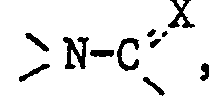
, wherein X represents an oxygen or a sulphur moiety.
, wherein X represents an oxygen or a sulphur moiety.
2. A process according to claim 1 characterized in that as starting materials are
used compounds of the general formula R1-COOR2 and/or R30R4 wherein each of Rl, R2, R3 and R4 which may be the same or different, represents an alkyl group having from 1 to 12
carbon atoms or an aryl, alkaryl or aralkyl group having up to 12 carbon atoms, whilst
R1 may also represent a hydrogen atom, and preferably are the same and represent an
alkyl group having from 1 to 12 carbon atoms or an aryl, alkaryl or aralkyl group
having up to 12 carbon atoms.
3. A process according to claim 1 or 2 characterized in that as ruthenium compound
is used ruthenium (III) chloride, ruthenium (III) chloride trihydrate, ruthenium (IV)
chloride, ruthenium (III) bromide, ruthenium oxide or an organic ruthenium salt or
complex.
4. A process according to any one of the preceding claims characterized in that as
further Group VIII metal compound is used a rhodium compound such as rhodium oxide,
rhodium (III) hydroxide, rhodium (III) chloride, rhodium (III) chloride trihydrate,
rhodium (III) bromide, rhodium (III) iodide or an organic rhodium salt or complex,
preferably rhodium (III) chloride trihydrate, or a palladium compound such as palladium
chloride, palladium chloride dihydrate, palladium bromide, palladium iodide, palladium
oxide or an organic palladium salt or complex, preferably palladium chloride, palladium
chloride dihydrate or palladium acetate.
5. A process according to claim 4, characterized in that a rhodium compound is used
as further Group VIII metal compound.
6. A process according to any one of the preceding claims, characterized in that the
ruthenium compound and the further Group VIII metal compound are used in a ratio between
50:1 and 1:20, preferably between 10:1 and 1:5.
7. A process according to any one of the preceding claims, characterized in that use
is made of amides as trivalent nitrogen compounds which can be represented by the
general formula
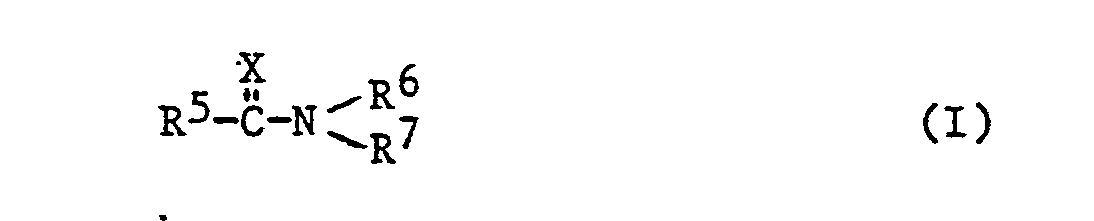
wherein R5 represents a hydrogen atom or an alkyl, cycloalkyl, aryl, alkaryl or aralkyl group; R6 and R7 which may be the same or different, each represent a hydrogen atom or an alkyl, aryl, alkaryl or aralkyl group which may also contain a
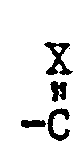
moiety, or R6 and R7 form a cyclic structure together with the nitrogen atom to which they are attached, which structure may contain one or more nitrogen or oxygen atoms, or one of R6 and R7 may form a cyclic structure with R5; and X represents an oxygen or sulphur moiety.
wherein R5 represents a hydrogen atom or an alkyl, cycloalkyl, aryl, alkaryl or aralkyl group; R6 and R7 which may be the same or different, each represent a hydrogen atom or an alkyl, aryl, alkaryl or aralkyl group which may also contain a
moiety, or R6 and R7 form a cyclic structure together with the nitrogen atom to which they are attached, which structure may contain one or more nitrogen or oxygen atoms, or one of R6 and R7 may form a cyclic structure with R5; and X represents an oxygen or sulphur moiety.
8. A process according to claim 7, characterized in that use is made of amides according
to the general formula I wherein R5 represents a hydrogen atom or an alkyl group of up to 8 carbon atoms; R6 and R7 which may be the same or different, each represent a hydrogen atom or an alkyl or
aryl group of up to 8 carbon atoms and X represents an oxygen or sulphur moiety.
9. A process according to claim 8, characterized in that use is made of N,N-dialkyl
amides, in particular N,N-dimethyl acetamide.
10. A process according to any one of claims 1-6, characterized in that use is made
of carbamates as trivalent organic nitrogen compounds which can be represented by
the general formula

wherein R5, R6, R7 and X are as defined hereinbefore and Y represents an oxygen or sulphur moiety.
wherein R5, R6, R7 and X are as defined hereinbefore and Y represents an oxygen or sulphur moiety.
11. A process according to claim 10, characterized in that use is made of carbamates
according to the general formula II wherein R5 represents a hydrogen atom or an alkyl group of up to 8 carbon atoms; R6 and R7 which may be the same or different, each represent a hydrogen atom or an alkyl or
aryl group of up to 8 carbon atoms and X and Y each represent an oxygen or sulphur
moiety.
12. A process according to claim 11, characterized in that use is made of N-phenyl
carbamates, in particular N-phenyl alkyl carbamates such as N-phenyl methyl carbamate
and N-phenyl ethyl carbamate.
13. A process according to any one of claims 1-6, characterized in that use is made
of urea or derivatives thereof as trivalent organic nitrogen compounds which can be
represented by the general formula

wherein R6, R7 and X are as defined hereinbefore.
wherein R6, R7 and X are as defined hereinbefore.
14. A process according to any one of the preceding claims, characterized in that
a trivalent nitrogen compound as defined hereinbefore is present in the reaction mixture
in an amount in the range of from 0.05 to 0.5 mole per gram atom of ruthenium.
15. A process according to any one of the preceding claims characterized in that the
reaction is carried out at a temperature in the range of from 50°C to 200°C, and especially
between 125°C and 175°C.
16. A process according to any one of the preceding claims characterized in that the
process is carried out using a pressure between 20 and 100 bar.
'17. A'process according to any one of the preceding claims, characterized in that
an alkanoic acid is used as solvent.