|
(11) | EP 0 091 791 B1 |

| (12) | EUROPEAN PATENT SPECIFICATION |
|
|
| (54) |
High performance thermally stable polymer Hochbeanspruchbares, thermisch stabiles Polymer Polymère à haute performance thermiquement stable |
|
|
|||||||||||||||||||||||||||||||
| Note: Within nine months from the publication of the mention of the grant of the European patent, any person may give notice to the European Patent Office of opposition to the European patent granted. Notice of opposition shall be filed in a written reasoned statement. It shall not be deemed to have been filed until the opposition fee has been paid. (Art. 99(1) European Patent Convention). |
[0001] The invention relates to a high performance thermally stable polymer, and to moulding compounds and moulded atricles based thereon.
[0002] Wholly aromatic polyester resins have long been known. For instance, 4'-hydroxybenzoic acid homopolymer and co-polymers have been provided in the past and are commercially available. Such polymers commonly are crystalline in nature, relatively high melting or possess a decomposition temperature which is below the melting point, and when molten frequently exhibit an isotropic melt phase. Moulding techniques such as compression moulding or sintering may be utilised with such materials.
[0003] Representative publications which discuss wholly aromatic polyesters include: (a) Polyesters of HydroxybenzoicAcids, By Russell Gilkey and John R. Caldwell, J. of Applied Polymer Sci., Vol. II, Pages 198 to 202 (1959), (b) Polyarylates (Polyesters From Aromatic Dicarboxylic Acids and Bisphenols), by G. Bier, Polymer, Vol. 15, Pages 527 to 535 (August 1974), (c) Aromatic Polyester Plastics, by S. G. Cottis, Modern Plastics, Pages 62 to 63 (July 1975), and (d) Poly(p-Oxybenzoyl Systems): Homopolymer for Coatings; Copolymers for Compression and Injectin Molding, by Roger S. Storm and Steve G. Cottis, Coatings Plast. Preprint, Vol, 34, No. 1, Pages 194 to 197 (April 1974). See also US-A-3,039,994; 3,169,121; 3,321,437; 3,553,167, 3,637,595; 3,651,014; 3,662,052; 3,668,300; 3,723,388; 3,759,870; 3,767,621; 3,773,858; 3,787,370; 3,790,528; 3,829,406; 3,857,814; 3,884,876; 3,890,256; 3,974,250 and 3,975,487. GB-A-2,058,102 discusses the use in ovenware of a broadly-defined class of polyesters which may include oxynaphthoyl moieties of unspecified symmetry.
[0004] Wholly aromatic polyesters additionally have been disclosed which incorporate 6-oxy-2-naphthoyl moieties and which are stated to exhibit an optically anisotropic melt phase. See, for instance, our US-A-4,161,470; 4,219,461; 4,256,624; 4,279,803; 4,299,756 and 4,318,841 and our EP-A-0044205. Our EP-A-0053940, 0074700 and 0063880, respectively, disclose poly(ester-amides) which incorporate 6-oxy-2-naphthoyl moieties.
[0005] The present invention provides a high performance thermally stable polymer consisting of recurring 6- oxy-2-naphthoyl moieties and 0 to 3 mole percent of other ester-forming and/or amide-forming moieities which include at least one aromatic ring.
[0006] In a preferred embodiment the polymer consists solely of recurring 6-oxy-2-naphthoyl moieties, i.e. it is poly(6-oxy-2-naphthoate). The polymer of the invention is distinguished by several advantages. They include the following.
[0008] It is particularly suited for use in the formation of plasma spray coatings, compression moulded articles and impact moulded articles.
[0009] It exhibits good mechanical strength at elevated temperatures, good resistance to flow and creep at elevated temperatures, good wear resistance at elevated temperatures and good resistance to flammability.
[0010] It has been found to exhibit a thermal stability which is superior to that of poly(4-oxybenzoate) formed under the same conditions.
[0011] It has been found to exhibit a higher level of crystallinity than poly(4-oxybenzoate) formed under the same conditions.
[0012] It has been found to exhibit a crystal/crystal transition in the solid state at a higher temperature than poly(4-oxybenzoate) formed under the same conditions.
[0015] As will be apparent to those skilled in the art, the 6-oxy-2-naphthoyl oiety can be derived from 6-hydroxy-2-naphthonic acid or a derivative thereof. A convenient laboratory preparation for forming 6-hydroxy-2-naphthoic acid is described in Berichte, Vol. 58, 2835-45 (1925) by K. Fries and K. Schimmeischmidt. US-A-1,593,816 is concerned with a process for synthesising 6-hydroxy-2-naphthoic acid by reacting carbon dioxide with the potassium salt of beta-naphthol. See also the synthesis routes discussed in US-A-4,239,913 and 4,287,357.
[0016] In a preferred embodiment of this invention the polymer is a homopolymer which consists solely of recurring 6-oxy-2-naphthoyl moeities, and may be named poly(6-oxy-2-naphthoate).
[0017] In the embodiment of the present invention wherein other ester-forming moieties are present in a concentration of up to approximately 3 mole percent such moeities may be derived from a comonomer source selected from aromatic diols and aromatic diacids, aromatic hydroxyacids other than 6-hydroxy-2-naphthoic acid, and mixtures of the foregoing. It is preferred but not essential that such other ester-forming moieties have symmetyrically disposed bonds in the main polymer chain. Preferred symmetrical moieties which are derived from an aromatic diol are derived, for example, from hydroxyquinone, 2,6-dihydroxynaphthalene, methylhydroquinone, chlorohydroquinone or bromohydroquinone. Preferred symmetrical moieties which are derived from an aromatic diacid are derived, for example, from terephthalic acid or 2,6-naphthalene dicarboxylic acid. Preferred symmetrical moieties derived from aromatic hydroxyacids are derived from p-hydroxybenzoic acid. Representative non-symmetrical moieties can be derived from resorcinol, isophthalic acid and m-hydroxybenzoic acid.
[0018] In the embodiment of the present invention wherein amide-forming moieties are present in a concentration of up to approximately 3 mole percent such moieties possess the structural formula -Y-Ar-Z- where Ar is a divalent radical comprising at least one aromatic ring, Y is O,
NH, or NR, and Z is NH or NR, where R is an alkyl group of 1 to 6 carbon atoms or an aryl group. R is preferably a straight-chain alkyl group of 1 to 6 carbon atoms and is more preferably a methyl group. Examples of monomers from which the amide-forming moieties are derived include p-aminophenol, p-N-methyalminophenol, p-phenylenediamine, N-methyl-p-phenylenediamine, N,N'-dimethyl-p-phenylenediamine, m-aminophenol, 3-methyl-4-aminophenol, 2-chloro-4-aminophenol, 4-amino-1-naphthol, 4-amino-4'-hydroxy-diphenyl, 4-amino-4'-hydroxydiphenyl ether, 4-amino-4'-hydroxydiphenyl methane, 4-amino-4'-hydroxydiphenyl ethane, 4-amino-4'-hydroxydiphenyl sulfone, 4-amino-4'-hydroxydiphenyl sulfide, 4,4'-diaminophenyl sulfide (thiodianiline), 4,4'-diaminodiphenyl sulfone, 2,5-diaminotoluene, 4,4'-ethylenedianiline, 4,4'-diaminodiphenoxyethane, p-aminobenzoic acid, m-aminobenzoic acid and p-(N-methylamino)benzoic acid. It is preferred but not essential that such amide-forming moieties have symmetrically disposed bonds in the main polymer chain.
[0019] The polymer of the present invention commonly exhibits
end groups depending upon the synthesis route selected. As will be apparent to those skilled in the art, the end groups optionally may be capped, e.g. acidic end group may be capped with a variety of alcohols, and hydroxyl end groups may be capped with a variety of organic acids. For instance, end capping units such as phenyl ester
and methylester
optionally may be included at the end of the polymer chains.
[0020] The high performance thermally stable polymer of the present invention exhibits great solvent resistance and tends to be insoluble in all known solvent for polyesters. It commonly exhibits a weight average molecular weight of at least 8,000 and preferably 10,000 to 50,000 e.g. 20,000 to 25,000. The molecular weight may be determined by standard techniques commonly employed with insoluble polymers, e.g. by infrared end group analysis.
[0021] The polymer of the present invention may be formed by a variety of ester-forming (and optionally also amide-forming) techniques whereby organic monomer compounds possessing functional groups which upon condensdation form the requisite recurring moieties are reacted. During the polyester-forming reaction the functional groups of the organic monomer compounds may be carboxylic acid groups, hydroxy groups, ester groups, acid halides, etc. For instance, the organic monomer compound or compounds may be reacted in the absence of a heat exchange fluid. They accordingly may be heated initially with stirring to form a monomer melt with the polymer product separating as a particulate solid as polymerisation takes place. A vacuum may be applied to facilitate removal of volatiles formed during the condensation (e.g. acetic acid or water). More specifically, in such preferred technique, the organic monomer reactants may be initially provided in a modified form whereby the usual hydroxyl groups of these monomers are esterified (i.e. they are provided as acyl esters). For instance, lower acyl ester of 6-hydroxy-2-naphthoic acid wherein the hydroxy group is esterified may be provided. The lower acyl groups preferably have from 2 to 4 carbon atoms. Preferably the acetate esters of the monomer or monomers are provided. Accordingly, particularly preferred reactant is 6-acetoxy-2-naphthoic acid. If minor quantities of other reactants which provide oxy-units within the resulting polymer optionally are provided, these, too, are preferably provided as the corresponding lower acyl esters. The relative quantities of organic monomer reactants are provided in the reaction zone so that the potential dicarboxy units and dioxy units, if present, are substantially equal.
[0022] In accordance with a slurry polymerisation technique, the 6-acetoxy-2-naphthoic acid and any other monomer or monomers (as described) may be provided in an inert heat exchange medium. As the polymer forms, it is insoluble in the inert heat exchange medium and assumes the state of a fine powder. The heat exchange medium preferably possesses a boiling point in excess of the maximum polymerisation temperature utilised. Those inert heat exchange media having boiling ranges of 350° to 430°C. are particularly preferred. Representative heat exchange media include the terphenyls; a eutectic mixture of 73.5 percent diphenyl oxide and 26.5 percent diphenyl, commercially available from the Dow Chemical Co. under the Trademark Dow thermo A; mixtures of polychlorinated polyphenyls such as chlorinated biphenyls typified by those commercially available from the Monsanto Co. under the Trademark Therminol° FR; terphenyls and mixtures thereof such as those composed of meta and para isomers commercially available from the Monsanto Co. under the Trademark Therminot"' (e.g. Therminol° 88, 77 or 66); diphenylsulfone and other arylsulfones, such as substituted diphenylsulfones (e.g. ditolyl sulfone). The relative quantity (weight:weight) of inert heat exchange medium to total reactants in the reaction zone typically is in the ratio range of 0.2:1 to 4:1.
[0023] The slurry polymerisation reaction may be carried out on a batch, continuous, or semi-continuous basis. Typical polymerisation reactions commonly are carried out at a temperature of at least approximately 200°C. up to a temperature below the decomposition temperature of the resulting polymer. In a particularly preferred embodiment of the process, the temperature of the slurry is increased as the polymerisation reaction progresses. A gradual or stepwise temperature increase during the polymerisations has been found to ensure the formation of a superior product. The maximum polymerisation temperature ultimately achieved usually does not exceed approximately 360°C. The polymerisation reaction preferably is carried out with agitation at atmospheric pressure under an inert gas blanket with the condensation reaction by-products (e.g. acetic acid) being continuously removed from the reaction zone. Superatmospheric or sub-atmospheric pressures optionally can be utilised usually without commensurate advantage. Typical reaction times commonly range from 2 to 30 hours, with the lesser reaction times being possible when the reaction is catalysed.
[0024] Representative catalysts for use in the process include dialkyl tin oxide (e.g. dibutyl tin oxide), diaryl tin oxide, titanium dioxide, alkoxy titanium silicates, titanium alkoxides, alkali and alkaline earth metal salts of lower carboxylic acids (e.g. sodium acetate, magnesium acetate), the gaseous acid catalysts such as gaseous Lewis acids, hydrogen halides (e.g. catalysts such as gaseous Lewis acids, hydrogen halides (e.g. HCI). The quantity of catalyst utilised typically is 0.001 to 1 percent by weight based upon the total monomer weight, and most commonly 0.01 to 0.2 percent by weight.
[0025] At the conclusion of the polymerisation reaction the solid particulate polymer is recovered by any convenient technique. For instance, the solid particulate polymer conveniently may be separated from the inert heat exchange medium (preferably following cooling) by decanting, centrifuging or filtration. It is then washed and is dried. During the washing, residual heat exchange medium adhering to the product may be removed by acetone, alcohols, lower hydrocarbons, methylene chloride, chloroform, benzene, toluene, etc., or any other relatively volatile solvent in which the heat exchange medium is soluble. The resulting particles of polymer may be subjected to solid state polymerisation to a higher molecular weight level.
[0026] The resulting polymer of the present invention has been found to exhibit high performance properties and to possess a significant level of thermal stability. When compared to poly(4-oxybenzoate) formed under the same conditions, the polymer of the present invention has been found to possess a thermal stability which is superior to poly(4-oxybenzoate). Such enhanced thermal stability can be confirmed by standard thermogravemetric analysis in both isothermal and dynamic modes of operation under a nitrogen atmosphere in which polymer weight changes at elevated temperatures are accurately measured. When exposed to air at highly elevated temperatures, the polymer of the present invention will darken to a greater degree than poly(4-oxybenzoate), but such darkening is deemed to be largely a cosmetic consideration which will be of no real significance in most end use application.
[0027] The enhance stability of the polymer of the present invention when compared to poly(4-oxybenzoate) also can be confirmed by differential scanning calorimetry and X-ray diffraction analysis at elevated temperatures. More specifically, it has been found that the polymer of the present invention undergoes a crystal/crystal transition in the solid state at a temperature approximately 50°C. higher than that of poly(4- oxybenzoate) formed under the same conditions. Also, the polymer of the present invention has been found to exhibit a higher level of crystallinity than poly(4-oxybenzoate) formed under the same conditions.
[0028] The polymer of the present invention can be used to advantage in those applications where poly(4- oxybenzoate) has hitherto been utilised. The polymer is particularly suited for the formation of plasma spray coatings, or for the formation of thermally stable high performance three-dimensional articles by compression or impact moulding. Representative compression moulded articles can be formed by compressing finely-ground particles of the polymer at 10,000 ro 30,000 psi (70 to 210 kg/cm2) while at 340°C to 440°C. Various other sintering techniques also can be used to form high performance articles from the polymer of the present invention.
[0029] Fillers and/or reinforcing agents optionally may be blended with the polymer of the present invention. Such fillers and/or reinforcing agents may be included in a total concentration of 1 to 60 percent by weight of the resulting moulding compound. Representative fibres which may serve as reinforcing media include glass fibres, asbestos, graphitic carbon fibres, amorphous carbon fibers, synthetic polymeric fibres, aluminum fibres, aluminum silicate fibres, oxide of aluminum fibres, titanium fibres, magnesium fibres, rock wool fibres, steel fibres, tungsten fibres, cotton wool and wood cellulose fibres. If desired, the fibrous reinforcement may be preliminarily treated to improve its adhesion to the polymer which ultimately serves as a continuous matrix phase. Representative filler materials include calcium silicate, silica, clays, talc, mica, polytetrafluoroethylene, graphite, alumina trihydrate, sodium aluminum carbonate and barium ferrite. Colorants optionally may be included. The polymer of the present invention advantageously may be alloyed or blended with polytetrafluoroethylene (or orther similar polymers) to form a material which is particularly suited for use in the formation of long-wearing bearings, packing seals, "0" ring seals, compressor ring seals, spring-loaded seals, piston rings, etc. It may also be combined with aluminum or bronze particles to form a highly abrasion-resistant coating.
[0030] The invention thus also provides articles coated with a layer of the polymer of the invention.
[0031] The polymer of the present invention is also well suited for use in the formation of electrical/electronic components which must well withstand elevated temperatures.
Example I
[0032] To a heated 2000 ml. flask equipped with a stirrer, argon inlet tube and heated distillation head connected to a condenser were added the following:
(a) 350 grams of 6-acetoxy-2-naphthoic acid and
(b) 1000 grams terphenyl mixture het exchange medium available from the Monsanto Co. under the Trademark Therminol® 66.
[0033] The heat exchange medium was first added to the flask, and was followed by the 6-acetoxy-2-naphthoic acid with vigorous stirring. The flask was purged with argon prior to the addition of the above to the flask, during the time the above were being added to the flask, and during the polymerisation reaction.
[0034] While stirring continued, the contents of the flask while largely in slurry form were raised to 250°C. and were maintained at that temperature for approximately 1 hour, were raised to 280°C. and were maintained at that temperature for approximately 1 hour, were raised to 300°C., and were maintained at that temperature for approximately 1 hour, were raised to 320°C. and were maintained at that temperature for approximately 1 hour, were raised to 340°C. and were maintained at that temperature for approximately 2 hours, and were raised to 360°C. and were maintained at that temperature for approximately 2 hours. During the course of the polymerisation reaction the acetic acid by-product was collected by distillation. At the conclusion of the polymerisation the polymer product, i.e. poly(6-oxy-2-naphthoate), was present as a particulate solid. This solid was removed from the heat exchange medium by filtration, and was washed with acetone to remove adhering heat exchange medium. The product was next ground to a more finely-divided form which was suitable for use in plasma spraying applications, and in the formation of high performance thermally stable three-dimensional articles by compression or impact moulding.
Example II
[0035] The same poly(6-oxy-2-napthoate) product formed in Example I was prepared in the absence of heat exchange medium.
[0036] To heated 300 ml. flask equipped with a stirrer, argon inlet tube and heated distillation head was added 6-acetoxy-2-naphthoic acid. The flask was purged with argon prior to the addition of the monomer, during the time the monomer was added and during the polymerisation reaction.
[0037] While stirring continued the contents of the flask were raised from room temperature to 250°C. over a period of approximately 45 minutes, were maintained at 250°C. for approximately two hours, were raised from 250°. to 320°C. over a period of approximately 20 minutes, and were subjected to a vacuum of 18,6 Pa (0.14 mm. Hg) for approximately half an hour at 350°C. During the course of the polymerisation reaction the acetic acid by-product was collected by distillation. At the conclusion of the polymerisation the polymer product was present as a particulate solid which was kept somewhat divided by the action of the stirrer. This product was washed with acetone, and was ground to a more finely-divided form which was suitable for use in plasma spraying applications, and in the formation of high performance shaped articles by compression or impact moulding.
[0038] When the product was analysed by standard differential scanning calorimetry and X-ray diffraction techniques it was found to exhibit a crystal/crystal transition in the solid state at 390°C. When poly(4- oxybenzoate) was formed in accordance with the same procedure and was subjected to the same analyses, it was found to exhibit a crystal/crystal transition in the solid state at 340°C.
1. A high performance thermally stable polymer consisting of recurring 6-oxy-2-napthoyl
moieties and 0 to 3 mole percent of other ester-forming and/or amide-forming moieties
which include at least one aromatic ring.
2. A polymer according to claim 1 containing the said other ester-forming moieties
and they are derived from a co-monomer source selected from aromatic diols and aromatic
diacids, aromatic hydroxyacids other than 6-hydroxy-2-naphthoic acid and mixtures
of the foregoing.
3. A polymer according to claim 1 containing the said amide-forming moieties and they
are of the structure -Y-Ar-Z- where Ar is a divalent radical comprising at least one
aromatic ring, Y is 0,
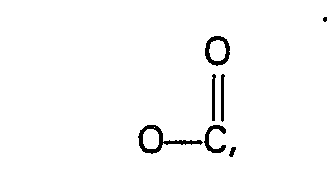
NH or NR, and Z is NH or NR, where R is an alkyl group of 1 to 6 carbon atoms or an aryl group.
NH or NR, and Z is NH or NR, where R is an alkyl group of 1 to 6 carbon atoms or an aryl group.
4. A polymer according to any of claims 1-3 containing the said other ester-forming
and/or amide-forming moieties and they have symmetically disposed bonds in the main
polymer chain.
5. A high performance thermally stable polymer consisting of recurring 6-oxy-2-naphthoyl
moieties.
6. A moulding compound comprising the polymer of any of claims 1-5 which incorporates
1 to 60 percent, by weight of the moulding compound, of a filler and/or reinforcing
agent.
7. A compression moulded article comprising the polymer of any of claims 1-5 or the
moulding compound of claim 6.
8. An impact moulded article comprising the polymer of any of claims 1-5 or the moulding
compound of claim 6.
9. Articles coated with a layer of the polymer of any of claims 1-5.
1. Hochwertiges, thermisch stabiles Polymer, bestehend aus wiederkehrenden 6-Oxy-2-naphthoyl-Struktureinheiten
aund 0 bis 3 Mol-% anderer esterbildener und/oder amidbildender Sturktureinheiten,
die wenigstens einen aromatischen Ring enthalten.
2. Polymer anch Anspruch 1, in das die genannten anderen esterbildenden Einheiten
enthält, und sie sind abgeleitet von einer Comonomer-Quelle, die aus aromatischen
Diolen und aromatischen Disäuren, anderen aromatischen Hydroxysäuren als 6-Oxy-2-naphthoesäure
und Mischungen der vorgenannten ausgewählt sind.
3. Polymer nach Anspruch 1, das die genannten amidbildenden Einheiten enthält, und
sie sind von der Struktur-Y-Ar-Z, in der Ar ein wenigstens einen aromatischen Ring
umfassender zweiwertiger Rest ist, Y, 0,
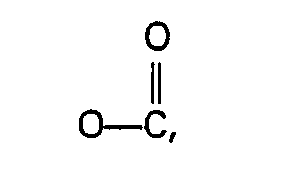
NH oder NR ist und Z NH oder NR ist, worin R eine Alkyl-Gruppe von 1 bis 6 Kohlenstoff-Atomen oder eine Aryl-Gruppe ist.
NH oder NR ist und Z NH oder NR ist, worin R eine Alkyl-Gruppe von 1 bis 6 Kohlenstoff-Atomen oder eine Aryl-Gruppe ist.
4. Polymer nach iregendeinem der Ansprüche 1 bis 3, das die genannten anderen esterbildenden
Einheiten und/oder amidbildenden Einheiten enthält, und sie haben symmetrisch angeordnete
Bindungen in der Polymer-Hauptkette.
5. Hochwertiges, thermich stabiles Polymer, bestehend aus widerkehrenden 6-Oxy-2-napthoyl-Struktureinheiten.
6. Das Polymer nach irgendeinem der Ansprüche 1 bis 5 umfassende Preßmasse, die 1
bis 60%, bezogen auf das Gewicht der Preßmasse, eines Füllstoffs und/oder Verstärkungsmittels
enthält.
7. Formgepreßter Gegenstand, umfassend das Polymer nach irgendeinem der Ansprüche
1 bis 5 oder die Preßmasse nach Anspruch 6.
8. Schlaggepreßter Gegenstand, umfassend das Polymer nach irgendeinem der Ansprüche
1 bis 5 oder die Preßmasse nach Anspruch 6.
9. Gegenstände, die mit einer Schicht aus dem Polymer nach irgendeinem der Ansprüche
1 bis 5 beschichtet sind.
1. Polymère à haute performance thermiquement stable consistant en fragments 6-oxy-2-naphtoyliques
récurrents et 0 à 3 moles pour cent d'autres fragments de formation d'ester et/ou
de formation d'amide qui comprennent au moins un noyau aromatique.
2. Polymère selon la revendication 1, contenant lesdits autres fragments de formation
d'ester et ils sont dérivés d'une source de comonomère choisie parmi des diols aromtiques
et des diacides aromatiques, des hydroxyacides aromatiques autres que l'acide 6-hydroxy-2-naphtoîque
et mélanges de ceux qui précèdent.
3. Polymère selon la revendication 1, contenant lesdits fragments de formation d'amide
et ils ont pour structure Y-Ar-Z, où Ar est un radical divalent comprenant au moins
un noyau aromatique, Y est O,
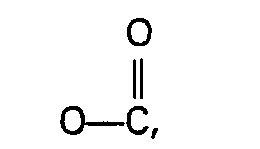
NH ou NR et Z est NH ou NR, où R est un groupe alkyle de 1 à 6 atomes de carbone ou un groupe aryle.
NH ou NR et Z est NH ou NR, où R est un groupe alkyle de 1 à 6 atomes de carbone ou un groupe aryle.
4. Polymère selon l'une des revendications 1-3, contenant lesdits autres fragments
de formation d'ester et/ou de formation d'amide et ils ont des liaisons symétriquement
disposées dans la chaîne principale du polymère.
5. Polymère à haute performance thermiquement stable consistant en fragments 6-oxy-2-naphtoyliques
récurrents.
6. Composé à mouler comprenant le polymère selon l'une des revendications 1-5, qui
contient 1 à 60 pour cent, en poids du composé à mouler, d'une charge et/ou d'un agent
de renforcement.
7. Article moulé par compression comprenant le polymère selon l'une des revendications
1-5, ou le composé à mouler de la revendication 6.
8. Article moulé par impact comprenant le polymère selon l'une des revendications
1-5 ou le composé à mouler de la revendication 6.
9. Article enduit d'une couche du polymère de l'une des revendications 1-5.