|
(11) | EP 0 093 586 B1 |

| (12) | EUROPEAN PATENT SPECIFICATION |
|
|
| (54) |
Benzothiazoline derivative antifoggant containing silver halide emulsions Halogensilberemulsionen mit Benzothiazolin-Schleierinhibitoren Emulsions aux halogénures d'argent contenant des dérivés de benzothiazoline comme antivoile |
|
|
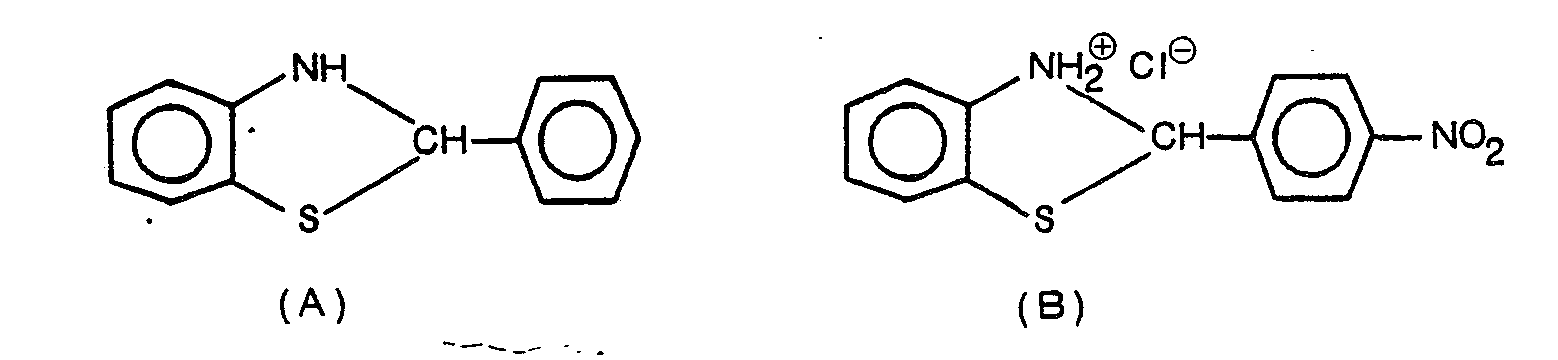
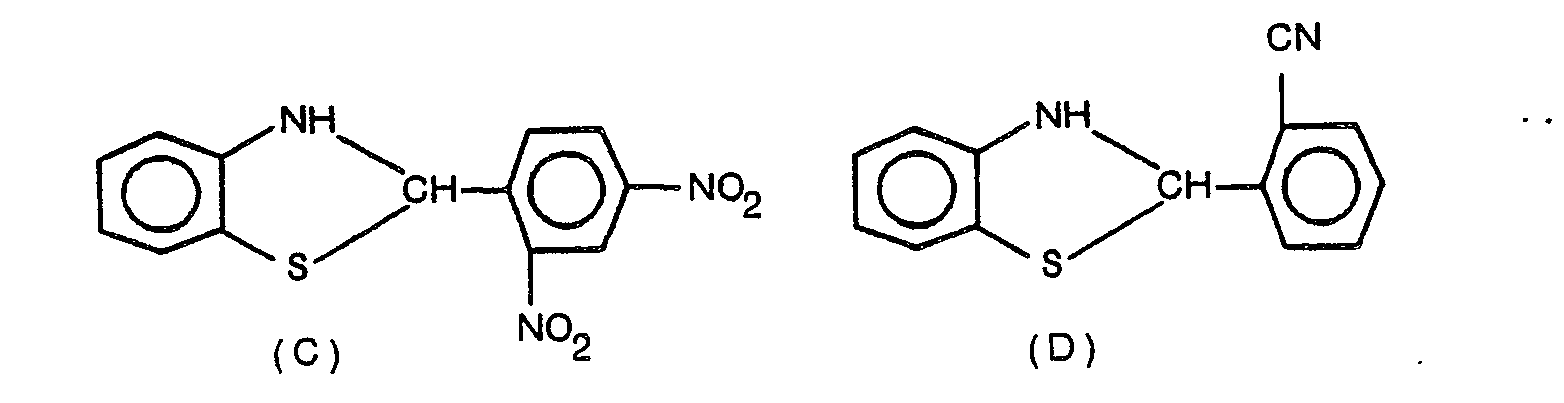
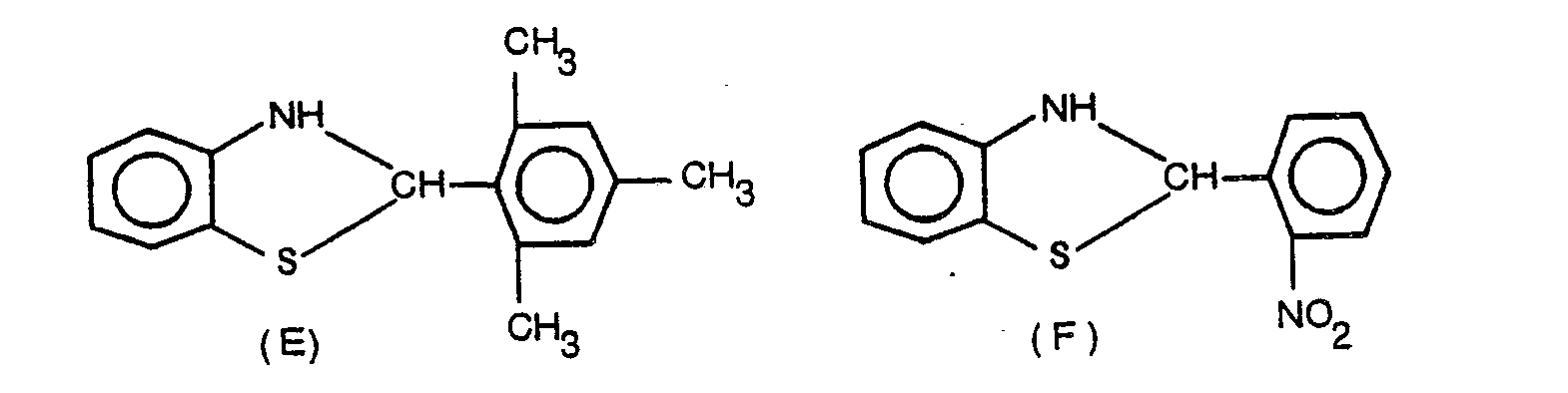
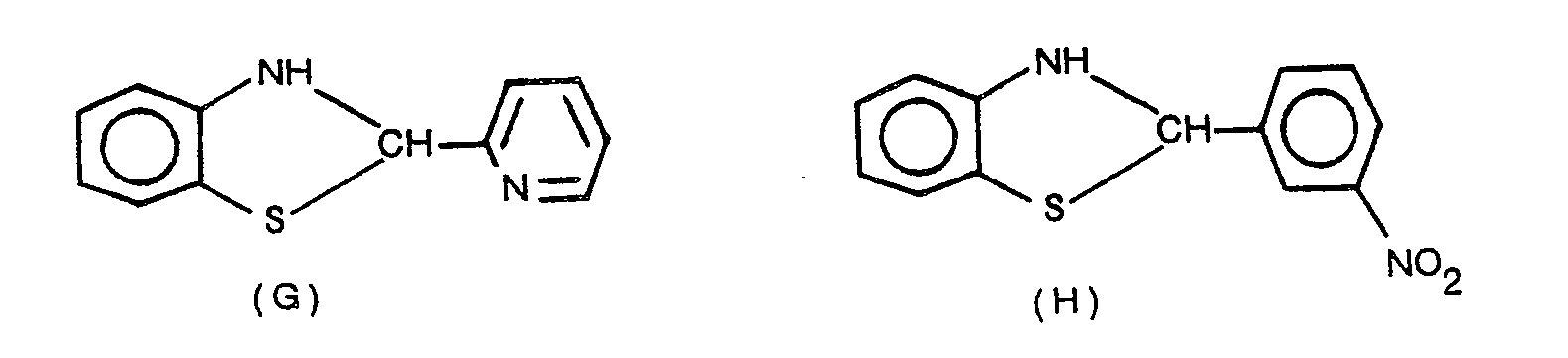
|||||||||||||||||||||||||||||||
| Note: Within nine months from the publication of the mention of the grant of the European patent, any person may give notice to the European Patent Office of opposition to the European patent granted. Notice of opposition shall be filed in a written reasoned statement. It shall not be deemed to have been filed until the opposition fee has been paid. (Art. 99(1) European Patent Convention). |
[0001] This invention relates to photographic silver halide emulsions and film elements prepared therewith. Specifically, this invention relates to silver halide emulsions containing benzothiazoline derivative antifoggants and to photographic elements prepared with these emulsions.
[0002] Antifogging compounds useful in silver halide systems are legion in number in the prior art, (see, for instance, US-A-3677761 or GB-A-1190678). These compounds are useful in conventional systems sensitized with gold and sulfur compounds, for example. Currently, however, there is a pressing need to reduce silver halide coating weight in order to converve costs and finite resources. One way of accomplishing this reduction in coating weight is to further sensitize the emulsion in order to raise the speed of the film prepared, using smaller silver halide crystals which give higher covering power but otherwise would have lower speed. Addition of more sensitizer also increases fog. Fog can be reduced by adding more of the conventional antifoggant but these antifoggants also reduce emulsion speed. This is a common problem and one which has bothered the emulsion/film making field for some time.
[0003] It is an object of this invention to provide antifoggant-containing silver halide emulsions which are particularly efficacious in the preparation of high speed, low coating weight photographic film elements.
[0004] According to one aspect of the invention there is thus provided a silver halide emulsion for photographic film elements comprising an antifogging amount of a benzothiazoline derivative of formula I
(wherein R is H, alkyl, aryl, or substituted alkyl or aryl or pyridyl or a salt thereof.
[0005] The emulsions according to the invention can be highly sensitized and thus coated at a reduced silver halide coating weight. The level of fog can thus be greatly reduced without substantial speed loss.
[0006] According to a further aspect of the invention there is thus provided a photographic element comprising a support and a silver halide emulsion containing an antifogging amount of an antifoggant coated thereon, characterized in that said antifoggant is a benzothiazoline derivative of formula I
(wherein R is H; alkyl, aryl, or substituted alkyl or aryl; or pyridyl) or a salt thereof.
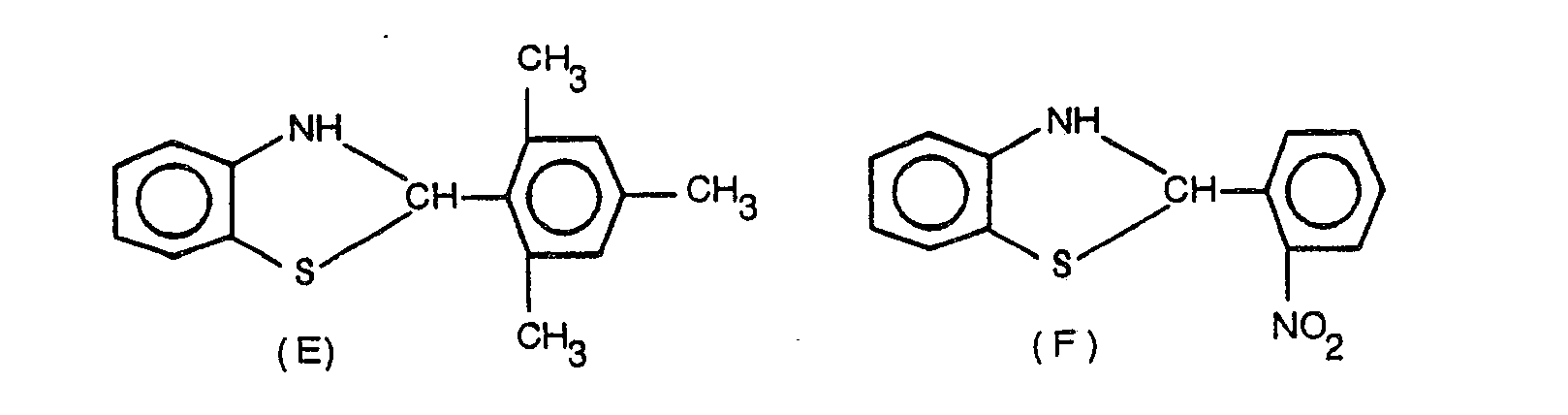
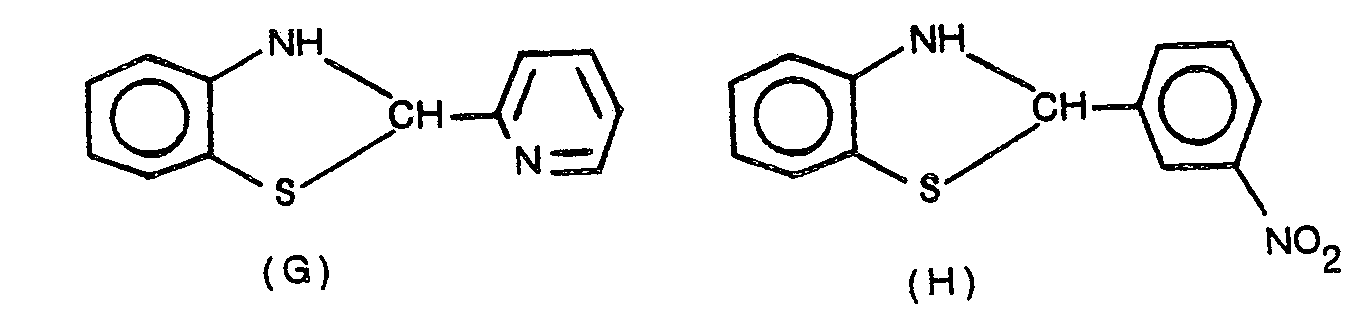
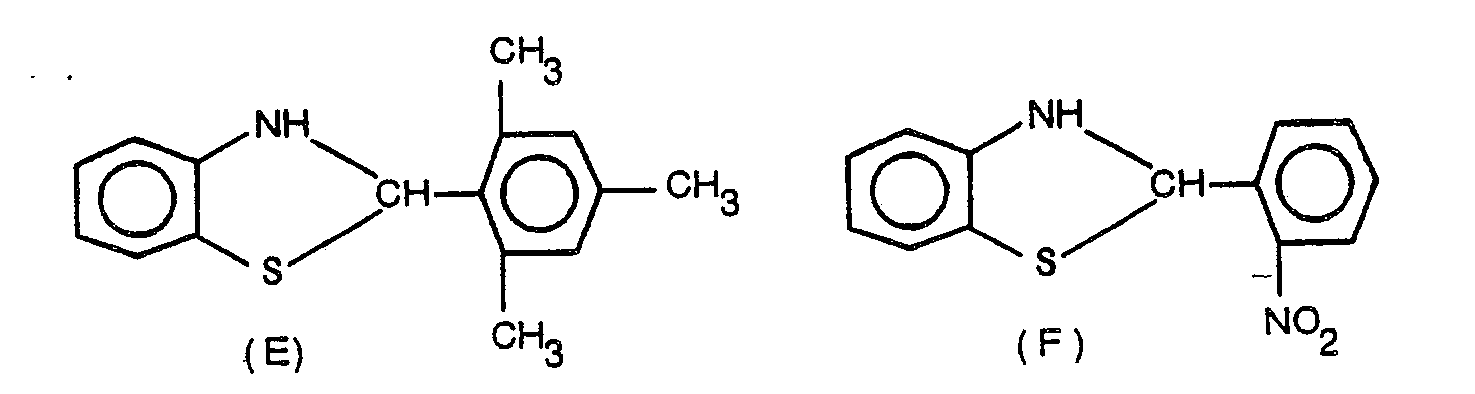
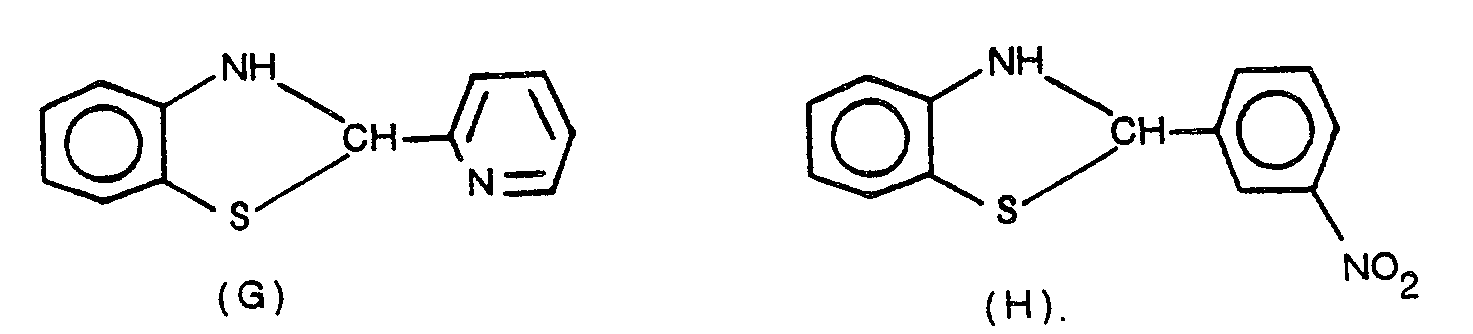
[0007] Where in the benzothiazoline derivatives of formula I R is a substituted alkyl or aryl group it is conveniently an alkyl or aryl group substituted by one or more nitro, cyano or methyl groups.
[0008] Benzothiazoline derivatives may be conveniently made using the following reaction:
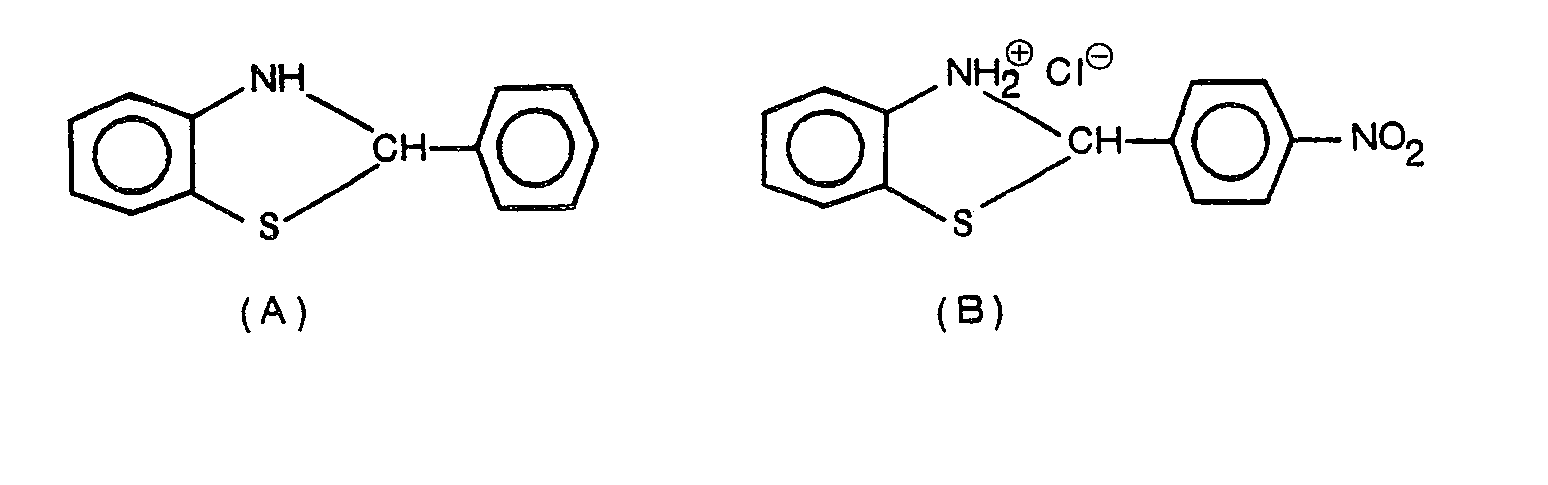
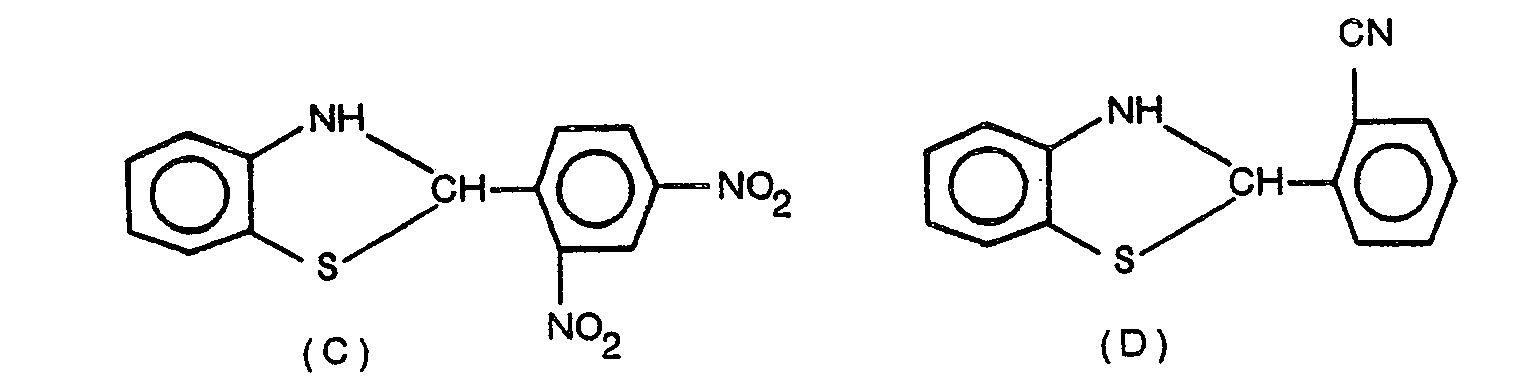
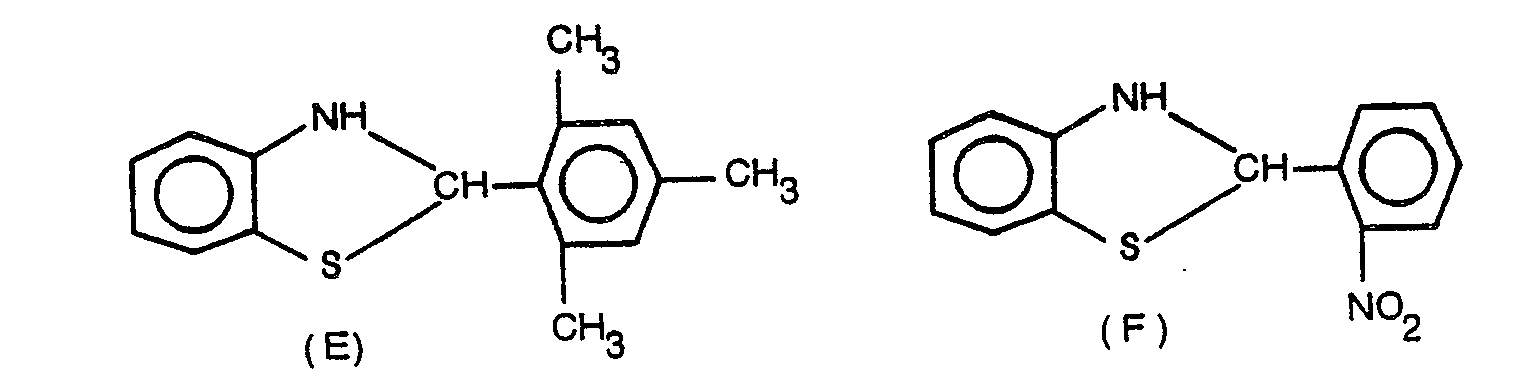
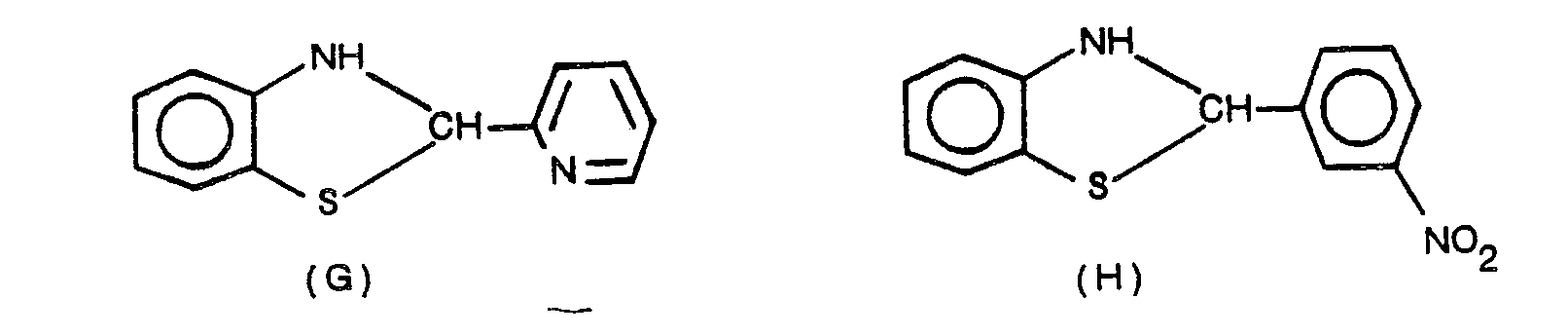
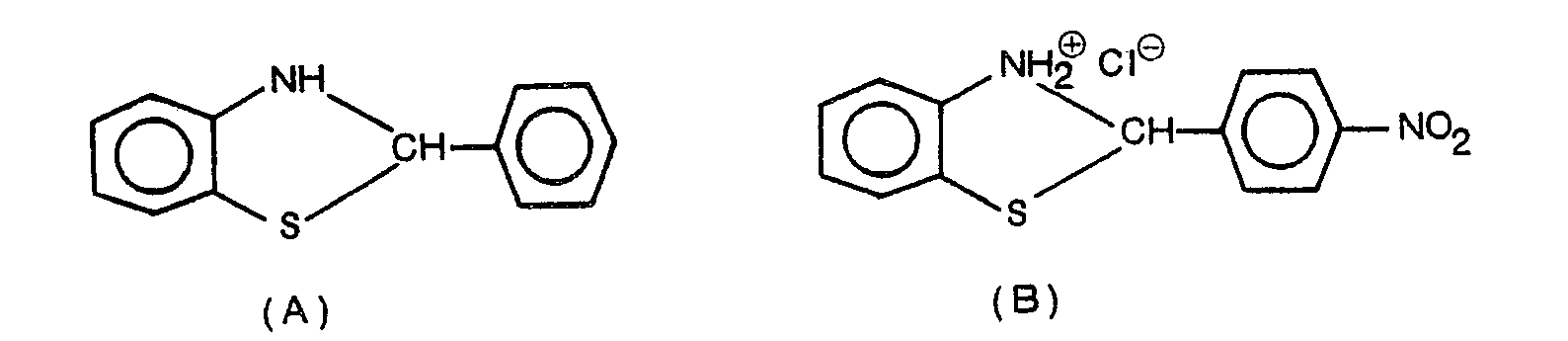
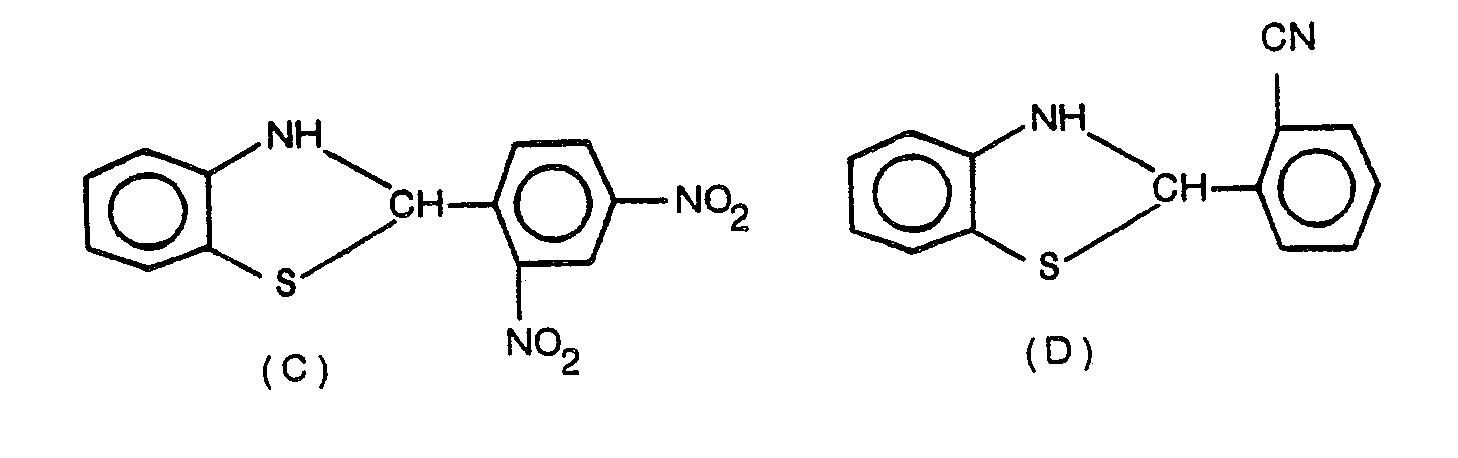
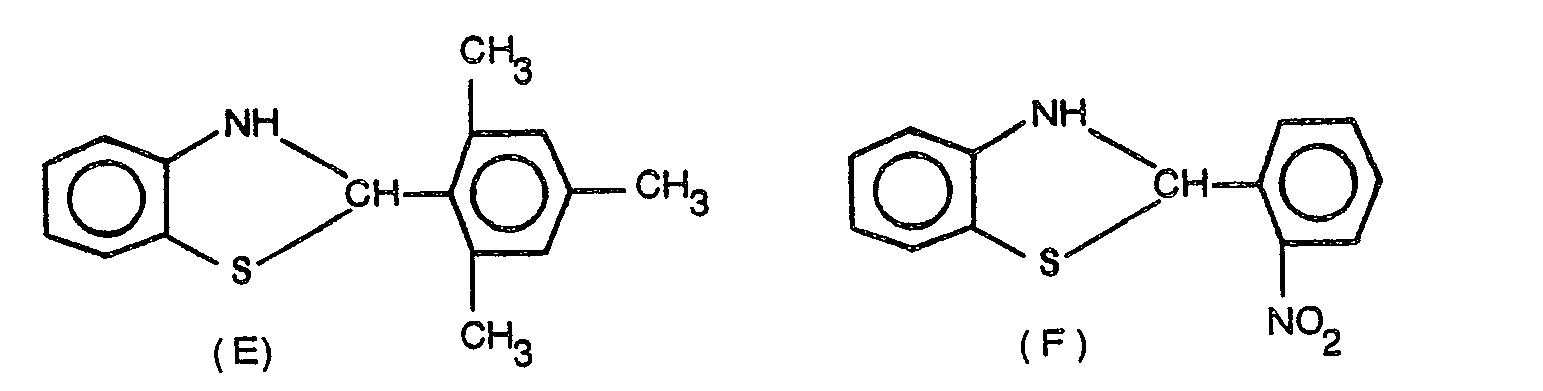
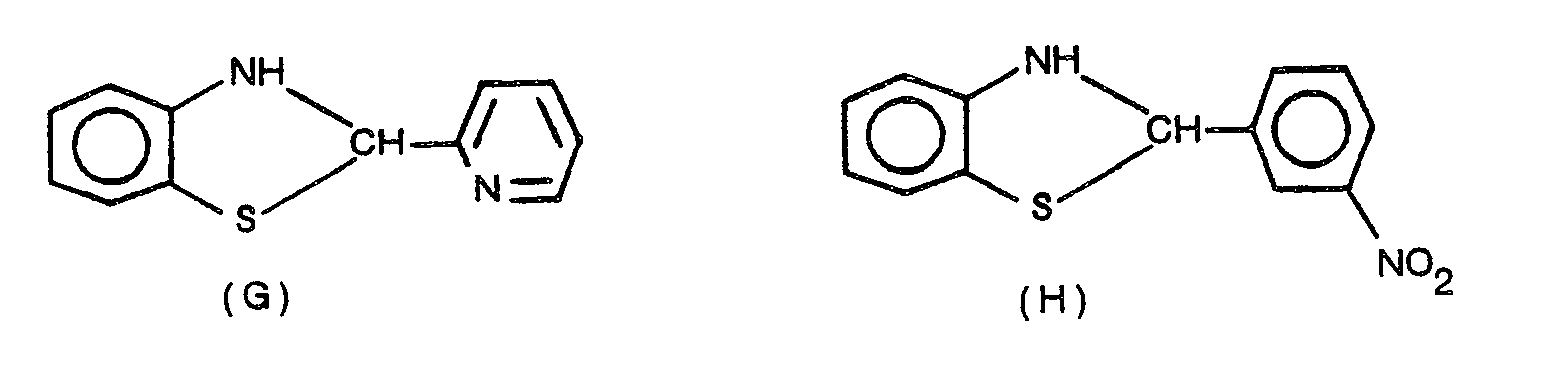
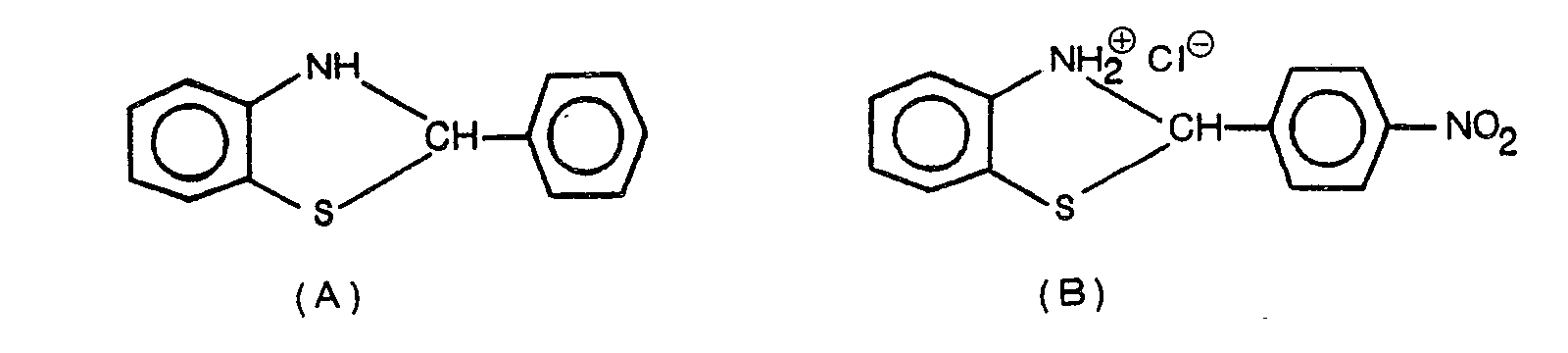
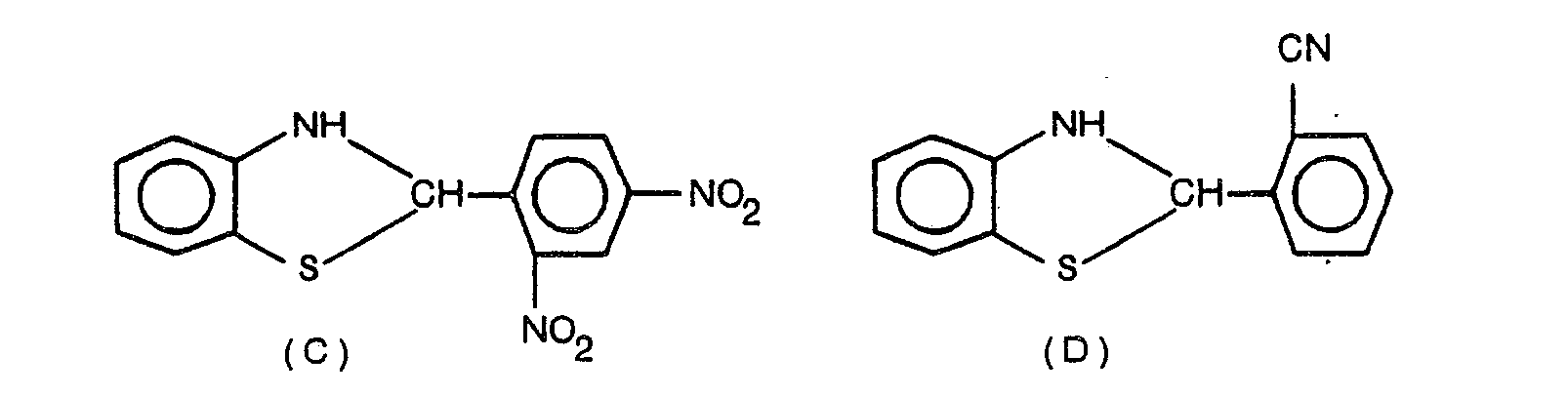
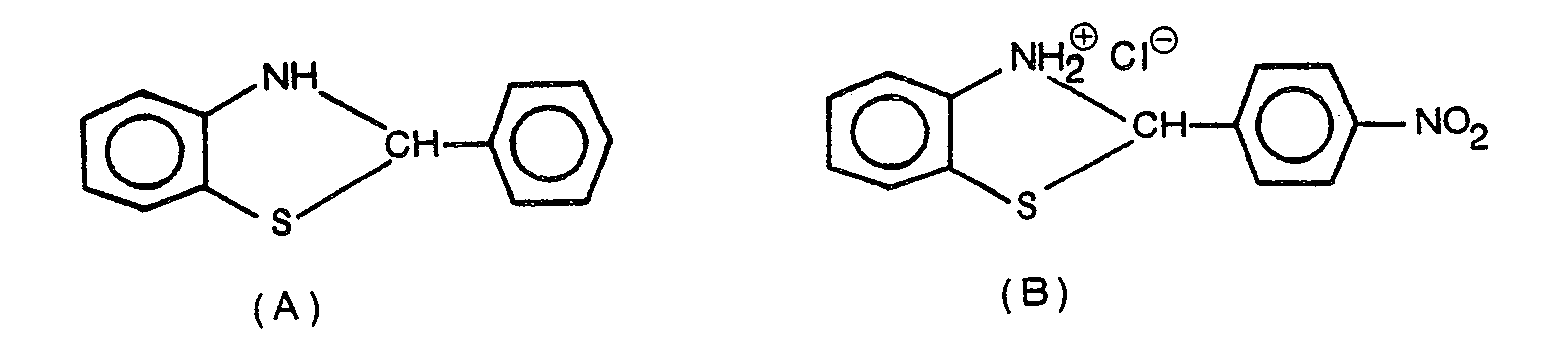
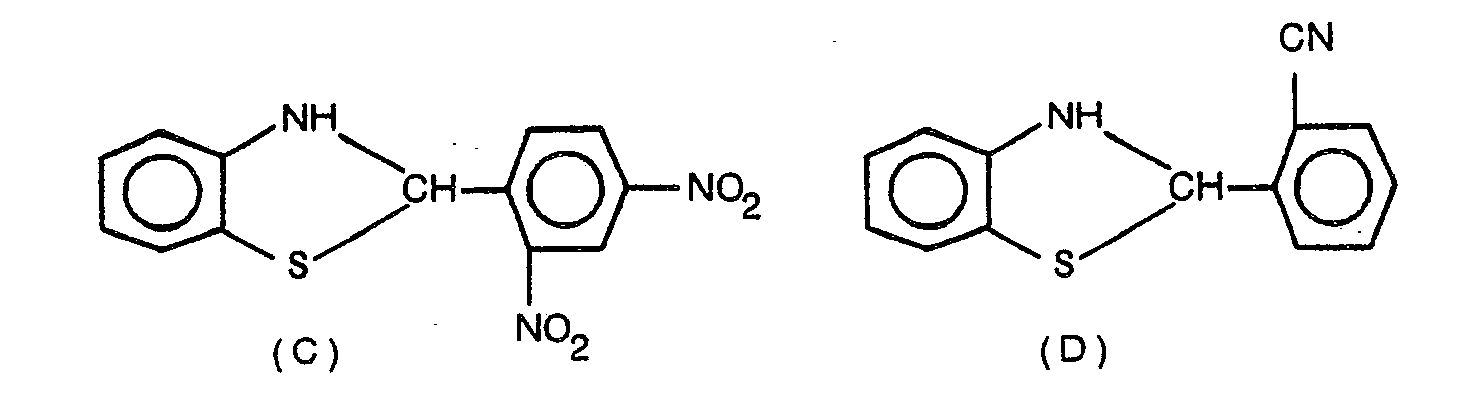
where R may be hydrogen, alkyl, aryl, or substituted alkyl or aryl or pyridyl. Examples of compounds made in this manner and useful as antifoggants in accordance with the present invention include, among others, the following:
[0009] These compounds and the salts thereof may be added to any gelatino-silver halide emulsion to function usefully as antifoggants. Preferably, they are added individually dissolved in suitable solvents after the emulsion has been fully sensitized and just prior to coating the emulsion on a support. Preferably, solvents miscible with water are used. The compounds and salts theeof may be used in amounts from about 0.0005 g to 0.1 g per 1.5 moles of silver halide (known as a "unit of emulsion") to achieve antifogging action. An optimum range is 0.001 g to 0.09 g/unit of emulsion.
[0010] As stated previously, any of the commonly-used gelatin-silver halide emulsions can be used in the practice of this invention, e.g., silver bromide, silver chloride, silver iodide or mixed halides. The emulsions may be sensitized with sulfur, gold, or polyethylene oxide, for example, along with other commonly used sensitizers. A particular group of effective sensitizers are the derivatives of our copending European Patent Application No. 83301310.5 filed on 9th March 1983, and published as EP 0091212A (a copy of the specification of this copending application is on the European Patent Office file of the instant application), in particular, 2-[4-methoxyphenyi]-thiazoiidine and cysteamine. When these sensitizers are used as taught in the copending application, the speed of an X-ray emulsion, for example, can be increased up to 40%. Thus, it is possible to prepare a photographic film of equivalent sensitivity using lower silver halide coating weights.
[0011] The emulsions of this invention may also contain wetting agents, hardeners, other antifoggants, dyes and other common adjuvants well known to those skilled in the art. Commonly used binders (e.g., gelatin, hydrolyzed PVA, etc.) may also be efficaciously used in the making of these emulsions.
[0012] The emulsions of this invention may be coated on any of the commonly used film supports such as polyethylene terephthalate, cellulosic films, etc. The preferred support is dimensionally stable polyethylene terephthalate film, suitably subbed (subcoated) as described in the prior art.
[0013] This invention is illustrated by the following Examples of which Example 1 is considered to be of a particularly preferred embodiment:
Example 1
[0014] A coarse grained gelatino-silver iodobromide emulsion of the type used in medical X-ray films was prepared, specifically an emulsion containing ca. 98 mole % AgBr and ca. 2 mole % Agl with about 5 weight % of gelatin and about 10 weight % of silver halide. The emulsion was fully sensitized by digestion at- elevated temperatures with sodium thiosulfate and gold thiocyanate After digestion, the usual wetting agents, coating aids, and antifoggants were added and the emulsion split into three portions. One portion was coated without further treatment (Control I). One portion was further-sensitized by the addition of cysteamine hydrochloride and then coated (Control II). The third portion (III) was treated with cysteamine hydrochloride followed by the addition of Antifoggant C, above.
[0015] All these emulsion samples (I, II and III) were coated on clear 0.007 inch (0.018 cm) thick biaxially oriented and heat-relaxed polyethylene terephthalate film supports. The film supports had been subbed on each side with a conventional resin subbing layer (e.g., a vinylidene chloride/methyl acrylate/itaconic acid copolymer mixed with a methyl acrylate polymer) over which a thin anchoring substratum of hardened gelatin had been coated (about 0.5 mg/dm2). The emulsion was applied on one side of the film support at a coating weight of about 50 mg/dm2 of silver bromide and an about 10 mg/dm2 abrasion layer of hardened gelatin was applied thereon.
[0016] Sample strips from each coated support were then exposed through a V2 step wedge for 10-2 seconds on a Mark 6 Sensitometer produced by E. G. and G. Co. (GE Type FT-118 Xenon Flash Tube) conaining a 2.0 neutral density filter and a No. 207763, 10-2 compensating attenuating grid. The exposed strips were then developed for 3 minutes at room temperature in a standard X-ray type developer (phenidone/hydro- quinone), fixed, and dried. The following results were obtained:
Example 2
[0018] An emulsion was made analogously to that of Example 1 and split into 7 portions. Cysteamine hydrochloride and Antifoggant B were added to certain portions in varying amounts and the emulsions were coated, dried,.exposed, developed and exposed as in Example 1, with the following results:
[0019] This Example demonstrates that acceptable speeds and acceptable fog levels can be achieved with the antifoggant-containing emulsions of this invention.
Example 3
[0020] An emulsion was made analogously to that of Example 1 except that cysteamine hydrochloride (0.007 g/unit) was also added. The emulsion was split into seven portions. One was kept as control. To the rest, several of the antifoggants of this invention were added as shown below just before coating and exposing as taught in Example 1. Devleopment time was increased to 4 minutes in this example. The following results were obtained:
Example 4
[0021] An emulsion was made analogously to that of Example 1 and split into five portions. One portion was coated without further treatment (control). Cysteamine hydrochloride (0.015 g/unit) was added to each of the remaining four (4) portions along with varying amounts of Antifoggant C. The samples were coated, exposed and developed as taught in Example 1 with the following results:
Example 5
[0022] An emulsion was made analogously to that of Example 1 and split into three portions. One portion was coated without further treatment (control). Varying amounts of antifoggant B dissolved in acetone were added to the other portions. Coating, exposure, and development were the same as Example 1. The following results were obtained.
Example 6
[0023] An emulsion was made analogously to that of Example 1 and split into three portions. I, the Control, was coated without further treatment. II contained 0.0125 g/unit of cysteamine hydrochloride. III contained 0.0125 g/unit cysteamine hydrochloride plus 0.04 g/unit of Antifoggant D dissolved in ethanol. The emulsions were coated, exposed and developed as described in Example 1. The following results were obtained:
Example 7
[0024] An emulsion made analogously to that of Example 1 was split into six portions. One portion was coated without further treatment (control). Cysteamine hydrochloride was added to each of the other portions at 0.015 g/unit. Varying antifoggants were added to these portions in varying amounts. Each portion was coated, exposed and developed as described in Example 1. The following results were obtained:
Example 8
[0025] An emulsion wasd made analogously to that of Example 1 and split into three portions. One portion was coated without further treatment (control). L-cysteine.HCI hydrate was added to the other two portions (0.048 g/unit). Antifoggant C dissolved in ethanol (0.001 g/unit) was also added to the last portion. Each portion was coated, exposed and developed as described in Example 1 with the following results:
1. A photographic element comprising a support and a silver halide emulsion containing
an antifogging amount of an antifoggant coating thereon, characterized in that said
antifoggant is a benzothiazoline derivative of formula I

(wherein R is H; alkyl, aryl, or substituted alkyl or aryl; or pyridyl) or a salt thereof.
(wherein R is H; alkyl, aryl, or substituted alkyl or aryl; or pyridyl) or a salt thereof.
2. A photographic element as claimed in claim 1 wherein in said benzothiazole derivative
of formula I R is an alkyl or aryl group substituted by one or more nitro, cyano or
methyl groups or is a pyridyl group.
3. A photographic element as claimed in claim 1 wherein said benzothiazoline derivative
is selected from the following:
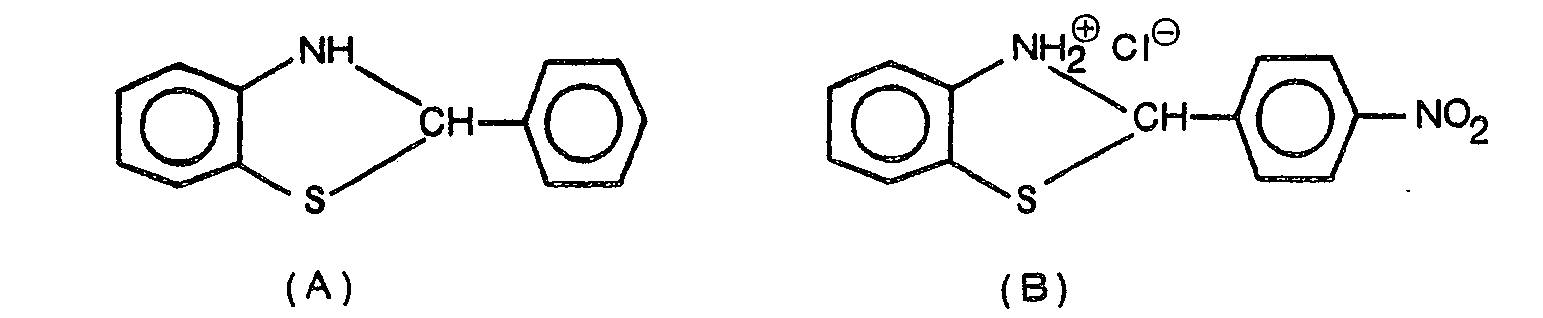
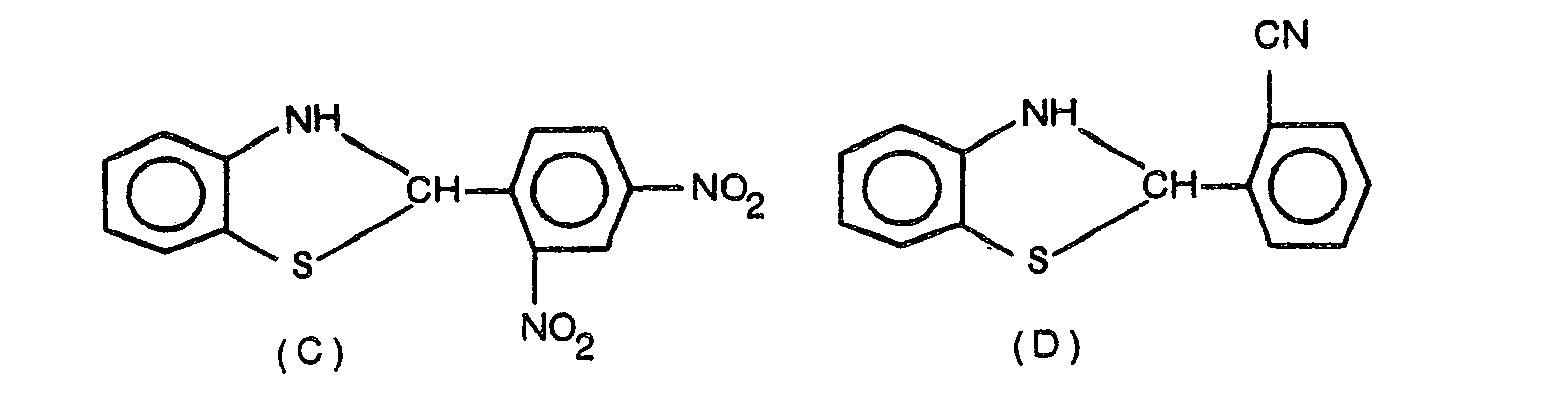
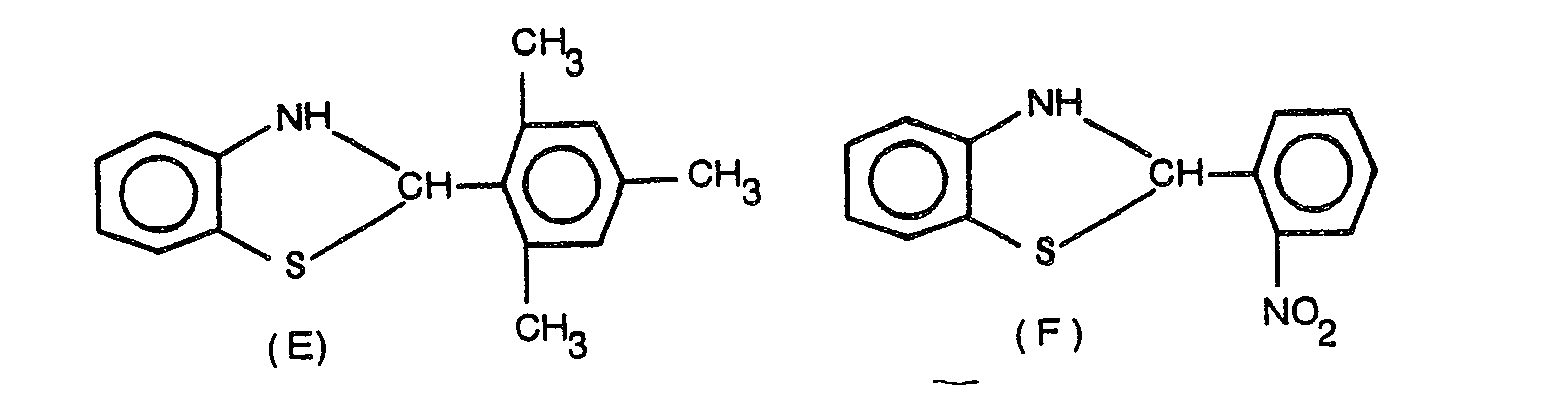
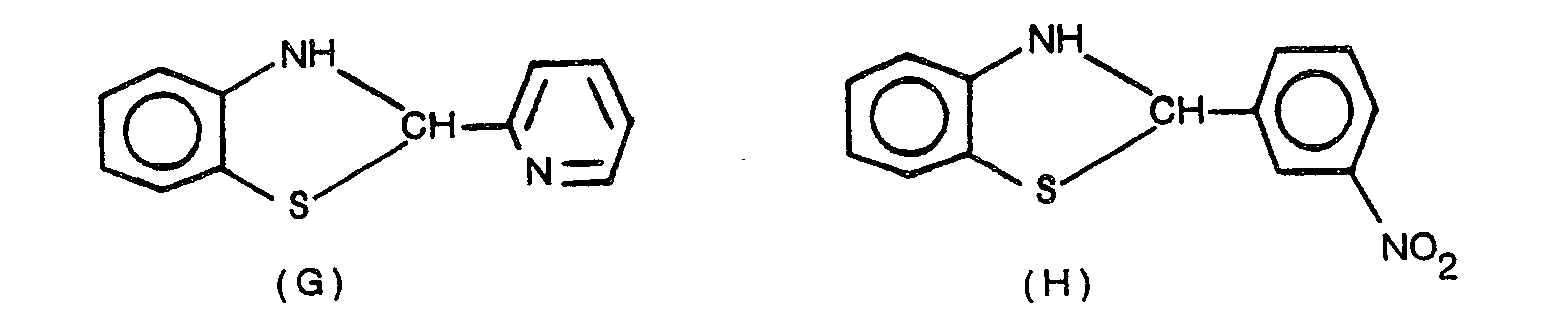
and salts thereof.
and salts thereof.
4. A photographic element as claimed in any one of claims 1 to 3 wherein in said emulsion
said benzothiazoline derivative or salt thereof is present in an amount of from 0.0005g
to 0.1 g per 1.5 moles of silver halide.
5. A photographic element as claimed in claim 4 wherein in said emulsion said benzothiazoline
derivative or salt thereof is present in an amount of from 0.001 g to 0.09 g per 1.5
moles of silver halide.
6. A silver halide emulsion for photographic film elements containing an antifogging
amount of a benzothiazoline derivative of formula I (as defined in claim 1) or a salt
thereof.
7. An emulsion as claimed in claim 6 wherein said benzothiazoline derivative or salt
thereof is present in an amount of from 0.0005 to 0.1 g per 1.5 moles of silver halide.
8. An emulsion as claimed in claim 7 wherein said benzothiazoline derivative or salt
thereof is present in an amount of from 0.001 to 0.09 g per 1.5 moles of silver halide.
9. An emulsion as cfaimed in any one of claims 6 to 8 wherein in said benzothiazoline
derivative of formula I R is an alkyl or aryl group substituted by one or more nitro,
cyano or methyl groups or is a pyridyl group.
10. An emulsion as claimed in any one of claims 6 to 8 wherein said benzothiazoline
derivative is selected from:
and salts thereof.
and salts thereof.
1. Photographisches Element aus. einem Träger und einer Silberhalogenid-Emulsion,
die darauf beschichtet eine die Schleierbildung verhindernde Menge eines Antischleiermittels
enthält, dadurch gekennzeichnet, daß das Antischleiermittel ein Benzothiazolin-Derivat
der Formel I

(in der R H, Alkyl, Aryl oder substituiertes Alkyl oder Aryl oder Pyridyl ist) oder ein Salz desselben ist.
(in der R H, Alkyl, Aryl oder substituiertes Alkyl oder Aryl oder Pyridyl ist) oder ein Salz desselben ist.
2. Photographisches Element nach Anspruch 1, dadurch gekennzeichnet, daß in dem Benzothiazolin-Derivat
der Formel I R eine durch eine oder mehrere Nitro-, Cyano- oder Methyl-Gruppe(n) substituierte
Alkyl- oder Aryl-Gruppe oder eine Pyridyl-Gruppe ist.
3. Photographisches Element nach Anspruch 1, dadurch gekennzeichnet, daß das Benzothiazolin-Derivat
aus den folgenden ausgewählt ist:
und deren Salzen.
und deren Salzen.
4. Photographisches Element nach irgendeinem der Ansprüche 1 bis 3, dadurch gekennzeichnet,
daß in der Emulsion das Benzothiazolin-Derivat oder das Salz desselben in einer Menge
von 0,0005 g bis 0,1 g pro 1,5 mol des Silberhalogenids vorliegt.
5. Photographisches Element nach Anspruch 4, dadurch gekennzeichnet, daß in der Emulsion
das Benzothiazolin-Derivat oder das Salz desselben in einer Menge von 0,001 g bis
0,09 g pro 1,5 mol des Silberhalogenids vorliegt.
6. Silberhalogenid-Emulsion für photographische Film-Elemente, enthaltend eine die
Schleierbildung verhindernde Menge eines Benzothiazolin-Derivats der Formel I (nach
Anspruch 1) oder eines Salzes desselben.
7. Emulsion nach Anspruch 6, dadurch gekennzeichnet, daß das Benzothiazolin-Derivat
oder das Salz desselben in einer Menge von 0,0005 g bis 0,1, g pro 1,5 mol des Silberhalogenids
vorliegt.
8. Photographisches Element nach Anspruch 7, dadurch gekennzeichnet, daß das Benzothiazolin-Derivat
oder das Salz desselben in einer Menge von 0,001 g bis 0,09 g pro 1,5 mol des Silberhalogenids
vorliegt.
9. Emulsion nach irgendeinem der Ansprüche 6 bis 8, dadurch gekennzeichnet, daß in
dem Benzothiazolin-Derivat der Formel I R eine Qurch eine oder mehrere Nitro-, Cyano-
oder Methyl-Gruppe(n) substituierte alkyl- oder Aryl-Gruppe oder eine Pyridyl-Gruppe
ist.
10. Emulsion nach irgendeinem der Ansprüche 6 bis 8, dadurch gekennzeichnet, daß das
Benzothiazolin-Drivat ausgewählt ist aus:
und deren Salzen.
und deren Salzen.
1. Un élément photographique comprenent un support et, appliquée sur ce support, une
émulsion d'halogénure d'argent contenant une quantité à effet antivoile d'un agent
antivoile, caractérisé en ce que ledit agent antivoile est un dérivé de benzothiazoline
de formule 1

(dans laquelle R représente H; un groupe alkyle ou aryle ou un groupe alkyle ou aryle substitué; ou un groupe pyridyle) ou un sel de celui-ci..
(dans laquelle R représente H; un groupe alkyle ou aryle ou un groupe alkyle ou aryle substitué; ou un groupe pyridyle) ou un sel de celui-ci..
2. Un élément photographique tel que revendiqué dans la revendication 1, dans lequel,
dans ledit dérivé de benzothiazoline de formule I, R est un groupe alkyle ou aryle
substitué par un ou plusieurs groupes nitro, cyano ou méthyle ou bien est un groupe
pyridyle.
3. Un élément photographique tel que revendiqué dans la revendication 1, dans lequel
ledit dérivé de benzothiazoline est choisi parmi les suivants:
et leurs sels.
et leurs sels.
4. Un élément photographique tel que revendiqué dans l'une quelconque des revendications
1 à 3, dans lequel, dans ladite émulsion, ledit dérivé de benzothiazoline ou sel de
celui-ci est présent en une quantité de 0,0005 g à 0,1 g pour 1,5 mole d'halogénure
d'argent.
5. Un élément photographique tel que revendiqué dans la revendication 4, dans lequel,
dans ladite émulsion, ledit dérivé de benzothiazoline ou sel de celui-ci est présent
en une quantité de 0,001 g à 0,09 g pour 1,5 mole d'halogénure d'argent.
6. Une émulsion d'halogénure d'argent pour éléments photographiques en pellicule,
contenant une quantité à effet anti-voile d'un dérivé de benzothiazoline de formule
1 (telle que définie dans la revendication 1) ou un sel de celui-ci.
7. Une émulsion telle que revendiquée dans la revendication 6, dans laquelle ledit
dérivé de benzothiazoline ou sel de celui-ci est présent en une quantité de 0,001
à 0,09 g pour 1,5 mole d'halogénure d'argent.
8. Une émulsion telle que revendiquée dans la revendication 7, dans laquelle ledit
dérivé de benzothiazoline ou sel de celui-ci est présent en une quantité de 0,001
à 0,09 g pour 1,5 mole d'halogénure d'argent.
9. Une émulsion telle que revendiquée dans l'une quelconque des revendications 6 à
8, dans laquelle, dans ledit dérivé de benzothiazoline de formule I, R est un groupe
alkyle ou aryle substitué par un ou plusieurs groupes nitro, cyano ou méthyle ou bien
est un groupe pyridyle.
10. Une émulsion telle que revendiquée dans l'une quelconque des revendications 6
à 8, dans laquelle ledit dérivé de benzothiazoline est choisi parmi:
et leurs sels.
et leurs sels.