| (19) |
 |
|
(11) |
EP 0 094 409 B1 |
| (12) |
EUROPEAN PATENT SPECIFICATION |
| (45) |
Mention of the grant of the patent: |
|
11.12.1985 Bulletin 1985/50 |
| (22) |
Date of filing: 18.11.1982 |
|
| (86) |
International application number: |
|
PCT/SE8200/389 |
| (87) |
International publication number: |
|
WO 8301/892 (09.06.1983 Gazette 1983/14) |
|
| (54) |
A CONNECTING DEVICE
VERBINDUNGSVORRICHTUNG
DISPOSITIF DE CONNEXION
|
| (84) |
Designated Contracting States: |
|
AT BE CH DE FR GB LI NL |
| (30) |
Priority: |
24.11.1981 SE 8106996
|
| (43) |
Date of publication of application: |
|
23.11.1983 Bulletin 1983/47 |
| (71) |
Applicant: AKTIEBOLAGET ELECTROLUX |
|
105 45 Stockholm (SE) |
|
| (72) |
Inventor: |
|
- BERGLUND, Bo-Anders Ragnar
S-561 39 Huskvarna (SE)
|
| (74) |
Representative: Hagelbäck, Evert Isidor et al |
|
AB Electrolux
Luxbacken 1
S-105 45 Stockholm
S-105 45 Stockholm (SE) |
|
| |
|
| Note: Within nine months from the publication of the mention of the grant of the European
patent, any person may give notice to the European Patent Office of opposition to
the European patent
granted. Notice of opposition shall be filed in a written reasoned statement. It shall
not be deemed to
have been filed until the opposition fee has been paid. (Art. 99(1) European Patent
Convention).
|
[0001] The present invention relates to a connecting device for a dish-washing machine as
defined in the preamble of Claim 1.
[0002] A connecting device of the kind referred to is disclosed in DE-A-2,355,271. In this
device the conduit to the spraying arm has funnel-shaped connecting parts which cooperate
with correspondingly shaped connecting protrusions arranged on the feed tube. The
respective connecting parts and protrusions are loosely interconnected and to make
possible the positioning of the rack at two different levels three protrusions are
provided in a vertical row with the middle one being open and the two others being
permanently closed. The conduit has two funnel-shaped parts and at each level one
funnel-shaped part cooperates with the open protrusions whereas the other cooperates
with one of the closed protrusions.
[0003] The object of the invention is to simplify the connecting device by eliminating the
protrusions and the funnel-shaped parts and to provide a tight connection between
the conduit and the feed tube, thus eliminating any loss of liquid pressure that might
appear in the prior art device referred to above.
[0004] The object will be achieved in a device having the features stated in the characterizing
part of Claim 1. A preferred embodiment is disclosed in Claim 2.
[0005] An embodiment of a device according to the invention will be described by way of
example in the following with reference to the accompanying drawings which show in
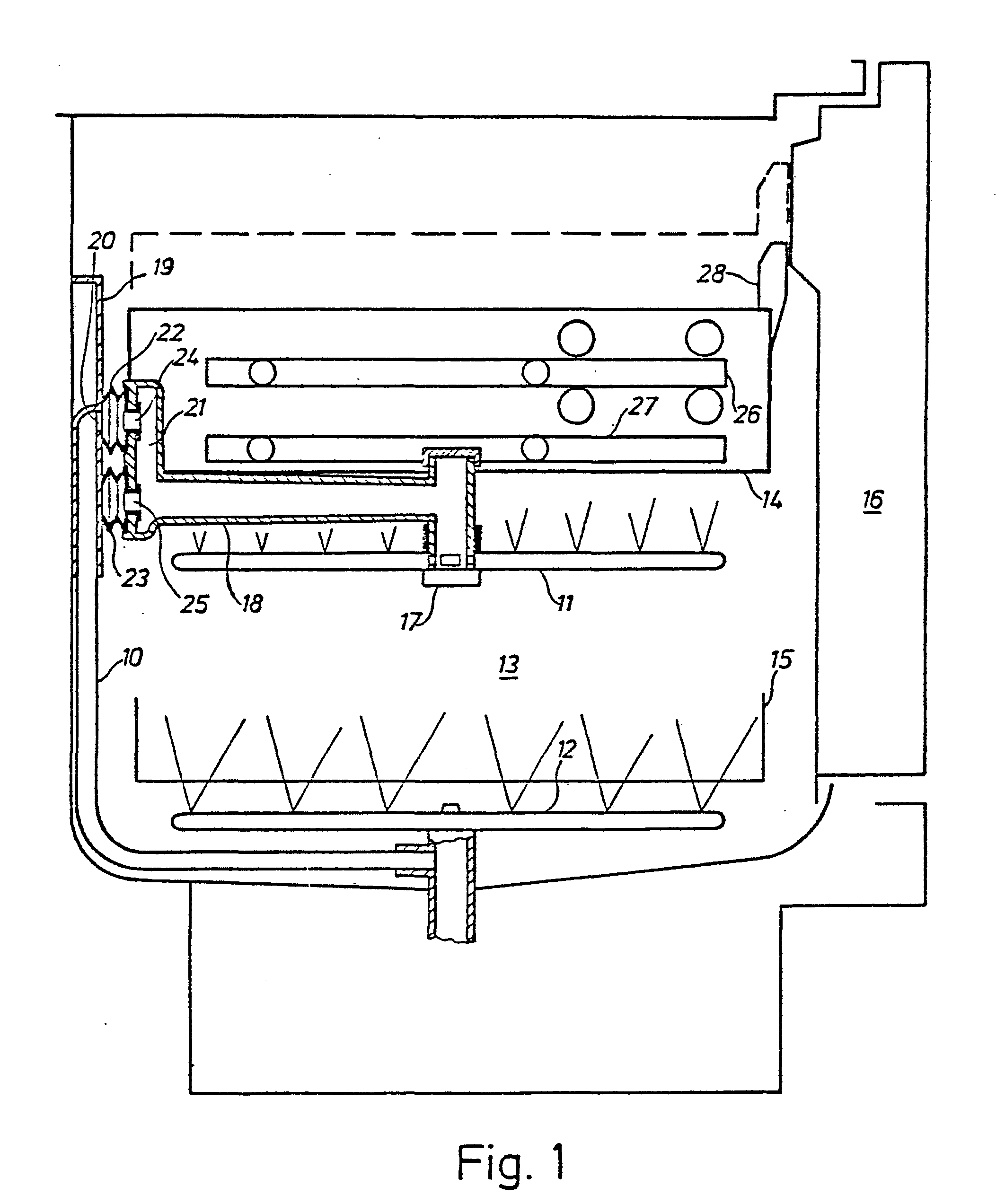
Fig. 1 a dish-washing machine cabinet in a vertical cross-section and
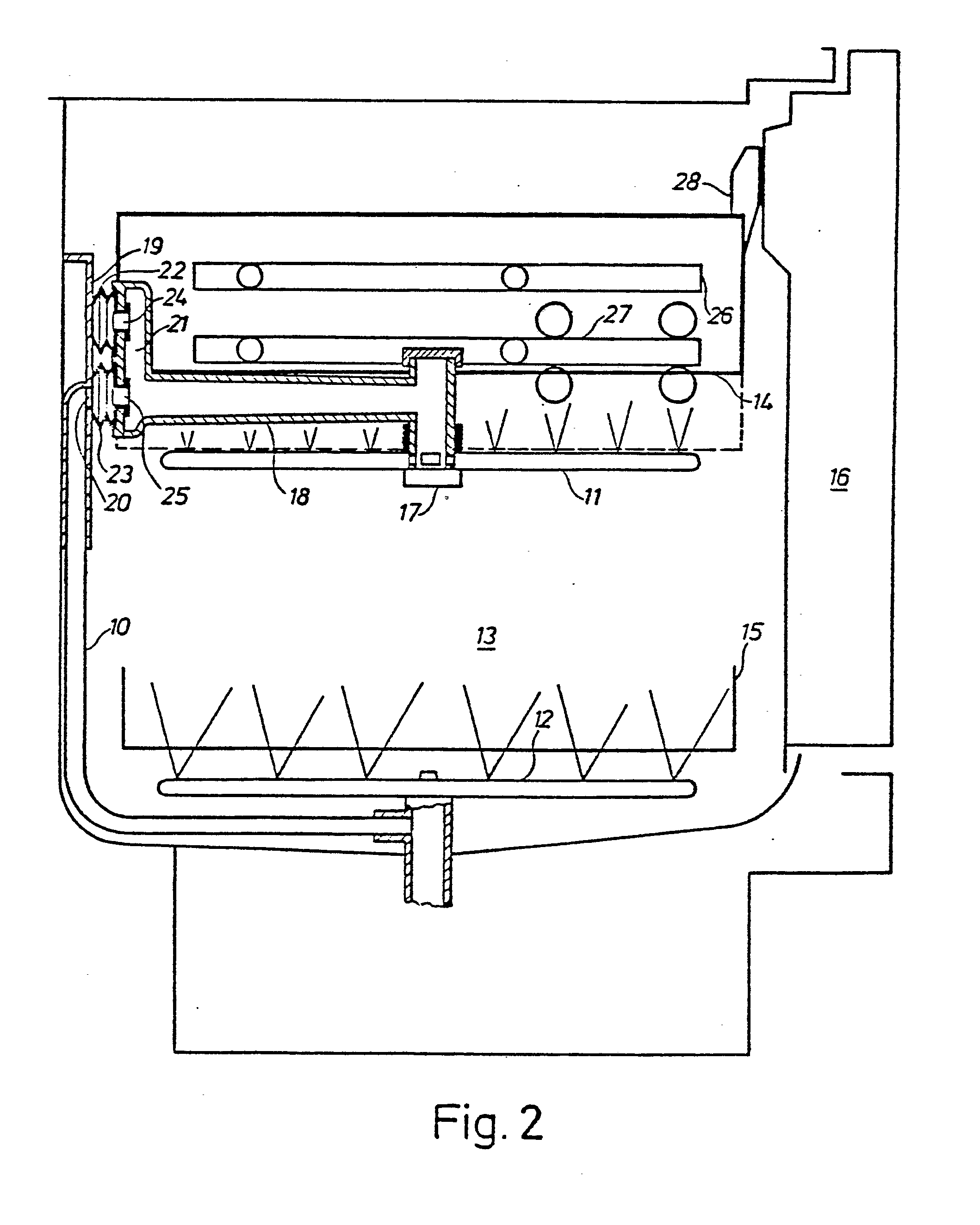
Fig. 2 the same cabinet having a rack in another position.
[0006] In the dish-washing machine according to Fig. 1 there is a circulation circuit for
a fluid which is pumped in a feed tube 10 which is branched into two spraying arms
11, 12 located in a washing cabinet 13 having an upper and a lower dish rack 14, 15
which can be pulled out through an opening in the front side of the machine provided
with a door 16. The underside of the upper rack 14 is provided with a bearing 17 of
the spraying arm 11 which bearing has a passage for a conduit 18 extended backwards
along the underside of the rack. The conduit thus communicates with the spraying arm
through the bearing so that the arm can rotate freely while the conduit stands still.
The feed tube has a connecting surface 19 turned to the centre of the cabinet in which
surface there is a port 20 through which the fluid can pass. The rear end of the conduit
18 forms a connecting house 21 extended in the vertical direction and terminated backwards
by a couple of bellows 22, 23 which communicate with the conduit by holes 24, 25 in
the wall. When the upper rack is pushed against the rear wall of the cabinet one of
the bellows (in Fig. 1 the bellows 22) encircles the port 20 and tightens against
the connecting surface 19. The other bellows 23 abut the surface at the side of the
port. When the fluid is caused to circulate in the machine a pressure arises which
presses the outer ends of the bellows 22 harder to the connecting surface and the
upper rack in direction to the door 16. The pressure of the fluid will then by itself
provide a good tightening between the bellows 22 and the connecting surface 19. One
or the other of the bellows 22, 23 can be used to establish the connection, in Fig.
2 the bellows 23 are used, and the rack 14 is then in an upper working position in
the washing cabinet. In use of the upper bellows (Fig. 1) the rack is in a lower working
position. These positions are selectable and the selection is made with regard to
the size of the dish goods. At each side of the rack there are guides 26, 27 in the
wall, a lower one and an upper one. When the rack is pushed in on one of these pairs
of guides, the corresponding bellows meet the port 20 so that connection to the feed
tube is established. During the washing procedure fluid passes through the feed tube
10 and the conduit 18 to the spraying arm 11. The bellows connected to the port are
safely kept in position by a force directed to the feed tube and created by the closing
of the door 16 by means of a shoulder 28 on the outer end of the rack, which shoulder
is pushed by the door in the direction of the rack which transfers the force to the
conduit 18 and the bellows. When the door is opened and the rack pulled out the feed
tube and the bellow are disconnected.
[0007] The advantages of a connecting device of this kind are principally its insensibility
to deviations in the measures of the cabinet, the door, the racks, the feed tube etc.
The flexible bellows (which also can be in the form of a sleeve, a collar or the like)
will themselves adjust their outer tightening end to the connecting surface and thereby
eliminate the risk of leakage.
1. A connecting device for a spraying system in a dish-washing machine provided with
a feed tube (10) and a conduit (18) to a spraying arm (11) connected by means of a
bearing (17) to a dish rack (14) in the machine, the feed tube (10) being provided
with a connecting surface (19) facing said conduit and provided with a port (20),
the conduit being connectable to the port via at least one pair of vertically spaced
apertures (24, 25) in the end of the conduit (18),thus allowing differing vertical
positions of the dish rack with respect to the feed tube, characterized in that flexible
bellows, sleeves or collars (22) extend from the apertures (24, 25) in the conduit
(18) in the longitudinal direction thereof and that the open outer end of one bellows,
sleeve or collar (22) of the pair encircles said port (20) on pushing the conduit
(18) against the tube (10), the open outer end of the other bellows, sleeve or collar
(22) of the pair abuts the surface (19) at the side of the port (20) and is thereby
sealed.
2. A connecting device according to Claim 1, characterized in that a tightening force
on the bellows, sleeve or collar (22) is excerted by a locking device in the door
(16) of the machine which device on closing of the door by means of the rack (14)
and the conduit (18) pushes the bellows sleeve or collar against the connecting surface
(19).
1. Dispositif de raccordement pour un dispositif de projection dans une machine à
laver de la vaisselle équipée d'un tube d'alimentation (10) et d'un conduit (18) aboutissant
à un bras de projection (11), lequel est relié au moyen d'un palier (17) à un panier
à vaisselle (14) de la machine, le tube d'alimentation (10) étant muni d'une surface
de raccordement (19) qui fait face audit conduit et qui est munie d'un orifice (20),
le conduit pouvant être raccordé à l'orifice par au moins une paire d'ouvertures (24,
25) espacées verticalement ménagées dans l'extrémité du conduit (18), en permettant
ainsi de donner au panier à vaisselle plusieurs positions en hauteur différentes par
rapport au tube d'alimentation, caractérisé en ce que des soufflets, manchons ou bagues
flexibles (22) font saillie à partir des ouvertures (24, 25) ménagées dans le conduit
(18), dans la direction longitudinale de ce conduit et en ce que l'extrémité extérieure
ouverte d'un soufflet, manchon ou bague (22) de la paire encercle ledit orifice (20)
lorsqu'on pousse le conduit (18) contre le tube (10), l'extrémite extérieure ouverte
de l'autre soufflet, manchon ou bague (22) de la paire butant contre la surface (19)
située à côte de l'orifice (20) et étant ainsi fermée à joint étanche.
2. Dispositif de raccordment selon la revendication 1, caractérisée en ce qu'une force
de fermeture à joint étanche est exercée sur le soufflet, le manchon ou la bague (22)
par un dispositif de verrouillage prévu dans la porte (16) de la machine, lequel dispositif
presse le soufflet, le manchon ou la bague contre la surface de raccordement (19)
au moyen du panier (14) et du conduit (18) lorsqu'on ferme la porte.
1. Verbindungsvorrichtung für ein Sprühsystem in einer Geschirrspülmaschine, versehen
mit einem Zuflußrohr (10) und einer Leitung (18) zu einem Sprüharm (11), welcher mit
Hilfe einer Stütze (17) und einem Geschirrkorb (14) in der Maschine verbunden ist,
wobei das Zuflußrohr (10) mit einer Kontaktfläche (19) die besagte Leitung verkleidet
und mit einer Öffnung (20) versehen ist, welche Leitung über mindestens ein Paar im
Ende der Leitung, vertikal im Zwischenraum angeordneten Öffnungen (24, 25) mit der
Tür verbindbar ist, sodaß unterschiedliche vertikale Stellungen des Geschirrkorbes
bezüglich der Zuflußleitung möglich sind, dadurch gekennzeichnet, daß die biegsamen
Balgen, Hülsen oder Krägen (22) sich von den Öffnungen (24,25) in der Leitung (18)
in Längsrichtung zu dieser erstrecken, und daß das offene Außende eines Balgens, einer
Hühlse oder eines Kragens (22) des Paares die Öffnung (20) umschließt, wobei die Leitung
(18) gegen das Rohr (10) gedrückt wird, daß das offene äußere Ende des anderen Balgens,
der Hülse oder des Kragens des Paares mit der Fläche (19) an der Seite der Öffnung
(20) zusammenstößt und auf diese Weise Verschlessen ist.
2. Verbindungsvorrichtung nach Anspruch 1, dadurch gekennzeichnet, daß eine Abdichtkraft
auf die Balgen, Hülsen oder Krägen wirkt, welche mittels einer Verschlußvorrichtung
in der Tür (16) der Maschine, welche Abdicktkraft beim Schließen der Tür unter Zuhilfenahme
des Korbes (14) und der Leitung (18) erbracht wird, die Balgen, Hülsen oder Krägen
gegen eine Kontaktfläche drückt.