|
(11) | EP 0 111 950 B1 |

| (12) | EUROPEAN PATENT SPECIFICATION |
|
|
| (54) |
Process for the preparation of bisphosphine dioxides Verfahren zur Herstellung von Bisphosphin-Dioxyden Procédé de préparation de dioxydes de bis-phosphines |
|
|
|||||||||||||||||||||||||||||||
| Note: Within nine months from the publication of the mention of the grant of the European patent, any person may give notice to the European Patent Office of opposition to the European patent granted. Notice of opposition shall be filed in a written reasoned statement. It shall not be deemed to have been filed until the opposition fee has been paid. (Art. 99(1) European Patent Convention). |
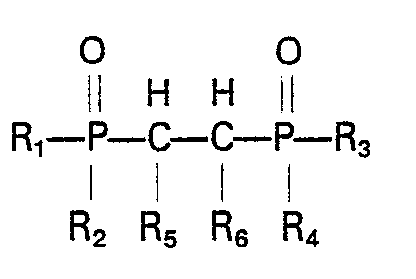
[0001] The invention relates to a process for the preparation of a bisphosphine dioxide with formula
in which R1, R2, R3 and R4, being the same or different, represent substituted or unsubstituted alkyl, aryl, alkaryl or aralkyl groups or an alkylene group is formed by R1 and R2 and/or R3 and R4 respectively, R5 represents H, R6 represents H or a substituted or unsubstituted alkyl, aryl, alkaryl or aralkyl group, or R5 and R6 form an alkylene group.
[0002] Methods for the preparation of bisphosphine dioxides are known, but they are complicated and do not give satisfying yields.
[0003] From two articles in Journal of the Chemical Society, Chemical Communications, 20th February, 1974, Publ. The Chemical Society, pages 142-3, London, and Bull. Acad. Sciences of the USSR, vol. 27, No. 2, part 2, February 1978, pages 410-11, Plenum Publishing Corporation, beta-hydroxy diphenylphosphine oxides are known. The compounds are prepared via diphenylphosphine. There is no indication to prepare bisphosphine dioxides from the intermediates.
[0004] The invention provides an attractive method for the preparation of bisphosphine dioxides in high .yields, by reaction of oxiranes with secondary phosphine oxides.
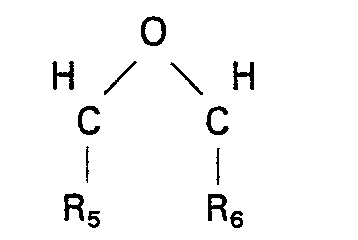
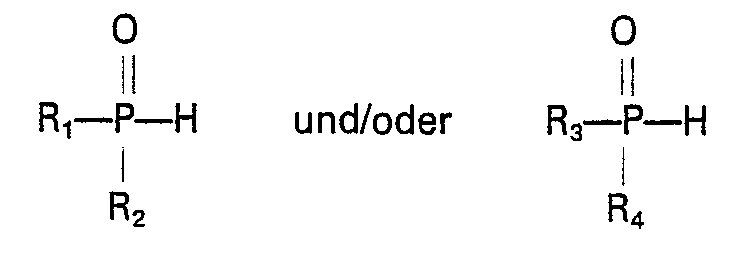
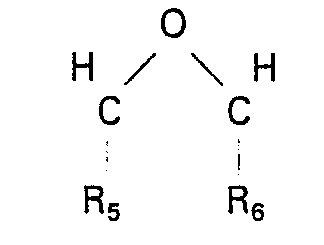
[0005] Accordingly, the invention provides a process for the preparation of a bisphosphine dioxide with formula
in which Ri, R2, R3, R4, R5 and R6 are as defined above, characterized in that an oxirane with formula
is reacted with a phosphine oxide with formula
in a polar aprotic solvent and in the presence of a basic compound capable of generating a phosphinoyl anion. In the phosphine oxides to be used as starting compounds one or more of Ri, R2, R3 and R4 very suitably represent a tertiary alkyl group (e.g. tertiary butyl).
[0006] Preferably one or more, and in particular all, of R1, R2, R3 and R4 represent a substituted or unsubstituted aryl group, in particular a phenyl group. Substituents of the aryl group may comprise any group which does not interfere with the reaction, such as alkyl groups (e.g. methyl groups), alkoxy groups, in particular methoxy groups. The substituents may be ortho, para or meta to the site of attachment of the phosphorus atom to the aryl group. As substituted aryl group the o-methoxyphenyl group is preferred. In the oxirane to be used as starting compound R6 preferably represents an alkyl group such as an ethyl, propyl or butyl group, and in particular a methyl group.
[0007] As examples of oxiranes in which R5 and R6 form an alkylene group, cyclopentane epoxide and cyclohexane epoxide can be mentioned.
[0008] The bisphosphine dioxides are easily converted into bisphosphines by well known techniques such as reduction with a mixture of chlorosilanes and trialkylamines, or with aluminium hydride.
[0009] Bisphosphines are widely employed as bidentate ligands in transition metal, in particular Group VIII noble metal (e.g. rhodium),'catalyzed reactions such as hydrogenation, hydrosilylation and hydrocarbonylation. Owing to the structure of these ligands various electronic or steric influences can be exerted in the close environment of the chelated metal centre. Accordingly the selectivity- of the catalysts strongly depends on the structure of the bisphosphines used as ligands, which structure may e.g. give rise to asymmetric hydrogenation. In this way the hydrogenation of unsaturated compounds to form saturated compounds having optical activity may be achieved. As an example the hydrogenation of substituted acrylic acids and esters to form stereoisomers of amino acids (e.g. phenylaniline, hydroxyphenylalanine, beta-indolylalanine and dihydroxyphenylalanine) may be mentioned.
[0010] The basic compound to be used very suitably should at least be partially soluble in the aprotic solvent. Alkali metal alkyls, such as lithium alkyls e.g. lithium butyl, are very suitable. Preference is given to metal hydrides in particular to those of the alkali metals such as sodium hydride and lithium hydride.
[0011] The basic compound preferably is used in an amount equivalent to the amount of phosphine oxide to be reacted. So in the case where sodium hydride or lithium butyl is used as basic compound, one mole thereof is preferably used for each mole of phosphine oxide to be reacted.
[0012] The reaction rate is dependent on the temperature and the type of polar aprotic solvent used. Temperatures between ambient and the boiling point of the reaction mixture are very suitable. The reaction runs more smoothly in more polar aprotic solvents than in less polar ones. As more polar aprotic solvents may in particular be mentioned those containing a substituted amide group such as 1,3 - dimethyl - 2 - imidazolidinone and dimethylformamide, the latter being preferred.
[0013] It has been found that in less polar solvents, i.e. hydrocarbons (e.g. hexane) and ethers (e.g. tetrahydrofuran, diethyl ether) only one molecule of the phosphine oxide reacts with the oxirane, leading to an intermediate compound with formula
the counter ion M being the metal of the basic compound used (e.g. Li or Na). Even in the case where an excess of one of the organic components is present over the amount needed for the formation of said intermediate compound the reaction does not go further under the conditions used in general viz. atmospheric pressure and a temperature of at most that of the boiling reaction mixture. By replacing the less polar solvent partly or totally by a more polar solvent containing an amide group more phosphine oxide will react with the intermediate compound mentioned above with formation of a bisphosphine dioxide according to the invention, provided sufficient basic compound is available.
[0014] The phenomenon described opens up the possibility to prepare bisphosphine dioxides with formula
in which R3 is different from R1 as well as from R2. As a matter of course R4 may also be different from R1 as well as from R2, and R3 may also be different from R4.
[0015] These compounds may be prepared by reacting one mole of a phosphine oxide with formula
with one mole of an oxirane with formula
in the presence of at least one equivalent of a basic compound (e.g. sodium hydride or lithium butyl), in a less polar solvent (as explained above), followed by addition of one mole of a phosphine oxide with formula
in which R3 is different from as well R1 and R2, and replacement of the less polar solvent by a solvent containing an amide group (e.g. dimethylformamide). If necessary a further amount of a basic compound which does not react with the more polar solvent is to be added.
[0016] It is also possible to isolate the reaction product of one phosphine oxide molecule with one oxirane molecule by acidification of the mixture which contains the intermediate compound and separating off the precipitated compound with formula
This compound can be converted to a bisphosphine dioxide according to the invention by contacting it in a more polar solvent (e.g. dimethylformamide) with a phosphine oxide and an amount of basic compound which does not react with the more polar solvent at least equivalent to the amounts of this intermediate compound and the phosphine oxide to be reacted together. Alternatively the said compound with formula
in a less polar solvent may be contacted with a phosphine oxide and a basic compound, followed by addition of a more polar solvent which does not react with the basic compound.
Example 1
Preparation of 1 - methyl - 1,2 - bis - (diphenylphosphinoyl)ethane.
[0017] 120 mg (5 mmol) of sodium hydride was added to a stirred solution of 1.0 g (5 mmol) diphenylphosphine oxide (in dry dimethylformamide (25 ml)) at room temperature under argon. With evolution of hydrogen a pale yellow solution was formed. The mixture was heated to 60°C and 145 mg (2.5 mmol) propane epoxide was added. Precipitation of a white solid started immediately, and the reaction was brought to completion by stirring at 60°C for 2 hours. The reaction mixture was acidified with dilute HCI and extracted with methylene chloride. The organic layer was washed with a 10% solution of sodium carbonate, dried, and the organic solvent was evaporated. Recrystallization of the residue from chloroform-diethyl ether yielded 0.93 g (84% yield) of the bisphosphine oxide.
Example 2
Preparation of 1,2 - bis(diphenylphosphinoyl)cyclohexane
[0018] Sodium hydride (0.17 g; 7.08 mmol) was added to a stirred solution of diphenylphosphine oxide (1.4 g; 6.93 mmol) in dimethylformamide (15 ml) at room temperature under argon. To the yellow solution was then added cyclohexane epoxide (0.34 g; 3.47 mmol) and the reaction mixture was warmed to 70°C. The yellow colour slowly faded and after 2 hours a white precipitate had formed. The mixture was cooled, acidified with dilute HCI and the product extracted with chloroform. The removal of all solvents afforded, after recrystallisation from chloroform-diethyl ether, trans - 1,2 - bis(diphenylphosphinoyl)cyclohexane (1.55 g; 93% yield).
Example 3
Preparation of 2-diphenylphosphinoylethanol
[0019] 6.25 ml of butyl lithium (1.6 molar in hexane) was added to a stirred solution of 2.02 g (10 mmol) diphenylphosphine oxide in dry tetrahydrofuran (100 ml) at room temperature under argon. With the evolution of butane a pale yellow solution was formed. To the yellow solution was added ethylene oxide (2 ml; 50 mmol) and the reaction was stirred for up to two days at room temperature. The reaction mixture was acidified with dilute HCI and extracted with methylene chloride. The organic layer was dried and evaporated. The residue was pure 2-diphenylphosphinoylethanol which was used as obtained in the following reaction.
Preparation of 1-diphenylphosphinoyl-2-di-(o-methoxy)phenylphosphinoylethane
[0020] 6.25 ml of butyl lithium (1.6 molar in hexane) was added to a stirred solution of 1.23 g (5 mmol) 2-diphenylphosphinoyl ethanol and 1.31 g (5 mmol) bis o-methoxyphenylphosphine oxide in dry tetrahydrofuran (10 ml) at room temperature under argon. With evolution of butane a pale yellow solution was formed. To the yellow solution was added dry dimethylformamide (100 ml) and the mixture was warmed to 90°C-100°C overnight. The reaction mixture was cooled, acidified with dilute HCI and extracted with methylene chloride. The organic layer was washed with a 10% solution of sodium carbonate, dried, and the organic solvent was evaporated. Recrystallization of the residue from methylenechloride-diethyl ether yielded 1.6 g (65% yield) of 1 - diphenylphosphinoyl - 2 - di(o - methoxy)phenylphos- phinoylethane.
1. A process for the preparation of a bisphosphine dioxide with formula
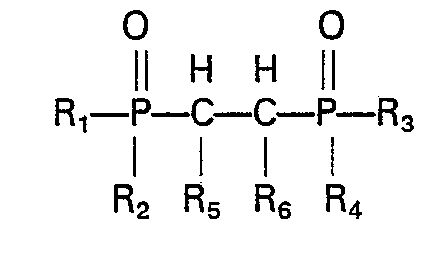
in which Ri, R2, R3 and R4, being the same or different, represent substituted or unsubstituted alkyl, aryl, alkaryl or aralkyl groups or an alkylene group is formed by R1 and R2 and/or R3 and R4 respectively, R5 represents H, R6 represents H'or a substituted or unsubstituted alkyl, aryl, alkaryl or aralkyl group, or R5 and R6 form an alkylene group, characterized in that an oxirane with formula
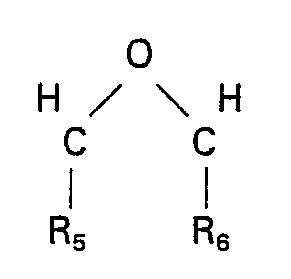
is reacted with a phosphine oxide with formula
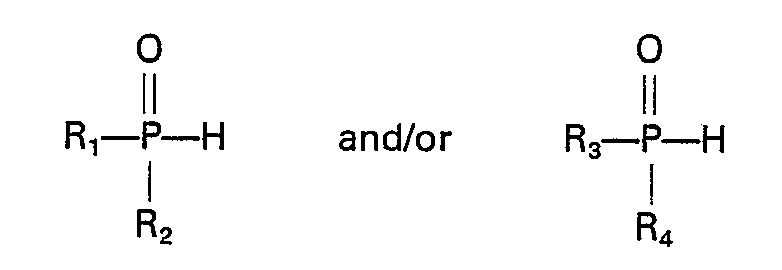
in a polar aprotic solvent and in the presence of a basic compound, capable of generating a phosphinoyl anion.
in which Ri, R2, R3 and R4, being the same or different, represent substituted or unsubstituted alkyl, aryl, alkaryl or aralkyl groups or an alkylene group is formed by R1 and R2 and/or R3 and R4 respectively, R5 represents H, R6 represents H'or a substituted or unsubstituted alkyl, aryl, alkaryl or aralkyl group, or R5 and R6 form an alkylene group, characterized in that an oxirane with formula
is reacted with a phosphine oxide with formula
in a polar aprotic solvent and in the presence of a basic compound, capable of generating a phosphinoyl anion.
2. A process according to Claim 1, characterized in that Ri, R2, R3 and R4 represent a substituted or unsubstituted aryl group.
3. A process according to Claim 2, characterized in that the substituted aryl group
represents an alkoxyaryl group.
4. A process according to Claim 3, characterized in that the alkoxyaryl group is an
o-methoxyphenyl group.
5. A process according to any one of the preceding claims characterized in that R6 represents an alkyl group.
6. A process according to Claim 5, characterized in that the alkyl group is a methyl
group.
7. A process according to any one of the preceding claims, characterized in that the
basic compound is sodium hydride.
8. A process according to any one of Claims 1-6, characterized in that the basic compound
is butyl lithium.
9. A process according to any one of the preceding claims, characterized in that the
amount of basic compound used is equivalent to the amount of phosphine oxide to be
reacted.
10. A process according to any one of the preceding claims, characterized in that
the process is carried out in 2 stages.
11. A process according to Claim 10, characterized in that the solvent in the first
stage consists of a hydrocarbon or an ether or a mixture thereof, and the solvent
in the second stage consists of a solvent which contains an amide group.
12. A process according to Claim 11, characterized in that the solvent in the first
stage consists of hexane or tetrahydrofuran or a mixture thereof, and the solvent
in the second stage consists of dimethylformamide.
1. Ein Verfahren zur Herstellung eines Bisphosphindioxids mit der Formel
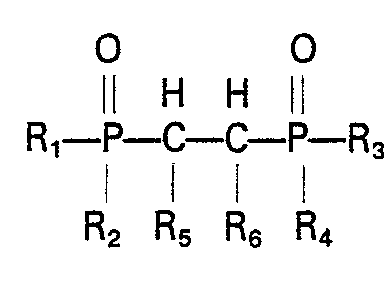
in welcher Ri, R2, R3 und R4 gleich oder verschieden sind, und jeweils substituierte oder unsubstituierte Alkyl-, Aryl-, Alkaryl- oder Aralkylgruppen darstellen oder durch R1 und R2 und/oder durch R3 und R4 jeweils eine Alkylengruppe gebildet wird, Rs Wasserstoff bedeutet, R6 Wasserstoff oder eine substituierte oder unsubstituierte Alkyl-, Aryl-, Alkaryl-, oder Aralkylgruppe darstellt oder R5 und R6 zusammen eine Alkylengruppe bilden, dadurch gekennzeichnet, daß ein Oxiran mit der Formel
mit einem Phosphinoxid mit der Formel
in einem polaren aprotischen Lösungsmittel und in Gegenwart einer basischen Verbindung umgesetzt wird, welche zur Bildung eines Phosphinoylanions befähigt ist.
in welcher Ri, R2, R3 und R4 gleich oder verschieden sind, und jeweils substituierte oder unsubstituierte Alkyl-, Aryl-, Alkaryl- oder Aralkylgruppen darstellen oder durch R1 und R2 und/oder durch R3 und R4 jeweils eine Alkylengruppe gebildet wird, Rs Wasserstoff bedeutet, R6 Wasserstoff oder eine substituierte oder unsubstituierte Alkyl-, Aryl-, Alkaryl-, oder Aralkylgruppe darstellt oder R5 und R6 zusammen eine Alkylengruppe bilden, dadurch gekennzeichnet, daß ein Oxiran mit der Formel
mit einem Phosphinoxid mit der Formel
in einem polaren aprotischen Lösungsmittel und in Gegenwart einer basischen Verbindung umgesetzt wird, welche zur Bildung eines Phosphinoylanions befähigt ist.
2. Ein Verfahren gemäß Anspruch 1, dadurch gekennzeichnet, daß R1, R2, R3 und R4 jeweils eine substituierte oder unsubstituierte Arylgruppe bedeuten.
3. Ein Verfahren gemäß Anspruch 2, dadurch gekennzeichnet, daß die substituierte Arylgruppe
eine Alkoxyarylgruppe ist.
4. Ein Verfahren gemäß Anspruch 3, dadurch gekennzeichnet, daß die Alkoxyarylgruppe
eine o-Methoxyphenylgruppe ist.
5. Ein Verfahren nach irgendeinem der vorhergehenden Ansprüche dadurch gekennzeichnet,
daß R6 eine Alkylgruppe bedeutet.
6. Ein Verfahren gemäß Anspruch 5, dadurch gekennzeichnet, daß die Alkylgruppe eine
Methylgruppe ist.
7. Ein Verfahren nach irgendeinem der vorhergehenden Ansprüche, dadurch gekennzeichnet,
daß die basische Verbindung Natriumhydrid ist.
8. Ein Verfahren nach irgendeinem der Ansprüche 1 bis 6, dadurch gekennzeichnet, daß
die basische Verbindung Butyllithium ist.
9. Ein Verfahren gemäß irgendeinem der vorhergehenden Ansprüche dadurch gekennzeichnet,
daß die Menge der verwendeten basischen Verbindungen der Menge an umzusetzendem Phosphinoxid
äquivalent ist.
10. Ein Verfahren nach irgendeinem der vorhergehenden Ansprüche dadurch gekennzeichnet,
daß das Verfahren in zwei Stufen durchgeführt wird.
11. Ein Verfahren gemäß Anspruch 10, dadurch gekennzeichnet, daß das Lösungsmittel
in der ersten Stufe aus einem Kohlenwasserstoff oder einem Äther oder einer Mischung
davon besteht und daß das Lösungsmittel in der zweiten Stufe aus einem Lösungsmittel,
welches eine Amidgruppe enthält, besteht.
12. Ein Verfahren gemäß Anspruch 11, dadurch gekennzeichnet, daß das Lösungsmittel
in der ersten Stufe aus Hexan oder Tetrahydrofuran oder einer Mischung davon und das
Lösungsmittel in der zweiten Stufe aus Dimethylformamid besteht.
1. Un procédé pour la préparation d'un dioxyde de bis-phosphine de formule
où R1, R2, R3 et R4, qui sont identiques ou différents, représentent des groupes alcoyle, aryle, alcaryle ou aralcoyle substitués ou non ou un groupe alcoylène est formé par R1 et R2 et/ou R3 et R4 respectivement, Rs représente H, R6 représente H ou un groupe alcoyle, aryle, alcaryle ou aralcoyle ou R5 et R6 forment un groupe alcoylène, caractérisé en ce qu'un oxirane de formule
est mis à réagir avec un oxyde de phosphine de formule
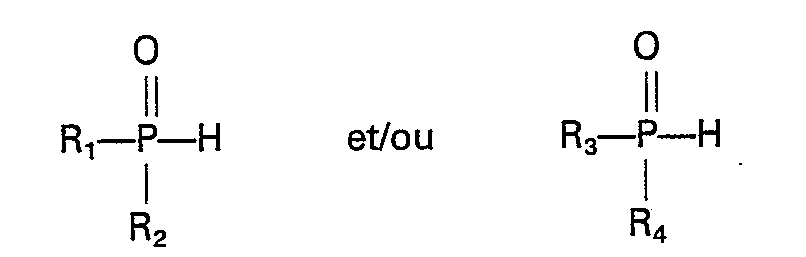
dans un solvant aprotique polaire et en présence d'un composé basique, capable de produire un anion phosphinoyle.
où R1, R2, R3 et R4, qui sont identiques ou différents, représentent des groupes alcoyle, aryle, alcaryle ou aralcoyle substitués ou non ou un groupe alcoylène est formé par R1 et R2 et/ou R3 et R4 respectivement, Rs représente H, R6 représente H ou un groupe alcoyle, aryle, alcaryle ou aralcoyle ou R5 et R6 forment un groupe alcoylène, caractérisé en ce qu'un oxirane de formule
est mis à réagir avec un oxyde de phosphine de formule
dans un solvant aprotique polaire et en présence d'un composé basique, capable de produire un anion phosphinoyle.
2. Un procédé selon la revendication 1, caractérisé en ce que Ri, R2, R3 et R4 représentent un groupe aryle substitué ou non.
3. Un procédé selon la revendication 2, caractérisé en ce que le groupe aryle substitué
représente un groupe alcoxyaryle.
4. Un procédé selon la revendication 3, caractérisé en ce que le groupe alcoxyaryle
est. un groupe o-méthoxyphényle.
5. Un procédé selon l'une quelconque des revendications précédentes, caractérisé en
ce que R6 représente un groupe alcoyle.
6. Un procédé selon la revendication 5, caractérisé en ce que le groupe alcoyle est
un groupe méthyle.
7. Un procédé selon l'une quelconque des revendications précédentes, caractérisé en
ce que le composé basique est de l'hydrure de sodium.
8. Un procédé selon l'une quelconque des revendications précédentes, caractérisé en
ce que le composé basique est du butyllithium.
9. Un procédé selon l'une quelconque des revendications précédentes, caractérisé en
ce que la quantité de composé basique utilisée est équivalente à la quantité d'oxyde
de phosphine devant réagir.
10. Un procédé selon l'une quelconque des revendications précédentes, caractérisé
en ce que le procédé est mis en oeuvre en deux étapes.
11. Un procédé selon la revendication 10, caractérisé en ce que le solvant dans la
première étape consiste en un hydrocarbure ou un éther ou un mélange de tels composés
et le solvant dans la seconde étape consiste en un solvant qui contient un groupe
amide.
12. Un procédé selon la revendication 11, caractérisé en ce que le solvant dans la
première étape consiste en hexane ou en tétrahydro- furanne ou en un mélange de ces
composés et le solvant dans la seconde étape consiste en diméthylformamide.