| (19) |
 |
|
(11) |
EP 0 113 184 B1 |
| (12) |
EUROPEAN PATENT SPECIFICATION |
| (45) |
Mention of the grant of the patent: |
|
11.11.1987 Bulletin 1987/46 |
| (22) |
Date of filing: 28.11.1983 |
|
| (51) |
International Patent Classification (IPC)4: H01R 13/422 |
|
| (54) |
Latch-free housing for electrical terminals
Schnappriegelfreies Gehäuse für elektrische Endstecker
Boîtier sans loquet pour terminaux électriques
|
| (84) |
Designated Contracting States: |
|
AT BE CH DE FR GB IT LI LU NL SE |
| (30) |
Priority: |
29.11.1982 US 445165
|
| (43) |
Date of publication of application: |
|
11.07.1984 Bulletin 1984/28 |
| (71) |
Applicant: E.I. DU PONT DE NEMOURS AND COMPANY |
|
Wilmington
Delaware 19898 (US) |
|
| (72) |
Inventors: |
|
- Jagen, Paul Rene
Mechanicsburg
Pennsylvania 17055 (US)
- Leisey, Donald Richard
Harrisburg
Pennsylvania 17110 (US)
|
| (74) |
Representative: Barnard, Eric Edward et al |
|
BROOKES & MARTIN
High Holborn House
52/54 High Holborn
London WC1V 6SE
London WC1V 6SE (GB) |
|
| |
|
| Note: Within nine months from the publication of the mention of the grant of the European
patent, any person may give notice to the European Patent Office of opposition to
the European patent
granted. Notice of opposition shall be filed in a written reasoned statement. It shall
not be deemed to
have been filed until the opposition fee has been paid. (Art. 99(1) European Patent
Convention).
|
Technical Field
[0001] This invention relates to housings for electrical connectors. More particularly,
it refers to a latch- free housing for electrical terminals.
Background Art
[0002] It has been customary in the prior art to design connector housings with integral
latches to hold terminals within the housing. Alternatively, terminals are designed
with a built-in latch which engages a housing stop and thereby is held in place within
the housing. Examples of such housing designs are shown in US-A-3 654 592, 3 781 760
and US-Re-27 463.
[0003] Although these prior art housings work well and have been used commercially, a space
problem arises inside the housing on close center designs. The necessity of a latch
requires more space inside the housing than in a corresponding no-latch design. Moreover,
the use of a flexible latch on the housing, as used in US-A-3 781 760, requires a
complex mold. Such molds are expensive. Costs could be decreased if the latch is eliminated.
A need, therefore, exists for a latchless housing.
[0004] US-A-3 582 863 describes a connector assembly with a dielectric housing with multiple
terminal receiving channels. Each channel is open at the front end of the housing
to an extent sufficient to permit an electrically conductive pin to mate with the
terminal while preventing egress of the terminal itself. The terminals are linked
to conductive wires at the rear of the housing which has a hinged rear portion which
can be pivoted to permit release of the terminals.
Summary of the Invention
[0005] As is known from US-A-3 582 863, the present invention provides a connector assembly
including a dielectric housing with multiple terminal receiving channels, each channel
having a front and rear opening to the exterior at opposite ends of the housing, an
electrical terminal occupying each channel, the front opening of each channel being
large enough to accommodate an electrically conductive pin for mating with the terminal
therein but small enough to prevent egress of the terminal and the rear openings receiving
conductive wires joined to at least some of the terminals.
[0006] In contrast to the prior art, the rear openings of the channels are covered by closure
means formed by fracturing a portion of the housing adjacent to the rear openings,
the closure means retaining and confining the terminals wholly within the channels
and being provided with apertures sufficient in size to provide access for the conductive
wires only, the housing being encapsulated within a dielectric plastic so that the
end of the housing containing the rear openings together with the conductive wires
are sealed from the external environment.
[0007] The terminals can be free-floating and are retained within the housing channels by
the stop means of the channels at the front and by the closure means at the rear.
The closure means is preferably in the form of flaps each hinged on a fracture zone
of the housing on opposite sides of the rear openings of the channels each flap having
opposed U-shaped openings forming the apertures for receiving the conductive wires.
Brief Description of the Drawings
[0008] The present invention may be best understood by those having ordinary skill in the
art by reference to the following detailed description of a preferred embodiment of
the invention in conjunction with the accompanying drawings in which:
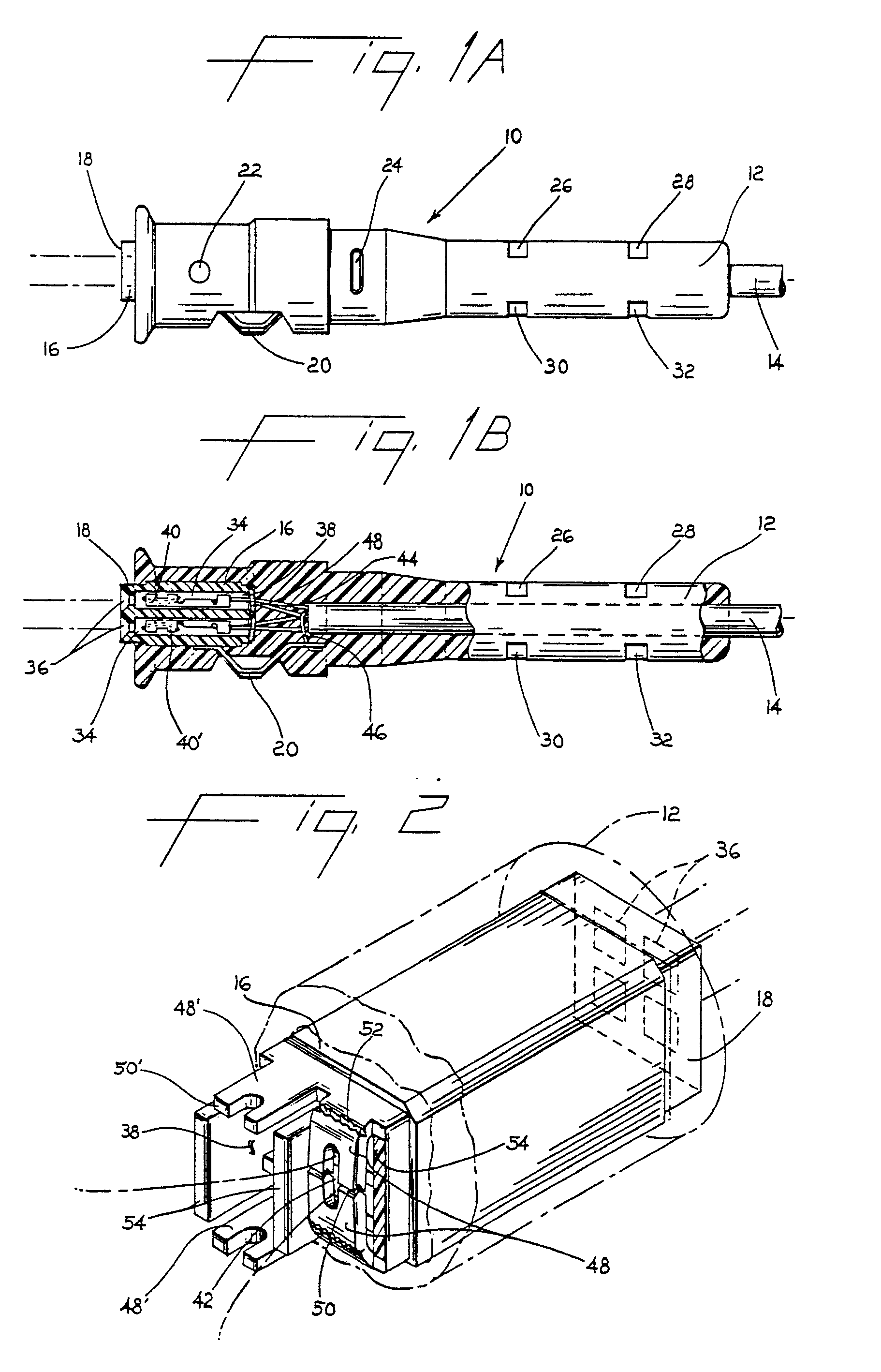
FIG. 1A is an elevation of a connector assembly constructed in accordance with the
invention;
FIG. 1B is a partial cut-away of the connector assembly showing an interior view;
FIG. 2 is a rear view isometric of the connector housing with the exterior plastic
covering in phantom;
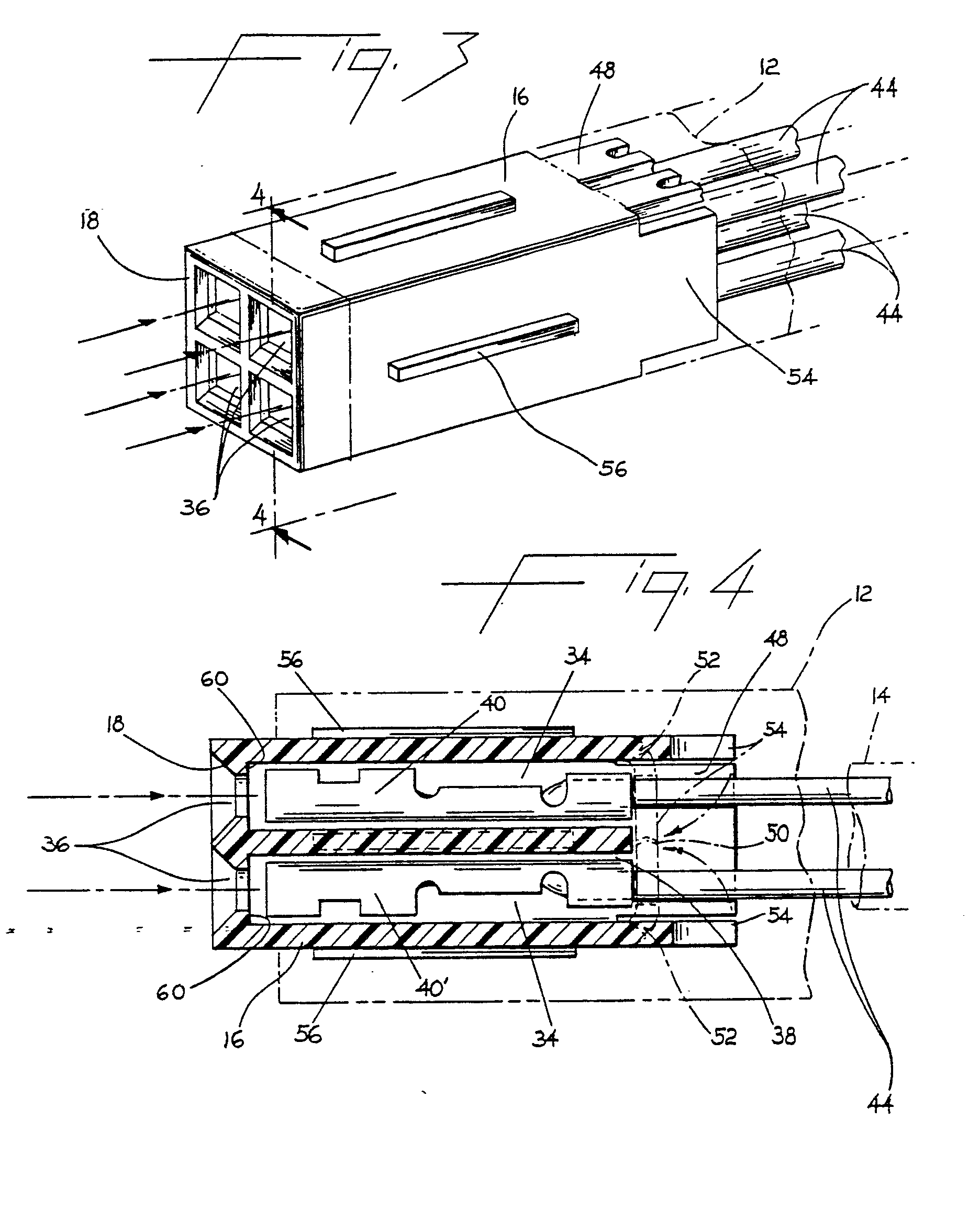
FIG. 3 is a front view prospective of the connector housing with an alternative exterior
design of the housing and the exterior plastic covering in phantom;
FIG. 4 is a cross-section of the housing with exterior plastic covering in phantom
taken along line 4-4 in FIG. 3.
Detailed Description of the Preferred Embodiment
[0009] In FIG. 1A, the connector cable assembly 10 is shown with a plastic overmold 12 encapsulating
both the cable 14 and the housing 16. Only the front portion 18 of the housing remains
exposed. A ground lug 20 protrudes through the plastic overmold 12. A series of voids
22, 24, 26, 28 30 and 32 are present only as a convenience in the molding process.
The voids do not effect the opertion of the connector.
[0010] The identical channels 34 running from the front opening 36 to the rear opening 38
of the housing 16 is shown in FIG. 1 B. Each channel 34 provides a space for a terminal
40. The front end 18 of the housing 16 has multiple pin-receiving channel openings
36. The rear channel openings 38 are covered by a pair of flaps 48 having opposed
U-shaped or semi-circular openings forming an aperture 42 for receiving the wire conductors
from cable 14. A ground wire 46 from the cable 14 is attached to the ground lug 20.
The flaps 48 can have dovetails 50 on their ends to facilitate mutual engagement.
The flaps 48 are each hinged 52 from a portion of the housing 16. The hinges 52 will
be a fracture zone in the plastic of the housing 16.
[0011] An alternative design for the flaps 48 is also shown in FIG. 2 where the flaps 48'
have a flat bottom surface 50' instead of a dovetail. Preferably, a pair of sidewalls
54 are located on each side of the rear channel opening 38 so that the flaps 48 or
48' are wedged between these sidewalls 54 in their closed position.
[0012] FIG. 3 shows an optional housing design with protrusions 56 facilitating bonding
of the plastic overmold 12 to the housing.
[0013] FIG. 4 shows the location of the terminals 40 within the housing. The terminals 40
cannot move any further forward in the housing than stop 60 and cannot move back through
the rear opening of the housing because of the closed flaps 48. However, the aperture
42 in the flaps allow access for the conductors 44 from cable 14 to enter into the
housing channels 34. The conductors 44 are attached to the terminals by crimping or
soldering. In the particular design shown in FIG. 1 B, two conductors 44 from the
cable 14 are terminated to the top two terminals 40 and two other conductors 44 from
cable 14 are terminated to the lower two terminals 40'. A ground wire 46 in the cable
14 is attached to the ground lug 20. The exact number of wires in the cable 14 depends
on the particular design and use of terminals involved. The specific design of the
terminal can vary with the connector requirements.
[0014] After the conductor wires 44 are terminated to the terminals 40 and 40' and the flaps
48 are closed, the cable 14 and the housing 16 are encapsulated within a layer of
plastic 12. This plastic can be a polyester or polyvinyl chloride, but other plastics
of like kind can be substituted. Encapsulation is achieved by inserting the housing
16 and cable 14 into a mold and injecting the mold with molten plastic such as polyvinyl
chloride. The housing front portion 18 protrudes from the mold along with the ground
lug 20. The housing is made from any common dielectric plastic such as polycarbonate.
The terminal is a metal such as copper, cupro-nickel or phosphor bronze. The overmold
12 does not cover the front portion 18 of the housing which contains the channel openings
36 for receiving the conductive pins. Neither does it cover the ground lug. The remainder
of the housing 16 and cable 14 are completely sealed from the external environment.
The ground lug will usually be made of copper or other conductive materials.
[0015] Having thus described the invention, what is claimed and desired to be secured by
Letters Patent is:
1. A connector assembly including a dielectric housing (16) with multiple terminal
receiving channels (34), each channel having a front and rear opening (36, 38) to
the exterior at opposite ends of the housing, an electrical terminal (40) occupying
each channel (34), the front opening (36) of each channel (34) being large enough
to accommodate an electrically conductive pin for mating with the terminal (40) therein
but small enough to prevent egress of the terminal (40) and the rear openings (38)
receiving conductive wires joined to at least some of the terminals (40); characterised
in that the rear openings (38) of the channels (34) are covered by closure means (48)
formed by fracturing a portion of the housing adjacent to the rear openings (38),
the closure means (48) retaining and confining the terminals (40) wholly within the
channels (34) and being provided with apertures (42) sufficient in size to provide
access for the conductive wires only, the housing being encapsulated within a dielectric
plastic (12) so that the end of the housing containing the rear openings together
with the conductive wires are sealed from the external environment.
2. A connector assembly according to claim 1 wherein the closure means is composed
of flaps (48) each hinged on a fracture zone (52) of the housing on opposite sides
of the rear openings (38) of the channels (34) each flap (48) having opposed U-shaped
openings (42) forming the apertures for receiving the conductive wires (14).
3. A connector assembly according to claim 2 wherein the flaps (48) are shaped to
interchange in the closed position.
4. A connector assembly according to claim 2 or 3 wherein the housing (16) has side
walls (54) and the flaps (48) wedge between these side walls in the closed position.
5. A connector assembly according to any one of claims 1 to 4 wherein there are four
terminal receiving channels (34).
6. A connector assembly according to claim 5 wherein there are five conductive wires,
one wire (46) establishing a connection to ground and each of the remaining four wires
(44) being signal conductors in electrical contact with respective terminals (40).
7. A connector assembly according to claim 6 wherein the ground wire (46) is connected
to a ground lug (20) mounted on the exterior of the housing (16) and penetrating through
the encapsulating dielectric plastic (12).
8. A connector assembly according to claim 7 wherein the encapsulating dielectric
plastic (12) covers the conductive wires, the closure means (48) and the remainder
of the housing exclusive of the front openings (36) and the ground lug (20).
9. A connector assembly according to any one of claims 1 to 8 wherein the dielectric
plastic (12) is polyvinyl chloride.
10. A connector assembly according to claim 1, wherein the channels (34) are elongate
and the terminals (40) have first and second ends, the first ends serving to receive
the pins and the second ends being attached to the conductive wires (44) which extend
from a cable assembly (14), the first ends of the terminals being blocked from egress
from the channels by stop means (60) in the channels and the second ends being blocked
from egress from the channels by flaps (48) hinged on fracture zones (52) of the housing
(16) and located on the opposite sides at the rear of the housing (16), the flaps
(48) constituting the closure means being initially movable between open and closed
positions, the flaps (48) having U-shaped openings (42) which in the closed position
of the flaps combine to provide one or more common apertures for receiving the conductive
wires and sealing the terminals while permitting access thereto solely from the front
(18) of the housing.
1. Verbindungsanordnung, die ein dielektrisches Gehäuse (16) mit mehreren Abschlußaufnahmekanälen
(34) enthält, wobei jeder Kanal (34) eine an gegenüberliegenden Enden des Gehäuses
nach außen weisende vordere und hintere Öffnung (36, 38) hat, ein elektrischer Anschluß
(40) sich in jedem Kanal (34) befindet, die vordere Öffnung (36) jedes Kanals (34)
so ausreichend groß ist, daß sie einen elektrisch leitenden Stift aufnimmt, der in
den Anschluß (40) eingreift, aber so ausreichend klein ist, daß ein Austritt des Anschlusses
(40) verhindert wird, und wobei die hinteren Öffnungen (38) Leiterdrähte aufnehmen,
die wenigstens mit einigen der Anschlüsse (40) verbunden sind, dadurch gekennzeichnet,
daß die hinteren Öffnungen (38) der Känale (34) durch eine Verschlußeinrichtung (48)
verdeckt sind, die dadurch gebildet wird, daß ein Abschnitt des Gehäuses angrenzend
an die hinteren Öffnungen (38) abgebrochen wird, daß die Verschlußeinrichtung (48)
die Anschlüsse (40) vollständig in den Kanälen (34) hält und einschließt und mit Öffnungen
(42) versehen ist, die so ausreichend groß sind, daß nur ein Zugang zu den Leiterdrähten
möglich ist, und daß das Gehäuse in einem dielektrischen Kunststoff (12) derart gekapselt
ist, daß das Ende des Gehäuses, das die hinteren Öffnungen zusammen mit den Leiterdrähten
enthält, von der Außenumgebung dicht abgeschlossen ist.
2. Verbindungsanordnung nach Anspruch 1, bei der die Verschlußeinrichtung aus Laschen
(48) besteht, die jeweils an einer Bruchzone (52) des Gehäuses an gegenüberliegenden
Seiten der hinteren Öffnungen (38) der Känale (34) jeder Lasche (48) angelenkt sind,
die gegenüberliegende U-förmige Öffnungen (42) hat, die die Öffnungen zur Aufnahme
der Leiterdrähte (14) bilden.
3. Verbindungsanordnung nach Anspruch 2, bei der die Laschen (48) derart geformt sind,
daß sie in der Schließstellung ineinandergreifen.
4. Verbindungsanordnung nach Anspruch 2 oder 3, bei der das Gehäuse (16) Seitenwände
(54) hat und die Laschen (48) zwischen diesen Seitenwänden in der Schließstellung
festgeklemmt sind.
5. Verbindungsanordnung nach einem der Ansprüche 1 bis 4, bei der vier Anschlußaufnahmekanäle
(34) vorgesehen sind.
6. Verbindungsanordnung nach Anspruch 5, bei der fünf Leiterdrähte vorgesehen sind,
wobei ein Draht (46) eine Verbindung mit Erde ermöglicht und die jeweils verbleibenden
vier Drähte (44) Signalleiter sind, die in elektrischem Kontakt mit den zugeordneten
Anschlüssen (40) sind.
7. Verbindungsanordnung nach Anspruch 6, bei der der Erdungsdraht (46) mit einer Erdungsöse
(20) verbunden ist, die an der Außenseite des Gehäuses (16) angebracht ist und den
gekapselten, dielektrischen Kunststoff (12) durchsetzt.
8. Verbindungsanordnung nach Anspruch 7, bei der der zur Verkapselung dienende dielektrische
Kunststoff (12) die Leiterdrähte, die Verschlußeinrichtung (48) und den restlichen
Teil des Gehäuses außer den vorderen Öffnungen (36) und der Erdungsöse (20) bedeckt.
9. Verbindungsanordnung nach einem der Ansprüche 1 bis 8, bei der der dielektrische
Kunststoff (12) Polyvinylchlorid ist.
10. Verbindungsanordung nach Anspruch 1, bei der die Kanäle (34) länglich sind und
die Anschlüsse (40) erste und zweite Enden haben, wobei die ersten Enden zur Aufnahme
der Stifte dienen und die zweiten Enden an den Leiterdrähten (44) angebracht sind,
die von einer Kabelanordnung (14) weggehen, bei der die ersten Enden der Anschlüsse
an einen Austreten aus den Kanälen durch Anschlageinrichtungen (16) in den Kanälen
gehindert sind und die zweiten Enden an einem Austreten aus den Kanälen durch Laschen
(48) gehindert sind, die an den Brechzonen (52) des Gehäuses (16) angelenkt sind und
auf den gegenüberliegenden Seiten an der Rückseite des Gehäuses (16) vorgesehen sind,
bei der die die Verschlußeinrichtung bildenden Laschen (48) zu Beginn zwischen einer
Offenstellung und einer Schließstellung bewegbar sind, die Laschen (48) U-förmige
Öffnungen (42) haben, die in der Schließstellung der Laschen in Verbindung miteinander
ein oder mehrere gemeinsame Öffnungen zur Aufnahme der Leiterdrähte und der Abdichtung
der Anschlüsse bilden, während ein Zugang zu diesen lediglich von der Vorderseite
(18) des Gehäuses her möglich ist.
1. Ensemble de connecteur comprenant un boîtier diélectrique (16) avec plusieurs canaux
(34) recevant des bornes, chaque canal (34) ayant une ouverture avant et arrière (36,
38) sur l'extérieur aux extrémités opposées du boîtier, une borne électrique (40)
disposée dans chaque canal (34), l'ouverture avant (36) de chaque canal (34) étant
suffisamment grande pour recevoir une broche électriquement conductrice venant en
contact avec la borne (40) intérieure mais suffisamment petite pour empêcher la sortie
de la borne (40) et les ouvertures arrière (38) recevant des fils métalliques conducteurs
réunis à au moins quelques unes des bornes (40); caractérisé en ce que les ouvertures
arrière (38) des canaux (34) sont recouvertes par des organes de fermeture (48) formés
par pliage d'une partie du boîtier adjacente à chaque ouverture arrière (38), les
organes de fermeture (48) retenant et enfermant les bornes (40) entièrement dans les
canaux (34) et présentant des ouvertures (42) de dimensions suffisantes pour permettre
seulement le passage des fils métalliques conducteurs, le boîtier étant enrobé dans
une matière plastique diélectrique (12) de façon que l'extrémité du boîtier portant
les ouvertures arrière avec les fils métalliques conducteurs soit fermée sur l'environnement
externe.
2. Ensemble de connecteur suivant la revendication 1, dans lequel les moyens de fermeture
sont formés de volets (48) articulés chacun sur une zone de pliage (52) du boîtier
sur les côtés opposés des ouvertures arrière (38) des canaux (34), chaque volet (48)
ayant des ouvertures opposées (42) de forme en U formant les trous pour recevoir les
fils métalliques conducteurs (14).
3. Ensemble de connecteur suivant la revendication 2, dans lequel les volets (48)
sont conformés de façon à coopérer mutuellement en position de fermeture.
4. Ensemble de connecteur suivant la revendication 2 ou 3, dans lequel le boîtier
(16) comporte des parois latérales (54) et les volets (48) sont coincés entre ces
parois latérales dans la position de fermeture.
5. Ensemble de connecteur suivant l'une des revendications 1 à 4, dans lequel il est
prévu quatre canaux (34) recevant des bornes.
6. Ensemble de connecteur suivant la revendication 5, dans lequel il est prévu cinq
fils métalliques conducteurs, un fil métallique (46) établissant une liaison avec
la masse et chacun des quatre fils restants (44) étant conducteur de signaux en contact
électrique avec les bornes respectives (40).
7. Ensemble de connecteur suivant la revendication 6, dans lequel le fil métallique
de masse (46) est relié à une patte (20) de masse montée sur l'extérieur du boîtier
(16) et pénétrant à travers la matière plastique diélectrique (12) d'enrobage.
8. Ensemble de connecteur suivant la revendication 7, dans lequel la matière plastique
diélectrique (12) d'enrobage recouvre les fils conducteurs, les organes de fermeture
(48) et le reste du boîtier à l'exclusion des ouvertures avant (36) et de la patte
de masse (20).
9. Ensemble de connecteur suivant l'une quelconque des revendications 1 à 8, dans
lequel la matière plastique diélectrique (12) est du chlorure de polyvinyle.
10. Ensemble de connecteur suivant la revendication 1, dans lequel les canaux (34)
sont allongés et les bornes (40) ont une première et une seconde extrémités, les premières
extrémités servant à recevoir les broches et les secondes extrémités étant fixées
sur les fils métalliques conducteurs (44) qui s'étendent à partir d'un ensemble de
câble (14), la sortie des premières extrémités des bornes des canaux étant empêchée
par des moyens d'arrêt (60) dans les canaux et la sortie des secondes extrémités des
canaux étant empêchée par des volets (48) articulés sur des zones de pliage (52) du
boîtier (16) et situées sur les côtés opposés à l'arrière du boîtier (16), les volets
(48) constituant l'organe de fermeture étant initialement mobiles entre des positions
d'ouverture et de fermeture, les volets (48) ayant des ouvertures (42) de forme en
U qui, en position de fermeture des volets, se combinent pour réaliser un ou plusieurs
trous communs destinés à recevoir les fils métalliques conducteurs et fermer les bornes
tout en permettant leur accès uniquement à partir de la partie avant (18) du boîtier.