| (19) |
 |
|
(11) |
EP 0 117 049 B1 |
| (12) |
EUROPEAN PATENT SPECIFICATION |
| (45) |
Mention of the grant of the patent: |
|
11.03.1987 Bulletin 1987/11 |
| (22) |
Date of filing: 13.01.1984 |
|
| (51) |
International Patent Classification (IPC)4: B65H 54/32 |
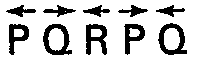
|
| (54) |
Package of carbonaceous filament strand
Packung aus einem Kohlenfaden
Paquet de filament de charbon
|
| (84) |
Designated Contracting States: |
|
DE FR GB IT NL |
| (30) |
Priority: |
18.01.1983 JP 6068/83
|
| (43) |
Date of publication of application: |
|
29.08.1984 Bulletin 1984/35 |
| (71) |
Applicant: TORAY INDUSTRIES, INC. |
|
Tokyo 103 (JP) |
|
| (72) |
Inventors: |
|
- Yoshinaga, Minoru
Iyo-gun
Ehime-ken (JP)
- Matsubara, Nobuyuki
Iyo-gun
Ehime-ken (JP)
|
| (74) |
Representative: Ellis, John Clifford H. et al |
|
5 Highfield Parkway
GB-Bramhall Stockport SK7 1HY
GB-Bramhall Stockport SK7 1HY (GB) |
|
| |
|
| Note: Within nine months from the publication of the mention of the grant of the European
patent, any person may give notice to the European Patent Office of opposition to
the European patent
granted. Notice of opposition shall be filed in a written reasoned statement. It shall
not be deemed to
have been filed until the opposition fee has been paid. (Art. 99(1) European Patent
Convention).
|
[0001] The present invention relates to a package of a carbonaceous filament strand.
[0002] A carbonaceous filament strand is conventionally produced by preliminarily heating
an organic polymer filament, such as polyacrylonitrile filament, cellulosic filament,
or pitch filament, in an oxidizing atmosphere and then carbonizing or graphitizing
it in a high temperature oven in an inert atmosphere. The carbonaceous filament strand
thus obtained is wound on a bobbin in a square-end cheese package for easy unwinding.
[0003] Recently, a demand has arisen for larger packages of 1 kg or more, sometimes as much
as 10 kg, in order to save labor in the winding process and cut down on packaging
costs and transportation expenses. It is very difficult, however, to. produce large
packages of carbonaceous filament strand.
[0004] To obtein a square-end cheese package of conventional synthetic filament yarn, a
spindle-drive winder is generally utilized. In such a winder, the yarn is wound on
a bobbin fitted onto a spindle shaft through a traverse guide reciprocated along the
spindle shaft within a constant travelling width. In this case, so-called «thread
dwell» occurs on the shoulders of the resultant package, corresponding to the turning
points of the traverse motion of the traverse guide. The «thread dwell» tends to cause
yarn slip-over from the shoulder of the package after the winding operation or prevents
smooth unwinding of the yarn from the resultant package. Further, in case of the carbonaceous
filament strand package, the thread dwell causes a deterioration of the package qualities,
particularly, of the strength of the strand located at the shoulder portion.
[0005] In one method of eliminating the «thread dwell», a pressure roll is provided in the
winder parallel to the spindle shaft. The pressure roll maintains light contact with
the package surface, the spindle shaft gradually moving away from the pressure roll
as the package enlarges. Any «dwell» is therefore pressed by the pressure roll to
flatten the package surface.
[0006] While this method is effective for winding conventional synthetic filament yarn,
it is not that applicable to a carbonaceous filament strand. A carbonaceous filament
strand has a higher Young's modulus, a lower elongation, and an extremely weak bending
strength compared to conventional synthetic filament yarn such as polyester or polyamide.
Accordingly, when the thread dwell is pressed by the pressure roll, though the package
surface becomes flat, filaments in the strand of the dwell portion are damaged, causing
degradation of strength and generation of fluff. It is therefore important to eliminate
thread dwell in a carbonaceous filament strand package without damaging the filament
quality.
[0007] Another method of eliminating the «thread dwell» is disclosed in DE-C-646 625. Here
a grooved cylinder in contact with the bobbin traverses the thread across the bobbin,
and a traverse limiting member is used to detach the thread from the groove and so
reduce the thread traverse. The traverse limiting member is itself reciprocated from
a moving element forming part of the winding machine. For reasons explained above,
the use of a pressure roll is undesired for carbonaceous filaments.
[0008] In US-A-3 638 872 the method is used of periodically altering the helix angle at
which the thread is laid down by decreasing the thread line speed, thus varying the
length of the laydown pattern of the thread.
[0009] We have found that, in the case of carbonaceous filaments, a square-end cheese can
be laid down by following a simple traversing pattern involving a sequence of traversing
strokes of either two or three unequal lengths in the manner specified below. By this
means an improved package of carbonaceous filament strand can be achieved without
the drawbacks discussed above.
[0010] From the point of view of the completed article, the invention provides a package
of continuous carbonaceous filament strand wound in reversing layers of helical coils
on a bobbin to form a square end cheese. Where traversing strokes of two unequal lengths
are used, the longer coil lengths are of the same length as the package and the coil
layers appear in a repeated pattern consisting of, in order, a longer coil layer,
a shorter coil layer and a second shorter coil layer. Where traversing strokes of
three unequal lengths are used, all the coil layer lengths are shorter than the length
of the package and the coil layers appear in a repeated pattern consisting of, in
order, an intermediate coil layer, a shorter coil layer and a longer coil layer.
[0011] The invention also includes the process of forming the packages by winding the strand
on a bobbin by moving it back and forth along the axis of the bobbin by successive
traverse motions of a traverse guide through which the strand is threaded, the direction
of movement of the traverse guide being reversed at two or three different points
at each end of the bobbin to provide strokes of different lengths, whereby coil layers
are laid down in the order indicated in the preceding paragraph.
[0012] The difference between the longest stroke length and the shortest stroke length is
to be within a range of from 2% to 20% of the longer stroke length.
[0013] Other features and advantages of the present invention will be apparent from the
following description with reference to the accompanying drawings, wherein:
Fig. 1 is a perspective view of a conventional spindle-drive winder utilized for forming
a yarn package of the present invention;
Figs. 2A and 2B diagrammatically illustrate examples of the course of traversing strokes
during winding operations for producing a package according to the present invention;
Fig. 3A illustrates another example of a course of traversing strokes during a winding
operation for producing a package of the present invention;
Fig. 3B illustrates a course of traversing strokes during a winding operation for
producing a conventional package; and
Figs. 4A and 4B are graphs of strand strength and number of fluffs, respectively.
[0014] The package of carbonaceous filament strand according to the present invention can
be produced by a conventional spindle-drive winder as illustrated in Fig. 1, in which
a carbonaceous- filament strand 1 such as carbon filament or graphite filament is
wound on a bobbin 3 fitted onto a spindle shaft 2 through a traverse guide 4 reciprocated
along the spindle shaft 2 within a constant travelling width. Reference numeral 5
indicates the pressure roll. The pressure roll 5, however, is optional in the invention.
[0015] The package is composed of a plurality of layers of strand coils formed by repeated
traverse motions. Each traverse motion consists of two traverse strokes, one forward
and one backward. The traces of the strokes turn at the package end portions. As is
the case of a conventional package, if successive traces turn at the same points at
the package end portions, a «thread dwell» is formed on the package shoulders. In
the present invention, there are a plurality of turning points distributed over a
certain area near the package end portions. Such an arrangement of turning points
is achieved by programming the traverse motions to repeat in a cycle after a predetermined
number of such motions. In each cycle, at least two different lengths of strokes are
combined. Here, the «length» of a stroke means the traverse width from one turning
point to the next.
[0016] Typical traces of the strokes according to the above traverse motion are illustrated
in Figs. 2A and 2B. In Fig. 2A, two turning points are provided on each package end
portion, a first point X just on the outer end and a second point Y a distance A'
inside thereof. This is achieved by repetition of two kinds of strokes having lengths
L and M, respecitvely, in a manner of

where the arrows show the moving direction. In Fig. 2B, a further turning point Z
is arranged a distance A" inside of the point Y. This is achieved by repetition of
three kinds of strokes having lengths P, Q and R respectively, in a manner of
R.
[0017] The difference of the length of the maximum stroke from that of the minimum stroke
lies within a range of from 2 percent to 20 percent relative to the maximum stroke.
In this connection, in Fig. 2A, the maximum stroke M corresponds to a distance (A)
and the minimum stroke L corresponds to a distance (A-A'), while in Fig. 2B, the maximum
stroke R corresponds to a distance (A-A') and the minimum stroke Q corresponds to
a distance (A-(2A'+A")).
[0018] The above-mentioned combination of strokes can be achieved by providing, for example,
a scroll cam for the traverse guide. The scroll cam has a plurality of grooves, each
groove corresponding to one of the strokes. The traverse guide is engaged with the
appropriate groove in accordance with a traverse programme. Such a scroll cam can
easily be designed by a person skilled in the art by referring to, for example, U.S.
Patent No. 1 957 979 or 3 718 288, so further explanation thereof is omitted.
[0019] A package of carbonaceous filament strand according to the present invention is freed
from «thread dwell» by just varying the combination of the strokes of the traverse
motions even without the application of the pressure roll. Accordingly, damage to
the filament in the strand wound on the package can completely be avoided while maintaining
the package style in good condition.
[0020] Features and advantages of the present invention will be understood more clearly
from the following experiment.
Experiment
[0021] Using the same type of winder as illustrated in Fig. 1, a graphite strand of 3,000
filaments with a total thickness of 1,500 denier was wound on a bobbin of 85 mm outer
diameter to form a square-end cheese package No. 1 with a maximum width of 150 mm
by controlling the traverse motions as illustrated in Fig. 3A, where A'=A"=5 mm. The
original graphite strand had a strength of 18 kg and the number of fluffs of 10/m.
[0022] As a control, a package No. 2 was wound from the same filament strand in a similar
manner as the package No. 1 except that the stroke is maintained at a constant length
of 150 mm, as shown in Fig. 3B.
[0023] The other winding conditions were as follows:
Package weight: 2.0 kg
Package diameter: 160 mm
Winding ratio: 4.33
Winding tension (initial/final): 0.1/0.07 g/D
Helical angle (initial/final): 15/8'
[0024] Quality tests on the resultant packages showed that package No. 2 (control) was poor
in unwinding smoothness relative to package No. 1 (present invention) though the former
exhibited as good an appearance as the latter. The unwinding smoothness is substantially
equivalent to the degree of fluff of the filament in the package.
[0025] The strand strength and portions of package Nos. 1 and 2 along the package width.
[0026] The results are illustrated in Figs. 4A and 4B, respectively, where the white dots
represent package No. 1 (present invention) and the black represent package No. 2
(control). As is apparent from the graphs, the filament laid on the end portion of
package No. 2 was damaged by the application of the pressure roll. On the contrary,
package No. 1 exhibited uniformly good qualities throughout the package.
1. A package of a continous carbonaceous filament strand wound in reversing layers
of helical coils on a bobbin to form a square-end cheese, wherein the coils, laid
down by traversing strokes of two unequal lengths, form a plurality of longer coil
layers and a plurality of shorter coil layers, the difference between the lengths
of the longer and the shorter coil layers being in the range of from 2% to 20% of
the length of the longer coil layers, and the longer coil layers being the same length
as the package, the coil layers having been laid down by reversing traverse strokes
in a repeated pattern consisting of, in order, a longer coil layer, a shorter coil
layer, and a second shorter coil layer.
2. A package of a continuous carbonaceous filament strand wound in reversing layers
of helical coils on a bobbin to form a square-end cheese, wherein the coils, laid
down by traversing strokes of three unequal lengths, form a plurality of longer coil
layers, a plurality of intermediate length coil layers, and a plurality of shorter
coil layers, all of the coil layers being shorter than the length of the package and
the difference between the lengths of the longest and the shortest coil layers being
in the range of from 2% to 20% of the length of the longest coil layers, the coil
layers having been laid down by reversing traverse strokes in a repeated pattern consisting
of, in order, an intermediate length coil layer, a coil layer of shortest length,
and a coil layer of greatest length.
3. A package according to either preceding claim, in which said carbonaceous filament
strand originates from polyacrylonitrile synthetic filament.
4. A package according to any preceding claim, in which said carbonaceous filament
strand is a carbon filament strand.
5. A package according to any one of claims 1 to 3, in which said carbonaceous filament
strand is a graphite filament strand.
6. A package according to any of claims 1 to 3, in which said carbonaceous filament
strand originates from a pitch fiber filament.
7. A process of forming a package of carbonaceous filament strand in the form of a
square-end cheese which consists in winding the strand on a bobbin whilst moving it
back and forth along the axis of the bobbin by successive traverse motions of a traverse
guide through which the strand is threaded, the direction of movement of the traverse
guide being reversed at two different points at each end of the bobbin to provide
two strokes of different lengths viz. a longer stroke which coincides with the package
width and a shorter stroke, the difference between the lengths of the strokes being
in the range of from 2% to 20% of the longer stroke length, and the movement of the
traverse guide follows the repeating cycle - longer stroke, shorter stroke, shorter
stroke.
8. A process of forming a package of carbonaceous filament strand in the form of a
square-end cheese which consists in winding the strand on a bobbin whilst moving it
back and forth along the axis of the bobbin by successive traverse motions of a traverse
guide through which the strand is threaded, the direction of movement of the traverse
guide being reversed at three different points at each end of the bobbin to provide
three strokes of different lengths, viz. a longest stroke which is shorter than the
full length of the package, an intermediate length stroke and a shortest stroke, the
difference between the length of the longest stroke and that of the shortest stroke
being in the range of 2% to 20% of the length of the longest stroke, and the movement
of the traverse guide follows the repeating cycle - intermediate length stroke, shortest
stroke, longest stroke.
1. Packung aus einem kontinuierlichen kohlenstoffhaltigen Fadenstrang, der in umkehrenden
Schichten von schraubenförmigen Windungen auf eine Spule gewickelt ist, um eine Kreuzspule
mit quadratischem Ende zu bilden, worin die Windungen, die durch kreuzende Linien
von zwei ungleichen Längen abgelegt sind, eine Vielzahl von längeren Windungsschichten
und eine Vielzahl von kürzeren Windungsschichten bilden, wobei der Unterschied zwischen
den Längen der längeren und der kürzeren Windungsschichten im Bereich von 2 bis 20%
der Länge der längeren Windungsschichten liegt und die längeren Windungsschichten
die gleiche Länge wie die Pakkung haben, wobei die Windungsschichten durch umkehrende
kreuzende Linien in einem wiederholten Muster abgelegt werden, das in dieser Reihenfolge
aus einer längeren Windungsschicht, einer kürzeren Windungsschicht und einer zweiten
kürzeren Windungsschicht besteht.
2. Packung aus einem kontinuierlichem kohlenstoffhaltigen Fadenstrang, in umkehrenden
Schichten von schraubenförmigen Windungen auf einer Spule gewickelt, um eine Kreuzspule
mit quadratischem Ende zu bilden, worin die Windungen, die durch kreuzende Linien
von 3 ungleichen Längen abgelegt sind, eine Vielzahl von längeren Windungsschichten,
eine Vielzahl von Windungsschichten mit Zwischenlänge und eine Vielzahl von kürzeren
Windungsschichten bilden, wobei alle diese Windungsschichten kürzer als die Länge
dieser Packung sind und der Unterschied zwischen den Längen der längsten und der kürzesten
Windungsschichten im Bereich von 2 bis 20% der Länge der längsten Windungsschichten
liegt, wobei die Windungsschichten durch umkehrende kreuzende Linien in einem wiederholten
Muster abgelegt werden, das in dieser Reihenfolge aus einer Windungsschicht mit Zwischenlänge,
einer Windungsschicht der kürzesten Länge und einer Windungsschicht der grössten Länge
besteht.
3. Packung nach einem der vorstehenden Ansprüche, worin der kohlenstoffhaltige Fadenstrang
von synthetischem Polyacrylnitrilfaden ausgeht.
4. Packung nach einem der vorstehenden Ansprüche, worin der kohlenstoffhaltige Fadenstrang
ein Kohlenstoffadenstrang ist.
5. Packung nach einem der Ansprüche 1 bis 3, worin der kohlenstoffhaltige Fadenstrang
ein Graphitfadenstrang ist.
6. Packung nach einem der Ansprüche 1 bis 3, worin der kohlenstoffhaltige Fadenstrang
von einem Pechfadenstrang ausgeht.
7. Verfahren zur Bildung einer Packung aus einem kohlenstoffhaltigen Fadenstrang in
Form einer Kreuzspule mit quadratischem Ende, das im Wickeln des Stranges auf eine
Spule besteht, während dieser durch aufeinanderfolgende Querbewegungen einer Hubführung,
durch die der Strang geführt ist, entlang der Achse der Spule zurück und voran bewegt
wird, wobei die Bewegungsrichtung der Hubführung an zwei verschiedenen Punkten an
jedem Ende der Spule umgekehrt wird, um zwei Linien von verschiedenen Längen zu schaffen,
d.h. eine längere Linie, die mit der Packungsbreite abschliesst und eine kürzere Linie,
wobei der Unterschied zwischen den Längen der Linien im Bereich von 2 bis 20% der
längeren Linienlänge liegt und die Bewegung der Hubführung dem sich wiederholenden
Zyklus - längere Linie, kürzere Linie, kürzere Linie-folgt.
8. Verfahren zur Herstellung einer Packung aus einem kohlenstoffhaltigen Fadenstrang
in Form einer Kreuzspule mit quadratischem Ende, das im Wickeln des Stranges auf eine
Spule besteht, während dieser durch aufeinanderfolgende Querbewegungen einer Hubführung,
durch die der Strang geführt ist, entlang der Achse der Spule zurück und voran bewegt
wird, wobei die Bewegungsrichtung der Hubführung an drei verschiedenen Punkten an
jedem Ende der Spule umgekehrt wird, um drei Linien verschiedener Längen zu schaffen,
d.h. eine längste Linie, die kürzer als die gesamte Länge der Packung ist, eine Linie
mit Zwischenlänge und eine kürzeste Linie, wobei der Unterschied zwischen der Länge
der längsten Linie und der der kürzesten Linie im Bereich von 2 bis 20% der Länge
der längsten Linie liegt und die Bewegung der Hubführung dem sich wiederholenden Zyklus
- Linie mit Zwischenlänge, kürzeste Linie, längste Linie-folgt.
1. Bobine d'un écheveau de filaments carbonés continus enroulé en couches s'inversant
de bobines hélicoïdales sur une canette afin de former une bobine croisée à extrémité
carrée, dans laquelle les bobines, déposées par des courses de va-et-vient de deux
longueurs inégales, forment une pluralité de couches de bobinage plus longues et une
pluralité de couches de bobinage plus courtes, la différence entre les longueurs des
couches de bobinage plus longues et plus courtes étant de l'orde de 2 à 20% de la
longueur des couches de bobinage les plus longues, et les couches de bobinage les
plus courtes ayant la même longueur que la bobine, les couches de bobinage ayant été
déposées par des courses de va-et-vient s'inversant dans une configuration répétée
constituée, dans l'ordre, d'une couche de bobinage plus longue, d'une couche de bobinage
plus courte, et d'une seconde couche de bobinage plus courte.
2. Bobine d'un écheveau de filaments carbonés continus enroulé en couches s'inversant
de bobines hélicoïdales sur une canette afin de former une bobine croisée à extrémité
carrée, dans laquelle les bobines, déposées par des courses de va-et-vient de trois
longueurs inégales, forment une pluralité de couches de bobinage plus longues, une
pluralité de couches de bobinage de longueur intermédiaire, et une pluralité de couches
de bobinage plus courtes, toutes les couches de bobinage étant plus courtes que la
longueur de la bobine et la différence entre les longueurs des couches de bobinage
les plus longues et les plus courtes étant de l'ordre de 2 à 20% de la longueur des
couches de bobinage les plus longues, les couches de bobinage ayant été déposées par
des courses de va-et-vient s'inversant dans une configuration répétée constituée,
dans l'ordre, d'une couche de bobinage de longueur intermédiaire, d'une couche de
bobinage de longueur plus courte et d'une couche de bobinage de longueur plus grande.
3. Bobine selon l'une quelconque des revendications précédentes, dans laquelle l'écheveau
de filaments carbonés provient d'un filament synthétique en polyacrylonitrile.
4. Bobine selon l'une quelconque des revendication précédentes, dans laquelle l'écheveau
de filaments carbonés est un écheveau de filaments en carbone.
5. Bobine selon l'une quelconque des revendications 1 à 3, dans laquelle l'écheveau
de filaments carbonés est un écheveau de filaments en graphite.
6. Bobine selon l'une quelconque des revendications 1 à 3, dans laquelle l'échevau
de filaments carbonés a pour origine un filament de fibre de brai.
7. Procédé de formation d'une bobine d'un écheveau de filaments carbonés sous forme
d'une bobine croisée à extrémité carrée, qui consiste à enrouler l'écheveau sur une
canette tout en l'animant d'un mouvement de va-et-vient suivant l'axe de la canette
par des mouvements successifs de va-et-vient d'un guide animé d'un va-et-vient par
l'intermédiaire duquel l'écheveau est introduit, le sens de mouvement du guide animé
d'un mouvement de va-et-vient étant inversé à deux points différents de chaque extrémité
de la canette afin de fournir deux courses de longueurs différentes, c'est-à-dire
une course plus longue qui coïncide avec la largeur de la bobine et une course plus
courte, la différence entre les longueurs des courses étant de l'ordre de 2 à 20%
de la longueur de la course la plus grande, et le mouvement du guide animé d'un déplacement
de va-et-vient suit le cycle se répétant: course plus longue, course plus courte,
course plus courte.
8. Procédé de formation d'une bobine d'un écheveau de filaments carbonés sous forme
d'une bobine croisée à extrémité carrée, qui consiste à enrouler l'écheveau sur une
canette tout en l'animant d'un mouvement de va-et-vient suivant l'axe de la canette
par des déplacements successifs de va-et-vient d'un guide animé d'un mouvement de
va-et-vient par l'intermédiaire duquel l'écheveau est introduit, le sens de mouvement
du guide animé d'un déplacement de va-et-vient étant inversé à trois points différents
à chaque extrémité de la canette afin de fournir trois courses de longueurs différentes,
à savoir une course plus longue qui est plus courte que la longueur hors- tout de
la bobine, une course de longueur intermédiaire et une course plus courte, la différence
entre la longueur de la course la plus longue et celle de la course la plus courte
étant de l'ordre de 2 à 20% de la longueur de la course la plus longue, et le déplacement
du guide animé d'un mouvement de va-et-vient suit le cycle se répétant: course de
longueur intermédiaire, course plus courte, course plus longue.