|
(11) | EP 0 121 825 A1 |

| (12) | EUROPEAN PATENT APPLICATION |
|
|
|
|
|||||||||||||||||||||||||||
| (54) | Monoazo dyestuffs for cellulose-containing fibers |
| (57) This invention relates to a monoazo dyestuff for cellulose-containing fibers represented
by the formula:
wherein D represents substituted or unsubstituted phenyl, imidazolyl, pyridyl, thiazolyl, thiadiazolyl, thienyl, benzoisothiazolyl, pyridinoisothiazolyl, thienoisothiazolyl, thienothiazolyl or benzothiazolyl, R1 represents substituted or unsubstituted alkyl, cyclohexyl, alkenyl, aralkyl or aryl, R2 and R3 each represents hydrogen, alkyl optionally substituted by cyano, hydroxy, alkoxy or alkoxyalkoxy, alkenyl, cyclohexyl, aryl or aralkyl, or together represent a 5- or 6-membered nitrogen-containing heterocyclic ring formed by combining R2 and R3, A represents X represents fluorine or chlorine, and Y1 represents hydrogen, chlorine, methyl or acylamino. |
BACKGROUND OF THE INVENTION
1. Field of the Invention
[0001] This invention relates to azo dyestuffs for cellulose-containing fibers. More specifically, it relates to reactive monoazo dyestuffs which dye cellulose-containing fibers, in particular cellulose fibers and fiber mixtures comprising polyester fibers and cellulose fibers, in orange to blue colors having excellent various fastness properties including light fastness.
2. Description of the Prior Art
[0002] Dyestuffs having similar structures as those of this invention are disclosed in Japanese Patent Application Laid-open No. 151064/1980, but it is evident as demonstrated by Comparative Example in Table 1 that the dyestuffs of this invention show much better fastness properties such as light fastness, wet color fastness etc. and also dyeing properties such as coloring value etc.
SUMMARY OF THE INVENTION
[0003] Accordingly, this invention provides monoazo dyestuffs for cellulose-containing fibers which are of the formula [I]:
wherein D represents substituted or unsubstituted phenyl, imidazolyl, pyridyl, thiazolyl, thiadiazolyl, thienyl, benzoisothiazolyl, pyridinoisothiazolyl, thienoisothiazolyl, thienothiazolyl or benzothiazolyl, R1 represents substituted or unsubstituted alkyl, cyclohexyl, alkenyl or aryl, R2 and R3 each represents hydrogen or alkyl optionally substituted by cyano, hydroxy, alkoxy or alkoxyalkoxy, alkenyl, cyclohexyl, aryl or aralkyl or together represent a 5- or 6- membered nitrogen-containing heterocyclic ring formed by combining R and R3, A represents -CH2CH2-,
or
X represents fluorine or chlorine, and Y1 represents hydrogen, chlorine, methyl or acylamino. The alkyl and alkenyl residues (including alkoxy, alkylthio, the alkyl moiety in aralkyl, etc.) contain up to 8 carbon atoms, preferably up to 4 and most preferably up to 3 carbon atoms. The aryl residues preferably contain 5 to 10 ring atoms.
DETAILED DESCRIPTION OF THE INVENTION
[0004] Examples of the substituted or unsubstituted phenyl, imidazolyl, pyridyl, thiazolyl, thiadiazolyl, thienyl, benzoisothiazolyl, pyridinoisothiazolyl, thienoisothiazolyl, thienothiazolyl or benzothiazolyl represented by D in the formula [I] above include phenyl; phenyl substituted by fluorine, chlorine, bromine, methyl, ethyl, trifluorcmethyl, methoxy, ethoxy, phenylazo, cyano, nitro, methylsulfonyl, ethylsulfonyl, arylsulfonyl, lower alkoxycarbonyl, lower alkoxyethoxycarbonyl, aryloxyethoxycarbonyl, mono-lower-alkylaminocarbonyl, di-lower-alkylaminocarbonyl, diallylaminocarbonyl, monoallylaminccarbonyl, dimethylaminosulfonyl, diethyl- aminosulfonyl, monomethylamincsulfonyl, moncethylaminosulfonyl, acetyl, pyridyl; pyridyl substituted by chlorine, bromine, nitro, methyl, methylsulfonyl, cyano etc.; thiazolyl; thiazolyl substituted by methyl, chlorine, bromine, nitro, lower alkoxycarbonyl, methoxyethoxycarbonyl, ethoxyethoxy- carbonyl, trifluoromethyl, methylsulfonyl etc.; 1,3,4-thiadiazolyl; 1,3,4-thiadiazolyl substituted by alkylthio, arylthio, alkenylthio, aralkylthio, bromine, chlorine, trifluoromethyl, alkylsulfonyl etc.; 1,2,4-thiadiazolyl; 1,2,4-thiadiazolyl substituted by alkylthio, arylthio, alkenylthio, aralkylthio, alkoxycarbonyl etc.; dicyanoimida- zolyl; thienyl substituted by cyano, chlorine, bromine, acetyl, formyl, nitro, alkoxycarbonyl, sulfomethyl etc.; benzoisothiazolyl; benzoisothiazolyl substituted by nitro, bromine, chlorine, acetyl, alkoxycarbonyl etc.; pyridinoisothiazolyl substituted by cyano, methyl, nitro etc.; thienoisothiazolyl; thienoisothiazolyl substituted by nitro, bromine, chlorine, cyano etc.; thienythiazolyl; thienothiazolyl substituted by nitro, bromine, chlorine etc.; benzothiazolyl; and benzothiazolyl substituted by methyl, chlorine, bromine, nitro, lower alkoxycarbonyl, thiocyano, trifluoromethyl, methylsulfonyl etc. Examples of the acylamino represented by Y1 include acetylamino, chloroacetylamino, benzoylamino, methylsulfonyl- amino, chloropropionylamino, ethoxycarbonylamino, ethylamino- carbonylamino etc. Examples of the unsubstituted alkyl represented by R1 include methyl, ethyl, straight-chain or branched-chain propyl, butyl, pentyl, hexyl, heptyl, cotyl etc., examples of the substituted alkyl include lower alkoxyalkyl such as methoxyethyl, ethoxyethyl, butoxyethyl etc.; lower alkoxyalkoxyalkyl such as methoxyethoxyethyl, ethoxy- ethoxyethyl etc.; phenoxyalkyl such as phenoxylethyl etc.; optionally substituted aralkyloxy-lower-alkyl such as benzyloxyethyl, chlorobenzyloxyethyl etc.; optionally substituted hydroxyalkyl such as hydroxyethyl, hydroxypropyl, hydroxybutyl, hydroxyhexyl, 2-hvdroxy-3-methoxyprooyl etc.; cyano-lower-alkyl such as cyanomethyl, cyanoethyl etc.; optionally substituted acyloxy-lower-alkyl such as acetyloxyethyl, chloroacetyloxyethyl, chloropropionyloxyethyl, benzoyloxyethyl etc.; alkoxycarbonyloxy-lower-alkyl such as methoxycarbonyloxyethyl, methoxyethoxycarbonyloxyethyl etc.; carbamoyl-lower-alkyl such as carbamoylmethyl, carbamoylethyl etc.; optionally substituted alkoxycarbonyl-lower-alkyl such as methoxycarbonylmethyl, ethoxycarbonylmethyl, methoxy- ethoxycarbonylmethyl, benzyloxycarbonylmethyl etc.; optionally substituted aralkyl such as benzyl, phenethyl, chlorobenzyl etc.; allyloxycarbonyl-lower-alkyl such as allyloxycarbonyl- ethyl, allyloxycarbonylmethyl etc.; tetrahydrofurfuryl; succinimido-lower-alkyl such as succinimidoethyl etc.; phthalimido-lower-alkyl such as phthalimidoethyl etc.; cyanoalkoxy-lower-alkyl such as cyancethoxyethyl, cyano- methoxyethyl etc.; and halogeno-lower-alkyl such as chloroethyl etc., and examples of the aryl include phenyl, chlorophenyl, methylphenyl etc. Further, examples cf the nitrogen-containing heterocyclic ring represented by NR2R3 include 1-pyrrolidinyl, 3-methyl-1-pyrrolidinyl, 2-hydroxyethyl-1-pyrrolidinyl, 2,5-dimethyl-1-pyrrolidinyl, 3-thiazolidinyl, 1-pyrrolyl, 1-pyrazolyl, 1-imidazolyl, morpholino, piperidino, 2,6-dimethylpiperidino, 1-piperadinyl, 4-methyl-1-piperadinyl etc.
[0005] The monoazo dyestuffs of the formula [I] above may be prepared by diazotizing an amine of the formula [II]:
wherein D is as defined above, and coupling with an aniline of the formula [III]:
wherein X, Y1, A, R1, R2 and R3 are as defined above.
[0006] The aniline of the formula [III] may be prepared by reacting an aniline of the formula [IV]:
wherein Y1, R and A are as defined above, with a 2,4,6- trihalogenotriazine in a solvent such as N-methylpyrrolidone, acetone etc. in the presence of an acid-binding agent such as triethylamine, sodium carbonate etc. at 0 - 10°C for 2 - 10 hours to obtain a compound of the formula [V]:
wherein X, Y1, R1 and A are as defined above, and thereafter reacting said compound of the formula [V] with an amine of the formula:
wherein R2 and R3 are as defined above, in a solvent such as N-methylpyrrolidone, acetone etc. in the presence of an acid-binding agent such as triethylamine, sodium carbonate etc. at room temperature for 2 - 10 hours.
[0007] Examples of the amine represented by D-NH2 include benzene type amines such as aniline, o-, m- or p-fluoroaniline, o-, m- or p-chloroaniline, o-, m- or p-bromoaniline, 2,4-dichlcroaniline, 2,3-dichlcroaniline, 2-chloro-4-bromoaniline, 2,4-difluoroaniline, 2,4,6-trichloroaniline, o-, m- or p-toluidine, o-, m- or p-ethylaniline, o-, m- or p-anisidine, m-trifluoromethylaniline, o- or p-cyanoaniline, 4-nitro-2,6-dichloroaniline, 4-nitro-2,6-dibromoaniline, 2,4-dinitro-6-bromcaniline, o-, m- or p-nitroaniline, 2-chloro-4-nitroaniline, 2-bromo-4-nitroaniline, 2-cyano-4-nitroaniline, 2-chloro-4-methoxyaniline, o-, m- or p-methylsulionylaniline, o-, m- or p-ethylsulfonylaniline, o-, m- or p-methoxycarbonyl- aniline, o-, m- or p-ethcxycarbonylaniline, p-butoxycarbonyl- aniline, p-aryloxycarbonylaniline, p-aryloxyethoxycarbonyl- aniline, o-, m- or p-methoxyethoxycarbonylaniline, p-N,N-dimethylaminocarbonylaniline, p-N-ethylaminocarbonylaniline, p-N-allylaminocarbcnylaniline, 2-chloro-4-methoxycarbonyl- aniline, p-N,N-dimethylaminosulfonylaniline, m-N,N-diethyl- aminosulfonylaniline, p-N-ethylaminosulfonylaniline, p-phenyl- aniline etc.; pyridine type amines such as 3-aminopyridine, 3-amino-6-bromopyridine, 3-amino-5-bromopyridine, 3-amino-6-chloropyridine, 4,6-dich.loro-3-aminopyridine, 3-amino-6-nitropyridine, 3-amino-4-cyanopyridine, 3-amino-5-methylpyridine 3-amino-6-methylsulfonylpyridine, 3-amino-4-chloro-6-nitropyridine, 3-amino-5-methyl-6-bromopyridine etc.; thiazole type amines such as 2-aminothiazole, 2-amino-4-methylthiazole, 2-amino-4-methyl-5-ethoxycarbonylthiazole, 2-amino-5-nitro- thiazole, 2-amino-5-bromothiazole, 2-amino-5-chlorothiazole, 2-amino-4-trifluoromethylthiazole, 2-amino-4-methyl-5-methoxyethoxycarbonylthiazole, 2-amino-4-methyl-5-bromo- thiacole etc.; thiadiazole type amines such as 2-amino-1,3,4-thiadiazole, 2-amino-5-butylthio-1,3,4-thiadiazole, 2-amino-5-benzylthio-1,3,4-thiadiazole, 2-amino-5-(4-nitrophenyl)thio-1,3,4-thiadiazole, 2-amino-5-(4-chlorophenyl)-thio-1,3,4-thiadiazole, 2-amino-5-promo-1,3,1-thiadiazole, 5-amino-1,2,4-thiadiazole, 5-amino-3-ethylthio-1,2,4-thiadiazole, 5-amino-3-allylthio-1,2,4-thiadiazole, 5-amino-3-benzylthio-1,2,4-thiadiazole, 5-amino-3-ethoxycarbonyl-1,2,4-thiadiazole etc.; thiophene type amine such as 2-amino-3,5-dinitrothiophene, 2-amino-3-nitro-5-acetylthiophene, 2-amino-3-cyano-5-nitrothiophene, 2-amino-3,5-dicyanothiophene etc.; benzoisothiazole type amines such as 7-amino-1,2-benzc- isothiazole, 7-amino-5-nitro-1,2-benzoisothiazole, 7-amino-5-bromo-1,2-benzoisothiazole etc.; pyridincisothiazole type amines such as 7-amino-4-methyl-5-nitro-1,2,3-pyridinoisothia- zole, 7-amino-4-methyl-5-cyano-1,2,3-pyridinisothiazole etc.; thienoisothiazole type amines such as 6-aminothienoisothiazole, 6-amino-4-nitrothienothiazole, 6-amino-4-bromothienoisothiazole etc.; imidazole type amines such as 2-amino-4,5-dicyanoimidazole etc.; and benzothiazole type amines such as 2-aminobenzcthiazole, 2-amino-4,6-dibromobenzothiazole, 2-amino-6-sulfomethylbenzo- thiazole, 2-amino-5,6-dichlorcbenzothiazole, 2-amino-6-thio- cyanobenzothiazcle, 2-amino-6-nitrobenzothiazole etc.
[0008] Of the monoazo dyestuffs of the formula [I], dicyano ccmpounds of the formula [VII]:
wherein X, Y1, A, R1, R2 and R3 are as defined above, and Z represents fluorine, chlorine, bromine, methyl, ethyl, trifluoromethyl, methoxy, ethoxy, phenylazo, cyano, nitro, methylsulfonyl, ethylsulfonyl, arylsulfonyl lower alkoxycarbonyl, lower alkoxyethoxycarbonyl, aryloxyethoxvcarbonyl mono-lower-alkylaminocarbonyl, di-lower- alkylaminocarbonyl, diallylaminocarbonyl,
[0009] monoallylaminccarbonyl, dimethylaminosulfonyl, diethylamino- sulfonyl, monomethylaminosulfonyl, monoethylamincsulfonyl, acetyl, phenyl or the like may be prepared by treating a compound of the formula [VIII]:
wherein X, Y1, Z, A, R1, R and R3 are as defined above with a metal cyanide such as cuprous cyanide etc. in a polar solvent such as dimethylformamide, N-methylpyrrolidone etc.
at a temperature of 15 - 120°C.
[0010] Further, N-substituted dicyanoimidazole compounds of the formula [IX]:
wherein X, Y1, A, R1, R2 and R3 are as defined above and R4 represents alkyl; alkyl optionally substituted by alkoxy, alkoxyalkoxy, cyano, or alkoxycarbonyl; alkenyl; cyclohexyl; aralkyl; or aralkyl optionally substituted by chlorine, bromine or nitro may be prepared by treating a compound of the formula [X]:
wherein X, Y1, A, Rl, R2 and R3 are as defined above with a halide compound of the formula [XI]:
wherein R4 is as defined above and T represents chlorine, bromine or iodine in a polar solvent such as N-methylpyrrolidone etc. or a benzene type solvent such as chlorobenzene, o-dichlorobenzene etc. using a mutual transfer catalyst such as tetrabutylammonium bromide, crown ether etc. in the presence of a acid-binding agent such as sodium bicarbonate, potassium carbonate etc. at a temperature of 40 - 120°C.
[0011] Examples of the cellulose-containing fibers which are dyed with the dyestuffs of the formula [I] of this invention include natural fibers such as cotton, linen etc.; semisynthetic fibers such as viscose rayon, copper ammonia rayon etc.; such fibers as modified cellulose fibers which are partially aminated or partially acrylated; woven or knitted fabrics thereof or non-woven fabrics thereof, etc. Further, mixed yarns or mixed woven fabrics of the above-described fibers and other fibers such as polyester fibers, cation- dyeable polyester fibers, anion-dyeable polyester fibers,
[0012] polyamide fibers, wool, acryl fibers, urethane fibers, diacetate fibers, triacetate fibers etc. may also be used. Of those, the cellulose fibers and mixed yarns are particularly effectively dyed with the dyestuffs of this invention.
[0013] In dyeing, it is preferred that the dyestuff of the formula [I] above be finely dispersed in a medium in a particle size of about 0.5 - 2 µ. Suitable examples of the dispersing method include a method which comprises finely dispersing the dyestuff in water by a grinder such as a sand grinder, a mill etc. using a water-soluble dispersing agent such'as a nonionic dispersing agent, e.g., a pluronic type surface active agent, or an anionic dispersing agent, e.g., sodium ligninsulfonate or a sodium salt of a naphthalenesulfonic acid-formaldehyde condensate, etc.; a method which comprises finely dispersing the dyestuff in a solvent other than water, e.g., alcohols such as ethyl alcohol, isopropyl alcohol, polyethylene glycol etc., ketones such as acetone, methyl ethyl ketone etc., hydrocarbons such as n-hexane, toluene, xylene, mineral terpene etc., halogenated hydrocarbons such as tetrachloroethylene etc., esters such as ethyl acetate, butyl acetate etc., ethers such as dioxane, tetraethyleneglycol dimethyl ether etc., or a mixed solvent thereof, using a sparingly soluble or water-insoluble dispersing agent such as a sulfosuccinic acid ester, or an addition product of nonylphenol etc. and low moles of ethylene oxide etc.; a method which comprises finely dispersing the dyestuff in a mixed system of water and a solvent freely compatible with water chosen from the above-described solvents, etc.
[0014] In the above-described dispersing step, a polymer compound soluble in the particular dispersing medium chosen, a surface active agent having some major function other than the dispersing action, etc. may also be safely added.
[0015] While the thus obtained fine dispersion of the dyestuff may be used as such as a padding bath in pad dyeing or as a printing paste in print dyeing, it is general to use as a padding bath or a printing paste that obtained by diluting the above-described fine dispersion of the dyestuff to a concentration determined according to the desired dyeing concentration with water or a mixed system of a solvent freely compatible with water and water, of as an O/W or W/O emulsion in which the oil layer is a petroleum hydrocarbon such as mineral terpene etc. or a halogenated hydrocarbon such as tetrachloroethylene etc.
[0016] In order to advantageously carry out dyeing in the preparaticn of a padding bath or a printing paste, an alkali metal compound, an organic epoxy compound, an organic vinyl compound etc. may also be added as an acid-binding agent for the purpose of accelerating the reaction of cellulose fiber-swelling agents or the dyestuffs with cellulose fibers. As the alkali metal compound, it is possible to employ not only alkali metal carbonates but also alkali metal bicarbonates, alkali metal phosphates, alkali metal borates, alkali metal silicates, alkali metal hydroxides, alkali metal fatty acid salts such as alkali metal acetates etc., and alkali precursor compounds which generate an alkali when heated in the presence of water, such as sodium trichloroacetate, sodium acetoacetate etc. The amount of those alkali metal compounds used is generally satisfactorily such that the pH of the padding bath or printing paste becomes 7.5 - 8.5.
[0017] Examples of the organic epoxy compound include ethylene glycol diglycidyl ether, polyethylene glycol diglycidyl ether having. an average molecular weight of 150 - 400, etc. Examples of the organic vinyl compound include ethylene glycol diacrylate, diacrylate or dimethacrylate of polyethylene glycol having an average molecular weight of 150 - 400, etc. The amount of those compounds used is about 3 - 6% by weight based on the weight of the padding bath or printing paste.
[0018] For the'purpose of preventing dry migration in pad dyeing or for the purpose of controlling the color paste to an optimum viscosity in various print dyeing methods, thickeners, e.g., water-soluble polymer compounds such as sodium alginate etc. may also be added.
[0019] The mode of the preparation of the padding bath or printing color paste is not restricted to the methods described above. It is not always necessary that the cellulose fiber-swelling agent and the acid-binding agent be present in the padding bath or printing color paste, but they may be previously present in fibers.
[0020] Any compound may be used as the cellulose fiber-swelling agent so long as it has a boiling point of 150°C or higher and has an effect to swell cellulose fibers. Examples thereof include ureas such as N,N,N',N'-tetramethylurea etc., polyhydric alcohols such as polyethylene glycol, polypropylene glycol etc., or derivatives thereof. Of those, derivatives of polyhydric alcohols such as polyethylene glycol, polypropylene glycol etc. having an average molecular weight of about 200 - 500 in which the hydroxyl groups at both terminals have been dimethylated or diacetylated so that they do not react with the reactive groups of the dyestuff are particularly preferred as the cellulose fiber-swelling agents.
[0021] The amount of the cellulose fiber-swelling agent used is suitably about 5 - 25% by weight, preferably about 8 - 15% by weight, based on the weight of the padding bath or printing color paste.
[0022] Dyeing of the above-described fibers with the dyestuffs of the formula [I] above is conducted in the conventional manner, for example, by impregnating or printing a cellulose fiber- containing material with the thus prepared padding bath or printing color paste, drying.heat-treating the material with hot air at 160 - 220°C or with superheated steam for 30 seconds to 10 minutes, or treating in a high pressure saturated steam at 120 - 150°C for 3 - 30 minutes, and finally washing with hot water containing a surface active agent, or washing in an O/W or W/O emulsion washing bath in which the oil layer is a halogenated hydrocarbon such as tetrachloroethylene etc., or washing in the conventional dry cleaning manner.
[0023] 3y the process described above, a dyed material which is clearly and uniformly dyed and has good light fastness and good wet color fastness may be obtained.
[0024] The present invention is more particularly described in the following examples, but it will be understood that variations and modifications can be effected within the spirit and scope of the invention. All the parts are by weight.
EXAMPLE 1
[0025] A dyestuff dispersion was prepared from a dyestuff composition composed of 15 parts of a monoazo dyestuff of the structural 'formula:
15 parts of a naphthalenesulfonic acid-formaldehyde condensate and 70 parts of water using a print shaker as a finely dispersing machine. Using this dyestuff dispersion, a printing color paste having the following composition:
was prepared. A polyester/cotton (mixing ratio: 65/35) mixed spun cloth was print-dyed with the printing bath using a screen print dyeing machine. After provisionally drying at 80°C for 3 minutes, the cloth was dry heated at 215°C for 90 seconds to fix the paste. The cloth was then washed with water, and soaped with a detergent solution containing 2 g/1 of a nonionic surface active agent ("Scourol #900", trademark, manufactured by Kao Soap Co., Ltd.) in a bath ratio of 1:30 at 80°C for 20 minutes to obtain an orange dyed product having excellent light fastness and wet color fastness.
[0026] The dyestuff used in this example was prepared bv diazotizing 5.6 g of p-nitroaniline, adding dropwise this diazo solution to a solution of 2 g of urea and 14.3 g of N-cyanoethyl-N-(2-fluoro-4-N,M-diethylamino-6-triazinyloxy)ethylaniline in 300 ml of methanol, filtering out the resulting precipitates, washing with water and drying at room temperature to obtain 17 g (yield 85%) of the dyestuff powder of the structural formula above.
EXAMPLE 2
[0028] A dyestuff dispersion was prepared from a dyestuff composition composed of 15 parts of a monoazo dyestuff of the structural formula:
10 parts of a Pluronic type surface active agent ("Pluronic L 64", trademark, manufactured by Asahi Electrochemical Industries, Ltd.) and 75 parts of water using a sand grinder as a finely dispersing machine. A printing color paste having .the following composition:
was prepared. A mercerized cotton broad (40 counts) was print-dyed with the printing color paste using a screen print dyeing
[0029] machine. After provisionally drying at 80°C for 3 minutes the dyed cotton broad was treated with superheated steam at 185°C for 7 minutes.
[0030] Then, washing treatment was conducted following the procedures described in Example 1 to obtain a rubinedyed product having excellent light fastness and wet color fastness.
[0031] The dyestuff used in this example was prepared by dissolving 7.9 g of 2-amino-6-nitrobenzcthiazole in 20 g of 70% sulfuric acid, gradually adding 18 g of 40% nitrcsil sulfuric acid, stirring the obtained mixture at 0 - 2°C for 4 hours, then adding dropwise this diazo solution to a solution of 2 g of urea and 14.3 g of N-cyanoethyl-N-(2-fluoro-4-N,N-diethyl- amino-6-triazinyloxy)ethylaniline in 300 ml of methanol, filtering out the resulting precipitates, washing with water, and drying at room temperature to obtain 17 g (yield 75%) of the dyestuff powder of the structural formula above.
EXAMPLE 3
[0033] A dyestuff ink was prepared from a dyestuff composition composed of 10 parts of a monoazo dyestuff of the structural formula:
2 parts of polyoxyethylene glycol nonyl phenyl ether (HLB 8.9) and 88 parts of diethylene glycol diacetate by pulverizing using a paint conditioner as a finely dispersing machine.
[0034] 10 parts of this dyestuff ink and 55 parts of mineral terpene were mixed, this mixture was gradually added to 35 parts of an aqueous solution having the following composition while stirring using a homomixer (5,000 - 7,000 rpm) until the system became homogeneous. Thus, a viscous O/W emulsion color paste was prepared.
[0035] Then, a polyester/cotton (mixing ratio: 65/35) mixed spun cloth was print-dyed with the color paste using a screen print dyeing machine, dried at 100°C for 2 minutes, and then treated with superheated steam at 175°C for 7 minutes. The dyed cloth was washed in a hot tetrachloroethylene bath containing a small amount of water and dried to obtain a blue dyed product having excellent light fastness and wet color fastness without any stain on white ground.
[0036] The dyestuff used in this example was prepared by dissolving 12.3 g of a dyestuff of the formula:
prepared according to the procedures described in Example 2 in 50 ml of N,N-dimethylformamide, adding 7.0 g of cuprous cyanide, stirring at 110°C for. 3 hours to complete the reaction, then pouring the reaction mixture into 200 ml of a 5% ferric chloride solution, filtering out the resulting precipitates, washing with water and drying at room temperature to obtain 10.0 g (yield 90%) of the dicyano compound of the structural formula above.
EXAMPLE 4
[0038] A dyestuff dispersion was prepared from a dyestuff composition composed of 16 parts of a monoazo dyestuff having the structural formula:
7 parts of polyoxyethylene glycol nonyl phenyl ether (HLB 13.3), 3 parts of a naphthalenesulfonic acid-formaldehyde condensate and 74 parts of water by finely dispersing using a sand grinder.
[0039] Using this dyestuff dispersion, a padding bath having the following composition was prepared.
[0040] A polyester/cotton (mixing ratio: 65/35) mixed spun cloth was impregnated with the padding bath, squeezed to a squeezing rate of 45%, then dried at 100°C for 2 minutes and dry heated at 200°C for one minute to fix. This cloth was washed with a hot ethanol bath to obtain a red dyed product having excellent light fastness and wet coler fastness.
[0041] The dyestuff used in this example was prepared by dissolving 10.4 g of a dyestuff of the formula:
prepared according to the procedures described in Example 1 in 50 ml of N-methylpyrrolidone, adding 2.6 g of benzyl chloride and 2.2 g of triethylamine, stirring at 80°C for 3 hours to complete the reaction, then pouring the reaction mixture into cold water, filtering out the resulting precipitates, washing with water and drying at room temperature to obtain 9.6 g (yield 80%) of the N-substituted imidazole type dyestuff of the structural formula above.
EXAMPLE 5
[0043] Print dyeing was conducted in the same manner as in Example 1 except that the fiber was replaced by a nylon/rayon (mixing ratio: 50/50) mixed spun cloth and the dry heating temperature was changed to 185°C, to obtain an orange dyed product having good wet color fastness and light fastness.
EXAMPLE 6
1. A monoazo dyestuff of the general formula I
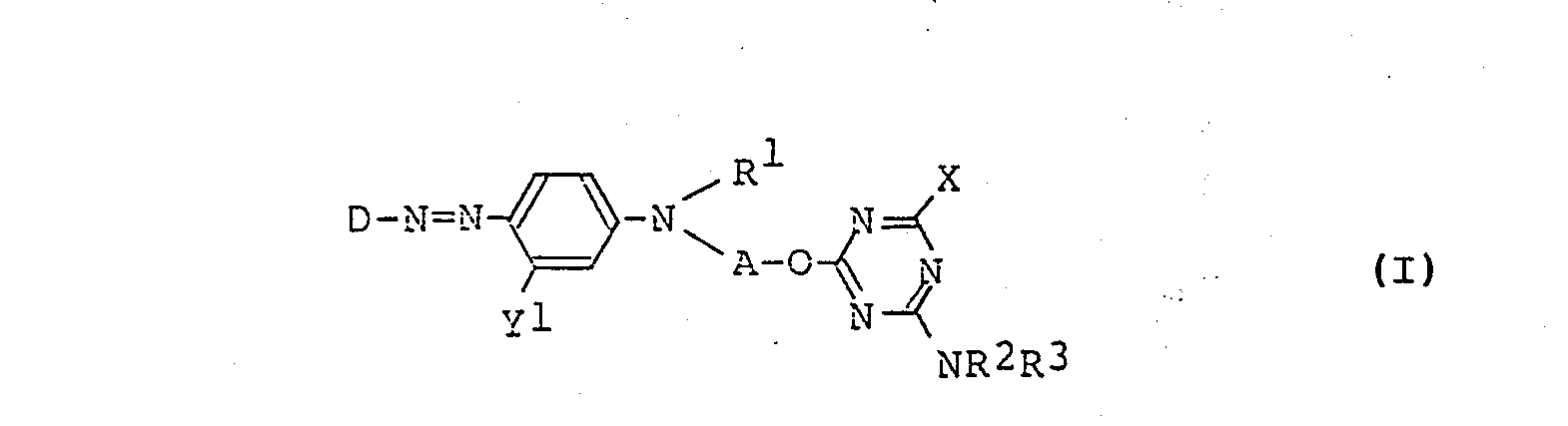
wherein D represents substituted or unsubstituted phenyl, imidazolyl, pyridyl, thiazolyl, thiadiazolyl, thienyl, benzoisothiazolyl, pyridinoisothiazolyl, thienoisothiazolyl, thienothiazolyl or benzothiazolyl, R1 represents substituted or unsubstituted alkyl, cyclohexyl, alkenyl, aralkyl or aryl, R2 and R3 each represents hydrogen, alkyl optionally substituted by cyano, hydroxy, alkoxy or alkoxyalkoxy, alkenyl, cyclohexyl, aryl or aralkyl, or together represent a 5- or 6-membered nitrogen-containing heterocyclic ring formed by combining R2 and R3, A represents -CH2CH2-,
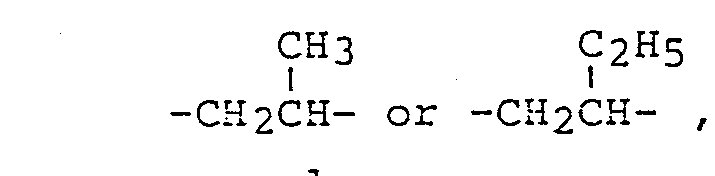
X represents fluorine or chlorine, and Y1 represents hydrogen, chlorine, methyl or acylamino.
wherein D represents substituted or unsubstituted phenyl, imidazolyl, pyridyl, thiazolyl, thiadiazolyl, thienyl, benzoisothiazolyl, pyridinoisothiazolyl, thienoisothiazolyl, thienothiazolyl or benzothiazolyl, R1 represents substituted or unsubstituted alkyl, cyclohexyl, alkenyl, aralkyl or aryl, R2 and R3 each represents hydrogen, alkyl optionally substituted by cyano, hydroxy, alkoxy or alkoxyalkoxy, alkenyl, cyclohexyl, aryl or aralkyl, or together represent a 5- or 6-membered nitrogen-containing heterocyclic ring formed by combining R2 and R3, A represents -CH2CH2-,
X represents fluorine or chlorine, and Y1 represents hydrogen, chlorine, methyl or acylamino.
2. The monoazo dyestuff according to Claim 1 which is of the formula:

wherein D represents substituted or unsubstituted phenyl, imidazolyl, pyridyl, thiazolyl, thiadiazolyl, thienyl, benzoisothiazolyl, pyridinoisothiazolyl, thienoisothiazolyl, thienothiazolyl or benzothiazolyl, R1-1 represents substituted or unsubstituted alkyl, alkenyl or aralkyl, R2 and R3 each represents hydrogen, alkyl optionally substituted by cyano, hydroxy, alkoxy or alkoxyalkoxy, alkenyl, cyclohexyl, aryl or aralkyl, or together represent a 5- or 6-membered nitrogen-containing heterocyclic ring formed by combining R2 and R3, A1 represents -CE2CH2- or -CH2CH-, and Y1 represents hydrogen, chlorine, methyl or acylamino.
wherein D represents substituted or unsubstituted phenyl, imidazolyl, pyridyl, thiazolyl, thiadiazolyl, thienyl, benzoisothiazolyl, pyridinoisothiazolyl, thienoisothiazolyl, thienothiazolyl or benzothiazolyl, R1-1 represents substituted or unsubstituted alkyl, alkenyl or aralkyl, R2 and R3 each represents hydrogen, alkyl optionally substituted by cyano, hydroxy, alkoxy or alkoxyalkoxy, alkenyl, cyclohexyl, aryl or aralkyl, or together represent a 5- or 6-membered nitrogen-containing heterocyclic ring formed by combining R2 and R3, A1 represents -CE2CH2- or -CH2CH-, and Y1 represents hydrogen, chlorine, methyl or acylamino.
3. The monoazo dyestuff according to Claim 1 which is of the formula:

wherein D represents substituted or unsubstituted phenyl, imidazolyl, pyridyl, thiazolyl, thiadiazolyl, thienyl, benzoisothiazolyl, pyridinoisothiazolyl, thienoisothiazolyl, thienothiazolyl or benzothiazolyl, Rl-2 represents substituted or unsubstituted alkyl, R2-1 and R3-1 each represents hydrogen, alkyl optionally substituted by cyano, hydroxy, alkoxy or alkoxyalkoxy or aryl, or together represent a 5- or 6-membered nitrogen-containing heterocyclic ring by combining R2-1 and R3-1, and y2 represents hydrogen or methyl.
wherein D represents substituted or unsubstituted phenyl, imidazolyl, pyridyl, thiazolyl, thiadiazolyl, thienyl, benzoisothiazolyl, pyridinoisothiazolyl, thienoisothiazolyl, thienothiazolyl or benzothiazolyl, Rl-2 represents substituted or unsubstituted alkyl, R2-1 and R3-1 each represents hydrogen, alkyl optionally substituted by cyano, hydroxy, alkoxy or alkoxyalkoxy or aryl, or together represent a 5- or 6-membered nitrogen-containing heterocyclic ring by combining R2-1 and R3-1, and y2 represents hydrogen or methyl.
4. The monoazo dyestuff according to Claim 1 which is of the formula:
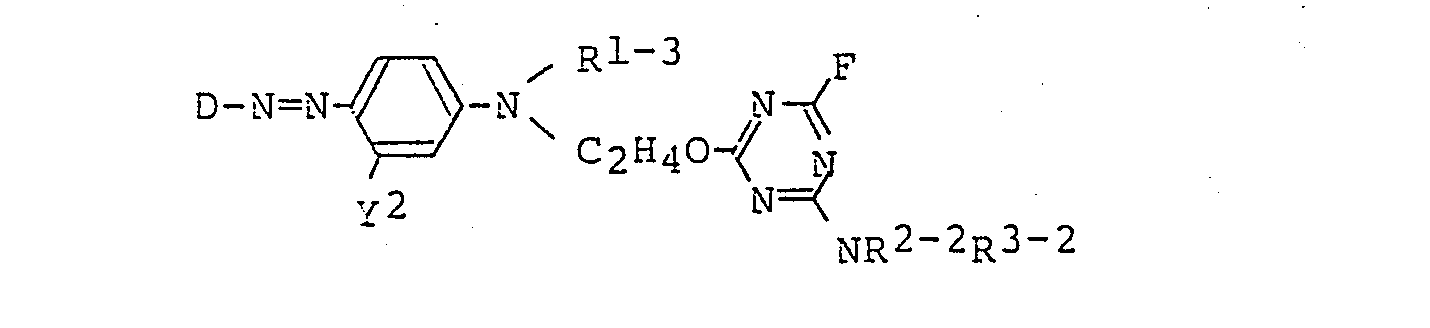
wherein D represents substituted or unsubstituted phenyl, imidazolyl, pyridyl, thiazolyl, thiadiazolyl, thienyl, benzoisothiazolyl, pyridinoisothiazolyl, thienoisothiazolyl, thienothiazolyl or benzothiazolyl, Rl-3 represents alkyl of up to 5 carbon atoms optionally substituted by cyano or lower alkoxy, R2-2 and R3-2 each represents hydrogen, alkyl optionally substituted by alkoxy or phenyl, and R2 represents hydrogen or methyl.
wherein D represents substituted or unsubstituted phenyl, imidazolyl, pyridyl, thiazolyl, thiadiazolyl, thienyl, benzoisothiazolyl, pyridinoisothiazolyl, thienoisothiazolyl, thienothiazolyl or benzothiazolyl, Rl-3 represents alkyl of up to 5 carbon atoms optionally substituted by cyano or lower alkoxy, R2-2 and R3-2 each represents hydrogen, alkyl optionally substituted by alkoxy or phenyl, and R2 represents hydrogen or methyl.
5. The monoazo dyestuff according to Claim 1 which is of the formula:
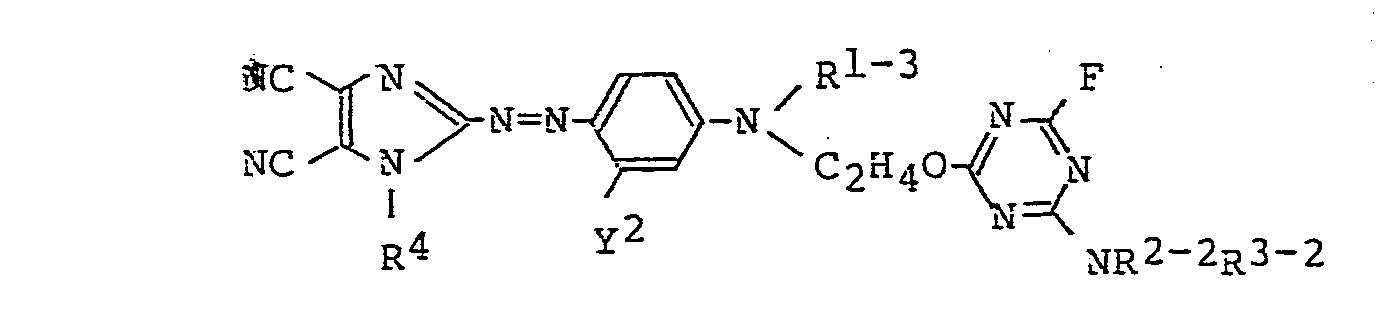
wherein R1-3, R2-2, R3-2 and Y2 are as defined above, and R4 represents lower alkyl optionally substituted by alkoxy, lower alkenyl or benzyl optionally substituted by chlorine or bromine.
wherein R1-3, R2-2, R3-2 and Y2 are as defined above, and R4 represents lower alkyl optionally substituted by alkoxy, lower alkenyl or benzyl optionally substituted by chlorine or bromine.
6. The monoazo dyestuff according to Claim 1 which is of the formula:

wherein R1-3, R2-2, R3-2 and Y2 -are as defined above, and R5 and R6 each represents chlorine, bromine or cyano.
wherein R1-3, R2-2, R3-2 and Y2 -are as defined above, and R5 and R6 each represents chlorine, bromine or cyano.
7. The monbazo dyestuff according to Claim 1 which is of the formula:

wherein Rl-3, R2-2, R3-2 and Y2 are as defined above, and R7 represents chlorine, bromine, nitro, thiocyano or methylsulfonyl.
wherein Rl-3, R2-2, R3-2 and Y2 are as defined above, and R7 represents chlorine, bromine, nitro, thiocyano or methylsulfonyl.
8. The monoazo dyestuff according to Claim 1 which is of the formula:
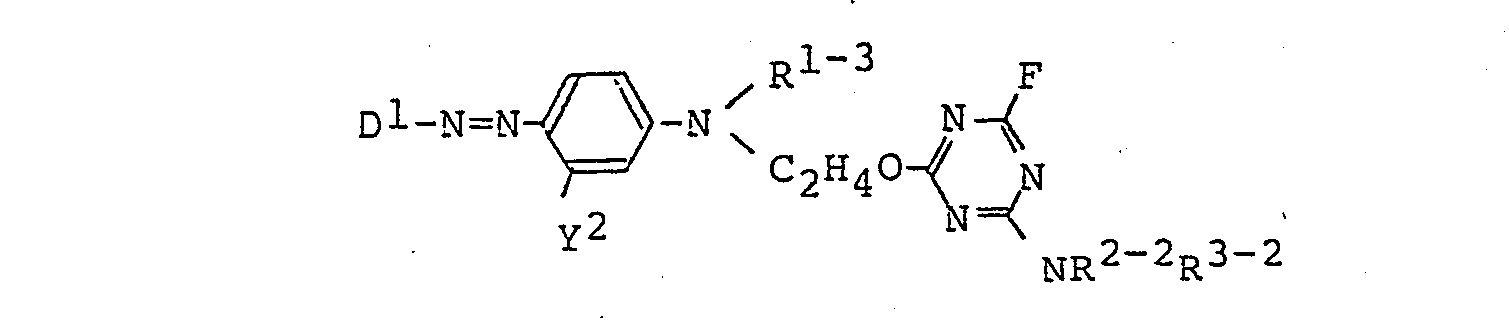
wherein Rl-3, R2-2, R3-2 and Y2 are as defined above, and D1 represents

wherein Rl-3, R2-2, R3-2 and Y2 are as defined above, and D1 represents
9. The use of the monoazo dyestuffs according to claims 1 to 8 for dyeing natural,
semisynthetic and synthetic fibers, yarns and fabrics, especially cellulose containing
fibers and fiber mixtures comprising polyester fibers and cellulose fibers.