|
(11) | EP 0 124 160 A1 |

| (12) | EUROPEAN PATENT APPLICATION |
|
|
|
|
|||||||||||||||||||
| (54) | A process for the preparation of carboxylic acids and/or esters |
| (57) Process for the preparation of carboxylic acids and/or esters by reacting an alcohol
with carbon monoxide in the presence of a homogeneous palladium-containing catalyst,
an iodide and/or bromide source and an organo-nitrogen compound, characterized in
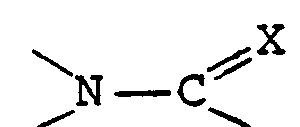
that an organo-nitrogen compound containing an
group (X being oxygen or sulphur) in a quantity of at least 0.3 mol per mol alcohol is used as promoter. |
[0001] The invention relates to a process for the preparation of carboxylic acids and/or esters by carbonylating alcohols in the presence of a palladium-containing catalyst, a bromide or iodide source and an organo-nitrogen compound. The invention relates in particular to the preparation of acetic acid and/or methyl acetate by carbonylating methanol.
[0002] It is known from German patent specification 1,115,234 that acetic acid or an acetic acid and methyl acetate mixture can be obtained by reacting methanol with carbon monoxide in the presence of a cobalt catalyst and an iodine compound. However, said process has the drawback that a rather high reaction temperature (230 °C) and a high pressure (642 bar) must be applied. A process in which the reaction proceeds at lower temperatures and pressures by using a rhodium catalyst in the presence of an iodine compound is described in UK patent specification 1,233,121. Rhodium is, however, very expensive and there is a need for a process in which practical results are achieved with cheaper catalysts.
[0003] Dutch patent application 6804847 (publication 149,481) describes the preparation of carboxylic acids by reacting alcohols with carbon monoxide at a temperature of at least 50 °C in the presence of an iridium, platinum, palladium, osmium and/or ruthenium-containing catalyst and bromine or iodine or a bromine or iodine compound as promoter. The catalyst may optionally contain an amine, phosphine, arsine or stibine ligand. It is stated that ligands such as phosphines, arsines or stibines may be present in excess amounts in the reaction mixture. Of the said metals, palladium and ruthenium are cheaper than rhodium. However, the rate at which carboxylic acids are formed in the process according to Dutch patent application 6804847, particularly when the last-mentioned metals are used as catalyst, is far from perfect.
[0004] The rate at which the carboxylic acid is formed can be expressed as the number of grams of carboxylic acid formed per gram catalyst metal per gram branine or iodine per hour. This method of expression is particularly apt because the reaction rate is generally in direct proportion to both the quantity of catalyst metal and to the quantity of braomine or iodine present in the bonded or non-bonded state in the reaction mixture. Should a noble-metal catalyst be used, it is desirable that, on account of the high price of the noble metal, the quantity of carboxylic acid formed per gram metal per hour be as large as possible. Furthermore, it is important that the carboxylic acid be formed in the presence of as little bromine or iodine or bromine or iodine compound as possible. Not only do bromine and iodine or compounds thereof such as, for example, methyl iodine often have a corrosive effect but they are also somewhat volatile, so that by distillation of the reaction product they are drawn out of the reactor and have to be recycled to the reactor. When a process is put into practice on a large scale, it is, for economic reasons, desirable to keep the quantity of material to be recycled as low as possible.
[0005] In most of the examples in the aforesaid Dutch patent application 6804847, use is made of a catalyst containing the expensive metal iridium (iridium being about as expensive as rhodium). As has been pointed out hereinbefore, the formation rate of the carboxylic acid is relatively low; in Example 2, it amounts to 2.8 g acetic acid/g Ir/g I/h at a temperature of 175°C. In Examples 24 and 26, where the cheaper metals palladium and ruthenium are used respectively, the rate at which the acetic acid is formed at 175 °C amounts to about 0.15 g/g Pd/g I/h and about 0.9 g/g Ru/g I/h respectively.
[0006] US patent specification 3,856,856 describes a process for the preparation of carboxylic acids by reacting alcohols with carbon monoxide in the presence of a catalyst primarily consisting of cobalt iodide to which a platinum compound has been added as promoter. However, said process has the drawback that even after long reaction times only a highly incomplete conversion of the alcohol is attained. According to Example I, methanol conversion after 18 hours amounts to approx. 60 %. Palladium and ruthenium are stated to be unsuitable as promoters.
[0007] The European patent application 83200336.2 describes a process for the preparation of acetic acid and/or methyl acetate by reacting methanol with carbon monoxide in the presence of a catalytic quantity of a soluble Group VIII metal compound, in particular palladium, a promoter RZ in which R represents a C1-C3 alkyl group or H and Z is chlorine, bromine or iodine, an iodide or a carboxylate of a Group IA or IIA metal or of a transition metal, and one or more ligands containing at least one electron-rich nitrogen atom. In the examples, 2-aminopyridine, 2,6-pyridine disulphonic acid, N,N,N',N'-tetramethylethylenediamine and 2,2'-bipyridine are used as ligands. In the descriptive part, pyrrolidone is stated to be a usable ligand. However, the quantities used are small, mostly in the order of about 0.01 mol per mol alcohol or less. The rate at which acetic acid is formed in this process is relatively low, amounting to, for instance, about 14 g/g Pd/g I/hour in test 6, Table II, at a temperature of 182 °C and a pressure of 114 bar. In Table III tests are described that were performed at the very high temperature of 300 °C. Recalculated to a temperature of 180 °C, the reaction velocity of those tests is even lower than that of the Table II tests.
[0008] The present invention concerns a process in which carboxylic acids are formed at a higher rate, in terms of g carboxylic acid/g Pd/g I or Br/h, at low pressures and using the cheaper noble metal palladium than is the case with processes known hitherto. According to the invention, carboxylic acids and/or esters are prepared by allowing an alcohol to react with carbon monoxide in the presence of a homogeneous palladium-containing catalyst, an iodide and/or bromide source and an organo-nitrogen compound. The process is characterized by the use of an organo-nitrogen compound containing an
group (X being oxygen or sulphur) as promoter in a quantity of at least 0.3 mol per mol alcohol.
[0009] A process for the preparation of monocarboxylic acids by carbonylating alcohols in the presence of a nickel catalyst and the similtarieous presence of an alkali metal or alkaline earth metal halide, an alkyl halide and a solvent which may be an amide such as N-mthylpyrrolidone is described in European patent specification 18927. However, the rate at which the carboxylic acid is formed is rather low. With the process according to the invention, in which, as shall hereinafter be explained, a nickel compound may optionally be used as co-catalyst, far higher rates of formation of, for instance, 25 g carboxylic acid/g Ni/g I/hour are readily achieved, also in relation to the quantity of nickel present.
[0010] In the process according to the invention, a carboxylic acid is initially produced containing one carbon atom more than the starting alcohol. The carboxylic acid formed reacts with non-converted alcohol to form an ester, so that a carboxylic acid and ester mixture is produced, the composition of which depends, inter alia, on the equilibrium position of the ester- ization reaction.
[0011] The organo-nitrogen compoound acting as promoter, which contains an
group, should form a solution with the reactants and/or products formed under the reaction conditions applied. Amides, carbamates and urea (derivatives) that are liquid at the temperature and pressure applied in the course of the reaction are highly suitable. Usable amides have, for example, the formula
in which R represents a hydrogen atom or an alkyl, cycloalkyl, aryl, alkaryl or aralkyl group with not more than 10 carbon atoms, R1 and R2 represent, independently of each other, a hydrogen atom or an alkyl, aryl, alkaryl or aralkyl group, which may contain a
with not more than 10 carbon atans or R1 and R2 together with the nitrogen atom to which they are bonded form a cyclic group with not more than 5 carbon atans, which may contain one or more nitrogen or oxygen atoms, or one of the groups R1 and R2 together with the nitrogen atom and R forms a cyclic group with not more than 5 carbon atoms, and X represents oxygen or sulphur. Specific examples of such amides are formamide, acetamide, N-methylacetamide, N-ethylacetamide, N,N-dimethylformamide, N,N-diethylfonnamide, N,N-dimethylacetamide, N,N-diethylacetamide, N-methyl-N-ethylacetamide, N,N-dimethylcyclohexylcarboxamide, N,N-dimethyl- benzamide, N-phenylacetamide, N,N-diphenylacetamide, N-methyl-N-phenylacetamide, N-formylmorpholine, N-acetylmorpholine, N-formylpiperidine, N-acetylpiperidine and N-acetyl-N'-methylpiperazine and the corresponding thiocampounds. Particularly suitable amides having the formula I are N,N-dimethylacetamide and N-methylpyrrolidone. Formula I also covers diamides and triamides such as diacetamide, triacetamide, dibenzamide, tribenzamide and N-methyldibenzamide and imines such as succinimide, 1,2-cyclohexanedicarboximide and N-phenyl- phthalimide. Usable carbamates have, for example, the formula
in which R3 represents an alkyl, aryl, aralkyl or alksaryl group with not more than 10 carbon atoms, R4 and R5 represent, independently of each other, a hydrogen atom or an alkyl, aryl, aralkyl or alkaryl group with not more than 10 carbon atoms and X and Y represent, independently of each other, oxygen or sulphur. Specific examples of such amides are methyl carbamate, ethyl carbamate, phenyl carbamate, N-methyl methylcarbamate, N-ethyl methylcarbamate, N-phenyl methylcarbamate, N-methyl ethylcarbamate, N-ethyl ethylcarbamate, N-phenyl ethylcarbamate, N-methyl phenylcarbamate, N-ethyl Phenylcarbamate, N-phenyl phenylcarbamate, N,N-dimethyl methylcarbamate, N,N-diethyl methyl ethylcarbamate, N,N-diphenyl methylcarbamate, N,N-dimethyl ethylcarbamate, N,N-diethyl ethylcarbamate, N,N-dighenyl ethylcarbamate, N,N-dimethyl phenylcarhamate, N,N-diethyl phenylcarbamate, N,N-diphenyl phenylcarbamate, N-methyl-N-ethyl methylcarbamate, N-methyl-N-ethyl ethylcarbamate and the corresponding thiocompounds.
[0012] The urea (derivative) has, for example, the formula
in which R6 and R7 represent, independently of each other, a hydrogen atom or alkyl, aryl, aralkyl or alkaryl groups with not more than 10 carbon atoms and X represents oxygen or sulphur. Specific examples of such urea derivatives are urea, thiourea, 1,3-dimethylurea, 1,3-diethylurea, 1,3-diphenylurea, 1,1-dimethylurea, 1,1-diphenylurea and 1,1,3,3-tetramethylurea.
[0013] The quantity of organo-nitrogen compound preferably lies between 0.5 and 3 mol, in particular between 0.8 and 2 mol per mol alcohol.
[0014] The alcohols used as starting material in the process according to the invention are preferably hydrocarbons comprising 1-20, in particular 1-12, carbon atans, substituted with one or more hydroxy groups and optionally inert substituents. Examples of suitable alcohols are methanol, ethanol, propanol, isopropanol, butanol, sec. butanol, tert. butanol, the hexanols, the octanols, phenol, benzyl alcohol, ethylene glycol, glycerol and catechol. Alkanols, in particular with 1-12, particularly 1-6, carbon atoms are preferred. The alcohol can also be produced in situ from derivatives which dissociate to form an alcohol under the prevalent reaction conditions. In this way, alcohols can be produced from ethers by hydrolysis with the water present in the reaction mixture.
[0015] The palladium-containing catalyst is preferably a compound soluble in the reaction mixture or a soluble complex of palladium. Examples of suitable palladium compounds are palladium salts such as palladium chloride, palladium bromide, palladium iodide, palladium nitrate, palladium acetate, palladium propionate and palladium isobutyrate. Examples of suitable palladium complexes are palladium acetylacetonate, sodium tetrachloropalladate, potassium tetrachloropalladate, potassium tetraiodopalladate and complexes such as [Pd (CO) Cl2]2, Pd [(C6H5) 3P]2I2, [(n-C4H9) 4P]2 [PdCl4], Pd [(C6H5) 3P]2 (CO) Br and Pd [(n-C4H9) 3P] 2I2.
[0016] The palladium-containing catalyst is preferably used in a quantity of 10-2 - 10-6, in particular 10-3 - 10-5 gram atoms palladium per mol alcohol. If desirable, a co-catalyst may be present besides the palladium-containing catalyst. Nickel compounds, in particular nickel salts such as, for example, nickel chloride, are highly suitable co-catalysts. If the process according to the invention is effected in the presence of a nickel compound as co-catalyst, the carboxylic acid is formed at a very high rate. Production rates of more than 300 g carboxylic acid/g Pd/g I/hour can readily be achieved. Such rates are even higher than the rates achieved with the far more expensive rhodium catalysts.
[0017] The iodide and/or bromide source may, for example, be elemental iodine or branine, or hydrogen iodide or bromide, or an iodide or bromide of an alkali metal, alkaline earth metal or transition metal, or a compound R8I, R8Br, R8COI or R8COBr, in which R8 is an optionally bromine or iodine substituted alkyl group or an aralkyl group with preferably not more than 12 carbon atoms. Examples of suitable iodide and bromide sources are lithium, sodium, potassium, rubidium and caesium iodide, lithium, sodium, potassium, rubidium and caesium bromide, calcium iodide, calcium bromide, magnesium iodide, magnesium bromide and the iodides and bromides of transition metals such as copper, zinc vanadium, chromium, manganese and nickel. If the palladium or a metal acting as co-catalyst is present in iodide or bromide form in the catalyst, it can equally act as iodide or bromide source. Lithium iodide and sodium iodide are highly suitable iodide sources, as are R8I and R8COI compounds in which R8 represents an alkyl group with 1-4 carbon atoms, in particular methyl iodide. If desirable, more than one of said compounds may be used as iodide source. Other specific examples of suitable iodide and/or bromide sources with the formula R8I or R8Br are CH3Br, C2H5I, C4H9I, C8H17I, CH2I2, C2H4I2, CH2IBr, CHI3 and C2H4IBr. Ammonium, phosphonium, arsonium and stibonium iodides and bromides can likewise be used as iodide and/or bromide source. Examples of such compounds are triphenylphosphonium iodide, methyltriphenylphosphonium iodide, tetramethylammonium iodide, tetraisopropylammonium iodide, methyltriphenylphosphonium bromide, tetrabutylammonium bromide and tetrabutylammonium iodide.
[0018] The quantity of iodide and/or bromide source, i.e. the total number of gram atoms I and/or Br present in the reaction mixture, lies generally between 1 and 1000, preferably between 3 and 500 and particularly between 10 and 300 gram atans I and/or Br per gram atom palladium.
[0019] The reaction is preferably effected in the presence of an additional promoter. Said additional promoter is a compound with the formula
in which X represents nitrogen, phosphorus, arsenic or antimony and Y oxygen, sulphur or selenium, n is 0 or 1 and either a, b and c are 0 or 1 and R9, R10 and R11 represent, independently of each other, optionally substituted hydrocarbon groups, or a and b are 0, c is 0 or 1, R9 and R10 together with X form a heterocyclic group and R11 represents an optionally substituted hydrocarbon group, or a, b and c are O and R9, R10 and R11 together with X form a heterocyclic aromatic group, or R9 is hydrogen and R10 and R11 represent an optionally substituted hydrocarbon group.
[0020] The hydrocarbon groups represented by R9, R10 and R11 may be alkyl, cycloalkyl, aryl, aralkyl or alkaryl groups with preferably not more than 30, particularly not more than 20, carbon atoms and are optionally substituted with one or more substitutents, such as, for example, halogen atoms or an R12R13'X(Y)n group in which X, Y and n have the hereinbefore stated meanings and R12 and R13 each represent an optionally substituted hydrocarbon group. If R9 and R10 with X form a heterocyclic group, said group preferably contains not more than 20 carbon atoms. Specific examples of suitable heterocyclic groups are the phospholane, phosphorinane and phosphorus heptane groups in which the groups R9 and R10 together represent an alkylene group with 4, 5 or 6 carbon atoms respectively, and the 9-phosphabicyclo [4.2.11 nonane and the 9-phosphabicyclo [3.3.1] nonane groups. Said heterocyclic groups may, for exanple, be substituted with hydrocarbon groups.
[0021] Formula IV compounds in which a, b and c are 0 , X is phosphorus, arsenic or antimony, Y is oxygen or sulphur and n is O or 1 and R9, R10 and R11 represent alkyl groups with 1-12 carbon atoms or cycloalkyl, aryl, aralkyl or alkaryl groups with not more than 12 carbon atoms, constitute a preferred group of promoters. Particular preference is given to formula IV compounds in which a, b and c are 0, X is phosphorus, Y oxygen and n is 0 or 1 and R9, R10 and R11 represent, independently of each other, alkyl groups with 1-12 carbon atoms or phenyl groups optionally substituted with 1 or 2 methyl or ethyl groups.
[0022] Examples of foarmula IV compounds in which X represents phosphorus, arsenic or antimony and a, b and c are 0 are secondary and tertiary phosphines, arsines and stibines such as, for example, trimethylphosphine, diethylphosphine, triethylphosphine, tri-n-butylphosphine, trioctylphosphine, diphenylphosphine, triphenylphosphine, tri-p-tolylphosphine, tricyclohexylphosphine, diphenylethylphosphine, tri-(1-naphthyl)-phosphine, tri-4-chlorophenylphosphine, triethylarsine, tri- phenylarsine and triphenylstibine and the oxides, sulphides and selenides of said compounds. Phosphines and phosphine oxides, in particular triphenylphosphine and triphenylphosphine oxide, are preferred promoters.
[0023] Examples of compounds with the general formula IV containing a heterocyclic group are 1-phenylphospholane, 1-phenyl- phosphorinane, 9-phenyl-9-phosphabicyclo [4.2.1] nonane, 9-phenyl-9-phosphabicyclo [3.3.1] nonane, 9-eicosyl-9-phosphabicyclo [4.2.1] and 9-eicosyl-9-phosphabicyclo [3.3.1] nonane and the oxides, sulphides and selenides of said compounds.
[0024] Formula IV compounds in which a and/or b and/or c are 1 and n is 1 are the alkyl, cycloalkyl, aryl, aralkyl or alkaryl esters of phosphoric acid, phosphonic acids and phosphinic acids and the analogues of said compounds in which the doubly bonded oxygen atom is replaced by a sulphur or selenium atom and/or the phosphorus atom by an arsenic or antimony atan. Specific examples of such compounds are trimethyl phosphate, tri-n-butyl phosphate, triphenyl phosphate, dimethylmethyl phosphonate, diethylmethyl phosphonate, diphenylmethyl phosphonate, methyl- diethyl phosphinate and phenyldimethyl phosphinate.
[0025] Examples of formula IV compounds in which X is nitrogen are tertiary amines such as trimethylamine, triethylamine, N,N-dimethylphenylamine, N,N-dimethyl-p-methylphenylamine, N-methylpiperidine, N,N-dimethyloctylamine and N,N-dimethyldodecylamine, and heterocyclic amines such as, for example, pyrrole, pyrrolidine, pyridine, piperidine, pyrimidine, pyrazine, benzotriazole and morpholine and the oxides thereof. The heterocyclic amines or their oxides may optionally be substituted with one or more alkyl groups, in particular methyl groups. Pyridine and the alkyl-substituted pyridines such as, for example, the picolines, in particular alpha-picoline and the oxides thereof, are highly suitable additional promoters.
[0026] Examples of formula IV compounds in which one or more of the R9, R10 and R11 groups are substituted with an R12R13'X(Y)n group are N,N,N',N'-tetramethylethylene diamine, N,N,N' ,N'-tetramethylethylenediamine-N,N'-dioxide, tetraphenyldiphosphinoethane, tetraphenyldiphosphinopropane, tetraphenyldiphosphinoethane dioxide, tetraphenyldiphosphinopropane dioxide, diphenylditolyl- diphosphinoethane and 1,2-bis(diphenylphosphino) benzene, 2,2'-bipyridine and 2,2'-biquinoline. Examples of compounds with general formula IV in which a, b and c are 0 and R9, R10, R11 together with X form a heterocyclic group are 1,10-phenanthroline, 1,10-phenanthroline-N,N'-dioxide, pyrazine and pyrazine-N,N' -dioxide.
[0027] In the process according to the invention, complexes obtained by reacting a formula IV compound with a hydrocarbon iodide or bromide such as, for example, CH3I, an acyl iodide or bromide, or hydrogen iodide or bromide can also be used as iodide or bromide source. Examples of such complexes are: [(C6H5) 3PO-H-OP(C6H5) 3]+I3- and [(C2H5)3AsO-H-OAs(C2H5) 3]+I-. Such complexes are probably also produced in situ by reacting a formula IV compound and iodine or bromine compounds present in the reaction mixture.
[0028] Formula IV compounds in which X represents phosphorus and Y oxygen, n is 1 and a, b and c are 0 can be generated in situ by adding the corresponding phosphine to the reaction mixture and by effecting the reaction in the presence of molecular oxygen or hydrogen peroxide.
[0029] The quantity of formula IV compound used as promoter in the process according to the invention can lie, for example, between 0.1 and 300 mol per gram atom., preferably between 1 and 200 and in particular between 10 and 150 mol per gram atom palladium.
[0030] In the process according to the invention, particularly high production rates in terms of the carboxylic acid can be achieved by effecting the reaction in the presence of a catalyst system containing both palladium and nickel, a formula I organo-nitrogen compound, in particular N-methylpynolidone, an alkali metal iodide and a phosphine oxide. Furthermore, high production rates can be achieved by using a catalyst system containing palladium, a formula I organo-nitrogen canpound, an alkyliodide, in particular methyl iodide, an alkali metal iodide and a phosphine oxide.
[0031] The process according to the invention is effected at a temperature preferably between 110 and 225 °C, in particular between 125 and 200 °C. The reaction is generally effected at a partial carbon monoxide pressure between 0.5 and 70 bar. High pressures up to, for example, 1000 bar may be used if desirable, but are not generally attractive for technical and economic reasons.
[0032] The carbon manoxide used in the process according to the invention may optionally be mixed with other gases such as, for example, hydrogen, carbon dioxide, methane, nitrogen or noble gases. Carbon monoxide or a carbon monoxide-containing gas containing less than 50%v hydrogen is preferred.
[0033] The process is effected in the liquid phase. The use of an (additional) solvent is not usually necessary because the alcohol used as starting material and the organo-nitrogen- compound act as solvents to a sufficient extent. Other reaction mixtures constituents, for example a liquid iodide source, such as, for example, CH3I, or the ester or carboxylic acid formed may also act as solvents. If required, additional quantities of those compounds may be added to the reaction mixture. Suitable (additional) solvents are, for example, acetic acid, propionic acid, methyl acetate, butyrolactone, dimethyl ether, diethyl ether, acetic anhydride, methyl-t.butyl ether, diglym, tetra- glym, tetrahydrofuran, 1,4-dioxane, 1,3-dioxane, dimethyl sulphone, diethyl sulphone, methylethyl sulphone, methylbutyl sulphone, sulfolane, 2-methylsulfolane, 3-methylsulfolane, 2-methyl-4-butylsulfolane, dimethyl sulphoxide and diethyl sulphoxide. Water may also be present, as a result of which formation of the carboxylic acid at the expense of the ester is generally promoted.
[0034] The process according to the invention may be effected continuously, semi-continuously or batchwise. The reaction mixture obtained may be further processed by means of known techniques such as, for example, fractionation. Moreover, the process can be integrated with existing processes for the preparation of the starting materials or for the further processing of the carboxylic acid or ester obtained.
EXAMPLE 1
[0035] A 300 ml magnetically stirred Hastelloy C autoclave (Hastelloy is a trade name) was charged with 0.1 mmol palladium acetate and the quantities of methanol, organo-nitrogen compound, NiC12.6H20, methanol, alkali metal iodide and additional promoter stated in the Table. The autoclave was flushed with carbon monoxide and filled with a carbon monoxide and hydrogen mixture. The partial pressures of the carbon monoxide and the hydrogen measured 30 and 15 bar respectively. The autoclave was heated to 170°C for the duration of the reaction time stated in the Table and subsequently cooled. The contents of the autoclave were analysed by means of gas/liquid chromatography. The quantities of acetic acid and methyl acetate were determined and the total quantity of acetic acid formed by methanol carbonylation calculated. The carbonylation rate, expressed as g acetic acid/g Pd/g I/hour and, where a nickel compound was present as co-catalyst, as g acetic acid/g Ni/g I/hour is stated in the Table.
[0036] The Table shows that where less than 0.3 mol of the organo-nitrogen compound to be used in accordance with the invention is present per mol methanol, virtually no acetic acid is formed. It is also evident that where the organo-nitrogen compound to be used in accordance with the invention is replaced by an amine such as pyridine in a quantity of more than 0.3 mol per mol methanol, no acetic acid is produced. Finally, the tests show that by adding a nickel conpound as co-catalyst, despite the application of moderate reaction conditions, acetic acid is produced at a very high rate.
1. Process for the preparation of carboxylic acids and/or esters by reacting an alcohol
with carbon monoxide in the presence of a homogeneous palladium-containing catalyst,
an iodide and/or bromide source and an organo-nitrogen compound, characterized in
that an organo-nitrogen compound containing an
group (X being oxygen or sulphur) in a quantity of at least 0.3 mol per mol alcohol is used as promoter.
group (X being oxygen or sulphur) in a quantity of at least 0.3 mol per mol alcohol is used as promoter.
2. Process as claimed in claim 1, characterized in that the organo-nitrogen compound
is an amide, carbamate urea (derivative) that is liquid at the temperature and pressure
applied in the course of the reaction.
3. Process as claimed in claim 2, characterized in that the amide has the formula
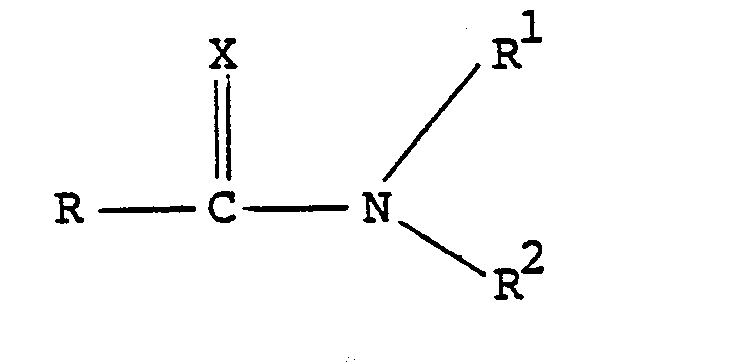
in which R represents a hydrogen atom or an alkyl, cycloalkyl, aryl, alkaryl or aralkyl group with not more than 10 carbon atoms, R1 and R2 represent, independently of each other, a hydrogen atom or an alkyl, aryl, alkaryl or aralkyl group, which may contain a -
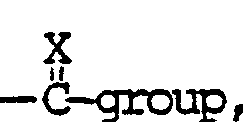
with not more than 10 carbon atans or R1 and R2 together with the nitrogen atom to which they are bonded form a cyclic group with not more than 5 carbon atoms, which may contain one or more nitrogen or oxygen atoms, or one of the groups R1 and R2 together with the nitrogen atom and R forms a cyclic group with not more than 5 carbon atoms, and X represents oxygen or sulphur.
in which R represents a hydrogen atom or an alkyl, cycloalkyl, aryl, alkaryl or aralkyl group with not more than 10 carbon atoms, R1 and R2 represent, independently of each other, a hydrogen atom or an alkyl, aryl, alkaryl or aralkyl group, which may contain a -
with not more than 10 carbon atans or R1 and R2 together with the nitrogen atom to which they are bonded form a cyclic group with not more than 5 carbon atoms, which may contain one or more nitrogen or oxygen atoms, or one of the groups R1 and R2 together with the nitrogen atom and R forms a cyclic group with not more than 5 carbon atoms, and X represents oxygen or sulphur.
4. Process as claimed in claim 2 or 3, characterized in that the amide is N,N-thylacetamide
or N-mefhylpyrrolidone.
5. Process as claimed in claim 2, characterized in that the carbamate has the formula
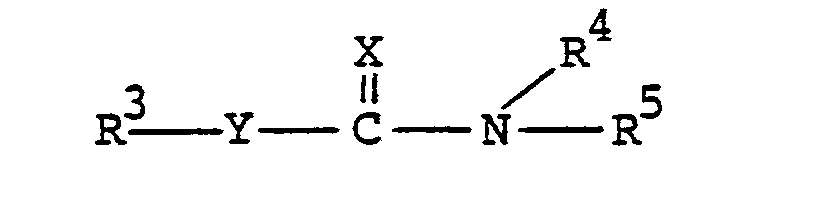
in which R3 represents an alkyl, aryl, aralkyl or alkaryl group with not more than 10 carbon atoms, R4 and R5 represent, independently of each other, a hydrogen atom or an alkyl, aryl, aralkyl or alkaryl group with not more than 10 carbon atoms and X and Y represent, independently of each other, oxygen or sulphur.
in which R3 represents an alkyl, aryl, aralkyl or alkaryl group with not more than 10 carbon atoms, R4 and R5 represent, independently of each other, a hydrogen atom or an alkyl, aryl, aralkyl or alkaryl group with not more than 10 carbon atoms and X and Y represent, independently of each other, oxygen or sulphur.
6. Process as claimed in claim 2, characterized in that the urea (derivative) has
the formula
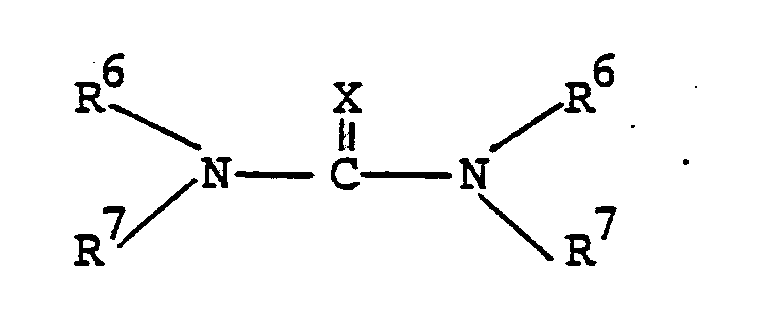
in which R6 and R7 represent, indepexadently of each other, a hydrogen atom or alkyl, aryl, aralkyl or alkaryl groups with not more than 10 carbon atoms and X is oxygen or sulphur.
in which R6 and R7 represent, indepexadently of each other, a hydrogen atom or alkyl, aryl, aralkyl or alkaryl groups with not more than 10 carbon atoms and X is oxygen or sulphur.
7. Process as claimed in claims 1-6, characterized in that the quantity of organo-nitrogen
compound lies between 0.5 and 3, in particular between 0.8 and 2 mol per mol alcohol.
8. Process as claimed in claims 1-7, characterized in that the alcohol is a hydrocarbon,
substituted with one or more hydroxy groups, with 1-20 carbon atoms, in particular
an alkanol with 1-12 carbon atoms.
9. Process as claimed in claims 1-8, characterized in that the iodide and/or bromide
source is elemental iodine or bromine, or hydrogen iodide or bromide, an iodide or
bromide of an alkali metal, alkaline earth metal or transition metal, or an R8I, R8Br, R8COI or R8COBr compound, in which R8 is an optionally bromine or iodine substituted alkyl group or an aralkyl group with
preferably not more than 12 carbon atoms.
10. Process as claimed in claim 9, characterized in that one or more of the compounds
lithium iodide, sodium iodide and R8I or R8COI compounds, in which R8 is an alkyl group with 1-4 carbon atoms, in particular methyl iodide, is used as
iodide source.
11. Process as claimed in claims 1-10, characterized in that the reaction is effected
in the presence of an additional promoter with the formula
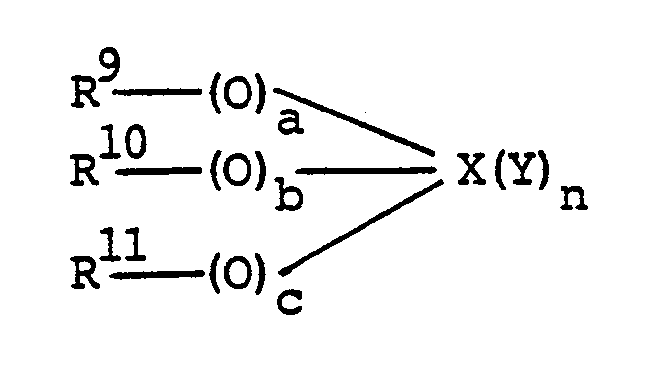
in which X represents nitrogen, phosphorus, arsenic or antimony and Y oxygen, sulphur or selenium, n is 0 or 1 and either a, b and c are 0 or 1 and R, R10 and R11 represent, independently of each other, optionally substituted hydrocarbon groups, or a and b are 0, c is 0 or 1, R9 and R10 together with X form a heterocyclic group and R11 represents an optionally substituted hydrocarbon group, or a, b and c are 0 and R9, R10 and R11 together with X form a heterocyclic aromatic group, or R9 is hydrogen and R10 and R11 represent an optionally substituted hydrocarbon group.
in which X represents nitrogen, phosphorus, arsenic or antimony and Y oxygen, sulphur or selenium, n is 0 or 1 and either a, b and c are 0 or 1 and R, R10 and R11 represent, independently of each other, optionally substituted hydrocarbon groups, or a and b are 0, c is 0 or 1, R9 and R10 together with X form a heterocyclic group and R11 represents an optionally substituted hydrocarbon group, or a, b and c are 0 and R9, R10 and R11 together with X form a heterocyclic aromatic group, or R9 is hydrogen and R10 and R11 represent an optionally substituted hydrocarbon group.
12. Process as claimed in claim 11, characterized in that a, b and c are 0, X is phosphorus,
Y oxygen and n is 0 or 1 and R9, R10 and R11 represent, independently of each other, alkyl groups with 1-12 carbon atoms or phenyl
groups optionally substituted with 1 or 2 methyl or ethyl groups.
13. Process as claimed in claims 1-12, characterized in that the reaction is effected
in the presence of a nickel compound as co-catalyst.