|
(11) | EP 0 124 351 A1 |

| (12) | EUROPEAN PATENT APPLICATION |
|
|
|
|
|||||||||||||||||||
| (54) | Mixed long-chain alkylammonium salts of N-phosphonomethylglycine |
| (57) As new compounds, long-chain alkylmethylammonium salts of N-phosphonomethylglycine
having the formula
wherein R1, R2, R3 and R4 are the same or different and are selected from the group consisting of hydrogen or saturated or unsaturated straight or branched chain alkyl groups having from 1 to 20 carbon atoms, and wherein at least two of R1, R2, R3 or R4 are saturated short-chain alkyl groups having from 2 to 3 carbon atoms, and at least one of R1, Rz, R3 or R4 is a saturated or unsaturated straight or branched chain alkyl group having from 12 to 20 carbon atoms. |
Background of the Invention
[0001] This invention relates to long-chain alkyl ammonium salts of N-phosphonomethylglycine, compounds which have been found to be effective herbicide and plant growth regulators.
[0002] Herbicides are widely used by farmers, commercial agricultural companies, and other industries in order to increase crop yields for such staple crops as corn, soybeans, rice, and the like, and to eliminate weed growth along highways, railroad rights-of-way, and other areas. Herbicides are effective in killing or controlling unwanted weeds which compete for soil nutrients with the crop plants, and by reason of the fact that they kill weeds, are responsible for improving the aesthetic appearance of highway and railroad rights-of-way. There are a number of different types of herbicides presently sold commercially and these fall into two general categories. The categories are pre-emergence and post-emergence herbicides. The pre-emergence herbicides are normally incorporated into the soil prior to the emergence of the weed plants frcm the soil, and the post-emergence herbicides are normally applied to plant surfaces after emergence of the weeds or other unwanted plants fran the soil.
[0003] one of the earliest post-emergence herbicides used commercially was 2,4-D (2,4-dichlorophenoxyacetic acid). After a number of years of use of this and similar compounds such as 2,4,5-T (2,4,5-trichlorophenoxy acetic acid), it was found that certain decomposition products of these herbicides were long lasting and were not biodegradable. While there has been some dispute between governmental agencies and commercial interests regarding the effects of residual products of 2,4-D, 2,4,5-T and similar compounds, the agencies nevertheless restricted the use of these herbicides in the United States some years ago. Since that time, efforts have been made to develop herbicides which are biodegradable into harmless residues within a relatively short time after their application.
[0004] One such compound, which has been found to be biodegradable, yet which is effective as a herbicide and plant growth regulator when employed at lower rates, is N-phosphonomethylglycine and various salts thereof. N-Phosphonomethylglycine and certain agriculturally effective salts have been approved for use by the U.S. Government, and, as a consequence, this herbicide has become commercially successful.
[0005] The N-phosphonomethylglycine and certain salts are the only effective and approved post-emergence herbicides in the field. The present commercial compound is the isopropylamine salt of N-phosphonomethylglycine and derivatives thereof.
[0006] In field use it is normally applied in amounts of from 0.01 to about 20 pounds per acre, preferably from 2 to 6 pounds per acre.
THE PRIOR ART
[0007] N-Phosphoncmethylglycines, and certain soluble salts thereof, can be made in a number of different ways. One such method, as described in U.S. Patent 3,160,632 (Toy et al., December 8, 1964) is to react N-phosphinomethylglycine (glycinemethylenephosphinic acid) with mercuric chloride in a water solvent at reflux temperature, and subsequently separating the reaction products. Other methods include the reaction of ethyl glycinate with formaldehyde and diethylphosphite. The latter method is described in U.S. Patent No. 3,799,758 (Franz, March 26, 1974). In addition, there is a whole series of patents, relating to N-phosphono- methylglycines, their salts, and derivatives thereof, described as being useful herbicides and plant growth regulators. Such additional patents relating to the N-phosphonomethylgllycines, methods of application, methods of preparation, salts, and derivatives, include U.S. Patent 3,868,407, U.S. Patent 4,197,254, and U.S. Patent 4,199,354, among others.
[0008] Specific salts of N-phosphonomethylglycine which have been disclosed to be herbicidally effective are the sulfonium and sulfoxonium salts.
[0009] Other salts are constantly being sought which are more economically and agriculturally efficient or cost effective than those previously known, or are easier to produce.
Description of the Invention
[0010] It has now been discovered that certain new and novel mixed long-chain alkyl ammonium salts of N-phosphonomethylglycine have good herbicidal and plant growth regulating activity.
[0011] The mixed long-chain saturated or unsaturated alkyl ammonium salts of N-phosphonomethylglycine which are the subject of this invention have the formula
wherein R1, R2, R3 and R4 are the same or different and are selected from the group consisting of hydrogen or saturated or unsaturated straight or branched chain alkyl groups having from 1 to--20 carbon atoms, and wherein at least two of R1, R2, R3 or R4 are saturated short-chain alkyl groups having from 2 to 3 carbon atoms, and at least one of R, R2, R3 R4 or is a saturated or unsaturated straight or branched chain alkyl group having from 12 to 20 carbon atoms.
[0012] Representative salts falling within the scope of the generic formula indicated above include the trimethyloctadecyl ammonium salt of N-phosphonomethylglcyine, the trimethylhexadecyl ammonium salt of N-phosphonomethylglycine, and the dimethyldioctadecyl ammonium salt of N-phosphonomethylglycine.
[0013] A most preferred salt is a combination of trimethyloctadecyl and trimethylhexadecyl ammonium salts of N-phosphonomethylglycine where the salt ion is obtained from Arguard S-50, a surfactant purchased from the Armak Company, 300 South Wacker Drive, Chicago, Illinois. Arquad S-50 comprises 10% C-16, 25% C-18, 50% C-18' with one double bond, and 15% C-18" with two double bonds.
[0014] All of the salts described above can be produced by reacting N-phosphonomethylglycine with an appropriate alkylammonium halide in the presence of silver oxide and filtering the insoluble silver halide precipitated as a consequence of the reaction, leaving the alkylammonium salt of N-phosphonomethylglycine in solution.
[0015] In producing the compounds of the invention, the long chain alkylammonium halide and the N-phosphonomethylglycine are first placed in a reaction vessel, and the silver oxide is thereafter admixed therewith incrementally.
[0016] The ratio of long-chain alkylammonium halide to N-phosphonomethylglycine is preferably a 1:1 mole ratio. Silver oxide should be used in a quantity sufficient to cause precipitation of the silver halide.
[0017] Preferred long chain alkylammonium halides used to produce the compounds of the invention include the aforementioned Arquad S-50.
[0018] N-phosphonomethylglycine is a known compound and can be produced . as described in U.S. Patent 3,160,632, Toy or can be purchased commercially from the Monsanto Company, St. Louis, Mo.
[0019] The function of the silver oxide is to convert the N-phosphonomethylglycine to an anion form, with the concommitant precipitation of silver halide from the solution, thus leaving in solution the anionic N-phosphonomethylglycine and the cationic alkylmethylammonium ion.
EXAMPLE 1
Preparation of Trimethyloctadecylamnonium salt of N-Phosphonomethylglycine
[0021] A round-bottom flask was obtained, and into this flask was charged 8.8 grams (g) (0.02 mole) of trimethyloctadecylammonium iodide and 3.4 g (0.02 mole) of N-phosphonomethylglycine in 175 milliliters (ml) of anhydrous methanol. Four and nine-tenths grams (0.021 mole) of silver oxide was then added in portions over a 20 minute time period.
[0022] After the silver oxide addition was completed, the solution was stirred rapidly for 2 hours and 20 minutes at 25°C. The solution was thereafter filtered and the filter cake was washed with methanol. The filtrate was then vacuum stripped, yielding 8.8 g of a white solid having a melting point of 165°C, which was identified by nuclear magnetic resonance (NMR) and infra-red (IR) techniques as being the trimethyloctadecylammonium salt of N-phosphonomethylglcyine.
EXAMPLE 2
Preparation of Arquad S-50 Salt of N-Phosphonomethylglycine
[0023] A suitable round-bottom flask was obtained, and into this flask was charged 13.7 g (0.02 mole) of Arquard S-50 (50% active) plus 3.4 g (0.02 mole) of N-phosphonomethylglycine in 30 ml of deionized water. To this was added 0.8 g (0.02 mole) of sodium hydroxide pellets having a assay of 98% dissolved in 10 ml of water. The solution was then stirred for 1/2 hour. The pH was measured at 4.5, and adjusted to 6.5 to 7 by adding 0.5 g of sodiun hydroxide in one-tenth gram increments. The volatiles were stripped off, at 30°C, at a pressure greater than 1 mm Hg over a period of 3 hours. The yield was 12.2 g of substance having a melting point of 142°C and was identified by suitable analytical techniques as being the subject compound.
EXAMPLE 3
Preparation of the Dimethyldioctadecylammonium Salt of N-Phosphonomethylglycine
[0024] A suitable round-bottom flask was obtained and into this flask was charged 9.5 g (0.015 mole) of dimethyldioctadecylammonium bromide, 2.55 g (0.015 mole) of N-phosphoncmethylglcyine, and 0.6 g (0.033 mole) of water in 150 ml anhydrous methanol. To this solution was added in incremental portions 2.1 g of (0.009 mole) of silver oxide powder, and thereafter the solution was stirred for 1.5 hours at 25°C. The solution was then filtered and the filtrate stripped at 35°C, yielding 10.1 g of product identified by NMR techniques as being the dimethyldioctadecylammonium salt of N-phosphonomethylglycine.
[0025] The other compounds of the invention can be produced in a substantially similar manner by reacting an appropriate alkylammonium halide with N-phosponcmethylglycine in the presence of a silver oxide catalyst.
[0026] The herbicidal activity of the compounds of the invention is exhibited by means of tests in accordance with the following procedure.
EXAMPLE 4
Herbicidal Activity Tests
[0027] This example offers herbicidal activity test data to show the effectiveness of the alkylmethylanmoniun salt. The effect is observed by comparing the extent of weed control in test flats treated with the salt against that occurring in similar control flats. The soil used in these tests was a sandy loam soil from Keeton, California.
[0028] Also added to the soil was 17-17-17 fertilizer (N-P2O5-K2O on a weight basis), amounting to 50 ppm by weight with respect to the soil.
[0029] The treated soil was then placed in flats which were 3 inches deep, 6 inches wide, and 10 inches long. The soil was tamped and leveled with a row marker to impress six rows across the width of the flat. The test weeds were as follows:
[0030] Sufficient seeds were planted to produce several seedlings per inch in each row. The flats were then placed in a greenhouse maintained at 70 to 85°F (21 to 30°C) and watered daily by sprinkler.
[0031] Chemical application is made by spraying 12 days after planting. The spray solution is prepared by dissolving 60 mg of herbicide compound in 20 ml of acetone containing 1% Tween® 20 (polyoxysorbitan monolaurate), then adding 20 ml of water to the resulting solution. The solution is sprayed at 80 gallong/acre, resulting in a 4 lb/acre rate of chemical application. Other rates were achieved by varying the solution concentration and/or the rate of spray.
[0032] Approximately 12-14 days after treatment, the degree of weed control was estimated and recorded as percentage control compared to the growth of the same species in an untreated check flat of the same age. The rating scale ranges from 0 to 100%, where 0 equals no effect with plant growth equal to the untreated control, and 100 equals complete kill.
[0033] The results are listed in Tables I below. It is clear that the compounds of this invention are effective herbicides.
METHODS OF APPLICATION
[0034] The herbicidal compositions of the present invention are useful in controlling the growth of undesirable vegetation by pre-emergence or post-emergence application to the locus where control is desired, including pre-plant and post-plant soil incorporation as well as surface application. The compositions are generally embodied in formulations suitable for convenient application. Typical formulations contain additional ingredients or diluent carriers which are either inert or active. Examples of such ingredients or carriers are water, organic solvents, dust carriers, granular carriers, surface active agents, oil and water, water- oil emulsions, wetting agents, dispersing agents, and emulsifying agents. The herbicidal formulations generally take the form of dusts, emulsifiable concentrates, granules and pellets, or microcapsules.
A. DUSTS
[0035] Dusts are dense powder compositions which are intended for application in dry form. Dusts are characterized by their free-flowing and rapid settling properties so that they are not readily windborne to areas where their presence is not desired. They contain primarily an active material and a dense, free-flowing, solid carrier.
[0036] Their performance is sometimes aided by the inclusion of a wetting agent, and convenience in manufacture frequently demands the inclusion of an inert, absorptive grinding aid. For the dust canpositions of this invention, the inert carrier may be either of vegetable or mineral origin, the wetting agent is preferably anionic or nonionic, and suitable absorptive grinding aids are of mineral origin.
[0037] Suitable classes of inert solid carriers for use in the dust compositions are those organic or inorganic powders which possess high bulk density and are very free-flowing. They are also characterized by low surface area and poor liquid absorptivity. Suitable grinding aids are natural clays, diatanaceous earths, and synthetic mineral fillers derived from silica or silicate. Among ionic and nonionic wetting agents, the most suitable are the members of the group known to the art as wetting agents and emulsifiers. Although solid agents are preferred because of ease of incorporation, sane liquid nonionic agents are also suitable in the dust formulations.
[0038] Preferred dust carriers are micaceous talcs, pyrophyllite, dense kaolin clays, tobacco dust and ground calcium phosphate rock.
[0039] Preferred grinding aids are attapulgite clay, diatomaceous silica, synthetic fine silica and synthetic calcium and magnesium silicates.
[0040] Most preferred netting agents are alkylbenzene and alkyl-naphthalene sulfonates, sulfated fatty alcohols, amines or acid amides, long chain acid esters of sodium isothionate, esters of sodium sulfosuccinate, sulfated or sulfonated fatty acid esters, petroleun sulfonates, sulfonated vegetable oils, and ditertiary acetylenic glycols. Preferred dispersants are methyl cellulose, polyvinyl alcohol, lignin sulfonates, polymeric alkylnaphthalene sulfonates, sodium naphthalenesulfonate, polymethylene bisnaphthalenesulfonate, and sodium-N-methyl-N-(long chain acid) taurates.
[0041] The inert solid carriers in the dusts of this invention are usually present in concentrations of from about 30 to 90 weight percent of the total canposition. The grinding aid will usually constitute 5 to 50 weight percent of the compositions, and the wetting agent will constitute from about 0 to 1.0 weight percent of the composition. Dust canpositions can also contain other surfactants such as dispersing agents in concentrations of up to about 0.5 weight percent, and minor anounts of anticaking and antistatic agents. The particle size of the carrier is usually in the range of 30 to 50 microns.
B. EMULSIFIABLE CONCENTRATES
[0042] Emulsifiable concentrates are usually solutions of the active materials in nonwater-miscible solvents together with an emulsifying agent. Prior to use, the concentrate is diluted with water to form a suspended emulsion of solvent droplets.
[0043] Typical solvents for use in emulsifiable concentrates include weed oils, chlorinated hydrocarbons, and nonwater-miscible ethers, esters, and ketones.
[0044] Typical emulsifying agents are anionic or nonionic surfactants, or mixtures of the two. Examples include long-chain alkyl or mercaptan polyethoxy alcohols, alkylaryl polyethoxy alcohols, sorbitan fatty acid esters, polyoxyethylene ethers with sorbitan fatty acid esters, polyoxyethylene glycol esters with fatty or rosin acids, fatty alkylol amide condensates, calcium and amine salts of fatty alcohol sulfates, oil soluble petroleum sulfonates, or preferably mixtures of these emulsifying agents. Such emulsifying agents will comprise from about 1 to 10 weight percent of the total composition.
[0045] Thus, emulsifiable concentrates of the present invention will consist of from about 15 to about 50 weight percent active material, about 40 to 82 weight percent solvent, and about 1 to 10 weight percent emulsifier. Other additives such as spreading agents and stickers can also be included.
C. GRANULES AND PELLETS
[0046] Granules and pellets are physically stable, particulate canpositions containing the active ingredients adhering to or distributed through a basic matrix of a coherent, inert carrier with macroscopic dimensions. A typical particle is about 1 to 2 millimeters in diameter. Surfactants are often present to aid in leaching of the active ingredient from the granule or pellet.
[0047] The carrier is preferably of mineral origin, and generally falls within one of tw3 types. The first are porous, absorptive, preformed granules, such as preformed and screened granular attapulgite or heat expanded, granular, screened vermiculite. On either of these, a solution of the active agent can be sprayed and will be absorbed at concentrations up to 25 weight percent of the total weight. The second, which are also suitable for pellets, are initially powdered kaolin clays, hydrated attapulgite, or bentonite clays in the form of sodium, calcium, or magnesium bentonites. Water-soluble salts, such as sodium salts, may also be present to aid in the disintegration of granules or pellets in the presence of moisture. These ingredients are blended with the active components to give mixtures that are granulated or pelleted, followed by drying, to yield formulations with the active component distributed uniformly throughout the mass. Such granules and pellets can also be made with 25 to 30 weight percent active component, but more frequently a concentration of about 10 weight percent is desired for optimum distribution. The gran- ular compositions of this invention are most useful in a size range of 15-30 mesh.
[0048] The surfactant is generally a common wetting agent of anionic or nonionic character. The most suitable wetting agents depend upon the type of granule used. When preformed granules are sprayed with active material in liquid form the most suitable wetting agents are nonionic, liquid wetters miscible with the solvent. These are compounds most generally known in the art as emulsifiers, and comprise alkylaryl polyether alcohols, alkyl polyether alcohols, polyoxyethylene sorbitan fatty acid esters, polyethylene glycol esters with fatty or rosin acids, fatty alkylol amide condensates, oil solution petroleum or vegetable oil sulfonates, or mixtures of these. Such agents will usually comprise up to about 5 weight percent of the total composition.
[0049] When the active ingredient is first mixed with a powdered carrier and subsequently granulated, or pelleted, liquid nonionic wetters can still be used, but it is usually preferable to incorporate at the mixing stage one of the solid, powdered anionic wetting agents such as those previously listed for the wettable powders. Such agents will comprise from about 0 to 2 weight percent of the total composition.
[0050] Thus, the preferred granular or pelleted formulations of this invention comprise about 5 to 30 percent by weight active material, about 0 to 5 weight percent wetting agent, and about 65 to 95 weight percent inert material carrier, as these terms are used herein.
D. MICROCAPSULES
[0051] Microcapsules consist of fully enclosed droplets or granules containing the active materials, in which the enclosing material is an inert porous membrane, arranged to allow escape of the enclosed materials to the surrounding mediun at controlled rates over a specified period. Encapsulated droplets are typically about 1 to 50 microns in diameter.
[0052] The enclosed liquid typically constitutes about 50 to 95% of the weight of the entire capsule, and may contain a small amount of solvent in addition to the active materials.
[0053] Encapsulated granules are characterized by porous membranes sealing the openings of the granule carrier pores, trapping the liquid containing the active components inside for controlled release. A typical granule size ranges fran 1 millimeter to 1 centimeter in diameter. In agricultural usage, the granule size is generally about 1 to 2 millimeters in diameter. Granules formed by extrusion, agglomeration, or prilling are useful in the present invention as well as materials in their naturally occurring form. Examples of such carriers are vermiculite, sintered clay granules, kaolin, attapulgite clay, sawdust, and granular carbon.
[0054] Useful encapsulating materials include natural and synthetic rubbers, cellulosic materials, styrene-butadiene copolymers, polyacrylonitriles, polyacrylates, polyesters, polyamides, polyurethanes, and starch xanthates.
E. IN GENERAL
[0055] Each of the above formulations can be prepared as a package containing the herbicide together with the other ingredients of the formulation (diluents, emulsifiers, surfactants, etc.). The formulations can also be prepared by a tank mix method, in which the ingredients are obtained separately and combined at the grower site.
[0056] In general, any conventional method of application can be used. The locus of application can be soil, seeds, seedlings, or the actual plants, as well as flooded fields. Post-emergent application is preferred. Dusts and liquid compositions can be applied by the use of powder dusters, boom and hand sprayers, and spray dusters. The compositions can also be applied from airplanes as dusts and sprays because they are effective in very low dosages. In order to modify or control the growth of germinating seeds or emerging seedlings, as a typical example, the dust and liquid compositions are applied to the soil according to conventional methods and are distributed in the soil to a depth of at least one-half inch below the soil surface. It is not necessary that the phytotoxic compositions be admixed with the soil particles. Instead, these compositions can be applied merely by spraying or sprinkling the surface of the soil. The phytotoxic compositions of this invention can also be applied by addition to irrigation water supplied to the field to be treated. This method of application permits the penetration of the compositions into the soil as the water is absorbed therein. Dust compositions, granular compositions or liquid formulations applied to the surface of the soil can be distributed below the surface of the soil by conventional means such as discing, dragging or mixing operations.
[0057] The herbicide compositions can also be applied to the soil through irrigation systems. According to this technique, the compositions are added directly to irrigation water immediately prior to irrigation of the field. This technique is applicable in all geographical areas regardless of rainfall, since it permits supplementation of the natural rainfall at critical stages of plant growth. In a typical application, the concen- tration of the herbicide composition in the irrigation water will range from about 10 to 150 parts per million by weight. The irrigation water can be applied by the use of sprinkler systems, surface furrows, or flooding. Such application is most effectively done before the weeds germinate, either early in the spring prior to germination or within twodays after cultivation of the field.
[0058] The amount of the present composition which constitutes a herbicidally effective amount depends upon the nature of the seeds or plants to be controlled. The rate of application of active ingredient varies from about 0.01 to about 50 pounds per acre, preferably about 0.1 to about 25 pounds per acre with the actual amount depending on the overall cost and the desired results. It will be readily apparent to one skilled in the art that compositions exhibiting lower herbicidal activity will require a higher dosage than more active compounds for the same degree of control.
1. As new compounds, mixed long-chain saturated or unsaturated alkylmethyl ammonium
salts of N-phosphonomethylglycine having the formula
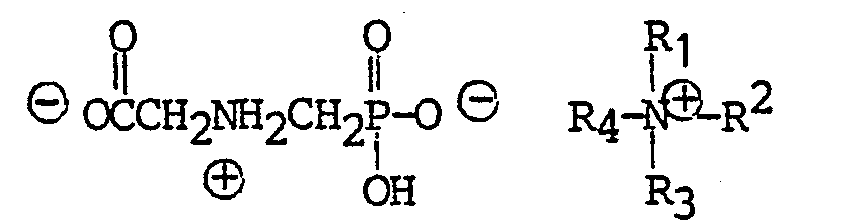
wherein R1, R2, R3 and R4 are the same or different and are selected from the group consisting of hydrogen or saturated or unsaturated straight or branched chain alkyl groups having from 1 to 20 carbon atoms, and wherein at least two of R1, R2, R3 or R4 are saturated short-chain alkyl groups having from 2 to 3 carbon atoms, and at least one of R1, R2, R3 or R4 is a saturated or unsaturated straight or branched chain alkyl group having from 12 to 20 carbon atoms.
wherein R1, R2, R3 and R4 are the same or different and are selected from the group consisting of hydrogen or saturated or unsaturated straight or branched chain alkyl groups having from 1 to 20 carbon atoms, and wherein at least two of R1, R2, R3 or R4 are saturated short-chain alkyl groups having from 2 to 3 carbon atoms, and at least one of R1, R2, R3 or R4 is a saturated or unsaturated straight or branched chain alkyl group having from 12 to 20 carbon atoms.
2. The compound of Claim 1 in which R4 is octadecyl, and R1, R2 and R3 are each methyl.
3. The compound of Claim 1 in which R4 is octadecyl, R3 is octadecyl and R1 and R2 are each methyl.
4. The compound of Claim 1 in which R1, R2 and R3 are each methyl and R4 is mixed hexadecyl and octadecy.
5. A method for controlling undesirable weed pests which comprises applying to the
locus where control is desired a herbicidally effective amount of a compound having
the formula
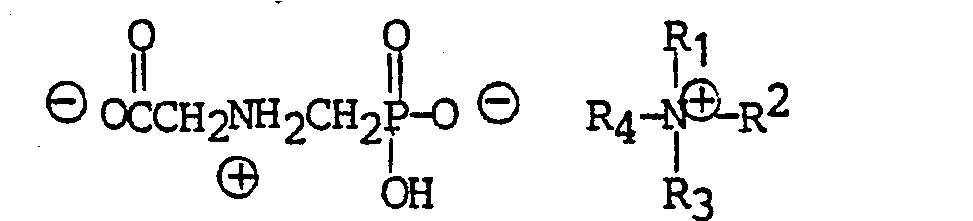
wherein R1, R2, R3 and R4 are the same or different and are selected from the group consisting of hydrogen or saturated or unsaturated straight or branched chain alkyl groups having from 1 to 20 carbon atoms, and wherein at least two of R1, R2, R3 or R4 are saturated short- chain alkyl groups having from 2 to 3 carbon atoms, and at least one of R1, R2, R3 or R4 is a saturated or unsaturated straight or branched alkyl group having from 12 to 20 carbon atoms.
wherein R1, R2, R3 and R4 are the same or different and are selected from the group consisting of hydrogen or saturated or unsaturated straight or branched chain alkyl groups having from 1 to 20 carbon atoms, and wherein at least two of R1, R2, R3 or R4 are saturated short- chain alkyl groups having from 2 to 3 carbon atoms, and at least one of R1, R2, R3 or R4 is a saturated or unsaturated straight or branched alkyl group having from 12 to 20 carbon atoms.
6. The method of Claim 5 in which R4 is octadecyl, and R1, R2 and R3 are each methyl.
7. The method of Claim 5 in which R4 is octadecyl, R3 is octadecyl and R1 and R2 are each methyl.
8. The method of Claim 5 in which R1, R2 and R3 are each methyl and R4 is mixed hexadecyl and octadecyl.
9. The compound of Claim 1 togehter with an inert adjuvant carrier.
1. A method for controlling undesirable weed pests which comprises applying to the
locus where control is desired a herbicidally effective amount of a compound having
the formula:
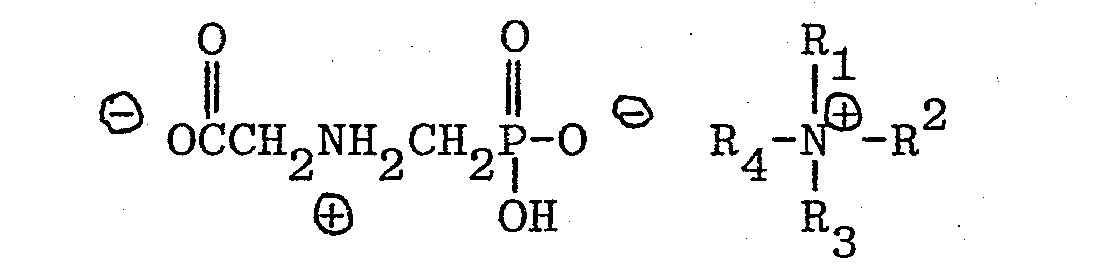
wherein R1, R21 R3 and R4 are the same or different and are selected from the group consisting of hydrogen or saturated or unsaturaed straight or branched chain alkyl groups having from 1 to 20 carbon atoms, and wherein at least two of R1, R21 R3 or R4 are saturated short- chain alkyl groups having from 2 to 3 carbon atoms, and at least one of R1, R2, R3 or R4 is a saturated or unsaturaed straight or branched alkyl group having from 12 to 20 carbon atoms.
wherein R1, R21 R3 and R4 are the same or different and are selected from the group consisting of hydrogen or saturated or unsaturaed straight or branched chain alkyl groups having from 1 to 20 carbon atoms, and wherein at least two of R1, R21 R3 or R4 are saturated short- chain alkyl groups having from 2 to 3 carbon atoms, and at least one of R1, R2, R3 or R4 is a saturated or unsaturaed straight or branched alkyl group having from 12 to 20 carbon atoms.
2. A method as claimed in claim 1 in which R4 is octadecyl, and R1, R2 and R3 are each methyl.
3. A method as claimed in claim 1 in which R4 is octadecyl, R3 is octadecyl and R1 and R2 are each methyl.
4. A compound as claimed in claim 1 in which R1, R2 and R3 are each methyl and R4 is mixed hexadecyl and octadecyl.
5. A herbidical composition comprising a compound as defined in any of claims 1 to
4 together with an inert adjuvant carrier.
6. A method for preparing compounds as defined in claim 1 characterised in that N-phosphonomethylglycine
is reacted with an appropriate alkyl ammonium halide in the presence of silver oxide
and filtering off the insoluble silver halide precipitated as a consequence of the
reaction, the alkylammonium salt of N-phosphonomethylglycine being obtained in solution.