|
(11) | EP 0 135 683 B1 |

| (12) | EUROPEAN PATENT SPECIFICATION |
|
|
| (54) |
Method for production of cephalosporin compounds Dioxaphosphole in der Herstellung von Cephalosporinderivaten Dioxaphospholes dans la préparation de dérivés de céphalosporine |
|
|
|||||||||||||||||||||||||||||||||||
|
||||||||||||||||||||||||||||||||||||
| Note: Within nine months from the publication of the mention of the grant of the European patent, any person may give notice to the European Patent Office of opposition to the European patent granted. Notice of opposition shall be filed in a written reasoned statement. It shall not be deemed to have been filed until the opposition fee has been paid. (Art. 99(1) European Patent Convention). |
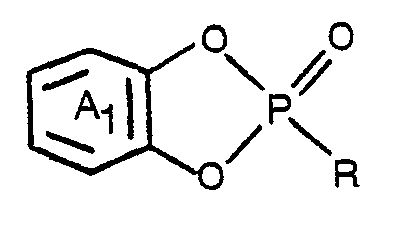
[0001] This invention relates to a process for producing 1,3,2-dioxaphospholes of the formula wherein
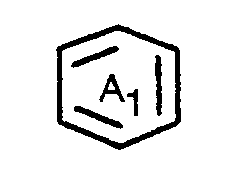
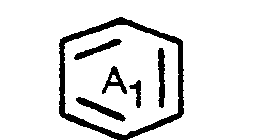
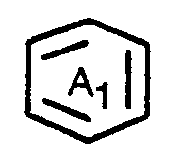
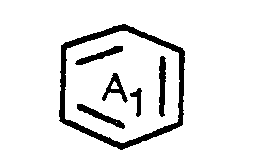
represents a benzene ring which may optionally be substituted and R represents an aryl, alkoxy or aralkyloxy group which may optionally be substituted.
[0002] The compounds of formula [I]B are useful, for example as neutral catalysts in deriving cephalosporin antibiotics, which have important value in the treatment of bacterial diseases, or intermediates therefor from penicillin compounds by ring expansion (Japanese Published Unexamined Patent Application 4091/ 1975) and are also useful in the production of cephalosporin compounds having at position 3 a methoyl group substituted with a nucleophilic group, which compounds are important as antibiotics or intermediates therefor, by reaction of deacetylcephalosporin C (DCPC) obtainable by fermentative culture or a derivative thereof or of cephalosporin C also obtainable by fermentation, which derivative has a ―CH2OH group at position 3, with a nucleophilic reagent as mentioned hereinbefore.
[0003] A number of investigations have so far been made for the production of such 1,3,2-dioxaphospholes of formula [I]B, and [1] the route involving ① → ② → ③ [L. Anschutz, Annalen, 454, 109―120 (1927)], [2] the route ① → ② → ⑤ → ⑥ [T. A. Khwaja et al., J. Chem. Soc. (C), 1970, 2092-2100], and [3] the route ① → ④ → ② [H. Gross et al., Chem. Ber., 96,1387―1394 (1963) and East German Patent 50606 (laid open May 5, 1971)], for instance, are known, as illustrated in the following:
wherein R1 is an alcohol residue. However, method [1] is disadvantageous in that the raw material PCI5 is sublimable, hence can be handled with difficulty, that the yield is low and that methylchloride, which has an offensive odor and is hazardous, is produced, method [2] is also disadvantageous in that the number of steps involved is large, that the yield is low and that distillation of intermediates ② and ⑤ gives large amounts of residue having a tendency toward solidification, hence difficult to handle, and even method [3] is problematic in that the yield is low. Moreover, for all of methods ①―③, intermediates ②, ④ and ⑤ are hygroscopic and easily decompose upon absorption of moisture, so that they are difficult to handle. For these and other reasons, these methods are all disadvantageous for large scale commercial production of [I]B. A more advantageous method for the production of [I]B has been longed for to be developed.
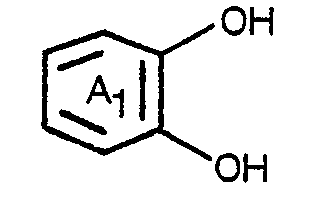
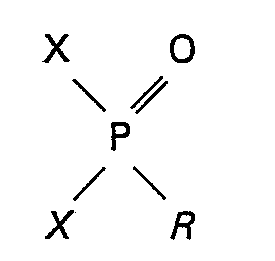
[0004] The present inventors conducted various investigations on the production of compounds [I]B and have now unexpectedly found that compounds [I]B can be obtained in one step in an industrially very advantageous manner in good yields in a short period of time by reacting a compound of the formula
wherein
is as defined above, with a compound of formula
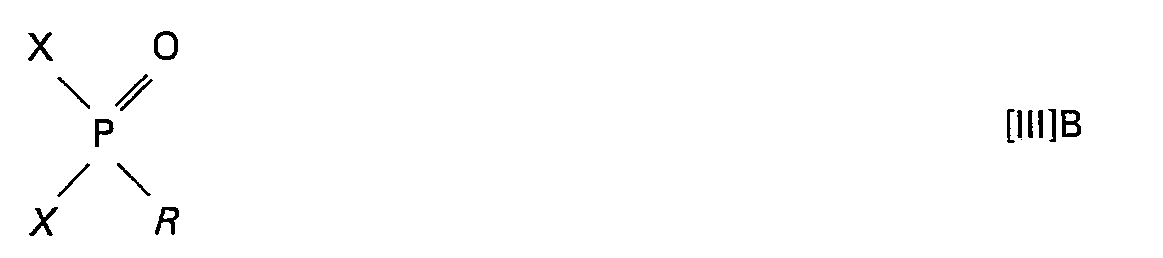
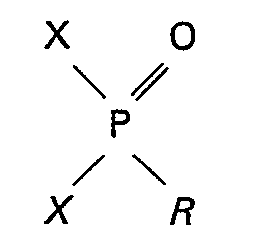
wherein X is a halogen atom and R is as defined above, at a temperature not higher than about 30°C in the presence of a base.
[0005] Thus, the method of the preparation producing 1,3,2-dioxaphospholes [I]B, comprises reacting compound [II]B with compound [III]B at a temperature not higher than about 30°C in the presence of a base.
[0006] In the above formulas,
is a benzene ring which may optionally be substituted and the benzene ring may have one to four substituents, which are inert to the reaction, each selected from among a straight or branched C1―C6 lower alkyl group (e.g. methyl, ethyl, n-propyl, isopropyl, n-butyl, pentyl), a straight or branched C1―C6 lower alkoxy gorup (e.g. methoxy, ethoxy, isopropyloxy), a straight or branched C1―C6 lower alkylthio group (e.g. methylthio, ethylthio, n-propylthio, isopropylthio), a C2-C6 lower acyl group (e.g. acetyl, propionyl), a C2―C6 lower acyloxy group (e.g. acetoxy, propionyloxy), a C2―C6 lower acylamino group (e.g. acetylamino), a di-lower (C1―C6) alkylamino-lower (C1―C6) alkyl group (e.g. dimethylaminomethyl, dimethylaminoethyl, diethylaminomethyl, diethylaminoethyl), a C1―C6 lower alkoxycarbonyl or C6―C10 aryloxycarbonyl group (e.g. methoxycarbonyl, ethoxycarbonyl, phenoxycarbonyl), nitro, halogen (Br, Cl, I, F), cyano, carboxy, hydroxy or a like monovalent group. Furthermore, the benzene ring may have such a divalent substituent as methylenedioxy, ethylenedioxy,
which substituent may further be substituted, for example with halogen, cyano, nitro, oxo and/or carboxyl. Specific examples of the compound of formula [II]B are pyrocatechol, homocatechol, pyrogallol, methyl 3,4-dihydroxybenzoate, 2-hydroxy-4-propionylphenyl, 3,4-dihydroxychlorobenzene, 3,4-dihydroxymethoxybenzene and 1,2-dihydroxynaphthalene. In particular, pyrocatechol, for instance, is preferred.
[0007] In the above formula [III]B, X is a halogen atom such as F, Cl or Br. In particular, when X is Cl, good results are obtainable. R is an aryl, alkoxy or aralkyloxy group which may optionally be substituted. The aryl group includes, among others, phenyl, tolyl, xylyl, biphenylyl and naphthyl. The alkoxy group is, for example, a straight or branched C1-C6 lower alkoxy group such as mentioned above for
The aralkyloxy group includes benzyloxy, phenethyloxy, phenylpropyloxy, naphthylmethyloxy, etc. These aryl, alkoxy and aralkyloxy groups may optionally be substituted and the optional substituents include such halogen, nitro, cyano, oxo, Cl-C6 lower alkoxy, Cl-C6 lower alkylthio and alkoxycarbonyl groups as mentioned above for
and further a C1-C6 lower alkylsulfonyl group (e.g. methylsulfonyl, ethylsulfonyl, n-propylsulfonyl, isopropylsulfonyl, n-butylsulfonyl) allylsulfonyl, etc. Specific and preferred examples of R are methoxy, ethoxy, propyloxy, isopropyloxy, butyloxy, n-hexyloxy, benzyloxy, phenethyloxy, 2-cyanoethoxy, 2-methylsulfonylethoxy, 2-methoxycarbonylethoxy and 2-methoxyethoxy. In particular, when R is, for example, a lower alkoxy such as methoxy or ethoxy, good results are obtained.
[0008] The method of the preparation is carried out by reacting compound [II]B with compound [III]B at a temperature not higher than about 30°C in the presence of a base.
[0009] Compound [II]B is submitted to the reaction either in the free or in the form of a salt with a base such as mentioned hereinbelow. The base to be used in practicing the method includes, among others, tertiary amines such as trimethylamine, triethylamine, tri-n-butylamino, N-methylpiperidine, cyclohexyldimethylamine and N-methylmorpholine, dialkylamines such as di-n-butylamine, diisobutylamine and dicyclohexylamine, aromatic amines such as pyridine, lutidine and y-collidine, other organic amines, alkali metals such as lithium, sodium and potassium, alkaline earth metals such as calcium and magnesium, quaternary ammonium such as tetraethylammonium and tetrabutylammonium, and other inorganic bases. Said base may be used in the form of a salt with the phenolic hydroxyl group of compound [II]B or may be added in carrying out the reaction or may be used in admixture with compound [II]B. Preferable bases are tri-lower Cl-C6 alkylamines such as trimethylamine, triethylamine and tri-n-butylamine and aromatic amines having a six-membered ring such as pyridine and lutidine. In particular, triethylamine, tri-n-butylamine, pyridine and the like are preferred.
[0010] The reaction is preferably carried out by mixing compound [II]B with compound [III]B and then mixing the mixture with a base at below about 30°C, by mixing compound [II]B with a base and then mixing the mixture with compound [III]B at below about 30°C, or by mixing a salt of compound [II]B and a base such as mentioned above with compound [III]B at below about 30°C. The reaction temperature is preferably 0°C or below, more preferably -5°C to -40°C. The reaction can be carried out in a more advantageous manner by using a solvent. As the solvent, an organic which is inert to the reaction is used. Since the starting compound [III]B and the product [I]B are easily hydrolyzable upon contact with water, the use of an anhydrous aprotic solvent is practical. Examples of such solvent incapable of reacting with compound [III]B are halogenated hydrocarbons such as methylene chloride, chloroform, carbon tetrachloride, 1,2-dichloroethane and 1,1,2-trichloroethane, ethers such as dimethyl ether, methyl ethyl ether, diethyl ether, tetrahydrofuran and dioxane, organic nitriles such as acetonitrile and propionitrile, nitroalkanes such as nitromethane and nitroethane, esters such as methyl acetate, ethyl acetate and methyl propionate, ketones such as acetone and methyl ethyl ketone, aromatic hydrocarbons such as benzene, toluene, chlorobenzene and bromobenzene, aliphatic hydrocarbons such as petroleum ether, hexane and cyclohexane, sulfones such as sulfolane, and mixtures of these. Among such usable solvents, preferred are halogenated hydrocarbons such as methylene chloride and chloroform, ethers such as diethyl ether and tetrahydrofuran and organic nitriles such as acetonitrile and propionitrile. Especially preferred are diethyl ether, methylene chloride and acetonitrile, among others. When such an organic solvent is used, the reaction is generally carried out by mixing compound [II]B with compound [III]B in the organic solvent and mixing the mixture with a base at below about 30°C, by mixing compound [II]B with a base in the organic solvent and mixing the mixture with compound [III]B at below about 30°C, or by mixing a salt of compound [II]B and a base such as mentioned above with compound [III]B in the organic solvent at below about 30°C. Compound [III]B is used generally in an amount of 0.8 to 1.2 moles, preferably 0.95 to 1.05 moles, per mole of compound [II]B. Stoichiometrically, 2 moles of the base is required per mole of compound [II]B, since the reaction yields 2 moles of a hydrogen halide per mole of compound [II]B and the hydrogen halide forms a salt with the base. However, the base is used, unless the reaction is adversely affected, in an amount of 1.6 to 2.4 moles, preferably 1.8 to 2.2 moles, per mole of compound [II]B. When an organic solvent is used, it is used in an amount of 0.1 to 20 liters, preferably 0.5 to 10 liters, per mole of compound [II]B. The reaction temperature is desired to be low and is generally about 30°C or below since higher temperatures tend to cause easy formation of byproducts. Considering the yields of byproducts and the extent of cooling realizable in the commercial practice, it lies generally within the range of 30°C to -100°C. When the purity and yield of the desired product and the efficiency of cooling are taken into consideration, it is advantageous from the industrial viewpoint to carry out the reaction at a temperature within the range of 10°C to -50°C, more preferably -10°C to -30°C. The reaction is exothermic and vigorous in the step of mixing compound [II]B with compound [III]B in the presence of a base and therefore it is advisable to perform the mixing portionwise under cooling. The reaction time is several minutes to several hours depending on the efficiency of cooling and other factors. Furthermore, since the starting compound [III]B and the product [I]B can easily react with water, it is preferable that the starting materials and solvent to be used contain only a minimal amount of water and it is also preferable to conduct the reaction under protection from moisture.
[0011] The product [I]B produced by the reaction may be used in the form of a reaction mixture. As necessary, the reaction mixture containing [I]B is stored at a low temperature, namely at below about 30°C, preferably at 10°C to -50°C, under protection from moisture, since, in the presence of a base or hydrochloride thereof, [I]B is unstable at higher temperatures and furthermore can easily react with water.
[0012] If desired, [I]B can easily be isolated from the reaction mixture, for example by removing the hydrohalide salt of the base (precipitate) by filtration or other means with or without adding to the reaction mixture a hydrogen halide or a solvent in which the salt of the base and hydrogen halide as yielded by the reaction is sparingly soluble but [I]B is readily soluble; adequately selected from among ether, benzene, methylene chloride, acetonitrile, ethyl acetate, etc., and then concentrating the filtrate or the like. The thus- obtained [I]B may further be purified by distillation, crystallization or other purification procedures.
[0013] The starting compound [III]B to be used in the method of the preparation can easily be prepared, for example by reacting a compound of the formula R-H (R being as defined above) with a phosphorus oxyhalide or a diphosphoryl tetrahalide [Mizuma et al., Yakugaku Zasshi, 81, 51-52 (1961) and H. Grunze, Chem. Ber., 92, 850-054 (1959)] or by using a modification of such reaction.
[0014] Thus, in accordance with the method of the preparation, the desired product [I]B can be produced in high purity and good yield in one step under mild conditions in a short period of time from raw materials which can be handled with ease in industrial operations and are inexpensive. Therefore, the method of the preparation is an industrially very advantageous method for the production of [I]B.
[0015] The present invention is illustrated in further detail below with Examples, but it is to be understood that the examples are solely for the purpose of illustration and not to be construed as limitations of the invention, and that many variations may be resorted to without departing from the spirit and scope of the invention.
[0016] In the Reference Examples and Examples, the elution in column chromatography was carried out with observation of TLC (Thin Layer Chromatography). In the TLC, were employed Merck pre-coated TLC plate 60F254 and UV lamp for detection.
[0017] For silica gel chromatography, "Silica gel 60 for column chromatography" manufactured by E. Merck in Germany was used. The resin named "Amberlite XAD-2" is a product manufactured by Rohm & Haas Co. in U.S.A. All the temperatures are uncorrected and the expression "room temperature" means 20-25°C. The percentages are all on weight basis, except the cases of solvents. In those cases, the percentages are all on volume basis. The NMR spectra given therein were measured using a Varian Model EM 390 (90 MHz) or Hitachi Perkin-Elmer R-20 (60 MHz) spectrometer with tetramethylsilane or sodium 2,2-dimethyl-2-silapentane-5-sulfonate as the internal or external reference and all 6 values are in ppm. The symbol s stands for a singlet, d a doublet, q a quarter, ABq a AB type quartet, t a triplet, dd a double doublet, m a multiplet, br broad and J a coupling constant. Infrared (IR) spectra were recorded on a Hitachi EPI-S2 spectrometer. And, symbols in Examples and Reference Examples have the following meanings, respectively:
Example 1
[0018] Pyrocatechol (1.691 g, 15.36 mM) was dissolved in 60 ml of ether. Triethylamine (3.109 g, 30.72 mM) was added dropwise. The dropping funnel was washed with 10 ml of ether. The mixture, together with the washings, was stirred, and 2.287 g (15.36 mM) of methyl dichlorophosphate was added dropwise with cooling at -40°C to -35°C. The dropping funnel was washed with 10 ml of ether and the mixture, together with the washings, was stirred at the same temperature for 10 minutes. The cooling bath was then removed and, after the temperature returned to room temperature (20-25°C), the reaction mixture was placed in a glass filter and filtered under a nitrogen pressure. The residue on the filter was washed with two 15-ml portions of ether. The filtrate and washings were concentrated under reduced pressure on a water bath at 20°C. There was obtained 1.847 g (96.0% yield) of methyl o-phenylene phosphate as a colorless viscous oil. Upon standing in a refrigerator, it crystallized.
[0019] NMR (CDCI3) 5: 3.82 and 4.03 (3H, each s, P-OCH3),
Signals for trace amounts of ether and triethylamine were also observed.
Example 2
[0021] Pyrocatechol (1.249 g, 11.35 mM) was dissolved in 42 ml of ether and, using 2.297 g (22.70 mM) of triethylamine and 1.849 g (11.35 mM) of ethyl dichlorophosphate, the reaction was carried out at -40°C to -35°C and the reaction mixture treated in the same manner as in Reference Example 1. There was obtained 2.159 g (95.0% yield) of ethyl o-phenylene phosphate as a colorless viscous oil.
[0022] NMR (CDCI3) 6: 1.42 (3H, t, J=7Hz, C-CH3), 4.23 and 4.40 (2H, each q, J=7Hz, P-0-CH2),
Signals for trace amounts of ether and triethylamine were also observed.
Example 3
[0024] Pyrocatechol (0.993 g, 9.02 mM) was dissolved in 50 ml of ether and, using 1.825 g (18.04 mM) of triethylamine and 1.723 (9.02 mM) of n-butyl dichlorophosphate, the reaction was carried out at -5°C to 0°C and the reaction mixture treated in the same manner as in Reference Example 1. There was obtained 1.914 g (93.0% yield) of n-butyl o-phenylene phosphate as a colorless viscous oil.
[0025] NMR (CDCl3) δ: 0.7~2.0 (7H, m, C―CH2CH2CH3), 4.13 and 4.28 (2H, each t, J=6.5Hz, P―O―CH2),
Signals for trace amounts of ether and triethylamine were also observed.
Example 4
[0027] Pyrocatechol (0.856 g, 7.77 mM) was dissolved in 32 ml of ether and, using 1.573 g (15.54 mM) of triethylamine and 1.484 g (7.77 mM) of n-propyl dichlorophosphate, the reaction was carried out at -30°C to -25°C and the reaction mixture treated in the same manner as in Reference Example 1. There was obtained 1.695 g (95.6% yield) of n-propyl o-phenylene phosphate as a viscous oil (slightly turbid).
[0028] NMR (CDCl3) δ: 0.97 (3H, t, J=7Hz, C―CH3), 1.77 (2H, q, J=7×7.5Hz, O―C―CH2), 4.15 and 4.29 (2H, each q, J=7.5Hz, P-0-CH2),
Signals for trace amounts of ether and triethylamine were also observed.
Example 5
[0030] Triethylamine (2.211 g, 21.86 mM) was added to a solution of 1.989 g (10.93 mM) of ethyl 3,4-dihydroxybenzoate in 30 ml of ether. The mixture was cooled to -30°C to -20°C and a solution of 1.627 g (10.93 mM) of methyl dichlorophosphate in 10 ml of ether was added thereto dropwise with stirring over 10 minutes. The reaction mixture was stirred at the same temperature for 5 minutes, the bath was then removed and the temperature was allowed to rise to 20°C. Filtration and washing were carried out by the procedure of Reference Example 1, and the filtrate and washings were concentrated at room temperature (20-25°C) under reduced pressure. There was obtained 2.387 g (84.6% yield) of 5-ethoxycarbonyl-2-methoxy-2-oxo-1,3,2-benzodioxaphosphole as a viscous oil.
[0031] NMR (CH2Cl2) δ: 1.26 (3H, t, J=7Hz, C―CH3), 3.84 and 4.05 (3H, each s, P―O―CH3), 4.34 (2H, q, J=7Hz, C―CH2),
Signals for CH2CI2 and a trace amount of ether were also observed.
Example 6
[0033] 3,4-Dihydroxytoluene (1.686 g, 13.58 mM) was dissolved in 40 ml of ether and, using 2.748 g of triethylamine and 2.022 g of methyl dichlorophosphate, the reaction mixture was treated in the same manner as in Reference Example 5. There was obtained 2.400 g (88.4% yield) of 2-methoxy-5-methyl-2-oxo-1,3,2-benzodioxaphosphole as a viscous oil.
[0034] NMR (CH2Cl2) δ: 2.32 (3H, s, C―CH3), 3.78 and 3.99 (3H, each s, P―O―CH3),
Signals for CH2Cl2 and a trace amount of ether were also observed.
Example 7
[0036] 2,3-Dihydroxynaphthalene (1.747 g, 10.91 mM) was dissolved in 40 ml of ether and, using 2.208 g of triethylamine and 1.625 g of methyl dichlorophosphate, the procedure of Reference Example 5 was followed to give 2.20 g (85.4% yield) of 2-methoxy-2-oxo-naphtho[2,3-d]-1,3,2-dioxaphosphole as a white powder.
Example 8
[0039] To 1.180 g (10.72 mM) of pyrocatechol were added 11 ml of methylene chloride and 1.596 g of methyl dichlorophosphate, the mixture was stirred at room temperature (20-25°C) for 20 minutes and then cooled to -30°C. Thereto was added 2.169 g of triethylamine dropwise with stirring at -30°C to -20°C over 7 minutes. The dropping funnel was washed with 1 ml of methylene chloride and the washings were added to the mixture. The reaction mixture was stirred at the same temperature for 15 minutes and, after it returned to 10°C, filtered to remove the triethylamine hydrochloride precipitate, which was washed with methylene chloride. The filtrate and washings were analyzed by NMR spectrometry, by which it was revealed that the yield of methyl o-phenylene phosphate as found in the filtrate and washings was 89%.
[0040] NMR (CH2CI2) 6: 3.31 and 4.02 (3H, each s, P-OCH3),
Signals due to the presence of CH2CI2 and triethylamine hydrochloride as well as a weak signal (multiplet) at 6.2-7.6 ppm due to
The yield of the desired product was calculated based on the ratio (89%) between the signal (7.16 ppm) of
of the desired product and the signal in the 6.2-7.6 ppm region.
Example 9
[0041] To 0.710 g (6.45 mM) of pyrocatechol was added 7 ml of methylene chloride. Then, 0.960 g of methyl dichlorophosphate and 1 ml of methylene chloride were added. The mixture was cooled to -15°C to -10°C with stirring and 2.390 g of tri-n-butylamine was added dropwise thereto over 8 minutes. The dropping funnel was washed with 3 ml of methylene chloride and the washings were added to the reaction mixture. The mixture was stirred at the same temperature for 5 minutes and then allowed to return to 10°C. Analysis of the liquid reaction mixture by NMR spectrometry indicated that the yield of methyl o-phenylene phosphate was 89%.
[0042] NMR (CH2CI2) 6: 3.81 and 4.02 (3H, each s, P-OCH3),
Signals due to the presence of CH2CI2 and tributylamine hydrochloride as well as a weak signal (multiplet) at 6.2-7.6 ppm due to
The yield of the desired product was determined in the same manner as in Reference Example 8.
Example 10
[0043] The procedure of Reference Example 9 was followed using di-n-butylamine or pyridine in place of tri-n-butylamine, the yield of methyl o-phenylene phosphate in the liquid reaction mixture as determined in the same manner as in Reference Example 9 being 71 % or 91 %, respectively.
Example 11
[0044] To 1.418 g of pyrocatechol were added 1.917 g of methyl dichlorophosphate and 11 ml of acetonitrile. The mixture was cooled to -25°C and 2.605 g of triethylamine was added dropwise at -25°C to -20°C with stirring. The dropping funnel was washed with 1 ml of acetonitrile and the washings were added to the mixture. After stirring at the same temperature for 10 minutes, the reaction mixture was allowed to return to 10°C and then filtered. The filtration residue was washed with a 5-ml and 3-ml portion of acetonitrile. The filtrate and washings were concentrated under reduced pressure on a water bath at 15°C to 20°C to give 3.102 g of methyl o-phenylene phosphate as a slightly turbid oil.
[0045] NMR (CH2CI2) 6: 3.81 and 4.01 (3H, each s, P-OCH3),
Signals for contaminants, CH2CI2 and triethylamine hydrochloride (about 0.25 mole per mole of the desired product), were also observed.
Example 12
[0046] To 0.963 g of pyrocatechol were added 7 ml of methylene chloride and 1.30 g of methyl dichlorophosphate. The mixture was stirred at room temperature (20-25°C) for 10 minutes and then, with cooling to -20°C to -15°C, 1.86 g of triethylamine was added dropwise. The dropping funnel was washed with 1 ml of methylene chloride and the washings were added to the mixture. The resulting mixture was stirred at the same temperature for 5 minutes to give a reaction mixture containing methyl o-phenylene phosphate and triethylamine hydrochloride.
Example 13
[0047] To a solution of 3.11 g of phenylphosphonic acid dichloride in 10 ml of ether were added 1.76 g of pyrocatechol and 20 ml of ether. The resulting solution was cooled to -25°C to -28°C and a solution of 3.23 g of triethylamine in 10 ml of ether was added dropwise thereto with stirring over 8 minutes. Thereafter, the reaction mixture was allowed to return to room temperature (20-25°C), and the precipitate was filtered off under nitrogen atmosphere and washed with 30 ml of ether. The filtrate and washings were combined and the ether was distilled off under reduced pressure to give 3.46 g (94.4% yield) of 2-phenyl-2-oxo-1,3,2-benzodioxaphosphole as a colorless oil. Upon standing in a refrigerator overnight, it crystallized.
Reference Example 1
[0050] A solution of 1.75 g of 7β-(D-5-carboxy-5-phthalimidovaleramido)-3-hydroxymethyl-3-cephem-4-carboxylic acid di-tri-n-butylamine salt and 0.35 g of 5-mercapto-1-methyl-1H-tetrazole in 20 ml of methylene chloride was cooled to -25°C, 0.74 g of methyl o-phenylene phosphate was added thereto, and the mixture was stirred at -25°C to -20°C for 2 hours. To the reaction mixture, there were added 15 ml of tetrahydrofuran and 15 ml of water, followed by stirring and phase separation. The aqueous layer was extracted with the mixture of 5 ml of tetrahydrofuran and 10 ml of methylene chloride. The organic layer and the extracts were combined, washed with 20 ml of water, and dried over anhydrous magnesium sulfate. The solvents were distilled off under reduced pressure, and the residue was dissolved in a small amount of acetone and the solution was added to 100 ml of ether. The resulting precipitate was collected by filtration, washed with ether and dried in vacuo to give 1.14 g (94.7% yield) of 7β-(D-5-carboxy-5-phthalimidovaleramido)-3-(1-methyl-1 H-tetrazol-5-yl)thiomethyl-3-cephem-4-carboxylic acid.
[0052] NMR (DMSO-d6) δ: 1.40~2.40 (6H, m, ―(CH2)3―), 3.62 (2H, broad, 2-CH2), 3.94 (3H, s, N―CH3), 4.30 (2H, ABq, J=15Hz, 3-CH2), 4.73 (1 H, t, J=8Hz,
5.01 (1 H, d, J=5Hz, 6-H), 5.62 (1 H, q, J=5 & 8Hz, 7-H),
8.77 (1 H, d, J=8Hz, -CONH-).
Reference Example 2
[0053] A solution of 3.52 g of 7β-(D-5-carboxy-5-phthalimidovaleramido)-3-hydroxymethyl-3-cephem-4-carboxylic acid ditriethylamine salt and 1.00 g of 5-mercapto-1-methyl-1H-tetrazole in 25 ml of methylene chloride was cooled to -20°C, and 0.25 g of triethylamine was added thereto with stirring. To this solution was added the whole reaction mixture prepared in Reference Example 12 dropwise with stirring at -20°C to -15°C. The dropping funnel was washed with 6 ml of methylene chloride and the washings were added to the reaction mixture. The mixture was stirred at the same temperature for 20 minutes and then at -5°C to 0°C for 60 minutes. Following addition of 10 ml of water to the reaction mixture, the solvent was distilled off under reduced pressure, and a new 30-ml portion of methylene chloride and 15 ml of tetrahydrofuran were added to the residue. After phase separation, the organic layer was washed with 1 N hydrochloric acid and then with saturated aqueous solution of sodium chloride, and dried over magnesium sulfate. The solvents were distilled off under reduced pressure, the residue was dissolved in a small amount of acetone, the solution was poured into ether, and the resulting precipitate was collected by filtration, washed with ether and dried in vacuo to give 2.82 g (93.8% yield) of the same product as obtained in Reference Example 14. The IR and NMR spectra for this product confirmed the identity thereof with the substance obtained in Reference Example 14.
[0054] Reference is made to European Patent Application No. 8210261.7 filed on September 8,1982, a parent application of this application, with regards to the method of producing a cephalosporin compound of the formula:
wherein R1 is a hydrogen atom or an acyl group; R is a hydrogen atom or an ester residue; the dotted line means a double bond in 2- or 3-position of the cephem ring; and R4 is a nucleophilic compound residue, or a salt thereof, directly in one step from a compound of the formula
wherein R1, R and the dotted line have the same meanings as defined above, or a salt thereof, with the use of a 1,3,2-dioxaphosphole of the present invention.
1. A method of producing a 1,3,2-dioxaphosphole of the formula
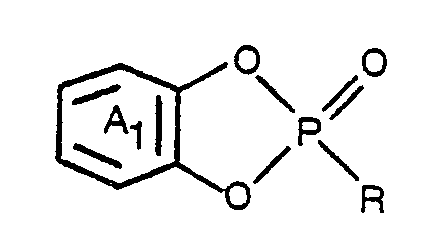
wherein
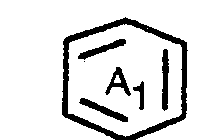
represents a benzene ring which may be substituted and R represents an aryl, alkoxy or aralkyloxy group which may be substituted, characterized by reacting a catechol compound of the formula
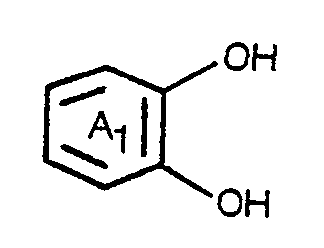
wherein
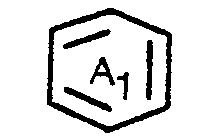
is as defined above, with a compound of the formula
wherein X is a halogen atom and R is as defined above, at a temperature not higher than about 30°C in the presence of a base.
wherein
represents a benzene ring which may be substituted and R represents an aryl, alkoxy or aralkyloxy group which may be substituted, characterized by reacting a catechol compound of the formula
wherein
is as defined above, with a compound of the formula
wherein X is a halogen atom and R is as defined above, at a temperature not higher than about 30°C in the presence of a base.
2. A method according to Claim 1, wherein
represents an unsubstituted benzene ring.
represents an unsubstituted benzene ring.
3. A method according to Claim 1, wherein the 1,3,2-dioxaphosphole compound is ethyl
o-phenylene phosphate.
4. A method according to Claim 1, wherein R represents an alkoxy group having one
to six carbon atoms.
5. A method according to Claim 1, wherein X represents a chlorine atom.
6. A method according to Claim 1, wherein the base represents a trialkylamine in which
alkyl has one to six carbon atoms.
7. A method according to Claim 1, wherein the reaction is carried out in an inert
solvent.
8. A method according to Claim 1 or 7, wherein the reaction is carried out at a temperature
within the range of 30°C to -100°C.
1. Ein Verfahren zur Herstellung eines 1,3,2-Dioxaphosphols der Formel
worin
einen gegebenenfalls substituierten Benzolring darstellt und R eine gegebenenfalls substituierte Aryl-, Alkoxy- oder Aralkyloxygruppe bedeutet, dadurch gekennzeichnet, daß eine Catecholverbindung der Formel
worin
die vorstehend angeführte Bedeutung besitzt, mit einer Verbindung der Formel
worin X für ein Halogenatom steht und R die vorstehend angeführte Bedeutung besitzt, bei einer Temperatur von nicht mehr als etwa 30°C in Gegenwart einer Base umgesetzt wird.
worin
einen gegebenenfalls substituierten Benzolring darstellt und R eine gegebenenfalls substituierte Aryl-, Alkoxy- oder Aralkyloxygruppe bedeutet, dadurch gekennzeichnet, daß eine Catecholverbindung der Formel
worin
die vorstehend angeführte Bedeutung besitzt, mit einer Verbindung der Formel
worin X für ein Halogenatom steht und R die vorstehend angeführte Bedeutung besitzt, bei einer Temperatur von nicht mehr als etwa 30°C in Gegenwart einer Base umgesetzt wird.
2. Ein Verfahren nach Anspruch 1, worin
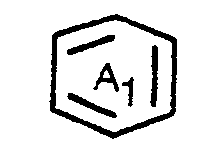
einen unsubstituierten Benzolring darstellt.
einen unsubstituierten Benzolring darstellt.
3. Ein Verfahren nach Anspruch 1, worin die 1,3,2-Dioxaphospholverbindung Äthyl-o-phenylenphosphat
ist.
4. Ein Verfahren nach Anspruch 1, worin R für eine Alkoxygruppe mit 1-6 C-Atomen steht.
5. Ein Verfahren nach Anspruch 1, worin X für ein Chloratom steht.
6. Ein Verfahren nach Anspruch 1, worin die Base ein Trialkylamin bedeutet, in dem
das Alkyl 1-6 C-Atome aufweist.
7. Ein Verfahren nach Anspruch 1, worin die Reaktion in einem inerten Lösungsmittel
durchgeführt wird.
8. Ein Verfahren nach Anspruch 1 oder 7, worin die Reaktion bei einer Temperatur innerhalb
eines Bereiches von 30°C bis -100°C durchgeführt wird.
1. Procédé de production d'un 1,3,2-dioxaphosphole de formule:
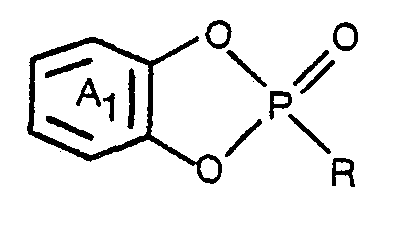
dans laquelle
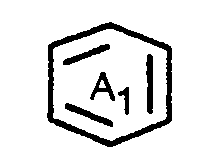
représente un noyau benzénique qui peut être substitué et R représente un groupe aryle, alcoxy ou aralkyloxy qui peut être substitué, caractérisé en ce qu'on fait réagir un composé catéchol de formule:
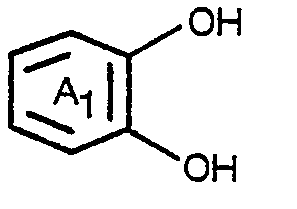
dans laquelle
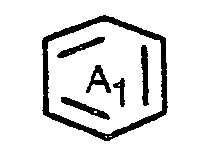
est tel que défini plus haut, avec un composé de formule:
dans laquelle X est un atome d'halogène et R est tel que défini plus haut, à une température ne dépassant pas environ 30°C et en présence d'une base.
dans laquelle
représente un noyau benzénique qui peut être substitué et R représente un groupe aryle, alcoxy ou aralkyloxy qui peut être substitué, caractérisé en ce qu'on fait réagir un composé catéchol de formule:
dans laquelle
est tel que défini plus haut, avec un composé de formule:
dans laquelle X est un atome d'halogène et R est tel que défini plus haut, à une température ne dépassant pas environ 30°C et en présence d'une base.
2. Procédé selon la revendication 1, dans lequel
représente un noyau benzénique non substitué.
représente un noyau benzénique non substitué.
3. Procédé selon la revendication 1, dans lequel le composé 1,3,2-dioxaphosphole est
le phosphate d'éthyle et d'orthophénylène.
4. Procédé selon la revendication 1, dans lequel R représente un groupe alcoxy de
1 à 6 atomes de carbone.
5. Procédé selon la revendication 1, dans lequel X représente un atome de chlore.
6. Procédé selon la revendication 1, dans lequel la base est une trialkylamine dont
le fragment alkyle comporte 1 à 6 atomes de carbone.
7. Procédé selon la revendication 1, dans lequel on effectue la réaction dans un solvant
inerte.
8. Procédé selon la revendication 1 ou 7, dans lequel on effectue la réaction à une
température comprise entre 30 et -100°C.