|
(11) | EP 0 137 894 A1 |

| (12) | EUROPEAN PATENT APPLICATION |
|
|
|
|
|||||||||||||||||||||||||||
| (54) | Esters of 2-adamantanone oxime |
| (57) This invention concerns compounds of the formula
wherein R ist a member of the class of lower alkyl, lower alkenyl, aryl, aralkyl and aralkenyl wherein the aryl groups may bear substituents for hydrogen. |
[0001] The present invention provides a novel class of 2-adamantanone oxime esters that possess anti-inflammatory activity. While certain imino-2-adamantanes are known (Biochem. Pharmcol. 31, 1693, (1932); C.A. 94, 46371r (1981); Ger. 2651083; C.A. 89 129241w, (1978)), the first of which was reported to have psychotropic activity, the oxime esters of the present invention have not been reported.
The Invention
[0002] The present invention provides a novel class of esters of 2-adamantanone oxime of Formula I below:
wherein R represents lower alkyl, lower alkenyl, aryl, aralkyl and aralkenyl wherein the aryl groups may bear substituents for hydrogen, such as, for instance, nitrile, nitro, halo and alkoxy.
[0003] The compounds of the present invention can be conveniently prepared by reacting 2-adamantanone oxime with sodium hydride followed by the addition of an appropriate acid chloride.
[0004] The following example is cited to illustrate the invention. It is not intended to limit it in any manner.
Example 1
o-(Phenylacetyl)-2-Adamantanone Oxime
[0005] 2-Adamantanone oxime (10.0g, 0.061 mol) was added to a suspension of sodium hydride (2.93g, 0.122 mol) in 60 ml tetrahydrofuran and the reaction mixture was refluxed for 5 hours. Then, phenylacetyl chloride (9.43g, 0.061 mol) was added slowly and the reaction mixture was refluxed for 6 hours. After cooling, chloroform was added and the inorganic precipitate was filtered off. The organic solution was evaporated to dryness leaving a crude oxime ester derivative (9 g) which was recrystallized from cyclohexane, providing purified o-(phenylacetyl)-2- adamantanone oxime melting between 74° and 80°C.
[0006] The technique of Example 1 was employed to prepare a series of related compounds as identified in the Table below using the appropriate acid chloride and a suitable recrystallization solvent (as indicated).
1. The compound
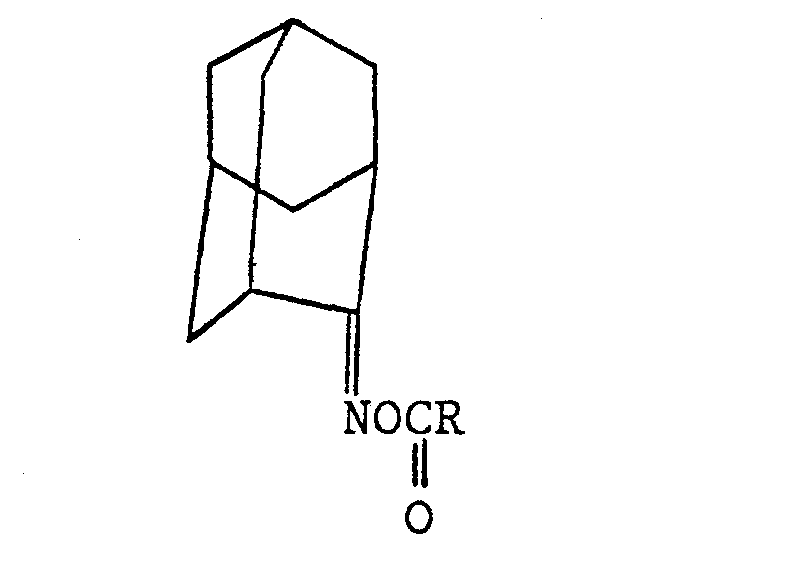
wherein R is a member of the class of lower alkyl, lower alkenyl,aryl, aralkyl and aralkenyl wherein the aryl groups may bear substituents for hydrogen.
wherein R is a member of the class of lower alkyl, lower alkenyl,aryl, aralkyl and aralkenyl wherein the aryl groups may bear substituents for hydrogen.
2. The compound of claim 1 wherein R is
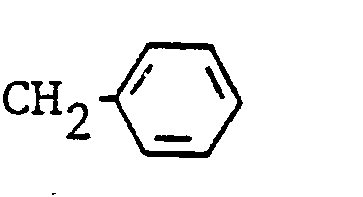
3. The compound of claim 1 wherein R is CH3.
4. The compound of claim 1 wherein R is C6H4CN-4.
5. The compound of claim 1 wherein R is C6H4N02-4.
6. The compound of claim 1 wherein R is C6H4NO2-3.
7. The compound of claim 1 wherein R is
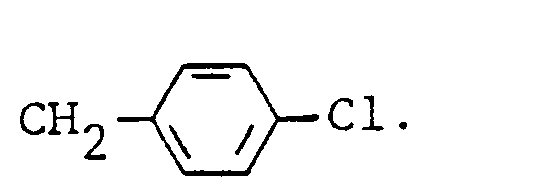
8. The compound of claim 1 wherein R is
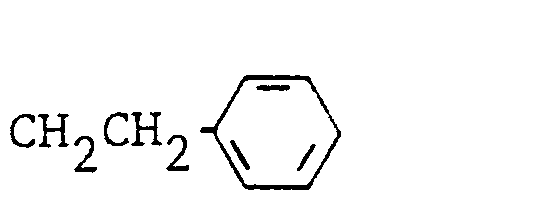
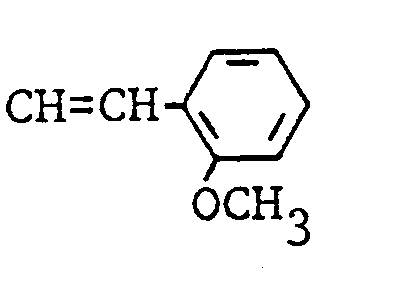
9. The compound of claim 1 wherein R is
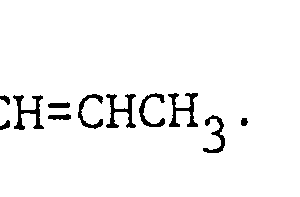
10. The compound of claim 1 wherein R is (
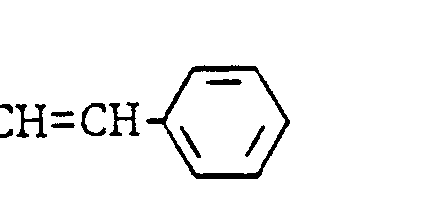
11. The compound of claim 1 wherein R is