|
(11) | EP 0 142 648 B1 |

| (12) | EUROPEAN PATENT SPECIFICATION |
|
|
| (54) |
2-Substituted phenyl-4,5,6,7-tetrahydro-2h-isoindole-1,3 diones, and their production and use 2-Substituierte Phenyl-4,5,6,7-tetrahydro-2H-iso-indole-1,3-dione, Herstellung und Anwendung Phényl-4,5,6,7-tétrahydro-2H-iso-indole-1,3-diones substitués en position 2, leur fabrication et leur utilisation |
|
|
|||||||||||||||||||||||||||||||||||
|
||||||||||||||||||||||||||||||||||||
| Note: Within nine months from the publication of the mention of the grant of the European patent, any person may give notice to the European Patent Office of opposition to the European patent granted. Notice of opposition shall be filed in a written reasoned statement. It shall not be deemed to have been filed until the opposition fee has been paid. (Art. 99(1) European Patent Convention). |
[0001] The present invention relates to 2-substituted phenyl-4,5,6,7-tetrahydro-2H-isoindole-1,3-diones (hereinafter referred to as "isoindole(s)"), and their production and use.
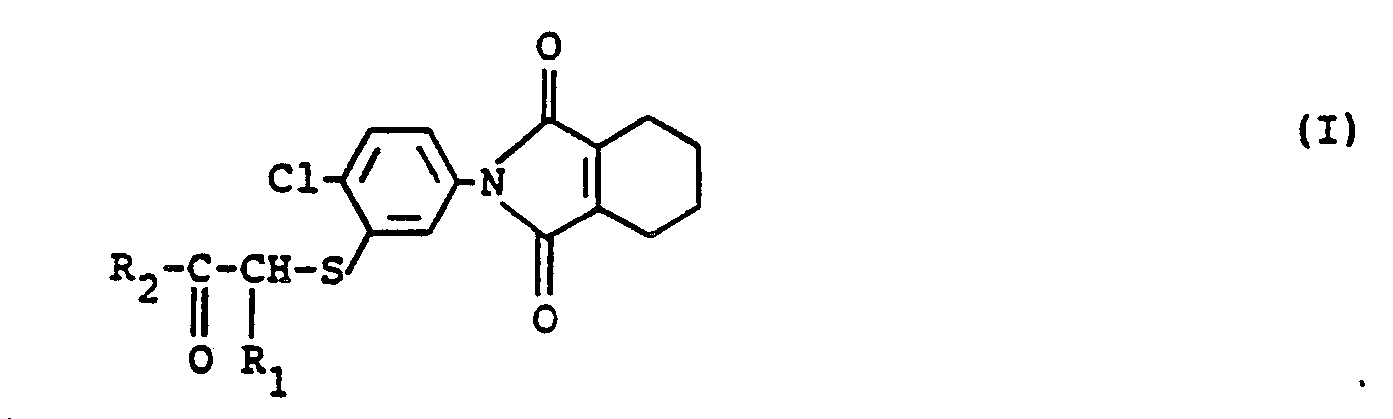
[0002] The said isoindoles are representable by the formula:
wherein R1 is a hydrogen atom, a fluorine atom or a methyl group and R2 is a C1-C3 alkyl group, a C1-C5 alkoxy group, a chloro(C2-C4)alkoxy group, a dichloro(C2-C4)alkoxy group, a cyclo(C3-C7)alkoxy group, a phenoxy group, a C1-C5 alkylthio group or a di(C1-Cs)alkylamino group.
[0003] It is known that certain kinds of isoindoles are effective as herbicides. For instance, the herbicidal use of 2-(4-chlorophenyl)-4,5,6,7-tetrahydro-2H-isoindole-1,3-dione, 2-(4-chloro-3-ethoxycarbonylmethoxy- phenyl)-4,5,6,7-tetrahydro-2H-isoindole-1,3-dione and 2-(4-chloro-3-ethoxycarbonylmethylaminophenyl)-4,5,6,7-tetrahydro-2H-isoindole-1,3-dione is disclosed in U.S. patent 3,878,224, EP-0049508A and EP-0007938A. However, their herbicidal effect is not necessarily satisfactory.
[0004] It has now been found that the isoindoles (I) show a strong herbicidal activity against a wide variety of weeds including broad-leaved weeds, Graminaceous weeds and Cyperaceae weeds in agricultural plowed field by foliar or soil treatment and do not produce any material phytotoxicity on various agricultural crops (i.e. corn, wheat, rice plant, soybean). Examples of broad-leaved weeds are wild buckwheat (Polygonum convolvulus), pale smartweed (Polygonum lapathifolium), common purslane (Portulaca oleracea), common lambsquarter (Chenopodium album), redroot pigweed (Amaranthus retroflexus), garden radish (Raphanus sativus), hemp sesbania (Sesbania exaltata), sicklepod (Cassia tora), velvetleaf (Abutilon theophrasti), prickly sida (Sida spinosa), field pansy (Viola arvensis), wild carrot (Daucus.carota), catchweed bedstraw (Galium aparine), ivyleaf morningglory (Ipomoea hederifolia), tall morningglory (Ipomoea purpurea), field bindweed (Convolvulus arvensis), red deadnettle (Lamium purpureum), henbit (Lamium amplexicaure), jimsonweed (Datura stramonium), black nightshade (Solanum nigrum), birdseye speedwell (Veronica persica), ivyleaf speedwell (Veronica hederaefolia), heartleaf cocklebur (Xanthium strumarium), common sunflower (Heliantus annuus), scentless chamomile (Matricaria inodola), corn marigold (Chrysanthemum segetum), etc. Examples of Graminaceous weeds against which the isoindoles (I) show a herbicidal activity are Japanese millet (Echinochola frumentacea), common barnyardgrass (Echinochloa crus-galli), green foxtail (Setaria viridis), large crabgrass (Digitaria sanguinalis), annual bluegrass (Poa annua), blackgrass (Alopecurus myosuroides), common oat (Avena sativa), etc. Examples of Cyperaceae weeds are rice flatsedge (Cyperus iria), etc. Further, they are also useful in controlling or exterminating in the paddy fields the broad-leaved weeds such as barnyardgrass (Echinochloa oryzicola), broad-leaved weeds such as common falsepimpernel (Lindernia procumbens), toothcup (Rotala indica), waterwort (Elatine triandra), Cyperaceous weeds such as umbrella plant (Cyperus difformis), hardstem bulrush (Scirpus juncoides), slender spikerush (Eleocharis acicularis), water nutsedge (Cyperus serontinus) and the paddy-field weeds such as pickerelweed (Monochloria vaginalis), arrowhead (Sagittaria pygmaea), while exerting no material phytotoxicity to rice plants. Accordingly, the isoindoles (I) can be used as herbicides applicable to agricultural plowed fields as well as paddy field.
[0005] Among the isoindoles (I) of the invention, those wherein R1 is a hydrogen atom and R2 is a C1-C5 alkoxy group, a chloro(C2-C4)alkoxy group, a dichloro(C2-C4)alkoxy group, a cyclo(C3-C7)alkoxy group, a phenoxy group or a C1-C5 alkylthio group are preferable in view of their prominent herbicidal activity as well as their scarce phototoxicity to crop plants. They hardly exert a chemical injury to soybeans and corn on foliar treatment in the plowed field.
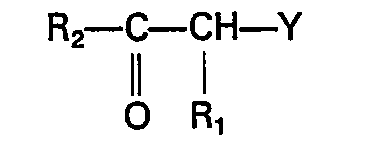
[0006] The isoindole (I) is obtainable by reacting 2-(4-chloro-3-hyrothiophenyl)-4,5,6,7-tetrahydro-2H-isoindole-1,3-dione with a compound of the formula:
wherein R1 and R2 are each as defined above and Y is a chlorine atom, a bromine atom or an iodine atom.
[0007] The reaction is usually carried out in a solvent in the presence of a dehydrohalogenating agent with or without a phase transfer catalyst at a temperature of about 70 to 100°C for a period of 1 to 24 hours. The amounts of the compound (II) and the dehydrohalogenating agent may be respectively from 1 to 5 equivalents and from 1 to 10 equivalents to the starting 2-(4-chloro-3-hydroxythiophenyl)-4,5,6,7-tetra- hydro-2H-isoindole-1,3-dione.
[0008] Examples of the solvent are aliphatic hydrocarbons (e.g. hexane, heptane, ligroin), aromatic hydrocarbons (e.g. benzene, toluene, xylene), halogenated hydrocarbons (e.g. dichloroethane, chlorobenzene, dichlorobenzene), ethers (e.g. diisopropyl ether, dioxane, diethylene glycol dimethyl ether), ketones (e.g. acetone, methyl ethyl ketone, methyl isobutyl ketone, isophorone, cyclohexanone), nitriles (e.g. acetonitrile, isobutyronitrile), acid amides (e.g. formamide, N,N-dimethylformamide, acetamide), sulfur compounds (e.g. dimethylsulfoxide, sulfolane), water. They may be used alone or in combination. Examples of the dehydrohalogenating agents are organic bases (e.g. pyridine, triethylamine, N,N-diethylaniline), inorganic bases (e.g. sodium hydroxide, potassium hydroxide, sodium carbonate, potassium carbonate, sodium hydride), alkali metal alkoxides (e.g. sodium methoxide, sodium ethoxide), etc. As the phase transfer catalyst, there may be used tetra-n-butylammonium bromide, benzyltri-n-butylammonium chloride, etc.
[0009] The reaction mixture may be subjected to ordinary post-treatment such as extraction or condensation to recover the produced isoindole (I). When desired, the product may be further purified by a per se conventional procedure such as column chromatography or recrystallization.
Example 1
[0011] A suspension of 2-(4-chloro-3-hydrothiophenyl)-4,5,6,7-tetrahydro-2H-isoindole-1 ,3-dione (1.5 g) and tetra-n-butylammonium bromide (0.2 g) in a 5% potassium hyroxide solution (9 ml) was heated to 80 to 90°C, and 2,2-dichloroethyl bromoacetate (3.5 g) was dropwise added thereto at 80 to 90°C. The resultant mixture was heated at the same temperature for 1 hour and allowed to cool. The reaction mixture was diluted with water and extacted with toluene. Toluene was removed under reduced pressure, and the residue was purified by silica gel column chromatography using a mixture of ethyl acetate and n-hexane (1:4) as an eluent to give 0.6 g of 2-[4.chloro.3-(2,2-dichloroethyloxycarbonylmethylthio)phenyl]-4,5,6,7-tetrahydro-2H-isoindole-1,3-dione. nD28.0 1.5897.
[0012] In the same manner as above, there were produced other isoindoles (I), of which typical examples are as shown in Table 1
[0013] The starting 2-(4-chloro-3-hydrothiophenyl)-4,5,6,7-tetrahydro-2H-isoindole-1,3-dione is obtainable by reacting 2-chloro-5-aminothiophenol with 1 to 3 equivalents of 3,4,5,6-tetrahydrophthalic anhydride in a solvent at a temperature of 90 to 120°C for 1 to 24 hours. As the solvent, there may be employed aliphatic hydrocarbons (e.g. hexane, ligroin), aromatic hydrocarbons (e.g. benzene, toluene, xylene), ethers (e.g. diisopropyl ether, dioxane, diethylene glycol dimethyl ether), aliphatic acids (e.g. acetic acid, propionic acid), water, or a mixture thereof. After completion of the reaction, the reaction mixture is subjected to ordinary post-treatment such as extraction, condensation or precipitation. The thus obtained product may be, if necessary, purified by a per se conventional procedure such as column chromatography or recrystallization.
[0014] The production of the intermediate 2-(4-chloro-3-hydrothiophenyl)-4,5,6,7-tetrahydro-2H-isoindole-1,3-dione and the starting material useful for its preparation are described in the following examples 2 and 3.
Example 2
[0015] 2-Chloro-5-aminobenzenethiol (21.1 g) and tetrahydrophthalic anhydride (20.4 g) were dissolved in acetic acid (130 ml), and the resultant mixture was heated at 100 to 110°C for 1 hour while stirring. The reaction mixture was allowed to cool and diluted with water. The precipitated crystals were collected by filtration and washed with ethanol to give 28.2 g of 2-(4-chloro-3-hydrothiophenyl)4,5,6,7-tetrahydro-2H-isoindole-1,3-dione. M.P., 153-155°C.
[0016] 2-Chloro-5-aminothiophenol may be produced by reacting 2-chloro-5-nitrobenzenesulfonyl chloride with stannous chloride and hydrochloric acid or with zinc and hydrochloric acid or sulfuric acid at a temperature of 40 to 100°C. The amount of the stannous chloride or zinc is usually from 6 to 10 equivalents to 2-chloro-5-nitrobenzenesulfonyl chloride.
[0017] After completion of the reaction, the reaction mixture is subjected to post-treatment, for instance, addition of conc. hydrochloric acid and collection of the precipitate. If necessary, the collected product may be further purified by a per se conventional procedure such as chromatography or recrystallization.
Example 3
[0018] A solution of anhydrous stannous chloride (152.5 g) in conc. hydrochloric acid (150 ml) was cooled to 0°C, and 2-chloro-5-nitrobenzenesulfonyl chloride (34.3 g) was added thereto while stirring. The resultant mixture was heated at 100°C for 15 minutes while stirring, followed by being allowed to stand. Conc. hydrochloric acid (230 ml) was added to the reaction mixture. The precipitated crystals were collected by filtration, neutralized with a 4% aqueous sodium carbonate solution and extracted with ethyl acetate. The organic layer was dried and concentrated to give 25.0 g of 2-chloro-5-aminothiophenyl. M.P., 68.3°C.
[0019] The compounds according to examples 2 and 3 are the subject matter of a divisional application EP-A-260724.
[0020] On the practical usage of the isoindole (I) as a herbicide, it may be applied as such or in any preparation form such as emulsifiable concentrate, wettable powder, suspension, granules, etc. in combination with a conventional solid or liquid carrier or diluent, a surface active agent and/or an auxiliary agent.
[0021] The content of the isoindole (I) as the active ingredient in said preparation form may be usually within a range of 0.03 to 90% by weight, preferably of 0.05 to 80% by weight.
[0022] Examples of the solid carrier or diluent are kaolin clay, attapulgite clay, bentonite, terra alba, pyrophyllite, talc, diatomaceous earth, calcite, walnut powders, urea, ammonium sulfate, synthetic hydrated silicon dioxide, etc. As the liquid carrier or diluent, there may be exemplified aromatic hydrocarbons (e.g. xylene, methylnaphthalene), alcohols (e.g. isopropanol, ethylene glycol, cellosolve), ketones (e.g. acetone, cyclohexanone, isophorone), soybean oil, cotton seed oil dimethylsulfoxide, acetonitrile, water, etc. The surface active agent used for emulsification, dispersion or spreading may be any of the anionic and non-ionic type of agents. Examples of the surface active agent include alkylsulfates, alkylarylsulfonates, dialkylsulfosuccinates, phosphates of polyoxyethylenealkylaryl ethers, polyoxyethylene alkyl ethers, polyoxyethylene alkylaryl ethers, polyoxyethylene polyoxypropylene block copolymers, sorbitan fatty acid esters, polyoxyethylene sorbitan fatty acid esters, etc. Examples of the auxiliary agents include ligninsulfonates, alginates, polyvinyl alcohol, gum arabic, CMC (carboxymethyl cellulose), PAP (isopropyl acid phosphate), etc.
[0023] Practical embodiments of the herbicidal composition according to the invention are illustratively shown in the following examples wherein parts and % are by weight. The compound number of the active ingredient corresponds to the one in Table 1.
Formulation Example 1
[0024] Thirty parts of Compound No. 1, 5 parts of calcium ligninsulfonate, 3 parts of sodium laurylsulfate and 62 parts of synthetic hydrated silicon dioxide are well mixed to obtain a wettable powder.
Formulation Example 2
[0025] Ten parts of Compound No. 3, 14 parts of polyxoxyethylenestyrylphenyl ether, 6 parts of calcium dodecylbenzenesulfonate, 30 parts of xylene and 40 parts of cyclohexanone are well mixed to obtain an emulsifiable concentrate.
Formulation Example 3
[0026] Two parts of Compound No. 2, 1 part of synthetic hydrated silicon dioxide, 2 parts of calcium ligninsulfonate, 30 parts of bentonite and 65 parts of kaolin clay are well mixed. The mixture is then kneaded with water, granulated and dried to obtain granules.
Formulation Example 4
[0027] Twenty-five parts of Compound No. 6 is mixed with 3 parts of polyoxyethylene sorbitan monooleate, 3 parts of CMC (carboxymethyl cellulose) and 69 parts of water, and the mixture is pulverized until the particle size of the mixture becomes less than 5 microns to obtain a suspension.
[0028] The isoindoles (I) thus formulated in any suitable formulation form are useful for the pre-emergence or post-emergence control of undesired weeds by soil or foliar treatment as well as flood fallowing treatment. These treatments include the application to the soil surface prior to or after the transplanting or the incorporation into the soil. The foliar treatment may be effected by spraying the herbicidal composition containing the isoindole (1) over the top of plants. It may also be applied directly to weeds with care so as to keep the chemical off the crop foliage.
[0029] The isoindoles (I) of the invention may be used together with other herbicides to improve their activity as herbicides, and in some cases, a synergistic effect can be expected. Further, they may be applied in combination with insecticides, acaricides, nematocides, fungicides, plant growth regulators, fertilizers, soil improvers, etc.
[0030] Besides, the isoindoles (I) can be used as herbicides applicable to agricultural plowed field as well as paddy field. They are also useful as herbicides to be employed for orchard, pasture land, lawn, forest, non- agricultural field, etc.
[0031] The dosage rate of the isoindoles (I) may vary on prevailing weather conditions, preparation used, prevailing season, mode of application, soil involved, crop and weed species, etc. Generally, however, the dosage rate may be from 0.05 to 50 grams, preferably from 0.2 to 20 grams, of the active ingredient per are. The herbicidal composition of the invention prepared in the form of an emulsifiable concentrate, a wettable powder or a suspension may ordinarily be employed by diluting it with water at a volume of 1 to 10 liters per are, if necessary, with addition of an auxiliary agent such as a spreading agent. Examples of the spreading agent include, in addition to the surface active agents as noted above, polyoxyethylene resin acid (ester), ligninsulfonate, abietylenic acid salt, dinaphthylmethanedisulfonate, paraffin, etc. The composition prepared in the form of granules may be normally applied as such without dilution.
[0032] The biological effect of the isoindoles (I) as herbicides will be illustratively shown in the following Examples wherein the phytotoxicity to crop plants and the herbicidal activity on weeds were observed visually as to the degree of germination as well as the growth inhibition and rated with an index 0,1,2,3,4 or 5, in which the numeral "0" indicates no material difference is seen in comparison with the untreated plant and the-numeral "5" indicates the complete inhibition or death of the test plants.
Test Example 1
[0034] Plastic pots (diameter, 10 cm; height, 10 cm) were filled with upland field soil, and the seeds of Japanese millet, wild oat, garden radish and velvetleaf were sowed therein and covered with the soil. The test plants were cultivated in a greenhouse for 10 days. Thereafter, a designed amount of the test compound formulated into an emulsifiable concentrate according to Formulation Example 2 and diluted with water containing a spreading agent was sprayed over the top to the soil surface at a spray volume of 10 liters per are by means of a small hand sprayer. After 20 days cultivation in the greenhouse, the herbicidal activity on the plants was examined. The results are shown in Table 3.
Test Example 2
[0035] Vats (33 cm x 23 cm x 11 cm) were filled with upland field soil and the seeds of soybean, cotton, tall morningglory, heartleaf cocklebur, velvetleaf, common lambsquarters, corn, wheat, common barnyardgrass and green foxtail were sowed therein and the soil was covered to the depth of 1 to 2 cm. A designed amount of the test compound formulated into an emulsifiable concentrate according to Formulation Example 2 and.diluted with water was sprayed to the soil surface by means of a small hand sprayer at a spray volume of 10 liters per are. After 20 days cultivation in a greenhouse, the herbicidal activity was examined. The results are shown in Table 4.
Test Example 3
[0036] Vats (33 cm x 23 cm x 11 cm) were filled with upland field soil and the seeds of soybean, cotton, tall morningglory, heartleaf cocklebur, velvetleaf, common lambsquarters, corn, wheat, common barnyardgrass and green foxtail were sowed therein and cultivated in a greenhouse. A designed amount of the test compound formulated into an emulsifiable concentrate according to Formulation Example 2 and diluted with water containing a spreading agent was sprayed to the foliage of the test plants over the top by means of a small hand sprayer at a spray volume of 5 liters per are. Thereafter, the test plants were further grown in the greenhouse for 20 days, and the herbicidal activity was examined. At the time of the application, the growing stage of the test plants varied depending on their species but, they were generally at the 1 to 4 leaf stage and in 2 to 12 cm height. The results are shown in Table 5.
Test Example 4
[0037] Cylindrical plastic pots (diameter, 8 cm; height, 12 cm) were filled with paddy field soil, and the seeds of barnyardgrass), broad-leaved weeds (e.g. common false-pimpernel, toothcup, waterwort) and hardstem bulrush and the buds of arrowhead were sowed in 1 to 2 cm depth. Water was poured therein to make a flooded condition. Rice seedlings of the 2-leaf stage were transplanted therein and grown in a greenhouse. Six days thereafter, a designed amount of the test compound formulated in an emulsifiable concentrate according to Formulation Example 2 and diluted with water (5 ml) was applied to the pots by perfusion. The test plants were grown for further 20 days in the greenhouse, and the herbicidal activity was examined. The results are shown in Table 6.
1. A compound of the formula:
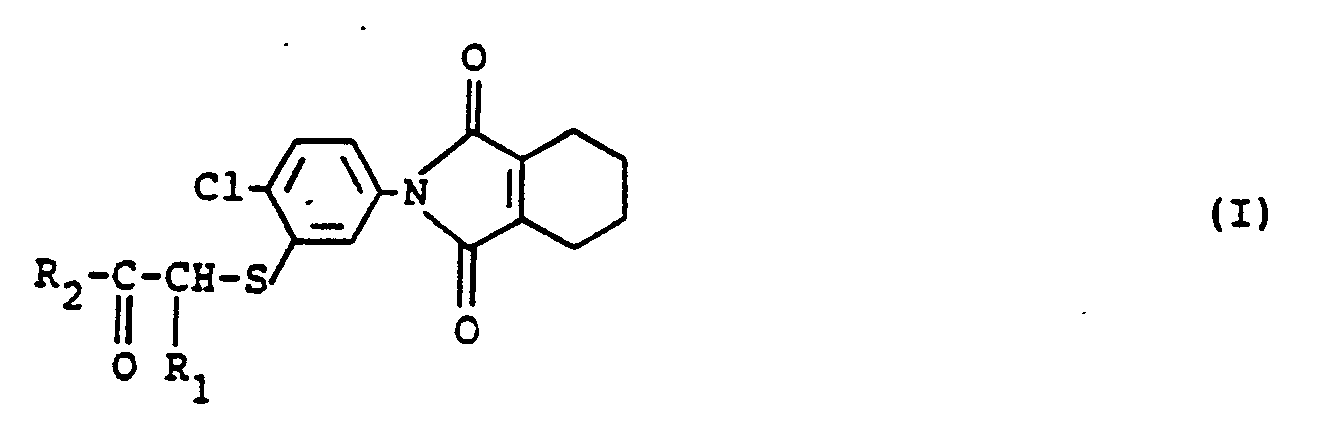
wherein R1 is a hydrogen atom, a fluorine atom or a methyl group and Rz is a C1-C3 alkyl group, a C1-C5 alkoxy group, a chloro(Cr-C4)alkoxy group, a dichloro(CZ-C4)alkoxy group, a cyclo(C3-C7)alkoxy group, a phenoxy group, a C1-C5 alkylthio group or a di(Cl-Cs)alkylamino group.
wherein R1 is a hydrogen atom, a fluorine atom or a methyl group and Rz is a C1-C3 alkyl group, a C1-C5 alkoxy group, a chloro(Cr-C4)alkoxy group, a dichloro(CZ-C4)alkoxy group, a cyclo(C3-C7)alkoxy group, a phenoxy group, a C1-C5 alkylthio group or a di(Cl-Cs)alkylamino group.
2. The compound according to claim 1, wherein R1 is a hydrogen atom and R2 is a C1-C5 alkoxy group, a chloro(C2-C4)alkoxy group, a dichloro(C2-C4)alkoxy group, a cyclo(C3-C7)alkoxy group, a phenoxy group or a C1-C5 alkylthio group.
3. The compound according to claim 1, which is 2-[4-chloro-3-(2-chloroethyloxycarbonylmethylthio)-phenyl]-4,5,6,7-tetrahydro-2H-isoindole-1,3-dione.
4. The compound according to claim 1, which is 2-(4-chloro-3-cyclopentyloxycarbonylmethylthio-
phenyl)-4,5,6,7-tetrahydro-2H-isoindole-1,3-dione.
5. The compound according to claim 1, which is 2-(4-chloro-3-cyclohexyloxycarbonylmethylthio-
phenyl)-4,5,6,7-tetrahydro-2H-isoindole-1,3-dione.
6. A process for producing the compound according to claim 1, which comprises reacting
2-(4-chloro-3- hyrothiophenyl)-4,5,6,7-tetrahydro-2H-isoindole-1,3-dione with a compound
of the formula:
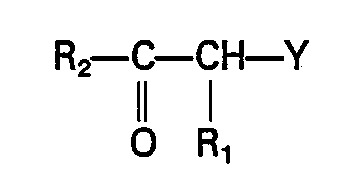
wherein R1 and R2 are each as defined in claim 1 and Y is a chlorine atom, a bromine atom or an iodine atom.
wherein R1 and R2 are each as defined in claim 1 and Y is a chlorine atom, a bromine atom or an iodine atom.
7. A herbicidal composition which comprises as an active ingredient a herbicidally
effective amount of the compound according to claim 1, and an inert carrier or diluent.
8. A method for controlling weeds which comprises applying a herbicidally effective
amount of the compound according to claim 1 to the area where the weeds grow or will
grow.
9. The method according to claim 8, wherein the area is the field of soybean or corn.
1. Eine Verbindung der Formel
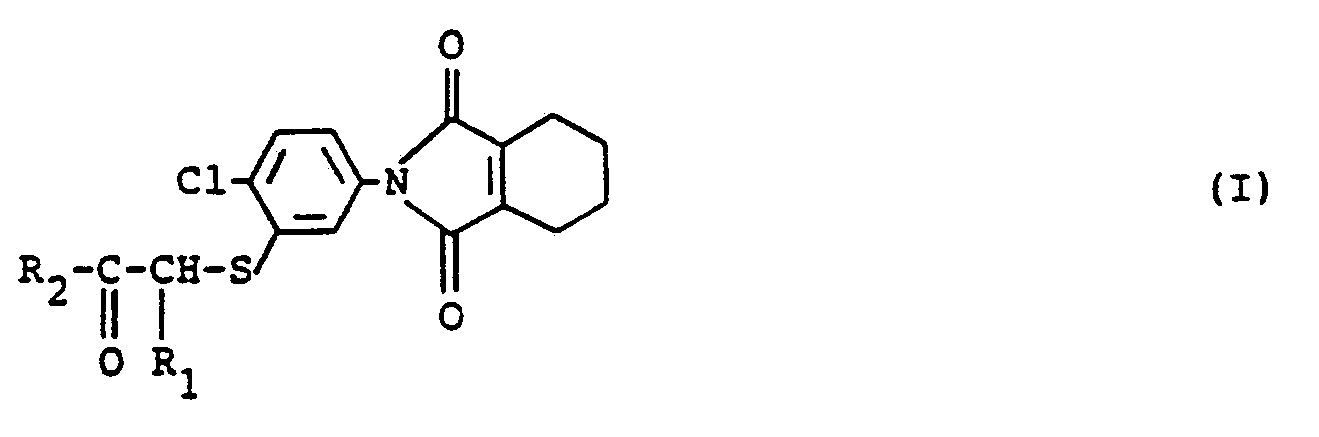
in der R1 ein Wasserstoffatom, ein Fluoratom oder eine Methylgruppe ist und R2 einen C1-C3-Alkylrest, einen C1-C5-Alkoxyrest, einen Chlor-(C2-C4)-Alkoxyrest, einen Dichlor-(C2-C4)-Alkoxyrest, einen Cyclo-(C3-C7)-Alkoxyrest, eine Phenoxygruppe, einen C1-C5-Alkylthiorest oder einen Di-(C1-C5)-Alkylaminorest darstellt.
in der R1 ein Wasserstoffatom, ein Fluoratom oder eine Methylgruppe ist und R2 einen C1-C3-Alkylrest, einen C1-C5-Alkoxyrest, einen Chlor-(C2-C4)-Alkoxyrest, einen Dichlor-(C2-C4)-Alkoxyrest, einen Cyclo-(C3-C7)-Alkoxyrest, eine Phenoxygruppe, einen C1-C5-Alkylthiorest oder einen Di-(C1-C5)-Alkylaminorest darstellt.
2. Verbindung nach Anspruch 1, in der R1 ein Wasserstoffatom ist und R2 einen C1-C5-Alkoxyrest, einen Chlor-(C2-C4)-Alkoxyrest, einen Dichlor-(C2-C4)-Alkoxyrest, einen Cyclo-(C3-C7)-Alkoxyrest, eine Phenoxygruppe oder einen C1-C5-Alkylthiorest darstellt.
3. Verbindung nach Anspruch 1, nämlich 2-[4-Chlor-3-(2-chloräthyloxycarbonylmethylthio)-phenyl]-4,5,6,7-tetrahydro-2H-isoindol-1,3-dion.
4. Verbindung nach Anspruch 1, nämlich 2-(4-chlor-3-cyclopentyloxycarbonylmethylthiophenyl)-4,5,6,7-tetrahydro-2H-isoindol-1,3-dion.
5. Verbindung nach Anspruch 1, nämlich 2-(4-Chlor-3-cyclohexyloxycarbonylmethylthiophenyl)-4,5,6,7-tetrahydro-2H-isoindol-1,3-dion.
6. Verfahren zur Herstellung einer Verbindung nach Anspruch 1, das Umsetzung von 2-(4-Chlor-3-hydrothiophenyl)-4,5,6,7-tetrahydro-2H-isoindol-1,3-dion
mit einer Verbindung der Formel
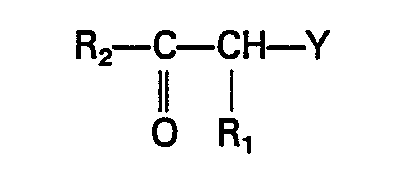
in der R1 und R2 wie in Anspruch 1 definiert sind und Y ein Chloratom, ein Bromatom oder ein Jodatom bedeutet, umfaßt.
in der R1 und R2 wie in Anspruch 1 definiert sind und Y ein Chloratom, ein Bromatom oder ein Jodatom bedeutet, umfaßt.
7. Herbizides Mittel, umfassend als Wirkstoff eine herbizid wirksame Menge einer Verbindung
nach Anspruch 1 und einen inerten Träger oder ein inertes Verdünnungsmittel.
8. Verfahren zur Bekämpfung von Unkräutern, das das Aufbringen einer herbizid wirksamen
Menge einer Verbindung nach Anspruch 1 auf die Fläche umfaßt, auf der die Unkräuter
wachsen oder wachsen werden.
9. Verfahren nach Anspruch 8, wobei die Fläche ein Sojabohnen- oder Maisfeld ist.
1. Un composé de formule
dans laquelle R1 est un atome d'hydrogène, un atome de fluor ou un groupe méthyle et R2 est un groupe alkyle en C1-C3, un groupe alcoxy en C1-C5, un groupe chloralcoxy en CZ-C4, un groupe dichloroalcoxy en C2-C4, un groupe cycloalcoxy en C3-C,, un groupe phénoxy, un groupe alkylthio en C1-C5 ou un groupe di(alkyl en C1-C5)amino.
dans laquelle R1 est un atome d'hydrogène, un atome de fluor ou un groupe méthyle et R2 est un groupe alkyle en C1-C3, un groupe alcoxy en C1-C5, un groupe chloralcoxy en CZ-C4, un groupe dichloroalcoxy en C2-C4, un groupe cycloalcoxy en C3-C,, un groupe phénoxy, un groupe alkylthio en C1-C5 ou un groupe di(alkyl en C1-C5)amino.
2. Le composé selon la revendication 1, caractérisé en ce que R1 est un atome d'hydrogène et R2 est un groupe alcoxy en C1-C5, un groupe chloroalcoxy en CZ-C4, un groupe dichloroalcoxy en CZ-C4, un groupe cycloalcoxy en C3-C7, un groupe phénoxy ou un groupe alkylthio en C1-C5.
3. Le composé selon la revendication 1, caractérisé en ce qu'il consiste en 2-[4-chloro-3-(2-chloroéthyl-
oxycarbonytméthylthio)phényl]-4,5,6,7-tétrahydro-2H-isoindole-1,3-dione.
4. Le composé selon la revendication 1, caractérisé en ce qu'il consiste en 2-(4-chloro-3-cyclopentyl-
oxycarbonyl méthylth iophényl )-4,5,6,7-tétrahyd ro-2H-isoi ndol e-1,3-d ione.
5. Le composé selon la revendication 1, caractérisé en ce qu'il consiste en 2-(4-chloro-3-cyclohexyloxy-
carbonylméthylthiophényl)-4,5,6,7-tétrahydro-2H-isoindole-1,3-dione.
6. Un procédé pour fabriquer le composé selon la revendication 1, caractérisé en ce
qu'il consiste à faire réagir la 2-(4-chloro-3-mercaptophényl)-4,5,6,7-tétrahydro-2H-isoindole=1,3-dione
avec un composé de formule:
dans laquelle R1 et R2 sont chacun tels que définis à la revendication 1 et Y est un atome de chlore, de brome ou d'iode.
dans laquelle R1 et R2 sont chacun tels que définis à la revendication 1 et Y est un atome de chlore, de brome ou d'iode.
7. Une composition herbicide, caractérisée en ce qu'elle comprend comme ingrédient
actif une quantité efficace comme herbicide du composé selon la revendication 1 et
un support ou diluant inerte.
8. Un procédé pour lutter contre les mauvaises herbes, caractérisé en ce qu'il consiste
à appliquer sur la zone dans laquelle les mauvaises herbes poussent ou pousseront
une quantité efficace comme herbicide du composé selon la revendication 1.
9. Le procédé selon la revendication 8, caractérisé en ce que ladite zone est un champ
de soja ou de maïs.