| (19) |
 |
|
(11) |
EP 0 148 109 B1 |
| (12) |
EUROPEAN PATENT SPECIFICATION |
| (45) |
Mention of the grant of the patent: |
|
08.03.1989 Bulletin 1989/10 |
| (22) |
Date of filing: 28.12.1984 |
|
| (51) |
International Patent Classification (IPC)4: E02D 7/08 |
|
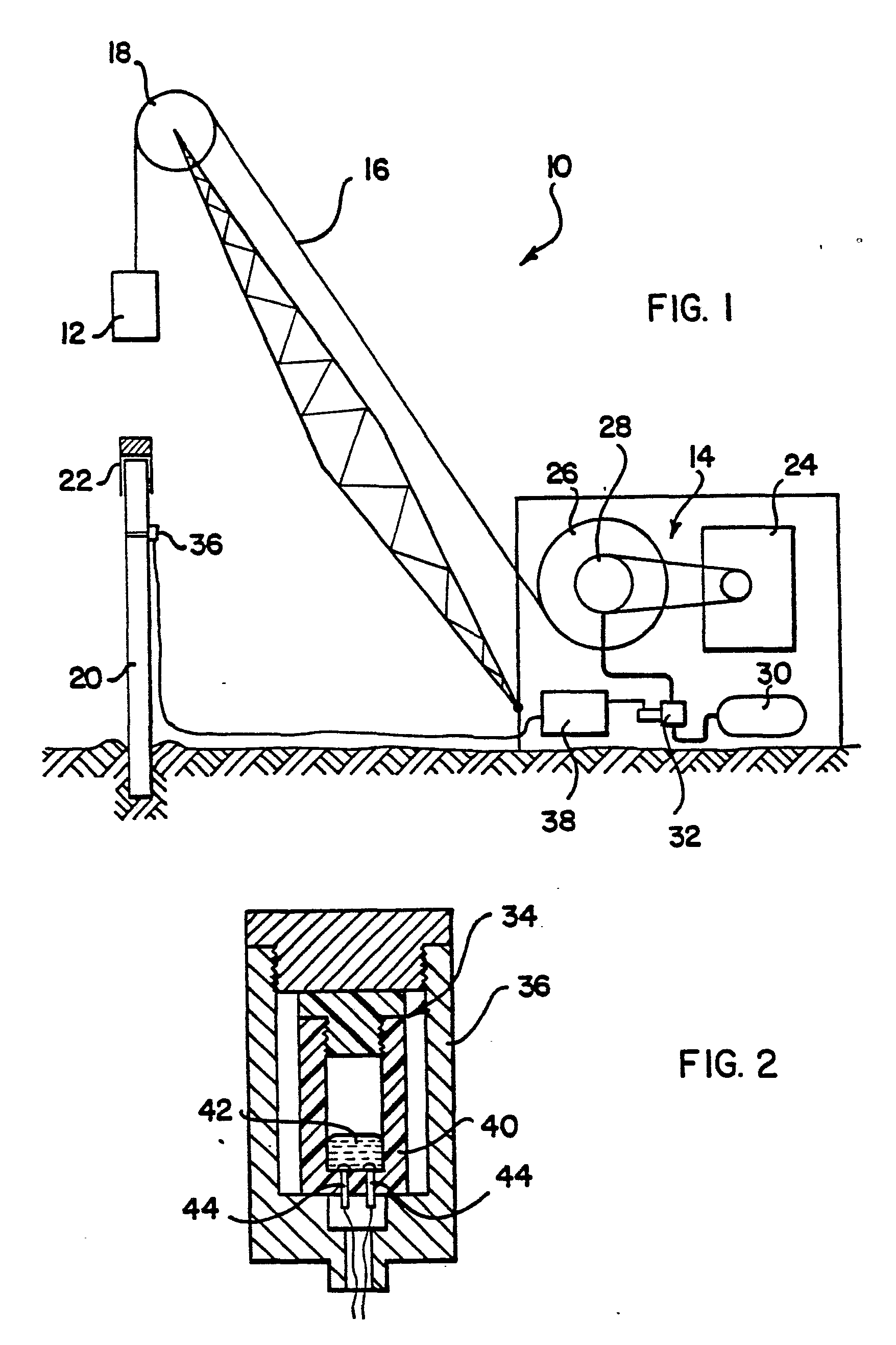
| (54) |
Pile-driving apparatus and method of operating such apparatus
Pfahlrammvorrichtung und Verfahren zur Betätigung einer derartigen Vorrichtung
Dispositif de battage de pieux et sa méthode d'opération
|
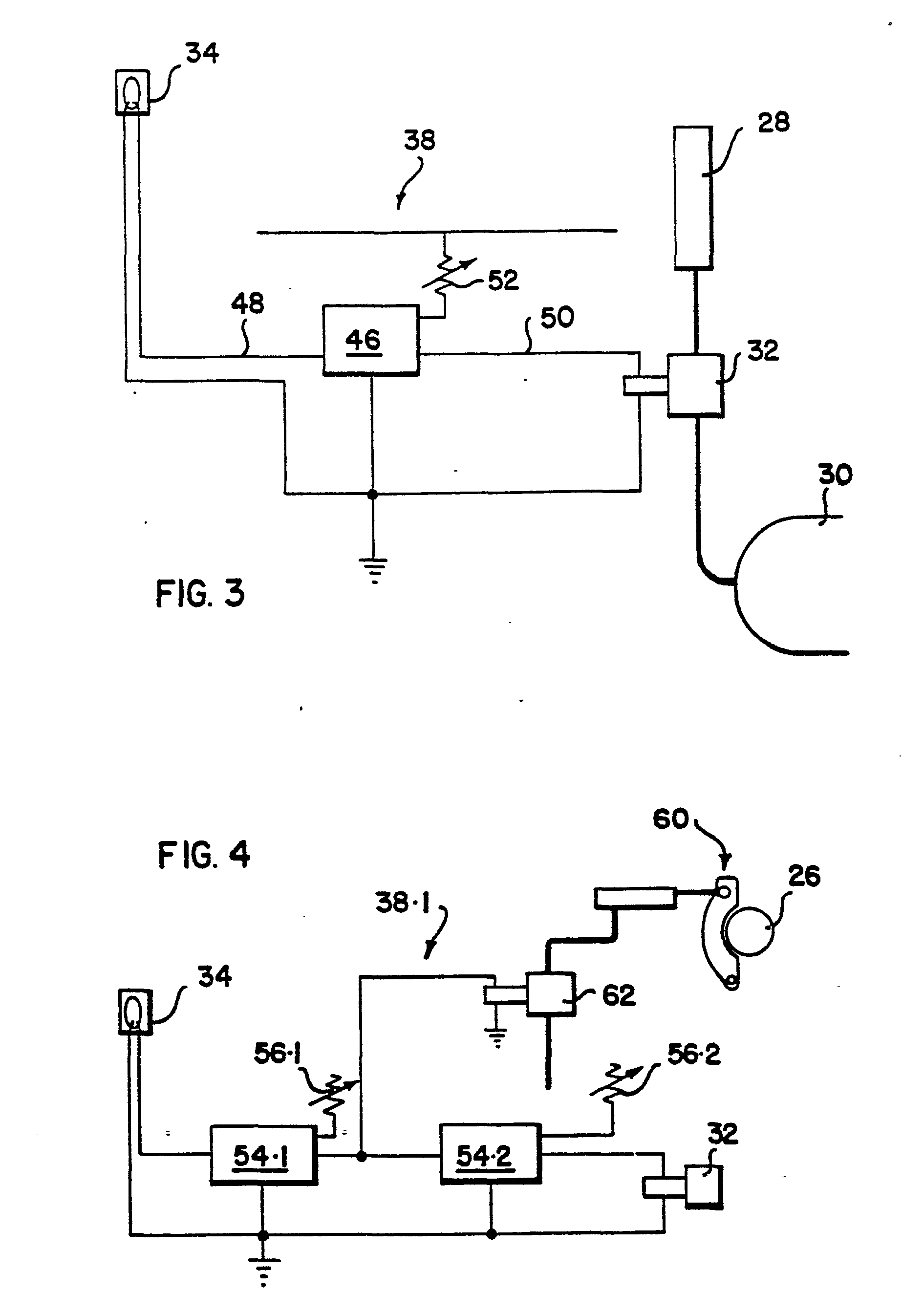
| (84) |
Designated Contracting States: |
|
AT BE CH DE FR GB IT LI LU NL SE |
| (30) |
Priority: |
29.12.1983 ZA 839709
|
| (43) |
Date of publication of application: |
|
10.07.1985 Bulletin 1985/28 |
| (73) |
Proprietor: Wilner, Pieter |
|
Parow North
Cape Province (ZA) |
|
| (72) |
Inventor: |
|
- Wilner, Pieter
Parow North
Cape Province (ZA)
|
| (74) |
Representative: Waxweiler, Jean et al |
|
Dennemeyer & Associates Sàrl
P.O. Box 1502
1015 Luxembourg
1015 Luxembourg (LU) |
| (56) |
References cited: :
DE-A- 2 034 382
NL-C- 57 765
|
FR-A- 1 100 681
US-A- 2 214 197
|
|
| |
|
|
|
|
| |
|
| Note: Within nine months from the publication of the mention of the grant of the European
patent, any person may give notice to the European Patent Office of opposition to
the European patent
granted. Notice of opposition shall be filed in a written reasoned statement. It shall
not be deemed to
have been filed until the opposition fee has been paid. (Art. 99(1) European Patent
Convention).
|
[0001] This invention relates to pile-driving apparatus and to a method of operating such
apparatus.
[0002] In British patent specification 2 093 511 A there is disclosed pile-driving apparatus
comprising a drop hammer for imparting blows to a pile, and a winch for lifting the
drop hammer between successive blows. The winch comprises a winch drive, a winch drum,
clutch means for disengageably engaging the winch drive with the winch drum, and a
rope connecting the drop hammer to the winch drum, the rope passing over a sheeve.
Sensing means is provided for sensing the load applied by the rope to the sheeve,
and the output of the load sensitive means is fed to an analysis device. The analysis
device is able to detect the moment of impact of the drop hammer on the pile, and
provides an output causing the clutch to engage and the drop hammer therefore to be
lifted. The winch drum is provided with marks, and fixed detectors are provided which
are able to detect the direction of rotation and the angular position of the drum.
The output of the detectors is fed to the analysis device which then provides a further
signal to disengage the clutch when the drop hammer has reached a certain height.
In this manner automatic operation of the pile driving apparatus is achieved.
[0003] The location of the load sensing means on what appears to be the mountings of the
sheeve would require expensive modification of existing pile-driving apparatus. Furthermore,
the location of the load sensing means at this critical point of the pile-driving
apparatus can lead to long and costly breakdowns. Also, as will be apparent from the
waveforms illustrated in Figures 2 and 3 of that specification, and by the fact that
both the degree and direction of rotation displacement of the winch drum need to be
detected, the analysis device will, of necessity, have to be of a complex nature,
able to perform complex analyses, and, because of its complexity, be prone to malfunction.
[0004] A further pile-driving apparatus is described in FR-A-1 100 681, this apparatus having
a means for sensing the change in tension of the hammer supporting cable upon impact,
the sensing means being connected to a valve to effect raising once more of the hammer.
[0005] It is an object of the present invention to provide pile-driving apparatus having
control means for facilitating automatic operation of the apparatus, which control
means is effective, simple in construction and operation, inexpensive, and can readily
be incorporated in existing pile-driving apparatus of the manually operated kind.
[0006] According to the invention there is provided pile-driving apparatus comprising a
drop hammer for imparting blows to an object; hoisting means for lifting the hammer
away from the object between successive blows, the hoisting means comprising a rope
or cable connected to the drop hammer, take-up means for taking up the rope or cable,
drive means, and disengageable drive engagement means for disengageably engaging the
drive means with the take-up means; sensing means for sensing the delivery of a blow,
the drive engagement means being operative in response to the sensing means to engage
the drive means with the take-up means in response to said sensing;
characterised in that it further comprises a timer operative in response to the sensing
means to be triggered in response to said sensing, the drive engagement means being
operative in response to the timer to disengage the drive means from the take-up means
a predetermined time interval after the timer is triggered; and in that the sensing
means is impact sensitive sensing means mounted on the drop hammer or on the object
receiving the blow.
[0007] The timer may be adjustable, so as to permit adjustment of said predetermined time
interval.
[0008] The sensing means may comprise a container containing an electrically conductive
fluid such as, for example, mercury and having a pair of conductor terminals exposed
to the fluid, the fluid being displaceable in the container to make or break electrical
contact between the conductor terminals.
[0009] The sensing means may be mounted on a driven object to which said blows are imparted.
[0010] Said timer may be a first timer, there being provided a second timer for providing
a predetermined time delay, less than said predetermined time interval, between the
time of said sensing and engagement of the drive engagement means. Said second timer
may be adjustable, so as to permit adjustment of said predetermined time delay.
[0011] The apparatus may further comprise brake means for braking the take-up means, the
brake means being operative in response to the second timer to brake the take-up means
for at least part of the duration of said predetermined time delay.
[0012] Further according to the invention there is provided a method of operating pile-driving
apparatus comprising a drop hammer for imparting blows to an object; hoisting means
for lifing the hammer away from the object between successive blows, the hoisting
means comprising a rope or cable connected to the drop hammer,' take-up means for
taking up the rope or cable,. drive means, and disengageable drive engagement means
for disengageably engaging the drive means with the take-up means; and sensing means
for sensing the delivery of a blow, the drive engagement means being operative in
response to the sensing means to engage the drive means with the take-up means in
response to said sensing;
the method being characterised in that the delivery of blows is sensed by having the
sensing means mounted on the drop hammer or on the object receiving the blows, in
that a timer is triggered in response to said sensing, and in that the timer causes
the drive engagement means to disengage the drive means from the take-up means a predetermined
time interval after the timer is triggered.
[0013] The timer may be a first timer, there being a second timer which is triggered in
response to said sensing, the second timer delaying engagement of the drive engagement
means for a predetermined time delay, less than said predetermined time interval,
from the time of said sensing.
[0014] The take-up means may be braked for at least part of the duration of said time delay.
[0015] The invention will now be described in more detail, by way of example, with reference
to the accompanying drawings.
[0016] In the drawings:
Figure 1 is a diagrammatic representation of pile-driving apparatus in accordance
with the invention;
Figure 2 is a vertical section of a sensor and its casing, forming part of the apparatus;
Figure 3 is an electrical/pneumatic circuit diagram of control means forming part
of the apparatus; and
Figure 4 is an electrical/pneumatic circuit diagram of control means in accordance
with another embodiment of the invention.
[0017] Referring first to Figure 1, reference numeral 10 generally indicates pile-driving
apparatus comprising a drop hammer 12 and hoisting means in the form of a winch 14
for lifting the drop hammer. The drop hammer is connected to the winch by means of
a wire rope 16 which passes over a sheave 18 forming part of the apparatus.
[0018] Reference numeral 20 indicates a pile which is being driven into the ground by the
apparatus 10. A protective helmet 22 fits over the upper end of the pile.
[0019] The winch 14 comprises a winch drive 24, a winch drum 26, and a pneumatically operated
clutch 28 for disengageably engaging the winch drive with the winch drum. There is
an air receiver 30 for compressed air, this being connected to the clutch 28 via a
solenoid-operated valve 32.
[0020] The apparatus 10 further comprises sensing means in the form of an impact sensitive
sensor 34 (Figure 2) located in a steel casing 36, the steel casing being detachably
secured, e.g. by means of a strap, to the pile 20. It could, alternatively, be secured
permanently to the helmet 22, such as by welding. The sensor 34 is connected to a
control device 38, the control device having an electrical output which is connected
to the solenoid-operated valve 32.
[0021] Referring now to Figure 2, the impact sensitive sensor 34 comprises a container 40
of an electrically insulating material such as Nylon, the container containing a quantity
of mercury 42 and having a pair of conductor terminals 44 exposed to the mercury.
The sensor 34 will normally be in the condition illustrated in Figure 2, i.e. with
the mercury 42 bridging the terminals 44. Upon receiving an impact, however, the mercury
42 will temporarily be displaced away from the terminals 44, causing a temporary open
circuit.
[0022] Referring now to Figure 3, the control device 38 comprises an electrical timer 46
having the sensor 34 connected to its trigger 48. The timer is designed to produce
an output voltage on its output terminal 50 for a predetermined time interval after
being triggered, the time interval being adjustable by means of a variable resistor
52. The design of such a timer will be well within the capabilities of a skilled artisan
and will therefore not be described in detail. It could, for example, include an integrated
circuit known as a 555 timer connected in a monostable or "one- shot" configuration.
[0023] Operation of the apparatus 10 is as follows. Normally, the solenoid operated valve
32 is closed and the clutch 28 thus disengaged. To start the apparatus, the valve
32 is opened manually, admitting compressed air to the clutch 28 and thus causing
the clutch to engage. This results in drive being transmitted from the winch drive
24 to the winch drum 26, causing the drop hammer 12 to be lifted. When the drop hammer
has been lifted to the desired height, the valve 32 is released, causing the clutch
28 to disengage. The drop hammer 12 now falls freely, unwinding the drum 26. The impact
resulting from the drop hammer hitting the helmet 22 is sensed by the sensor 34, triggering
the timer 46. This results in the solenoid operated valve 32 opening for a predetermined
time interval, the time interval being adjustable by means of the variable resistor
52. Thus, for the predetermined time interval, the clutch 28 will be engaged, causing
the drop hammer 12 again to be lifted. The distance for which the drop hammer is lifted
will depend on the time setting of the timer 46 and the speed of the winch drive 24.
At the end of the time interval the clutch 28 will again disengage and the process
as described above will automatically repeat itself.
[0024] In order to stop the apparatus, the solenoid operated valve 32 is switched over to
manual operation.
[0025] There is normally a certain amount of time lag between opening of the solenoid-operated
valve 32 and engagement of the clutch 28. To reduce this time lag, the clutch may
be such that it is spring biased towards the engaged condition, the admission of compressed
air being effective to disengage the clutch. Operation of the timer 46 and the solenoid-operated
valve 32 will then be such that, upon triggering of the timer, the valve is closed
and compressed air exhausted from the clutch operating mechanism. In this manner the
response of the clutch can be speeded up as compressed air can normally be exhausted
from the clutch operating mechanism much faster than it is possible to admit compressed
air to the mechanism.
[0026] To prevent overshooting of the drop hammer 12, the control device 38 may, for example,
comprise an audible alarm which is activated should the terminals of the sensor 34,
due to malfunction, not be bridged again within a predetermined time interval after
opening.
[0027] It will be understood that, with a very short time setting of the timer 46, the apparatus
can be used to impart a vibratory force to a pile such as during extraction of a pile
casing or for consolidating a concrete filling in such a casing. It will furthermore
be appreciated that the apparatus could be used to compact soil, in which event the
drop hammer 12 will be arranged to impart blows directly to the soil, the sensor 34
being mounted on the drop hammer.
[0028] Referring now to Figure 4, there is shown part of a control device 38.1 according
to another embodiment of the invention. That part not shown in Figure 4 is identical
to the device shown in Figure 3. In this embodiment the timer 46 of Figure 3 is replaced
by two timers 54.1 and 54.2, each being individually adjustable by variable resistors
56.1 and 56.2 respectively. The timers 54.1 and 54.2 are connected in series such
that the first timer 54.1 is triggered in response to the sensor 34, to provide a
time delay, the second timer 54.2 being triggered when the first timer has reached
the end of the time delay. In this embodiment therefore, there will be an adjustable
time delay between the sensor 34 sensing the delivery of a blow, and the clutch 28
engaging.
[0029] As an optional feature, a pneumatically operated brake 60 may be provided for the
winch drum 26. The brake 60 is connected to the air receiver 30 via a solenoid operated
valve 62, the valve 62 being operated by the output of the first timer 54.1. When
this feature is included, the drum 26 will be braked for the duration of the time
delay provided by the first timer 54.1, thus preventing undue shock loads in the rope
16 resulting from the winch drum continuing to unwind subsequent to the point of impact
and the slack in the rope being taken up again when the clutch engages.
1. Pile-driving apparatus comprising a drop hammer (12) for imparting blows to an
object (20, 22); hoisting means (14) for lifting the hammer away from the object between
successive blows, the hoisting means comprising a rope or cable (16) connected to
the drop hammer, take-up means (26) for taking up the rope or cable, drive means (24),
and disengageable drive engagement means (28) for disengageably engaging the drive
means with the take-up means; sensing means (24) for sensing the delivery of a blow,
the drive engagement means being operative in response to the sensing means to engage
the drive means with the take-up means in response to said sensing; characterised
in that it further comprises a timer (46) operative in response to the sensing means
(34) to be triggered in response to said sensing, the disengageable engagement means
(28) being operative in response to the timer to disengage the drive means (24) from
the take-up means (26) a predetermined time interval after the timer is triggered;
and in that the sensing means is impact sensitive sensing means mounted on the drop
hammer (12) or on the object (20, 22) receiving the blow.
2. Apparatus as claimed in claim 1, characterised in that the timer is adjustable,
so as to permit adjustment of said predetermined time interval.
3. Apparatus as claimed in claim 1 or claim 2, characterised in that the sensing means
(34) comprises a container (40) containing an electrically conductive fluid (42) and
having a pair of conductor terminals (44) exposed to the fluid, the fluid being displaceable
in the container to make or break electrical contact between the conductor terminals.
4. Apparatus as claimed in any one of the preceding claims, characterised in that
said timer is a first timer (54.1 and 54.2), and that there is provided a second timer
(54.1) for providing a predetermined time delay, less than said predetermined time
interval, between the time of said sensing and engagement of the disengageable engagement
means (28).
5. Apparatus as claimed in claim 4, characterised in that said second timer (54.1)
is adjustable, so as to permit adjustment of said predetermined time delay.
6. Apparatus as claimed in claim 4 or claim 5, characterised in that the hoisting
means (14) comprises brake means (60) for braking the take-up means (26), the brake
means being operative in response to the second timer (54.1) to brake the take-up
means for at least part of the duration of said predetermined time delay.
7. A method of operating pile-driving apparatus comprising a drop hammer (12) for
imparting blows to an object; hoisting means (14) for lifting the hammer away from
the object between successive blows, the hoisting means comprising a rope or cable
(16) connected to the drop hammer, take-up means (26) for taking up the rope or cable,
drive means (24), and disengageable drive engagement means (28) for disengageably
engaging the drive means with the take-up means; and sensing means for sensing the
delivery of a blow, the drive engagement means being operative in response to the
sensing means to engage the drive means with the take-up means in response to said
sensing; the method being characterised in that the delivery of blows is sensed by
having the sensing means mounted on the drop hammer or on the object receiving the
blows, in that a timer (46) is triggered in response to said sensing, and in that
the timer causes the disengageable engagement means (28) to disengage the drive means
(24) from the take-up means (26) a predetermined time interval after the timer is
triggered.
8. A method as claimed in claim 7, wherein the timer is a first timer (54.1 and 54.2),
characterised in that a second timer (54.1) is triggered in response to said sensing
and that the second timer delays engagement of the disengageable engagement means
for a predetermined time delay, less than said predetermined time interval, from the
time of said sensing.
9. A method as claimed in claim 8, characterised in that the take-up means (26) is
braked for at least part of the duration of said time delay.
1. Pfahlrammvorrichtung mit einem Freifallhammer (12), um einem Gegenstand (20, 22)
Schläge zu erteilen, einer Hebevorrichtung (14), um den Hammer zwischen aufeinanderfolgenden
Schlägen von dem Gegenstand wegzuheben, wobei die Hebevorrichtung ein Seil oder Kabel
(16) hat, welches mit dem FreifaIIhammer verbunden ist, eine Aufwickelvorrichtung
zum Aufwikkeln des Seiles oder Kabels, eine Antriebsvorrichtung (24), eine ausschaltbare
Antriebeingriffsvorrichtung (28) für den ausschaltbaren Eingriff der Antriebsvorrichtung
mit der Aufwickelvorrichtung, eine Fühlereinrichtung (34) zum Abfühlen der Ausführung
eines Schlages, wobei die Antriebeingriffsvorrichtung auf die Fühlereinrichtung anspricht,
um die Antriebsvorrichtung mit der Aufwickelvorrichtung in Abhängigkeit von dem Fühlen
der Ausführung eines Schlages zum Eingriff zu bringen, dadurch gekennzeichnet, dass
ein Zeitgeber (46) vorgesehen ist, welcher auf die Fühlereinrichtung (34) anspricht,
um in Abhängigkeit von dem Fühlen getriggert zu werden, wobei die ausschaltbare Antriebeingriffsvorrichtung
(21) in Abhängigkeit von dem Zeitgeber betätigt wird, um die Antriebsvorrichtung (24)
mit der Aufwikkelvorrichtung (26) nach einem vorgegebenen Zeitintervall nach dem Triggern
des Zeitgebers ausser Eingriff zu bringen und, dass die Fühlereinrichtung eine auf
Schlag ansprechende Fühlereinrichtung ist, welche auf dem Freifallhammer (12) oder
auf dem Gegenstand (20, 22), der die Schläge empfängt, montiert ist.
2. Vorrichtung nach Anspruch 1, dadurch gekennzeichnet, dass der Zeitgeber einstellbar
ist, um so die Einstellung des vorgegebenen Zeitintervalls zu ermöglichen.
3. Vorrichtung nach Anspruch 1 oder 2, dadurch gekennzeichnet, dass die Fühlereinrichtung
(34) einen Behälter (40) aufweist, welcher ein elektrisch leitendes Fluidum (42) enthält
und ein Paar dem Fluidum ausgesetzte Leiteranschlusspunkte (44) hat, wobei das Fluidum
in dem Behälter verlagerbar ist, um den elektrischen Kontakt zwischen den Leiteranschlusspunkte
herzustellen oder zu unterbrechen.
4. Vorrichtung nach einem der vorangehenden Ansprüche, dadurch gekennzeichnet, dass
der Zeitgeber ein erster Zeitgeber (54.1 und 54.2) ist und, dass ein zweiter Zeitgeber
(54.1) vorgesehen ist, um eine vorgegebene Zeitverzögerung bereitzustellen, welche
kleiner als das vorgegebene Zeitintervall zwischen dem Zeitpunkt des Fühlens und dem
Eingreifen der ausschaltbaren Antriebeingriffsvorrichtung (28) ist.
5. Vorrichtung nach Anspruch 4, dadurch gekennzeichnet, dass der zweite Zeitgeber
(54.1) einstellbar ist, um so die vorgegebene Zeitverzögerung einstellbar zu machen.
6. Vorrichtung nach Anspruch 4 oder 5, dadurch gekennzeichnet, dass die Hebevorrichtung
(14) eine Bremsvorrichtung (60) zum Abbremsen der Aufwickelvorrichtung (26) hat, wobei
die Bremsvorrichtung in Abhängigkeit von dem zweiten Zeitgeber (54.1) betätigbar ist,
um die Aufwickelvorrichtung wenigstens während einem Teil der Dauer der vorgegebenen
Zeitverzögerung zu bremsen.
7. Verfahren zur Betätigung einer Pfahlrammvorrichtung mit einem Freifallhammer (12),
um einem Gegenstand (20, 22) Schläge zu erteilen, einer Hebevorrichtung (14), um den
Hammer zwischen aufeinanderfolgenden Schlägen von dem Gegenstand wegzuheben, wobei
die Hebevorrichtung ein Seil oder Kabel (16) hat, welches mit dem Freifallhammer verbunden
ist, eine Aufwickelvorrichtung zum Aufwickeln des Seiles oder Kabels, eine Antriebsvorrichtung
(24), eine ausschaltbare Antriebeingriffsvorrichtung (28) für den ausschaltbaren Eingriff
der Antriebsvorrichtung mit der Aufwickelvorrichtung und eine Fühlereinrichtung (34)
zum Abfühlen der Ausführung eines Schlages, wobei die Antriebeingriffsvorrichtung
auf die Fühlereinrichtung anspricht, um die Antriebsvorrichtung mit der Aufwickelvorrichtung
in Abhängigkeit von dem Fühlen der Ausführung eines Schlages zum Eingriff zu bringen,
wobei das Verfahren dadurch gekennzeichnet ist, dass die Ausführung von Schlägen abgefühlt
wird, dadurch dass die Fühlereinrichtung auf dem Freifallhammer oder dem die Schläge
aufnehmenden Gegenstand montiert ist, dass ein Zeitgeber (46) in Abhängigkeit von
dem Fühlen von Schlägen getriggert wird und, dass der Zeitgeber bewirkt, dass die
ausschaltbare Antriebeingriffsvorrichtung (28) die Antriebseinrichtung (24) von der
Wickeleinrichtung (26) nach einem vorgegebenen Zeitinterall nach dem Triggern des
Zeitgebers ausser Eingriff bringt.
8. Verfahren nach Anspruch 7, bei welchem der Zeitgeber ein erster Zeitgeber (54.1
und 54.2) ist, dadurch gekennzeichnet, dass ein zweiter Zeitgeber (54.1) in Abhängigkeit
von dem Fühlen des Schlages getriggert wird und, dass der zweite Zeitgeber das Eingreifen
der ausschaltbaren Antriebeingriffsvorrichtung um eine vorgegebene Zeitverzögerung
verzögert, welche kleiner als das vorgegebene Zeitintervall vom Zeitpunkt des Fühlens
an ist.
9. Verfahren nach Anspruch 8, dadurch gekennzeichnet, dass die Aufwickelvorrichtung
während wenigstens einem Teil der Dauer der Zeitverzögerung gebremst wird.
1. Dispositif de battage de pieux comprenant un mouton (12) pour donner des coups
à un objet (20, 22), un moyen de levage (14) pour lever le mouton de l'objet entre
des coups successifs, le moyen de levage comprenant une corde ou câble (16) connecté
au mouton, un moyen enrouleur (26) pour enrouler la corde ou câble, un moyen d'entraînement
(24) et un moyen débrayable de prise d'entraînement (28) pour mettre en prise débrayable
le moyen d'entraînement et le moyen enrouleur, un moyen détecteur (24) pour détecter
l'exécution d'un coup, le moyen de prise d'entraînement fonctionnant en réponse au
moyen détecteur pour mettre en prise le moyen d'entraînement avec le moyen enrouleur
en réponse à ladite détection, caractérisé en ce qu'il comprend en outre une minuterie
(46) fonctionnant en réponse au moyen détecteur (34) pour être enclenchée en réponse
à ladite détection, le moyen débrayable de prise d'entraînement (24) fonctionnant
en réponse à la minuterie pour débrayer le moyen d'entraînement (24) du moyen enrouleur
(26) après un intervalle de temps prédéterminé après l'enclenchement de la minuterie,
et en ce que le moyen détecteur est un moyen détecteur répondant au choc monté sur
le mouton (12) ou l'objet (20, 22) recevant le coup.
2. Appareil selon la revendication 1, caractérisé en ce que la minuterie peut être
ajustée de sorte à permettre l'ajustage de l'intervalle de temps prédéterminé.
3. Appareil selon la revendication 1 ou 2, caractérisé en ce que le moyen détecteur
(34) comprend un conteneur (40) contenant un fluide (42) conducteur électrique et
ayant une paire de connexions (44) par conducteur exposées au fluide, le fluide pouvant
être déplacé dans le conteneur pour faire ou interrompre le contact électrique entre
les connexions de conducteur.
4. Appareil selon l'une quelconque des revendications précédentes, caractérisé en
ce que la minuterie est une première minuterie (54.1 et 54.2) et en ce qu'une deuxième
minuterie (54.1) est prévue pour fournir un délai prédéterminé plus petit que l'intervalle
de temps prédéterminé entre le moment de la détection et la prise du moyen débrayable
de prise d'entraînement (28).
5. Appareil selon la revendication 4, caractérisé en ce que la seconde minuterie (54.1)
peut être ajustée de sorte à permettre l'ajustage du délai prédéterniné.,
6. Appareil selon la revendication 4 ou 5, caractérisé en ce que le moyen de levage
(14) comprend un moyen de freinage (60) pour freiner le moyen enrouleur (26), le moyen
de freinage fonctionnant en réponse à la seconde minuterie (54.1) pour freiner le
moyen enrouleur pendant au moins une partie de la durée dudit délai prédéterminé.
7. Méthode d'opération d'un dispositif de battage de pieux comprenant un mouton (12)
pour donner des coups à un objet (20, 22), un moyen de levage (14) pour lever le mouton
de l'objet entre des coups successifs, le moyen de levage comprenant une corde ou
câble (16) connecté au mouton, un moyen enrouleur (26) pour enrouler la corde ou câble,
un moyen d'entraînement (24) et un moyen débrayable de prise d'entraînement (28) pour
mettre en prise débrayable le moyen d'entraînement et le moyen enrouleur et un moyen
détecteur (24) pour détecter l'exécution d'un coup, le moyen de prise d'entraînement
fonctionnant en réponse au moyen détecteur pour mettre en prise le moyen d'entraînement
avec le moyen enrouleur en réponse à ladite détection, la méthode étant caractérisée
en ce que l'exécution de coups est détectée en montant le moyen détecteur sur le mouton
ou l'objet recevant les coups, en ce que le détecteur (46) est enclenché en réponse
à ladite détection et en ce que la minuterie fait que le moyen débrayable de prise
d'entraînement sépare le moyen d'entraînement (24) du moyen enrouleur (26) après un
intervalle de temps prédéterminé après l'enclenchement de la minuterie.
8. Méthode selon la revendication 6, dans laquelle la minuterie est une première minuterie
(54.1 et 54.2), caractérisée en ce que la seconde minuterie (54.1) est enclenchée
en réponse à ladite détection et que la seconde minuterie retarde la prise du moyen
débrayable de prise d'entraînement d'un délai prédéterminé inférieur audit intervalle
de temps prédéterminé à partir du moment de ladite détection.
9. Méthode selon la revendication 8, caractérisé en ce que le moyen enrouleur (26)
est freiné au moins pendant une partie de la durée dudit délai.