|
(11) | EP 0 156 513 B1 |

| (12) | EUROPEAN PATENT SPECIFICATION |
|
|
| (54) |
Recovery of alpha-amino acid Gewinnung von alpha-Aminosäuren Récupération d'alpha-amino-acides |
|
|
|||||||||||||||||||||||||||||||
| Note: Within nine months from the publication of the mention of the grant of the European patent, any person may give notice to the European Patent Office of opposition to the European patent granted. Notice of opposition shall be filed in a written reasoned statement. It shall not be deemed to have been filed until the opposition fee has been paid. (Art. 99(1) European Patent Convention). |
[0001] The present invention relates to a process for recovering an a-amino acid, and more particularly to a process for separating and recovering an a-amino acid from an aqueous solution containing an a-amino acid and its corresponding a-amino acid amide.
[0002] Use of electrodialysis techniques for separating amino acids from other components contained in aqueous solution is known. For example, Chemical Abstracts, Vol 93, page 744, abstract No. 26809r describes the removal of inorganic salts such a NH4CI from crude solutions of an amino acid such as glycine.
[0003] U.S. Patent 4238306 describes a process for the separation of non-essential amino acids from derivatives thereof. The process described in this patent is based on the amphoteric properties of the amino acid; the process is performed at high current densities close to the value of the limiting current density and relies on significant dissociation of water occurring upon the electrodialysis membranes resulting in significant local pH changes along the surfaces of and near the membranes due to the transport of H+ and OH- ion through the cation and anion exchange membranes. In this manner concentration polarization conditions are created by adjusting the electric current density close to the value of limiting current density for the flow rate applied and solute concentration used and water dissociation near the membranes creates a pH barrier on the membranes which does not allow the amphoteric acid to pass therethrough. These pH barriers can be utilized in order to achieve sharp separation between the amphoteric amino-acids and their charged derivatives, or other ions.
[0004] Upon biochemical asymmetric hydrolysis, a D, L-a-amino acid amide gives an L-a-amino acid and a D-a-amino acid amide. This process is known as one kind of optical resolution for D, L-a-amino acids.
[0005] The present inventors carried out extensive studies on an industrial process for separating and recovering an L-a-amino acid from a solution containing an L-a-amino acid and a D-a-amino acid amide which is obtained by biochemical hydrolysis of a D, L-a-amino acid amide. As a result, it was found that it is possible to selectively separate and recover an L-a-amino acid alone by performing ion-exchange electrodialysis in the presence of ammonia. The present invention was completed based on this finding.
[0006] Accordingly, the present invention provides a process for separating and recovering an a-amino acid from a mixture comprising the said a-amino acid and its corresponding a-amino acid amide, the a-amino acid being represented by the general formula:
wherein R represents a hydrogen atom; a linear or branched C1-4 alkyl group, which alkyl group may be unsubstituted or may be substituted by a hydroxy, methoxy, mercapto, methylmercapto, carboxamide, halogen, phenyl, hydroxy phenyl, indolyl or imidazolyl group; a phenyl group, which phenyl group may be unsubstituted or substituted by a hydroxy, methoxy, mercapto, methylmercapto, carboxamide, halogen, phenyl, hydroxyphenyl, indolyl or imidazojyl group; a furyl group; a pyridyl group; a thiazolyl group; an imidazolyl group or an indolyl group, which process comprises subjecting an aqueous solution of said mixture comprising the a-amino acid and its corresponding amide to ion-exchange electrodialysis characterised in that the electrodialysis is performed in the presence of ammonia, and in that the amount of ammonia in the said aqueous solution is such that the molar ratio of ammonia to the a-amino acid is not less than 1.
[0007] Preferred examples of the group 2 include linear or branched lower alkyl groups having from 1 to 4 carbon atoms such as methyl, ethyl, propyl, isopropyl, butyl, isobutyl, and sec-butyl.
[0008] Typical examples of the a-amino acid represented by the general formula above include glycine, alanine, valine, leucine, isoleucine, serine, threonine, cysteine, cystine, methionine, asparagine, glutamine, phenylglycine, phenylalanine, tyrosine, histidine or tryptophane.
[0009] The amount of ammonia in the raw material aqueous solution (hereinafter, referred to as the "aqueous solution") to be subjected to ion-exchange dialysis should be not less than equimolar with an a-amino acid in the "aqueous solution". There are no upper limits but its should preferably be not more than 10 mol for 1 mol of a-amino acid. It is preferable from the economical point of view to use ammonia which is produced as a by-product during hydrolysis of an a-amino acid amide. Although ammonia and an a-amino acid are produced in equimolar amounts, it is desirable to add ammonia. If ammonia is less than an equimolar amount, the recovery of an a-amino acid will be low accordingly.
[0010] According to this invention, the ion-exchange dialysis can be performed by a conventional apparatus as well as under normal conditions. For . example, the ion-exchange dialysis can be performed in the usual way with respect to applied voltage, electrode distance, number of ion-exchange membrane pairs, and space between ion-exchange membranes. Usually tens to hundreds of membrane pairs are used depending on the size of the apparatus.
[0011] The conditions under which the ion-exchange dialysis is performed may be different from the above condition. In this invention, the concentrations of a-amino acid and a-amino acid amide in the "aqueous solution" are respectively from 0.1 to 20 wt%; the molar ratio of a-amino acid amide to a-amino acid is from 0.01 to 100; and the temperature is from 5 to 70°C, preferably from 20 to 40°C. These conditions are not mandatory.
[0012] The "aqueous solution" is an aqueous solution containing at least an a-amino acid represented by the general formula above and its corresponding a-amino acid amide. The "aqueous solution" should preferably be a reaction product liquid containing at least an L-a-amino acid, D-a-amino acid amide and ammonia, which liquid is obtained by biochemical asymmetric hydrolysis of a D, L-a-amino acid amide. It is also possible to use a reaction product liquid containing an a-amino acid, a a-amino acid amide and ammonia, which liquid is obtained by hydrolyzing with heating an a-amino acid amide in the presence of ammonia.
[0013] The ion-exchange membrane used in this invention may be any ordinary one such as strongly acidic cation exchange membrane having sulfone groups and strongly basic anion exchange membrane having quaternary ammonium groups. Examples of the ion-exchange membranes are listed below.
"Selemion" CMV (strongly acidic cation exchange membrane)
"Selemion" AMV (strongly basic anion exchange membrane having quaternary ammonium groups)
[0014] (Both are products of Asahi Glass Co., Ltd.)
"Neosepter" CL-25T (strongly acidic cation exchange membrane)
"Neosepter" ACH-45T (strongly basic anion exchange membrane having quaternary ammonium groups)
[0015] (Both are products ofTokuyama Soda Co., Ltd.)
"Uplex" CK-1 (cation exchange membrane)
"Uplex" CA-2 (anion exchange membrane)
[0017] A preferred embodiment of an ion-exchange electrodialyzer suitable for use in the process of this invention is shown schematically in Figure 1 of the accompanying drawings, in which there are shown three each of cation-exchange membranes 3, 3, 3 and anion-exchange membranes 4, 4, 4 arranged in alternation between an anode 1 and a cathode 2. Alternate pairs of membranes facing each other form therebetween in alternation a liquid feeding compartment 5 and a dialysis compartment 6 so that solutions of different composition are passed through the respective compartments. Before and during dialysis, the dialysis compartments 6, 6, 6 are supplied with ammonia water or an aqueous solution containing an amino acid and ammonia through the feed pipe 8.
[0018] The "aqueous solution", which is an aqueous solution containing an a-amino acid, an a-amino acid amide and ammonia, is supplied to the liquid feeding compartments 5, 5 through the feed pipe 7. The a-amino acid and ammonia in the liquid feeding compartments 5 dissociate into monovalent anions and monovalent cations, the former migrating through the anion-exchange membranes 4 into the dialysis compartments 6 adjacent to the anode, and the latter migrating through the cation-exchange membranes 3 into the dialysis compartments 6 adjacent to the cathode, with the result that the amino acid amide remains in the liquid feeding compartments 5. As the aqueous solution flows away from the entrance of the liquid feeding compartments 5, the concentrations of a-amino acid and ammonia decrease respectively and the concentration of a-amino acid amide increases. At the exit at opposite side of the entrance of the liquid feeding compartments 5, the concentrations of a-amino acid and ammonia are extremely low respectively. The monovalent cations and monovalent anions which have migrated into the dialysis compartments 6, 6, 6 are collected in the aqueous solution (dialyzate) containing an a-amino acid and ammonia, and the dialyzate is discharged through the discharge pipe 9. The discharged dialyzate is concentrated by heating, evacuation, blowing, freezing and/or spraying to give a high- purity a-amino acid. A part of the dialyzate or ammonia water separated from the dialyzate may be recycled to the dialysis compartments 6, 6, 6 and this is preferable. The a-amino acid amide remaining in the liquid feeding compartments 5, 5 is discharged in the form of an aqueous solution together with a very small amount of a-amino acid and ammonia, through the discharge pipe 10, and then is added to the "aqueous solution" or recycled directly to the liquid feeding compartment 5, 5.
[0019] According to the process of this invention, it is possible to readily separate and recover an a-amino acid and an a-amino acid amide from the material solution and to obtain an a-amino acid of high purity.
[0020] The invention will be described in more detail with reference to the following examples, which should not be construed as restricting the scope of this invention.
Example 1
[0021] lon-exchange electrodialysis was carried out using an electrodialyzer, Model DU-06, (a product of Asahi Glass Co., Ltd.) equipped with 11 pairs of cation exchange membranes (Selemion CMV) and anion exchange membranes (Selemion-AMV), each having an effective area of 209 cm2. Two liters of material solution containing 1 mol of L-valine, 1 mol of D-valine amide and 1 mol of ammonia was supplied to the liquid feeding compartment of the dialyzer at room temperature. At the same time, 1.5 liters of 0.5 wt% ammonia water was supplied to the dialysis compartment. With the two solutions in the liquid feeding compartment and dialysis compartment circulating respectively and 10 V DC applied, dialysis was performed for 5 hours. The resulting dialyzate was analyzed by liquid chromatography. The content of L-valine was 0.97 mol and the content of D-valine amide was less than 0.01 mol (undetectable).
[0022] The dialyzate was concentrated under reduced pressure, followed by cooling for crystallization. The crystals were filtered out and dried. Thus there was obtained 107.8 g of 100% pure L-valine. The recovery of L-valine was 92.0 mol%.
Example 2
[0023] lon-exchange electrodialysis was carried out using the same dialyzer as in Example 1. Two liters of material solution containing 0.5 mol of L-methionine, 0.5 mol of D-methionine amide and 0.5 mol of ammonia was supplied to the liquid feeding compartment of the dialyzer at room temperature. At the same time, 1.5 liters of 0.5 wt% ammonia water was supplied to the dialysis compartment. With the two solutions in the liquid feeding compartment and the dialysis compartment circulating respectively and 10 V DC applied, dialysis was performed for 3 hours. The resulting dialyzate was analyzed by liquid chromatography. The content of L-methionine was 0.47 mol and D-methionine amide was not detected.
Example 3
[0024] lon-exchange electrodialysis was carried out using the same dialyzer as in Example 1. Two liters of material solution containing 0.3 mol of L-phenylalanine, 0.3 mol of D-phenylalanine amide and 1 mol of ammonia was supplied to the liquid feeding compartment of the dialyzer at room temperature. At the same time, 1.5 liters of 0.5 wt% ammonia water was supplied to the dialysis compartment. With the two solutions in the liquid feeding compartment and the dialysis compartment circulating respectively and 10 V DC applied, dialysis was performed for 2 hours. The resulting dialyzate was analyzed by liquid chromatography. The content of L-phenylalanine was 0.28 mol and D-phenylalanine amide was not detected.
Example 4
[0025] lon-exchange electrodialysis was carried out using the same dialyzer as in Example 1. Two liters of material solution containing 2 mol of D-alanine, 0.1 mol of D-alanine amide and 2 mol of ammonia was supplied to the liquid feeding compartment of the dialyzer at room temperature. At the same time, 1.5 liters of 0.5 wt% ammonia water was supplied to the dialysis compartment. With the two solutions in the liquid feeding compartment and the dialysis compartment circulating respectively and 10 V DC applied, dialysis was performed for 7 hours. The resulting dialyzate was analyzed by liquid chromatography. The content of D-alanine was 1.95 mol and D-alanine amide was not detected.
Example 5
[0026] lon-exchange electrodialysis was carried out using the same dialyzer as in Example 1. Two liters of material solution containing 2 mol of glycine, 0.2 mol of glycine amide, and 4 mol of ammonia was supplied to the liquid feeding compartment of the dialyzer at room temperature. At the same time, 1.5 liters of 0.5 wt% ammonia water was supplied to the dialysis compartment. With the two solutions in the liquid feeding compartment and the dialysis compartment circulating respectively and 10 V DC applied, dialysis was performed for 7 hours. The resulting dialyzate was analyzed by liquid chromatography. The content of glycine was 1.92 mol and glycine amide was not detected.
Example 6
[0027] lon-exchange electrodialysis was carried out using the same dialyzer as in Example 1. Two liters of material solution containing 0.3 mol of L-tryptophane, 0.3 mol of D-tryptophane amide, and 0.6 mol of ammonia was supplied to the liquid feeding compartment of the dialyzer at room temperature. At the same time, 1.5 liters of 0.5 wt% ammonia water was supplied to the dialysis compartment. With the two solutions in the liquid feeding compartment and the dialysis compartment circulating respectively and 10 V DC applied, dialysis was performed for 2 hours. The resulting dialyzate was analyzed by liquid chromatography. The content of L-tryptophane was 0.28 mol and D-tryptophane amide was not detected.
Example 7
[0028] lon-exchange electrodialysis was carried out using the same dialyzer as in Example 1. Two liters of material solution containing 0.2 mol of L-phenylglycine, 0.5 mol of D-phenylglycine amide, and 0.2 mol of ammonia was supplied to the liquid feeding compartment of the dialyzer at room temperature. At the same time, 1.5 liters of 0.5 wt% ammonia water was supplied to the dialysis compartment. With the two solutions in the liquid feeding compartment and the dialysis compartment circulating respectively and 10 V DC applied, dialysis was performed for 2 hours. The resulting dialyzate was analyzed by liquid chromatography. The content of L-phenylglycine was 0.18 mol and D-phenylglycine amide was not detected.
Example 8
[0029] (A) Into a reactor equipped with a stirrer were charged 2 liters of solution containing 2 mol of D, L-leucine amide in water (adjusted to pH 8.5 with HCI) and 200 mg of aminopeptidase (made by Sei-Kagaku Kogyo K.K.). Reaction with stirring was performed at 37°C for 20 hours. The reaction product liquid was analyzed by liquid chromatography. The content of L-leucine was 0.98 mol, : the content of L-leucine amide was 0.02 mol, the content of D-leucine amide was 1.00 mol and the content of ammonia by-produced was 0.98 mol.
[0030] (B) Electrodialysis was carried out using the same dialyzer as in Example 1. All the reaction product liquid obtained in step (A) was supplied to the liquid feeding compartment and, at the same time, 1.5 liters of 0.5 wt% ammonia water was supplied to the dialysis compartment. With the two solutions in the liquid feeding compartment and the dialysis compartment circulating respectively and 10 V DC applied, dialysis was performed for 6 hours. The resulting dialyzate was analyzed by liquid chromatography. The content of L-leucine was 0.96 mol and leucine amide was not detected.
[0031] The dialyzate was concentrated under reduced pressure, followed by cooling for crystallization. The crystals were filtered out and dried. Thus there was obtained 120.7 g (0.92 mol) of 100% pure L-leucine.
Example 9
[0032] (A) Into a 2 litre reactor equipped with a stirrer were charged 2 mol of aminoacetamide and 1.5 liters of 10 wt% ammonia water. Reaction with stirring was performed at 150°C for 5 hours. The reaction product liquid was analyzed by liquid chromatography. The content of glycine was 1.85 mol, the content of glycine amide was 0.07 mol and the content of ammonia was 10.67 mol.
[0033] (B) Electrodialysis was carried out using the same dialyzer as in Example 1. All the reaction product liquid obtained in step (A) was supplied to the liquid feeding compartment and, at the same time, 1.5 liters of 0.5 wt% ammonia water was supplied to the dialysis compartment. With the two solutions in the liquid feeding compartment and the dialysis compartment circulating respectively and 10 V DC applied, dialysis was performed for 8 hours. The resulting dialyzate was analyzed by liquid chromatography. The content of glycine was 1.81 mol and glycine amide was not detected.
[0034] The dialyzate was concentrated under reduced pressure, followed by cooling for crystallization. The crystals were filtered out and dried. Thus there was obtained 126.4 g (1.68 mol) of 100% pure glycine.
Comparative Example 1
1. A process for separating and recovering an a-amino acid from a mixture comprising
the said a-amino acid and its corresponding a-amino acid amide, the a-amino acid being
represented by the general formula:
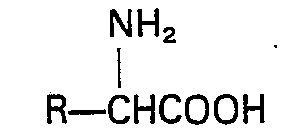
wherein R represents a hydrogen atom; a linear or branched C1-4 alkyl group, which alkyl group may be unsubstituted or may be substituted by a hydroxy, methoxy, mercapto, methylmercapto, carboxamide, halogen, phenyl, hydroxy phenyl, indolyl or imidazolyl group; a phenyl group, which phenyl group may be unsubstituted or substituted by a hydroxy, methoxy, mercapto, methylmercapto, carboxamide, halogen, phenyl, hydroxyphenyl, indolyl or imidazolyl group; a furyl group; a pyridyl group; a thiazolyl group; an imidazolyl group or an indolyl group, which process comprises subjecting an aqueous solution of said mixture comprising the a-amino acid and its corresponding amide to ion-exchange electrodialysis characterised in that the electrodialysis is performed in the presence of ammonia, and in that the amount of ammonia in the said aqueous solution is such that the molar ratio of ammonia to the a-amino acid is not less than 1.
wherein R represents a hydrogen atom; a linear or branched C1-4 alkyl group, which alkyl group may be unsubstituted or may be substituted by a hydroxy, methoxy, mercapto, methylmercapto, carboxamide, halogen, phenyl, hydroxy phenyl, indolyl or imidazolyl group; a phenyl group, which phenyl group may be unsubstituted or substituted by a hydroxy, methoxy, mercapto, methylmercapto, carboxamide, halogen, phenyl, hydroxyphenyl, indolyl or imidazolyl group; a furyl group; a pyridyl group; a thiazolyl group; an imidazolyl group or an indolyl group, which process comprises subjecting an aqueous solution of said mixture comprising the a-amino acid and its corresponding amide to ion-exchange electrodialysis characterised in that the electrodialysis is performed in the presence of ammonia, and in that the amount of ammonia in the said aqueous solution is such that the molar ratio of ammonia to the a-amino acid is not less than 1.
2. A process according to claim 1, wherein the a-amino acid is a glycine, alanine,
valine, leucine, isoleucine, serine, threonine, cysteine, cystine, methionine, asparagine,
glutamine, phenylglycine, phenylalanine, tyrosine, histidine or tryptophane.
3. A process according to claim 1 or 2, wherein the said molar ratio of ammonia to
a-amino acid is within the range of from 1 to 10.
4. A process according to claim 1, 2 or 3, wherein the ammonia in the aqueous solution
is a by-product produced by hydrolysis of an a-amino acid amide.
5. A process according to any one of the preceding claims, wherein each concentration
of a-amino acid and a-amino acid amide in the aqueous solution is from 0.1 to 20 wt%.
6. A process according to any one of the preceding claims, wherein the molar ratio
of a-amino acid to an a-amino acid amide in the aqueous solution is from 0.01 to 100.
7. A process according to any one of the preceding claims, wherein the ion-exchange
electrodialysis is performed with the liquid temperature at from 5 to 70°C.
8. A process according to any one of the preceding claims, wherein the said aqueous
solution is a reaction product liquid containing at least an L-a-amino acid, a D-a-amino
acid amide and ammonia, which liquid is obtained by biochemical asymmetric hydrolysis
of a D, L-a-amino acid.
9. A process according to any one of claims 1 to 7, wherein the said aqueous solution
is a reaction product liquid containing at least an a-amino acid, an a-amino acid
amide and ammonia, which liquid is obtained by hydrolyzing an a-amino acid amide in
the presence of ammonia.
10. A process according to any one of the preceding claims, wherein the electrodialysis
is performed using strongly acidic cation exchange membranes.
11. A process according to any one of the preceding claims, wherein the electrodialysis
is performed using strongly basic anion exchange membranes.
1. Verfahren zum Trennen und Rückgewinnen einer 1-Aminosäure von einer Mischung, welche
diese 1-Aminosäure und ihr entsprechendes 1-Aminosäure-Amid enthält, wobei die 1-Aminosäure
durch die allgemeine Formel

dargestellt ist, worin R ein Wasserstoffatom; eine lineare oder verzweigte C1-4 Alkylgruppe, die nichtsubstituiert oder substituiert durch eine Hydroxyl-, eine Methoxyl-, eine Merkapto-, eine Methylmerkapto-, eine Karboxamid-, eine Halogen-, eine Phenyl-, eine Hydroxyphenyl-, eine Indolyl- oder eine Imidazolyl-Gruppe sein kann; eine Phenylgruppe, die nichtsubstituiert oder substituiert durch eine Hydroxyl-, eine Methoxyl-, eine Merkapto-, eine Methylmerkapto-, eine Karboxamid-, eine Halogen-, eine Phenyl-, eine Hydroxyphenyl-, eine Indolyl- oder eine Imidazolyl-Gruppe sein kann; eine Furylgruppe; eine Pyridylgruppe; eine Thiyzolylgruppe; eine lmidazolylgruppe oder eine Indolylgruppe darstellt, wobei in dem Verfahren eine wässerige Lösung dieser Mischung, welche die 1-Aminosäure und ihr entsprechendes Amid enthält, einer lonenaustausch-Elektrodialyse unterzogen wird, dadurch gekennzeichnet, daß die Elektrodialyse in Gegenwart von Ammoniak durchgeführt wird, und daß die Ammoniak-Menge in der wässerigen Lösung derart gewählt ist, daß das Molverhältnis vom Ammoniak zur 1-Aminosäure nicht weniger als 1 beträgt.
dargestellt ist, worin R ein Wasserstoffatom; eine lineare oder verzweigte C1-4 Alkylgruppe, die nichtsubstituiert oder substituiert durch eine Hydroxyl-, eine Methoxyl-, eine Merkapto-, eine Methylmerkapto-, eine Karboxamid-, eine Halogen-, eine Phenyl-, eine Hydroxyphenyl-, eine Indolyl- oder eine Imidazolyl-Gruppe sein kann; eine Phenylgruppe, die nichtsubstituiert oder substituiert durch eine Hydroxyl-, eine Methoxyl-, eine Merkapto-, eine Methylmerkapto-, eine Karboxamid-, eine Halogen-, eine Phenyl-, eine Hydroxyphenyl-, eine Indolyl- oder eine Imidazolyl-Gruppe sein kann; eine Furylgruppe; eine Pyridylgruppe; eine Thiyzolylgruppe; eine lmidazolylgruppe oder eine Indolylgruppe darstellt, wobei in dem Verfahren eine wässerige Lösung dieser Mischung, welche die 1-Aminosäure und ihr entsprechendes Amid enthält, einer lonenaustausch-Elektrodialyse unterzogen wird, dadurch gekennzeichnet, daß die Elektrodialyse in Gegenwart von Ammoniak durchgeführt wird, und daß die Ammoniak-Menge in der wässerigen Lösung derart gewählt ist, daß das Molverhältnis vom Ammoniak zur 1-Aminosäure nicht weniger als 1 beträgt.
2. Verfahren nach Anspruch 1, dadurch gekennzeichnet, daß die 1-Aminosäure Glyzin,
Alanin, Valin, Leuzin, Isoleuzin, Serin, Threonin, Zystein, Zystin, Methionin, Asparagin,
Glutamin, Phenylglyzin, Phenylalanin, Thyrosin, Histidin oder Tryptophan ist.
3. Verfahren nach Anspruch 1 oder 2, dadurch gekennzeichnet, daß das Molverhältnis
vom Ammoniak zur 1-Aminosäure im Bereich zwischen 1 und 10 liegt.
4. Verfahren nach Anspruch 1, 2 oder 3, dadurch gekennzeichnet, daß das Ammoniak in
der wässerigen Lösung ein Nebenprodukt ist, welches durch Hydrolyse eines 1-Aminosäure-Amids
erzeugt wurde.
5. Verfahren nach einem der vorangehenden Ansprüche, dadurch gekennzeichnet, daß jeweils
die Konzentration der 1-Aminosäure und des 1-Aminosäure-Amids in der wässerigen Lösung
von 0,1 bis 20 Gewichtsprozent beträgt.
6. Verfahren nach einem der vorangehenden Ansprüche, dadurch gekennzeichnet, daß das
Molverhältnis der 1-Aminosäure zum 1-Aminosäure-Amid von 0,01 bis 100 beträgt.
7. Verfahren nach einem der vorangehenden Ansprüche, dadurch gekennzeichnet, daß die
lonenaustausch-Elektrodialyse mit der Flüssigkeitstemperatur von 5 bis 70°C durchgeführt
wird.
8. Verfahren nach einem der vorangehenden Ansprüche, dadurch gekennzeichnet, daß die
wässerige Lösung eine durch eine Reaktion erzeugte Flüssigkeit ist, welche mindestens
eine L-1-Aminosäure, ein D-1-Aminosäure-Amid und Ammoniak enthält, wobei die Flüssigkeit
durch biochemisch asymmetrische Hydrolyse einer D, L-1-Aminosäure erhalten wird.
9. Verfahren nach einem der Ansprüche 1 bis 7, dadurch gekennzeichnet, daß die wässerige
Lösung eine durch eine Reaktion erzeugte Flüssigkeit ist, welche mindestens eine 1-Aminosäure,
ein 1-Aminosäure-Amid und Ammoniak enthält, wobei die Flüssigkeit durch Hydrolysieren
eines 1-Aminosäure-Amids in Gegenwart von Ammoniak erhalten wird.
10. Verfahren nach einem der vorangehenden Ansprüche, dadurch gekennzeichnet, daß
die Elektrodialyse unter Verwendung stark säurehaltiger Kationenaustausch-Membranen
durchgeführt wird.
11. Verfahren nach einem der vorangehenden Ansprüche, dadurch gekennzeichnet, daß
die Elektrodialyse unter Verwendung stark basischer Anionenaustausch-Membranen durchgeführt
wird.
1. Procédé pour séparer et récupérer un a-amino-acide d'un mélange comprenant ledit
a-amino-acide et l'amide d'a-amino-acide qui lui correspond, l'a-amino-acide étant
représenté par la formule générale:
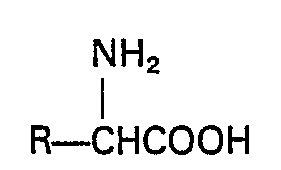
dans laquelle R représente un atome d'hydrogène; un groupe alkyle en 61-4 linéaire ou ramifié, lequel groupe alkyle peut être non substitué ou substitué par un groupe hydroxy, méthoxy, mercapto, méthylmercapto, carboxamide, halogène, phényle, hydroxyphényle, indolyle ou imidazolyle; un groupe phényle, lequel groupe phényle peut être non substitué ou substitué par un groupe hydroxy, méthoxy, mercapto, méthylmercapto, carboxamide, halogène, phényle, hydroxyphényle, indolyle ou imidazolyle; un groupe furyle; un groupe pyridyle; un groupe thiazolyle; un groupe imidazolyle ou un groupe indolyle, lequel procédé consiste à soumettre une solution aqueuse dudit mélange comprenant l'a-amino-acide et l'amide qui lui correspond à une électrodialyse avec échange d'ions, caractérisé en ce que l'électrodialyse est effectuée en présence d'ammoniac et la quantité d'ammoniac dans ladite solution aqueuse est telle que le rapport molaire de l'ammoniac à l'a-amino-acide n'est pas inférieur à 1.
dans laquelle R représente un atome d'hydrogène; un groupe alkyle en 61-4 linéaire ou ramifié, lequel groupe alkyle peut être non substitué ou substitué par un groupe hydroxy, méthoxy, mercapto, méthylmercapto, carboxamide, halogène, phényle, hydroxyphényle, indolyle ou imidazolyle; un groupe phényle, lequel groupe phényle peut être non substitué ou substitué par un groupe hydroxy, méthoxy, mercapto, méthylmercapto, carboxamide, halogène, phényle, hydroxyphényle, indolyle ou imidazolyle; un groupe furyle; un groupe pyridyle; un groupe thiazolyle; un groupe imidazolyle ou un groupe indolyle, lequel procédé consiste à soumettre une solution aqueuse dudit mélange comprenant l'a-amino-acide et l'amide qui lui correspond à une électrodialyse avec échange d'ions, caractérisé en ce que l'électrodialyse est effectuée en présence d'ammoniac et la quantité d'ammoniac dans ladite solution aqueuse est telle que le rapport molaire de l'ammoniac à l'a-amino-acide n'est pas inférieur à 1.
2. Procédé selon la revendication 1, dans lequel !'a-amino-acide est la glycine, l'alanine,
la valine, la leucine, l'isoleucine, la sérine, la thréonine, la cystéine, la cystine,
la méthionine, l'asparagine, la glutamine, la phénylglycine, la phénylalanine, la
tyrosine, l'histidine ou le tryptophane.
3. Procédé selon la revendication 1 ou 2, dans lequel ledit rapport molaire de l'ammoniac
à l'a-amino-acide est dans la gamme de 1 à 10.
4. Procédé selon la revendication 1, 2 ou 3, dans lequel l'ammoniac dans la solution
aqueuse est un sous-produit formé par hydrolyse d'un amide d'a-amino-acide.
5. Procédé selon l'une quelconque des revendications précédentes dans lequel chaque
concentration de l'a-amino-acide est de l'amide d'a-amino-acide dans la solution aqueuse
est de 0,1 à 20% en poids.
6. Procédé selon l'une quelconque des revendications précédentes, dans lequel le rapport
molaire de l'a-amino-acide à l'amide d'a-amino-acide dans la solution aqueuse est
de 0,01 à 100.
7. Procédé selon l'une quelconque des revendications précédentes, dans lequel l'électrodialyse
avec échange d'ions est effectuée à une température du liquide de 5 à 70°C.
8. Procédé selon l'une quelconque des revendications précédentes, dans lequel ladite
solution aqueuse est un produit réactionnel liquide contenant au moins un L-a-amino-acide,
un amide de D-a-amino-acide et de l'ammoniac, qui est le liquide obtenu par hydrolyse
asymétrique biochimique d'un D,L-a-amino-acide.
9. Procédé selon l'une quelconque des revendications 1 à 7, dans lequel ladite solution
aqueuse est un produit réactionnel liquide contenant au moins un a-amino-acide, un
amide d'a-amino-acide et de l'ammoniac, lequel liquide est obtenu par hydrolyse d'un
amide d'a-amino-acide en présence d'ammoniac.
10. Procédé selon l'une quelconque des revendications précédentes, dans lequel l'électrodialyse
est effectuée avec des membranes échangeuses de cations fortement acides.
11. Procédé selon l'une quelconque des revendications précédentes, dans lequel l'électrodialyse
est effectuée avec des membranes échangeuses d'anions fortement basiques.