| (19) |
 |
|
(11) |
EP 0 161 728 B1 |
| (12) |
EUROPEAN PATENT SPECIFICATION |
| (45) |
Mention of the grant of the patent: |
|
10.08.1988 Bulletin 1988/32 |
| (22) |
Date of filing: 14.05.1985 |
|
| (51) |
International Patent Classification (IPC)4: B61F 5/42 |
|
| (54) |
Bogie system for a rail vehicle
Laufwerksanlage für Schienenfahrzeuge
Système d'essieux pour un véhicule ferroviaire
|
| (84) |
Designated Contracting States: |
|
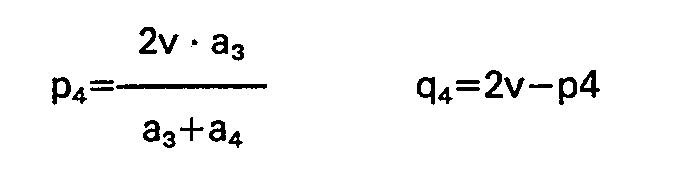
AT BE CH DE FR GB IT LI LU NL SE |
| (30) |
Priority: |
14.05.1984 NL 8401549
|
| (43) |
Date of publication of application: |
|
21.11.1985 Bulletin 1985/47 |
| (73) |
Proprietor: RMO-Werkspoor Services B.V. |
|
NL-1018 MS Amsterdam (NL) |
|
| (72) |
Inventors: |
|
- Keizer, Cornelis Pieter
NL-3136 CL Vlaardingen (NL)
- Zeevenhoven, Nikolaas H.C.E.
NL-3723 GE Bilthoven (NL)
|
| (74) |
Representative: Konings, Lucien Marie Cornelis Joseph et al |
|
Arnold & Siedsma,
Advocaten en Octrooigemachtigden,
Sweelinckplein 1
2517 GK Den Haag
2517 GK Den Haag (NL) |
| (56) |
References cited: :
DE-B- 1 102 795
FR-A- 1 153 641
US-A- 3 249 066
|
DE-B- 1 236 348
US-A- 2 908 233
US-A- 3 354 836
|
|
| |
|
|
|
|
| |
|
| Note: Within nine months from the publication of the mention of the grant of the European
patent, any person may give notice to the European Patent Office of opposition to
the European patent
granted. Notice of opposition shall be filed in a written reasoned statement. It shall
not be deemed to
have been filed until the opposition fee has been paid. (Art. 99(1) European Patent
Convention).
|
[0001] The invention relates to an undercar system for a railway vehicle as defined in the
preamble of claim 1.
[0002] Such undercar system is known and applied in the Talgo train as disclosed in FR-A-1
153 641. Each truck located between two car bodies is provided at each wheel axle
bearing with a vertical lever. Together with steering rod pivotable at both ends and
connected with the adjacent car bodies these levers constitute a complete steering
system arranged in two vertical planes. In travelling through a curve ranging is performed
on the inner side which shortens the steering system on the inner side, whereas on
the outer side of the curve the lever system concerned is ranged out. The steering
means of this known undercar system comprise many pivots.
[0003] The invention has for its object to reduce the required number of pivots in an undercar
system of the aforesaid kind whilst maintaining a satisfactory directional action
of the axles.
[0004] This object is achieved by application of the characterizing clause of claim 1.
[0005] Consequently there is only one train of horizontal steering beams, which drastically
reduces the number of pivots.
[0006] This has moreover the advantage that the steering effect of the undercar system is
now less disturbed by movements of the car body with respect to the undercar.
[0007] When the steering beams are connected with one another and with the trucks by means
of spherical pivots, sloping variations of the truck affect the steering effect of
the undercar system to a lesser extent.
[0008] According to claim 3 the relative distances between a truck and next trucks may be
unequal to one another, so that the axles can be arranged below the car bodies at
the most favourable places in order to use the structure gauge as satisfactorily as
possible. Now the car bodies can be somewhat broader and shorter, so that a more efficient
arrangement of seats in the car bodies can be realized.
[0009] The system described is suitable for a distribution of trucks below car bodies in
a manner such that with adapted car body lengths a largest possible building width
becomes possible within the limitations of the cinematic gauge. The wheel sets need
not be arranged below the car body ends and this has an advantageous effect of oscillation
behaviour of the car body.
[0010] In order to realise the advantages of the invention to an even greater extent in
relation to wheel sets arranged at the ends of the rail vehicle the characterizing
feature of claim 5 is applied.
[0011] The aforesaid and further features of the invention will be illucidated hereinafter
by way of example with reference to a drawing.
[0012] The drawing schematically shows in:
Figs. 1, 2 and 3 a side view, a horizontal sectional view and a bottom view respectively
of a rail vehicle embodying the invention,
Fig. 4 an enlarged perspective view of detail IV of Fig. 3,
Fig. 5 an enlarged plane view of detail V of Fig. 3,
Fig. 6 a sectional view taken on line VI-VI of Fig. 5,
Figs. 7 and 8 an enlarged sectional view taken on the lines VII-VII and VIII-VIII
respectively of Fig. 4,
Fig. 9 on an enlarged scale a diagram of a fraction of the steering means of the undercar
system of Figs. 1 to 8, and
Fig. 10 a plan view of the detail of Fig. 4, tracting and breaking means being added
thereto.
[0013] The rail vehicle 11 shown in Figs. 1 to 3 comprises three intercoupled car bodies
12 carried by an undercar system 9 embodying the invention, comprising a plurality-in
this example eight-of uniaxled trucks numerated in order of succession from the left-hand
end indicated in the drawing by 1, 2, 3, 4, 5, 6, and 8. Each truck 1 to 8 comprises
a frame 10 with two pivotal arms 14 journalled thereon and carrying each an axle bearing
15 holding a wheel set 16 formed by an axle 17 and two wheels 18 rigidly secured thereto.
[0014] The frame 10 is supported by means of spring packets 19 on the pivotal arms 14. Via
air springs 20 and rubber springs 21 positioned in series therewith the frame 10 supports
the car body 12 located above the same.
[0015] The trucks 1 to 8 are coupled with one another by means of steering means 24 for
directing the wheel sets 16 towards a curve centre of the passed rail curve.
[0016] The steering means 24 comprise steering beams 27 which couple with one another the
intermediate trucks 2, 3, 4, 5, 6 and 7 disposed each between two other trucks by
means of their long middle portions 28.
[0017] Short end portions 29 of these steering beams 27 are relatively articulated by means
of spherical pivots 30. The steering beams 27 are pivotally connected between their
lond middle and short end portions to the intermediate trucks 2 to 7 by means of spherical
pivots 31 to 32. Fig. 3 shows that each intermediate truck 3 to 6 comprises a spherical
pivot 31 formed by a ball pivot, the ball 33 of which is embraced in a rubber layer
34, which allows some axial movement of the steering beam 27 relatively to the frame
10.
[0018] The spherical pivot 32 of Fig. 8 comprises a bridge piece 37 connected by means of
rubber blocks 36 to longitudinal beams 35 of a frame 10 and extending transversely
of a steering beam 27.
[0019] A pin 38 passes through ears 39 of the frame 10 and through a rubber block 36, so
that the bridge piece 37 can slightly tilt about a horizontal axis 59 located at a
higher level than the steering beam. The bridge piece 37 has a lower piece 40 accommodating
a ball pivot 41, which is not provided with rubber spring cushions and is engaged
between two inner walls 42 of the steering beam 27 through a pivot pin 43. This ensures
a rigid pivot in transverse direction between the steering beam 27 with respect to
the frame 10 is enabled by the turn of the bridge piece 37 about the axis line 59.
Each car body 12 is coupled by means of a coupling rod 49 (Fig. 3) with a steering
beam 27.
[0020] It should be noted that the steering beam 27 is entirely loose from each car body
12 carried by the coupled trucks 3 to 6 or in other words the trucks are mechanically
interconnected while short-circuiting each car body 12. As a result movement of the
car body 12 cannot disturb the action of the steering means 24.
[0021] The trucks 1 and 8 are identical to one another. The trucks 2 and 7 are also identical
to one another, so that hereinafter only the trucks 1 and 2 will be described.
[0022] With respect to wheel axle bearing and springs for supporting the car bodies 12 there
is no principal difference between the trucks 1 and on the one hand and the trucks
3 to 6 on the other hand.
[0023] The frame 10 of truck 1 is provided with an arm 44, which is coupled by means of
a spherical pivot 30 with the short end portions 29 of the steering beam 27, which
is pivotally connected with the frame 10 of truck 2 by means of a spherical pivot
31. The trucks 1 and 2 are disposed near one another and movably connected with one
another by means of the coupling mechanism 45 consisting of a bridge piece 47 corresponding
to the bridge piece 37 and extending transversely of the direction of movement 46,
said bridge piece 47 being pivotally connected both to the first and the second truck
1 and 2 by means of spherical pivots 48. The arm 44 constitutes a prolongation of
the frame 10 extending beyond the coupling mechanism 45 of the truck 1.
[0024] The wheel sets 16 of the trucks 1 to 8 have pitch distances a, to a
7 (see fig. 1).
[0025] The places of the pivots 30, 31 and 32 in the intermediate trucks 3,4,5 and 6 are
determined as follows. The pivots 31 and 32 are disposed on both sides of the wheel
axle 16 at a relative distance 2v. The wheel set 16 has an eccentrical shift e with
respectto the middle of the distance 2v. In figs. 1 to 8 e is equal to v. In the case
the eccentricity e for the intermediate trucks 3 and 5 is directed to the right and
for the intermediate trucks 4 and 6 to the left as shown in the situation of fig.
9 the following formulae apply to the short arm p and q:
[0027] The distances a3 and a
5 bridging the bellows couplings 50 between the car bodies 12, are smallerthan the
distances a
2, a4 and as. At the ends of the car bodies the traction motors 51 are arranged at
the distances a3 and a
5. They are suspended to the steering beams 27. These axles 17 (see fig. 10) are driven
by these traction motors 51 through hollow gear boxes 52 surrounding the axles 17
and through a coupling 53. Moreover, a brake 54 is provided on the axle 17. The space
over the distances a
2, a4, as thus remains free for arranging other apparatuses.
[0028] The undercar system is suitable, not only for suspending thereto electric traction
motors, but also for suspending thereto combustion engines having electric, hydraulic,
hydrodynamic or mechanical transmissions and for suspending apparatus boxes and ducts.
[0029] The arrangement of the wheel sets 16 below the car bodies 12 is furthermore such
that the free space profile is most satisfactorily utilised and the seat distribution
is most efficient. On the side of the passage path each time five seats 56 or four
ample seats 57 can be arranged. Thus the useful floor surface per wheel axle 16 is
larger.
[0030] The undercar system embodying the invention can also be used with wheel sets having
independently rotatably journalled wheels.
1. An undercar system (9, 61) for a railway vehicle (11) comprising a plurality of
single-axled trucks (1 to 8), which are intercoupled by means of steering means (24)
for directing at least one wheel set (16) towards the curve centre, said railway vehicle
being an articulated vehicle and consisting of a plurality of car bodies (12) each
of which being supported by at least two of said single-axled trucks, in which there
are no common trucks between two successive car bodies, and in which the springs supporting
the car bodies permit a yaw movement of the trucks relative to the car bodies, characterized
in that each two intermediate successive trucks (3 to 6) are interconnected by one
single steering beam (27), and in that at least one intermediate truck (3 to 6) is
connected by means of long middle portions (28) of steering beams (27) with two other
intermediate trucks (2 to 7), whilst short end portions (29) of these steering beams
(27) are pivotally interconnected and these two steering beams are pivotally connected
between their middle and end portions (28, 29) with the intermediate truck (3 to 6).
2. An undercar system (9) as claimed in claim 1, characterized in that the steering
beams (27) are connected with one another and with the trucks (3 to 6) by means of
spherical pivots (30, 31, 32).
3. An undercar system (9) as claimed in anyone of the preceding claims, characterized
in that the relative distances (a2 to a6) of intermediate trucks (3 to 6) up to the successive trucks (2 to 7) are unequal
and in that the arm lengths (p, q) of end portions (29) of the steering beams (27)
interconnected in the vicinity of the intermediate trucks (3 to 6) are unequal, whilst
their lengths are chosen in dependence on the unequal distance (a2 to a6).
4. An undercar system (9) as claimed in anyone of the preceding claims, characterized
in that at least two trucks are spaced apart by a distance (a3, as) corresponding
with the space required for a coupling (50) connecting two car bodies (12) and two
traction motors (51) driving the axles (17) of said trucks (3 to 6), whilst the distances
(a,, a4, a6) of each of these trucks (3 to 6) from the next following truck (a2 to a7) are larger.
5. An undercar system (9) as claimed in anyone of the preceding claims, characterized
in that-in the order of succession of the uniaxled trucks (1 to 8) of this undercar
system (9) viewed from the end-the first and the second truck (1, 2) are disposed
near one another and movably interconnected by means of a coupling mechanism (45)
and the first truck (1) with the second and third truck (2, 3) has a prolongation
(44) extending beyond the coupling mechanism (45), which is pivotally connected with
an end portion (29) of a steering beam (27).
6. An undercar system (9) as claimed in anyone of the preceding claims, characterized
in that the first and the second truck (1, 2) are movably interconnected by means
of the coupling mechanism (45) comprising a pivotal rod (47) extending transversely
of the direction of movement (46) in upward direction, which rod is pivotally connected
to both the first and the second truck (1, 2).
7. An undercar system (9) as claimed in anyone of the preceding claims, characterized
in that at least one steering beam (27) is constructed as a carrier of traction means
(51) or another vehicle equipment.
8. An undercar system (9) as claimed in anyone of the preceding claims, characterized
in that with the frame (10) of at least one intermediate truck (3 to 6) a bridge piece
(37) is connected so as to be pivotable about a horizontal transverse axis (59) and
carries a spherical bearing (41) located on another level than the horizontal transverse
axis (59), in which bearing the steering beam (27) is pivotally journalled.
1. Fahrwerksystem (9, 61 ) für ein Schienenfahrzeug (11) mit einer Mehrzahl einachsiger
Fahrgestellt (1 bis 8), die durch Steuerglieder (24) derart gekuppelt sind, daß wenigstens
ein Radsatz (16) nach dem Krümmungsmittelpunkt der Kurve gerichtet wird, wobei das
Schienenfahrzeug ein Gliederfahrzeug ist aus mehreren Wagenkörpern (12) besteht, von
denen jeder von wenigstens zwei der einachsigen Fahrgestellt getragen wird, wobei
keine gemeinsamen Fahrgestellt zwischen zwei aufeinanderfolgenden Wagenkörpern vorhanden
sind, und wobei die Federn, die die Wagenkörper abstützen, eine Gierbewegung der Fahrgestellt
relativ zu den Wagenkörper zulassen, dadurch gekennzeichnet, daß je zwei aufeinanderfolgende
Zwischenfahrgestelle (3 bis 6) durch einen einzigen Steuerhebel (27) miteinander verbunden
sind, und daß wenigstens ein Zwischenfahrgestell (3 bis 6) über die langen Mittelabschnitte
(28) der Steuerhebel (27) mit zwei weiteren Zwischenfahrgestellen (2 bis 7) verbunden
ist, während die kurzen Endabschnitte (29) dieser Steuerhebel (27) schwenkbar miteinander
verbunden sind und diese beiden Steuerhebel schwenkbar zwischen ihrem mittleren Abschnitt
und ihrem Endabschnitt (28, 29) mit dem Zwischenfahrgestell (3 bis 6) verbunden sind.
2. Fahrwerksystem (9) nach Anspruch 1, dadurch gekennzeichnet, daß die Steuerhebel
(27) miteinander und mit den Fahrgestellen (3 bis 6) über Kugelgelenke (30, 31, 32)
verbunden sind.
3. Fahrwerksystem (9) nach einem der vorhergehenden Ansprüche, dadurch gekennzeichnet,
daß die relevanten Abstände (a2 bis as) der Zwischenfahrgestelle (3 bis 6) bis zu den aufeinanderfolgenden Fahrgestellen
(2 bis 7) ungleich sind. und daß die Armlänge (p, q) der Endabschnitte (29) der Steuerhebel
(27), die in der Nähe der Zwischenfahrgestelle (3 bis 6) verbunden sind, ungleich
sind und ihre Längen gemäß dem ungleichen Abstand (a2 bis as) gewählt sind.
4. Fahrwerksystem (9) nach einem der vorhergehenden Ansprüche, dadurch gekennzeichnet,
daß wenigstens zwei Fahrgestelle in einem Abstand (a3, as) distanziert sind, der dem Raum entspricht, den eine Kupplung (50) einnimmt, die
zwei Wagenkörper (12) und zwei Fahrmotoren (51) verbindet, die die Achse (17) der
Fahrgestelle (3 bis 6) antreiben, während die Abstände (a1, a4, as) eines jeden dieser Fahrgestelle (3 bis 6) bis zum nächsten Fahrgestell (a2 bis a7) größer sind.
5. Fahrwerksystem (9) nach einem der vorhergehenden Ansprüche, dadurch gekennzeichnet,
daß-betrachtet in der Folge der einachsigen Fahrgestelle (1 bis 8) des Fahrwerksystems
(9) von Ende her-das erste und das zweite Fahrgestell (1, 2) nahe zueinander angeordnet
und beweglich über einen Kupplungsmechanismus (45) verbunden sind, wobei das erste
Fahrgestell (1) mit dem zweiten und dritten Fahrgestell (2, 3) einen Fortsatz (44)
aufweist, der sich über den Kupplungsmechanismus (45) erstreckt und schwenkbar mit
einem Endabschnitt (29) eines Steuerhebels (27) verbunden ist.
6. Fahrwerksystem (9) nach einem der vorhergehenden Ansprüche, dadurch gekennzeichnet,
daß das erste und das zweite Fahrgestell (1, 2) beweglich über den Kupplungsmechanismus
(45) verbunden sind, der eine schwenkbare Stange (47) aufweist, die sich quer zur
Bewegungsrichtung (46) nachoben erstreckt und schwenkbar sowohl an dem ersten als
auch an dem zweiten Fahrgestell (1, 2) angelenkt ist.
7. Fahrwerksystem (9) nach einem der vorhergehenden Ansprüche, dadurch gekennzeichnet,
daß wenigstens ein Steuerhebel (27) als Träger der Fahrmotoren (51) oder eines anderen
Fahrzeugausrüstungsaufbaus ausgebildet ist.
8. Fahrwerksystem (9) nach einem der vorhergehenden Ansprüche, dadurch gekennzeichnet,
daß mit dem Rahmen (10) wenigstens eines Zwischenfahrgestells (3 bis 6) eine Brücke
(37) so verbunden ist, daß sie um eine horizontale Querachse (59) verschwenkbar ist
und ein Kugelgelenk (41) trägt, welches auf einem anderen Hebel als auf der horizontalen
Querachse (59) angeordnet ist, an dem der Steuerhebel (27) schwenkbar angelenkt ist.
1. Système d'essieux (9, 61) destiné à un véhicule ferroviaire (11) comprenant plusieurs
bogies à un seul essieu (1 à 8), accouplés entre eux par un dispositif de direction
(24) dirigeant au moins un essieu monté (16) vers le centre de courbure, ce véhicule
ferroviaire étant un véhicule articulé et consistant en un certain nombre de caisses
de voiture (12) supportées chacune par au moins deux des bogies à un seul essieu,
dans lequel il n'y a pas de bogie commun à deux caisses de . voiture successives et
dans lequel les ressorts supportant les caisses de voiture permettent un mouvement
d'inclinaison des bogies par rapport aux caisses de voiture, caractérisé en ce que
les deux bogies intermédiaires successifs (3 à 6) sont reliés entre eux par une poutre
directrice unique (27), et en ce qu'un bogie intermédiaire au moins (3 à 6), est raccordé
par des parties médianes longues (28) de poutres de direction (27) à deux autres bogies
intermédiaires (2 à 7) alors que des parties extrêmes courtes (29) de ces poutres
directrices (27) sont articulés entre elles, et que ces deux poutres directrices sont
articulées sur le bogie intermédiaire (3 à 6) entre leurs parties médianes et extrêmes
(28, 29).
2. Système d'essieux (9) selon la revendication 1, caractérisé en ce que les poutres
directrices (27) sont raccordées les unes aux autres et aux bodies (3 à 6) par des
pivots sphériques (30, 31, 32).
3. Système d'essieux (9) selon l'une quelconque des revendications précédentes, caractérisé
en ce que le distances relatives (a2 à as) des bogies intermédiaires (3 à 6) aux bodies successifs (2 à 7), sont inégales,
et en ce que les longueurs (p, q) des parties extrêmes (29) des poutres directrices
(27) raccordés à proximité des bogies intermédiaires (3 à 6) sont inégales, bien que
ces longueurs soient choisies en fonction de la distance inégale (a2 à as).
4. Système d'essieux (9) selon l'une quelconque des revendications précédentes, caractérisé
en ce qu'au moins deux bogies sont séparés par une distance (a3, a5) qui correspond à l'espace nécessiare pour un accouplement (50) raccordant deux
caisses (12) de voiture et pour deux moteurs (51) de traction entraînant les essieux
(17) des bogies (3 à 6), tandis que les distances (a,, a4, as) entre chacun de ces bogies (3 à 6) et le bogie suivant a2 à a7) sont plus grandes.
5. Système d'essieux (9) selon l'une quelconque des revendications précédentes, caractérisé
en ce que, dans l'ordre de succession des bogies à un seul essieu (1 à 8) du système
(9) d'essieux, à partir de l'extrémité, le premier et le second bogie (1, 2) sont
disposés l'un près de l'autre et sont raccordés de manière mobile par un mécanisme
d'accouplement (45) et le premier bogie (1) avec le second et le troisième bogie (2,
3) a un prolongement (44) dépassant le mécanisme d'accouplement (45), qui est articulé
sur un bras de levier court (29) d'une poutre directrice (27).
6. Système d'essieux (9) selon l'une quelconque des revendications précédentes, caractérisé
en ce que le premier et le second bogie (1, 2) sont interconnectés de manière mobile
par le mécanisme d'accouplement (45) qui comporte une bielle pivotante (47) disposée
transversalement à la direction de déplacement (46) vers le haut, cette bielle étant
articulée par rapport au premier et au second bogie (1, 2) à la fois.
7. Système d'essieux (9) selon l'une quelconque des revendications précédentes, caractérisé
en ce qu'une poutre directrice au moins (27) est construite comme un support d'un
dispositif de traction (51) ou d'un autre équipement de véhicule.
8. Système d'essieux (9) selon l'une quelconque des revendications précédentes, caractérisé
en ce qu'un élément (37) en forme de pont est raccordé au châssis (10) d'au moins
un bogie intermédiaire (3 à 6) afin de pouvoir pivoter autour d'un axe horizontal
transversal (59) et porte un palier sphérique (41) disposé à un niveau différent de
celui de l'axe horizontal transversal (59), la poutre directrice (27) pouvant tourillonner
dans ce palier.