| (19) |
 |
|
(11) |
EP 0 173 516 B1 |
| (12) |
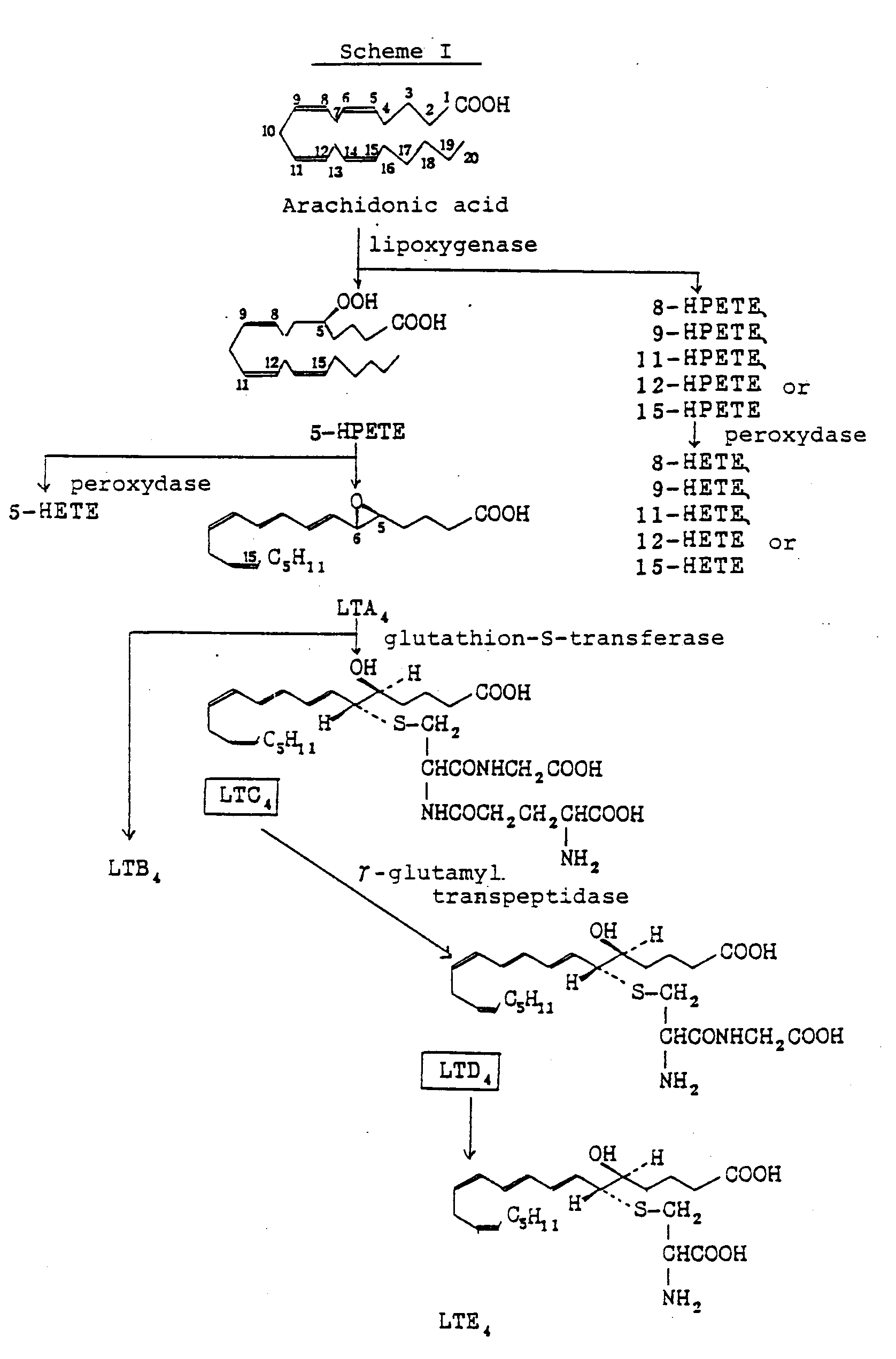
EUROPEAN PATENT SPECIFICATION |
| (45) |
Mention of the grant of the patent: |
|
01.12.1993 Bulletin 1993/48 |
| (22) |
Date of filing: 15.08.1985 |
|
| (51) |
International Patent Classification (IPC)5: C07D 405/04, C07D 409/14, C07D 409/04, C07D 401/04, C07D 257/04, C07D 311/24, C07D 319/20, C07D 215/18, C07D 413/04, A61K 31/41, A61K 31/35 |
|
| (54) |
(Fused)benz(thio)amides
(Kondensierte) Benz(thio)amide
Benzo(thio)amides (condensés)
|
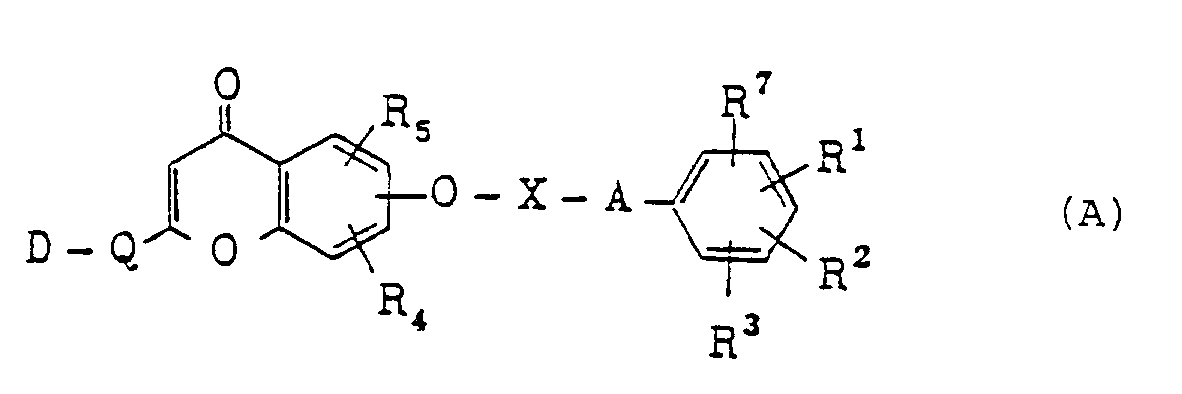
| (84) |
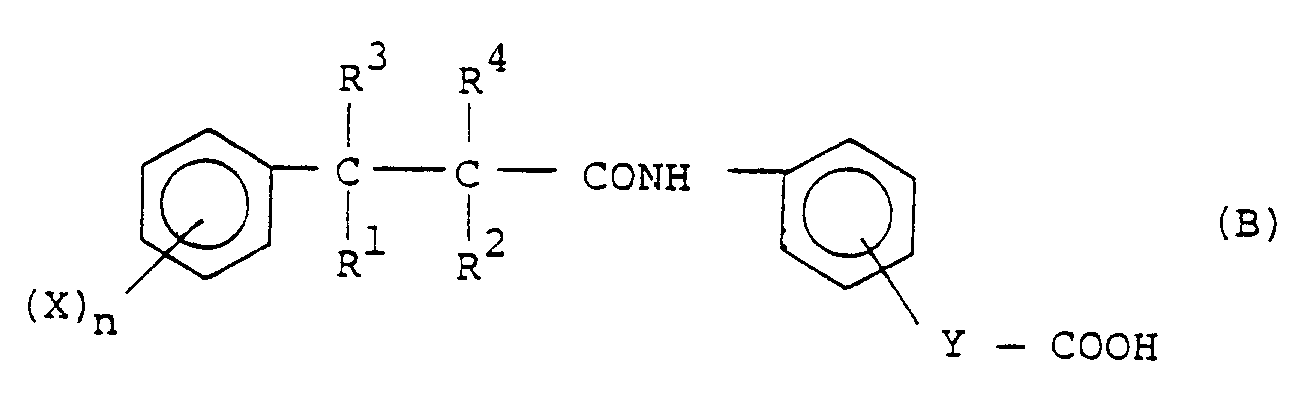
Designated Contracting States: |
|
AT BE CH DE FR GB IT LI LU NL SE |
| (30) |
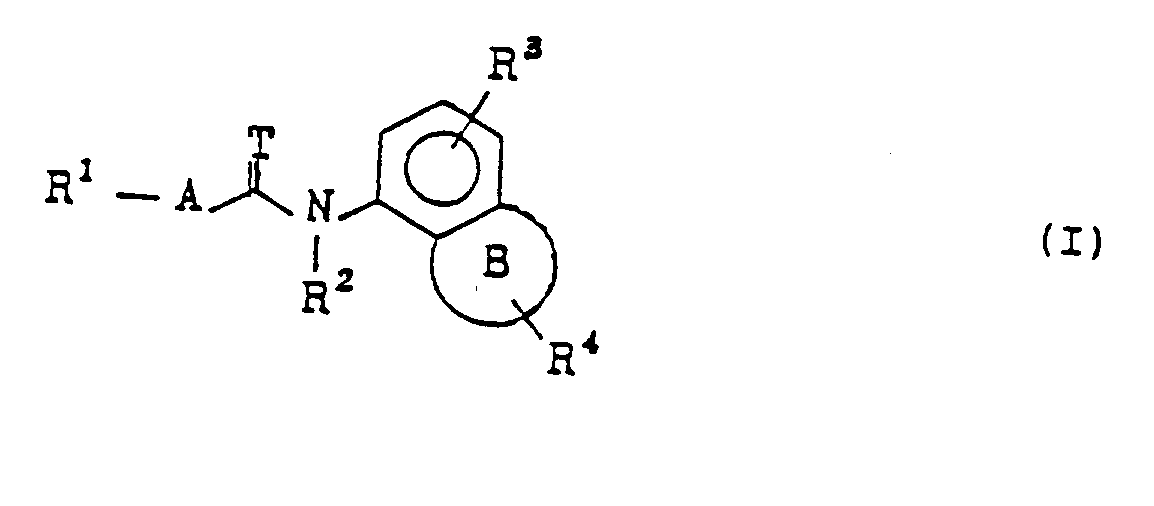
Priority: |
20.08.1984 JP 172570/84
20.11.1984 JP 243412/84
22.11.1984 JP 246363/84
|
| (43) |
Date of publication of application: |
|
05.03.1986 Bulletin 1986/10 |
| (60) |
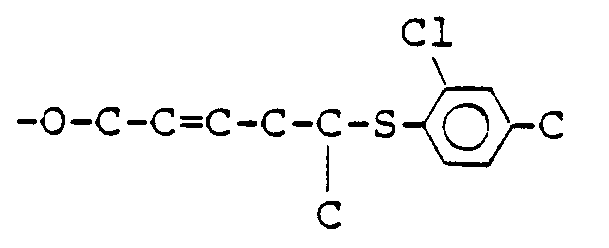
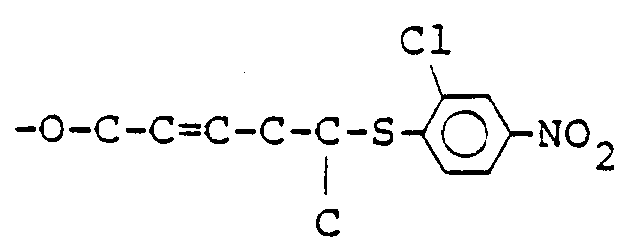
Divisional application: |
|
91114142.2 / 0463638 |
| (73) |
Proprietor: ONO PHARMACEUTICAL CO., LTD. |
|
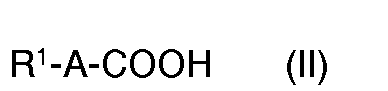
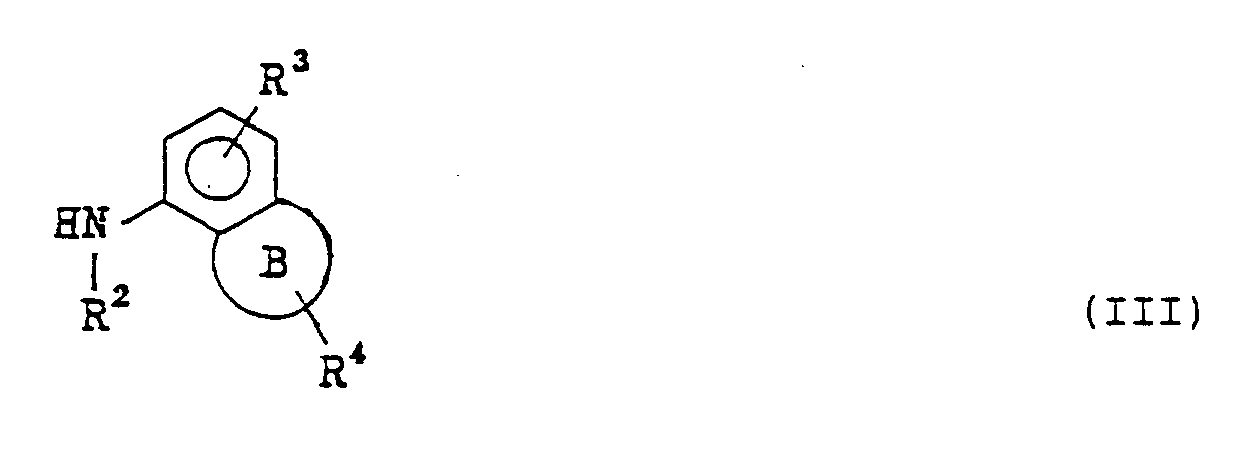
Osaka-shi
Osaka (JP) |
|
| (72) |
Inventors: |
|
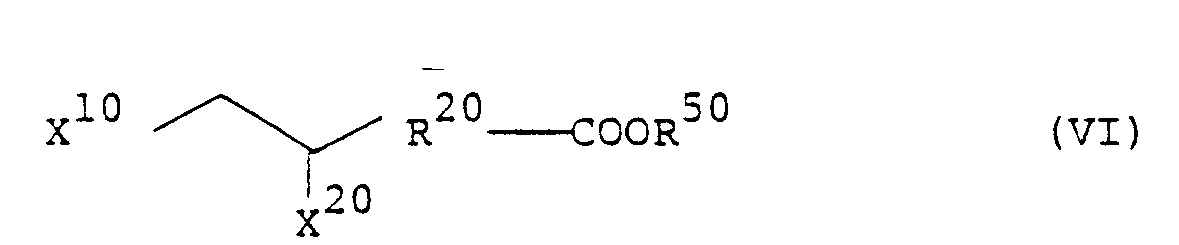
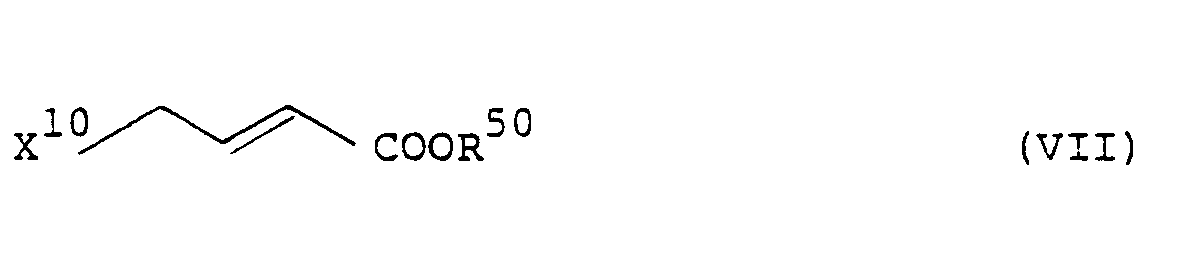
- Toda, Masaaki
Mishima-gun
Osaka (JP)
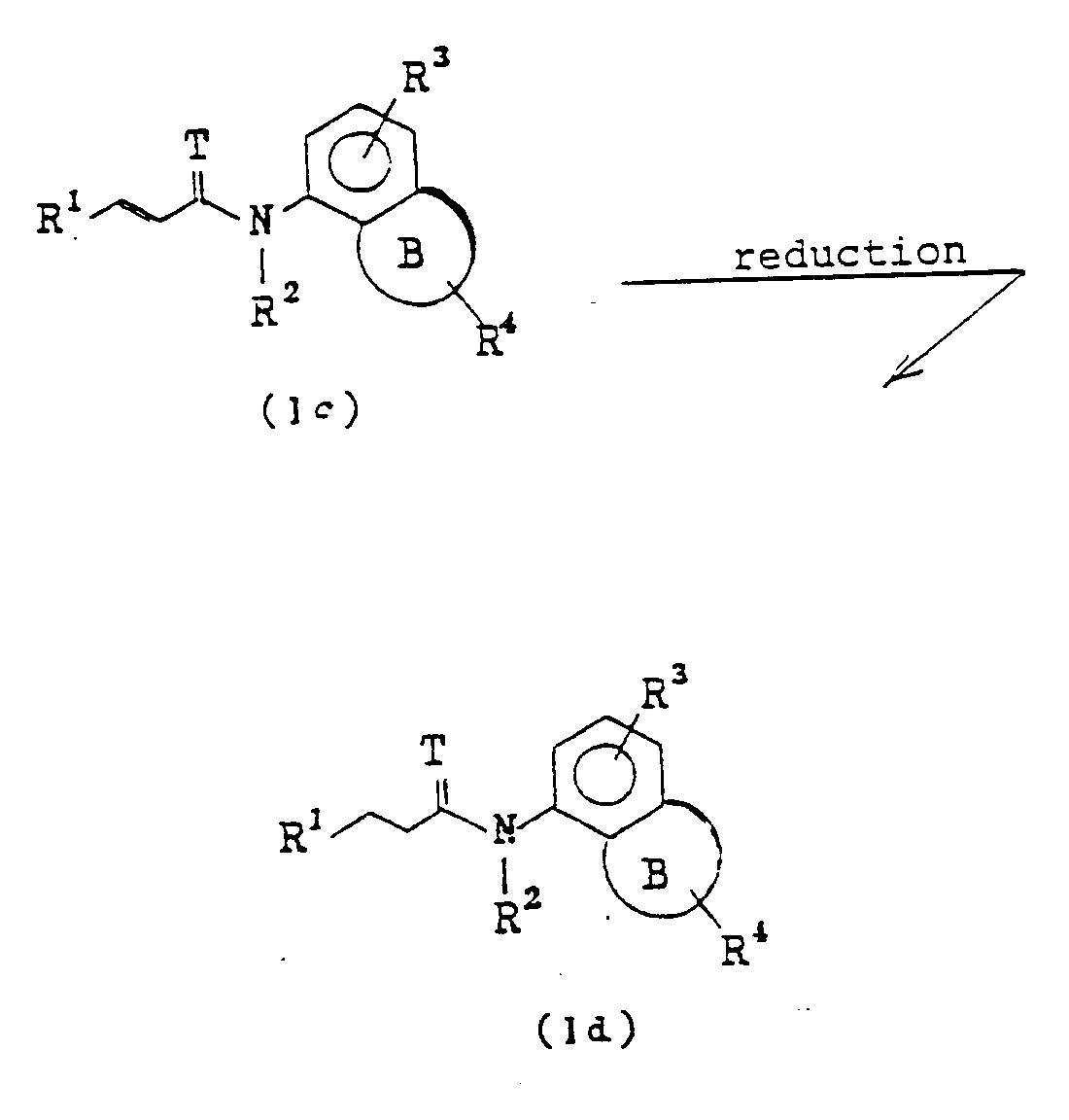
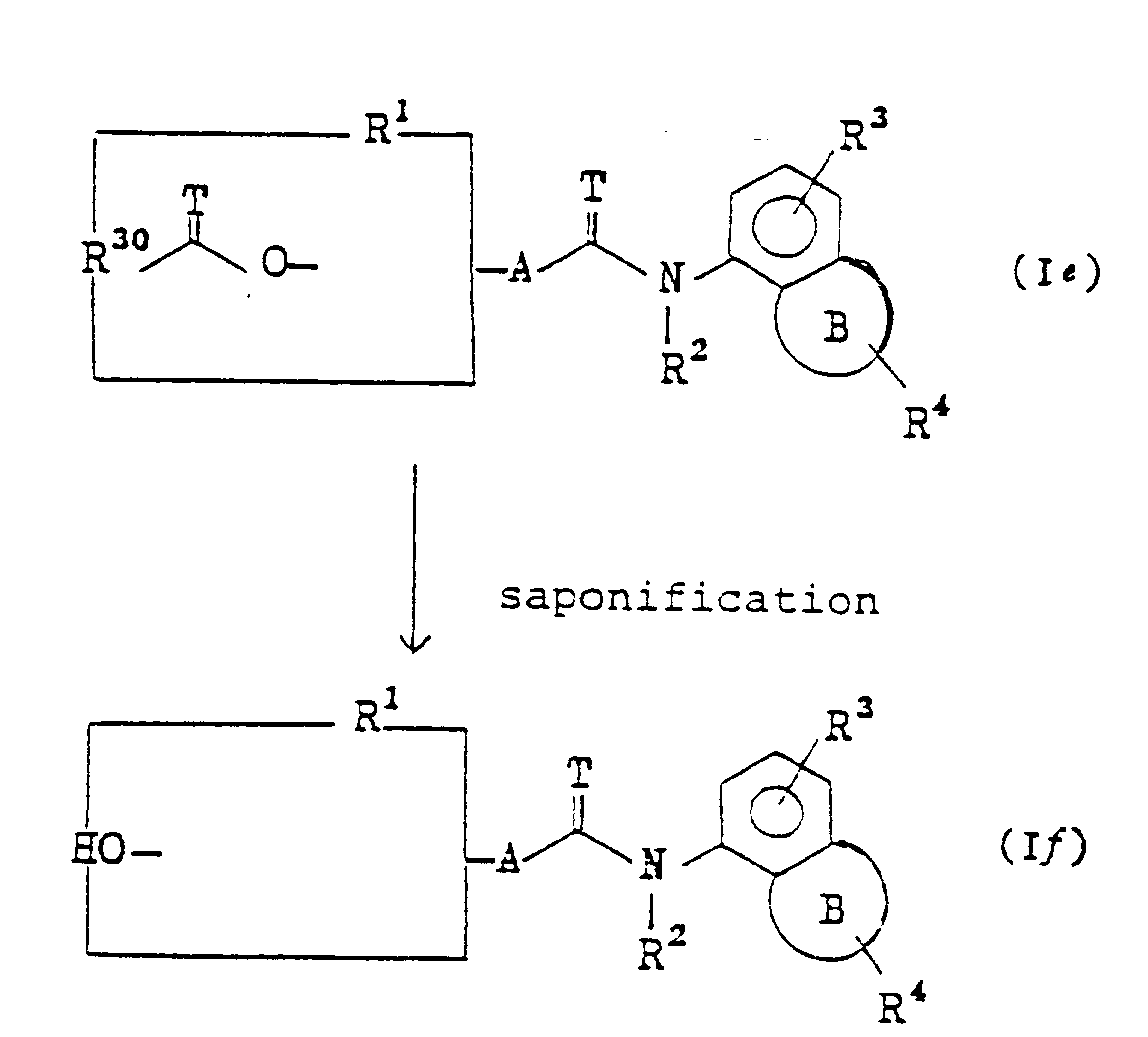
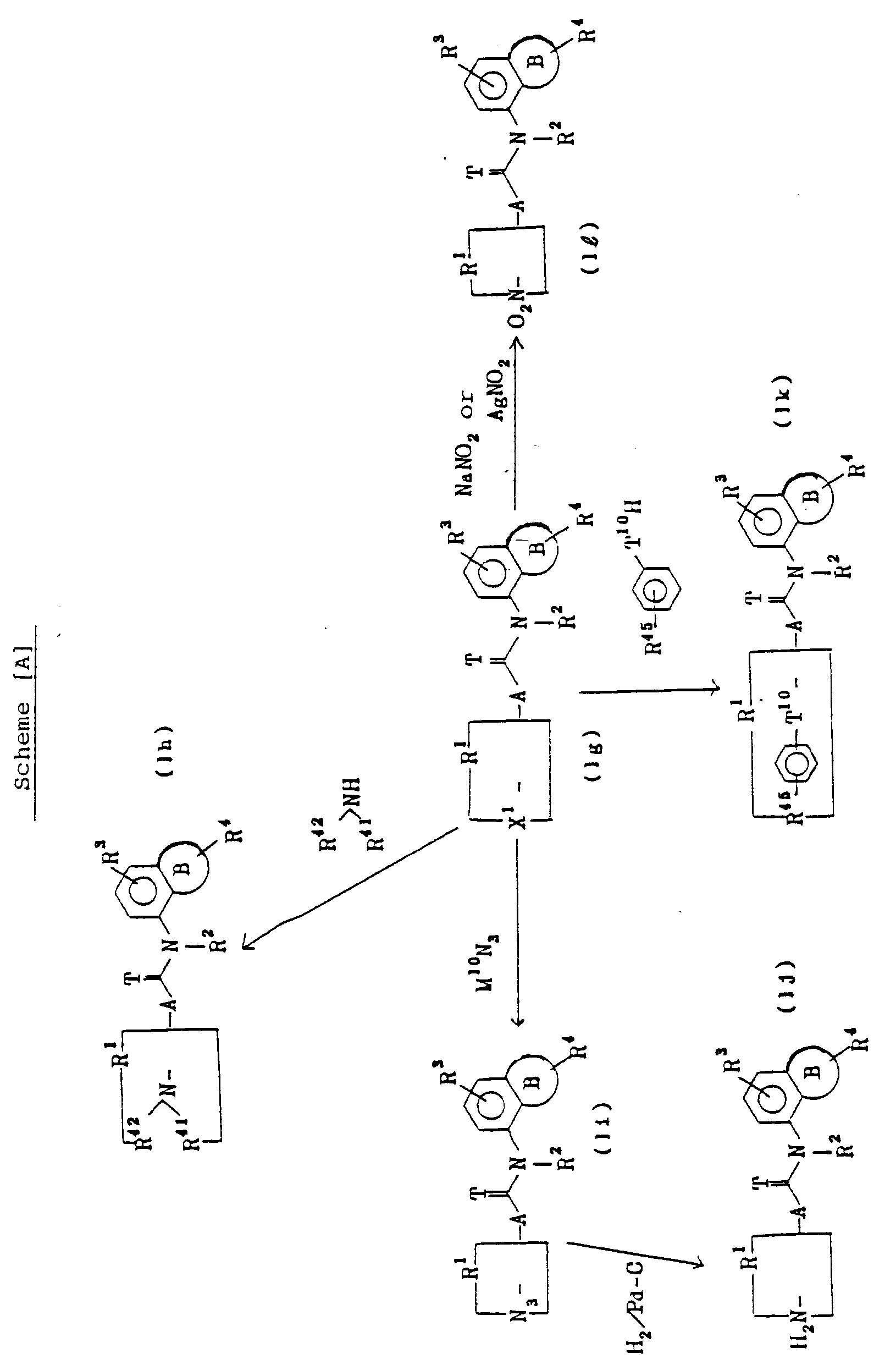
- Arai, Yoshinobu
Mishima-gun
Osaka (JP)
- Miyamoto, Tumoru
Johyoh-shi
Kyoto (JP)
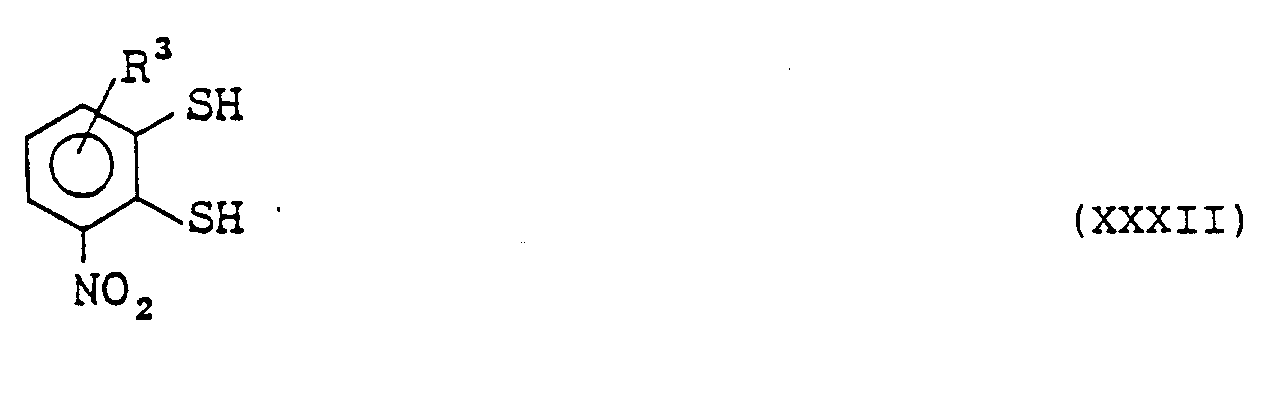
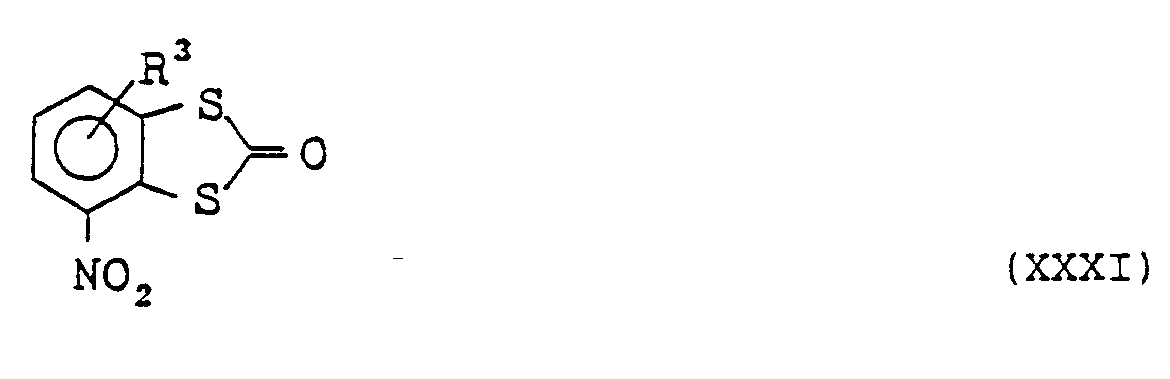
|
| (74) |
Representative: Pearce, Anthony Richmond et al |
|
MARKS & CLERK,
Alpha Tower,
Suffolk Street Queensway
Birmingham B1 1TT
Birmingham B1 1TT (GB) |
| (56) |
References cited: :
EP-A- 0 018 674
DE-A- 1 806 546
GB-A- 1 077 936
US-A- 3 549 689
|
EP-A- 0 181 568
FR-A- 2 164 481
GB-A- 1 088 295
US-A- 4 026 896
|
|
| |
|
|
|
|
| |
|
|
|
Remarks: |
|
Divisional application 91114142.2 filed on 15/08/85. |
|
| Note: Within nine months from the publication of the mention of the grant of the European
patent, any person may give notice to the European Patent Office of opposition to
the European patent
granted. Notice of opposition shall be filed in a written reasoned statement. It shall
not be deemed to
have been filed until the opposition fee has been paid. (Art. 99(1) European Patent
Convention).
|
Summary
[0001] This invention is related to novel fused aminophenyl derivatives having an antagonistic
activity on leukotrienes (SRS); processes for the preparation thereof; and pharmaceutical
agent containing same as active ingredient.
Background
[0002] In the study of prostaglandins (abbreviated as PG hereafter), many important discoveries
have been made continuously in recent years. And so it was found a large change in
the direction of the research and development of PG. In the compounds which have been
newly found or newly confirmed their structure in PG family, it can be said that PG
endoperoxides, (i.e. PGG
2 and PGH
2), thromboxane A
2 (abbreviated as uTXA
2 hereafter), prostacyclin (i.e. PG1
2) and leukotriene C
4, D
4 and E
4 (abbreviated as LTC
4, LTD
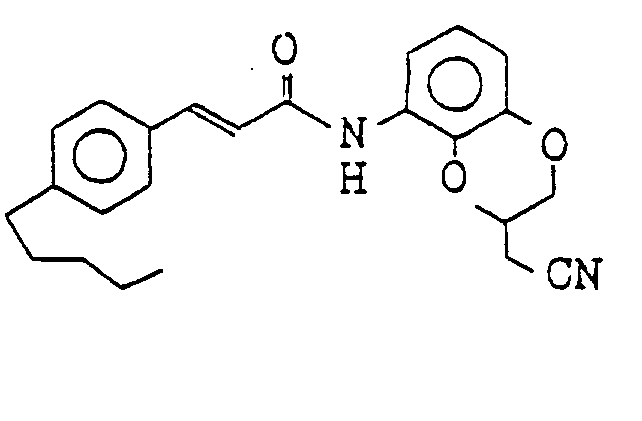
4 and L TE4, respectively, hereafter) etc. have especially strong and unique biological
activities.
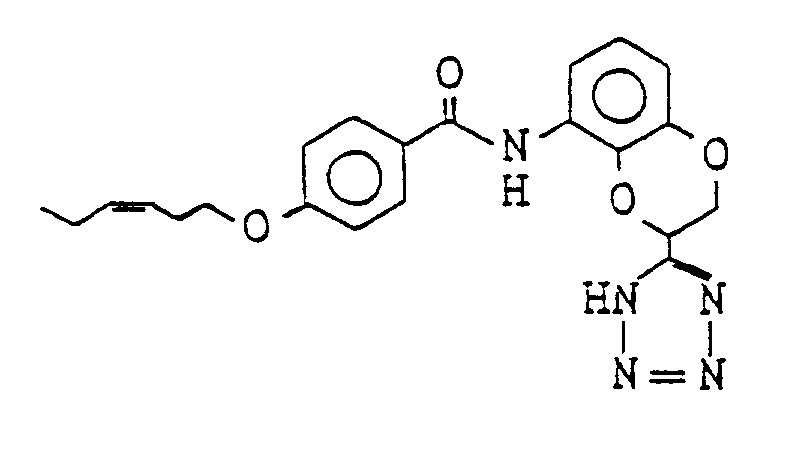
[0003] All the compounds of PG family containing various PG previously known well in addition
to the above compounds, are biosynthesized from the same mother compound, i.e. arachidonic
acid in a living body and, therefore, the metabolic routes starting from arachidonic
acid is called "Arachidonate cascade" as a whole. The detailed explanation of each
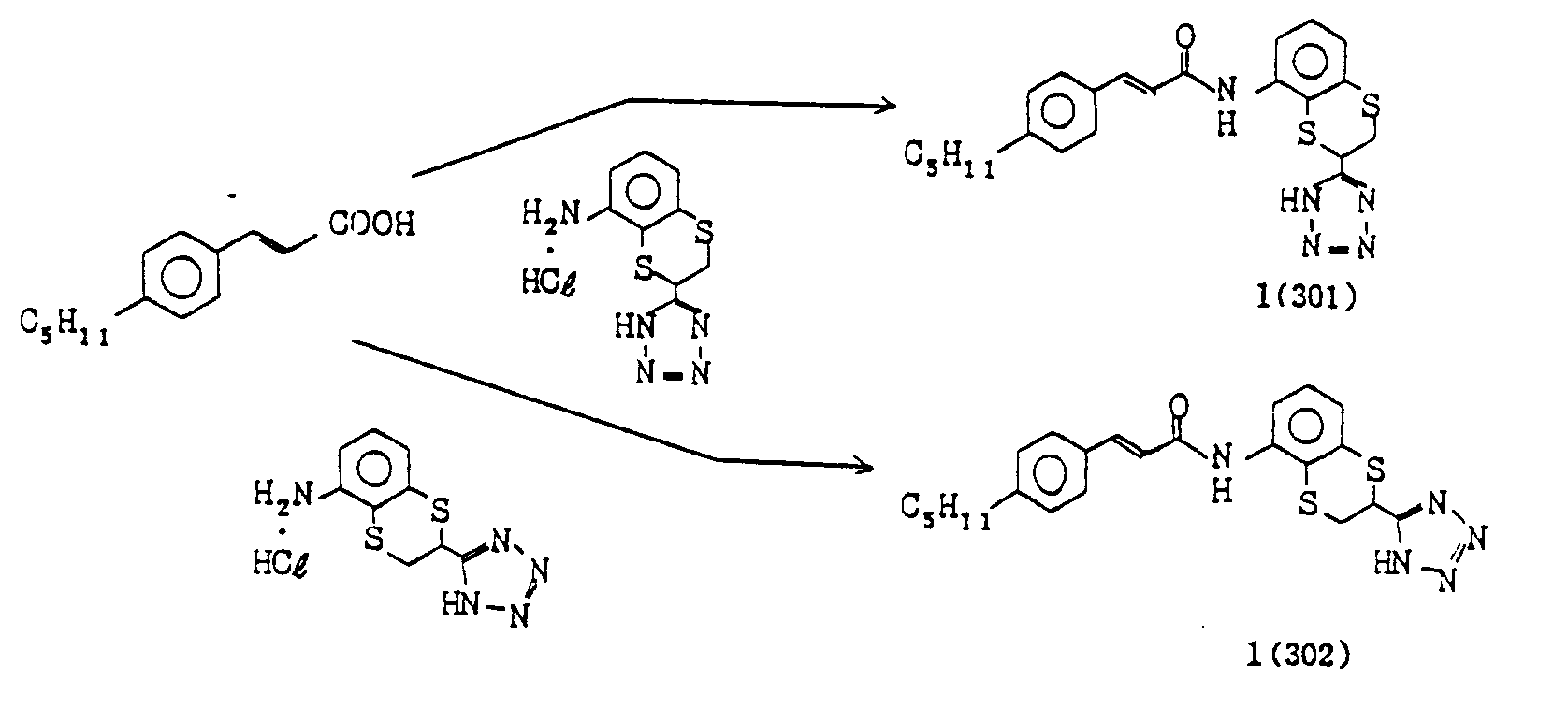
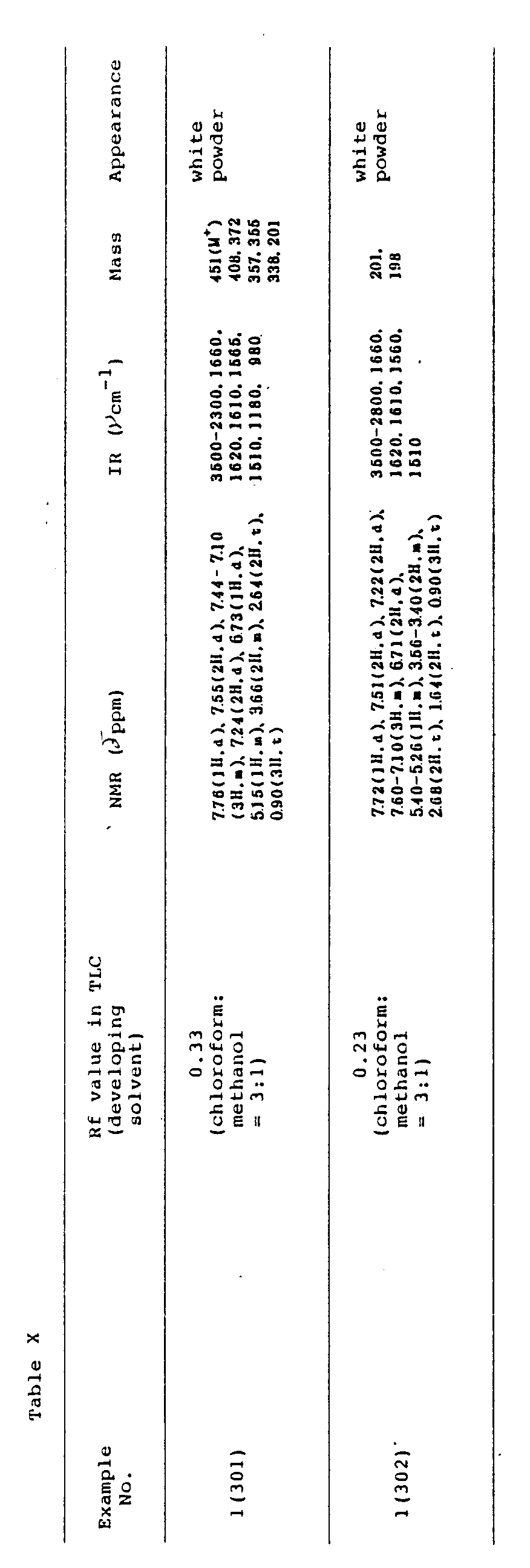
route and the pharmacological character of each metabolite are described in Igaku
No Ayumi, 114, 378 (1980), ibid, 114, 462 (1980), ibid, 114, 866 (1980), ibid, 114,
929 (1980), Gendai lryo, 12, 909 (1980), ibid, 12, 1029 (1980), ibid, 12, 1065 (1980)
and ibid, 12, 1105 (1980) etc.
[0004] The arachidonate cascade can be largely divided into two routes; one is the route
that cyclooxygenase acts on arachidonic acid to convert, into various PGs, e.g. prostaglandin
F
2 (abbreviated PGF
2 hereafter), prostaglandin E
2 (abbreviated PGE
2 hereafter), PG1
2, TXA
2, via PGG
2 and further PGH
2 and the other is the route that lipoxygenase acts on arachidonic acid to convert,
in hydroxyeicosatetraenoic acid (abbreviated as HETE hereafter) or leukotrienes, via
hydroperoxyeicosatetraenoic acid (abbreviated HPETE hereafter).
[0005] As the former route is well known, it is not described in the present specification
in detail. See Prostaglandin (1978), edited by Makoto Katori et al., published by
Kohdan-sha.
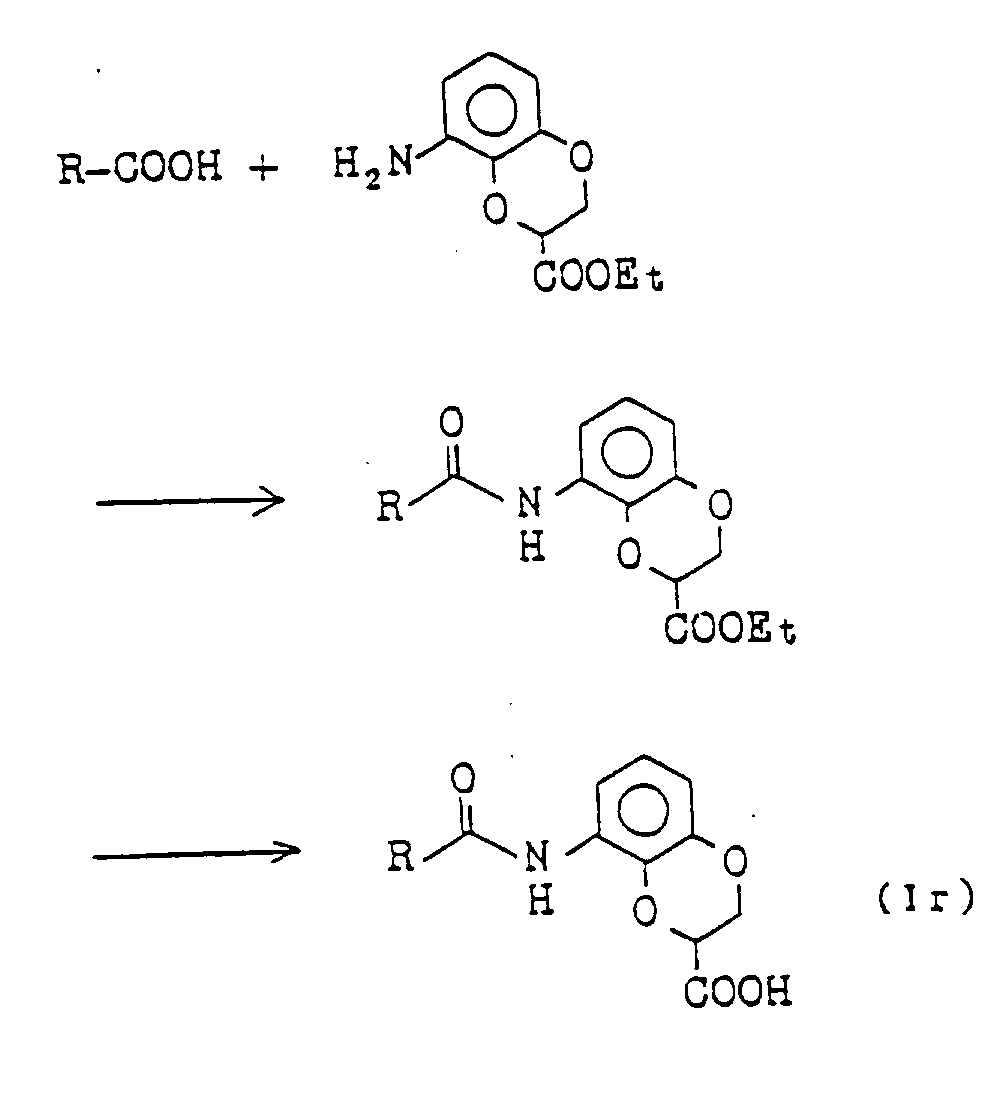
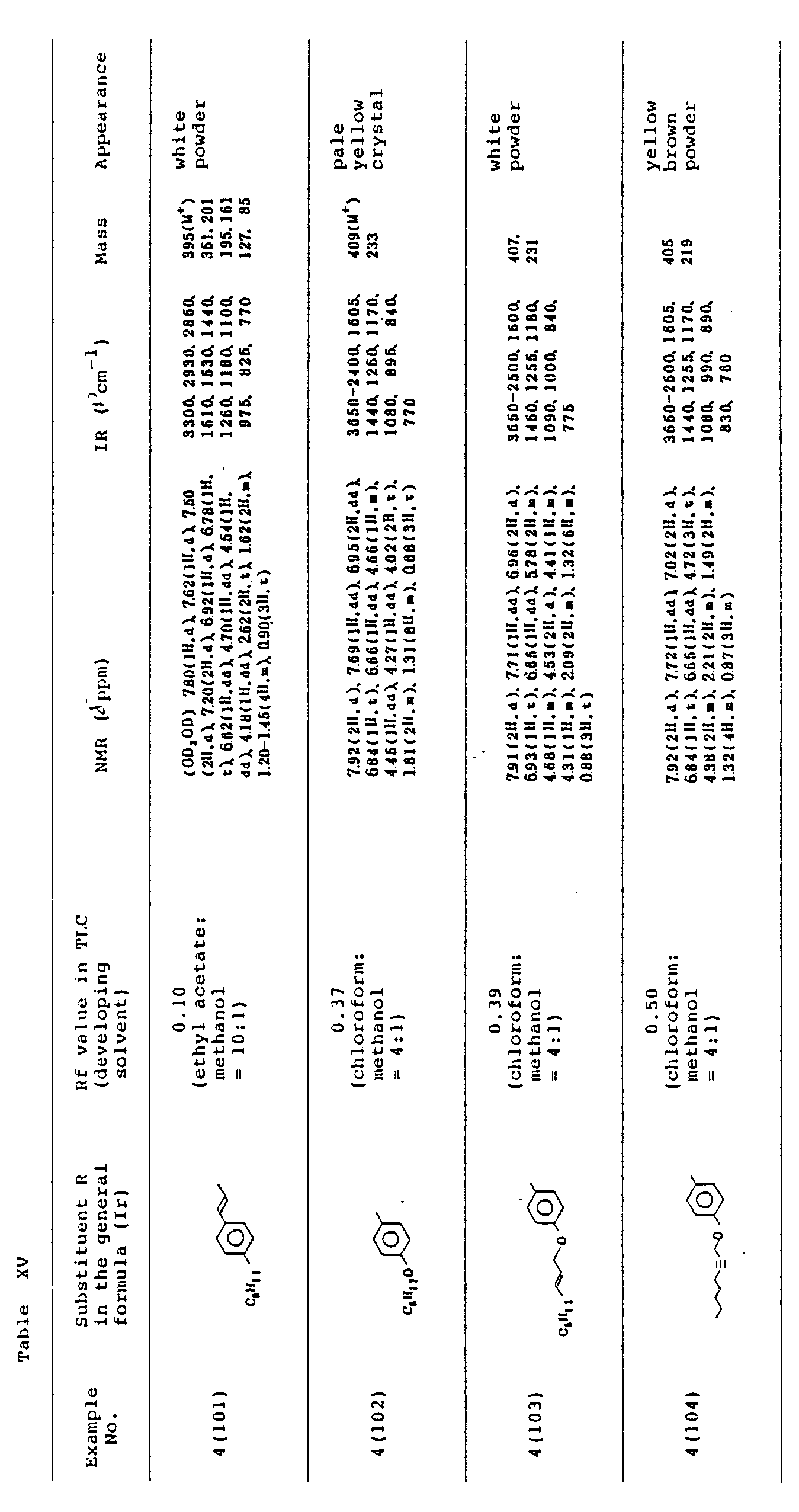
[0006] Concerning the latter route, it has been known that various compounds are produced
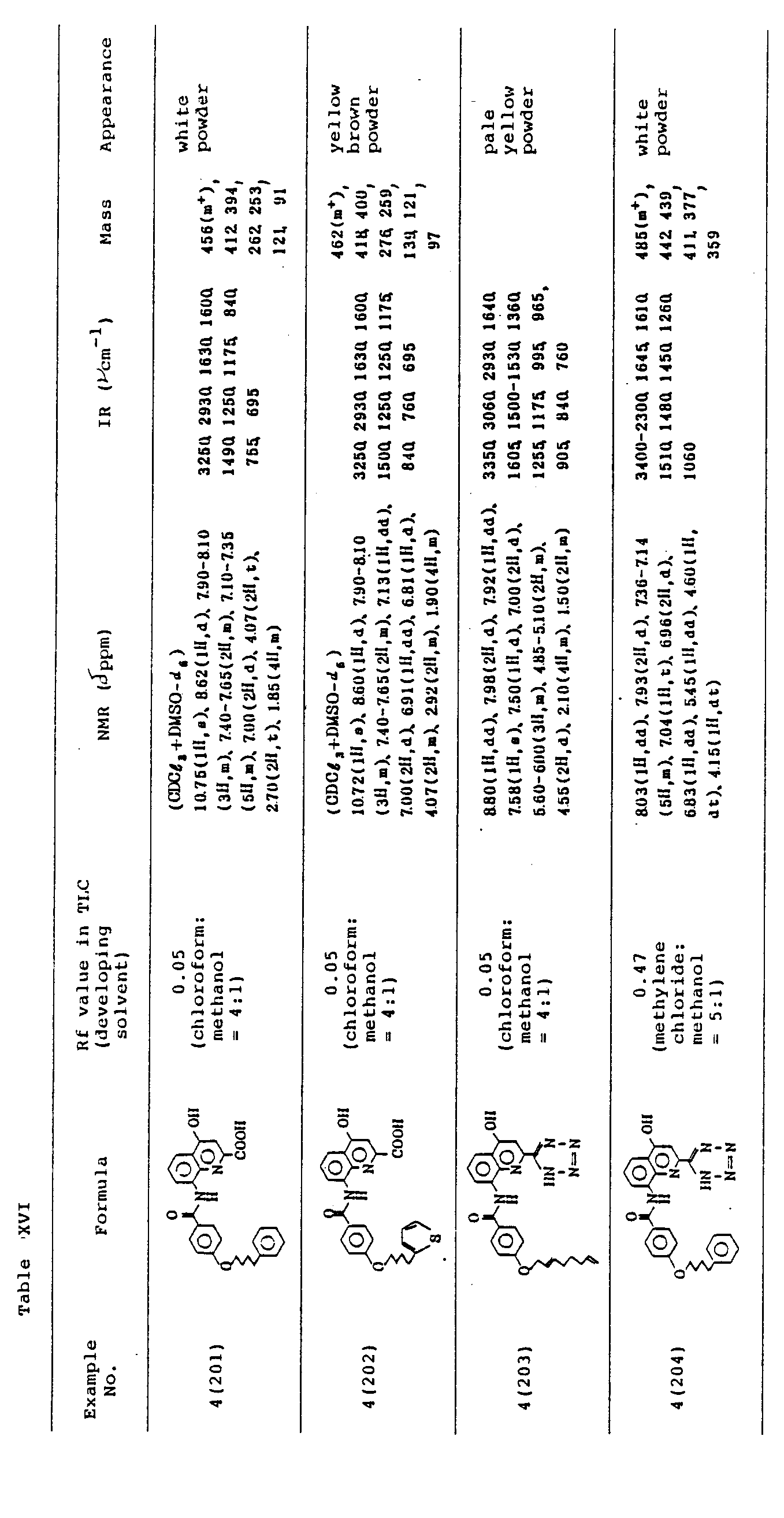
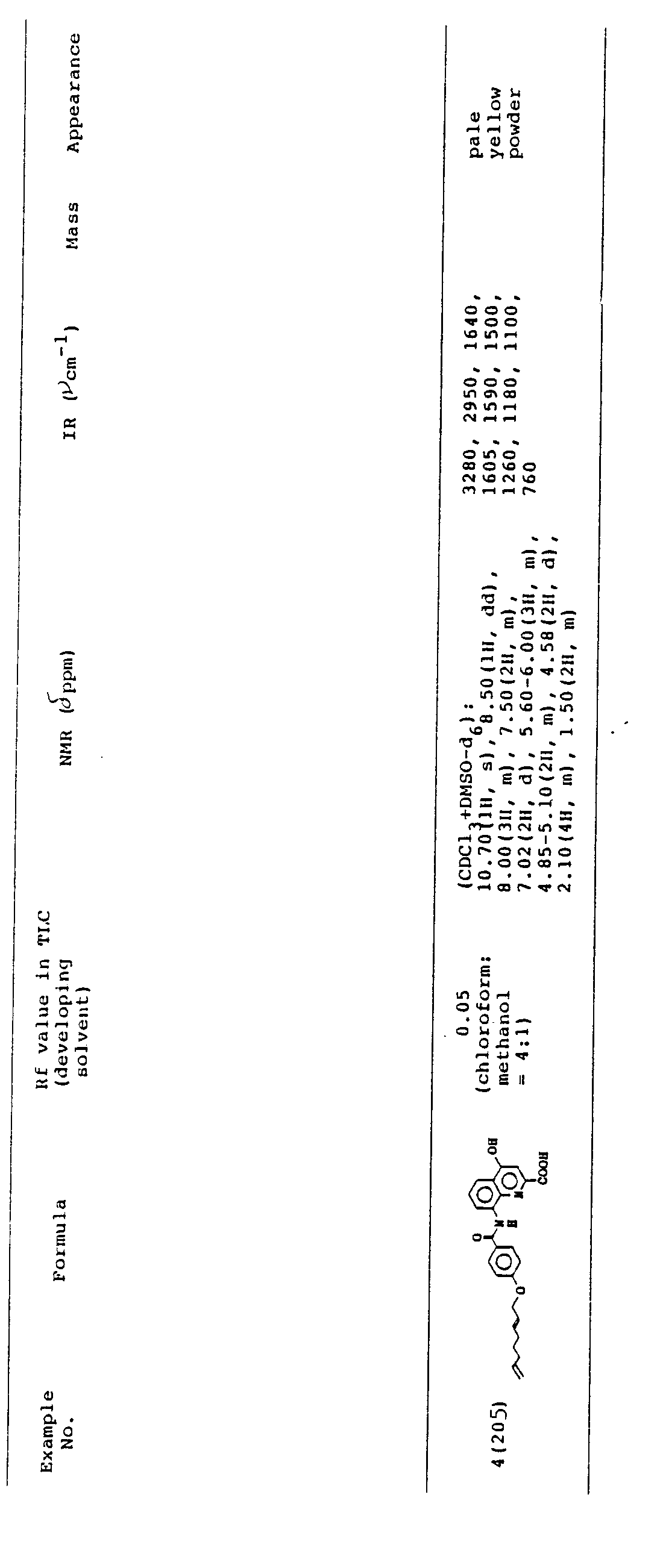
according to the following scheme I.
[0007] Besides being metabolized through a well known route, i.e. the route via PG endoperoxides,
arachidonic acid is also metabolized through another route by the action of lipoxygenase.
That is to say, arachidonic acid is metabolized by the action of lipoxygenase, e.g.
5-lipoxygenase, 12-lipoxygenase and 15-lipoxygenase, to 5-HPETE, 12-HPETE and 15-HPETE,
respectively.
[0008] These HPETE are converted into 5-HETE, 12-HETE and 15-HETE, respectively, by the
action of peroxidase converting a hydroperoxy group into a hydroxy group. Furthermore,
LTA
4 is also produced from 5-HPETE by dehydration. LTA
4 is converted into leukotriene B
4 (abbreviated as L TB4 hereafter) or LTC
4 enzymatically. Further, LTC
4 is converted into L TD4 by the action of y-glutamyl transpeptidase.
[0009] Moreover, it was recently defined that L TD4 is metabolized to L TE4 (see Biochem.
Biophys. Res. Commun., 91, 1266 (1979) and Prostaglandins, 19(5), 645 (1980)).
[0010] Besides, SRS is an abbreviation of Slow Reacting Substance and it was named by Feldberg
et al. or the substance released when perfusing cobra venom through isolated lung
or incubating cobra venom with vitellus. And it was reported that the substance constricted
ilem isolated from guinea pig slowly and continually (see J. Physiol., 94, 187 (1938)).
[0011] Moreover, Kellaway et al. showed the relation between SRS-A and allergic reaction
from the fact that SRS-A is released when an antigen is sensitized to perfusing lung
isolated from guinea pig (see Quant. J. Exp. Physiol., 30, 121 (1940)).
[0012] Brocklehurst reported that when the antigen is sensitized to a lung fragment isolated
from a bronchial asthmatic whose specific antigen is defined, by an operation, histamine
and SRS-A are released and strongly constrict the bronchial muscle. Since such constriction
can not be prevented by an antihistaminic agent, he suggested that SRS-A is an important
bronchoconstrictor in an asthmatic paroxysm (see Progr. Allergy, 6, 539 (1962)).
[0013] Since then, many reports were published, for instance, SRS-A prepared from human
lung slice constrict a tracheal spiral of normal human (see Int. Arch. Allergy Appl.
Immunol., 38, 217 (1970)); when SRS-A prepared from rats is injected intravenously
to guinea pig, significant increase of pulmonary resistance is observed (see J. Clin.
Invest., 53, 1679 (1974)); in addition, a subcutaneous injection of SRS-A to guinea
pig, rat and monkey enhances vascular permeability (see Advances in Immunology, 10,
105 (1969), J. Allergy Clin. Immunol., 621, 371 (1978), Prostaglandins, 19(5), 779
(1980) etc.).
[0014] Generally, the substance released by immunological reaction is called SRS-A. On the
other hand, the substance released by non-immunological reaction such as calcium ionophore
is called SRS. However, the above two substances have many similarities each other
and, therefore, it is considered they would probably be the same substance.
[0015] Further, it was confirmed that SRS or SRS-A is a mixture of LTC
4 and LTD
4. So it can be understood that the pharmacological characters of these leukotrienes
are the same as those of SRS or SRS-A (see Proc. Natl. Acad. Sci. USA, 76, 4275 (1979),
Biochem. Biophys. Res. Commun., 91, 1266 (1979), Proc. Natl. Acad. Sci. USA, 77, 2014
(1980) and Nature, 285, 104 (1980)).
[0016] Based on result of these studies, various leukotrienes (LTC
4, L TD4 and LTE
4, and further other leukotrienes which may be confirmed their structures in future)
biosynthesized from arachidonic acid via LTA
4, are considered to be important factors relating to the appearance of allergic tracheal
and bronchial diseases, allergic lung diseases, allergic shock and various allergic
inflammations.
[0017] The suppression of leukotrienes is useful for the prevention and/or treatment of
tracheal, bronchial or lung diseases such as asthma, allergic lung diseases, allergic
shock or various allergic diseases.
[0018] On the other hand, arachidonic acid is released from phospholipids by the action
of phospholipase, and two routes were generally accepted, namely (1) the action of
phospholipase A
2 on phosphatidyl choline, and (2) the action of phospholipase C on phosphatidyl inositol
to produce the 1,2-diglyceride, and the action of diglyceridelipase followed by monoglyceridelipase
on it to release arachidonic acid (see Kagaku to Seibutsu (Chemistry and Biology),
21, 154 (1983)).
[0019] Also it was known that the arachidonic acid released is metabolized through two different
routes i.e. (1) a metabolic route to bioactive substances e.g. prostaglandins (PGs),
thromboxane A
2 (TXA
2) by cyclooxygenase, and (2) a metabolic route to bioactive substances e.g. SRS-A
(Slow Reacting Substances of Anaphylaxis), hydroxyeicosatetraenoic acid (HETE) and
leukotriene B
4 (LTB
4) by lipoxygenase (see Kagaku to Seibutsu (Chemistry and Biology), 21, 154 (1983)).
[0020] These metabolites are known as chemical mediators; for example, TXA
2 is a compound which has a potent activity of platelet aggregation and aorta contraction,
SRS-A is a chemical mediator on asthma, L TB4 is a chemical mediator on various inflammations
(e.g. gout), and PGs are also chemical mediators on various inflammations which enhance
a vascular permeability and pain, and have a vasodilative action, pyrogenetic action
and chemotactic action (see Prostaglandin (1978), edited by Makoto Katori et al, published
by Kohdan-sha).
[0021] Arachidonic acid is converted and metabolized to various chemical mediators which
play an important physiological part in the living body. And it was known that ill-balances
of those chemical mediators induce various disorders.
[0022] As antagonists of SRS, the groups of the compounds of general formula:
(wherein from R
1 to R
5 and R
7 each represent a hydrogen atom, a hydroxy group, an alkyl group of from 1 to 6 carbon
atom(s), an alkoxy group of from 1 to 6 carbon atom(s), an amino group, an acyl group,
an acylamino group of from 2 to 6 carbon atoms, an alkenyl group of from 2 to 6 carbon
atoms, a halogen atom or a phenylalkoxy group in which alkoxy have from 1 to 6 carbon
atom(s); X represents a hydrocarbyl group of from 1 to 10 carbon atom(s) being optionally
substituted by hydroxy group(s); A represents an oxygen atom or absense; Q represents
an alkylene, alkenylene or alkynylene group of from 2 to 6 carbon atoms which may
be branched; D represents a carboxy group, a 5-tetrazolyl group or carbamido-5-tetrazolyl
group.) form the subject of patent applications by Fisons Co., Ltd. (see Japanese
Patent Application No. 55-1273841 i.e. European Patent Publication No. 17332 or United
States Patent No. 4281008.).
[0023] The following compounds form the subject of patent applications by Kissei Pharmaceutical
Co., Ltd, as anti-allergic agents, of the general formula:
(wherein R
1 and R
2 each represent a hydrogen atom or an alkyl group with 1-4 carbon atoms; R
3 and R
4 each represent a hydrogen atom or may be combined together to form an additional
chemical bond; X represents a hydroxyl group, a halogen atom, a straight or branched
chain saturated or unsaturated alkyl group with 1-4 carbon atoms, a straight or branched
chain saturated or unsaturated alkoxy group with 1-4 carbon atoms, an acyloxy group
with 1-4 carbon atoms, or a cycloalkyl group with up to 6 carbon atoms; n is zero
or an integer of 1-3 with the proviso that when n is 2 or 3; X's may be the same or
different and that when two X's are commonly the alkyl or alkoxy group, both X's may
be combined together to form a ring; and Y represents a straight or branched chain
alkylene group or a straight or branched chain oxyalkylene group connected to the
benzene nucleus through an oxygen atom.) as well as physiologically acceptable salts
thereof. (see United States Patent No. 4,026,896.)
Disclosure of the Invention
[0024] The present inventors have synthesized novel compounds of the general formula (I)
depicted hereafter, which have a structure characterized by a (thio)amido group being
substituted on fused benzene ring or benzene ring and have found that the compounds
have a potent antagonistic activity on leukotrienes (SRS).
[0025] The compounds of the present invention also inhibit phospholipase, so inhibit release
of arachidonic acid from phospholipids, and are therefore useful for the prevention
and/or treatment of diseases induced by arachidonate metabolites e.g. TXA
2, PGs, leukotrienes in mammals including human beings, especially human beings.
[0026] Examples of the diseases to the subject are various allergic diseases induced by
leukotrienes described above, thrombosis e.g. one induced by injury (damage) of cerebal
or coronary, endothelium or intima and inflammations e.g. arthritis, rheumatism (see
Junkan Kagaku (Cardiovascular Science) 3, 484 (1983) Yakkyoku (Pharmacy) 34, 167 (1983)).
[0027] According to the present invention, there is provided a fused aminophenyl derivative
of the general formula:
[wherein symbol A represents a single bond or a group of methylene, ethylene, trimethylene,
tetramethylene, vinylene, propenylene, butenylene, butadienylene or ethylene group
optionally being substituted by one, two or three straight or branched alkyl groups(s)
of from 1 to 10 carbon atom(s) and/or phenyl groups(s),
symbol B represents a carbocyclic ring of from 4 to 8 members wherein one, two or
three of the carbon atom(s) may be replaced by oxygen, nitrogen and/or sulphur atom(s),
or wherein the ring may optionally be substituted by group(s) of oxo, thioxo and/or
hydroxy group(s),
symbol T represents an oxygen atom or a sulphur atom,
R1 represents a group of formula:
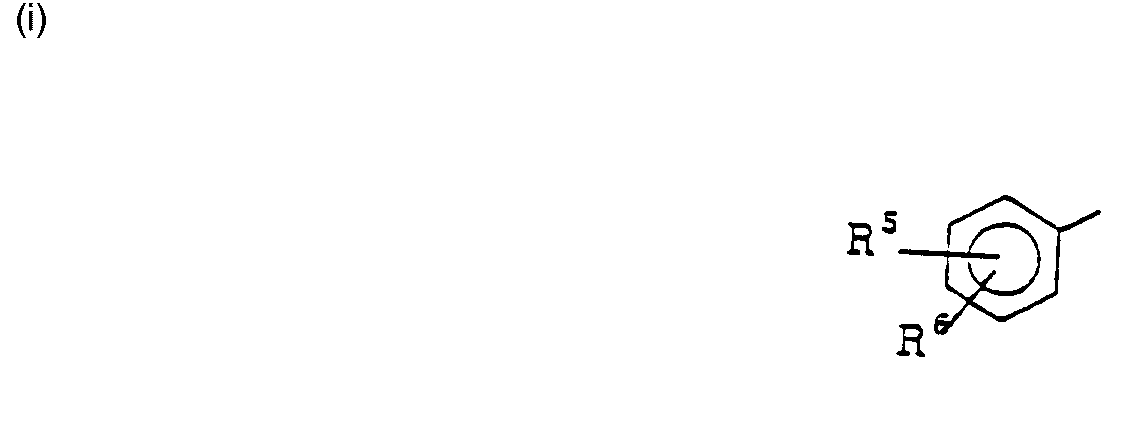
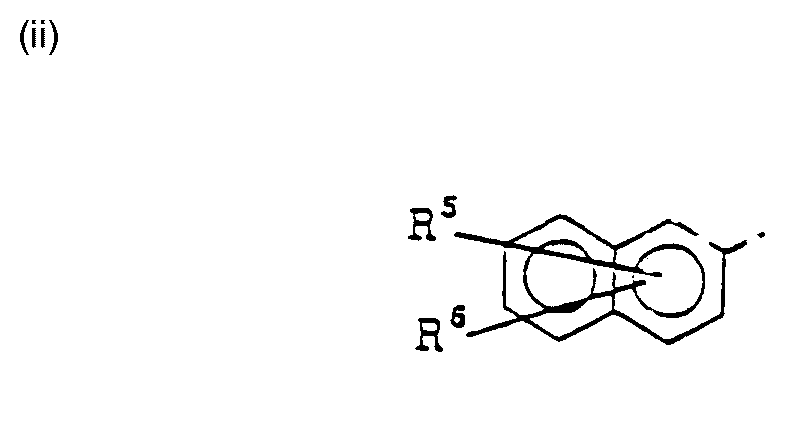
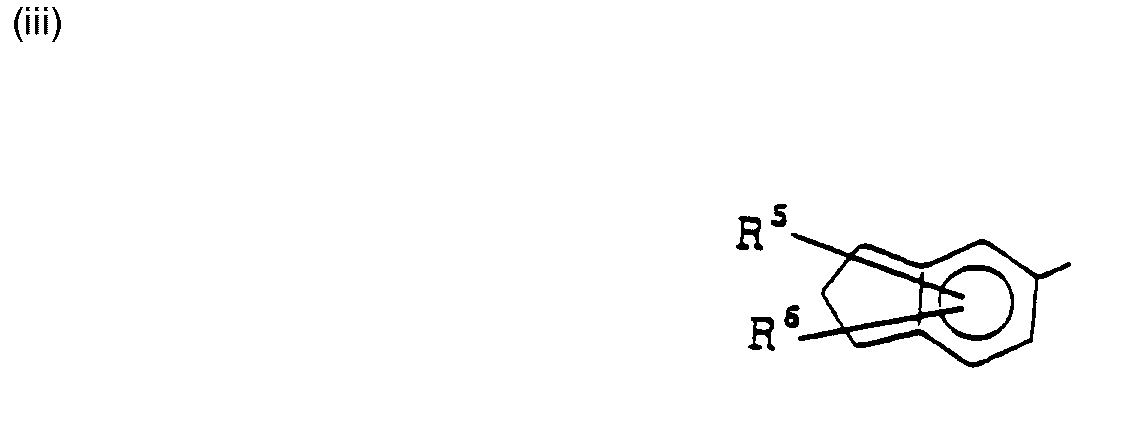
or
or
(iv) a straight or branched alkyl, alkenyl or alkynyl group of from 1 to 20 carbon
atom(s),
(wherein R
5 and R
6 independently represent a hydrogen atom or a halogen atom or a straight or branched
alkyl, alkenyl or alkynyl group of from 1 to 20 carbon atom(s) wherein one, two, three,
four or five of the carbon atom(s) may be replaced by oxygen atom(s), sulphur atom(s),
halogen atom(s), nitrogen atom(s), benzene ring(s), thiophene ring(s), naphthalene
ring(s), carbocyclic ring(s) of from 4 to 7 carbon atom(s), carbonyl group(s), carbonyloxy
group(s), hydroxy group(s), carboxy group(s), azido group(s) and/or nitro group(s)),
R2 represents a hydrogen atom or a straight or branched alkyl group of from 1 to 6 carbon
atom(s),
R3 represents a hydrogen atom, a halogen atom, a hydroxy group, a nitro group, a group
of general formula: -COOR7 (wherein R7 represents a hydrogen atom or a straight or branched alkyl group of from 1 to 6 carbon
atom(s)) or a straight or branched alkyl, alkoxy or alkylthio group of from 1 to 6
carbon atom(s), and
R4 represents a group of general formula:
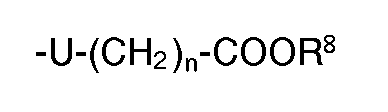
or
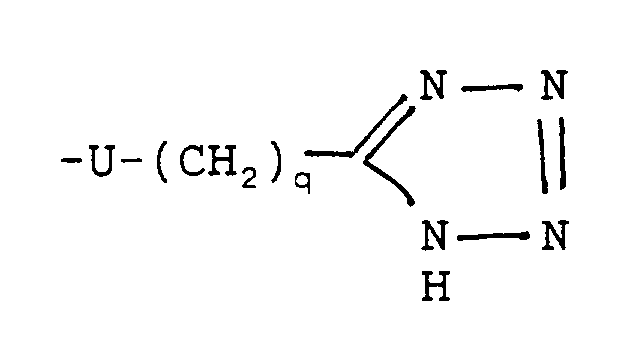
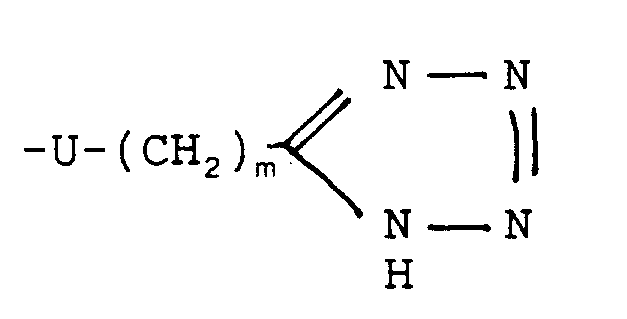
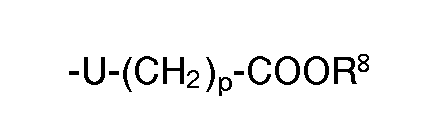
(wherein symbol U represents an oxygen atom or a sulphur atom, R8 represents a hydrogen atom or a straight or branched alkyl group of from 1 to 6 carbon
atom(s), n and m represent an integer of from 1 to 10, respectively, and p and q represent
zero or an integer of from 1 to 10, respectively)]; or a non-toxic salt thereof.
[0028] The compounds of the general formula (IA) are novel, in chemical structure, because
they have (thio) amido group as well as benzene ring(s) and/or chromon skeleton as
the essential group, compared with the compounds of Fisons of the general formula
(A), described hereinbefore in the part of background.
[0029] In the general formula (I), example of the groups represented by R
5 and R
6 are as follows:-
o a hydrogen atom, a halogen atom
o an alkyl group of from 1 to 20 carbon atom(s)
o an alkenyl or alkynyl group of from 2 to 20 carbon atoms
o an alkoxy or alkylthio group of from 1 to 19 carbon atom(s)
o an alkenyloxy, alkenylthio, alkynyloxy or alkynylthio group of from 3 to 19 carbon
atoms
o an alkyl group of from 1 to 19 carbon atom(s) being substituted by halogen atom(s)
and/or hydroxy group(s)
o an alkenyl or alkynyl group of from 2 to 19 carbon atoms being substituted by halogen
atom(s) and/or hydroxy group(s)
o an alkoxy or alkylthio group of from 1 to 18 carbon atom(s) being substituted by
halogen atom(s) and/or hydroxy group(s)
o an alkenyloxy, alkenylthio, alkynylthio or alkynyloxy group of from 3 to 18 carbon
atoms being substituted by halogen atom(s) and/or hydroxy group(s)
o an alkyloxyalkyl, alkenyloxyalkyl or alkyloxyalkenyl group of from 2 to 19 carbon
atoms
o a cycloalkyl, cycloalkyloxy or cycloalkylthio group of from 4 to 7 carbon atoms
o a phenyl, phenoxy or phenylthio group
o an alkyl group of from 1 to 19 carbon atom(s) which has carbocyclic ring(s) of from
4 to 7 carbon atoms, benzene ring(s), naphthalene ring(s) or thiophene ring(s) in
the middle or at the terminal thereof
o an alkoxy, alkylthio, alkenyloxy, alkenylthio, alkynyloxy or alkynylthio group of
from 1 to 18 carbon atom(s) which have carbocyclic ring(s) of from 4 to 7 carbon atoms,
benzene ring(s), naphthalene ring(s) or thiophene ring(s) in the middle or at the
terminal thereof
o a phenylthioalkoxy or phenyloxyalkyloxy group wherein alkyl moiety is a group from
1 to 17 carbon atom(s)
o a carboxyalkyloxy, alkoxycarbonylalkyloxy group of from 2 to 19 carbon atoms
o an alkoxycarbonyloxyalkyloxy group of from 3 to 19 carbon atoms
o an alkenylcarbonyloxy group of from 3 to 20 carbon atoms
o an alkylcarbonyl group of from 2 to 20 carbon atoms
o an azidoalkyl, nitroalkyl, aminoalkyl, alkylaminoalkyl, dialkylaminoalkyl group
of from 1 to 19 carbon atom(s)
o an azidoalkyloxy, nitroalkyloxy, aminoalkyloxy, alkylaminoalkyloxy, dialkylaminoalkyloxy
group of from 1 to 18 carbon atom(s)
o an alkenylcarbonylamino group of from 3 to 19 carbon atoms
o an alkylamino group of from 1 to 19 carbon atom(s)
o groups described above being further substituted by halogen atom(s), hydroxy group(s),
azido group-(s), nitro group(s) and/or carboxy group(s)
[0030] Among the groups described above, preferable groups as R
5 and R
6 are the following groups:
o a hydrogen atom
o a halogen atom
o a straight or branched alkyl group of from 1 to 20 carbon atom(s)
o a straight or branched alkoxy group of from 1 to 19 carbon atom(s)
o a straight or branched alkenyloxy group of from 3 to 19 carbon atoms
o a straight or branched alkynyloxy group of from 3 to 19 carbon atoms
o a straight or branched alkylthio group of from 1 to 19 carbon atom(s)
o a straight or branched alkyl group of from 1 to 18 carbon atom(s) being substituted
by halogen atom-(s)
o a straight or branched alkyloxyalkyl group of from 2 to 19 carbon atom(s)
o a cycloalkyl, cycloalkylalkyl (wherein alkyl moiety is a group of from 1 to 8 carbon
atom(s)) or cycloalkylalkyloxy (wherein alkyl moiety is a group of from 1 to 8 carbon
atom(s)) group optionally being substituted by straight or branched alkyl group(s)
of from 1 to 8 carbon atom(s), hydroxy group-(s) halogen atom(s) and/or nitro groups(s)
o a phenyl, phenylalkyl (wherein alkyl moiety is a group of from 1 to 8 carbon atom(s)),
phenylalkyloxy (wherein alkyl moiety is a group of from 1 to 8 carbon atom(s)) or
phenylalkenyloxy (wherein alkenyl moiety is a group of from 2 to 8 carbon atom(s))
group optionally being substituted by straight or branched alkyl group(s) of from
1 to 8 carbon atom(s),hydroxy group(s), halogen atom(s) and/or nitro group(s)
o a naphthyl, naphthylalkyl (wherein alkyl moiety is a group from 1 to 8 carbon atom(s).),
naphthylalkoxy (wherein alkyl moiety is a group from 1 to 8 carbon atom(s).) or naphthylalkenyloxy
(wherein alkenyl moiety is a group from 2 to 8 carbon atoms.) group optionally being
substituted by straight or branched alkyl group(s), hydroxy group, halogen atom(s)
and/or nitro group(s)
o a straight or branched alkoxy, alkenyloxy or alkyloxyalkyloxy group of from 1 to
18 carbon atom(s) being substituted by carbonyl, carbonyloxy and/or hydroxy group(s)
o a straight or branched alkoxy group of from 1 to 17 carbon atom(s) being substituted
by phenoxy or phenylthio group(s)
o a straight or branched alkoxy group of from 1 to 18 carbon atom(s) being substituted
by thiophene ring(s)
o a straight or branched alkyl, alkenyl, alkoxy or alkenyloxy group of from 1 to 18
carbon atom(s) being substituted by azido or nitro group(s) or amino group(s) being
optionally substituted by an alkyl group of from 1 to 6 carbon atom(s) (including
dialkylamino group(s))
o a straight or branched alkyl, alkenyl, alkoxy or alkenyloxy group of from 1 to 18
carbon atom(s) being replaced by two kinds groups which are carbonyl group(s) and
amino group(s)
[0031] An alkyl group of from 1 to 20 carbon atom(s) in the present invention means a group
of methyl, ethyl, propyl, butyl, pentyl, hexyl, heptyl, octyl, nonyl, decyl, undecyl,
dodecyl, tridecyl, tetradecyl, pentadecyl, hexadecyl, heptadecyl, octadecyl, nonadecyl,
eicocyl group and an isomeric group thereof.
[0032] An alkenyl and alkynyl group of from 1 to 20 carbon atom(s) mean corresponding groups
described above.
[0033] An alkyl group of from 1 to 6 carbon atom(s) in the present invention means a group
of methyl, ethyl, propyl, butyl, pentyl, hexyl group and isomeric group thereof.
[0034] A cycloalkyl group of from 4 to 7 carbon atoms in the present invention means a group
of cyclobutyl, cyclopentyl, cyclohexyl and cycloheptyl group.
[0035] A halogen atom in the present invention means an atom of chlorine, bromine, iodine
and fluorine atom.
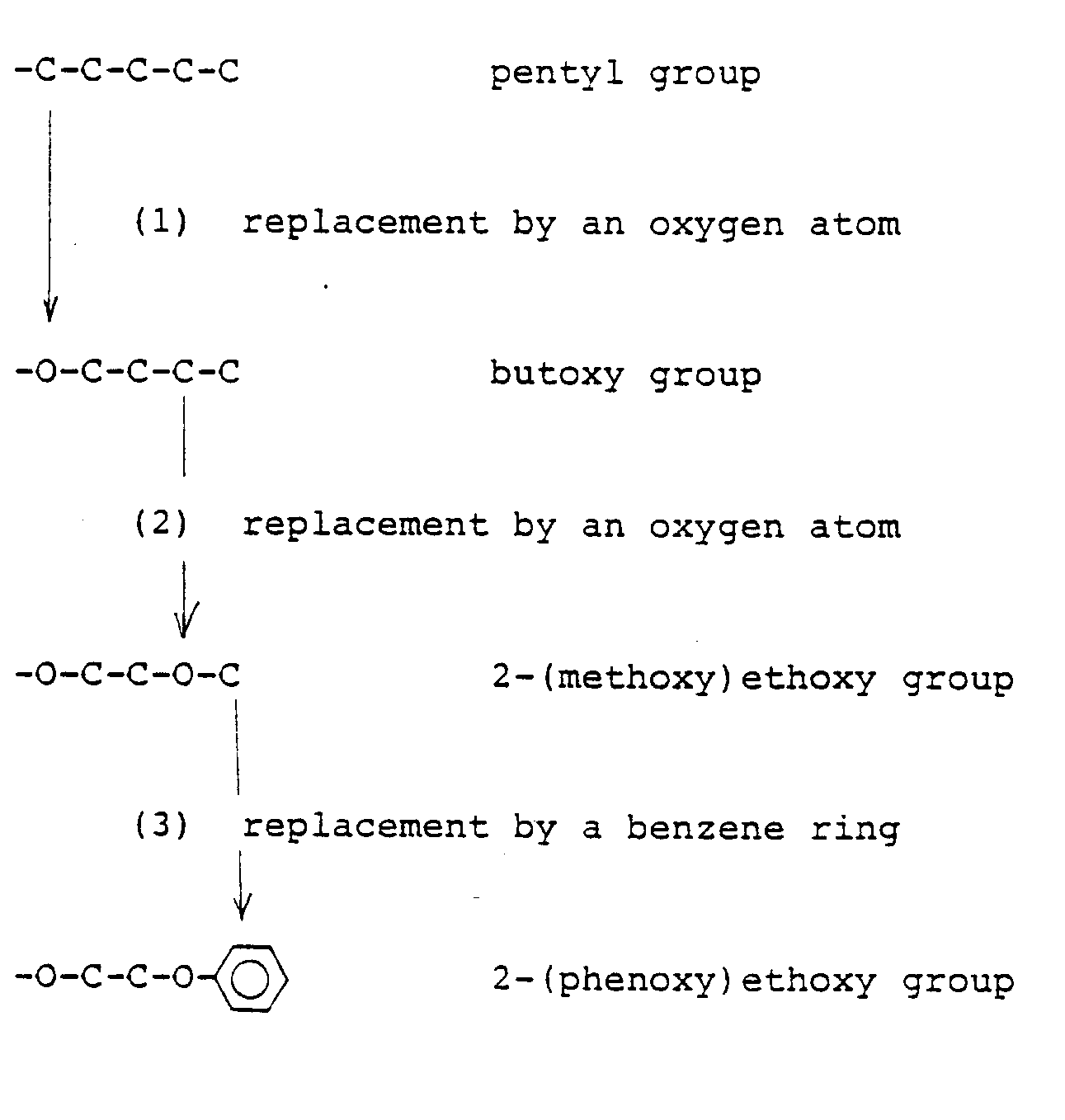
[0036] In the present invention, when a certain carbon atom is replaced by another atom,
a ring or a group, any carbon atom(s) can be replaced, so far as the replacement per
se can be acceptable in a chemical or physical sense. For example, "an isobutyl group
replaced by a benzene ring in the middle or at the terminal" means a group of isopropylphenyl,
dimethylphenylmethyl or 2-phenylpropyl group. When the replacement, hydrogen atom(s)
may be added or removed suitably. For example, "a pentyl group replaced by a nitrogen
atom at the 2nd position" means N-propylaminomethyl group.
[0037] For example, 2-(phenoxy)ethoxy group and 5-(2-chloro-4-nitrophenylthio)-5-methylpent-2-enyloxy
groups are induced by replacing five times or not more of them from a pentyl group
and a 6,8-dimethylnon-3-enyl group, respectively, and therefore they are included
in the present invention.
[0038] These examples are not intended to limit the present invention.
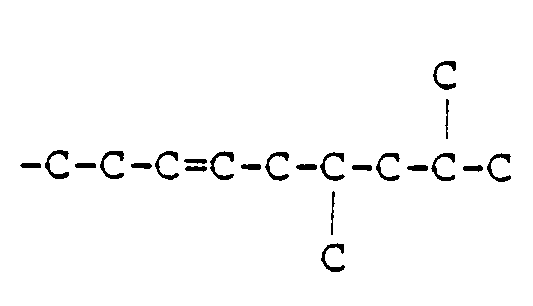
(1) replacement by an oxygen atom
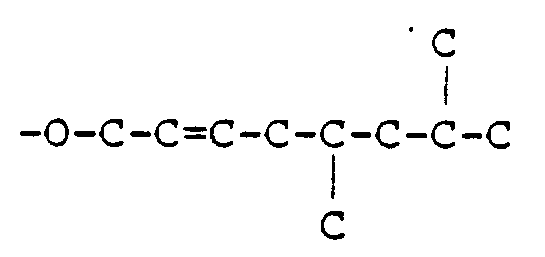
(2) replacement by a benzene ring
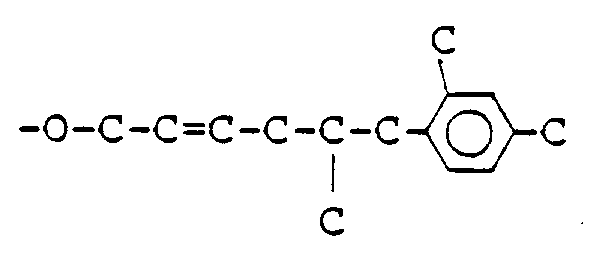
(3) replacement by a sulphur atom
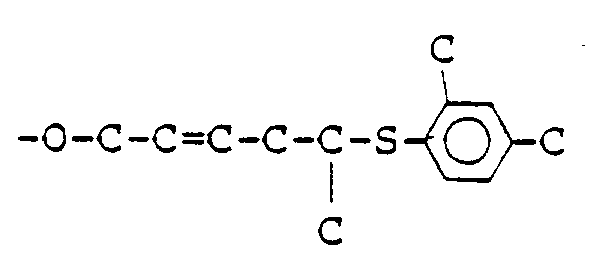
(4) replacement by a halogen atom
(5) replacement by a nitro group
[0039] Examples of carbocyclic rings of from 4 to 8 members being unreplaced or replaced
one, two or three of optional carbon atom by oxygen, nitrogen and/or sulphur atom(s)
(the ring may optionally be substituted by group(s) of oxo, thioxo and/or hydroxy
group(s)) represented by the symbol B in the general formula (I) are following :-



(The rings above described may optionally be substituted by hydroxy group(s).)
[0040] The carbocyclic rings depicted above may be saturated rings or unsaturated ones,
or aromatic rings or non-aromatic ones.
Process for the Preparation (1)
[0042] The present invention includes not only the compounds per se, non-toxic salts thereof,
use or method, but also process for the preparation.
[0043] According to the present invention, the compounds of the present invention of the
general formula (I) may be prepared by reacting a compound of general formula:
(wherein all the symbols have the same meaning as described hereinbefore.)
or a corresponding dithioic acid and a compound of general formula:
(wherein all the symbols have the same meaning as described hereinbefore.)
to form amide-bond, and further subjecting saponification or and/or esterification,
if desired.
[0044] Reactions to form amide-bond are well known, it may be carried out, for example;
(A) by the method with using mixed acid anhydride
(B) by the method with using acid halide
(C) by the method with using DCC
[0045] Concrete description of the methods described above are as follows:
(A) a method using a mixed acid anhydride may be carried out, for example; an acid
of the general formula (II) is reacted with an acid halide (pivaloyl chloride, thionyl
chloride, tosyl chloride, mesyl chloride, oxalyl chloride etc.) or an acid derivative
(ethyl chloroformate, isobutyl chloroformate etc.) in an inert organic solvent (chloroform,
methylene chloride, diethyl ether, THF etc.) or without solvents, in the presence
of a tertiary amine (pyridine, triethylamine, picoline etc.), at from 0 ° C to 40 ° C to give a mixed acid anhydride. The obtained mixed acid anhydride and an amine
of the general formula (III) are reacted in an inert organic solvent (described above),
at from 0 ° C to 40 ° C.
(B) a method using an acid halide may be carried out, for example; an acid of the
general formula (II) is reacted with an acid halide (described above) in an inert
organic solvent (described above) or without solvents at from -20 ° C to a refluxing temperature of the solvent used to give an acid halide. The obtained
acid halide and an amine of the general formula (III) are reacted in an inert organic
solvent (described above) in the presence or absence of a tertiary amine (described
above) at from 0 ° C to 40°C.
(C) a method using DCC may be carried out, for example; an acid of the general formula
(II) and an amine of the general formula (III) are reacted in an inert organic solvent
(described above) or without solvents in the presence or absence of an tertiary amine
(described above) using DCC at from 0 ° C to 40°C.
[0046] Preferably, the reactions (A), (B) and (C) described above are carried out in an
atmosphere of inert gas (argon, nitrogen, etc.) under anhydrous conditions.
Process for the Preparation (2)
[0047] Among the compounds of the present invention, compounds of the general formula:
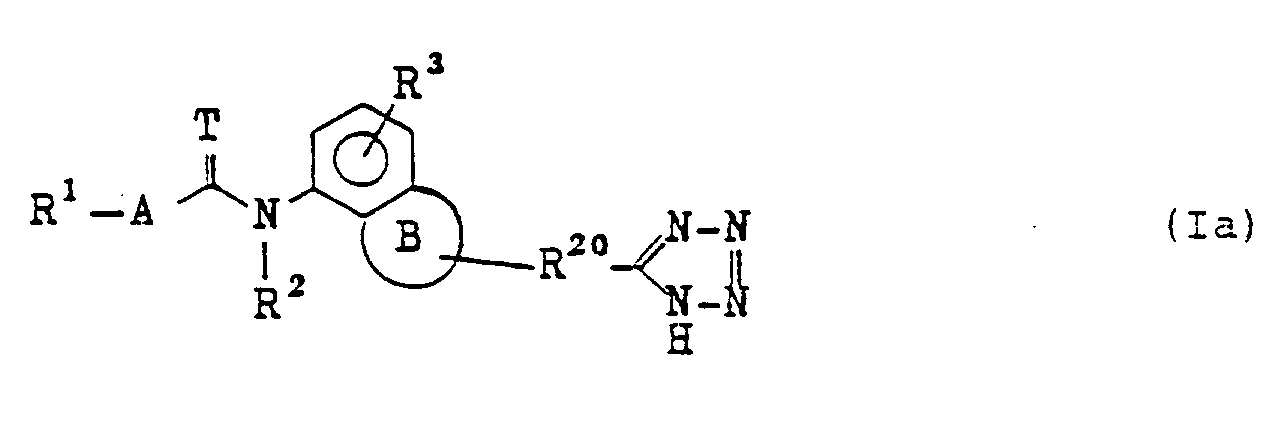
(wherein R
20 represents methylene group or a single bond, and the other symbols are the same meaning
as described hereinbefore.)
may be prepared by reacting a compound of the general formula:
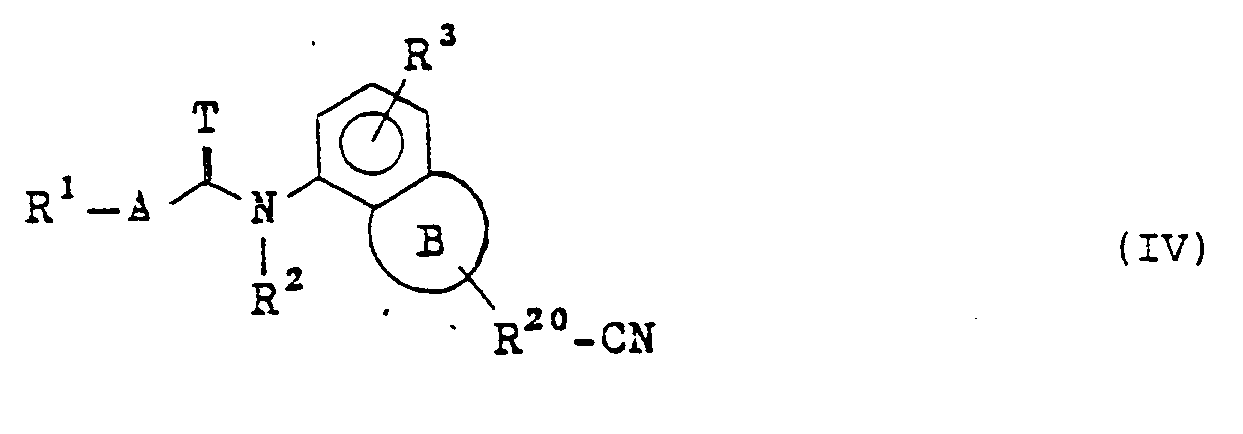
(wherein all the symbols have the same meaning as described hereinbefore.)
with an azide.
[0048] Reactions to induce a 2-tetrazolyl group from a cyano group with an azide are known,
it may be carried out, for example; under anhydrous conditions, using an azide (sodium
azide, lithium azide, potassium azide etc.), in the presence of a weak acid (pyridium
chloride, ammonium chloride, dimethylaniline hydrochloride etc.) in an inert organic
solvent (dimethylformamide, N-methylpyrrolidone etc.) with heating.
Process for the Preparation (3)
[0049] Among the compounds of the present invention, compounds of the general formula:
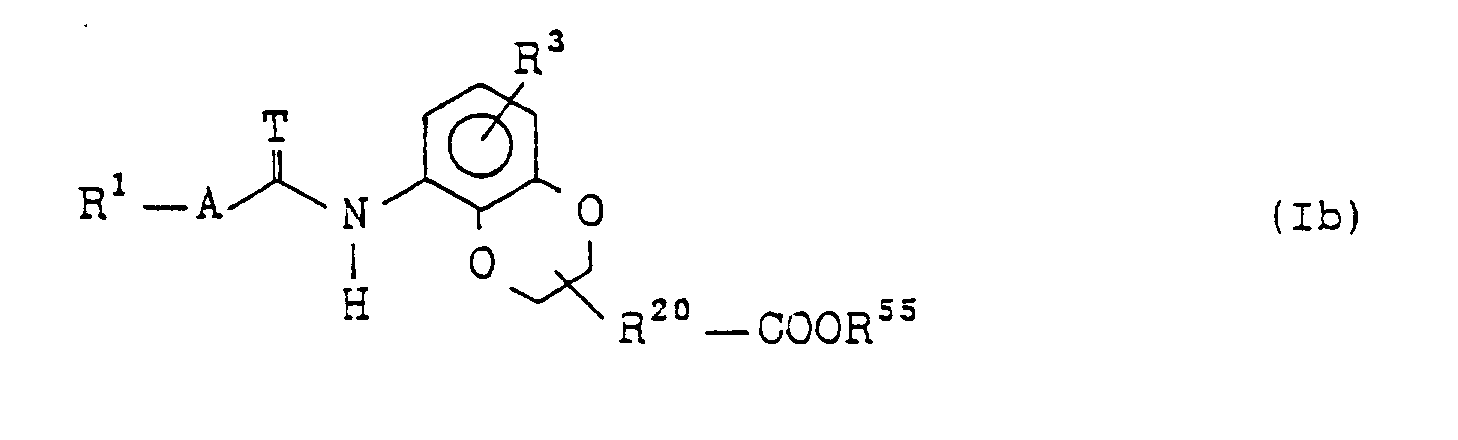
(wherein R
55 represents a hydrogen atom or a straight or branched alkyl group of from 1 to 6 carbon
atom-(s), and the other symbols are the same meaning as described hereinbefore.) may
be prepared by reacting a compound of general formula:
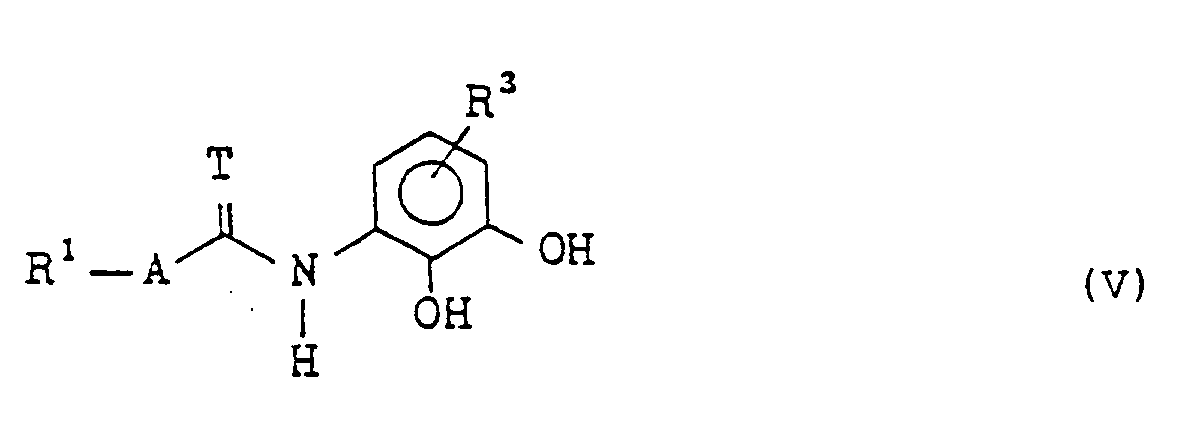
(wherein all the symbols have the same meaning as described hereinbefore.)
with a compound of general formula:
or
(wherein X
10 and X
2° represent halogen atoms respectively, and R
50 represents a straight or branched alkyl group of from 1 to 6 carbon atom(s), and
the other symbols have the same meaning as described hereinbefore.)
and further, effecting esterification and/or saponification, if desired.
[0050] Reactions to form a benzodioxan ring from catechol are known, and they may be carried
out, for example; under anhydrous conditions, in the presence of condensing agent
(potassium, carbonate,sodium carbonate etc.) in an inert organic solvent (acetone,
methyl ethyl ketone, dioxane etc.), with heating
Process for the Preparation (4)
[0051] Among the comounds of the present invention of the general formula (I), certain compounds
may be prepared from the corresponding compounds of the present invention.
[0052] For example, reaction may be carried out in the following reaction formula and reaction
scheme [A]
(in the above case, butadienylene and butenylene groups, or groups being substituted
by an alkyl or phenyl groups may also be carried out similarly, instead of a vinylene
group.)
(wherein the symbol
represents whole group of the substituent R
1 and symbols therein are included in R
1 respectively. R
1 and groups in R
1 have the same meaning as described above in the following schemes. R
30 represents an alkyl, alkenyl or alkynyl group of from 1 to 18 carbon atom(s).)
[0053] Each symbol in the scheme [A] represents the following meanings or as defined hereinbefore
respectively.
R40,R41 - an alkyl, alkenyl or alkynyl group of from 1 to 18 carbon atom(s)
R45 - a hydrogen atom or an alkyl, alkenyl or alkynyl group of from 1 to 18 carbon atom(s)
T10 - an oxygen atom or a sulphur atom, or an imido group
M10 - a lithium, potassium or sodium atom
X1 - a halogen atom
Processes for the Preparation of Intermediates
[0054] Intermediates described hereinbefore of the general formula (III), (IV), (V) and
(XXXXV) may be prepared by the processes described in the following reaction schemes,
respectively.
[0055] Each symbols in the schemes represent the following meanings or as described hereinbefore,
respectively.
R21 - a straight or branched alkyl group of from 1 to 6 carbon atom(s)
R51,R52,R53,R56 - a straight or branched alkyl group of from 1 to 6 carbon atom(s)
R54 - a hydrogen atom or a straight or branched alkyl group of from 1 to 6 carbon atom(s)
R70,R71 - a trifluoroacetyl group
X30 ,X40 ,X50 - a halogen atom
R122,R180 - a straight or branched alkyl group of from 1 to 6 carbon atom(s)
R125 - a group of formula: -U-(CH2)n- or -(CH2)p-(wherein all the symbols are the same meaning as described hereinbefore.)
R150 - a trifluoroacetyl group
X120 ,X130 ,X140 ,X150 - a halogen atom
[0056] When imino group(s) are included in the symbol B, it is preferable to protect by
trifluoro group(s) etc., and to remove the protect group(s) in a suitable step.
[0058] Intermediates of 1,4-dithianaphthalene skelton also may be prepared using with a
compound of general formula:
(Wherein all the symbols are as the same meaning as described hereinbefore.)
which may be obtained by hydrolizing a compound of general formula:
(wherein all the symbols are as the same meaning as described hereinbefore.)
instead of the compound of the general formula (XIII).
[0059] In the processes for the preparation of the compounds of the present invention, esterification
and saponification may be carried out as follows.
[0060] Conversion of a certain acid into a corresponding ester (i.e. esterification) is
known reaction per se, and it may be carried out, for example;
(1) by the method using a diazoalkane
(2) by the method using an alkyl halide
(3) by the method using DMF-alkylacetal and
(4) by the method reacting with a corresponding alkanol
[0061] Concrete descriptions of the reactions above mentioned are as follows:-
(1) the method using a diazoalkane may be carried out, for example, in an inert organic
solvent (diethyl ether, ethyl acetate, methylene chloride, acetone, methanol, ethanol
etc.) using with corresponding diazoalkane.
(2) the method using an alkyl halide may be carried out, for example, in an organic
solvent (acetone, N,N-dimethylformamide, DMSO etc.), in the presence of a base (potassium
carbonate, sodium carbonate, sodium bicarbonate, potassium bicarbonate, calcium oxide
etc.) using with a corresponding alkyl halide.
(3) the method using DMF-dialkylacetal may be carried out, for example, in an inert
organic solvent (benzene, toluene etc.) using with a corresponding DMF-dialkylacetal.
(4) the method reacting with a corresponding alkanol may be carried out, for example,
in a corresponding alkanol, using with an acid (hydrochloric acid, sulphuric acid,
p-toluenesulphonic acid, hydrochloride gas etc.) or condensing agent (DCC, pivaloyl
chloride, arylsulphonyl halide, alkylsulphonyl halide etc.).
[0062] Reactions mentioned above are carried out generally at from -10 ° C to 100°C; and
they may be carried out further addition of inert organic solvent(s) (THF, methylene
chloride etc.) not related to the reactions.
[0063] Conversion of a certain ester into corresponding acid (i.e. saponification) is known
reaction per se, and it may be carried out, for example;
(1) using with an aqueous solution of an alkali (potassium hydroxide, sodium hydroxide,
lithium hydroxide, potassium carbonate, sodium carbonate etc.) in a water-miscible
organic solvent (THF, dioxane, ethanol, methanol etc.).
(2) using an alkali mentioned above, in an alkanol (methanol, ethanol etc.) in anhydrous
condition.
[0064] The reactions above are carried out generally at from -10°C to 1000 C.
[0065] In each reaction in the present invention, products may be purified by conventional
manner. For example, it may be carried out by distillation at atmospheric or reduced
pressure, high performance liquid chromatography, thin layer chromatography or column
chromatography using silica gel or magnesium silicate, washing or recrystallization.
Purification may be carried out after each reactions, or after a series of reactions.
Starting Materials
[0066] Starting materials and reagents in the present invention are known compounds per
se or may be prepared by known methods per se.
[0067] For example, acids of the general formula (II) may be prepared by the methods described
in the specification of Japanese Patent Application Nos. 58-203632, 58-224067, 58-245531,
58-245532 or 59-1855.
[0068] A certain compound of the general formula (VIII) wherein R
3 is a hydrogen atom is described in J. Med. Chem., 8, 446 (1965).
[0069] A certain compound of the general formula (XIII) wherein R
3 is a hydrogen atom is described in J. Am. Chem. Soc., 75, 3277 (1953).
[0070] The compounds of the general formula (XV) may be prepared by the method described
in J. Med. Chem., 20, 371 (1977).
[0071] A certain compound of the general formula (XXXI) wherein R
3 is a hydrogen atom is described in J. Org. Chem., 42, 1925 (1977).
[0072] The compounds of the general formula (XXXXVIII) may be prepared from the compounds
of the general formula (II).
[0073] Compounds of the general formula (XXXXVI), (XXXXVII) and (XXXXVIII) are known compounds
per se, or may be prepared by known methods per se.
[0074] For example, compounds wherein the symbol B is a morpholine ring, compounds wherein
the symbol B is 2,3,4,5-tetrahydrofuran, compounds wherein the symbol B is a hydroxypyridine
ring, compounds wherein the symbol B is 3,4,5,6-tetrahydro-2H-pyran ring may be prepared
by the methods described in J. O. Chem., 32, 4155 (1967), Chem. Abst. 98, 179352 q
(1983), J. O. Chem., 32, 4155 (1967), and Chem. Abst., 84, 58747z, respectively or
similar methods thereof.
Salts
[0075] The compounds of the present invention of the general formula (I) may be formed salts
at the carboxy or tetrazolyl moiety.
[0076] By converting into salts, solubility of the compounds of the present invention against
water can be increased, and therefore be useful at the administration as pharmaceuticals.
[0077] The compounds of the present invention may easily be converted into corresponding
salts by the methods known per se, e.g. methods described hereafter.
[0078] The salts in the pretent invention are preferably non-toxic ones. The non-toxic salts
herein referred mean salts of cations such that it is relatively innoxious to living
body (animals including human beings) tissues and that the effective pharmacological
properties of the compounds of the general formula (I) are not impaired by side effect(s)
resulting from the cations when used in an amount required for the prevention and/or
treatment. And water-soluble salts are preferable.
[0079] Suitable salts include, for example, a salt of an alkali metal such as sodium, potassium,
a salt of an alkaline metal such as calcium, magnesium, an ammonium salt and a pharmaceutically
acceptable (non-toxic) amine salt.
[0080] Amines suitable for forming such salts with carboxylic acid or tetrazolyl group are
well known and include, for example, those amines which are theoretically obtained
by substituting one or more of hydrogen atom(s) of ammonia by other group(s). These
groups, which may be the same or different when one or more hydrogen atom(s) are substituted,
are selected from, for example, alkyl group(s) of from 1 to 6 carbon atom(s) and hydroxyalkyl
group(s) of from 1 to 3 carbon atom(s). Suitable non-toxic amine salts include salts
of a tetraalkylammonium group, such as tetramethylammonium salt and salts of an organic
amine, such as methylamine, dimethylamine, cyclopentylamine, benzylamine, phenethylamine,
piperidine, monoethanolamine, diethanolamine, lysine and arginine
[0081] Salts can be obtained from the compounds of the present invention of the general
formula (I), by methods known per se, for example, by reacting the compound of the
general formula (I) and a suitable base such as a hydroxide or carbonate of an alkali
metal or alkaline earth metal, ammonium hydroxide, ammonia or an organic amine in
theoretical amounts in an appropriate solvent.
[0082] The salts can be isolated by freeze-drying the solution, or by filtration if the
salts are sufficiently insoluble to the reaction solution, or if necessary, by removing
part of the solvent followed by filtration.
Pharmaceutical Activities
[0083] The compounds of the present invention possess an antagonistic activity on leukotrienes.
[0084] In a standard laboratory test, for example, the compounds of the present invention
showed the pharmaceutical activity in the following tables.
[0086] As is obvious from the table I and II, compounds of 1,4-benzodioxan skeleton having
any substituent R, represented by the general formula (IA') or (IA") among the compounds
of the present invention (i.e. the case that the symbol B and R
4 are fixed and R
1 and A are changed in the general formula (I).) have enough activity for pharmaceutical
use.
[0087] And from the table III, it is confirmed if alkylene moiety (corresponding to the
symbol A in the general formula (I).) would be converted, compounds having the enough
pharmaceutical activity are given.
[0089] And further, from the table IV, V and VI, it can be clear that compounds replaced
its skeleton to various rings also possess enough activity compared with the compounds
having 1,4-benzodioxan skelton (i.e. the case that R
1 and the symbol A are fixed and the symbol B and R
4 are changed.).
[0090] According to the points above described, it is estimated fairly that replacement
of an essential skeleton of a certain compound from 1,4-benzodioxan to various rings
and/or change of the groups of general formula: R-A- in the general formula (I) also
lead a compound having enough activity for pharmaceutical use.
[0091] From the arguments above described, it is fully expected that all extent of the present
invention have effective activity and therefore be useful for pharmaceutical agent.
[0092] Antagonistic activity of the compounds of the present invention on LTD
4 were measured by the following method.
[0093] A segment of ilem (2.5 cm) was removed from guinea pig 300 - 400 g and suspended
in a Magnus tube containing Tyrodes solution. The tube was maintained at 37 ° C and
aerated with 95% 0
2 - 5% C0
2. After stabilizing from 30 mins, 5 x 10-
9 g/ml of LTD
4 was added to the Magnus tube. Contraction length at the time and contraction lengths
when the compounds of the present invention were challenged at some concentrations
were measured, and the IC
50 value were calculated.
Toxicity
[0094] On the other hand, it was confirmed that the acute toxicity (LD
50) of all extent of the present invention were more than 500 mg/kg animal body weight
by intravenous administration. Therefore, the compounds of the present invention may
be considered to be sufficiently safe and suitable for pharmaceutical use.
[0095] For example, the values of LD
50 of the compounds prepared in example 1 (76), 1(212), 1 (230) and 1-(247) were more
than 1000 mg/kg animal body weight by intravenous administration in male mice weighing
170 - 180g, respectively.
Application for Pharmaceuticals
[0096] The present invention is also related to pharmaceutical agent for leukotriene antagonist.
[0097] To suppress leukotrienes is useful for the prevention and/or treatment of tracheal,
bronchial or lung diseases such as asthma, allergic lung diseases, allergic shock
or various allergic diseases in mammals including human beings, especially human beings.
[0098] For the purpose hereinbefore described, the compounds of the present invention of
the general formula or non-toxic salts thereof may normally be administered systemically
or partially; usually by oral or parenteral administration.
[0099] The doses to be administered is determined depending upon age, body weight, symptom,
the desired therapeutic effect, the route of administration, and the duration of the
treatment etc. In the human adult, the doses per person per dose are generally between
0.1 mg and 100mg, preferably between 2 mg and 20 mg, by oral administration, up to
several times per day, and between 10 ug and 10 mg, preferably between 0.1 mg and
1 mg, by parenteral administration up to several times per day.
[0100] As mentioned above, the doses to be used depend upon various conditions. Therefore,
there are cases in which doses lower than or greater than the ranges specified above
may be used.
[0101] Solid compositions according to the present invention for oral administration include
compressed tablets, dispersible powders and granules. In such solid compositions,
one or more of the active compound-(s) is or are, admixed with at least one inert
diluent such as lactose, mannitol, glucose, hydroxypropylcellulose, microcrystalline
cellulose, starch, polyvinylpyrrolidone or magnesium metasilicate aluminate. The compositions
may also comprise, as is normal practice, additional substances other than inert diluents
e.g. lubricating agents such as magnesium stearate, disintegrating agents such as
cellulose calcium gluconate, and assistant for dissolving e.g. arginine, glutamic
acid or amino-acid such as aspartic acid. The tablets or pills may, if desired, be
made into gastric film-coated or enteric film-coated tablets or pills, such as sugar-
coated, gelatin-coated, hydroxypropyl cellulose-coated or hydroxypropylmethyl cellulose
phthalate-coated tablets or pills; two or more of layers may be used. The compositions
for oral administration also include capsules of absorbable material such as gelatin.
[0102] Liquid compositions for oral administration include pharmaceutically-acceptable emulsions,
solutions, suspensions, syrups and elixirs containing inert diluents commonly used
in the art such as distilled water or ethanol. Besides inert diluents such compositions
may also comprise adjuvants such as wetting and suspending agents, and sweetening,
flavouring, perfuming and preserving agents.
[0103] Other compositions for oral administration include spray compositions which may be
prepared by known methods and which comprise one or more of the active compound(s).
[0104] Preparations for injection according to the present invention for parenteral administration
include sterile aqueous or non-aqueous solutions, suspensions or emulsions. Example
of aqueous solvents or suspending media are distilled water for injection and physiological
salt solution. Examples of non-aqueous solvents or suspending media are propylene
glycol, polyethylene glycol, vegetable oils such as olive oil, alcohols such as ethanol,
POLYSORBATE 80 (registered Trade Mark). These compositions may also include adjuvants
such as preserving, wetting, emulsifying, despersing agents and assistant agent for
dissolving (e.g. arginine, glutamic acid or amino-acid such as aspartic acid). They
may be sterilized, for example, by filtration through a bacteria-retaining filter,
by incorporation of sterilizing agents in the compositions or by irradiation. They
may also be manufactured in the form of sterile solid compositions which can be dissolved
in sterile water or some other sterile injectable medium immediately before use.
[0105] Other compositions for parenteral administration include liquids for external use,
and endermic liniments such as ointments, suppositories and pessaries which comprise
one or more of the active compound(s) and may be prepared by known methods.
Nomenclature and excluding compounds
[0106] Throughout the specification including claims, the compounds of the present invention
are named as derivatives having the following fused benzene rings or benzene ring.
o 1,4-benzodioxane
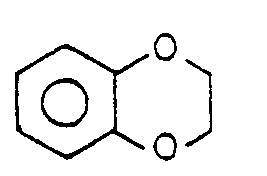
o 4H-1-benzopyran
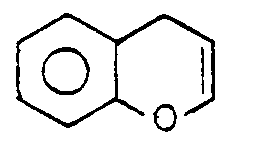
o 1,4-dithianaphthalene
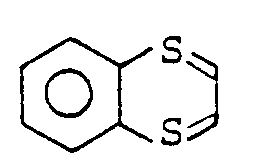
o benzofuran
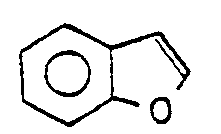
o 2,3-dihydro-l-benzofuran
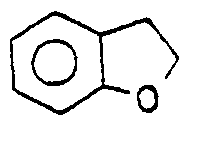
o quinoline
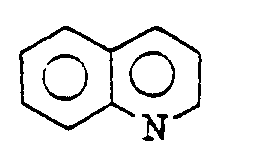
o 1,3-benzodioxole
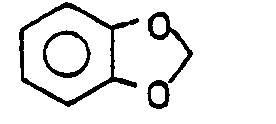
o naphthalene
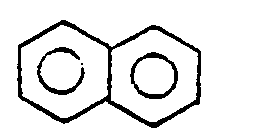
o 3,4-dihydro-2H-1,5-benzodioxepin
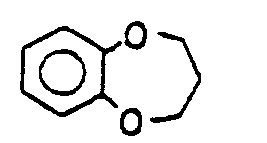
o 2,3-dihydro-1,4-benzoxazin
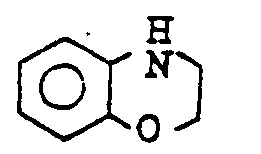
o 3,4-dihydro-2H-1-benzopyran
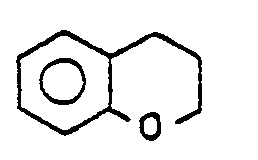
o 4H-1-benzothiopyran
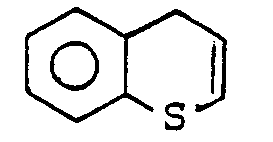
[0107] And throughout the specification including claims, isomers generated by the existence
of stereo configuration unlimited (e.g. asymmetric carbon, double bond) are included
in the corresponding formula, respectively.
[0108] With proviso that, compounds which cannot exist per se in a chemical or physical
sense (e.g. ones having multiple bond next to an oxygen, nitrogen or sulphur atom.)
are excluded from the present invention.
Reference Examples and Examples
[0109] The following reference examples and examples are illustrate the present invention,
but not limit the present invention.
[0110] In the reference examples and examples, "TLC", "NMR", "IR" and "Mass" represent "Thin
layer chromatography", "Nuclear magnetic resonance spectrum", "Infrared absorption
spectrum" and "Mass spectrum", respectively.
[0111] The solvents in the parentheses show the developing or eluting solvents and the ratios
of the solvents used are by volume in chromatographic separations.
[0112] Unless otherwise specified, "IR" was measured by the KBr tablet method and "NMR"
was measured in a mixture of chloroform-d and ethanol-d
4 respectively.
Reference example 1
[0113] Synthesis of 3-(m-methoxy-p-pentyloxycinnamoyl)aminopyrocatechol
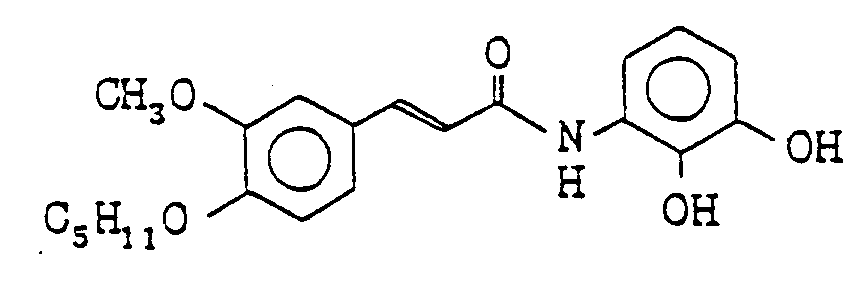
[0114] Oxyalyl chloride (4.5 ml) was added to m-methoxy-p-pentyloxybenzoic acid (528 mg).
In an atmosphere of argon, the solution was stirred for 30 min at room temperature
and then concentrated under reduced pressure. The residue was dissolved into methylene
chloride (10 ml). In an atmosphere of argon, the solution was dropped to a solution
of 3-aminopyrocatechol (275 mg) in a mixture of methylene chloride (10 ml) and pyridine
(3 ml) cooling with ice, and the solution was stirred for 1 hr at the same temperature.
After stirring for 2 hrs at room temperature, the solution was poured into 1N hydrochloric
acid. The mixture was extracted with ethyl acetate. The extract was washed with water
and a saturated aqueous solution of sodium chloride, successively, dried and concentrated
under reduced pressure. Solids obtained was washed with hexane, and dried to give
the title compound (700 mg) having the following physical data:
TLC : Rf 0.20 (ethyl acetate: hexane = 1:2);
NMR (CDCI3): 6 10.00(1 H, s), 7.75(1 H, d), 7.60(1 H, s), 6.30-7.25(7H, m), 6.10(1 H, s), 4.10(2H,
t), 1.90-(3H, s);
Mass: m/e 371 (M+), 247, 177, 145, 125, 117, 89.
Reference example 2
[0115] Synthesis of 8-(m-methoxy-p-pentyloxycinnamoyl)amino-1,4-dioxane-2-carbonitrile
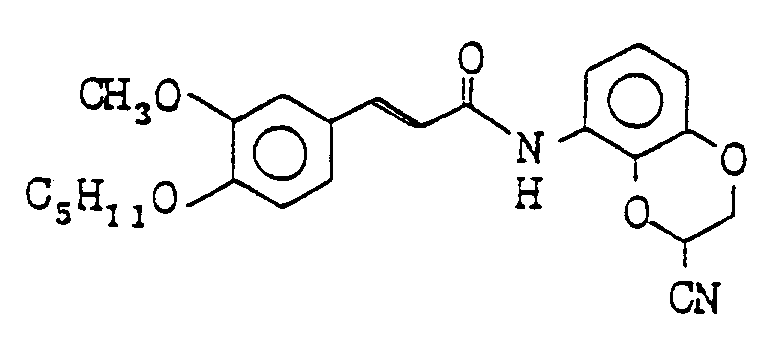
[0116] Dry potassium carbonate (770 mg) and 2-chloroacrylonitrile (0.30 ml) were added to
a solution of 3-(m-methoxy-p-pentyloxycinnamoyl)aminopyrocatechol (690 ml; synthesized
in reference example 1) in acetone (10 ml). In an atmosphere of argon, the mixture
was refluxed for 3 hrs. The reaction mixture cooled to room temperature was poured
into ice-water (50 ml). The mixture was extracted with ethyl acetate. The extract
was dried, and concentrated under reduced pressure. The residue was purified by column
chromatography on silica gel (methylene chloride: ethyl acetate = 10:1) to give the
title compound (565 mg) having the following physical data:
TLC : Rf 0.15 (ethyl acetate: hexane = 1:2);
NMR (CDCl3): 6 8.25(1 H, dd), 7.70(1 H, d), 7.55(1 H, s), 7.00-7.25(2H, m), 6.90(1 H, d), 6.85(1
H, d), 6.70(1 H, dd), 6.45(1 H, d), 5.20(1 H, dd), 4.30-4.55(2H, m), 4.05(2H, t),
3.93(3H, s);
Mass: m/e 422(M+), 247, 177, 145, 117.
Reference example 3 (Example A)
[0117] Synthesis of 8-(p-pentylcinnamoyl)amino-1,4-benzodioxane-2-acetic acid methyl ester
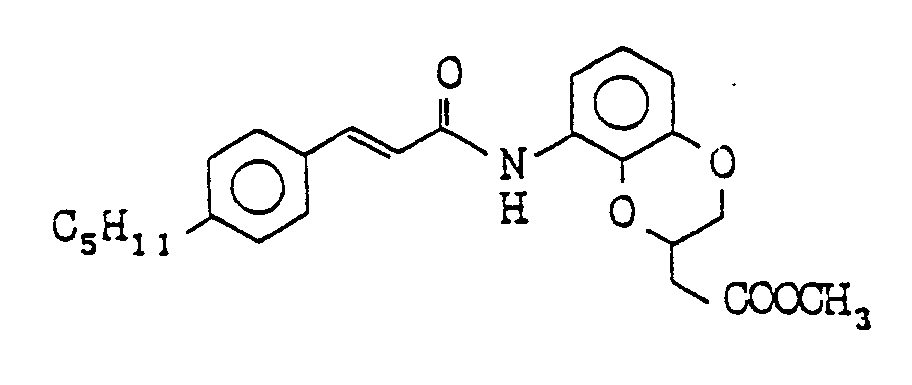
[0118] Potassium carbonate (509 mg) was added to a solution of 3-(p-pentylcinnamoyl)aminopyrocatechol
(300 mg; synthesized by the same procedure as reference example 1) and 4-bromo-2-butenoic
acid methyl ester in acetone (10 ml), and the mixture was refluxed for 10 min. The
reaction mixture was poured into water. The mixture was extracted with ethyl acetate.
The extract was purified by column chromatography on silica gel (hexane: ethyl acetate
= 5:1) to give the title compound (341 mg).
Reference example 4
[0119] Synthesis of 8-(p-pentylcinnamoyl)amino-1,4-benzodioxane-2-acetamide
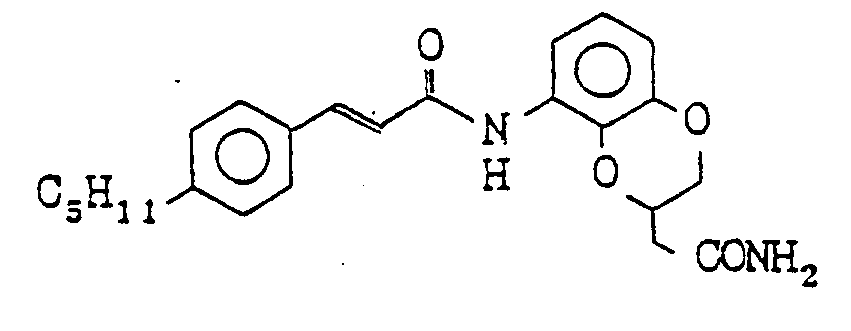
8-(p-pentylcinnamoyl)amino-1,4-benzodioxane-2-acetic acid methyl ester (341 mg; synthesized
in reference example 3) was dissolved into ethanol which was saturated with ammonia
(20 ml). The solution was allowed to stand for 3 days at 1000 C. The reaction mixture
was concentrated under reduced pressure. The residue was purified by column chromatography
on silica gel (hexane: ethyl acetate = 2:1) to give the title compound (191 mg).
Reference example 5
[0120] Synthesis of 8-(p-pentylcinnamoyl)amino-1,4-benzodioxane-2-acetonitrile
[0121] Trifluoroacetic anhydride (0.1 m) was added to a solution of 8-(p-pentylcinnamoyl)amino-1,4-benzodioxane-2-acetamide
(191 mg; synthesized in reference example 4) in THF (10 ml) cooling with ice. And
pyridine (0.02 ml) was added to the mixture. After stirring for 10 min, the mixture
was poured into water. The mixture was extracted with ethyl acetate. The extract was
dried, concentrated under reduced pressure to give the title compound.
Example 1
[0122] Synthesis of 8-[p-(3Z-hexenyloxy)benzoyl]amino-2-(5-tetrazolyl)-1,4-benzodioxane
[0123] A mixture of p-(3Z-hexenyloxy)benzoic acid (110 mg) and oxalyl chloride (1 ml) was
stirred for 1 hr at room temperature. From the mixture, excess oxalyl chloride was
removed under reduced pressure. The residue was dried in vacuo, and then dissolved
into methylene chloride (2 ml). In an atmosphere of argon, the solution was dropped
into a solution of 8-amino-2-(5-tetrazolyl)-1,4-benzodioxane hydrochloride (128 mg)
in a mixture of methylene chloride (2 ml) and pyridine (0.7 ml). The solution was
stirred for 5 hrs at room temperature. The solution was diluted with ethyl acetate.
The diluted solution was poured into 1 N hydrochloric acid (1 ml). The mixture was
extracted with ethyl acetate. The extract was washed with water, dried, and concentrated
under reduced pressure. The residue was recrystalized from benzene to give the title
compound (112 mg) having the following physical data:
TLC : Rf 0.57 (chloroform: methanol = 3:1);
NMR : δ 7.90(2H, d), 7.88(1 H, m), 7.46(1 H, dd), 6.96(2H, d), 6.92(1 H, t), 6.78(1
H, dd), 5.77(1 H, dd), 5.70(2H, m), 4.61 (2H, m), 4.04(2H, t), 2.57(2H, dt), 2.12(2H,
m), 1.01 (3H, t);
IR : v 3600-2300, 1650, 1610, 1540, 1505, 1460, 1250, 1175, 1090, 840, 770 cm-1;
Mass: m/e 421 (M+), 203;
Appearance: white powder.
Example 1 (1 ) - 1(121)
Example 1 (201 ) - 1 (260)
Example 1 (301 ) - 1 (302)
[0126] By the same procedure as example 1, using with p-pentylcinnamic acid and 8-amino-2-(5-tetrazolyl)-2,3-dihydro-1,4-dithianaphthalene
hydrochloride or 5-amino-2-(5-tetrazolyl)-2,3-dihydro-1,4-dithianaphthalene hydrochloride,
following compounds having the following physical data, shown in table [X] were given.
Example 1 (401 )
[0127] By the same procedure as example 1, using with p-heptyloxybenzodithioic acid and
8-amino-2-(5-tetrazolyl)-1,4-benzodioxane hydrochloride, following compound having
following physical data was given.
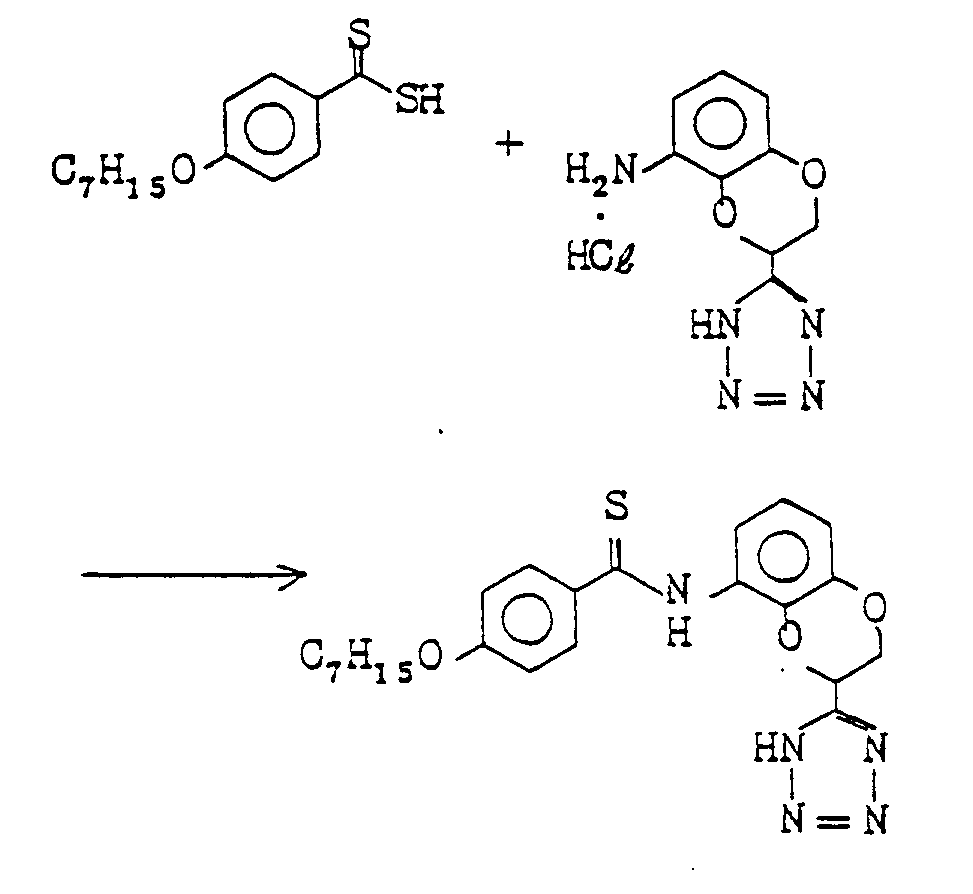
TLC : Rf 0.14 (chloroform: methanol = 17:3);
NMR : δ 7.87(2H, d), 7.77(1 H, m), 6.90(4H, m), 5.74(1 H, m), 4.58(2H, m), 3.98(2H,
t), 1.78(2H, m), 1.30(8H, m), 0.88(3H, t);
IR : ν 3600-2400, 1600, 1495, 1450, 1255, 1170, 1090, 1005, 960, 830 cm-1;
Mass: m/e 453(M+), 420, 354, 326, 235, 219, 137, 121;
Appearance: orange powder.
Example 1 (501 )-1 (526)
Example 2
[0129] Synthesis of 8-(3-methoxy-4-pentyloxycinnamoyl)amino-2-(5-tetrazolyl)-1,4-benzodioxane
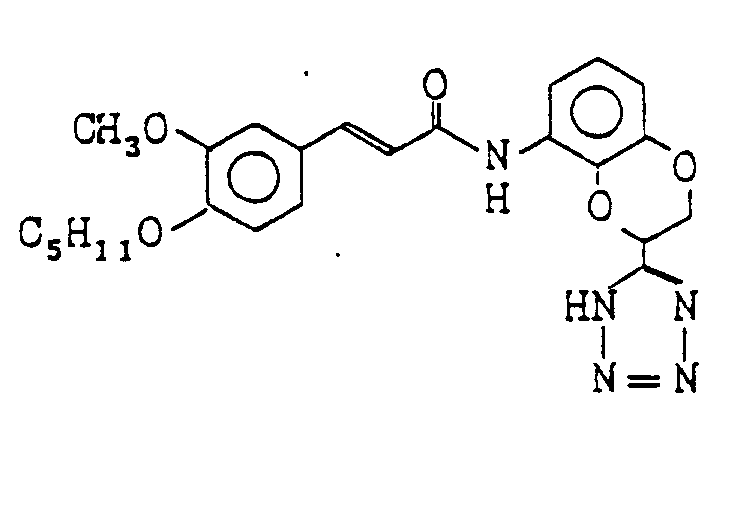
[0130] Sodium azide (490 mg) and pyridinium chloride (870 mg) were added to a solution of
8-(3-methoxy-4-pentyloxycinnamoyl)amino-1,4-benzodioxane (560 mg; synthesized in reference
example 2) in dry dimethylformamide (3 ml). In an atmosphere of argon, the solution
was stirred for 1.5 hrs at 100 ° C. The reaction solution cooled to room temperature
was poured into 1N hydrochloric acid, and the mixture was extracted with ethyl acetate.
The extract was washed with water and a saturated aqueous solution of sodium chloride,
dried, and then concentrated under reduced pressure. The residue was recrystalized
from ethyl acetate to give the title compound (390 mg) having the following physical
data:
TLC : Rf 0.10 (chloroform: methanol = 5:1);
NMR : 6 7.69(1 H, d), 7.68(1 H, s), 7.05-7.25(2H, m), 6.80-7.00(2H, m), 6.74(1 H,
m), 6.65(1 H, d), 5.73-(1 H, m), 4.69(1 H, dd), 4.51 (1 H, dd), 4.05(2H, t), 3.92(3H,
s), 1.87(2H, m), 1.30-1.55(4H, m), 0.94(3H, t);
IR : ν 2940, 2850, 1655, 1600, 1540, 1505, 1450, 1260 cm-1;
Mass: m/e 465(M+), 247, 177, 145.
Example 2(1 ) - 2(46)
Example 2(101) - 2(107)
[0132] By the same procedures as reference example 1, 2 and example 2, using a corresponding
carboxylic acid and 3-aminopyrocatechol which have corresponding substituents R
2 and R
3, following compounds having the following physical data, shown in table [XIII] were
given.
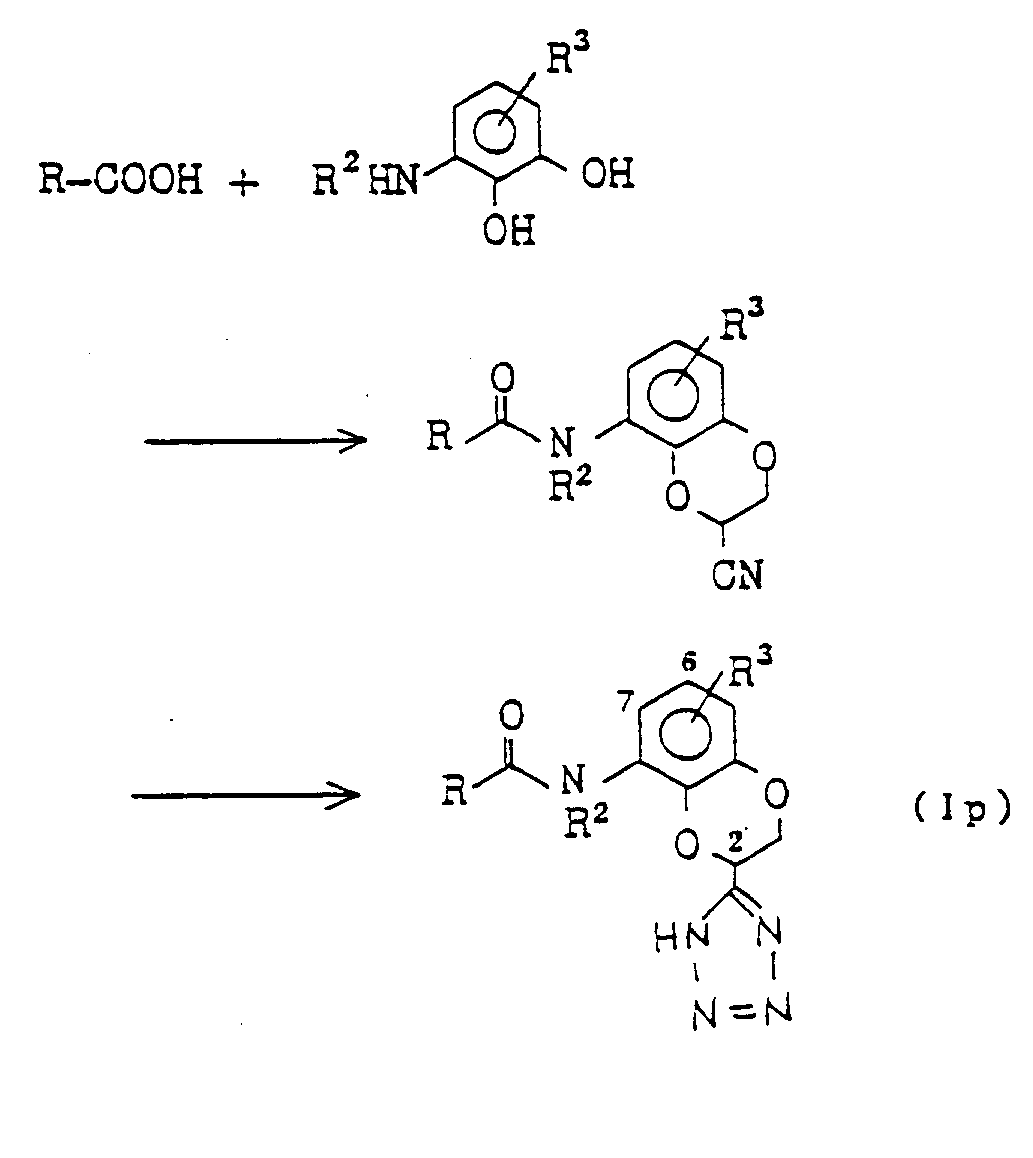
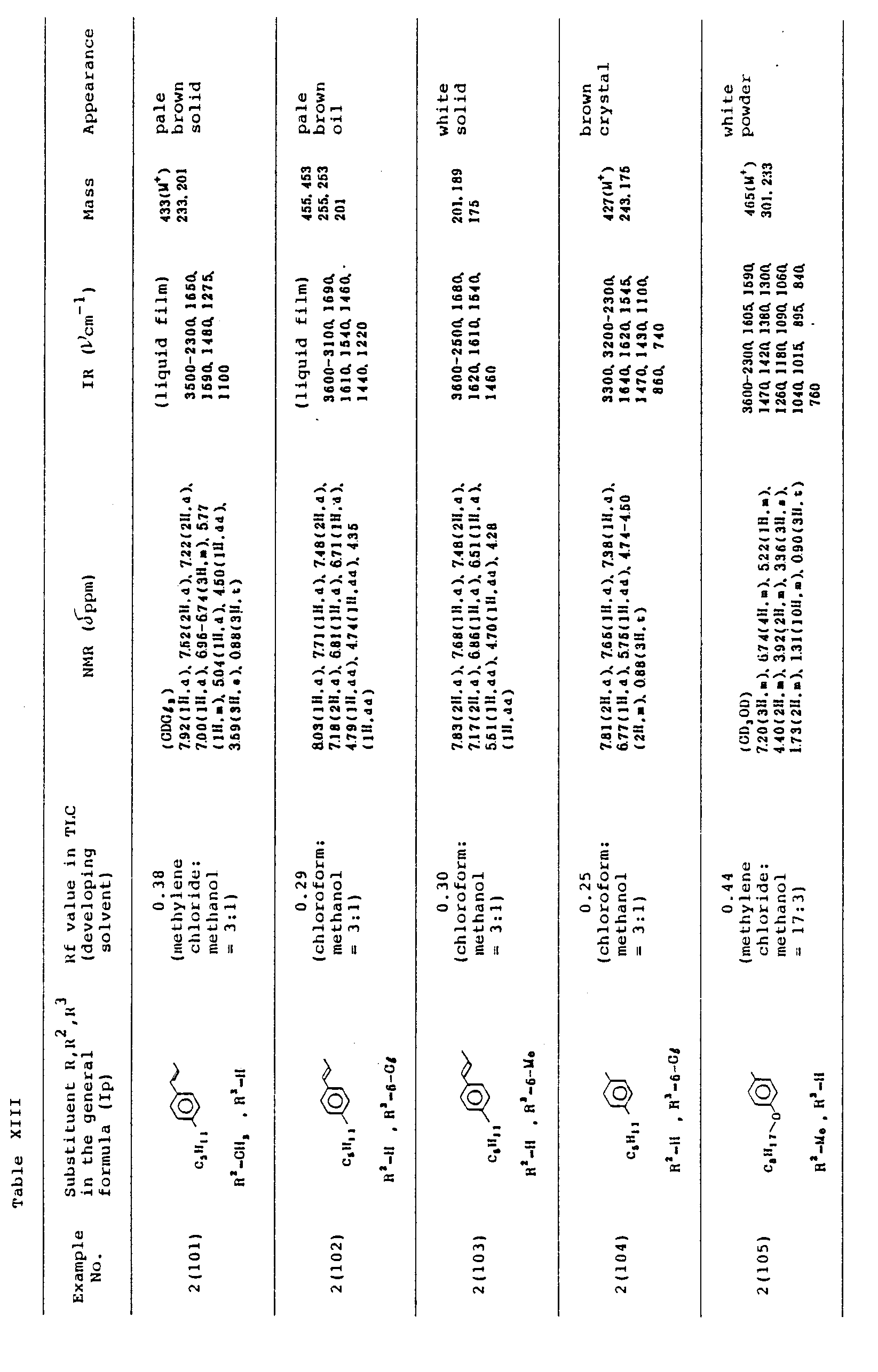
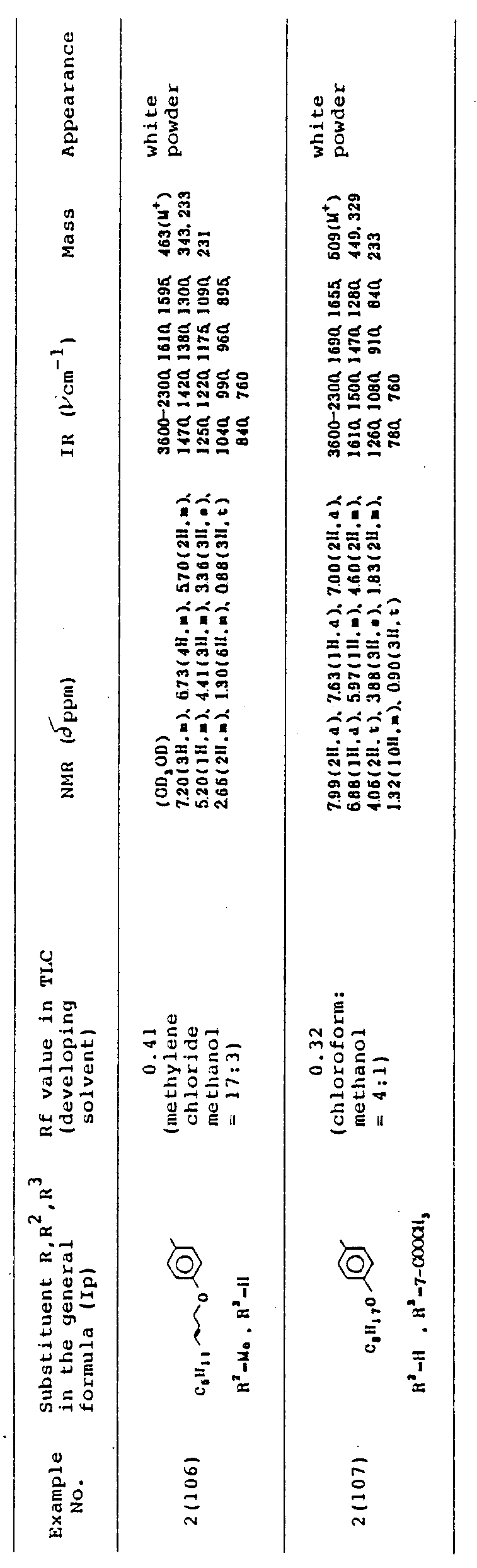
Example 2(201) - 2(204)
[0133] By the same procedure as reference example 1, 2 and example 2, using with a corresponding
carboxylic acid and 3-aminopyrocatechol which have corresponding substituent R
3, following compounds having following physical data were given.
2(201)
[0134]
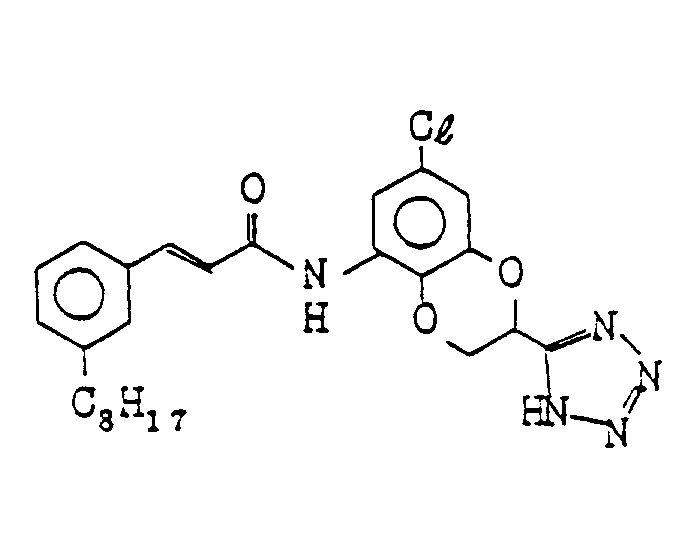
TLC : Rf 0.21 (chloroform: methanol = 3:1);
NMR : δ 8.03(1 H, d), 7.70(1 H, d), 7.48(2H, d), 7.20(2H, d), 6.71 (1 H, d), 6.65(1
H, d), 5.57(1 H, s), 4.70-4.40(2H, m), 2.62(2H, t);
lR : ν 3700-3000, 1680, 1625, 1610, 1535, 1470, 1440 cm-1;
Mass: m/e 201, 179, 162;
Appearance: white powder.
2(202)
[0135]
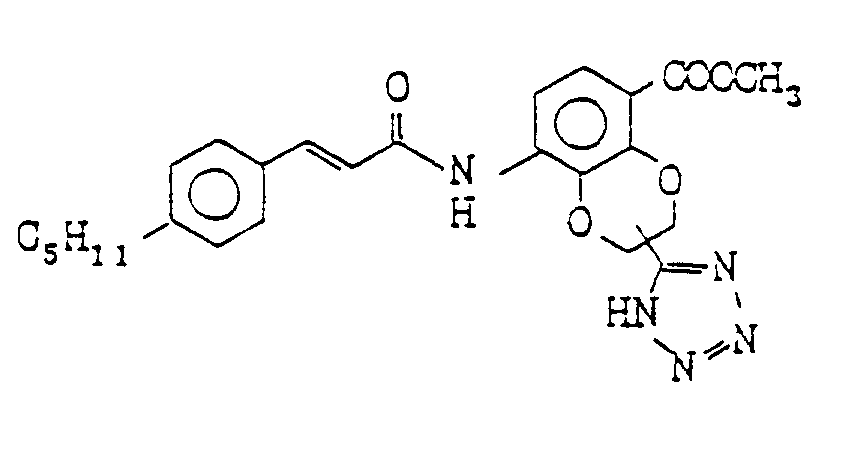
[0136] (The substituting position of tetrazolyl was not known.)
TLC : Rf 0.22 (methylene chloride: methanol = 5:1);
NMR : δ 8.21 (1 H, d), 7.74(1 H, d), 7.57(1 H, d), 7.49(2H, d), 7.20(2H, d), 6.62(1
H, d), 5.74(1 H, dd), 4.89(1 H, dd), 4.54(1 H, dd);
IR : ν 3370, 3200-2300, 1695, 1630, 1610, 1520, 1430, 1270, 1140 Cm-1;
Mass: m/e 477(M+), 291, 201;
Appearance: white crystal.
2(203) - 2(204)
[0137] and
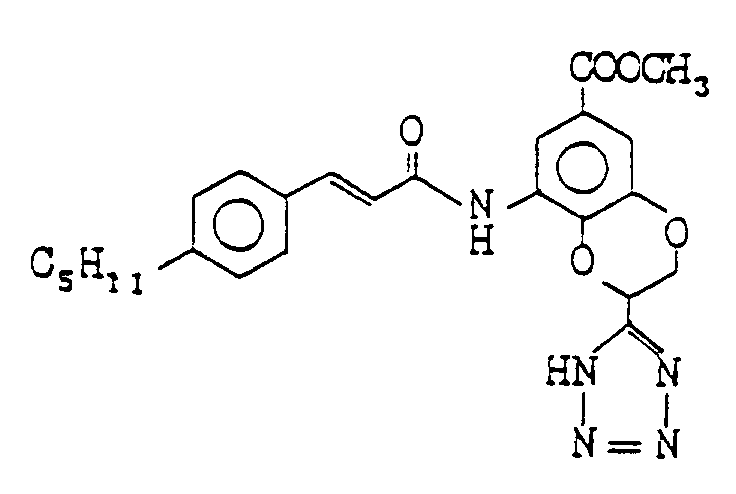
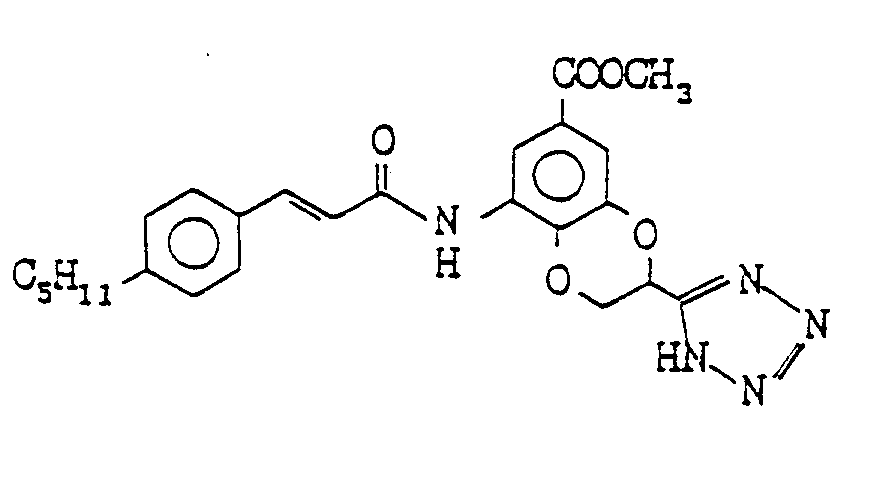
o less polar compound:
TLC : Rf 0.18 (methylene chloride: methanol = 5:1);
NMR (CDCl3): δ 9.88(1 H, s), 7.81 (1 H, d), 7.45(3H, s), 7.18(2H, s), 6.69(1 H, s), 6.64(1 H,
d), 6.04(1 H, s), 5.60(1 H, s), 4.50(1 H, s), 3.84(3H, s), 0.88(3H, t);
IR : ν 3600-2300, 1695, 1630, 1610, 1515, 1470, 1280 cm-1;
Mass: m/e 477(M+), 446, 291, 201;
Appearance: white crystal.
o more polar compound:
TLC : Rf 0.12 (methylene chloride: methanol = 5:1);
NMR (CDCl3): δ 9.44(1 H, s), 7.46(1 H, s), 7.25(1 H, s), 7.13(2H, s), 6.88(2H, s), 6.60-6.30(2H,
s), 5.20(1 H, s), 4.20-3.60(2H, s), 3.72(3H, s), 0.83(3H, t);
IR : ν 3600-3000, 1695, 1630-1610, 1520, 1480, 1280 Cm-1;
Mass: m/e 477(M+), 446, 291, 201;
Appearance: white crystal.
Example 2(301)
[0138] By the same procedure as example 2, using with 8-(p-pentylcinnamoyl)amino-1,4-benzodioxane-2-acetonitrile
(synthesized in reference example 5), following compound having the following physical
data was given.
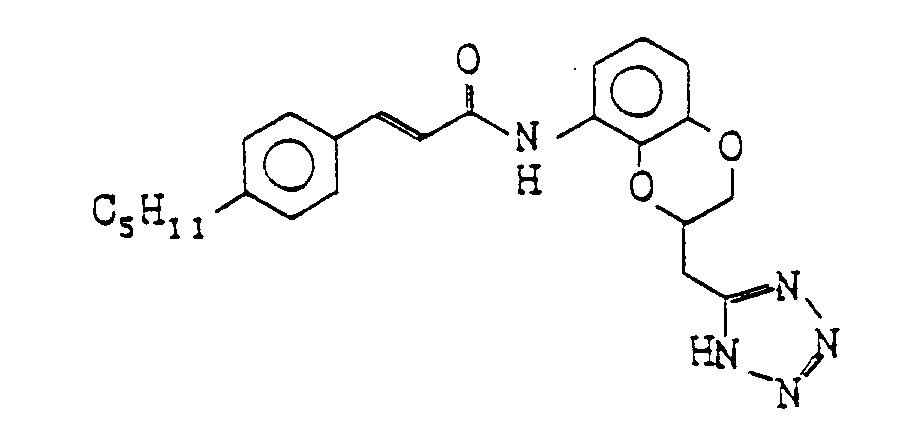
TLC : Rf 0.36 (methylene chloride: methanol = 5:1);
NMR : δ 7.88(1 H, d), 7.70(1 H, d), 7.47(2H, d), 7.20(2H, d), 6.84(1 H, t), 6.63(1
H, dd), 6.57(1 H, d), 3.36(2H, d);
IR : ν 3300, 3200-2300, 1660, 1605, 1530, 1460 cm-1;
Mass: m/e 433(M+), 233, 201;
Appearance: dark brown powder.
Example 2(302)-2(303)
[0139] By the same procedure as example 2, using with a corresponding nitrile, following
compounds having the following physical data were given.
2(302)
[0140]
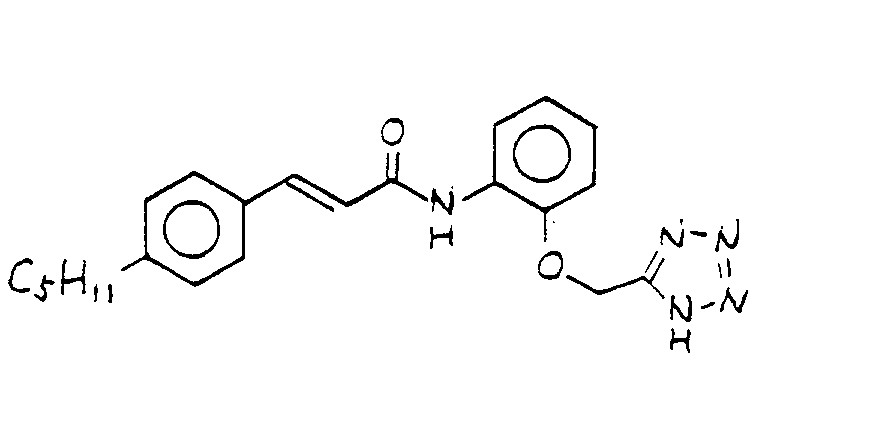
TLC : 0.3 (methylene chloride: methanol = 5:1
IR : ν 1655, 1615, 1600, 1540, 1490 Cm-1;
Mass: m/e 391 (M+), 349, 309, 217, 201, 191;
Appearance: pale yellow powder
2(303)
[0141]
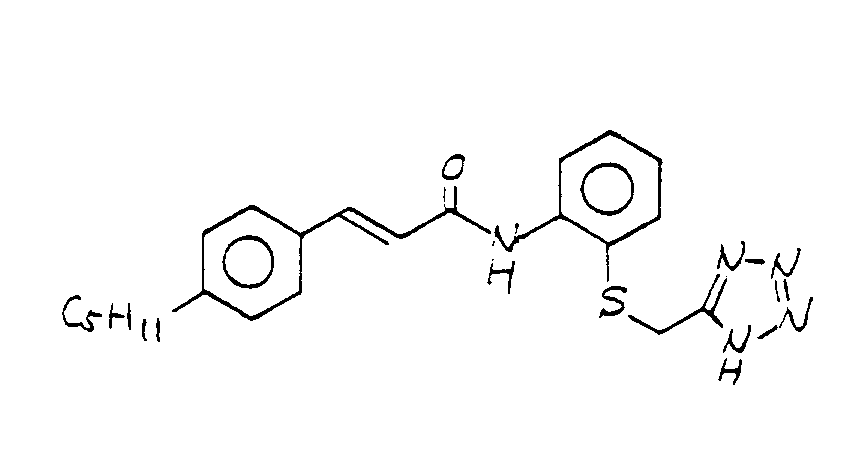
TLC : 0.22 (chloroform: methanol = 9:1);
IR : ν 3300-2300, 2920, 1655, 1620, 1540, 1470, 1350, 1045, 980 Cm-1;
Mass: m/e 407(M+), 324, 292, 201;
Appearance: pale yellow crystal.
Example 3
[0142] Synthesis of 8-(p-pentylcinnamoyl)amino-4-oxo-4H-1-benzopyran-2-carboxylic acid ethyl
ester
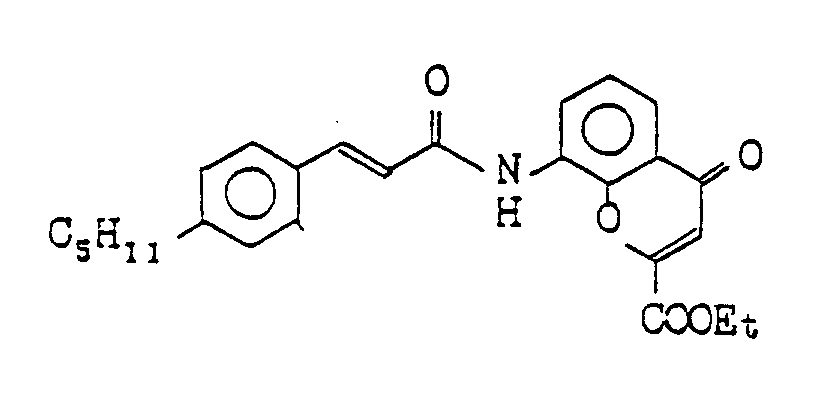
[0143] Oxalyl chloride (3.4 ml) was added to p-pentylcinnamic acid (327 mg), and the mixture
was stirred for 30 min at room temperature. Excess oxyalyl chloride was removed from
the mixture under reduced pressure. The residue was dissolved to methylene chloride
(5 ml). In an atmosphere of argon, a solution of 8-amino-4-oxo-4H-1-benzopyran-2-carboxylic
acid ethyl ester (420 mg) in a mixture of methylene chloride (5 ml) and triethylamine
(0.6 ml) was added slowly. The reaction solution was stirred for 1 hr at room temperature,
and then poured into 0.1 N hydrochloric acid. The mixture was extracted with ethyl
acetate. The extract was washed with water, a saturated aqueous solution of sodium
bicarbonate and a saturated aqueous solution of sodium chloride, successively, dried,
and concentrated under reduced pressure. The residue was purified by column chromatography
on silica gel (ethyl acetate: hexane = 1:3) to give the title compound (140 mg) having
the following physical data:
TLC : Rf 0.60 (ethyl acetate: hexane = 1:1);
NMR (CDCl3): 6 8.76(1 H, dd), 8.23(1 H, s), 7.72(1 H, dd), 7.65(1 H, d), 7.38(2H, d), 7.27(1
H, t), 7.07(2H, d), 7.00(1 H, s), 6.52(1 H, d);
IR : ν 3270, 2930, 1730, 1660, 1630, 1530, 1430, 1290, 1260, 1180, 770 cm-1;
Mass: m/e 433(M+), 404, 388, 376, 360, 318, 233, 201, 131;
Appearance: white powder.
Example 4
[0144] Synthesis of 8-(p-pentylcinnamoyl)amino-4-oxo-4H-1-benzopyran-2-carboxylic acid
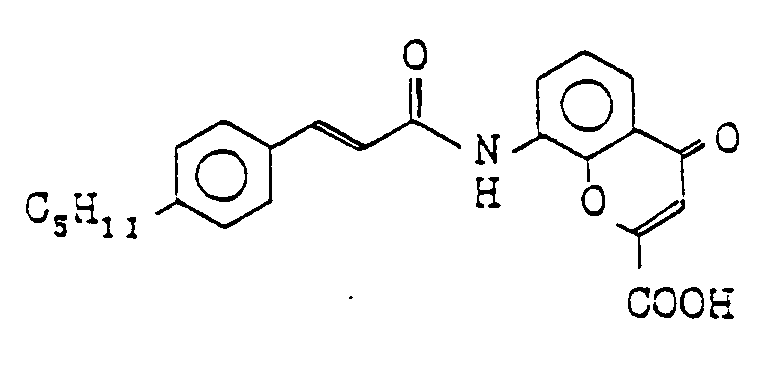
8-(p-pentylcinnamoyl)amino-4-oxo-4H-1-benzopyran-2-carboxylic acid ethyl ester (132
mg; synthesized in example 3) was dissolved into ethanol (10 ml). To the solution,
an aqueous solution (1 ml) of sodium bicarbonate (126 mg) was added. The mixture was
refluxed for 15 min. To the reaction solution mixture cooled to room temperature,
water (20 ml) and 1 N hydrochloric acid (2 ml) were added. The mixture was extracted
with ethyl acetate. The extract was washed with water and a saturated aqueous solution
of sodium chloride, dried, and concentrated under reduced pressure. The residue was
washed with a mixture of ethyl acetate and hexane (1:1), and dried to give the title
compound (62 mg) having the following physical data:
TLC : Rf 0.25 (ethyl acetate: methanol = 5:1);
NMR : δ 8.66(1 H, dd), 7.86(1 H, dd), 7.73(1 H, d), 7.53(2H, d), 7.43(1 H, t), 7.22(2H,
d), 7.15(1 H, s), 7.08(1 H, d);
IR : ν 3400, 2930, 1635, 1520, 1430, 1360 Cm-1;
Mass: m/e 405(M+), 361, 201, 181, 169, 131, 69;
Appearance: yellow powder.
Example 4(1 ) - 4(3)
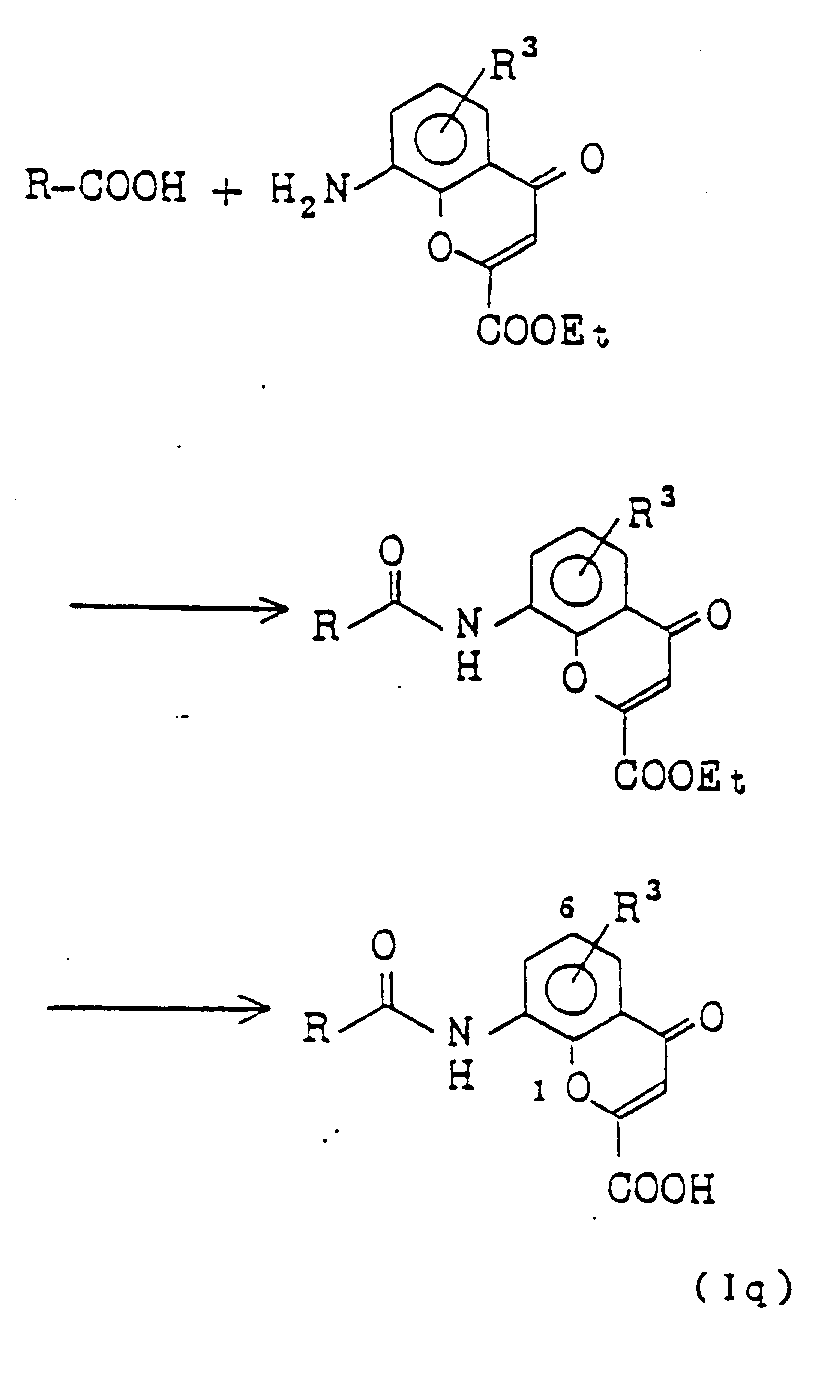
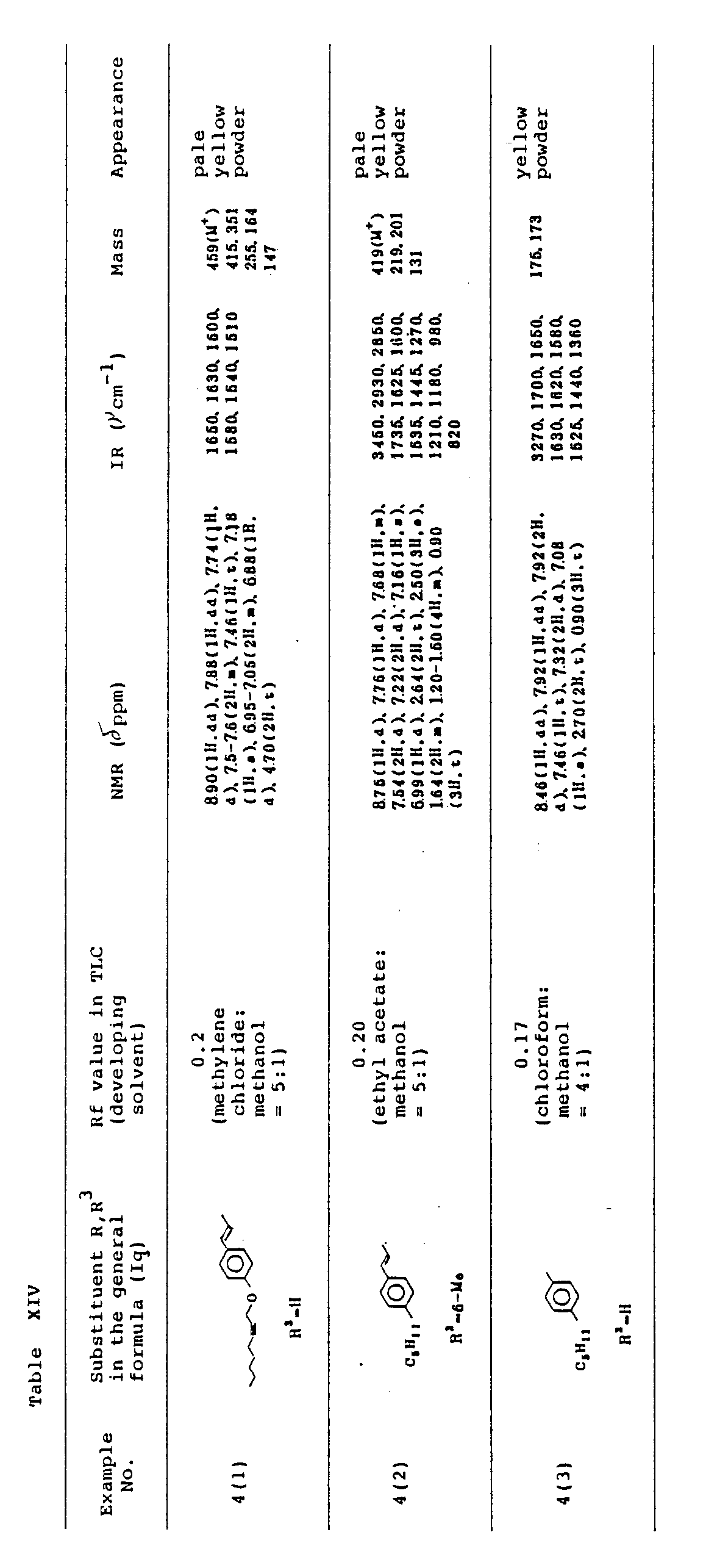
[0145] By the same procedure as example 3 and 4, using with a corresponding carboxylic acid
and 8-amino-4-oxo-4H-1-benzopyran-2-carboxylic acid ethyl ester which have corresponding
substituent R
3, following compounds having the following physical data, shown in table [XIV] were
given.
Example 4(101) - 4(104)
[0146] By the same procedure as example 3 and 4, using with corresponding carboxylic acid
and 8-amino-1,4-benzodioxane-2-carboxylic acid ethyl ester, following compounds having
the following physical data, shown in table [XV] were given.
Example 4(201 )-4(208)
[0147] By the same procedure as example 4, using with a corresponding carboxylic acid and
a corresponding amine, following compounds having the following physical data, shown
in table [XVI] were given.
Example 5
[0148] Synthesis of 8-[p-(4-phenylbutoxy)benzoylamino]-2-(5-tetrazolyl)-2,3-dihydrobenzoxazin
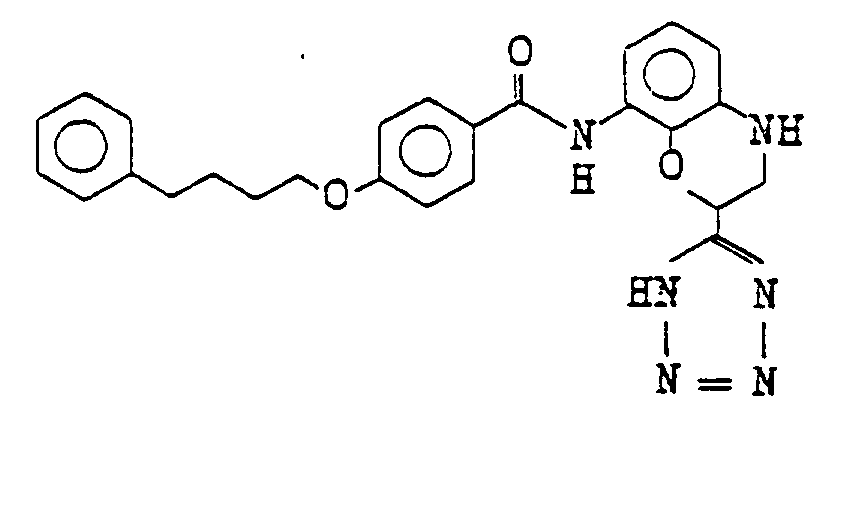
[0149] In an atmosphere of argon, a mixture of 8-[p-(4-phenylbutoxy)benzoylamino]-N-trifluoroacetyl-2,3-dihydrobenzoxazin-2-nitrile
(316 mg), sodium azide (196 mg), ammonium chloride (161 mg) and dimethylformamide
(2.5 ml) was stirred for 1 hr at 100 ° C. After reaction, the reaction solution was
poured into a mixture of ice and dil. hydrochloric acid, and the mixture was extracted
with ethyl acetate. The extract was washed, dried over magnesium sulphate, and condenced
under reduced pressure. The residue was dissolved into ethanol which was saturated
with ammonia (50 ml). The solution was stirred for 20 hrs at room temperature and
then concentrated under reduced pressure. The residue was purified by column chromatography
on silica gel (chloroform: methanol = 3:1) to give the title compound (207 mg) having
the following physical data:
TLC : Rf 0.36 (chloroform: methanol = 3:1);
IR : ν 3600-2300, 1630, 1600, 1500, 1465, 1250, 1170 cm-1;
Mass: m/e 470(M+), 376, 358, 253;
Appearance: brown powder.
Example 5(1 )-5(8 )
Example 6
[0151] Synthesis of 8-[3-(p-pentylphenyl)propionyl]amino-2-(5-tetrazolyl)-1,4-benzodioxane
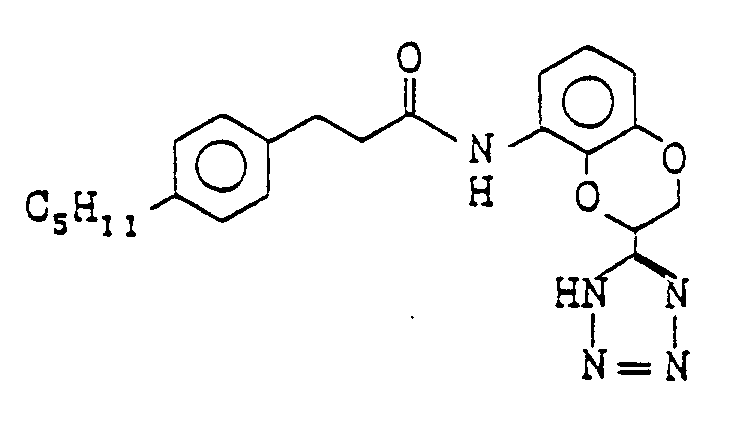
8-(p-pentylcinnamoyl)amino-2-(5-tetrazolyl)-1,4-benzodioxane (216 mg; synthesized
in example 2(1)) and palladium-carbon (50 mg; content 5%) were suspended in a mixed
solvent (6 ml) of methanol, ethanol and ethyl acetate (1:1:1). In an atmosphere of
hydrogen, the suspension was stirred for 90 min at room temperature. After stirring,
the suspension was filtered through celite. The filtrate was condenced under reduced
pressure. Thre residue was purified by column chromatography on silica gel (methylene
chloride: methanol = 19:1) to give the title compound (202 mg) having the following
physical data:
TLC : Rf 0.54 (methylene chloride: methanol = 4:1);
NMR (CDCl3): 6 7.28(1 H, s), 7.11 (4H, 2d), 6.76(2H, m), 6.60(1 H, dd), 5.68(1 H, t), 4.93(1
H, dd), 3.04-(2H, t), 2.77(2H, m), 2.56(2H, t), 1.58(2H, m), 1.30(4H, m), 0.88(3H,
t);
IR : ν 3600-2300, 1650, 1615, 1530, 1460, 1260, 1100, 780 cm-1;
Mass: m/e 421 (M+), 219;
Appearance: white crystal.
Example 7
[0152] Synthesis of 8-[p-(6-hydroxyhexyloxy)benzoyl]amino-2-(5-tetrazolyl)-1,4-benzodioxane
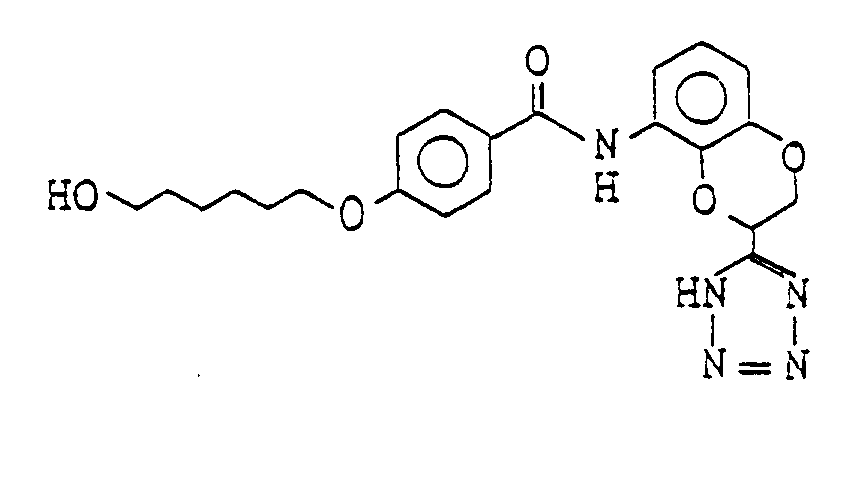
A 1 N aqueous solution of sodium hydroxide (0.5 ml) was added to a solution of 8-[p-(6-acetyloxyhex-
yloxy)benzoyl]amino-2-(5-tetrazolyl)-1,4-benzodioxane (100 mg; synthesized in example
1 (96)) in methanol (0.5 ml) at room temperature. The reaction solution was stirred
for 10 min at the same temperature, and then concentrated under reduced pressure.
To the residue, dil. hydrochloric acid was added and the mixture was extracted with
ethyl acetate. The extract was dried and concentrated under reduced pressure. The
residue was purified by column chromatography on silica gel (methylene chloride: methanol
= 100:1) to give the title compound (95 mg) having the following physical data:
TLC : Rf 0.23 (methylene chloride: methanol = 5:1);
NMR : δ 7.89(2H, d), 7.46(1 H, dd), 6.95(2H, d), 6.92(1 H, t), 6.76(1 H, dd), 4.02(2H,
t), 3.60(2H, t);
IR : ν 3400, 3200-2300, 1630, 1600, 1520, 1500, 1440, 1250 Cm-1;
Mass: m/e 439(M+), 221, 149, 121;
Appearance: white amorphous.
Example 8
[0153] Synthesis of 8-[p-[5-(N,N-dimethylamino)pentyloxy]cinnamoyl]amino-1,4-benzodioxane
sodium salt
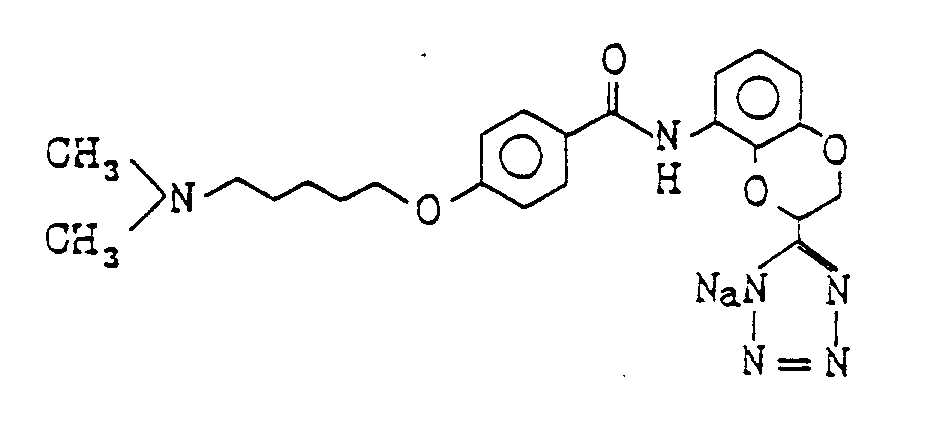
A 40% aqueous solution of dimethylamine (1 ml) was dropped to a solution of 8-[p-(5-bromopentyloxy)-cinnamoyl]amino-1,4-benzodioxane
(176 mg; synthesized in example 1 (113)). The solution was stirred for 1 hr at room
temperature. Volatile matter was removed with vacuum pump for 1 hr at room temperature,
and for 3 hrs at 90 ° C. The residue was dissolved into methanol (1 ml), to the solution,
a 2N aqueous solution of sodium hydroxide (360 u.l). The mixture was condensed under
reduced pressure. To the residue, small amount of methanol and hexane (4 ml) were
added. The mixture was filtered, and volatile matter was removed from the filtrate
with vacuum pump overnight at room temperature and overnight at 80 ° C to give the
title compound (179 mg) having the following physical data:
TLC : Rf 0.33 (ethyl acetate: acetic acid: water = 3:1:1);
NMR : δ 7.87(2H, d), 7.62(1 H, dd), 6.98(2H, d), 6.86(1 H, t), 6.71 (1 H, dd), 4.06(2H,
t), 2.85(2H, t), 2.64(2H, s);
IR : ν 3430, 2930, 1655, 1605, 1505, 1445, 1255 cm-1;
Mass: m/e 452(M+), 233;
Appearance: white powder.
Example 9
[0154] Synthesis of 8-(p-octyloxybenzoyl)amino-2-(5-tetrazolyl)-1,4-benzodioxane-7-carboxylic
acid
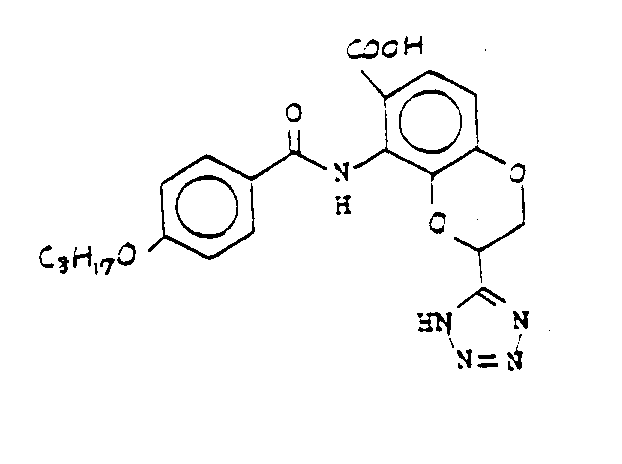
8-(p-octyloxybenzoyl)amino-2-(5-tetrazolyl)-1,4-benzodioxane-7-carboxylic acid methyl
ester (332 mg; synthesized in example 2 (107) was dissolved in methanol (1.5 ml).
To the solution, a 1 N aqueous solution of sodium hydroxide (1.36 ml), and the mixture
was stirred for 50 min at room temperature and for 2 hrs at 40 ° C. After cooling,
1N hydrochloric acid (2 ml) was added to the solution. The mixture was extracted with
ethyl acetate. The extract was dried and concentrated under reduced pressure. The
residue was purified by column chromatography on silica gel (chloroform: methanol
= 9:1) to give the title compound (263 mg) having the following physical data:
TLC : Rf 0.15 (chloroform: methanol = 4:1);
NMR : δ 8.00(2H, d), 7.68(1 H, d), 6.98(2H, d), 6.82(1 H, d), 6.04(1 H, m), 4.56(2H,
m), 4.03(2H, t), 1.82(2H, m), 1.31 (10H, m), 0.88(3H, t);
IR : ν 3600-2300, 1680, 1640, 1600, 1490, 1460, 1250, 1170, 1080, 900, 840, 760 cm-1;
Mass: m/e 495(M+), 477, 383, 233;
Appearance: pale brown powder.
Example 10
[0155] Synthesis of 8-(p-pentylcinnamoyl)amino-2-(5-tetrazolyl)-6-methyl-1,4-benzodioxane
sodium salt
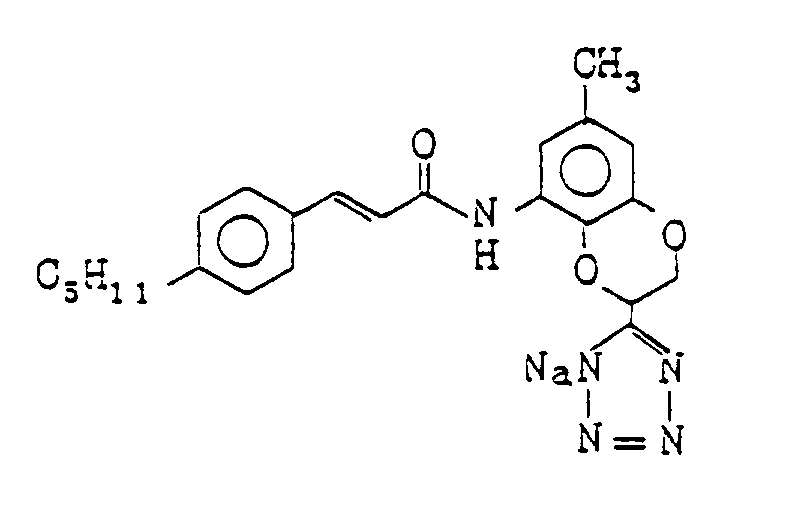
8-(p-pentylcinnamoyl)-2-(5-tetrazolyl)-6-methyl-1,4-benzodioxane (50 mg; synthesized
in example 2 (103)) was dissolved in methanol (0.5 ml). To the solution, equivalent
molar of a 1 N aqueous solution of sodium hydroxide was added. The solution was stirred
and then evaporated to dryness to give the title compound (51 mg).
Example 11
[0156] By the same procedure as example 10, corresponding sodium salts of the compounds
synthesized in examples (other than example 10 and esters) were given.
Example 12
[0157] 8-[p-(3E-hexenyloxy)benzoyl]amino-2-(5-tetrazolyl)-1,4-benzodioxane (0.5 g), cellulose
calcium gluconate (200 mg; disintegrator), magnesium stearate (100 mg; lubricator)
and microcrystalline cellulose (9.2 g) were admixed and punched out in conventional
manner to give 100 tablets each containing 5 mg of the active ingredient.
Claims for the following Contracting State(s) : BE, DE, FR, GB, IT, LU, NL, CH, LI,
SE
1. A fused aminophenyl derivative of the general formula:
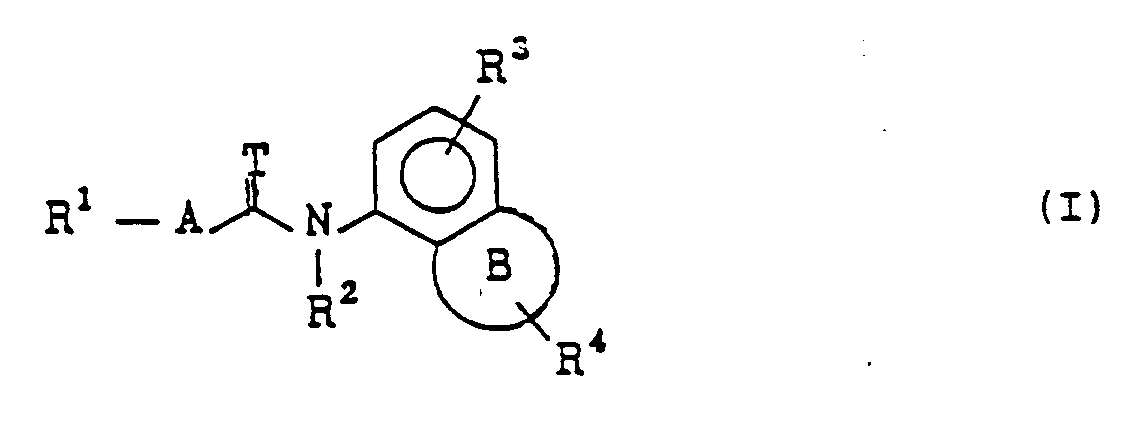
[wherein symbol A represents a single bond or a group of methylene, ethylene, trimethylene,
tetramethylene, vinylene, propenylene, butenylene, butadienylene or ethylene group
optionally being substituted by one, two or three straight or branched alkyl groups(s)
of from 1 to 10 carbon atom(s) and/or phenyl groups(s),
symbol B represents a carbocyclic ring of from 4 to 8 members wherein one, two or
three of the carbon atom(s) may be replaced by oxygen, nitrogen and/or sulphur atom(s),
or wherein the ring may optionally be substituted by group(s) of oxo, thioxo, and/or
hydroxy group(s),
symbol T represents an oxygen atom or a sulphur atom,
R1 represents a group of formula:
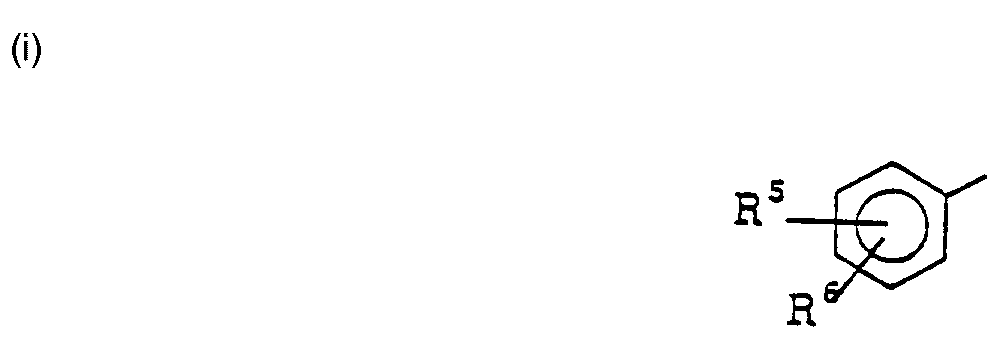
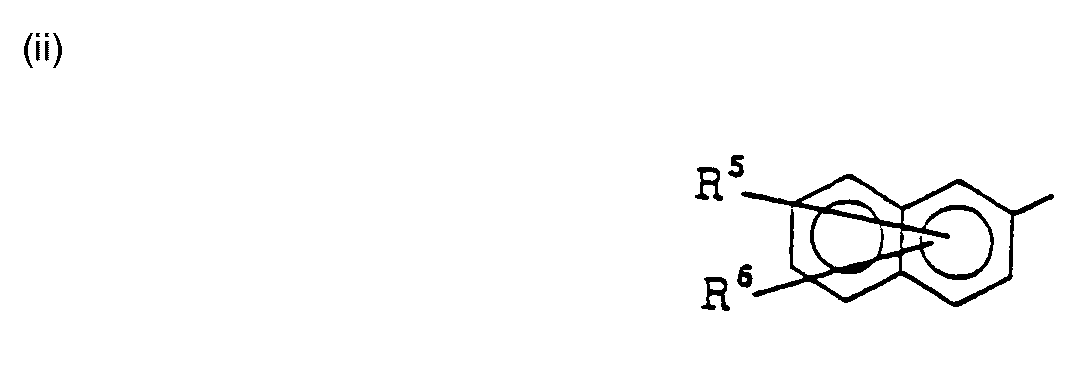
or
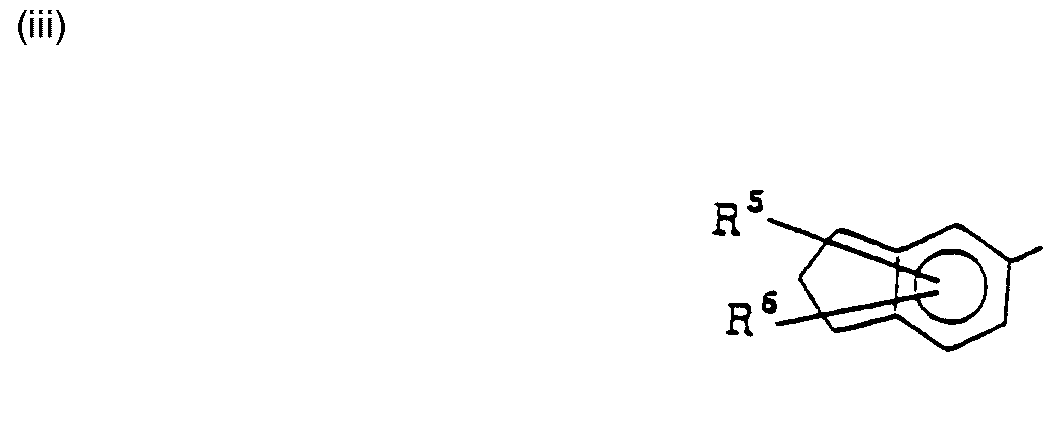
or
(iv) a straight or branched alkyl, alkenyl or alkynyl group of from 1 to 20 carbon
atom(s),
(wherein R
5 and R
6 independently represent a hydrogen atom or a halogen atom or a straight or branched
alkyl, alkenyl or alkynyl group of from 1 to 20 carbon atom(s) wherein one, two, three,
four or five of the carbon atom(s) may be replaced by oxygen atom(s), sulphur atom(s),
halogen atom(s), nitrogen atom(s), benzene ring(s), thiophene ring(s), naphthalene
ring(s), carbocyclic ring(s) of from 4 to 7 carbon atom(s), carbonyl group(s), carbonyloxy
group(s), hydroxy group(s), carboxy group(s), azido group(s) and/or nitro group(s)),
R2 represents a hydrogen atom or a straight or branched alkyl group of from 1 to 6 carbon
atom(s),
R3 represents a hydrogen atom, a halogen atom, a hydroxy group, a nitro group, a group
of general formula: -COOR7 (wherein R7 represents a hydrogen atom or a straight or branched alkyl group of from 1 to 6 carbon
atom(s)) or a straight or branched alkyl,
alkoxy or alkylthio group of from 1 to 6 carbon atom(s), and
R4 represents a group of general formula:
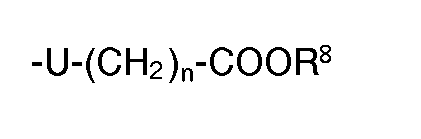
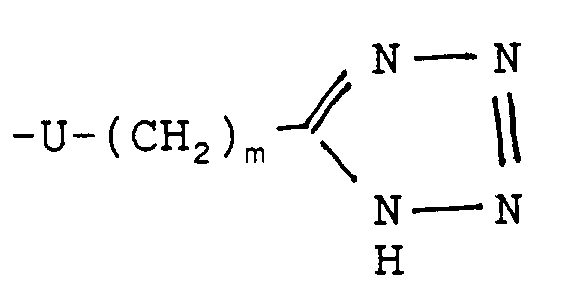
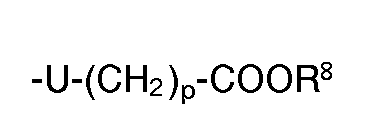
or
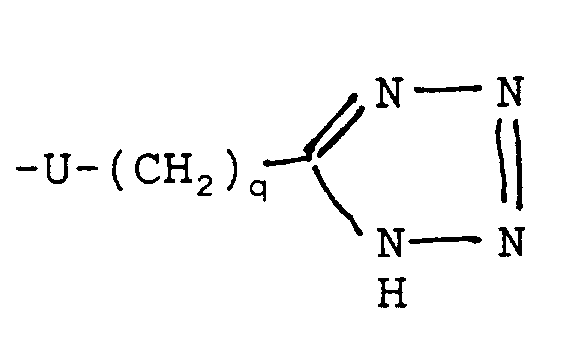
(wherein symbol U represents an oxygen atom or a sulphur atom, R8 represents a hydrogen atom or a straight or branched alkyl group of from 1 to 6 carbon
atom(s), n and m represent an integer of from 1 to 10, respectively, and p and q represent
zero or an integer of from 1 to 10, respectively)]; or a non-toxic salt thereof.
2. A compound according to claim 1, wherein the symbol B is a ring of formula:



(the rings may optionally be substituted by hydroxy group(s).)
3. A compound according to claim 2, wherein the symbol B is 2,3,5,6-tetrahydro-1,4-dioxane
ring (i.e the formula:
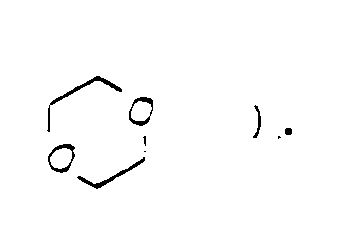
4. A compound according to claim 3, wherein the symbol A is a single bond, and the
symbol T is an oxygen atom.
5. A compound according to claim 4, wherein R
1 is a group of the general formula:
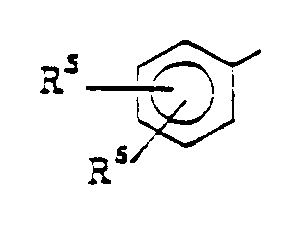
(wherein R
5 and R
6 are as defined in claim 1).
6. A compound according to claim 5, wherein R5 is a hydrogen atom and R6 is a straight or branched alkoxy group of from 1 to 19 carbon atom(s).
7. 8-(p-Heptyloxybenzoyl)amino-2-(5-tetrazolyl)-1,4-benzodioxane, or 8-(p-isooctyloxybenzoyl)amino-2-(5-tetrazolyl)-1,4-benzodioxane;
or a sodium salt thereof.
8. A compound according to claim 5, wherein R5 is a hydrogen atom and R6 is a straight or branched alkenyloxy group of from 3 to 19 carbon atoms.
9. 8-[p-(2E-Octenyloxy)benzoyl]amino-2-(5-tetrazolyl)-1,4-benzodioxane, 8-[p-(2Z-octenyloxy)benzoyl]amino-2-(5-tetrazolyl)-1,4-benzodioxane,
8-[p-(2E-nonenyloxy)benzoyl]amino-2-(5-tetrazolyl)-1,4-benzodioxane, 8-[p-(2E-hexenyloxy)benzoyl]amino-2-(5-tetrazolyl)-1,4-benzodioxane,
8-[p-(3E-heptenyloxy)benzoyl]amino-2-(5-tetrazolyl)-1,4-benzodioxane, 8-[p-(2E-octenyloxy)benzoyl]amino-1
,4-benzodioxane-2-carboxylic acid or methyl ester thereof, 8-[p-(2E-heptenyloxy)benzoyl]amino-2-(5-tetrazolyl)-1,4-benzodioxane,
8-(p-geranyloxy benzoyl)amino-2-(5-tetrazoyl)-1,4-benzodioxane, 8-[p-(2E,7-octadienyloxy)benzoyl]amino-2-(5-tetrazolyl)-1,4-benzodioxane,
8-[p-(7-octenyloxy)benzoyl]amino-2-(5-tetrazolyl)-1,4-benzodioxane, or 8-[p-(2E,4E-octadienyloxy)benzoyl]amino-2-(5-tetrazolyl)-1,4-benzodioxane;
or a sodium salt thereof.
10. A compound according to claim 5, wherein R5 is a hydrogen atom and R6 is a straight or branched alkynyloxy group of from 3 to 19 carbon atoms.
11. 8-[p-(2-Octynyloxy)benzoyl]amino-2-(5-tetrazolyl)-1,4-benzodioxane, or 8-[p-(2-isooctynyloxy)benzoyl]amino-2-(5-tetrazolyl)-1,4-benzodioxane;
or a sodium salt thereof.
12. A compound according to claim 5, wherein R5 is a hydrogen atom and R6 is a straight or branched alkylthio group of from 1 to 19 carbon atom(s).
13. 8-(p-Heptylthiobenzoyl)amino-2-(5-tetrazolyl)-1 ,4-benzodioxane or sodium salt
thereof.
14. A compound according to claim 5, wherein R5 is a hydrogen atom and R6 is a straight or branched alkoxy group of from 1 to 18 carbon atom(s) being substituted
by halogen atom(s).
15. 8-[p-(6-Chlorohexyloxy)benzoyl]amino-2-(5-tetrazolyl)-1,4-benzodioxane, 8-[p-(5-chloropentyloxy)benzoyl]amino-2-(5-tetrazolyl)-1,4-benzodioxane,
8-[p-(4-chlorobutoxy)benzoyl]amino-2-(5-tetrazolyl)-1,4-benzodioxane, 8-[p-(7-chloroheptyloxy)benzoyl]amino-2-(5-tetrazolyl)-1,4-benzodioxane,
8-[p-(8-chlorooctyloxy)benzoyl]amino-2-(5-tetrazolyl)-1,4-benzodioxane, or 8-[p-(9-chlorononyloxy)benzoyl]amino-2-(5-tetrazolyl)-1,4
benzodioxane; or a sodium salt thereof.
16. A compound according to claim 5, wherein R5 is a hydrogen atom and R6 is a phenyl, phenylalkyl (wherein alkyl moiety is a group of from 1 to 8 carbon atom(s)),
phenylalkyloxy (wherein the alkyl moiety is a group of from 1 to 8 carbon atom(s)),
phenylalkenyloxy (wherein alkenyl moiety is a group of from 2 to 8 carbon atoms),
napthyl, napthylalkyl (wherein alkyl moiety is a group of from 1 to 8 carbon atom(s)),
napthylalkyloxy (wherein the alkyl moiety is a group of from 1 to 8 carbon atom(s)
) or napthylalkenyloxy group (wherein the alkenyl moiety is a group of from 2 to 8
carbon atoms) being unsubstituted or substituted by a straight or branched alkyl group
of from 1 to 8 carbon atom(s), hydroxy group(s), halogen atom(s) and/or nitro group(s).
17. 8-[p-(p-Propylphenyl)methoxybenzoyl]amino-2-(5-tetrazolyl)-1,4-benzodioxane, or
8-[p-(4-phenylbutoxy)benzoyl]amino-2-(5-tetrazolyl)-1,4-benzodioxane; or a sodium
salt thereof.
18. A compound according to claim 5, wherein R5 is a hydrogen atom and R6 is a straight or branched alkoxy, alkenyloxy or alkoxyalkoxy group of from 1 to 18
carbon atom(s) wherein carbon atom(s) is/are replaced by carbonyl group(s), carbonyloxy
group(s) or hydroxy group(s).
19. 8-(p-Octanoylbenzoyl)amino-2-(5-tetrazolyl)-1 ,4-benzodioxane or sodium salt thereof.
20. A compound according to claim 5, wherein R5 is a hydrogen atom and R6 is a straight or branched alkoxy group of from 1 to 17 carbon atom(s) being substituted
by a phenoxy or phenylthio group.
21. 8-[p-(3-Phenylthiopropoxy)benzoyl]amino-2-(5-tetrazolyl)-1,4-benzodioxane, or
8-[p-(3-phenoxypropoxy)benzoyl]amino-2-(5-tetrazolyl)-1,4-benzodioxane; or a sodium
salt thereof.
22. A compound according to claim 5, wherein R5 is a hydrogen atom and R6 is a straight or branched alkoxy group of from 1 to 18 carbon atom(s) being substituted
by thiophene ring(s).
23. 8-[p-[4-(2-Thienyl)butoxy]benzoyl]amino-2-(5-tetrazolyl)-1,4-benzodioxane or sodium
salt thereof.
24. A compound according to claim 5, wherein R5 is a hydrogen atom and R6 is a straight or branched alkoxy group of from 1 to 18 carbon atom(s) being substituted
by azido group(s), nitro group(s) or amino group(s) which are unsubstituted or substituted
by straight or branched alkyl group(s) of from 1 to 6 carbon atom(s) (including dialkylamino
group).
25. 8-[p-(5-Azidopentyloxy)benzoyl]amino-2-(5-tetrazolyl)-1 ,4-benzodioxane or sodium
salt thereof.
26. A compound according to claim 3, wherein the symbol A is a vinylene group unsubstituted
or substituted by straight or branched alkyl group(s) of from 1 to 6 carbon atom(s)
or phenyl group, and the symbol T is an oxygen atom.
27. A compound according to claim 26, wherein R
1 is a group of the general formula:
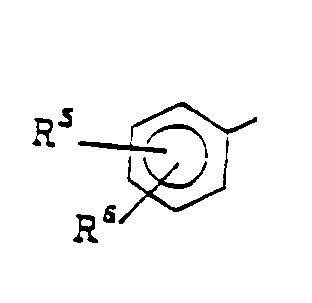
(wherein R
5 and R
6 are as defined in claim 1).
28. A compound according to claim 27, wherein R5 is a hydrogen atom, and R6 is a straight or branched alkoxy group of from 1 to 19 carbon atom(s).
29. 8-(p-lsohexyloxycinnamoyl)amino-2-(5-tetrazolyl)-1 ,4-benzodioxane or sodium salt
thereof.
30. A compound according to claim 27, wherein R5 is a hydrogen atom, and R6 is a straight or branched alkoxy group of from 1 to 18 carbon atom(s) being substituted
by halogen atom(s).
31. 8-[p-(4-Chlorobutoxy)cinnamoyl]amino-2-(5-tetrazolyl)-1,4-benzodioxane, or 8-[p-(5-chloropentyloxy)cinnamoyl]amino-2-(5-tetrazolyl)-1,4-benzodioxane;
or a sodium salt thereof.
32. A compound according to claim 27, wherein R5 is a hydrogen atom, and R6 is a straight or branched alkyloxyalkyl group of from 2 to 19 carbon atoms.
33. 8-(p-lsopentyloxymethylcinnamoyl)amino-2-(5-tetrazolyl)-1,4-benzodioxane or sodium
salt thereof.
34. A compound according to claim 27, wherein R5 is a hydrogen atom, and R6 is a phenyl, phenylalkyl (wherein alkyl moiety is a group of from 1 to 8 carbon atom(s)),
phenylalkloxy (wherein the alkyl moiety is a group of from 1 to 8 carbon atom(s))
or phenylalkenyloxy (wherein the alkenyl moiety is a group of from 2 to 8 carbon atom(s))
being unsubstituted or substituted by straight or branched alkyl group(s) of from
1 to 8 carbon atom(s), hydroxy group(s), halogen atom(s) and/or nitro group(s).
35. 8-[p-(2-Phenylethoxy)cinnamoyl]amino-2-(5-tetrazolyl)-1 ,4-benzodioxane, or sodium
salt thereof.
36. A compound according to claim 27, wherein R5 is a hydrogen atom, and R6 is a straight or branched alkoxy group of from 1 to 18 carbon atom(s) being substituted
by thiophene ring(s).
37. 8-[p-[2-(2-Thienyl)ethoxy]cinnamoyl]-amino-2-(5-tetrazolyl)-1,4-benzodioxane or
sodium salt thereof.
38. A compound according to claim 3, wherein the symbol A is a single bond or vinylene
group, and the symbol T is a sulphur atom.
39. 8-(p-Heptyloxybenzothioyl)amino-2-(5-tetrazolyl)-1 ,4-benzodioxane or sodium salt
thereof.
40. A compound according to claim 2, wherein the symbol B is 4-oxo-2,3-dihydro-4H-1-pyran
ring (i.e. the formula:
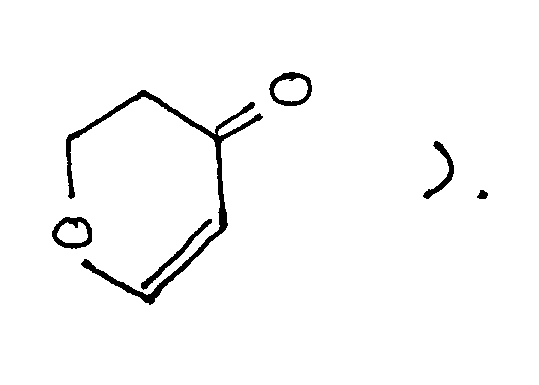
41. A compound according to claim 40, wherein the symbol A is a single bond, and the
symbol T is an oxygen atom.
42. A compound according to claim 41, wherein R
1 is a group of general formula:
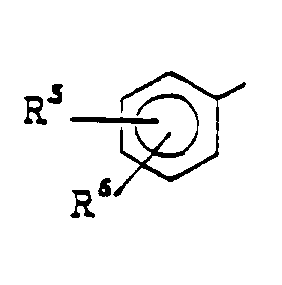
(wherein R
5 and R
6 are as defined in claim 1).
43. A compound according to claim 42, wherein R5 is a hydrogen atom, and R6 is a hydrogen atom or a straight or branched alkyl group of from 1 to 20 carbon atom(s).
44. 8-(p-Heptylbenzoyl)amino-2-(5-tetrazolyl)-4-oxo-4H-1-benzopyran, 8-(p-octylbenzoyl)amino-2-(5-tetrazolyl)-4-oxo-4H-1-benzopyran,
or 8-(p-nonylbenzoyl)amino-2-(5-tetrazolyl)-4-oxo-4H-1-benzopyran; or a sodium salt
thereof.
45. A compound according to claim 42, wherein R5 is a hydrogen atom, and R6 is a straight or branched alkoxy group of from 1 to 19 carbon atom(s).
46. 8-(p-Butoxybenzoyl)amino-2-(5-tetrazolyl)-4-oxo-4H-1-benzopyran, 8-(p-hexyloxybenzoyl)amino-2-(5-tetrazolyl)-4-oxo-4H-1-benzopyran,
8-(p-heptyloxybenzoyl)amino-2-(5-tetrazolyl)-4-oxo-4H-1-benzopyran, 8-(p-nonyloxybenzoyl)amino-2-(5-tetrazolyl)-4-oxo-4H-1-benzopyran,
8-(p-octyloxybenzoyl)amino-2-(5-tetrazolyl)-4-oxo-4H-1-benzopyran, 8-(p-heptyloxybenzoyl)amino-2-(5-tetrazolyl)-6-fluoro-4-oxo-4H-1-benzopyran,
8-(p-octyloxybenzoyl)amino-2-(5-tetrazolyl)-6-methyl-4-oxo-4H-1-benzopyran, or 8-(p-heptyloxybenzoyl)amino-2-(5-tetrazolyl)-6-methyl-4-oxo-4H-1-benzopyran;
or a sodium salt thereof.
47. A compound according to claim 42, wherein R5 is a hydrogen atom, and R6 is a straight or branched alkenyloxy group of from 3 to 19 carbon atoms.
48. 8-[p-(2E,7-Octadienyloxy)benzoyl]amino-2-(5-tetrazolyl)-4-oxo-4H-1-benzopyran,
8-(p-geranyloxybenzoyl)amino-2-(5-tetrazolyl)-4-oxo-4H-1-benzopyran, 8-[p-(2E-octenyloxy)benzoyl]amino-2-(5-tetrazolyl)-4-oxo-4H-1-benzopyran,
8-[p-(7-octenyloxy)benzoyl]amino-2-(5-tetrazolyl)-4-oxo-4H-1-benzopyran, 8-[p-(2E-heptenyloxy)benzoyl]amino-2-(5-tetrazolyl)-4-oxo-4H-1-benzopyran,
8-[p-(2E-hexenyloxy)benzoyl]amino-2-(5-tetrazolyl)-4-oxo-4H-1-benzopyran, 8-[p-(2E,7-octadienyloxy)benzoyl]amino-2-(5-tetrazolyl)-6-fluoro-4-oxo-4H-1
-benzopyran, 8-[p-(2E-octenyloxy)benzoyl]amino-2-(5-tetrazolyl)-6-methyl-4-oxo-4H-1-benzopyran,
8-[p-(7-octenyloxy)benzoyl]amino-2-(5-tetrazolyl)-6-methyl-4-oxo-4H-1-benzopyran,
8-[p-(2E,7-octadienyloxy)benzoyl]amino-2-(5-tetrazolyl)-6-methyl-4-oxo-4H-1-benzopyran,
or 8-[p-(2E,7-octadienyloxy)benzoyl]amino-2-(5-tetrazolyl)-6-chloro-4-oxo-4H-1 -benzopyran;
or a sodium salt thereof.
49. A compound according to claim 42, wherein R5 is a hydrogen atom, and R6 is a straight or branched alkynyloxy group of from 3 to 19 carbon atoms.
50. 8-[p-(2-Octynyloxy)benzoyl]amino-2-(5-tetrazolyl)-4-oxo-4H-1-benzopyran or sodium
salt thereof.
51. A compound according to claim 42, wherein R5 is a hydrogen atom, and R6 is a straight or branched alkoxy group of from 1 to 18 carbon atom(s) being substituted
by halogen atom(s).
52. 8-[p-(5-Chloropentyloxy)benzoyl]amino-2-(5-tetrazolyl)-4-oxo-4H-1-benzopyran,
8-[p-(6-chlorohexyloxy)benzoyl]amino-2-(5-tetrazolyl)-4-oxo-4H-1-benzopyran, 8-[p-(6-chlorohexyloxy)benzoyl]amino-2-(5-tetrazolyl)-4-oxo-4H-1-benzopyran,
8-[p-(7-chloroheptyloxy)benzoyl]amino-2-(5-tetrazolyl)-4-oxo-4H-1-benzopyran, 8-[p-(8-chlorooctyloxy)benzoyl]amino-2-(5-tetrazolyl)-6-methyl-4-oxo-4H-1
-benzopyran, 8-[p-(7-chloroheptyloxy)benzoyl]amino-2-(5-tetrazolyl)-6-methyl-4-oxo-4H-1-benzopyran,
or 8-[p-(8-chlorooctyloxy)benzoyl]amino-2-(5-tetrazolyl)-4-oxo-4H-1-benzopyran; or
a sodium salt thereof.
53. A compound according to claim 42, wherein R5 is a hydrogen atom, and R6 is phenyl, phenylalkyl (wherein the alkyl moiety is a group of from 1 to 8 carbon
atom(s)), phenylalkyloxy (wherein the alkyl moiety is a group of from 1 to 8 carbon
atom(s).), phenylalkenyloxy (wherein the alkenyl moiety is a group of from 2 to 8
carbon atoms) naphthyl, naphthlalkyl (wherein the alkyl moiety is a group of from
1 to 8 carbon atom(s)), naphthylalkyloxy (wherein the alkyl moiety is a group of from
1 to 8 carbon atom-(s)), or naphthylalkenyloxy group (wherein the alkenyl moiety is
a group of from 2 to 8 carbon atoms) being unsubstituted or substituted by straight
or branched alkyl group(s) of from 1 to 8 carbon atom(s), hydroxy group(s), halogen
atom(s) and/or nitro group(s).
54. 8-[p-(3-Phenylpropoxy)benzoyl]amino-2-(5-tetrazolyl)-4-oxo-4H-1-benzopyran, 8-[p-(3-phenyl-2E-propenyloxy)benzoyl]amino-2-(5-tetrazolyl)-4-oxo-4H-1
-benzopyran, 8-[p-(4-phenylbutoxy)benzoyl]amino-2-(5-tetrazolyl)-4-oxo-4H-1-benzopyran,
or 8-[p-(4-phenylbutoxy)benzoyl]amino-2-(5-tetrazolyl)-6-methyl-4-oxo-4H-1 -benzopyran;
or a sodium salt thereof.
55. A compound according to claim 42, wherein R5 is a hydrogen atom, and R6 is a straight or branched alkoxy group of from 1 to 18 carbon atom(s) being substituted
by thiophene ring(s).
56. 8-[p-[4-(2-Thienyl)butoxy]benzoyl]amino-2-(5-tetrazolyl)-4-oxo-4H-1-benzopyran,
or 8-[p-[4-(2-thienyl)butoxy]benzoyl]amino-2-(5-tetrazolyl)-6-methyl-4-oxo-4H-1 -benzopyran;
or a sodium salt thereof.
57. A compound according to claim 40, wherein the symbol A is a vinylene group which
is unsubstituted or substituted by straight or branched alkyl group(s) of from 1 to
6 carbon atom(s) or phenyl group(s), and the symbol T is an oxygen atom.
58. A compound according to claim 57, wherein R
1 is a group of the general formula:
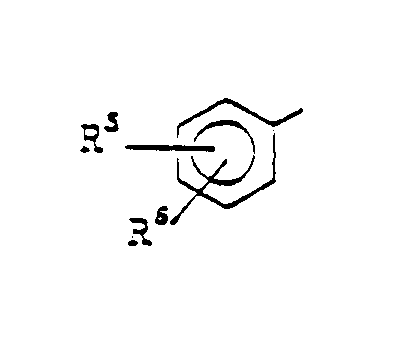
(wherein R
5 and R
6 are as defined in claim 1).
59. A compound according to claim 58, wherein R5 is a hydrogen atom, and R6 is a straight or branched alkoxy group of from 1 to 19 carbon atom(s).
60. 8-(p-lsohexyloxycinnamoyl)amino-2-(5-tetrazolyl)-4-oxo-4H-1-benzopyran or sodium
salt thereof.
61. A compound according to claim 58, wherein R5 is a hydrogen atom, and R6 is a straight or branched alkoxy group of from 1 to 18 carbon atom(s) being substituted
by halogen atom(s).
62. 8-[p-(5-Chloropentyloxy)cinnamoyl]amino-2-(5-tetrazolyl)-4-oxo-4H-1-benzopyran,
or 8-[p-(6-chlorohexyloxy)cinnamoyl]amino-2-(5-tetrazolyl)-4-oxo-4H-1-benzopyran;
or a sodium salt thereof.
63. A compound according to claim 2, wherein the symbol B is a pyridine ring optionally
substituted by hydroxy group(s) (i.e. the formula:
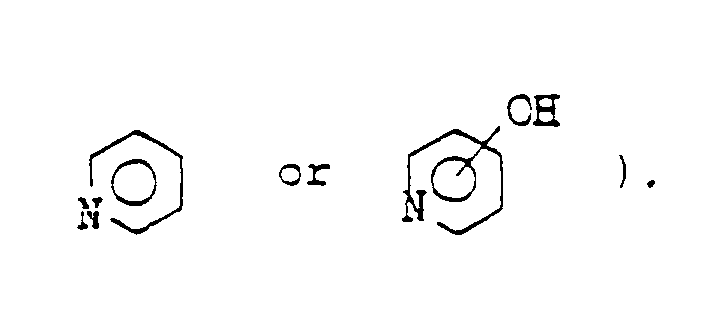
64. A compound according to claim 63, wherein the symbol A is a single bond or vinylene
group which is unsubstituted or substituted by straight or branched alkyl group(s)
of from 1 to 6 carbon atom(s) or phenyl group(s), and the symbol T is an oxygen atom.
65. A compound according to claim 64, wherein R
1 is a group of the general formula:
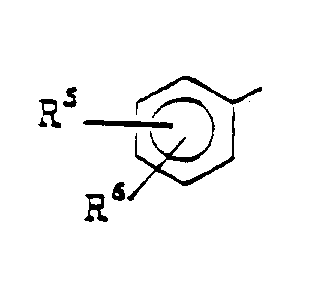
(wherein R
5 and R
6 are as defined in claim 1).
66. 8-[p-(4-Phenylbutoxy)benzoyl]amino-2-(5-tetrazolyl)-quinoline, or 8-[p-(4-phenylbutoxy)benzoyl]amino-4-hydroxy-2-(5-tetrazolyl)-quinoline;
or a sodium thereof
67. A compound according to claim 2, wherein the symbol B is 4,5-dihydrodioxole ring
(i.e. the formula:
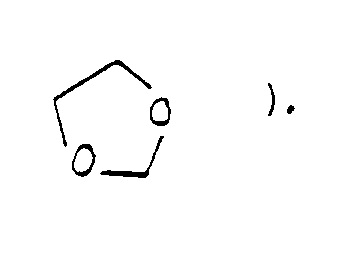
68. A compound according to claim 67, wherein the symbol A is a single bond or vinylene
group which is unsubstituted or unsubstituted by straight or branched alkyl group(s)
of from 1 to 6 carbon atom(s) or phenyl group(s), and the symbol T is an oxygen atom.
69. A compound according to claim 68, wherein R
1 is a group of the general formula:
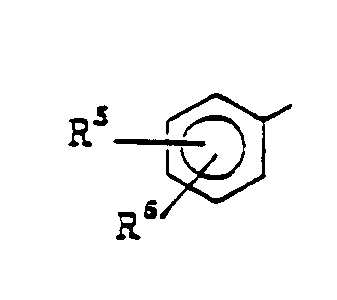
(wherein R
5 and R
6 are defined in claim 1).
70. 4-(p-Heptyloxybenzoyl)amino-2-(5-tetrazolyl)-1,3-benzodioxole or sodium salt thereof.
71. A compound according to claim 2, wherein the symbol B is a benzene ring (i.e.
the formula:
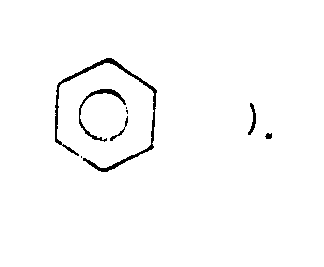
72. A compound according to claim 71, wherein the symbol A is a single bond or vinylene
group which is unsubstituted or substituted by straight or branched alkyl group(s)
of from 1 to 6 carbon atom(s) or phenyl group(s), and the symbol T is an oxygen atom.
73. A compound according to claim 72, wherein R
1 is a group of the general formula:
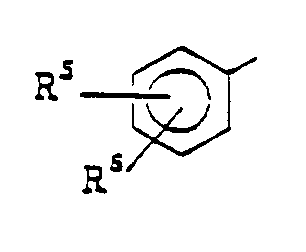
(wherein R
5 and R
6 are as defined in claim 1).
74. 8-[p-(4-Phenylbutoxy)benzoyl]amino-2-(5-tetrazolyl)naphthalene, or 8-[p-(7-octenyloxy)benzoyl]amino-2-(5-tetrazolyl)
methoxynaphthalene; or a sodium salt thereof.
75. A compound according to claim 2, wherein the symbol B is a 2,3,6,7-tetrahydro-5H-1,4-dioxepin
ring (i.e. the formula:
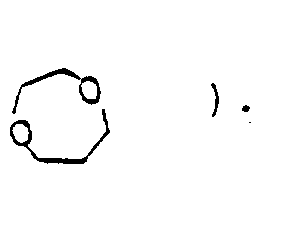
76. A compound according to claim 75, wherein the symbol A is a single bond or vinylene
group which is unsubstituted or substituted by straight or branched alkyl group(s)
of from 1 to 6 carbon atom(s) or phenyl group(s), and the symbol T is an oxygen atom.
77. A compound according to claim 76, wherein R
1 is a group of the general formula:
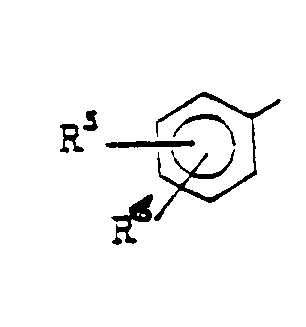
(wherein R
5 and R
6 are as defined in claim 1).
78. 9-[p-(2E,7-Octadienyloxy)benzoyl]amino-2-(5-tetrazolyl)-3,4-dihydro-2H-1,5-benzodioxepin
or sodium salt thereof.
79. A compound according to claim 2, wherein the symbol B is a morpholine ring (i.e.
the formula:
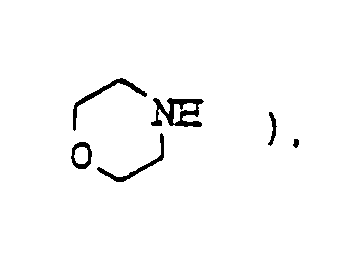
80. A compound according to claim 79, wherein the symbol A is a single bond or vinylene
group which is unsubstituted or substituted by straight or branched alkyl group(s)
of from 1 to 6 carbon atoms(s) or phenyl group(s), and the symbol T is an oxygen atom.
81. A compound according to claim 80, wherein R
1 is a group of the general formula:
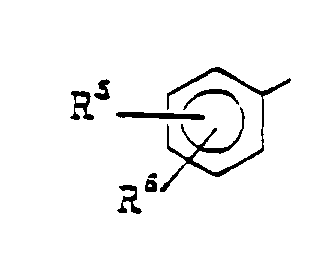
(wherein R
5 and R
6 are as defined in claim 1).
82. 8-[p-(4-Phenylbutoxy)benzoyl]amino-2-(5-tetrazolyl)-2,3-dihydro-1 ,4-benzoxazine
or sodium salt thereof.
83. A compound according to claim 2, wherein the symbol B is a 3,4,5,6-tetrahydro-2H-pyran
ring (i.e. the formula:
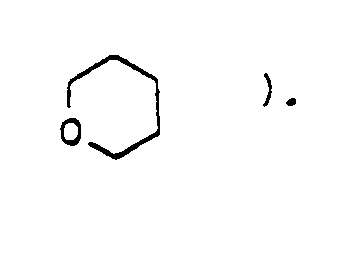
84. A compound according to claim 83, wherein the symbol A is a single bond or vinylene
group which is unsubstituted or substituted by straight or branched alkyl group(s)
of from 1 to 6 carbon atom(s) or phenyl group(s), and the symbol T is an oxygen atom.
85. A compound according to claim 84, wherein R
1 is a group of the general formula:
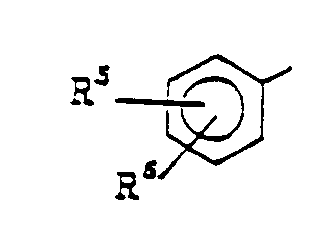
(wherein R
5 and R
6 are as defined in claim 1).
86. 8-[p-(4-Phenylbutoxy)benzoyl]amino-2-(5-tetrazolyl)-3,4-dihydro-2H-1-benzopyran
or sodium salt thereof.
87. A process for the preparation of a fused aminophenyl derivative of the general
formula:
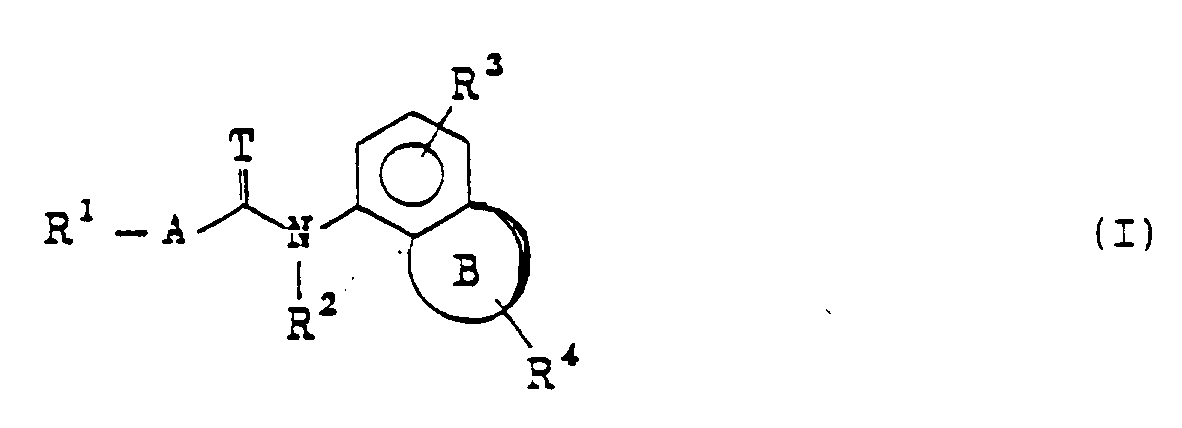
[wherein A, B, R
1, R
2, R
3 and R
4 are as defined in claim 1], or a non-toxic salt thereof, which process is characterized
by reacting
an acid of general formula:

(wherein A and R1 are as defined in claim 1), or a corresponding dithioic acid, and a compound of general
formula:
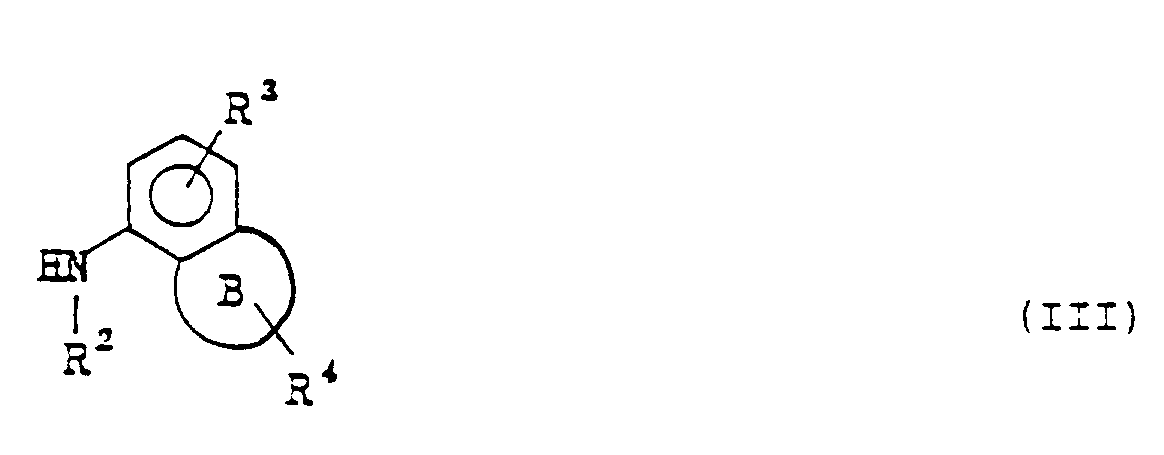
(wherein B, R2, R3, and R4 are as defined in claim 1),
to form an amide-bond; and further, effecting saponification and/or esterification,
if desired.
88. A process for the preparation of a fused aminophenyl derivative of general formula:
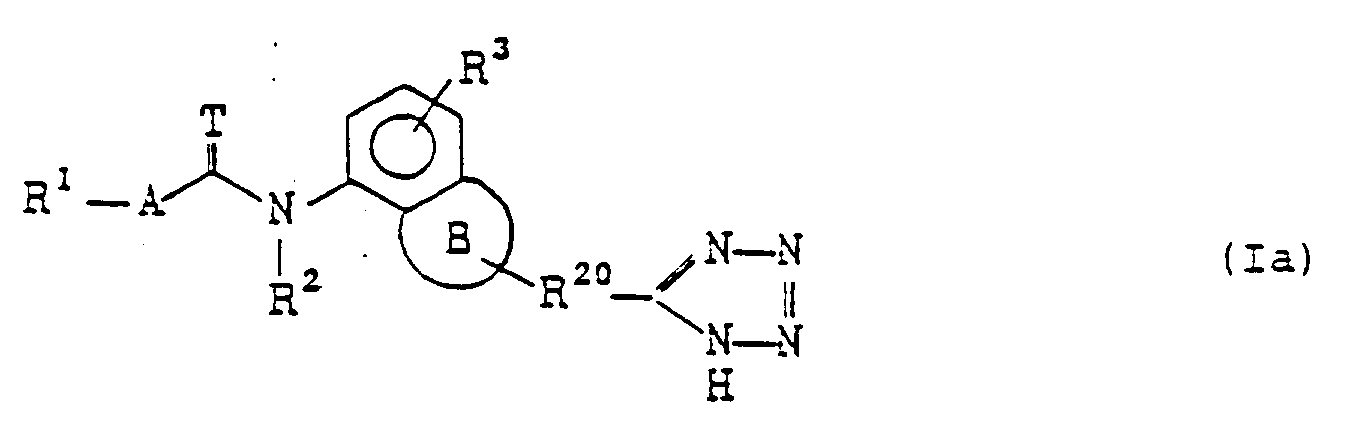
(wherein R
20 represents a methylene group or a single bond, and the other symbols are as defined
in claim 1), or a non-toxic salt thereof; which process is characterized by reacting
a compound of general formula:
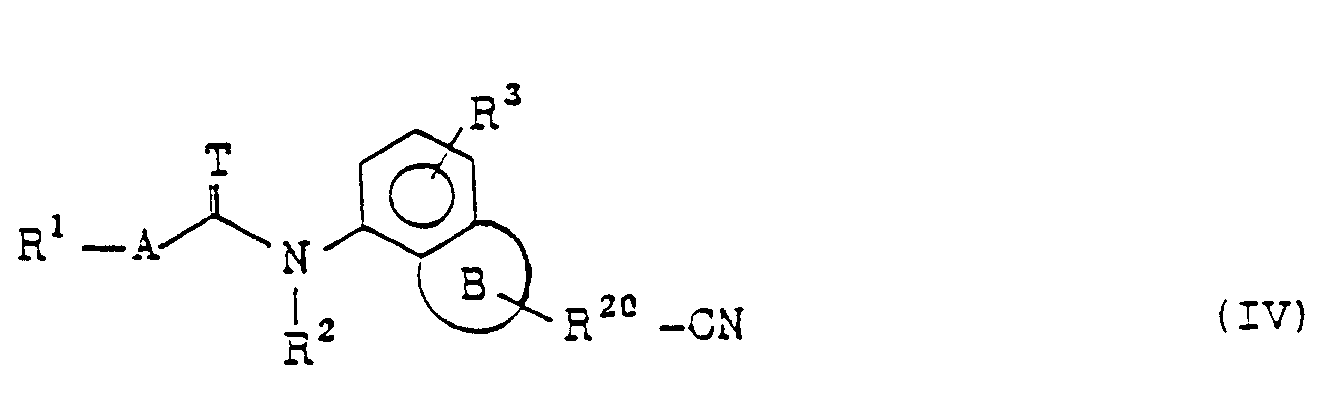
(wherein R
20 is as defined above, and the other symbols are as defined in claim 1), and an azide;
and further, effecting salt formation, if desired.
89. A process for the preparation of a fused aminophenyl derivative of general formula:
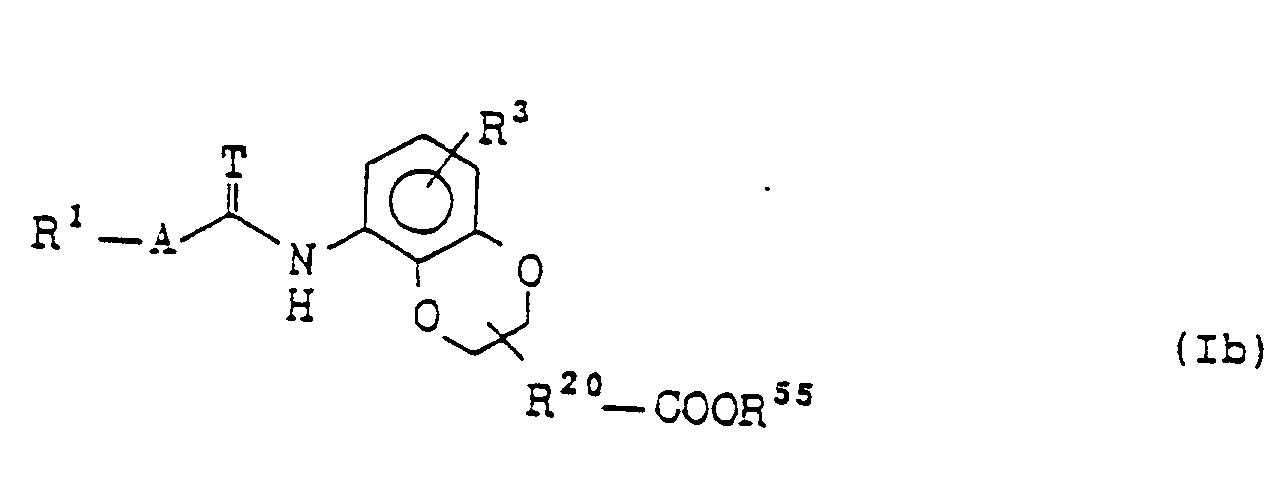
(wherein R
20 represents a methylene group or a single bond, R
55 represents a hydrogen atom or a straight or branched alkyl group of from 1 to 6 carbon
atom(s), and T, A, R
1 and R
3 are as defined in claim 1), or a non-toxic salt thereof; which process is characterized
by reacting a compound of general formula:
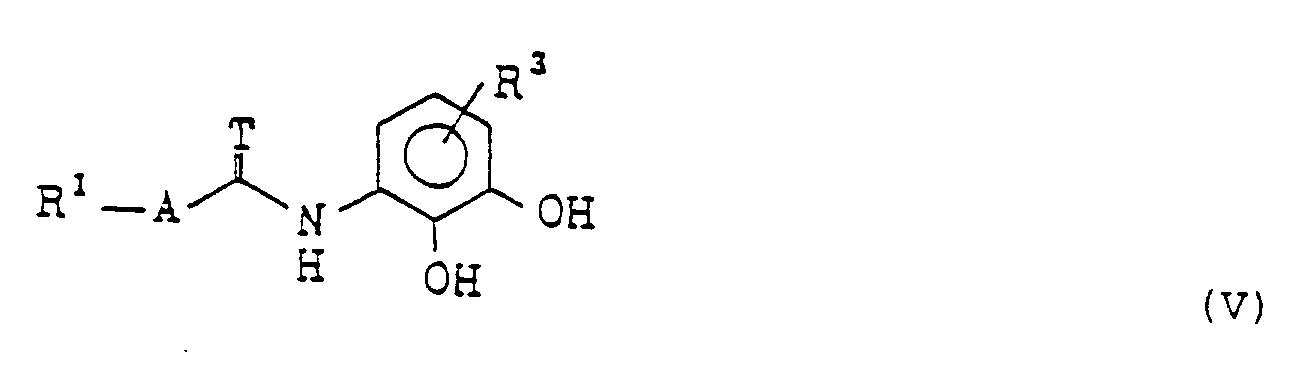
(wherein T, A, R
1 and R
3 are as defined in claim 1), and a compound of general formula:
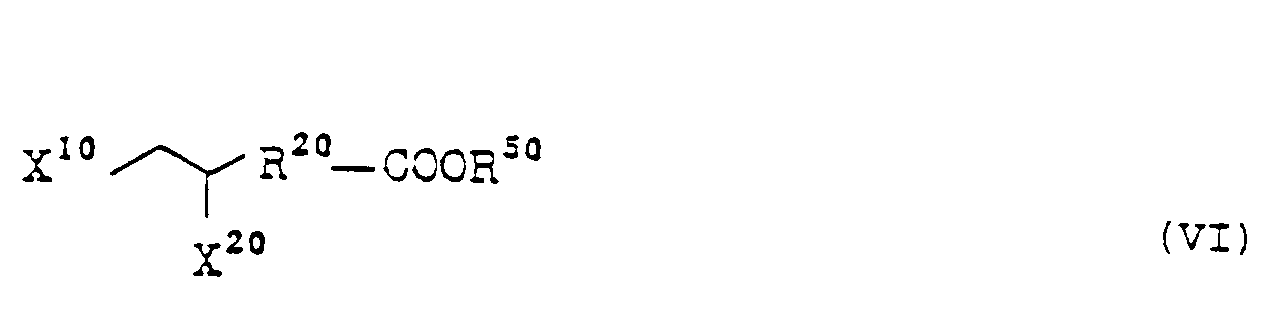
or
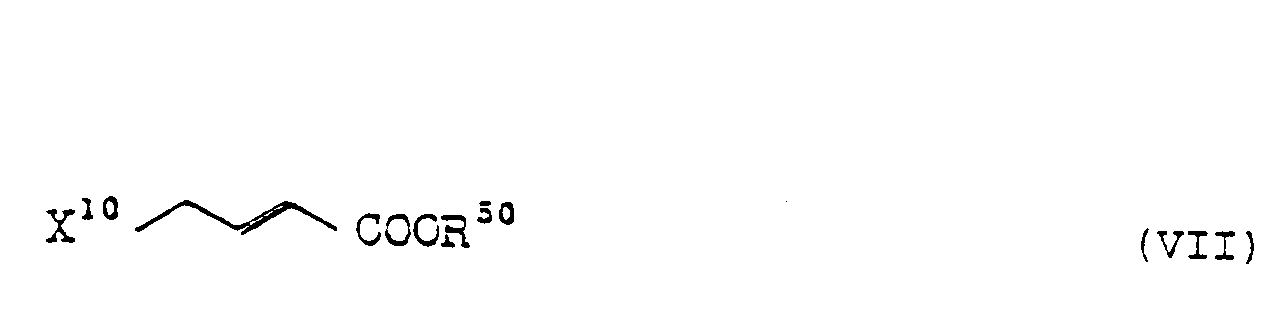
(wherein X
10 and X
2° represent halogen atoms, respectively, R
50 represents a straight or branched alkyl group of from 1 to 6 carbon atom(s), and
R
20 represents a methylene group or a single bond); and further effecting saponification
and/or esterification, if desired.
90. A pharmaceutical composition characterised by comprising as active ingredient
at least one compound of the general formula (I) as defined in any one of claims 1
to 86, or a non-toxic salt thereof, together with a pharmaceutical carrier and/or
coating.
91. A compound of general formula (I), as defined in claim 1 or a non-toxic salt thereof
for use as a medicament, for the prevention and/or treatment of tracheal, bronchial
or lung diseases such as asthma or allergic disease.
92. The use of a compound of general formula (I), as defined in claim, 1 or a non-toxic
salt thereof, for the manufacture of a medicament for the prevention and/or treatment
of trachial, bronchial or lung diseases such as asthma or allergic disease.
Claims for the following Contracting State(s) : AT
1. A process for the preparation of a fused aminophenyl derivative of the general
formula:
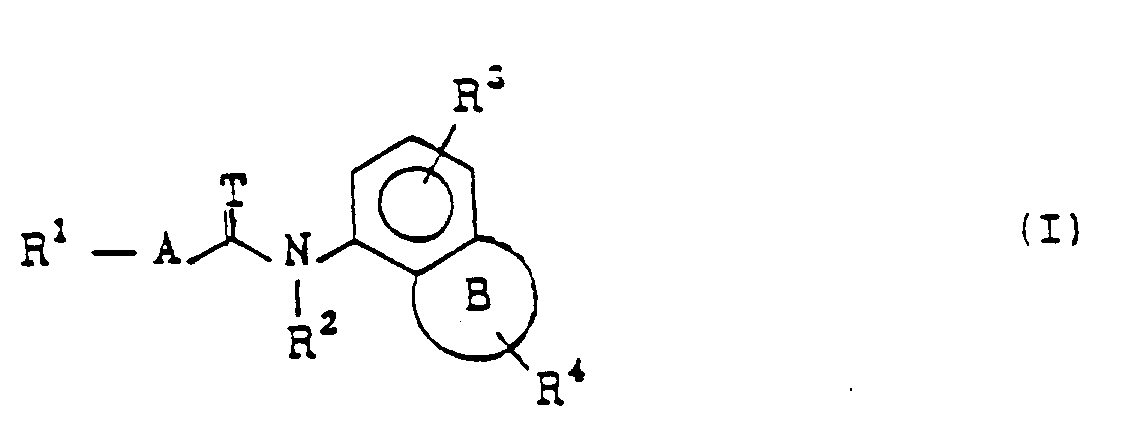
[wherein symbol A represents a single bond or a group of methylene, ethylene, trimethylene,
tetramethylene, vinylene, propenylene, butenylene, butadienylene or ethylene group
optionally being substituted by one, two or three straight or branched alkyl groups(s)
of from 1 to 10 carbon atom(s) and/or phenyl groups(s),
symbol B represents a carbocyclic ring of from 4 to 8 members wherein one, two or
three of the carbon atom(s) may be replaced by oxygen, nitrogen and/or sulphur atom(s),
or wherein the ring may optionally be substituted by group(s) of oxo, thioxo, and/or
hydroxy group(s),
symbol T represents an oxygen atom or a sulphur atom,
R1 represents a group of formula:
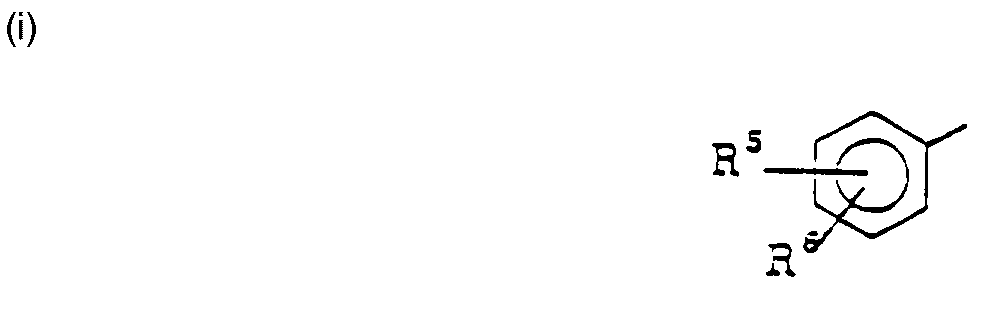
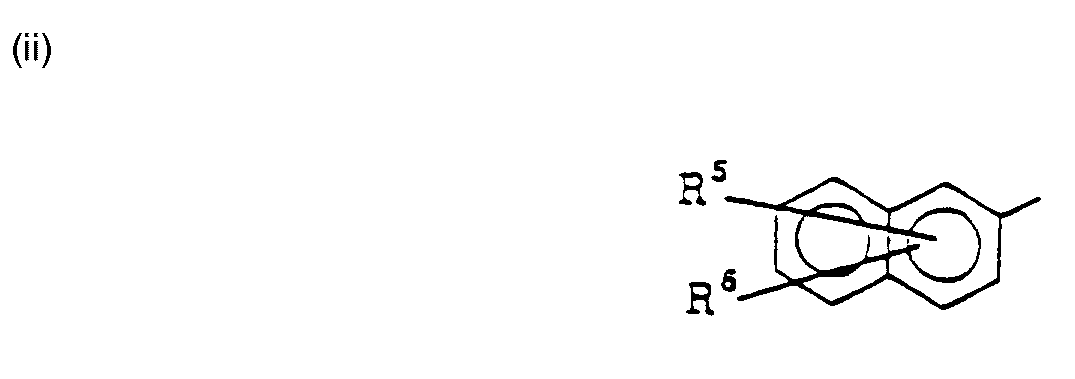
or
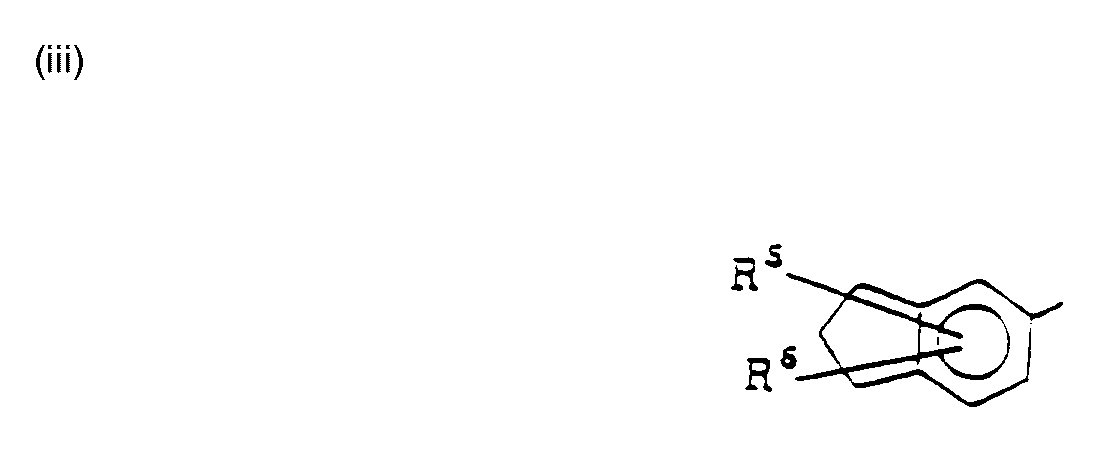
or (iv) a straight or branched alkyl, alkenyl or alkynyl group of from 1 to 20 carbon
atom(s), (wherein R5 and R6 independently represent a hydrogen atom or a halogen atom or a straight or branched
alkyl, alkenyl or alkynyl group of from 1 to 20 carbon atom(s) wherein one, two, three,
four or five of the carbon atom(s) may be replaced by oxygen atom(s), sulphur atom(s),
halogen atom(s), nitrogen atom(s), benzene ring(s), thiophene ring(s), naphthalene
ring(s), carbocyclic ring(s) of from 4 to 7 carbon atom(s), carbonyl group(s), carbonyloxy
group(s), hydroxy group(s), carboxy group(s), azido group(s) and/or nitro group(s)),
R2 represents a hydrogen atom or a straight or branched alkyl group of from 1 to 6 carbon
atom(s),
R3 represents a hydrogen atom, a halogen atom, a hydroxy group, a nitro group, a group
of general formula: -COOR7 (wherein R7 represents a hydrogen atom or a straight or branched alkyl group of from 1 to 6 carbon
atom(s)) or a straight or branched alkyl, alkoxy or alkylthio group of from 1 to 6
carbon atom(s), and
R4 represents a group of general formula:
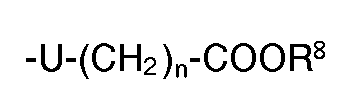
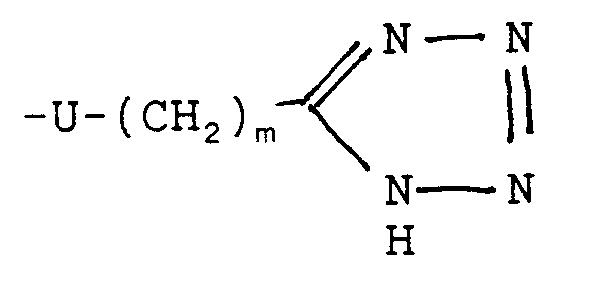
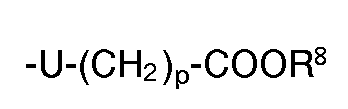
or
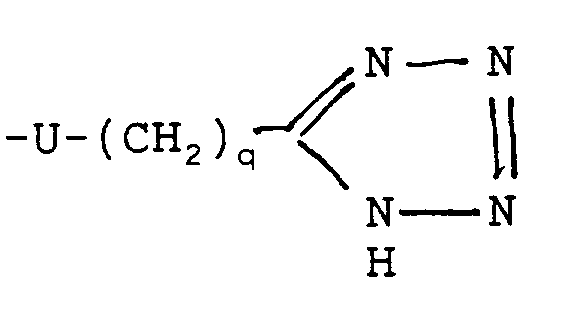
(wherein symbol U represents an oxygen atom or a sulphur atom, R8 represents a hydrogen atom or a straight or branched alkyl group of from 1 to 6 carbon
atom(s), n and m represent an integer of from 1 to 10, respectively, and p and q represent
zero or an integer of from 1 to 10, respectively)]; or a non-toxic salt thereof
which process is characterized by reacting
an acid of general formula:
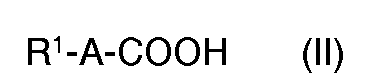
(wherein A and R1 are as defined in claim 1), or a corresponding dithioic acid, and a compound of general
formula:
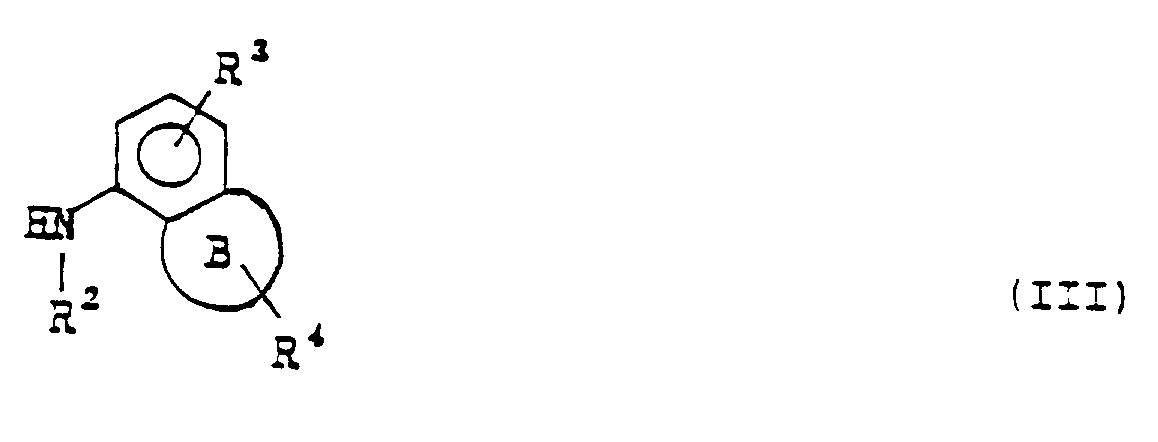
(wherein B, R2, R3, and R4 are as defined in claim 1
to form an amide-bond; and further, effecting saponification and/or esterification,
if desired.
2. A process for the preparation of a fused aminophenyl derivative of general formula:
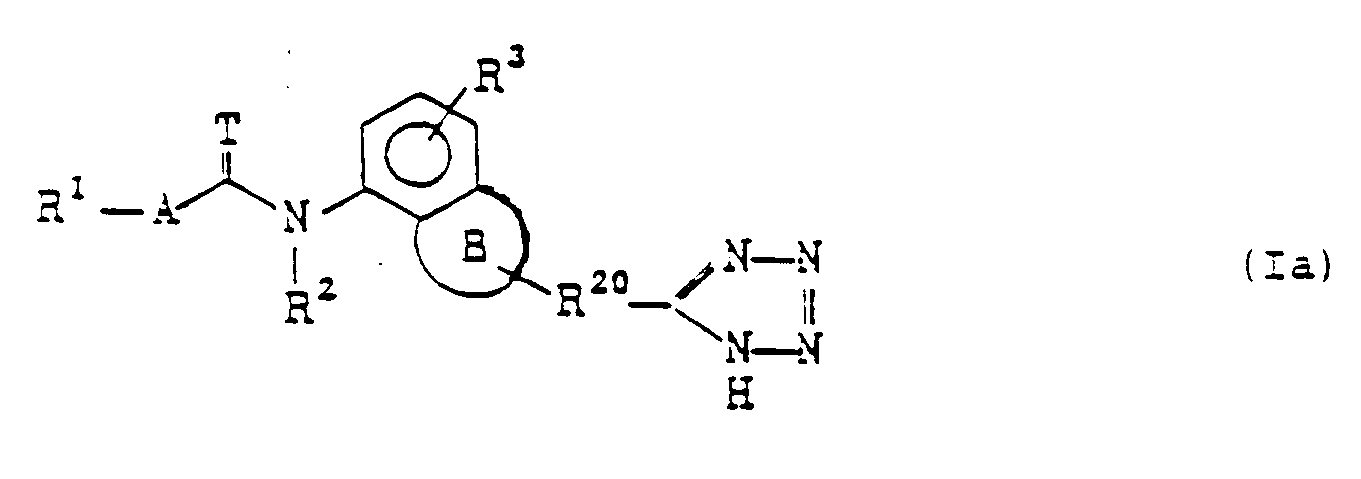
(wherein R
20 represents a methylene group or a single bond, and the other symbols are as defined
in claim 1), or a non-toxic salt thereof; which process is characterized by reacting
a compound of general formula:
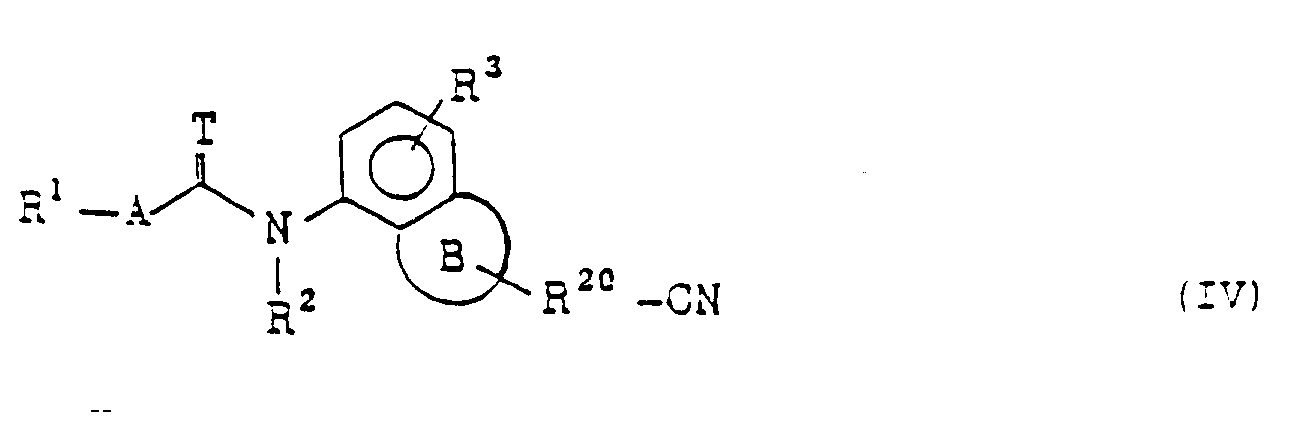
(wherein R
20 is as defined above, and the other symbols are as defined in claim 1), and an azide;
and further, effecting salt formation, if desired.
3. A process for the preparation of a fused aminophenyl derivative of general formula:
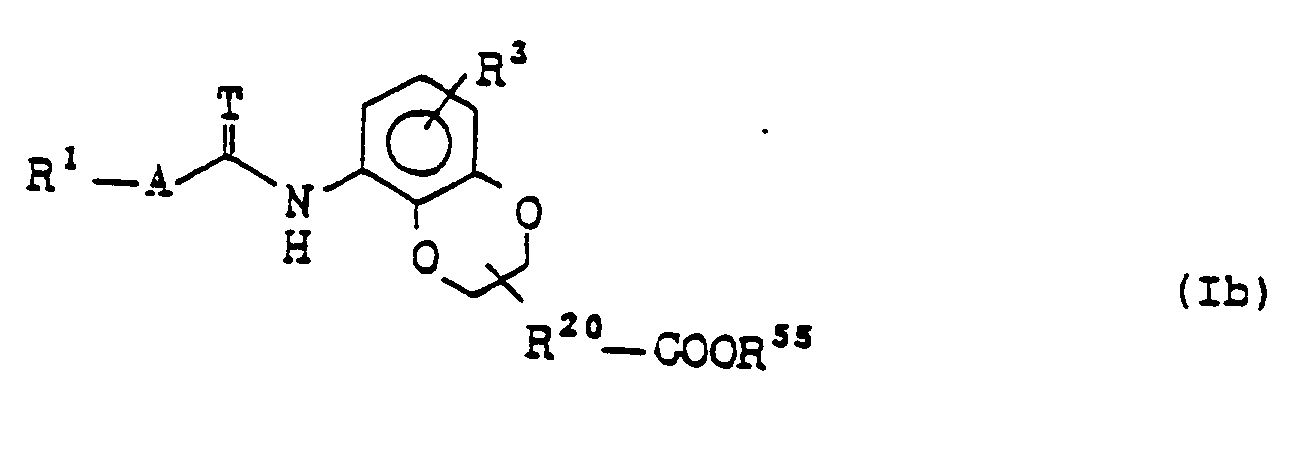
(wherein R
20 represents a methylene group or a single bond, R
55 represents a hydrogen atom or a straight or branched alkyl group of from 1 to 6 carbon
atom(s), and T, A, R
1 and R
3 are as defined in claim 1), or a non-toxic salt thereof; which process is characterized
by reacting a compound of general formula:
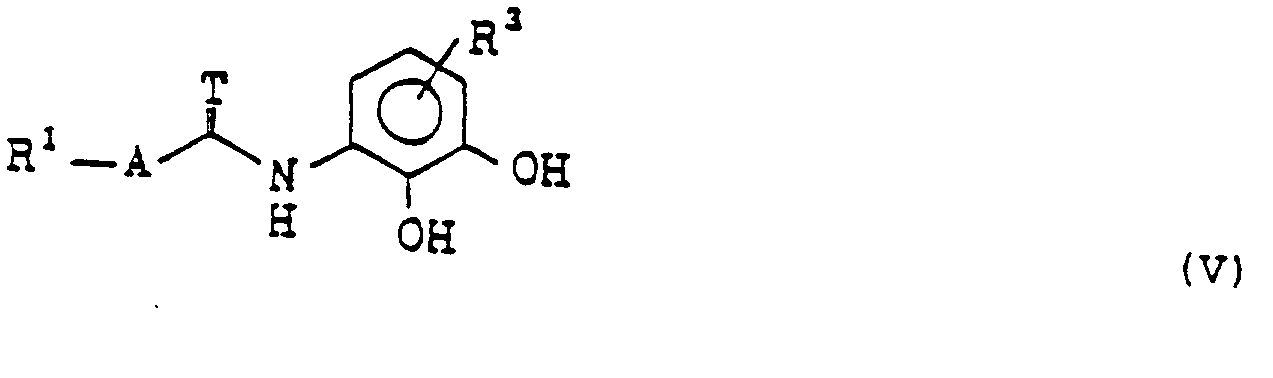
(wherein T, A, R
1 and R
3 are as defined in claim 1), and a compound of general formula:
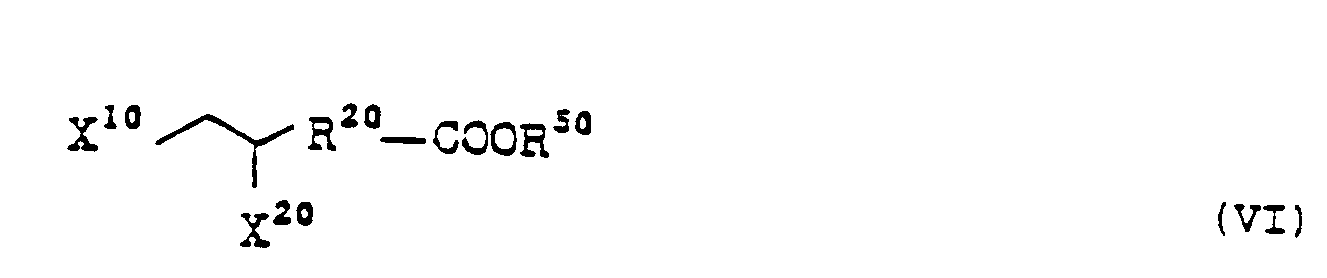

(wherein X
10 and X
2° represent halogen atoms, respectively, R
50 represents a straight or branched alkyl group of from 1 to 6 carbon atom(s), and
R
20 represents a methylene group or a single bond); and further effecting saponification
and/or esterification, if desired.
4. A process according to claim 1 or 2, wherein the symbol B is a ring of formula:



(the rings may optionally be substituted by hydroxy group(s).)
5. A process according to claim 3 or 4, wherein the symbol B is 2,3,5,6-tetrahydro-1,4-dioxane
ring (i.e the formula:
6. A process according to claim 3 or 5, wherein the symbol A is a single bond, and
the symbol T is an oxygen atom.
7. A process according to claim 6, wherein R
1 is a group of the general formula:
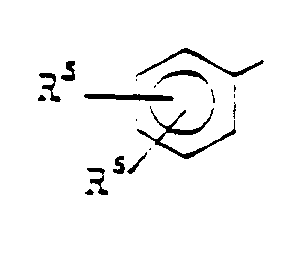
(wherein R
5 and R
6 are as defined in claim 1).
8. A process according to claim 7, wherein R5 is a hydrogen atom and R6 is a straight or branched alkoxy group of from 1 to 19 carbon atom(s).
9. A process according to claim 8, wherein the compound is 8-(p-heptyloxybenzoyl)amino-2-(5-tetrazolyl)-1,4-benzodioxane,
or 8-(p-isooctyloxybenzoyl)amino-2-(5-tetrazolyl)-1,4-benzodioxane; or a sodium salt
thereof.
10. A compound according to claim 7, wherein R5 is a hydrogen atom and R6 is a straight or branched alkenyloxy group of from 3 to 19 carbon atoms.
11. A process according to claim 10, wherein the compound is 8-[p-(2E-octenyloxy)benzoyl]amino-2-(5-tetrazolyl)-1,4-benzodioxane,
8-[p-(2Z-octenyloxy)benzoyl]amino-2-(5-tetrazolyl)-1,4-benzodioxane, 8-[p-(2E-nonenyloxy)benzoyl]amino-2-(5-tetrazolyl)-1,4-benzodioxane,
8-[p-(2E-hexenyloxy)benzoyl]amino-2-(5-tetrazolyl)-1,4-benzodioxane, 8-[p-(3E-heptenyloxy)benzoyl]amino-2-(5-tetrazolyl)-1,4-benzodioxane,
8-[p-(2E-octenyloxy)benzoyl]amino-1,4-benzodioxane-2-carboxylic acid or methyl ester
thereof, 8-[p-(2E-heptenyloxy)benzoyl]amino-2-(5-tetrazolyl)-1,4-benzodioxane, 8-(p-geranyloxy
benzoyl)amino-2-(5-tetrazoyl)-1,4-benzodioxane, 8-[p-(2E,7-octadienyloxy)benzoyl]amino-2-(5-tetrazolyl)-1,4-benzodioxane,
8-[p-(7-octenyloxy)benzoyl]amino-2-(5-tetrazolyl)-1,4-benzodioxane, or 8-[p-(2E,4E-octadienyloxy)benzoyl]amino-2-(5-tetrazolyl)-1,4-benzodioxane;
or a sodium salt thereof.
12. A process according to claim 7, wherein R5 is a hydrogen atom and R6 is a straight or branched alkynyloxy group of from 3 to 19 carbon atoms.
13. A process according to claim 12, wherein the compound is 8-[p-(2-octynyloxy)benzoyl]amino-2-(5-tetrazolyl)-1,4-benzodioxane,
or 8-[p-(2-isooctynyloxy)benzoyl]amino-2-(5-tetrazolyl)-1,4-benzodioxane; or a sodium
salt thereof.
14. A process according to claim 7, wherein R5 is a hydrogen atom and R6 is a straight or branched alkylthio group of from 1 to 19 carbon atom(s).
15. A process according to claim 14, wherein the compound is 8-(p-heptylthiobenzoyl)amino-2-(5-tetrazolyl)-1,4-benzodioxane
or sodium salt thereof.
16. A process according to claim 7, wherein R5 is a hydrogen atom and R6 is a straight or branched alkoxy group of from 1 to 18 carbon atom(s) being substituted
by halogen atom(s).
17. A process according to claim 16, wherein the compound is 8-[p-(6-chlorohexyloxy)benzoyl]amino-2-(5-tetrazolyl)-1,4-benzodioxane,
8-[p-(5-chloropentyloxy)benzoyl]amino-2-(5-tetrazolyl)-1,4-benzodioxane, 8-[p-(4-chlorobutoxy)benzoyl]amino-2-(5-tetrazolyl)-1,4-benzodioxane,
8-[p-(7-chloroheptyloxy)benzoyl]amino-2-(5-tetrazolyl)-1,4-benzodioxane, 8-[p-(8-chlorooctyloxy)benzoyl]amino-2-(5-tetrazolyl)-1,4-benzodioxane,
or 8-[p-(9-chlorononyloxy)benzoyl]amino-2-(5-tetrazolyl)-1,4 benzodioxane; or a sodium
salt thereof.
18. A process according to claim 7, wherein R5 is a hydrogen atom and R6 is a phenyl, phenylalkyl (wherein alkyl moiety is a group of from 1 to 8 carbon atom(s)),
phenylalkyloxy (wherein the alkyl moiety is a group of from 1 to 8 carbon atom(s)),
phenylalkenyloxy (wherein alkenyl moiety is a group of from 2 to 8 carbon atoms),
napthyl, napthylalkyl (wherein alkyl moiety is a group of from 1 to 8 carbon atom(s)),
napthylalkyloxy (wherein the alkyl moiety is a group of from 1 to 8 carbon atom(s)
) or napthylalkenyloxy group (wherein the alkenyl moiety is a group of from 2 to 8
carbon atoms) being unsubstituted or substituted by a straight or branched alkyl group
of from 1 to 8 carbon atom(s), hydroxy group(s), halogen atom(s) and/or nitro group(s).
19. A process according to claim 18, wherein the compound is 8-[p-(p-propylphenyl)methoxybenzoyl]amino-2-(5-tetrazolyl)-1,4-benzodioxane,
or 8-[p-(4-phenylbutoxy)benzoyl]amino-2-(5-tetrazolyl)-1,4-benzodioxane; or a sodium
salt thereof.
20. A process according to claim 7, wherein R5 is a hydrogen atom and R6 is a straight or branched alkoxy, alkenyloxy or alkoxyalkoxy group of from 1 to 18
carbon atom(s) wherein carbon atom(s) is/are replaced by carbonyl group(s), carbonyloxy
group(s) or hydroxy group(s).
21. A process according to claim 20, wherein the compound is 8-(p-octanoylbenzoyl)amino-2-(5-tetrazolyl)-1,4-benzodioxane
or sodium salt thereof.
22. A process according to claim 7, wherein R5 is a hydrogen atom and R6 is a straight or branched alkoxy group of from 1 to 17 carbon atom(s) being substituted
by a phenoxy or phenylthio group.
23. A process according to claim 22, wherein the compound is 8-[p-(3-phenylthiopropoxy)benzoyl]amino-2-(5-tetrazolyl)-1,4-benzodioxane,
or 8-[p-(3-phenoxypropoxy)benzoyl]amino-2-(5-tetrazolyl)-1,4-benzodioxane; or a sodium
salt thereof.
24. A process according to claim 7, wherein R5 is a hydrogen atom and R6 is a straight or branched alkoxy group of from 1 to 18 carbon atom(s) being substituted
by thiophene ring(s).
25. A process according to claim 24, wherein the compound is 8-[p-[4-(2-thienyl)butoxy]benzoyl]amino-2-(5-tetrazolyl)-1
,4-benzodioxane or sodium salt thereof.
26. A process according to claim 7, wherein R5 is a hydrogen atom and R6 is a straight or branched alkoxy group of from 1 to 18 carbon atom(s) being substituted
by azido group(s), nitro group(s) or amino group(s) which are unsubstituted or substituted
by straight or branched alkyl group(s) of from 1 to 6 carbon atom(s) (including dialkylamino
group).
27. A process according to claim 26, wherein the compound is 8-[p-(5-azidopentyloxy)benzoyl]amino-2-(5-tetrazolyl)-1
,4-benzodioxane or sodium salt thereof.
28. A process according to claim 3 or 5, wherein the symbol A is a vinylene group
unsubstituted or substituted by straight or branched alkyl group(s), and the symbol
T is an oxygen atom.
29. A process according to claim 28, wherein R
1 is a group of the general formula:
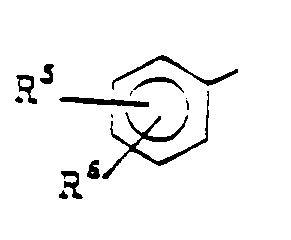
(wherein R
5 and R
6 are as defined in claim 1).
30. A process according to claim 29, wherein R5 is a hydrogen atom, and R6 is a straight or branched alkoxy group of from 1 to 19 carbon atom(s).
31. A process according to claim 30, wherein the compound is 8-(p-isohexyloxycinnamoyl)amino-2-(5-tetrazolyl)-1
,4-benzodioxane or sodium salt thereof.
32. A process according to claim 29, wherein R5 is a hydrogen atom, and R6 is a straight or branched alkoxy group of from 1 to 18 carbon atom(s) being substituted
by halogen atom(s).
33. A process according to claim 32, wherein the compound is 8-[p-(4-chlorobutoxy)cinnamoyl]amino-2-(5-tetrazolyl)-1,4-benzodioxane,
or 8-[p-(5-chloropentyloxy)cinnamoyl]amino-2-(5-tetrazolyl)-1,4-benzodioxane; or a
sodium salt thereof.
34. A process according to claim 29, wherein R5 is a hydrogen atom, and R6 is a straight or branched alkyloxyalkyl group of from 2 to 19 carbon atoms.
35. A process according to claim 34, wherein the compound is 8-(p-isopentyloxymethylcinnamoyl)amino-2-(5-tetrazolyl)-1,4-benzodioxane
or sodium salt thereof.
36. A process according to claim 29, wherein R5 is a hydrogen atom, and R6 is a phenyl, phenylalkyl (wherein alkyl moiety is a group of from 1 to 8 carbon atom(s)),
phenylalkloxy (wherein the alkyl moiety is a group of from 1 to 8 carbon atom(s))
or phenylalkenyloxy (wherein the alkenyl moiety is a group of from 2 to 8 carbon atom(s))
being unsubstituted or substituted by straight or branched alkyl group(s) of from
1 to 8 carbon atom(s), hydroxy group(s), halogen atom(s) and/or nitro group(s).
37. A process according to claim 36, wherein the compound is 8-[p-(2-phenylethoxy)cinnamoyl]amino-2-(5-tetrazolyl)-1
,4-benzodioxane or sodium salt thereof.
38. A process according to claim 29, wherein R5 is a hydrogen atom, and R6 is a straight or branched alkoxy group of from 1 to 18 carbon atom(s) being substituted
by thiophene ring(s).
39. A process according to claim 38, wherein the compound is 8-[p-[2-(2-thienyl)ethoxy]cinnamoyl]-amino-2-(5-tetrazolyl)-1,4-benzodioxane
or sodium salt thereof.
40. A process according to claim 3 or 5, wherein the symbol A is a single bond or
vinylene group, and the symbol T is a sulphur atom.
41. A process according to claim 40, wherein the compound is 8-(p-heptyloxybenzothioyl)amino-2-(5-tetrazolyl)-1
,4-benzodioxane or sodium salt thereof.
42. A process according to claim 4, wherein the symbol B is 4-oxo-2,3-dihydro-4H-1-pyran
ring (i.e. the formula:
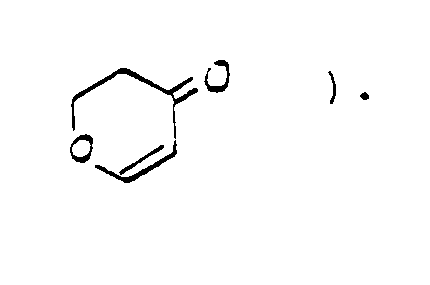
43. A process according to claim 42, wherein the symbol A is a single bond, and the
symbol T is an oxygen atom.
44. A process according to claim 43, wherein R
1 is a group of general formula:
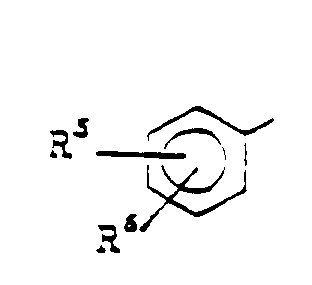
(wherein R
5 and R
6 are as defined in claim 1).
45. A process according to claim 44, wherein R5 is a hydrogen atom, and R6 is a hydrogen atom or a straight or branched alkyl group of from 1 to 20 carbon atom(s).
46. A process according to claim 45, wherein the compond is 8-(p-heptylbenzoyl)amino-2-(5-tetrazolyl)-4-oxo-4H-1-benzopyran,
8-(p-octylbenzoyl)amino-2-(5-tetrazolyl)-4-oxo-4H-1-benzopyran, or 8-(p-nonylbenzoyl)amino-2-(5-tetrazolyl)-4-oxo-4H-1-benzopyran;
or a sodium salt thereof.
47. A process according to claim 44, wherein R5 is a hydrogen atom, and R6 is a straight or branched alkoxy group of from 1 to 19 carbon atom(s).
48. A process according to claim 47, wherein the compound is 8-(p-butoxybenzoyl)amino-2-(5-tetrazolyl)-4-oxo-4H-1-benzopyran,
8-(p-hexyloxybenzoyl)amino-2-(5-tetrazolyl)-4-oxo-4H-1-benzopyran, 8-(p-heptyloxybenzoyl)amino-2-(5-tetrazolyl)-4-oxo-4H-1-benzopyran,
8-(p-nonyloxybenzoyl)amino-2-(5-tetrazolyl)-4-oxo-4H-1-benzopyran, 8-(p-octyloxybenzoyl)amino-2-(5-tetrazolyl)-4-oxo-4H-1-benzopyran,
8-(p-heptyloxybenzoyl)amino-2-(5-tetrazolyl)-6-fluoro-4-oxo-4H-1-benzopyran, 8-(p-octyloxybenzoyl)amino-2-(5-tetrazolyl)-6-methyl-4-oxo-4H-1-benzopyran,
or 8-(p-heptyloxybenzoyl)amino-2-(5-tetrazolyl)-6-methyl-4-oxo-4H-1-benzopyran; or
a sodium salt thereof.
49. A process according to claim 44, wherein R5 is a hydrogen atom, and R6 is a straight or branched alkenyloxy group of from 3 to 19 carbon atoms.
50. A process according to claim 49, wherein the compound is 8-[p-(2E,7-octadienyloxy)benzoyl]amino-2-(5-tetrazolyl)-4-oxo-4H-1
-benzopyran, 8-(p-geranyloxybenzoyl)amino-2-(5-tetrazolyl)-4-oxo-4H-1-benzopyran,
8-[p-(2E-octenyloxy)benzoyl]amino-2-(5-tetrazolyl)-4-oxo-4H-1-benzopyran, 8-[p-(7-octenyloxy)benzoyl]amino-2-(5-tetrazolyl)-4-oxo-4H-1-benzopyran,
8-[p-(2E-heptenyloxy)benzoyl]amino-2-(5-tetrazolyl)-4-oxo-4H-1-benzopyran, 8-[p-(2E-hexenyloxy)benzoyl]amino-2-(5-tetrazolyl)-4-oxo-4H-1-benzopyran,
8-[p-(2E,7-octadienyloxy)benzoyl]amino-2-(5-tetrazolyl)-6-fluoro-4-oxo-4H-1 -benzopyran,
8-[p-(2E-octenyloxy)benzoyl]amino-2-(5-tetrazolyl)-6-methyl-4-oxo-4H-1-benzopyran,
8-[p-(7-octenyloxy)benzoyl]amino-2-(5-tetrazolyl)-6-methyl-4-oxo-4H-1-benzopyran,
8-[p-(2E,7-octadienyloxy)benzoyl]amino-2-(5-tetrazolyl)-6-methyl-4-oxo-4H-1-benzopyran,
or 8-[p-(2E,7-octadienyloxy)benzoyl]amino-2-(5-tetrazolyl)-6-chloro-4-oxo-4H-1 -benzopyran;
or a sodium salt thereof.
51. A process according to claim 44, wherein R5 is a hydrogen atom, and R6 is a straight or branched alkynyloxy group of from 3 to 19 carbon atoms.
52. A process according to claim 51, wherein the compound is 8-[p-(2-octynyloxy)benzoyl]amino-2-(5-tetrazolyl)-4-oxo-4H-1-benzopyran
or sodium salt thereof.
53. A process according to claim 44, wherein R5 is a hydrogen atom, and R6 is a straight or branched alkoxy group of from 1 to 18 carbon atom(s) being substituted
by halogen atom(s).
54. A process according to claim 53, wherein the compound is 8-[p-(5-chloropentyloxy)benzoyl]amino-2-(5-tetrazolyl)-4-oxo-4H-1-benzopyran,
8-[p-(6-chlorohexyloxy)benzoyl]amino-2-(5-tetrazolyl)-4-oxo-4H-1-benzopyran, 8-[p-(6-chlorohexyloxy)benzoyl]amino-2-(5-tetrazolyl)-4-oxo-4H-1-benzopyran,
8-[p-(7-chloroheptyloxy)benzoyl]amino-2-(5-tetrazolyl)-4-oxo-4H-1-benzopyran, 8-[p-(8-chlorooctyloxy)benzoyl]amino-2-(5-tetrazolyl)-6-methyl-4-oxo-4H-1
-benzopyran, 8-[p-(7-chloroheptyloxy)benzoyl]amino-2-(5-tetrazolyl)-6-methyl-4-oxo-4H-1-benzopyran,
or 8-[p-(8-chlorooctyloxy)benzoyl]amino-2-(5-tetrazolyl)-4-oxo-4H-1-benzopyran; or
a sodium salt thereof.
55. A process according to claim 44, wherein R5 is a hydrogen atom, and R6 is phenyl, phenylalkyl (wherein the alkyl moiety is a group of from 1 to 8 carbon
atom(s)), phenylalkyloxy (wherein the alkyl moiety is a group of from 1 to 8 carbon
atom(s).), phenylalkenyloxy (wherein the alkenyl moiety is a group of from 2 to 8
carbon atoms) naphthyl, naphthylalkyl (wherein the alkyl moiety is a group of from
1 to 8 carbon atom(s)), naphthylalkyloxy (wherein the alkyl moiety is a group of from
1 to 8 carbon atom(s)), or naphthylalkenyloxy group (wherein the alkenyl moiety is
a group of from 2 to 8 carbon atoms) being unsubstituted or substituted by straight
or branched alkyl group(s) of from 1 to 8 carbon atom(s), hydroxy group(s), halogen
atom(s) and/or nitro group(s).
56. A process according to claim 55, wherein the compound is 8-[p-(3-phenylpropoxy)benzoyl]amino-2-(5-tetrazolyl)-4-oxo-4H-1-benzopyran,
8-[p-(3-phenyl-2E-propenyloxy)benzoyl]amino-2-(5-tetrazolyl)-4-oxo-4H-1 -benzopyran,
8-[p-(4-phenylbutoxy)benzoyl]amino-2-(5-tetrazolyl)-4-oxo-4H-1-benzopyran, or 8-[p-(4-phenylbutoxy)benzoyl]amino-2-(5-tetrazolyl)-6-methyl-4-oxo-4H-1
-benzopyran; or a sodium salt thereof.
57. A process according to claim 44, wherein R5 is a hydrogen atom, and R6 is a straight or branched alkoxy group of from 1 to 18 carbon atom(s) being substituted
by thiophene ring(s).
58. A process according to claim 57, wherein the compound is 8-[p-[4-(2-thienyl)butoxy]benzoyl]amino-2-(5-tetrazolyl)-4-oxo-4H-1-benzopyran,
or 8-[p-[4-(2-thienyl)butoxy]benzoyl]amino-2-(5-tetrazolyl)-6-methyl-4-oxo-4H-1 -benzopyran;
or a sodium salt thereof.
59. A process according to claim 42, wherein the symbol A is a vinylene group which
is unsubstituted or substituted by straight or branched alkyl group(s) of from 1 to
6 carbon atom(s) or phenyl group(s), and the symbol T is an oxygen atom.
60. A process according to claim 59, wherein R
1 is a group of the general formula:
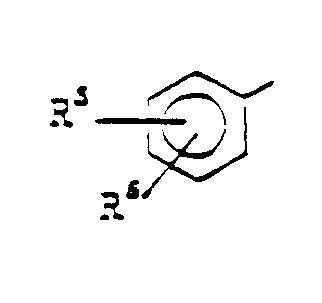
(wherein R
5 and R
6 are as defined in claim 1).
61. A process according to claim 60, wherein R5 is a hydrogen atom, and R6 is a straight or branched alkoxy group of from 1 to 19 carbon atom(s).
62. A process according to claim 61, wherein the compound is 8-(p-isohexyloxycinnamoyl)amino-2-(5-tetrazolyl)-4-oxo-4H-1-benzopyran
or sodium salt thereof.
63. A process according to claim 60, wherein R5 is a hydrogen atom, and R6 is a straight or branched alkoxy group of from 1 to 18 carbon atom(s) being substituted
by halogen atom(s).
64. A process according to claim 63, wherein the compound is 8-[p-(5-chloropentyloxy)cinnamoyl]amino-2-(5-tetrazolyl)-4-oxo-4H-1-benzopyran,
or 8-[p-(6-chlorohexyloxy)cinnamoyl]amino-2-(5-tetrazolyl)-4-oxo-4H-1-benzopyran;
or a sodium salt thereof.
65. A process according to claim 4, wherein the symbol B is a pyridine ring optionally
substituted by hydroxy group(s) (i.e. the formula:
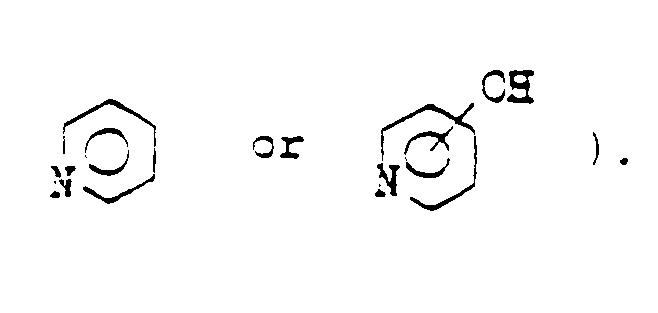
66. A process according to claim 65, wherein the symbol A is a single bond or vinylene
group which is unsubstituted or substituted by straight or branched alkyl group(s)
of from 1 to 6 carbon atom(s) or phenyl group(s), and the symbol T is an oxygen atom.
67. A process according to claim 66, wherein R
1 is a group of the general formula:
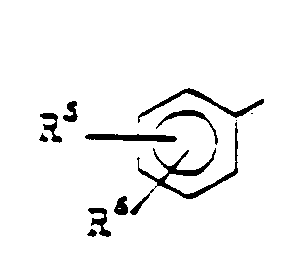
(wherein R
5 and R
6 are as defined in claim 1).
68. A process according to claim 67, wherein the compound is 8-[p-(4-phenylbutoxy)benzoyl]amino-2-(5-tetrazolyl)-quinoline,
or 8-[p-(4-phenylbutoxy)benzoyl]amino-4-hydroxy-2-(5-tetrazolyl)-quinoline; or a sodium
thereof
69. A process according to claim 4, wherein the symbol B is 4,5-dihydrodioxole ring
(i.e. the formula:
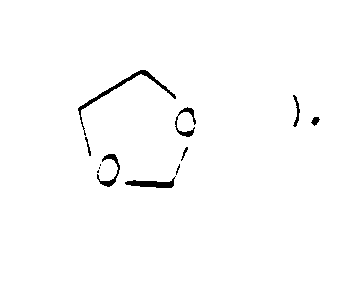
70. A process according to claim 69, wherein the symbol A is a single bond or vinylene
group which is unsubstituted or substituted by straight or branched alkyl group(s)
of from 1 to 6 carbon atom(s) or phenyl group(s), and the symbol T is an oxygen atom.
71. A process according to claim 70, wherein R
1 is a group of the general formula:
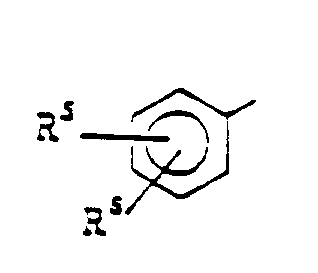
(wherein R
5 and R
6 are defined in claim 1).
72. A process according to claim 71, wherein the compound is 4-(p-heptyloxybenzoyl)amino-2-(5-tetrazolyl)-1
,3-benzodioxole or sodium salt thereof.
73. A process according to claim 4, wherein the symbol B is a benzene ring (i.e. the
formula:
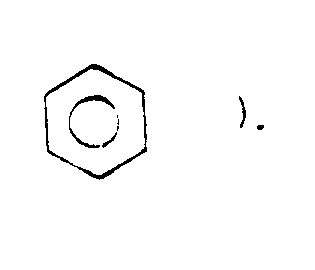
74. A process according to claim 73, wherein the symbol A is a single bond or vinylene
group which is unsubstituted or substituted by straight or branched alkyl group(s)
of from 1 to 6 carbon atom(s) or phenyl group(s), and the symbol T is an oxygen atom.
75. A process according to claim 74, wherein R
1 is a group of the general formula:
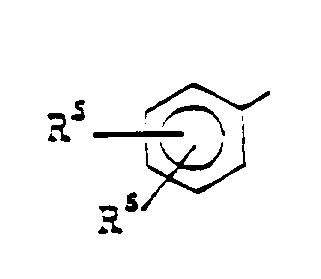
(wherein R
5 and R
6 are as defined in claim 1).
76. A process according to claim 75, wherein the compound is 8-[p-(4-phenylbutoxy)benzoyl]amino-2-(5-tetrazolyl)naphthalene,
or 8-[p-(7-octenyloxy)benzoyl]amino-2-(5-tetrazolyl) methoxynaphthalene; or a sodium
salt thereof.
77. A process according to claim 4, wherein the symbol B is a 2,3,6,7-tetrahydro-5H-1,4-dioxepin
ring (i.e. the formula:
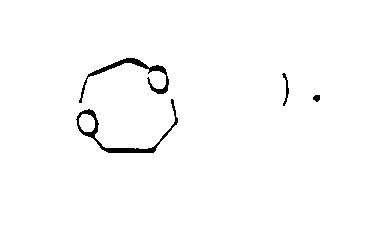
78. A process according to claim 77, wherein the symbol A is a single bond or vinylene
group which is unsubstituted or substituted by straight or branched alkyl group(s)
of from 1 to 6 carbon atom(s) or phenyl group(s), and the symbol T is an oxygen atom.
79. A process according to claim 78, wherein R
1 is a group of the general formula:
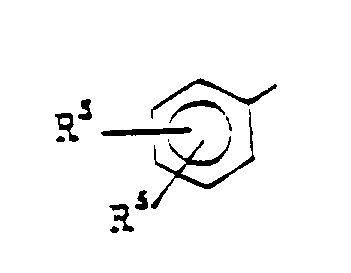
(wherein R
5 and R
6 are as defined in claim 1).
80. A process according to claim 79, wherein the compound is 9-[p-(2E,7-octadienyloxy)benzoyl]amino-2-(5-tetrazolyl)-3,4-dihydro-2H-1,5-benzodioxepin
or sodium salt thereof.
81. A process according to claim 4, wherein the symbol B is a morpholine ring (i.e.
the formula:
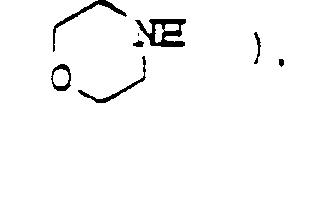
82. A process according to claim 81, wherein the symbol A is a single bond or vinylene
group which is unsubstituted or substituted by straight or branched alkyl group(s)
of from 1 to 6 carbon atoms(s) or phenyl group(s), and the symbol T is an oxygen atom.
83. A process according to claim 82, wherein R
1 is a group of the general formula:
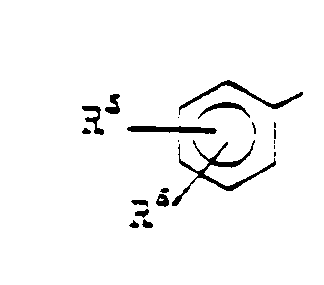
(wherein R
5 and R
6 are as defined in claim 1).
84. A process according to claim 83, wherein the compound is 8-[p-(4-phenylbutoxy)benzoyl]amino-2-(5-tetrazolyl)-2,3-dihydro-1
,4-benzoxazine or sodium salt thereof.
85. A process according to claim 4, wherein the symbol B is a 3,4,5,6-tetrahydro-2H-pyran
ring (i.e. the formula:
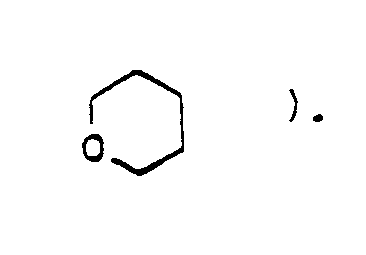
86. A process according to claim 85, wherein the symbol A is a single bond or vinylene
group which is unsubstituted or substituted by straight or branched alkyl group(s)
of from 1 to 6 carbon atom(s) or phenyl group(s), and the symbol T is an oxygen atom.
87. A process according to claim 86, wherein R
1 is a group of the general formula:
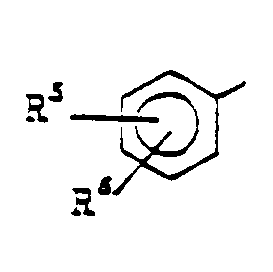
(wherein R
5 and R
6 are as defined in claim 1).
88. A process according to claim 87, wherein the compound is 8-[p-(4-phenylbutoxy)benzoyl]amino-2-(5-tetrazolyl)-3,4-dihydro-2H-1-benzopyran
or sodium salt thereof.
89. A pharmaceutical composition or method of production thereof characterised by
the provision as active ingredient at least one compound of the general formula (I)
as defined in any one of claims 1 to 88, or a non-toxic salt thereof, together with
a pharmaceutical carrier and/or coating.
90. A compound of general formula (I), as defined in claim 1, or a non-toxic salt
thereof for use as a medicament, for the prevention and/or treatment of tracheal,
bronchial or lung diseases such as asthma or allergic disease.
91. The use of a compound of general formula (I), as defined in claim 1, or a non-toxic
salt thereof, for the manufacture of a medicament for the prevention and/or treatment
of trachial, bronchial or lung diseases such as asthma or allergic diseases.
Patentansprüche für folgende(n) Vertragsstaat(en) : BE, DE, FR, GB, IT, LU, NL, CH,
LI, SE
1. Kondensiertes Aminophenylderivat der allgemeinen Formel:
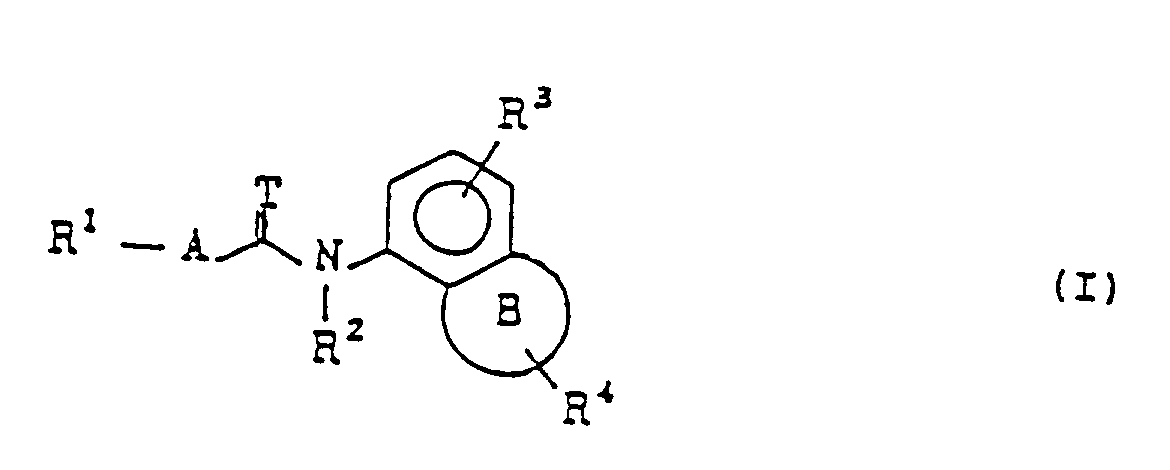
[worin Symbol A eine Einfachbindnung oder eine Methylen-, Ethylen-, Trimethylen-,
Tetramethylen- , Vinylen-, Propenylen-, Butenylen-, Butadienylen- oder Ethylengruppe,
die wahlweise mit einer, zwei oder drei linearen oder verzweigten Alkylgruppen mit
1 bis 10 Kohlenstoffatomen und/oder Phenylgruppen substituiert ist, darstellt,
Symbol B einen 4- bis 8gliedrigen carbocyclischen Ring darstellt, worin 1, 2 oder
3 Kohlenstoffatome ersetzt sein können durch ein oder mehrere Sauerstoff-, Stickstoff-
und/oder Schwefelatome, oder worin der Ring wahlweise mit einer oder mehreren Oxo-,
Thioxo- und/oder Hydroxygruppen substituiert sein kann,
Symbol T ein Sauerstoffatom oder ein Schwefelatom darstellt,
R1 eine Gruppe der Formel:
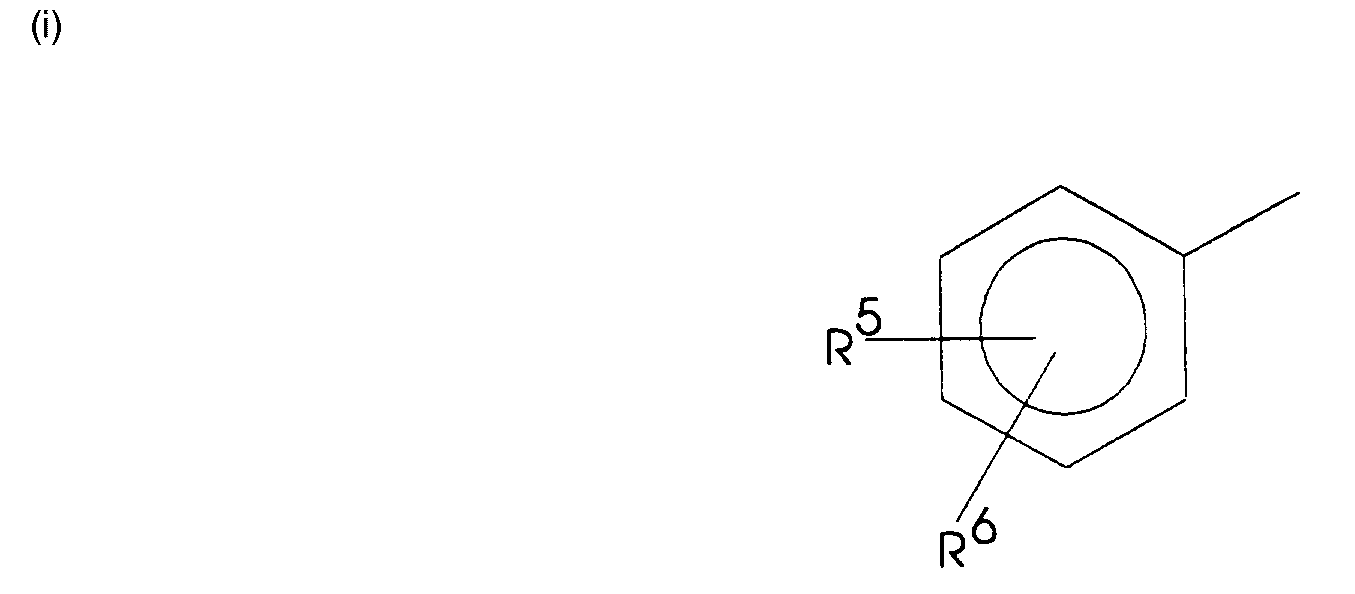
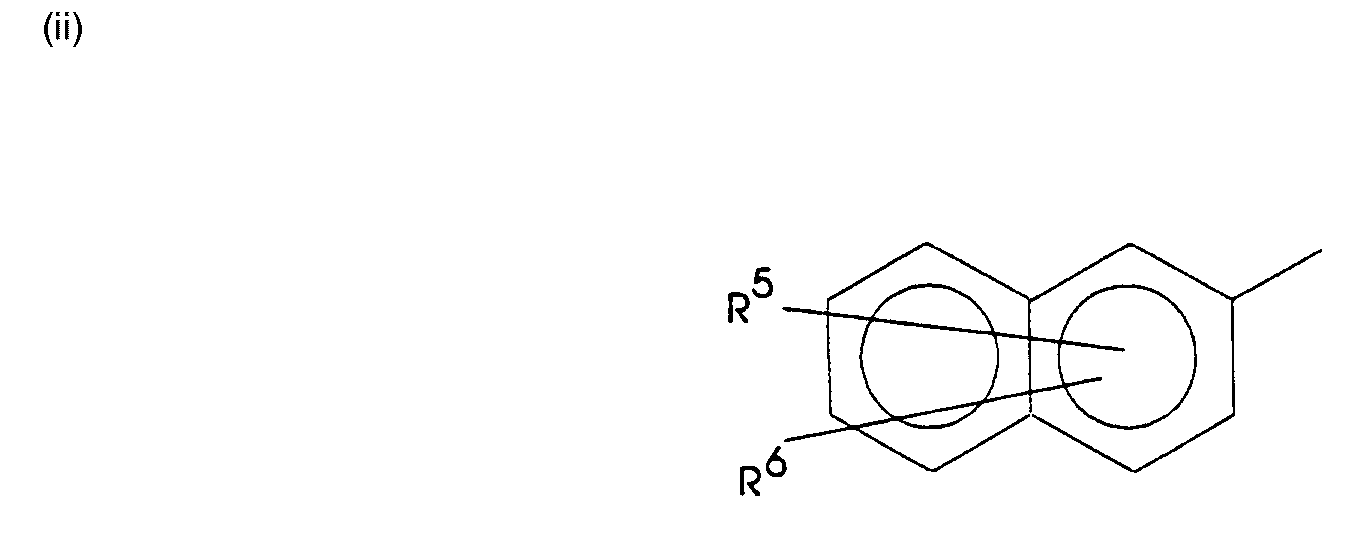
oder
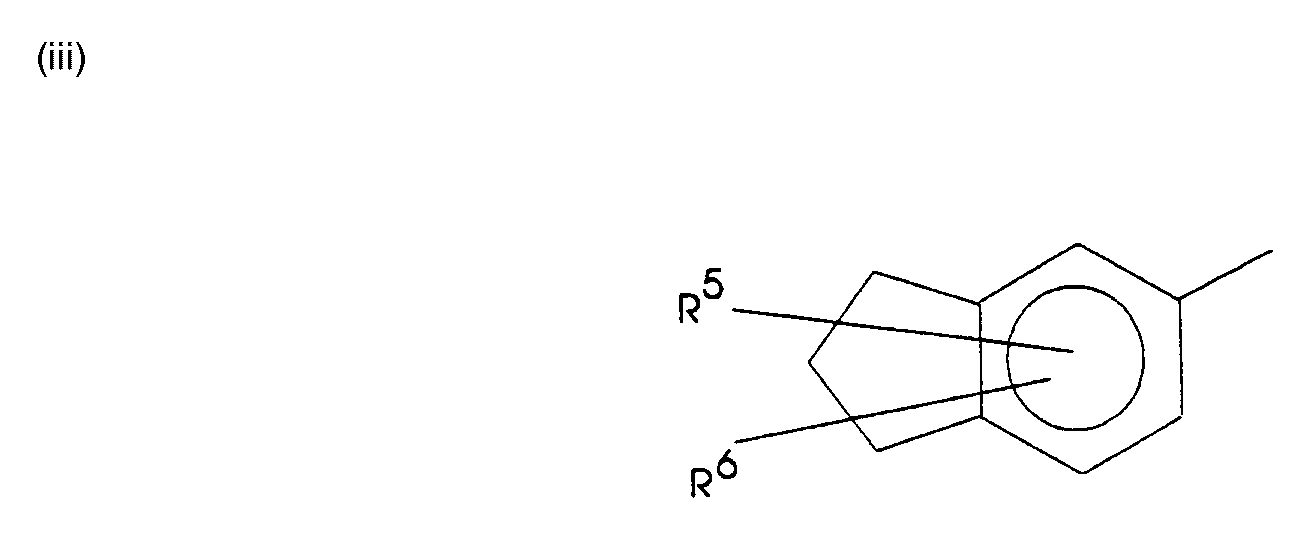
oder (iv) eine lineare oder verzweigte Alkyl-, Alkenyl- oder Alkinylgruppe mit 1 bis
20 Kohlenstoffatomen darstellt, (worin R5 und R6 unabhängig ein Wasserstoffatom oder ein Halogenatom oder eine lineare oder verzweigte
Alkyl-, Alkenyl- oder Alkinylgruppe mit 1 bis 20 Kohlenstoffatomen darstellen, worin
1, 2, 3, 4 oder 5 Kohlenstoffatome ersetzt sein können durch ein oder mehrere Sauerstoffatome,
Schwefelatome, Halogenatome, Stickstoffatome, Benzolringe, Thiophenringe, Naphthalinringe,
carbocyclische Ringe mit 4 bis 7 Kohlenstoffatomen, Carbonylgruppen, Carbonyloxygruppen,
Hydroxygruppen, Carboxygruppen, Azidogruppen und/oder Nitrogruppen),
R2 ein Wasserstoffatom oder eine lineare oder verzweigte Alkylgruppe mit 1 bis 6 Kohlenstoffatomen
darstellt,
R3 ein Wasserstoffatom, ein Halogenatom, eine Hydroxygruppe, eine Nitrogruppe, eine
Gruppe der allgemeinen Formel -COOR7 (worin R7 ein Wasserstoffatom oder eine lineare oder verzweigte Alkylgruppe mit 1 bis 6 Kohlenstoffatomen
darstellt) oder eine lineare oder verzweigte Alkyl-, Alkoxy oder Alkylthiogruppe mit
1 bis 6 Kohlenstoffatomen darstellt und
R4 eine Gruppe der allgemeinen Formel:
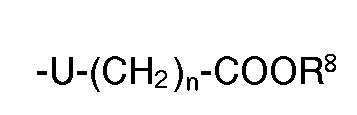
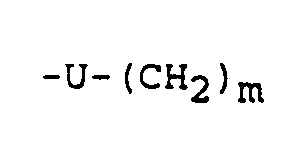
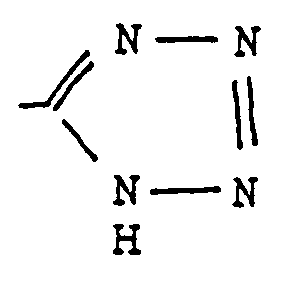
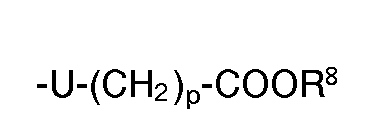
oder
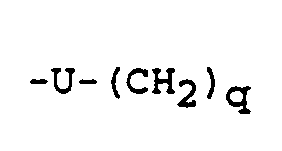
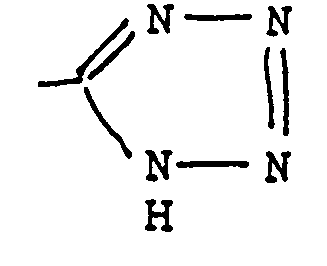
(worin Symbol U ein Sauerstoffatom oder ein Schwefelatom darstellt, R8 ein Wasserstoffatom oder eine lineare oder verzweigte Alkylgruppe mit 1 bis 6 Kohlenstoffatomen
darstellt, n und m jeweils eine Ganzzahl von 1 bis 10 darstellen und p und q jeweils
Null oder eine Ganzzahl von 1 bis 10 darstellen)]; oder eines seiner nichttoxischen
Salze.
2. Verbindung gemäß Anspruch 1, dadurch gekennzeichnet, daß Symbol B ein Ring der
Formel:



ist (die Ringe können wahlweise mit einer oder mehreren Hydroxygruppen substituiert
sein.)
3. Verbindung gemäß Anspruch 2, dadurch gekennzeichnet, daß das Symbol B ein 2,3,5,6-Tetrahydro-1,4-dioxanring
ist (d.h. die Formel:
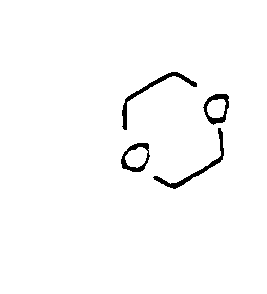
hat).
4. Verbindung gemäß Anspruch 3, dadurch gekennzeichnet, daß das Symbol A eine Einfachbindung
ist und das Symbol T ein Sauerstoffatom ist.
5. Verbindung gemäß Anspruch 4, dadurch gekennzeichnet, daß R
1 eine Gruppe der allgemeinen Formel:
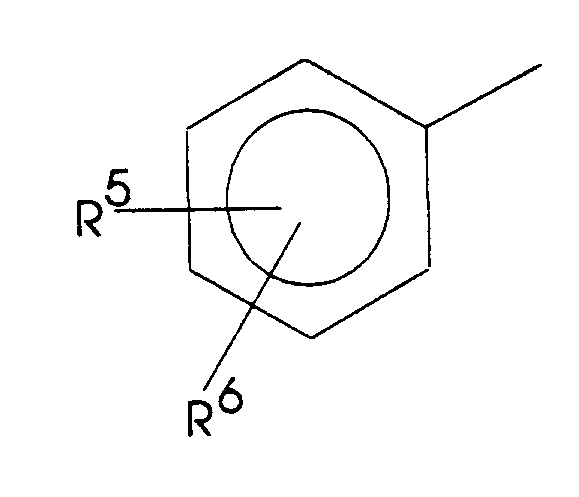
ist (worin R
5 und R
6 wie in Anspruch 1 definiert sind).
6. Verbindung gemäß Anspruch 5, dadurch gekennzeichnet, daß R5 ein Wasserstoffatom ist und R6 eine lineare oder verzweigte Alkoxygruppe mit 1 bis 19 Kohlenstoffatomen ist.
7. 8-(p-Heptyloxybenzoyl)amino-2-(5-tetrazolyl)-1,4-benzodioxan, oder 8-(p-Isooctyloxybenzoyl)amino-2-(5-tetrazolyl)-1,4-benzodioxan
oder deren Natriumsalze.
8. Verbindung gemäß Anspruch 5, dadurch gegeknnzeichnet, daß R5 ein Wasserstoffatom ist und R6 ein lineare oder verzweigte Alkenyloxygruppe mit 3 bis 19 Kohlenstoffatomen ist.
9. 8-[p-(2E-Octenyloxy)benzoyl]amino-2-(5-tetrazolyl)-1,4-benzodioxan, 8-[p-(2Z-Octenyloxy)benzoyl]amino-2-(5-tetrazolyl)-1,4-benzodioxan,
8-[p-(2E-Nonenyloxy)benzoyl]amino-2-(5-tetrazolyl)-1,4-benzodioxan, 8-[p-(2E-Hexenyloxy)benzoyl]amino-2-(5-tetrazolyl)-1,4-benzodioxan,
8-[p-(3E-Heptenyloxy)benzoyl]amino-2-(5-tetrazolyl)-1,4-benzodioxan, 8-[p-(2E-Octenyloxy)benzoyl]amino-1
,4-benzodioxan-2-carbonsäure oder deren Methylester, 8-[p-(2E-Heptenyloxy)benzoyl]amino-2-(5-tetrazolyl)-1,4-benzodioxan,
8-(p-Geranyloxybenzoyl)amino-2-(5-tetrazolyl)-1,4-benzodioxan, 8-[p-(2E,7-Octadienyloxy)benzoyl]amino-2-(5-tetrazolyl)-1,4-benzodioxan,
8-[p-(7-Octenyloxy)benzoyl]amino-2-(5-tetrazolyl)-1,4-benzodioxan, oder 8-[p-(2E,4E-Octadienyloxy)benzoyl]amino-2-(5-tetrazolyl)-1,4-benzodioxan;
oder deren Natriumsalze.
10. Verbindung gemäß Anspruch 5, dadurch gekennzeichnet, daß R5 ein Wasserstoffatom ist und R6 eine lineare oder verzweigte Alkinyloxygruppe mit 3 bis 19 Kohlenstoffatomen ist.
11. 8-[p-(2-Octinyloxy)benzoyl]amino-2-(5-tetrazolyl)-1,4-benzodioxanoder 8-[p-(2-Isooctinyloxy)benzoyl]amino-2-(5-tetrazolyl)-1,4-benzodioxan;
oder deren Natriumsalze.
12. Verbindung gemäß Anspruch 5, dadurch gekennzeichnet, daß R5 ein Wasserstoffatom und R6 eine lineare oder verzweigte Alkylthiogruppe mit 1 bis 19 Kohlenstoffatomen ist.
13. 8-(p-Heptylthiobenzoyl)amino-2-(5-tetrazolyl)-1 ,4-benzodioxan oder dessen Natriumsalz.
14. Verbindung gemaß Anspruch 5, dadurch gekennzeichnet, daß R5 ein Wasserstoffatom ist und R6 eine lineare oder verzweigte Alkoxygruppe mit 1 bis 18 Kohlenstoffatomen ist, die
mit Halogenatom(en) substituiert ist.
15. 8-[p-(6-Chlorohexyloxy)benzoyl]amino-2-(5-tetrazolyl)-1,4-benzodioxan, 8-[p-(5-Chloropentyloxy)benzoyl]amino-2-(5-tetrazolyl)-1,4-benzodioxan,
8-[p-(4-Chlorobutoxy)benzoyl]amino-2-(5-tetrazolyl)-1,4-benzodioxan, 8-[p-(7-Chloroheptyloxy)benzoyl]amino-2-(5-tetrazolyl)-1,4-benzodioxan,
8-[p-(8-Chlorooctyloxy)benzoyl]amino-2-(5-tetrazolyl)-1,4-benzodioxan oder 8-[p-(9-Chlorononyloxy)benzoyl]amino-2-(5-tetrazolyl)-1,4-benzodioxan
oder deren Natriumsalze.
16. Verbindung gemäß Anspruch 5, dadurch gekennzeichnet, daß R5 ein Wasserstoffatom ist und R6 eine Phenyl-, Phenylalkyl- (worin die Alkyleinheit eine Gruppe mit 1 bis 8 Kohlenstoffatomen
ist), Phenylalkyloxy- (worin die Alkyleinheit eine Gruppe mit 1 bis 8 Kohlenstoffatomen
ist), Phenylalkenyloxy- (worin die Alkenyleinheit eine Gruppe mit 2 bis 8 Kohlenstoffatomen
ist), Naphthyl-, Naphthylalkyl- (worin die Alkyleinheit eine Gruppe mit 1 bis 8 Kohlenstoffatomen
ist), Naphthylalkyloxy-(worin die Alkyleinheit eine Gruppe mit 1 bis 8 Kohlenstoffatomen
ist) oder Naphthylalkenyloxygruppe (worin die Alkenyleinheit eine Gruppe mit 2 bis
8 Kohlenstoffatomen ist), die unsubstituiert oder substituiert sind mit einer linearen
oder verzweigten Alkylgruppe mit 1 bis 8 Kohlenstoffatomen, einer oder mehreren Hydroxygruppen,
Halogenatomen und/oder Nitrogruppen.
17. 8-[p-(p-Propylphenyl)methoxybenzoyl]amino-2-(5-tetrazolyl)-1,4-benzodioxan oder
8-[p-(4-Phenylbutoxy)benzoyl]amino-2-(5-tetrazolyl)-1,4-benzodioxan; oder deren Natriumsalze.
18. Verbindung gemäß Anspruch 5, dadurch gekennzeichnet, daß R5 ein Wasserstoffatom ist und R6 eine lineare oder verzweigte Alkoxy-, Alkenyloxy- oder Alkoxyalkoxygruppe mit 1 bis
18 Kohlenstoffatomen ist, worin ein oder mehrere Kohlenstoffatome durch Carbonylgruppe(n),
Carbonyloxygruppe(n) oder Hydroxygruppe(n) ersetzt ist/sind.
19. 8-(p-Octanoylbenzoyl)amino-2-(5-tetrazolyl)-1 ,4-benzodioxan oder dessen Natriumsalz.
20. Verbindung gemäß Anspruch 5, dadurch gekennzeichnet, daß R5 ein Wasserstoffatom und R6 eine lineare oder verzweigte Alkoxygruppe mit 1 bis 17 Kohlenstoffatomen ist, die
mit einer Phenoxy- oder Phenylthiogruppe substituiert ist.
21. 8-[p-(3-Phenylthiopropoxy)benzoyl]amino-2-(5-tetrazolyl)-1,4-benzodioxan oder
8-[p-(3-Phenoxypropoxy)benzoyl]amino-2-(5-tetrazolyl)-1,4-benzodioxan oder deren Natriumsalze.
22. Verbindung gemäß Anspruch 5, dadurch gekennzeichnet, daß R5 ein Wasserstoffatom und R6 eine lineare oder verzweigte Alkoxygruppe mit 1 bis 18 Kohlenstoffatomen, die mit
Thiophenring(en) substituiert ist, ist.
23. 8-[p-[4-(2-Thienyl)butoxy]benzoyl]amino-2-(5-tetrazolyl)-1,4-benzodioxan oder
dessen Natriumsalz.
24. Verbindung gemäß Anspruch 5, dadurch gekennzeichnet, daß R5 ein Wasserstoffatom und R6 eine lineare oder verzweigte Alkoxygruppe mit 1 bis 18 Kohlenstoffatomen ist, die
substituiert mit einer oder mehreren Azidogruppen, Nitrogruppen und/oder Aminogruppen,
die unsubstituiert oder substituiert mit linearen oder verzweigten Alkylgruppen mit
1 bis 6 Kohlenstoffatomen (einschließlich Dialkylaminogruppen) sind, ist.
25. 8-[p-(5-Azidopentyloxy)benzoyl]amino-2-(5-tetrazolyl)-1 ,4-benzodioxan oder dessen
Natriumsalz.
26. Verbindung gemäß Anspruch 3, dadurch gekennzeichnet, daß das Symbol A eine unsubstituierte
oder mit linearen oder verzweigten Alkylgruppen mit 1 bis 6 Kohlenstoffatomen oder
einer Phenylgruppe substituierte Vinylengruppe ist, und das Symbol T ein Sauerstoffatom
ist.
27. Verbindung gemäß Anspruch 26, dadurch gekennzeichnet, daß R
1 eine Gruppe der allgemeinen Formel
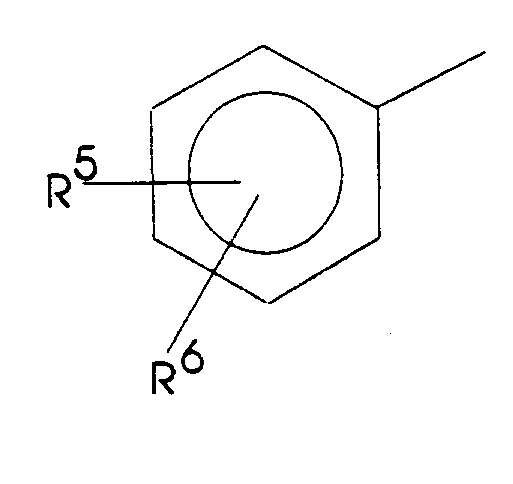
(worin R
5 und R
6 wie in Anspruch 1 definiert sind) ist.
28. Verbindung gemäß Anspruch 27, dadurch gekennzeichnet, daß R5 ein Wasserstoffatom und R6 eine lineare oder verzweigte Alkoxygruppe mit 1 bis 19 Kohlenstoffatomen ist.
29. 8-(p-lsohexyloxycinnamoyl)amino-2-(5-tetrazolyl)-1 ,4-benzodioxan oder dessen
Natriumsalz.
30. Verbindung gemäß Anspruch 27, dadurch gekennzeichnet, daß R5 ein Wasserstoffatom und R6 eine lineare oder verzweigte Alkoxygruppe mit 1 bis 18 Kohlenstoffatomen, die mit
einem oder mehreren Halogenatome substituiert ist, ist.
31. 8-[p-(4-Chlorobutoxy)cinnamoyl]amino-2-(5-tetrazolyl)-1,4-benzodioxan oder 8-[p-(5-Chloropentyloxy)cinnamoyl]amino-2-(5-tetrazolyl)-1,4-benzodioxan
oder deren Natriumsalze.
32. Verbindung gemäß Anspruch 27, dadurch gekennzeichnet, daß R5 ein Wasserstoffatom und R6 eine lineare oder verzweigte Alkyloxyalkylgruppe mit 2 bis 19 Kohlenstoffatomen ist.
33. 8-(p-Isopentyloxymethylcinnamoyl)amino-2-(5-tetrazolyl)-1,4-benzodioxan oder deren
Natriumsalz.
34. Verbindung gemäß Anspruch 27 dadurch gekennzeichnet, daß R5 ein Wasserstoffatom und R6 eine Phenyl-, Phenylalkyl- (worin die Alkyleinheit eine Gruppe mit 1 bis 8 Kohlenstoffatomen
ist), Phenylalkoxy- (worin die Alkyleinheit eine Gruppe mit 1 bis 8 Kohlenstoffatomen
ist) oder eine Phenylalkenyloxygruppe (worin die Alkenyleinheit eine Gruppe mit 2
bis 8 Kohlenstoffatomen ist), die unsubstituiert oder substituiert mit einer oder
mehreren linearen oder verzweigten Alkylgruppen mit 1 bis 8 Kohlenstoffatomen, Hydroxygruppen,
Halogenatomen und/oder Nitrogruppen sind, ist.
35. 8-[p-(2-Phenylethoxy)cinnamoyl]amino-2-(5-tetrazolyl)-1 ,4-benzodioxan oder dessen
Natriumsalz.
36. Verbindung gemäß Anspruch 27, dadurch gekennzeichnet, daß R5 ein Wasserstoffatom und R6 eine lineare oder verzweigte Alkoxygruppe mit 1 bis 18 Kohlenstoffatomen, die mit
einem oder mehreren Thiophenring(en) substituiert ist, ist.
37. 8-[p-[2-(2-Thienyl)ethoxy]cinnamoyl]amino-2-(5-tetrazolyl)-1,4-benzodioxan oder
dessen Natriumsalz.
38. Verbindung gemaß Anspruch 3, dadurch gekennzeichnet, daß das Symbol A eine Einfachbindung
oder eine Vinylengruppe und das Symbol T ein Schwefelatom ist.
39. 8-(p-Heptyloxybenzothioyl)amino-2-(5-tetrazolyl)-1 ,4-benzodioxan oder deren Natriumsalz.
40. Verbindung gemäß Anspruch 2, dadurch gekennzeichnet, daß das Symbol B ein 4-Oxo-2,3-dihydro-4H-1-pyran-Ring
ist (d.h. die Formel:
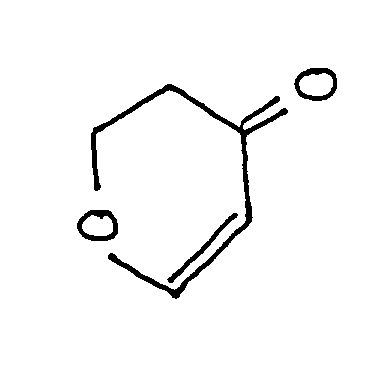
hat).
41. Verbindung gemäß Anspruch 40, dadurch gekennzeichnet, daß das Symbol A eine Einfachbindung
und das Symbol T ein Sauerstoffatom ist.
42. Verbindung gemäß Anspruch 41, dadurch gekennzeichnet, daß R
1 eine Gruppe der allgemeinen Formel:
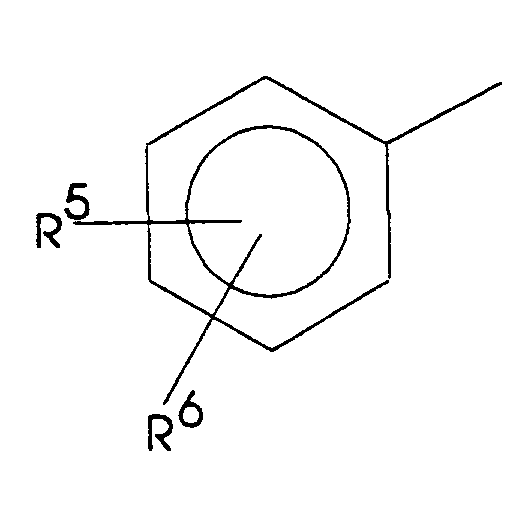
ist (worin R
5 und R
6 wie in Anspruch 1 definiert sind).
43. Verbindung gemaß Anspruch 42, dadurch gekennzeichnet, daß R5 ein Wasserstoffatom und R6 ein Wasserstoffatom oder eine lineare oder verzweigte Alkylgruppe mit 1 bis 20 Kohlenstoffatomen
ist.
44. 8-(p-Heptylbenzoyl)amino-2-(5-tetrazolyl)-4-oxo-4H-1-benzopyran, 8-(p-Octylbenzoyl)amino-2-(5-tetrazolyl)-4-oxo-4H-1-benzopyran,
oder 8-(p-Nonylbenzoyl)amino-2-(5-tetrazolyl)-4-oxo-4H-1-benzopyran oder deren Natriumsalze.
45. Verbindung gemäß Anspruch 42, dadurch gekennzeichnet, daß R5 ein Wasserstoffatom und R6 eine lineare oder verzweigte Alkoxygruppe mit 1 bis 19 Kohlenstoffatomen ist.
46. 8-(p-Butoxybenzoyl)amino-2-(5-tetrazolyl)-4-oxo-4H-1-benzopyran, 8-(p-Hexyloxybenzoyl)amino-2-(5-tetrazolyl)-4-oxo-4H-1-benzopyran,
8-(p-Heptyloxybenzoyl)amino-2-(5-tetrazolyl)-4-oxo-4H-1-benzopyran, 8-(p-Nonyloxybenzoyl)amino-2-(5-tetrazolyl)-4-oxo-4H-1-benzopyran,
8-(p-Octyloxybenzoyl)amino-2-(5-tetrazolyl)-4-oxo-4H-1-benzopyran, 8-(p-Heptyloxybenzoyl)amino-2-(5-tetrazolyl)-6-fluoro-4-oxo-4H-1-benzopyran,
8-(p-Octyloxybenzoyl)amino-2-(5-tetrazolyl)-6-methyl-4-oxo-4H-1-benzopyran, oder 8-(p-Heptyloxybenzoyl)amino-2-(5-tetrazolyl)-6-methyl-4-oxo-4H-1-benzopyran,
oder deren Natriumsalze.
47. Verbindung gemäß Anspruch 42, dadurch gekennzeichnet, daß R5 ein Wasserstoffatom und R6 eine lineare oder verzweigte Alkenyloxygruppe mit 3 bis 19 Kohlenstoffatomen ist.
48. 8-[p-(2E,7-Octadienyloxy)benzoyl]amino-2-(5-tetrazolyl)-4-oxo-4H-1-benzopyran,
8-(p-Geranyloxybenzoyl)amino-2-(5-tetrazolyl)-4-oxo-4H-1-benzopyran, 8-[p-(2E-Octenyloxy)benzoyl]amino-2-(5-tetrazolyl)-4-oxo-4H-1-benzopyran,
8-[p-(7-Octenyloxy)benzoyl]amino-2-(5-tetrazolyl)-4-oxo-4H-1-benzopyran, 8-[p-(2E-Heptenyloxy)benzoyl]amino-2-(5-tetrazolyl)-4-oxo-4H-1-benzopyran,
8-[p-(2E-Hexenyloxy)benzoyl]amino-2-(5-tetrazolyl)-4-oxo-4H-1-benzopyran, 8-[p-(2E-7-Octadienyloxy)benzoyl]amino-2-(5-tetrazolyl)-6-fluoro-4-oxo-4H-1
-benzopyran, 8-[p-(2E-Octenyloxy)benzoyl]amino-2-(5-tetrazolyl)-6-methyl-4-oxo-4H-1-benzopyran,
8-[p-(7-Octenyloxy)benzoyl]amino-2-(5-tetrazolyl)-6-methyl-4-oxo-4H-1-benzopyran,
8-[p-(2E,7-Octadienyloxy)benzoyl]amino-2-(5-tetrazolyl)-6-methyl-4-oxo-4H-1 -benzopyran,
8-[p-(2E,7-Octadienyloxy)benzoyl]amino-2-(5-tetrazolyl)-6-chloro-4-oxo-4H-1 -benzopyran
oder deren Natriumsalze.
49. Verbindung gemäß Anspruch 42, dadurch gekennzeichnet, daß R5 ein Wasserstoffatom und R6 eine lineare oder verzweigte Alkinyloxygruppe mit 3 bis 19 Kohlenstoffatomen ist.
50. 8-[p-(2-Octinyloxy)benzoyl]amino-2-(5-tetrazolyl)-4-oxo-4H-1-benzopyran oder dessen
Natriumsalz.
51. Verbindung gemäß Anspruch 42, dadurch gekennzeichnet, daß R5 ein Wasserstoffatom und R6 eine lineare oder verzweigte Alkoxygruppe mit 1 bis 18 Kohlenstoffatomen, die mit
einem oder mehreren Halogenatomen substituiert ist, ist.
52. 8-[p-(5-Chloropentyloxy)benzoyl]amino-2-(5-tetrazolyl)-4-oxo-4H-1-benzopyran,
8-[p-(6-Chlorohexyloxy)benzoyl]amino-2-(5-tetrazolyl)-4-oxo-4H-1-benzopyran, 8-[p-(6-Chlorohexyloxy)benzoyl]amino-2-(5-tetrazolyl)-4-oxo-4H-1-benzopyran,
8-[p-(7-Chlorheptyloxy)benzoyl]amino-2-(5-tetrazolyl)-4-oxo-4H-1-benzopyran, 8-[p-(8-Chlorooctyloxy)benzoyl]amino-2-(5-tetrazolyl)-6-methyl-4-oxo-4H-1
-benzopyran, 8-[p-(7-Chloroheptyloxy)benzoyl]amino-2-(5-tetrazolyl)-6-methyl-4-oxo-4H-1-benzopyran
oder 8-[p-(8-Chlorooctyloxy)benzoyl]amino-2-(5-tetrazolyl)-4-oxo-4H-1-benzopyran,
oder deren Natriumsalze.
53. Verbindung gemäß Anspruch 42, dadurch gekennzeichnet, daß R5 ein Wasserstoffatom ist und R6 Phenyl, Phenylalkyl (worin die Alkyleinheit eine Gruppe mit 1 bis 8 Kohlenstoffatomen
ist), Phenylalkyloxy (worin die Alkyleinheit eine Gruppe mit 1 bis 8 Kohlenstoffatomen
ist), Phenylalkenyloxy (worin die Alkenyleinheit eine Gruppe mit 2 bis 8 Kohlenstoffatomen
ist), Naphthyl, Naphthylalkyl (worin die Alkyleinheit eine Gruppe mit 1 bis 8 Kohlenstoffatomen
ist), Naphthylalkyloxy (worin die Alkyleinheit eine Gruppe mit 1 bis 8 Kohlenstoffatomen
ist) oder eine Naphthylalkenyloxygruppe ist (worin die Alkenyleinheit eine Gruppe
mit 2 bis 8 Kohlenstoffatomen ist), die unsubstituiert oder substituiert mit einer
oder mehreren linearen oder verzweigten Alkylgruppen mit 1 bis 8 Kohlenstoffatomen,
Hydroxygruppen, Halogenatomen und/oder Nitrogruppen sind.
54. 8-[p-(3-Phenylpropoxy)benzoyl]amino-2-(5-tetrazolyl)-4-oxo-4H-1-benzopyran, 8-[p-(3-Phenyl-2E-propenyloxy)benzoyl]amino-2-(5-tetrazolyl)-4-oxo-4H-1
-benzopyran, 8-[p-(4-Phenylbutoxy)benzoyl]amino-2-(5-tetrazolyl)-4-oxo-4H-1-benzopyran
oder 8-[p-(4-Phenylbutoxy)benzoyl]amino-2-(5-tetrazolyl)-6-methyl-4-oxo-4H-1-benzopyran
oder deren Natriumsalze.
55. Verbindung gemäß Anspruch 42, dadurch gekennzeichnet, daß R5 ein Wasserstoffatom und R6 eine lineare oder verzweigte Alkoxygruppe mit 1 bis 18 Kohlenstoffatomen ist, die
mit einem oder mehreren Thiophenringen substituiert ist.
56. 8-[p-[4-(2-Thienyl)butoxy]benzoyl]amino-2-(5-tetrazolyl)-4-oxo-4H-1-benzopyran
oder 8-[p-[4-(2-Thienyl)butoxy]benzoyl]amino-2-(5-tetrazolyl)-6-methyl-4-oxo-4H-1
-benzopyran oder deren Natriumsalze.
57. Verbindung gemäß Anspruch 40, dadurch gekennzeichnet, daß das Symbol A eine Vinylengruppe
ist, die unsubstituiert oder substituiert mit einer oder mehreren linearen oder verzweigten
Alkylgruppen mit 1 bis 6 Kohlenstoffatomen oder Phenylgruppen ist, und das Symbol
T ein Sauerstoffatom bedeutet.
58. Verbindung gemäß Anspruch 57, dadurch gekennzeichnet, daß R
1 eine Gruppe der allgemeinen Formel:
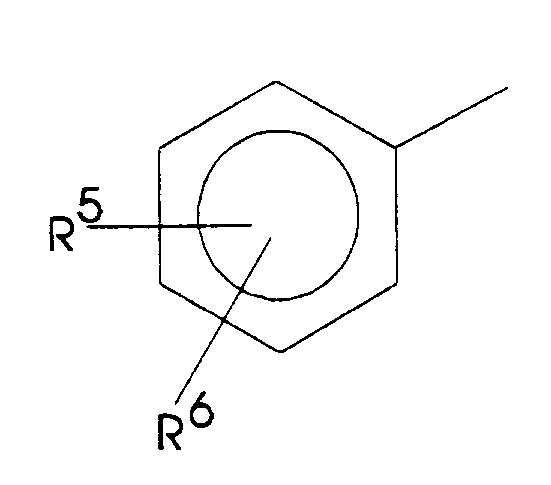
ist (worin R
5 und R
6 wie in Anspruch 1 definiert sind).
59. Verbindung gemäß Anspruch 58, dadurch gekennzeichnet, daß R5 ein Wasserstoffatom und R6 eine lineare oder verzweigte Alkoxygruppe mit 1 bis 19 Kohlenstoffatomen ist.
60. 8-(p-Isohexyloxycinnamoyl)amino-2-(5-tetrazolyl)-4-oxo-4H-1-benzopyran oder dessen
Natriumsalz.
61. Verbindung gemäß Anspruch 58, dadurch gekennzeichnet, daß R5 ein Wasserstoffatom und R6 eine lineare oder verzweigte Alkoxygruppe mit 1 bis 18 Kohlenstoffatomen ist, die
mit einem oder mehreren Halogenatomen substituiert ist.
62. 8-[p-(5-Chloropentyloxy)cinnamoyl]amino-2-(5-tetrazolyl)-4-oxo-4H-1-benzopyran
oder 8-[p-(6-Chlorohexyloxy)cinnamoyl]amino-2-(5-tetrazolyl)-4-oxo-4H-1 -benzopyran
oder deren Natriumsalze.
63. Verbindung gemäß Anspruch 2, dadurch gekennzeichnet, daß das Symbol B ein Pyridinring
ist, der wahlweise durch eine oder mehrere Hydroxygruppen substituiert ist (d.h. Die
Formel:
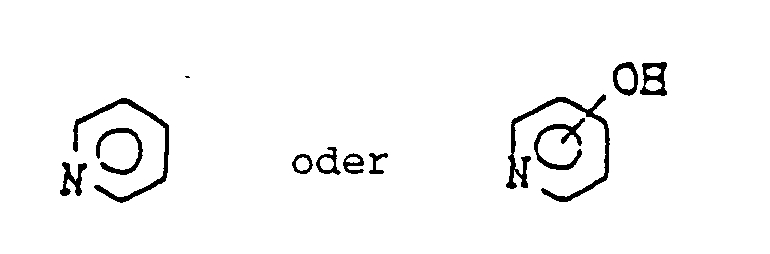
hat).
64. Verbindung gemäß Anspruch 63, dadurch gekennzeichnet, daß das Symbol A eine Einfachbindung
oder eine Vinylengruppe ist, die unsubstituiert oder substituiert mit einer oder mehreren
linearen oder verzweigten Alkylgruppen mit 1 bis 6 Kohlenstoffatomen oder Phenylgruppen
ist, und das Symbol T ein Sauerstoffatom ist.
65. Verbindung gemäß Anspruch 64, dadurch gekennzeichnet, daß R
1 eine Gruppe der allgemeinen Formel:
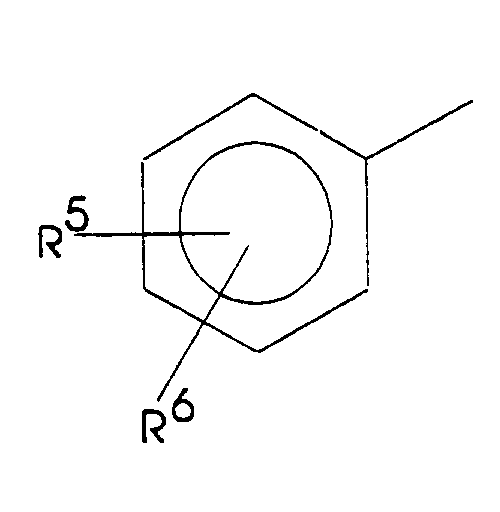
ist (worin R
5 und R
6 wie in Anspruch 1 definiert sind).
66. 8-[p-(4-Phenylbutoxy)benzoyl]amino-2-(5-tetrazolyl)chinolin oder 8-[p-(4-Phenylbutoxy)benzoyl]amino-4-hydroxy-2-(5-tetrazolyl)chinolin
oder deren Natriumsalze.
67. Verbindung gemäß Anspruch 2, dadurch gekennzeichnet, daß das Symbol B ein 4,5-Dihydrodioxol-Ring
ist, (d.h. die Formel:
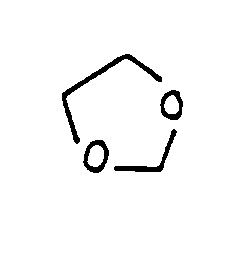
hat).
68. Verbindung gemäß Anspruch 67, dadurch gekennzeichnet, daß das Symbol A eine Einfachbindung
oder eine Vinylengruppe ist, die unsubstituiert oder substituiert mit einer oder mehreren
linearen oder verzweigten Alkylgruppen mit 1 bis 6 Kohlenstoffatomen oder Phenylgruppen
ist, und das Symbol T ein Sauerstoffatom ist.
69. Verbindung gemäß Anspruch 68, dadurch gekennzeichnet, daß R
1 eine Gruppe der allgemeinen Formel:
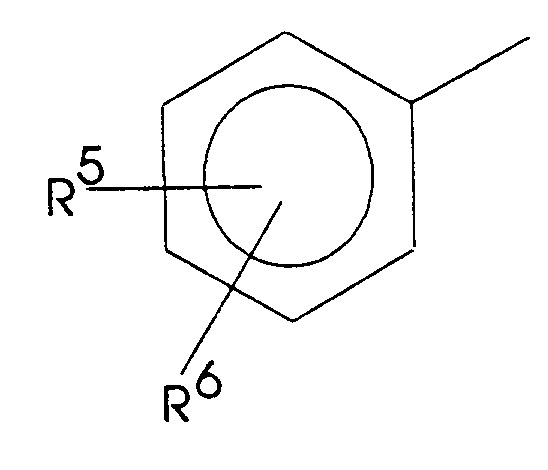
ist (worin R
5 und R
6 wie in Anspruch 1 definiert sind).
70. 4-(p-Heptyloxybenzoyl)amino-2-(5-tetrazolyl)-1 ,3-benzdioxol oder dessen Natriumsalz.
71. Verbindung gemäß Anspruch 2, dadurch gekennzeichnet, daß das Symbol B ein Benzolring
ist (d.h. die
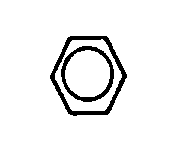
Formel: hat).
72. Verbindung gemäß Anspruch 71, dadurch gekennzeichnet, daß das Symbol A eine Einfachbindung
oder eine Vinylengruppe ist, die unsubstituiert oder substituiert mit einer oder mehreren
linearen oder verzweigten Alkylgruppen mit 1 bis 6 Kohlenstoffatomen oder Phenylgruppen
ist, und das Symbol T ein Sauerstoffatom ist.
73. Verbindung gemäß Anspruch 72, dadurch gekennzeichnet, daß R
1 eine Gruppe der allgemeinen Formel:
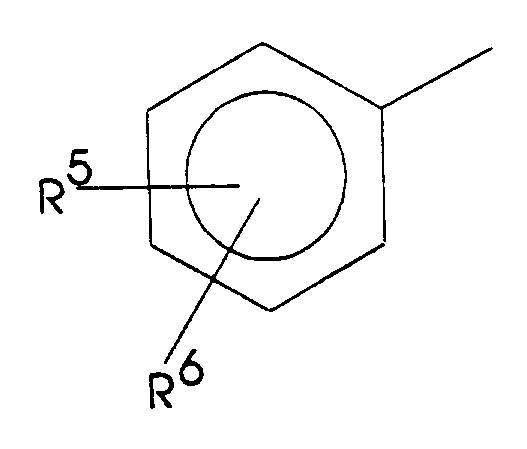
(worin R
5 und R
6 wie in Anspruch 1 definiert sind) ist.
74. 8-[p-(4-Phenylbutoxy)benzoyl]amino-2-(5-tetrazolyl)naphthalin oder 8-[p-(7-Octenyloxy)benzoyl]amino-2-(5-tetrazolyl)methoxynaphthalin
oder deren Natriumsalze.
75. Verbindung gemäß Anspruch 2, dadurch gekennzeichnet, daß das Symbol B ein 2,3,6,7-Tetrahydro-5H-1,4-dioxepin-Ring
ist (d.h. die Formel:
hat).
76. Verbindung gemäß Anspruch 75, dadurch gekennzeichnet, daß das Symbol A eine Einfachbindung
oder eine Vinylengruppe ist, die unsubstituiert oder substituiert mit einer oder mehreren
linearen oder verzweigten Alkylgruppen mit 1 bis 6 Kohlenstoffatomen oder Phenylgruppen
ist, und das Symbol T ein Sauerstoffatom ist.
77. Verbindung gemäß Anspruch 76, dadurch gekennzeichnet, daß R
1 eine Gruppe der allgemeinen Formel:
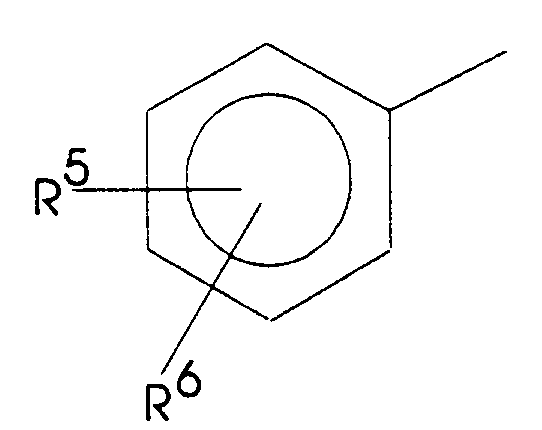
ist, (worin R
5 und R
6 wie in Anspruch 1 definiert sind).
78. 9-[p-(2E,7-Octadienyloxy)benzoyl]amino-2-(5-tetrazolyl)-3,4-dihydro-2H-1,5-benzodioxepin
oder dessen Natriumsalz.
79. Verbindung gemäß Anspruch 2, dadurch gekennzeichnet, daß das Symbol B ein Morpholinring
ist. (d. h. die Formel:
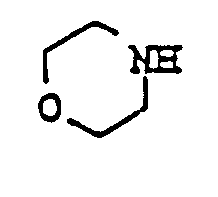
hat).
80. Verbindung gemäß Anspruch 79, dadurch gekennzeichnet, daß das Symbol A eine Einfachbindung
oder eine Vinylengruppe ist, die unsubstituiert oder substituiert mit einer oder mehreren
linearen oder verzweigten Alkylgruppen mit 1 bis 6 Kohlenstoffatomen oder Phenylgruppen
ist, und das Symbol T ein Sauerstoffatom ist.
81. Verbindung gemäß Anspruch 80, dadurch gekennzeichnet, daß R
1 eine Gruppe der allgemeinen Formel:
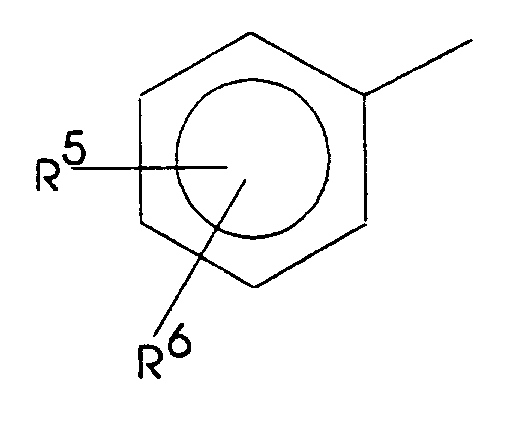
(worin R
5 und R
6 wie in Anspruch 1 definiert sind) ist.
82. 8-[p-(4-Phenylbutoxy)benzoyl]amino-2-(5-tetrazolyl)-2,3-dihydro-1,4-benzoxazin
oder dessen Natriumsalz.
83. Verbindung gemäß Anspruch 2, dadurch gekennzeichnet, daß das Symbol B ein 3,4,5,6-Tetrahydro-2H-pyran-Ring
ist (d.h. die Formel:
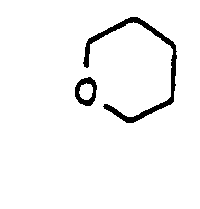
hat).
84. Verbindung gemäß Anspruch 83, dadurch gekennzeichnet, daß das Symbol A eine Einfachbindung
oder Vinylengruppe ist, die unsubstituiert und substituiert mit einer oder mehreren
linearen oder verzweigten Alkylgruppen mit 1 bis 6 Kohlenstoffatomen oder Phenylgruppen
ist, und das Symbol T ein Sauerstoffatom ist.
85. Verbindung gemäß Anspruch 84, dadurch gekennzeichnet, daß R
1 eine Gruppe der allgemeinen Formel:
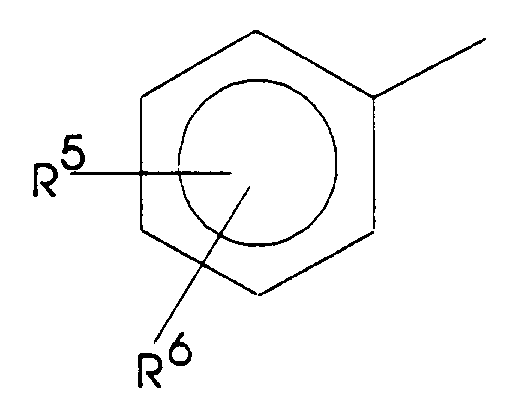
ist (worin R
5 und R
6 wie in Anspruch 1 definiert sind).
86. 8-[p-(4-Phenylbutoxy)benzoyl]amino-2-(5-tetrazolyl)-3,4-dihydro-2H-1-benzopyran
oder dessen Natriumsalz.
87. Verfahren zur Herstellung eines kondensierten Aminophenylderivats der allgemeinen
Formel:
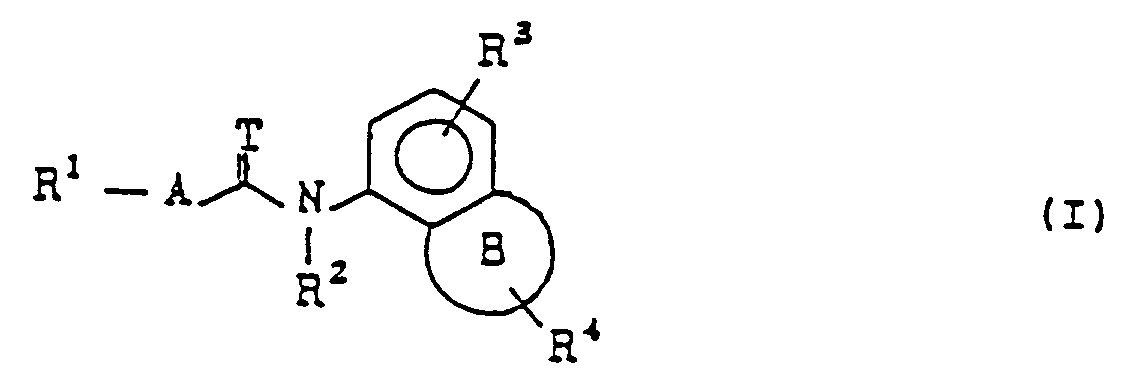
[worin A, B, R
1, R
2, R
3 und R
4 wie in Anspruch 1 definiert sind], oder eines nichttoxischen Salzes davon, gekennzeichnet
durch: Umsetzung einer Säure der allgemeinen Formel:
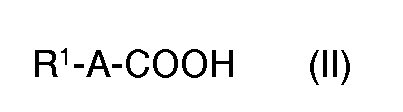
(worin A und R
1 wie in Anspruch 1 definiert sind) oder einer entsprechenden Dithiocarbonsäure und
einer Verbindung der allgemeinen Formel:
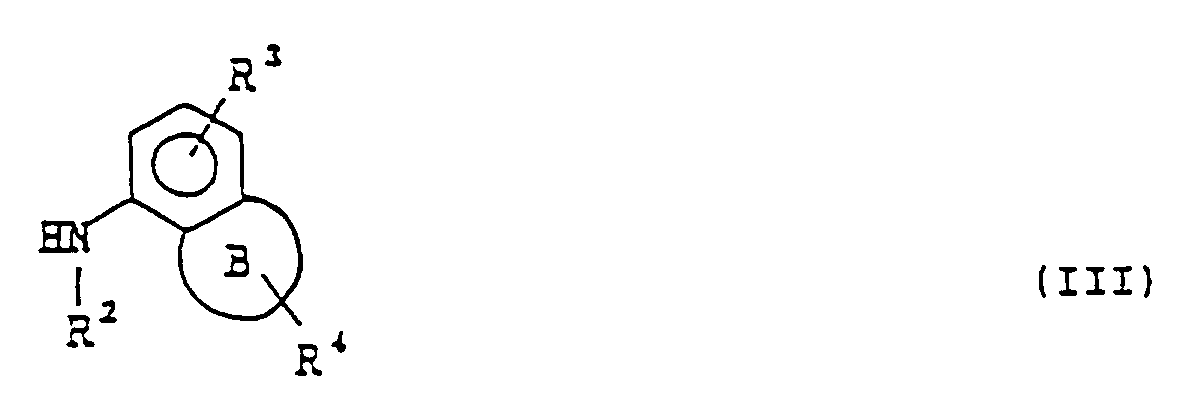
(worin B, R
2, R
3 und R
4 wie in Anspruch 1 definiert sind), zur Bildung einer Amidbindung; und weiterhin,
falls gewünscht, Durchführung von Verseifung und/oder Veresterung.
88. Verfahren zur Herstellung eines kondensierten Aminophenylderivats der allgemeinen
Formel:
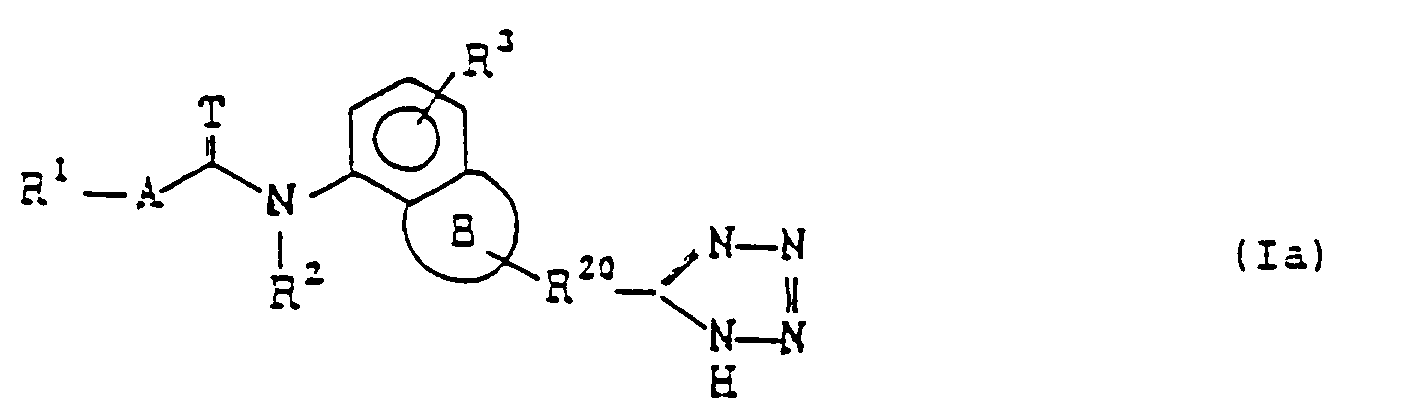
(worin R
20 eine Methylengruppe oder eine Einfachbindung darstellt und die anderen Symbole wie
in Anspruch 1 definiert sind) oder eines nichttoxischen Salzes davon; gekennzeichnet
durch Umsetzung einer Verbindung der allgemeinen Formel:
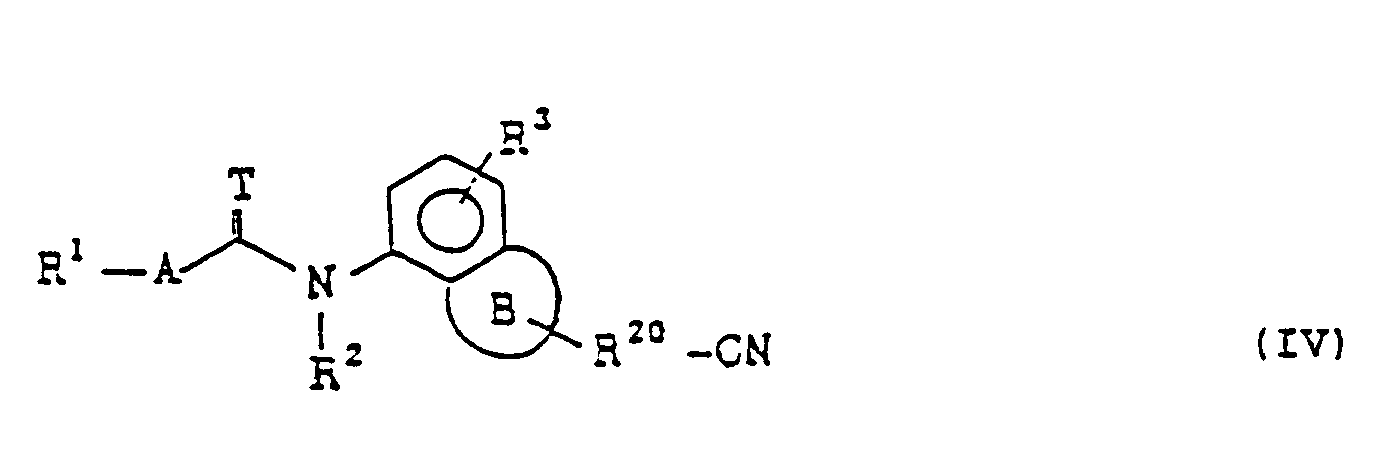
(worin R
20 wie oben definiert ist und die anderen Symbole wie in Anspruch 1 definiert sind)
und eines Azids; und weiterhin, falls gewünscht, Ausführung einer Salzbildung.
89. Verfahren zur Herstellung eines kondensierten Aminophenylderivats der allgemeinen
Formel
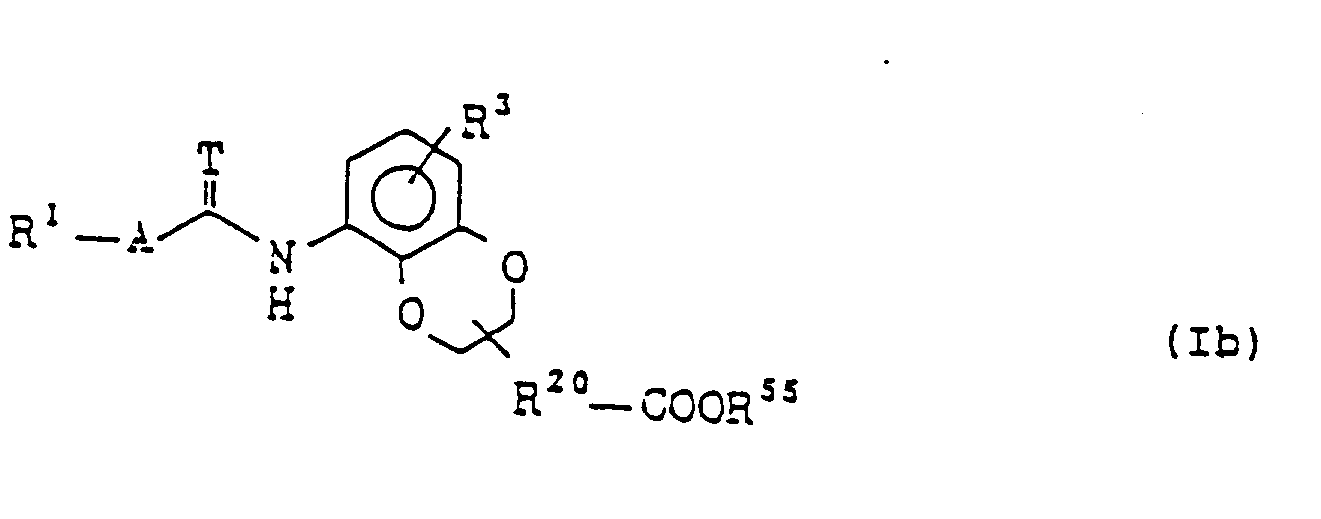
(worin R
20 eine Methylengruppe oder eine Einfachbindung darstellt, R
55 ein Wasserstoffatom oder eine lineare oder verzweigte Alkylgruppe mit 1 bis 6 Kohlenstoffatomen
darstellt und T, A, R
1 und R
3 wie in Anspruch 1 definiert sind), oder eines nichttoxischen Salzes davon; gekennzeichnet
durch Umsetzung einer Verbindung der allgemeinen Formel:
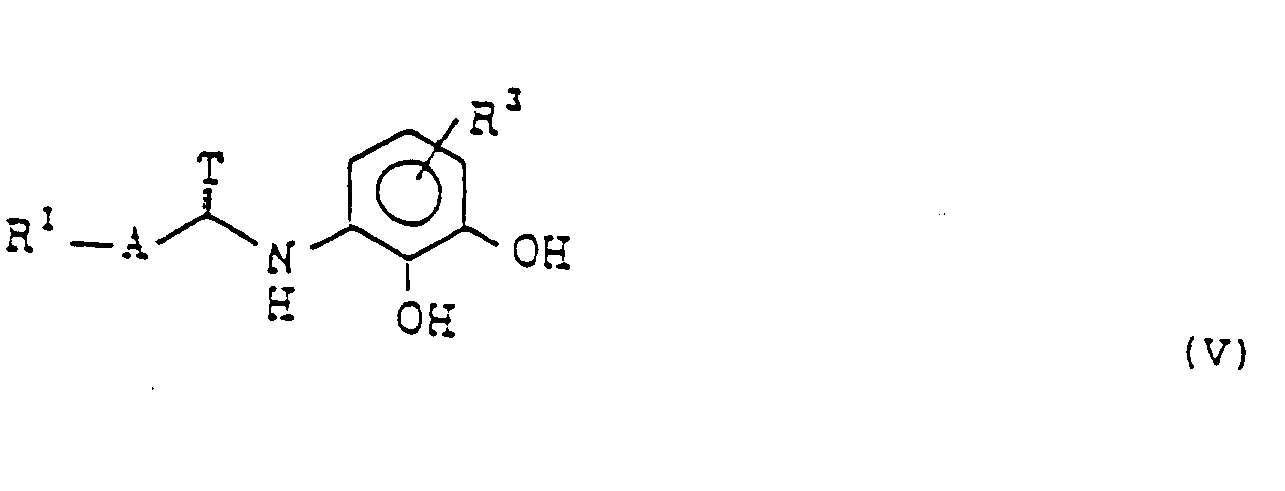
worin T, A, R
1 und R
3 wie in Anspruch 1 definiert sind) und einer Verbindung der allgemeinen Formel:

oder

(worin X
10 und X
2° jeweils Halogenatome darstellen, R
50 eine lineare oder verzweigte Alkylgruppe mit 1 bis 6 Kohlenstoffatomen darstellt
und R
2° eine Methylengruppe oder eine Einfachbindung darstellt); und weiterhin, falls gewünscht,
Durchführung von Verseifung und/oder Veresterung.
90. Pharmazeutische Zusammensetzung, dadurch gekennzeichnet, daß sie als aktiven Inhaltsstoff
mindestens eine Verbindung der allgemeinen Formel (I) gemäß einem der Ansprüche 1
bis 86 oder ein nichttoxisches Salz davon zusammen mit einem pharmazeutischen Träger
und/oder Überzug umfaßt.
91. Verbindung der allgemeinen Formel (I) gemäß Anspruch 1 oder ein nichttoxisches
Salz davon zur Verwendung als Medikament zur Verhinderung und/oder Behandlung von
trachealen, bronchialen oder Lungenkrankheiten wie Asthma oder einer allergischen
Krankheit.
92. Verwendung einer Verbindung der allgemeinen Formel (I) gemäß Anspruch 1 oder eines
nichttoxischen Salzes davon zur Herstellung eines Medikaments zur Prävention und/oder
Behandlung von trachealen, bronchialen oder Lungenkrankheiten wie Asthma oder einer
allergischen Krankheit.
Patentansprüche für folgende(n) Vertragsstaat(en) : AT
1. Verfahren zur Herstellung eines kondensierten Aminophenylderivats der allgemeinen
Formel:
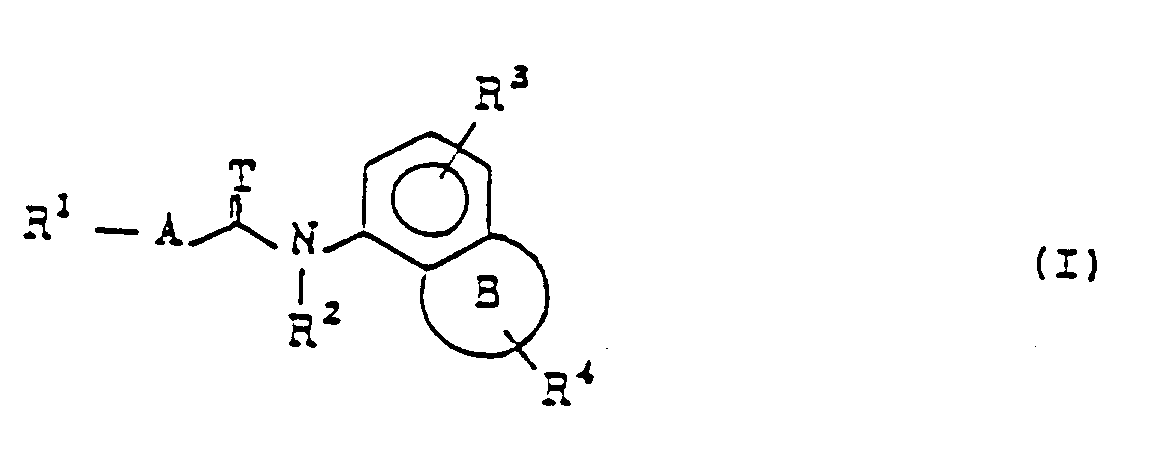
[worin Symbol A eine Einfachbindnung oder eine Methylen-, Ethylen-, Trimethylen-,
Tetramethylen- , Vinylen-, Propenylen-, Butenylen-, Butadienylen- oder Ethylengruppe
darstellt, wahlweise substituiert mit einer, zwei oder drei linearen oder verzweigten
Alkylgruppen mit 1 bis 10 Kohlenstoffatomen und/oder Phenylgruppen,
Symbol B einen 4- bis 8gliedrigen carbocyclischen Ring darstellt, in dem 1, 2 oder
3 Kohlenstoffatome ersetzt sein können durch ein oder mehrere Sauerstoff-, Stickstoff-
und/oder Schwefelatome, oder worin der Ring wahlweise mit einer oder mehreren Oxo-,
Thioxo- und/oder Hydroxygruppen substituiert sein kann,
Symbol T ein Sauerstoffatom oder ein Schwefelatom darstellt,
R1 eine Gruppe der Formel:
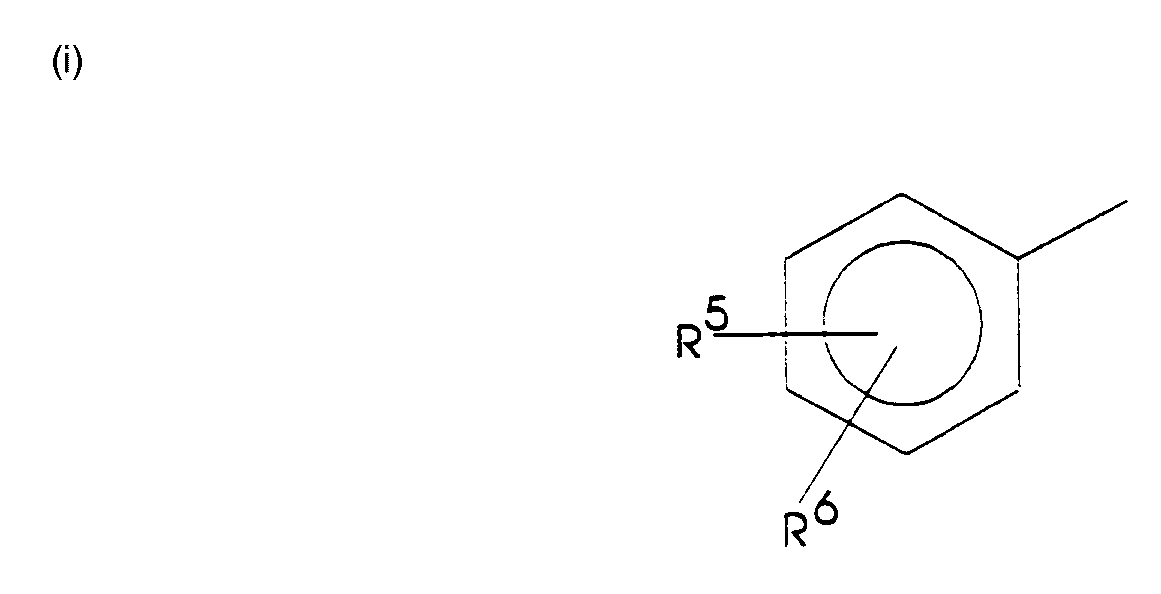
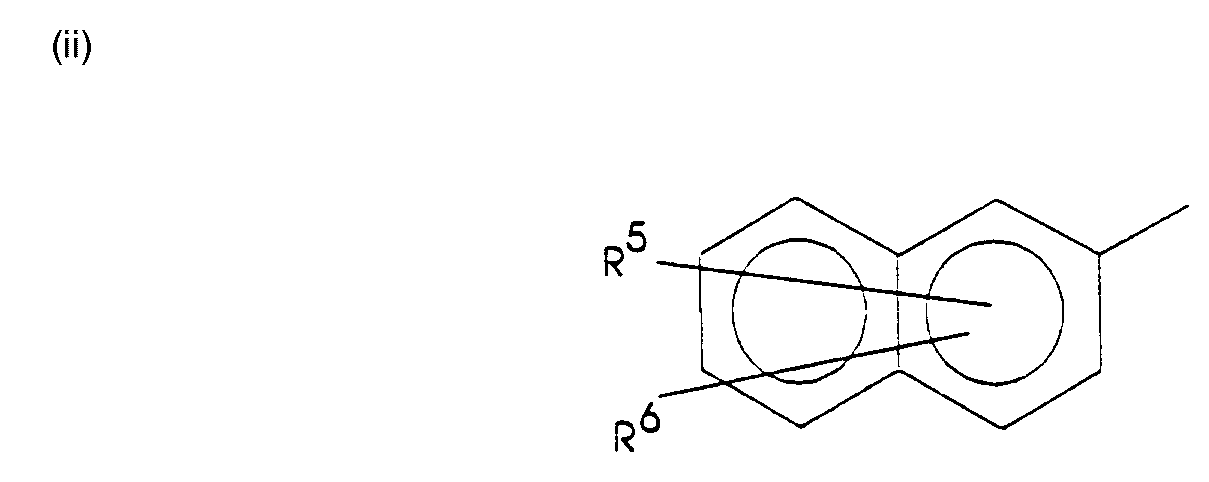
oder
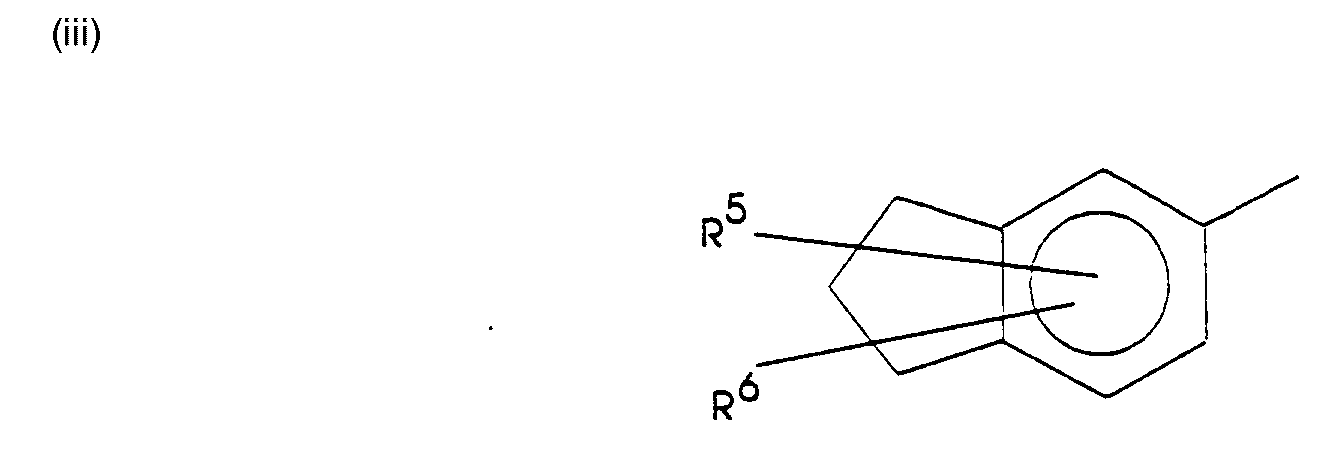
oder (iv) eine lineare oder verzweigte Alkyl-, Alkenyl- oder Alkinylgruppe mit 1 bis
20 Kohlenstoffatomen darstellt, (worin R5 und R6 unabhängig ein Wasserstoffatom oder ein Halogenatom oder eine lineare oder verzweigte
Alkyl-, Alkenyl- oder Alkinylgruppe mit 1 bis 20 Kohlenstoffatomen darstellen, in
denen 1, 2, 3, 4 oder 5 Kohlenstoffatome ersetzt sein können durch ein oder mehrere
Sauerstoffatome, Schwefelatome, Halogenatome, Stickstoffatome, Benzolringe, Thiophenringe,
Naphthalinringe, carbocyclische Ringe mit 4 bis 7 Kohlenstoffatomen, Carbonylgruppen,
Carbonyloxygruppen, Hydroxygruppen, Carboxygruppen, Azidogruppen und/oder Nitrogruppen),
R2 ein Wasserstoffatom oder eine lineare oder verzweigte Alkylgruppe mit 1 bis 6 Kohlenstoffatomen
darstellt,
R3 ein Wasserstoffatom, ein Halogenatom, eine Hydroxygruppe, eine Nitrogruppe, eine
Gruppe der allgemeinen Formel: -COOR7 (worin R7 ein Wasserstoffatom oder eine lineare oder verzweigte Alkylgruppe mit 1 bis 6 Kohlenstoffatomen
darstellt) oder eine lineare oder verzweigte Alkyl-, Alkoxy oder Alkylthiogruppe mit
1 bis 6 Kohlenstoffatomen darstellt und
R4 eine Gruppe der allgemeinen Formel:
-U-(CH2)n-COOR8
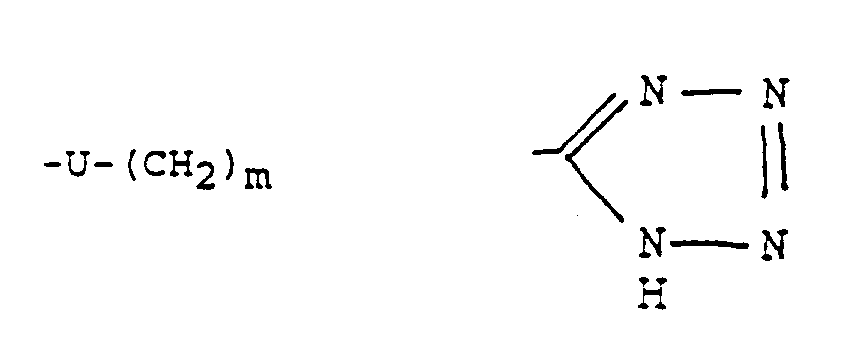
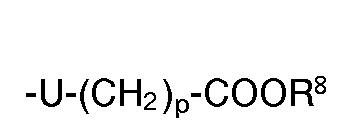
oder
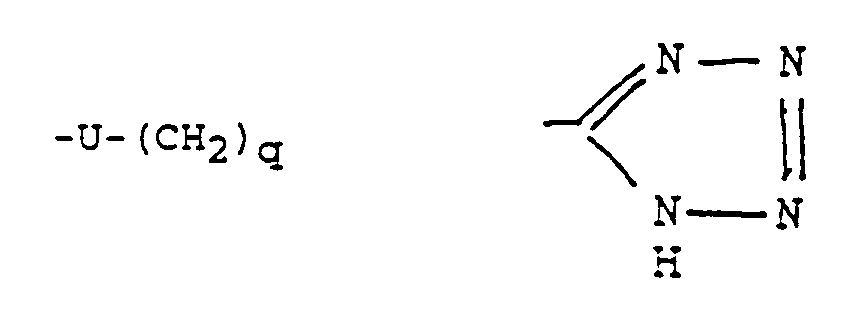
(worin Symbol U ein Sauerstoffatom oder ein Schwefelatom darstellt, R8 ein Wasserstoffatom oder eine lineare oder verzweigte Alkylgruppe mit 1 bis 6 Kohlenstoffatomen
darstellt, n und m jeweils eine Ganzzahl von 1 bis 10 darstellen und p und q jeweils
Null oder eine Ganzzahl von 1 bis 10 darstellen)]; oder eines nichttoxischen Salzes
davon
wobei das Verfahren gekennzeichnet ist durch
Umsetzung einer Säure der allgemeinen Formel:
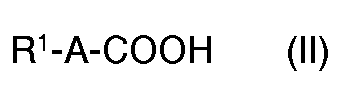
(worin A und R1 wie in Anspruch 1 definiert sind) oder einer entsprechenden Dithiocarbonsäure und
einer Verbindung der allgemeinen Formel:
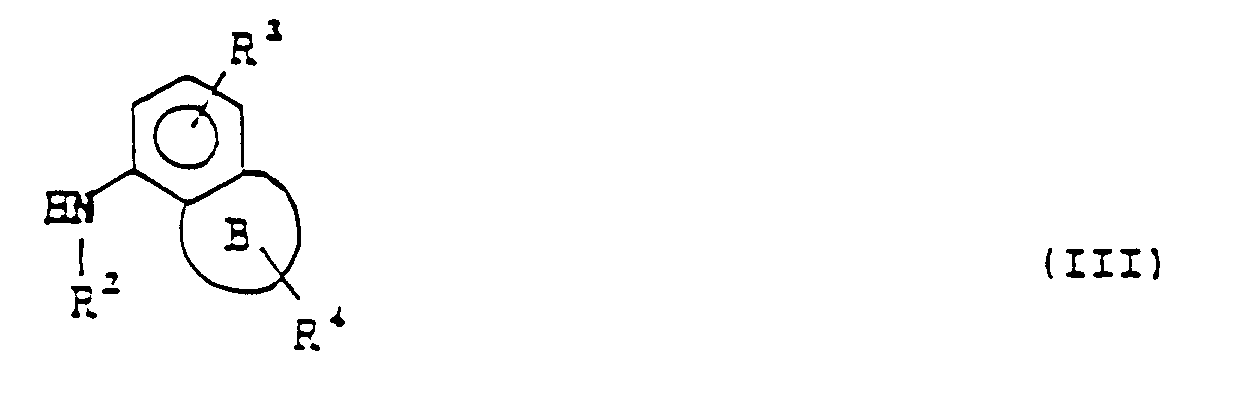
(worin B, R2, R3 und R4 wie in Anspruch 1 definiert sind), zur Bildung einer Amidbindung; und weiterhin,
falls gewünscht, Ausführung von Verseifung und/oder Veresterung.
2. Verfahren zur Herstellung eines kondensierten Aminophenylderivats der allgemeinen
Formel:
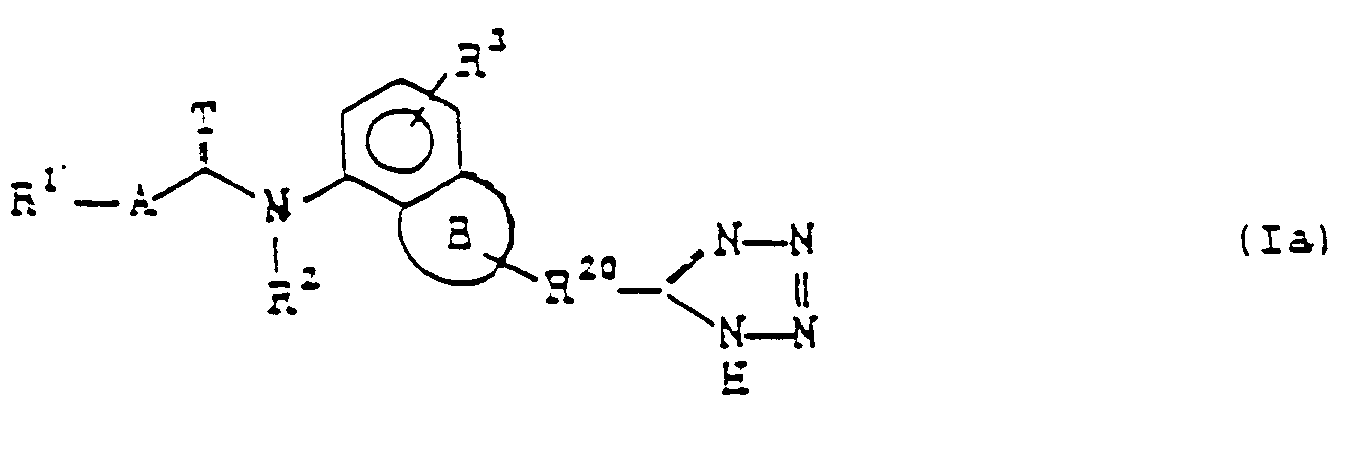
(worin R
20 eine Methylengruppe oder eine Einfachbindung darstellt und die anderen Symbole wie
in Anspruch 1 definiert sind), oder eines nichttoxischen Salzes davon; gekennzeichnet
durch Umsetzung einer Verbindung der allgemeinen Formel:
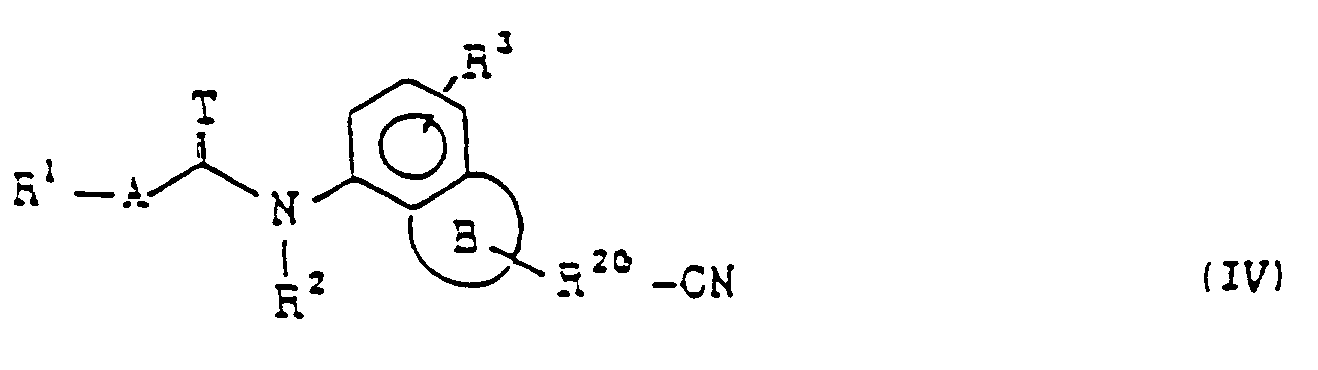
(worin R
20 wie oben definiert ist und die anderen Symbole wie in Anspruch 1 definiert sind)
und eines Azids; und weiterhin, falls gewünscht, Ausführung von Salzbildung.
3. Verfahren zur Herstellung eines kondensierten Aminophenylderivats der allgemeinen
Formel
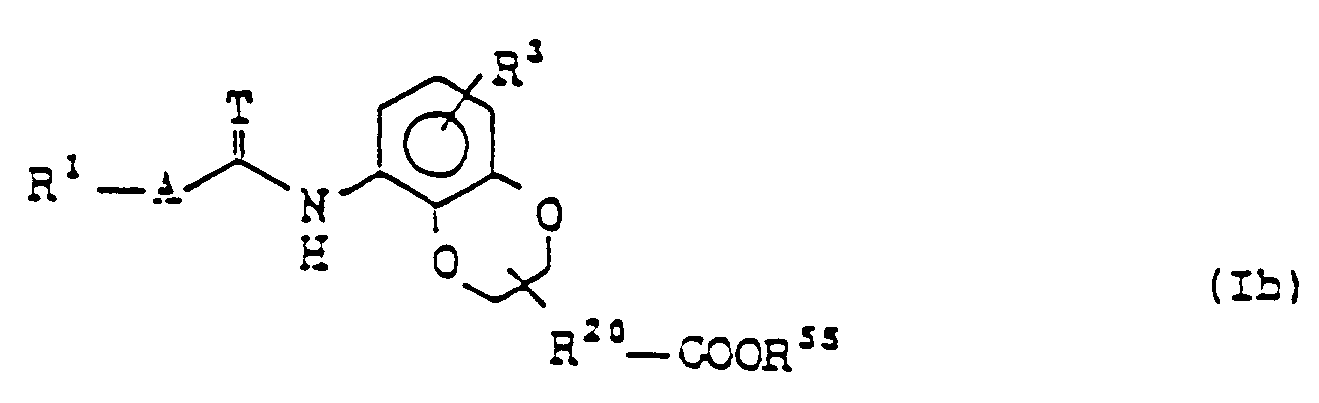
(worin R
20 eine Methylengruppe oder eine Einfachbindung darstellt, R
55 ein Wasserstoffatom oder eine lineare oder verzweigte Alkylgruppe mit 1 bis 6 Kohlenstoffatomen
darstellt und T, A, R
1 und R
3 wie in Anspruch 1 definiert sind), oder eines nichttoxischen Salzes davon; gekennzeichnet
durch Umsetzen einer Verbindung der allgemeinen Formel:
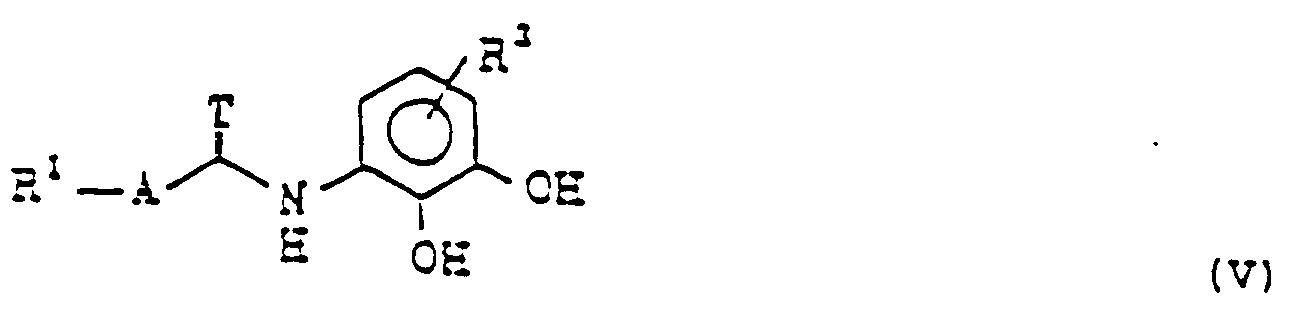
worin T, A, R
1 und R
3 wie in Anspruch 1 definiert sind) und einer Verbindung der allgemeinen Formel:

oder

(worin X
10 und X
2° jeweils Halogenatome darstellen, R
50 eine lineare oder verzweigte Alkylgruppe mit 1 bis 6 Kohlenstoffatomen darstellt
und R
20 eine Methylengruppe oder eine Einfachbindung darstellt); und weiterhin, falls gewünscht,
Durchführung von Verseifung und/oder Veresterung.
4. Verfahren gemäß Anspruch 1 oder 2, dadurch gekennzeichnet, daß das Symbol B ein
Ring der Formel:



ist (die Ringe können wahlweise mit Hydroxygruppe(n) substituiert sein).
5. Verfahren gemäß Anspruch 3 oder 4, dadurch gekennzeichnet, daß das Symbol B ein
2,3,5,6-Tetrahydro-1,4-dioxanring ist (d.h. die Formel:
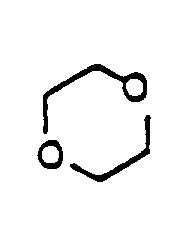
hat).
6. Verfahren gemäß Anspruch 3 oder 5, dadurch gekennzeichnet, daß das Symbol A eine
Einfachbindung ist und das Symbol T ein Sauerstoffatom ist.
7. Verbindung gemäß Anspruch 6, dadurch gekennzeichnet, daß R
1 eine Gruppe der allgemeinen Formel:
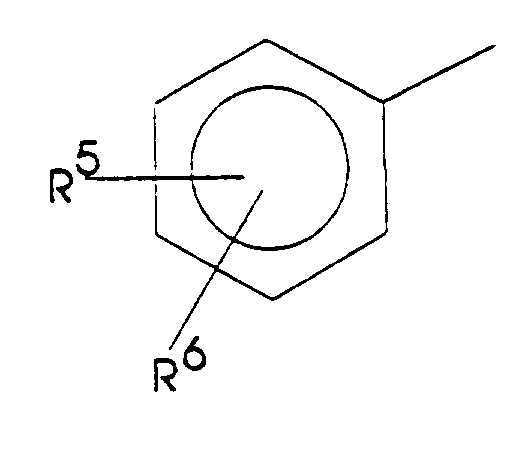
(worin R
5 und R
6 wie in Anspruch 1 definiert sind), ist.
8. Verfahren gemäß Anspruch 7, dadurch gekennzeichnet, daß R5 ein Wasserstoffatom und R6 eine lineare oder verzweigte Alkoxygruppe mit 1 bis 19 Kohlenstoffatomen ist.
9. Verfahren gemäß Anspruch 8, dadurch gekennzeichnet, daß die Verbindung 8-(p-Heptyloxybenzoyl)-amino-2-(5-tetrazolyl)-1,4-benzodioxan
oder 8-(p-Isooctyloxybenzoyl)amino-2-(5-tetrazolyl)-1,4-benzodioxan oder ein Natriumsalz
davon ist.
10. Verbindung gemäß Anspruch 7, dadurch gekennzeichnet, daß R5 ein Wasserstoffatom und R6 eine lineare oder verzweigte Alkenyloxygruppe mit 3 bis 19 Kohlenstoffatomen ist.
11. Verfahren gemäß Anspruch 10, dadurch gekennzeichnet, daß die Verbindung 8-[p-(2E-Octenyloxy)benzoyl]amino-2-(5-tetrazolyl)-1,4-benzodioxan,
8-[p-(2Z-Octenyloxy)benzoyl]amino-2-(5-tetrazolyl)-1,4-benzodioxan, 8-[p-(2E-Nonenyloxy)benzoyl]amino-2-(5-tetrazolyl)-1,4-benzodioxan,
8-[p-(2E-Hexenyloxy)benzoyl]amino-2-(5-tetrazolyl)-1,4-benzodioxan, 8-[p-(3E-Heptenyloxy)benzoyl]amino-2-(5-tetrazolyl)-1,4-benzodioxan,
8-[p-(2E-Octenyloxy)benzoyl]amino-1 ,4-benzodioxan-2-carbonsäure oder dessen Methylester,
8-[p-(2E-Heptenyloxy)benzoyl]amino-2-(5-tetrazolyl)-1,4-benzodioxan, 8-(p-Geranyloxybenzoyl)amino-2-(5-tetrazolyl)-1,4-benzodioxan,
8-[p-(2E,7-Octadienyloxy)benzoyl]amino-2-(5-tetrazolyl)-1,4-benzodioxan, 8-[p-(7-Octenyloxy)benzoyl]amino-2-(5-tetrazolyl)-1,4-benzodioxan,
oder 8-[p-(2E,4E-Octadienyloxy)benzoyl]amino-2-(5-tetrazolyl)-1,4-benzodioxan; oder
eines ihrer Natriumsalze ist.
12. Verfahren gemäß Anspruch 7, dadurch gekennzeichnet, daß R5 ein Wasserstoffatom und R6 eine lineare oder verzweigte Alkinyloxygruppe mit 3 bis 19 Kohlenstoffatomen ist.
13. Verfahren gemäß Anspruch 12, dadurch gekennzeichnet, daß die Verbindung 8-[p-(2-Octinyloxy)benzoyl]amino-2-(5-tetrazolyl)-1,4-benzodioxan
oder 8-[p-(2-Isooctinyloxy)benzoyl]amino-2-(5-tetrazolyl)-1,4-benzodioxan; oder eines
ihrer Natriumsalze ist.
14. Verfahren gemäß Anspruch 7, dadurch gekennzeichnet, daß R5 ein Wasserstoffatom und R6 eine lineare oder verzweigte Alkylthiogruppe mit 1 bis 19 Kohlenstoffatomen ist.
15. Verfahren gemäß Anspruch 14 dadurch gekennzeichnet, daß die Verbindung 8-(p-Heptylthiobenzoyl)-amino-2-(5-tetrazolyl)-1,4-benzodioxan
oder dessen Natriumsalz ist.
16. Verfahren gemäß Anspruch 7, dadurch gekennzeichnet, daß R5 ein Wasserstoffatom ist und R6 eine lineare oder verzweigte Alkoxygruppe mit 1 bis 18 Kohlenstoffatomen ist, die
mit einem oder mehreren Halogenatomen substituiert ist.
17. Verfahren gemäß Anspruch 16, dadurch gekennzeichnet, daß die Verbindung 8-[p-(6-Chlorohexyloxy)benzoyl]amino-2-(5-tetrazolyl)-1,4-benzodioxan,
8-[p-(5-Chloropentyloxy)benzoyl]amino-2-(5-tetrazolyl)-1,4-benzodioxan, 8-[p-(4-Chlorobutoxy)benzoyl]amino-2-(5-tetrazolyl)-1,4-benzodioxan,
8-[p-(7-Chloroheptyloxy)benzoyl]amino-2-(5-tetrazolyl)-1,4-benzodioxan, 8-[p-(8-Chlorooctyloxy)benzoyl]amino-2-(5-tetrazolyl)-1,4-benzodioxan
oder 8-[p-(9-Chlorononyloxy)benzoyl]amino-2-(5-tetrazolyl)-1,4-benzodioxan oder eines
ihrer Natriumsalze ist.
18. Verfahren gemäß Anspruch 7, dadurch gekennzeichnet, daß R5 ein Wasserstoffatom und R6 eine Phenyl-, Phenylalkyl- (worin die Alkyleinheit eine Gruppe mit 1 bis 8 Kohlenstoffatomen
ist), Phenylalkyloxy- (worin die Alkyleinheit eine Gruppe mit 1 bis 8 Kohlenstoffatomen
ist), Phenylalkenyloxy- (worin die Alkenyleinheit eine Gruppe mit 2 bis 8 Kohlenstoffatomen
ist), Naphthyl-, Naphthylalkyl- (worin die Alkyleinheit eine Gruppe mit 1 bis 8 Kohlenstoffatomen
ist), Naphthylalkyloxy-(worin die Alkyleinheit eine Gruppe mit 1 bis 8 Kohlenstoffatomen
ist) oder eine Naphthylalkenyloxygruppe (worin die Alkenyleinheit eine Gruppe mit
2 bis 8 Kohlenstoffatomen ist), die unsubstituiert oder substituiert mit einer linearen
oder verzweigten Alkylgruppe mit 1 bis 8 Kohlenstoffatomen, Hydroxygruppe(n), Halogenatome(n)
und/oder Nitrogruppe(n) sind.
19. Verfahren gemäß Anspruch 18, dadurch gekennzeichnet, daß die Verbindung 8-[p-(p-Propylphenyl)methoxybenzoyl]amino-2-(5-tetrazolyl)-1,4-benzodioxan
oder 8-[p-(4-Phenylbutoxy)benzoyl]amino-2-(5-tetrazolyl)-1,4-benzodioxan; oder eines
ihrer Natriumsalze ist.
20. Verfahren gemäß Anspruch 7, dadurch gekennzeichnet, daß R5 ein Wasserstoffatom und R6 eine lineare oder verzweigte Alkoxy-, Alkenyloxy- oder Alkoxyalkoxygruppe mit 1 bis
18 Kohlenstoffatomen ist, in der ein oder mehrere Kohlenstoffatome durch eine oder
mehrere Carbonylgruppe(n), Carbonyloxygruppe(n) oder Hydroxygruppe(n) ersetzt sind.
21. Verfahren gemäß Anspruch 20, dadurch gekennzeichnet, daß die Verbindung 8-(p-Octanoylbenzoyl)amino-2-(5-tetrazolyl)-1,4-benzodioxan
oder dessen Natriumsalz ist.
22. Verfahren gemäß Anspruch 7, dadurch gekennzeichnet, daß R5 ein Wasserstoffatom und R6 eine lineare oder verzweigte Alkoxygruppe mit 1 bis 17 Kohlenstoffatomen ist, die
mit einer Phenoxy- oder Phenylthiogruppe substituiert ist.
23. Verfahren gemäß Anspruch 22, dadurch gekennzeichnet, daß die Verbindung 8-[p-(3-Phenylthiopropoxy)benzoyl]amino-2-(5-tetrazolyl)-1,4-benzodioxan
oder 8-[p-(3-Phenoxypropoxy)benzoyl]amino-2-(5-tetrazolyl)-1,4-benzodioxan oder eines
ihrer Natriumsalze davon ist.
24. Verfahren gemäß Anspruch 7, dadurch gekennzeichnet, daß R5 ein Wasserstoffatom und R6 eine lineare oder verzweigte Alkoxygruppe mit 1 bis 18 Kohlenstoffatomen, die mit
einem oder mehreren Thiophenringen substituiert ist, ist.
25. Verfahren gemäß Anspruch 24, dadurch gekennzeichnet, daß die Verbindung 8-[p-[4-(2-Thienyl)butoxy]benzoyl]amino-2-(5-tetrazolyl)-1,4-benzodioxan
oder dessen Natriumsalz ist.
26. Verfahren gemäß Anspruch 7, dadurch gekennzeichnet, daß R5 ein Wasserstoffatom und R6 eine lineare oder verzweigte Alkoxygruppe mit 1 bis 18 Kohlenstoffatomen ist, die
substituiert ist mit einer oder mehreren Azidogruppen, Nitrogruppen oder Aminogruppen,
welche unsubstituiert oder substituiert mit einer oder mehreren linearen oder verzweigten
Alkylgruppen mit 1 bis 6 Kohlenstoffatomen (einschließlich Dialkylaminogruppen) sind.
27. Verfahren gemäß Anspruch 26, dadurch gekennzeichnet, daß die Verbindung 8-[p-(5-Azidopentyloxy)benzoyl]amino-2-(5-tetrazolyl)-1
,4-benzodioxan oder dessen Natriumsalz ist.
28. Verfahren gemäß Anspruch 3 oder 5, dadurch gekennzeichnet, daß das Symbol A eine
Vinylengruppe ist, die unsubstituiert oder substituiert mit einer oder mehreren linearen
oder verzweigten Alkylgruppen ist, und das Symbol T ein Sauerstoffatom ist.
29. Verfahren gemäß Anspruch 28, dadurch gekennzeichnet, daß R
1 eine Gruppe der allgemeinen Formel
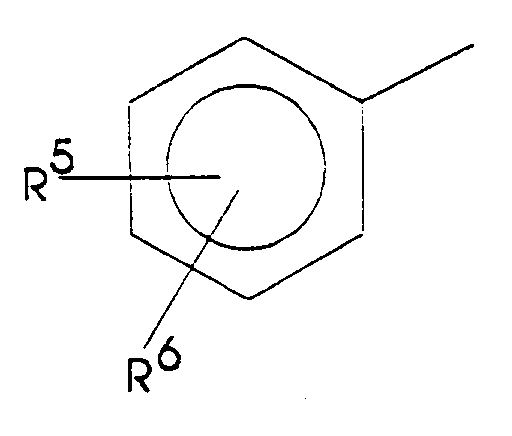
(worin R
5 und R
6 wie in Anspruch 1 definiert sind) ist.
30. Verfahren gemäß Anspruch 29, dadurch gekennzeichnet, daß R5 ein Wasserstoffatom und R6 eine lineare oder verzweigte Alkoxygruppe mit 1 bis 19 Kohlenstoffatomen ist.
31. Verfahren gemäß Anspruch 30, dadurch gekennzeichnet, daß die Verbindung 8-(p-lsohexyloxycinnamoyl)amino-2-(5-tetrazolyl)-1
,4-benzodioxan oder dessen Natriumsalz ist.
32. Verfahren gemäß Anspruch 29, dadurch gekennzeichnet, daß R5 ein Wasserstoffatom und R6 eine lineare oder verzweigte Alkoxygruppe mit 1 bis 18 Kohlenstoffatomen, die mit
Halogenatom(en) substituiert ist, ist.
33. Verfahren gemäß Anspruch 32, dadurch gekennzeichnet, daß die Verbindung 8-[p-(4-Chlorobutoxy)cinnamoyl]amino-2-(5-tetrazolyl)-1,4-benzodioxan
oder 8-[p-(5-Chloropentyloxy))cinnamoyl]amino-2-(5-tetrazolyl)-1,4-benzodioxan oder
ein Natriumsalz davon ist.
34. Verfahren gemäß Anspruch 29, dadurch gekennzeichnet, daß R5 ein Wasserstoffatom ist und R6 eine lineare oder verzweigte Alkyloxyalkylgruppe mit 2 bis 19 Kohlenstoffatomen ist.
35. Verfahren gemäß Anspruch 34, dadurch gekennzeichnet, daß die Verbindung 8-(p-Isopentyloxymethylcinnamoyl)amino-2-(5-tetrazolyl)-1,4-benzodioxan
oder dessen Natriumsalz ist.
36. Verfahren gemäß Anspruch 29, dadurch gekennzeichnet, daß R5 ein Wasserstoffatom und R6 eine Phenyl-, Phenylalkyl- (worin die Alkyleinheit eine Gruppe mit 1 bis 8 Kohlenstoffatomen
ist), Phenylalkyloxy- (worin die Alkyleinheit eine Gruppe mit 1 bis 8 Kohlenstoffatomen
ist) oder eine Phenylalkenyloxygruppe ist (worin die Alkenyleinheit eine Gruppe mit
2 bis 8 Kohlenstoffatomen ist), die unsubstituiert oder substituiert mit einer oder
mehreren linearen oder verzweigten Alkylgruppen mit 1 bis 8 Kohlenstoffatomen, Hydroxygruppen,
Halogenatomen und/oder Nitrogruppen sind.
37. Verfahren gemäß Anspruch 36, dadurch gekennzeichnet, daß die Verbindung 8-[p-(2-Phenylethoxy)cinnamoyl]amino-2-(5-tetrazolyl)-1
,4-benzodioxan oder dessen Natriumsalz ist.
38. Verfahren gemäß Anspruch 29, dadurch gekennzeichnet, daß R5 ein Wasserstoffatom und R6 eine lineare oder verzweigte Alkoxygruppe mit 1 bis 18 Kohlenstoffatomen ist, die
mit einem oder mehreren Thiophenringen substituiert ist.
39. Verfahren gemäß Anspruch 38, dadurch gekennzeichnet, daß die Verbindung 8-[p-[2-(2-Thienyl)ethoxy]cinnamoyl]amino-2-(5-tetrazolyl)-1,4-benzodioxan
oder dessen Natriumsalz ist.
40. Verfahren gemäß Anspruch 3 oder 5, dadurch gekennzeichnet, daß das Symbol A eine
Einfachbindung oder Vinylengruppe ist und das Symbol T ein Schwefelatom ist.
41. Verfahren gemäß Anspruch 40, dadurch gekennzeichnet, daß die Verbindung 8-(p-Heptyloxybenzothioyl)amino-2-(5-tetrazolyl)-1
,4-benzodioxan oder dessen Natriumsalz ist.
42. Verfahren gemäß Anspruch 4, dadurch gekennzeichnet, daß das Symbol B ein 4-Oxo-2,3-dihydro-4H-1-pyran-Ring
ist (d.h. die Formel:
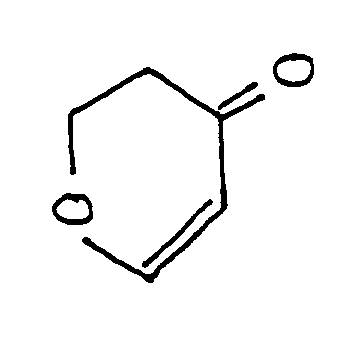
hat).
43. Verfahren gemäß Anspruch 42, dadurch gekennzeichnet, daß das Symbol A eine Einfachbindung
ist und das Symbol T ein Sauerstoffatom ist.
44. Verfahren gemäß Anspruch 43, dadurch gekennzeichnet, daß R
1 eine Gruppe der allgemeinen Formel:
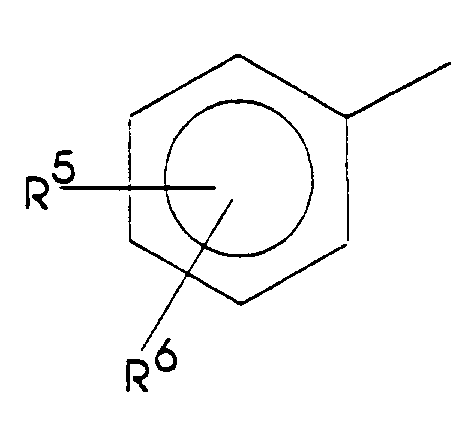
ist (worin R
5 und R
6 wie in Anspruch 1 definiert sind).
45. Verfahren gemäß Anspruch 44, dadurch gekennzeichnet, daß R5 ein Wasserstoffatom und R6 ein Wasserstoffatom oder eine gerade oder verzweigte Alkylgruppe mit 1 bis 20 Kohlenstoffatomen
ist.
46. Verfahren gemäß Anspruch 45, dadurch gekennzeichnet, daß die Verbindung 8-(p-Heptylbenzoyl)amino-2-(5-tetrazolyl)-4-oxo-4H-1-benzopyran,
8-(p-Octylbenzoyl)amino-2-(5-tetrazolyl)-4-oxo-4H-1-benzopyran, oder 8-(p-Nonylbenzoyl)amino-2-(5-tetrazolyl)-4-oxo-4H-1-benzopyran
oder ein Natriumsalz davon ist.
47. Verfahren gemäß Anspruch 44, dadurch gekennzeichnet, daß R5 ein Wasserstoffatom und R6 eine lineare oder verzweigte Alkoxygruppe mit 1 bis 19 Kohlenstoffatomen ist.
48. Verfahren gemäß Anspruch 47, dadurch gekennzeichnet, daß die Verbindung 8-(p-Butoxybenzoyl)amino-2-(5-tetrazolyl)-4-oxo-4H-1-benzopyran,
8-(p-Hexyloxybenzoyl)amino-2-(5-tetrazolyl)-4-oxo-4H-1-benzopyran, 8-(p-Heptyloxybenzoyl)amino-2-(5-tetrazolyl)-4-oxo-4H-1-benzopyran,
8-(p-Nonyloxybenzoyl)amino-2-(5-tetrazolyl)-4-oxo-4H-1-benzopyran, 8-(p-Octyloxybenzoyl)amino-2-(5-tetrazolyl)-4-oxo-4H-1-benzopyran,
8-(p-Heptyloxybenzoyl)amino-2-(5-tetrazolyl)-6-fluoro-4-oxo-4H-1-benzopyran, 8-(p-Octyloxybenzoyl)amino-2-(5-tetrazolyl)-6-methyl-4-oxo-4H-1-benzopyran
oder 8-(p-Heptyloxybenzoyl)amino-2-(5-tetrazolyl)-6-methyl-4-oxo-4H-1-benzopyran,
oder ein Natriumsalz davon ist.
49. Verfahren gemäß Anspruch 44, dadurch gekennzeichnet, daß R5 ein Wasserstoffatom ist und R6 eine lineare oder verzweigte Alkenyloxygruppe mit 3 bis 19 Kohlenstoffatomen ist.
50. Verfahren gemäß Anspruch 49, dadurch gekennzeichnet, daß die Verbindung 8-[p-(2E,7-Octadienyloxy)benzoyl]amino-2-(5-tetrazolyl)-4-oxo-4H-1
-benzopyran, 8-(p-Geranyloxybenzoyl)amino-2-(5-tetrazolyl)-4-oxo-4H-1-benzopyran,
8-[p-(2E-Octenyloxy)benzoyl]amino-2-(5-tetrazolyl)-4-oxo-4H-1-benzopyran, 8-[p-(7-Octenyloxy)benzoyl]amino-2-(5-tetrazolyl)-4-oxo-4H-1-benzopyran,
8-[p-(2E-Heptenyloxy)benzoyl]amino-2-(5-tetrazolyl)-4-oxo-4H-1 -benzopyran, 8-[p-(2E-Hexenyloxy)benzoyl]amino-2-(5-tetrazolyl)-4-oxo-4H-1
-benzopyran, 8-[p-(2E,7-Octadienyloxy)benzoyl]amino-2-(5-tetrazolyl)-6-fluoro-4-oxo-4H-1
-benzopyran, 8-[p-(2E-Octenyloxy)benzoyl]amino-2-(5-tetrazolyl)-6-methyl-4-oxo-4H-1-benzopyran,
8-[p-(7-Octenyloxy)benzoyl]amino-2-(5-tetrazolyl)-6-methyl-4-oxo-4H-1-benzopyran,
8-[p-(2E,7-Octadienyloxy)benzoyl]amino-2-(5-tetrazolyl)-6-methyl-4-oxo-4H-1-benzopyran
oder 8-[p-(2E,7-Octadienyloxy)benzoyl]amino-2-(5-tetrazolyl)-6-chloro-4-oxo-4H-1 -benzopyran
oder ein Natriumsalz davon ist.
51. Verfahren gemäß Anspruch 44, dadurch gekennzeichnet, daß R5 ein Wasserstoffatom und R6 eine lineare oder verzweigte Alkinyloxygruppe mit 3 bis 19 Kohlenstoffatomen ist.
52. Verfahren gemäß Anspruch 51, dadurch gekennzeichnet, daß die Verbindung 8-[p-(2-Octinyloxy)benzoyl]amino-2-(5-tetrazolyl)-4-oxo-4H-1-benzopyran
oder dessen Natriumsalz ist.
53. Verfahren gemäß Anspruch 44, dadurch gekennzeichnet, daß R5 ein Wasserstoffatom ist und R6 eine lineare oder verzweigte Alkoxygruppe mit 1 bis 18 Kohlenstoffatomen ist, die
mit einem oder mehreren Halogenatomen substituiert ist.
54. Verfahren gemäß Anspruch 53, dadurch gekennzeichnet, daß die Verbindung 8-[p-(5-Chloropentyloxy)benzoyl]amino-2-(5-tetrazolyl)-4-oxo-4H-1-benzopyran,
8-[p-(6-Chlorohexyloxy)benzoyl]amino-2-(5-tetrazolyl)-4-oxo-4H-1-benzopyran, 8-[p-(6-Chlorohexyloxy)benzoyl]amino-2-(5-tetrazolyl)-4-oxo-4H-1-benzopyran,
8-[p-(7-Chloroheptyloxy)benzoyl]amino-2-(5-tetrazolyl)-4-oxo-4H-1-benzopyran, 8-[p-(8-Chlorooctyloxy)benzoyl]amino-2-(5-tetrazolyl)-6-methyl-4-oxo-4H-1-benzopyran,
8-[p-(7-Chloroheptyloxy)benzoyl]amino-2-(5-tetrazolyl)-6-methyl-4-oxo-4H-1-benzopyran
oder 8-[p-(8-Chlorooctyloxy)benzoyl]amino-2-(5-tetrazolyl)-4-oxo-4H-1-benzopyran,
oder ein Natriumsalz davon ist.
55. Verfahren gemäß Anspruch 44, worin R5 ein Wasserstoffatom ist und R6 Phenyl, Phenylalkyl (worin die Alkyleinheit eine Gruppe mit 1 bis 8 Kohlenstoffatomen
ist), Phenylalkyloxy (worin die Alkyleinheit eine Gruppe mit 1 bis 8 Kohlenstoffatomen
ist), Phenylalkenyloxy (worin die Alkenyleinheit eine Gruppe von 2 bis 8 Kohlenstoffatomen
ist), Naphthyl, Naphthylalkyl (worin die Alkyleinheit eine Gruppe mit 1 bis 8 Kohlenstoffatomen
ist), Naphthylalkyloxy (worin die Alkyleinheit eine Gruppe mit 1 bis 8 Kohlenstoffatomen
ist) oder eine Naphthylalkenyloxygruppe (worin die Alkenyleinheit eine Gruppe mit
2 bis 8 Kohlenstoffatomen ist) ist, die unsubstituiert oder substituiert mit einer
oder mehreren linearen oder verzweigten Alkylgruppen mit 1 bis 8 Kohlenstoffatomen,
Hydroxygruppen, Halogenatomen und/oder Nitrogruppen sind.
56. Verfahren gemäß Anspruch 55, dadurch gekennzeichnet, daß die Verbindung 8-[p-(3-Phenylpropoxy)benzoyl]amino-2-(5-tetrazolyl)-4-oxo-4H-1-benzopyran,
8-[p-(3-Phenyl-2E-propenyloxy)benzoyl]amino-2-(5-tetrazolyl)-4-oxo-4H-1 -benzopyran,
8-[p-(4-Phenylbutoxy)benzoyl]amino-2-(5-tetrazolyl)-4-oxo-4H-1-benzopyran oder 8-[p-(4-Phenylbutoxy)benzoyl]amino-2-(5-tetrazolyl)-6-methyl-4-oxo-4H-1-benzopyran
oder eines ihrer Natriumsalze ist.
57. Verfahren gemäß Anspruch 44, dadurch gekennzeichnet, daß R5 ein Wasserstoffatom und R6 eine lineare oder verzweigte Alkoxygruppe mit 1 bis 18 Kohlenstoffatomen ist, die
mit einem oder mehreren Thiophenringen substituiert ist.
58. Verfahren gemäß Anspruch 57, dadurch gekennzeichnet, daß die Verbindung 8-[p-[4-(2-Thienyl)butoxy]benzoyl]amino-2-(5-tetrazolyl)-4-oxo-4H-1-benzopyran
oder 8-[p-[4-(2-Thienyl)butoxy]benzoyl]amino-2-(5-tetrazolyl)-6-methyl-4-oxo-4H-1
-benzopyran oder eines ihrer Natriumsalze ist.
59. Verfahren gemäß Anspruch 42, dadurch gekennzeichnet, daß das Symbol A eine Vinylengruppe
ist, die unsubstituiert oder substituiert durch eine oder mehrere lineare oder verzweigte
Alkylgruppen mit 1 bis 6 Kohlenstoffatomen oder Phenylgruppen ist, und das Symbol
T ein Sauerstoffatom ist.
60. Verfahren gemäß Anspruch 59, dadurch gekennzeichnet, daß R
1 eine Gruppe der allgemeinen Formel:
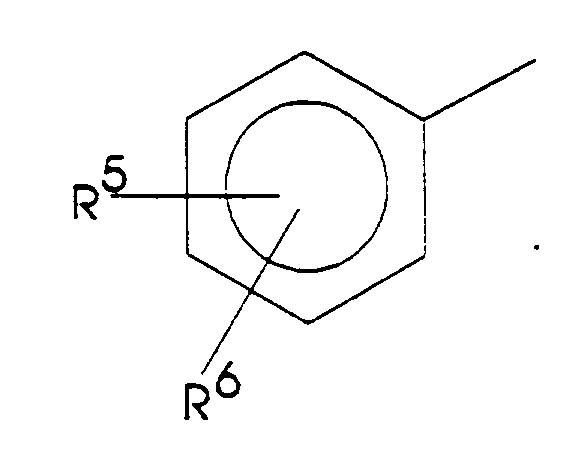
(worin R
5 und R
6 wie in Anspruch 1 definiert sind) ist.
61. Verfahren gemäß Anspruch 60, dadurch gekennzeichnet, daß R5 ein Wasserstoffatom und R6 eine lineare oder verzweigte Alkoxygruppe mit 1 bis 19 Kohlenstoffatomen ist.
62. Verfahren gemäß Anspruch 61, dadurch gekennzeichnet, daß die Verbindung 8-(p-Isohexyloxycinnamoyl)amino-2-(5-tetrazolyl)-4-oxo-4H-1-benzopyran
oder dessen Natriumsalz ist.
63. Verfahren gemäß Anspruch 60, dadurch gekennzeichnet, daß R5 ein Wasserstoffatom und R6 eine lineare oder verzweigte Alkoxygruppe mit 1 bis 18 Kohlenstoffatomen ist, die
mit einem oder mehreren Halogenatomen substituiert ist.
64. Verfahren gemäß Anspruch 63, dadurch gekennzeichnet, daß die Verbindung 8-[p-(5-Chloropentyloxy)cinnamoyl]amino-2-(5-tetrazolyl)-4-oxo-4H-1-benzopyran
oder 8-[p-(6-Chlorohexyloxy)cinnamoyl]amino-2-(5-tetrazolyl)-4-oxo-4H-1 -benzopyran
oder eines ihrer Natriumsalze ist.
65. Verfahren gemäß Anspruch 4, dadurch gekennzeichnet, daß das Symbol B ein Pyridinring
ist, der wahlweise mit einer oder mehreren Hydroxygruppen substituiert ist (d.h. Die
Formel:
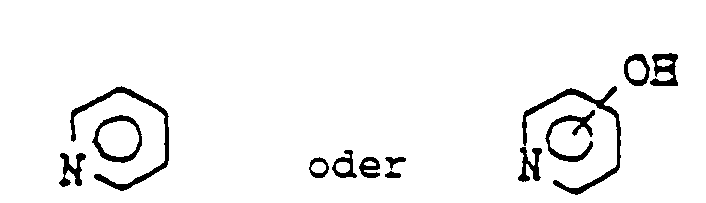
hat).
66. Verfahren gemäß Anspruch 65, dadurch gekennzeichnet, daß das Symbol A eine Einfachbindung
oder eine Vinylengruppe ist, die unsubstituiert oder substituiert durch eine oder
mehrere lineare oder verzweigte Alkylgruppen mit 1 bis 6 Kohlenstoffatomen oder Phenylgruppen
ist, und das Symbol T ein Sauerstoffatom ist.
67. Verfahren gemäß Anspruch 66, dadurch gekennzeichnet, daß R
1 eine Gruppe der allgemeinen Formel:
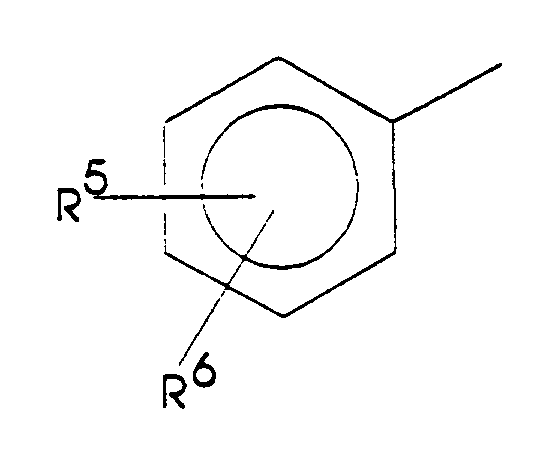
(worin R
5 und R
6 wie in Anspruch 1 definiert sind) ist.
68. Verfahren gemäß Anspruch 67, dadurch gekennzeichnet, daß die Verbindung 8-[p-(4-Phenylbutoxy)benzoyl]amino-2-(5-tetrazolyl)chinolin
oder 8-[p-(4-Phenylbutoxy)benzoyl]amino-4-hydroxy-2-(5-tetrazolyl)chinolin oder eines
ihrer Natriumsalze ist.
69. Verfahren gemäß Anspruch 4, dadurch gekennzeichnet, daß das Symbol B ein 4,5-Dihydrodioxol-Ring
ist, (d.h. die Formel:
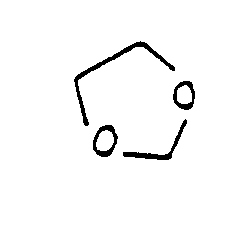
hat).
70. Verfahren gemäß Anspruch 69, dadurch gekennzeichnet, daß das Symbol A eine Einfachbindung
oder Vinylengruppe ist, die unsubstituiert oder substituiert durch eine oder mehrere
lineare oder verzweigte Alkylgruppen mit 1 bis 6 Kohlenstoffatomen oder Phenylgruppen
ist, und das Symbol T ein Sauerstoffatom ist.
71. Verfahren gemäß Anspruch 70, dadurch gekennzeichnet, daß R
1 eine Gruppe der allgemeinen Formel:
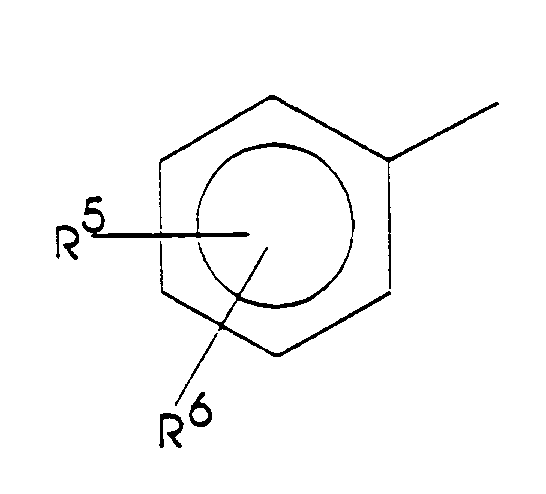
ist (worin R
5 und R
6 wie in Anspruch 1 definiert sind).
72. Verfahren gemäß Anspruch 71, dadurch gekennzeichnet, daß die Verbindung 4-(p-Heptyloxybenzoyl)amino-2-(5-tetrazolyl)-1
,3-benzodioxol oder dessen Natriumsalz ist.
73. Verfahren gemäß Anspruch 4, dadurch gekennzeichnet, daß das Symbol B ein Benzolring
ist (d.h. die Formel:
hat).
74. Verfahren gemäß Anspruch 73, dadurch gekennzeichnet, daß das Symbol A eine Einfachbindung
oder Vinylengruppe ist, die unsubstituiert oder substituiert mit einer oder mehreren
linearen oder verzweigten Alkylgruppen mit 1 bis 6 Kohlenstoffatomen oder Phenylgruppen
ist, und das Symbol T ein Sauerstoffatom ist.
75. Verfahren gemäß Anspruch 74, dadurch gekennzeichnet, daß R
1 eine Gruppe der allgemeinen Formel:
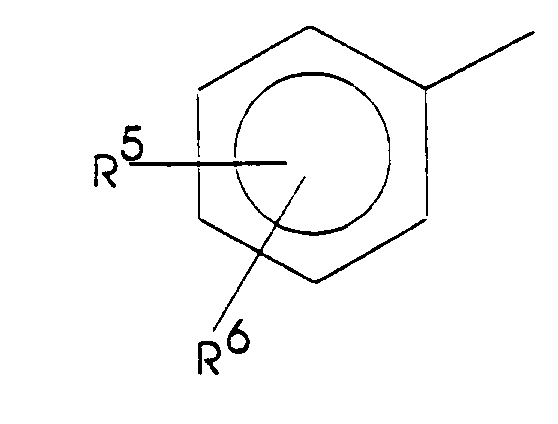
(worin R
5 und R
6 wie in Anspruch 1 definiert sind) ist.
76. Verfahren gemäß Anspruch 75 dadurch gekennzeichnet, daß die Verbindung 8-[p-(4-Phenylbutoxy)benzoyl]amino-2-(5-tetrazolyl)naphthalinoder
8-[p-(7-Octenyloxy)benzoyl]amino-2-(5-tetrazolyl)methoxynaphthalin oder eines ihrer
Natriumsalze ist.
77. Verfahren gemäß Anspruch 4, dadurch gekennzeichnet, daß das Symbol B ein 2,3,6,7-Tetrahydro-5H-1,4-dioxepin-Ring
ist (d.h. die Formel:
hat).
78. Verfahren gemäß Anspruch 77, dadurch gekennzeichnet, daß das Symbol A eine Einfachbindung
oder Vinylengruppe ist, die unsubstituiert oder substituiert mit einer oder mehreren
linearen oder verzweigten Alkylgruppen mit 1 bis 6 Kohlenstoffatomen oder Phenylgruppen
ist, und das Symbol T ein Sauerstoffatom ist.
79. Verfahren gemäß Anspruch 78, dadurch gekennzeichnet, daß R
1 eine Gruppe der allgemeinen Formel:
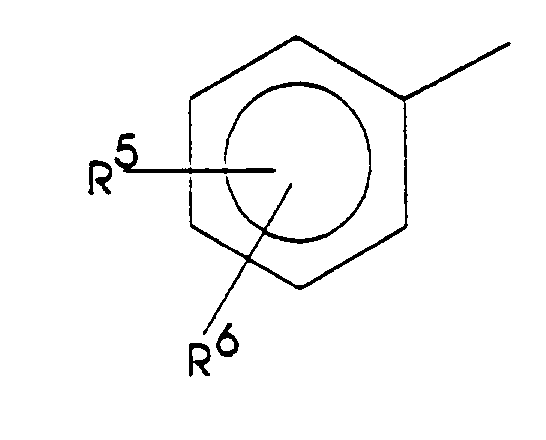
(worin R
5 und R
6 wie in Anspruch 1 definiert sind) ist.
80. Verfahren gemäß Anspruch 79, dadurch gekennzeichnet, daß die Verbindung 9-[p-(2E,7-Octadieny-
loxy)benzoyl]amino-2-(5-tetrazolyl)-3,4-dihydro-2H-1 ,5-benzodioxepin oder ein Natriumsalz
davon ist.
81. Verfahren gemäß Anspruch 4, dadurch gekennzeichnet, daß das Symbol B ein Morpholinring
ist. (d. h. die Formel:
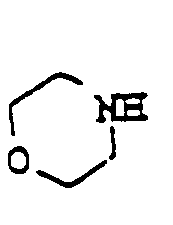
hat).
82. Verfahren gemäß Anspruch 81, dadurch gekennzeichnet, daß das Symbol A eine Einfachbindung
oder Vinylengruppe ist, die unsubstituiert oder substituiert mit einer oder mehreren
linearen oder verzweigten Alkylgruppen mit 1 bis 6 Kohlenstoffatomen oder Phenylgruppen
ist, und das Symbol T ein Sauerstoffatom ist.
83. Verfahren gemäß Anspruch 82, dadurch gekennzeichnet, daß R
1 eine Gruppe der allgemeinen Formel:
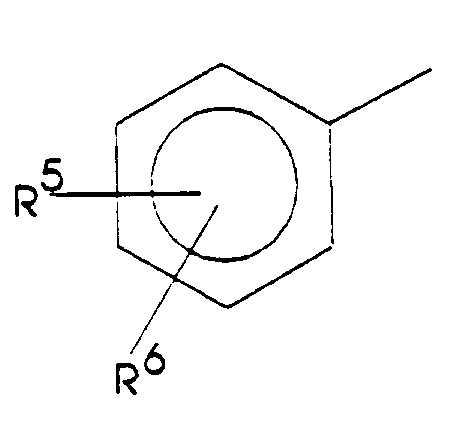
(worin R
5 und R
6 wie in Anspruch 1 definiert sind) ist.
84. Verfahren gemäß Anspruch 83, dadurch gekennzeichnet, daß die Verbindung 8-[p-(4-Phenylbutoxy)-benzoyl]amino-2-(5-tetrazolyl)-2,3-dihydro-1
,4-benzoxazin oder dessen Natriumsalz ist.
85. Verfahren gemäß Anspruch 4, dadurch gekennzeichnet, daß das Symbol B ein 3,4,5,6-Tetrahydro-2H-pyran-Ring
ist (d.h. die Formel:
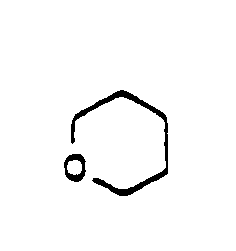
hat).
86. Verfahren gemäß Anspruch 85, dadurch gekennzeichnet, daß das Symbol A eine Einfachbindung
oder Vinylengruppe ist, die unsubstituiert oder substituiert mit einer oder mehreren
linearen oder verzweigten Alkylgruppen mit 1 bis 6 Kohlenstoffatomen oder Phenylgruppen
ist, und das Symbol T ein Sauerstoffatom ist.
87. Verfahren gemäß Anspruch 86, dadurch gekennzeichnet, daß R
1 eine Gruppe der allgemeinen Formel:
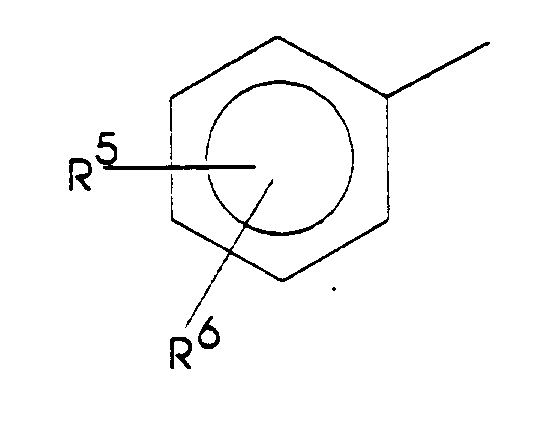
(worin R
5 und R
6 wie in Anspruch 1 definiert sind) ist.
88. Verfahren gemäß Anspruch 87, dadurch gekennzeichnet, daß die Verbindung 8-[p-(4-Phenylbutoxy)-benzoyl]amino-2-(5-tetrazolyl)-3,4-dihydro-2H-1-benzopyran
oder dessen Natriumsalz ist.
89. Pharmazeutische Zusammensetzung oder Verfahren zu ihrer Herstellung, gekennzeichnet
dadurch, daß als aktiver Inhaltsstoff mindestens eine Verbindung der allgemeinen Formel
(I) gemäß einem der Ansprüche 1 bis 88 oder eines ihrer nichttoxischen Salze zusammen
mit einem pharmazeutischen Träger und/oder Überzug vorgesehen werden.
90. Verbindung der allgemeinen Formel (I) gemäß Anspruch 1 oder ein nichttoxisches
Salz davon, zur Verwendung als Medikament zur Prävention und/oder Behandlung von trachealen,
bronchialen oder Lungenkrankheiten wie Asthma oder einer allergischen Krankheit.
91. Verwendung einer Verbindung der allgemeinen Formel (I) gemäß Anspruch 1 oder eines
nichttoxischen Salzes davon zur Herstellung eines Medikaments zur Prävention und/oder
Behandlung von trachealen, bronchialen oder Lungenkrankheiten wie Asthma oder allergischen
Krankheiten.
Revendications pour l'(les) Etat(s) contractant(s) suivant(s) : BE, DE, FR, GB, IT,
LU, NL, CH, LI, SE SE
1. Dérivé aminophénylique condensé, de formule générale :
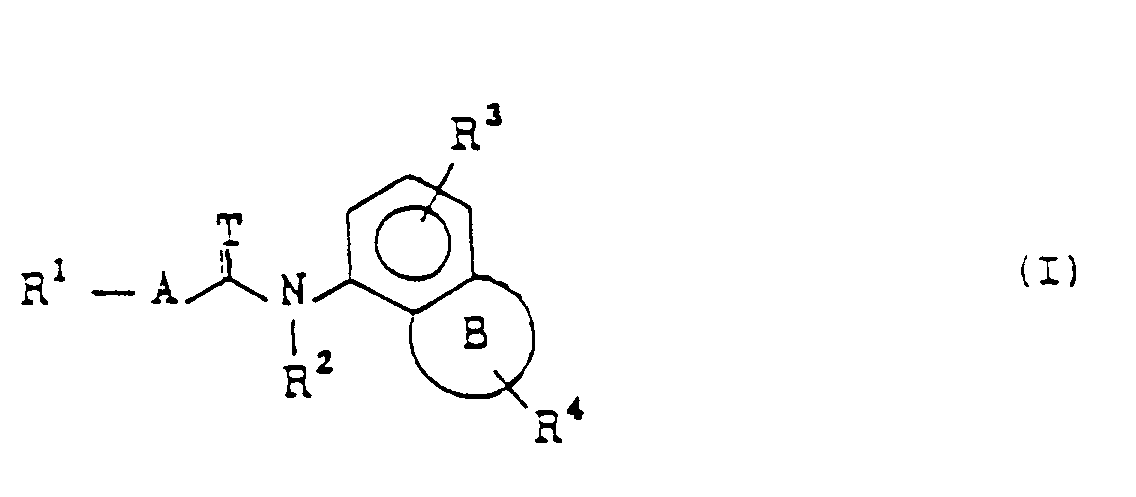
[dans laquelle le symbole A représente une liaison simple ou un groupe méthylène,
éthylène , triméthylène, tétraméthylène, vinylène, propénylène, buténylène, butadiénylène
ou éthylène, éventuellement substitué par un, deux ou trois groupe(s) alkyle(s) linéaires
ou ramifiés ayant chacun 1 à 10 atomes de carbone et/ou groupe(s) phényle(s),
le symbole B représente un noyau carbocyclique ayant 4 à 8 chaînons et dans lequel
un, deux ou trois des atome(s) de carbone peuvent être remplacés par un ou des atome(s)
d'oxygène, d'azote et/ou de soufre ou dans lequel le noyau peut éventuellement porter
comme substituant un ou des groupe(s) oxo, thioxo et/ou hydroxy,
le symbole T représente un atome d'oxygène ou un atome de soufre,
R1 représente un groupe de formule :
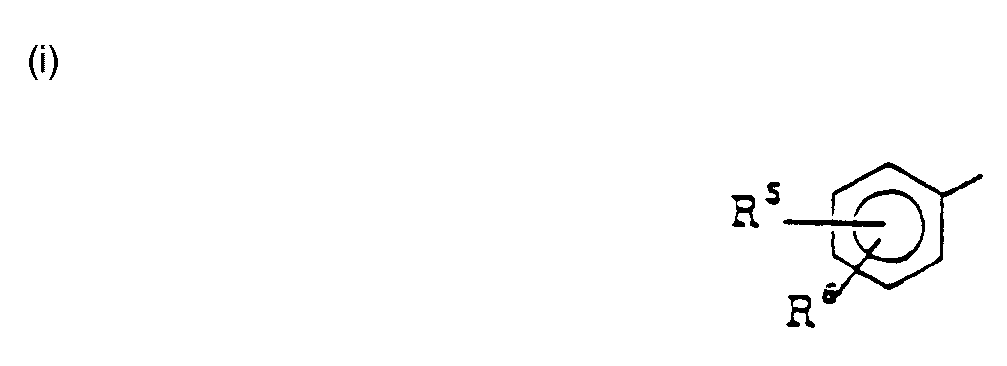
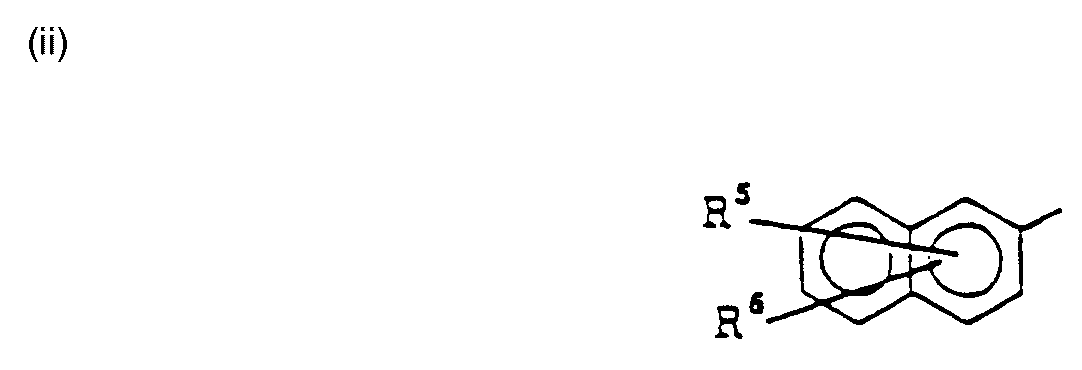
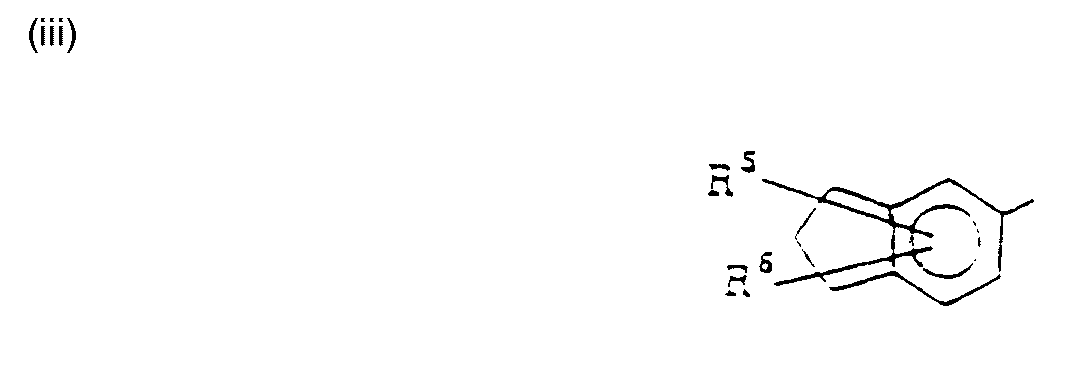
où (iv) un groupe alkyle, alcényle ou alcynyle linéaire ou ramifié ayant 1 à 20 atomes
de carbone, (formules dans lesquelles R5 et R6 représentent chacun, indépendamment, un atome d'hydrogène ou un atome d'halogène
ou un groupe alkyle, alcényle ou alcynyle linéaire ou ramifié ayant 1 à 20 atomes
de carbone, dans lequel un, deux, trois, quatre et cinq des atomes de carbone peut
ou peuvent être remplacés par un ou des atome(s) d'oxygène, par un ou des atome(s)
de soufre, par un ou des atome(s) d'halogène, par un ou des atome(s) d'azote, par
un ou des noyau(x) benzenique(s), par un ou des noyau(x) de thiophène, un ou des noyau(x)
naphtalène, un ou des noyau(x) carbocyclique comportant 4 à 7 atomes de carbone, un
ou des groupe(s) carbonyle(s), un ou des groupe(s) carbonyloxy, un ou des groupe(s)
hydroxy, un ou des groupe(s) carboxy, un ou des groupe(s) azido et/ou un ou des groupe(s)
nitro ;
R2 représente un atome d'hydrogène ou un groupe alkyle linéaire ou ramifié ayant 1 à
6 atomes de carbone,
R3 représente un atome d'hydrogène, un atome d'halogène, un groupe hydroxyle, un groupe
nitro, un groupe de formule générale -COOR7 (dans laquelle R7 représente un atome d'hydrogène ou un groupe alkyle linéaire ou ramifié ayant 1 à
6 atomes de carbone) ou un groupe alkyle, alcoxy ou alkylthio linéaire ou ramifié
ayant 1 à 6 atomes de carbone, et
R4 représente un groupe de formule générale :
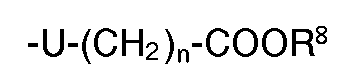
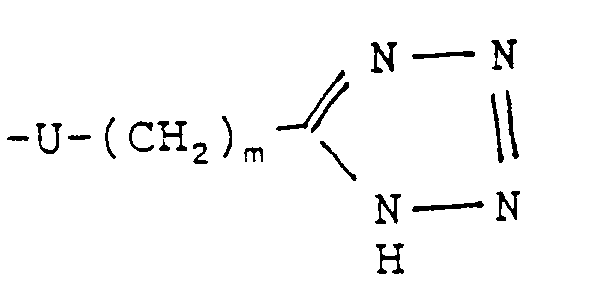
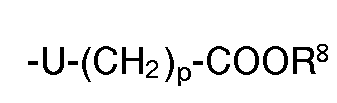
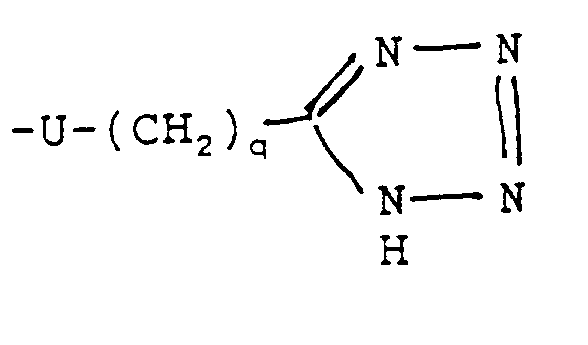
(dans lesquelles le symbole U représente un atome d'oxygène ou un atome de soufre;
R8 représente un atome d'hydrogène ou un groupe alkyle linéaire ou ramifié ayant 1 à
6 atomes de carbone, n et m représentent chacun un nombre entier valant 1 à 10, respectivement,
et p et q valent zéro ou représentent chacun, respectivement, un nombre entier valant
1 à 10] ou un sel non toxique d'un tel dérivé.
2. Composé selon la revendication 1, dans lequel le symbole B représente un noyau
de formule :



(les noyaux peuvent éventuellement être substitués par un ou des groupe(s) hydroxy).
3. Composé selon la revendication 2, dans lequel le symbole B représente un noyau
2,3,5,6-tétrahydro-1,4-dioxanne (c'est-à-dire un noyau de formule :
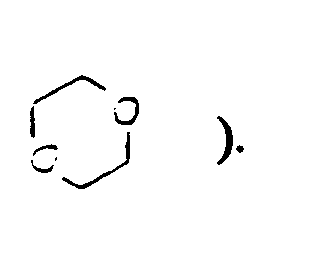
4. Composé selon la revendication 3, dans lequel le symbole A représente une liaison
simple, et le symbole T représente un atome d'oxygène.
5. Composé selon la revendication 4, dans lequel R
1 représente un groupe de formule générale :
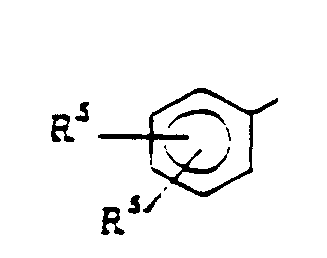
(dans laquelle R
5 et R
6 sont tels que défini à la revendication 1).
6. Composé selon la revendication 5, dans lequel R5 représente un atome d'hydrogène et R6 représente un groupe alcoxy linéaire ou ramifié ayant 1 à 19 atomes de carbone.
7. Le 8-(p-Heptyloxybenzoyl)-amino-2-(5-tétrazolyl)-1 ,4-benzodioxanne, ou Le 8-(p-isooctyloxybenzoyl)-amino-2-(5-tétrazolyl)-1
,4-benzodioxanne ; ou un sel de sodium de ces composés.
8. Composé selon la revendication 5, dans lequel R5 représente un atome d'hydrogène et R6 représente un groupe alcényloxy linéaire ou ramifié ayant 3 à 19 atomes de carbone.
9. Le 8-[p-(2E-octényloxy)benzoyl]amino-2-(5-tétrazolyl)-1 ,4-benzodioxanne, le 8-[p-(2Z-octényloxy)benzoyl]amino-2-(5-tétrazolyl)-1,4-benzodioxanne,
le 8-[p-(2E-nonényloxy)benzoyl]amino-2-(5-tétrazolyl)-1,4-benzodioxanne, le 8-[p-(2E-hexényloxy)benzoyl]amino-2-(5-tétrazolyl)-1,4-benzodioxanne,
le 8-[p-(3E-heptényloxy)benzoyl]amino-2-(5-tétrazolyl)-1,4-benzodioxanne, l'acide
8-[p-(2E-octényloxy)benzoyl]amino-1,4-benzodioxanne-2-carboxylique ou son ester méthylique,
le 8-[p-(2E-heptényloxy)benzoyl]amino-2-(5-tétrazolyl)-1,4-benzodioxanne, le 8-[p-géranyloxy
benzoyl)amino-2-(5-tétrazolyl)-1,4-benzodioxanne, le 8-[p-(2E-octadiényloxy)benzoyl]amino-2-(5-tétrazolyl)-1,4-benzodioxanne,
le 8-[p-(7-octényloxy)benzoyl]amino-2-(5-tétrazolyl)-1,4-benzodioxanne, ou le 8-[p-(2E,
4E-octadiényloxy)benzoyl]amino-2-(5-tétrazolyl)-1 ,4-benzodioxanne, ou un sel de sodium
d'un de ces composés.
10. Composé selon la revendication 5, dans lequel R5 représente un atome d'hydrogène et R6 représente un groupe alcényloxy linéaire ou ramifié ayant 3 à 19 atomes de carbone.
11. Le 8-[p-(2-octynyloxy)benzoyl]amino-2-(5-tétrazolyl)-1 ,4-benzodioxanne, le 8-[p-(2-isooctynyloxy)benzoyl]amino-2-(5-tétrazolyl)-1,4-benzodioxanne,
ou un sel de sodium d'un de ces composés.
12. Composé selon la revendication 5, dans lequel R5 représente un atome d'hydrogène et R6 représente un groupe alkylthio linéaire ou ramifié ayant 1 à 19 atomes de carbone.
13. Le 8-(p-heptylthiobenzoyl)amino-2-(5-tétrazolyl)-1 ,4-benzodioxanne ou son sel
de sodium.
14. Composé selon la revendication 5, dans lequel R5 représente un atome d'hydrogène et R6 représente un groupe alcoxy linéaire ou ramifié ayant 1 à 18 atomes de carbone et
qui est substitué par un ou des atome(s) d'halogène.
15. Le 8-[p-(6-chlorohexyloxy)benzoyl]amino-2-(5-tétrazolyl)-1,4-benzodioxanne, le
8-[p-(5-chloropentyloxy)benzoyl]amino-2-(5-tétrazolyl)-1,4-benzodioxanne, le 8-[p-(4-chlorobutoxy)benzoyl]amino-2-(5-tétrazolyl)-1,4-benzodioxanne,
le 8-[p-(7-chloroheptyloxy)benzoyl]amino-2-(5-tétrazolyl)-1,4-benzodioxanne, le 8-[p-(8-chlorooctyloxy)benzoyl]amino-2-(5-tétrazolyl)-1,4-benzodioxanne,
ou le 8-[p-(9-chlorononyloxy)benzoyl]amino-2-(5-tétrazolyl)-1,4-benzodioxanne, ou
un sel de sodium d'un de ces composés.
16. Composé selon la revendication 5, dans lequel R5 représente un atome d'hydrogène et R6 représente un groupe phényle, phénylalkyle (dans lequel le fragment alkyle est un
groupe ayant 1 à 8 atomes de carbone), phénylalkyloxy (dans lequel le fragment alkyle
est un groupe ayant 1 à 8 atomes de carbone), phénylalcényloxy (dans lequel le fragment
alcényle est un groupe ayant 2 à 8 atomes de carbone), un groupe naphtyle, naphtylalkyle
(dans lequel le fragment alkyle est un groupe ayant 1 à 8 atomes de carbone), naphtylalkyloxy
(dans lequel le fragment alkyle est un groupe ayant 1 à 8 atomes de carbone), ou un
groupe naphtylalcényloxy (dans lequel le fragment alcényle est un groupe ayant 2 à
8 atomes de carbone, qui n'est pas substitué ou qui est substitué par un groupe alkyle
linéaire ou ramifié ayant 1 à 8 atomes de carbone, par un ou des groupe(s) hydroxy,
par un ou des groupe(s) halogéno et/ou par un ou des groupe(s) nitro).
17. Le 8-[p-(p-propylphényl)méthoxybenzoyl]amino-2-(5-tétrazolyl)-1,4-benzodioxanne,
ou Le 8-[p-(4-phénylbutoxy)benzoyl]amino-2-(5-tétrazolyl)-1,4-benzodioxanne, ou un
sel de sodium d'un de ces composés.
18. Composé selon la revendication 5, dans lequel R5 représente un atome d'hydrogène et R6 représente un groupe alcoxy, alcényloxy ou alcoxyalcoxy linéaire ou ramifié ayant
1 à 18 atomes de carbone, dans lequel un ou des atome(s) de carbone est ou sont remplacé(s)
par un ou des groupe(s) carbonyle, par un ou des groupe(s) carbonyloxy ou par un ou
des groupe(s) hydroxy.
19. Le 8-[p-octanoylbenzoyl)amino-2-(5-tétrazolyl)-1 ,4-benzodioxanne, ou son sel
de sodium.
20. Composé selon la revendication 5, dans lequel R5 représente un atome d'hydrogène et R6 représente un groupe alcoxy linéaire ou ramifié ayant 1 à 17 atomes de carbone et
qui est substitué par un groupe phénoxy ou phénylthio.
21. Le 8-[p-(3-phénylpropoxy)benzoyl]amino-2-(5-tétrazolyl)-1 ,4-benzodioxanne, ou
Le 8-[p-(3-phénoxypropoxy)benzoyl]amino-2-(5-tétrazolyl)-1,4-benzodioxanne, ou un
sel de sodium d'un de ces composés.
22. Composé selon la revendication 5, dans lequel R5 représente un atome d'hydrogène et R6 représente un groupe alcoxy linéaire ou ramifié ayant 1 à 18 atomes de carbone et
qui est substitué par un ou des noyau(x) thiophène.
23. Le 8-[p-[4-(2-thiényl)butoxy]benzoyl]amino-2-(5-tétrazolyl)-1,4-benzodioxanne
ou son sel de sodium.
24. Composé selon la revendication 5, dans lequel R5 représente un atome d'hydrogène et R6 représente un groupe alcoxy, linéaire ou ramifié, ayant 1 à 18 atomes de carbone
et qui est substitué par un ou des groupe(s) azido, par un ou des groupe(s) nitro
ou par un ou des groupe(s) amino qui ne sont pas substitués ou qui sont substitués
par un ou des groupe(s) alkyle linéaires ou ramifiés ayant 1 à 6 atomes de carbone
(ce qui comprend un groupe dialkylamino).
25. Le 8-[p-(5-azidopentyloxy)benzoyl]amino-2-(5-tétrazolyl)-1 ,4-benzodioxanne ou
son sel de sodium.
26. Composé selon la revendication 3, dans lequel le symbole A représente un groupe
vinylène, non substitué ou substitué par un ou des groupe(s) alkyle linéaire(s) ou
ramifié(s) ayant 1 à 6 atomes de carbone ou par un ou des groupe(s) phényle, et le
symbole T représente un atome d'oxygène.
27. Composé selon la revendication 26, dans lequel R
1 représente un groupe de formule générale :
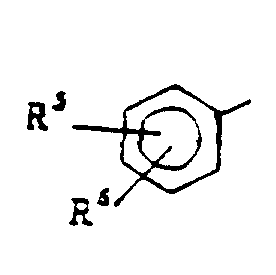
(dans laquelle R
5 et R
6 sont tels que défini à la revendication 1).
28. Composé selon la revendication 27, dans lequel R5 représente un atome d'hydrogène et R6 représente un groupe alcoxy linéaire ou ramifié ayant 1 à 19 atomes de carbone.
29. Le 8-(p-isohexyloxycinnamoyl)amino-2-(5-tétrazolyl)-1 ,4-benzodioxanne, ou son
sel de sodium.
30. Composé selon la revendication 27, dans lequel R5 représente un atome d'hydrogène et R6 représente un groupe alcoxy linéaire ou ramifié ayant 1 à 18 atomes de carbone et
qui est substitué par un ou des atome(s) d'halogène.
31. Le 8-[p-(4-chlorobutoxy)cinnamoyl]amino-2-(5-tétrazolyl)-1 ,4-benzodioxanne, ou
Le 8-[p-(5-chloropentoxy)cinnamoyl]amino-2-(5-tétrazolyl)-1,4-benzodioxanne ; ou un
sel de sodium d'un de ces composés.
32. Composé selon la revendication 27, dans lequel R5 représente un atome d'hydrogène et R6 représente un groupe alkyloxyalkyle linéaire ou ramifié ayant 2 à 19 atomes de carbone.
33. Le 8-(p-isopentyloxyméthylcinnamoyl)amino-2-(5-tétrazolyl)-1 ,4-benzodioxanne
ou son sel de sodium.
34. Composé selon la revendication 27, dans lequel R5 représente un atome d'hydrogène et R6 représente un groupe phényle, phénylalkyle (dans lequel le fragment alkyle est un
groupe ayant 1 à 8 atomes de carbone), phénylalkyloxy (dans lequel le fragment alkyle
est un groupe ayant 1 à 8 atomes de carbone) ou phénylalcényloxy (dans lequel le fragment
alcényle est un groupe ayant 2 à 8 atomes de carbone), qui n'est pas substitué ou
est substitué par un ou des groupe(s) alkyle linéaire(s) ou ramifié(s) ayant 1 à 8
atomes de carbone, par un ou des groupe(s) hydroxyle, par un ou des atome(s) d'halogène
et/ou par un ou des groupe(s) nitro.
35. Le 8-[p-(2-phényléthoxy)cinnamoyl]amino-2-(5-tétrazolyl)-1 ,4-benzodioxanne ou
son sel de sodium.
36. Composé selon la revendication 27, dans lequel R5 représente un atome d'hydrogène et R6 représente un groupe alcoxy, linéaire ou ramifié, ayant 1 à 18 atomes de carbone
et qui est substitué par un ou des noyau(x) thiophène.
37. Le 8-[p-[2-(2-thiényl)éthoxy]cinnamoyl]amino-2-(5-tétrazolyl)-1 ,4-benzodioxanne
ou son sel de sodium.
38. Composé selon la revendication 3, dans lequel le symbole A représente une liaison
simple ou un groupe vinylène, et le symbole T représente un atome de soufre.
39. Le 8-(p-heptyloxybenzothioyl)amino-2-(5-tétrazolyl)-1,4-benzodioxanne ou son sel
de sodium.
40. Composé selon la revendication 2, dans lequel le symbole B représente un noyau
4-oxo-2,3-dihydro-4H-1-pyranne (c'est-à-dire un noyau de formule :
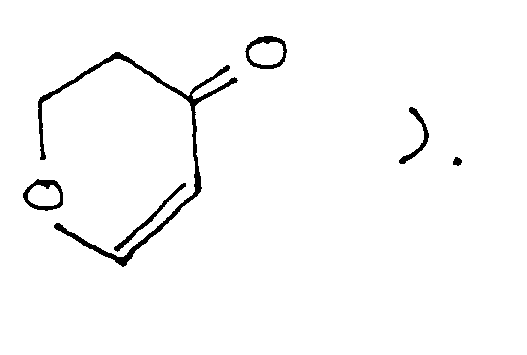
41. Composé selon la revendication 40, dans lequel le symbole A représente une liaison
simple et le symbole T représente un atome d'oxygène.
42. Composé selon la revendication 41, dans lequel R
1 est un groupe de formule générale :
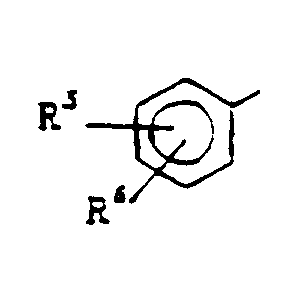
(dans laquelle R
5 et R
6 sont tels que défini à la revendication 1).
43. Composé selon la revendication 42, dans lequel R5 représente un atome d'hydrogène et R6 représente un atome d'hydrogène ou un groupe alkyle linéaire ou ramifié ayant 1 à
20 atomes de carbone.
44. Le 8-(p-heptylbenzoyl)amino-2-(5-tétrazolyl)-4-oxo-4H-1-benzopyranne, Le 8-(p-octylbenzoyl)amino-2-(5-tétrazolyl)-4-oxo-4H-1-benzopyranne,
ou Le 8-(p-nonylbenzoyl)amino-2-(5-tétrazolyl)-4-oxo-4H-1-benzopyranne, ou un sel
de sodium d'un de ces composés.
45. Composé selon la revendication 42, dans lequel R5 représente un atome d'hydrogène et R6 représente un groupe alcoxy linéaire ou ramifié ayant 1 à 19 atomes de carbone.
46. Le 8-(p-butoxybenzoyl)amino-2-(5-tétrazolyl)-4-oxo-4H-1-benzopyranne, Le 8-(p-hexyloxybenzoyl)amino-2-(5-tétrazolyl)-4-oxo-4H-1-benzopyranne,
Le 8-(p-heptyloxybenzoyl)amino-2-(5-tétrazolyl)-4-oxo-4H-1-benzopyranne, Le 8-(p-nonyloxybenzoyl)amino-2-(5-tétrazolyl)-4-oxo-4H-1-benzopyranne,
Le 8-(p-octyloxybenzoyl)amino-2-(5-tétrazolyl)-4-oxo-4H-1-benzopyranne, Le 8-(p-heptyloxybenzoyl)amino-2-(5-tétrazolyl)-6-fluoro-4-oxo-4H-1-benzopyranne,
Le 8-(p-octyloxybenzoyl)amino-2-(5-tétrazolyl)-6-méthyl-4-oxo-4H-1-benzopyranne, ou
Le 8-(p-heptyloxybenzoyl)amino-2-(5-tétrazolyl)-6-méthyl-4-oxo-4H-1-benzopyranne,
ou un sel de sodium d'un de ces composés.
47. Composé selon la revendication 42, dans lequel R5 représente un atome d'hydrogène et R6 représente un groupe alcényloxy linéaire ou ramifié ayant 3 à 19 atomes de carbone.
48. le 8-[p-(2E, 7-octadiény!oxy)benzoy!]amino-2-(5-tétrazo!y!)-4-oxo-4H-1-benzopyranne,
le 8-(p-géranyloxybenzoyl]amino-2-(5-tétrazolyl)-4-oxo-4H-1-benzopyranne, le 8-[p-(2E-octényloxy)benzoyl]amino-2-(5-tétrazolyl)-4-oxo-4H-1-benzopyranne,
le 8-[p-(7-octényloxy)benzoyl]amino-2-(5-tétrazolyl)-4-oxo-4H-1-benzopyranne, le 8-[p-(2E-heptényloxy)benzoyl]amino-2-(5-tétrazolyl)-4-oxo-4H-1-benzopyranne,
le 8-[p-(2E-hexényloxy)benzoyl]amino-2-(5-tétrazolyl)-4-oxo-4H-1-benzopyranne, le
8-[p-(2E, 7-octadiényloxy)benzoyl]amino-2(5-tétrazolyl)-6-fluoro-4-oxo-4H-1-benzopyranne,
le 8-[p-(2E-octényloxy)benzoyl]amino-2-(5-tétrazolyl)-6-méthyl-4-oxo-4H-1-benzopyranne,
le 8-[p-(7-octényloxy)benzoyl]amino-2-(5-tétrazolyl)-6-méthyl-4-oxo-4H-1-benzopyranne,
le 8-[p-(2E, 7-octadiényloxy)benzoyl]amino-2-(5-tétrazolyl)-6-méthyl-4-oxo-4H-1-benzopyranne,
ou le 8-[p-(2E, 7-octadiényloxy)benzoyl]amino-2-(5-tétrazolyl)-6-chloro-4-oxo-4H-1-benzopyranne,
ou un sel de sodium d'un de ces composés.
49. Composé selon la revendication 42, dans lequel R5 représente un atome d'hydrogène et R6 représente un groupe alcényloxy linéaire ou ramifié ayant 3 à 19 atomes de carbone.
50. le 8-[p-(2-octynyloxy)benzoy]amino-2-(5-tétrazolyl)-4-oxo-4H-1-benzopyranne ou
son sel de sodium.
51. Composé selon la revendication 42, dans lequel R5 représente un atome d'hydrogène et R6 représente un groupe alcoxy linéaire ou ramifié ayant 1 à 18 atomes de carbone et
qui est substitué par un ou des atome(s) d'halogène.
52. le 8-[p-(5-chloropentyloxy)benzoyl]amino-2-(5-tétrazolyl)-4-oxo-4H-1-benzopyranne,
le 8-[p-(6-chlorohexyloxy)benzoyl]amino-2-(5-tétrazolyl)-4-oxo-4H-1-benzopyranne,
le 8-[p-(6-chlorohexyloxy)benzoyl]amino-2-(5-tétrazolyl)-4-oxo-4H-1-benzopyranne,
le 8-[p-(7-chloroheptyloxy)benzoyl]amino-2-(5-tétrazolyl)-4-oxo-4H-1-benzopyranne,
le 8-[p-(8-chlorooctyloxy)benzoyl]amino-2-(5-tétrazolyl)-6-méthyl-4-oxo-4H-1-benzopyranne,
le 8-[p-(7-chloroheptyloxy)benzoyl]amino-2-(5-tétrazolyl)-6-méthyl-4-oxo-4H-1-benzopyranne,
ou le 8-[p-(8-chlorooctyloxy)benzoyl]amino-2-(5-tétrazolyl)-4-oxo-4H-1-benzopyranne,
ou un sel de sodium d'un de ces composés.
53. Composé selon la revendication 42, dans lequel R5 représente un atome d'hydrogène et R6 représente un groupe phényle, phénylalkyle (dans lequel le fragment alkyle est un
groupe ayant 1 à 8 atomes de carbone), phénylalkyloxy (dans lequel le fragment alkyle
est un groupe ayant 1 à 8 atomes de carbone, phénylalcényloxy (dans lequel le fragment
alcényle est un groupe ayant 2 à 8 atomes de carbone), naphtyle, naphtylalkyle (dans
lequel le fragment alkyle est un groupe ayant 1 à 8 atomes de carbone), naphtylalkyloxy
(dans lequel le fragment alkyle est un groupe ayant 1 à 8 atomes de carbone), ou napthylalcényloxy
(dans lequel le fragment alcényle est un groupe ayant 2 à 8 atomes de carbone), qui
est ou qui sont sans substituant ou substitué(s) par un ou des groupe(s) alkyle linéaire(s)
ou ramifié(s) ayant 1 à 8 atomes de carbone, par un ou des groupe(s) hydroxyle, par
un ou des atome(s) d'halogène et/ou par un ou des groupe(s) nitro.
54. le 8-[p-(3-phénylpropoxy)benzoyl]amino-2-(5-tétrazolyl)-4-oxo-4H-1-benzopyranne,
le 8-[p-(3-phényl-2E-propényloxy)benzoyl]amino-2-(5-tétrazolyl)-4-oxo-4H-1-benzopyranne,
le 8-[p-(4-phénylbutoxy)benzoyl]amino-2-(5-tétrazolyl)-4-oxo-4H-1-benzopyranne, ou
le 8-[p-(4-phénylbutoxy)benzoyl]amino-2(5-tétrazolyl)-6-méthyl-4-oxo-4H-1-benzopyranne,
ou un sel de sodium d'un de ces composés.
55. Composé selon la revendication 1, dans lequel R5 représente un atome d'hydrogène et R6 représente un groupe alcoxy linéaire ou ramifié ayant 1 à 18 atomes de carbone et
qui est substitué par un ou des noyau(x) thiophène.
56. le 8-[p-[4-(2-thiényl)butoxy]benzoyl]amino-2-(5-tétrazolyl)-4-oxo-4H-1-benzopyranne,
ou le 8-[p-[4-(2-thiényl)butoxy]benzoyl]amino-2-(5-tétrazolyl)-6-méthyl-4-oxo-4H-1-benzopyranne,
ou ou un sel de sodium d'un de ces composés.
57. Composé selon la revendication 40, dans lequel le symbole A représente un groupe
vinylène qui n'est pas substitué ou qui est substitué par un ou des groupe(s) alkyle
linéaire(s) ou ramifié(s) ayant 1 à 6 atomes de carbone ou par un ou des groupe(s)
phényl, et le symbole T représente un atome d'oxygène.
58. Composé selon la revendication 57, dans lequel R
1 représente un groupe de formule générale :
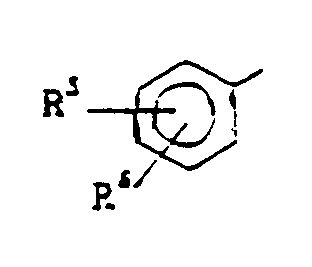
(dans laquelle R
5 et R
6 sont tels que définis à la revendication 1).
59. Composé selon la revendication 58, dans lequel R5 représente un atome d'hydrogène et R6 représente un groupe alcoxy linéaire ou ramifié ayant 1 à 19 atomes de carbone.
60. le 8-(p-isohexyloxycinnamoyl)amino-2(5-tétrazolyl)-4-oxo-4H-1-benzopyranne ou
son sel de sodium.
61. Composé selon la revendication 58, dans lequel R5 représente un atome d'hydrogène et R6 représente un groupe alcoxy linéaire ou ramifié ayant 1 à 18 atomes de carbone et
qui est substitué par un ou des atome(s) d'halogène.
62. le 8-[p-(5-chloropentyloxy)cinnamoyl]amino-2-(5-tétrazolyl)-4-oxo-4H-1-benzopyranne,
ou le 8-[p-(6-chlorohexyloxy)cinnamoyl]amino-2-(5-tétrazolyl)-4-oxo-4H-1-benzopyranne,
ou un sel de sodium d'un de ces composés.
63. Composé selon la revendication 2, dans lequel le symbole B représente un noyau
pyridine éventuellement substitué par un ou des groupe(s) hydroxyle (c'est-à-dire
un noyau de formule :
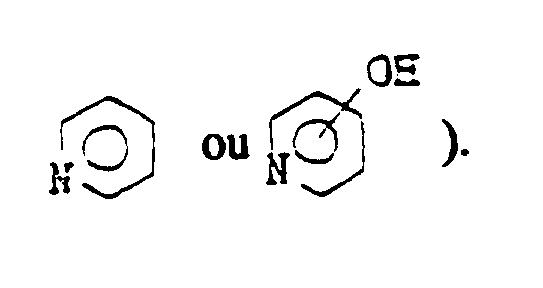
64. Composé selon la revendication 63, dans lequel le symbole A représente une liaison
simple ou un groupe vinylène qui n'est pas substitué ou qui est substitué par un ou
des groupe(s) alkyle(s) linéaire(s) ou ramifié(s) ayant 1 à 6 atomes de carbone ou
par un ou des groupe(s) phényle(s), et le symbole T représente un atome d'oxygène.
65. Composé selon la revendication 64, dans lequel R
1 représente un groupe de formule générale :
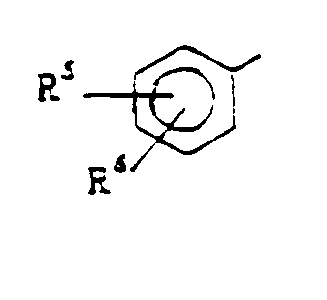
(dans laquelle R
5 et R
6 sont tels que définis à la revendication 1).
66. la 8-[p-(4-phénylbutoxy)benzoyl]amino-2-(5-tétrazolyl)-quinoléine, ou la 8-[p-(4-phénylbutoxy)benzoyl]amino-4-hydroxy-2-(5-tétrazolyl)-quinoléine
; ou un sel de sodium d'un de ces composés.
67. Composé selon la revendication 2, dans lequel le symbole B représente un noyau
4,5-dihydrodioxole, (c'est-à-dire un noyau de formule :
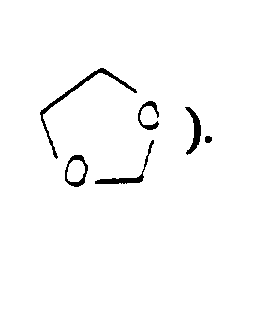
68. Composé selon la revendication 67, dans lequel le symbole A représente une liaison
simple ou un groupe vinylène qui n'est pas substitué ou qui est substitué par un ou
des groupe(s) alkyle(s) linéaire(s) ou ramifié(s) ayant 1 à 6 atomes de carbone ou
par un ou des groupe(s) phényle(s), et le symbole T représente un atome d'oxygène.
69. Composé selon la revendication 68, dans lequel R
1 représente un groupe de formule générale :
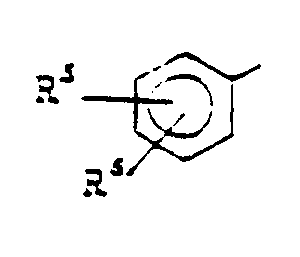
(dans laquelle R
5 et R
6 sont tels que définis dans la revendication 1).
70. le 4-(p-heptyloxylbenzoyl)amino-2-(5-tétrazolyl)-1 ,3-benzodioxole ou son sel
de sodium.
71. Composé selon la revendication 2, dans lequel le symbole B représente un noyau
benzénique, (c'est-à-dire un noyau de formule :
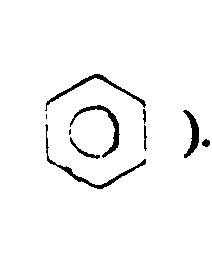
72. Composé selon la revendication 71, dans lequel le symbole A représente une liaison
simple ou un groupe vinylène qui n'est pas substitué ou qui est substitué par un ou
des groupe(s) alkyle(s), linéaire-(s) ou ramifié(s), ayant 1 à 6 atomes de carbone
ou par un ou des groupe(s) phényle(s), et le symbole T représente un atome d'oxygène.
73. Composé selon la revendication 72, dans lequel R
1 représente un groupe de formule générale :
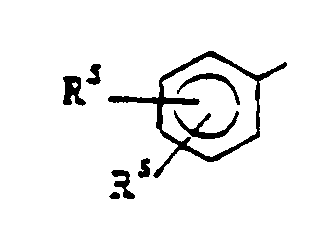
(dans laquelle R
5 et R
6 sont tels que définis à la revendication 1).
74. le 8-[p-(4-phénylbutoxy)benzoyl]amino-2-(5-tétrazolyl)méthoxynaphtalène, ou le
8-[p-(7-octényloxy)benzoyl]amino-2-(5-tétrazolyl)méthoxynaphtalène ; ou un sel de
sodium d'un de ces composés.
75. Composé selon la revendication 2, dans lequel le symbole B représente un noyau
2,3,6,7-tétrahydro-5H-1,4-dioxepine (c'est-à-dire un noyau de formule :
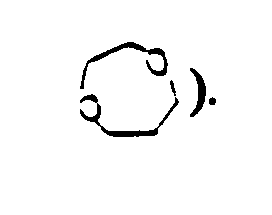
76. Composé selon la revendication 75, dans lequel le symbole A représente une liaison
simple ou un groupe vinylène qui n'est pas substitué ou qui est substitué par un ou
des groupe(s) alkyle(s) linéaire(s) ou ramifié(s) ayant 1 à 6 atomes de carbone ou
par un ou des groupe(s) phényle(s), et le symbole T représente un atome d'oxygène.
77. Composé selon la revendication 76, dans lequel R
1 représente un groupe de formule générale :
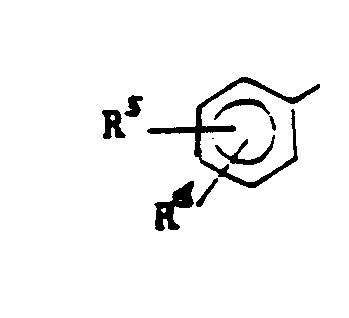
(dans laquelle R
5 et R
6 sont tels que définis à la revendication 1).
78. la 9-[p-(2E, 7-octadiényloxy)benzoy]amino-2-(5-tétrazolyl)-3,4-dihydro-2H-1,5-benzodioxépine
ou son sel de sodium.
79. Composé selon la revendication 2, dans lequel le symbole B représente un noyau
morpholine
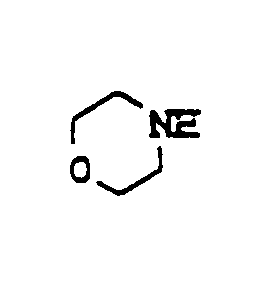
(c'est-à-dire un noyau de formule :
80. Composé selon la revendication 79, dans lequel le symbole A représente une liaison
simple ou un groupe vinylène qui n'est pas substitué ou qui est substitué par un ou
des groupe(s) alkyle(s) linéaire(s) ou ramifié(s) ayant 1 à 6 atomes de carbone ou
par un ou des groupes phényle(s), et le symbole T représente un atome d'oxygène.
81. Composé selon la revendication 80, dans lequel R
1 représente un groupe de formule générale :
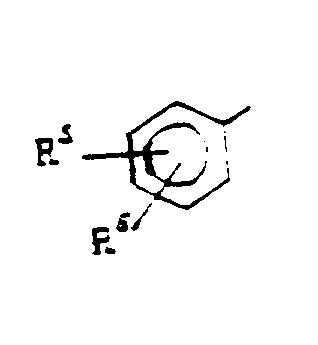
(dans laquelle R
5 et R
6 sont tels que définis à la revendication 1).
82. la 8-[p-(4-phénylbutoxy)benzoyl]amino-2-(5-tétrazolyl)-2,3-dihydro-1,4-benzoxazine
ou son sel de sodium.
83. Composé selon la revendication 2, dans lequel le symbole B représente un noyau
3,4,5,6-tétrahydro-2H-pyranne (c'est-à-dire un noyau de formule :
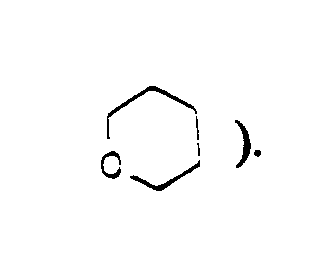
84. Composé selon la revendication 83, dans lequel le symbole A représente une liaison
simple ou un groupe vinylène qui n'est pas substitué ou qui est substitué par un ou
des groupe(s) alkyle(s) linéaire(s) ou ramifié(s) ayant 1 à 6 atomes de carbone ou
par un ou des groupe(s) phényle(s), et le symbole T représente un atome d'oxygène.
85. Composé selon la revendication 84, dans lequel R
1 représente un groupe de formule générale :
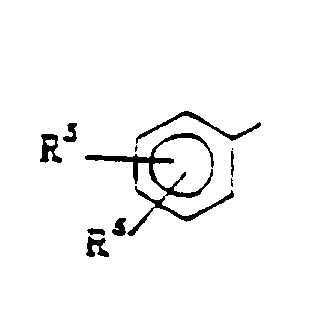
(dans laquelle R
5 et R
6 sont tels que définis à la revendication 1).
86. le 8-[p-(4-phénylbutoxy)benzoyl]amino-2-(5-tétrazolyl)-3,4-dihydro-2H-1-benzopyranne
ou son sel de sodium.
87. Procédé pour la préparation d'un dérivé aminophénylique condensé de formule générale
:
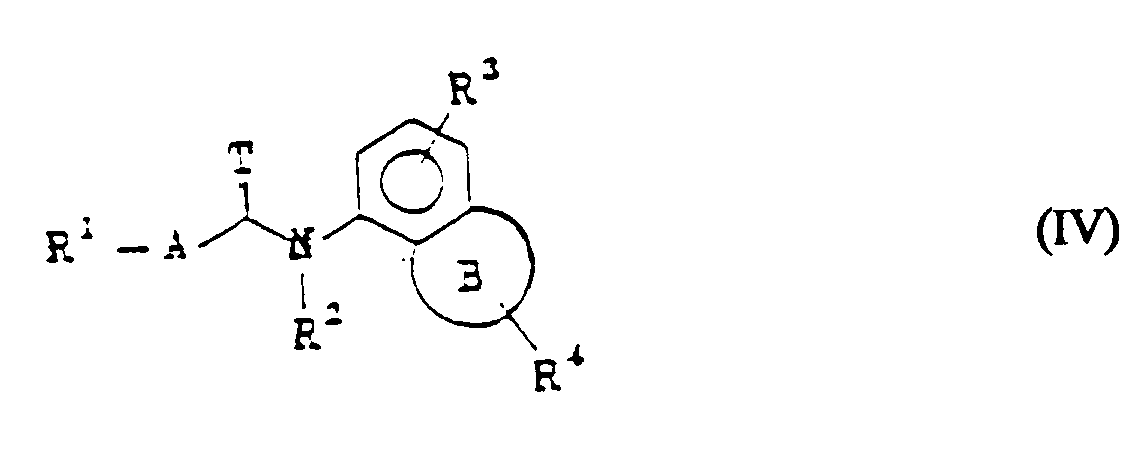
[dans laquelle A, B, R
1, R
2, R
3 et R
4 sont tels que définis à la revendication 1], ou d'un sel non toxique de ce composé,
procédé caractérisé en ce que :
on fait réagir un acide de formule générale :
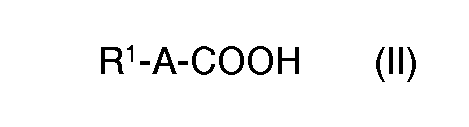
(dans laquelle A et R
1 sont tels que définis à la revendication 1), ou un acide dithioique correspondant,
et un composé de formule générale :
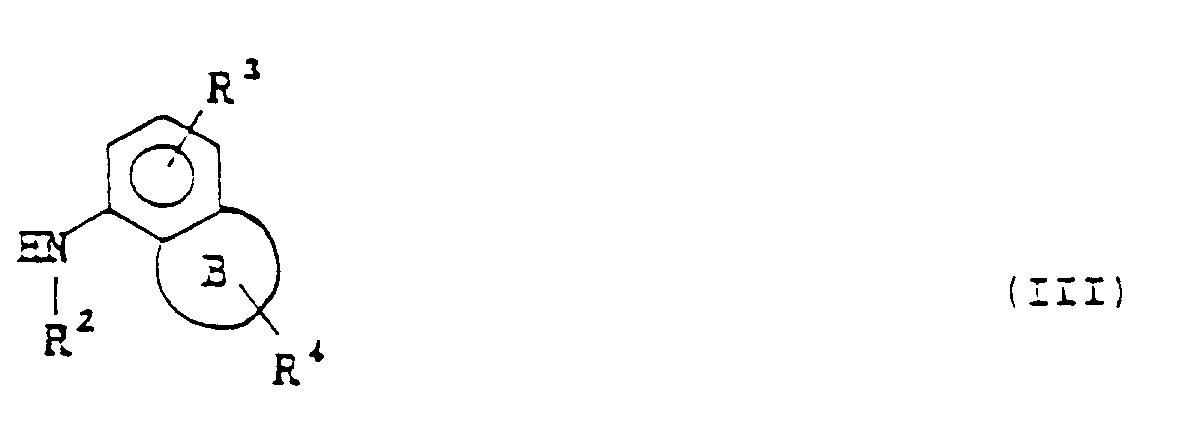
(dans laquelle B, R
2, R
3 et R
4 sont tels que définis à la revendication 1), pour former une liaison amide et l'on
effectue en outre, si on le désire, une saponification et/ou une esterification.
88. Procédé pour la préparation d'un dérivé aminophénylique condensé, de formule générale
:
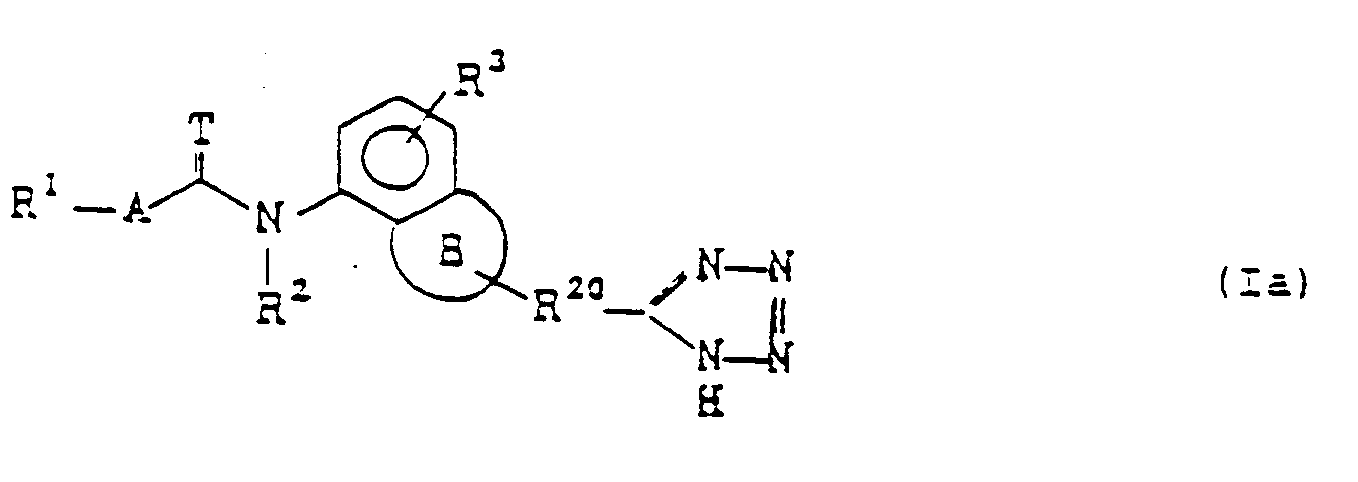
(dans laquelle R
20 représente un groupe méthylène ou une liaison simple, et les autres symboles sont
tels que définis à la revendication 1), ou un sel non toxique de ce dérivé, procédé
caractérisé en ce qu'on fait réagir un composé de formule générale :
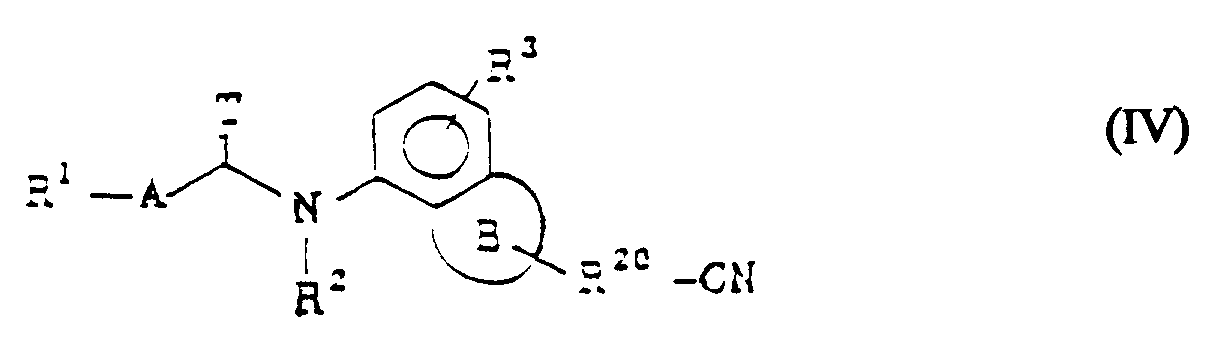
(dans laquelle R
20 est tel que défini ci-dessus, et les autres symboles sont tels que définis à la revendication
1) et un azide et, en outre, si on le désire, on effectue la formation d'un sel.
89. Procédé pour la préparation d'un dérivé aminophénylique condensé, de formule générale
:
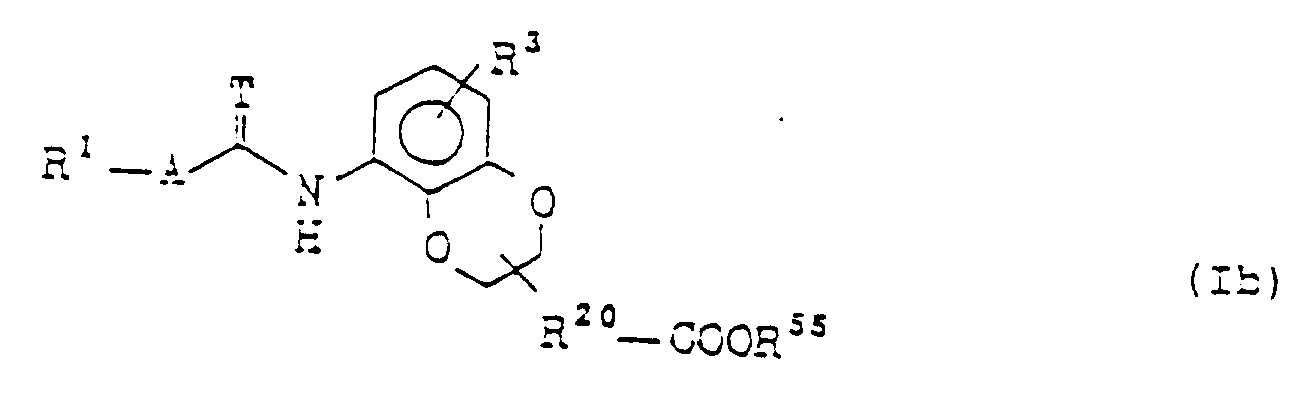
(dans laquelle R
20 représente un groupe méthylène ou une liaison simple, R
55 représente un atome d'hydrogène ou un groupe alkyle linéaire ou ramifié ayant 1 à
6 atomes de carbone, et T, A, R
1 et R
3 sont tels que définis à la revendication 1), ou un sel non toxique de ce dérivé,
procédé caractérisé en ce qu'on fait réagir un composé de formule générale :
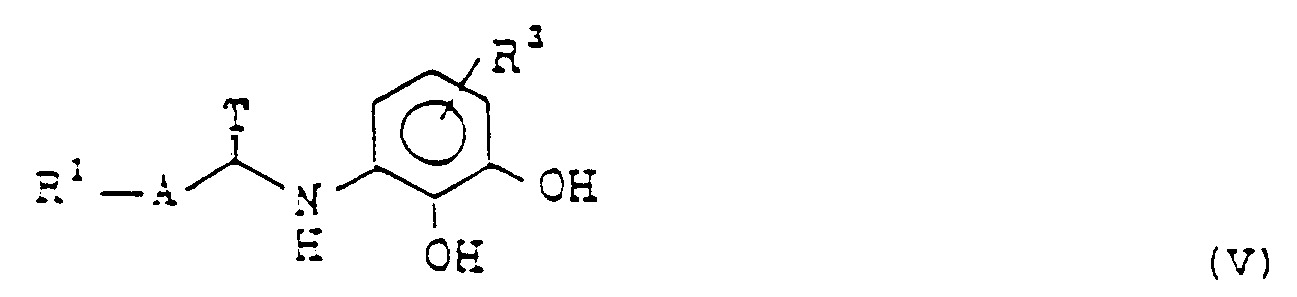
(dans laquelle T, A, R
1 et R
3 sont tels que définis à la revendication 1) et un composé de formule générale :

ou

(dans lesquelles X
10 et X
2° représentent des atomes d'halogène, respectivement ; R
S0 représente un groupe alkyle linéaire ou ramifié ayant 1 à 6 atomes de carbone, et
R
20 représente un groupe méthylène ou une liaison simple), et l'on effectue encore, si
on le désire, une saponification et/ou une esterification.
90. Composition pharmaceutique, caractérisée en ce qu'elle comprend à titre d'ingrédient
actif au moins un composé de formule générale (I) selon la définition donnée dans
l'une quelconque des revendications 1 à 86, ou un sel non toxique de ce composé, avec
un excipient, véhicule et/ou revêtement pharmaceutique(s).
91. Composé de formule générale (1), selon la définition donnée à la revendication
1, ou sel non toxique de ce composé, destiné à servir de médicament pour le traitement
préventif et/ou curatif de maladies de la trachée, des bronches ou des poumons, comme
l'asthme ou une maladie de type allergie.
92. Utilisation d'un composé de formule générale (1), telle que définie à la revendication
1, ou d'un sel non toxique de ce composé, pour la fabrication d'un médicament pour
le traitement préventif et/ou curatif de maladies de la trachée, des bronches ou des
poumons, comme l'asthme ou des maladies du type allergie.
Revendications pour l'(les) Etat(s) contractant(s) suivant(s) : AT
1. Procédé pour la préparation d'un dérivé aminophénylique condensé, de formule générale
:
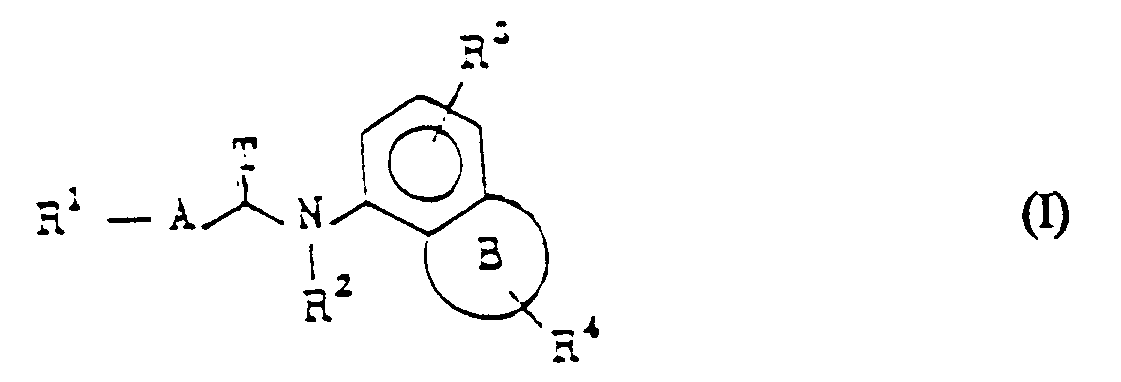
[dans laquelle le symbole A représente une liaison simple ou un groupe méthylène,
éthylène , triméthylène, tétraméthylène, vinylène, propénylène, buténylène, butadiénylène
ou éthylène, éventuellement substitué par un, deux ou trois groupe(s) alkyle(s) linéaires
ou ramifiés ayant chacun 1 à 10 atomes de carbone et/ou groupe(s) phényle(s),
le symbole B représente un noyau carbocyclique ayant 4 à 8 chaînons et dans lequel
un, deux ou trois des atome(s) de carbone peuvent être remplacés par un ou des atome(s)
d'oxygène, d'azote et/ou de soufre ou dans lequel le noyau peut éventuellement porter
comme substituant un ou des groupe(s) oxo, thioxo et/ou hydroxy,
le symbole T représente un atome d'oxygène ou un atome de soufre,
R1 représente un qroupe de formule :
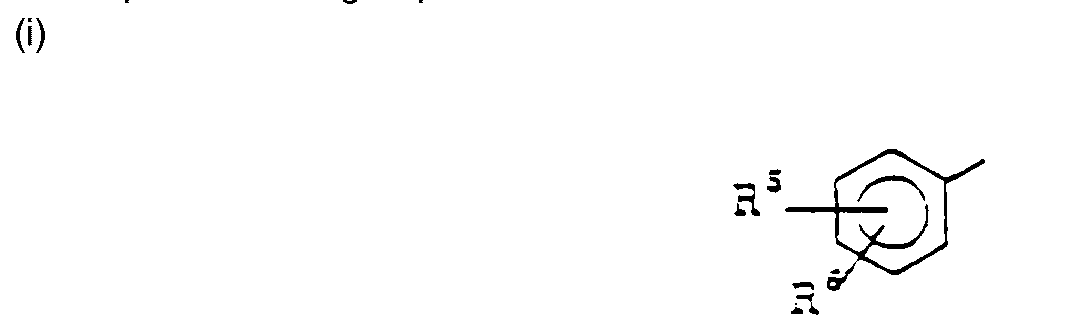
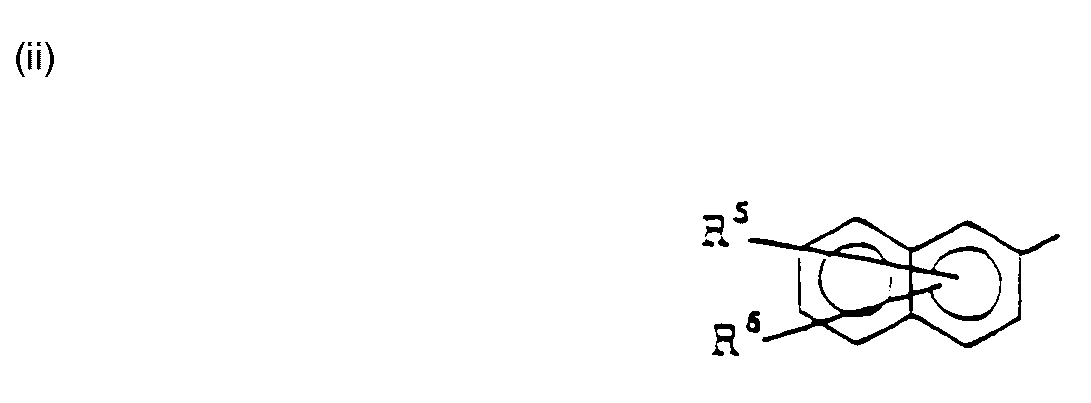
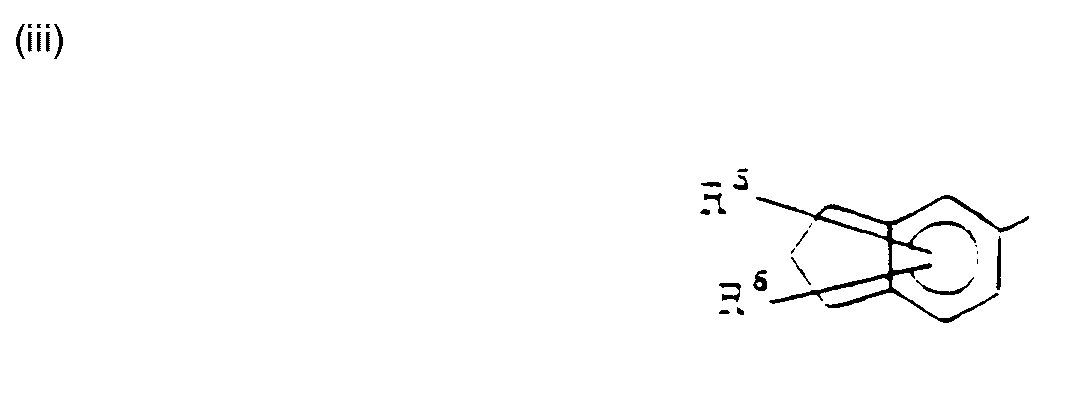
ou (iv) un groupe alkyle, alcényle ou alcynyle linéaire ou ramifié ayant 1 à 20 atomes
de carbone, (formules dans lesquelles R5 et R6 représentent chacun, indépendamment, un atome d'hydrogène ou un atome d'halogène
ou un groupe alkyle, alcényle ou alcynyle linéaire ou ramifié ayant 1 à 20 atomes
de carbone, dans lequel un, deux, trois, quatre et cinq des atomes de carbone peut
ou peuvent être remplacés par un ou des atome(s) d'oxygène, par un ou des atome(s)
de soufre, par un ou des atome(s) d'halogène, par un ou des atome(s) d'azote, par
un ou des noyau(x) benzenique(s), par un ou des noyau(x) de thiophène, un ou des noyau(x)
naphtalène, un ou des noyau(x) carbocyclique comportant 4 à 7 atomes de carbone, un
ou des groupe(s) carbonyle(s), un ou des groupe(s) carbonyloxy, un ou des groupe(s)
hydroxy, un ou des groupe(s) carboxy, un ou des groupe(s) azido et/ou un ou des groupe(s)
nitro ;
R2 représente un atome d'hydrogène ou un groupe alkyle linéaire ou ramifié ayant 1 à
6 atomes de carbone,
R3 représente un atome d'hydrogène, un atome d'halogène, un groupe hydroxyle, un groupe
nitro, un groupe de formule générale -COOR7 (dans laquelle R7 représente un atome d'hydrogène ou un groupe alkyle linéaire ou ramifié ayant 1 à
6 atomes de carbone) ou un groupe alkyle, alcoxy ou alkylthio linéaire ou ramifié
ayant 1 à 6 atomes de carbone, et
R4 représente un groupe de formule générale :
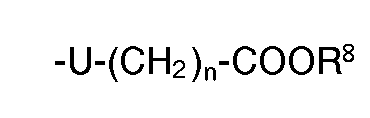
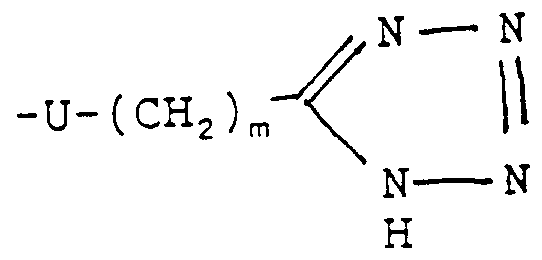
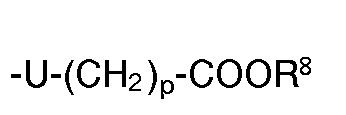
ou
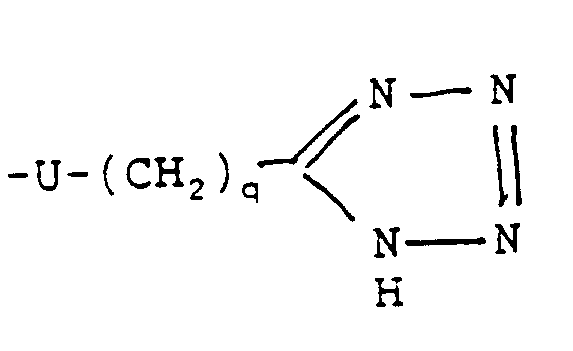
(dans lesquelles le symbole U représente un atome d'oxygène ou un atome de soufre;
R8 représente un atome d'hydrogène ou un groupe alkyle linéaire ou ramifié ayant 1 à
6 atomes de carbone, n et m représentent chacun un nombre entier valant 1 à 10, respectivement,
et p et q valent zéro ou représentent chacun, respectivement, un nombre entier valant
1 à 10] ou un sel non toxique d'un tel dérivé], procédé caractérisé en ce que
on fait réagir un acide de formule générale :
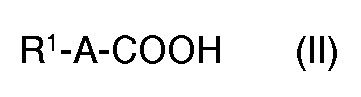
(dans laquelle A et R1 sont tels que définis à la revendication 1), ou un acide dithioique correspondant,
et un composé de formule générale :
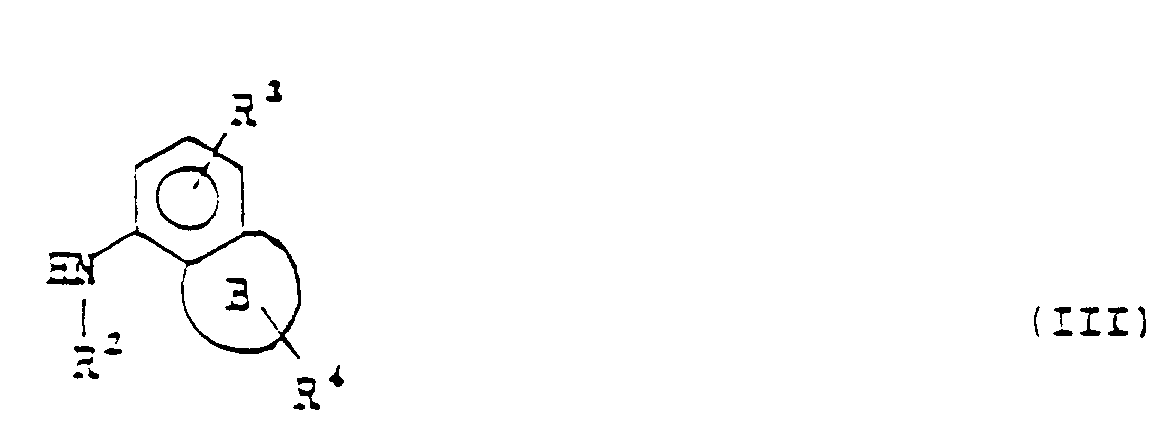
(dans laquelle B, R2, R3 et R4 sont tels que définis à la revendication 1), pour former une liaison amide et l'on
effectue en outre, si on le désire, une saponification et/ou une esterification.
2. Procédé pour la préparation d'un dérivé aminophénylique condensé, de formule générale
:
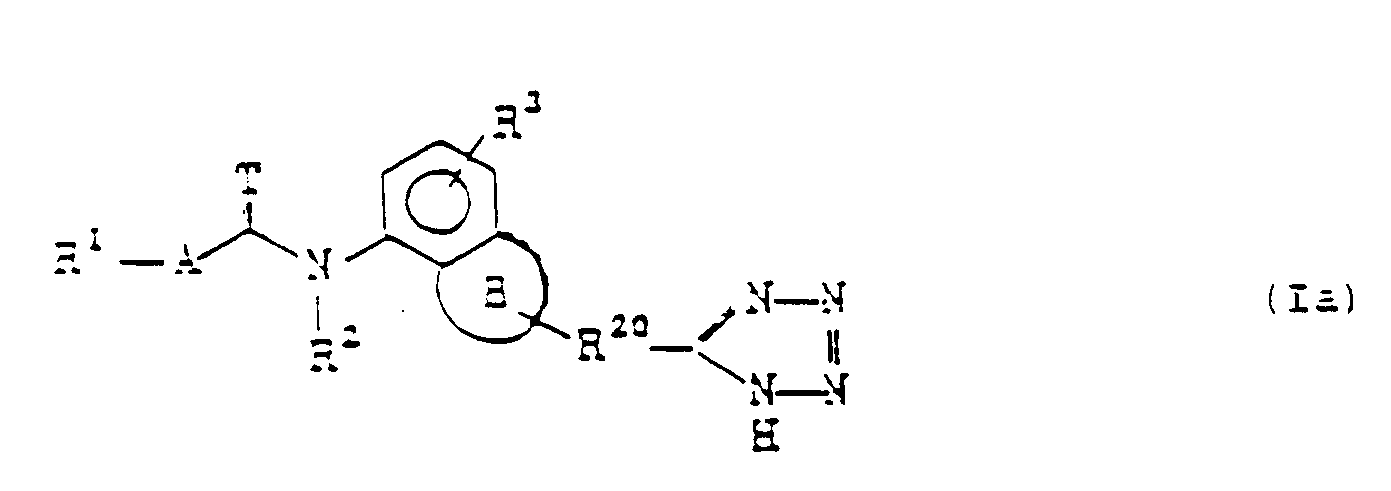
(dans laquelle R
20 représente un groupe méthylène ou une liaison simple, et les autres symboles sont
tels que définis à la revendication 1), ou un sel non toxique de ce dérivé, procédé
caractérisé en ce qu'on fait réagir un composé de formule générale :
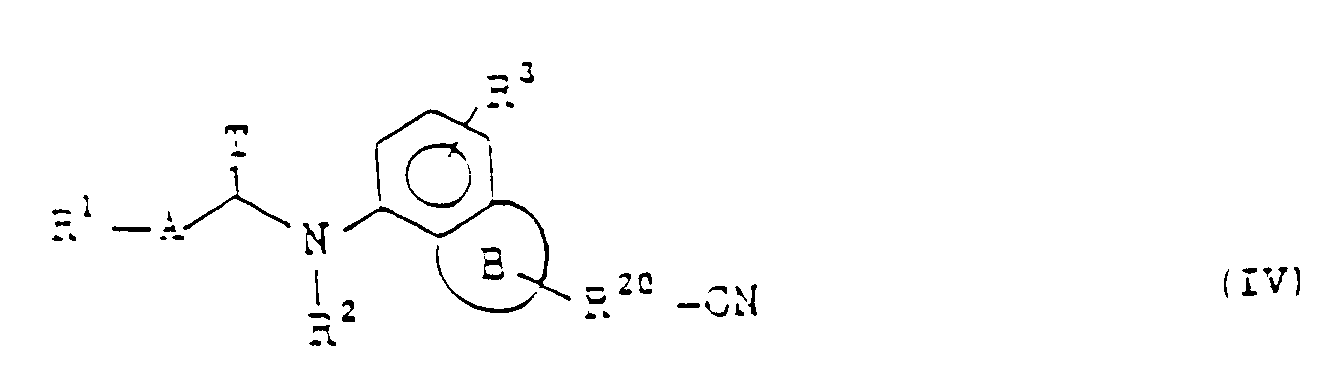
(dans laquelle R
20 est tel que défini ci-dessus, et les autres symboles sont tels que définis à la revendication
1) et un azide et, en outre, si on le désire, on effectue la formation d'un sel.
3. Procédé pour la préparation d'un dérivé aminophénylique condensé, de formule générale
:
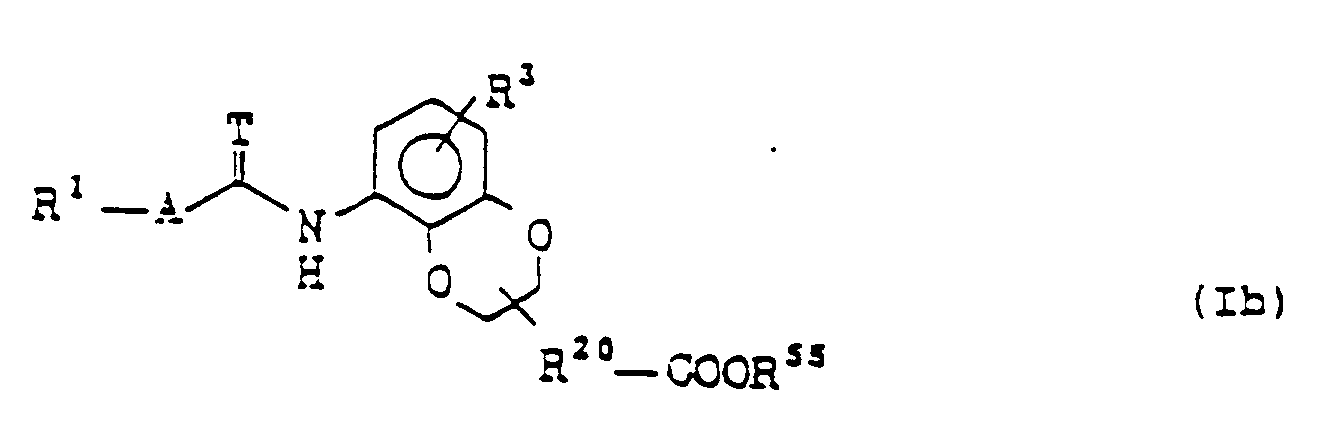
(dans laquelle R
20 représente un groupe méthylène ou une liaison simple, R
55 représente un atome d'hydrogène ou un groupe alkyle linéaire ou ramifié ayant 1 à
6 atomes de carbone, et T, A, R
1 et R
3 sont tels que définis à la revendication 1), ou un sel non toxique de ce dérivé,
procédé caractérisé en ce qu'on fait réagir un composé de formule générale :
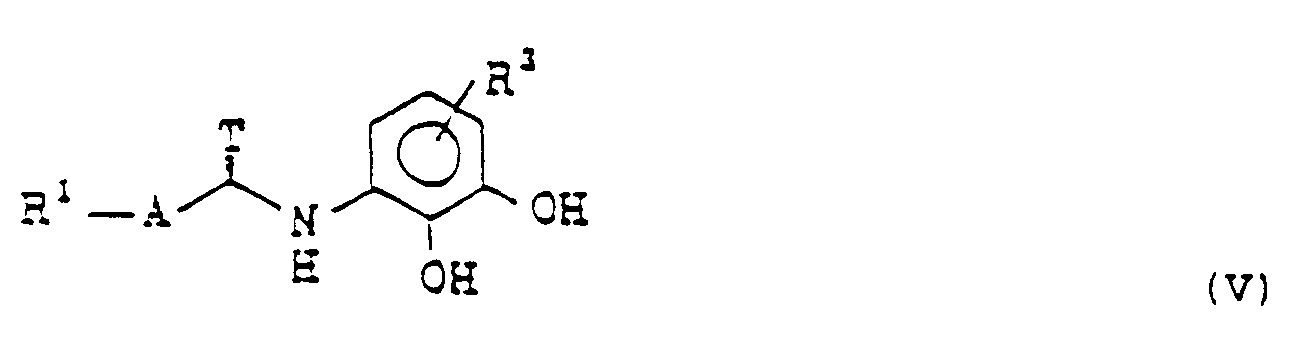
(dans laquelle T, A, R
1 et R
3 sont tels que définis à la revendication 1) et un composé de formule générale :

ou

(dans lesquelles X
10 et X
2° représentent des atomes d'halogène, respectivement ; R
50 représente un groupe alkyle linéaire ou ramifié ayant 1 à 6 atomes de carbone, et
R
20 représente un groupe méthylène ou une liaison simple), et l'on effectue encore, si
on le désire, une saponification et/ou une esterification.
4. Procédé selon la revendication 1 ou 2, dans lequel le symbole B représente un noyau
de formule :



(les noyaux peuvent éventuellement être substitués par un ou des groupe(s) hydroxyle(s).).
5. Procédé selon la revendication 3 ou 4, dans lequel le symbole B représente un noyau
2,3,5,6-tétrahydro-1,4-dioxanne (c'est-à-dire un noyau de formule :
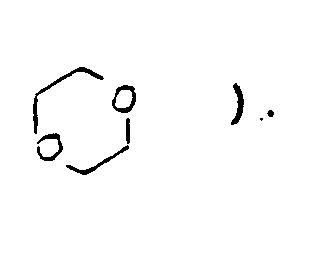
6. Procédé selon la revendication 3 ou 5, dans lequel le symbole A représente une
liaison simple et le symbole T représente un atome d'oxygène.
7. Procédé selon la revendication 6, dans lequel R
1 représente un groupe de formule générale
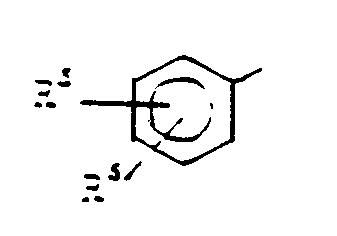
(dans laquelle R
5 et R
6 sont tels que définis à la revendication 1).
8. Procédé selon la revendication 7, dans lequel R5 représente un atome d'hydrogène et R6 représente un groupe alcoxy linéaire ou ramifié ayant 1 à 19 atomes de carbone.
9. Procédé selon la revendication 8, dans lequel le composé est le 8-(p-heptyloxybenzoyl)amino-2-(5-tétrazolyl)-1,4-benzodioxanne,
ou le 8-(p-isooctyloxybenzoyl)amino-2-(5-tétrazolyl)-1,4-benzodioxanne, ou un sel
de sodium d'un de ces composés.
10. Procédé selon la revendication 7, dans lequel R5 représente un atome d'hydrogène et R6 représente un groupe alcényloxy linéaire ou ramifié ayant 3 à 19 atomes de carbone.
11. Procédé selon la revendication 10, dans lequel le composé est le 8-[p-(2E-octényloxy)benzoyl]amino-2-(5-tétrazolyl)-1,4-benzodioxanne,
le 8-[p-(2Z-octényloxy)benzoyl]amino-2-(5-tétrazolyl)-1,4-benzodioxanne, le 8-[p-(2E-nonényloxy)benzoyl]amino-2-(5-tétrazolyl)-1,4-benzodioxanne,
le 8-[p-(2E-hexényloxy)benzoyl]amino-2-(5-tétrazolyl)-1,4-benzodioxanne, le 8-[p-(3E-heptényloxy)benzoyl]amino-2-(5-tétrazolyl)-1,4-benzodioxanne,
l'acide 8-[p-(2E-octényloxy)benzoyl]amino-1,4-benzodioxanne-2-carboxylique ou son
ester méthylique, le 8-[p-(2E-heptényloxy)benzoyl]amino-2-(5-tétrazolyl)-1,4-benzodioxanne,
le 8-[p-géranyloxy benzoyl)amino-2-(5-tétrazolyl)-1,4-benzodioxanne, le 8-[p-(2E-octadiényloxy)benzoyl]amino-2-(5-tétrazolyl)-1,4-benzodioxanne,
le 8-[p-(7-octényloxy)benzoyl]amino-2-(5-tétrazolyl)-1,4-benzodioxanne, ou le 8-[p-(2E,
4E-octadiényloxy)benzoyl]amino-2-(5-tétrazolyl)-1 ,4-benzodioxanne, ou un sel de sodium
d'un de ces composés.
12. Procédé selon la revendication 7, dans lequel R5 représente un atome d'hydrogène et R6 représente un groupe alcényloxy linéaire ou ramifié ayant 1 à 19 atomes de carbone.
13. Procédé selon la revendication 12, dans lequel le composé est : le 8-[p-(2-octylnyloxy)benzoyl]amino-2-(5-tétrazolyl)-1,4-benzodioxanne,
ou le 8-[p-(2-isooctynyloxy)benzoyl]amino-2-(5-tétrazolyl)-1,4-benzodioxanne ou un
sel de sodium d'un de ces composés.
14. Procédé selon la revendication 7, dans lequel R5 représente un atome d'hydrogène et R6 représente un groupe alkylthio linéaire ou ramifié ayant 1 à 19 atomes de carbone.
15. Procédé selon la revendication 14, dans lequel le composé est le 8-(p-heptylthiobenzoyl)amino-2-(5-tétrazolyl)-1
,4-benzodioxanne ou son sel de sodium.
16. Procédé selon la revendication 7, dans lequel R5 représente un atome d'hydrogène et R6 représente un groupe alcoxy linéaire ou ramifié ayant 1 à 18 atomes de carbone et
qui est substitué par un ou des atome(s) d'halogène.
17. Procédé selon la revendication 16, dans lequel le composé est Le 8-[p-(6-chlorohexyloxy)benzoyl]amino-2-(5-tétrazolyl)-1,4-benzodioxanne,
le 8-[p-(5-chloropentyloxy)benzoyl]amino-2-(5-tétrazolyl)-1,4-benzodioxanne, le 8-[p-(4-chlorobutoxy)benzoyl]amino-2-(5-tétrazolyl)-1,4-benzodioxanne,
le 8-[p-(7-chloroheptyloxy)benzoyl]amino-2-(5-tétrazolyl)-1,4-benzodioxanne, le 8-[p-(8-chlorooctyloxy)benzoyl]amino-2-(5-tétrazolyl)-1,4-benzodioxanne,
ou le 8-[p-(9-chlorononyloxy)benzoyl]amino-2-(5-tétrazolyl)-1,4-benzodioxanne, ou
un sel de sodium d'un de ces composés.
18. Procédé selon la revendication 7, dans lequel R5 représente un atome d'hydrogène et R6 représente un groupe phényle, phénylalkyle (dans lequel le fragment alkyle est un
groupe ayant 1 à 8 atomes de carbone), phénylalkyloxy (dans lequel le fragment alkyle
est un groupe ayant 1 à 8 atomes de carbone), phénylacényloxy (dans lequel le fragment
alcényle est un groupe ayant 2 à 8 atomes de carbone), un groupe naphtyle, naphtylalkyle
(dans lequel le fragment alkyle est un groupe ayant 1 à 8 atomes de carbone), naphtylalkyloxy
(dans lequel le fragment alkyle est un groupe ayant 1 à 8 atomes de carbone), ou un
groupe naphtylalcényloxy (dans lequel le fragment alcényle est un groupe ayant 2 à
8 atomes de carbone, qui n'est pas substitué ou qui est substitué par un groupe alkyle
linéaire ou ramifié ayant 1 à 8 atomes de carbone, par un ou des groupe(s) hydroxy,
par un ou des groupe(s) halogéno et/ou par un ou des groupe(s) nitro.
19. Procédé selon la revendication 18, dans lequel le composé est Le 8-[p-(p-propylphényl)méthoxybenzoyl]amino-2-(5-tétrazolyl)-1,4-benzodioxanne,
ou Le 8-[p-(4-phénylbutoxy)benzoyl]amino-2-(5-tétrazolyl)-1,4-benzodioxanne, ou un
sel de sodium d'un de ces composés.
20. Procédé selon la revendication 7, dans lequel R5 représente un atome d'hydrogène et R6 représente un groupe alcoxy, alcényloxy ou alcoxyalcoxy linéaire ou ramifié ayant
1 à 18 atomes de carbone, dans lequel un ou des atome(s) de carbone est ou sont remplacé(s)
par un ou des groupe(s) carbonyle, par un ou des groupe(s) carbonyloxy ou par un ou
des groupe(s) hydroxy.
21. Procédé selon la revendication 20, dans lequel le composé est le 8-(p-octanoylbenzoyl)amino-2-(5-tétrazolyl)-1,4-benzodioxanneou
son sel de sodium.
22. Procédé selon la revendication 7, dans lequel R5 représente un atome d'hydrogène et R6 représente un groupe alcoxy linéaire ou ramifié ayant 1 à 19 atomes de carbone et
qui est substitué par un groupe phénoxy ou par un groupe phénylthio.
23. Procédé selon la revendication 22, dans lequel le composé est le 8-[p-(3-phénylthiopropoxy)benzoyl]amino-2-(5-tétrazolyl)-1,4-benzodioxanne,
ou le 8-[p-(3-phénoxypropoxy)benzoyl]amino-2-(5-tétrazolyl)-1,4-benzodioxanne, ou
un sel de sodium d'un de ces composés.
24. Procédé selon la revendication 7, dans lequel R5 représente un atome d'hydrogène et R6 représente un groupe alcoxy linéaire ou ramifié ayant 1 à 18 atomes de carbone et
qui est substitué par un ou des noyau(x) thiophènes.
25. Procédé selon la revendication 24, dans lequel le composé est le 8-[p-[4-(2-thiényl)butoxy]benzoyl]-amino-2-(5-tétrazolyl)-1
,4-benzodioxanne ou son sel de sodium.
26. Procédé selon la revendication 7, dans lequel R5 représente un atome d'hydrogène et R6 représente un groupe alcoxy, linéaire ou ramifié, ayant 1 à 18 atomes de carbone
et qui est substitué par un ou des groupe(s) azido, par un ou des groupe(s) nitro
ou par un ou des groupe(s) amino qui ne sont pas substitués ou qui sont substitués
par un ou des groupe(s) alkyle linéaires ou ramifiés ayant 1 à 6 atomes de carbone
(ce qui comprend un groupe dialkylamino).
27. Procédé selon la revendication 26, dans lequel le composé est le 8-[p-(5-azidopentyloxy)benzoyl]-amino-2-(5-tétrazolyl)-1
,4-benzodioxanne ou son sel de sodium.
28. Procédé selon la revendication 3 ou 5, dans leque le symbole A représente un groupe
vinylène non substitué ou qui est substitué par un ou des groupe(s) alkyle(s) linéaire(s)
ou ramifié(s), et le symbole T représente un atome d'oxygène.
29. Procédé selon la revendication 28, dans lequel R
1 représente un groupe de formule générale :
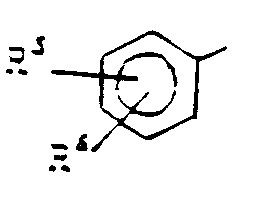
(dans laquelle R
5 et R
6 sont tels que définis à la revendication 1).
30. Procédé selon la revendication 29, dans lequel R5 représente un atome d'hydrogène et R6 représente un groupe alcoxy, linéaire ou ramifié, ayant 1 à 19 atomes de carbone.
31. Procédé selon la revendication 30, dans lequel le composé est le 8-(p-isohexyloxycinnamoyl)amino-2-(5-tétrazolyl)-1
,4-benzodioxanne ou son sel de sodium.
32. Procédé selon la revendication 29, dans lequel R5 représente un atome d'hydrogène et R6 représente un groupe alcoxy linéaire ou ramifié ayant 1 à 18 atomes de carbone et
qui est substitué par un ou des atome(s) d'halogène.
33. Procédé selon la revendication 32, dans lequel le composé est le 8-[p-(4-chlorobutoxy)cinnamoyl]amino-2-(5-tétrazolyl)-1,4-benzodioxanne,
ou le 8-[p-(5-(chloropentyloxy)cinnamoyl]amino-2-(5-tétrazolyl)-1,4-benzodioxanne
ou un sel de sodium d'un de ces composés.
34. Procédé selon la revendication 29, dans lequel R5 représente un atome d'hydrogène et R6 représente un groupe alkyloxyalkyle linéaire ou ramifié ayant 2 à 19 atomes de carbone.
35. Procédé selon la revendication 34, dans lequel le composé est le 8-(p-isopentyloxyméthylcinnamoyl)-amino-2-(5-tétrazolyl)-1
,4-benzodioxanne ou son sel de sodium.
36. Procédé selon la revendication 29, dans lequel R5 représente un atome d'hydrogène et R6 représente un groupe phényle, phénylalkyle (dans lequel le fragment alkyle est un
groupe ayant 1 à 8 atomes de carbone), phénylalkyloxy (dans lequel le fragment alkyle
est un groupe ayant 1 à 8 atomes de carbone) ou phénylalcényloxy (dans lequel le fragment
alcényle est un groupe ayant 2 à 8 atomes de carbone), qui n'est pas substitué ou
est substitué par un ou des groupe(s) alkyle linéaire(s) ou ramifié(s) ayant 1 à 8
atomes de carbone, par un ou des groupe(s) hydroxyle, par un ou des atome(s) d'halogène
et/ou par un ou des groupe(s) nitro.
37. Procédé selon la revendication 36, dans lequel le composé est le 8-[p-(2-phényléthoxy)cinnamoyl]-amino-2-(5-tétrazolyl)-1
,4-benzodioxanne ou son sel de sodium.
38. Procédé selon la revendication 29, dans lequel R5 représente un atome d'hydrogène et R6 représente un groupe alcoxy linéaire ou ramifié ayant 1 à 18 atomes de carbone et
qui est substitué par un ou des noyau(x) thiophènes.
39. Procédé selon la revendication 38, dans lequel le composé est le 8-[p-[2-(2-thiényl)éthoxy]cinnamoyl]-amino-2-(5-tétrazolyl)-1
,4-benzodioxanne ou son sel de sodium.
40. Procédé selon la revendication 3 ou 5, dans lequel le symbole A représente une
liaison simple ou un groupe vinylène, et le symbole T représente un atome de soufre.
41. Procédé selon la revendication 40, dans lequel le composé est le 8-(p-éthyloxybenzothioyl)amino-2-(5-tétrazolyl)-1
,4-benzodioxanne ou son sel de sodium.
42. Procédé selon la revendication 4, dans lequel le symbole B représente un noyau
4-oxo-2,3-dihydro-4H-1-pyranne (c'est-à-dire un noyau de formule :
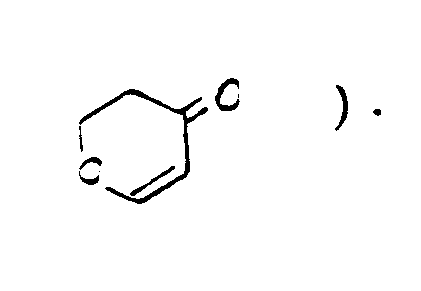
43. Procédé selon la revendication 42, dans lequel le symbole A représente une liaison
simple, et le symbole T représente un atome d'oxygène.
44. Procédé selon la revendication 43, dans lequel R
1 représente un groupe de formule générale :
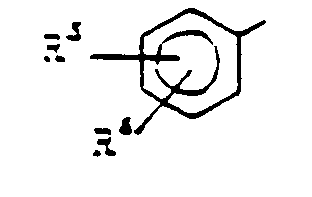
(dans laquelle R
5 et R
6 sont tels que définis à la revendication 1).
45. Procédé selon la revendication 44, dans lequel R5 représente un atome d'hydrogène et R6 représente un atome d'hydrogène ou un groupe alkyle linéaire ou ramifié ayant 1 à
20 atomes de carbone.
46. Procédé selon la revendication 45, dans lequel le composé est le 8-(p-(2-hepthylbenzoyl)amino-2-(5-tétrazolyl)-4-oxo-4H-1-benzopyranne
ou un sel de sodium d'un de ces composés.
47. Procédé selon la revendication 44, dans lequel R5 représente un atome d'hydrogène et R6 représente un groupe alcoxy linéaire ou ramifié ayant 1 à 19 atomes de carbone.
48. Procédé selon la revendication 47, dans lequel le composé est Le 8-(p-butoxybenzoyl)amino-2-(5-tétrazolyl)-4-oxo-4H-1-benzopyranne,
Le 8-(p-hexyloxybenzoyl)amino-2-(5-tétrazolyl)-4-oxo-4H-1-benzopyranne, Le 8-(p-heptyloxybenzoyl)amino-2-(5-tétrazolyl)-4-oxo-4H-1-benzopyranne,
Le 8-(p-nonyloxybenzoyl)amino-2-(5-tétrazolyl)-4-oxo-4H-1-benzopyranne, Le 8-(p-octyloxybenzoyl)amino-2-(5-tétrazolyl)-4-oxo-4H-1-benzopyranne,
Le 8-(p-heptyloxybenzoyl)amino-2-(5-tétrazolyl)-6-fluoro-4-oxo-4H-1-benzopyranne,
Le 8-(p-octyloxybenzoyl)amino-2-(5-tétrazolyl)-6-méthyl-4-oxo-4H-1-benzopyranne, ou
Le 8-(p-heptyloxybenzoyl)amino-2-(5-tétrazolyl)-6-méthyl-4-oxo-4H-1-benzopyranne,
ou un sel de sodium d'un de ces ces composés.
49. Procédé selon la revendication 44, dans lequel R5 représente un atome d'hydrogène et R6 représente un groupe alcényloxy linéaire ou ramifié ayant 3 à 19 atomes de carbone.
50. Procédé selon la revendication 49, dans lequel le composé est le 8-[p-(2E, 7-octadiényloxy)benzoyl]amino-2-(5-tétrazolyl)-4-oxo-4H-1-benzopyranne,
le 8-(p-géranyloxybenzoyl]amino-2-(5-tétrazolyl)-4-oxo-4H-1-benzopyranne, le 8-[p-(2E-octény!oxy)benzoy!]amino-2-(5-tétrazo!y!)-4-oxo-4H-1-benzopyranne,
le 8-[p-(7-octényloxy)benzoyl]amino-2-(5-tétrazolyl)-4-oxo-4H-1-benzopyranne, le 8-[p-(2E-heptényloxy)benzoyl]amino-2-(5-tétrazolyl)-4-oxo-4H-1-benzopyranne,
le 8-[p-(2E-hexényloxy)benzoyl]amino-2-(5-tétrazolyl)-4-oxo-4H-1-benzopyranne, le
8-[p-(2E, 7-octadiényloxy)benzoyl]amino-2-(5-tétrazolyl)-6-fluoro-4-oxo-4H-1-benzopyranne,
le 8-[p-(2E-octényloxy)benzoyl]amino-2-(5-tétrazolyl)-6-méthyl-4-oxo-4H-1-benzopyranne,
le 8-[p-(7-octényloxy)benzoyl]amino-2-(5-tétrazolyl)-6-méthyl-4-oxo-4H-1-benzopyranne,
le 8-[p-(2E, 7-octadiényloxy)benzoyl]amino-2-(5-tétrazolyl)-6-méthyl-4-oxo-4H-1-benzopyranne,
ou le 8-[p-(2E, 7-octadiényloxy)benzoyl]amino-2-(5-tétrazolyl)-6-chloro-4-oxo-4H-1-benzopyranne,
ou un sel de sodium d'un de ces composés.
51. Procédé selon la revendication 44, dans lequel R5 représente un atome d'hydrogène et R6 représente un groupe alcényloxy linéaire ou ramifié ayant 3 à 19 atomes de carbone.
52. Procédé selon la revendication 51, dans lequel le composé est le 8-[p-(2-octynyloxy)benzoyl]amino-2-(5-tétrazolyl)-4-oxo-4H-1-benzopyranne
ou son sel de sodium.
53. Procédé selon la revendication 44, dans lequel R5 représente un atome d'hydrogène et R6 représente un groupe alcoxy linéaire ou ramifié ayant 1 à 18 atomes de carbone et
qui est substitué par un ou des atome(s) d'halogène.
54. Procédé selon la revendication 53, dans lequel le composé est le 8-[p-(5-chloropentyloxy)benzoyl]amino-2-(5-tétrazolyl)-4-oxo-4H-1-benzopyranne,
le 8-[p-(6-chlorohexyloxy)benzoyl]amino-2-(5-tétrazolyl)-4-oxo-4H-1-benzopyranne,
le 8-[p-(6-chlorohexyloxy)benzoyl]amino-2-(5-tétrazolyl)-4-oxo-4H-1-benzopyranne,
le 8-[p-(7-chloroheptyloxy)benzoyl]amino-2-(5-tétrazolyl)-4-oxo-4H-1-benzopyranne,
le 8-[p-(8-chlorooctyloxy)benzoyl]amino-2-(5-tétrazolyl)-6-méthyl-4-oxo-4H-1-benzopyranne,
le 8-[p-(7-chloroheptyloxy)benzoyl]amino-2-(5-tétrazolyl)-6-méthyl-4-oxo-4H-1-benzopyranne,
ou le 8-[p-(8-chlorooctyloxy)benzoyl]amino-2-(5-tétrazolyl)-4-oxo-4H-1-benzopyranne,
ou un sel de sodium d'un de ces composés.
55. Procédé selon la revendication 44, dans lequel R5 représente un atome d'hydrogène et R6 représente un groupe phényle, phénylalkyle (dans lequel le fragment alkyle est un
groupe ayant 1 à 8 atome(s) de carbone), phénylalkyloxy (dans lequel le fragment alkyle
est un groupe ayant 1 à 8 atome(s) de carbone), phénylalcényloxy (dans lequel le fragment
alcényle est un groupe ayant 2 à 8 atome(s) de carbone), naphtyle, naphtylalkyle (dans
lequel le fragment alkyle est un groupe ayant 1 à 8 atome(s) de carbone), naphtylalkyloxy
(dans lequel le fragment alkyle est un groupe ayant 1 à 8 atome(s) de carbone), ou
napthylalcényloxy (dans lequel le fragment alcényle est un groupe ayant 2 à 8 atomes
de carbone), qui est ou qui sont sans substituant ou substitué(s) par un ou des groupe(s)
alkyle linéaire(s) ou ramifié(s) ayant 1 à 8 atome(s) de carbone, par un ou des groupe(s)
hydroxyle, par un ou des atome(s) d'halogène et/ou par un ou des groupe(s) nitro.
56. Procédé selon la revendication 55, dans lequel le composé est le 8-[p-(3-phénylpropoxy)benzoyl]amino-2-(5-tétrazolyl)-4-oxo-4H-1-benzopyranne,
le 8-[p-(3-phényl-2E-propényloxy)benzoyl]amino-2-(5-tétrazolyl)-4-oxo-4H-1-benzopyranne,
le 8-[p-(4-phénylbutoxy)benzoyl]amino-2-(5-tétrazolyl)-4-oxo-4H-1-benzopyranne, ou
le 8-[p-(4-phénylbutoxy)benzoyl]amino-2-(5-tétrazolyl)-6-méthyl-4-oxo-4H-1-benzopyranne,
ou un sel de sodium d'un de ces composés.
57. Procédé selon la revendication 44, dans lequel R5 représente un atome d'hydrogène et R6 représente un groupe alcoxy linéaire ou ramifié ayant 1 à 18 atomes de carbone et
qui est substitué par un ou des noyau(x) thiphènes.
58. Procédé selon la revendication 57, dans lequel le composé est le 8-[p-(4-(2-thiényl)butoxy]benzoy]amino-2-(5-tétrazolyl)-4-oxo-4H-1-benzopyranne,
ou le 8-[p-[4-(2-thiényl)butoxy]benzoyl]amino-2-(5-tétrazolyl)-6-méthyl-4-oxo-4H-1-benzopyranne,
ou un sel de sodium d'un de ces composés.
59. Procédé selon la revendication 42, dans lequel le symbole A représente un groupe
vinylène qui n'est pas substitué ou qui est substitué par un ou des groupe(s) alkyle(s)
linéaire(s) ou ramifié(s) ayant 1 à 6 atomes de carbone ou par un ou des groupe(s)
phényle(s), et le symbole T représente un atome d'oxygène.
60. Procédé selon la revendication 59, dans lequel R
1 est un groupe de formule générale :
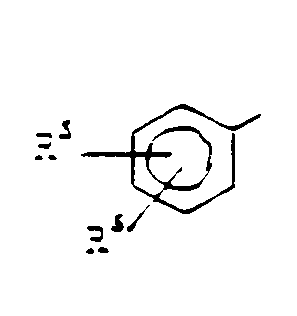
(dans laquelle R
5 et R
6 sont tels que définis à la revendication 1).
61. Procédé selon la revendication 60, dans lequel R5 représente un atome d'hydrogène et R6 représente un groupe alcoxy linéaire ou ramifié ayant 1 à 19 atomes de carbone.
62. Procédé selon la revendication 61, dans lequel le composé est le 8-(p-isohexyloxycinnamoyl)amino-2-(5-tétrazolyl)-4-oxo-4H-1-benzopyranne
ou son sel de sodium.
63. Procédé selon la revendication 60, dans lequel R5 représente un atome d'hydrogène, et R6 représente un groupe alcoxy linéaire ou ramifié ayant 1 à 18 atomes de carbone et
qui est substitué par un ou des atome(s) d'halogène.
64. Procédé selon la revendication 63, dans lequel le composé est le 8-[p-(5-chloropentyloxy)cinnamoyl]amino-2-(5-tétrazolyl)-4-oxo-4H-1-benzopyranne,
ou le 8-[p-(6-chlorohexyloxy)cinnamoyl]amino-2-(5-tétrazolyl)-4-oxo-4H-1-benzopyranne,
ou un sel de sodium d'un de ces composés.
65. Procédé selon la revendication 4, dans lequel le symbole B représente un noyau
pyridine éventuellement substitué par un ou des groupe(s) hydroxyle(s) (c'est-à-dire
un noyau de formule :
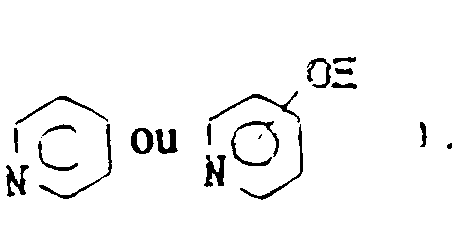
66. Procédé selon la revendication 65, dans lequel le symbole A représente une liaison
simple ou un groupe vinylène qui n'est pas substitué ou qui est substitué par un ou
des groupe(s) alkyle(s) linéaire(s) ou ramifié(s) ayant 1 à 6 atomes de carbone ou
par un ou des groupe(s) phényle(s), et le symbole T représente un atome d'oxygène.
67. Procédé selon la revendication 66, dans lequel R
1 représente un groupe de formule générale :
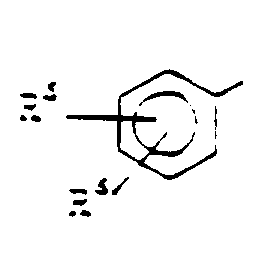
(dans laquelle R
5 et R
6 sont tels que définis à la revendication 1).
68. Procédé selon la revendication 67, dans lequel le composé est : la 8-[p-(4-phénylbutoxy)benzoyl]amino-2-(5-tétrazolyl)-quinoléine,
la 8-[p-(4-phénylbutoxy)benzoyl]amino-4-hydroxy-2-(5-tétrazolyl)-quinoléine, ou un
sel de sodium d'un de ces composés.
69. Procédé selon la revendication 4, dans lequel le symbole B représente un noyau
4,5-dihydrodioxole, (c'est-à-dire un noyau de formule :
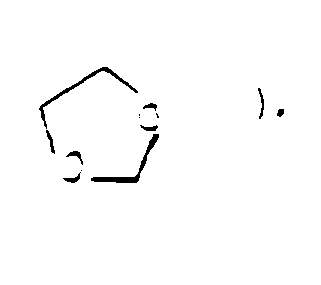
70. Procédé selon la revendication 69, dans lequel le symbole A représente une liaison
simple ou un groupe vinylène qui n'est pas substitué ou est substitué par un ou des
groupe(s) alkyle(s) linéaire(s) ou ramifié(s) ayant 1 à 6 atomes de carbone ou par
un ou des groupe(s) phényle(s), et le symbole T représente un atome d'oxygène.
71. Procédé selon la revendication 70, dans lequel R
1 représente un groupe de formule générale :
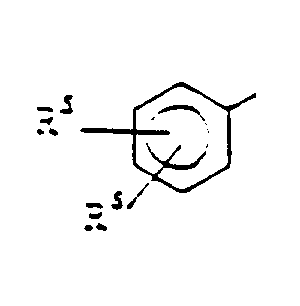
(dans laquelle R
5 et R
6 sont tels que définis à la revendication 1).
72. Procédé selon la revendication 71, dans lequel le composé est le 4-(p-heptyloxybenzoyl)amino-2-(5-tétrazolyl)-1,3-benzodioxoleou
son sel de sodium.
73. Procédé selon la revendication 4, dans lequel le symbole B représente un noyau
benzénique (c'est-à-dire un noyau de formule :
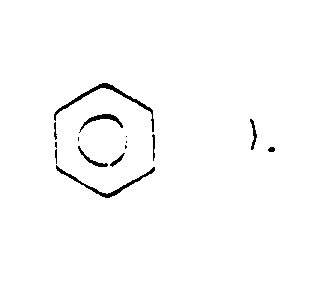
74. Procédé selon la revendication 73, dans lequel le symbole A représente une liaison
simple ou un groupe vinylène qui n'est pas substitué ou qui est substitué par un ou
des groupe(s) alkyle(s) linéaire(s) ou ramifié(s) ayant 1 à 6 atomes de carbone ou
par un ou des groupe(s) phényle(s), et le symbole T représente un atome d'oxygène.
75. Procédé selon la revendication 74, dans lequel R
1 représente un groupe de formule générale :
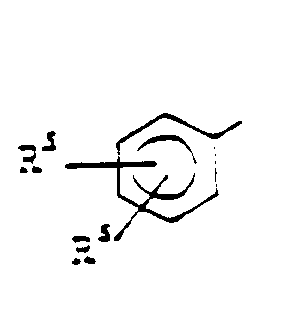
(dans laquelle R
5 et R
6 sont tels que définis à la revendication 1).
76. Procédé selon la revendication 75, dans lequel le composé est le 8-[p-(4-phénylbutoxy)benzoyl]amino-2-(5-tétrazolyl)naphtalène,
ou le 8-[p-(7-octényloxy)benzoyl]amino-2-(5-tétrazolyl)méthoxynaphtalène ; ou un sel
de sodium d'un de ces composés.
77. Procédé selon la revendication 4, dans lequel le symbole B représente un noyau
2,3,6,7-tétrahydro-5H-1,4-dioxépine (c'est-à-dire un noyau de formule :
78. Procédé selon la revendication 77, dans lequel le symbole A représente une liaison
simple ou un groupe vinylène qui n'est pas substitué ou qui est substitué par un ou
des groupe(s) alkyle(s) linéaire(s) ou ramifié(s) ayant 1 à 6 atome(s) de carbone
ou par un ou des groupe(s) phényle(s), et le symbole T représente un atome d'oxygène.
79. Procédé selon la revendication 78, dans lequel R
1 représente un groupe de formule générale :
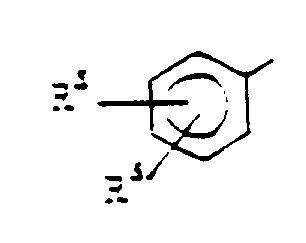
(dans laquelle R
5 et R
6 sont tels que définis à la revendication 1).
80. Procédé selon la revendication 79, dans lequel le composé est la 9-[p-(2E, 7-octadiényloxy)benzoyl]-amino-2-(5-tétrazolyl)-3,4-dihydro-2H-1
,5-benzodioxépine ou son sel de sodium.
81. Procédé selon la revendication 4, dans lequel le symbole B représente un noyau
morpholine (c'est-à-dire un noyau de formule
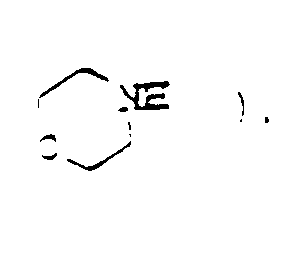
82. Procédé selon la revendication 81, dans lequel le symbole A représente un liaison
simple ou un groupe vinylène, qui n'est pas substitué ou qui est substitué par un
ou des groupe(s) linéaire(s) ou ramifié(s) ayant 1 à 6 atome(s) de carbone ou par
un ou des groupe(s) phényle(s), et le symbole T représente un atome d'oxygène.
83. Procédé selon la revendication 82, dans lequel R
1 représente un groupe de formule générale :
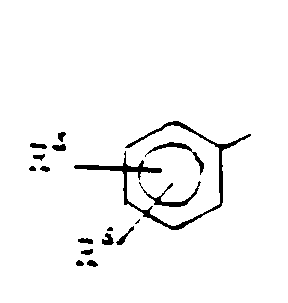
(dans laquelle R
5 et R
6 sont tels que définis à la revendication 1).
84. Procédé selon la revendication 83, dans lequel le composé est la 8-[p-(4-phénylbutoxy)benzoyl]amino-2-(5-tétrazolyl)-2,3-dihydro-1
,4-benzoxazine ou son sel de sodium.
85. Procédé selon la revendication 4, dans lequel le symbole B représente un noyau
3,4,5,6-tétrahydro-2H-pyranne (c'est-à-dire un noyau de formule :
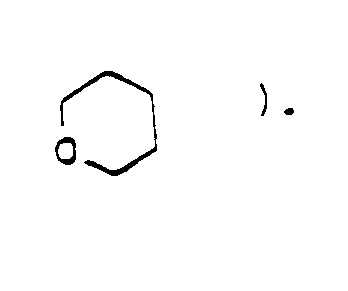
86. Procédé selon la revendication 85, dans lequel le symbole A représente une liaison
simple ou un groupe vinylène qui n'est pas substitué ou qui est substitué par un ou
des groupe(s) alkyle(s) linéaire(s) ou ramifié(s) ayant 1 à 6 atomes de carbone ou
par un ou des groupe(s) phényle(s), et le symbole T représente un atome d'oxygène.
87. Procédé selon la revendication 86, dans lequel R
1 représente un groupe de formule générale
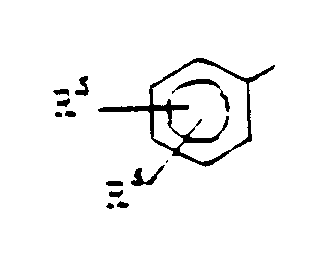
(dans laquelle R
5 et R
6 sont tels que définis à la revendication 1).
88. Procédé selon la revendication 87, dans lequel le composé est le 8-[p-(4-phénylbutoxy)benzoyl]amino-2-(5-tétrazolyl)-3,4-dihydro-2H-1-benzopyranne
ou son sel de sodium.
89. Composition pharmaceutique ou procédé de production de cette composition, se caractérisant
par la fourniture et l'utilisation, à titre d'ingrédient actif, d'au moins un composé
de formule générale (I) selon la définition apparaissant dans l'une quelconque des
revendications 1 à 88, ou d'un sel non toxique de ce composé, avec un excipient, véhicule
et/ou revêtement d'enrobage pharmaceutiquement acceptable.
90. Composé de formule générale (1), selon la définition donnée à la revendication
1, ou son sel non toxique, destiné à servir de médicament pour le traitement préventif
et/ou curratif de maladies de la trachée, des bronches ou des poumons, comme l'asthme
ou une maladie de type allergie.
91. Utilisation d'un composé de formule générale (1), selon la définition donnée à
la revendication 1, ou d'un sel non toxique de ce composé, pour la fabrication d'un
médicament destiné au traitement préventif et/ou curratif de maladies de la trachée,
des bronches ou des poumons, comme l'asthme ou des maladies de type allergie.