|
(11) | EP 0 176 005 B1 |

| (12) | EUROPEAN PATENT SPECIFICATION |
|
|
| (54) |
Novel platinum complexes Platinkomplexe Complexes de platine |
|
|
|||||||||||||||||||||||||||||||
|
||||||||||||||||||||||||||||||||
| Note: Within nine months from the publication of the mention of the grant of the European patent, any person may give notice to the European Patent Office of opposition to the European patent granted. Notice of opposition shall be filed in a written reasoned statement. It shall not be deemed to have been filed until the opposition fee has been paid. (Art. 99(1) European Patent Convention). |
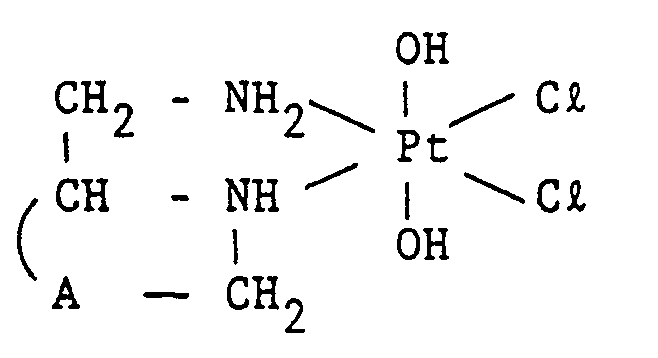
[0001] This invention relates to novel platinum complexes represented by the formula:
wherein A is -CH2- or -(CH2)=, and the formula:
wherein A is -CH2- or -(CH2)2―
[0003] Since Rosenberg et al reported that cisplatin (abbreviated as CDDP hereunder) has antitumor activity (Nature 222, 385 (1969)), many researchers have eagerly investigated to seek platinum complexes with a view of finding ones having antitumor activities. For example, some of these compounds appear in Japanese Patent Publication No. 5599/84, Japanese Patent Public Disclosure No. 77694/82, etc.
[0004] Although the known platinum complexes including CDDPwere recognized to exhibit a broad spectrum of antitumor activities, their dosage amounts and the sorts of tumors which could be treated were limited because these complexes have very serious nephrotoxicity. In addition, it is observed that these platinum complexes generally bind to plasma proteins so as to be converted into an inactive form.
[0005] Chemical Abstracts, vol. 93, abstract no. 36830e discloses the synthesis and antitumor activity of the complexes dichloro-3(2)-aminomethylpiperidineplatinum (II) and dichloro-2-aminomethylpyridine- platinum (II).
[0006] It is also stated there that the complexes having the 2-aminomethylpiperidine moiety as a ligand have high antitumor activity and that the change of dichloro groups with oxalate increases the antitumor activity.
[0007] GB-A-2 128 615 discloses platinum complexes which have a diamine moiety as a ligand that forms a six-membered ring with a platinum atom and which have cyclobutane-1,1-dicarboxylate moiety as a leaving group. It is also stated in this document that these complexes have both antitumor activity and low toxicity.
[0008] The inventors of this invention have studied various platinum complexes in order to identify those having high antitumor activities and less toxicity. Finally;1hey found the compounds of this invention and confirmed that these complexes are suitable for use as an antitumor agent.
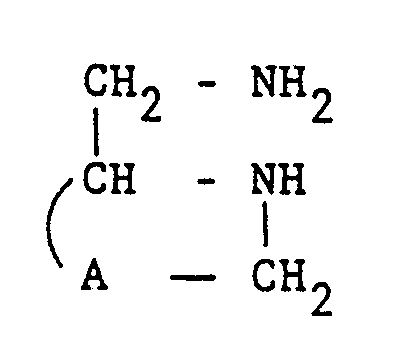
[0010] Platinum (II) potassium chloride is reacted with a diamine derivative represented by the formula:
wherein A is -CH2- or ―(CH2)2―. The resulting dichloro compound is converted to the corresponding dinitrate with use of silver nitrate, and then reacted with 1,1-cyclobutanedicarboxylic acid to give a novel platinum complex. The above dichloro compound can also be oxidized with hydrogen peroxide to give a novel platinum complex.
[0011] Diamine derivatives which can be used in this invention include 2-aminomethylpyrrolidine, (S)-2-aminomethylpyrrolidine, (R)-2-aminomethylpyrrolidine and 2-aminomethylazetidine.
[0012] Dicarboxylic acids which are useful in this invention are 1,1-cyclobutanedicarboxylic acid and its salts.
[0013] The platinum complex of this invention can be formulated by any desirable conventional method with a pharmaceutically acceptable carrier and, if necessary, an adjuvant.
[0014] For oral administration, the compound of this invention can be formulated into a solid preparation such as tablets, pills, granules, powder, capsules, or the like, or a liquid preparation such as solutions, suspensions, emulsions or the like. When the preparation is used for parenteral administration, the preparation is formulated into a suppository, injection, an intravenous drip infusion or the like. When the compound of this invention is formulated into tablets, pills, granules, powder or capsules, pharmaceutical carriers such as starch, sucrose, crystalline cellulose, kaolin, calcium carbonate, talc, magnesium carbonate and the like are preferably used. For preparation of an injection, it is preferred that the compound is dissolved in distilled water or in an aqueous solution of a salt such as sodium chloride. For preparation of an intravenous drip infusion, the compound is dissolved in a suitable fluid such as a physiological saline, a glucose-sodium chloride solution or the like. For a suppository, cacao butter, laurin, glycerogelatin, macrogol are preferably used as a base.
[0015] The amount of the compound in a formulated preparation is selected so as to be appropriately administered depending on the age and condition of individual patient being treated.
[0016] The compound of this invention is preferably administered orally in a daily dose of from 200 to 400 mg/m2, and parenterally in a daily dose of from 100 to 200 mg/m2.
[0017] The compound of this invention has very low toxicity. For example, when the compound of this invention as an aqueous solution was intraperitoneally administered to a ddY strain male mouse (5 weeks old, weight 26 to 30 g), the LDso was higher than 80 mg/kg.
[0018] As described above, since the compound of this invention has high antitumor activity and low toxicity, and is easily soluble in water, it is very useful as a drug.
[0019] This invention is further illustrated in the following Examples and Experiments, but they should not be interpreted as limitative of this invention.
Example 1
[0020] To a solution of platinum (II) potassium chloride (4.15 g : 0.01 mole) in 100 ml of water was added a solution of 2-aminomethylpyrrolidine (1.00 g : 0.01 mole) in 10 ml of water. The mixture was stirred at room temperature for 1 day. The resulting solid was collected byfiltration, washed with water, and dried at 60°C under reduced pressure for 3 hours to give 3.00 g of dichloro-(2-aminomethylpyrrolidine)platinum (II). Yield: 82%, m.p. 255-270°C (decomposition).
[0022] To a suspension of the product obtained above (3.00 g : 0.0082 mole) in 300 ml of water was added silver nitrate (2.78 g : 0.0164 mole). The mixture was stirred at room temperature under light shielding for 3 days. The resulting white precipitate of silver chloride was removed by filtration using a millipore filter (0.22 pm). The filtrate, which contained the unreacted silver nitrate, was treated with a sodium chloride aqueous solution. The resulting silver chloride was removed by filtration, and the filtrate was evaporated at a temperature below 40°C under reduced pressure into 60 ml. To the above solution was added disodium 1,1-cyclobutanedicarboxylate (1.54 g : 0.0082 mole) with stirring, and the mixture was subjected to reaction at room temperature for 4 days.
[0023] The resulting white crystalline solid was recovered by filtration, washed with water, and dried at 60°C under reduced pressure for 3 hours to give as dried product 1.86 g of 1,1-cyclobutanedicarboxylato(2-aminomethylpyrrolidine)platinum (II). Yield: 52%, m.p. 235-255°C (decomposition).
[0025] The obtained dried product was recrystallized from water to give, as the purified product, 1.61 g of 1,1-cyclobutanedicarboxylato(2-aminomethylpyrrolidine)platinum (II) (compound 1). Total yield: 45%, m.p. 215-220°C (decomposition).
Example 2
[0027] To a solution of (S)-proline (25 g : 0.22 mole) and sodium hydroxide (8.7 g : 0.22 mole) in 150 ml of water was slowly added a solution of benzylchloroformate (43.5 g : 0.26 mole) and sodium hydroxide (11.6 g : 0.29 mole) in 75 ml of water with stirring under cooling on ice over 30 minutes, followed by continuing the stirring at the same temperature for 15 minutes. From the reaction mixture, excess benzylchloroformate was removed by extraction with 150 ml of chloroform. The aqueous layer was acidified with 5N hydrochloric acid, and the resulting oily product was extracted with chloroform. After drying the chloroform layer over magnesium sulfate, chloroform was removed by evaporation to give 52.2 g of (S)-1-carbobenzoxypyrrolidine-2-carboxylic acid as oil. Yield: 96%.
[0028] To a solution of the resulting (S)-1-carbobenzoxypyrrolidine-2-carboxylic acid (52.2 g : 0.21 mole) and triethylamine (21.2 g : 0.21 mole) in 525 ml of chloroform was added isobutyl chloroformate (28.7 g : 0.21 mole) with stirring under cooling on ice, followed by continuing the stirring for 15 minutes. Dried ammonia gas was bubbled into the mixture for 1 hour and then the mixture was allowed to warm to room temperature and stand overnight. The resulting white precipitate was removed by the filtration, and the filtrate was evaporated under reduced pressure. The residue was dissolved in 200 ml of chloroform and was washed with diluted aqueous hydrochloric acid and water, and dried over magnesium sulfate. Chloroform was distilled off to give 45.8 g of (S)-1-carbobenzoxypyrrolidine-2-carboxamide. Yield: 88%.
[0029] (S)-1-carbobenzoxypyrrolidine-2-carboxamide (45.8 g : 0.18 mole) was dissolved in 400 ml of absolute methanol and catalytically reduced in a usual manner by addition of 10 g of 10% palladium on charcoal under a hydrogen gas steam. After completion of the reaction, the catalyst was removed and then the solvent was distilled off under reduced pressure. The residue was crystallized from n-hexane and benzene, and wash with n-hexane go give 1'8.8 g of (S)-pyrrolidine-2-carboxamide as white solid. Yield: 89%, m.p. 85-90°C.
[0030] To a solution of (S)-pyrrolidine-2-carboxamide (18.8 g : 0.16 mole) in one liter of dried tetrahydrofuran was slowly added lithium aluminum hydride (33.9 g : 0.89 mole) with stirring under cooling on ice, followed by refluxing the mixture for 48 hours. After cooling, the reaction mixture was treated with water and tetrahydrofuran by usual manner to give oil.
[0031] This was distilled under reduced pressure to give 6.07 g of (S)-2-aminomethylpyrrolidine as colorless liquid. Yield: 37%, b.p. 80-85°C (20 mmHg). [α]20D + 10.02° (H20).
[0032] (S)-2-aminomethylpyrrolidine was lead to (S)-1,1-cyclobutanedicarboxylato(2-aminomethylpyrrolidine)platinum (II) (Compound 2) by the same manner was described in Example 1. m.p. 240-255°C (decomposition).
Example 3
[0034] (R(-proline was lead to (R)-2-aminomethylpyrrolidine by the same manner as in Example 2. b.p. 79-85°C (20 mmHg). [α]
- 8.67° (H20)
[0035] (R)-2-aminomethylpyrrolidine was further lead to (R)-1,1-cyclobutanedicarboxylato)2-aminomethylpyrrolidine) platinum (11) (Compound 3) by the same manner as described in Example 1, m.p. 248-257°C (decomposition).
Example 4
[0037] By the method described in Example 1, 1,1-Cyclobutanedicarboxylo(2-aminomethylazetidine)-platinum(II) (Compound 4) was prepared, m.p. 220-2450C (decomposition).
Example 5
[0039] To a solution of platinum(II)potassium chloride (4.15 g : 0.01 mole) in 60 ml of water was added a solution of 2-aminomethylazetidine (0.86 g : 0.01 mole) in 10 ml of water, and the mixture was stirred at room temperature for 4 hours. The resulting solid was collected by filtration, washed with water and dried at 60°C under reduced pressure for 3 hours to give 2.64 g of dichloro(2-aminomethylazetidine)platinum(II) as white solid. Yield: 75%, m.p. 215-235°C (decomposition).
[0040] To the suspension of the above product (1.76 g : 0.005 mole) in 3 ml of water was added 18 ml of 31 % aqueous hydrogen peroxide with stirring at room temperature. The reaction mixture was subjected to reaction at room temperature for 30 minutes and then at 80°C for 1 hour. After cooling, the resulting solid was collected by filtration, washed with water and dried at 60°C under reduced pressure for 3 hours to give 1.16 g of cis-dichloro-trans-dihydroxy(2-aminomethylazetidine)platinum(lV) (Compound 5) as light brown solid. Yield: 60%, m.p. 200―220°C (decomposition).
[0042] 2-Aminomethylazetidine used in Example 4 and Example 5 as a starting compound was prepared by reducing azetidine-2-carboxyamide in tetrahydrofuran with lithium aluminum hydride.
Example 6
[0043] By the method as in Example 5, cis-dichloro-trans-dihydroxy(2-aminomethylpyrrolidine)platinum(IV) (Compound 6) was prepared, m.p. 220-230°C (decomposition).
Experiment 1 Test of in vivo antitumor activity against Colon 26 carcinoma
[0045] A small piece of Colon 26 tumor (1-2 mm3) was subcutaneously implanted in a lateral region of abdomen of a CDF1/Crj strain male mouse (6 weeks old). Four days after the implantation, mice with the almost same size of tumor were divided into groups of 5-6 members each, and each mouse was intraperitoneally administered the test compound. Ten days after the administration, each of the mice was sacrificed, and the tumor was weighed to calculate the growth inhibitory ratio (GIR) by the following equation:
wherein C and T represent the mean weights of tumor of the control group and the treated group, respectively.
[0046] The results are shown in Table 1 below. Cisplatin (CDDP) which is a known compound was used as a comparison.
Experiment 2 Tests of in vivo antitumor activity against Colon 26 carcinoma
[0047] A small piece of Colon 26 tumor (1-2 mm3) was subcutaneously implanted in a lateral region of abdomen of a CDFi/Crj strain male mouse (7 weeks old). Four days after the implantation, mice with the almost same size of tumor were divided into groups of 5-6 members each, and each mouse was intraperitoneally administered the test compound on day 4, 6, and 8 after implantation in a dose of 40 mg/kg one day. Fourteen days after the implantation, each mouse was sacrificed, and the tumor thereof was weighed to calculate the GIR (%) by the following equation.
where C and T represent the mean weights of tumor of the control group and the group administered the test compound, respectively.
Experiment 3 Comparison of in vitro binding property of the test compound relative to the plasma proteins
[0049] A solution of the test compound was added to plasma obtained from SD strain rat at a ratio of 1: 19 by volume which corresponds to 5 pg/ml. of Pt. The mixture was incubated at 37°C under dark. At a predetermined time, the mixture was sampled, and filtered with a molecular sieve membrane (manufactured by Amico Centriflow PMS) under centrifugation. The Pt content in the filtrate unbound Pt was assayed by an atomic absorption spectrophotometry.
Experiment 4 Test on side-effects
[0051] BDF1/Crj strain male mice (6 weeks old) were intraperitoneally administered the test compound, and 1, 3 and 5 days after the administration, 3 mice were sacrificed to determine the body weight and the level of urea nitrogen in blood (abbreviated as BUN).
Formulation of Pharmaceutical Preparation
a) Injection
[0053] An aqueous solution of compound No. 1 prepared in the Example was charged in vials by aseptic manipulation so that each vial contains 50 mg of the compound. The content of each vial was dried and sterilized, and the vials were sealed. When used as an injection, 10 ml of physiological saline was added to the vial to make up the injection.
[0054] Alternately, when used as an intravenous drip infusion, the preparation was dissolved in a suitable fluid therapy such as a physiological saline or glucose-saline or the like.
b) Tablet:
[0056] The above ingredients were intimately mixed and directly compressed by a tableting machine into tablets having a diameter of 8 mm and weighing 180 mg each.
[0057] From the results obtained by Experiments 1 and 2 (Tables 1 and 2), it can be seen that the compounds of this invention exhibited a stronger antitumor activity and are effective over a broader range of dose level in comparison with those of CDDP.
[0058] In addition, although it is generally considered that a platinum complex is bonded with plasma proteins to form an inactive substance, the compound of this invention exhibits a significantly lower binding property with plasma proteins than that of CDDP. The compounds of this invention have reduced toxicity and high water-solubility, and are therefore useful as an antitumor medicine.
Claims for the following Contracting State(s) : s: BE CH DE FR GB IT LI NL SE
1. A platinum complex represented by the formula:
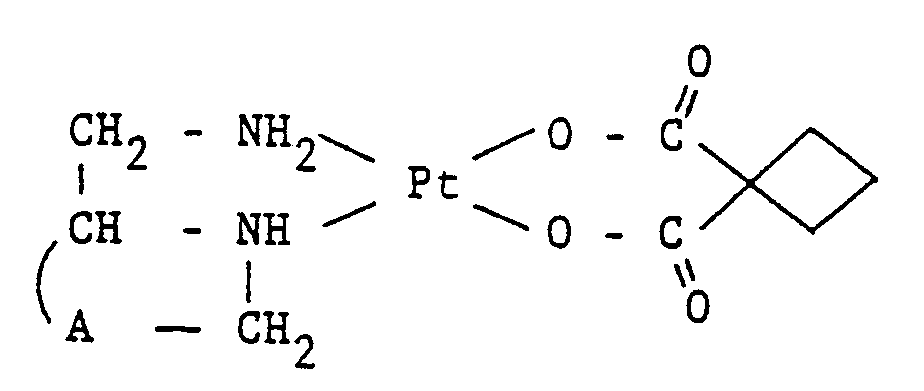
wherein A is ―CH2― or -(CH2)2-.
wherein A is ―CH2― or -(CH2)2-.
2. A platinum complex represented by the formula:
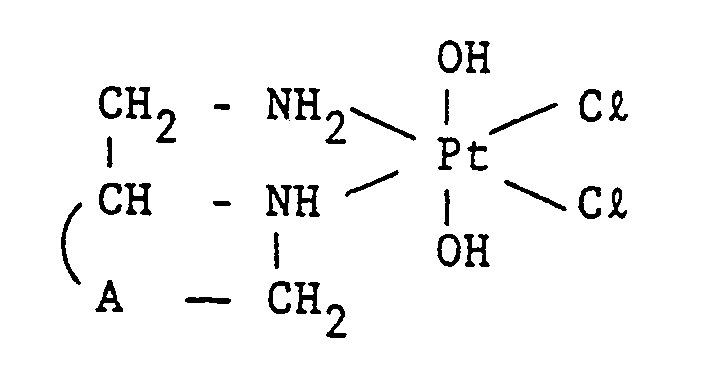
wherein A is ―CH2― or ―(CH2)2―.
wherein A is ―CH2― or ―(CH2)2―.
3. 1,1-Cyclobutanedicarboxylato(2-aminomethylpyrrolidine)platinum(II), according to
Claim 1.
4. 1,1-Cyclobutanedicarboxylato(2-aminomethylazetidine)platinum(II), according to
Claim 1.
5. cis-Dichloro-trans-dihydroxy(2-aminomethylpyrrolidine)platinum(lV), according to
Claim 2.
6. cis-Dichloro-trans-dihydroxy(2-aminomethylazetidine)platinum(IV), according to
Claim 2.
7. A process for preparing a platinum complex represented by the formula:
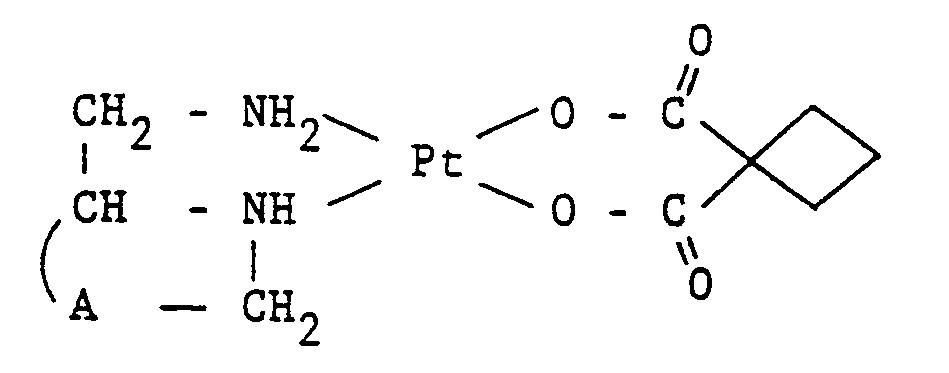
wherein A is ―CH2― or ―(CH2)2― which comprises reacting a diamine derivative of the formula:
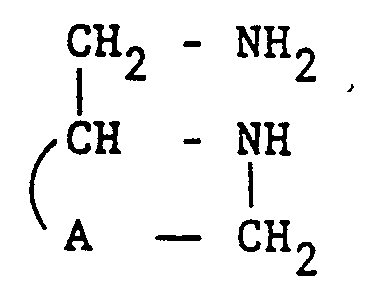
wherein A is as defined above with platinum (II) potassium chloride to form the corresponding dichloro compound; and converting the dichloro compound with the aid of silver nitrate (AgN03) into the corresponding dinitrate; and then reacting the nitrate compound with 1,1-cyclobutanedicarboxylic acid or its salts.
wherein A is ―CH2― or ―(CH2)2― which comprises reacting a diamine derivative of the formula:
wherein A is as defined above with platinum (II) potassium chloride to form the corresponding dichloro compound; and converting the dichloro compound with the aid of silver nitrate (AgN03) into the corresponding dinitrate; and then reacting the nitrate compound with 1,1-cyclobutanedicarboxylic acid or its salts.
8. A process for preparing a platinum complex represented by the formula:
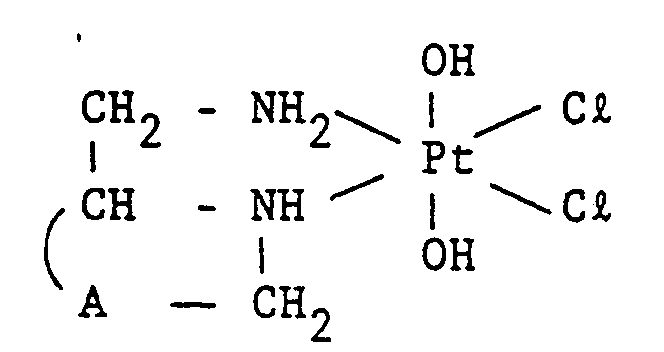
wherein A is ―CH2― or -(CH2)2- which comprises reacting a diamine derivative of the formula:
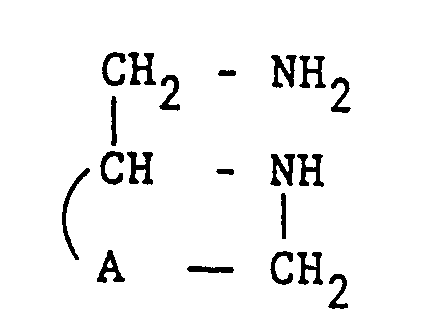
wherein A is as defined above with platinum (II) potassium chloride to form the corresponding dichloro compound; and oxidizing the dichloro compound with hydrogen peroxide.
wherein A is ―CH2― or -(CH2)2- which comprises reacting a diamine derivative of the formula:
wherein A is as defined above with platinum (II) potassium chloride to form the corresponding dichloro compound; and oxidizing the dichloro compound with hydrogen peroxide.
9. A process according to Claim 7 or 8 wherein said diamine derivative is reacted
with an equimolar amount of platinum (II) potassium chloride in an aqueous medium
at 0-1000C for 4 hours to 3 days..
10. A process according to Claim 8 wherein said dichloro compound is reacted with
excess of hydrogen peroxide in an aqueous medium at 0 to 100°C for 0.5-10 hours.
11. A process according to Claim 7 wherein said dichloro compound is reacted with
twice molar of silver nitrate in an aqueous medium at 1-30°C for 1 day to 1 week.
12. A process according to Claim 7 wherein said dinitrate compound is reacted with
an equimolar amount of the dicarboxylic acid in an aqueous medium at 1-30°C for 1
hour to 1 week.
13. Use of platinum complexes according to any of claims 1 to 6 for the preparation
of antitumor agents.
14. Pharmaceutical preparations with antitumor activity comprising a pharmaceutically
effective amount of a platinum complex according to any of claims 1 to 6 and pharmaceutically
acceptable carriers and/or adjuvants.
Claims for the following Contracting State(s) : AT
1. A process for preparing a platinum complex represented by the formula:
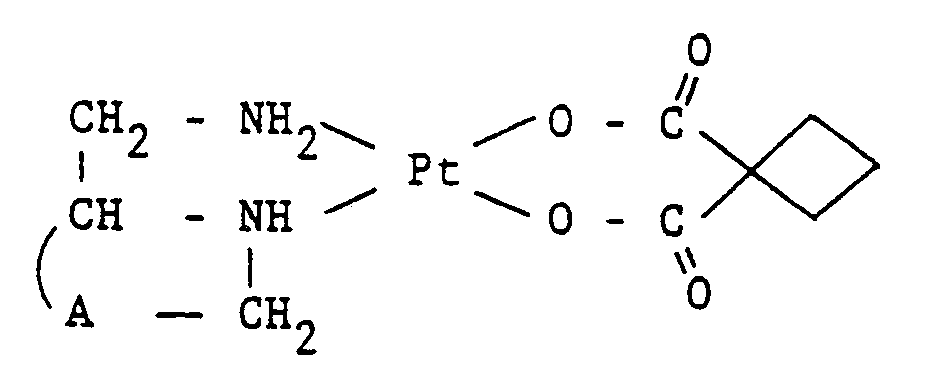
wherein A is -CH2- or -(CH2)2- which comprises reacting a diamine derivative of the formula:
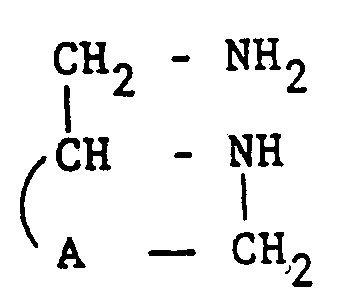
wherein A is as defined above with platinum (II) potassium chloride to form the corresponding dichloro compound; and converting the dichloro compound with the aid of silver nitrate (AgN03) into the corresponding dinitrate; and then reacting the nitrate compound with 1,1-cyclobutanedicarboxylic acid or its salts.
wherein A is -CH2- or -(CH2)2- which comprises reacting a diamine derivative of the formula:
wherein A is as defined above with platinum (II) potassium chloride to form the corresponding dichloro compound; and converting the dichloro compound with the aid of silver nitrate (AgN03) into the corresponding dinitrate; and then reacting the nitrate compound with 1,1-cyclobutanedicarboxylic acid or its salts.
2. A process for preparing a platinum complex represented by the formula:
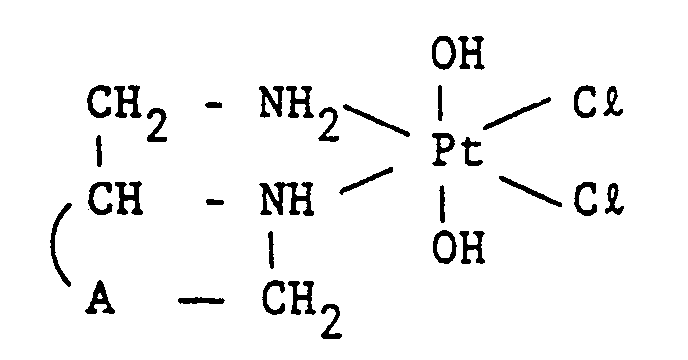
wherein A is ―CH2― or ―(CH2)2― which comprises reacting a diamine derivative of the formula:
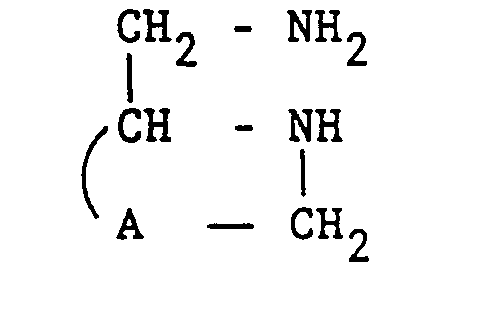
wherein A is as defined above with platinum (II) potassium chloride to form the corresponding dichloro compound; and oxidizing the dichloro compound with hydrogen peroxide.
wherein A is ―CH2― or ―(CH2)2― which comprises reacting a diamine derivative of the formula:
wherein A is as defined above with platinum (II) potassium chloride to form the corresponding dichloro compound; and oxidizing the dichloro compound with hydrogen peroxide.
3. A process according to Claim 1 or 2 wherein said diamine derivative is reacted
with an equimolar amount of platinum(II)potassium chloride in an aqueous medium at
0―100°C for 4 hours to 3 days.
4. A process according to Claim 2 wherein said dichloro compound is reacted with excess
of hydrogen peroxide in an aqueous medium at 0 to 100°C for 0.5-10 hours.
5. A process according to Claim 1 wherein said dichloro compound is reacted with twice
molar of silver nitrate in an aqueous medium at 1-30°C for 1 day to 1 week.
6. A process according to Claim 1 wherein said dinitrate compound is reacted with
an equimolar amount of the dicarboxylic acid in an aqueous medium at 1-30°C for 1
hour to 1 week.
7. A process according to Claim 1 wherein the platinum complex is 1,1-Cyclobutanedicarboxylato(2-aminomethylpyrrolidine)platinum(II).
8. A process according to Claim 1 wherein the platinum complex is 1,1-Cyclobutanedicarboxylato(2-aminomethylazetidine)platinum(II).
9. A process according to Claim 2 wherein the platinum complex is cis-Dichloro-trans-dihydroxy(2-aminomethylpyrrolidine)platinum(IV).
10. A process according to Claim 1 wherein the platinum complex is cis-Dichloro-trans-dihydroxy(2-aminomethylazetidine)platinum(IV).
11. Use of platinum complexes prepared according to any of claims 1 to 10 for the
preparation of antitumor agents.
12. Pharmaceutical preparations with antitumor activity comprising a pharmaceutically
effective amount of a platinum complex prepared according to any of claims 1 to 10
and pharmaceutically acceptable carriers and/or adjuvants.
Patentansprüche für folgende(n) Vertragsstaat(en) : BE CH DE FR GB IT LI NL SE
1. Platinumkomplex der Formel:
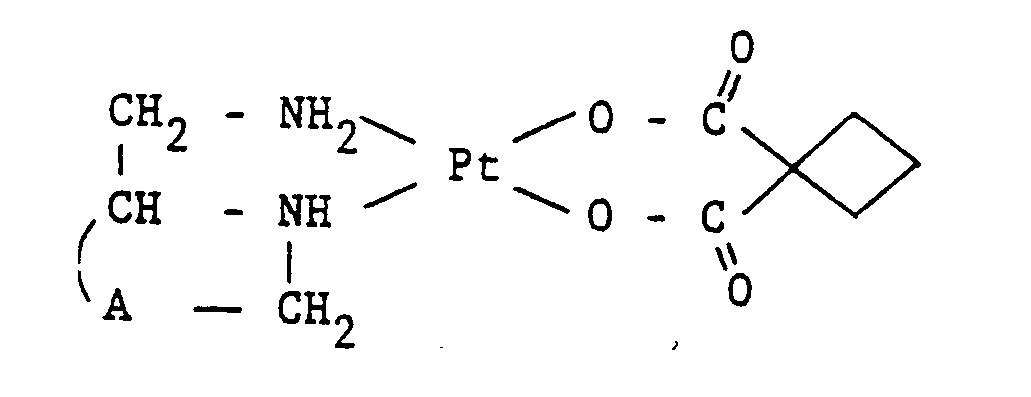
in der A -CH2 oder ―(CH2)2― bedeutet.
in der A -CH2 oder ―(CH2)2― bedeutet.
2. Platinumkomplex der Formel:
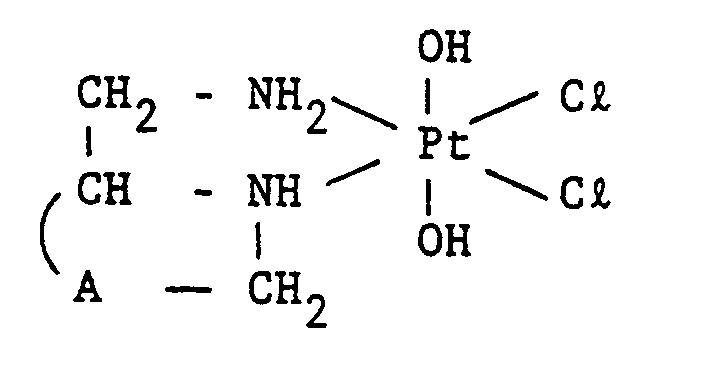
in der A -CH2- oder -(CH2)2- bedeutet.
in der A -CH2- oder -(CH2)2- bedeutet.
3. 1,1-Cyclobutandicarboxylat-(2-aminomethylpyrrolidin)platinum(II), gemäß Anspruch
1.
4. 1,1-Cyclobutandicarboxylat-(2-aminomethylazetidin)platinum(11), gemäß Anspruch
1.
5. cis-Dichlor-trans-dihydroxy-(2-aminomethylpyrrolidin)platinum(IV), gemäß Anspruch
2.
6. cis-Dichlor-trans-dihydroxy-(2-aminomethylazetidin)platinum(IV), gemäß Anspruch
2.
7. Verfahren zur Herstellung eines Platinumkomplexes der Formel
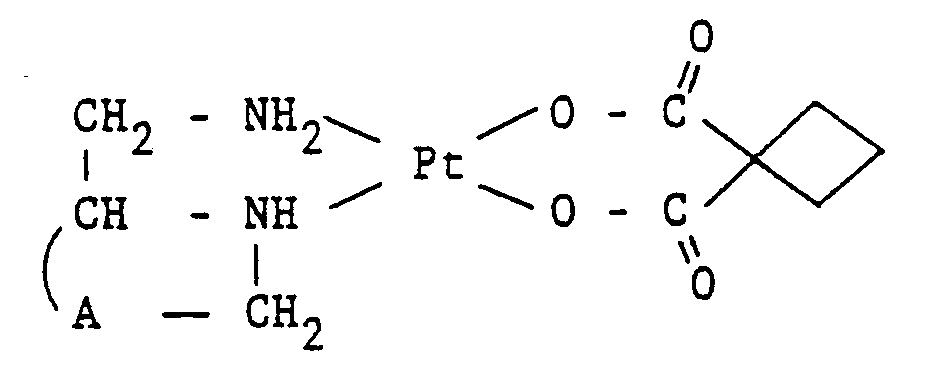
in der A ein -CH2- oder -(CH2)2- bedeutet, dadurch gekennzeichnet, daß man ein Diaminderivat der Formel
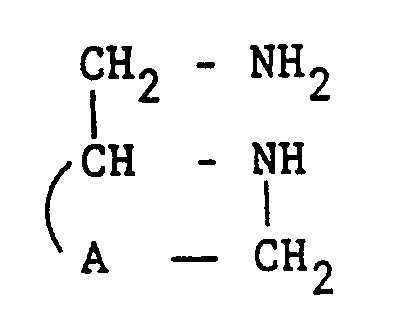
in der A die vorstehende Bedeutung hat, mit Platinum(II)-Kaliumchlorid umsetzt, um die entsprechende Dichlorverbindung zu erhalten und die Dichlorverbindung mit Hilfe von Silbernitrat (AgN03) zum entsprechenden Dinitrat überführt und sodann die Nitratverbindung mit 1,1-Cyciobutandicarbonsäure oder ihren Salzen umsetzt.
in der A ein -CH2- oder -(CH2)2- bedeutet, dadurch gekennzeichnet, daß man ein Diaminderivat der Formel
in der A die vorstehende Bedeutung hat, mit Platinum(II)-Kaliumchlorid umsetzt, um die entsprechende Dichlorverbindung zu erhalten und die Dichlorverbindung mit Hilfe von Silbernitrat (AgN03) zum entsprechenden Dinitrat überführt und sodann die Nitratverbindung mit 1,1-Cyciobutandicarbonsäure oder ihren Salzen umsetzt.
8. Verfahren zur Herstellung eines Platinumkomplexes der Formel
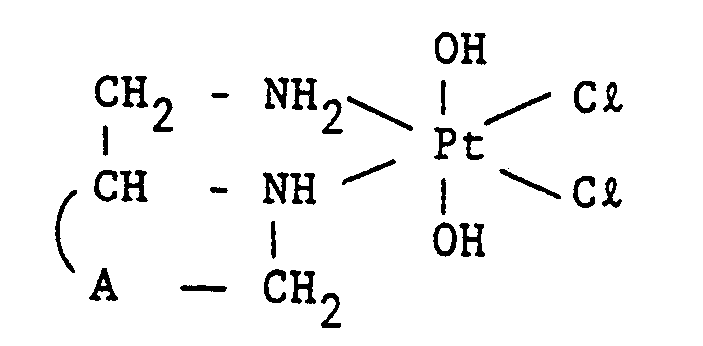
in der A-CH2-oder-(CH2)2- bedeutet, dadurch gekennzeichnet, daß man ein Diaminderivat der Formel
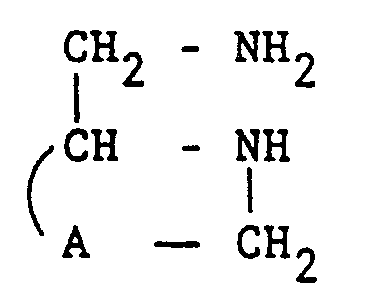
in der A die vorstehende Bedeutung hat, mit Platinum(II)-Kaliumchlorid umsetzt, um die entsprechende Dichlorverbindung zu erhalten und die Dichlorverbindung mit Wasserstoffperoxid oxidiert.
in der A-CH2-oder-(CH2)2- bedeutet, dadurch gekennzeichnet, daß man ein Diaminderivat der Formel
in der A die vorstehende Bedeutung hat, mit Platinum(II)-Kaliumchlorid umsetzt, um die entsprechende Dichlorverbindung zu erhalten und die Dichlorverbindung mit Wasserstoffperoxid oxidiert.
9. Verfahren gemäß Anspruch 7 oder 8, wobei das Diaminderivat mit einer äquimolaren
Menge Platinum(II)-Kaliumchlorid in einem wäßrigen Medium für 4 Stunden bis 3 Tage
bei 0 bis 100°C umgesetzt wird.
10. Ein Verfahren nach Anspruch 8, wobei die Dichlorverbindung mit einem Überschuß
an Hydrogenperoxid in einem waßrigen Medium für 0,5 bis 10 Stunden bei 0 bis 100°C
umgesetzt wird.
11. Verfahren nach Anspruch 7, wobei die Dichlorverbindung in einer molaren Menge
des Silbernitrats in einem wäßrigen Medium für 1 Tag bis 1 Woche bei 1 bis 30°C umgesetzt
wird.
12. Verfahren nach Anspruch 7, wobei die Dinitratverbindung in einer äquimolaren Menge
der Dicarbonsäure in einem wäßrigen Medium für 1 Stunde bis 1 Woche bei 1 bis 30°C
umgesetzt wird.
13. Verwendung von Platinumkomplexen gemäß einem der Ansprüche 1 bis 6 zur Herstellung
von Antitumormitteln.
14. Arzneimittel mit Antitumoraktivität, enthaltend eine pharmazeutisch wirksame Menge
eines Platinumkomplexes gemäß einem der Ansprüche 1 bis 6 und pharmazeutisch verträgliche
Träger und/oder Hilfsstoffe.
Patentansprüche für folgende(n) Vertragsstaat(en) : AT
1. Verfahren zur Herstellung eines Platinumkomplexes der Formel
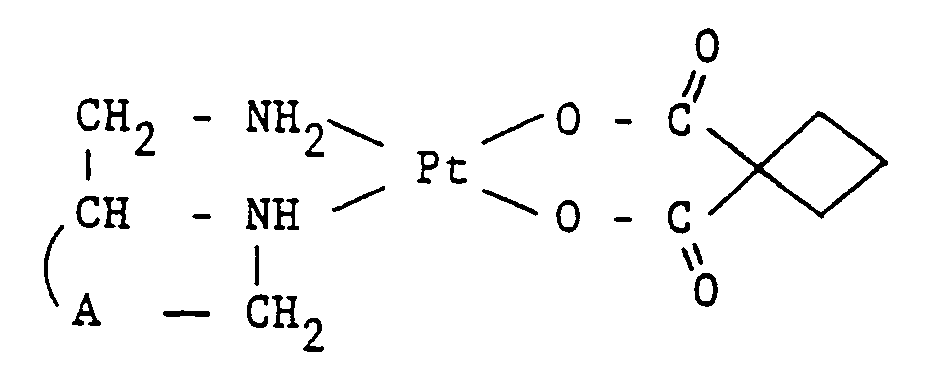
in der A ein -CH2- oder ―/CH2)2― bedeutet, dadurch gekennzeichnet, daß man ein Diaminderivat der Formel
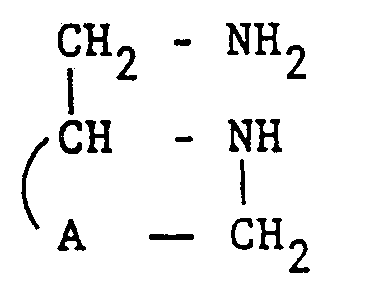
in der A ein die vorstehende Bedeutung hat, mit Platinum(11)-Kaliumchlorid umsetzt, um die entsprechende Dichlorverbindung zu erhalten und die Dichlorverbindung mit Hilfe von Silbernitrat (AgN03) zum entsprechenden Dinitrat überführt und sodann die Nitratverbindung mit 1,1-Cyclobutandicarbonsäure oder ihren Salzen umsetzt.
in der A ein -CH2- oder ―/CH2)2― bedeutet, dadurch gekennzeichnet, daß man ein Diaminderivat der Formel
in der A ein die vorstehende Bedeutung hat, mit Platinum(11)-Kaliumchlorid umsetzt, um die entsprechende Dichlorverbindung zu erhalten und die Dichlorverbindung mit Hilfe von Silbernitrat (AgN03) zum entsprechenden Dinitrat überführt und sodann die Nitratverbindung mit 1,1-Cyclobutandicarbonsäure oder ihren Salzen umsetzt.
2. Verfahren zur Herstellung eines Platinumkomplexes der Formel
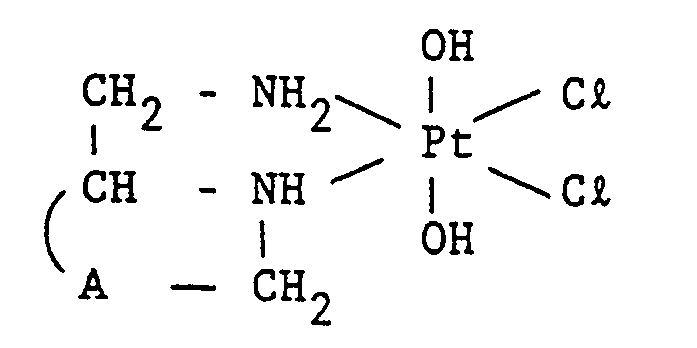
in der A―CH2― oder―(CH2)2- bedeutet, dadurch gekennzeichnet, daß man ein Diaminderivat der Formel
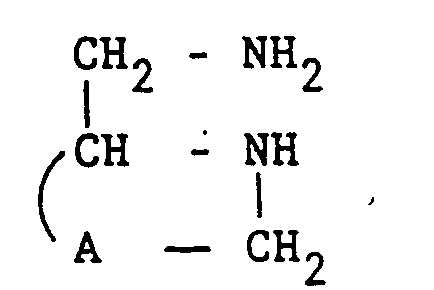
in der A die vorstehende Bedeutung hat, mit Platinum(II)-Kaliumchlorid umsetzt, um die entsprechende Dichlorverbindung zu erhalten und die Dichlorverbindung mit Wasserstoffperoxid oxidiert.
in der A―CH2― oder―(CH2)2- bedeutet, dadurch gekennzeichnet, daß man ein Diaminderivat der Formel
in der A die vorstehende Bedeutung hat, mit Platinum(II)-Kaliumchlorid umsetzt, um die entsprechende Dichlorverbindung zu erhalten und die Dichlorverbindung mit Wasserstoffperoxid oxidiert.
3. Verfahren gemäß Anspruch 1 oder 2, wobei das Diaminderivat mit einer äquimolaren
Menge Platinum(II)-Kaliumchlorid in einem wäßrigen Medium für 4 Stunden bis 3 Tage
bei 0 bis 100°C umgesetzt wird.
4. Ein Verfahren nach Anspruch 2, wobei die Dichlorverbindung mit einem Überschuß
an Hydrogenperoxid in einem waßrigen Medium für 0,5 bis 10 Stunden bei 0 bis 100°C
umgesetzt wird.
5. Verfahren nach Anspruch 1, wobei die Dichlorverbindung in einer doppelten molaren
Menge des Silbernitrats in einem wäßrigen Medium für 1 Tag bis 1 Woche bei 1 bis 30°C
umgesetzt wird.
6. Verfahren nach Anspruch 1, wobei die Dinitratverbindung in einer äquimolaren Menge
der Dicarbonsäure in einem wäßrigen Medium für 1 Stunde bis 1 Woche bei 1 bis 30°C
umgesetzt wird.
7. Verfahren nach Anspruch 1, wobei der Platinumkomplex 1,1-Cyclobutandicarboxylat-(2-amino-
methylpyrrolidin)platinum(II) ist.
8. Verfahren nach Anspruch 1, wobei der Platinumkomplex 1,1-Cyclobutandicarboxylat-(2-amino-
methylazetidin)platinum(II) ist.
9. Verfahren nach Anspruch 2, wobei der Platinumkomplex cis-Dichlor-trans-dihydroxy-(2-amino-
methylpyrrolidin)platinum(IV) ist.
10. Verfahren nach Anspruch 2, wobei der Platinumkomplex cis-Dichlor-trans-dihydroxy-(2-amino-
methylazetidin)platinum(IV) ist.
11. Verwendung von Platinumkomplexen, hergestellt gemäß einem der Ansprüche 1 bis
10 zur Herstellung von Antitumormitteln.
12. Arzneimitel mit Antitumoraktivität, enthaltend eine pharmazeutisch wirksame Menge
eines Platinumkomplexes, hergestellt gemäß einem der Ansprüche 1 bis 10 und pharmazeutisch
verträgliche Träger und/oder Hilfsstoffe.
Revendications pour l'(les) Etat(s) contractant(s) suivant(s) : BE CH DE FR GB IT
NL SE
1. Complexe de platine représenté par la formule:
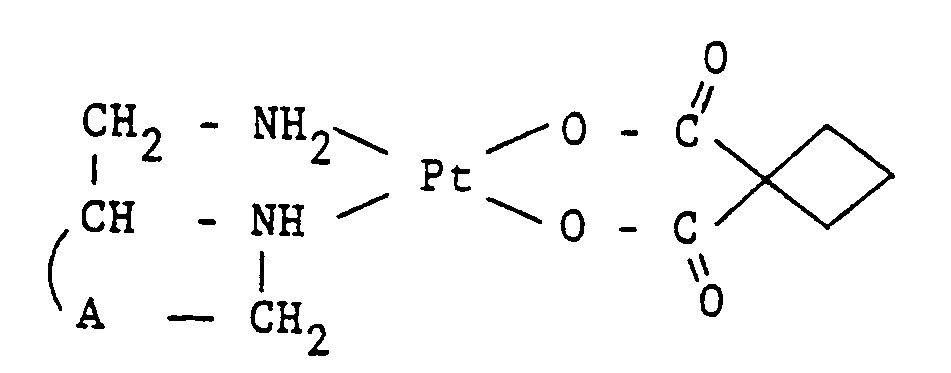
où A est -CH2- ou ―(CH2)2―.
où A est -CH2- ou ―(CH2)2―.
2. Complexe de platine représenté par la formule:
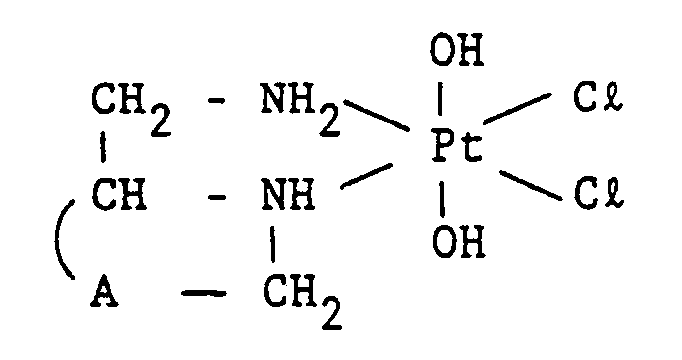
où A est -CH2- ou ―((CH2)2―.
où A est -CH2- ou ―((CH2)2―.
3. Le 1,1-cyclobutanedicarboxylato(2-aminométhylpyrrolidine)platine(II), suivant la
revendication 1.
4. Le 1,1-cyclobutanedicarboxylato(2-aminométhylazétidine)platine(II), suivant la
revendication 1.
5. Le cis-dichloro-trans-dihydroxy(2-aminométhylpyrrolidine)platine(lV), suivant la
revendication 2.
6. Le cis-dichloro-trans-dihydroxy(2-aminométhylazétidine)platine(IV), suivant la
revendication 2.
7. Procédé de préparation d'un complexe de platine représenté par la formule:
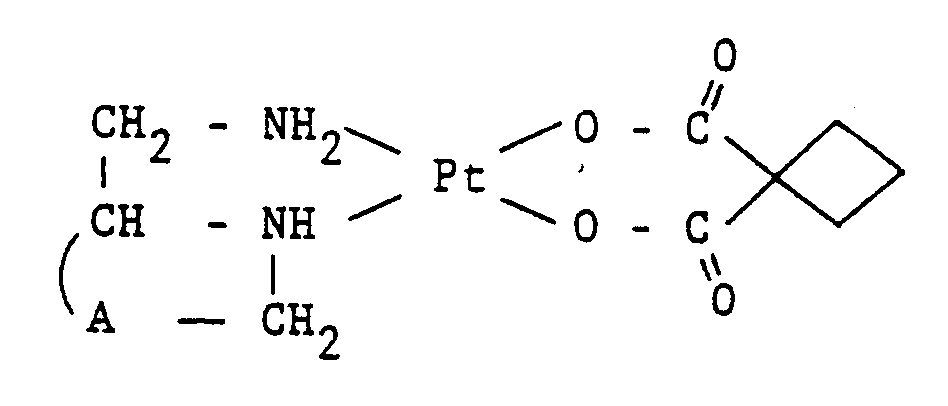
où A est -CHZ- ou -(CH2)2-, qui comprend la réaction d'une diamine de formule:
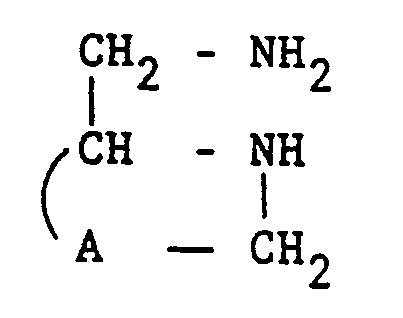
où A est tel que défini ci-dessus, avec du chlorure de platine(II) et de potassium pour la formation du composé dichloré correspondant, puis la conversion du composé dichloré à l'aide de nitrate d'argent (AgN03) en le dinitrate correspondant et ensuite la réaction du nitrate avec l'acide 1,1-cyclobutane- dicarboxylique ou ses sels.
où A est -CHZ- ou -(CH2)2-, qui comprend la réaction d'une diamine de formule:
où A est tel que défini ci-dessus, avec du chlorure de platine(II) et de potassium pour la formation du composé dichloré correspondant, puis la conversion du composé dichloré à l'aide de nitrate d'argent (AgN03) en le dinitrate correspondant et ensuite la réaction du nitrate avec l'acide 1,1-cyclobutane- dicarboxylique ou ses sels.
8. Procédé de préparation d'un complexe de platine représenté par la formule:
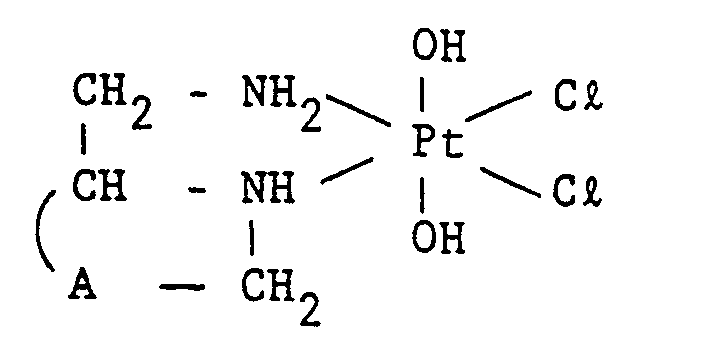
où A est -CH2- ou -(CH2)2-, qui comprend la réaction d'une diamine de formule:
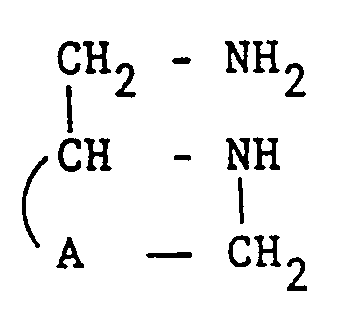
où A est tel que défini ci-dessus avec du chlorure de platine(II) et de potassium pour la formation du composé dichloré correspondant, et l'oxydation du composé dichloré au moyen de peroxyde d'hydrogène.
où A est -CH2- ou -(CH2)2-, qui comprend la réaction d'une diamine de formule:
où A est tel que défini ci-dessus avec du chlorure de platine(II) et de potassium pour la formation du composé dichloré correspondant, et l'oxydation du composé dichloré au moyen de peroxyde d'hydrogène.
9. Procédé suivant la revendication 7 ou 8, dans lequel la diamine est mise à réagir
avec une quantité équimolaire de chlorure de platine(II) et de potassium dans un milieu
aqueux à 0―100°C pendant 4 heures à 3 jours.
10. Procédé suivant la revendication 8, dans lequel le composé dichloré est mis à
réagir avec un excès de peroxyde d'hydrogène dans un milieu aqueux à 0―100°C pendant
0,5 à 10 heures.
11. Procédé suivant la revendication 7, dans lequel le composé dichloré est mis à
réagir avec une quantité molaire double de nitrate d'argent dans un milieu aqueux
à 1-30°C pendant 1 jour à 1 semaine.
12. Procédé suivant la revendication 7, dans lequel le dinitrate est mis à réagir
avec une quantité équimolaire de l'acide dicarboxylique dans un milieu aqueux à 1-30°C
pendant 1 heure à 1 semaine.
13. Utilisation de complexes de platine suivant l'une quelconque des revendications
1 à 6 pour la préparation d'agents antitumoraux.
14. Compositions pharmaceutiques ayant une activité antitumorale, comprenant une quantité
pharmaceutiquement efficace d'un complexe de platine suivant l'une quelconque des
revendications 1 à 6 et des excipients et/ou ajuvants pharmaceutiquement acceptables.
Revendications pour l'(les) Etat(s) contractant(s) suivant(s) : AT
1. Procédé de préparation d'un complexe de platine représenté par la formule:
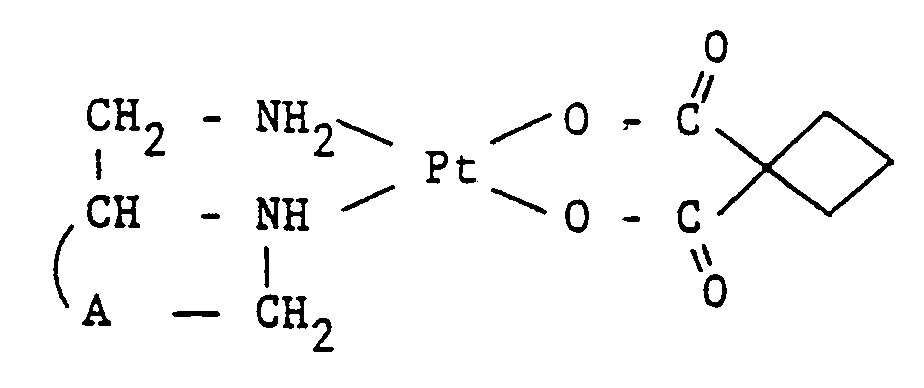
où A est-CH2- ou -(CH2)2-, qui comprend la réaction d'une diamine de formule:
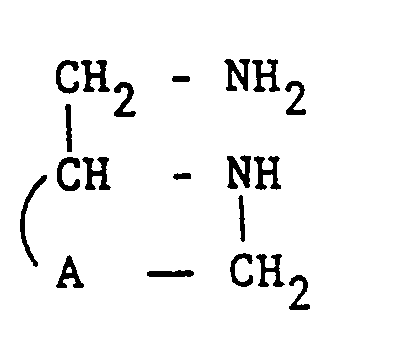
où A est tel que défini ci-dessus, avec du chlorure de platine(II) et de potassium pour la formation du composé dichloré correspondant, puis la conversion du composé dichloré à l'aide de nitrate d'argent (AgN03) en le dinitrate correspondant et ensuite la réaction du nitrate avec l'acide 1,1-cyclobutane- dicarboxylique ou ses sels.
où A est-CH2- ou -(CH2)2-, qui comprend la réaction d'une diamine de formule:
où A est tel que défini ci-dessus, avec du chlorure de platine(II) et de potassium pour la formation du composé dichloré correspondant, puis la conversion du composé dichloré à l'aide de nitrate d'argent (AgN03) en le dinitrate correspondant et ensuite la réaction du nitrate avec l'acide 1,1-cyclobutane- dicarboxylique ou ses sels.
2. Procédé de préparation d'un complexe de platine représenté par la formule:
où A est-CH2- ou -(CH2)2-, qui comprend la réaction d'une diamine de formule:
où A est tel que défini ci-dessus avec du chlorure de platine(II) et de potassium pour la formation du composé dichloré correspondant, et l'oxydation du composé dichloré au moyen de peroxyde d'hydrogène.
où A est-CH2- ou -(CH2)2-, qui comprend la réaction d'une diamine de formule:
où A est tel que défini ci-dessus avec du chlorure de platine(II) et de potassium pour la formation du composé dichloré correspondant, et l'oxydation du composé dichloré au moyen de peroxyde d'hydrogène.
3. Procédé suivant la revendication 1 ou 2, dans lequel la diamine est mise à réagir
avec une quantité équimolaire de chlorure de platine(II) et de potassium dans un milieu
aqueux à 0-100°C pendant 4 heures à 3 jours.
4. Procédé suivant la revendication 2, dans lequel le composé dichloré est mis à réagir
avec un excès de peroxyde d'hydrogène dans un milieu aqueux à 0-100°C pendant 0,5
à 10 heures.
5. Procédé suivant la revendication 1, dans lequel le composé dichloré est mis à réagir
avec une quantité molaire double de nitrate d'argent dans un milieu aqueux à 1-30°C
pendant 1 jour à 1 semaine.
6. Procédé suivant la revendication 1, dans lequel le dinitrate est mis à réagir avec
une quantité équimolaire de l'acide dicarboxylique dans un milieu aqueux à 1-30°C
pendant 1 heure à 1 semaine.
7. Procédé suivant la revendication 1, dans lequel le complexe de platine est le 1,1-cyclobutane-
dicarboxylato(2-aminométhylpyrrolidine)platine(II).
8. Procédé suivant la revendication 1, dans lequel le complexe de platine est le 1,1-cyclobutane-
dicarboxylato(2-aminométhylazétidine)platine(II).
9. Procédé suivant la revendication 2, dans lequel le complexe de platine est le cis-dichloro-trans-
dihydroxy(2-aminométhylpyrrolidine)platine(IV).
10. Procédé suivant la revendication 2, dans lequel le complexe de platine est le
cis-dichloro-trans- dihydroxy(2-aminométhylazétidine)platine(IV).
11. Utilisation de complexes de platine préparés suivant l'une quelconque des revendications
1 à 10 pour la préparation d'agents antitumoraux.
12. Compositions pharmaceutiques ayant une activité antitumorale, comprenant une quantité
pharmaceutiquement efficace d'un complexe de platine préparé suivant l'une quelconque
des revendications 1 à 10 et des excipients et/ou adjuvants pharmaceutiquement acceptables.