|
(11) | EP 0 185 463 B1 |

| (12) | EUROPEAN PATENT SPECIFICATION |
|
|
| (54) |
Continuously variable transmission Stufenloses Getriebe Transmission continue |
|
|
|||||||||||||||||||||||||||||||
| Note: Within nine months from the publication of the mention of the grant of the European patent, any person may give notice to the European Patent Office of opposition to the European patent granted. Notice of opposition shall be filed in a written reasoned statement. It shall not be deemed to have been filed until the opposition fee has been paid. (Art. 99(1) European Patent Convention). |
[0001] The present invention relating to continuously variable transmissions (often abbreviated to CVTs) as defined in the first part of claim 1. Such a transmission is shown in Abb.3.34 of "Zahn- radgetriebe", J. Looman, Springer-Verlag 1970, pages 57 to 60.
[0002] Continuously variable transmission are transmissions which provide a continuous spread of transmission ratios between a given maximum and minimum. As such they are well suited for use as drivelines in vehicles which have to deliver a wide variety of torques, and are particularly suitable for use in vehicles which also benefit from running their engines at a substantially constant speed.
[0003] Another known type (GB-A-2 136 893) of continuously variable transmission comprises a variator of the toroidal race rolling traction type, which receives an input from an engine shaft, and drives the one input of an epicyclic, the other input of which is driven directly by the engine, and the output of which provides the transmission output. This arrangement allows the transmission to move the vehicle away from stationary without the need for a clutch. If a greater speed range is required, a second regime may be incorporated to allow the transmission to operate in two regimes, low and high. In low regime a band brake has to be applied.
[0004] According to the present invention there is provided a driveline for an engined vehicle, comprising a continuously-variable ratio transmission having the features as defined in claim 1.
[0005] Embodiments of the invention, may be particularly suitable for use in agricultural tractors, for example.
[0006] Reference will now be made, by way of example, to the accompanying drawings, in which:-
Figure 1 shows a transmission system embodying the present invention, and
Figure 2 is a graph.
[0007] As shown in Figure 1, a variator 1, of the toroidal race rolling traction type receives an input from an engine (not shown) by way of an engine output shaft 2, and provides an output via an output shaft 3. An epicyclic compound epicyclic gear train 4 has its sun gear 5 driven by the variator output shaft 3 and its planet carrier 6 driven by the engine shaft 2. The annulus 7 of the epicyclic provides drive to a final drive shaft 8 by way of gearing 9, thereby to provide a low regime output. High regime output to the final drive shaft is provided directly by the variator output alone, through gearing 10. In this example, the engine shaft 2 passes through the transmission system, thereby to provide a power take-off at its exposed end.
[0008] The gearing 9 and the gearing 10 can be individually engaged and disengaged from the final drive shaft 8, by means of clutches 11, 12, to allow the transmission to operate in low or high regime. The annulus of the epicyclic may also drive further gearing 13, also engagable and disengageable from the final drive shaft by means of a clutch, to provide a reverse gear in low regime.
[0009] In use, the gearing 9 is first engaged with the final drive shaft 8, while the gearing 10 is disengaged. This puts the transmission in low regime. To hold the vehicle stationary, with the final drive shaft not rotating, the transmission ratio of the variator is set so that the planet carrier of the epicyclic rotates at a speed which counterbalances the effect of the rotating sun gear, thereby providing a geared neutral. To move off, the variator transmisison ratio is gradually reduced, so that power is gradually fed to the annulus, lower variator ratios in low regime giving a higher overall drive ratio. At an appropriate variator transmission ratio, the change is made from low to high regime by engaging the gearing 10 with the final drive shaft and disengaging the gearing 9, and hence the epicyclic. This change is made synchronously. That is to say that across the change the variator ratio remains substantially constant, allowing the high regime gearing to be engaged with the final drive shaft before the low regime gearing is disengaged. This allows drive to be maintained during the change, and in addition removes the need for slipping clutches to engage the gears, allowing either dog clutches, for example, of plate-type clutches (such as multiplate clutches) to be used.
[0010] To increase the speed further, the transmission ratio is then increased, increasing the overall drive ratio, maximum overall drive ratio in high regime being achieved at maximum variator ratio.
[0011] In a transmission having a separate reverse gear, the epicyclic ratio is chosen such that geared neutral is achieved towards the upper end of the variator ratio range, for example at a variator ratio of -1.5. The ratio of the reverse gearing may either be the same as that of the low regime forward gearing, giving the same maximum speed in reverse as in low regime forward, or it may be different. For example, the ratio of the gearing 9 may be -0.91, and the ratio of the gearing 13 may be +1.36. In this example, synchronous change can be achieved with an epicyclic having a ratio
of 2.5. 1
[0012] High regime gearing 10 having a ratio of +1.11. Synchronous change can then be made at a variator ratio of -0.37, corresponding to a final drive ratio of 0.411. If the variator has a maximum ratio of -1.5, this will give a final drive ratio of 1.66 in high regime. It should be noted that in this example, the epicyclic has a compound planet gear system. This is necessary to achieve the desired positive basic ratio.
[0013] Figure 2 is a graph showing the relationship between the final drive ratio and and the variator transmission ratio through reverse, low regime and high regime in the embodiment described above. It will be seen that at the change between low and high regime, the variator ratio remains substantially constant, giving a smooth synchronous change.
1. A driveline for an engined vehicle, comprising a continuously-variable-ratio transmission
(1) having an input adapted to be driven by the engine (2) and an output (3), a final
drive shaft (8) laterally displaced from the input for providing an output from the
driveline and means for driving the final drive shaft from the continuously-variable-ratio
transmission in either high or low regime, whereby in low regime the final drive shaft
is driven through gearing (9) at a predetermined ratio by a first element (7) of a
compound epicyclic gear train (4) having a second element (6) driven by the said engine
and a third element (5) driven by the said continuously - variable - ratio transmission,
characterised in that the said second element (6) is driven directly by the output
(2) of said engine and in high regime the final drive shaft (8) is driven through
gearing (10) at a predetermined ratio by the output of the continuously-variable-ratio
transmission.
2. A driveline according to Claim 1, in which the first (7), second (6) and third
(5) elements of the epicyclic gear train (4) are the annulus, the planet carrier and
the sun gear respectively.
3. A driveline according to Claim 1 or 2, in which the epicyclic ratio
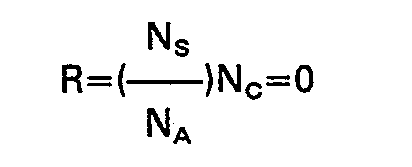
is in the range 2 to 3.
is in the range 2 to 3.
4. A driveline according to Claim 3, in which the ratio R is substantially 2.5.
5. A driveline according to any of the preceding Claims in which the drive ratio L
provided by the gearing (9) between the said epicyclic gear train (4) and the final
drive shaft (8) in low regime is in the range -0.8 to -1.0.
6. A driveline according to Claim 5, in which the drive ratio L is substantially -0.91.
7. A driveline according to any of the preceding Claims in which the drive ratio H
provided by the gearing (10) between the output of the continuously variable ratio
transmission and the final drive shaft in high regime is in the range -1.0 to -1.2.
8. A driveline according to Claim 7, in which the ratio H is substantially -1.11.
9. A driveline according to any of the preceding Claims including reverse gearing
(13) in low regime.
10. A driveline according to any of the preceding Claims in which the continuously-variable-ratio
transmission (1) is of the toroidal- race rolling traction type.
1. Antrieb für Motorfahrzeuge, mit einem stufenlos verstellbaren Getriebe (1) mit
einem vom Motor (2) anzutreibenden Eingangsglied und einem Abtriebsglied (3), einer
gegenüber dem Eingangsglied seitlich versetzten Abtriebswelle zur Erzeugung der Ausgangsdrehbewegung
des Antriebs, und mit Mitteln zum Antrieb der Abtriebswelle durch das stufenlos verstellbare
Getriebe in einer Schnellbetriebsart oder einer Langsambetriebsart, wobei die Abtriebswelle
in der Langsambetriebsart über einen Getriebeteil (9) mit vorgegebenem Übersetzungsverhältnis
durch ein erstes Element (7) einer zusammengesetzten Plantengetriebekette (4) angetrieben
wird, die ein zweites, von dem Motor angetriebenes Element (6) und ein drittes, von
dem stufenlos verstellbarem Getriebe angetriebenes Element (5) aufweist, dadurch gekennzeichnet,
daß das zweite Element (6) direkt vom Motorabtrieb (2) angetrieben wird und daß die
Abtriebswelle (8) in der Schnellbetriebsart über einen Getriebeteil (10) mit vorgegebenem
Übersetzungsverhältnis durch das Abtriebsglied des stufenlos verstellbaren Getriebes
angetrieben wird.
2. Antrieb nach Anspruch 1, bei welchem das erste Element (7), das zweite Element
(6) und das dritte Element (5) der Planetengetriebekette (4) das Ringrad bzw. der
Planetenradträger bzw. das Sonnenrad sind.
3. Antrieb nach Anspruch 1 oder 2, wobei das Planetengetriebe-Übersetzungsverhältnis
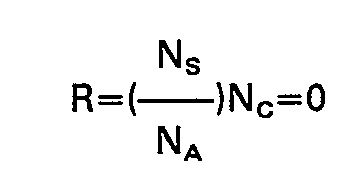
im Bereich von 2 bis 3 liegt.
im Bereich von 2 bis 3 liegt.
4. Antrieb nach Anspruch 3, wobei das Übersetzungsverhältnis R etwa 2,5 beträgt.
5. Antrieb nach einem der vorhergehenden Ansprüche, wobei das Übersetzungsverhältnis
L des Getriebeteils (9) zwischen der Planetengetriebekette (4) und der Abtriebswelle
(8) in der Langsambetriebsart im Bereich von -0,8 bis -1,0 liegt.
6. Antrieb nach Anspruch 5, wobei das Übersetzungsverhältnis L etwa -0,91 beträgt.
7. Antrieb nach einem der vorhergehenden Ansprüche, wobei das Übersetzungsverhältnis
H des Getriebeteils (10) zwischen dem Abtriebsglied des stufenlos verstellbaren Getriebes
und der Abtriebswelle in der Schnellbetriebsart im Bereich von -1,0 bis -1,2 liegt.
8. Antrieb nach Anspruch 7, wobei das Übersetzungsverhältnis H etwa -1,11 beträgt.
9. Antrieb nach einem der vorhergehenden Ansprüche, mit einem Umkehrgetriebe (13)
in der Langsambetriebsart.
10. Antrieb nach einem der vorhergehenden Ansprüche, wobei das kontinuierlich verstellbare
Getriebe (1) der Toroid-Reibradbauart angehört.
1. Ensemble de transmission pour véhicule à moteur, comprenant une transmission (1)
à rapport variant de façon continue et un organe de sortie (3), un arbre final (8)
de transmission décalé latéralement par rapport à l'arbre d'entrée et destiné à constituer
une sortie de l'ensemble de transmission, et un dispositif destiné à entraîner l'arbre
final à régime élevé ou à base régime à l'aide de la transmission à rapport variant
de façon continue, si bien que, à bas régime, l'arbre final est entraîné par l'intermédiaire
d'un engrenage (9) ayant un rapport prédéterminé par un premier élément (7) d'un train
épicycloïdal composite (4) ayant un second élément (6) entraîné par le moteur et un
troisième élément (5) entraîné par la transmission à rapport variant de façon continue,
caractérisé en ce que le second élément (6) est directement entraîné par la sortie
(2) du moteur et, à régime élevé, l'arbre final (8) est entraîné par l'intermédiaire
d'un engrenage (10) ayant un rapport prédéterminé par la sortie de la transmission
à rapport variant de façon continue.
2. Ensemble de transmission selon la revendication 1, dans lequel le premier (7),
le second (6) et le troisième (5) élément du train épicycloïdal (4) sont la couronne,
le porte-satellites et le pignon soleil respectivement.
3. Ensemble de transmission selon la revendication 1 ou 2, dans lequel le rapport
épicycloïdal
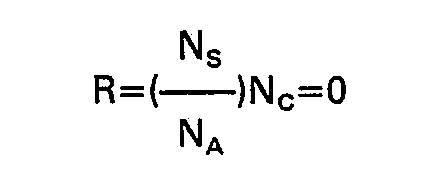
est compris entre 2 et 3.
est compris entre 2 et 3.
4. Ensemble de transmission selon la revendication 3, dans lequel le rapport R est
sensiblement égal à 2,5.
5. Ensemble de transmission selon l'une quelconque des revendications précédentes,
dans lequel le rapport d'entraînement L donné par l'engrenage (9) placé entre le train
épicycloïdal (4) et l'arbre final (8) à bas régime est compris entre -1,8 et -1,0.
6. Ensemble de transmission selon la revendication 5, dans lequel le rapport d'entraînement
L est sensiblement égal à 0,91.
7. Ensemble de transmission selon l'une quelconque des revendications précédentes,
dans lequel le rapport d'entraînement H donné par l'engrenage (10) placé entre la
sortie de la transmission à rapport variant de façon continue et l'arbre final à régime
élevé est compris entre -1,0 et -1,2.
8. Ensemble de transmission selon la revendication 7, dans lequel le rapport H est
sensiblement égal à -1,11.
9. Ensemble de transmission selon l'une quelconque des revendications précédentes,
comprenant un engrenage (13) de marche arrière à bas régime.
10. Ensemble de transmission selon l'une quelconque des revendications précédentes,
dans lequel la transmission (1) à rapport variant de façon continue est du type à
traction à roulement d'une bague torique.