|
(11) | EP 0 193 374 B1 |

| (12) | EUROPEAN PATENT SPECIFICATION |
|
|
| (54) |
Thermoplastic aromatic polyamideimide copolymers and process for their preparation Thermoplastische Copolymere vom aromatischen Polyamidimid und Verfahren zu ihrer Herstellung Copolymères thermoplastiques de polyamideimide aromatique et procédé pour leur préparation |
|
|
|||||||||||||||||||||||||||||||
|
||||||||||||||||||||||||||||||||
| Note: Within nine months from the publication of the mention of the grant of the European patent, any person may give notice to the European Patent Office of opposition to the European patent granted. Notice of opposition shall be filed in a written reasoned statement. It shall not be deemed to have been filed until the opposition fee has been paid. (Art. 99(1) European Patent Convention). |
[0001] The present invention relates to novel thermoplastic aromatic polyamideimides (hereinafter called PAI), being superior in heat stability and fluidity at the temperatures of 300 to 400°C, injection-moldable and having desired characteristics.
[0002] It has already been known well that aromatic PAI copolymers, superior in heat resistance, are generally obtainable by polycondensing an aromatic tricarboxylic acid anhydride or a derivative thereof and an aromatic diamine or a derivative thereof (e.g., Japanese Laid-Open Patent Nos. 15637/1967, 19274/1969, 2397/1970, 4077/1974, 33120/1975, etc.).
[0003] Further a number of proposals have already been advanced for modifications of basic PAI copolymers by using an aromatic tricarboxylic acid anhydride or a derivative thereof and an aromatic dicarboxylic acid dichloride as acid components (e.g., JP Laid-Open Patent No. 8894/1975, 121397/1975, 16908/1971, 12594/1974, 13240/1974, 26316/1074, 501882/1981, etc.). And it is also well known that special aromatic PAI copolymers are synthesized by the reaction between a trimellitic acid monochloride anhydride and an amide-bond incorporating aromatic diamine represented by general formula:
wherein Ar is
or
and x is an integer from 1 to 500 (e.g., U.S. Patent 3984375 and JP Laid-Open Patent No. 10029/1973).
[0004] Besides Laid-Open Patent No. JP 13240/1974 discloses PAI copolymers wherein -Ar- is a simple material synthesized by a process consisting of the first step of the production of
(these compounds are generally called aramidediamine hereinafter) by the reaction of an excess mole diamine and
and the second step of the reaction between the above-obtained aramidediamine,
and H₂N-Ar-NH₂ and the third step of the ring closure reaction of the resultant product. And also JP Laid-Open Patent No. 8894/1975 discloses a polyamide amic acid (ring-open precursor of PAI) synthesized by using two or three of -Ar- in the same manner for developing a functional film.
[0005] But the heat stability, melt fluidity and other physical properties of the aromatic PAI copolymers generally proposed hitherto are not well balanced when they are melt-molded.
[0006] For example the PAI copolymers represented by general formula:
that are synthesized from trimellitic acid chloride anhydride and 3',3''-diaminoisophthalanilide is far from practicable as engineering plastic material because its moldings are inferior in stiffness and mechanical strength despite heat resistance enough for practical use. The PAI copolymers synthesized by using:
instead of aramidediamine:
as diamine material are not substantially moldable by any screw-in-line type injection molding machine because of their inferior heat stability on melting. And the PAI copolymers synthesized from:
and a trimellitic acid chloride anhydride can only produce moldings inferior in mechanical strength although they barely permit melt-molding. Moreover the polymer disclosed in JP Laid-Open Patent No. 8894/1975 is a ring-open precursor of PAI copolymers, and cannot substantially be used for melt-molding because condensation water is generated in great quantities on its heat-melting.
[0007] A purpose of the present invention is to obtain aromatic PAI copolymers superior in melt-moldability because of their high heat stability and fluidity at the temperatures of 300 to 400°C and providing well-balanced physical properties for their moldings by solving the problems of conventional ones described above.
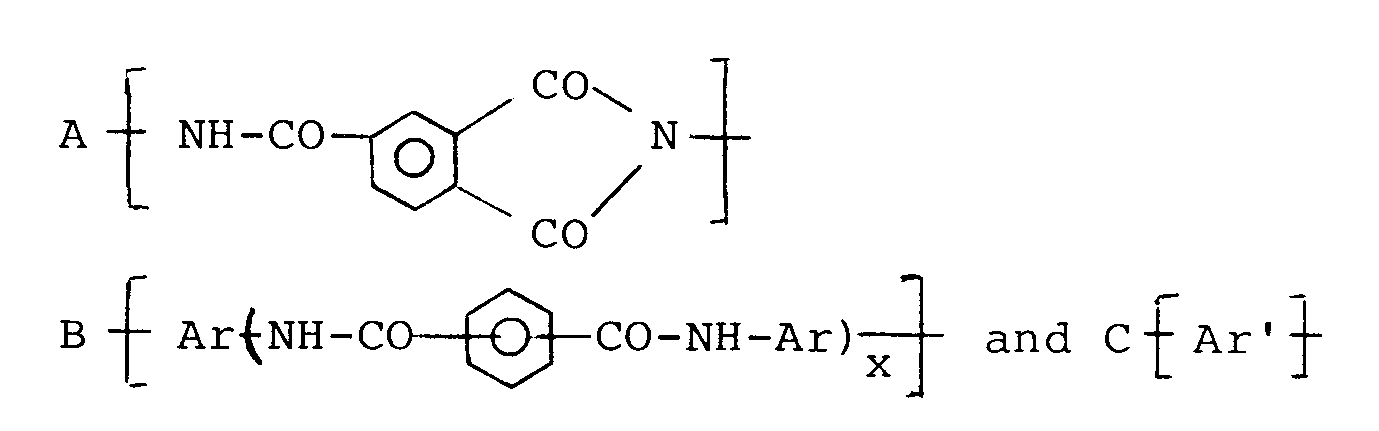
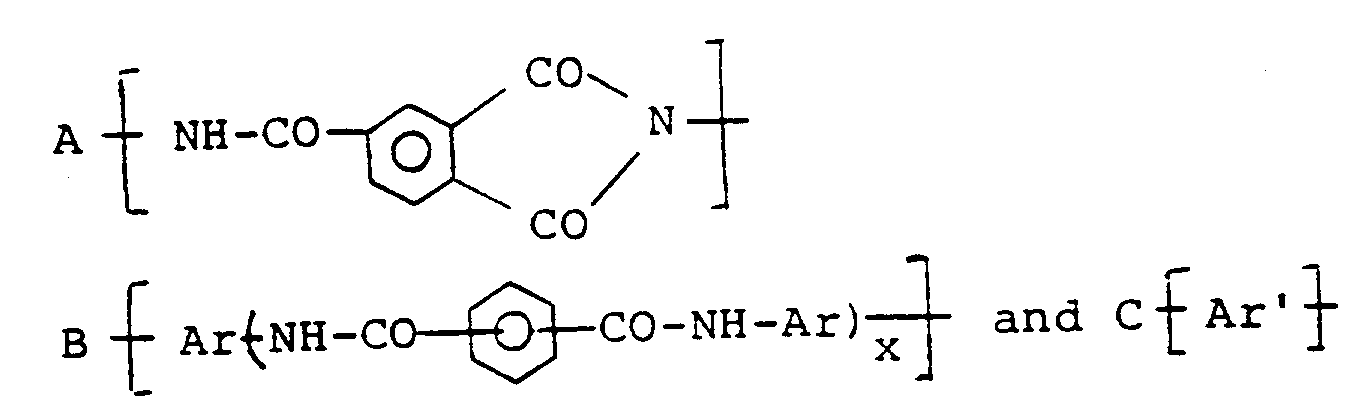
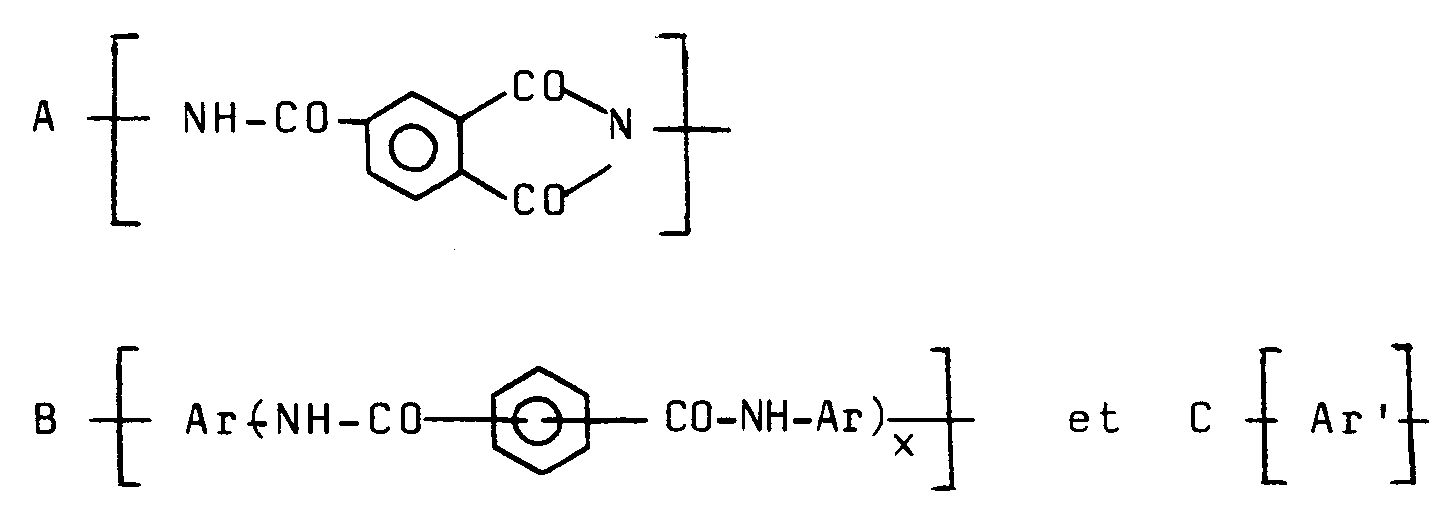
[0008] The thermoplastic aromatic polyamideimide copolymers according to the present invention comprise the structural units represented by formula
wherein the radicals -Ar- are identical residual groups and
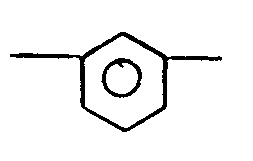
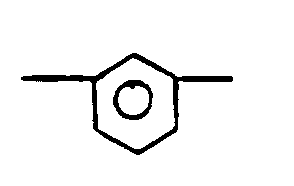
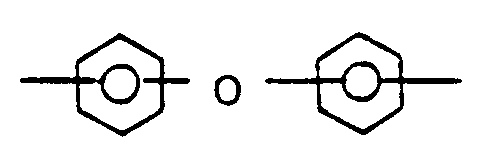
(B+C) being at a ratio of 1 mole to 1 mole of A, C being at a ratio of 0.95 - 0.05 mole to 0.05 - 0.95 mole of B respectively, A and B or C being alternately interconnected and (Ar + Ar') being composed of 5 to 70 mole % of a bivalent residual group (Ar₁) represented by formula
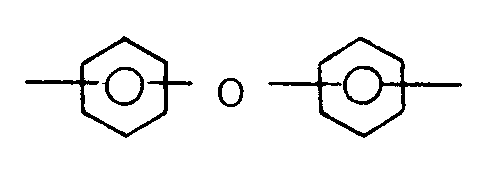
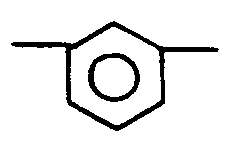
and 95 to 30 mole % of a bivalent residual group (Ar₂) represented by formula
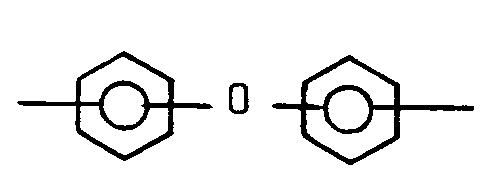
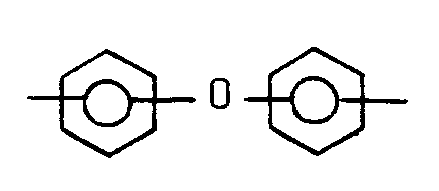
(wherein x is an integer from 1 to 500).
[0009] In our Japanese patent application, published under No 58-91727 on 31 May 1983 we described thermoplastic PAI copolymers having structural-units represented by the formulae
where Z could be a benzene residue, R could be H and X could be O. These copolymers were random copolymers as compared with the copolymers of the present invention, which show surprising advantages over the copolymers previously known from our above numbered patent application..
[0010] The thermoplastic PAI copolymers according to the present invention are mainly composed of the three units represented by the formulae A, B and C, components A and (B + C) being at a substantially-equal molar ratio, component A and B or C being alternately interconnected, and components B and C as diamine residual groups being at a ratio of 0.05 - 0.95 mole to 0.95 - 0.05 mole.
[0011] The component Ar + Ar' of units B and C is composed of mixture of 2 components having following structures and ratios.
wherein X, R₁, (a) and (b) are as mentioned above.
[0012] Unit Ar₁ of (Ar + Ar') should not exceed 70 mole %. Otherwise the PAI copolymers obtained will conspicuously decrease in stiffness and mechanical strength. Unit Ar₂ of (Ar + Ar') should not exceed 95 mole %. Otherwise the PAI copolymers obtained will conspicuously decrease in melt-moldability, heat characteristic or mechanical strength. So that the ratios Ar₁ and Ar₂ should be selected out of 5 to 70 mole %, preferably 15 to 60 mole %, and 95 to 30 mole %, preferably 85 to 40 mole % respectively.
[0013] Further the thermoplastic aromatic polyamideimide copolymers according to the present invention can include unit A'
at the stage of an amic acid bond as ring-open precursor of imide bond in an amount less than 50 mole %, preferably less than 30 mole %, of unit A.
[0015] The examples of unit Ar₂ include
The examples of unit B composed of units
Ar₁ and Ar₂ mentioned above may be:
wherein (x) is from 1 to 500, preferably from 1 to 10, more preferably from 1 to 4. They may be used mixedly if necessary under Ar₁/Ar₂ composition conditions mentioned above. Particularly those having (x) = 1 are useful.
[0016] The PAI copolymers according to the present invention are producible by using any of a number of hitherto-proposed general production processes. The following three processes may be cited as representative highly-practicable ones.
(1) Isocyanate process
[0017] The reaction of an aromatic diisocyanate with an aromatic tricarboxylic acid anhydride or imide dicarboxylic acid synthesized from an aromatic tricarboxylic acid anhydride and an aromatic diamine (2/1 mole ratio) (e.g., JP Laid-Open Patent Nos. 19274/1969, 2397/1970, 33120/1975, etc.).
(2) Acid chloride process
[0018] The reaction of an aromatic tricarboxylic acid monochloride anhydride and an aromatic diamine (e.g., JP Laid-Open Patent No. 15637/1967, etc.)
(3) Direct polymerization process
[0019] The direct reaction of an aromatic diamine with aromatic tricarboxylic acid or a derivative thereof (excl. acid chloride derivative) in the presence of a dehydration catalyst in a polar organic solvent (e.g., JP Laid-Open Patent No. 4077/1974).
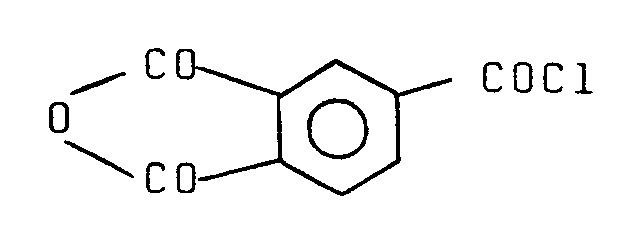
[0020] The acid chloride process is most recommendable among the aforementioned processes because of the advantages of easy preparation of raw materials and of highly-linear (less-branching structure),PAI copolymers of high degree of polymerization being readily obtainable. The acid chloride process for producing the PAI copolymers according to the present invention will be described hereinafter. First, dissolved in an organic polar solvent is 1 mole of an aromatic tricarboxylic acid monochloride anhydride, and 0.9 to 1.1 mole of a diamine mixture composed of 5 to 100 mole % of an aromatic diamine represented by formula I:
and 95 to 0 mole % of an aromatic diamine represented by formula II:
H₂N-Ar'-NH₂ (II)
wherein Ar+Ar' is composed of 5 to 70 mole % of
and 95 to 30 mole % of
and (x) is an integer from 1 to 500.
[0021] Next the resultant mixture is agitated at about 0.5 to 1 hour at the temperatures of from -20 to 80°C and its polymerization reaction is accelerated by adding about 0.8 to 1.2 mole of a hydrogen chloride scavenger if necessary. The reaction completes in 0.5 to 10 hours. The copolymer produced at this stage is so-called polyamide amic acid obtained by converting the greater part (e.g., 50 to 100%) of unit A of the PAI copolymers according to the present invention into a ring-open precursor amide amic acid unit:
The organic polar solvents to be used for this first step include, N,N-dialkyl carboxylic acid amides such as N,N-dimethylacetoamide or N,N-diethylacetoamide; hetero cyclic compounds such as N-methylpyrrolidone, tetrahydrothiophene-1,1-dioxide or 1,3-dimethyl-2-imidazolidinone; and phenols such as cresol or xylenol. Particularly preferable thereamong are N-methylpyrrolidone and N,N-dimethylacetoamide. The hydrogen chloride scavengers to be added if necessary at the first step include aliphatic tertiary amines such as trimethylamine, triethylamine, tripropylamine or tributylamine; cyclic organic bases such as pyridine, lutidine, collidine or quinoline; and ethylene oxide or propylene oxide.
[0022] The polyamide amic acid obtained at the first step undergoes the second dehydration ring-closure step for its conversion into polyamideimide copolymers according to the present invention. Ring closure reaction of dehydration is performed by liquid-phase process or solid-phase process. The former is divided into chemical dehydrator process and simple heating process. The chemical dehydrator process is performed by using aliphatic acid anhydrides such as acetic anhydride and propionic anhydride; P₂O₅; and other chemical dehydrators at the temperatures of 0 to 120°C, preferably 10 to 60°C. The latter is performed by heating polyamide amic acid solution at the temperatures of 50 to 400°C, preferably 100 to 250°C. Therein the combination use of the azeotropic solvents useful for water removal such as benzene, toluene, xylene or chlorobenzene is effective. For solid-phase process, a polyamide amic acid polymer is separated from a polyamide amic acid solution obtained at the first step and next heat treated in solid state. Liquid which is miscible with a reaction mixture solvent but in which polyamide amic acid is not soluble, e.g., water, methanol or like, is used as precipitant for separating a polyamide amic acid polymer. In solid-phase heat treatment, proper conditions are generally selected out of the temperatures from 150 to 400°C and the time from 0.5 to 50 hours for securing sufficient ring closure percentage and melting fluidity. Treatment should not be continued at 250 to 400°C for an excessively long time. Otherwise the polymer itself will form a 3-dimensional bridging structure to considerably decrease in melting fluidity.
[0023] Aromatic diamines (I) and (II) are obtained by attaching amino groups (-NH₂) on the both sides of the bivalent aromatic residual groups of units B and C according to the present invention.
[0024] A typical example of aromatic diamine (I),
can be synthesized by a process consisting of producing
by the reaction between
at a mole ratio of 2/1 in the presence of an acid scavenger and hydrogen-reducing this dinitro compound in the presence of Raney nickel. Aromatic diamine (I) can be also synthesized by the reaction between
and a considerable excess of
and the recovery and purification of the resultant product. A multi-component mixture-of aromatic diamine (I) represented by general formula
wherein (x) is an integer from 1 to 500 is obtained by the reaction between
and excess mole of H₂N-Ar-NH₂ in a polar solvent.
[0025] The PAI copolymers according to the present invention are obtainable by the production processes described heretofore. Copolymerizable materials other than units A, B and C components can be used in combination for a reaction system in such quantities as to prevent any considerable decrease in melt-moldability and physical characteristics of the PAI copolymers to be produced according to the present invention.
[0026] Most of the imide units of the aromatic PAI copolymers according to the present invention have a closed ring structure, although some of the imide units remain an open ring amic acid bond in some cases. These PAI copolymers are high molecular weight polymers having a logarithmic viscosity (ηinh) more than 0.20, preferably more than 0.25 measured at a concentration of 0.5% by weight and at a temperature of 30°C in a N-methylpyrrolidone solvent, and can be used for the following various purposes.
[0027] Compression molding is generally performed at the temperatures of 300 to 400°C and at the pressures of 50 to 500 kg/cm² after dry blending into the powder of the PAI copolymers according to the present invention another kind of polymer, an additive, a filler and/or a reinforcer if necessary. Extrusion or injection molding is performed at the temperatures of 300 to 400°C supplying a dry blending mixture of a PAI copolymer according to the present invention with another kind of polymer, an additive, a filler, a reinforcer or a pellet thereof produced by using an extruder to a molding machine. Particularly the aromatic PAI copolymers according to the present invention are suitable for extrusion or injection molding because their heat stability and melt fluidity are balanced well at the temperatures of 300 to 400°C. The moldings improved more in heat deflection temperature, tensile strength, flexural strength, frictional wear resistance and other physical properties are obtainable by heat treating the heat melt-moldings of the PAI copolymers according to the present invention at high temperatures more than 200°C and less than their glass transition temperature, particularly more than 220°C and less than (the glass transition temperature -5°C), for more than 5 hours, particularly for more than 10 hours. Heat treatment temperature should not preferably exceed the glass transition temperature. Otherwise they will show a tendency of deformation to affect their practicability. Heat treatment apparatuses are not limited, and an ordinary electric heating oven is sufficient for achieving its purpose.
[0028] For manufacturing the films and textiles of the thermoplastic aromatic polyamideimide copolymers according to the present invention, a polymerization finish solution is applicable to dry or dry and wet type extruding process. And melt-molding is also possible after, if necessary, adding an appropriate additive to separated dry polymers. Their laminated boards are manufactured through a process consisting of impregnating a cloth or mat made from a glass, carbon, asbestos or other fiber with a polymer solution, obtaining a prepreg by the dry/heat hardening of the resultant impregnated body and pressing it at the temperatures of 200 to 400°C and at the pressures of 50 to 300 kg/cm².
[0029] The paints of the thermoplastic aromatic polyamideimide copolymers according to the present invention are produced by a process consisting of mixing a solvent to a polymerization finish solution if necessary and controlling the concentration of the resultant mixture for their practical use.
[0030] The PAI copolymers according to the present invention are permitted to contain fillers such as (a) wear resistance improvers - graphite, carborundum, silica powder, molybdenum disulfide, flororesins, etc., (b) reinforcers - glass fiber, carbon fiber, boron fiber, silicon carbide fiber, carbon whisker, asbestos fiber, asbestos, metal fiber, etc., (c) non-inflammability improvers - antimony trioxide, magnesium carbonate, sodium carbonate, etc., (d) electric characteristic improvers - clay, mica, etc., (e) tracking resistance improvers - asbestos, silica, graphite, etc., (f) acid resistance improvers - barium sulfate, silica, calcium methasilicate, etc., (g) heat conductivity improvers - the powder of iron, zinc, aluminum, copper and other metals, (h) others - glass beads, glass balls, sodium carbonate, alumina, talc, diatomaceous earth, hydrate alumina, mica, asbestos, various metal oxides, inorganic pigments and other synthetic and natural compounds stable at temperatures above 300°C.
[0031] The PAI copolymers according to the present invention are superior in melt-moldability because of their high heat stability and melt fluidity, provide well-balanced physical properties for their moldings and permit the efficient production of high-performance materials and moldings by extrusion or injection molding methods.
[0032] For example, the PAI copolymers composed of the structural units A, B and C represented by
A, B and C being at a molar ratio of 100/30/70 are considerably superior to the conventionally-known ones composed of only structural units A and B or A and C in melting heat stability and melting moldability. They permit injection or extrusion molding because of their high heat stability and melt fluidity at the temperatures of 300 to 400°C.
[0033] Further the present invention is capable of providing moldings having exceptionally-well balanced superior physical properties - a heat deflection temperature more than 287°C, a flexural strength more than 2,320 kg/cm² and Izod impact strength more than 15 kg·cm/cm notched - after heat treatment.
[0034] The materials and moldings of the PAI copolymers according to the present invention can be extensively used for manufacturing electric and electronic, aircraft and space unit, automotive, office machinery and other parts. Embodiments
[0035] The present invention will be described in further details in connection with their examples and comparative examples below. The logarithmic viscosity (ηinh) as the criterion of a molecular weight of polymers was measured at a concentration of 0.5% in an N-methyl-2-pyrrolidone solvent and at a temperature of 30°C. Their glass transition temperature Tg was measured by using an IB type DSC apparatus manufactured by Perkin Elmer.
[0036] The following methods were used for measuring physical properties.
- Flexural strength (FS) :
- ASTM D790
- Flexural modulus (FM) :
- ASTM D790
- Heat deflection temperature (HDT):
- ASTM D648-56
(Weight = 18.56 kg/cm²)
Production example 1
Synthesis of terephthaloyl-m-aminoanilide (TMAA)
[0037] Dissolved in 3 lit. of N,N-dimethylacetoamide was 276.3 gr. (2 mole) of m-nitroaniline and 202.4 gr. (2 mole) of triethylamine. 203 gr. (1 mole) of the fine particles of terephthalic acid dichloride (TPC) was added to the resultant solution being cooled in an ice bath at such a rate that its internal temperature does not exceed 30°C, and the resultant mixture was stirred continuously for 1 hour until reaction is completed. Next, triethylamine hydro-chloride salt crystallized in the reaction system was removed by filtration and the resultant mother liquor was thrown into the great quantities of water for precipitating a product. It was subjected to filtration and washing/drying, dissolved in a N,N-dimethylformamide solvent, and purified by recrystallization to obtain 333 gr. of high-purity terephthaloyl-m-nitro-anilide (yield 82%). Next it was reduced by hydrogen in the presence of Raney nickel catalyst in an enthanol/γ-butylolacton (10/1 ratio by weight) mixture solvent to obtain TMAA having a purity of 99.2% at a yield of 79% (melting point 291 to 295°C).
Production example 2
Synthesis of isophthaloyl-m-aminoanilide (IMAA)
[0038] The IMAA having a purity of 99.5% was synthesized in the same manner as production example 1 except using an isophthalic acid dichloride (IPC) instead of TPC (melting point 239 - 240°C).
Production example 3
Synthesis of isophthaloyl-4-(p-aminophenoxy) anilide (IPEA)
[0039] The IPEA having a purity of 98.7% was synthesized in the same manner as production example 1 except using 460.3 gr. (2 mole) of 4-amino-4'-nitrodiphenyl ether instead of 276.3 gr. (2 mole) of m-nitroaniline.
Examples 1 to 3 and comparative examples 1 to 2
[0040] After 4,4'-diaminodiphenylether (DDE) and terephthaloyl-m-aminoanilide (TMAA) were placed on such compositions as shown in Table 1 in a 5ℓ capacity separable glass reactor equipped with a stirrer, a thermometer and a nitrogen gas inlet, 3,000 gr. of N,N-dimethylacetoamide anhydride (DMAC) was added and the resultant mixture was agitated to obtain a uniform solution. It was cooled to -10°C in a dry ice/acetone bath and 252.7 gr. (1.20 mole) of trimellitic acid monochloride anhydride (TMAC) was added dividedly in a small amount each time at such a rate that the temperature of the polymer system is kept at -10 to -5°C. The resultant mixture was agitated at a temperature of 0°C for one hour and next 121.4 gr. (1.20 mole) of anhydrous triethylamine was added dividedly at a sufficient rate for keeping the polymer system at a temperature less than about 5°C. After the resultant mixture was agitated for 2 hours, 150 ml of pyridine and 300 ml (about 3.2 mole) of acetic anhydride were added, and the resultant solution was agitated overnight at room temperature.
[0041] Next a polymer was precipitated in a state of powder by gradually throwing the polymerization finish solution into water agitated at a high speed, washed with water sufficiently and dehydrated, dried in a hot-air drier at a temperature of 150°C for 5 hours and at a temperature of 200°C for 3 hours to obtain a polymer powder having such a logarithmic viscosity (ηinh) and such a glass transition temperature (Tg) as shown in "the characteristics of the polymers on the completion of polymerization" of Table 1.
[0042] The copolymer obtained in Example 1 is represented by the following theoretical structural and molecular formulae:
- A/B/C
- = 1.20/0.36/0.84 (molar ratio)
= 100 / 30 / 70 (molar ratio)
[0043] The results of element analysis of the polymers of Examples 2 and 3 also agreed well with their theoretical values.
[0044] Next 2% by weight of tetrafluoroethylene resin (Afronpolymist F-5 produced by Asahi Glass Co., Ltd.) as anti-scorching agent was added to the obtained copolymer powder and the resultant mixture was supplied to Brabender Plast-graph extruder (treatment temperatures 300 to 360°C) to obtain melt-extrusion pellets.
[0045] However, the polymer powders of Comparative Examples 1 and 2 could not pelletized by melt mixing/extrusion because the both have an abnormally-high melt viscosity.
[0046] The pellets were compression molded (treatment temperatures 330 to 360°C, pressures 50 to 100 kg/cm²) to manufacture testpieces. They were dried in a hot-air drier at 150°C for 24 hours and heat treated at 220°C for 10 hours, at 245°C for 14 hours and 260°C for 48 hours. The results of measuring their physical properties were such as shown in column "the characteristics of heat treated moldings" of Table 1.
Examples 4 and 5
[0047] Table 3 shows the results of measuring the characteristics before and after heat treatment of the testpieces obtained by the same polymerization, post-treatment, blending, extrusion and compression molding as Example 1 except using material diamines having such a composition as shown therein.
[0048] The polymer of Example 4 is represented by the following theoretical formulae. The results of element analysis agreed well with their theoretical values.
A/B₁/B₂/C = 1.20/0.18/0.18/0.84 (molar ratio)
Example 6
[0049] Supplied to the same apparatus as mentioned in Example 1 were 77.9 gr. (0.72 mole) of metaphenylenediamine (MPDA), 72.9 gr. (0.72 mole) of triethylamine and 3,000 gr. of DMAC, and the resultant mixture was agitated to obtain a uniform solution. The resultant reaction product was cooled in an ice bath, and 73.1 gr. (0.36 mole) of powdery TPC was added dividedly in a small amount each time at such a rate that its internal temperature does not exceed 30°C, and after the completion of addition, the resultant mixture was further subjected to reaction at a temperature of 10°C for 1 hour. As the result a forerunner diamine containing mainly TMAA was synthesized. Next 168.2 gr. (0.84 mole) of DDE was added and dissolved, and 252.7 gr. (1.20 mole) of powdery TMAC was added dividedly in a small amount each time at such a rate that its internal temperature does not exceed 30°C and the resultant mixture was agitated at a temperature of 30°C for 1 hour to complete its polymerization reaction.
[0050] Next the polymerization finish solution was gradually thrown into water agitated at a high speed to precipitate a powdery polymer. It was washed sufficiently and dehydrated and dried in a hot air drier at 150°C for 5 hours and at 220°C for 3 hours to obtain a polymer powder with ηinh = 0.66, Tg = 289°C.
[0051] Next 3% by weight of titanium dioxide was added to the polymer powder and the resultant mixture was supplied to an Brabender Plast-graph extruder (treatment temperature 300 to 360°C) to obtain a melt-extrusion pellet. The pellet was subjected to a small-sized injection molding machine (treatment temperature 300 to 350°C, injection pressure 1,400 to 1,700 kg/cm²) to obtain molded testpieces. They were put in a hot-air drier, and heat treated at 200°C for 24 hours, at 250°C for 24 hours and at 260°C for 24 hours. The following results were obtained by measuring their physical properties: FS = 2,300 kg/cm², MS = 4.5 x 10⁴ kg/cm² and HDT = 285°C.
Example 7
[0052] A polymer having:
was obtained by the same procedure as described in Example 5 except that the quantities of MPDA, TPC, DDE and TMAC were changed to 77.9 gr. (0.72 mole), 109.6 gr. (0.54 mole), 144.2 gr. (0.72 mole) and 189.5 gr. (0.90 mole).
Example 8
[0053] Supplied to the same apparatus as mentioned in Example 1 were 318 gr. (0.6 mole) IPEA synthesized in Production example 3, 64.9 gr. (0.6 mole) of MPDA and 3,000 gr. of N-methyl-2-pyrrolidone, and the resultant mixture was agitated to obtain a uniform solution. The resultant reaction product was cooled in an ice bath and 252.7 gr. (1.20 mole) of a trimellic acid monochloride anhydride was added dividedly in a small amount each time at such a rate that its internal temperature does not exceed 30°C, and the resultant mixture was further agitated at 30°C for 1 hour. The resultant reaction product was subjected to post-treatment, extrusion and molding same as in the latter part of Example 6 to obtain molded testpieces. They were put in a hot-air drier, and heat treated at 165°C for 24 hours, at 245°C for 24 hours and at 260°C for 48 hours. The following results were obtained by measuring their physcial properties:
- FS
- = 2,160 kg/cm²,
- MS
- = 4.7 x 10⁴ kg/cm²,
- HDT
- = 289°C
1. A thermoplastic aromatic polyamideimide copolymer having a logarithmic viscosity η
inh > 0.20 which is mainly composed of the structural units represented by formulae
(B+C) being at a ratio of 1 mole to 1 mole of A, C being at a ratio of 0.95 - 0.05 mole to 0.05 - 0.95 mole of B respectively, A and B or C being alternately interconnected and (Ar+Ar') being composed of 5 to 70 mole % of bivalent residual group (Ar₁) represented by formula
and 95 to 30 mole % of a bivalent residual group (Ar₂) represented by formula
(wherein the bivalent radicals Ar in structural unit B represent identical residual groups and (x) is an integer from 1 to 500).
(B+C) being at a ratio of 1 mole to 1 mole of A, C being at a ratio of 0.95 - 0.05 mole to 0.05 - 0.95 mole of B respectively, A and B or C being alternately interconnected and (Ar+Ar') being composed of 5 to 70 mole % of bivalent residual group (Ar₁) represented by formula
and 95 to 30 mole % of a bivalent residual group (Ar₂) represented by formula
(wherein the bivalent radicals Ar in structural unit B represent identical residual groups and (x) is an integer from 1 to 500).
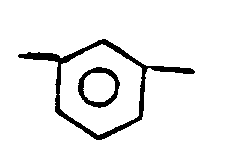
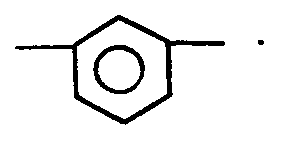
2. A thermoplastic aromatic polyamideimide copolymer according to claim 1, wherein Ar
is
3. A thermoplastic aromatic polyamideimide copolymer according to claim 1, wherein Ar
is
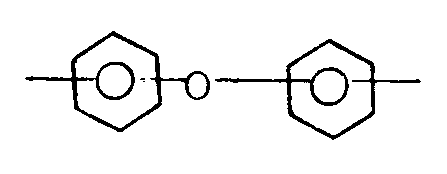
4. A thermoplastic aromatic polyamideimide copolymer according to claim 1 or claim 2,
wherein Ar' is
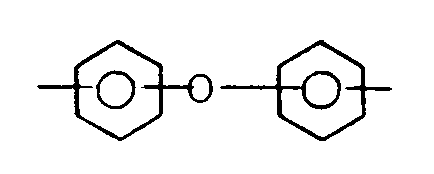
5. A thermoplastic aromatic polyamideimide copolymer according to any preceding claim,
wherein Ar₁ is
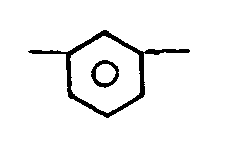
and Ar₂ is
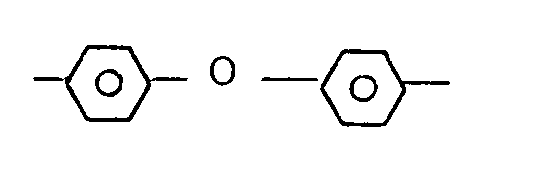
and Ar₂ is
6. A thermoplastic aromatic polyamideimide copolymer according to any preceding claim,
wherein in the units represented by B, (x) has various values lying between 1 and
10.
7. A thermoplastic aromatic polyamideimide copolymer according to any of claims 1 to
5, wherein (x) = 1.
8. A thermoplastic aromatic polyamideimide copolymer according to any preceding claim
with the proviso that up to 50% of the units represented by A may be in the form of
its amic acid bond precursor A'.
9. A process for producing thermoplastic aromatic polyamideimide copolymers comprising
step (1) producing polyamide amic acid by the reaction of 0.9 to 1.1 mole of a diamine
mixture composed of 5 to 95% mole % of diamine (I) represented by formula

(wherein the radicals -Ar are identical) and 95 to 5 mole % of diamine (II) represented by formula H₂N-Ar'-NH₂ with 1.0 mole of a tricarboxylic acid monochloride anhydride represented by formula
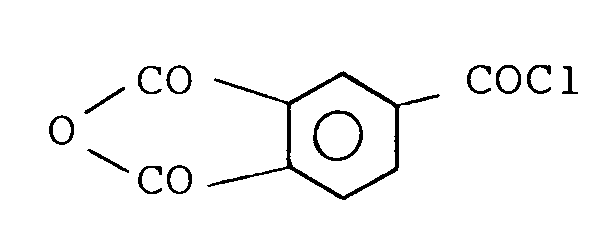
(wherein (Ar + Ar') is a mixture of 5 to 70 mole % of a bivalent residual group (Ar₁) represented by formula
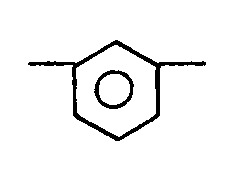
and 95 to 30 mole % of a bivalent residual group (Ar₂) represented by formula
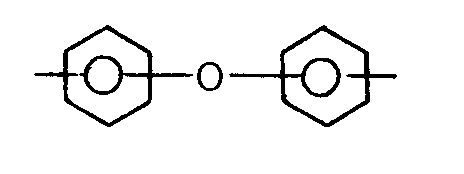
and (x) is an integer from 1 to 500) in an organic polar solvent at temperatures between -20°C and 80°C and step (2) converting polyamide amic acid obtained to polyamideimide by dehydrating ring closure reaction.
(wherein the radicals -Ar are identical) and 95 to 5 mole % of diamine (II) represented by formula H₂N-Ar'-NH₂ with 1.0 mole of a tricarboxylic acid monochloride anhydride represented by formula
(wherein (Ar + Ar') is a mixture of 5 to 70 mole % of a bivalent residual group (Ar₁) represented by formula
and 95 to 30 mole % of a bivalent residual group (Ar₂) represented by formula
and (x) is an integer from 1 to 500) in an organic polar solvent at temperatures between -20°C and 80°C and step (2) converting polyamide amic acid obtained to polyamideimide by dehydrating ring closure reaction.
10. A process for producing thermoplastic aromatic polyamideimide copolymers according
to claim 9, wherein said diamine (I) is

and said diamine (II) is
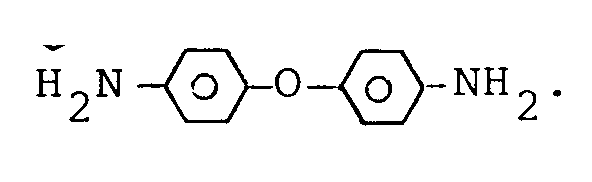
and said diamine (II) is
11. A process for producing thermoplastic aromatic polyamideimide copolymers according
to claim 9 or claim 10, wherein said organic polar solvents are selected from N,N-dimethyl-acetoamide,
N-methylpyrrolidone and 1,3-dimethyl-2-imidazolidinone.
12. A process for producing thermoplastic aromatic polyamideimide copolymers according
to any of claims 9 to 11 wherein the ring closure reaction of said step (2) is performed
at temperatures of 150 to 400°C in solid phase.
1. Thermoplastisches aromatisches Polyamidimidcopolymer mit einer logarithmischem Viskosität
η inh > 0,20, das hauptsächlich aus Struktureinheiten besteht, die durch die Formeln
dargestellt sind, worin (B+C) in einem Verhältnis von 1 Mol zu 1 Mol A vorliegt, C jeweils in einem Verhältnis von 0,95-0,05 Mol zu 0,0-0,95 Mol B vorliegt, wobei A und B oder C abwechselnd miteinander verbunden sind und (Ar+Ar') aus 5 bis 70 Mol-% an zweiwertiger Restgruppe (Ar₁) der Formel
und 95 bis 30 Mol-% einer zweiwertigen Restgruppe (Ar₂) der Formel
besteht (worin die zweiwertigen Reste Ar in Struktureinheit B identische Restgruppen darstellen und (x) eine ganze Zahl von 1 bis 500 ist).
dargestellt sind, worin (B+C) in einem Verhältnis von 1 Mol zu 1 Mol A vorliegt, C jeweils in einem Verhältnis von 0,95-0,05 Mol zu 0,0-0,95 Mol B vorliegt, wobei A und B oder C abwechselnd miteinander verbunden sind und (Ar+Ar') aus 5 bis 70 Mol-% an zweiwertiger Restgruppe (Ar₁) der Formel
und 95 bis 30 Mol-% einer zweiwertigen Restgruppe (Ar₂) der Formel
besteht (worin die zweiwertigen Reste Ar in Struktureinheit B identische Restgruppen darstellen und (x) eine ganze Zahl von 1 bis 500 ist).
2. Thermoplastisches aromatisches Polyamideimidcopolymer nach Anspruch 1, worin Ar
ist.
ist.
3. Thermoplastisches aromatisches Polyamidimidcopolymer nach Anspruch 1, worin Ar
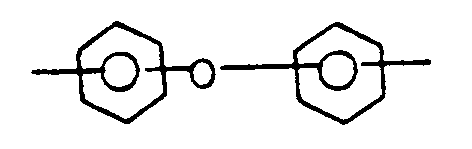
ist.
ist.
4. Thermoplastisches aromatisches Polyamidimidcopolymer nach Anspruch 1 oder 2, worin
Ar'
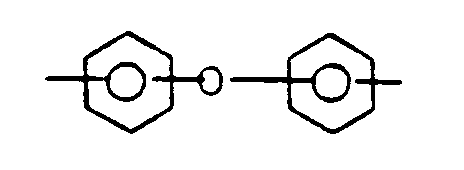
ist.
ist.
5. Thermoplastisches aromatisches Polyamidimidcopolymer nach einem der vorhergehenden
Ansprüche, worin Ar₁
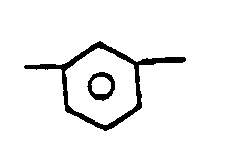
ist und Ar₂
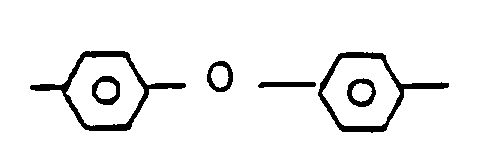
ist.
ist und Ar₂
ist.
6. Thermoplastisches aromatisches Polyamidimidcopolymer nach einem der vorhergehenden
Ansprüche, worin in den durch B dargestellten Einheiten (x) verschiedene Werte hat,
die zwischen 1 und 10 liegen.
7. Thermoplastisches aromatisches Polyamidimidcopolymer nach einem der Ansprüche 1 bis
5, worin (x) = 1.
8. Thermoplastisches aromatisches Polyamidimidcopolymer nach einem der vorhergehenden
Ansprüche, mit der Maßgabe, daß bis zu 50% der durch A dargestellten Einheiten in
der Form ihres Vorläufers A' mit Aminsäurebindung vorliegen.
9. Verfahren zur Herstellung von thermoplastischen aromatischen Polyamidimidcopolymeren,
umfassend Schritt (1), die Herstellung von Polyamidaminsäure durch Umsetzung von 0,9
bis 1,1 Mol einer Diaminmischung, die aus 5 bis 95 Mol-% Diamin (I) der Formel

(worin die Reste -Ar identisch sind) und 95 bis 5 Mol-% Diamin (II) der Formel H₂N-Ar'-NH₂ besteht, mit 1,0 Mol eines Tricarbonsäuremonochloridanhydrids der Formel
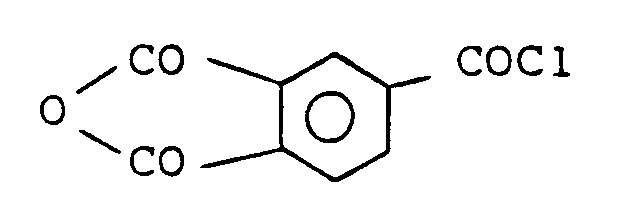
(worin (Ar + Ar') eine Mischung aus 5 bis 70 Mol-% einer zweiwertigen Restgruppe (Ar₁) der Formel
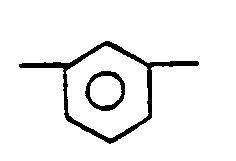
und 95 bis 30 Mol-% einer zweiwertigen Restgruppe (Ar₂) der Formel
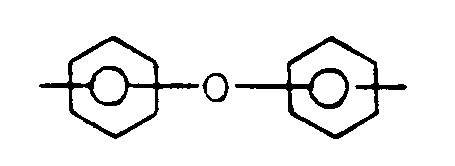
und (x) eine ganze Zahl von 1 bis 500 ist) in einem organischen polaren Lösungsmittel bei Temperaturen zwischen -20°C und 80°C, und Schritt (2), das Umwandeln von erhaltenem Polyamidaminsäure in Polyamidimid durch dehydratisierende Ringschlußreaktion.
(worin die Reste -Ar identisch sind) und 95 bis 5 Mol-% Diamin (II) der Formel H₂N-Ar'-NH₂ besteht, mit 1,0 Mol eines Tricarbonsäuremonochloridanhydrids der Formel
(worin (Ar + Ar') eine Mischung aus 5 bis 70 Mol-% einer zweiwertigen Restgruppe (Ar₁) der Formel
und 95 bis 30 Mol-% einer zweiwertigen Restgruppe (Ar₂) der Formel
und (x) eine ganze Zahl von 1 bis 500 ist) in einem organischen polaren Lösungsmittel bei Temperaturen zwischen -20°C und 80°C, und Schritt (2), das Umwandeln von erhaltenem Polyamidaminsäure in Polyamidimid durch dehydratisierende Ringschlußreaktion.
10. Verfahren zur Herstellung von thermoplastischen aromatischen Polyamidimidcopolymeren
nach Anspruch 9, worin das genannte Diamin (I)

und das genannte Diamin (II)
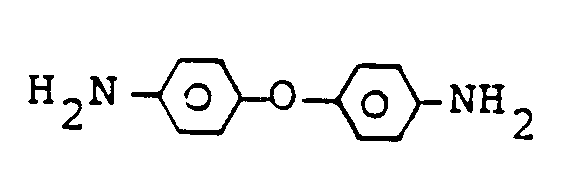
ist.
und das genannte Diamin (II)
ist.
11. Verfahren zur Herstellung von thermoplastischen aromatischen Polyamidimidcopolymeren
nach Anspruch 9 oder 10, worin die genannten organischen polaren Lösungsmittel aus
N,N-dimethylacetamid, N-Methylpyrrolidon und 1,3-Dimethyl-2-imidazolidinon ausgewählt
sind.
12. Verfahren zur Herstellung von thermoplastischen aromatischen Polyamidimidcopolymeren
nach einem der Ansprüche 9 bis 11, worin die Ringschlußreaktion des genannten Schritts
(2) bei Temperaturen von 150 bis 400°C in fester Phase durchgeführt wird.
1. Copolymère thermoplastique de polyamideimide aromatique, ayant une viscosité logarithmique
η inh > 0,20 qui se compose principalement des unités de structure représentées par les
formules
(B+C) étant à un rapport de 1 mole pour 1 mole de A, C étant à un rapport de 0,95-0,05 mole à 0,05-0,95 mole de B, respectivement, A et B ou C étant alternativement interconnectés et (Ar+Ar') se composant de 5 à 70 moles% d'un groupe résiduel bivalent (Ar₁) représenté par la formule
et 95 à 30% en moles d'un groupe résiduel bivalent (Ar₂)
(où les radicaux Ar bivalents dans l'unité de structure B représentent des groupes résiduels identiques et (x) est un nombre entier de 1 à 500).
(B+C) étant à un rapport de 1 mole pour 1 mole de A, C étant à un rapport de 0,95-0,05 mole à 0,05-0,95 mole de B, respectivement, A et B ou C étant alternativement interconnectés et (Ar+Ar') se composant de 5 à 70 moles% d'un groupe résiduel bivalent (Ar₁) représenté par la formule
et 95 à 30% en moles d'un groupe résiduel bivalent (Ar₂)
(où les radicaux Ar bivalents dans l'unité de structure B représentent des groupes résiduels identiques et (x) est un nombre entier de 1 à 500).
2. Copolymère thermoplastique de polyamideimide aromatique selon la revendication 1,
où Ar est
3. Copolymère thermoplastique de polyamideimide aromatique selon la revendication 1,
où Ar est
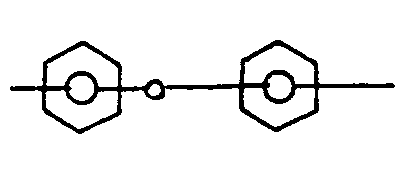
4. Copolymère thermoplastique de polyamideimide aromatique selon la revendication 1 ou
la revendication 2, où Ar' est
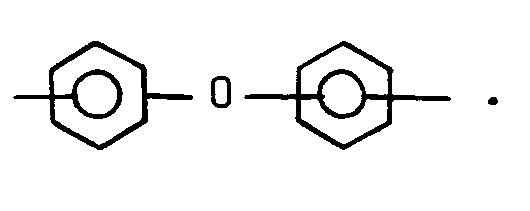
5. Copolymère thermoplastique de polyamideimide aromatique selon toute revendication
précédente, où Ar₁ est
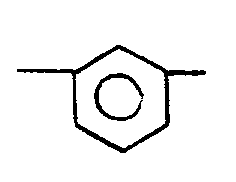
et Ar₂ est
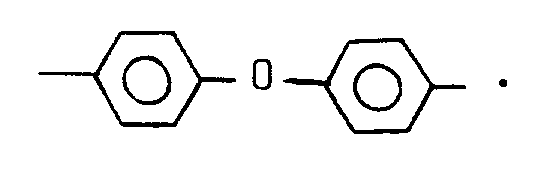
et Ar₂ est
6. Copolymère thermoplastique de polyamideimide aromatique selon toute revendication
précédente, où dans les unités représentées par B, (x) a diverses valeurs comprises
entre 1 et 10.
7. Copolymère thermoplastique de polyamideimide aromatique selon toute revendication
1 à 5, où (x) = 1.
8. Copolymère thermoplastique de polyamideimide aromatique selon toute revendication
précédente, à condition que jusqu'à 50% des unités représentées par A puissent avoir
la forme de son précurseur de liaison d'acide amique A'.
9. Procédé de production de copolymères thermoplastiques de polyamideimide aromatique
comprenant l'étape (1) de production de l'acide amique du polyamide par la réaction
de 0,9 à 1,1 moles d'un mélange de diamines composé de 5 à 95% en moles de la diamine
(I) représentée par la formule

(où les radicaux -Ar sont identiques) et 95 à 5% en moles de la diamine (II) représentée par la formule H₂N-Ar'-NH₂ avec 1,0 mole d'un anhydride monochloré d'acide tricarboxylique représenté par la formule
(où (Ar + Ar') est un mélange de 5 à 70% en moles d'un groupe résiduel bivalent (Ar₁) représenté par la formule
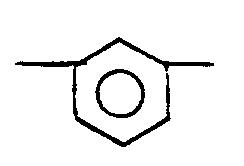
et 95 à 30% en moles d'un groupe résiduel bivalent (Ar₂) représenté par la formule
et (x) est un nombre entier de 1 à 500), dans un solvant polaire organique à des températures comprises entre -20°C et 80°C et l'étape (2) de conversion de l'acide amique de polyamide obtenu en polyamideimide par réaction déshydratante de cyclisation.
(où les radicaux -Ar sont identiques) et 95 à 5% en moles de la diamine (II) représentée par la formule H₂N-Ar'-NH₂ avec 1,0 mole d'un anhydride monochloré d'acide tricarboxylique représenté par la formule
(où (Ar + Ar') est un mélange de 5 à 70% en moles d'un groupe résiduel bivalent (Ar₁) représenté par la formule
et 95 à 30% en moles d'un groupe résiduel bivalent (Ar₂) représenté par la formule
et (x) est un nombre entier de 1 à 500), dans un solvant polaire organique à des températures comprises entre -20°C et 80°C et l'étape (2) de conversion de l'acide amique de polyamide obtenu en polyamideimide par réaction déshydratante de cyclisation.
10. Procédé de production de copolymères thermoplastiques de polyamideimide aromatique
selon la revendication 9, où ladite diamine (I) est

et ladite diamine (II) est
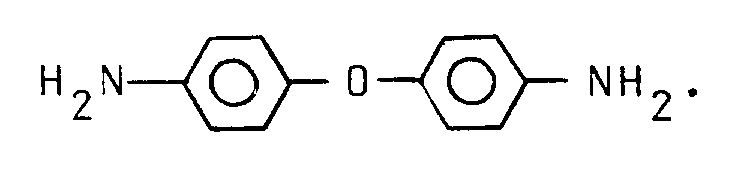
et ladite diamine (II) est
11. Procédé de production de copolymères thermoplastiques de polyamideimide aromatique
selon la revendication 9 ou la revendication 10, où lesdits solvants polaires organiques
sont choisis parmi N,N-diméthylacétoamide, N-méthylpyrrolidone et 1,3-diméthyl-2-imidazolidinone.
12. Procédé de production de copolymères thermoplastiques de polyamideimide aromatique
selon l'une quelconque des revendications 9 à 11, où ladite réaction de cyclisation
de ladite étape (2) est accomplie à des températures de 150 à 400°C en phase solide.