|
(11) | EP 0 201 219 B1 |

| (12) | EUROPEAN PATENT SPECIFICATION |
|
|
| (54) |
Growth-promoting compositions Wachstumsfördernde Zusammensetzungen Compositions favorisant la croissance |
|
|
|||||||||||||||||||||||||||||||
| Note: Within nine months from the publication of the mention of the grant of the European patent, any person may give notice to the European Patent Office of opposition to the European patent granted. Notice of opposition shall be filed in a written reasoned statement. It shall not be deemed to have been filed until the opposition fee has been paid. (Art. 99(1) European Patent Convention). |
[0001] The present invention relates to novel growth-promoting compositions and methods for their use. More particularly, the invention relates to compositions containing a mixture of anabolic substances.
[0002] With the ever-increasing demand for edible protein and the dwindling resources available for producing such protein, there has been considerable interest in developing bioactive substances which can increase the rate of growth or feed conversion efficiency in meat-producing animals. A group of naturally occurring substances that has received considerable attention includes the animal growth hormones.
[0003] Growth hormones are polypeptide anabolic hormones secreted by the pituitary glands of many species, including most meat-producing animals. Until fairly recently, growth hormones could be obtained only by extraction from animal tissues. These extraction procedures were arduous, and resulted in small yields of the hormone. With the advent of recombinant DNA technology, it has become possible to clone various animal growth hormone genes and produce the hormones microbially in useful yields at reasonable cost. See European Patent Application 83304574.3 (publication number 0 103 395) to Biogen N.V.
[0004] Endogenous growth hormones stimulate growth, increase the rate of protein synthesis and the mobilization and utilization of fatty acids, and decrease the rate of carbohydrate utilization. Administration of exogenous growth hormones has been shown to increase the rate of growth, weight gain and meat production in animals. Although growth hormones are somewhat species specific, there is considerable homology among the amino acid sequences of animal growth hormones and these hormones have been shown to exhibit inter-species biological activities.
[0005] In addition to inter-species activities, various active fragments of growth hormones have been discovered. In particular, it has been found that polypeptides missing several amino acids from the N-terminus maintain a high level of biological activity. The aforementioned European Patent application discloses 64 and A9 constructions (missing 4 and 9 amino acids form the N-termini respectively) of bovine growth hormone which retain their biological activity. Moreover, biologically active animal growth hormones produced by recombinant DNA techniques often have an extraneous N-terminal methionine. As used in the following description and claims, the terms "growth hormone" and "animal growth hormone" are intended to include growth promoting derivatives (such as the above mentioned active fragments of the polypeptide hormone) as well as the full-length hormone or its fragment having an extraneous N-terminal methionine.
[0006] Another group of anabolic agents which has received a great deal of attention incudes the "zearalins." "Zearalins" include zearalenone which is a natural metabolite of the organism Gibberella zeae and derivatives thereof. Zearalenone is described by Andrews, F.N., et al., U.S. Patent 3,196,019. A number of active derivatives of zearalenone have been prepared and are described in the patent and technical literature. See Hidy, P.H., et al., Adv. Appl. Microbiol., 22, 59-82 (1979). Zearalins are resorcylic acid lactone derivatives. Zearalenone is represented by the following chemical formula:
[0007] U.S. Patent 3,239,341 describes the reduction of the olefinic bond of zearalenone to produce zearalanone, and U.S. Patent 3,239,345 describes the reduction of both the double bond and the ketone group of zearalenone to produce the compound, zearalanol. The latter compound has enjoyed considerable commercial success as an agent for improving weight gains and feed efficiencies in meat-producing animals. This compound is known by its common name, zeranol, and compositions containing the compound are sold under the trademark, Ralgro@, by International Minerals and Chemical Corporation, Northbrook, Illinois U.S.A.
[0008] In accordance with the present invention, a composition for promoting the growth or feed efficiency of a meat-producing mammal contains growth-promoting amounts of an animal growth hormone having anabolic activity in said mammal and a zearalin. These compositions have been found to improve both weight gains and feed conversion efficiencies in controlled trials.
[0009] The zearalin employed in the compositions of the present invention is any of the anabolic compounds represented by the formula
wherein A is -CH2CHz- or -CH=CH-; X is -CH2-,
Rs is hydrogen, alkyl containing from 1 to 5 carbon atoms, aryl containing from 6 to 10 carbon atoms, aralkyl, wherein the aryl portion contains from 6 to 10 carbon atoms and the alkylene portion contains from 1 to 5 carbon atoms; or acyl of from 1 to 5 carbon atoms; R, and R3 are independently selected from hydrogen, -OH, or ORs; R6 is alkyl of from 1 to 5 carbon atoms; and R2 and R4 are independently selected from hydrogen, halogen and -N02.
[0010] The carbon in the lactone ring adjacent the carboxylate group is optically active, and when X is
that group is also optically active. In addition, when A is -CH=CH-, it can be in the cis or trans configuration. All isomers, diastereoisomers and positional isomers are contemplated for use in the compositions of this invention.
[0011] In preferred compositions, A is -CH2CH2-, X is
R2 and R4 are hydrogen. The most preferred zearalin is zearalanol which is represented by the above formula, wherein A is -CH2CH2-, R2 and R4 are hydrogen, R1 and R3 are -OH and R5 is hydrogen.
[0012] The growth hormones that may be employed in the compositions of this invention may be natural growth hormone extracted from animal pituitary tissue. For economic reasons, the growth hormone preferably is a microbially-produced animal growth hormone made by recombinant DNA techniques. The procedures for making such growth hormones are known, and are described, for example, in the aforementioned European patent application No. 83304574.3 (describing bovine growth hormone) and European patent application No. 83305717.7 (publication number 0 104 920, describing the production of porcine growth hormone). As used herein, the term growth hormone is intended to include active fragments of the polypeptide hormone as well as the full-length hormone or its fragment having-an extraneous N-terminal methionine.
[0013] Because of the inter-species biological activities of growth hormones, a composition containing a particular growth hormone may be used in more than one species. For example, compositions containing bovine growth hormone may be administered to cattle, sheep, goats, pigs and other animals to enhance the rate of weight gain and feed conversion efficiency. Any such growth hormone may be employed which exhibits anabolic activity in the species to which the composition is being administered. Preferably, the composition contains growth hormone corresponding to that of the same species to which it is to be administered.
[0014] The compositions of this invention are advantageously administered parenterally. Such administration may be by intravenous or intramuscular injection, intraperitoneal injection, or preferably subcutaneous implant. Zearalanol is conventionally administered to animals in the form of a slow-release, subcutaneous implant which is inserted beneath the skin of the ear of the animal. Growth hormones, being polypeptides, cannot conveniently be administered orally, because they are broken down and inactivated in the alimentary tract. Zearalins, on the other hand, can be administered orally and thus can be incorporated into animal feeds. Although less preferred, it is contemplated that the method of the present invention could be accomplished by orally administering the zearalin portion of the composition and parenterally administering the growth hormone component.
[0015] The growth hormone and zearalin are administered either separately or in combination in growth-promoting amounts. The preferred method is to implant the zearalin in a single dose subcutaneously in the ear (for example, in the case of zeranol, 12 mg for sheep; 36 mg for cattle) and to inject the growth hormone subcutaneously in the form of a long-acting delivery system that will provide small amounts daily to the animal (for example, in the case of bovine growth hormone, 10 mg/day for sheep; 6 mg/day for cattle).
[0016] The total dosage of zearalin and growth hormone administered can depend on several factors, including the particular zearalin and growth hormone employed, the delivery systems, and the animal species. The total dosage of zeranol in sheep Benerally ranges from 200 to 600 micrograms per kilogram of body weight, preferably 300-500 pg/kg of and most preferably 400 pg/kg. The total zeranol dosage in cattle generally ranges from 50 to 200 micrograms per kilogram of body weight, preferably 80-100 P/kg. In sheep, the total dosage of bovine growth hormone generally ranges from 100 to 600 micrograms per kilogram of body weight, preferably 200-400 µg/kg and most preferably 300 pg/kg. The total dosage of bovine growth hormone in cattle generally ranges from 5 to 40 micrograms per kilogram of body weight, preferably 12-18 µg/kg.
[0017] The preferred dosage form for the zearalin is a spherical or cylindrical tablet implanted subcutaneously. Such dosage forms are well known, and are designed such that the active ingredients are slowly released over a period of several days to several weeks. The growth hormone may be incorporated in any of a variety of delivery systems, such as low melting beeswax (Romansky Formulary) peanut oil- aluminum monstearate, or a solid semi-permeable implant.
[0018] The compositions and methods of the present invention have been found to significantly improve the rate of weight gain and/or feed conversion efficiencies of meat-producing animals. The invention is particularly useful for administration to cattle, sheep, swine, and goats.
[0019] The invention is further illustrated by the following examples, which are not intended to be limiting.
Example 1
Effects of Anabolic Agents on Growing Lambs
[0020] The following experiment was conducted to determine the effects of administering bovine growth hormone (bGH), zeranol and combinations of the two on growing lambs. Effects of these agents on weight gain, feed intake, feedlweight gain ratio, blood urea nitrogen (BUN) and blood glucose were measured and recorded.
[0021] Sixty-four castrated male spring lambs were involved in the tests. The lambs were of mixed breed and initial weights averaged about 30 kg. Prior to initiating the test protocol, the animals were injected with an anthelminic and vaccinated for contagious ecthyma (soremouth) and Clostridium perfingens type D (overeating disease) and were placed on the adaptation schedule shown in Table 1 below.
[0022] The protocol involved eight replicates of each of eight treatment regimens (four levels of bGH and two levels of zeranol). Each replicate consisted of a single lamb.
[0023] Pituitary-derived bGH was administered daily (at 9:00 a.m.) at levels of 0, 1, 5 and 10 mg per lamb in a single 5 ml subcutaneous injection. The injectable solutions of bGH were prepared by dissolving appropriate amounts of the hormone in "Cornell Buffer," which consisted of isotonic saline containing 0.025 M sodium bicarbonate and 0.025 M sodium carbonate. These solutions were sterilized by filtration and stored at 4°C until use. Zeranol was administered at 0 and 12 mg per lamb in a single subcutaneous implant three days prior to initiation of the protocol. The zeranol implant used was a commercial product sold by International Minerals and Chemical Corp. under the trademark, Ralgro@. Placebo preparations of the appropriate vehicles comprised the zero levels of bGH and zeranol.
[0024] The experiment was continued for 28 days. The lambs were weighed at weekly intervals and initial and final weights were determined by averaging the weights taken on two consecutive days. Throughout the test, lambs were given water and fed ad libitum a ration having the composition shown in Table 2. Feed consumption was recorded. Blood samples were taken biweekly and analyzed for BUN and glucose.
[0025] Average daily weight gain (ADG), average daily feed intake (ADF), feed intake to weight gain ratio (FIG), BUN and blood glucose levels were recorded and analyzed statistically. The effects of bGH on ADG, ADF and F/G are shown in Table 3. The effects of zeranol on ADG, ADF and F/G are summarized in Table 4. Interactive effects of bGH and zeranol on ADG, ADF and F/G are summarized in Table 5. These data demonstrate an additive effect of the two anabolic agents, and suggest that the two agents have different modes of action in vivo.
[0026] The effects of bGH, zeranol and combinations on BUN and blood glucose levels are summarized in Tables 6, 7 and 8 respectively.
Example II
Effect of Anabolic Agents on Growing Cattle
[0027] This experiment was done to determine the effect of administering bovine growth hormone (bGH), zeranol, and combinations of the two on growing cattle. Effects of these compounds on blood urea nitrogen (BUN), feed intake (pounds feed per pound of weight gain), and weight gain were recorded.
Materials and Methods
[0028] Animals. Steers were received into pens (3 animals/pen) and placed on a three week adaptation schedule. Within one week after receipt, the steers were weighed, tagged, and injected with an authelminic.
[0029] Compounds Tested Pituitary-derived bGH (Parlow) was administered daily at levels of 0, 6, 12 and 24 per steer in a single 20-ml subcutaneous injection. Zeranol (RALGRO@), at levels of 0 and 36 mg per steer given as a single subcutaneous dose (implant) three days prior to initiation of the study. Placebo preparations of the appropriate vehicles were used at the zero level of bGH and zeranol respectively.
[0030] Injectable solutions of bGH were prepared using "Cornell buffer" which consists of isotonic saline containing 0.025M NaHC03 and 0.025M Na2C03. Solutions of bGH were prepared every four days and kept at 4°C until used. The saline/buffer vehicle was prepared in bulk and sterilized by filtration. bGH added aseptically to the vehicle.
Procedures
[0031] The study consisted of a three week adaptation period, a two week pre-test period, and a six week experimental (treatment) period.
[0032] During pre-test each animal received daily subcutaneous injections of 20 ml Cornell buffer in the neck region. Upon completion of the pre-test period, sixty-four of the steers were randomly assigned to one of eight treatments (8 animals/treatment group). The remaining 8 animals were randomly assigned among two control groups, if they were within the normal, animal population. During the treatment period (42 days) the animals were injected daily with 0, 6, 12 and 24 mg/hd bGH subcutaneously in 20 ml of Cornell buffer. Three days prior to beginning the experimental period, treatments 5 through 8 animals were implanted with 36 mg of zeranol.
[0033] Blood samples (20 to 30 ml) were taken from each steer at the end of the acclimation period, just prior to zeranol implantation during the pre-test period, and at 14 days, 28 days and 42 days during the treatments period. Samples were taken prior to the daily injection. Serum prepared and analyzed for urea nitrogen, glucose, insulin and growth hormone.
[0034] All steers were weighed (unshrunk) weekly during the pre-test and experimental periods. Feed and water were provided ad libitum. Feed was weighed daily. Feed not eaten was weighed back and fresh feed added each day.
[0035] Approximately 10 animals were selected at the end of the test from treatments 1 and 4 for both visual and chemical carcass evaluation.
Calculated Composition (as-fed basis)
[0038] Experimental design and Statistics. The experiment was conducted as a 4 x 2 factorial arrangement of treatments (four levels of bGH and two levels of zeranol) with eight replicates per treatment combination. Each replicate consisted of a single steer. The data was statistically analyzed by a two-way analysis of variance (Sokal and Rohlf, Biometry, W. H. Freeman and Co., San Francisco, 1969; pp. 332-323). The form of the response to bGH level (linear, quadratic or cubic) was characterized by the use of orthogonal contrasts, and in the presence of a significant quadratic response, the optimum level was estimated (Gill, J. L. Design and Analysis of Experimentals in the Animal and Medical Sciences, Vol. 1, The Iowa State University Press, Ames, 1978; pp. 168-173).
[0039] The following table shows the schedule of treatment numbers with bGH in mg per head per day and zeranol implanted at a single dosage of 36 mg.
[0040] Statistical analysis of the data in Table 10 shown that, in combination, 5.6% of the improvement in reducing BUN comes from zeranol and 16.7% from bGH.
1. A composition for promoting the growth or feed efficiency of a meat-producing mammal
which comprises growth-promoting amounts of an animal growth hormone having anabolic
activity and a zearalin of the formula
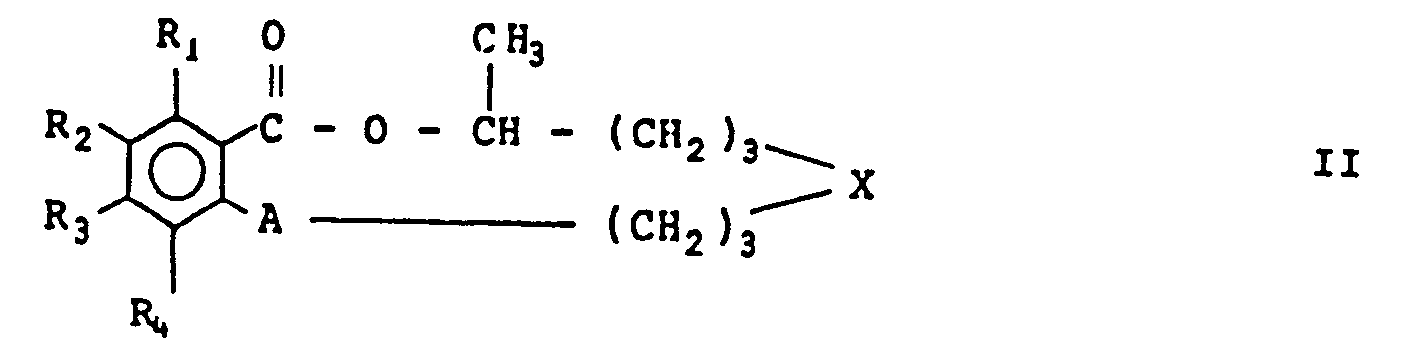
wherein A is -CHZCH2- or -CH=CH-; X is -CH2-,
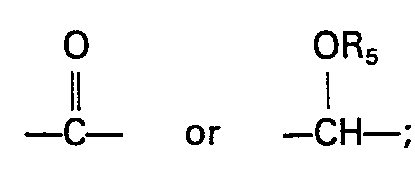
R5 is hydrogen, alkyl containing from 1 to 5 carbon atoms, aryl containing from 6 to 10 carbon atoms, aralkyl, wherein the aryl portion contains from 6 to 10 carbon atoms and the alkylene portion contains from 1 to about 5 carbon atoms; or acyl of from 1 to about 5 carbon atoms; R, and R3 are independently selected from hydrogen, -OH, or OR6; R6 is alkyl of from 1 to 5 carbon atoms; and R2 and R4 are independently selected from hydrogen, halogen and -N02.
wherein A is -CHZCH2- or -CH=CH-; X is -CH2-,
R5 is hydrogen, alkyl containing from 1 to 5 carbon atoms, aryl containing from 6 to 10 carbon atoms, aralkyl, wherein the aryl portion contains from 6 to 10 carbon atoms and the alkylene portion contains from 1 to about 5 carbon atoms; or acyl of from 1 to about 5 carbon atoms; R, and R3 are independently selected from hydrogen, -OH, or OR6; R6 is alkyl of from 1 to 5 carbon atoms; and R2 and R4 are independently selected from hydrogen, halogen and -N02.
2. The composition of claim 1 for promoting growth or feed efficiency of sheep, which
is in the form of a subcutaneous implant containing from about 100 to about 600 micrograms
of growth hormone per kg. of animal weight and from about 200 to about 600 micrograms
of zearalin per kg. of animal body weight.
3. The composition of claim 1, for promoting growth or feed efficiency of cattle,
which is in the form of a subcutaneous implant contaning from about 5 to about 40
micrograms of growth hormone per kg. of animal body weight and from about 50 to about
200 micrograms of zearalin per kg. of animal body weight.
4. The composition of claim 2, wherein the zearalin is zearalanol and the growth hormone
is bovine growth hormone, and the implant contains from about 200 to about 400 micrograms
of bovine growth hormone per kg. of animal body weight and from about 300 to about
500 micrograms of zearalanol per kg. of animal body weight.
5. The composition of claim 3, wherein the zearalin is zearalanol and the growth hormone
is bovine growth hormone, and the implant contains from about 12 to 18 micrograms
of bovine growth hormone per kg. of animal body weight and from about 80 to about
100 micrograms of zearalin per kg. of animal body weight.
6. A method for increasing the rate of growth or feed efficiency of a meat-producing
mammal, which comprises administering to said mammal growth-promoting amounts of an
animal growth hormone having anabolic activity in said mammal and a zearalin of the
formula
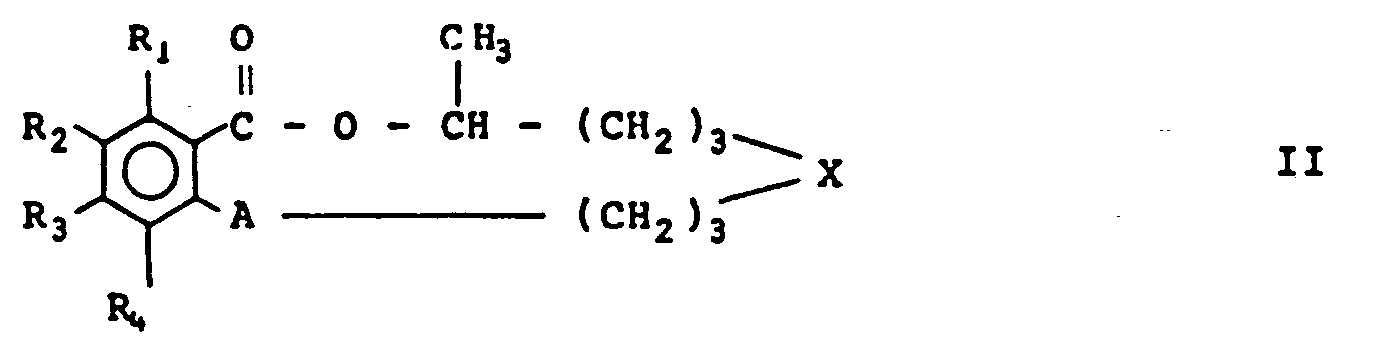
wherein A is ―CH2CH2― or -CH=CH-; X is -CH2-,
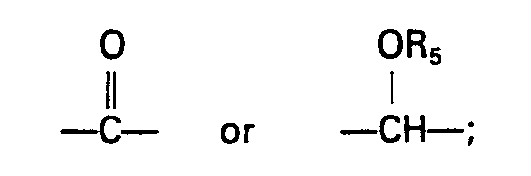
R5 is hydrogen, alkyl containing from 1 to about 5 carbon atoms, aryl containing from 6 to about 10 carbon atoms, aralkyl, wherein the aryl portion contains from 6 to 10 carbon atoms and the alkylene portion contains from 1 to about 5 carbon atoms; or acyl of from 1 to about 5 carbon atoms; R, and R3 are independently selected from hydrogen, -OH, or OR6; R6 is alkyl of from 1 to about 5 carbon atoms; and R2 and R4 are independently selected from hydrogen, halogen and -N02.
wherein A is ―CH2CH2― or -CH=CH-; X is -CH2-,
R5 is hydrogen, alkyl containing from 1 to about 5 carbon atoms, aryl containing from 6 to about 10 carbon atoms, aralkyl, wherein the aryl portion contains from 6 to 10 carbon atoms and the alkylene portion contains from 1 to about 5 carbon atoms; or acyl of from 1 to about 5 carbon atoms; R, and R3 are independently selected from hydrogen, -OH, or OR6; R6 is alkyl of from 1 to about 5 carbon atoms; and R2 and R4 are independently selected from hydrogen, halogen and -N02.
7. The method of claim 6, wherein said mammal is selected from cattle, sheep, pigs
and goats.
8. The method of claim 7, wherein said mammal is a sheep, the growth hormone is administered
at a dosage of from about 100 to about 600 micrograms per kg. of animal body weight
and the zearalin is administered at a dosage of from about 200 to about 600 micrograms
per kg. of animal body weight.
9. The method of claim 7, wherein said mammal is bovine, the growth hormone is administered
at a dosage of from about 5 to about 40 micrograms per kg. of animal body weight and
the zearalin is administered at a dosage of from about 50 to about 200 micrograms
per kg. of animal body weight.
10. The method of claim 8, wherein the zearalin is zearalanol, administered at a dosage
of from about 300 to about 500 micrograms per kg. of animal body weight, and the growth
hormone is bovine growth hormone, administered at a dosage of from about 200 to about
400 micrograms per kg. of animal weight.
11. The method of claim 9, wherein the zearalin is zearalanol, administered at a dosage
of from about 80 to about 100 micrograms per kg. of animal body weight, and the growth
hormone is bovine growth hormone, administered at a dosage of from about 12 to about
18 micrograms per kg. of animal body weight.
12. The method of any one of claims 6 to 11, wherein said growth hormone and zearalin
are administered parenterally.
13. The method of any one of claims 6 to 12, wherein said zearalin is administered
in the form of a subcutaneous implant.
1. Mittel zur Förderung des Wachstums oder des Futterwerts eines Fleisch erzeugenden
Saugetiers, dadurch gekennzeichnet, daß es das Wachstum fördernde Mengen eines Tierwachstumshormons
mit anabolischer Aktivität und eikn Zearalin der Formel
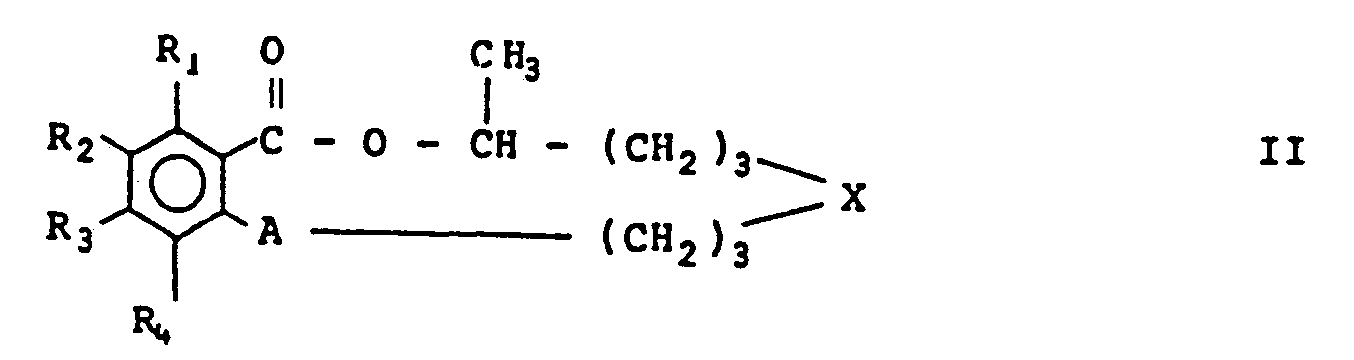
enthält, worin A für ―CH2CH2― oder -CH=CH-; X für ―CH2―,
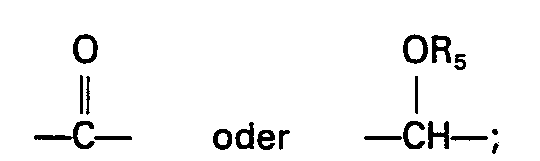
steht; Rs für Wasserstoff, Alkyl mit 1 bis 5 Kohlenstoffatomen, Aryl mit 6 bis 10 Kohlenstoffatomen, Aralkyl, wobei der Arylteil 6 bis 10 Kohlenstoffatome enthält und der Alkylenteil 1 bis etwa 5 Kohlenstoffatome enthält; oder Acyl mit 1 bis etwa 5 Kohlenstoffatomen steht; R, und R3 unabhängig voneinander aus Wasserstoff, -OH oder OR6 ausgewählt sind; R6 für Alkyl mit 1 bis 5 Kohlenstoffatomen steht; und R2 und R4 unabhängig voneinander aus Wasserstoff, Halogen und ―NO2 ausgewählt sind.
enthält, worin A für ―CH2CH2― oder -CH=CH-; X für ―CH2―,
steht; Rs für Wasserstoff, Alkyl mit 1 bis 5 Kohlenstoffatomen, Aryl mit 6 bis 10 Kohlenstoffatomen, Aralkyl, wobei der Arylteil 6 bis 10 Kohlenstoffatome enthält und der Alkylenteil 1 bis etwa 5 Kohlenstoffatome enthält; oder Acyl mit 1 bis etwa 5 Kohlenstoffatomen steht; R, und R3 unabhängig voneinander aus Wasserstoff, -OH oder OR6 ausgewählt sind; R6 für Alkyl mit 1 bis 5 Kohlenstoffatomen steht; und R2 und R4 unabhängig voneinander aus Wasserstoff, Halogen und ―NO2 ausgewählt sind.
2. Mittel nach Anspruch 1 zur Förderung des Wachstums oder des Futterwerts von Schafen,
dadurch gekennzeichnet, daß es in der Form eines subkutanen Implantats vorliegt, das
etwa 100 bis etwa 600 µg Wachstumshormon pro kg Tiergewicht und etwa 200 bis etwa
600 µg Zearalin pro kg Körpergewichts des Tiers enthält.
3. Mittel nach Anspruch 1 zur Förderung des Wachstums oder des Futterwerts von Rindvieh,
dadurch gekennzeichnet, daß es in Form eines subkutanen Implantats vorliegt, das etwa
5 bis 40 pg Wachstumshormon pro kg Tierkörpergewicht und etwa 50 bis etwa 200 µg Zearalin
pro kg Körpergewicht des Tiers enthält.
4. Mittel nach Anspruch 2, dadurch gekennzeichnet, daß das Zearalin Zearalanol ist
und daß das Wachstumshormon Rinderwachstumshormon ist und daß das Implantat etwa 200
bis etwa 400 µg Rinderwachstumshormon pro kg Tierkörpergewicht und etwa 300 bis etwa
500 ug Zearalanol pro kg Tierkörpergewicht enthält.
5. Mittel nach Anspruch 3, dadurch gekennzeichnet, daß das Zearalin Zearalanol ist
und daß das Wachstumshormon Rinderwachstumshormon ist und daß das Implantat etwa 12
bis 18 ug Rinderwachstumshormon pro kg Tierkörpergewicht und etwa 80 bis etwa 100
pg Zearalin pro kg Tierkörpergewicht enthält.
6. Verfahren zur Erhöhung der Wachstumsrate oder des Futterwerts eines Fleisch erzeugenden
Säugetiers, dadurch gekennzeichnet, daß man dem Säugetier wachstumsfördernde Mengen
eines tierischen Wachstumshormons mit anabolischer Aktivität in dem genannten Säugetier
und ein Zearalin der Formel
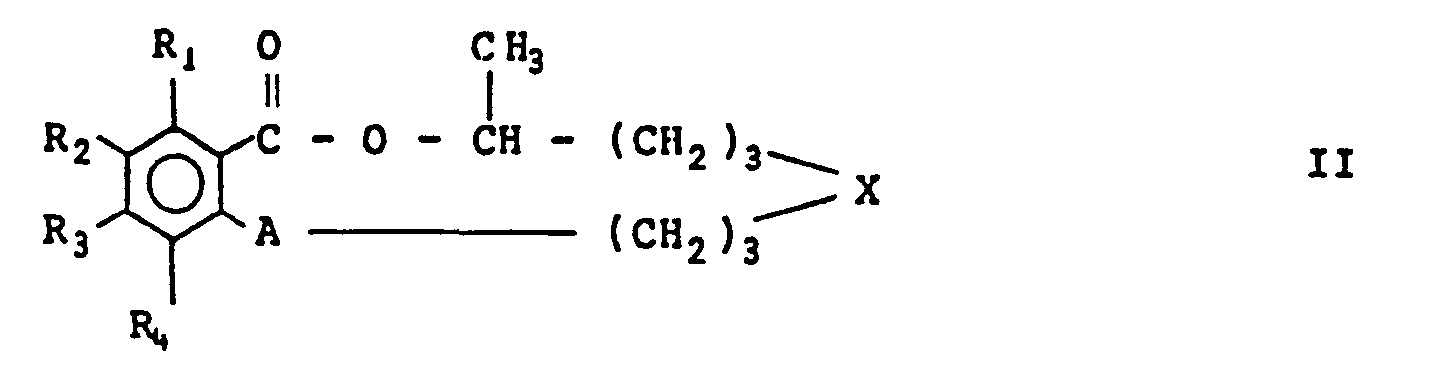
verabreicht, worin A für ―CH2CH2― oder ―CH=CH―; X für ―CH2―,
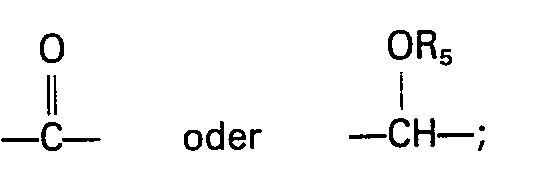
steht; R5 für Wasserstoff, Alkyl mit 1 bis 5 Kohlenstoffatomen, Aryl mit 6 bis 10 Kohlenstoffatomen, Aralkyl, wobei der Arylteil 6 bis etwa 10 Kohlenstoffatome enthält und der Alkylenteil 1 bis etwa 5 Kohlenstoffatome enthält; oder Acyl mit 1 bis etwa 5 Kohlenstoffatomen steht; R, und R3 unabhängig voneinander aus Wasserstoff, -OH oder OR6 ausgewählt sind; R6 für Alkyl mit 1 bis etwa 5 Kohlenstoffatomen steht; und R2 und R4 unabhängig voneinander aus Wasserstoff, Halogen und -N02 ausgewählt sind.
verabreicht, worin A für ―CH2CH2― oder ―CH=CH―; X für ―CH2―,
steht; R5 für Wasserstoff, Alkyl mit 1 bis 5 Kohlenstoffatomen, Aryl mit 6 bis 10 Kohlenstoffatomen, Aralkyl, wobei der Arylteil 6 bis etwa 10 Kohlenstoffatome enthält und der Alkylenteil 1 bis etwa 5 Kohlenstoffatome enthält; oder Acyl mit 1 bis etwa 5 Kohlenstoffatomen steht; R, und R3 unabhängig voneinander aus Wasserstoff, -OH oder OR6 ausgewählt sind; R6 für Alkyl mit 1 bis etwa 5 Kohlenstoffatomen steht; und R2 und R4 unabhängig voneinander aus Wasserstoff, Halogen und -N02 ausgewählt sind.
7. Verfahren nach Anspruch 6, dadurch gekennzeichnet, daß das Säugetier aus Rindvieh,
Schafen, Schweinen und Ziegen ausgewählt ist.
8. Verfahren nach Anspruch 7, dadurch gekennzeichnet, daß das Säugetier ein Schaf
ist und daß das Wachstumshormon mit einer Dosis von etwa 100 bis etwa 600 pg pro kg
Tierkörpergewicht verabreicht wird und daß das Zearalin mit einer Dosis von etwa 200
bis etwa 600 ug pro kg Tierkörpergewicht verabreicht wird.
9. Verfahren nach Anspruch 7, dadurch gekennzeichnet, daß das Säugetier ein Rind ist,
daß das Wachstumshormon in einer Dosis von etwa 5 bis etwa 40 µg pro kg Tierkörpergewicht
verabreicht wird und daß das Zearalin in einer Dosis von etwa 50 bis etwa 200 µg pro
kg Tierkörpergewicht verabreicht wird.
10. Verfahren nach Anspruch 8, dadurch gekennzeichnet, daß das Zearalin Zearalanol
ist, daß es in einer Dosis von etwa 300 bis etwa 500 µg pro kg Tierkörpergewicht verabreicht
wird und daß das Wachstumshormon Rinderwachstumshormon ist, das in einer Dosis von
etwa 200 bis etwa 400 pg pro kg Tiergewicht verabreicht wird.
11. Verfahren nach Anspruch 9, dadurch gekennzeichnet, daß das Zearalin Zearalanol
ist, welches in einer Dosis von etwa 80 bis etwa 100 pg pro kg Tierkörpergewicht verabreicht
wird, und daß das Wachstumshormon Rinderwachstumshormon ist, weiches in einer Dosis
von etwa 12 bis etwa 18 µg pro kg Tierkörpergewicht verabreicht wird.
12. Verfahren nach einem der Ansprüche 6 bis 11, dadurch gekennzeichnet, daß das Wachstumshormon
und das Zearalin parenteral verabreicht werden.
13. Verfahren nach einem der Ansprüche 6 bis 12, dadurch gekennzeichnet, daß das Zearalin
in der Form eines subkutanen Implantats verabreicht wird.
1. Composition favorisant la croissance ou l'efficacité de la nourriture chez un mammifère
producteur de viande, qui comprend des quantités favorisant la croissance d'une hormone
animale de croissance ayant une activité anabolique et d'une zéaraline de formule
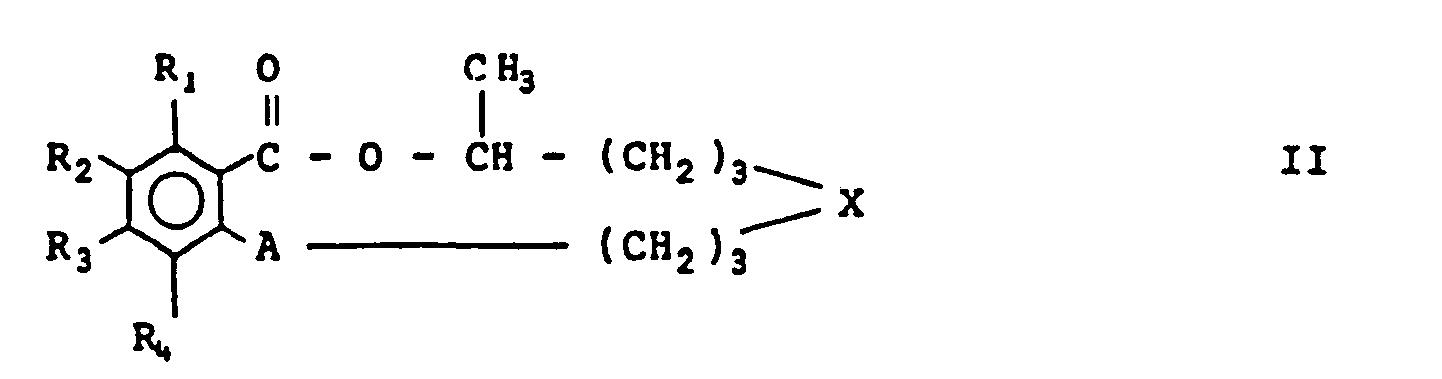
où A est -CH2CH2- ou -CH=CH-; X est -CH2-,
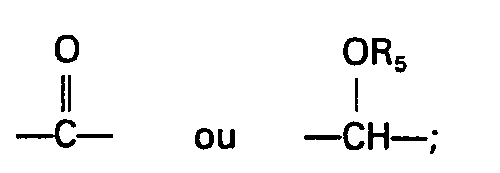
R5 est un atome d'hydrogène, un groupe alkyle contenant de 1 à 5 atomes de carbone, aryle contenant de 6 à 10 atomes de carbone, aralkyle où la portion aryle contient de 6 à 10 atomes de carbone et la portion alkylène contient de 1 à environ 5 atomes de carbone; ou un groupe acyle avec de 1 à environ 5 atomes de carbone; R, et R3 sont de manière indépendante choisis parmi un atome d'hydrogène, -OH ou OR6; R6 est un groupe alkyle avec de 1 à 5 atomes de carbone; et R2 et R4 sont de manière indépendante choisis parmi un atome d'hydrogène, d'halogène et -N02.
où A est -CH2CH2- ou -CH=CH-; X est -CH2-,
R5 est un atome d'hydrogène, un groupe alkyle contenant de 1 à 5 atomes de carbone, aryle contenant de 6 à 10 atomes de carbone, aralkyle où la portion aryle contient de 6 à 10 atomes de carbone et la portion alkylène contient de 1 à environ 5 atomes de carbone; ou un groupe acyle avec de 1 à environ 5 atomes de carbone; R, et R3 sont de manière indépendante choisis parmi un atome d'hydrogène, -OH ou OR6; R6 est un groupe alkyle avec de 1 à 5 atomes de carbone; et R2 et R4 sont de manière indépendante choisis parmi un atome d'hydrogène, d'halogène et -N02.
2. Composition selon la revendication 1, pour favoriser la croissance ou l'efficacité
de la nourriture chez le mouton, qui se présente sous la forme d'un implant sous-cutané
contenant d'environ 100 à environ 600 microgrammes d'hormone de croissance par kg
de poids de l'animal et d'environ 200 à environ 600 microgrammes de zéaraline par
kilogramme de poids corporel de l'animal.
3. Composition selon la revendication 1, pour favoriser la croissance ou l'efficacité
de la nourriture chez le bétail, qui se présente sous la forme d'un implant sous-cutané
contenant d'environ 5 à environ 40 microgrammes d'hormone de croissance par kilogramme
de poids corporel de l'animal et d'environ 50 à environ 200 microgrammes de zéaraline
par kilogramme de poids corporel de l'animal.
4. Composition selon la revendication 2, dans laquelle la zéaraline est le zéaralanol
et l'hormone de croissance est l'hormone bovine de croissance, et l'implant contient
d'environ 200 à environ 400 microgrammes d'hormone bovine de croissance par kilogramme
de poids corporel de l'animal et d'environ 300 à environ 500 microgrammes de zéaralanol
par kilogramme de poids corporel de l'animal.
5. Composition selon la revendication 3, dans laquelle la zéaraline est le zéaralanol
et l'hormone de croissance est l'hormone bovine de croissance, et l'implant contient
d'environ 12 à 18 microgrammes d'hormone bovine de croissance par kilogramme de poids
corporel de l'animal et d'environ 80 à environ 100 microgrammes de zéaraline par kilogramme
de poids corporel de l'animal.
6. Procédé pour augmenter le taux de croissance ou l'efficacité de la nourriture chez
mammifère producteur de viande, qui comprend l'administration audit mammifère de quantités
favorisant la croissance d'une hormone animale de croissance ayant une activité anabolique
chez ledit mammifère et d'une zéaraline de formule
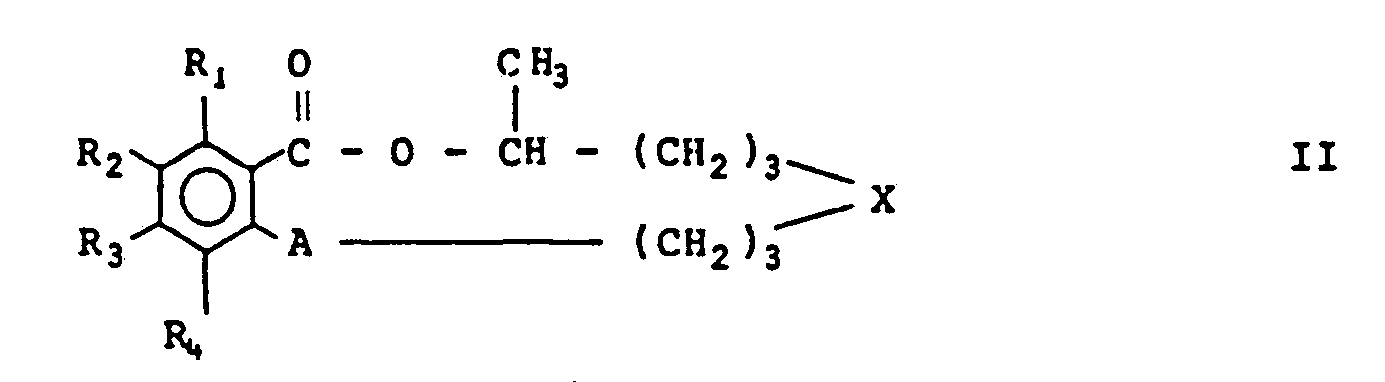
où A est -CH2CH2- ou -CH=CH-; X est -CH2-,
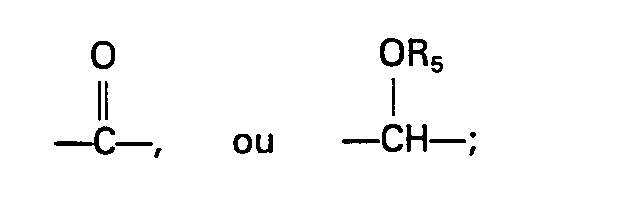
R5 est un atome d'hydrogène, un groupe alkyle contenant de 1 à environ 5 atomes de carbone, aryle contenant de 6 à environ 10 atomes de carbone, aralkyle où la portion aryle contient de 6 à environ 10 atomes de carbone et la portion alkylène contient de 1 à environ 5 atomes de carbone; ou un groupe acyle avec de 1 à environ 5 atomes de carbone; R1 et R3 sont indépendamment choisis parmi un atome d'hydrogène, ―OH ou OR6; Rs est un groupe alkyle avec de 1 à environ 5 atomes de carbone; et R2 et R4 sont de manière indépendante choisis parmi un atome d'hydrogène, d'halogène et -NO2.
où A est -CH2CH2- ou -CH=CH-; X est -CH2-,
R5 est un atome d'hydrogène, un groupe alkyle contenant de 1 à environ 5 atomes de carbone, aryle contenant de 6 à environ 10 atomes de carbone, aralkyle où la portion aryle contient de 6 à environ 10 atomes de carbone et la portion alkylène contient de 1 à environ 5 atomes de carbone; ou un groupe acyle avec de 1 à environ 5 atomes de carbone; R1 et R3 sont indépendamment choisis parmi un atome d'hydrogène, ―OH ou OR6; Rs est un groupe alkyle avec de 1 à environ 5 atomes de carbone; et R2 et R4 sont de manière indépendante choisis parmi un atome d'hydrogène, d'halogène et -NO2.
7. Procédé selon la revendication 6, dans lequel ledit mammifère est choisi parmi
le bétail, les moutons, lers cochons et les chèvres.
8. Procédé selon la revendication 7, dans lequel ledit mammifère est un mouton, l'hormone
de croissance est administrée à une dose allant d'environ 100 à environ 600 microgrammes
par kilogramme de poids corporel de l'animal et la zéaraline est administrée à une
dose allant d'environ 200 à environ 600 microgrammes par kilogramme de poids corporel
de l'animal.
9. Procédé selon la revendication 7, dans lequel ledit mammifère est un bovin, l'hormone
de croissance est administrée à une dose allant d'environ 5 à environ 40 microgrammes
par kilogramme de poids corporel de l'animal et la zéaraline est administrée à une
dose allant d'environ 50 à environ 200 microgrammes par kilogramme de poids corporel
de l'animal.
10. Procédé selon la revendication 8, dans lequel la zéaraline est le zéaralanol,
administré à une dose allant d'environ 300 à environ 500 microgrammes par kilogramme
de poids corporel de l'animal, et l'hormone de croissance est l'hormone bovine de
croissance, administrée à une dose allant d'environ 200 à environ 400 microgrammes
par kilogramme de poids corporel de l'animal.
11. Procédé selon la revendication 9, dans lequel la zéaraline est le zéaralanol,
administré à une dose allant d'environ 80 à environ 100 microgrammes par kilogramme
de poids corporel de l'animal, et l'hormone de croissance est l'hormone bovine de
croissance, administrée à une dose allant d'environ 12 à environ 18 microgrammes par
kilogramme de poids corporel de l'animal:
12. Procédé selon l'une quelconque des revendications 6 à 11, dans lequel ladite hormone
de croissance et la zéaraline sont administrées par voie parentérale.
13. Procédé selon l'une quelconque des revendications 6 à 12, dans lequel ladite zéaraline
est administrée sous la forme d'un implant sous-cutané.