|
(11) | EP 0 203 329 B1 |

| (12) | EUROPEAN PATENT SPECIFICATION |
|
|
| (54) |
Obelmycin A Obelmycin A Obelmycin A |
|
|
|||||||||||||||||||||||||||||||
|
||||||||||||||||||||||||||||||||
| Note: Within nine months from the publication of the mention of the grant of the European patent, any person may give notice to the European Patent Office of opposition to the European patent granted. Notice of opposition shall be filed in a written reasoned statement. It shall not be deemed to have been filed until the opposition fee has been paid. (Art. 99(1) European Patent Convention). |
[0001] The present invention relates to the novel antibiotic Obelmycin A produced by microorganisms belonging to the genus Streptomyces.
[0002] As anthracycline antibiotics there are hitherto known daunomycin (cf. U.S. Patent 3 616 242) and adriamycin (cf. U.S. Patent 3 590 028) obtained from culture solutions of Actinomyces. These compounds exhibit broad anti-tumor spectra against experimental tumors and have been widely used as cancer chemo- therapic agents also for clinical purpose. However, daunomycin and adriamycin are not always satisfactory although they exhibit potent anti-cancer activity. Various attempts have been made to produce analogous compounds by various means such as a fermentation method, a semi-synthesis method, a method for conversion by microorganisms, etc. and some anthracycline antibiotics have additionally been proposed [for example, Published Examined Japanese Patent Application 34915/76 (aclacinomycins A and B), T. OKI et al., The Journal of Antibiotics, vol. 33, pages 1331 to 1340; F. Areamone, Topics in Antibiotic Chemistry, Vol. 2, pages 102 to 279, published by ELLIS HORWOOD LIMITED; Published Japanese Patent Application 56494/82 (4-demethoxy-11-deoxydaunomycin, etc.); Published Unexamined Japanese Patent Application 15299/81 (cf. rhodomycin series antibiotics) and the like].
[0003] A great variety of analogous compounds have been proposed also as anti-tumor agents, however, none of them is satisfactory in either toxicity or anti-tumor activity.
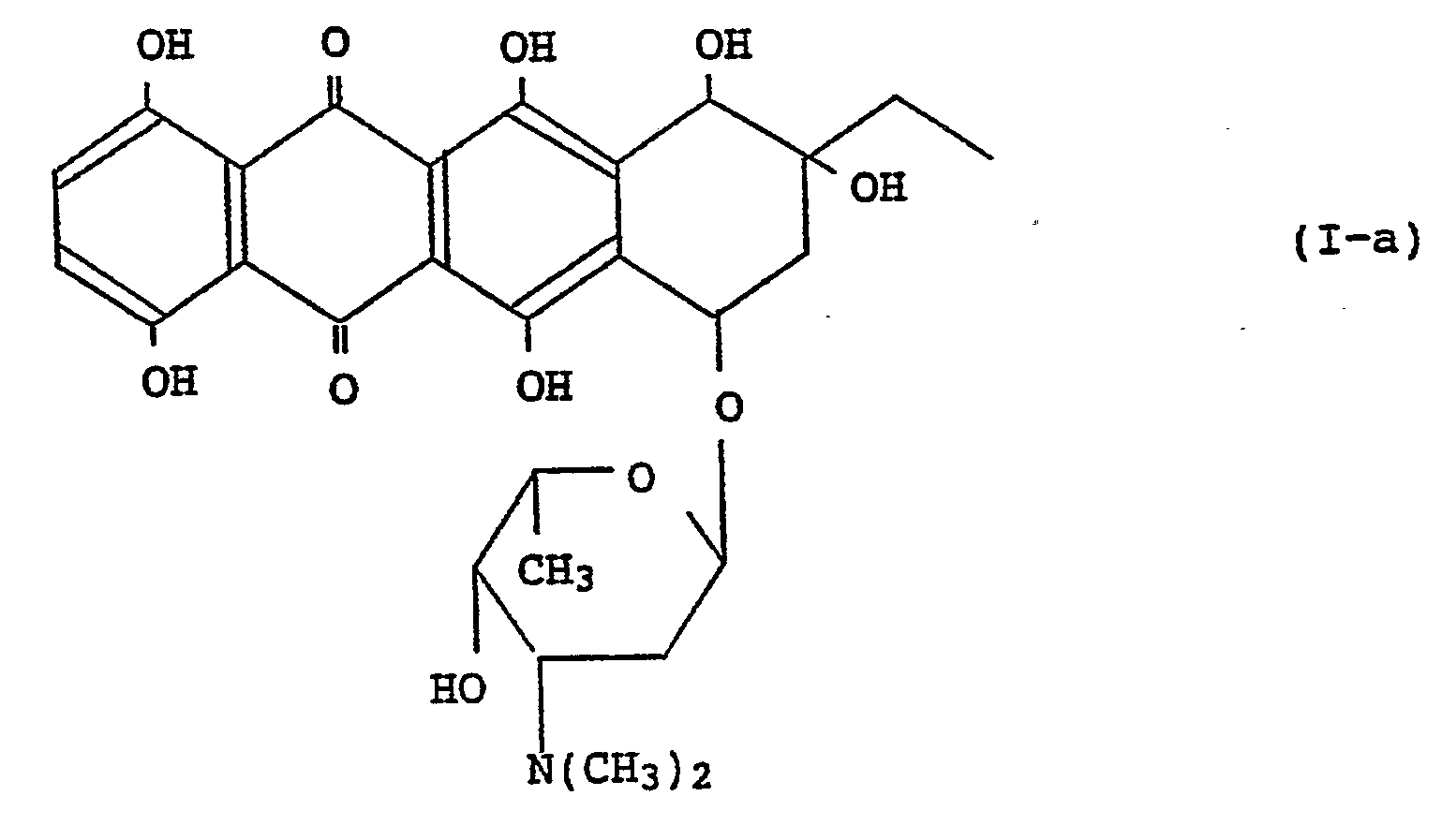
[0004] It now has been found that Obelmycin A having the general formula
has a surprising anti-tumor activity.
[0005] From Tetrahetron Letters, No. 6, 1969, pages 415-419, EP-A 167 954 and Journal of Antibiotics, Vol. 34 (1981), pages 1596 to 1601 antibiotics similar to Obelmycin A are known.
[0006] The following tests describe the proliferation and nucleic acid synsthesis inhibiting action against mouse leukemia L1210 culture cells.
[0007] For example, 5 x 10⁴ cells/ml of L1210 cells were inoculated, on RPM 11 640 medium (Rosewellberg Research Institute) containing 20% bovine serum and the compound of the present invention was supplemented in a concentration of 0.0005 to 0.25 Ilg/ml followed by culturing at 37°C in a carbon dioxide gas incubator. A 50% proliferation inhibiting concentration was determined as compared to control. Further the aforesaid L1210 culture cells were suspended in 8 x 10⁵ cells/ml in RPM 11 640 medium containing 10% bovine serum. After culturing at 37°C for 1 to 2 hours in a carbon dioxide gas incubator, the compound of the present invention was supplemented in various concentrations. Fifteen minutes after, 14C-uridine (0.05 liCi/mi) or 14C-thymidine (0.05 gCi/ml) was added to the system followed by culturing at 37°C for 60 minutes. To the reaction mixture was added chilled 10% trichloroacetic acid to discontinue the reaction. At the same time, insoluble matters were precipitated, further washed twice with chilled 5% trichloroacetic acid and then dissolved in formic acid to provide for measurement of the radioactivity. A 50% intake inhibiting concentration was determined from a rate of intake of the radioactivity in the control group added with no compound. The results are shown in Table 1.
[0008] The therapeutic effect of Obelmycin A were studied on CDF1 mice bearing L1210 leukemia. From 24 hours after 1 x 10⁵ L1210 cells/animal were intraperitoneally transplanted to CDF1 mice, Obelmycin A was intraperitoneally given everyday for 10 days. The prolongation of the survival time was calculated relative to control animals receiving physiological saline as 100. The results are shown in Table 2.
[0009] Obelmycin A can be prepared by culturing in media comprising appropriate nutrient sources bacteria producing the compounds of the present invention which can easily be isolated using bacteria isolated from the soil or known bacteria belonging to the genus Actinomycetes capable of producing rhodomycin series antibiotics or analogous compounds thereof by a conventional variation treatment using as variants, for example, ultraviolet rays or N-methyl-N'-nitro-N-nitrosoguanidine (NTG). Of these producing bacteria, a specific example include a variant, SE2-2385 strain, obtained by variation-treatment of p-rhodomycins-producing Streptomvces violaceus A262 strain stored in the present inventors' Research Laboratories, with NTG.
[0010] This strain was deposited on March 28, 1985 at Fermentation Research Institute, agency of Industrial Science and Technology, MITI, Japan and then transferred to international deposition under the Budapest Treaty on March 26, 1986 and accorded deposit numbers FERM P-8165 and FERM BP-1004.
(i) Morphology
[0012] It forms helical aerial hypha from well branched substrate hypha without any whirle but with matured chain of 10 to 50 spores. The surface of the spore is thorny.
(ii) Growth conditions in various media
[0013] With respect to description of color, standard shown in parenthesis is based on Tresner & E. J. Back- us, System of Color Wheels for Streptomycete Taxonomy (J. Appl. Microbiol., vol. 11, pages 335 to 338, 1963). "Color Standard" published by Nippon Color Institute was also used supplementarily.
(iii) Growth Conditions in Respective Media
[0016] The producing bacteria in accordance with the present invention can be cultured in a known medium composition conventionally used as nutrient sources for Actinomycetes. For example glucose, glycerine, sucrose, starch, maltose, animal and vegetable oils, etc. can be used as carbon sources; as nitrogen sources there may be used, for example, organic materials such as soybean powders, meat extract, yeast extract, peptone, corn steep liquor, cotton seed oil, fish powder, etc.; or inorganic nitrogens such as ammonium sulfate, ammonium chloride, sodium nitrate, ammonium phosphate, etc. If necessary and desired, sodium chloride, potassium chloride, phosphates, bivalent metal salts of Mg++, Ca++, Zn++, Fe++, Cu++, Mn++ or Ni++, etc. and amino acids or vitamins can also be supplemented. In addition, in order to prevent foaming during fermentation, defoaming agents, for example, silicone (manufactured by Shin-Et- su Chemical Industry Co., Ltd., -KM 75; trademark), etc. can also be appropriately supplemented.
[0017] Conditions for fermentation such as temperature, pH, aerial agitation and fermentation time, etc. can be chosen such that the strain used can accumulate the maximum quantity of the compound. It is advantageous to conduct fermentation, for example, at temperatures of 20 to 40°C, preferably 28°C, pH of 5 to 9, preferably 6 to 7, for fermentation time of 1 to 10 days, preferably 6 days.
[0018] To isolate and collect the obelmycin substances from the culture solution, the culture after completion of the fermentation is separated into the mycelial cells and the supernatant or the filtrate by centrifugation or by filtering in the presence of appropriate filtering aids such as diatomaceus earth, etc. From the supernatant, the product is extracted with organic solvents such as chloroform, toluene, ethyl acetate, n-butanol, etc., at pH of 7 to 9.
[0019] From the mycelial caks, the product is extracted, if necessary, using organic solvents such as acetone, methanol, ethanol, butanol, etc. Each extract is concentrated to dryness to obtain crude purple powders. Either by treating the powders by chromatography using adsorption carriers, for example, synthetic adsorptive resins or silica gel, or by using treatments with anionic ion exchange resins and cationic ion exchange resins singly or in appropriate combination thereof, the obelmycin substances can be collected in their pure forms, respectively.
[0020] Hereafter the present invention will be described in more detail with reference to the examples below.
Examoie 1
[0021] One platinum loop of the slant culture of YS (0.3% yeast extract, 1% soluble starch, 1.5% agar; pH 7.2) of Streptomyces violaceus A 262 SE2-2385 (deposited under Accession Number FERM P-8165 in the Fermentation Industry Institute) was harvested and inoculated in an Edenmeyer's flask of a 500 ml volume separately charged with 100 ml each of seed medium described below and sterilized.
[0022] Shake culture was performed at 20°C for 2 days using a rotary shaker (220 rpm) to prepare seed.
[0023] Then 15 liters of production medium having the following composition were charged and 750 ml each (corresponding to 5%) of the aforesaid seed culture solution was supplemented in two jar fermenters, each having a volume of 30 liters to inoculate.
[0024] The system was cultured at 28°C for 100 hours in an aeration amount of 15 liters/min. with stirring at 300 rpm, whereby the culture solution exhibited dense purple color because of the product. The culture solutions were collected from the jar fermenters and 2% of a filtering aid was added thereto followed by filtration. To the cell fraction were added 10 liters of acetone. The mixture was agitated for 20 minutes to effect extraction. Filtration was performed and the acetone extract was taken and concentrated to approximately 3 liters under reduced pressure. After the pH was adjusted to 8.5 with 4N sodium hydroxide, the system was extracted with chloroform (3 liters in total). The resultant chloroform extract was washed with water and then with a saturated saline aqueous solution and dried over Glauber's salt. After Glau- ber's salt was filtered off, the extract was concentrated to a small quantity under reduced pressure and n-hexane was added thereto to cause precipitation. The precipitates were filtered, collected and dried in vacuum to obtain 9.4 g of crude powders containing Obelmycin A in mixture with Obelmycin B, C, D, E, F andG.
[0025] Obelmycin A can be separated from the other mentioned Obelmycins as described in the following example 2.
Example 2
[0026] In chloroform was dissolved 5 g of the crude powders obtained in Example 1. The solution was adsorbed onto 10 g of silica gel (Wakogel C-200, manufactured by Wako Junyaku Co., Ltd.) followed by concentration to dryness. The resulting matter was put on a silica gel column (0/40 mm; 90 g of the same silica gel) fulled with chloroform. Development was performed initially with a chloroformmethanol (100/I) mixture (500 ml) and then the same (100/2) mixture (500 ml) to remove contaminants including aglycons. Thereafter development was further conducted with the same (100/5) mixture (1000 ml) to elute out and fractionate respective fractions containing Obelmycins E, F, B, C and D in this order. Then, development was performed with the same (100/10) mixture (1000 ml) to elute out and fractionate obelmycins G and A in this order. Each of the fractions was concentrated to dryness to obtain a partly purified powder of Obelmycin A.
[0027] The further purification of the partially purified Obelmycin A obtained in example 2 was done using a developing solvent of chloroform/methanol/cone. ammonia water (100/18/2) on preparative silica gel plates (Silica gel 60 PF254: manufactured by Merck Inc.) The isolation band of Obelmycins A was scarped off and extracted with a chloroform/methanol (7/1) mixture. The extract was concentrated to dryness and the residue was dissolved in 20 ml of a 0.1 M acetate buffer (pH 3.5). The solution was extracted and washed twice with 20 ml of toluene. The aqueous layer remained after the extraction was adjusted to pH of 7.5 by adding a saturated sodium bicarbonate aqueous solution thereto and extracted with chloroform. The chloroform extract was washed with water and dried over Glauber's salt, then filtered and concentrated under reduced pressure. Hexane was added to the residue and the mixture was stirred. The formed precipitate was filtered, collected and dried in vacuum to obtain 18 mg of Obelmycin A.
Obelmycin A:
[0029]
Form: purple powders
Melting point: 191 - 194°C (decomposed)
Molecular weight: 559 (measured by FD mass)
Specific rotary power: [α]D23 + 682°
(c = 0.004, chloroform)
[0030] UV and visible absorption spectra:
1 R(KBr) cm-1: 3400, 2920, 1590, 1450, 1300, 1190, 1010, 980, 790
1H-NMR spectrum (CDCI3): 8 ppm
1.13(t,3H), 1.41 (d,3H), 1.75(m,4H),
2.12(dd,1 H), 2.21 (s,6H), 2.26(d,1 H),
3.71(s,1H), 4.08(q,1H), 4.08(s,1H),
4.89(s,i H), 5.14(d,1 H), 5.50(d,1 H),
7.29(s,2H)
Obelmycin A of the formula
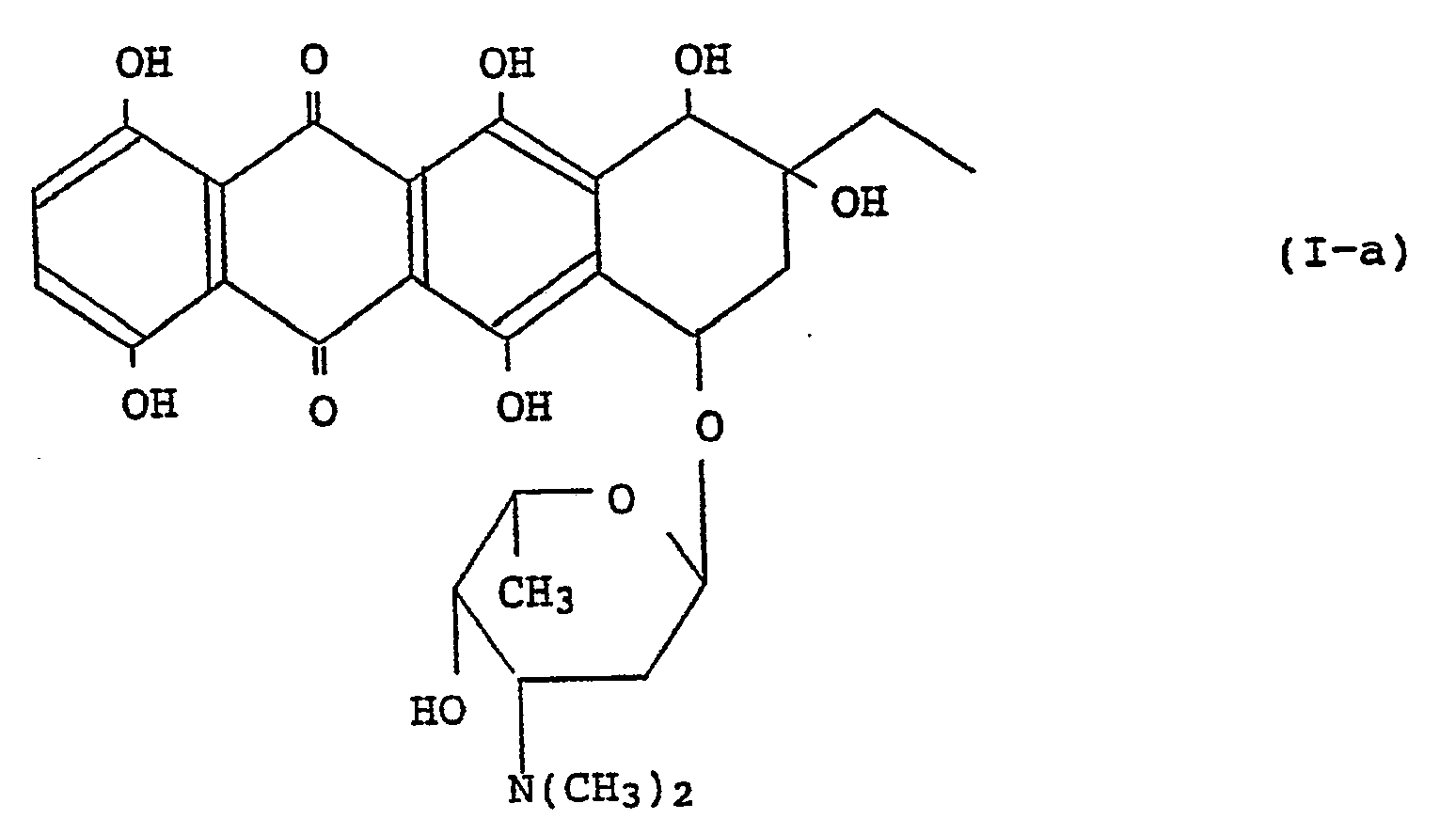
Obelmycin A der Formel
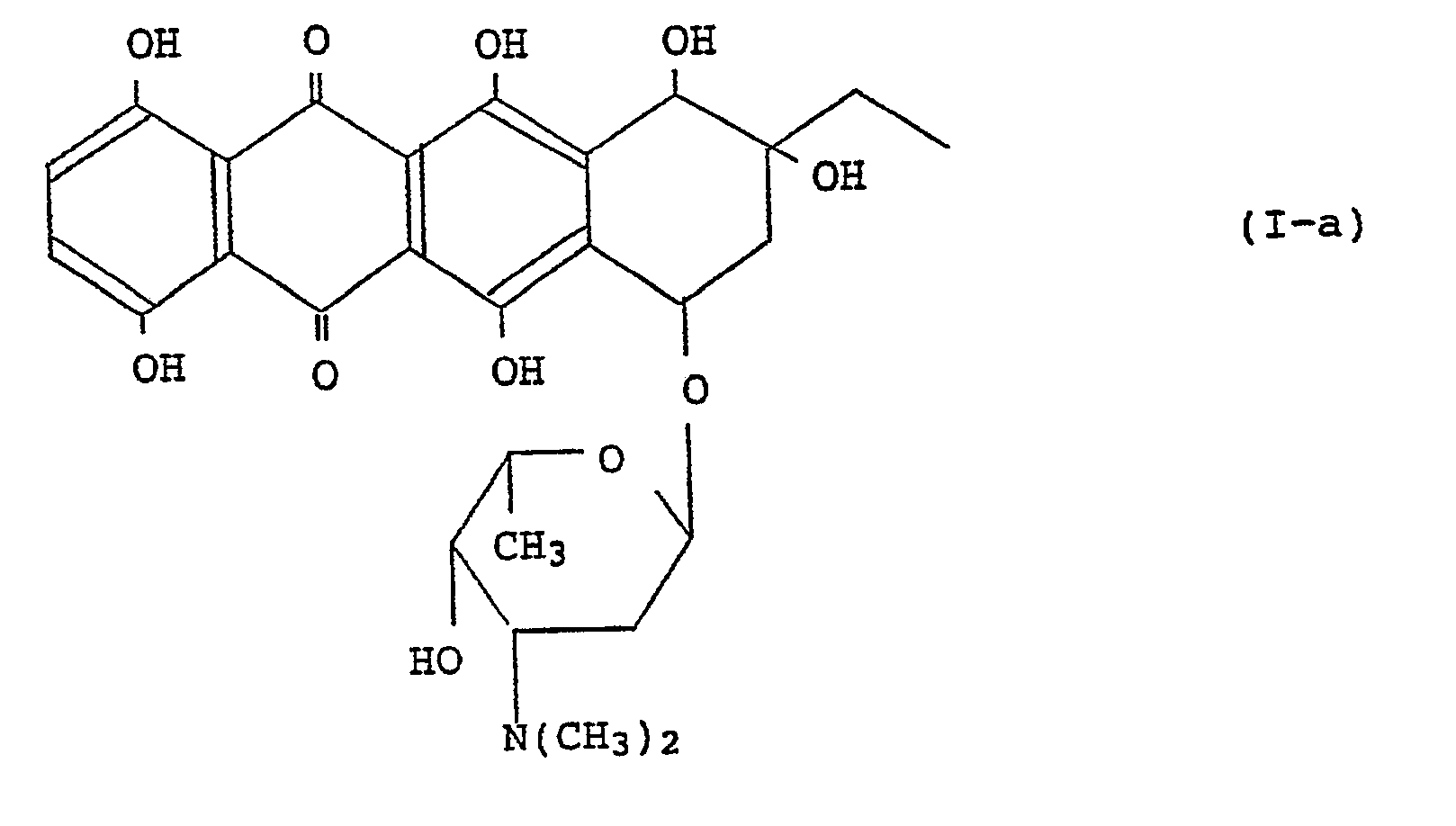
Obelmycine A de formule: