|
(11) | EP 0 206 377 B1 |

| (12) | EUROPEAN PATENT SPECIFICATION |
|
|
| (54) |
Extraction of transition metals from organic solutions Extraktion von Übergangsmetallen aus organischen Lösungen Extraction de métaux de transition de solutions organiques |
|
|
|||||||||||||||||||||||||||
| Note: Within nine months from the publication of the mention of the grant of the European patent, any person may give notice to the European Patent Office of opposition to the European patent granted. Notice of opposition shall be filed in a written reasoned statement. It shall not be deemed to have been filed until the opposition fee has been paid. (Art. 99(1) European Patent Convention). |
[0001] The invention relates to a process for the extraction of one or more transition metals from an organic medium.
[0002] An organic medium containing one or more transition metals may be obtained after chemical reactions in which a catalyst bearing such metals was employed.
[0003] It is a drawback of the known methods for recovering such metals from organic reaction mixtures that the recovery is incomplete or laborious, particularly if the concentration of such metals in the mixtures is low.
[0004] It is an object of the present invention to separate said metals in a highly efficient manner from an organic medium.
[0005] Accordingly, the invention provides a process for the extraction of one or more transition metals from an organic medium, in which process the organic medium is contacted with an aqueous phase in the presence of a cyclic phosphite having a bridgehead phosphorus atom linked to three oxygen atoms at least two of which form together with the bridgehead phosphorus atom part of a ring, said cyclic phosphite having a hydroxymethyl group linked to a ring carbon atom, one or more of the hydrogen atoms in the cyclic phosphite optionally being substituted, so as to obtain an aqueous extract phase containing at least a portion of said metals.
[0006] It has, surprisingly, been found that highly efficient extractions are possible when the extraction is carried out with a cyclic phosphite as defined hereinbefore. Usually, no transition metal can be detected in the organic raffinate phase which remains after contacting the organic medium with the aqueous phase.
[0007] According to a preferred embodiment of the present invention one or more metals of Group 8 of the Periodic Table of the Elements are extracted from the organic medium. The Periodic Table of the Elements is that shown on the inside cover of CRC Handbook of Chemistry and Physics, 61st edition (1980-1981).
[0008] The metals of Group 8 which can be extracted by means of the process according to the present invention are iron, cobalt and nickel and, which are preferred, the noble metals, viz. ruthenium, rhodium, palladium, osmium, iridium and platinum. Very good results have been obtained with rhodium and palladium.
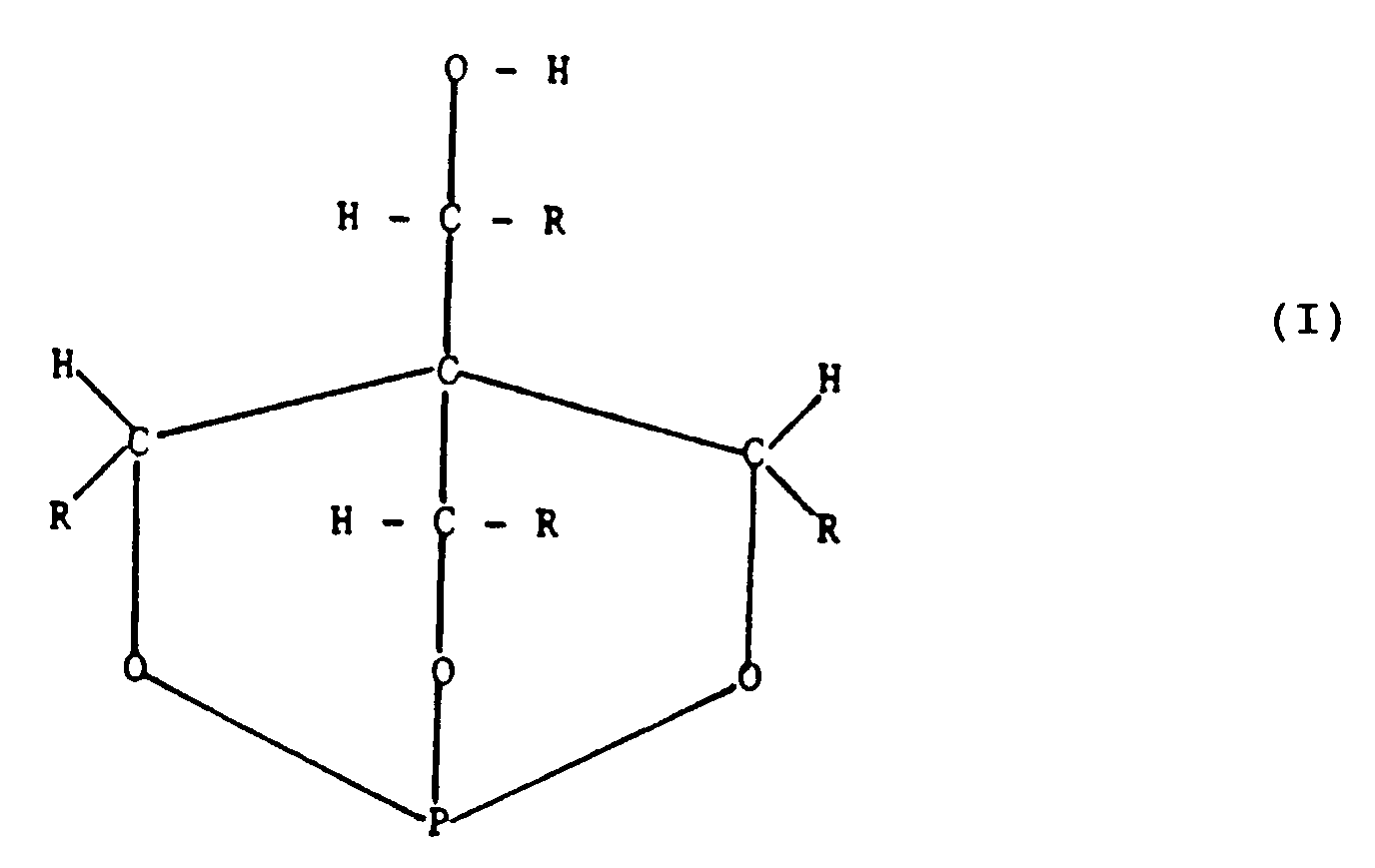
[0009] Any cyclic phosphite of the type defined hereinbefore may be used, provided it is more readily soluble in water than in the organic medium at the temperature at which the extraction is carried out. According to a preferred embodiment of the present invention the cyclic phosphite is a bicyclic phosphite having the general formula
in which each R individually represents a hydrogen atom or an alkyl group having not more than 3 carbon atoms. Preferably, each R represents a methyl group, or, more preferably, a hydrogen atom. Very good results have been obtained with 4-hydroxymethyl-2,6,7-trioxa-1-phosphabicyclo[2,2,2]octane, this compound and its complexes with said noble metals being highly soluble in water.
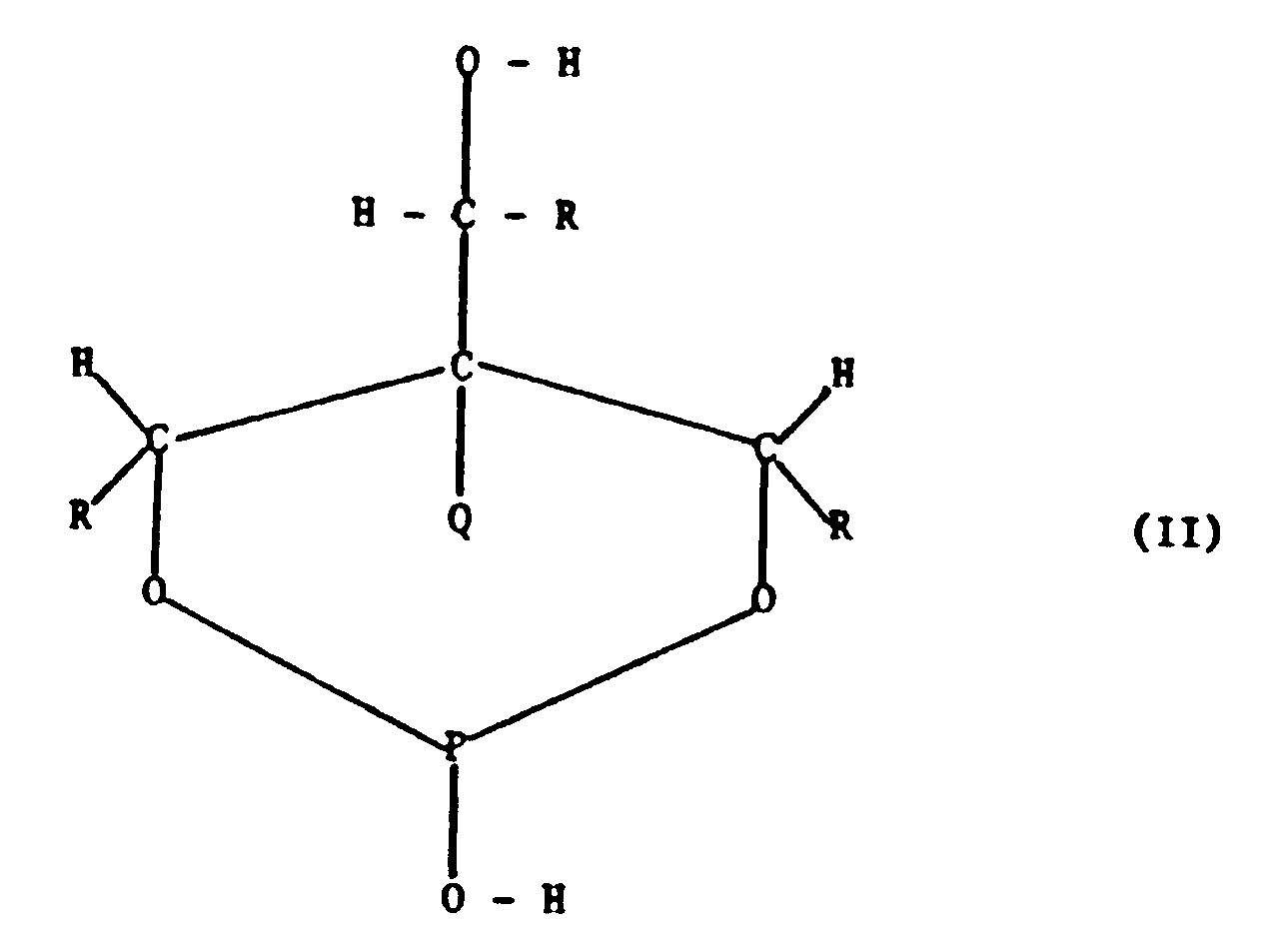
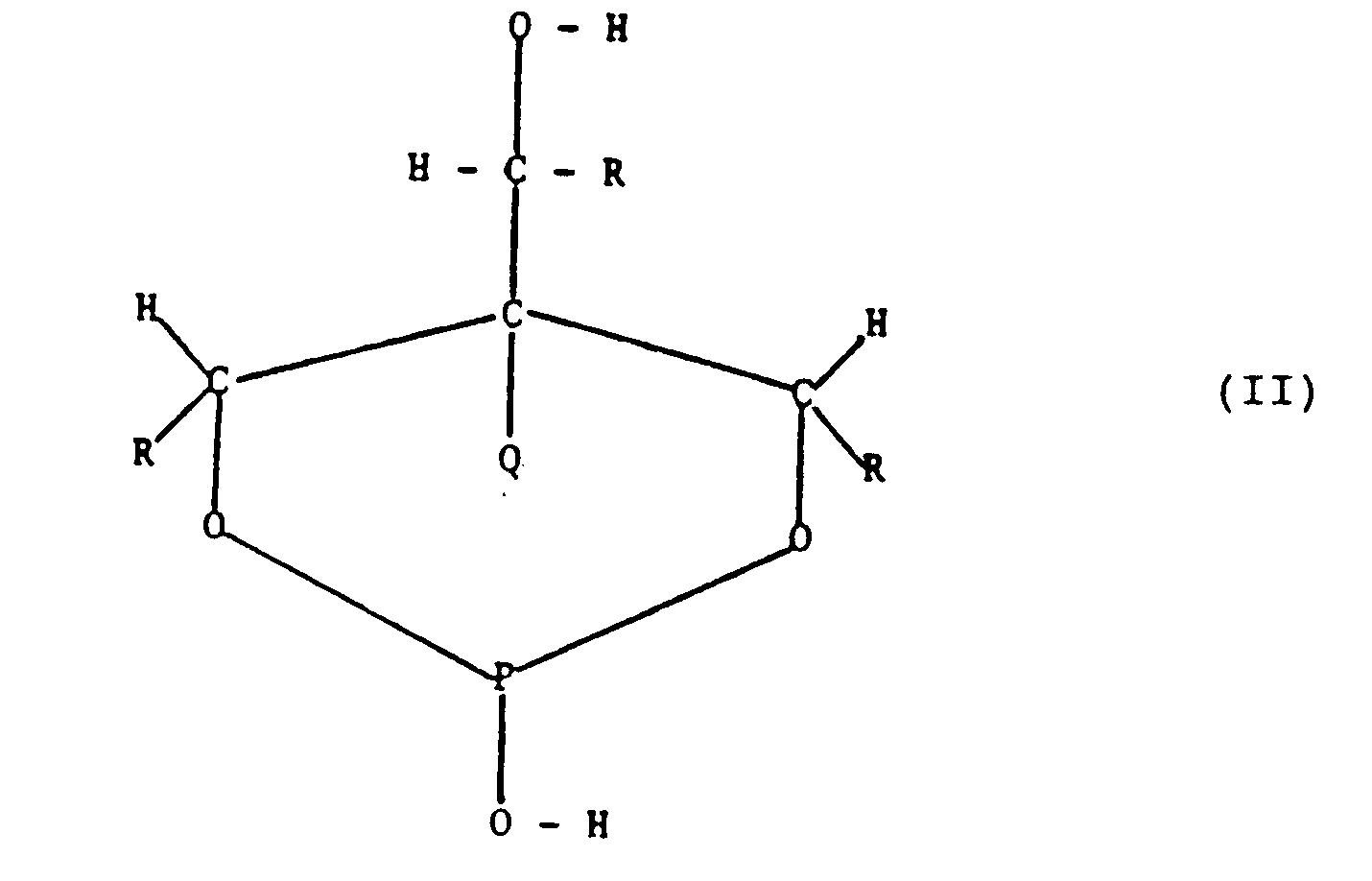
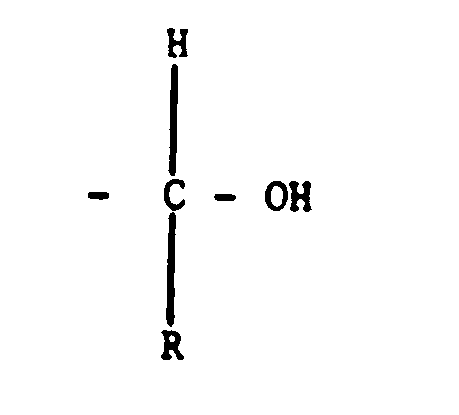
[0010] According to another preferred embodiment of the present invention the cyclic phosphite is a monocyclic phosphite having the general formula
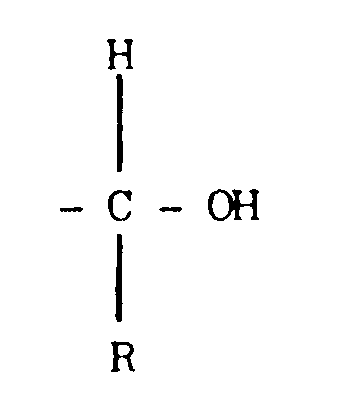
in which each R has the same meaning as in formula (I) and Q represents a hydrogen atom or an alkyl group having not more than three carbon atoms or a group of the general formula
in which R has the same meaning as in formula (I). The group
in the general formula (II) is also meant to include the tautomeric structure
[0011] The cyclic phosphites of the general formulae (I) and (II) can be prepared by methods known in the art. They may be prepared in situ, for example from a compound of the general formula (I) or (II) in which th e hydrogen atom in the H-O-C group is replaced with an atom of an alkali metal or an ammonium group or with a mesylate or p-tosylate group.
[0012] The presence of the cyclic phosphite may be brought about in various manners. According to a preferred manner the organic medium is brought into contact with a solution of the cyclic phosphite in a polar solvent, suitably by means of stirring. Stirring is preferably continued until the cyclic phosphite has formed a complex with the metal of Group 8. This usually takes a relatively short time, the metal of Group 8 and the cyclic phosphite being present in one liquid phase, generally after 1 to 150 min. Then, an aqueous phase is added and stirring is continued until equilibrium between the phases has been established. This is generally the case after 1 to 20 min. After phase separation, an aqueous extract phase containing at least a portion of the Group 8 metal and also containing polar solvent and an organic raffinate phase are obtained.
[0013] The presence of the cyclic phosphite may also be brought about by bringing the organic medium containing the Group 8 metal into contact with an aqueous phase containing dissolved cyclic phosphite, suitably by means of stirring. After phase separation, an aqueous extract phase containing at least a portion of the Group 8 metal and an organic raffinate phase are obtained.
[0014] According to a further embodiment of the present invention an organic medium containing a Group 8 metal in complex combination with the cyclic phosphite is brought into contact with an aqueous phase, suitably by means of stirring. In this manner, the complex combination is transferred from the organic medium to the aqueous phase.
[0015] The starting organic medium may contain very little noble metal, yet extraction efficiency is very high. Favourable concentrations of the noble metal values to be extracted are in the range of from 0.01 to 100 mmol/l, but concentrations below 0.01 mmol/l or above 100 mmol/l are not excluded. A favourable volume ratio of the aqueous phase to the organic medium has been found to be in the range of from 0.05 to 2; usually, this volume ratio is lower than 1. However, volume ratios below 0.05 or above 2 are not excluded.
[0016] The metal may be present in any form in the organic medium, for example as a carbonyl or as a complex of such a carbonyl with other molecules.
[0017] Any organic medium containing one or more metals of Group 8 of the Periodic Table of the Elements may be used in the process according to the present invention, provided that upon contacting this medium with the aqueous phase an aqueous extract phase and an organic raffinate phase are formed. According to a preferred embodiment of the present invention the organic medium contains rhodium in complex combination with a compound of trivalent phosphorus, which rhodium has been used as a catalyst compound for the preparation of aldehydes by hydroformylation of an ethylenically unsaturated compound with carbon monoxide and hydrogen in the presence of a solvent for the complex combination. Hydroformylation is a known reaction by which an ethylenically unsaturated compound is reacted with hydrogen and carbon monoxide in the presence of a hydroformylation catalyst - in this case a rhodium complex - to form an aldehyde having one more carbon atom than the starting ethylenically unsaturated compound. This preferred embodiment has the advantage that no rhodium is lost in metallic form and that no shifting of carbon-carbon double bonds takes place in unreacted ethylenically unsaturated compound present in the organic medium. Such shifting of carbon-carbon double bonds and loss of rhodium often takes place when a reaction mixture obtained by hydroformylation is separated in a known manner by means of distillation to isolate the aldehyde in vaporous form and the complex rhodium catalyst in a liquid residue because this distillation may require relatively high temperatures, depending on the prevailing vapour pressure of the alde hyde.
[0018] Hydroformylation may be carried out using rhodium in complex combination with the cyclic phosphite described hereinbefore; during such hydroformylation very little shifting of carbon-carbon double bonds has been observed. Alternatively, hydroformylation may be carried out using rhodium in complex combination with a compound of trivalent phosphorus other than the cyclic phosphite, preferably a phosphine. It has, surprisingly, been found that, even in the presence of a large excess of phosphine, rhodium is very efficiently extracted from the organic medium.
[0019] Examples of compounds of trivalent phosphorus are triaryl-phosphines and triaryl phosphites or mixed aryl aryloxy or mixed aryl alkoxy phosphines and phosphites. The aryl group may be, for example, a phenyl or naphthyl group and may be substituted with, for example, an alkyl group having up to 20 carbon atoms. Examples of suitable compounds are triphenylphosphine, triphenyl phosphite, tri-p-tolylphosphine, tri-p-tolyl phosphite, tri-alpha-naphthylphosphine, tri-alpha-naphthyl phosphite, tri-p-biphenyl phosphite, tri-p-biphenylphosphine, tri-o-chlorophenyl phosphite and tri-o-chlorophenylphosphine. Examples of other suitable ligands are those represented by formula (III)
RnPPh3-n (III)
wherein R represents a branched alkyl group or a cycloalkyl group, n represents an integer of 1 or 2 and Ph represents phenyl. The use of such ligands is described in European Patent Application No. 0028378. Other examples of suitable ligands are triarylphosphines which have an electron-withdrawing substituent on an aryl ring; such ligands are described in European Patent Application No. 0102341.
[0020] European Patent Application n° 96986 describes a process for the production of an aldehyde by hydroformylation of an α-olefin using rhodium in complex combination with a cyclic phosphite ligand as cayalyst. Product recovery is achieved in a conventional way; the rhodium complex is recovered as an organic solution and may be recycled to the hydroformylation zone.
[0021] The ethylenically unsaturated compound may have a carbon-carbon double bond at an alpha- or a non-alpha-position in the molecule, the former possibility being preferred, the reaction rates being considerably higher. Alpha-olefins are usually converted into a mixture of primary and secondary aldehydes, the primary aldehydes being usually the most desirable. Usually, 70% or more of the mixture of aldehydes consists of the former aldehydes.
[0022] The said preparation of aldehydes is generally applicable to any aliphatic or cycloaliphatic compound having at least one carbon-carbon double bond. Thus, it is applicable to olefins having, for example, 2 to 30 carbon atoms per molecule, for example, ethylene, propylene, butylene, cyclohexene, 1-octene, 1-dodecene, 1-octadecene and dihydronaphthalene. Suitable hydrocarbons include both branched- and straight chain, as well as cyclic compounds having one or more carbon-carbon double bonds. These sites may be conjugated, as in 1,3-butadiene, or non-conjugated, as in 1,5-hexadiene or 1,5-bicyclo[2,2,1]heptadiene. In the case of polyolefins, it is possible to hydroformylate only one of the olefinic sites or several or all of these sites.
[0023] Olefinic hydrocarbon fractions, such as, for example, polymeric olefinic fractions and cracked wax fractions containing substantial proportions of non-alpha olefins may be hydro-formylated. Such suitable feeds include, for example, C₇, C₈, C₉, C₁₀ and higher olefinic fractions as well as olefinic hydrocarbon fractions of wider boiling ranges such as C 7-9, C 10-13 and C 14-17, olefinic hydrocarbon fractions.
[0024] Other examples of ethylenically unsaturated compounds which may be hydroformylated are unsaturated alcohols, unsaturated aldehydes and unsaturated acids, which are converted into the corresponding alcohols, aldehydes and acids containing a formyl group on one of the carbon atoms previously involved in the carbon-carbon double bond of the starting ethylenically unsaturated compound.
[0025] Generally, hydroformylation is carried out under rather mild conditions, preferably at a temperature in the range of from 40 °C to 160 °C and a total pressure in the range of from 1 to 50 bar. Generally, a molar ra tio ligand of formula (III) to rhodium in the range of from 0.5 to 5000 is used; usually, this range is at least 3.
[0026] The amount of rhodium may vary within wide ranges; generally a molar ratio of ethylenically unsaturated compound to rhodium in the range of from 150,000 to 10 and often from 100,000 to 1000 is used.
[0027] The rhodium may be introduced into the complex combination in any desired manner, for example, as 1,5-cyclooctadiene-rhodium(I) acetate, 1,5-cyclooctadiene-rhodium(I) acetylacetonate, rhodium acetate, dirhodium octacarbonyl, finely divided rhodium metal, rhodium nitrate, tetrarhodium dodecacarbonyl or hexarhodium hexadeca-carbonyl.
[0028] Generally, a molar ratio of hydrogen to carbon monoxide in the range of from 0,5 to 12 is used.
[0029] The process according to the present invention results - if applied to extraction of rhodium used as a catalyst in a hydro-formylation reaction - upon phase separation, in an organic raffinate phase containing aldehyde, any ligand other than the cyclic phosphite, and, usually, unreacted ethylenically unsaturated compound, and an aqueous extract phase containing rhodium in complex combination with the cyclic phosphite. Suitably, the aqueous extract phase is separated by means of distillation into a distillate fraction containing water and a residual fraction containing rhodium in complex combination with the cyclic phosphite. Distilling off water from the aqueous extract phase may be facilitated by the presence of a compound forming an azeotropic mixture with water, for example, of cyclohexane. As such a distillation can be carried out at a relatively low temperature, no metallic rhodium is formed. The solvent for the rhodium complex may remain in the residual fraction or may be distilled off, depending on the boiling point thereof. If desired, the rhodium in complex combination with the cyclic phosphite present in the residual fraction may be reused for hydroformylation. Alternatively, it may be converted into a hydroformylation catalyst comprising rhodium in complex combination with a phosphine or with a phosphite other than the said cyclic phosphite; this may be carried out by, for example, burning the rhodium-cyclic phosphite complex with formation of rhodium dioxide, which, in turn, is converted in a known manner into a hydro-formylation catalyst.
[0030] According to another preferred embodiment of the present invention one or more metals of Group 5b or of Group 7b of the Periodic Table of the Elements are extracted from the organic medium, particular preference being given to metals of Group 5b in view of the highly efficient extraction. Very good results have been obtained with the extraction of vanadium. Among the metals of Group 7b manganese is preferred.
[0031] Suitable solvents for the complex of rhodium with the cyclic phosphite are polar and more readily soluble in water than in the reaction mixture. The aqueous extract phase then, will contain the polar solvent as well. Examples of suitable solvents are carboxamides, for example, dimethylformamide, N,N-dimethylacetamide and N-methylpyrrolidone, sulphoxides, for example, dimethyl sulphoxide and diethyl sulphoxide, tetrahydrothiophene 1,1-dioxide (also referred to as "sulfolane") and derivatives thereof (for example 3-methylsulfolane).
[0032] Other examples of suitable solvents are alcohols, such as methanol, ethanol and 2-propanol, esters, such as ethyl acetate, ketones, such as acetone and methyl isobutyl ketone and ethers, such as 1,4-dioxane, tetrahydrofuran and anisole.
[0033] The invention is further illustrated by means of the following Examples. The phosphite used in the Examples was 4-hydroxymethyl-2,6,7-trioxa-1-phosphabicyclo[2,2,2]octane, indicated in the Examples as "POP".
Examples 1 and 2
[0034] A (300-ml) stainless steel autoclave equipped with a mechanical stirrer, a gas inlet tube, a thermocouple pipe and a pressure indicator was charged with 1-decene (0.4 mol), ethanol (50 ml), 1,5-c yclooctadiene-rhodium(I) acetate (0.08 mmol) and POP (1.055 mmol), the molar ratio POP to rhodium being 13.2. The 1-decene had been purified by means of an elution over basic aluminium oxide. The autoclave was flushed with an equimolar mixture of hydrogen and carbon monoxide and then pressurized to 10 bar with this mixture. The reaction mixture was heated up to 90 °C whilst maintaining the pressure at 10 bar. After a total reaction time of 23 h the mixture was allowed to cool to ambient temperature. The autoclave was depressurized and the reaction mixture was pumped under air into a separatory funnel for extraction with water (once, 25 ml, the volume ratio of the aqueous phase to the reaction mixture being 1:5). After phase separation no rhodium could be detected in the organic phase, the content thereof being less than 1 part per million by weight. The organic phase contained the aldehydes formed, unreacted 1-decene and non-alpha decenes. All of the non-alpha decenes had been formed in the autoclave, no formation thereof being observed during the extraction with water. From the aqueous layer the solvents (ethanol and water) were removed by means of a simple flash over a rotavapour, leaving behind a solid complex containing rhodium and POP. This solid complex was dissolved in fresh ethanol and re-used as catalyst in Example 2 in the same manner as in Example 1. The results are stated in Table I. The percentage of the starting 1-decene that has been converted into non-alpha decenes is presented under the heading "non-alpha decenes" and the linearity is defined as the percentage of n-undecanal in the mixture of aldehydes formed.
Example 3
[0035] The autoclave as used in Example 1 was charged with 1-decene (0.4 mol), dimethylacetamide (50 ml), 1,5-cyclooctadiene-rhodium(I) acetylacetonate (0.08 mmol) and POP (1.03 mmol), the molar ratio POP to rhodium being 12.9. Then, the procedure of Example 1 was followed. After a total reaction time of 5 h the mixture was allowed to cool to ambient temperature. The autoclave was depressurized and the reaction mixture was pumped under air into a separatory funnel for extraction with water (once, 10 ml, the volume ratio of the aqueous phase to the reaction mixture being 1:12½). After phase separation no rhodium could be detected in the organic phase, the content thereof being less than 1 part per million by weight. The organic phase contained the aldehydes formed, unreacted 1-decene and non-alpha decenes. All of the non-alpha decenes had been formed in the autoclave, no formation thereof being observed during the extraction with water. From the aqueous layer water was removed azeotropically with cyclohexane at a pressure of 21 kPa and a maximum temperature of 80 °C, leaving behind a solution of a complex containing rhodium and POP in dimethylacetamide. The results are presented in Table I.
Example 4
[0036] The solution of the complex obtained in Example 3 was re-used as catalyst in the same manner as in Example 3. The results are stated in Table I.
Example 5
[0037] The solution of the complex obtained in Example 4 was re-used as catalyst in the same manner as in Example 4. The results are stated in Table I.
Example 6
[0038] The solution of the complex obtained in Example 5 was re-used as catalyst in the same manner as in Example 5. The results are stated in Table I.
Example 7
[0039] Example 3 was repeated using 0.016 instead of 0.08 mmol of 1,5-cyclooctadiene-rhodium(I) acetylacetonate and 0.2 mmol POP instead of 1.03 mmol. The results are presented in Table I.
[0040] Comparison of the results obtained in Example 3 with those of Examples 4, 5 and 6 shows that the complex catalyst did not lose activity after recycle, whilst maintaining a high linearity. These facts indicate that very little rhodium was lost.
Example 8
[0041] RhH[CO]P(C₆H₅)₃]₃ (0.013 mmol) and triph enylphosphine (27.2 mmol), the molar ratio of triphenylphosphine to the rhodium compound being 2000, were dissolved in dimethylacetamide (20 ml). Then, a mixture of 1-decene (30 ml) and toluene (20 ml) was added. To the mixture thus obtained a solution of POP (0.26 mmol, molar ratio POP to Rh being 20) in dimethylacetamide (10 ml) was added and the mixture was stirred for 15 min, the concentration of rhodium in the organic phase being 0.16 mmol/l. Subsequently, water (50 ml) was added, the volume ratio aqueous phase to organic phase being 0.6, followed by shaking and allowing to stand in a separating funnel. The lower (aqueous) layer was separated off and distilled to dryness giving a white solid. The organic layer (46 g) was analyzed for rhodium by atomic absorption spectroscopy.
[0042] No rhodium could be observed in the organic layer, which means that the rhodium content thereof was less than 1 part per million by weight (ppm), while a concentration of 28 ppm would be expected if no extraction had taken place. This indicates a rhodium extraction efficiency in a single water wash of more than 95%.
Example 9
[0043] An amount of palladium acetylacetonate (0.32 mmol) and of triphenylphosphine (3.24 mmol, the molar ratio of phosphine to palladium compound being 10) were dissolved in toluene (60 g), thus forming a red palladium complex. To the solution POP (1.8 mmol) dissolved in ethanol (40 g) was added, the molar ratio POP to Pd being 5.6, and the mixture was stirred for 30 min, the concentration of palladium in the organic phase being about 2.5 mmol/l. Then, water (20 ml) was added, the volume ratio aqueous phase to organic phase being about 0.2, followed by stirring for 10 min. After phase separation the aqueous layer contained 97% of the starting amount of palladium and the organic layer 3%. A second water wash (20 ml) was sufficient for quantitative removal of palladium from the organic phase.
Example 10
[0044] 1-Decene was hydroformylated in the presence of RhH[CO][P(C₆H₅)₃]₃ followed by distillation of the reaction mixture, yielding a residue of heavy ends containing a complex (0.037 mmol) of rhodium with triphenylphosphine and 37 mmol of free triphenylphosphine, the molar ratio of triphenylphosphine to rhodium complex being 1000. To this residue a solution of POP (1.2 mmol, molar ratio POP to Rh being 32) in dimethylacetamide (50 ml) was added and the mixture was stirred for 2 hours. Then, water (20ml) was added and after stirring and phase separation the aqueous and organic layer were analysed, indicating that 95% of the starting amount of rhodium was present in the aqueous phase.
Example 11
[0045] Tetracarbonylcyclopentadienyl vanadium (0.1 g, 0.44 mmol) was dissolved in toluene (45 g). To this solution (red) POP (0.7 g, 4.27 mmol) dissolved in ethanol (50 ml) was added. The colour of the mixture thus formed changed into yellow green indicating the formation of a vanadium-POP complex. After 1 h stirring at ambient temperature water (50 ml) was added and stirring was continued for 5 min. After settling and phase separation the layers were analysed. More than 99% of the vanadium was removed from the organic phase into the aqueous phase.
Comparative Experiment
[0046] Example 11 was repeated with the exception that POP (0.7 g) was not present. All of the vanadium stayed in the organic layer.
Example 12
[0047] A mixture of linear non α-olefins having from 10 to 14 carbon atoms per molecule was hydroformylated in the presence of a cobalt-containing catalyst, followed by distillation of the reaction mixture, yielding a residue of heavy ends (23.5 g). To this residue was added ethylhexanol (69 g) and toluene (40 g) and finally so much POP that a POP/cobalt molar ratio of 15 was obtained. A buff-coloured precipitate was formed. Then, water (450 ml) was added to dissolve the precipitate. After settling and phase separation the layers were analysed. This single water wash had extracted more than 97% of the cobalt into the aqueous layer.
Example 13
[0048] Manganese carbonyl of the formula Mn₂ (CO)₁₀ (0.377 g) and triphenylphosphine (1.0 g) were dissolved in toluene (60 ml). The solution formed was treated and kept under reflux for one hour; the colour of the solution changed being an indication of the formation of a manganese-triphenylphosphine complex. The solution was allowed to adapt ambient temperature and then a solution of POP (0.5 g) in ethanol (30 ml) was added. The mixture was stirred for one hour, water was added and after further stirring for 5 min, settling and phase separation the aqueous layer was analysed. About 20% of the starting amount of manganese was dissolved in the aqueous layer.
1. A process for the extraction of one or more transition metals from an organic medium,
in which process the organic medium is contacted with an aqueous phase in the presence
of a cyclic phosphite having a bridgehead phosphorus atom linked to three oxygen atoms
at least two of which form together with the bridgehead phosphorus atom part of a
ring, said cyclic phosphite having a hydroxymethyl group linked to a ring carbon atom,
one or more of the hydrogen atoms in the cyclic phosphite optionally being substituted,
so as to obtain an aqueous extract phase containing at least a portion of said metals.
2. A process as claimed in claim 1, in which one or more metals of Group 8 of the Periodic
Table of the Elements are extracted from the organic medium.
3. A process as claimed in claim 1 or 2, in which the cyclic phosphite is a bicyclic
phosphite having the general formula
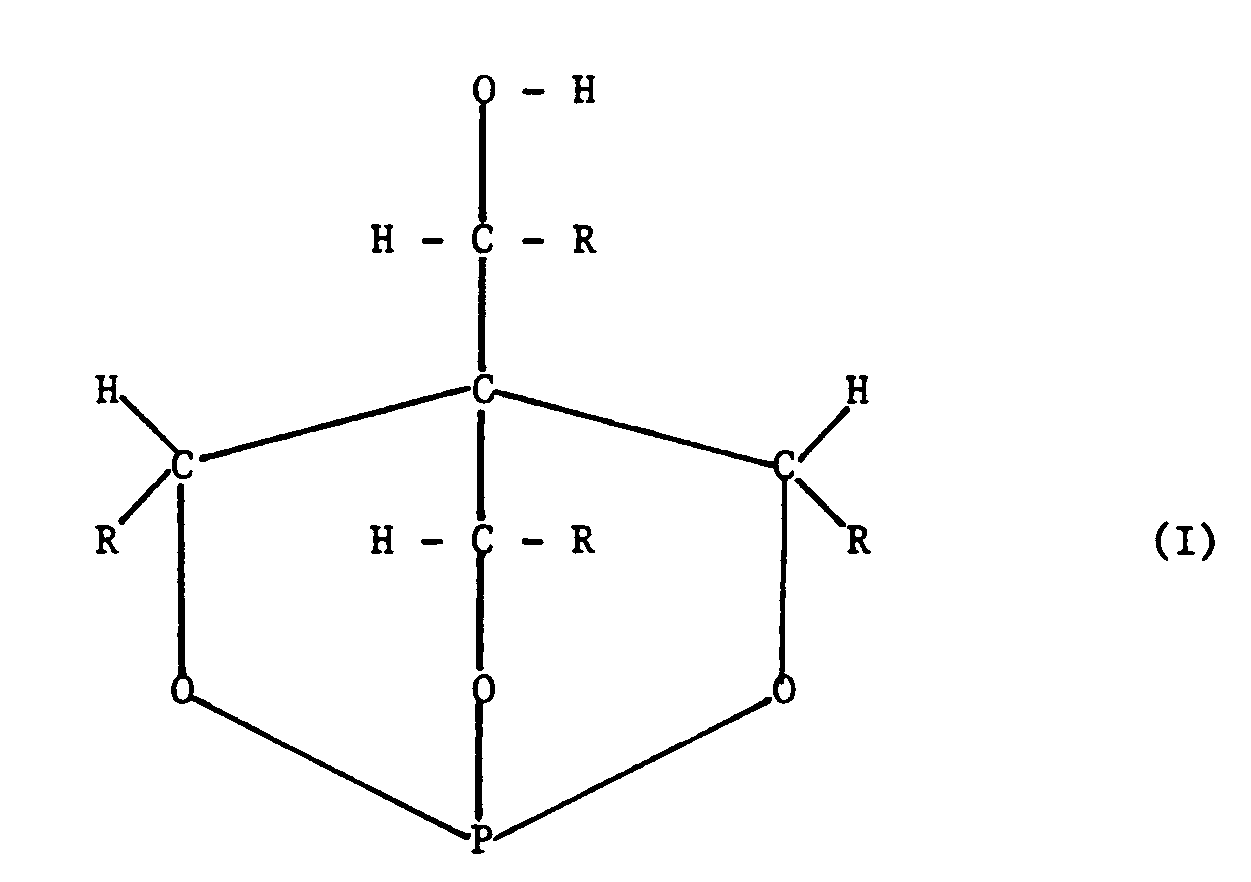
in which each R individually represents a hydrogen atom or an alkyl group having not more than 3 carbon atoms.
in which each R individually represents a hydrogen atom or an alkyl group having not more than 3 carbon atoms.
4. A process as claimed in claim 3, in which the bicyclic phosphite is 4-hydroxymethyl-2,6,7-trioxa-1-phosphabicyclo[2,2,2]octane.
5. A process as claimed in claim 1 or 2, in which the cyclic phosphite is a monocyclic
phosphite having the general formula
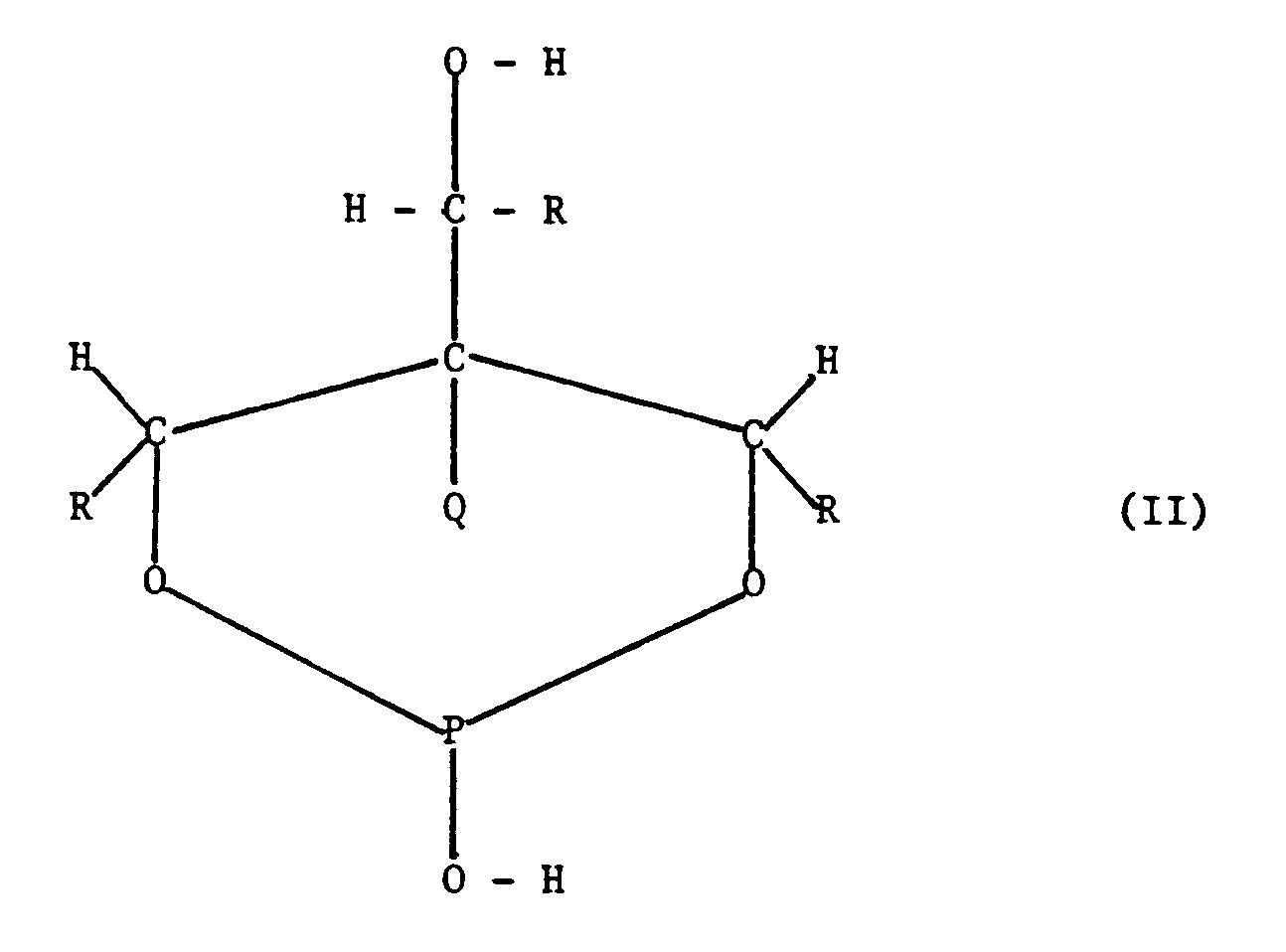
in which each R has the same meaning as in formula (I) and Q represents a hydrogen atom or an alkyl group having not more than three carbon atoms or a group of the general formula
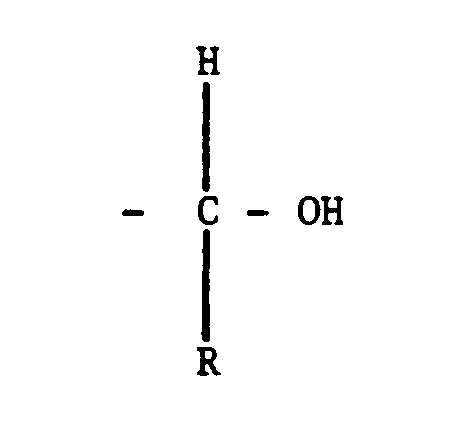
in which R has the same meaning as in formula (I).
in which each R has the same meaning as in formula (I) and Q represents a hydrogen atom or an alkyl group having not more than three carbon atoms or a group of the general formula
in which R has the same meaning as in formula (I).
6. A process as claimed in any one of the preceding claims, in which a volume ratio of
the aqueous phase to the organic medium in the range of from 0.05 to 2 is used.
7. A process as claimed in any one of claims 2 to 6, in which the metal of Group 8 is
a noble metal.
8. A process as claimed in 7, in which the noble metal is palladium.
9. A process as claimed in claim 7, in which the noble metal is rhodium.
10. A process as claimed in any one of the claims 2 to 6 in which the metal of Group 8
is cobalt.
11. A process as claimed in claim 9 or 10, in which the organic medium contains rhodium
or cobalt, respectively, in complex combination with a compound of trivalent phosphorus,
which rhodium or cobalt has been used as a catalyst component for the preparation
of aldehydes by hydroformylation of an ethylenically unsaturated compound with carbon
monoxide and hydrogen in the presence of a solvent for the complex combination.
12. A process as claimed in claim 11, in which the rhodium or cobalt is present in the
organic medium in complex combination with the said cyclic phosphite.
13. A process as claimed in claim 11, in which the rhodium or cobalt is present in the
organic medium in complex combination with a compound of trivalent phosphorus other
than the cyclic phosphite.
14. A process as claimed in claim 13, in which the compound of trivalent phosphorus is
a phosphine.
15. A process as claimed in claim 1 or any one of claim s 3 to 6 in which one or more
metals of Group 5b of the Periodic Table of the Elements are extracted from the organic
medium.
16. A process as claimed in claim 15 in which vanadium is extracted from the organic medium.
17. A process as claimed in claim 1 or any one of claims 3 to 6 in which one or more metals
of Group 7b of the Periodic Table of the Elements are extracted from the organic medium.
18. A process as claimed in claim 17 in which manganese is extracted from the organic
medium.
1. Verfahren zum Extrahieren eines oder mehrerer Übergangsmetalle aus einem organischen
Medium, in welchem Verfahren das organische Medium mit einer wäßrigen Phase in Gegenwart
eines cyclischen Phosphits, das ein an 3 Sauerstoffatome gebundenes Brückenkopfphosphoratom
enthält, wovon wenigstens zwei zusammen mit dem Brückenkopfphosphoratom Teil eines
Ringes ausbilden, welches cyclisches Phosphit eine an ein Ringkohlenstoffatom gebundene
Hydroxymethylgruppe aufweist, wobei ein oder mehrere Wasserstoffatome in dem cyclischen
Phosphit gegebenenfalls substituiert sind, in Kontakt gebracht wird, un eine wäßrigen
Extraktphase zu erhalten, die wenigstens einen Teil dieser Metalle enthält.
2. Verfahren nach Anspruch 1, worin ein oder mehrere Metalle der Gruppe 8 des Periodensystems
der Elemente aus dem organischen Medium extrahiert werden.
3. Verfahren nach Anspruch 1 oder 2, worin das cyclische Phosphit ein bicyclisches Phosphit
mit der allgemeinen Formel
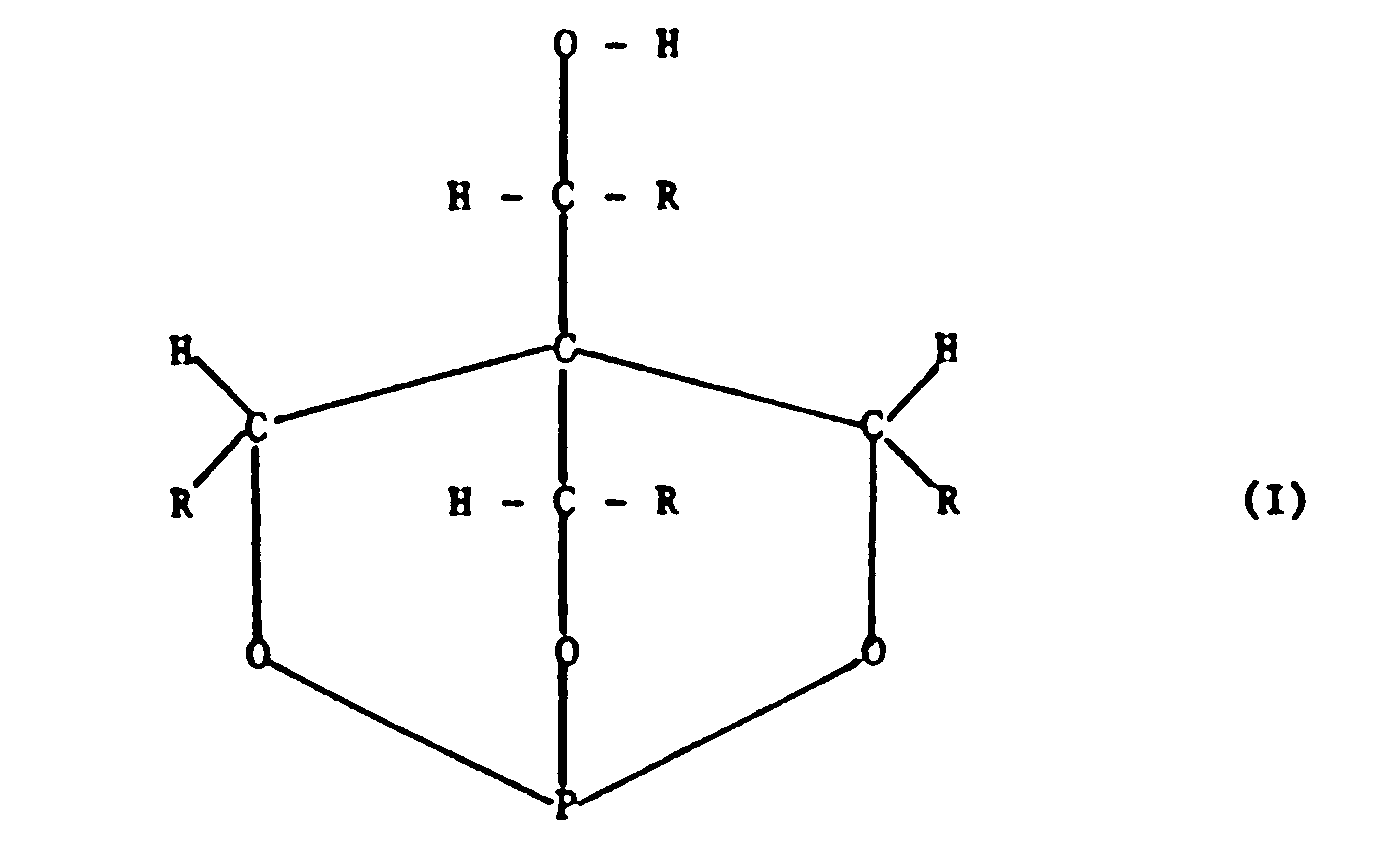
ist, worin jedes R unabhängig voneinander ein Wasserstoffatom oder eine Alkylgruppe mit nicht mehr als 3 Kohlenstoffatomen bedeutet.
ist, worin jedes R unabhängig voneinander ein Wasserstoffatom oder eine Alkylgruppe mit nicht mehr als 3 Kohlenstoffatomen bedeutet.
4. Verfahren nach Anspruch 3, worin das bicyclische Phosphit 4-Hydroxymethyl-2,6,7-trioxa-1-phosphabicyclo[2,2,2]octan
ist.
5. Verfahren nach Anspruch 1 oder 2, worin das cyclische Phosphit ein monocyclisches
Phosphit mit der allgemeinen Formel
ist, worin jedes R die gleiche Bedeutung wie in Formel (I) aufweist und Q ein Wasserstoffatom oder eine Alkylgruppe mit nicht mehr als drei Kohlenstoffatomen oder eine Gruppe der allgemeinen Formel
bedeutet, worin R die gleiche Bedeutung wie in Formel (I) aufweist.
ist, worin jedes R die gleiche Bedeutung wie in Formel (I) aufweist und Q ein Wasserstoffatom oder eine Alkylgruppe mit nicht mehr als drei Kohlenstoffatomen oder eine Gruppe der allgemeinen Formel
bedeutet, worin R die gleiche Bedeutung wie in Formel (I) aufweist.
6. Verfahren nach einem der vorstehenden Ansprüche, worin ein Volumenverhältnis von wäßriger
Phase zu organischem Medium im Bereich von 0,05 bis 2 angewendet wird.
7. Verfahren nach einem der Ansprüche 2 bis 6, worin das Metall der Gruppe 8 ein Edelmetall
ist.
8. Verfahren nach Anspruch 7, worin das Edelmetall Palladium ist.
9. Verfahren nach Anspruch 7, worin das Edelmetall Rhodium ist.
10. Verfahren nach einem der Ansprüche 2 bis 6, worin das Metall der Gruppe 8 Kobalt ist.
11. Verfahren nach Anspruch 9 oder 10, worin das organische Medium Rhodium bzw. Kobalt
in Komplexkombination mit einer Verbindung von dreiwertigem Phosphor enthält, welches
Rhodium oder Kobalt als eine Katalysatorkomponente für die Herstellung von Aldehyden
durch Hydroformylierung einer ethylenisch ungesättigten Verbindung mit Kohlenmonoxid
und Wasserstoff in Gegenwart eines Lösungsmittels für die Komplexkombination verwendet
worden ist.
12. Verfahren nach Anspruch 11, worin das Rhodium oder das Kobalt in dem organischen Medium
in Komplexkombination mit dem cyclischen Phosphit vorliegt.
13. Verfahren nach Anspruch 11, worin das Rhodium oder das Kobalt in dem organischen Medium
in Komplexkombination mit einer anderen Verbindung von dreiwertigem Phosphor als dem
cyclischen Phosphit vorliegt.
14. Verfahren nach Anspruch 13, worin die dreiwertige Phosphorverbindung ein Phosphin
ist.
15. Verfahren nach Anspruch 1 oder einem der Ansprüche 3 bis 6, worin ein oder mehrere
Metalle der Gruppe 5b des Periodensystems der Elemente aus dem organischen Medium
extrahiert werden.
16. Verfahren nach Anspruch 15, worin Vanadium aus dem organischen Medium extrahiert wird.
17. Verfahren nach Anspruch 1 oder einem der Ansprüche 3 bis 6, worin ein oder mehrere
Metalle der Gruppe 7b des Periodensystems der Elemente aus dem organischen Medium
extrahiert werden.
18. Verfahren nach Anspruch 17, worin Mangan aus dem organischen Medium extrahiert wird.
1. Procédé d'extraction d'un ou plusieurs métaux de transition à partir d'un milieu organique,
selon lequel le milieu organique est mis en contact avec une phase aqueuse en présence
d'un phosphite cyclique comportant un atome de phosphore en tête de pont lié à trois
atomes d'oxygène dont au moins deux forment avec l'atome de phosphore en tête de pont,
une partie d'un cycle, ce phosphite cyclique comportant un groupe hydroxyméthyle lié
à un atome de carbone de cycle, un ou plusieurs des atomes d'hydrogène du phosphite
cyclique, étant éventuellement substitués, de façon à obtenir un extrait en phase
aqueuse contenant au moins une partie de ces métaux.
2. Procédé selon la revendication 1, dans lequel un ou plusieurs métaux du groupe 8 du
tableau périodique des éléments, sont extraits du milieu organique.
3. Procédé selon la revendication 1 ou 2, dans lequel le phosphite cyclique est un phosphite
bicyclique de formule générale :
dans laquelle chaque groupe R représente individuellement un atome d'hydrogène ou un groupe alkyle ne comportant pas plus de 3 atomes de carbone.
dans laquelle chaque groupe R représente individuellement un atome d'hydrogène ou un groupe alkyle ne comportant pas plus de 3 atomes de carbone.
4. Procédé selon la revendication 3, dans lequel le phosphite bicyclique est le 4-hydroxyméthyl-2,6,7-trioxa-1-phosphabicyclo[2,2,2]octane.
5. Procédé selon la revendication 1 ou 2, dans lequel le phosphite bicyclique est un
phosphite monocyclique de formule générale :
dans laquelle chaque groupe R a la même définition que dans la formule (I), et Q représente un atome d'hydrogène ou un groupe alkyle ne comportant pas plus de trois atomes de carbone, ou un groupe de formule générale :
dans laquelle R a la même définition que dans la formule (I).
dans laquelle chaque groupe R a la même définition que dans la formule (I), et Q représente un atome d'hydrogène ou un groupe alkyle ne comportant pas plus de trois atomes de carbone, ou un groupe de formule générale :
dans laquelle R a la même définition que dans la formule (I).
6. Procédé selon l'une quelconque des revendications précédentes, dans lequel on emploie
un rapport volumique de la phase aqueuse au milieu organique, de 0,05 à 2.
7. Procédé selon l'une quelconque des revendications 2 à 6, dans lequel le métal du groupe
8, est un métal noble.
8. Procédé selon la revendication 7, dans lequel le méthanol est le palladium.
9. Procédé selon la revendication 7, dans lequel le métal noble est le rhodium.
10. Procédé selon l'une quelconque des revendications 2 à 6, dans lequel le métal du groupe
8 est le cobalt.
11. Procédé selon la revendication 9 ou 10, dans lequel le milieu organique contient respectivement
du rhodium ou du cobalt sous forme complexée avec un composé dérivé du phosphore trivalent,
le rhodium ou le cobalt ayant été employé comme composant catalytique pour la préparation
d'aldéhydes par hydroformylation d'un composé à insaturation éthylénique avec du monoxyde
de carbone et de l'hydrogène, en présence d'un solvant pour la formation du complexe.
12. Procédé selon la revendication 11, dans lequel le rhodium ou le cobalt est présent
dans le milieu organique sous forme complexée avec le phosphite cyclique.
13. Procédé selon la revendication 11, dans lequel le rhodium ou le cobalt est présent
dans le milieu organique sous forme complexée avec un composé dérivé du phosphore
trivalent autre que le phosphite cyclique.
14. Procédé selon la revendication 13, dans lequel le composé dérivé du phosphore trivalent
est une phosphine.
15. Procédé selon la revendication 1 ou l'une quelconque des revendications 3 à 6, dans
lequel un ou plusieurs métaux du groupe 5b du tableau périodique des éléments, sont
extraits du milieu organique.
16. Procédé selon la revendication 15, dans lequel on extrait du vanadium à partir du
milieu organique.
17. Procédé selon la revendication 1 ou l'une quelconque des revendications 3 à 6, dans
lequel on extrait un ou plusieurs métaux du groupe 7b du tableau périodique à partir
du milieu organique.
18. Procédé selon la revendication 17, dans lequel on extrait du manganèse à partir du
milieu organique.