| (19) |
 |
|
(11) |
EP 0 211 991 B1 |
| (12) |
EUROPEAN PATENT SPECIFICATION |
| (45) |
Mention of the grant of the patent: |
|
25.10.1989 Bulletin 1989/43 |
| (22) |
Date of filing: 23.08.1985 |
|
| (51) |
International Patent Classification (IPC)4: A61K 9/32 |
|
| (54) |
Substained release tablets and method for preparation thereof
Tabletten mit verzögerter Freisetzung sowie Verfahren zu deren Herstellung
Comprimés à libération prolongée et procédé pour leur préparation
|
| (84) |
Designated Contracting States: |
|
AT BE CH DE FR GB IT LI LU NL SE |
| (43) |
Date of publication of application: |
|
04.03.1987 Bulletin 1987/10 |
| (73) |
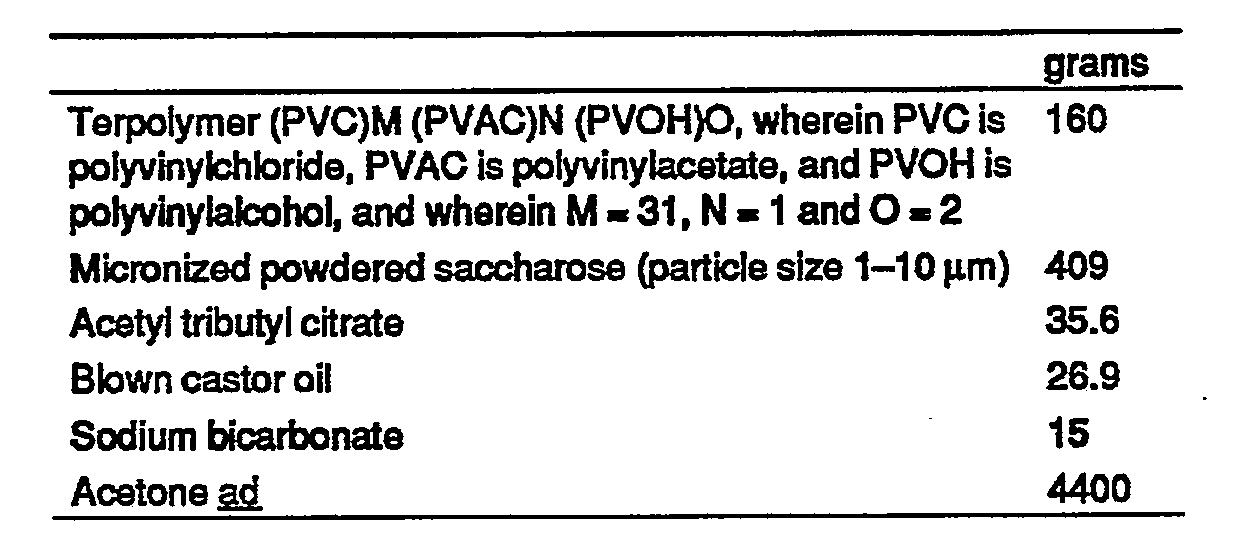
Proprietor: AB LEO |
|
S-251 09 Helsingborg (SE) |
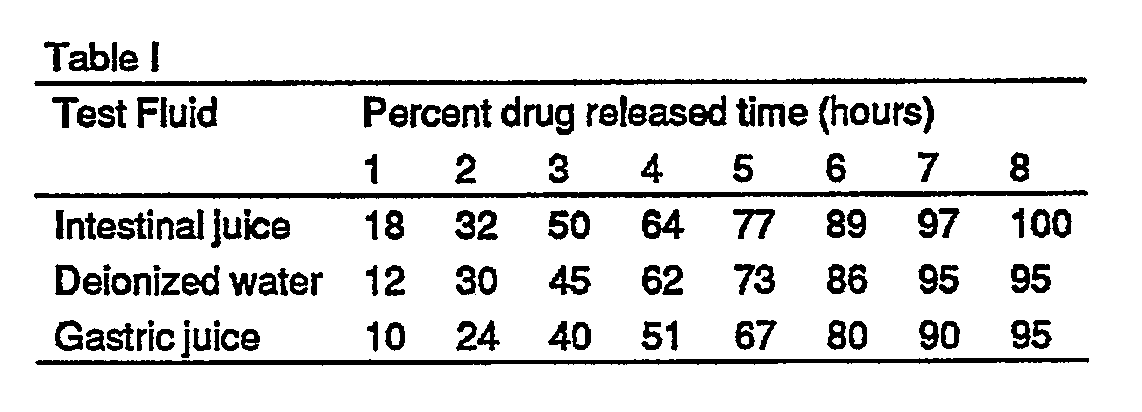
|
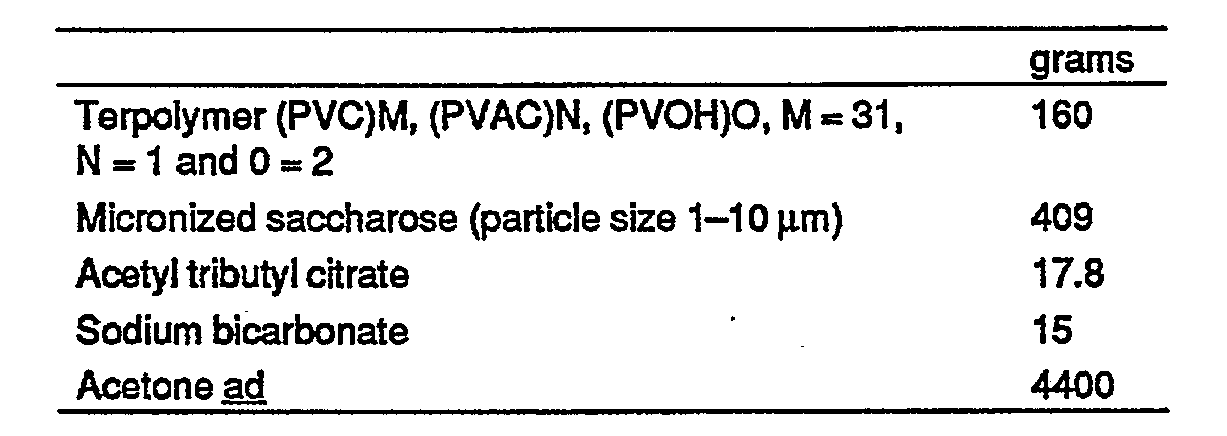
| (72) |
Inventors: |
|
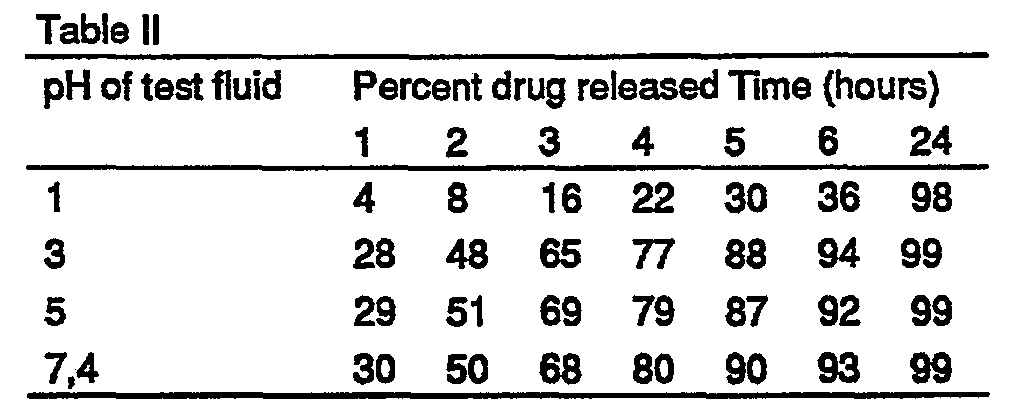
- Erlandsson, Stig Albin Bertil
S-212 32 Malmö (SE)
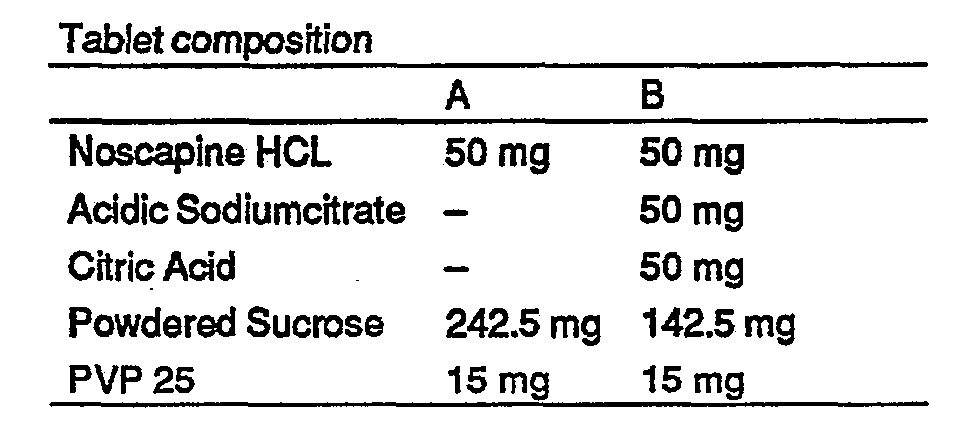
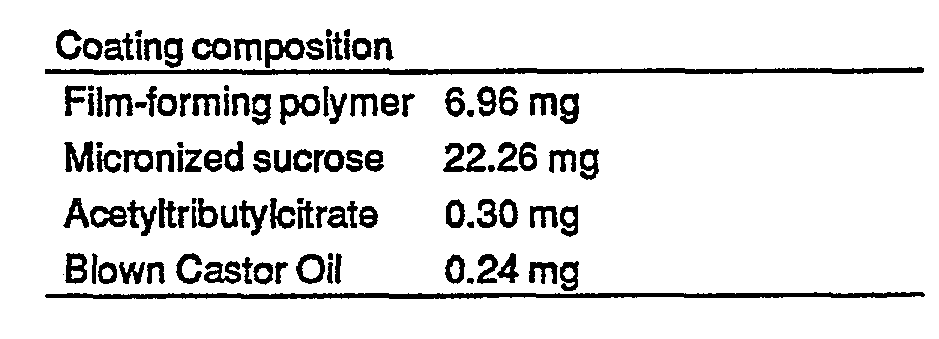
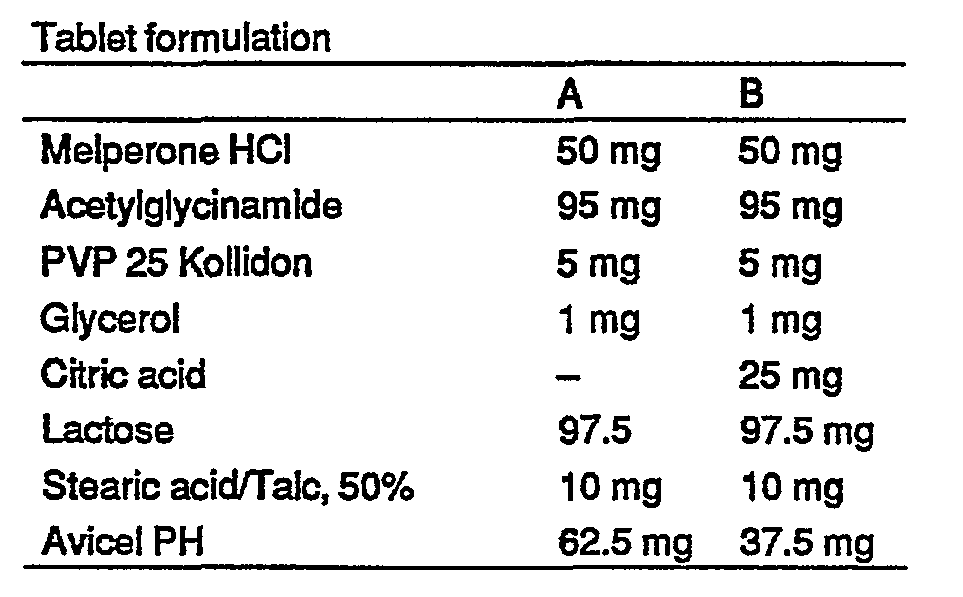
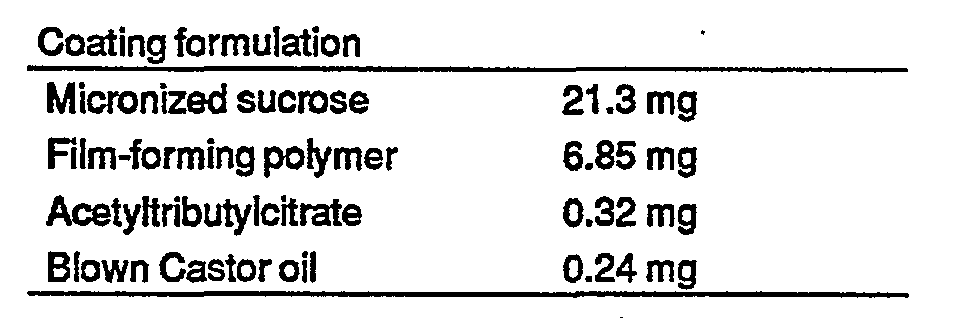
- Lindahl, Ake Rikard
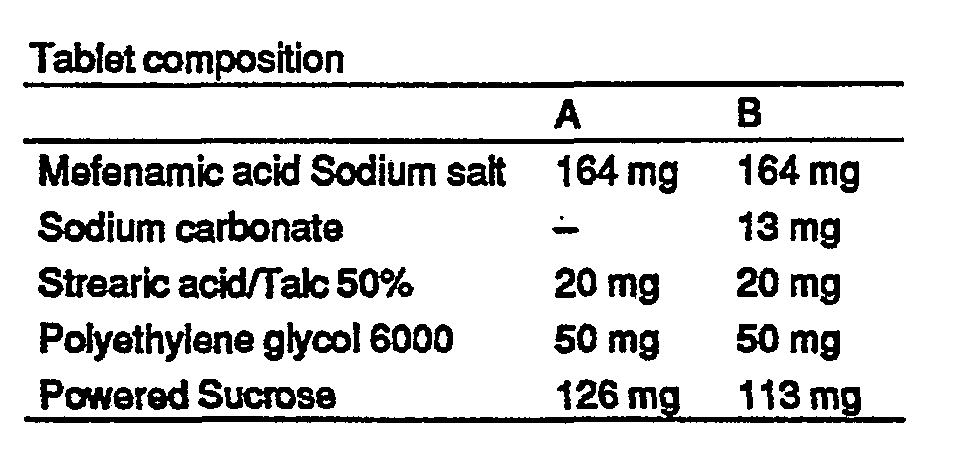
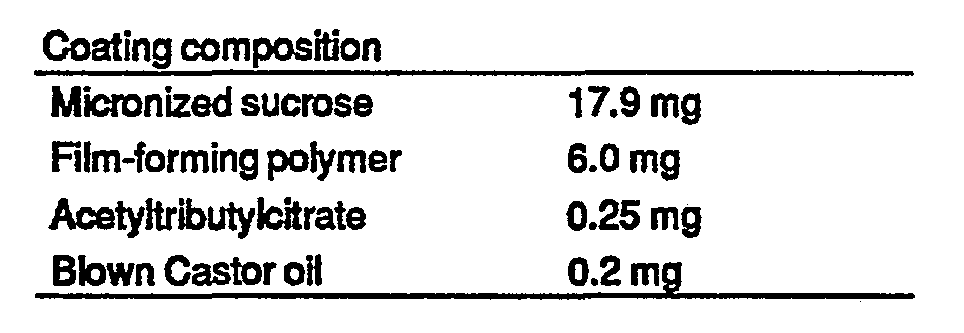
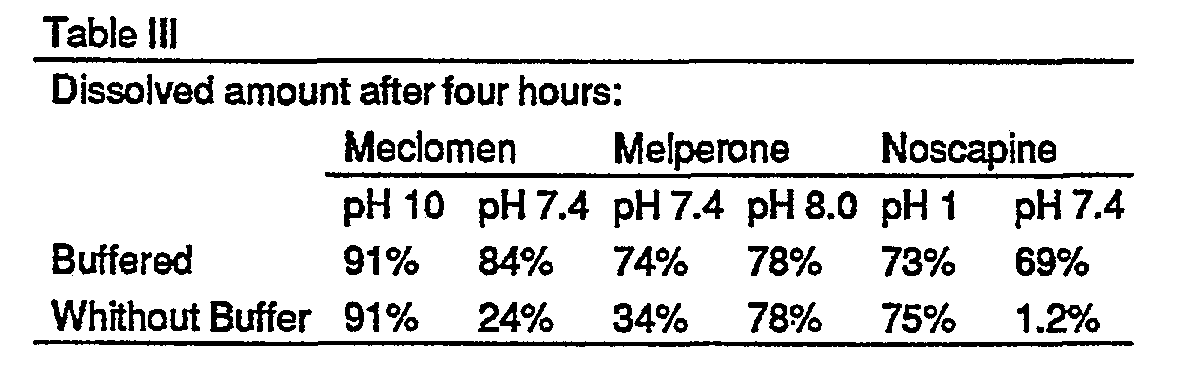
S-274 00 Skurup (SE)
|
| (74) |
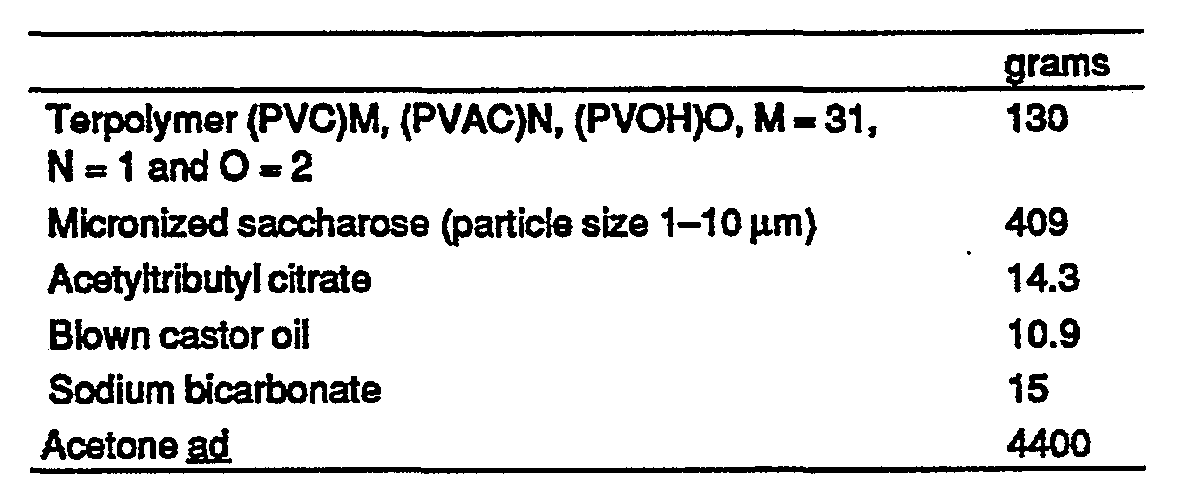
Representative: Thylén, Eva Matilda (SE) |
|
Awapatent AB
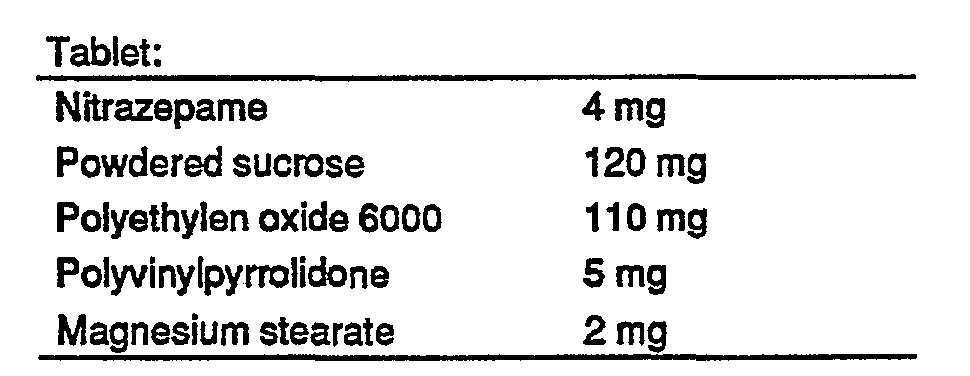
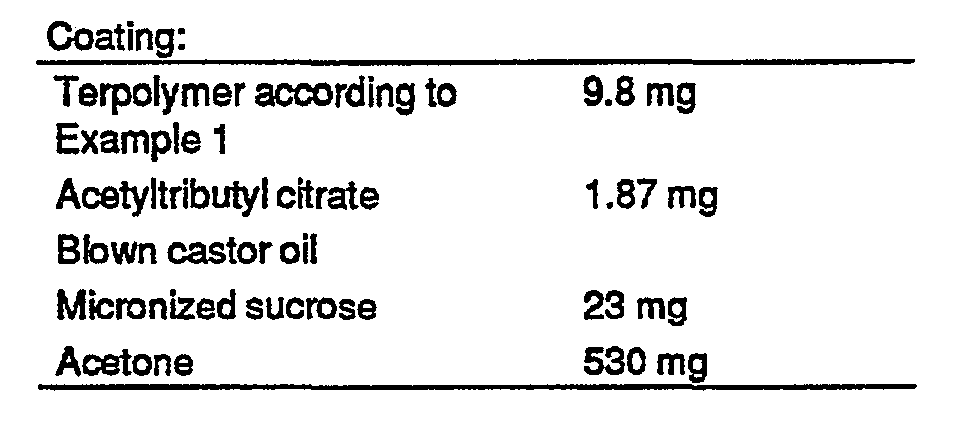
Berga Allé 1
S-254 52 Helsingborg
S-254 52 Helsingborg (SE) |
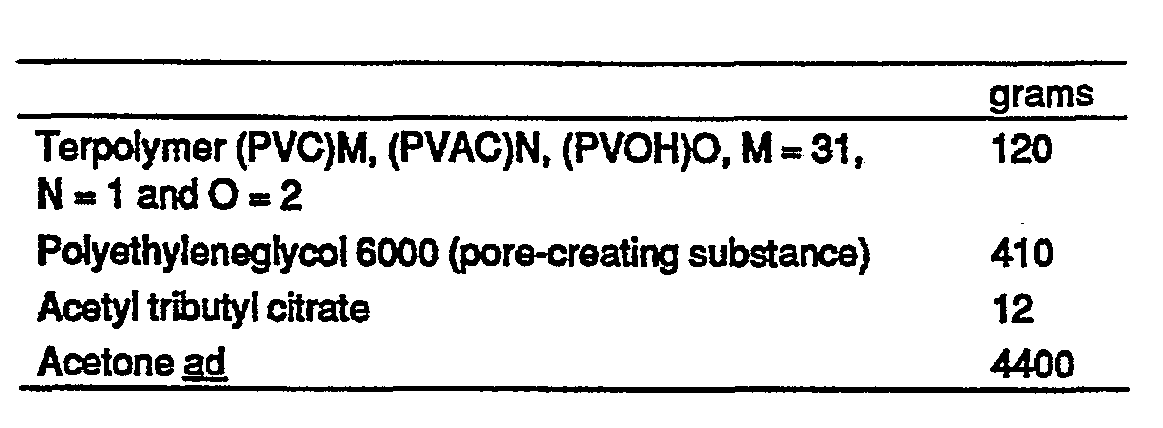
| (56) |
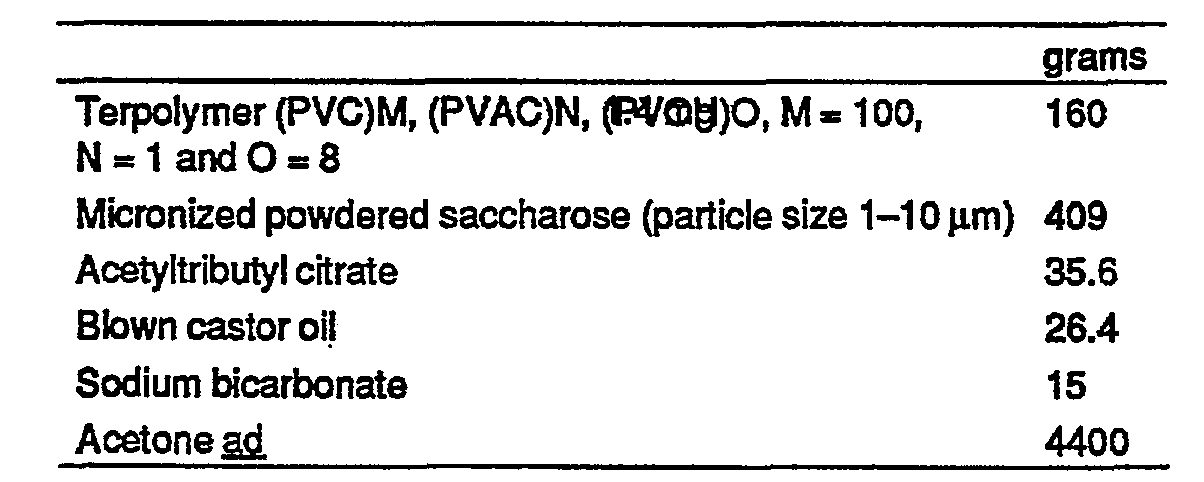
References cited: :
EP-A- 0 096 074
FR-A- 2 364 660
US-A- 3 538 214
US-A- 3 954 959
US-A- 4 557 925
|
EP-A- 0 113 776
GB-A- 1 186 990
US-A- 3 595 939
US-A- 4 060 598
|
|
| |
|
|
- CHEMICAL ABSTRACTS, vol. 83, no. 22, 1st December 1975, page 72, no. 180527x, Columbus,
Ohio, US; L. BONNET: "Process for making microporous membranes", & RES. DISCL. 1975,
135, 74-5
|
|
| |
|
|
|
Remarks: |
|
The file contains technical information submitted after the application was filed
and not included in this specification |
|
| Note: Within nine months from the publication of the mention of the grant of the European
patent, any person may give notice to the European Patent Office of opposition to
the European patent
granted. Notice of opposition shall be filed in a written reasoned statement. It shall
not be deemed to
have been filed until the opposition fee has been paid. (Art. 99(1) European Patent
Convention).
|
[0001] The sustained release of a medicine or drug is important for several reasons. For
example it serves to provide the body with medication over a long time and thereby
eliminates the need for swallowing an ordinary tablet at frequent intervals. Another
advantage could be that a sudden release of a large amount of medicine which often
occurs when conventional tablets are used can be avoided. Thereby the onset of toxic
symptoms can be eliminated.
[0002] One type of commercially used slow release tablets comprises a firmly coherent skeleton
structure composed of non-toxic synthetic resin substantially insoluble in the fluid
of the human or animal body with which the tablet comes into contact. The structure
includes pore-like inter-connected canals or ducts open to the exterior of the structure
and a material which comprises or contains a medical substance, which is soluble in
the fluid contained in such canals or ducts. Slow release tablets of this type are
disclosed in the GB patent 808,014.
[0003] Another type of commercially used slow release preparation known as "osmotic device"
has been developed by Alza Co. This device comprises a wall surrounding a reservoir
containing an active agent and having a passageway for releasing the agent from the
device. The wall is comprised of a material permeable to external fluid.
[0004] A third type of slow release tablet is disclosed in e.g. the GB patent 1,186,990
and US patent 3,538,214. These patents disclose pharmaceutical preparations consisting
of a tablet core comprising a medicament, which is soluble in the gastro-intestinal
fluids, and a coating on said core. The coating consists of a polymer substance which
remains substantially intact and insoluble in the gastro-intestinal fluids. Fine particles
of a readily water-soluble substance are randomly distributed in the coating. Furthermore,
it is disclosed in the patent that the preparation can be provided with an additional
coating which i.a. may contain another pharmacologically active substance.
[0005] According to the GB patent 1,186,990 the polymer substance is a polyamide and according
to the US patent 3,538,314 the polymer substance is cellulose acetate, ethyl cellulose
or low water soluble polyvinyl alcohol.
[0006] However, to the best of our knowledge, none of the technical solutions disclosed
in these two patents has led to a practically useful product. As regards the US patent
3,538,214 the reason seems to be clear, as the tables of the dissolution rate disclose
that the dissolution rate is neither pH-independent nor essentially constant over
any longer period of time, two requirements that must be fulfilled in modern slow
release preparations. The polymer substance used in the GB patent 1,186,990 has rather
poor film- forming properties, and it is difficult to get a proper adhesion to the
tablet core surface.
[0007] Another slow release composition is disclosed in the US patent 4,244,941. This composition
comprises a drug including a core of a soluble substance and a rigid porous coating
completely surrounding the core. The coating is substantially free of substances soluble
or swellable in the gastrointestinal liquids. Furthermore, the coating is selected
from substances insoluble in the medium, in which they are intended to be used. The
substances are compressed in powder form to form an inert non-disintegrating, nonerod-
ing porous coating on the core. The coating could e.g. consist of a copolymer of vinyl
chloride and vinyl acetate.
[0008] However, this compression coating principle produces tablets, which consist of up
to about 50% of coating material. This is contrary to what is sought after in the
medical and pharmaceutical fields today.
Objects of the invention
[0009] An object of the present invention is to provide a slow-release preparation, in which
the dissolution rate of the active substance is substantially constant over a long
period of time. This means that the rate determining characteristics of the coating
is substantially independent of any mechanical influence, enzymes, surface tension,
pH and salt concentration.
[0010] Another object of the invention is to provide an inexpensive slow release preparation.
[0011] A third object is to provide a slow release preparation generally useful for different
kinds of orally active drugs.
[0012] A fourth object is to provide a slow release preparation, which is small in size
due to a favourable ratio between the amount of active substance and inactive ingredients.
[0013] A further object of the invention is to provide a slow release preparation, which
can be manufactured in a simple process without problems with roughness of the tablet
surface ("orange peel") or other problems related to poor adhesion of the coating
to the tablet core surface.
Summary of the invention
[0014] A slow-release tablet according to the present invention comprises a drug containing
tablet and a coating surrounding the same. The coating is insoluble in water and in
the gastrointestinal fluids and consists essentially of a terpolymer of polyvinyl
chloride, polyvinyl acetate and polyvinyl alcohol and a pore-creating substance being
randomly distributed in the terpolymer. The pore-creating substance is present in
an amount of 1-20 parts for each 1-10 parts of terpolymer.
[0015] The method of producing the coated tablet according to the invention comprises the
steps of dissolving the terpolymer in a solvent, preparing a suspension or solution
of the pore-creating substance, providing a pharmaceutical tablet, combining the suspension
or solution of pore-creating substance and solvent solution of the terpolymer to form
a coating fluid, applying the coating fluid in the form of a solution or suspension
to the tablet, and drying the coating fluid on the tablet to provide a terpolymer-coated
tablet having the water-soluble pore-creating substance randomly distributed within
the coating.
Detailed description of the invention
[0016] Preferably the terpolymer contains 80-95% weight per weight of polyvinyl chloride,
1 to 19% weight per weight of polyvinyl acetate and 1 to 10% weight per weight of
polyvinyl alcohol. In this context it can be mentioned that a coating comprising a
copolymer consisting of only polyvinyl chloride and polyvinyl acetate can be used
but the adhesion properties to different kinds of drug containing tablet cores are
not sufficiently good to avoid roughness of the tablet surface ("orange peel") and/or
other problems related to poor adhesion. Furthermore, such a copolymer has not sufficient
mechanical strength.
[0017] The pore-creating substance used according to the present invention should be highly
water-soluble, pharmacologically acceptable and essentially free from own pharmacological
effects in the amounts used. Especially preferred as pore-creating substance is saccarose
(sucrose). Other substances which may be used include polyvinyl pyrrolidone, polyethylene
glycol 1500, 4000 or 6000 and sodium chloride.
[0018] The ratio pore-creating agent to terpolymer depends on the desired dissolution rate
and time and can be decided in each separate case from simple experiments in the laboratory.
Generally it can be said that in order to get practically useful dissolution from
tablets for oral use the ratio should vary between 1 to 5, preferably between 1.5
and 3.
[0019] The pore-creating substance is preferably but not necessary insoluble in the solvent
used for coating the tablets.
[0020] The particle size of the pore-creating substance may vary between 0.5 and 50 millimicrons.
[0021] Preferably a plasticizer is also present in the terpolymer. The amount of this plasticizer
may vary between 0.1 and 4% weight by weight of the coating fluid. Examples of suitable
plasticizers are acetyltributylcitrate, polyethylene glycol, blown castor oil and
glyceryl triacetate. Furthermore, the coating may include sodium bicarbonate as stabilizing
agent.
[0022] Depending on the size and area of the tablet the coating weight may vary between
10 and 170 mg per tablet and the coating thickness may vary between 25 and 300 J.1m,
preferably 50 and 200 µm.
[0023] According to the present invention the drug included in the core could be almost
any drug that can be orally administered. In order to improve the solubility properties
of the drugs the core may include conventionally used additives such as buffering
agent, e.g. sodium bicarbonate or citric acid.
[0024] Examples of drugs that suitably are administered in the form of sustained and constant
release preparations according to the present invention include, but are not limited
to, e.g. phenylpropanolamine, cefa- losporin (Cefaclorum), bensodiazepine derivatives,
potassium chloride, sodium salicylate, choline theophyllinate, acetaminophen, acetylcystein,
terbutaline, dextromethorphan, ascorbic acid, diltiazem, noscapine, oxybutynin, ibuprophen,
urapidil, melperone, salbutamol, cimetidine, chlorpheniramine maleate, propanolol,
L-dopa, piracetam, isosorbide dinitrate, indomethacin, zinc sulfate, diclofenac, li-
tium sulfate, ferrous sulfate, pseudoephedrine, sodium cromoglycate, sodium PAS and
meclomen.
[0025] The starting preparations are produced in the following manner:
1) A terpolymer containing (w/w%) 80-95% PVC (polyvinylchloride), 1-19% PVAC (polyvinylacetate),
and 1-10% PVOH (polyvinylalcohol) is dissolved in a solvent, e.g. acetone, methylenechloride,
methylethylketone, or mixtures of acetone and ethanol, acetone and methylenechloride,
or the like.
2) A suspension or solution of the pore-creating substance is produced as follows:
[0026] The pore-creating particles are ground either by dry milling in a ball mill or by
wet-milling in a glass bead milling device to a defined particle size, preferably
between 0.5 J.1m and 50 µm. The particles are dispersed in solvents or mixtures or
solvents, such as those previously mentioned, and mixed with the terpolymer solution.
[0027] The ratio between pore-creating substance and terpolymer in the coating fluid is
as previously described for the ratio in the coating. The coating fluid may, as previously
stated, include a plasticizer and sodium bicarbonate.
[0028] The coating fluid, in the form of a solution or suspension, is then applied on drug-containing
cores by conventional coating procedure. Examples of such coating procedures are pan
coating, manual or spray-coating, Wurster coating, and other fluid-bed coating procedures.
Coloring matter can also be incorporated in the coating fluid, and insoluble coloring
materials are preferred.
[0029] A second coating can be applied, and may contain one or more same or different drugs,
for which a rapid release is desirable. This coating fluid is preferably a water-based
sugar coating and, therefore, a seal coating between the latter and the terpolymer
membrane coating is frequently necessary or desirable.
[0030] The invention is further illustrated by the following examples.
Example 1
[0031] Coating on tablets containing potassium chloride 1 gram.
[0032] Composition of the coating fluid:
[0033] The coating process is performed in a coating pan and the coating fluid is sprayed
onto the tablets with an airless spray-coating device. Five thousand tablets are coated
and the average membrane weight is 60 mg per tablet.
[0034] The following table discloses that the dissolution rate of the drug is essentially
constant during 8 hours and essentially independent of pH.
Example 2
[0035] Coating applied on tablets containing 500 mg of sodium salicylate
[0036] Composition of the coating fluid:
[0037] The coating weight is 50 mg per tablet and the coating procedure is the same as in
Example 1.
[0038] As diclosed in the following Table II this formulation is an example of how the inherent
pH dependency of the drug active substance can be used in order to obtain a desired
dissolution rate at a certain pH.
[0039] The dissolution rate of the drug will be about four times slower in the stomach than
in the intestine and the solid drug substance does not get into direct contact with
the mucous membranes. Thus the local irritating effect of sodium salicylate on the
gastric mucosa is minimized.
Example 3
[0040] Noscapine HCI is a weak base and has low solubility in natural and basic media, while
the solubility in acidic media is high. Below, two tablet compositions are listed,
one buffered B, and one without buffer A. Both tablet batches are coated with the
same coating and the dissolution rate is determined according to USP XX.
Example 4
[0041] Meclomen, Mefenanic acid, is a weak acid with a pKa of 10 which means that the drug
is practically insoluble in physiological fluids having pH between 1 and 8. The tablet
was buffered with sodium bicarbonate and the internal pH rises to about 10.5 where
Mefenamic acid is freely soluble. As in the earlier experiments two formulations were
manufactured, one containing buffer and one without.
Example 5
[0042] Melperone, a weak base, has a pK
6 of 8.8 and shows pH-dependent release rate. Two formulations, one containing citric
acid as buffering agent, and one without, were manufactured.
[0043] The following Table III discloses the differences in dissolution rate for the preparations
with and without buffer according to the examples 3-5.
Example 6
Coated Choline Theophyllinate Tablets
[0044] Coating applied on tablets containing 270 mg of choline theo phyllinate.
[0045] Composition of the coating fluid:
[0046] The weight of the membrane is 40 mg per tablet and the coating procedure is the same
as in Example 1.
Example 7
Coated bensodiazepine tablets
[0047] Coating applied on tablets containing 6 mg nitrazepame (bensodiazepinderivative)
[0048]
[0049] The ingredients except for Mg-stearate were mixed and moistened with ethanol. After
drying Mg-stearate was added and the powder was compressed to tablets.
Example 8
Coated Paracetamole Tablets
[0050] Coating applied on tablets containing 500 mg of paracetaminophenol
Example 9
Terpolymer Variation
[0051] Coating applied on tablets containing 1 g of potassium chloride.
[0052] Composition of the coating fluid:
[0053] The weight of the dried membrane was 60 mg per tablet and the coating procedure was
the same as in Example 1.
1. A sustained-release coated pharmaceutical tablet exhibiting a substantially constant
dissolution rate during a major portion of its dissolution time when exposed to gastrointestinal
fluids, and comprising a drug-containing tablet and a coating surrounding the same,
this coating essentially consisting of a polymer, which is insoluble in water and
gastro-intestinal fluids and a watersoluble pore-creating substance randomly distributed
in the polymer, characterized in that the polymer is a terpolymer of vinylchloride,
vinylacetate and vinylalcohol, that the ratio pore-creating substance to terpolymer
varies between 0,1 and 20, that the pore-creating substance consists of particles,
which are essentially insoluble in the solvent used for coating the drug-containing
tablet and that the pore-creating agent is substantially pharmacologically inactive
in the amount used.
2. A coated tablet according to claim 1, wherein the terpolymer contains 80 to 95%
weight by weight of vinylchloride, 1 to 19% weight by weight of vinylacetate, and
1 to 10% weight by weight of vinylalcohol.
3. A coated tablet according to claim 2, wherein the pore-creating substance is a
water-soluble substance selected from the group of saccharose, sodium chloride, polyvinylpyrrolidone
and a polyethylene glycol.
4. A coated tablet according to any of the claims 1-3, wherein the ratio pore-creating
substance to terpolymer varies between 1 and 5 and preferably between 1.5 and 3.
5. A coated tablet according to any of the preceding claims, wherein the tablet also
includes a buffering agent.
6. A coated tablet according to any of the preceding claims, wherein the coating also
includes a plasticizer selected from acetyltributylcitrate, polyethylene glycol, blown
castor oil and glyceryl triacetate.
7. A coated tablet according to claim 6, wherein the plasticizer is present in a concentration
of 0.1 to 4% weight by weight of coating fluid.
8. Method of producing a coated tablet exhibiting a substantially constant dissolution
rate during a major portion of its dissolution time when exposed to gastrointestinal
fluids, and comprising a drug-containing tablet and a coating surrounding the same,
wherein the coating essentially consists of a polymer, which is insoluble in water
and gastrointestinal fluids and a watersoluble, pore-creating substance randomly distributed
in the polymer, characterized in that the polymer is a terpolymer of vinylchloride,
vinylacetate and vinylalcohol, that the ratio pore-creating substance to terpolymer
varies between 0,1 and 20, that the pore-creating substance consists of particles,
which are essentially insoluble in the solvent used for coating and that the pore-creating
substance is essentially inactive in the amount used, comprising the steps of dissolving
the said terpolymer in a solvent, preparing a suspension of the pore-creating substance,
providing a pharmaceutical tablet, combining the suspension of pore-creating substance
and solvent solution of the terpolymer to form a coating fluid, applying the coating
fluid in the form of suspension to the tablet, and drying the coating fluid on the
tablet to provide a terpolymer-coated tablet having watersoluble pore-creating substance
randomly distributed within the coating or membrane.
9. A method according to claim 8, wherein the terpolymer contains 80 to 95% weight
by weight of vinylchloride, 1 to 19% weight by weight of vinylacetate, and 1 to 10%
weight by weight of polyvinylalcohol.
10. A method according to claim 8 or 9, wherein the pore-creating substance is a water-soluble
substance selected from the group consisting of saccharose, sodium chloride, polyvinylpyrrolidone
and a polyethylene glycol.
11. A method according to any of the claims 8-10, wherein the ratio pore-creating
substance to terpolymer varies between 1 and 5 and preferably between 1.5 and 3.
12. A method according to any of the claims 8-11, wherein the tablet also includes
a buffering agent.
13. A method according to any of the claims 8-12, wherein a plasticizer is also present
in the terpolymer.
14. A method according to claim 13, wherein the plasticizer is present in a concentration
of 0.1 to 4% weight by weight of coating fluid, preferably selected from acetyltributylcitrate,
polyethylene glycol, blown castor oil, and glyceryl triacetate.
1. Beschichtete pharmazeutische Tablette mit verlängerter Freisetzungsdauer und einer
im wesentlichen konstanten Lösungsgeschwindigkeit während eines Großteils ihrer Lösungszeit,
wenn sie den gastrointestinalen Flüssigkeiten ausgesetzt ist, bestehend aus einer
den Arzneistoff enthaltenden Tablette und einem dieselbe umschließenden Überzug, welcher
Überzug im wesentlichen aus einem in Wasser und in den gastrointestinalen Flüssigkeiten
unlöslichen Polymer und einer willkürlich im Polymer verteilten, wasserlöslichen,
porenbildenden Substanz besteht, dadurch gekennzeichnet, daß das Polymer ein Terpolymer
aus Vinylchlorid, Vinylacetat und Vinylalkohol ist, daß das Verhältnis von porenbildender
Substanz zu Terpolymer zwischen 0,1 und 20 variiert, daß die porenbiidende Substanz
aus Teilchen besteht, die in dem für die Beschichtung der den Arzneistoff enthaltenden
Tablette verwendeten Lösungsmittel im wesentlichen unlöslich sind, und daß das porenbildende
Mittel in den angewendeten Mengen pharmakologisch im wesentlichen inaktiv ist.
2. Beschichtete Tablette nach Anspruch 1, dadurch gekennzeichnet, daß das Terpolymer
80 bis 95 Gew.-% Vinylchlorid, 1 bis 19 Gew.-% Vinylacetat und 1 bis 10 Gew.-% Vinylalkohol
enthält.
3. Beschichtete Tablette nach Anspruch 2, dadurch gekennzeichnet, daß die porenbildende
Substanz eine wasserlösliche Substanz, ausgewählt aus der Gruppe Saccharose, Natriumchlorid,
Polyvinylpyrrolidon und einem Polyethylenglykol, ist.
4. Beschichtete Tablette nach einem der Ansprüche 1 bis 3, dadurch gekennzeichnet,
daß das Verhältnis von porenbildender Substanz zu Terpolymer zwischen 1 und 5, vorzugsweise
zwischen 1,5 und 3, variiert.
5. Beschichtete Tablette nach einem der vorhergehenden Ansprüche, dadurch gekennzeichnet,
daß die Tablette auch ein Puffermittel enthält.
6. Beschichtete Tablette nach einem der vorhergehenden Ansprüche, dadurch gekennzeichnet,
daß der Überzug auch einen Weichmacher, ausgewählt aus Acetyltributylcitrat, Polyethylenglykol,
geblasenes Rizinusöl und Glycerintriacetat, enthält.
7. Beschichtete Tablette nach Anspruch 6, dadurch gekennzeichnet, daß der Weichmacher
in einer Konzentration von 0,1 bis 4 Gew.-% des Gewichtes der Beschichtungsflüssigkeit
zugegen ist.
8. Verfahren zur Herstellung einer beschichteten pharmazeutischen Tablette mit im
wesentlichen konstanter Lösungsgeschwindigkeit während eines Großteils ihrer Lösungszeit,
wenn sie den gastrointestinalen Flüssigkeiten ausgesetzt ist, bestehend aus einer
den Arzneistoff enthaltenden Tablette und einem dieselbe umschließenden Überzug, welcher
Überzug im wesentlichen aus einem in Wasser und in den gastrointestinalen Flüssigkeiten
unlöslichen Polymer und einer willkürlich im Polymer verteilten, wasserlöslichen,
porenbildenden Substanz besteht, dadurch gekennzeichnet, daß das Polymer ein Terpolymer
aus Vinylchlorid, Vinylacetat und Vinylalkohol ist, daß das Verhältnis von porenbildender
Substanz zu Terpolymer zwischen 0.1 und 20 variiert, daß die porenbildende Substanz
aus Teilchen besteht, die in dem für die Beschichtung der den Arzneistoff enthaltenden
Tablette verwendeten Lösungsmittel im wesentlichen unlöslich sind, und daß das porenbildende
Mittel in den angewendeten Mengen im wesentlichen inaktiv ist, umfassend die Stufen
der Lösung des Terpolymers in einem Lösungsmittel, Herstellung einer Suspension der
porenbildenden Substanz. Erzeugung einer pharmazeutischen Tablette. Vereinigung der
Suspension der porenbildenden Substanz und der Lösungsmittellösung des Terpolymers,
um eine Beschichtungsflüssigkeit zu bilden. Aufbringung der Beschichtungsflüssigkeit
in Suspensionsform auf die Tablette und Trocknung der Beschichtungsflüssigkeit auf
der Tablette, um eine Terpolymer-beschichtete Tablette mit einer im Überzug oder in
der Membran willkürlich verteilten porenbildenden Substanz zu bilden.
9. Verfahren nach Anspruch 8, dadurch gekennzeichnet, daß das Terpolymer 80 bis 95
Gew.-% Vinylchlorid, 1 bis 19 Gew.-% Vinylacetat und 1 bis 10 Gew.-% Vinylalkohol
enthält.
10. Verfahren nach Anspruch 8 oder 9, dadurch gekennzeichnet, daß die porenbildende
Substanz eine wasserlösliche Substanz, ausgewählt aus der Gruppe Saccharose, Natriumchlorid,
Polyvinylpyrrolidon und einem Polyethylenglykol, ist.
11. Verfahren nach einem der Ansprüche 8 bis 10, dadurch gekennzeichnet, daß das Verhältnis
von porenbildender Substanz zu Terpolymer zwischen 1 und 5, vorzugsweise zwischen
1,5 und 3, variiert.
12. Verfahren nach einem der Ansprüche 8 bis 11, dadurch gekennzeichnet, daß die Tablette
auch ein Puffermittel enthält.
13. Verfahren nach einem der Ansprüche 8 bis 12, dadurch gekennzeichnet, daß im Terpolymer
auch ein Weichmacher zugegen ist.
14. Verfahren nach Anspruch 13, dadurch gekennzeichnet, daß der Weichmacher in einer
Konzentration von 0,1 bis 4 Gew.-% des Gewichtes der Beschichtungsflüssigkeit zugegen
und vorzugsweise aus Acetyltributylcitrat, Polyethylenglykol, geblasenem Rizinusöl
und Glycerintriacetat ausgewählt ist.
1. Comprimé pharmaceutique enrobé, à libération prolongée, présentant une vitesse
de dissolution pratiquement constante pendant la plus grande partie de son temps de
dissolution lorsqu'il est mis en contact avec les fluides gastro-intestinaux, et comprenant
un comprimé contenant un médicament et un enrobage entourant ce comprimé, cet enrobage
consistant essentiellement en un polymère, qui est insoluble dans l'eau et les fluides
gastro-intestinaux, et en une substance hydrosoluble porogène distribuée d'une manière
aléatoire dans le polymère, caractérisé en ce que le polymère est un terpolymère de
chlorure de vinyle, d'acétate de vinyle et d'alcool vinylique, le rapport de la substance
porogène au terpolymère varie de 0,1 à 20, la substance porogène consiste en particules
qui sont pratiquement insolubles dans le solvant utilisé pour l'enrobage du comprimé
contenant un médicament et l'agent porogène est pratiquement pharmacologiquement inactif
en la quantité utilisée.
2. Comprimé enrobé suivant la revendication 1, dans lequel le terpolymère contient
80 à 95% en poids/poids de chlorure de vinyle, 1 à 19% en poids/poids d'acétate de
vinyle et 1 à 10% en poids/poids d'alcool vinylique.
3. Comprimé enrobé suivant la revendication 2, dans lequel la substance porogène est
une substance hydrosoluble choisie dans le groupe comprenant le saccharose, le chlorure
de sodium, la polyvinylpyrrolidone et un polyéthylèneglycol.
4. Comprimé enrobé suivant l'une quelconque des revendications 1 à 3, dans lequel
le rapport de la substance porogène au terpolymère varie de 1 à 5 et, de préférence,
de 1,5 à 3.
5. Comprimé enrobé suivant l'une quelconque des revendications précédentes, dans lequel
le comprimé renferme également un tampon.
6. Comprimé enrobé suivant l'une quelconque des revendications précédentes, dans lequel
l'enrobage renferme également un plastifiant choisi entre le citrate d'acétyltributyle,
un polyéthylèneglycol, l'huile de ricin soufflée et le triacétate de glycéryle.
7. Comprimé enrobé suivant la revendication 6, dans lequel le plastifiant est présent
en une concentration de 0,1 à 4% en poids/poids du fluide d'enrobage.
8. Procédé de production d'un comprimé enrobé présentant une vitesse de dissolution
pratiquement constante pendant la plus grande partie de son temps de dissolution lors
de sa mise en contact avec les fluides gastro-intestinaux et comprenant un comprimé
contenant un médicament et un enrobage entourant le comprimé, dans lequel le revêtement
consiste essentiellement en un polymère qui est insoluble dans l'eau et les fluides
gastro-intestinaux, et en une substance porogène hydrosoluble distribuée de manière
aléatoire dans le polymère, caractérisé en ce que le polymère est un terpolymère de
chlorure de vinyle, d'acétate de vinyle et d'alcool vinylique, le rapport de la substance
porogène au terpolymère varie de 0,1 à 20, la substance porogène consiste en particules
qui sont pratiquement insolubles dans le solvant utilisé pour l'enrobage et la substance
porogène est pratiquement inactive en la quantité utilisée, comprenant les étapes
consistant à dissoudre ledit terpolymère dans un solvant, à préparer une suspension
de la substance porogène, à produire un comprimé pharmaceutique, à mélanger la suspension
de substance porogène et la solution, dans un solvant, du terpolymère pour former
un fluide d'enrobage, à appliquer le fluide d'enrobage sous forme d'une suspension
au comprimé et à sécher le fluide d'enrobage sur le comprimé pour produire un comprimé
enrobé avec le terpolymère, ayant une substance porogène hydrosoluble distribuée de
manière aléatoire à l'intérieur de l'enrobage ou de la membrane.
9. Procédé suivant la revendication 8, dans lequel le terpolymère contient 80 à 95%
en poids/poids de chlorure de vinyle, 1 à 19% en poids/poids d'acétate de vinyle et
1 à 10% en poids/poids d'alcool polyvinylique.
10. Procédé suivant la revendication 8 ou 9, dans lequel la substance porogène est
une substance hydrosoluble choisie dans le groupe comprenant le saccharose, le chlorure
de sodium, la polyvinylpyrrolidone et un polyéthylèneglycol.
11. Procédé suivant l'une quelconque des revendications 8 à 10, dans lequel le rapport
de la substance porogène au terpolymère varie de 1 à 5 et, de préférence, de 1,5 à
3.
12. Procédé suivant l'une quelconque des revendications 8 à 11, dans lequel le comprimé
renferme également un tampon.
13. Procédé suivant l'une quelconque des revendications 8 à 12, dans lequel un plastifiant
est également présent dans le terpolymère.
14. Procédé suivant la revendication 13, dans lequel le plastifiant est présent en
une concentration de 0,1 à 4% en poids/poids du fluide de revêtement, et est choisi
de préférence entre le citrate d'acétyltri- butyle, le polyéthylèneglycol, l'huile
de ricin soufflée et le triacétate de glycéryle.