|
(11) | EP 0 213 879 B1 |

| (12) | EUROPEAN PATENT SPECIFICATION |
|
|
| (54) |
Middle distillate composition with improved cold flow properties Mitteldestillat-Zusammensetzung mit verbesserten Kaltfliesseigenschaften Compositions de distillats moyens à propriétés d'écoulement à froid améliorées |
|
|
|||||||||||||||||||||||||||||||
| Note: Within nine months from the publication of the mention of the grant of the European patent, any person may give notice to the European Patent Office of opposition to the European patent granted. Notice of opposition shall be filed in a written reasoned statement. It shall not be deemed to have been filed until the opposition fee has been paid. (Art. 99(1) European Patent Convention). |
[0001] Mineral oils containing paraffin wax have the characteristic of becoming less fluid as the temperature of the oil decreases. This loss of fluidity is due to the crystallization of the wax into plate-like crystals which eventually form a spongy mass entrapping the oil therein.
[0002] It has long been known that various additives act as wax crystal modifiers when blended with waxy mineral oils. These compositions modify the size and shape of wax crystals and reduce the adhesive forces between the crystals and between the wax and the oil in such a manner as to permit the oil to remain fluid at a lower temperature.
[0003] Various pour point depressants have been described in the literature and several of these are in commercial use. For example, U.S. Pat. No. 3 048 479 teaches the use of copolymers of ethylene and Ca-Cs vinyl esters, e.g. vinyl acetate, as pour depressants for fuels, specifically beating oils, diesel and jet fuels. Hydrocarbon polymeric pour depressants based on ethylene and higher alpha-olefins, e.g. propylene, are also known. U.S. Patent 3 961 916 teaches the use of a mixture of copolymers, one of which is a wax crystal nucleator and the other a growth arrestor to control the size of the wax crystals.
[0004] United Kingdom Patent 1 263 152 suggests that the size of the wax crystals may be controlled by using a copolymer having a lower degree of side chain branching.
[0005] It has also been proposed in for example United Kingdom Patent 1 469 016 that the copolymers of di-n-alkyl fumarates and vinyl acetate which have previously been used as pour depressants for lubricating oils may be used as co-additives with ethylene/vinyl acetate copolymers in the treatment of distillate fuels with high final boiling points to improve their low temperature flow properties. According to United Kingdom Patent 1 469 016 these polymers may be C6 to C18 alkyl esters of unsaturated C4 to Cs dicarboxylic acids particularly lauryl fumarate and lauryl-hexadecyl fumarate. Typically the materials used are esters with an average of about 12 carbon atoms (Polymer A). It is notable that the additives are shown not to be effective in the'''conventionai" fuels of lower Final Boiling Point (Fuels III and IV).
[0006] With the increasing diversity in distillate fuels, types of fuel have emerged which cannot be treated by the existing additives or which require an uneconomically high level of additive to achieve the necessary reduction in their pour point and control of wax crystal size for low temperature filterability to allow them to be used commercially. One particular group of fuels that present such problems are those which have a relatively narrow, and/or low boiling range. Another type of fuel difficult to treat are those with high final boiling points and yet another are the high wax content fuels typically found in the far east. Fuels are frequently characterised by their Initial Boiling Point, Final Boiling Point and the interim temperatures at which certain volume percentages of the initial fuel have been distilled. Fuels whose 20 % to 90 % distillation point differ within the range of from 70 to 100°C and/or whose 90 % boiling temperature is from 10 to 25°C of the final boiling point and/or whose final boiling points are between 340 and 370°C are generally considered narrow boiling fuels and can be particularly difficult to treat sometimes being virtually unaffected by additives or otherwise requiring very high levels of additive. Fuels having final boiling points above 370°C are sometimes known as high final boiling fuels and are also difficult to treat. All distillations referred to herein are according to ASTM D86.
[0007] With the increase in the cost of crude oil, it has also become important for a refiner to increase his production of distillate fuels and to optimise his operations using what is known as sharp fractionation again resulting in distillate fuels that are difficult to treat with conventional additives or that require a treat level that is unacceptably high from the economic standpoint. Typical sharply fractionated fuels also have a 90 % to final boiling point range of 10 to 25°C usually with a 20 to 90 % boiling range of less than 100°C, generally 50 to 100°C. Both types of fuel have final boiling points above 340°C generally a final boiling point in the range 340°C to 370°C especially 340°C to 365°C.
[0008] In addition there is at times a need to lower what is known as the cloud point of distillate fuels; the cloud point being the temperature at which the wax begins to crystallise out from the fuel as it cools. This need is applicable to both the difficult to treat fuels described above and the entire range of distillate fuels which typically boil in the range 120°C to 500°C.
[0009] The copolymers of ethylene and vinyl acetate which have found widespread use for improving the flow of the previously widely available distillate fuels have not been found to be effective in the treatment of the narrow boiling and/or sharply fractionated fuel described above. Furthermore use of mixtures as illustrated in United Kingdom Patent 1 469 016 have not been found effective.
[0010] In EP-A-153 176, EP-A-153 177, EP-A-155 807, EP-A-156 577, which form the state of the art under Article 54 (3). EPC, we claim that copolymers containing very specific alkyl groups, such as specific n-alkyl fumar- atetvinyl acetate copolymers, are effective in both lowering the pour point of the difficult to treat fuels described above and controlling the size of the wax crystals to allow filterability including those of the lower final boiling point in which the additives of United Kingdom Patent 1 469 016 were ineffective. We claim in these Applications that these copolymers are effective in lowering the cloud point of many fuels over the entire range of distillate fuels.
[0011] As indicated above, the use of n-alkyl fumarates as additives was known. Additives which are relatively highly branched fumarates are not effective. The branching therefore appears to detract from the performance. However we have now found that the presence of a methyl branch on the alkyl chain in the 1 or 2 position in the alkyl group does not detract from the additives's performance and can have economic and performance benefits.
[0012] The present invention therefore provides the use formproving the flow properties of a distillate petroleum fuel oil boiling in the range 120°C to 500°C of an additive comprising a polymer or copolymer containing at least 25 wt.-% of an alkyl ester of the general formula:
wherein R1 and R2 are hydrogen or C1 alkyl group, e.g., methyl, R4 is COOR3 or a C1 to C4 alkyl group preferably COORs and R3 has an average number of carbon atoms from 12 to 20 and contains a methyl branch at the 1 and/or 2 position and the ester polymer or copolymer contains no more than 10 wt.-% of ester monomer of the general formula given above in which Rs is an alkyl group of more than 20 carbon atoms and preferably no more than 20 wt.-% of ester monomer of the general formula given above in which R3 is an alkyl group of fewer than 12 carbon atoms.
[0013] The composition of Rs may vary within the polymer structure and some of the R3 groups may be n-alkyl but no more than 10 wt.-% should contain more branches than the methyl groups at the 1 and/or 2 position. The additives are preferably used in an amount from 0.0001 to 0.5 wt.-%, based on the weight of the distillation petroleum fuel oil, and the present invention also includes such treated distillate fuel.
[0014] The copolymer may be of a di-n alkyl ester of a dicarboxylic acid and may also contain from 25 to 70 wt.-% of a vinyl ester, an alkyl acrylate, methacrylate or alpha olefin.
[0015] The polymers used in the present invention preferably have a number average molecular weight in the range of 1,000 to 100,000, preferably 1,000 to 30,000 as measured, for example, by Vapor Pressure Osmometry. The esters used to make the copolymers may be prepared by esterifying the particular mono- or di-carboxylic acid with the appropriate alcohol or mixture of alcohols. Examples of other unsaturated esters, are the alkyl acrylates and methacrylates.
[0016] The dicarboxylic acid mono and di-ester monomers may be copolymerized with various amounts, e.g. 5 to 70 mole %, of other unsaturated esters or olefins. Such other esters include short chain alkyl esters having the formula:
where R' is hydrogen or a C1 to C4 alkyl group, R" 1 is -COOR" or -OOCR" where R" is a C1 to Cs alkyl group branched or unbranched, and R"' is R" or hydrogen. Examples of these short chain esters are methacrylates, acrylates, fumarates and maleates, the vinyl esters such as vinyl acetate and vinyl propionate being preferred. More specific examples include methyl methacrylate, isopropenyl acetate and butyl and isobutyl acrylate.
[0017] Our preferred copolymers contain from 40 to 60 mole % of a dialkyl fumarate and 60 to 40 mole % of vinyl acetate.
[0018] The preferred ester polymers are generally prepared by polymerising the ester monomers in a solution of a hydrocarbon solvent such as heptane, benzene, cyclohexane, or white oil, at a temperature generally in the range of from 20°C to 150°C and usually promoted with a peroxide or azo type catalyst, such as benzoyl peroxide or azodiisobutyronitrile, under a blanket of an inert gas such as nitrogen or carbon dioxide, in order to exclude oxygen.
[0019] The additives of the present invention are particularly effective when used in combination with other additives known for improving the cold flow properties of distillate fuels generally, although they may be used on their own to impart a combination of improvements to the cold flow behaviour of the fuel.
[0020] The additives of the present invention are particularly effective when used with the polyoxyalkylene esters, ethers, ester/ethers and mixtures thereof, particularly those containing at least one preferably at least two C10 to C30 linear saturated alkyl groups and a polyoxyalkylene glycol group of molecular weight 100 to 5,000 preferably 200 to 5,000, the alkyl group in said polyoxyalkylene glycol containing from 1 to 4 carbon atoms. These materials form the subject of European Patent Publication 0 061 895 A2.
[0021] The preferred esters, ethers or ester/ethers useful in the present invention may be structurally depicted by the formula:
where R and R1 are the same or different and are preferably
the alkyl group being linear and saturated and containing 10 to 30 carbon atoms, and A represents the polyoxyalkylene segment of the glycol in which the alkylene group has 1 to 4 carbon atoms, such as a polyoxymethylene, polyoxyethylene or polyoxytrimethylene moiety which is substantially linear; some degree of branching with lower alkyl side chains (such as in polyoxypropylene glycol) may be tolerated it is preferred that the glycol should be substantially linear.
[0022] Suitable glycols generally are the substantially linear polyethylene glycols (PEG) and polypropylene glycols (PPG) having a molecular weight of about 100 to 5,000 preferably about 200 to 2,000. Esters are preferred and fatty acids containing from 10 - 30 carbon atoms are useful for reacting with the glycols to form the ester additives and it is preferred to use a C18-C24 fatty acid, especially behenic acids, the esters may also be prepared by esterifying polyethoxylated fatty acids or polyethoxylated alcohols.
[0023] Polyoxyalkylene diesters, diethers, ether/esters and mixtures thereof are suitable as additives with diesters preferred for use in narrow boiling distillates whilst minor amounts of monoethers and monoesters may also be present and are often formed in the manufacturing process it is important for additive performance that a major amount of the dialkyl compound is present. In particular stearic or behenic diesters of polyethylene glycol, polypropylene glycol or polyethylene/polypropylene glycol mixtures are preferred.
[0024] The additives of this invention may also be used with the ethylene unsaturated ester copolymer flow improvers. The unsaturated monomers which may be copolymerized with ethylene, include unsaturated mono and diesters of the general formula:
wherein R6 is hydrogen or methyl a Rs is a -OOCRs group wherein Rs is hydrogen or a C1 to C2s, more usually C1 to C17, and preferably a C1 to C8, straight or branched chain alkyl group; or Rs is a -COOORs group wherein Rs is as previously described but is not hydrogen and R7 is hydrogen or -COORs as previously defined. The monomer, when Rs and R7 are hydrogen and Rs is -OOCR8, includes vinyl alcohol esters of C1 to C29, more usually C1 to C18, monocarboxylic acid. Examples of vinyl esters which may be copolymerised with ethylene include vinyl acetate, vinyl propionate and vinyl butyrate and isobutyrate, vinyl acetate being preferred. We prefer that the copolymers contain from 20 to 40 wt.-% of the vinyl ester more preferably from 25 to 35 wt.-% vinyl ester. They may also be mixtures of two copolymers such as those described in United States Patent 3 961 916.
[0025] It is preferred that these copolymers have a number average molecular weight as measured by vapor phase osmometry of 1000 to 6000, preferably 1000 to 3000.
[0026] The additives of the present invention may also be used in distillate fuels in combination with polar compounds, either ionic or nonionic, which have the capability in fuels of acting as wax crystal growth inhibitors. Polar nitrogen containing compounds have been found to be especially effective when used in combination with the glycol esters, ethers or ester/ethers and such three component mixtures are within the scope of the present invention. These polar compounds are preferably amine salts and/or amides formed by rection of at least one molar proportion of hydrocarbyl substituted amines with a molar proportion of hydrocarbyl acid having 1 - 4 carboxylic acid groups or their anhydrides; ester/amides may also be used generally they contain a total of 30 to 300 carbon atoms preferably 50 to 150 carbon atoms. These nitrogen compounds are described in U.S. Patent 4 211 534. Suitable amines are usually long chain C12-C40 Primary, secondary, tertiary or quarternary amines or mixtures thereof but shorter chain amines may be used provided the resulting nitrogen compound is oil soluble and therefore normally containing about 30 to 300 total carbon atoms. The nitrogen compound preferably contains at least one straight chain C8-C40 Preferably Ci4-C24 alkyl segment.
[0027] Suitable amines include primary, secondary, tertiary or quaternary, but preferably are secondary. Tertiary and quarternary amines can only form amine salts. Examples of amines include tetradecyl amine, cocoamine, hydrogenated tallow amine and the like. Examples of secondary amines include dioctadecyl amine, methyl-behenyl amine and the like. Amine mixtures are also suitable and many amines derived from natural materials are mixtures. The preferred amine is a secondary hydrogenated tallow amine of the formula HNRiR2 wherein R1 and R2 are alkyl groups derived from hydrogenated tallow fat composed of approximately 4 % C14, 31 % C16, 59 % C18.
[0028] Examples of suitable carboxylic acids for preparing these nitrogen compounds (and their anhydrides) include cyclo-hexane dicarboxylic acid, cyclohexene dicarboxylic acid, cyclopentane dicarboxylic acid, dialpha-naphthyl acetic acid, naphthalene dicarboxylic acid and the like. Generally these acids will have about 5 - 13 carbon atoms in the cyclic moiety. Preferred acids useful in the present invention are benzene dicarboxylic acids such as phthalic acid, ortho-phthalic acid, and tera-phthalic acid. Ortho-phthalic acid or its anhydride is particularly preferred. The particularly preferred amine compound is the amide-amine salt formed by reacting 1 molar portion of phthalic anhydride with 2 molar portions of di-hydrogenated tallow amine. Another preferred compound is the diamide formed by dehydrating this amide-amine salt.
[0029] The relative proportions of additives used in the mixtures are from 0.5 to 20 parts by weight of the polymer of the invention containing the n-alkyl groups containing an average of 12 to 18 carbon atoms to 1 part of the other additive or additives, more preferably from 1.5 to 9 parts by weight of the polymer of the invention.
[0030] The additive systems of the present invention may be used in any type of distillate petroleum oil boiling in the range 120°C to 500°C. The preferred average number of carbon atoms in the groups of R3 will depend upon the type of fuel being treated. For example, we find polymers and copolymers in which the backbone (i.e. straight segments) of R3 contains from 12 to 14 carbon atoms (i.e. R3 itself contains 13 to 15 carbon atoms) to be particularly effective in the so called narrow boiling distillates whereas those in which the backbone of R3 contains an average of from 13 to 16 carbon atoms (i.e. R3 itself contains 14 to 17 carbon atoms) are more effective in treating the high final boiling point fuels. The optimum value for R3 may also depend upon whether the polymer is used as the sole additive or in admixture with other additives. We further find that although R3 should be in the range of 12 to 18 carbon atoms for distillate fuels as a whole we prefer that the compound chosen to treat a particular fuel contain a high proportion of alkyl groups having the average number of carbon atoms. For example, where a polymer with a C12 to C14 backbone is to be used we prefer that it contains no more than 10 wt.-% of monomer in which the backbone of Rs contains more than 14 carbon atoms. Similarly when a polymer in which R3 has a C14 to C16 backbone is to be used we prefer that no more than 10 wt.-% of the ester monomer used contains R3 groups with a backbone with fewer than 14 carbon atoms.
[0031] The additive systems of the present invention may conveniently be supplied as concentrates for incorporation into the bulk distillate fuel. These concentrates may also contain other additives as required. These concentrates preferably contain from 3 to 75 wt.-%, more preferably 3 to 60 wt.-%, most preferably 10 to 50 wt.-% of the additives preferably in solution in oil. Such concentrates are also within the scope of the present invention.
[0032] The present invention is illustrated by the following examples in which the effectiveness of the additives of the present invention as filterability improvers were compared with other similar additives in the response of the oil to the additives Cold Filter Plugging Point Test (CFPP) which is carried out by the procedure described in detail in "Journal of the Institute of Petroleum", Volume 52, Number 510, June 1966, pp. 173-185. This test is designed to correlate with the cold flow of a middle distillate in automotive diesels.
[0033] In brief, a 40 ml sample of the oil to be tested is cooled in a bath which is maintained at about -34°C to give non-linear cooling at about 1°C/min. Periodically (at each one degree centigrade drop in temperature starting from at least 2°C above the cloud point) the cooled oil is tested for its ability to flow through a fine screen in a prescribed time period using a test device which is a pipette to whose lower end is attached an inverted funnel which is positioned below the surface of the oil to be tested. Stretched across the mouth of the funnel is a 350 mesh screen having an area defined by a 12 millimetre diameter. The periodic tests are each initiated by applying a vacuum to the upper end of the pipette whereby oil is drawn through the screen up into the pipette to a mark indicating 20 ml of oil. After each successful passage the oil is returned immediately to the CFPP tube. The test is repeated with each one degree drop in temperature until the oil fails to fill the pipette within 60 seconds. This temperature is reported as the CFPP temperature. The difference between the CFPP of an additive free fuel and of the same fuel containing additive is reported as the CFPP depression by the additive. A more effective flow improver gives a greater CFPP depression at the same concentration of additive.
The fuel used in these examples was:
[0034] ASTM-D-86 Distillation,OC
The Additives used were as follows: Additive 1: A copolymer of a di 016 alkyl fumarate obtained by reaction of 2-hexadecanol with fumaric acid and vinyl acetate prepared by solution copolymerisation of a 1 to 1 mole ratio mixture at 80°C using azo diisobutyronitrile as catalyst in cyclohexane. Additive 2: A similar copolymer obtained from the commercially available alcohol Dobanol 45 containing primary n C14 and C15 alcohols but with a small amount of the 2 methyl analogue and for comparison similar alkyl fumarate obtained from C14 alcohol, a mixture of n C14 and n C16 alcohols and n C16 alcohol.
[0035] The additives were tested in admixture at a 4 : 1 ratio with an Additive n which was an oil solution containing 63 wt.-% of a combination of polymers comprising 3 parts by weight of an ethylene/vinyl acetate copolymer of number average molecular weight 2500 and vinyl acetate content of 36 wt.-% and 1 part by weight of a copolymer of ethylene and vinyl acetate of number average molecular weight 3500 and a vinyl acetate content of about 17 wt.-%.
[0036] The results obtained are as follows:
The drop in CFPP temperature when using the mixture of ethylene vinyl acetate copolymers above was:
In order to further illustrate the invention various blends of an iso C10 fumarate/vinyl acetate copolymer and a normal C14 fumarate/vinyl acetate copolymer were prepared and evaluated in the fuel previously used in the CFPP test with the following results. Blend composition
1. The use for improving the flow properties of a distillate petroleum fuel oil boiling
in the range of 120°C to 500°C of an additive comprising a polymer or copolymer containing
at least 25 wt.-% of an n-alkyl ester of the general formula:
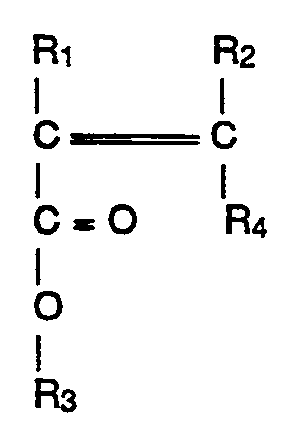
wherein R1 and R2 are hydrogen or a C1 alkyl group, e.g., methyl, R4 is COORs, or a C1 to C4 alkyl group preferably COOR3 and R3 has an average number of carbon atoms from 12 to 20 and contains a methyl branch at the 1 and/or 2 position and the ester polymer or copolymer contains no more than 10 wt.-% of ester monomer of the general formula given above in which R3 is an alkyl group of more than 20 carbon atoms and preferably no more than 20 wt.-% of ester monomer of the general formula given above in which Rs is an alkyl group of fewer than 12 carbon atoms.
wherein R1 and R2 are hydrogen or a C1 alkyl group, e.g., methyl, R4 is COORs, or a C1 to C4 alkyl group preferably COOR3 and R3 has an average number of carbon atoms from 12 to 20 and contains a methyl branch at the 1 and/or 2 position and the ester polymer or copolymer contains no more than 10 wt.-% of ester monomer of the general formula given above in which R3 is an alkyl group of more than 20 carbon atoms and preferably no more than 20 wt.-% of ester monomer of the general formula given above in which Rs is an alkyl group of fewer than 12 carbon atoms.
2. A distillate petroleum fuel oil boiling in the range of 120°C to 500°C containing
0.0001 to 0.5 wt.-% of an additive comprising a polymer containing at least 25 wt.-%
of an n-alkyl ester of the general formula:
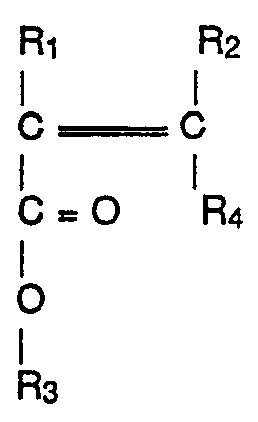
wherein R1 and R2 are hydrogen or a C1 alkyl group, e.g., methyl, R4 is COOR3 or a C1 to C4 alkyl group preferably COORs and R3 has an average number of carbon atoms from 12 to 20 and contains a methyl branch at the 1 and/or 2 position and the ester polymer or copolymer contains no more than 10 wt.-% of ester monomer of the general formula given above in which R3 is an alkyl group of more than 20 carbon atoms and preferably no more than 20 wt.-% of ester monomer of the general formula given above in which Rs is an alkyl group of fewer than 12 carbon atoms.
wherein R1 and R2 are hydrogen or a C1 alkyl group, e.g., methyl, R4 is COOR3 or a C1 to C4 alkyl group preferably COORs and R3 has an average number of carbon atoms from 12 to 20 and contains a methyl branch at the 1 and/or 2 position and the ester polymer or copolymer contains no more than 10 wt.-% of ester monomer of the general formula given above in which R3 is an alkyl group of more than 20 carbon atoms and preferably no more than 20 wt.-% of ester monomer of the general formula given above in which Rs is an alkyl group of fewer than 12 carbon atoms.
3. An additive concentrate comprising an oil solution containing from 3 to 75 wt.-%
of a polymer containing at least 25 wt.-% of an n-alkyl ester of the general formula:
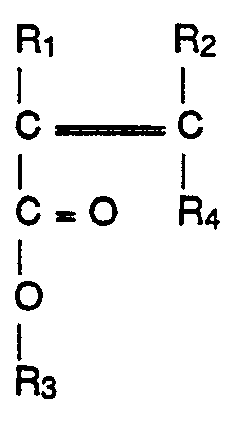
wherein R1 and R2 are hydrogen or a C1 alkyl group, e.g., methyl, R4 is COOR3 or a C1 to C4 alkyl group preferably COORs and R3 has an average number of carbon atoms from 12 to 20 and contains a methyl branch at the 1 and/or 2 position and the ester polymer or copolymer contains no more than 10 wt.-% of ester monomer of the general formula given above in which R3 is an alkyl group of more than 20 carbon atoms and preferably no more than 20 wt.-% of ester monomer of the general formula given above in which R3 is an alkyl group of fewer than 12 carbon atoms.
wherein R1 and R2 are hydrogen or a C1 alkyl group, e.g., methyl, R4 is COOR3 or a C1 to C4 alkyl group preferably COORs and R3 has an average number of carbon atoms from 12 to 20 and contains a methyl branch at the 1 and/or 2 position and the ester polymer or copolymer contains no more than 10 wt.-% of ester monomer of the general formula given above in which R3 is an alkyl group of more than 20 carbon atoms and preferably no more than 20 wt.-% of ester monomer of the general formula given above in which R3 is an alkyl group of fewer than 12 carbon atoms.
1. Verwendung eines Additivs zur Verbesserung der Fließeigenschaften eines im Bereich
von 120 bis 500°C siedenden Destillaterdölbrenn- oder -treibstofföles, wobei das Additiv
ein Polymer oder Copolymer enthält, welches mindestens 25 Gew.-% eines n-Alkylesters
der allgemeinen Formel
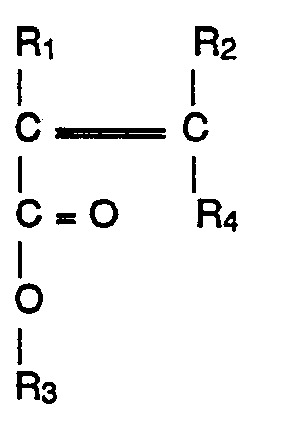
enthält, in der R1 und R2 Wasserstoff oder eine C1-Alkyl-gruppe, z. B. Methyl, sind, R4 COORs, oder eine C1- bis C4-Alkylgruppe, vorzugsweise COOR3 ist, und Rs im Durchschnitt eine Kohlenstoffatomanzahl von 12 bis 20 aufweist und eine Methylverzweigung in der 1- und/oder 2-Position enthält, und das Esterpolymer oder -copolymer nicht mehr als 10 Gew.-% Estermonomer der oben angegebenen allgemeinen Formel, in der Rs eine Alkylgruppe mit mehr als 20 Kohlenstoffatomen ist, und vorzugsweise nicht mehr als 20 Gew.-% Estermonomer der oben angegebenen allgemeinen Formel enthält, in der R3 eine Alkylgruppe mit weniger als 12 Kohlenstoffatomen ist.
enthält, in der R1 und R2 Wasserstoff oder eine C1-Alkyl-gruppe, z. B. Methyl, sind, R4 COORs, oder eine C1- bis C4-Alkylgruppe, vorzugsweise COOR3 ist, und Rs im Durchschnitt eine Kohlenstoffatomanzahl von 12 bis 20 aufweist und eine Methylverzweigung in der 1- und/oder 2-Position enthält, und das Esterpolymer oder -copolymer nicht mehr als 10 Gew.-% Estermonomer der oben angegebenen allgemeinen Formel, in der Rs eine Alkylgruppe mit mehr als 20 Kohlenstoffatomen ist, und vorzugsweise nicht mehr als 20 Gew.-% Estermonomer der oben angegebenen allgemeinen Formel enthält, in der R3 eine Alkylgruppe mit weniger als 12 Kohlenstoffatomen ist.
2. Destillaterdölbrennstoff- oder -treibstofföl, welches im Bereich von 120 bis 500°C
siedet und 0,0001 bis 0,5 Gew.-% eines Additivs enthält, welches ein Polymer enthält,
das mindestens 25 Gew.-% eines n-Alkylesters der allgemeinen Formel
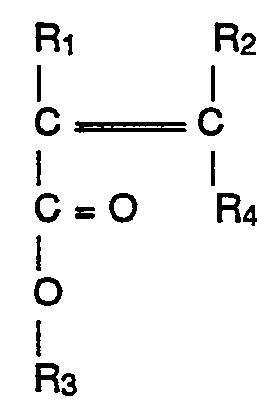
enthält, in der R1 und R2 Wasserstoff oder eine C1-Alkyl-gruppe, z. B. Methyl, sind, R4 COORs oder eine Ci- bis C4-Alkylgruppe, vorzugsweise COOR3, ist, und Rs im Durchschnitt eine Kohlenstoffatomanzahl von 12 bis 20 aufweist und eine Methylverzweigung in der 1- und/oder 2-Position enthält, wobei das Esterpolymer oder -copolymer nicht mehr als 10 Gew.-% Estermonomer der oben angegebenen allgemeinen Formel, in der Rs eine Alkylgruppe mit mehr als 20 Kohlenstoffatomen ist, und vorzugsweise nicht mehr als 20 Gew.-% Estermonomer der oben angegebenen allgemeinen Formel enthält, in der Rs eine Alkylgruppe mit weniger als 12 Kohlenstoffatomen ist.
enthält, in der R1 und R2 Wasserstoff oder eine C1-Alkyl-gruppe, z. B. Methyl, sind, R4 COORs oder eine Ci- bis C4-Alkylgruppe, vorzugsweise COOR3, ist, und Rs im Durchschnitt eine Kohlenstoffatomanzahl von 12 bis 20 aufweist und eine Methylverzweigung in der 1- und/oder 2-Position enthält, wobei das Esterpolymer oder -copolymer nicht mehr als 10 Gew.-% Estermonomer der oben angegebenen allgemeinen Formel, in der Rs eine Alkylgruppe mit mehr als 20 Kohlenstoffatomen ist, und vorzugsweise nicht mehr als 20 Gew.-% Estermonomer der oben angegebenen allgemeinen Formel enthält, in der Rs eine Alkylgruppe mit weniger als 12 Kohlenstoffatomen ist.
3. Additivkonzentrat, das eine Öllösung umfaßt, welche 3 bis 75 Gew.-% eines Polymers
enthält, das mindestens 25 Gew.-% eines n-Alkylesters der allgemeinen Formel
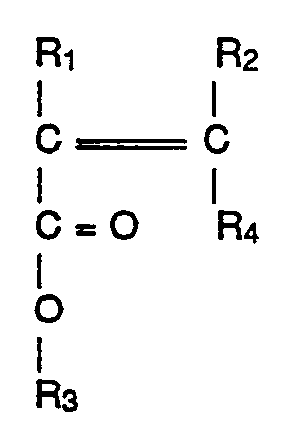
enthält, in der R1 und R2 Wasserstoff oder eine C1-Alkyl-gruppe, z. B. Methyl, sind, R4 COOR3 oder eine C1- bis C4-Alkylgruppe, vorzugsweise COORs, ist, und R3 im Durchschnitt eine Kohlenstoffatomanzahl von 12 bis 20 aufweist und eine Methylverzweigung in der 1- und/oder 2-Position enthält, wobei das Esterpolymer oder -copolymer nicht mehr als 10 Gew.-% Estermonomer der oben angegebenen allgemeinen Formel, in der R3 eine Alkylgruppe mit mehr als 20 Kohlenstoffatomen ist, und vorzugsweise nicht mehr als 20 Gew.-% Estermonomer der oben angegebenen allgemeinen Formel enthält, in der Rs eine Alkylgruppe mit weniger als 12 Kohlenstoffatomen ist.
enthält, in der R1 und R2 Wasserstoff oder eine C1-Alkyl-gruppe, z. B. Methyl, sind, R4 COOR3 oder eine C1- bis C4-Alkylgruppe, vorzugsweise COORs, ist, und R3 im Durchschnitt eine Kohlenstoffatomanzahl von 12 bis 20 aufweist und eine Methylverzweigung in der 1- und/oder 2-Position enthält, wobei das Esterpolymer oder -copolymer nicht mehr als 10 Gew.-% Estermonomer der oben angegebenen allgemeinen Formel, in der R3 eine Alkylgruppe mit mehr als 20 Kohlenstoffatomen ist, und vorzugsweise nicht mehr als 20 Gew.-% Estermonomer der oben angegebenen allgemeinen Formel enthält, in der Rs eine Alkylgruppe mit weniger als 12 Kohlenstoffatomen ist.
1. Utilisation, pour améliorer les propriétés d'écoulement d'un fuel-oil distillé
bouillant dans la plage de 120°C à 500°C, d'un additif consistant en un polymère ou
copolymère contenant au moins 25 % en poids d'un ester n-alkylique de formule générale:
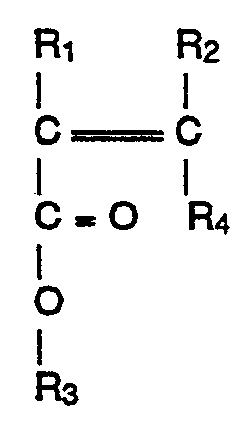
dans laquelle R1 et R2 représentent l'hydrogène ou un groupe alkyle en Ci, par exemple méthyle, R4 représente un groupe COORs ou un groupe alkyle en Ci à C4, de préférence COORs, et Rs possède un nombre moyen d'atomes de carbone de 12 à 20 et contient une ramification méthyle en position 1 et/ou 2, le polymère ou copolymère d'ester ne contenant pas plus de 10 % en poids de monomère de type ester répondant à la formule générale précitée dans laquelle R3 représente un groupe alkyle ayant plus de 20 atomes de carbone et, de préférence, ne contenant pas plus de 20 % en poids de monomère du type ester répondant à la formule générale précitée dans laquelle Rs représente un groupe alkyle ayant moins de 12 atomes de carbone.
dans laquelle R1 et R2 représentent l'hydrogène ou un groupe alkyle en Ci, par exemple méthyle, R4 représente un groupe COORs ou un groupe alkyle en Ci à C4, de préférence COORs, et Rs possède un nombre moyen d'atomes de carbone de 12 à 20 et contient une ramification méthyle en position 1 et/ou 2, le polymère ou copolymère d'ester ne contenant pas plus de 10 % en poids de monomère de type ester répondant à la formule générale précitée dans laquelle R3 représente un groupe alkyle ayant plus de 20 atomes de carbone et, de préférence, ne contenant pas plus de 20 % en poids de monomère du type ester répondant à la formule générale précitée dans laquelle Rs représente un groupe alkyle ayant moins de 12 atomes de carbone.
2. Fuel-oil distillé bouillant dans la plage de 120°C à 500°C, contenant 0,0001 à
0,5 % en poids d'un additif consistant en un polymère contenant au moins 25 % en poids
d'un ester n-alkylique de formule générale:
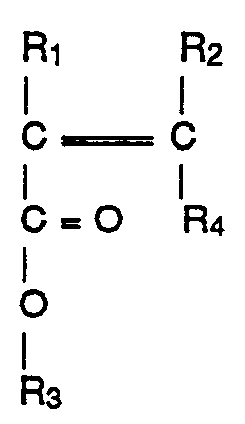
dans laquelle R1 et R2 représentent l'hydrogène ou un groupe alkyle en Ci, par exemple méthyle, R4 représente un groupe COOR3 ou un groupe alkyle en Ci à C4, de préférence COOR3, et R3 possède un nombre moyen d'atomes de carbone de 12 à 20 et contient une ramification méthyle en position 1 et/ou 2, le polymère ou copolymère d'ester ne contenant pas plus de 10 % en poids de monomère de type ester répondant à la formule générale précitée dans laquelle Rs représente un groupe alkyle ayant plus de 20 atomes de carbone et, de préférence, ne contenant pas plus de 20 % en poids de monomère du type ester répondant à la formule générale précitée dans laquelle R3 représente un groupe alkyle ayant moins de 12 atomes de carbone.
dans laquelle R1 et R2 représentent l'hydrogène ou un groupe alkyle en Ci, par exemple méthyle, R4 représente un groupe COOR3 ou un groupe alkyle en Ci à C4, de préférence COOR3, et R3 possède un nombre moyen d'atomes de carbone de 12 à 20 et contient une ramification méthyle en position 1 et/ou 2, le polymère ou copolymère d'ester ne contenant pas plus de 10 % en poids de monomère de type ester répondant à la formule générale précitée dans laquelle Rs représente un groupe alkyle ayant plus de 20 atomes de carbone et, de préférence, ne contenant pas plus de 20 % en poids de monomère du type ester répondant à la formule générale précitée dans laquelle R3 représente un groupe alkyle ayant moins de 12 atomes de carbone.
3. Concentré d'additifs renfermant une solution dans l'huile de 3 à 75 % en poids
d'un polymère contenant au moins 25 % en poids d'un ester n-alkylique de formule générale:
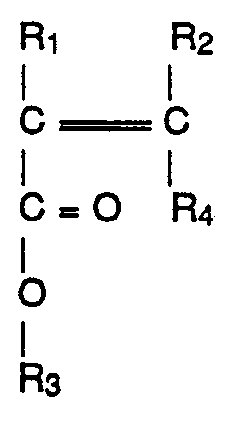
dans laquelle Ri et R2 représentent l'hydrogène ou un groupe alkyle en Ci, par exemple méthyle, R4 représente un groupe COOR3 ou un groupe alkyle en Ci à C4, de préférence COORs, et R3 possède un nombre moyen d'atomes de carbone de 12 à 20 et contient une ramification méthyle en position 1 et/ou 2, le polymère ou copolymère d'ester ne contenant pas plus de 10 % en poids de monomère de type ester répondant à la formule générale précitée dans laquelle R3 représente un groupe alkyle ayant plus de 20 atomes de carbone, et ne contenant de préférence pas plus de 20 % en poids d'un monomère de type ester répondant à la formule générale précitée dans laquelle Rs représente un groupe alkyle ayant moins de 12 atomes de carbone.
dans laquelle Ri et R2 représentent l'hydrogène ou un groupe alkyle en Ci, par exemple méthyle, R4 représente un groupe COOR3 ou un groupe alkyle en Ci à C4, de préférence COORs, et R3 possède un nombre moyen d'atomes de carbone de 12 à 20 et contient une ramification méthyle en position 1 et/ou 2, le polymère ou copolymère d'ester ne contenant pas plus de 10 % en poids de monomère de type ester répondant à la formule générale précitée dans laquelle R3 représente un groupe alkyle ayant plus de 20 atomes de carbone, et ne contenant de préférence pas plus de 20 % en poids d'un monomère de type ester répondant à la formule générale précitée dans laquelle Rs représente un groupe alkyle ayant moins de 12 atomes de carbone.