|
(11) | EP 0 217 481 B1 |

| (12) | EUROPEAN PATENT SPECIFICATION |
|
|
| (54) |
Water absorbent polymer composition Wasserabsorbierende Polymerzusammensetzungen Compositions polymères absorbant l'eau |
|
|
|||||||||||||||||||||||||||||||
| Note: Within nine months from the publication of the mention of the grant of the European patent, any person may give notice to the European Patent Office of opposition to the European patent granted. Notice of opposition shall be filed in a written reasoned statement. It shall not be deemed to have been filed until the opposition fee has been paid. (Art. 99(1) European Patent Convention). |
[0002] In one of its more specific aspects, this invention relates to water-insoluble, water swellable polymer compositions.
[0003] Water absorbent resins are widely used in the manufacture of products which require high water absorption capability. For example water absorbed resins are used in the manufacture or surgical and dental sponges, catamenial tampons, disposable diapers, meat trays, household pet litter, mats. These resins are also used for the modification of soil to improve water retention and increase air capacity and for a host of other applications.
[0004] A number of polymer blends and alloys have been developed which exhibit improved stability and water and saline liquid absorption capacity. Thus, U.S. patent 3,983,095 discloses the preparation of a derivative of a copolymer of maleic anhydride with at least one suitable vinyl monomer in fiber form. U.S. patents 4,332,917 and 4,338,417 disclose polymer alloys of a copolymer of styrene with maleic anhydride and a polymer derived from a monomeric ester having vinyl unsaturation e.g. poly(vinylacetate), cellulose triacetate, cellulose aceto-butyrate, poly(ethylacrylate) and poly(methylmethacrylate). U.S. patent 4,420,588 teaches a water-absorbing rubber composition comprising a 1,3-diene rubber and a water-absorbing resin dispersed in the rubber.
[0005] This invention provides a novel polymer composition which exhibits excellent stability and excellent water and saline liquid absorption capacity.
[0006] According to this invention there is provided a polymer composition which comprises a first copolymer of recurring units of an a, a-ethylenically unsaturated dicarboxylic anhydride and recurring units of at least one monomer selected from the group consisting of ethylene, propylene, isobutylene, a C, to C4 alkyl acrylate, a C, to C4 alkyl substituted methacrylate, vinyl acetate, methyl vinyl ether and a styrenic having the formula:
wherein R represents hydrogen, an alkyl group having from 1 to 6 carbon atoms and wherein the benzene ring may be substituted with low molecular weight alkyl, or hydroxy groups; and, a multi arm block second copolymer of styrene and ethylene oxide, wherein at least a portion of the recurring anhydride units of said first copolymer have been hydrolyzed to form hydrogen atoms thereon and wherein at least a portion of the oxide groups of the ethylene oxide are interacted with the said hydrogen atoms such that said first copolymer and said second copolymer are linked by hydrogen bonds.
[0007] Also, according to this invention there is provided a method of producing a polymer composition which comprises: (a) mixing a first copolymer of recurring units of an a, β-ethylenically unsaturated dicarboxylic anhydride and recurring units of at least one monomer selected from the group consisting of ethylene, propylene, isobutylene, a C, to C4 alkyl acrylate, a C, to C4 alkyl substituted methacrylate, vinyl acetate, methyl vinyl ether and a styrenic having the formula:
wherein R represents hydrogen, an alkyl group having from 1 to 6 carbon atoms and wherein the benzene ring may be substituted with a low molecular weight alkyl, or hydroxy groups; a multi arm block second copolymer of styrene and ethylene oxide; and an effective amount of water to hydrolyze at least a portion of the recurring anhydride units of said first copolymer to form hydrogen atoms thereon and wherein at least a portion of the oxide groups of the ethylene oxide are interacted with the said hydrogen atoms such that said first copolymer and said second copolymer are linked by hydrogen bonds; and, (b) recovering the resulting polymer composition.
[0008] According to this invention there is also provided an article having excellent water and saline liquid absorption capacity comprising a polymer composition of the kind defined above.
[0009] According to this invention there is also provided a method of enhancing the water and saline liquid absorption capacity of an article which method comprises incorporating into the article a polymer composition of the kind defined above, the polymer composition being incorporated into the article in an effective amount to enhance the water and saline liquid absorption capacity of the article as compared to the water and saline liquid absorption capacity of the article in the absence of the polymer composition.
[0010] In a preferred embodiment, to maximize the liquid absorption capacity of the polymer composition, at least a portion of the anhydride groups of the first copolymer are modified (partially neutralized) by reaction with a strong organic or inorganic base such as NaOH, KOH, ammonia, ammonia-in-water solution or organic amine.
[0011] An advantage of the polymer compositions of this invention is that they exhibit excellent stability with respect to integrity in the hydrogel or water swollen state. This excellent stability is due to the formation of a continuous phase of the ethylene oxide blocks of the multi arm block copolymer and the styrene a, β-ethylenically unsaturated dicarboxylic anhydride copolymer. The polystyrene blocks of the multi arm block copolymer are the disperse phase and form hydrophobic domains which act as reversible crosslinks.
[0012] The multi arm block second copolymer employed in this invention preferably contains from 5 to 95 weight percent of styrene and from 95 to 5 weight of ethylene oxide. Suitable multi arm block copolymers will preferably have the following general formula
wherein each A separately represents a polystyrene segment having a number average molecular weight measured by gel permeation chromatography using polystyrene standards (GPC) of from 10,000 to 100,000; each B separately represents a polyethylene oxide segment having a number average molecular weight measured by GPC of from 5,000 to 200,000; X represents the radical of a polyfunctional coupling agent forming the nucleus of the multi arm block copolymer and, wherein n represents an integer from 2 to 12, preferably from 3 to 12.
[0013] Any suitable polyfunctional coupling agent can be employed to produce the multi arm block copolymer usable in this invention.
[0014] Suitable coupling agents are selected from the group consisting of polyepoxides, polyesters, polyhalides, polyisocyanates, polyimines, polyaldehydes, polyketones, polyanhydrides and polyacid chlorides.
[0015] Examples of specific suitable polyfunctional coupling agents are: epoxidized linseed oil, diethyladipate, silicon tetrahalide, toluene diisocyanate, 1,4,7-napthalene tricarboxaldehyde, 2,4,6-heptanetrione, pyromelletic dianhydride, mellitic acid chloride and the like.
[0016] The composition of the first copolymer containing an a, β-ethylenically unsaturated dicarboxylic anhydride can vary widely and is limited only in that it may be water soluble after it is hydrolyzed. As the first copolymer, an equimolar copolymer is preferred, however, the amount of anhydride in the copolymer can vary within the range of from about 30 to 50 mole percent.
[0018] Suitable anhydrides include: maleic anhydride, fumaric anhydride, itaconic anhydride, citraconic anhydride, mesaconic anhydride, aconitic anhydride, ethyl maleic anhydride, methyl itaconic anhydride and their mixtures.
[0019] The polymer composition of this invention will preferably contain from 20 to 80 weight percent of the multi arm block second copolymer and from 80 to 20 weight percent of the anhydride containing first copolymer. More preferably, each copolymer is present in an amount within the range of from 40 to 60 weight percent.
[0020] The polymer composition of this invention can be prepared using any suitable blending method such as described in the following Examples 4 and 5. The anhydride groups of first copolymer can be reacted with a strong base prior to blending. Preferably, however, the reaction with strong base occurs after the polymer composition is prepared and recovered as described in Examples 4 and 5.
[0021] After the polymer composition is prepared it can be fabricated into any desired shape for use as, or incorporation into end use articles. Fabrication methods include injection molding, blow molding, extrusion, vacuum forming, casting, spinning. The selection of the method of fabrication depends upon the ultimate end use. For example, the polymer composition can be utilized in the form of molded articles, laminates, extrudates, granules, powder, films, filaments, fibers, strands, yarns, woven fabrics and nonwoven mats which, in turn, can be used with other materials such as, for example, reinforcing fillers, to manufacture, for example, disposable diapers, catamenial tampons, surgical and dental sponges.
[0022] In most end use applications, achieving the maximum surface area of the polymer composition in contact with the liquid to be absorbed will be important. Accordingly, the polymer composition in fibrous form is particularly desirable in most applications. The following examples further demonstrate the invention.
Example 1
[0023] This example demonstrates the preparation of a multi arm block second copolymer suitable for this invention.
[0024] A one liter stirred Chemco reactor was charged with 650 ml purified tetrahydrofuran ("THF") and cooled to -30°C. A trace of diphenylethylene (0.2 g) was added to the THF by means of a hypodermic needle. A solution of sec-butyllithium in cyclohexane was added to the reactor portionwise until a permanent deep red color was obtained. The solution was then back titrated with THF until the color just disappeared. The solution and reactor were then ready for polymerization of the monomers. Into the closed reactor were charged 2.42 m. moles of diphenylmethyl potassium (prepared according to the method described by Normant, Bull. Soc. Chim. Fr. 354,1960) and 60 g. of styrene and the rector held at -30°C for about 30 minutes. Next, a charge of 118 g. of ethylene oxide was introduced and the mixture was heated to 30°C and held constant for about 15 hours. Next 2.64 g. of toluene diisocyanate (TDI) was introduced into the reactor and the reactor contents held for 24 hours at room temperature. The polymerization was terminated by adding 1 g. of Polygard HR, a commercially available antioxidant. The polymer was recovered by flash distillation of unreacted monomers and solvent and dried at 70°C until a constant weight was obtained. The resulting copolymer was analyzed and determined to have 3 arms with the polystyrene segments having number average molecular weights of about 23,000 and the ethylene oxide segments having number average molecular weights of about 21,000. Nuclear magnetic resonance spectroscopy (NMR) found that the copolymer contained, in weight percent, 54 styrene and 46 ethylene oxide.
Example 2
[0025] Using substantially the same procedures of Example 1 and the following ingredients, another multi arm copolymer was prepared.
[0026] The resulting copolymer was found (by NMR) to contain, in weight percent, 36 styrene and 64 ethylene oxide and, it was calculated that the copolymer had about 3 arms.
[0027] The multi arm block copolymers of Example 1 and 2 were separately compression molded at 260°F (126,67°C) and 20,000 psi (1,38 x 10⁸Pa) pressure in a laboratory press. The resulting films were tough, translucent, and were found to possess the following physical properties.
Example 3
[0028] This example demonstrates the preparation of a maleic anhydride containing first copolymer suitable for this invention.
[0029] Into a citrate bottle were charged 25 g of styrene, 23.5 g of maleic anhydride, 50 g of ethyl acetate, 0.8 g of benzoyl peroxide and 10 drops of t-butyl dodecyl mercaptan.
[0030] The bottle was placed in bottle polymerizer at 65°C for 6 hours. The resulting polymer solution was diluted with MEK and the polymer was recoverd by precipitation in methanol, washed with heptane and dried. Polymer analysis found 39 wt.% of maleic anhydride and a Tg of 208.5°C.
Example 4
[0032] A solution containing 1.5 g of the styrene/maleic anhydride copolymer of Example 3 and 3.5 g of the styrene/ethylene oxide multi arm block copolymer of Example 2 in 200 ml of the THF was prepared at the refluxing temperature of THF (70°C) in the presence of few milliliters of water. The solution was held at 70°C for one hour then cooled to room temperature. A thin film was then cast from the resulting polymer composition and the film was dried at 70°C until a constant weight was obtained. The film was observed to be transparent, homogeneous, and very flexible. A sample of the resulting film was immersed in a 5 wt.% KOH aqueous solution for a period of about 12 hours. The immersed film was then washed with deionized water and dried.
Example 5
[0033] Using substantially the procedure of Example 4, a polymer composition was prepared by blending 2 g of the styrene/maleic anhydride copolymer of Example 3 and 3 g of the multi arm copolymer of Example 2. Again a thin film of the composition was cast.
[0034] Samples of the cast film were separately immersed, one in a 5 wt.% KOH aqueous solution for a period of about 12 hours and the other in 10 wt.% KOH in ethanol for a period of about 16 hours. The immersed films were then washed with deionized water and methanol, respectively, and dried.
[0035] The following Table illustrated the deionized water and saline liquid absorption capacity of the polymer composition of Examples 4 and 5.
1. A polymer composition which comprises a first copolymer of recurring units of an
a, β-ethylenically unsaturated dicarboxylic acod anhydride and recurring units of
at least one monomer selected from the group consisting of ethylene, propylene, isobutylene,
a C, to C4 alkyl acrylate, a C, to C4 alkyl substituted methacrylate, vinyl acetate, methyl vinyl ether and a styrenic
monomer having the formula:
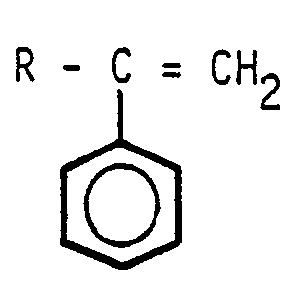
wherein R represents hydrogen, an alkyl group having from 1 to 6 carbon atoms and wherein the benzene ring may be substituted with low molecular weight alkyl, or hydroxy groups; and, a multi arm block second copolymer of styrene and ethylene oxide, wherein at least a portion of the recurring an hydride units of said first copolymer have been hydrolyzed to form hydrogen atoms thereon and wherein at least a portion of the oxide groups of the ethylene oxide are interacted with the said hydrogen atoms so that said first copolymer and said second copolymer are linked by hydrogen bonds.
wherein R represents hydrogen, an alkyl group having from 1 to 6 carbon atoms and wherein the benzene ring may be substituted with low molecular weight alkyl, or hydroxy groups; and, a multi arm block second copolymer of styrene and ethylene oxide, wherein at least a portion of the recurring an hydride units of said first copolymer have been hydrolyzed to form hydrogen atoms thereon and wherein at least a portion of the oxide groups of the ethylene oxide are interacted with the said hydrogen atoms so that said first copolymer and said second copolymer are linked by hydrogen bonds.
2. A polymer comprising as claimed in claim 1, wherein said second copolymer has the
following formula
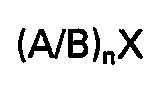
wherein each A separately represents a polystyrene segment having a number average molecular weight of from 10,000 to 100,000; each B separately represents a polyethylene oxide segment having a number average molecular weight of from 5,000 to 200,000; X represents the radical of a polyfunctional coupling agent forming the nucleus of the multi arm block copolymer and, n represents an integer from 2 to 12.
wherein each A separately represents a polystyrene segment having a number average molecular weight of from 10,000 to 100,000; each B separately represents a polyethylene oxide segment having a number average molecular weight of from 5,000 to 200,000; X represents the radical of a polyfunctional coupling agent forming the nucleus of the multi arm block copolymer and, n represents an integer from 2 to 12.
3. The polymer composition of claim 1 or claim 2, wherein at least a portion of the
anhydride units are modified by reaction with a strong base.
4. The polymer composition of claim 1, claim 2 or claim 3, in which said first copolymer
is present in an amount of from 20 to 80 weight percent and preferably from 40 to
60 weight percent.
5. The polymer composition of any one of claims 1 to 4, in which said second copolymer
is present in an amount within a range of from 20 to 80 weight percent and preferably
from 40 to 60 weight percent.
6. The polymer composition as claimed in any one of claims 1 to 5 in which the a,
a-ethylenically unsaturated dicarboxylic acid anhydride comprises maleic anhydride.
7. The polymer composition of claim 6 in which said first copolymer is a copolymer
of maleic anhydride and isobutylene.
8. The polymer composition of claim 6 in which said first copolymer is a copolymer
of maleic anhydride and styrene.
9. A method of producing a polymer composition as claimed in claim 1 which comprises:
(a) mixing said first copolymer, said multi arm block second copolymer of styrene
and ethylene oxide and an effective amount of water to hydrolyze at least a portion
of the recurring anhydride units of said first copolymer to form hydrogen atoms thereon,
and wherein at least a portion of the oxide groups on the ethylene oxide are interacted
with the said hydrogen atoms so that said first copolymer and said second coplymer
are linked by hydrogen bonds; and (b) recovering the resulting polymer composition.
10. The method of claim 9 further including reacting the anhydride units with a strong
base.
11. An article having excellent water and saline liquid absorption capacity comprised
of a polymer composition as claimed in any one of claims 1 to 8.
12. The article of claim 11 in which in said polymer composition at least a portion
of the anhydride units are modified by reaction with a strong base.
13. A method of enhancing the water and saline liquid absorption capacity of an article
which method comprises incorporating into the article a polymer composition as claimed
in any one of the claims 1 to 8, the polymer composition being incorporated into the
article in an effective amount to enhance the water and saline liquid absorption capacity
of the article as compared to the water and saline liquid absorption capacity of the
article in the absence of the polymer composition.
14. The method of claim 13 further including reacting the anhydride units with a strong
base prior to incorporating the polymer composition into the article.
1. Polymerzusammensetzung, enthaltend ein erstes Copolymer aus Repetiereinheiten aus
einem α,β-ethylenisch ungesättigten Dicarbonsäureanhydrid und Repetiereinheiten aus
mindestens einem Monomer, ausgewählt aus der Gruppe bestehend aus Ethylen, Propylen,
Isobutylen, einem C, bis C4-Alkylacrylat, einem C, bis C4-alkyl-substituierten Methacrylat, Vinylacetate, Methylvinylether
und einem styrolischen Monomer der Formel:
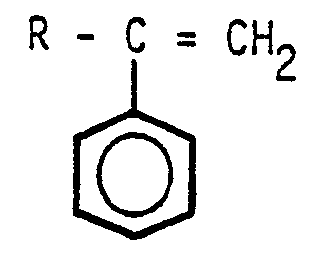
worin R Wasserstoff oder eine Alkylgruppe mit 1 bis 6 Kohlenstoffatomen bedeutet und worin der Benzolring durch Alkyl mit niedrigem Molekulargewicht, oder Hydroxygruppen substituiert sein kann; und ein Multiarmblockzweites Copolymer aus Styrol und Ethylenoxid, worin mindestens ein Teil der Anhydrid-Repetiereinheiten des ersten Copolymers hydrolysiert wurde, um darauf Wasserstoffatome zu bilden, und worin mindestens ein Teil der Oxidgruppen auf dem Ethylenoxid mit den Wasserstoffatomen aufeinander einwirken, so daß das erste Copolymer und das zweite Copolymer durch Wasserstoffbrücken verbunden sind.
worin R Wasserstoff oder eine Alkylgruppe mit 1 bis 6 Kohlenstoffatomen bedeutet und worin der Benzolring durch Alkyl mit niedrigem Molekulargewicht, oder Hydroxygruppen substituiert sein kann; und ein Multiarmblockzweites Copolymer aus Styrol und Ethylenoxid, worin mindestens ein Teil der Anhydrid-Repetiereinheiten des ersten Copolymers hydrolysiert wurde, um darauf Wasserstoffatome zu bilden, und worin mindestens ein Teil der Oxidgruppen auf dem Ethylenoxid mit den Wasserstoffatomen aufeinander einwirken, so daß das erste Copolymer und das zweite Copolymer durch Wasserstoffbrücken verbunden sind.
2. Polymerzusammensetzung nach Anspruch 1, worin das zweite Copolymer die folgende
Formel aufweist,
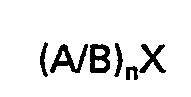
worin jeder Rest A unabhängig ein Polystyrolsegment mit einem durchschnittlichen Molekulargewicht von 10,000 bis 100,000 bedeutet; jeder Rest B unabhängig ein Polyethyensegment mit einem durchschnittlichen Molekulargewicht von 5,000 bis 200,000 bedeutet; X den Rest eines polyfunktionellen Kupplungsmittels, das den Kern des Multiarmblockcopolymers bildet, bedeutet, und n eine ganze Zahl von 2 bis 12 beduetet.
worin jeder Rest A unabhängig ein Polystyrolsegment mit einem durchschnittlichen Molekulargewicht von 10,000 bis 100,000 bedeutet; jeder Rest B unabhängig ein Polyethyensegment mit einem durchschnittlichen Molekulargewicht von 5,000 bis 200,000 bedeutet; X den Rest eines polyfunktionellen Kupplungsmittels, das den Kern des Multiarmblockcopolymers bildet, bedeutet, und n eine ganze Zahl von 2 bis 12 beduetet.
3. Polymerzusammensetzung nach Anspruch 1 oder 2, worin mindestens ein Teil der Anhydrideinheiten
durch Reaktion mit einer starken Base modifiziert sind.
4. Polymerzusammensetzung nach Anspruch 1, 2 oder 3, worin das erste Copolymer in
einer Menge von 20 bis 80 Gew.-% und vorsugsweise von 40 bis 60 Gew.-% vorhanden ist.
5. Polymerzusammensetzung nach einem der Ansprüche 1 bis 4, worin das zweite Copolymer
in einer Menge innerhalb des Bereiches von 20 bis 80 Gew.-% und vorzugsweise von 40
bis 60 Gew.-% vorhanden ist.
6. Polymerzusammensetzung nach einem der Ansprüche 1 bis 5, worin das a,β-ethylenisch
ungesättigte Dicarbonsäureanhydrid Maleinsäureanhydrid enthält.
7. Polymerzusammensetzung nach Anspruch 6, worin das erste Copolymer ein Copolymer
aus Maleinsäureanhydrid und Isobutylen ist.
8. Polymerzusammensetzung nach Anspruch 6, worin das erste Copolymer ein Copolymer
aus Maleinsäureanhydrid und Styrol ist.
9. Verfahren zur Herstellung einer Polymerzusammensetzung nach Anspruch 1, bei dem
man: (a) das erste Copolymer, das zweite Multiarmblockcopolymer aus Styrol und Ethylenoxid
und eine wirksame Menge Wasser mischt, um mindestens einen Teil der Anhydrid-Repetiereinheiten
des ersten Copolymers zur Bildung von Wasserstoffatomen darauf zu hydrolysieren, und
bei dem mindestens ein Teil der Oxidgruppen auf dem Ethylenoxid mit den Wasserstoffatomen
in Wechselwirkung treten, so daß das erste Copolymer und das zweite Copolymer durch
Wasserstoffbrücken verbunden werden, und (b) die erhaltene Polymerzusammensetzung
rückgewinnt.
10. Verfahren nach Anspruch 9, das weiterhin die Umsetzung der Anhydrideinheiten mit
einer starken Base einschließt.
11. Gegenstand mit einer hervorragenden Wasser- und Salz-Flüssigkeitsabsorptionskapazität,
bestehend aus einer Polymerzusammensetzung nach einem der Ansprüche 1 bis 8.
12. Gegenstand nach Anspruch 11, worin in der Polymerzusammensetzung mindestens ein
Teil der Anhydrideinheiten durch Reaktion mit einer starken Base modifiziert sind.
13. Verfahren zur Erhöhung der Wasser- und Salz-Flüssigkeitsabsorptionskapazität eines
Gegenstandes, bei dem man in den Gegenstand eine Polymerzusammensetzung nach einem
der Ansprüche 1 bis 8 in einer wirksamen Menge inkorporiert, um die Wasser- und Salz-Flüssigkeitsabsorptionskapazität
des Gegenstandes im Vergleich zur Wasser- und Salz-Flüssigkeitsabsorptionskapazität
des Gegenstandes in Abwesenheit der Polymerzusammensetzung, zu erhöhen.
14. Verfahren nach Anspruch 13, das weiter die Reaktion der Anhydrideinheiten mit
einer starken Base vor Inkorporierung der Polymerzusammensetzung in den Gegenstand
umfaßt.
1. Composition der polymères, caractérisée en ce qu'elle comprend un premier copolymère
d'unités récurrentes d'un anhydride d'acide dicarboxylique insaturé a,l3-éthyléniquement
et d'unités récurrentes d'au moins un monomère choisi dans le groupe comprenant l'éthylène,
le propylène, l'isobutylène, un acrylate d'alkyle en Cl-4, un méthacrylate d'alkyle substitué en C'-4, l'acétate de vinyle, l'éther vinylique de méthyle et un monomère styrénique ayant
la formule:
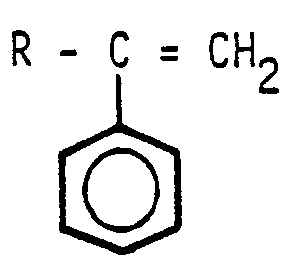
dans laquelle R représente un atome d'hydrogène ou un groupe alkyle ayant 1 à 6 atomes de carbone et dans laquelle le cycle benzène peut être substitué par des groupes alkyles à bas poids moléculaire, ou hydroxy; et un second copolymère à blocs à plusieurs bras de styène et d'oxyde d'éthylène, dans laquelle au moins une portion des unités anhydride récurrentes de ce premier copolymère a été hydrolysée pour former des atomes d'hydrogène sur celui-ci et dans laquelle au moins une portion des groupes oxydes sur l'oxyde d'éthylène a réagi avec ces atomes d'hydrogène de telle sorte que ce premier copolymère et ce second copolymère sont liés par des liaisons hydrogène.
dans laquelle R représente un atome d'hydrogène ou un groupe alkyle ayant 1 à 6 atomes de carbone et dans laquelle le cycle benzène peut être substitué par des groupes alkyles à bas poids moléculaire, ou hydroxy; et un second copolymère à blocs à plusieurs bras de styène et d'oxyde d'éthylène, dans laquelle au moins une portion des unités anhydride récurrentes de ce premier copolymère a été hydrolysée pour former des atomes d'hydrogène sur celui-ci et dans laquelle au moins une portion des groupes oxydes sur l'oxyde d'éthylène a réagi avec ces atomes d'hydrogène de telle sorte que ce premier copolymère et ce second copolymère sont liés par des liaisons hydrogène.
2. Composition de polymères suivant la revendication 1, caractérisée en ce que ce
second copolymère a la formule générale suivante:
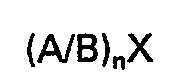
dans laquelle chaque A représente séparément un segment polystyrène ayant un poids moléculaire moyen de 10.000 à 100.000; chaque B représente séparément un segment oxyde de polyéthylène ayant un poids moléculaire moyen de 5.000 à 200.000; X représente le radical d'un agent de couplage polyfonctionnel formant le noyau du copolymère à blocs à plusieurs bras, et n représente un antier de 2 à 12.
dans laquelle chaque A représente séparément un segment polystyrène ayant un poids moléculaire moyen de 10.000 à 100.000; chaque B représente séparément un segment oxyde de polyéthylène ayant un poids moléculaire moyen de 5.000 à 200.000; X représente le radical d'un agent de couplage polyfonctionnel formant le noyau du copolymère à blocs à plusieurs bras, et n représente un antier de 2 à 12.
3. Composition de polymères suivant la revendication 1 ou la revendication 2, caractérisée
en ce qu'au moins une portion des unités anhydrides est modifiée par réaction avec
une base forte.
4. Composition de polymères suivant les revendications 1, 2 ou 3, caractérisée en
ce que ce premier copolymère est présent en une quantité de 20 à 80% en poids et de
préférence de 40 à 60% en poids.
5. Composition de polymères suivant l'une quelconque des revendications 1 à 4, caractérisée
en ce que ce second copolymère est présent en une quantité comprise dans la gamme
de 20 à 80% en poids et de préférence de 40 à 60% en poids.
6. Composition de polymères suivant l'une quelconque des revendications 1 à 5, caractérisée
en ce que l'anhydride d'acide dicarboxylique insaturé α,β-éthyléniquement comprend
l'anhydride maléique.
7. Composition de polymères suivant la revendication 6, caractérisée en ce qu'un premier
copolymère est un copolymère d'anhydride maléique et d'isobutylène.
8. Composition de polymères suivant la revendication 6, caractérisée en ce que ce
premier copolymère est un copolymère d'anhydride maléique et de styrène.
9. Procédé de production d'une composition de polymères suivant la revendication 1,
caractérisé en ce qu'il comprend (a) le mélange de ce premier copolymère, de ce second
copolymère à blocs à plusieurs bras de styrène et d'oxyde d'éthylène et d'une quantité
efficace d'eau pour hydrolyser au moins une portion des unités anhydride récurrentes
de ce premier copolymère pour former des atomes d'hydrogène sur celui-ci, et où au
moins une portion des groupes oxyde sur l'oxyde d'éthylène a réagi avec ces atomes
d'hydrogène de sorte que ce premier copolymère et ce second copolymère sont reliés
par des liaisons hydrogène; et (b) la récupération de la composition de polymères
résultante.
10. Procédé suivant la revendication 9, caractérisé.en ce qu'il comprend de plus la
réaction des unités anhydride avec une base forte.
11. Article ayant une excellente capacité d'absorption d'eau et de liquide salin,
caractérisé en ce qu'il est composé d'une composition de polymères suivant l'une quelconque
des revendications 1 à 8.
12. Article suivant la revendication 11, caractérisé en ce que dans cette composition
de polymères, une portion au moins des unités anhydrides est modifiée par une réaction
avec une base forte.
13. Procédé pour augmenter la capacité d'absorption d'eau et de liquide salin d'une
article, caractérisé en ce qu'il comprend l'incorporation dans l'article d'une composition
de polymères suivant l'une quelconque des revendications 1 à 8, la composition de
polymères étant incorporée dans l'article en une quantité efficace pour augmenter
la capacité d'absorption d'eau et de liquide salin de l'article par rapport à la capacité
d'absorption d'eau et de liquide salin de l'article en l'absence de la composition
de polymères.
14. Procédé suivant la revendication 13, caractérisé en ce qu'il comprend de plus
la réaction des unités anhydrides avec une base forte avant incorporation de la composition
de polymères dans l'article.