|
(11) | EP 0 219 934 B1 |

| (12) | EUROPEAN PATENT SPECIFICATION |
|
|
| (54) |
Process for the preparation of aryl-piperidine esters Verfahren zur Herstellung von Arylpiperidinestern Procédé de préparation d'esters d'aryl-pipéridines |
|
|
|||||||||||||||||||||||||||||||
| Note: Within nine months from the publication of the mention of the grant of the European patent, any person may give notice to the European Patent Office of opposition to the European patent granted. Notice of opposition shall be filed in a written reasoned statement. It shall not be deemed to have been filed until the opposition fee has been paid. (Art. 99(1) European Patent Convention). |
[0001] This invention relates to a novel chemical process for preparing aryl-piperidine esters and to novel intermediates used in that process.
[0002] British patent no. 1422263 and US patent no 4007196 disclose compounds of formula A
in which R¹ represents hydrogen, trifluoro (C₁₋₄) alkyl, alkyl or alkynyl, R² represents an alkyl or alkynyl group having 1-4 carbon atoms, or a phenyl group optionally substituted by C₁₋₄ alkyl, alkylthio, alkoxy, halogen, nitro, acylamino, methylsulfonyl or methylenedioxy, or represents tetrahydronaphthyl, and X represents hydrogen, alkyl having 1-4 carbon atoms, alkoxy, trifluoroalkyl, hydroxy, halogen, methylthio, or aralkyloxy.
[0003] The compounds of formula A are disclosed as having pharmacological properties that make them useful as anti-depressants.
[0004] One compound that has proved especially valuable is paroxetine (R¹ = H, R² = 5-(1,3-benzdioxylyl), X = 4-F) which is in the (-)-trans configuration.
[0005] In the above-mentioned patents, the compounds of formula A are prepared using an intermediate of formula B
in which R¹ and X are as defined above.
[0006] The piperidine carbinols of formula B are prepared by reduction of an ester of formula C
with a complex metal hydride reducing agent.
[0007] The compound of formula C is obtained by reacting arecoline (when R¹ = methyl) or arecoline homologues with phenyl (or substituted phenyl) magnesium bromide. This procedure has the disadvantage that arecoline is a powerful irritant and that the ester of formula C is obtained as a mixture of cis and trans configuration compounds.
[0008] DE-C- 336 414 discloses the catalytic hydrogenation of certain pyridine-3-carboxylic acid esters to corresponding piperidine esters, but there is no disclosure of the starting compounds having a 4-phenyl group in their structures.
[0009] We have now discovered a new process for preparation of piperidine carbinol esters which advantageously avoids the use of arecoline and selectively produces the cis-isomer in a good overall yield.
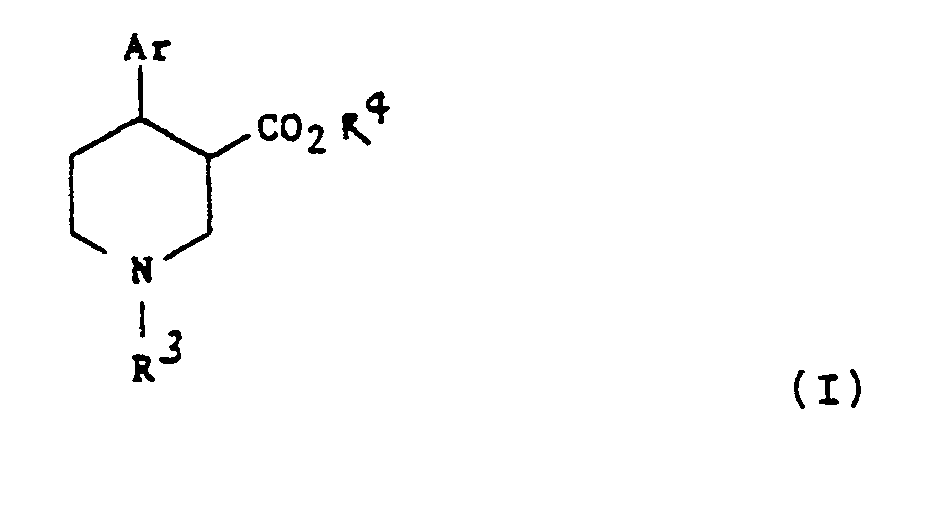
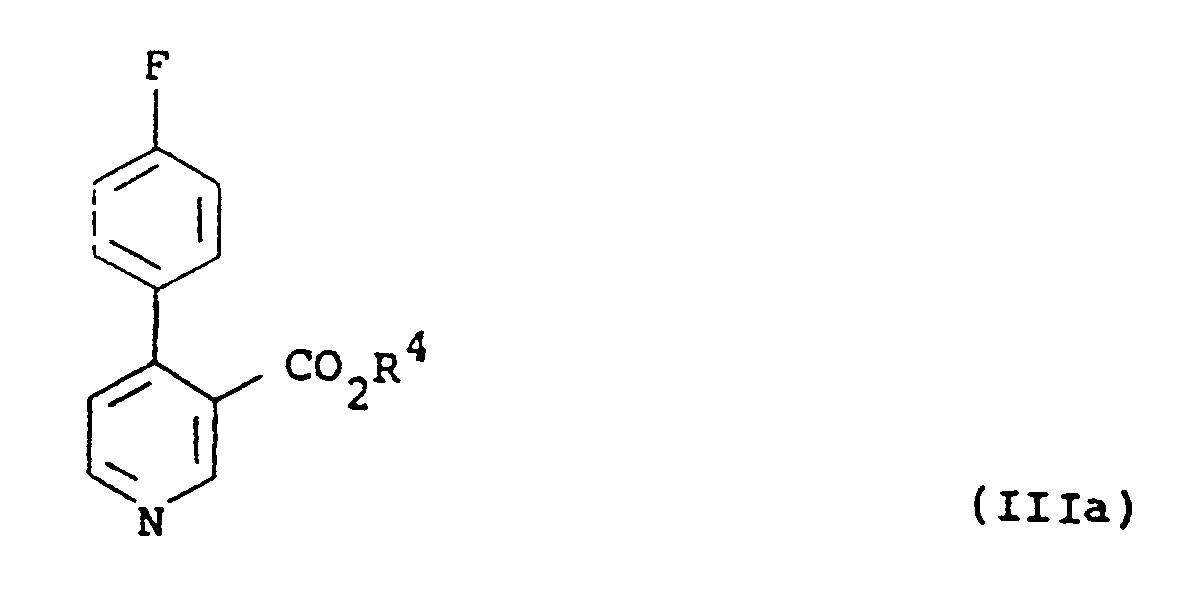
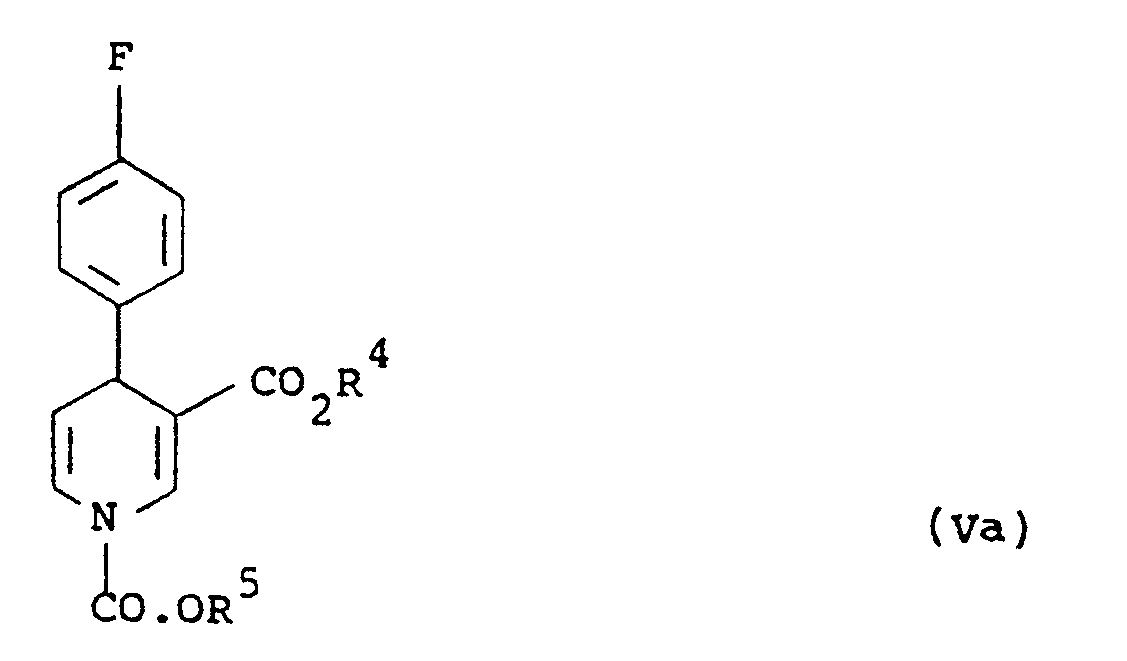
[0010] Accordingly, the present invention provides a process for preparing a compound of formula I
in which Ar represents a group
in which X is hydrogen, C₁₋₄ alkyl, C₁₋₆ alkoxy, trifluoro C₁₋₄ alkyl, halogen, methylthio, or phenyl C₁₋₄ alkyloxy and R³ and R⁴ each represents a C₁₋₆ alkyl group, by catalytic hydrogenation of a compound of formula II
in which Ar, R³ and R⁴ are as defined for formula (I), and Hal represents a halogen atom.
[0011] Preferably X is flourine or hydrogen and R³ is methyl. The halogen Hal is preferably chloride or bromide.
[0012] The hydrogenation may be carried out conventionally as a catalytic hydrogenation, for example using a platinum oxide catalyst.
[0013] The compounds of formula I are obtained in the cis-configuration but as a mixture of enantiomers. The compounds may be resolved into their enantiomeric forms by conventional methods, such as by use of an optically active acid.
[0014] The compounds of formula I may optionally be converted to the trans-configuration by treatment with a base, for example sodium methoxide, in an inert solvent such as toluene.
[0015] The esters of formula I may be converted to the corresponding carbinols by conventional reduction, for example using a metal hydride such as lithium aluminium hydride. The cis-ester gives the cis-carbinol, and the trans-ester gives the trans-carbinol.
[0016] The carbinols obtained from the compounds of formula I may be used as intermediates in the preparation of compounds of formula A making use of the procedures set out in British Patent no 1422263 or US patent no 4007196.
[0017] For example, to prepare paroxetine, the carbinol in which
and R³= Me in the (+)-cis or (-)-trans configuration is reacted with thionyl chloride or benzenesulphonyl chloride and then with sodium 3,4-methylenedioxyphenoxide.
[0018] Subsequently the N-methyl group is replaced by reaction with phenyl chloroformate followed by de-acylation with KOH to obtain R³= H.
[0019] The present invention also provides the intermediates of formula II as novel compounds. Preferred substituents are as exemplified for formula I.
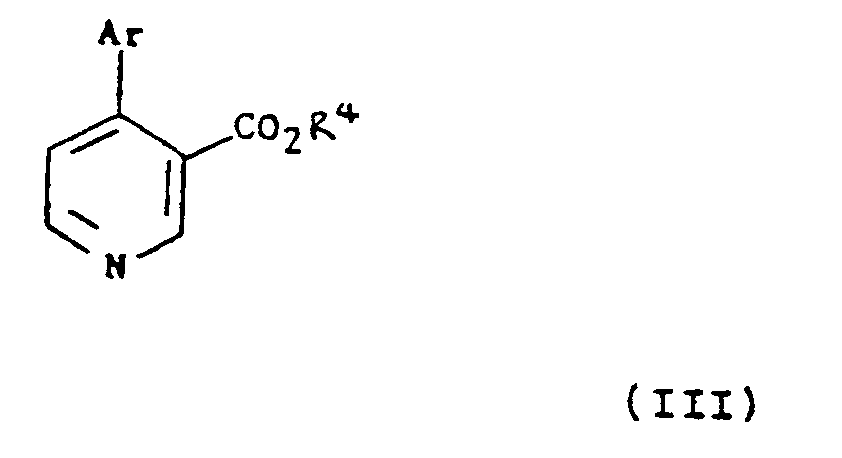
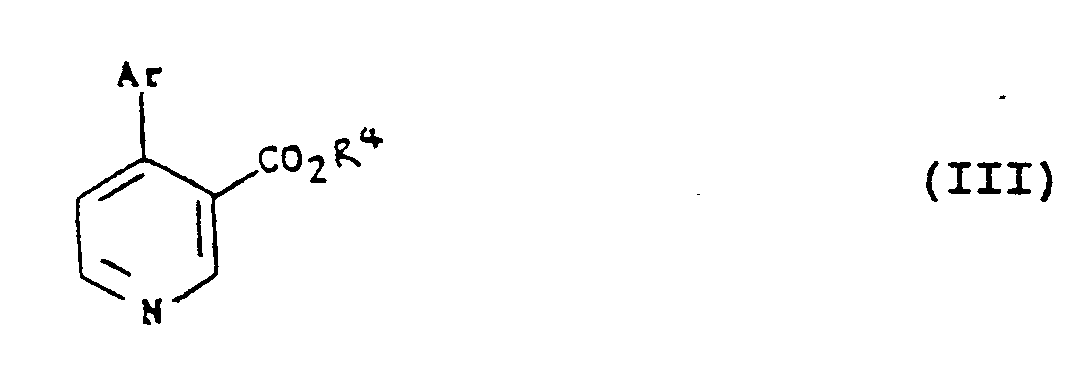
[0020] The quaternary pyridines of formula II may be prepared from aryl-pyridines of formula III
by quaternization under conventional conditions with an alkyl halide of formula R³-Hal.
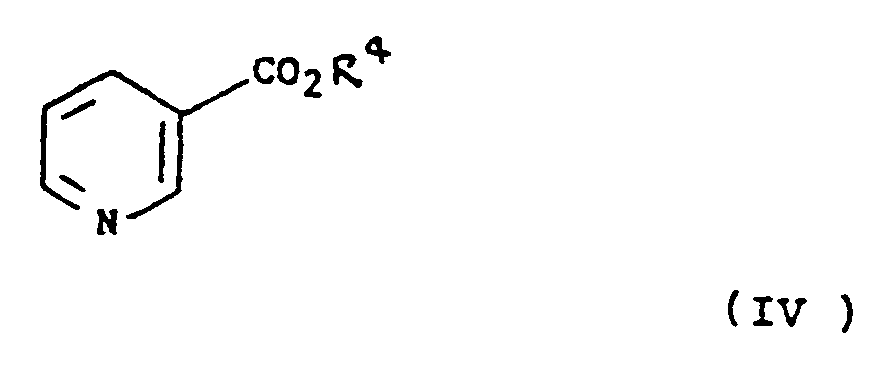
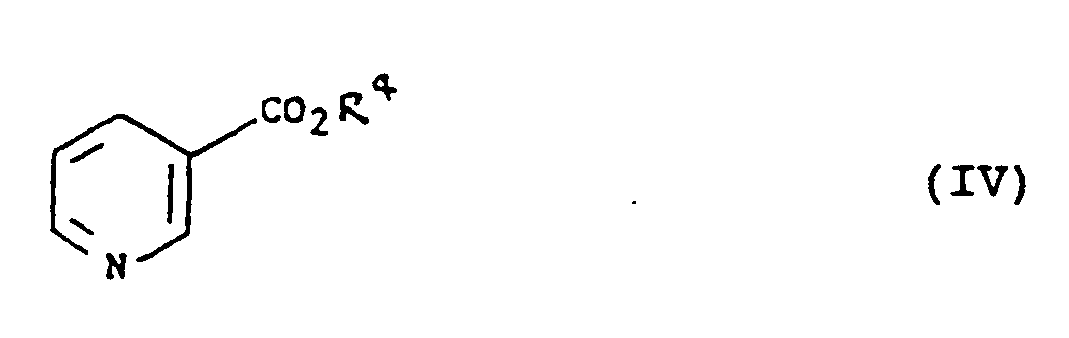
[0021] The aryl-pyridines of formula III may be prepared by reacting a C₁₋₆ alkyl, preferably methyl, nicotinate (formula IV) with a chloroformate ester, such as ethyl or phenyl chloroformate, and an aryl magnesium halide to give a dihydropyridine of formula V. The dihydropyridine (formula V) is then aromatized and the nitrogen atom de-protected in conventional manner, for example by heating with sulphur in decalin, to give the compounds of formula III. The procedure is illustrated in the following reaction scheme in which Ar, R⁴ and Hal are as defined above and R⁵ is an alkyl or a phenyl group.
[0022]
Certain of the intermediates described above are novel and, together with the above described processes for their preparation, they form part of the present invention.
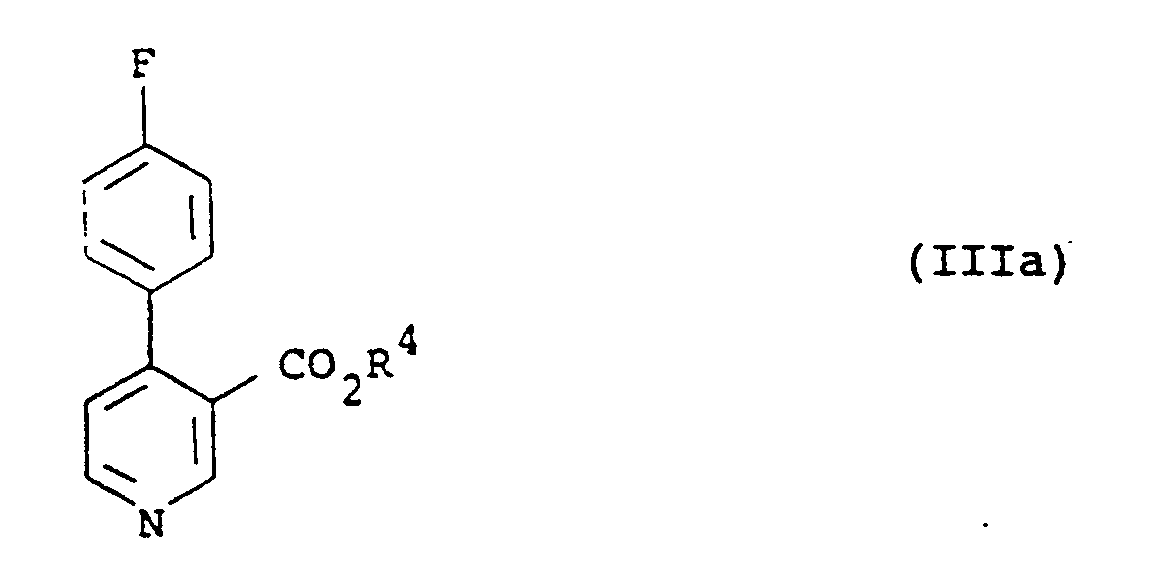
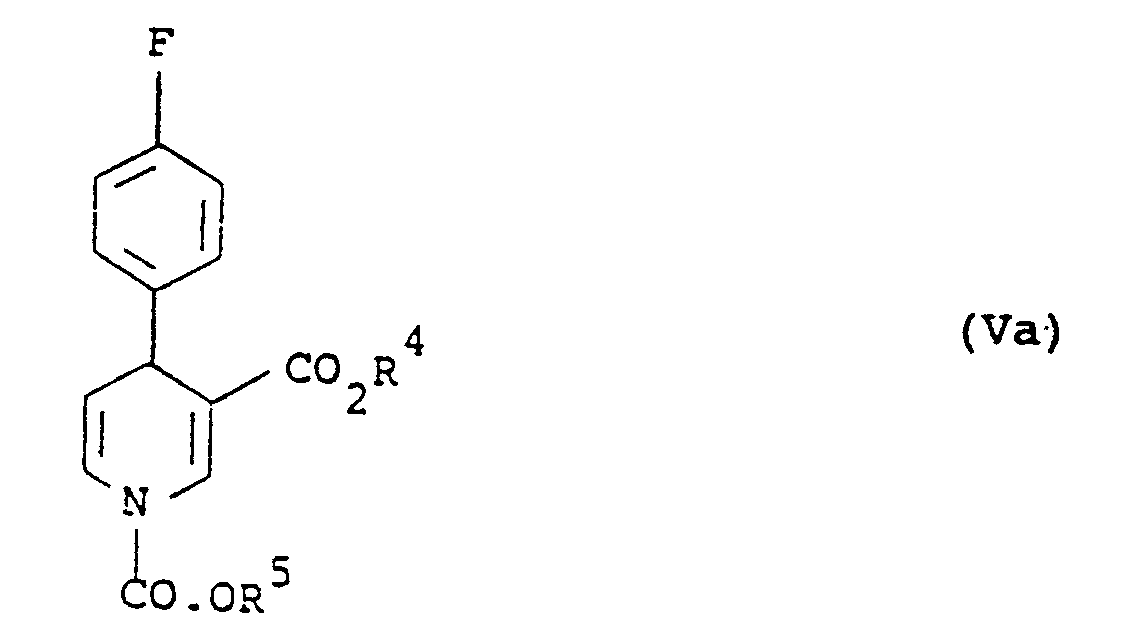
[0023] In particular the present invention provides as novel compounds the compound of formula III in which Ar=4-fluoro-phenyl and R⁴=methyl, and the compound of formula V in which Ar=4-fluoro-phenyl, R⁴=methyl and R⁵= ethyl.
[0024] The C₁₋₆ alkyl moiety, when present, is a straight or branched alkyl group containing from 1 to 6 carbon atoms, more especially from 1 to 4 carbon atoms, and the aryl moiety when present, is phenyl.
[0025] The following Examples illustrate the preparation of novel intermediates of this invention (Example 1) and the novel process of this invention (Example 2a).
Example 1 4-(4'-Fluorophenyl)-3-methoxycarbonyl-1-methylpyridinium bromide
[0026] Ethyl chloroformate (3.5ml) was added to a stirred suspension of cuprous chloride (0.33g) in dry tetrahydrofuran (100ml) under nitrogen. After cooling to 0°, a solution of methyl nicotinate (5.0g) in tetrahydrofuran (10ml) was added slowly followed by the addition of 4-fluorophenyl magnesium bromide solution [from 4-bromo-fluorobenzene (4.4ml) and magnesium (0.93g) in tetrahydrofuran (25ml)]. After stirring for 20 minutes, the mixture was diluted with ethyl acetate and decomposed by the addition of a saturated ammonium chloride/ammonia solution (1:1, 100ml). The organic phase was washed with dilute acid and brine and dried over anhydrous sodium sulphate. Evaporation of the solvent gave 1,4-dihydro-1-1-ethoxycarbonyl-4-(4'-fluorophenyl)-3-methoxycarbonylpyridine as an off-white solid (10.37g, 93%). A sample crystallised from ethyl acetate had m.p. 83-85°.
[0027] The crude dihydropyridine (10.37g) was dissolved in warm decalin (25ml) and sulphur (1.04g) added. The mixture was refluxed under nitrogen for 16 hours, then cooled and diluted with ethyl acetate (100ml) and extracted with dilute hydrochloric acid (4 x 25ml, 2M). The aqueous acid extracts were washed with ethyl acetate (20ml), basified with 20% sodium hydroxide solution and extracted with dichloromethane (50ml and 3 x 25ml). The organic solutions were dried (potassium carbonate) and evaporated to give 4-(4'-fluorophenyl)-3-methoxycarbonylpyridine as an oil which rapidly crystallised (5.98g, 76%). A sample crystallised from ethyl acetate had m.p. 94-95°.
[0028] The crude pyridine (5.95g) was treated with methyl bromide (2.2ml) in acetone (25ml). After heating in a sealed vessel at 53° for 60 hours and cooling to 0°, the title pyridinium salt was collected by filtration, washed with acetone and dried (7.4g, 88%), m.p. 165-170° (decomp.).
Example 2
(a) (±)-cis-4-(4'-Fluorophenyl)-3-methoxycarbonyl-1-methyl-piperidine
[0029] 4-(4'-Fluorophenyl)-3-methoxycarbonyl-1-methylpyridinium bromide (15.908g), prepared as in Example 1, in ethanol (250ml) was hydrogenated at atmospheric pressure and 45° for 24 hours, in the presence of platinum oxide (0.5g). Evaporation of the filtrate after removing the catalyst gave a dark oil which was partitioned between 10% sodium carbonate solution (100ml) and dichloromethane (30ml). After separation, the aqueous phase was extracted with dichloromethane (3 x 20ml) and the organic solutions dried (potassium carbonate) and evaporated to give an off-white solid (12.1g). Crystallisation from ethyl acetate gave the title compound as white crystals (8.32g, 72%), m.p. 88-89°.
(b) Isomerisation to (±)-trans-4-(4'-fluorophenyl)-3-methoxycarbonyl-1-methylpiperidine
[0030] (±)-cis-4-(4'-Fluorophenyl)-3-methoxycarbonyl-1-methylpiperidine (2.0g), prepared as in Example 2(a), in dry toluene was added to sodium methoxide in toluene and refluxed for 7 hours. After cooling to 0° and filtration, evaporation gave the title compound as an oil (1.97g, 99%), purity 85-90%.
1. A process for the preparation of a compound of formula (I):
wherein Ar is a group
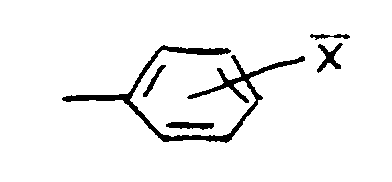
in which X is hydrogen, C₁₋₄ alkyl, C₁₋₆ alkoxy, trifluoro C₁₋₄ alkyl, halogen, methylthio or phenyl C₁₋₄ alkyloxy and R³ and R⁴ are the same or different and each is C₁₋₆ alkyl, which process comprises catalytically hydrogenating a compound of formula (II):
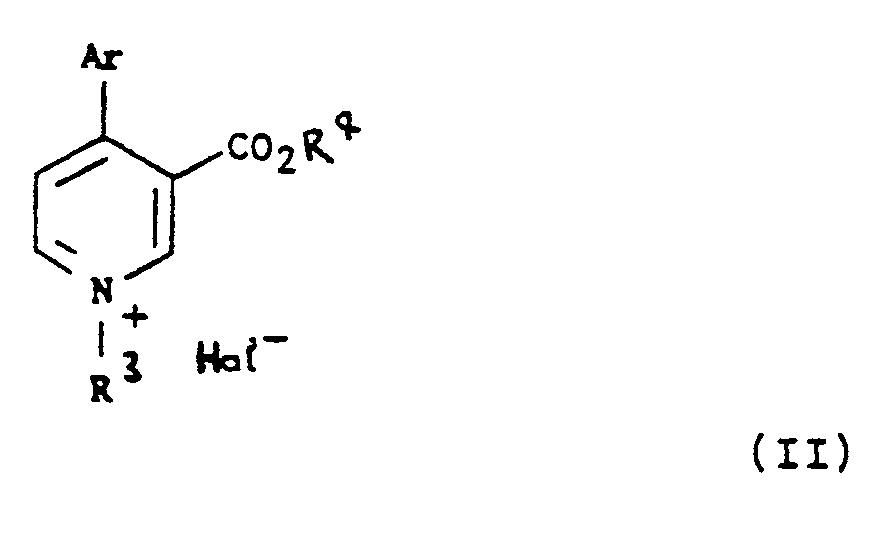
wherein Ar, R³ and R⁴ are as defined with respect to formula (I) and Hal is a halogen atom.
wherein Ar is a group
in which X is hydrogen, C₁₋₄ alkyl, C₁₋₆ alkoxy, trifluoro C₁₋₄ alkyl, halogen, methylthio or phenyl C₁₋₄ alkyloxy and R³ and R⁴ are the same or different and each is C₁₋₆ alkyl, which process comprises catalytically hydrogenating a compound of formula (II):
wherein Ar, R³ and R⁴ are as defined with respect to formula (I) and Hal is a halogen atom.
2. A process according to claim 1, further comprising the step of converting the compound
of formula (I) from the cis- to the trans-configuration thereof.
3. A compound of formula (II):
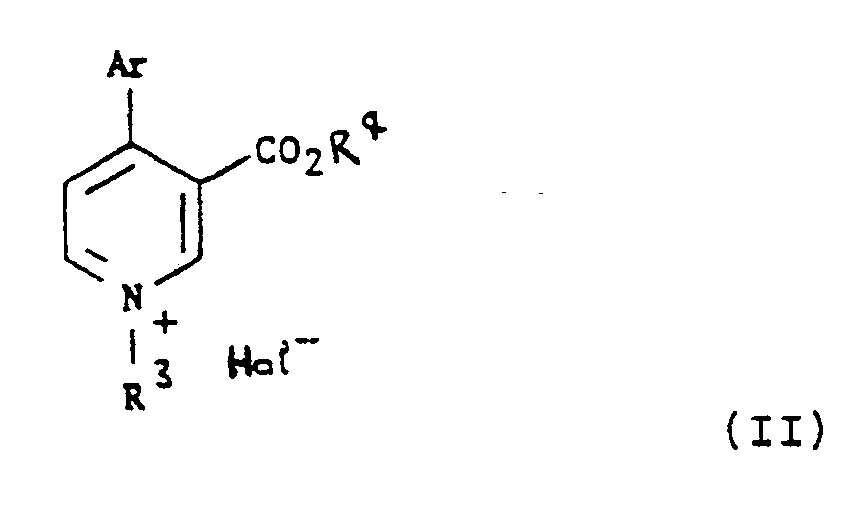
wherein Ar, Hal, R³ and R⁴ are as defined in claim 1.
wherein Ar, Hal, R³ and R⁴ are as defined in claim 1.
4. A process for the preparation of a compound of formula (II) as defined in claim 3,
which process comprises quaternizing a compound of formula (III):
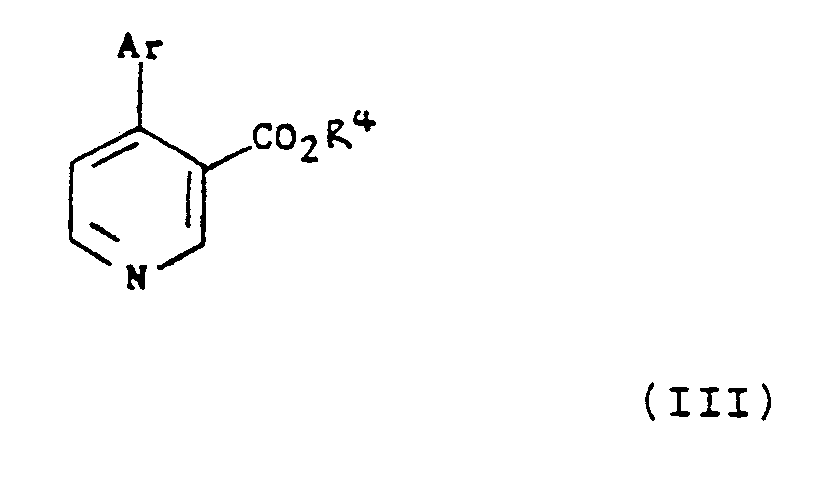
with an alkyl halide of formula R³ Hal, wherein Ar, R³, R⁴ and Hal are as defined in claim 3.
with an alkyl halide of formula R³ Hal, wherein Ar, R³, R⁴ and Hal are as defined in claim 3.
5. A compound of formula (IIIa):
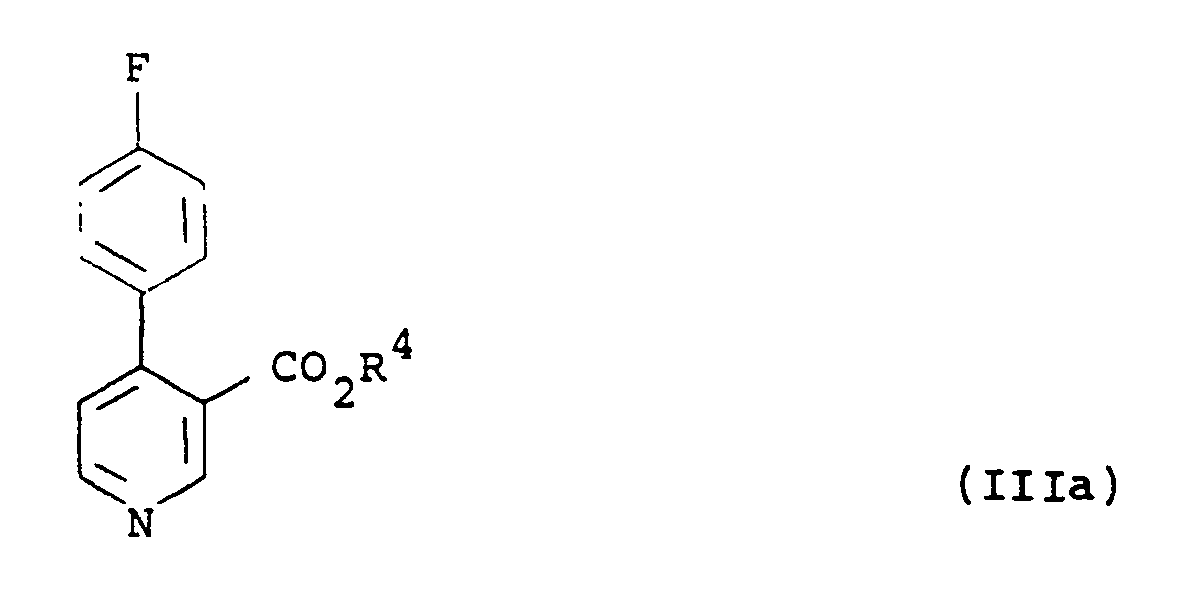
wherein R⁴ is as defined in claim 1.
wherein R⁴ is as defined in claim 1.
6. A process for the preparation of a compound of formula (IIIa) as defined in claim
5, which process comprises aromatizing and deprotecting a compound of formula (Va):
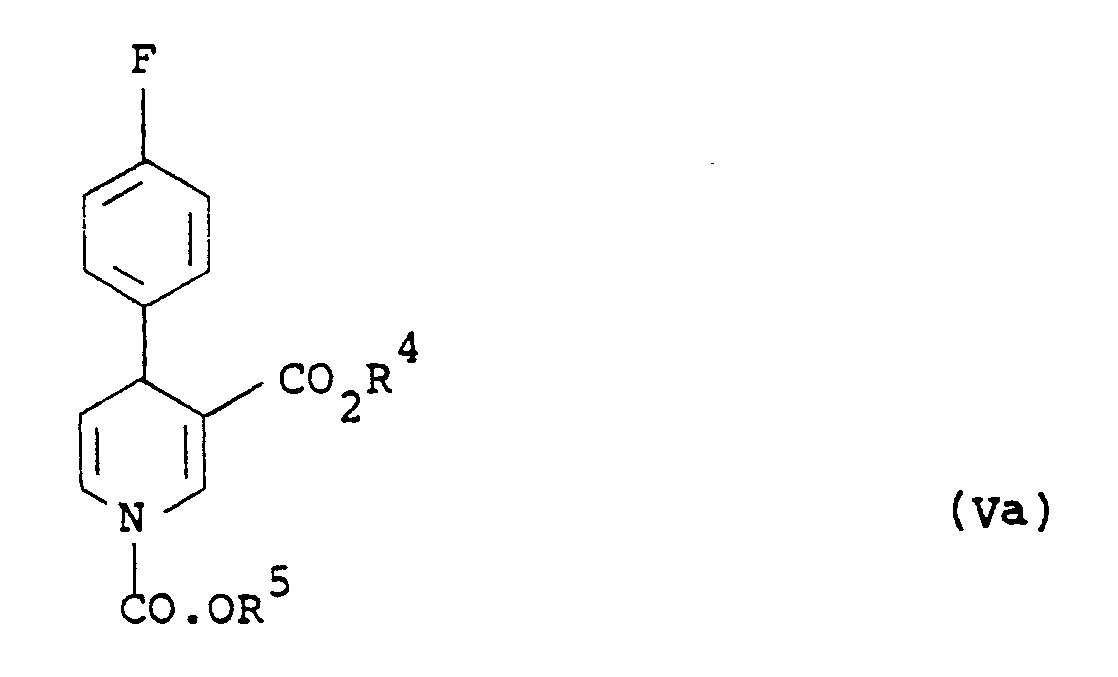
wherein R⁴ is as defined in claim 1 and R⁵ is C₁₋₆ alkyl or phenyl.
wherein R⁴ is as defined in claim 1 and R⁵ is C₁₋₆ alkyl or phenyl.
7. A compound of formula (Va) as defined in claim 6.
8. A process for the preparation of a compound of formula (Va) as defined in claim 6,
which process comprises reacting a nicotinate ester of formula (IV ):
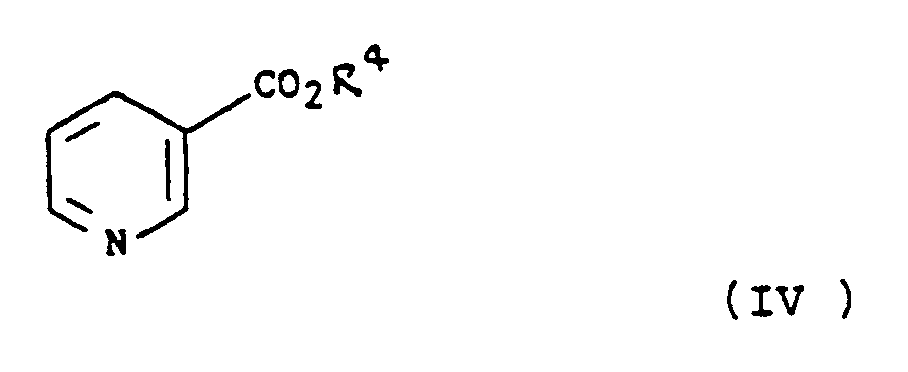
wherein R⁴ is as defined in claim 1, with a chloroformate ester of formula R⁵OCOCl, wherein R⁵ is as defined in claim 6, and a 4-fluorophenyl magnesium halide.
wherein R⁴ is as defined in claim 1, with a chloroformate ester of formula R⁵OCOCl, wherein R⁵ is as defined in claim 6, and a 4-fluorophenyl magnesium halide.
9. 4-(4'-Fluorophenyl)-3-methoxycarbonyl-1-methylpyridinium bromide,
1,4-dihydro-1-ethoxycarbonyl-4-(4'-fluorophenyl)-3-methoxycarbonylpyridine, or
4(4'-fluorophenyl)-3-methoxycarbonylpyridine.
1,4-dihydro-1-ethoxycarbonyl-4-(4'-fluorophenyl)-3-methoxycarbonylpyridine, or
4(4'-fluorophenyl)-3-methoxycarbonylpyridine.
1. Procédé pour la préparation d'un composé de formule (I) :
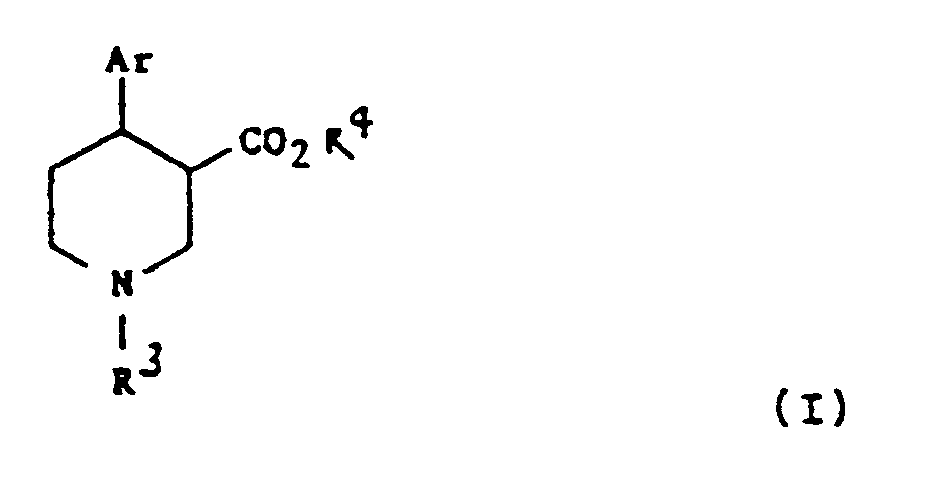
dans laquelle Ar est un groupe
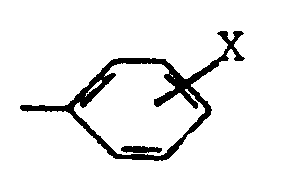
dans lequel X est un atome d'hydrogène, un groupe alkyle en C₁₋₄, alcoxy en C₁₋₆, trifluoroalkyle en C₁₋₄, un atome d'halogène, un groupe méthylthio ou phénylalkyloxy en C₁₋₄ et R³ et R⁴ sont identiques ou différents et sont chacun un groupe alkyle en C₁₋₆, caractérisé en ce que ce procédé comprend l'hydrogénation catalytique d'un composé de formule (II) :
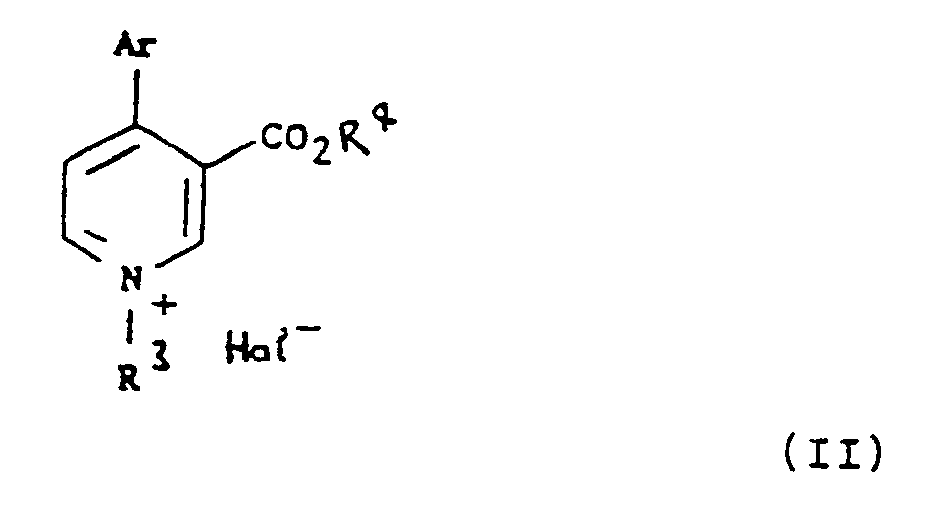
dans laquelle Ar, R³ et R⁴ sont tels que définis à propos de la formule (I) et Hal est un atome d'halogène.
dans laquelle Ar est un groupe
dans lequel X est un atome d'hydrogène, un groupe alkyle en C₁₋₄, alcoxy en C₁₋₆, trifluoroalkyle en C₁₋₄, un atome d'halogène, un groupe méthylthio ou phénylalkyloxy en C₁₋₄ et R³ et R⁴ sont identiques ou différents et sont chacun un groupe alkyle en C₁₋₆, caractérisé en ce que ce procédé comprend l'hydrogénation catalytique d'un composé de formule (II) :
dans laquelle Ar, R³ et R⁴ sont tels que définis à propos de la formule (I) et Hal est un atome d'halogène.
2. Procédé suivant la revendication 1, caractérisé en ce qu'il comprend de plus l'étape
de conversion du composé de formule (I) de sa configuration cis à sa configuration
trans.
3. Composé, caractérisé par la formule (II) :
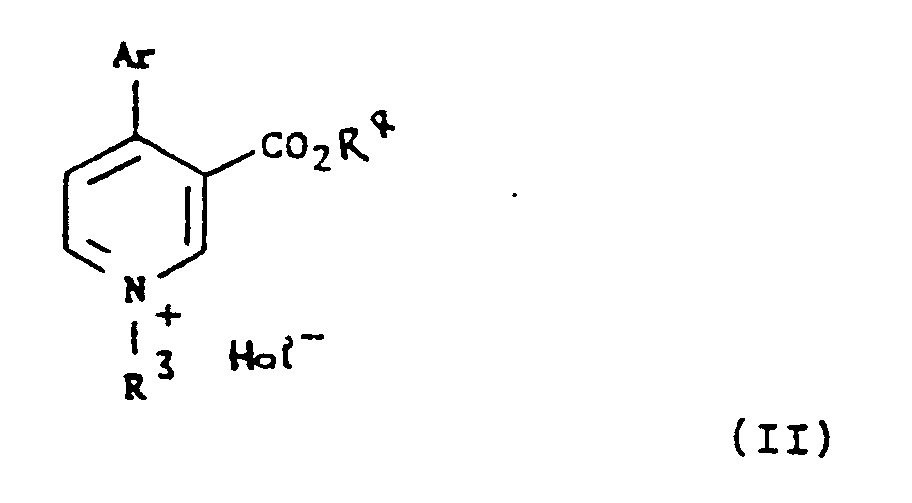
dans laquelle Ar, Hal, R³ et R⁴ sont tels que définis dans la revendication 1.
dans laquelle Ar, Hal, R³ et R⁴ sont tels que définis dans la revendication 1.
4. Procédé pour la préparation d'un composé de formule (II) suivant la revendication
3, caractérisé en ce qu'il comprend la quaternisation d'un composé de formule (III)
:
avec un halogénure d'alkyle de formule R³ Hal, dans laquelle Ar, R³, R⁴ et Hal sont tels que définis dans la revendication 3.
avec un halogénure d'alkyle de formule R³ Hal, dans laquelle Ar, R³, R⁴ et Hal sont tels que définis dans la revendication 3.
5. Composé, caractérisé par la formule (IIIa) :
dans laquelle R⁴ est tel que défini dans la revendication 1.
dans laquelle R⁴ est tel que défini dans la revendication 1.
6. Procédé pour la préparation d'un composé de formule (IIIa) suivant la revendication
5, caractérisé en ce qu'il comprend l'aromatisation et la déprotection d'un composé
de formule (Va) :
dans laquelle R⁴ est tel que défini dans la revendication 1 et R⁵ est un groupe alkyle en C₁₋₆ ou phényle.
dans laquelle R⁴ est tel que défini dans la revendication 1 et R⁵ est un groupe alkyle en C₁₋₆ ou phényle.
7. Composé caractérisé par la formule (Va) tel que défini dans la revendication 6.
8. Procédé pour la préparation d'un composé de formule (Va) suivant la revendication
6, caractérisé en ce qu'il comprend la réaction d'un ester nicotinique de formule
(IV) :
dans laquelle R⁴ est tel que défini dans la revendication 1, avec un ester chloroformate de formule R⁵OCOCl dans laquelle R⁵ est tel que défini dans la revendication 6 et un halogénure de 4-fluorophénylmagnésium.
dans laquelle R⁴ est tel que défini dans la revendication 1, avec un ester chloroformate de formule R⁵OCOCl dans laquelle R⁵ est tel que défini dans la revendication 6 et un halogénure de 4-fluorophénylmagnésium.
9. Composés caractérisés en ce qu'il s'agit
du bromure de 4-(4'-fluorophényl)-3-méthoxycarbonyl-1-méthylpyridinium,
de la 1,4-dihydro-1-éthoxycarbonyl-4-(4'-fluorophényl)-3-méthoxycarbonylpyridine ou
de la 4-(4'-fluorophényl)-3-méthoxycarbonylpyridine.
du bromure de 4-(4'-fluorophényl)-3-méthoxycarbonyl-1-méthylpyridinium,
de la 1,4-dihydro-1-éthoxycarbonyl-4-(4'-fluorophényl)-3-méthoxycarbonylpyridine ou
de la 4-(4'-fluorophényl)-3-méthoxycarbonylpyridine.
1. Verfahren zur Herstellung einer Verbindung der Formel (I):
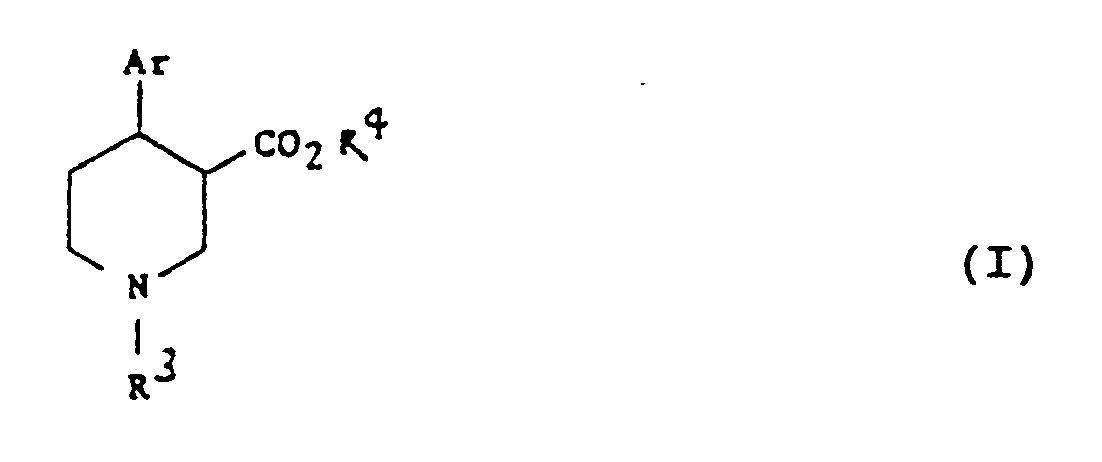
in der Ar eine Gruppe der Formel
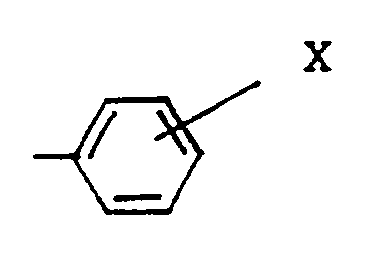
darstellt,
in der X ein Wasserstoffatom, einen C₁₋₄-Alkyl-, C₁₋₆-Alkoxy- oder Trifluor-C₁₋₄-alkylrest, ein Halogenatom, eine Methylthiogruppe oder einen Phenyl-C₁₋₄-alkyloxyrest bedeutet und R³ und R⁴ gleich oder verschieden sind und jeweils einen C₁₋₆-Alkylrest darstellen, wobei das Verfahren die katalytische Hydrierung einer Verbindung der Formel (II) umfaßt:
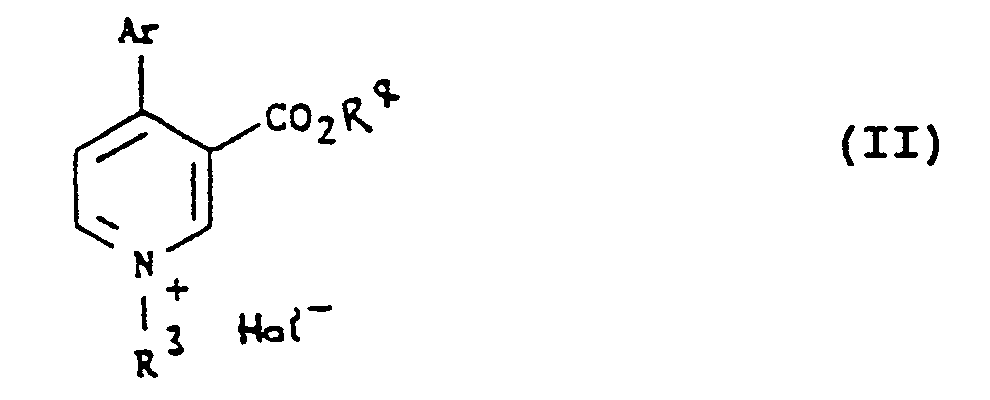
in der Ar, R³ und R⁴ gemäß Formel (I) definiert sind und Hal ein Halogenatom bedeutet.
in der Ar eine Gruppe der Formel
darstellt,
in der X ein Wasserstoffatom, einen C₁₋₄-Alkyl-, C₁₋₆-Alkoxy- oder Trifluor-C₁₋₄-alkylrest, ein Halogenatom, eine Methylthiogruppe oder einen Phenyl-C₁₋₄-alkyloxyrest bedeutet und R³ und R⁴ gleich oder verschieden sind und jeweils einen C₁₋₆-Alkylrest darstellen, wobei das Verfahren die katalytische Hydrierung einer Verbindung der Formel (II) umfaßt:
in der Ar, R³ und R⁴ gemäß Formel (I) definiert sind und Hal ein Halogenatom bedeutet.
2. Verfahren nach Anspruch 1 zusätzlich den Umwandlungsschritt der Verbindung der Formel
(I) aus der cis- in die trans-Konfiguration umfassend.
3. Verbindung der Formel (II):
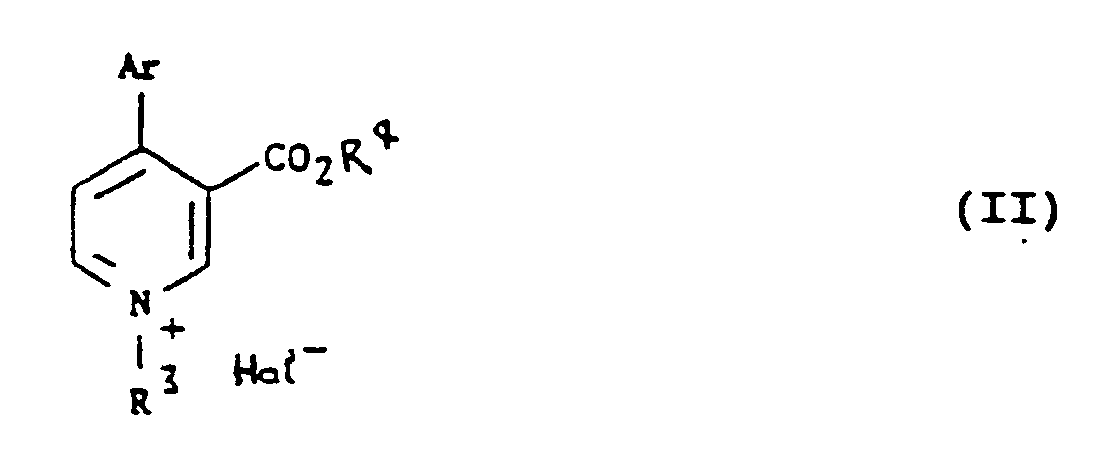
in der Ar, Hal, R³ und R⁴ gemäß Anspruch 1 definiert sind.
in der Ar, Hal, R³ und R⁴ gemäß Anspruch 1 definiert sind.
4. Verfahren zur Herstellung einer wie in Anspruch 3 definierten Verbindung der Formel
(II), wobei das Verfahren die Quaternisierung einer Verbindung der Formel (III):
mit einem Alkylhalogenid der Formel R³ Hal umfaßt, wobei Ar, R³, R⁴ und Hal gemäß Anspruch 3 definiert sind.
mit einem Alkylhalogenid der Formel R³ Hal umfaßt, wobei Ar, R³, R⁴ und Hal gemäß Anspruch 3 definiert sind.
5. Verbindung der Formel (IIIa)
in der R⁴ gemäß Anspruch 1 definiert ist.
in der R⁴ gemäß Anspruch 1 definiert ist.
6. Verfahren zur Herstellung einer wie in Anspruch 5 definierten Verbindung der Formel
(IIIa), wobei das Verfahren die Aromatisierung und Schutzgruppenentfernung einer Verbindung
der Formel (Va):
umfaßt, in der R⁴ gemäß Anspruch 1 definiert ist und R⁵ einen C₁₋₆-Alkylrest oder eine Phenylgruppe bedeutet.
umfaßt, in der R⁴ gemäß Anspruch 1 definiert ist und R⁵ einen C₁₋₆-Alkylrest oder eine Phenylgruppe bedeutet.
7. Verbindung der Formel (Va) gemäß Anspruch 6.
8. Verfahren zur Herstellung einer wie in Anspruch 6 definierten Verbindung der Formel
(Va), wobei das Verfahren die Umsetzung eines Nicotinsäureesters der Formel (IV):
in der R⁴ gemäß Anspruch 1 definiert ist, mit einem Chlorameisensäureester der Formel R⁵OCOCl, in der R⁵ gemäß Anspruch 6 definiert ist und mit einem 4-Fluorphenylmagnesiumhalogenid umfaßt.
in der R⁴ gemäß Anspruch 1 definiert ist, mit einem Chlorameisensäureester der Formel R⁵OCOCl, in der R⁵ gemäß Anspruch 6 definiert ist und mit einem 4-Fluorphenylmagnesiumhalogenid umfaßt.
9. 4-(4'-Fluorphenyl)-3-methoxycarbonyl-1-methylpyridiniumbromid,
1,4-Dihydro-1-ethoxycarbonyl-4-(4'-fluorphenyl)-3-methoxycarbonylpyridin oder
4-(4'-Fluorphenyl)-3-methoxycarbonylpyridin.
1,4-Dihydro-1-ethoxycarbonyl-4-(4'-fluorphenyl)-3-methoxycarbonylpyridin oder
4-(4'-Fluorphenyl)-3-methoxycarbonylpyridin.