(57) A body comprising a ceramic electrical resistance material of positive temperature
coefficient of resistivit y adapted to display a sharp increase in
resistivity when heated to a selected temperature has passages (18) extending through
the body between opposite ends (10.1, 10.2) of the body for passing fluid through
the passages in heat-exchange relationship to the body and has means (14) electrically
contacting spaced-apart portions of the body for directing electrical current through
the body to self-heat the body. The body is made with an improved structure in an
improved manner and is particularly adapted for use as a self-regulated fluid heater
within a small or irregular-shaped conduit or the like. The improved body is also
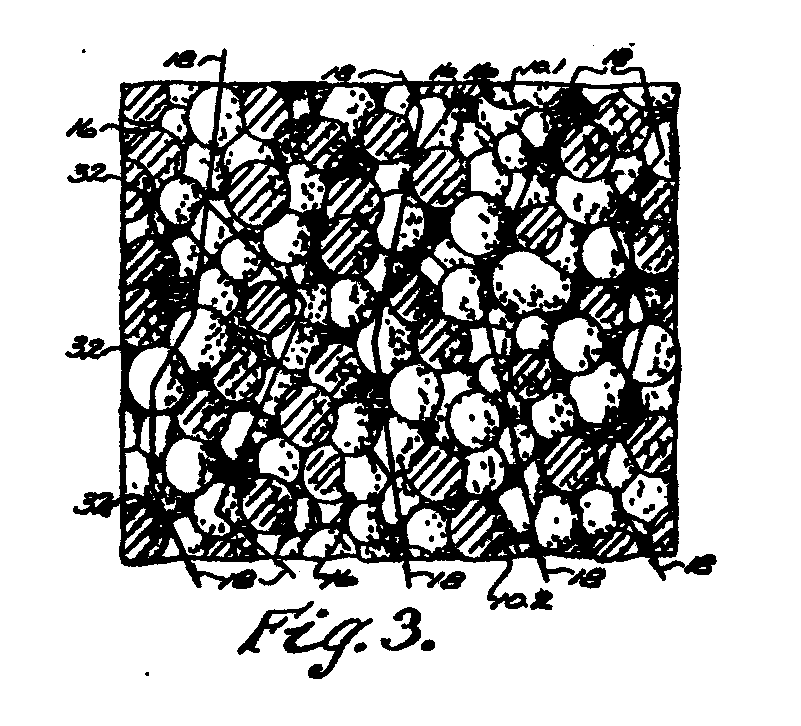
adapted for improved use as a thermally-responsive fluid flow sensor. The body (10)
is characterized by accommodating a multiplicity of openings (16) therein communicating
with each other for defining a plurality of said passages (18) of intercommunicating,
serpentine configuration varying in cross-section along the length thereof entwined
with each other within the body for providing improved heat-transfer between the body
and a fluid passing through the body passages, the passages being formed by sintering
balls (24) of said ceramic material together or by impregnating shape-retaining organic
foam materials with a slurry of a powder of the ceramic material in a fluid carrier
and by heating the impregnated foam for depositing the powder on the walls of the
foam passages, for burning off the foam material, and for sintering the deposited
powder for forming a body with the desired, serpentine passages in the ceramic body.
|
|
