|
(11) | EP 0 228 121 B1 |

| (12) | EUROPEAN PATENT SPECIFICATION |
|
|
| (54) |
Preparation of nonionic surfactants Herstellung von nichtionogenen oberflächenaktiven Stoffen Préparation de surfactifs non ioniques |
|
|
|||||||||||||||||||||||||||||||
| Note: Within nine months from the publication of the mention of the grant of the European patent, any person may give notice to the European Patent Office of opposition to the European patent granted. Notice of opposition shall be filed in a written reasoned statement. It shall not be deemed to have been filed until the opposition fee has been paid. (Art. 99(1) European Patent Convention). |
[0001] This invention relates to a process for the preparation of an alkanol alkoxylate product having a narrow-range alkylene oxide adduct distribution and a low content of residual alkanol.
[0002] A large variety of products useful, for instance, as nonionic surfactants, wetting and emulsifying agents, solvents, and chemical intermediates, are prepared by the addition reaction (alkoxylation reaction) of alkylene oxides withorganic compounds having one or more active hydrogen atoms. As an example, particular mention may be made of the alkanol ethoxylates and alkyl-substituted phenol ethoxylates prepared by the reaction of ethylene oxide with aliphatic alcohols or substituted phenols of about 6 to 30 carbon atoms. Such ethoxylates, and to a lesser extent corresponding propoxylates and compounds containing mixed oxyethylene and oxypropylene groups, are most commonly applied as nonionic detergent components of commercial cleaning formulations for use in industry and in the home.
[0003] An illustration of the preparation of an alkanol ethoxylate (represented by formula III below) by addition of a number (n) of ethylene oxide molecules (formula II) to a single alkanol molecule (formula I) is presented by the equation
[0004] The addition of alkylene oxides to alkanols and other active-hydrogen containing compounds is known to be desirably promoted by a catalyst, most conventionally a catalyst of either strongly acidic or strongly basic character. Recognized in the art as suitable basic catalysts are the basic salts of the alkali metals of Group I of the Periodic Table, e.g., sodium, potassium, rubidium, and cesium, and the basic salts of certain of the alkaline earth metals of Group II of the Periodic Table, e.g., calcium, strontium, barium and in some cases magnesium. Conventional acidic alkoxylation catalysts include, broadly, the Lewis acid or Friedel-Crafts catalysts. Specific examples of these catalysts are the fluorides, chlorides, and bromides of boron, antimony, tungsten, iron, nickel, zinc, tin, aluminium, titanium and molybdenum. The use of complexes of such halides with, for example, alcohols, ethers, carboxylic acids, and amines have also been reported. Still other examples of known acidic alkoxylation catalysts are sulphuric and phosphoric acids; perchloric acid and the perchlorates of magnesium, calcium, manganese, nickel and zinc; metal oxalates, sulphates, phosphates, carboxylates and acetates; alkali metal fluoroborates, zinc titanate; and metal salts of benzene sulphonic acid.
[0005] Alkylene oxide addition reactions are known to produce a product mixture of various alkoxylate molecules having different numbers of alkylene oxide adducts (oxyalkylene adducts), e.g., having different values for the adduct number n in formula III above. The adduct number is a factor which in many respects controls the properties of the alkoxylate molecule, and efforts are made to tailor the average adduct number of a product and/or the distribution of adduct numbers within a product to the product's intended service.
[0006] Conventional commercial alkoxylate preparation, which has in large part been limited to the use of basic catalysts, particularly the metals sodium and potassium and their oxides and hydroxides, yields only a relatively broad distribution range product. Conventional acid-catalyzed alkoxylation reactions have long been known to produce a more narrow range product than that obtained with the alkali metal catalysts. Characteristic of the product of the typical acid-catalyzed alkoxylation is a statistical Poisson distribution in which the relative concentration of each individual alkoxylate species may be expressed in terms of the following equation, which is well known to those in the oligomerization and polymerization arts:
wherein N represents the overall molar ratio of reactant alkylene oxide to reactant alkanol, n represents alkylene oxide adduct number, P(n) represents the mole percent of alkoxylate product molecules having the adduct number n, and e indicates the natural logarithm function. In effect, this expression reflects a reaction mechanism under which all hydroxyl-containing species in the alkoxylation reaction mixture (i.e., both alkanol reactant and alkoxylate intermediates) react with the alkylene oxide at the same rate.
[0007] Although acid catalysis provides a relatively narrow distribution product, it is known to have substantial disadvantage in several other respects. For instance, the acids are often unstable with limited life and effectiveness as catalysts in the alkoxylation mixture. Both the acid catalysts themselves and their decomposition products catalyze side reactions producing relatively large amounts of polyalkylene glycols, and also react directly with the components of the alkoxylation mixture to yield undesirable, and often unacceptable, by-products such as organic derivatives of the acid.
[0008] Also of substantial importance in the alkoxylation of the C6 to C30 alkanols is whether the process is able to minimize the quantity of unreacted (or residual) alkanol reactant remaining in the product. A high level of residual alkanol either represents a loss of valuable reactant, or requires that further processing of the product be carried out to recover the alcohol. Moreover, the presence of unreacted alkanol is recognized to be of disadvantage from the standpoint of product quality and enviromental concerns. For instance, residual alkanol in the product contributes to volatile organic emissions during spray drying of detergent formulations.
[0009] It has now been found that certain combinations of (i) one or more sulphur-containing acids and (ii) one or more soluble compounds of aluminium, are very effective as catalysts for the addition reaction of alkylene oxides and C6 to C30 alkanols, and are responsible for alkoxylate products which are characterized by both an exceptionally narrow-range distribution of alkylene oxide adducts and an exceptionally low residual alkanol content.
[0010] Accordingly the invention as defined in the claims, relates to a process for the preparation of an alkanol alkoxylate product having a narrow-range alkylene oxide adduct distribution and a low content of residual alkanol, which is characterised by reacting an alkylene oxide reactant comprising one or more C2 to C4 vicinal alkylene oxides with an alkanol reactant comprising one or more C6 to C30 alkanols in the presence of a catalytically effective amount of a catalyst prepared by contacting (i) one or more sulphur-containing acids selected from the group consisting of sulphur trioxide, sulphuric acid, alkyl sulphuric acids, sulphurous acids, and organic and inorganic sulphonic acids and (ii) one or more aluminium compounds selected from the group consisting of aluminium alcoholates and aluminium phenolates.
[0011] The aluminium alcoholate and/or phenolate compounds can be applied per se, i.e., added directly to the process mixture, or, alternatively, can be formed in situ in the alcohol-containing process mixture by introduction of suitable precursors capable of conversion to aluminium alcoholate and/or phenolate compound(s), which in turn function as a catalyst component or as a precursor to the desired catalyst.
[0012] In comparison to conventional alkoxylation reactions carried out in the presence of conventional acidic catalysts alone, the process of the invention yields (1) a higher quality product relatively free of by-products, (2) a product having a narrower distribution of alkylene oxide adducts, and (3) a product having a reduced level of residual alkanol.
[0013] The invention is applied to processes utilizing an alkylene oxide (epoxide) reactant which comprises one or more C2 to C4 vicinal alkylene oxides. Reactants which comprise ethylene oxide, propylene oxide, or mixtures of ethylene oxide and propylene oxide are preferred, while reactants wherein the alkylene oxide content consists essentially of ethylene oxide are considered particularly preferred.
[0014] The alkanol reactant very suitably comprises one or more alkanols having carbon number in the range from 6 to 30. An alkanol reactant consisting essentially of primary, mono-hydric alkanols is considered most preferred, although secondary and tertiary alcohols as well as polyhydric alkanols are also very suitably utilized in the process of the invention either alone or in mixtures with the primary mono-hydric alkanols. Most preferably, the alkanol reactant consists essentially of one or more C6 to C30 primary mono-hydric alkanols. Preference can also be expressed for alkanols having from 8 to about 20 carbon atoms, with C9 to C18 alkanols considered more preferred and C11 to C16 alcohols considered most preferred. As a general rule, the carbon chains of the alkanols may be of either branched or linear (straight chain) structure, although preference further exists for alkanol reactants in which greater than about 50 per cent, more preferably greater than about 70 per cent and most preferably greater than about 90 per cent of the molecules are of linear (straight-chain) carbon structure. In large part, such preferences relate more to the utility and value of the product alkoxylates in commercial services than to the operability or performance of the process of the invention.
[0015] Commercially available mixtures of primary mono-hydric alkanols prepared via the oligomerization of ethylene and the hydroformylation or oxidation and hydrolysis of the resulting higher olefins are particularly preferred. Examples of such commercially available alkanol mixtures include the NEODOL Alcohols, trademark of and sold by Shell Chemical Company, including mixtures of C9, C10 and C11 alkanols (NEODOL 91), mixtures of C12 and C13 alkanols (NEODOL 23), mixtures of C12, C13, C14, and Cis alkanols (NEODOL 25), and mixtures of C14 and Cis alkanols (NEODOL 45); the ALFOL Alcohols, trademark of and sold by Continental Oil Co., including mixtures of C10 and C12 alkanols (ALFOL 1012), mixtures of C12 and C14 alkanols (ALFOL 1214), mixtures of C16 and C18 alkanols (ALFOL 1618), and mixtures of C16, C18 and C20 alkanols (ALFOL 1620); the EPAL Alcohols, trademark of and sold by Ethyl Chemical Company, including mixtures of C10 and C12 alkanols (EPAL 1012), mixtures of C12 and C14 alkanols (EPAL 1214), and mixtures of C14, C16, and C18 alkanols (EPAL 1418); and the TERGITOL-L Alcohols, trademark of and sold by Union Carbide Corporation, including mixtures of C12, C13, C14, and C15 alkanols (TERGITOL-L 125). Also very suitable are the commercially available alkanols prepared by the reduction of naturally occuring fatty esters.
[0016] For purposes of the invention, the alkylene oxide reactant and the active hydrogen reactant are necessarily contacted in the presence of the specified two-component catalyst.
[0017] As one component of this catalyst, the process of the invention makes use of one or more sulphur-containing acids sclected from sulphur trioxide (S03) and acids of the class represented by the empirical formula ZSO3H. Included within this class are sulphuric acid (with Z in the formula representing -OH), monoalkyl esters of sulphuric acid which are also commonly called alkyl sulphuric acids (with Z representing an alkoxy group), sulphurous acid (wherein Z represents H), and sulphonic acids wherein Z represents a univalent inorganic atom or organic radical.
[0018] Preferred alkyl sulphuric acids include those with an alkoxy group of about 1 to 30 carbon atoms. Alkyl sulphuric acids having an alkoxy group of about 1 to 20 carbon atoms are more preferred, while those having an alkoxy group of about 8 to 20 carbon atoms are considered most preferred.
[0019] Specific examples of suitable inorganic sulphonic acids include chlorosulphonic acid (wherein Z is CI), fluorosulphonic acid-(wherein Z is F) and sulphamic acid (wherein Z is NH2).
[0020] Suitable organic sulphonic acids include the alkane- and cycloalkane sulphonic acids, as well as arenesulphonic acids and heterocyclic sulphonic acids. Specific examples of the alkane sulphonic acids include methanesulphonic acid, ethanesulphonic acid, propanesulphonic acid, butanesulphonic acid, pen- tanesulphonic acid, hexanesulphonic acid, dodecanesulphonic acid, hexadecanesulphonic acid, trifluoromethane sulphonic acid, sulphosuccinic acic, and cyclohexylsulphonic acid. Specific examples of arenesulphonic acids include benzenesulphonic acid, toluenesulphonic acid, styrene-(i.e., vinyl benzene) sulphonic acid, 5-sulphosalicylic acid, phenolsulphonic acid, and 1,6-napthalene disulphonic acid. Specific examples of heterocyclic sulphonic acids include sulphanilic acid. Alkyl and aryl groups of the sulphonic acid molecule are suitable substituted with relatively inert organic and/or inorganic substituents. Examples of substituted organic sulphonic acids include 4-hydroxybenzoic acid, trifluoromethane sulphonic acid, isethionic acid, and taurine.
[0021] As is the case for the aluminium containing component of the catalyst, the sulphur-containing catalyst component is suitably introduced directly to the process mixture or formed therein upon addition to the mixture of precursors of the sulphur-containing acid(s). Mixtures of sulphur-containing acids are very suitable.
[0022] A particularly preferred group of sulphur-containing acids is that which consists of sulphuric acid, sulphur trioxide, C1 to C30 alkyl sulphuric acids, sulphanilic acid, toluenesulphonic acid, styrenesulphonic acid, methanesulphonic acid, and 5-sulphosalicylic acid. A catalyst component selected from the group consisting of sulphuric acid, sulphur trioxide, and the C1 to C30 alkyl sulphuric acids is considered more preferred, and sulphuric acid is considered most preferred, for use in the invention from the standpoint of overall process performance and economics, and of product quality.
[0023] The second necessary component of the catalyst of the process of the invention suitably comprises one or more aluminium alcoholate ore phenolate compounds. Preferably, this component comprises one or more alkoxide or phenoxide compounds of the formula
At least one of X1, X2, and X3 represents an -OR group, wherein the R substituent is selected from the group consisting of alkyl and optionally alkyl-substituted phenyl groups, preferably C1 to C30 alkyl and optionally substituted phenyl groups. The Xi, X2, and X3 substituents which represent -OR groups suitably represent the same or different -OR groups. It is intended that the invention encompass embodiments utilizing aluminium compounds in which at least one of Xl, X2 and X3 represents a precursor group which undergoes conversion to an -OR group in the process mixture, and particularly in the presence of the alkanol reactant. Examples of such groups which serve as precursors include halogen atoms, particularly chlorine and bromine atoms, carboxy (for instance acetate) groups, and alkyl (for instance methyl) groups. The one or more of Xl, X2, and X3 which are not either -OR groups or precursors for the formation of -OR groups suitably represent organic or inorganic groups which are substantially inert in the process medium. Most preferably, Xi and X2 and X3 all represent (or are in practice converted to) the same or different -OR groups.
[0024] Specific examples of preferred alkoxide compounds suitable as catalyst components for purposes of the invention include the aluminium alkoxides (wherein R is C1 to C30 alkyl), including the lower alkoxides, e.g., aluminium ethoxide, aluminium isopropoxide, and aluminium t-butoxide, as well as the higher alkoxides having one or more of their alkyl R substituents in the same Ca to C20 range as the alkanol reactant of the process, e.g., nonyl, decyl, dodecyl, and hexadecyl groups. Specific examples of preferred phenoxide compounds useful in this service include aluminium phenoxide, lower alkyl-substituted phenol derivatives such as aluminium benzyloxide and higher alkyl-substituted phenol derivatives, e.g., compounds wherein R represents nonylphenyl, tridecylphenyl, pentadecylphenyl, etc. Specific examples of preferred compounds which serve as precursors for the formation in situ of aluminium alkoxide compounds include aluminium triacetate and trialkylaluminium compounds such as trimethylaluminium and triethylaluminium.
[0025] Particular preference exists for the use of an alkoxide in which each of the Xl, X2, and X3 substituents is an -OR group wherein R is an alkyl group having a carbon number in the range from 1 to 30, more preferably a carbon number in the range from 1 to 20, and most preferably a carbon number which corresponds to the carbon number(s) of the particular alkanol reactant employed in the given process application. Thus, for instance, the reaction of a dodecyl alcohol reactant is most preferably conducted in the presence of a catalyst which comprises a catalyst in which a substantial portion of the second catalyst component is a compound of the formula Al-(OR)3, wherein each R is a dodecyl group. Without intention that the invention be limited to one theory or mechanism of operation, it is thought that the alcoholate and phenolate compounds commonly undergo transalcoholysis reactions in the presence of the alkanol reactant and are converted, at least in part, to alkoxides having alkyl substituents of carbon numbers which correspond to those of the alkanol reactant. Thus, for example, when an aluminium isopropoxide catalyst component is contacted with a higher alkanol alkoxylation reactant (e.g., a G2 to C15 alkanol mixture) a transalcoholysis reaction results which liberates isopropanol and converts at least a portion of the aluminium isopropoxide to aluminium alkoxides having Cn to C15 alkyl substituents. In one preferred embodiment of the invention, a lower carbon number aluminium alkoxide (e.g., an alkoxide characterized by alkyl group carbon number(s) of less than about 6) is mixed with the alkanol reactant, prior to contact with the alkylene oxide reactant, under conditions which favour the conversion by transalcoholysis of the lower alkoxide compounds to alkoxide compounds which correspond in carbon number (or carbon number distribution) of the alkoxide substituent to the carbon number (or carbon number distribution) of the alkanol reactant.
[0026] In the practice of the process of the invention, the catalyst components are preferably applied in a molar ratio of the first sulphur-containing acid component to the second aluminium containing component that is in the range from 0.1:1 to 2:1. Higher relative ratios result in lower reaction rates and higher degrees of by-product formation, while at lower ratios the reaction rate is undesirably low. Molar ratios of the first catalyst component to its second component in the range from 0.3:1 to 1:1 are more preferred, while molar ratios between 0.4:1 and 0.6:1 are considered most preferred.
[0027] The catalyst combination is present in the reaction mixture in a catalytically effective amount. For the typical practical operation, a quantity of catalyst is desirably at least about 0.01 %w (per cent by weight) of the combined total of the two components relative to the alkanol reactant. Although catalyst quantity is not narrowly critical, preference may be expressed for use of the catalyst in amount of at least about 0.05 %w, while an amount between 0.1 and 1 %w is considered most preferred. Substantially greater quantities of catalyst, e.g., up to 10 %w, are also very suitable.
[0028] In terms of processing procedures, the alkoxylation reaction in the invention may be conducted in a generally conventional manner. For example, the catalyst components may initially be mixed with the alkanol reactant. A substantially liquid mixture forms, although it is not necessary that all of the added catalyst dissolve in the alkanol. This mixture is then contacted, preferably under agitation, with alkylene oxide reactant, which is typically introduced in gaseous form.
[0029] The order in which the catalyst components and the reactants are contacted has not been found to be critically important to the invention. Thus, for instance, it is suitable practice to premix the aluminium compound catalyst component with the sulphur-containing component, prior to their introduction into contact with the alkanol reactant. The observation of a reaction between the two catalyst components when they are pre-mixed in the absence of alcohol and ethylene oxide suggests that the two specified components may in fact serve as precursors of a single effective catalyst which has not been otherwise identified. Accordingly, the catalyst is described with reference to a combination of, or, equivalently, to a catalyst prepared by contacting the two specified components.
[0030] Also very suitable, and generally preferred from the standpoint of convenience, is a combination of the two components by contact in the presence of the alkanol reactant, e.g., by independent, addition of the two components to the reactant.
[0031] It is considered surprising that such mixing or premixing of the two components results in an active catalyst for the alkoxylation reaction, in view of observations that aluminium sulphate salt is not effective as a catalyst for the desired reaction.
[0032] Overall, the two reactants are utilized in quantities which are predetermined to yield an alkoxylate product of the desired mean or average adduct number, e.g., typically from less than one to about 30. In general terms, suitable and preferred process temperatures are from 70 °C to 200 °C and pressures above atmospheric pressure are preferred. A temperature of at least about 70 °C, particularly at least 100 °C, is typically preferred for a significant rate of reaction, while a temperature less than 200 °C, particularly less than 180 °C, and most particularly less than 170 °C, is typically desirable to minimize degradation of the product. The two-component catalyst used in the invention is highly active, and care must be taken to control the temperature of the exothermic reaction. Superatmospheric pressures, e.g., pressures between 0.7 and 11 bar (gauge) are preferred. While these procedures describe a batch mode of operation, the invention is equally applicable to a continuous process.
[0033] The alkanol reactant is generally a liquid and the alkylene oxide reactant is generally a vapour for such reactions. Alkoxylation is then suitably conducted by introducing gaseous alkylene oxide into a pressure reactor containing the liquid alkanol and the two components of the catalyst combination. For considerations of process safety, the partial pressure of the lower alkylene oxide reactant is preferably limited, for instance, to less than about 4 bar and/or the reactant is preferably diluted with an inert gas such as nitrogen, for instance, to a vapour phase concentration of about 50 per cent or less. The reaction can, however, be safely accomplished at greater alkylene oxide concentration, greater total pressure and greater partial pressure of alkylene oxide if suitable precautions, known to the art, are taken to manage the risks of explosion. A total pressure of between 3 and 8 bar (gauge) with an alkylene oxide partial pressure between 1 and 4 bar (gauge), is particularly preferred, while a total pressure of between 3.5 and 6.5 bar (gauge) with an alkylene oxide partial pressure between 1.5 and 3.5 bar (gauge), is considered more preferred.
[0034] After the ethoxylation reaction has been completed, the product is preferably neutralized to deactivate the catalyst. Neutralization is suitably accomplished by the addition of a base such as sodium or potassium hydroxide to the acidic product mixture. Neutralized catalyst residues are very suitably left in the product, or may be removed if desired, for example, by precipitation or extraction or the like.
[0035] The alkoxylate prepared in the process of the invention is typically a product of very acceptable quality, having a relatively low content of polyalkylene glycols and other by-products, as well as a low content of residual alkanol reactant. Although the content of residual alkanol will vary from one alkoxylation product to another, and is dependent upon the degree of alkoxylation, i.e., the average alkylene oxide adduct number, the residual alkanol content of a product prepared according to the invention and having a given average adduct number is less than the content of residual alkanol in a product of like average adduct number which has been prepared according to conventional acid-catalyzed alkoxylation.
EXAMPLES
[0036] Except as noted otherwise, each of the Examples and Comparative Examples were conducted under the following procedure. All alkoxylation reactions were conducted in a one-litre stainless steel autoclave reactor. In each case, the alkylene oxide reactant consisted of ethylene oxide and the alkanol reactant was a NEODOL 23 Alcohol (trademark of Shell Chemical Company) characterized as a mixture of primary, 80% linear (20% branched) alkanols having twelve and thirteen carbon atoms (about 40% by mole C12 and 60% by mole C13). Initially, the liquid alkanol reactant was dried to a water content of about 40 ppm (as indicated by Karl Fischer water analysis) by sparging with nitrogen at 130 °C for one hour. About 2.0 grams (0.01 moles) of the first (aluminium compound) catalyst component was dissolved in about 150 grams (0.773 moles) of the dried alkanol in a multineck glass round-bottom flask at 100 °C. The reaction mixture was cooled to about 30 °C at which point about 0.5 grams (0.005 moles) of the second (sulphur-containing acid) component was dissolved in the alkanol solution, producing a clear, colourless solution. This solution was transferred to the autoclave under a nitrogen atmosphere, and the reactor sealed and heated to 120 °C. A mixture of nitrogen and ethylene oxide was then introduced into the reactor to a total pressure of 5.2 bar (3.2 bar nitrogen and 2 bar ethylene oxide). Alkoxylation (ethoxylation) commenced immediately. Temperature of the exothermic reaction mixture was allowed to rise to 140 °C and cooling was then applied to the reactor to maintain that temperature. Ethylene oxide was added to the reactor on demand, that is, at a rate necessary to maintain approximately constant pressure. Sufficient ethylene oxide was added to the reactor to produce a product having the desired average ethylene oxide adduct number. Ethylene oxide introduction was then discontinued and the reactor was maintained at 140 °C for an additional hour, to substantially consume unreacted ethylene oxide in the system. At the end of this hour, the reactor was cooled to 90 °C, and the product was transferred under nitrogen atmosphere to a sample bottle and neutralized with base (i.e., potassium hydroxide) to a pH of about 6.5. The product was analyzed by GC-LC techniques to determine the mean average adduct number of the ethoxylate, the ethylene oxide adduct distribution of the ethoxylate, the content of residual alkanol reactant in the product, and the quantity of polyethylene glycol by-products formed.
EXAMPLE 1
[0037] Example 1 followed the general procedures outlined above, utilizing aluminium isopropoxide (AI(OR)3, where R is isopropyl) as the first catalyst component and concentrated (96%) sulphuric acid as the second catalyst component. For purposes of the alkoxylation, 75 grams (2.2 moles) of ethylene oxide was added to the autoclave over a period of 30 minutes.
[0038] The alkanol ethoxylate product was found to have a mean average adduct number of 2.0 and to contain 4.4 %w of residual alkanol reactant. The product also contained 0.6 %w polyethylene glycols (PEG).
[0039] The ethylene oxide adduct distribution of the product is presented in Table I and compared with that of (1) an ethoxylate of equivalent mean adduct number which was produced using a conven tional potassium hydroxide catalyst and (2) with a (calculated) Poisson distribution as is characteristic of conventional acid-catalyzed ethoxylation reactions. The distribution is substantially more narrow than that which is characteristic of conventional base-catalyzed ethoxylation reactions, including those catalyzed by compounds of sodium or potassium or other Group I metals as well as those catalyzed by compounds of barium or other Group II metals. Moreover, the distribution is more narrow than that obtained using conventional acid catalysts such as sulphuric acid.
EXAMPLE 2
[0040] For Example 2, the general procedures were again followed as in Example 1, with the addition of separate processing step for the conversion of substantially all of the aluminium isopropoxide to an aluminium alkoxide of the CJ2 and C13 alkanols. After the addition of the second (sulphuric acid) catalyst component to the 150 grams of the dried alkanol reactant, and before the transfer of the alkanol/catalyst mixture to the autoclave, the mixture was heated to 130 °C and maintained at this temperature under a nitrogen sparge for two hours. Under these conditions, a transalcoholysis reaction occurred between the aluminium isopropoxide and the C12 and C13 alkanols. Isopropanol released by alcoholysis was removed from the system by the nitrogen sparge. Following the transalcoholysis, the mixture was cooled to 30 °C and transferred to the autoclave under nitrogen atmosphere.
[0041] A total of 76 grams of ethylene oxide was added to the reactor during the ethoxylation reaction, over a period of 60 minutes. The product was determined to have a mean average adduct number of 2.4, and to contain 3.1 %w residual alcohol and 0.5% PEG. Ethylene oxide adduct distribution was also determined and is presented in the Table II, together with a comparative Poisson distribution.
EXAMPLE 3
[0042] An alkoxylation process according to the invention was carried out using aluminium t-butoxide (AI(OR)3, where R is t-butyl) as the first catalyst component. In this Example 3, about 5.0 grams (0.02 moles) of aluminium t-butoxide was dissolved in about 300 grams (1.55 moles) of the dried alkanol reactant at 100 °C. The mixture was cooled to 30 °C and about 1.0 gram (0.01 moles) of concentrated sulphuric acid was added, producing a slightly hazy, colourless solution. The general procedure was then again followed for the ethoxylation reaction.
[0043] A total of 150 grams of ethylene oxide was consumed over a 90 minute reaction at 140 °C. Analysis of the neutralized product indicated an alkoxylate with a mean average adduct number of 2.1, containing 4.5 %w residual alkanol and 1.8 %w PEG. The ethylene oxide distribution of the product was similar to that obtained in Example 1.
EXAMPLE 4
[0044] An alkoxylation process according to the invention was conducted using a catalyst which contained the two catalyst components in a molar ratio of 1:1, i.e., one part of the first component (aluminium isopropoxide) and one part of the second component (concentrated sulphuric acid). For this purpose, about 1.1 grams (0.005 moles) of the first component was dissolved in 150 grams of the predried alkanol reactant at 100 °C. The mixture was then cooled to 30 °C, and about 0.5 grams (0.005 moles) of the sulphuric acid was added.
[0045] A total of about 70 grams of ethylene oxide was consumed over a period of 120 minutes. The product had a mean average adduct number of 2.0, and contained 4.4 %w residual alkanol and 2.1 %w PEG.
EXAMPLE 5
[0046] For Example 5, sulphur trioxide was utilized as the second catalyst component. About 2.7 grams (0.013 moles) of aluminium isopropoxide was dissolved in the 150 grams of alkanol reactant at 100 °C. The mixture was cooled to 30 °C, and 1.06 grams (0.013 moles) of sulphur trioxide was added.
[0047] A total of 75 grams of ethylene oxide was consumed over a 30 minute ethoxylation reaction. Alkoxylate product had a mean average adduct number of 2.3, and contained 5.0 %w residual alkanol and 1.1 %w polyethylene glycol.
EXAMPLE 6
[0048] Another alkoxylation process according to the invention was carried out, in this case using p-toluenesulphonic acid as the second catalyst component. About 3.3 grams (0.02 moles) of p-toluene sulphonic acid monohydrate was added to 150 grams (0.773 moles) of predried alkanol reactant and the mixture further dried for 30 minutes under nitrogen sparge at 130 °C. About 2.0 grams (0.01 moles) of aluminium isopropoxide was then added to the mixture and the resulting solution was nitrogen sparged at 130 °C for an additional 30 minutes to remove isopropanol released by transalcoholysis reaction.
[0049] Ethoxylation was conducted at 170 °C. A total of 75 grams of ethylene oxide were consumed over a period of 90 minutes. The product was analyzed to have a mean average adduct number of 1.9 and to contain 7.5 %w residual alcohol and 2.5 %w PEG.
EXAMPLE 7
[0050] An alkoxylation process according to the invention was carried out using a catalyst containing components which had been pre-mixed, prior to the introduction of the catalyst into the alkanol reactant. For this purpose, 1.0 gram (0.01 mole ) of 95% by weight sulphuric acid was added slowly to 4.93 grams (0.02 moles) of aluminium sec-butoxide (AI(OR)3, where R is sec-butyl) at room temperature. An exothermic reaction commenced and the -mixture was stirred at 95 °C -for one hour, producing a tight-pink semi-solid product. The mixture was then stirred for an additional 16 hours at 25 °C.
[0051] The pre-mixed catalyst was added at 40 °C to 300 grams of the pre-dried alkanol reactant. The resulting mixture was heated to 100 °C to dissolve the catalyst and then transferred to the autoclave reactor. The ethoxylation reaction was then conducted in the specified manner, with 116 grams of ethylene oxide consumed over a 100 minute period. Analysis of the product after neutralization indicated a mean average adduct number of 1.7. The product con tained 8.6 %w alcohol and 1.0 %w polyethylene glycol. The ethoxylate distribution of the product prepared by the process of this Example is presented in Table III, which also illustrates for comparison the distribution obtained for a product of conventional acid (boron trifluoride) catalyzed reaction. The product prepared according to the inventive process had a significantly narrower distribution than those of conventional practices.
COMPARATIVE EXAMPLE A
[0052] An alkoxylation process was conducted under the general procedures outlined above, but in the absence of the first catalyst component (the aluminium compound), and thus not in accordance with the invention. The only catalyst employed in this experiment was a sulphur-containing acid, in particular, sulphuric acid.
[0053] About 0.5 grams (0.005 moles) of sulphuric acid was dissolved in 150 grams (0.773 moles) of predried alkanol at 30 °C. (no aluminium compound was added to this mixture.) The solution was transferred to the reactor and contacted with ethylene oxide under the general procedures. No reaction was observed at 140 °C. As the reactor temperature was slowly increased, alkoxylation commenced at about 160 °C to 170 °C. About 57 grams of ethylene oxide was consumed over a four hour period. The product had a mean average adduct number of about 1.0 and was found to contain 5.8 %w PEG and a substantial quantity of other by-products which were not identified. The nature and quantity of the by-products did not permit determination of the ethoxylate distribution.
COMPARATIVE EXAMPLE B
[0054] An alkoxylation process was conducted under the same general procedures, but in the absence of the second catalyst component (the sulphur-containing acid). In other words, the process was carried out in the presence of aluminium isopropoxide, but in the absence of a sulphur-containing acid.
[0055] About 1.0 gram (0.005 mole) of aluminium isopropoxide was mixed with 68 grams (0.35 mole) of the dried alkanol reactant. The mixture was sparged with nitrogen for 30 minutes at 130 °C and then transferred to a 300 millilitre stainless autoclave reactor and heated to 170 °C. Ethylene oxide and nitrogen were charged to the reactor to bring the total pressure to 5.9 bar (3.9 bar nitrogen and 2 bar ethylene oxide). Ethoxylation commenced, but was extremely slow-only 12.3 grams of ethylene oxide were consumed over a five hour period. Analysis of the product indicated the formation of an alkoxide with a mean average adduct number of 0.9 and a residual alkanol content of 37.4 %w.
COMPARATIVE EXAMPLE C
[0056] This comparative example illustrates that aluminium sulphate is not effective as an alkoxylation catalyst. A total of 0.58 grams of aluminium sulphate and 150 grams (0.773 mole) of the dried alkanol reactant were mixed in the autoclave reactor. The mixture was heated to 130 °C and then contacted with ethylene oxide under a total pressure of 5.2 bar (3.2 bar nitrogen and 2 bar ethylene oxide). No reaction occurred under these conditions. The temperature-of the mixture was increased slowly to 170 °C and maintained at that temperature with stirring for a total of four hours. No ethylene oxide was consumed, and the alkanol reactant was recovered unchanged.
1. A process for the preparation of an alkanol alkoxylate product having a narrow-range
alkylene oxide adduct distribution and a low content of residual alkanol, characterised
by reacting an alkylene oxide reactant comprising one or more C2 to C4 vicinal alkylene oxides with an alkanol reactant comprising one or more C6 to C30 alkanols in the presence of a catalytically effective amount of a catalyst prepared
by contacting (i) one or more sulphur-containing acids selected from the group consisting
of sulphur trioxide, sulphuric acid, alkyl sulphuric acids, sulphurous acid, and organic
and inorganic sulphonic acids and (ii) one or more aluminium compounds selected from
the group consisting of aluminium alcoholates and aluminium phenolates.
2. A process according to claim 1, wherein the alkanol reactant comprises one or more
C6 to C30 primary mono-hydric alkanols.
3. A process according to claim 2, wherein the alkanol reactant comprises one or more
C8 to C20 primary mono-hydric alkanols.
4. A process according to claim 3, wherein the alkanol reactant comprises one or more
Cn to C16 primary mono-hydric alkanols.
5. A process according to any one of the claims 1-4, wherein the sulphur-containing
acids are selected from the group consisting of C1 to C30 alkyl sulphuric acids, sulphanilic acid, toluenesulphonic acid, styrenesulphonic
acid, methanesulphonic acid, and 5-sulphosalicylic acid.
6. A process according to any one of claims 1-5, wherein the aluminium compounds have
the formula
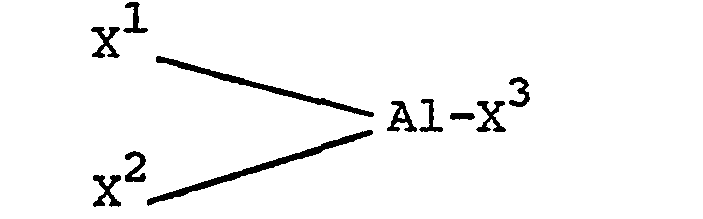
wherein at least one of X1, X2, and X3 represents an -OR group, wherein R is a C1 to C30 alkyl group or optionally alkyl substituted phenyl group.
wherein at least one of X1, X2, and X3 represents an -OR group, wherein R is a C1 to C30 alkyl group or optionally alkyl substituted phenyl group.
7. A process according to claim 6, wherein each of Xi, X2, and X3 represents an -OR group wherein R is an alkyl group having a carbon number in the
range from 1 to 30.
8. A process according to claim 7, wherein R is an alkyl group having a carbon number
in the range of from 1 to 20.
9. A process according to claim 1, wherein in the catalyst the molar ratio of (i)
to (ii) is in the range from 0.1:1 to 2:1.
10. A process according to claim 9, wherein the molar ratio of (i) to (ii) is in the
range from 0.4:1 to 1:1.
11. A process according to any one of the claims 1-10, wherein the temperature is
of from 50°C to 200°C.
1. Ein Verfahren zur Herstellung eines Alkanolalkoxylatproduktes mit einer Alkylenoxid-Adduktverteilung
in einem engen Bereich und einem niedrigen Gehalt an restlichem Alkanol, gekennzeichnet
durch die Umsetzung einer Alkylenoxidreaktionskomponente, umfassend ein oder mehrere
vicinale C2-C4-Alkylenoxide mit einer Alkanolreaktionskomponente umfassend ein oder mehrere C6-C30-Alkanole in Gegenwart einer katalytisch wirksamen Menge eines Katalysators, hergestellt
durch Kontaktieren (i) von einer oder mehreren schwefelhaltigen Säuren, ausgewählt
aus der Gruppe bestehend aus Schwefeltrioxid, Schwefelsäure, Alkylschwefelsäure, schwefelige
Säure und organischen und anorganischen Sulfonsäuren, und (ii) von einer oder mehreren
Aluminiumverbindungen, ausgewählt aus der Gruppe bestehend aus Aluminiumalkoholaten
und Aluminiumphenolaten.
2. Ein Verfahren nach Anspruch 1, in welchem die Alkanolreaktionskomponente ein oder
mehrere primäre(s) einwertige(s) C6-C30-Alkanol(e) enthält.
3. Ein Verfahren nach Anspruch 2, in welchem die Alkanolreaktionskomponente ein oder
mehrere primäre(s) einwertige(s) Ce-C2o-Alkanol(e) enthält.
4. Ein Verfahren nach Anspruch 3, in welchem die Alkanolreaktionskomponente ein oder
mehrere primäre(s) einwertige(s) C11-C16-Alkanol(e) enthält.
5. Ein Verfahren nach einem der Ansprüche 1 bis 4, in welchem die schwefelhaltigen
Säuren ausgewählt sind aus der Gruppe bestehend aus C1-C30-Alkylschwefelsäuren, Sulfanilsäure, Toluolsulfonsäure, Styrolsulfonsäure, Methansulfonsäure,
und 5-Sulfosalicylsäure.
6. Ein Verfahren nach einem der Ansprüche 1 bis 5, in welchem die Aluminiumverbindungen
die Formel
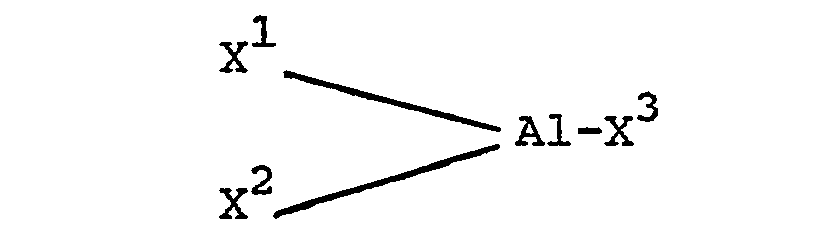
haben, in welcher mindestens eine der Gruppen Xi, X2 und X3 eine -OR-Gruppe ist, in welcher R eine C1-C3o-Alkylgruppe oder eine gegebenenfalls alkylsubstituierte Phenylgruppe ist.
haben, in welcher mindestens eine der Gruppen Xi, X2 und X3 eine -OR-Gruppe ist, in welcher R eine C1-C3o-Alkylgruppe oder eine gegebenenfalls alkylsubstituierte Phenylgruppe ist.
7. Ein Verfahren nach Anspruch 6, in welcher jede der Gruppen Xi, X2 und X3 eine -OR-Gruppe darstellt, in welcher R eine Alkylgruppe mit einer Anzahl
an Kohlenstoffatomen im Bereich von 1 bis 30 ist.
8. Ein Verfahren nach Anspruch 7, in welchem R eine Alkylgruppe mit einer Anzahl an
Kohlenstoffatomen im Bereich von 1 bis 20 ist.
9. Ein Verfahren nach Anspruch 1, in welchem im Katalysator das Molverhältnis von
(i) zu (ii) im Bereich von 0,1:1 bis 2:1 liegt.
10. Ein Verfahren nach Anspruch 9, in welchem das Molverhältnis von (i) zu (ii) im
Bereich von 0,4:1 bis 1:1 liegt.
11. Ein Verfahren nach einem der Ansprüche 1 bis 10, in welchem die Temperatur 50°C bis 200°C beträgt.
1. Un procédé pour la préparation d'un produit alcoxylate d'alcanol présentant une
distribution de plage étroite d'adduct oxyde d'alcoylène et une basse teneur en alcanol
résiduel, caractérisé par la réaction d'un réactif oxyde d'alcoylène comportant un
ou plus d'un oxyde d'alcoylène vicinal en C2 à C4 avec un réactif alcanol comportant un ou plus d'un alcanol en C6 à C30 en présence d'une quantité catalytique- ment efficace d'un catalyseur préparé en
mettant en contact (i) un ou plus d'un acide renfermant du soufre choisi dans le groupe
constitué par le trioxide de soufre, l'acide sulfurique, les acides alcoyl-sulfuriques,
l'acide sulfureux et les acides sulfoniques organiques et inorganiques et (ii) un
ou plus d'un composé d'aluminium choisi dans le groupe constitué par les alcoolates
d'aluminium et les phénolates d'aluminium.
2. Un procédé selon la revendication 1, dans lequel le réactif alcanol comprend un
ou plus d'un alcanol primaire mono-hydrique en C6 à C30.
3. Un procédé selon la revendication 2, dans lequel le réactif alcanol comprend un
ou plus d'un alcanol primaire mono-hydrique en Cε à C20.
4. Un procédé selon la revendication 3, dans lequel le réactif alcanol comprend un
ou plus d'un alcanol primaire mono-hydrique en C11 à C16.
5. Un procédé selon l'une quelconque des revendications 1 à 4, dans lequel les acides
renfermant du soufre sont choisis dans le groupe constitué des acides alcoylsulfuriques
en Ci à C30, l'acide sulfanili- que, l'acide toluènesulfonique, l'acide styrènesulfonique, l'acide
méthanesulfonique et l'acide 5-sulfosa- cylique.
6. Un procédé selon l'une quelconque des revendications 1 à 5, dans lequel les composés
de l'aluminium présente la formule
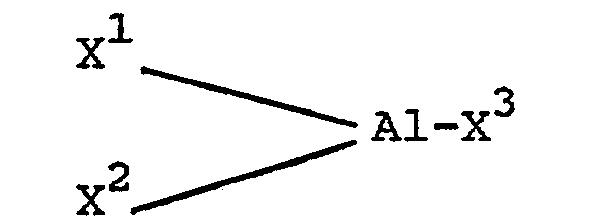
dans laquelle au moins l'un des Xi, X2 et X3 représente un groupe -OR, dans lequel R est un groupe alcoyle en Ci à C30 ou un groupe phényle éventuellement alcoylsubstitué.
dans laquelle au moins l'un des Xi, X2 et X3 représente un groupe -OR, dans lequel R est un groupe alcoyle en Ci à C30 ou un groupe phényle éventuellement alcoylsubstitué.
7. Un procédé selon la revendication 6, dans lequel chacun des Xi, X2, et X3 représentent un groupe -OR dans lequel R est un groupe alkyle présentant un nombre
de carbones dans la plage de 1 à 30.
8. Un procédé selon la revendication 7, dans lequel R est un groupe alcoyle présentant
un nombre de carbones dans la plage de 1 à 20.
9. Un procédé selon la revendication 1, dans lequel dans le catalyseur, le rapport
molaire de (i) à (ii) est dans la plage de 0,1:1 à 2:1.
10. Un procédé selon la revendication 9, dans lequel le rapport molaire de (i) à (ii)
est dans la plage de 0,4:1 à 1:1.
11. Un procédé selon quelque des revendications 1 à 10 dons lequel la température
esat de 50°C à 200°C.