| (19) |
 |
|
(11) |
EP 0 228 200 B1 |
| (12) |
EUROPEAN PATENT SPECIFICATION |
| (45) |
Mention of the grant of the patent: |
|
15.07.1992 Bulletin 1992/29 |
| (22) |
Date of filing: 03.12.1986 |
|
|
| (54) |
Thermal protective device with bimetal for semiconductor devices and the like
Thermische Schutzanordnung mit Bimetall für Halbleitereinrichtungen und dergleichen
Dispositif de protection thermique avec bimétal pour dispositifs semi-conducteurs
et similaires
|
| (84) |
Designated Contracting States: |
|
DE FR GB NL SE |
| (30) |
Priority: |
04.12.1985 IT 4887385
|
| (43) |
Date of publication of application: |
|
08.07.1987 Bulletin 1987/28 |
| (73) |
Proprietor: TEXAS INSTRUMENTS INCORPORATED |
|
Dallas
Texas 75265 (US) |
|
| (72) |
Inventors: |
|
- Calenda, Ciro
I-81031 Aversa (Caserta) (IT)
- Imbimbo, Fiorentino
I-80135 Napoli (IT)
- Notaro, Giuseppe
I-80038 Pomigliano d'Arco (IT)
|
| (74) |
Representative: Abbott, David John et al |
|
Abel & Imray
Northumberland House
303-306 High Holborn
London, WC1V 7LH
London, WC1V 7LH (GB) |
| (56) |
References cited: :
DE-A- 2 035 398
GB-A- 2 021 320
|
GB-A- 1 028 382
US-A- 3 861 032
|
|
| |
|
|
|
|
| |
|
| Note: Within nine months from the publication of the mention of the grant of the European
patent, any person may give notice to the European Patent Office of opposition to
the European patent
granted. Notice of opposition shall be filed in a written reasoned statement. It shall
not be deemed to
have been filed until the opposition fee has been paid. (Art. 99(1) European Patent
Convention).
|
Background of the Invention
[0001] The present invention relates to thermal protection devices and more particularly
a thermal protector suitable for guarding semiconductor devices from slow and prolonged
temperature increases.
[0002] As is known, very frequently semiconductor devices are equipped with protection devices
only against power supply transients characterized by strong voltage values, even
if of very short duration, for the immediate purpose of preventing damage that can
be caused by exposure even to very short voltages higher than those which the semiconductor
devices can withstand. For this purpose one uses devices, mostly electronic, particularly
adapted to attenuate these voltage peaks and characterized by extremely rapid action
times, for example of the MOV (Metal Oxide Varistor) type, Zener diode and others.
[0003] In some circuit applications, however, it has been found that the semiconductor device
may be subject to voltage and/or current increases of low values but of very long
duration (even several minutes). This type of disturbance may cause a slow rise of
the temperature of the semiconductor device above the permitted limits, causing breakage
or at least malfunction due to thermal drift. It is clear, therefore that for that
kind of disturbance the rapid-action electronic protective devices for voltage or
current peaks do not represent an effective solution, as their intervention, if it
occurs, does not occur in time to prevent the damage or malfunction.
[0004] In US-A-3,861,032 there is disclosed a thermally operated switch having a snap-action
bimetallic disc with a plunger coupling the movement of the centre of the disc to
a spring mounted switch contact so as to open the switch when the disc snaps over.
DE-A-2,035,398 discloses an arrangement having a similar thermally operated switch
constructed as an integral unit with a semiconductor device, the bimetallic disc being
in a case mounted substantially directly on the semiconductor device itself so that
the disc has close thermal coupling to the device.
SUMMARY OF THE INVENTION
[0005] According to the present invention there is provided thermal protective apparatus
comprising a generally cup shaped housing, the housing having a bottom wall and upstanding
sidewalls, a snap acting thermostatic disc mounted in the housing and being movable
between a non-actuated dished configuration and an opposite actuated dished configuration,
switch mechanism comprising a movable and a stationary electrical contact mounted
in the housing with the movable contact adapted to move into and out of engagement
with the stationary contact, first and second terminals extending into the housing
and being connected respectively to the movable and stationary electrical contacts,
the thermostatic disc operatively coupled to the movable contact to move the movable
contact when the thermostatic disc moves from the unactuated configuration to the
actuated configuration, characterised in that the housing is formed of electrically
insulative material and in that the sidewalls of the housing terminate at an open
top end, a semiconductor device seat is formed on the open top end of the housing
adapted to receive thereon a plate-like heat sink of a semiconductor device, the thermostatic
disc is mounted so that a central portion of the disc when the disc is in the unactuated
configuration would be in engagement with the heat sink of a semiconductor device
when such heat sink is on the seat, and means is provided to lock securely the heat
sink of a semiconductor device on the seat.
[0006] It is, therefore, an object of the present invention to fill the gap of the electronic
protection devices and to provide a protector for semiconductor devices which avoids
the possibility that an overload characterized by a low but long lasting increase
of the voltage and/or current could damage or destroy the semiconductor device in
question by thermal effect.
[0007] This objective is reached by means of a thermal protective device, that is, one having
bimetal suitable to react to thermal effects which, in its basic form of realization,
comprises a cup-shaped housing of electrically insulative plastic material closed
at the top by a formed snap acting bimetallic disc and means for snapping the cup
onto the semiconductor device with the bimetallic disc biased against the semidconductor
device in direct heat exchange relation therewith. Electric contacts coupled to electric
terminals are associated with a supply circuit of the semiconductor device and/or
an alarm circuit. Energization of the circuits is controlled by the disc which moves
between an unactuated configuration and an actuated configuration, i.e. between an
operative position in which the supply of the semiconductor device is connected and/or
the alarm is disconnected and an inoperative position in which the supply of the semiconductor
device is disconnected or corrected and the alarm is connected.
[0008] Further details and advantages, as well as other structural characteristics of the
present invention will become evident from the following description with reference
to the attached drawings in which the preferred form of realization are represented
in an illustrative but not restrictive sense.
Brief Description of the Drawings
[0009] In the drawings:
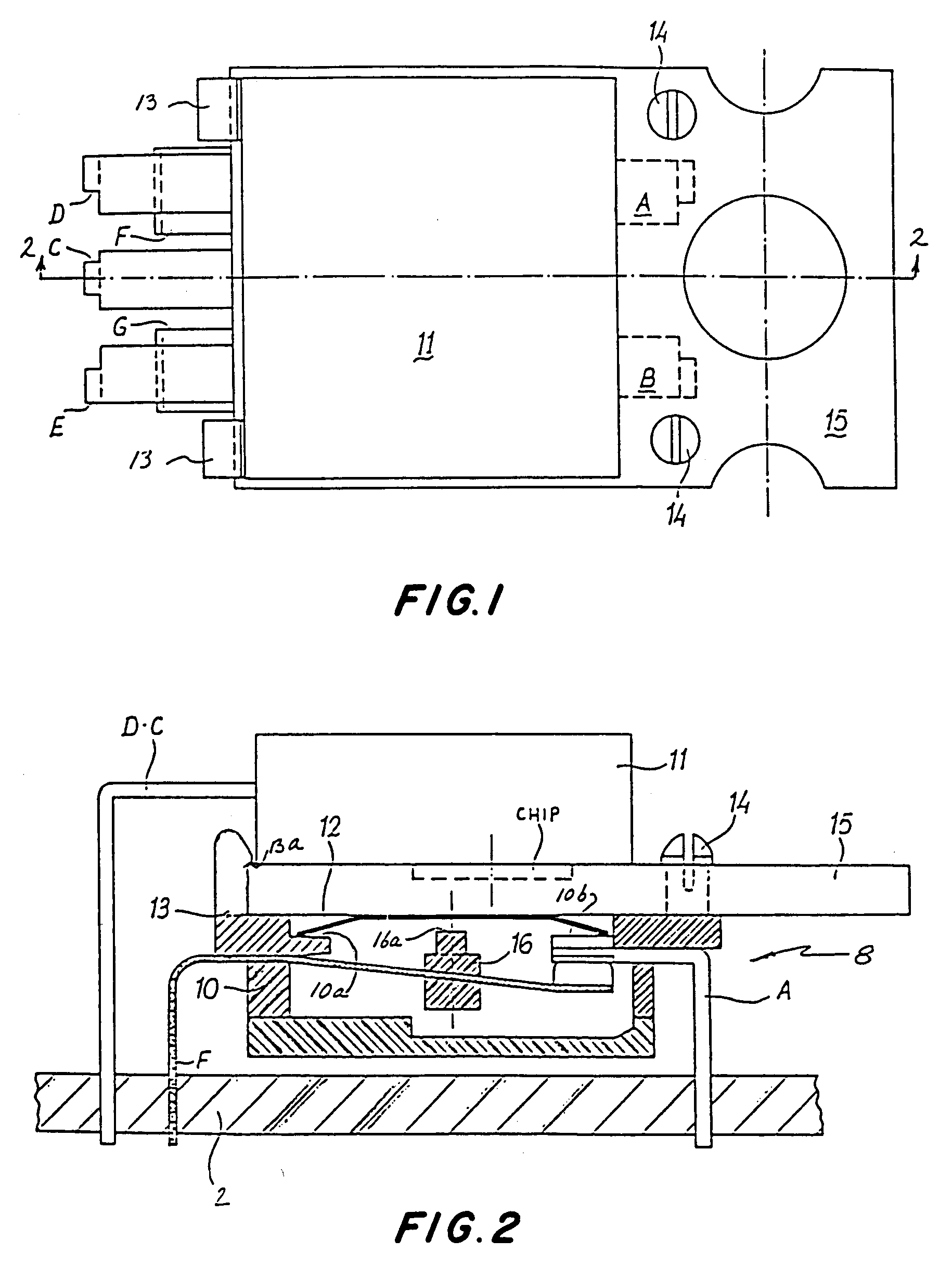
Fig. 1 is a top plan view of the protective device applied to a semiconductor device;
Fig. 2 is a view of the protective device shown in section along line 2-2 of Fig.
1;
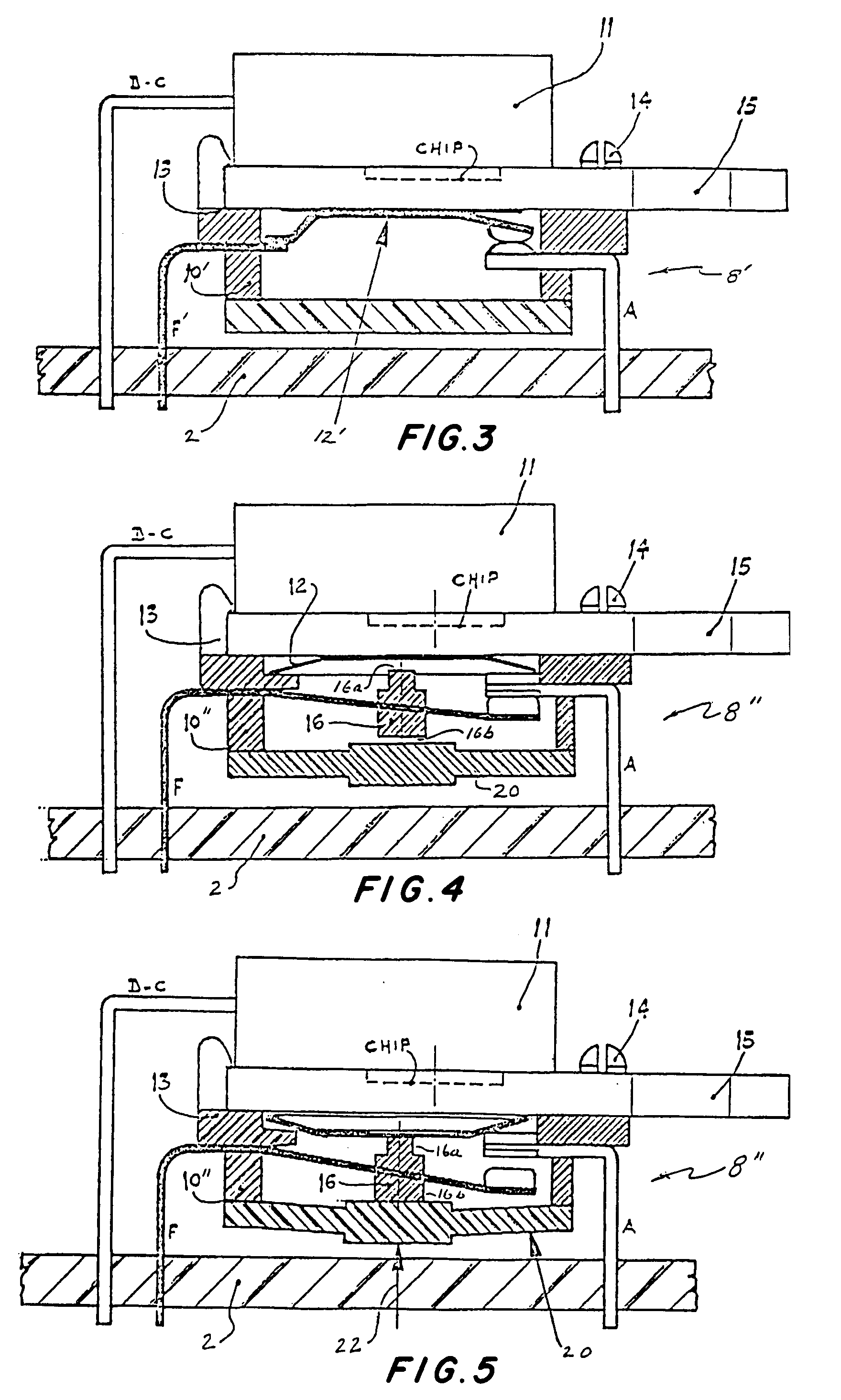
Fig. 3 is a view similar to Fig. 2 of a second embodiment of the invention; and
Figs. 4 and 5 are views similar to Fig. 2 of a protective device made in accordance
with the invention which includes a manual reset feature.
[0010] With specific reference to Figs. 1 and 2, it will be seen that the protection device
8 in question comprises a housing 10 formed so as to be applied in direct heat exchange
relation with the semiconductor device 11 which must be protected and which may be
a component or a chip or the like, possibly encapsulated. Semiconductor device 11
is provided with a conventional heat sink or dissipator 15.
[0011] The housing 10 is formed of electrically insulative material such as a suitable plastic
and may be molded in cup form with an upper offset 10a, 10b which defines a seat for
the support of the preformed bimetallic disc 12. In the form of realization shown,
the housing 10 is formed with two tooth-shaped lugs 13 and two split-headed pins 14
so as to engage the edge and to fit in two holes of the heat sink 15 to firmly mount
the semiconductor-heat sink assembly to the housing. Lugs 13 are provided with a lip
13a which is adapted to capture an edge of heat sink 15.
[0012] Although the snap-on mounting realized by means of the tooth 13 and the pins 14 is
preferred, it is understood that it may be realized also in other ways, for example
with screws, snapping or non-snapping hooks and the like.
[0013] The principle on which the present invention is based is that of utilizing the movement
executed by the bimetallic disc 12 when, heated by the heat sink 15, it reaches the
temperature of inversion of curvature and moves from the configuration shown to an
opposite configuration, to actuate electric contacts indirectly as seen in Fig. 2
or directly as seen in Fig. 3 to be described infra. As seen in Fig. 2 disc 12 can
act through a motion transfer member or pawl 16 mounted on the movable contact arms
F, G to open (or close) the contacts with the terminals A, B. Pawl 16 has a portion
16a extending above the movable contact arm which is engagable with disc 12.
[0014] By way of example there has been shown in the drawings a form of realization in which,
in the body of the housing 10, which may be made of one or more pieces, there are
incorporated at the time of molding (overmolding technique) two electric terminals
A, B and two movable contact arms F, G carrying at their ends contact elements adapted
to move into and out of engagement with the terminals A and B.
[0015] The terminals A, B coupled to the movable contact arms F, G are connectable for example
with the feed circuit of the semiconductor device to be protected and another circuit
which may be an alarm circuit or the like.
[0016] In reference to the statement made above regarding actuating the contacts indirectly
or directly, it will be understood that not only can the bimetallic disc be entirely
external and independent of the circuit which is to be interrupted or of an alarm
circuit which is to be energized as shown in Fig. 2 but also that the disc can be
directly inserted in such circuits as shown in Fig. 3.
[0017] With reference to Fig. 3 the protective device 8ʹ, as mentioned above, employs a
bimetallic disc 12ʹ which is adapted to directly actuate electric contacts. Disc 12ʹ
is cantilever mounted as by welding, to arm F' which has been shortened so that only
a short mounting portion extends into the interior of the housing. Although arm F
in Fig. 2 serves as a movable contact arm the portion of arm F' extending into the
interior of the housing is relatively stiff due to the shortness of the free end portion
to thereby provide a suitable mounting. Housing 10ʹ is modified to remove the disc
seat 10a, 10b. The movable contact mounted on the free distal end portion of disc
12ʹ is adapted to move between the closed contact position shown to an open contact
position when the disc snaps from the nonactuated configuration to an oppositely dished
shaped actuated configuration (not shown).
[0018] Those skilled in the art will be aware that besides the above described embodiment
of Fig. 3 in which the disc is inserted directly in the circuit and therefore carries
directly a contact element, numerous combinations of contacts and movable arms are
possible, all included in the scope of the present invention.
[0019] For example, there might be provided a single terminal A and a single movable arm
F to open or close a single circuit (of power supply or alarm, respectively), or there
might be provided a single movable arm not directly inserted in any circuit by carrying
a bridge between the two terminals A and B for opening or closing a single circuit,
as in the preceding case, and so forth.
[0020] It may therefore be said generically that, in normal operating conditions, the contacts
controlled directly or indirectly by the bimetallic disc are in such a position as
to allow the flow of current through the semiconductor device and hence its power
supply and/or to keep an alarm or signaling device deactivated. If disturbances characterized
by low and long lasting increases in voltage or current occur, the temperature of
the semiconductor device and hence of the heat dissipator associated therewith and
therefore also of the bimetallic disc rises until it causes said disc to snap which,
transmitting the movement caused by the inversion of curvature to the contacts, directly
or through appropriate mechanisms, brings them in positions such as to interrupt or
correct the energization of the semiconductor device, thus avoiding its destruction
or malfunction due to thermal effects, and/or to activate an alarm or a signal.
[0021] In order to achieve a satisfactory thermal coupling between the semiconductor device
and disc, it is preferred to have a force of at least 20 grams between the disc on
its unactuated configuration (i.e., the configuration shown in Fig. 2) and the heat
sink 15. It is also preferred that the disc 12 be formed so that its central portion
is relatively flat to obtain a large surface area that physically engages heat sink
15.
[0022] The bimetal protective device may be of the type as shown in Figs. 2 and 3 with automotive
resetting, that is, such that when the bimetallic disc 12 cools off, in consequence
of the cooling of the heat sink 15 due to the interruption of the current in the semiconductor
device, the return to the original curvature brings the contacts back to their original
position, resetting the power supply to the semiconductor device, which then functions
normally again provided the disturbing cause has ceased in the meantime.
[0023] The protective device made in accordance with the invention can also be manually
resettable as shown in Figs. 4 and 5 so that the semiconductor device remains unpowered
until the operator has manually and intentionally intervened to cause the disc, the
movable arm F or G (or both) to snap to the original position. Protector device 8"
is shown in Fig. 4 with the disc in the unactuated configuration and the contacts
in engagement. Housing 10" of device 8" is provided with a bottom wall 20 which is
flexible, formed of material such as an elastomer membrane. Pawl 16 not only has a
portion extending above movable contact arm F as explained supra but it also has a
portion 16b extending below the contact arm and adapted to be engagable with bottom
wall 20. In order to reset the device after the disc has snapped to an actuated configuration
(Fig. 5) and after it has cooled sufficiently, a force 22 is exerted on wall 20 by
a small tool insertable between device 8" and circuit board 2 (or through an aperture
in circuit board 2 if preferred). Wall 20 deforms under the force causing pawl 16
to push against disc 12 to snap it back to its unactuated configuration.
[0024] Manual reactivation is required by national or international safety standards in
cases where automatic reconnection of the semiconductor device may bring about hazardous
situations, as in the case, for example, of electronic speed controls for tools.
[0025] In Figures D, C and E denote the terminals of the semiconductor device, the whole
being mounted on the printed circuit board 2 (Figs. 2-5).
[0026] In the foregoing, the preferred forms of realization have been described, but it
is understood that those skilled in the art can make changes and variants without
thereby going outside the scope of the following claims.
1. Thermal protective apparatus comprising a generally cup shaped housing (10), the housing
having a bottom wall and upstanding sidewalls, a snap acting thermostatic disc (12,12')
mounted in the housing (10) and being movable between a non-actuated dished configuration
and an opposite actuated dished configuration, switch mechanism (A,B-F,G) comprising
a movable and a stationary electrical contact mounted in the housing with the movable
contact adapted to move into and out of engagement with the stationary contact, first
(F) and second (A) terminals extending into the housing and being connected respectively
to the movable and stationary electrical contacts, the thermostatic disc (12,12')being
operatively coupled to the movable contact to move the movable contact when the thermostatic
disc (12,12') moves from the unactuated configuration to the actuated configuration,
characterised in that the housing (10) is formed of electrically insulative material
and in that the sidewalls of the housing (10) terminate at an open top end, a semiconductor
device seat is formed on the open top end of the housing adapted to receive thereon
a plate-like heat sink (15) of a semiconductor device (11), the thermostatic disc
(12,12') is mounted so that a central portion of the disc (12,12') when the disc (12,12')
is in the unactuated configuration would be in engagement with the heat sink (15)
of a semiconductor device (11) when such heat sink (15) is on the seat, and means
(13,14) is provided to lock securely the heat sink (15) of a semiconductor device
(11) on the seat.
2. Apparatus according to claim 1 characterised in that the thermostatic disc (12') has
two opposite end portions, one end portion of the thermostatic disc (12') being fixed
to the first terminal (F) and the movable contact being fixed to the other opposite
end portion of the thermostatic disc (12').
3. Apparatus according to claim 1 characterised in that a thermostatic disc seat (10a,10b)
is formed in the side walls adjacent the open top end and the thermostatic disc (12)
is disposed on the seat (10a,b), the seat (10a,b) being completely open to the top
whereby in the actuated configuration of the thermostatic disc (12) the outer peripheral
portion of the thermostatic disc (12) can engage a plate like heat sink (15) when
a heat sink (15) is locked on the semiconductor device seat.
4. Apparatus according to claim 1 or 3 characterised in that the thermostatic disc (12)
in the unactuated configuration is formed with a central flat portion to optimize
heat transfer between a heat sink (15) locked on the semiconductor device seat and
the thermostatic disc (12).
5. Apparatus according to claim 1, 3 or 4 characterised in that the first terminal (F)
has an elongated portion extending into the housing (10) and culminating in a free
end, the elongated portion serving as a movable contact arm, and the movable contact
is secured to the free end of the elongated portion.
6. Apparatus according to claim 5 characterised by further including a motion transfer
member (16) attached to and extending above (16a) the elongated portion and being
aligned with a central portion of the thermostatic disc (12) to transfer motion from
the thermostatic disc (12) to the elongated portion and the movable contact.
7. Apparatus according to any preceding claim characterised in that the thermostatic
disc (12,12') in its non-actuated configuration is biassed against a semiconductor
device (11) mounted on the housing (16) by a force of at least approximately 20 grams.
8. Apparatus according to claim 6 characterised in that the motion transfer member extends
below (16b) the elongated portion and the bottom wall (20) of the housing is formed
of flexible material deformable toward and away from the interior of the housing whereby
selected deformation of the bottom wall toward the interior of the housing (10) will
transfer a resetting force to the thermostatic disc (12) when the thermostatic disc
(12) is in its actuated configuration.
9. Apparatus according to any preceding claim characterised in that two switch mechanisms
are mounted in the housing under the control of the thermostatic disc (12,12').
10. Apparatus according to any preceding claim characterised in that the means to lock
a heat sink on the semiconductor device seat includes a portion (13) of the sidewall
projecting up from the open top end, extending over at least a portion of the seat
for the heat sink and spaced at a distance above the open top end approximately equal
to the thickness of a semiconductor device heat sink plate (15).
11. Apparatus according to claim 10 characterised by further including pin means (14)
extending upwardly from the semiconductor device seat adapted to be received in apertures
provided in a semiconductor device heat sink plate (15).
1. Appareil de protection thermique comprenant un boîtier généralement en forme de coupe
(10), le boîtier ayant une paroi de fond et des parois latérales en saillie, un disque
thermostatique (12, 12') à action brusque monté dans le boîtier (10) et pouvant être
déplacé entre une configuration non activée en forme d'assiette et une configuration
activée en forme d'assiette opposée, un mécanisme d'interrupteur (A, B-F, G) comprenant
un contact électrique mobile et un contact fixe montés dans le boîtier, avec le contact
mobile conçu pour se déplacer afin d'entrer en contact avec le contact fixe ou de
se séparer de lui, une première (F) et une deuxième (G) bornes s'étendant dans le
boîtier et étant reliées respectivement au contact électrique mobile et au contact
fixe, le disque thermostatique (12, 12') étant couplé fonctionnellement avec le contact
mobile de manière à déplacer le contact mobile quand le disque thermostatique (12,
12') passe de la configuration non activée à la configuration activée, caractérisé
en ce que le boîtier (10) est formé d'un matériau isolant électriquement et en ce
que les parois latérales du boîtier (10) se terminent à une extrémité ouverte, un
siège de dispositif semi-conducteur est formé sur l'extrémité supérieure ouverte du
boîtier et conçu pour recevoir sur lui un dissipateur thermique en forme plaque (15)
d'un dispositif semi-conducteur (11), le disque thermostatique (12, 12') est monté
de manière qu'une portion centrale du disque (12, 12'), quand le disque (12, 12')
est dans la configuration non activée, soit en contact avec le dissipateur de chaleur
(15) du dispositif semi-conducteur (11) quand un tel dissipateur de chaleur (15) est
sur le siège, et des moyens (13, 14) sont prévus pour verrouiller solidement le dissipateur
de chaleur (15) d'un dispositif semi-conducteur (11) sur le siège.
2. Appareil selon la revendication 1, caractérisé en ce que le disque thermostatique
(12') a deux portions d'extrémités opposées, une portion d'extrémité du disque thermostatique
(12') étant fixée à une première borne (F) et le contact mobile étant fixé à l'autre
portion d'extrémité opposée du disque thermostatique (12').
3. Appareil selon la revendication 1, caractérisé en ce qu'un siège de disque thermostatique
(10a, 10b) est formé dans les parois latérales adjacentes à l'extrémité supérieure
ouverte et que le disque thermostatique (12) est disposé sur le siège (10a, 10b),
le siège (10a, 10b) étant complètement ouvert sur le dessus de sorte que dans la configuration
activée du disque thermostatique (12) la portion périphérique extérieure du disque
thermostatique (12) puisse entrer en contact avec une plaque telle qu'un dissipateur
de chaleur (15) quand un dissipateur de chaleur (15) est fixé sur le siège du dispositif
semi-conducteur.
4. Appareil selon la revendication 1 ou 3, caractérisé en ce que le disque thermostatique
(12) dans la configuration non activée est formé d'une portion centrale plane afin
d'optimiser le transfert de chaleur entre un dissipateur de chaleur (15) fixé sur
le siège du dispositif semi-conducteur et le disque thermostatique (12).
5. Appareil selon l'une quelconque des revendications 1, 3 ou 4, caractérisé en ce que
la première borne (F) a une portion allongée s'étendant dans le boîtier (10) et se
terminant en une extrémité libre, la portion allongée servant de bras de contact mobile,
et le contact mobile est fixé à l'extrémité libre de la portion allongée.
6. Appareil selon la revendication 5, caractérisé en ce qu'il comprend aussi une pièce
(16) de transmission de déplacement fixée à la portion allongée (16a) et s'étendant
au-dessus d'elle et alignée avec la portion centrale du disque thermostatique (12)
afin de transmettre le déplacement du disque thermostatique (12) à la portion allongée
et au contact mobile.
7. Appareil selon l'une quelconque des revendications précédentes, caractérisé en ce
que le disque thermostatique (12, 12') dans sa configuration non activée est pressé
contre un dispositif semi-conducteur (11) monté sur le boîtier (10) avec une force
d'au moins 20 grammes environ.
8. Appareil selon la revendication 6, caractérisé en ce que la pièce de transmission
de déplacement s'étend au-dessous (16b) de la portion allongée et la paroi du fond
(20) du boîtier est formée d'un matériau flexible déformable en direction de l'intérieur
du boîtier et en direction opposée grâce à quoi la déformation choisie de la paroi
du fond vers l'intérieur du boîtier (10) transmet au disque thermostatique (12) une
force de réarmement quand le disque thermostatique (12) est dans sa configuration
activée.
9. Appareil selon l'une quelconque des revendications précédentes, caractérisé en ce
que deux mécanismes de commutateur sont montés dans le boîtier et sont commandés par
le disque thermostatique (12, 12').
10. Appareil selon l'une quelconque des revendications précédentes, caractérisé en ce
que les moyens pour verrouiller un dissipateur de chaleur sur le siège du dispositif
semi-conducteur comprennent une portion (13) de la paroi latérale s'avançant vers
le haut à partir de l'extrémité supérieure ouverte, en saillie à partir de l'extrémité
supérieure ouverte s'étendant au-dessus d'au moins une partie du siège du dissipateur
de chaleur et éloignée d'une distance au-dessus de l'extrémité supérieure ouverte
approximativement égale à l'épaisseur d'une plaque de dissipateur de chaleur (15)
d'un dispositif semi-conducteur.
11. Appareil selon la revendication 6, caractérisé en ce qu'il comporte en outre des chevilles
(14) s'étendant vers le haut à partir du siège du dispositif semi-conducteur, conçues
pour être logées dans des ouvertures pratiquées dans une plaque de dissipateur de
chaleur (15) d'un dispositif semi-conducteur.
1. Wärmeschutzeinrichtung, mit einem im allgemeinen tassenförmigen Gehäuse (10), das
eine Bodenwand und nach oben stehende Seitenwände besitzt, einer Thermostatscheibe
(12, 12') mit Schnappwirkung, die im Gehäuse (10) angebracht ist und zwischen einer
nicht betätigten gewölbten Konfiguration und einer entgegengesetzten, betätigten gewölbten
Konfiguration beweglich ist, einem Schaltmechanismus (A, B-F, G), der einen beweglichen
und einen unbeweglichen elektrischen Kontakt aufweist, die im Gehäuse angebracht sind,
wobei der bewegliche Kontakt so beschaffen ist, daß er mit dem unbeweglichen Kontakt
in Eingriff und außer Eingriff gelangt, und einem ersten (F) und einem zweiten (A)
Anschluß, die sich in das Gehäuse erstrecken und mit dem beweglichen bzw. mit dem
unbeweglichen elektrischen Kontakt verbunden sind, wobei die Thermostatscheibe (12,
12') mit dem beweglichen Kontakt funktional gekoppelt ist, um den beweglichen Kontakt
zu bewegen, wenn sich die Thermostatscheibe (12, 12') von der nicht betätigten Konfiguration
in die betätigte Konfiguration bewegt, dadurch gekennzeichnet, daß das Gehäuse (10)
aus einem elektrisch isolierenden Material gebildet ist und daß die Seitenwände des
Gehäuses (10) an einem offenen oberen Ende enden, am offenen oberen Ende des Gehäuses
ein Halbleiterelement-Sitz ausgebildet ist, der so beschaffen ist, daß darauf ein
plattenähnlicher Kühlkörper (15) eines Halbleiterelementes (11) aufgenommen werden
kann, die Thermostatscheibe (12, 12') so angebracht ist, daß ein mittiger Bereich
der Scheibe (12, 12') dann, wenn die Scheibe (12, 12') die nicht betätigte Konfiguration
besitzt, mit dem Kühlkörper (15) eines Halbleiterelementes (11) in Kontakt wäre, wenn
sich ein solcher Kühlkörper (15) auf dem Sitz befindet, und ein Mittel (13, 14) vorgesehen
ist, um den Kühlkörper (15) eines Halbleiterelementes (11) auf dem Sitz sicher festzuhalten.
2. Einrichtung gemäß Anspruch 1, dadurch gekennzeichnet, daß die Thermostatscheibe (12,
12') zwei gegenüberliegende Endbereiche besitzt, wobei ein Endbereich der Thermostatscheibe
(12') am ersten Anschluß (F) befestigt ist und der bewegliche Kontakt am anderen,
entgegengesetzten Endbereich der Thermostatscheibe (12') befestigt ist.
3. Einrichtung gemäß Anspruch 1, dadurch gekennzeichnet, daß in den Seitenwänden in der
Nähe des offenen oberen Endes ein Thermostatscheiben-Sitz (10a, 10b) ausgebildet ist
und die Thermostatscheibe (12) auf dem Sitz (10a, b) angeordnet ist, wobei der Sitz
(10a, b) nach oben vollständig offen ist und wobei in der betätigten Konfiguration
der Thermostatscheibe (12) der äußere Umfangsbereich der Thermostatscheibe (12) mit
einem plattenähnlichen Kühlkörper (15) in Eingriff gelangen kann, wenn auf dem Halbleiterelement-Sitz
ein Kühlkörper (15) festgehalten wird.
4. Einrichtung gemäß Anspruch 1 oder 3, dadurch gekennzeichnet, daß die Thermostatscheibe
(12) in der nicht betätigten Konfiguration mit einem mittigen flachen Bereich ausgebildet
ist, um die Wärmeübertragung zwischen einem am Halbleiterelement-Sitz festgehaltenen
Kühlkörper (15) und der Thermostatscheibe (12) zu optimieren.
5. Einrichtung gemäß Anspruch 1, 3 oder 4, dadurch gekennzeichnet, daß der erste Anschluß
(F) einen langgestreckten Bereich besitzt, der sich in das Gehäuse (10) erstreckt
und in einem freien Ende ausläuft, wobei der langgestreckte Bereich als beweglicher
Kontaktarm dient und der bewegliche Kontakt am freien Ende des langgestreckten Bereichs
befestigt ist.
6. Einrichtung gemäß Anspruch 5, dadurch gekennzeichnet, daß sie ferner ein Bewegungsübertragungselement
(16) enthält, das am langgestreckten Bereich befestigt ist, sich oberhalb desselben
erstreckt (16a) und mit einem mittigen Bereich der Thermostatscheibe (12) ausgerichtet
ist, um die Bewegung von der Thermostatscheibe (12) an den langgestreckten Bereich
und an den beweglichen Kontakt zu übertragen.
7. Einrichtung gemäß einem der vorangehenden Ansprüche, dadurch gekennzeichnet, daß die
Thermostatscheibe (12, 12') in ihrer nicht betätigten Konfiguration mit einer Kraft
von wenigstens ungefähr 20 Gramm gegen ein am Gehäuse (10) angebrachtes Halbleiterelement
vorbelastet ist.
8. Einrichtung gemäß Anspruch 6, dadurch gekennzeichnet, daß sich das Bewegungsübertragungselement
unterhalb (16b) des langgestreckten Bereichs erstreckt und die Bodenwand (20) des
Gehäuses aus einem biegsamen Material gebildet ist, das in das Gehäuse hinein und
aus diesem heraus verformbar ist, wobei eine ausgewählte Verformung der Bodenwand
in das Innere des Gehäuses (10) an die Thermostatscheibe (12) eine Rückstellkraft
überträgt, wenn sich die Thermostatscheibe (12) in ihrer betätigten Konfiguration
befindet.
9. Einrichtung gemäß einem der vorangehenden Ansprüche, dadurch gekennzeichnet, daß im
Gehäuse zwei Schaltmechanismen angebracht sind, die der Steuerung durch die Thermostatscheibe
(12, 12') unterliegen.
10. Einrichtung gemäß einem der vorangehenden Ansprüche, dadurch gekennzeichnet, daß das
Mittel zum Festhalten eines Kühlkörpers auf dem Halbleiterelement-Sitz einen Bereich
(13) der vom offenen oberen Ende nach oben vorstehenden Seitenwand enthält, der sich
über wenigstens einen Teil des Sitzes für den Kühlkörper erstreckt und sich oberhalb
des offenen Endes in einem Abstand von diesem befindet, welcher ungefähr gleich der
Dicke einer Halbleiterelement-Kühlkörperplatte (15) ist.
11. Einrichtung gemäß Anspruch 10, dadurch gekennzeichnet, daß sie ferner ein Stiftmittel
(14) enthält, das sich vom Halbleiterelement-Sitz nach oben erstreckt und so beschaffen
ist, daß es von Öffnungen aufgenommen werden kann, die in einer Halbleiterelement-Kühlkörperplatte
(15) vorgesehen sind.