|
(11) | EP 0 240 370 B1 |

| (12) | EUROPEAN PATENT SPECIFICATION |
|
|
| (54) |
N-acyl substituted cyclic ureas N-acyl-substituierte zyklische Harnstoffverbindungen Composés d'urée cyclique N-substituées par un groupe acyl |
|
|
|||||||||||||||||||||||||||||||
|
||||||||||||||||||||||||||||||||
| Note: Within nine months from the publication of the mention of the grant of the European patent, any person may give notice to the European Patent Office of opposition to the European patent granted. Notice of opposition shall be filed in a written reasoned statement. It shall not be deemed to have been filed until the opposition fee has been paid. (Art. 99(1) European Patent Convention). |
[0001] This invention relates to the preparation of novel cyclic ureas, and more particularly to N-acyl substituted cyclic ureas. These compounds are particularly useful either directly or as an intermediate to prepare a compound that can be copolymerized and used as a polymer crosslinker, more specifically functioning as a blocked isocyanate.
[0002] The formulation of one-component polyurethane forming systems which use "blocked" isocyanates are well known in the coating art. Upon heating the one-component system containing blocked isocyanates, free isocyanates are generated to react with the polyol to form the polyurethane. The need for storage in separate containers is eliminated since the system remains stable until heated.
[0003] However, the blocked isocyanates suffer from the disadvantage of volatile or fugitive blocking groups. These groups, often compounds such as phenol, alcohols and the like are volatile at the curing temperature, and need to flash off, creating emission problems. If the volatiles are entrained in the coating, they cause loss of strength. Bis-acyl cyclic ureas have been used as blocked isocyanates, and do not have the problem of volatile leaving groups, since the blocking group is part of the same molecule. These, however, do have a disadvantage of being difficult to disperse into the polyol, requiring such equipment as a ball mill. This mixing requirement may lead to nonhomogeneous polymers.
[0004] We have now found a novel class of N-acyl substituted cyclic ureas which are particularly useful as blocked isocyanates in stable one-component polyurethane systems.
[0005] The prior art discloses a wide variety of substituted cyclic ureas which are useful for various purposes. U.S. Patents 4,138,398; 4,217,436 and 4, 410, 689 disclose bis cyclic ureas which are useful as masked isocyanates and U.S. Patent 4,111,877 discloses a N-cyclic ureido alkylamino derivative which is useful in imparting wet adhesion properties to water based paints. Other prior art disclosures of substituted cyclic ureas include U.S. Patents 2,613,212; 2,881,155; 4,104,220 and 4,151,142.
[0006] Chemical Abstracts, Vol 96, 6, 1982, 37013q discloses a thermosetting resin composition including 1-methacryloyl-2-imidazolidinone to give a coating for steel. Yellowing properties and impact resistance are discussed
[0007] EP-A- 080451 dislcoses cis-2-butenoic-4-oxo-4 (1-imidazolidinone-2-one) acid as an additive for improving tack and green strength of a treated diene rubber.
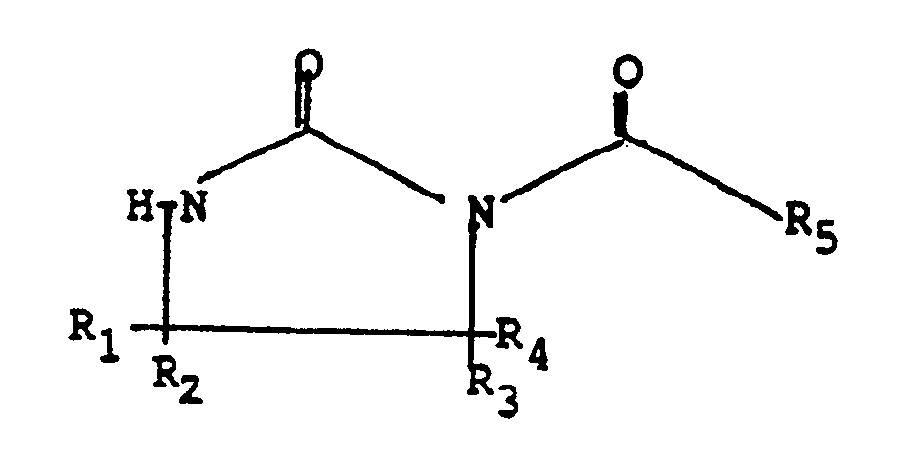
[0009] wherein R₁, R₂, R₃ and R₄ may be the same or different and each may be H, OH, COOH, R, OR or COOR, wherein R has 1 to 4 carbon atoms and is an alkyl or substituted alkyl and wherein R₅ has 2 to 40 carbon atoms and is an olefin cons consisting of _CH=CH₂, an alkyl carboxylic acid, or ester or a halogenated alkyl.
[0011] The starting material for the preparation of the N-acyl substituted cyclic ureas of the above formula is a cyclic urea corresponding to the formula:
wherein R₁, R₂, R₃ and R₄ may be the same or different and each may be H, OH, COOH, R, OR or COOR, wherein R is an alkyl or substituted alkyl group having 1 to 4 carbon atom.
[0012] Typical examples of cyclic ureas include 4,5-dihydroxy-2-imidazolidinone, 4,5-dimethoxy-2-imidazolidinone, 4-methyl ethylene urea, 4-ethyl ethylene urea, 4-hydroxyethyl ethylene urea, 4,5-dimethyl ethylene urea and the like. The preferred cylic urea is ethylene urea, i.e. wherein R₁, R₂, R₃ and R₄ are H, because of its ease of reactivity with anhydrides or acid chlorides, and lack of side reactions leading to by-products. The cyclic urea is reacted with various substituents to provide the N-acyl substituted cyclic urea wherein R₅ is either an olefin, a carboxylic acid, an ester or a halogenated alkyl substituent.
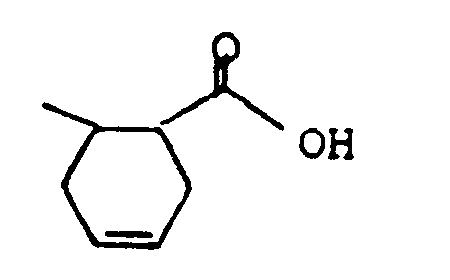
[0013] In one embodiment, the cylic urea is reacted with a cyclic anhydride which provides an N-acyl substituted cyclic urea with a carboxylic acid substituent. Typical cyclic anhydrides include succinic anhydride, dihydrophthalic anhydride, glutaric anhydride and alkenyl succinic anhydrides which provide an R₅ substituent which is a carboxylic acid, preferably wherein R₅ is _CHR₆CHR₇COOH, _(CH₂)₃COOH or
wherein R₆ and R₇ may be the same or different and is an H, or up to C₄₀ alkenyl. In another preferred embodiment ethylene urea is reacted with succinic anhydride in dimethyl formamide to form 4-oxo-4-(1-imidazolidin-2-one)-1-butanoic acid.
[0014] An ester of the carboxylic acid may be prepared either by reaction with an alcohol or by reaction with a halogenated allyl to add olefin functionality. An ester of 4-oxo-4-(1-imidazolidin-2-one)-1 butanoic acid is prepared by reaction with aqueous potassium hydroxide, then allyl chloride in dimethyl formamide to make 4-oxo-4-(1-imidazolidin-2-one)-2-butanoic acid, allyl ester.
[0015] Conventional esterification calls for refluxing the acid in an excess of alcohol with an acidic catalyst. This was found to lead to cleavage of the imidazolidinone ring and further product decomposition. An alternate process was found which, in general, calls for slurrying the acid in an excess of alcohol, cooling the reaction mixture, and treating with an equivalent of thionyl chloride. The reaction mixture is slowly allowed to warm up whereupon HCl and SO₂ are evolved. These gases may be removed by purging with N₂ or dry air. The product may then be isolated by filtration, or whatever method is suitable for its physical state. This procedure can be used with any primary alcohol such as methanol, ethanol, propanol, n-butanol, allyl alcohol, isobutyl alcohol, 1,1-dihydroperflouro alkyl alcohols, ethylene glycol monoalkyl ethers, diethylene glycol monoalkyl ethers or ethoxylated phenol derivatives to provide an R₅ substituent which is a methyl ester, ethyl ester, propyl ester, butyl ester, allyl ester, flourocarbon ester, alkoxyalkyl ester (e.g. methoxyethyl or ethoxyethyl ester), hydroxy alkyl ester, alkyl phenoxy (polyethoxy) alkyl ester or methallyl ester, of the carboxylic acid. These esters may be used to improve solubility in non-aqueous systems.
[0016] The olefin functionality allows for copolymerizing with monomers such as vinyl acetate and ethyl acrylate while the acyl cyclic urea functions as a blocked isocyanate which reacts with groups such as hydroxyl or amide under curing conditions. It is believed that the N-acyl substituted cyclic ureas act as crosslinkers by thermally dissociating during curing to an isocyanate and an amide, which then further reacts to cross-link the polymers. The N-acyl substituted cyclic ureas with olefin functionality could also be incorporated into vinyl or acrylic polymers to promote adhesion.
[0017] In another preferrred embodiment the R₅ substituent of the N-acyl substituted cyclic urea is substituted with a halogenated alkyl or an olefin which is obtained by reacting the cyclic urea with an unsaturated acid, such as acrylic acid, methacrylic acid or crotonic acid and thionyl chloride. This forms an acid chloride which acylates the cylic ureas, and adds HCl across the olefin to provide an R₅ which is a halogenated alkyl substituent wherein the halogen can be chloride, bromide or iodide, as in N-(1-oxo-3-chloro)propyl-2-imidazolidone. This reaction may be catalyzed by dimethyl formamide as with a Vilsmeier reagent. This N-acyl substituted cyclic urea may then be further reacted with, for example, triethyl amine, to remove the halogen and provide a preferred R₅ substituent which is _CH=CH₂, as with N-acryloyl ethylene urea.
Example 1
[0018] To a 1 liter 3-necked flask equipped with a mechanical stirrer, thermometer and condenser was charged 114 g (1.3 moles) ethylene urea, 120 g dimethyl formamide and 120 g (1.2 moles) succinic anhydride. This was heated at 90°C for 30 hours, at which time IR showed no anydride peak. The product formed at this stage was 4-oxo-4-(1-imidazolidin-2-one)-1-butanoic acid. The reaction may also be catalyzed by tertiary amines such as 1,4-diazabicylooctane and dimethylaminopyridine. The product was characterized by IR (KBr) 3260, 1740, 1710, 1685, 1380, 1255cm_ 1; HNMR (DMSOd₆) α 9.8 (br, 1), α 7.35 (br, s, 1), α 3.85-3.1 (AA′ BB′ mult. (ring), 4), α 3.2-2.3 (AA′ BB′ mult., 4) and a m.p. of 130-134°C.
Example 2
[0019] The reaction of Example 1 was cooled to 40°C and 150 g (1.2 moles) of 45% aqueous potassium hydroxide was slowly added by drip funnel. The resulting slurry was cooled to room temperature and allowed to stir one hour. The slurry was filtered, washed with isopropanol and allowed to air dry. The salt cake was returned to the same flask and slurried with 400 g of dimethyl formamide. The flask was set up for vacuum distillation with a water aspirator to remove moisture, and stripped up to 85°C. About 100 ml of distillate was collected. The reaction was cooled to 40°C and 140 g (1.8 moles) of allyl chloride was slowly added along with 0.05 g potassium iodide as catalyst. The reaction was refluxed for 24 hours with the final reflux temperature being 86°C. At this time the IR showed no carboxylate peaks. The reaction was a clear tan solution with a potassium chloride precipitant. This was vacuum stripped to remove solvent and filtered to remove salt. The liquid was taken up in methylene chloride and washed with brine, saturated sodium bicarbonate and again with brine. Solvent was removed to afford a yellow oil which crystallized. The crystals were filtered and washed with water to give 150 g (55% yield) of a white granular product which was 4-oxo-4-(1-imidazolidin-2-one)-1-butanoic acid, allyl ester with an IR (KBr) of 3260, 1740, 1730, 1680, 1395, 1160cm_ 1; HNMR (CDCl₃) α 6.30 (br, s, l), α 6.1-5.5 (mult., 1), α 5.35 (mult., 1), α 5.05 (mult., 1), α 4.45 (d, J = 5Hz, 2), α 4.10-3.6 (AA′ BB′ mult. (ring), 4), α 3.40-2.50 (AA′ BB′ mult., 4) and a m.p. OF 69-71°C.
Example 3
[0020] To a 100 ml flask equipped with a stir bar, condenser and thermometer was charged 9.5 g (0.11 moles) of ethylene urea, 10 g (0.10 moles) of succinic anhydride and 10 g dimethylsulfoxide (DMSO). This was heated at 75-80°C for 20 hours until the anhydride peak was not observable by IR. The reaction was cooled to 40-45°C and 11.8 (1.05 equivalents) of potassium t-butoxide was slowly added, causing the reaction to thicken. This was stirred for 4 hours at 65°C. To this was added 0.01 g of potassium iodide for catalyic purposes, and 8.4 g (0.11 moles) allyl chloride slowly by drip funnel. The reaction was heated to 75-85°C for 4 hours when the IR showed no carboxylate peak. This was filtered, taken up in methylene chloride, washed with brine and concentrated to give an oil which crystallized similar to that in Example 2. The product obtained in moderate yield was identical to the product of Example 2.
Example 4
[0021] To a dry 100 ml 3-necked flask equipped with a magnetic stirring bar, reflux condenser and addition funnel; was charged 8.6 g (0.10 mole) ethylene urea, 8.9 g (0.11 mole) glacial acrylic acid and 50 ml methylene chloride. This was stirred to give a translucent suspension. To the addition funnel was charged 12 g (0.11 mole) thionyl chloride. After stirring 30 minutes at room temperature, the thionyl chloride was added dropwise over a 45 minute period. As the additions approached the half way point, a white précipitate was observed in the flask. There was an exotherm and light reflux with a vapor temperature of 39°C was observed. The odor of SO² was also detected, and the evolving vapor caused litmus paper to turn red. The reaction was stirred without heating for 1 hour after the addition was completed, then gently heated to reflux. After refluxing about 12 hours, the solution had become yellow and almost clear. The reaction was filtered, and solvent evaporated to give a waxy pale yellow solid. This washed with methanol to give a white waxy solid which was N-1-oxo-3-chloropropyl ethylene urea, 52% yield, mp 111-112°C, IR (KBr) 3260cm_ 1, 1733cm_ 1, 1676cm_ 1, 1390cm_ 1, 1265cm_ 1, 1060cm_ 1, 755cm_ 1, 655cm 1.
[0022] This product was dissolved in 50 ml of dry methylene chloride and mixed with 1.1 equivalents of triethyl amine. The reaction was stirred overnight forming a white precipitate of triethylammonium hydrochloride. The reaction was filtered and concentrated to form a white solid, N-acryloyl ethylene urea, 80% yield. IR (KBr): 3260cm_ 1, 1735cm _ 1, 1645cm_ 1, 1612cm_ 1, 1260cm_ 1, 1070cm_ 1, 960cm_ 1.
Example 5
[0023] To demonstrate blocked isocyanate reactivity a 0.5 g portion of N-acryloyl ethylene urea was mulled with 5 drops of glycerin to give a white paste. A thin film IR spectrum showed broad OH (glycerin) carbonyl (1725, 1670cm_ 1) and strong C_O (1105, 1040cm_ 1, glycerin). A small portion was placed in an aluminum sample pan for a differential scanning calorimeter(Perkin-Elmer DSC-1B). The sample was scanned at a rate of 10°C per minute from 300 K (27°C) to 450 K (177°C). An exothermic peak was noted beginning at 388 K (115°C) and ending at 414 K (141°C). Upon cooling, a clear, tacky syrup was obtained. The IR spectrum of this product was different from the original mull. The _OH and C_O peaks from the glycerin were much weaker. The carbonyls shifted from 1725 to 1730cm_ 1 and 1670 to 1680cm_ 1 and were relatively more intense, and a very prominent urethane ester C_O_ appeared at 1270cm_ 1 that was absent in the original spectrum. These results, particularly the formation of the urethane ester peak at 1270cm_ 1 are interpreted to mean that between 115°C and 141°C, the cyclic urea cleaves to an isocyanato ethylene amide which then reacts with the glycerin. Similar reactivity would be expected if the monomer were copolymerized through its double bond.
[0024] This monomer is expected to find uses into broad categories. First, it could be used to introduce a blocked isocyanate into a polymer. The polymer could be aqueous solution, solvent solution or emulsion, which is generally radical catalyzed.
[0025] Second, it could be used to incorporate a terminal activated olefin into a molecule by inducing ring cleavage in the presence of active hydrogen sources (OH, _NH, _SH). Such compounds are used in UV, electron beam and radiation cure coatings. The activated olefin can also be incorporated by reaction of the ring N_H and an aldehyde (e.g. formaldehyde) with a suitable substrate, leaving the ring intact.
Example 6
[0026] To a dry 250 ml 3-necked flask equipped with a mechanical stirrer, addition funnel, thermometer and condenser was charged ethylene urea (17.2 g, 0.2 moles), acrylic acid (16 g, 0.22 moles) and 100 g of methylene chloride. This was stirred at room temperature for 15 minutes giving a hazy gray suspension. To the addition funnel was charged thionyl chloride (25 g, 0.21 moles). The thionyl chloride was added drop-wise over a forty minute period with the temperature rising to 35°C. Midway through the addition a white precipitate formed. The reaction was refluxed for 12 hours and filtered. The reaction was washed with brine and concentrated to a pale yellow was which was N-(1-oxo-3-chloro)propyl-2-imidazolidone (synonym: β-chloropropionyl ethylene urea) (31 g, 88% yield) IR (KBr): 3260, 1730, 1676, 1380, 1265 cm_ 1.
[0027] In this Example thionyl chloride and acrylic acid are used to make acryloyl chloride in situ. Acryloyl chloride could be used directly in place of the acrylic acid and thionyl chloride. If, instead of acrylic acid, methacrylic acid is used, the corresponding methacryloyl derivatives are obtained.
Example 7
[0028] To a dry 100 ml 3-necked flask equipped with a stir bar, condenser and addition funnel was added 60 g methylene chloride and 17.6 g (0.1 moles of N-(1-oxo-3-chloro)propyl-2-imidazolidone (the product of Example 6). This was stirred to form a cloudy suspension. Triethyl amine (13 g, 0.13 moles) was slowly added by addition funnel. The resulting clear amber solution was refluxed about 4 hours until IR showed the reaction to be complete. During the reflux a white precipitant (triethylamine hydrochloride) formed. The reaction was filtered and washed with brine and saturated sodium bicarbonate. The pale yellow solution was then concentrated to yield 11 g (78%) white wax which was N-(1-oxo-2-propene)-2-imidazolidone (synonym: acryloyl ethylene urea) with an IR (KBr): 3260, 1738, 1648, 1620, 1425, 1350, 1265cm_ 1; ¹HNMR (DMSOd₆) α 7.65 (br, s, l),α 7.48 (dd, JBx = 11Hz, JAx = 17Hz, 1), α 6.15 (dd, JAx - 17Hz, JAB = 3hZ, 1),α 5.70 (dd, JAB = 3Hz, JBX = 11Hz, 1), α 3.95-3.15 (AA′ BB′ mult., 4).
1. A N-Acyl substituted cyclic urea of the formulas
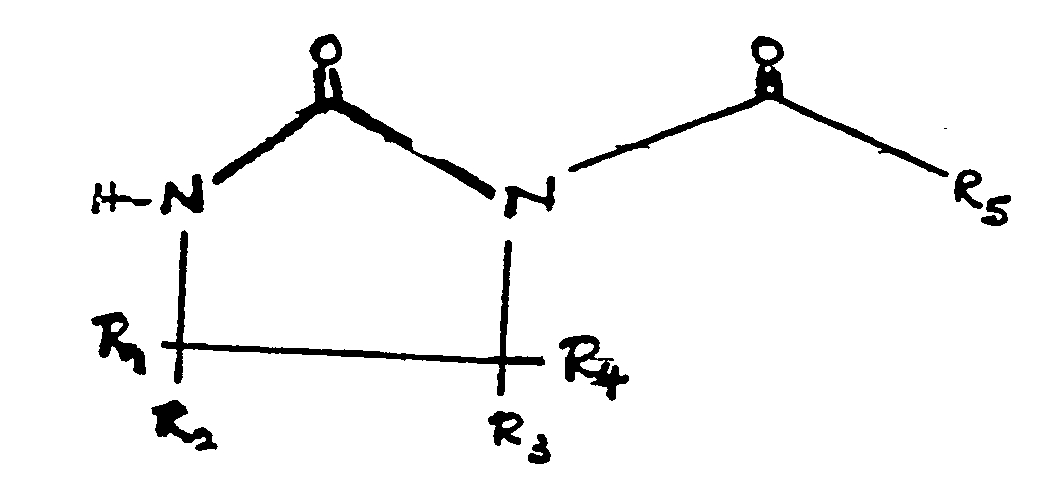
wherein R₁, R₂, R₃ and R₄ may be the same or different and each may be H, OH, COOH, R, OR or COOR, wherein R has 1 to 4 carbon atoms and is an alkyl or substituted alkyl group and wherein R₅ has 2 to 40 carbon atoms and is an olefin consisting of _CH=CH₂, an alkyl carboxylic acid or ester or a halogenated alkyl.
wherein R₁, R₂, R₃ and R₄ may be the same or different and each may be H, OH, COOH, R, OR or COOR, wherein R has 1 to 4 carbon atoms and is an alkyl or substituted alkyl group and wherein R₅ has 2 to 40 carbon atoms and is an olefin consisting of _CH=CH₂, an alkyl carboxylic acid or ester or a halogenated alkyl.
2. Cyclic urea according to claim 1 wherein R₁, R₂, R₃ and R₄ are H.
3. Cyclic urea according to claim 1 or claim 2 wherein R₅ is _CH=CH2.
4. Cyclic urea according to claim 1 or claim 2 wherein the alkyl carboxylic acid is
chosen from the group consisting of _CHR₆CHR₇COOH, _(CH₂)3 (COOH) or
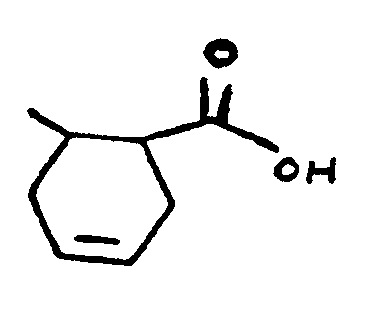
wherein R₆ and R₇ may be the same or different and is an H, or up to C₄₀ alkenyl.
wherein R₆ and R₇ may be the same or different and is an H, or up to C₄₀ alkenyl.
5. Cyclic urea according to claim 1 or claim 2 wherein R₅ is a methyl ester, ethyl
ester, butyl ester, propyl ester, allyl ester, fluorocarbon ester, alkoxyalkyl ester,
hydroxy alkyl ester, alkyl phenoxy (polyethoxy) alkyl ester or methallyl ester.
6. Cyclic urea according to claim 1 or claim 2 wherein R₅ is the halogenated alkyl
wherein the halogen is chosen from the group consisting of Cl, Br and I.
7. 4-oxo-4-(1-imidazolidin-2-one)-1-butanoic acid.
8. 4-oxo-4-(1-imidazolidin-2-one)-1-butanoic acid allyl ester.
9. N-acryloyl ethylene urea.
10. N-(1-oxo-3-chloro)propyl-2-imidazolidinone.
1. N-acylsubstituierter cyclischer Harnstoff der Formel:
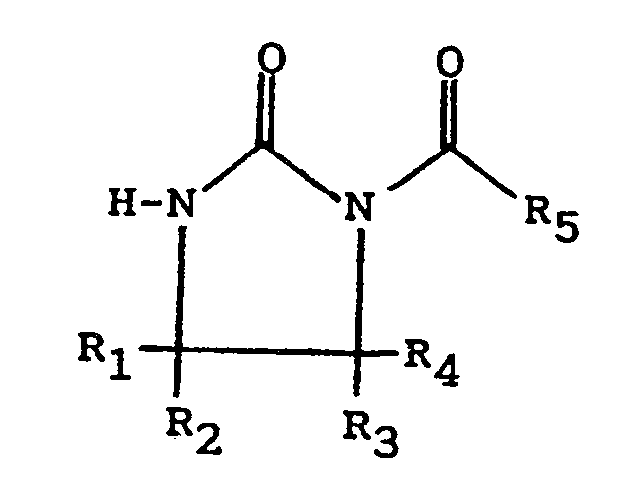
worin R₁, R₂, R₃ und R₄ gleich oder verschieden sein können und jeweils H, OH, COOH, R, OR oder COOR bedeuten können, wobei R 1 bis 4 Kohlenstoffatome hat und eine Alkylgruppe oder eine substituierte Alkylgruppe bedeutet, und worin R5 2 bis 40 Kohlenstoffatome hat und ein Olefin, das aus _CH=CH₂ besteht, eine Alkylcarbonsäure oder einen Alkylcarbonsäureester oder eine halogenierte Alkylgruppe bedeutet.
worin R₁, R₂, R₃ und R₄ gleich oder verschieden sein können und jeweils H, OH, COOH, R, OR oder COOR bedeuten können, wobei R 1 bis 4 Kohlenstoffatome hat und eine Alkylgruppe oder eine substituierte Alkylgruppe bedeutet, und worin R5 2 bis 40 Kohlenstoffatome hat und ein Olefin, das aus _CH=CH₂ besteht, eine Alkylcarbonsäure oder einen Alkylcarbonsäureester oder eine halogenierte Alkylgruppe bedeutet.
2. Cyclischer Harnstoff nach Anspruch 1, bei dem R₁, R₂, R₃ und R4 H bedeuten.
3. Cyclischer Harnstoff nach Anspruch 1 oder Anspruch 2, bei dem R₅ _CH=CH₂ bedeutet.
4. Cyclischer Harnstoff nach Anspruch 1 oder Anspruch 2, bei dem die Alkylcarbonsäure
aus der Gruppe ausgewählt ist, die aus _CHR₆CHR₇COOH, _(CH₂)₃COOH oder wobei R₆ und
R₇ gleich oder verschieden sein können und ein H oder eine Alkenylgruppe mit bis ausgewählt
ist,
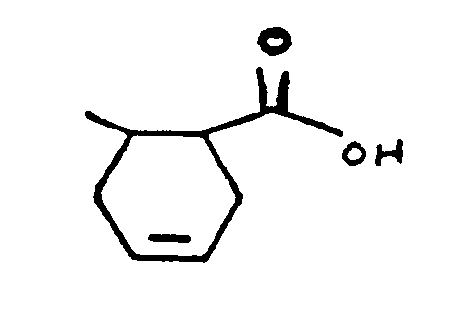
zu 40 C-Atomen bedeuten.
zu 40 C-Atomen bedeuten.
5. Cyclischer Harnstoff nach Anspruch 1 oder Anspruch 2, bei dem R₅ einen Methylester,
Ethylester, Butylester, Propylester, Allylester, Fluorkohlenwasserstoffester, Alkoxyalkylester,
Hydroxyalkylester, Alkylphenoxy(polyethoxy)alkylester oder Methallylester bedeutet.
6. Cyclischer Harnstoff nach Anspruch 1 oder Anspruch 2, bei dem R₅ die halogenierte
Alkylgruppe bedeutet, worin das Halogen aus der Gruppe ausgewählt ist, die aus Cl,
Br und I besteht.
7. 4-Oxo-4-(1-imidazolidin-2-on)-1-butansäure.
8. 4-Oxo-4-(1-imidazolidin-2-on)-1-butansäureallylester.
9. N-Acryloylethylenharnstoff.
10. N-(1-Oxo-3-chlor)-propyl-2-imidazolidinon.
1. Urée cyclique N-acyl-substituée de formule
dans laquelle R₁, R₂, R₃ et R₄ peuvent être identiques ou différents,et chacun pouvant représenter H, OH, COOH, R, OR ou COOR, dans lequel R possède de 1 à 4 atomes de carbone, et est un groupe alkyle ou alkyle substitué, et dans laquelle R₅ possède de 2 à 40 atomes de carbone et est une oléfine contenant le groupe _CH=CH₂, un acide ou ester alkylcarboxylique, ou un alkyle halogéné.
dans laquelle R₁, R₂, R₃ et R₄ peuvent être identiques ou différents,et chacun pouvant représenter H, OH, COOH, R, OR ou COOR, dans lequel R possède de 1 à 4 atomes de carbone, et est un groupe alkyle ou alkyle substitué, et dans laquelle R₅ possède de 2 à 40 atomes de carbone et est une oléfine contenant le groupe _CH=CH₂, un acide ou ester alkylcarboxylique, ou un alkyle halogéné.
2. Urée cyclique conforme à la revendication 1, dans laquelle R₁, R₂, R₃ et R₄ représentent
H.
3. Urée cyclique conforme aux revendications 1 ou 2, dans laquelle R₅ représente _CH=CH₂.
4. Urée cyclique conforme aux revendications 1 ou 2, dans laquelle l'acide alkyl-carboxylique
est choisi dans le groupe représenté par la formule _CHR₆CHR₇COOH_(CH₂)₃(COOH) ou
où R₆et R₇ peuvent être identiques ou différents, et représentent soit H, soit un alkényle jusqu'à C₄₀.
où R₆et R₇ peuvent être identiques ou différents, et représentent soit H, soit un alkényle jusqu'à C₄₀.
5. Urée cyclique conforme aux revendications 1 ou 2, dans laquelle R₅ est un ester
méthylique, éthylique, butylique, propylique, allylique, fluorocarbonique ou alcoxyalkylique,
hydroxyalkylique, alkylphénoxy (polyéthoxy) alkylique ou méthallylique.
6. Urée cyclique conforme aux revendications 1 ou 2, dans laquelle R₅ représente un
alkyle halogéné, dans lequel l'halogène est choisi dans le groupe constitué par Cl,
Br et I.
7. L'acide oxo-4-(imidazolidine-1- one-2)-4-butanoïque 1.
8. L'ester allylique de l'acide oxo-4-(imidazolidine-1, -one-2)-4-butanoïque 1.
9. La N-acryloyl éthylène urée.
10. La N-(oxo-1-chloro-3)propyl imidazolidinone-2